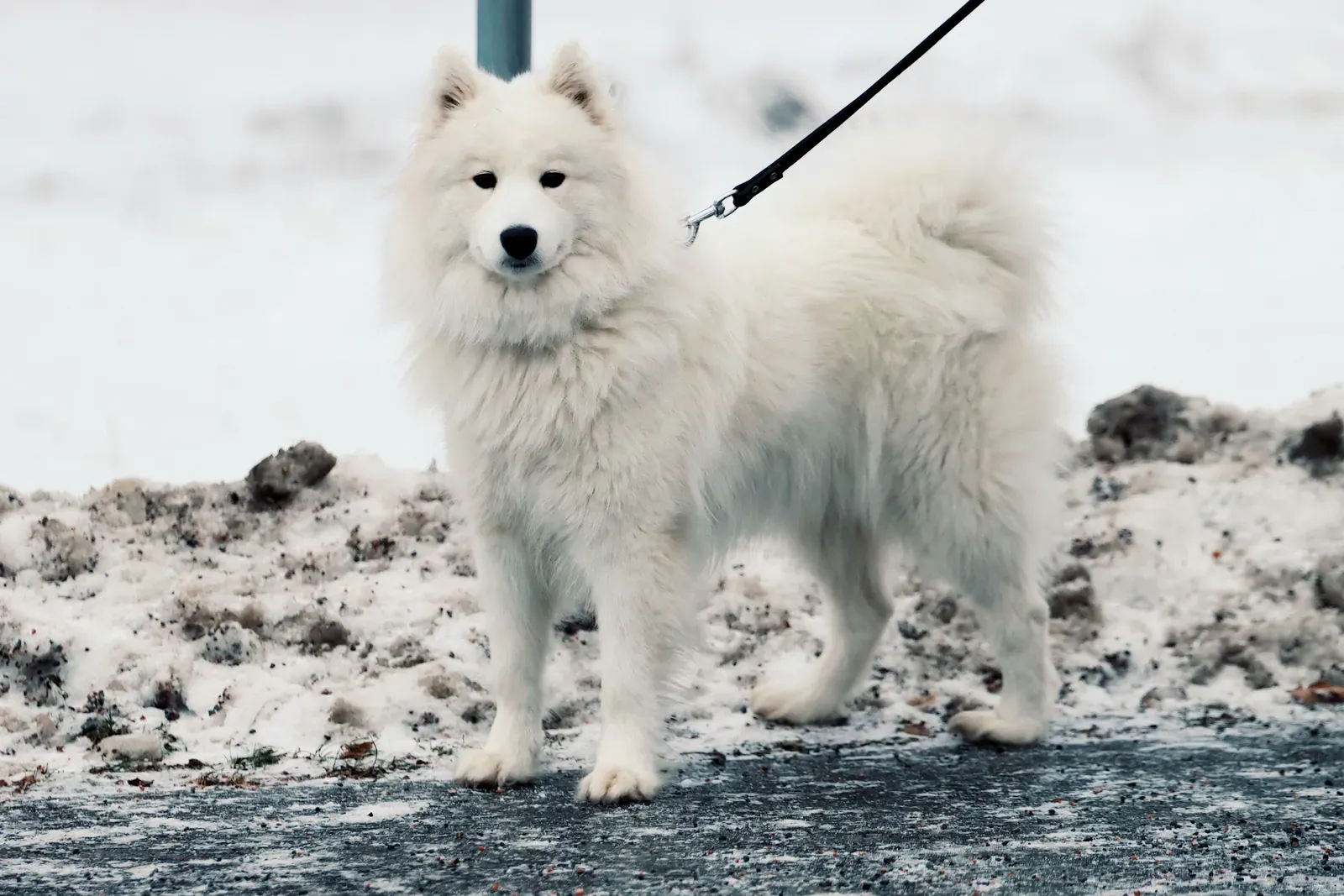
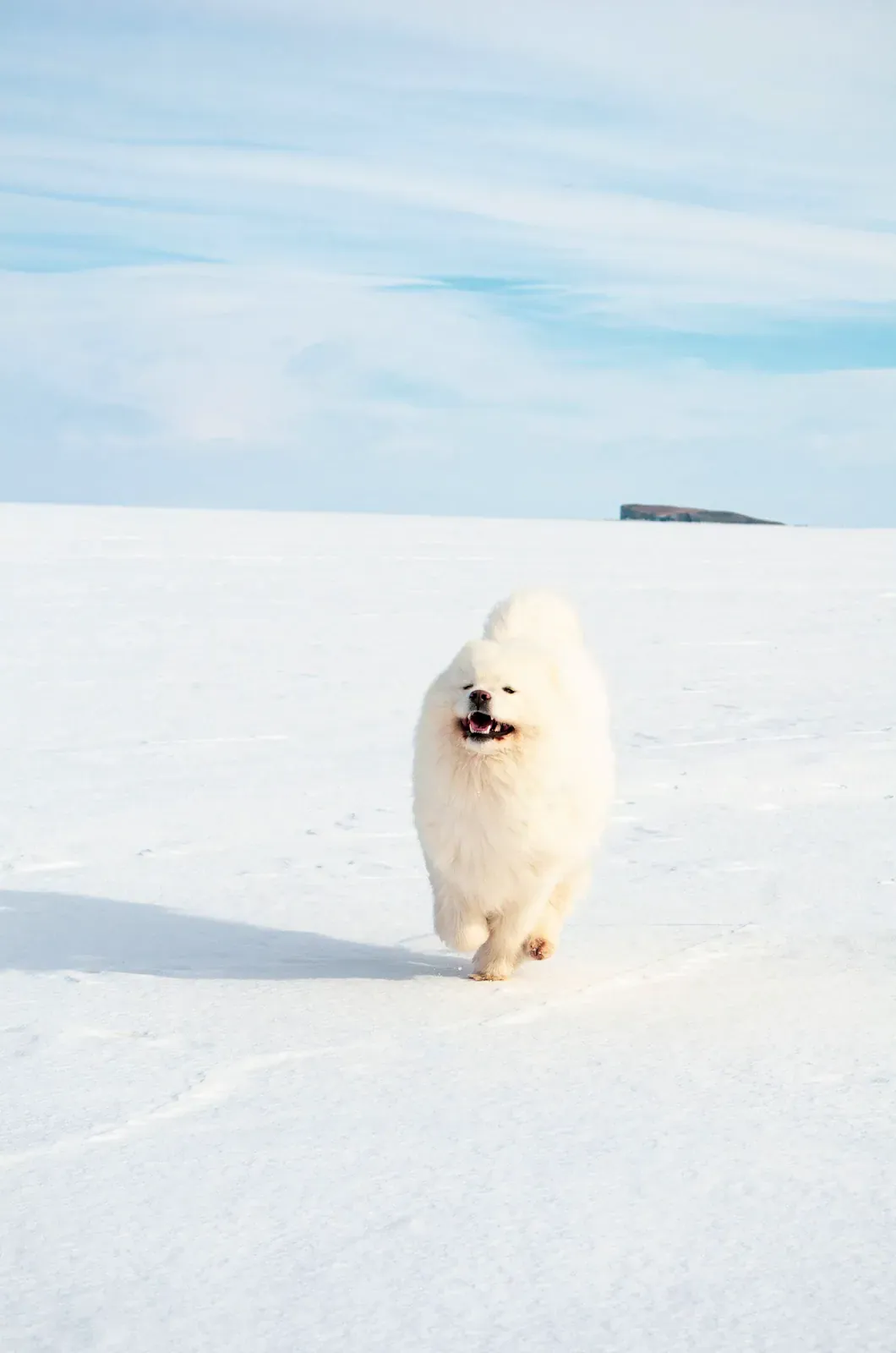
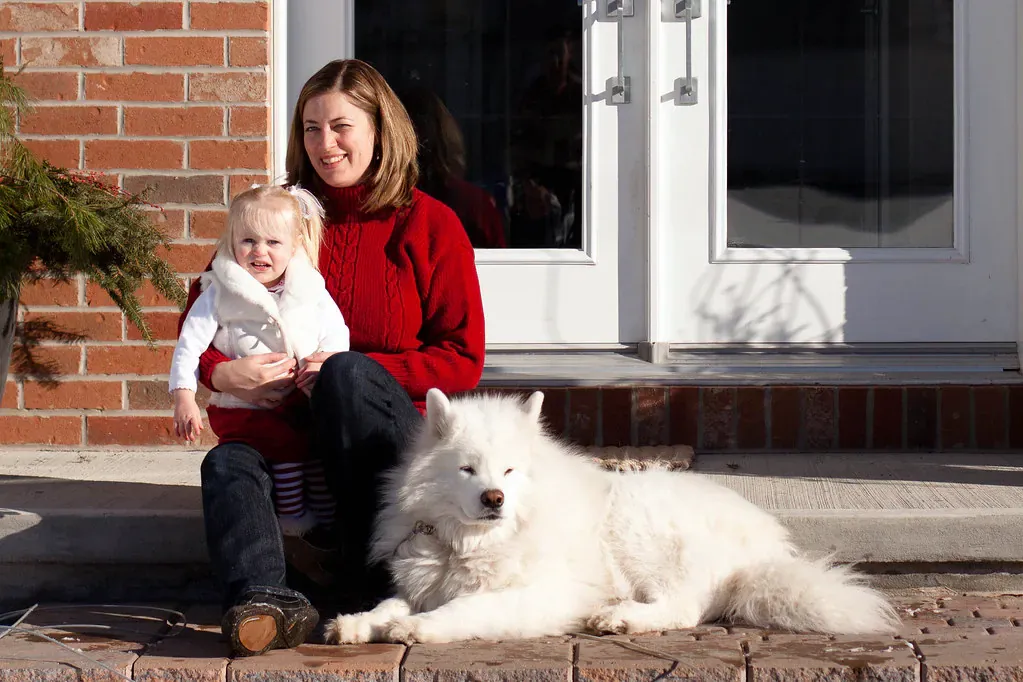
It is known for a thick white double coat and a turned-up mouth that gives it the "Sammy smile". Britain's Ernest Kilburn-Scott built the Western breed from Siberian dogs in the 1890s and early 1900s, and Samoyeds went on polar expeditions of the same era. It is friendly, social and busy, sheds heavily, and suits owners who enjoy brushing, company and cold-weather walks.
Samoyed quick facts
 Related breedBloodhound1000 to 1100 · Belgium, France
- Closest DNA relatives
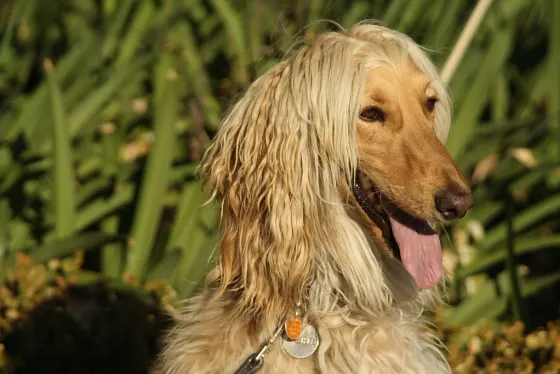
- Eurasier, Greenland Dog, American Eskimo Dog, Siberian Husky
- Descendant breeds
- Alaskan Husky, Argentine Polar Dog, Eurasier, Northern Inuit Dog (direct); Alaskan Klee Kai, Tamaskan Dog (further down)
- Country of origin
- Russia (northern Russia and Siberia; FCI lists "Northern Russia, Siberia")
- Period of development
- About 500 CE to 1912 (project data, low confidence); Western breed from 1889
- Type
- Spitz, working dog (FCI Group 5, Spitz and primitive types, standard no. 212; AKC Working Group; UK Kennel Club recognised)
- Height
- FCI: dogs 57 cm, bitches 53 cm (tolerance 3 cm). UK Kennel Club: dogs 51 to 56 cm, bitches 46 to 51 cm. AKC: dogs 53 to 60 cm, bitches 48 to 53 cm
- Weight
- About 20 to 29 kg for dogs, 16 to 23 kg for bitches (AKC breed reference ranges; standards give little or none)
- Coat
- Dense double coat, harsh straight outer hair over a soft, thick undercoat
- Colours
- White, white with biscuit, cream
- Life span
- Project data: 12 to 14 years
- DNA
- Not placed in any of the 23 clades of Parker et al. 2017 ("unclustered"); project family: Asian Spitz

Name and origin
 Related breedCane Corso1000 to 1996 · Italy
The breed is named after the Samoyedic peoples of Siberia, who kept the dogs. The name was used by outsiders for several peoples, among them the Nenets, and the Nenets Herding Laika is the living working dog that the Samoyed is considered to descend from. The older folk explanation, that "Samoyed" means "self-eater" in Russian and points to cannibals, is disputed and widely thought to be a later misreading.
Two other names turn up in older books. "Bjelkier" (white dog) is attributed to the breed in some histories, and "Sammy" is the everyday nickname used by owners and breeders today.
Where the breed comes from
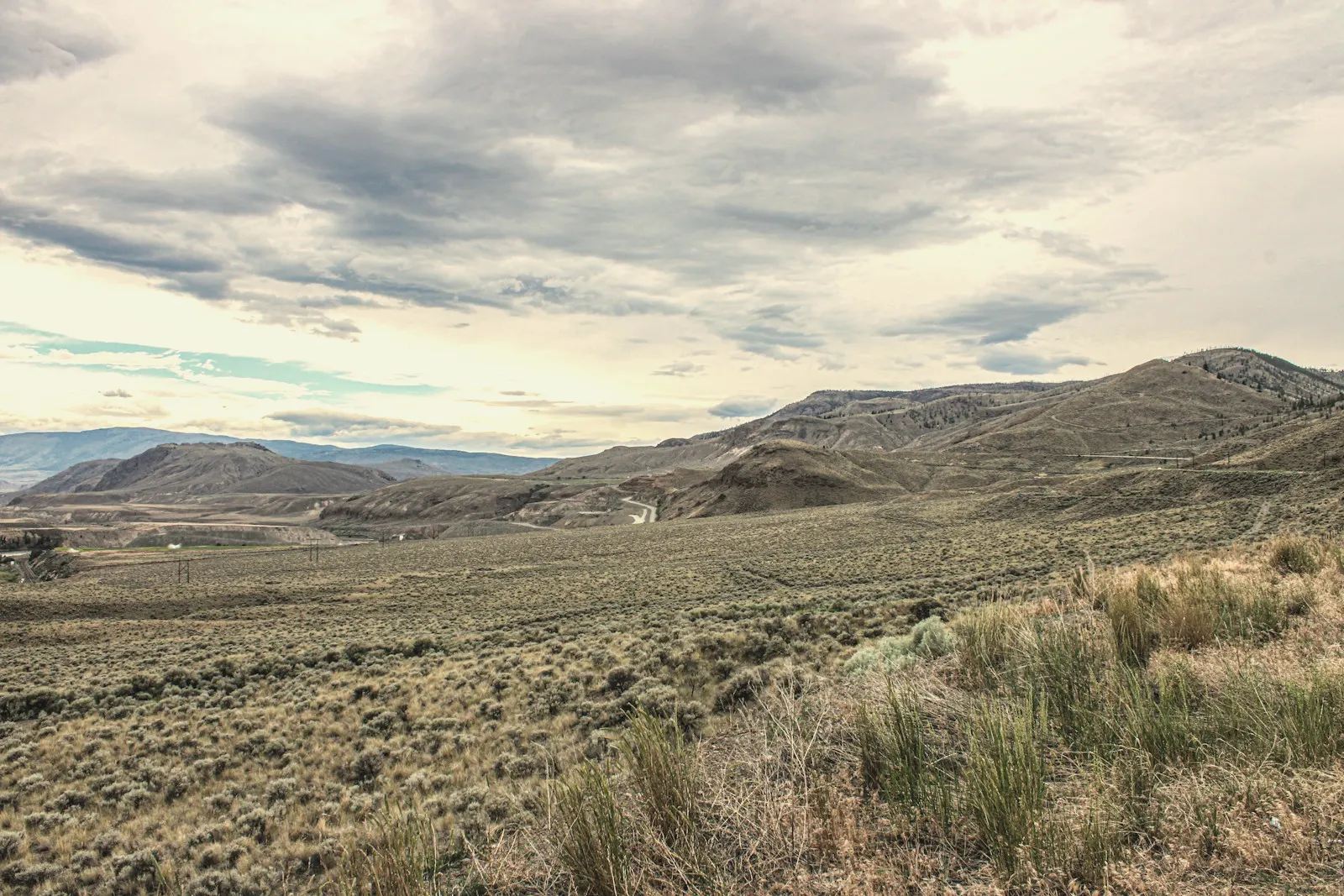
The Samoyed's homeland is the tundra and taiga of northern Russia, from the Arkhangelsk region east across Yamal and into Siberia. FCI lists Northern Russia and Siberia as the country of origin. The project data dates the early dogs to about 500 CE with low confidence, because the dogs of these peoples were never written down before outsiders arrived, and the date is an estimate.
History
 Same eraGreyhound800 CE to 1850 · United Kingdom
The dogs of the Samoyedic peoples
The Nenets and neighbouring peoples were reindeer herders and hunters who lived in tents and moved with their herds. Their dogs did several jobs. The dogs helped to herd and guard reindeer, pulled sledges, and, according to breed histories, slept inside the tent with the family. The idea of a "three-dog night", dogs as living blankets, comes from this life, though the phrase is a modern one.
These were working dogs selected for function, not for looks. White and pale dogs were common, and some accounts say they were valued because they stood out against reindeer and snow. Their descendants are today a whole family of white or pale northern dogs, although kennel clubs fix the standard for only the Samoyed itself.
Fram, Nansen and the first white pups
From 1893 to 1896 Fridtjof Nansen's Fram expedition tried to drift near the North Pole. The expedition bought 33 dogs from the Nenets before the voyage. Twenty-eight of them were used on the attempt to reach the Pole by sledge, and none survived. Dogs that remained at the ship, including white pups born in April 1893, passed into private hands and became part of the Western Samoyed gene pool. Our project data records these Fram dogs as foundation stock. These details come from secondary histories, so treat the numbers as approximate.
Ernest Kilburn-Scott and the British foundation
The British zoologist Ernest Kilburn-Scott is credited as the founder of the breed in the West. According to breed histories, he brought a puppy home from a Samoyed encampment near Arkhangelsk in 1889, and later imported a cream bitch (Whitey Petchora) and a white male (Musti). His wife, Clara Kilburn-Scott, was an equally central breeder. In 1899 the couple bought eight dogs from the Arctic explorer Frederick Jackson, who had used them in his Franz Josef Land expedition. By 1912 the Kilburn-Scotts are said to have kept about 50 Samoyeds.
Their dog Antarctic Buck is a famous example. According to the AKC history, he was a veteran of Carsten Borchgrevink's 1898 to 1900 Antarctic expedition, spent years in a Sydney zoo, and was bought by the Kilburn-Scotts and brought to England in 1909.
The breed standard was drafted in England in 1909. The AKC history says the Samoyede Club was founded the same year and that the UK Kennel Club recognised the breed in 1912. Other breed histories give 1909 for the Kennel Club, so the exact year is uncertain.
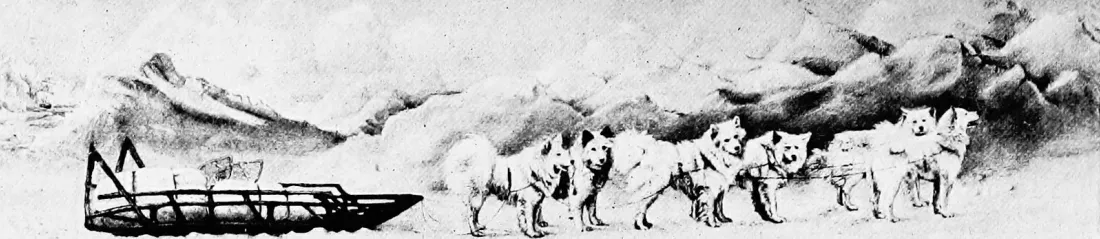
Polar expeditions
Samoyed-type dogs appear in several polar stories.
- Nansen, 1893 to 1896. The dogs of the Fram expedition were bought from the Nenets and used on the sledge journey north.
- Jackson, 1894 to 1897. The Jackson-Harmsworth expedition to Franz Josef Land used Samoyeds, some of which later went to the Kilburn-Scotts.
- Borchgrevink, 1898 to 1900. Wikipedia reports about 90 Samoyeds going to Antarctica with this expedition.
- Scott, 1901 to 1904. The same source says Robert Falcon Scott used twenty.
- Amundsen, 1911. Many popular articles, including breed-club pages, say Roald Amundsen reached the South Pole behind a Samoyed lead dog. Historians of the expedition record that his dogs were Greenland dogs from the Royal Greenland Trading Company, and they name no Samoyeds. We treat the Amundsen story as a legend, not fact.
The breed reaches America
The first Samoyeds reached the United States in 1904, as a gift from Grand Duke Nicholas of Russia to Princesse de Montglyon. In 1906 a dog called Moustan became the first AKC-registered Samoyed. Only 40 were registered by 1920. The breed grew in the 1930s with American kennels. A modern working display came in 2007, when an all-Samoyed team completed the 750-mile (about 1,200 km) Norm Vaughn Serum Run in very low temperatures.
Recognition summary
| Year | Event |
|---|---|
| 1889 | Ernest Kilburn-Scott brings a puppy from Arkhangelsk to England |
| 1893 to 1896 | Fram expedition: Nenets dogs and white pups become part of the breed |
| 1904 | First Samoyeds to the United States |
| 1906 | First Samoyed registered with the AKC |
| 1909 | First British standard drafted; Samoyede Club founded (AKC history) |
| 1912 | UK Kennel Club recognition (AKC history; some sources give 1909) |
FCI lists the Samoyed as standard no. 212 (definitive), with Russia as the country of origin.
Relatives, ancestors and descendants
 Same familyIcelandic Sheepdog874 CE to 1969 · Iceland
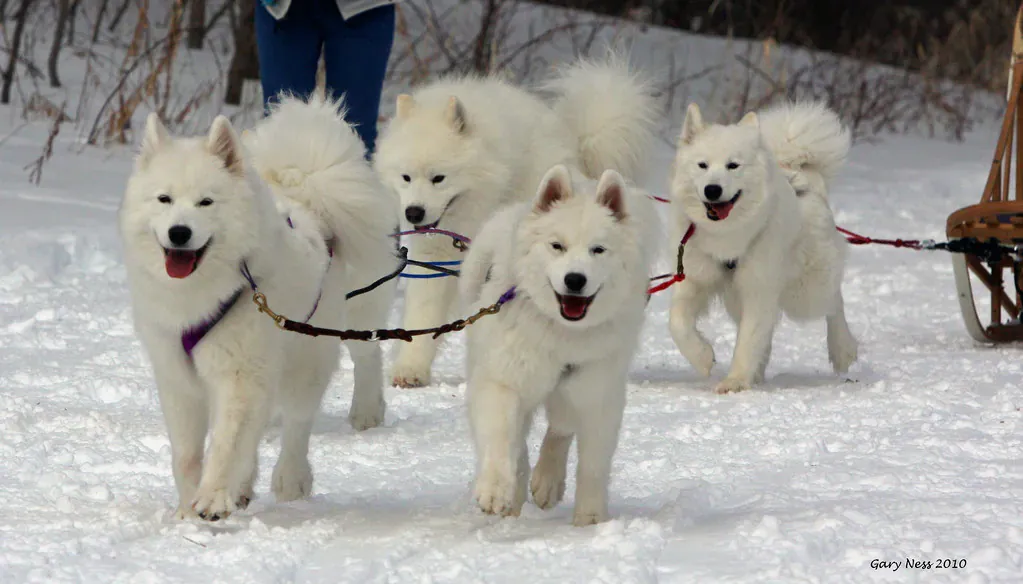
In the project knowledge base the Samoyed has one parent, the Nenets Herding Laika, the dog of the same people. Confidence in that link is medium. The Samoyed belongs to the Asian Spitz family in our data, the family of primitive spitz and sled dogs.
Descendant breeds
- Eurasier. A German breed of the 1960s made from Wolfspitz, Chow Chow and Samoyed.
- Alaskan Husky. A working sled-dog mix, with Samoyed among the dogs used to build it.
- Northern Inuit Dog. A wolf-like companion breed from Britain of the 1980s, with Samoyed in its background.
- Argentine Polar Dog. Developed for the Argentine army's polar work in the 1950s.
- Alaskan Klee Kai and Tamaskan Dog. Further down the line, with Samoyed contributions recorded in the project data.
What does DNA say?
The Parker et al. 2017 study (Cell Reports) analysed 1,346 dogs from 161 breeds and sorted most of them into 23 supported clades. The Samoyed is one of the breeds the study did not cluster into any , which fits the picture of an old, isolated Arctic population that did not mix much with European breeds before the 1800s. In our project data it sits in the Asian Spitz family, which has its roots in the East Eurasian and Arctic dog lineages.
The study also measured shared : long stretches of identical DNA that two breeds inherited from common ancestors or exchanged through crossing. The more (Mb) two breeds share, the stronger the sign of a shared past. The study cannot say which way the genes flowed.
Source: Parker et al. 2017, as recorded in this site's breed database.
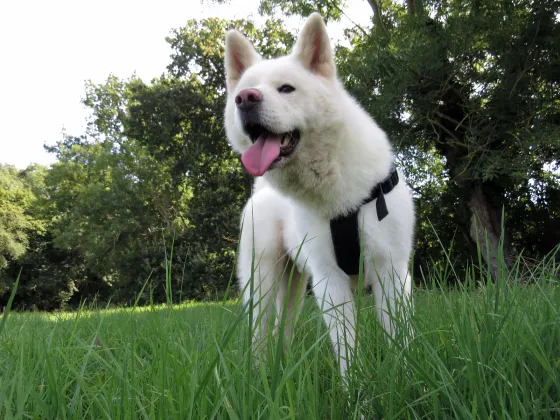
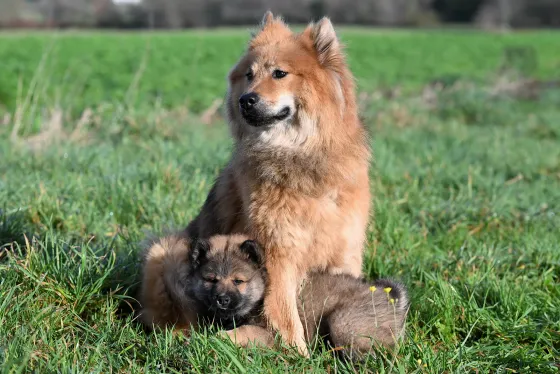
The Eurasier tops the list because the Samoyed is one of its founders. The Greenland Dog and Siberian Husky are other northern working breeds, and the low figures suggest a deep, old relationship, not recent crossing. The American Eskimo Dog, a white spitz of Germanic origin, shares a similar amount, so a white coat does not mean a close genetic link.
Descend from it · 4
- Alaskan HuskyUnited States
- Argentine Polar DogArgentina
- EurasierGermany
- Northern Inuit DogUnited Kingdom
- Eurasier58.5 Mb 2.4%
- Greenland Dog14.7 Mb 0.6%
- American Eskimo Dog14.4 Mb 0.6%
- Siberian Husky12.3 Mb 0.5%
Source: Parker et al. 2017. Percent of the whole genome.
| Breedwith Samoyed | Shared DNA with Samoyed (Mb)Shared DNA (Mb) |
|---|---|
| Eurasier | 58.5 |
| Greenland Dog | 14.7 |
| American Eskimo Dog | 14.4 |
| Siberian Husky | 12.3 |
The breed standard
 Looks relatedLhasa Apso800 CE to 1934 · China
A breed standard is the written ideal of a breed, which kennel club judges compare each dog against. The three main clubs describe the Samoyed in similar terms, with differences in height.
| Trait | FCI (no. 212) | AKC | UK Kennel Club |
|---|---|---|---|
| Height, dogs | 57 cm, tolerance 3 cm | 53 to 60 cm | 51 to 56 cm |
| Height, bitches | 53 cm, tolerance 3 cm | 48 to 53 cm | 46 to 51 cm |
| Weight | Not a main criterion | Breed reference: about 20 to 29 kg dogs, 16 to 23 kg bitches | Not stated (reference works: about 20 to 30 kg dogs, 16 to 20 kg bitches) |
| Coat | Double: soft, dense undercoat, long harsh outer coat | Double: dense, harsh outer, soft undercoat | Double: dense, harsh outer, soft undercoat |
| Colours | Pure white, cream, white with biscuit | White, white and biscuit, cream | White, white and biscuit, cream |
| Expression | Alert and gentle, the "smile" | Alert, "Samoyed expression" | Alert and smiling |
The AKC and UK figures were converted from the clubs' published inches where needed, and the weight ranges come from breed reference works rather than the standards. The AKC standard allows an all-biscuit coat. The three clubs describe a strong, medium-sized, balanced dog with a wedge-shaped head, dark almond-shaped eyes, erect triangular ears and a tail carried curled over the back.
Coat, colour and shedding
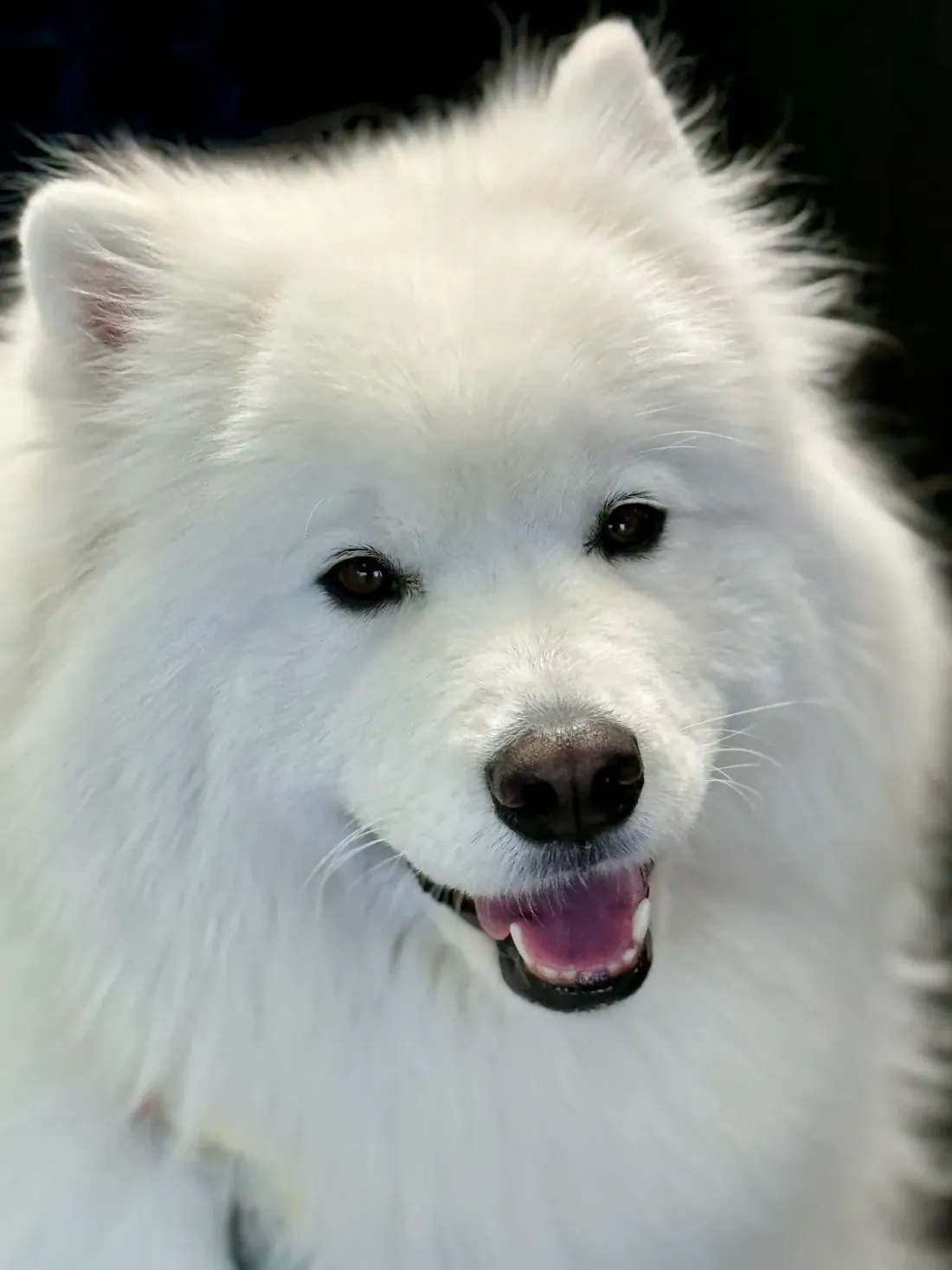
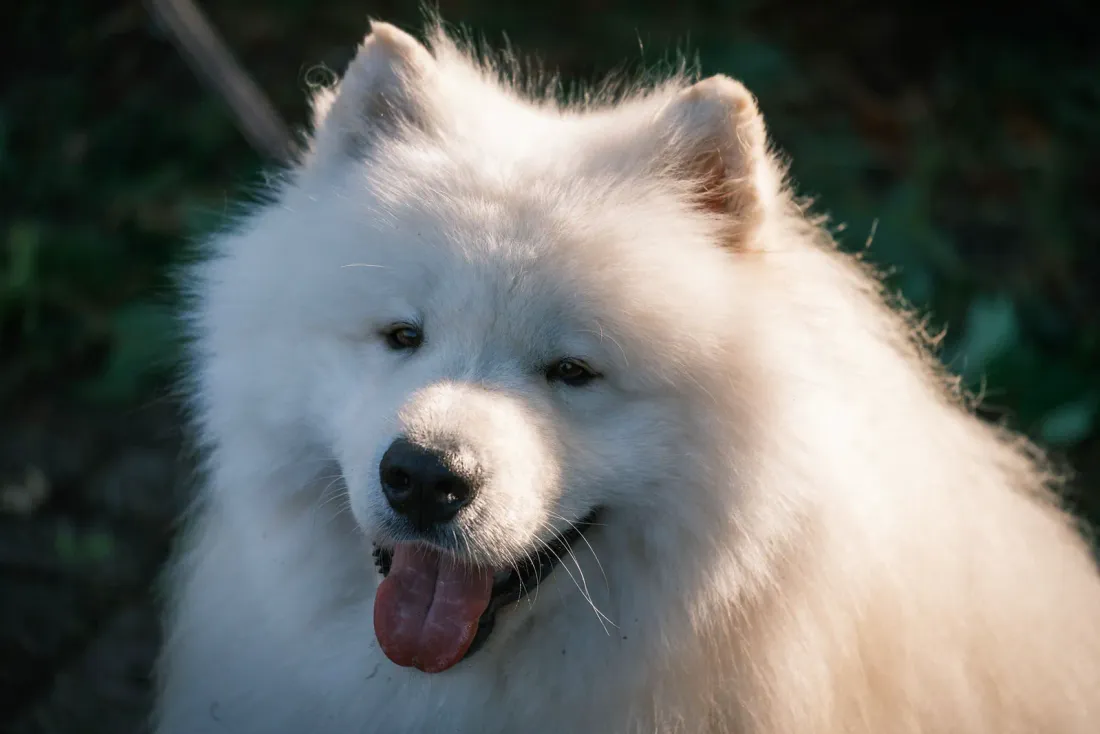
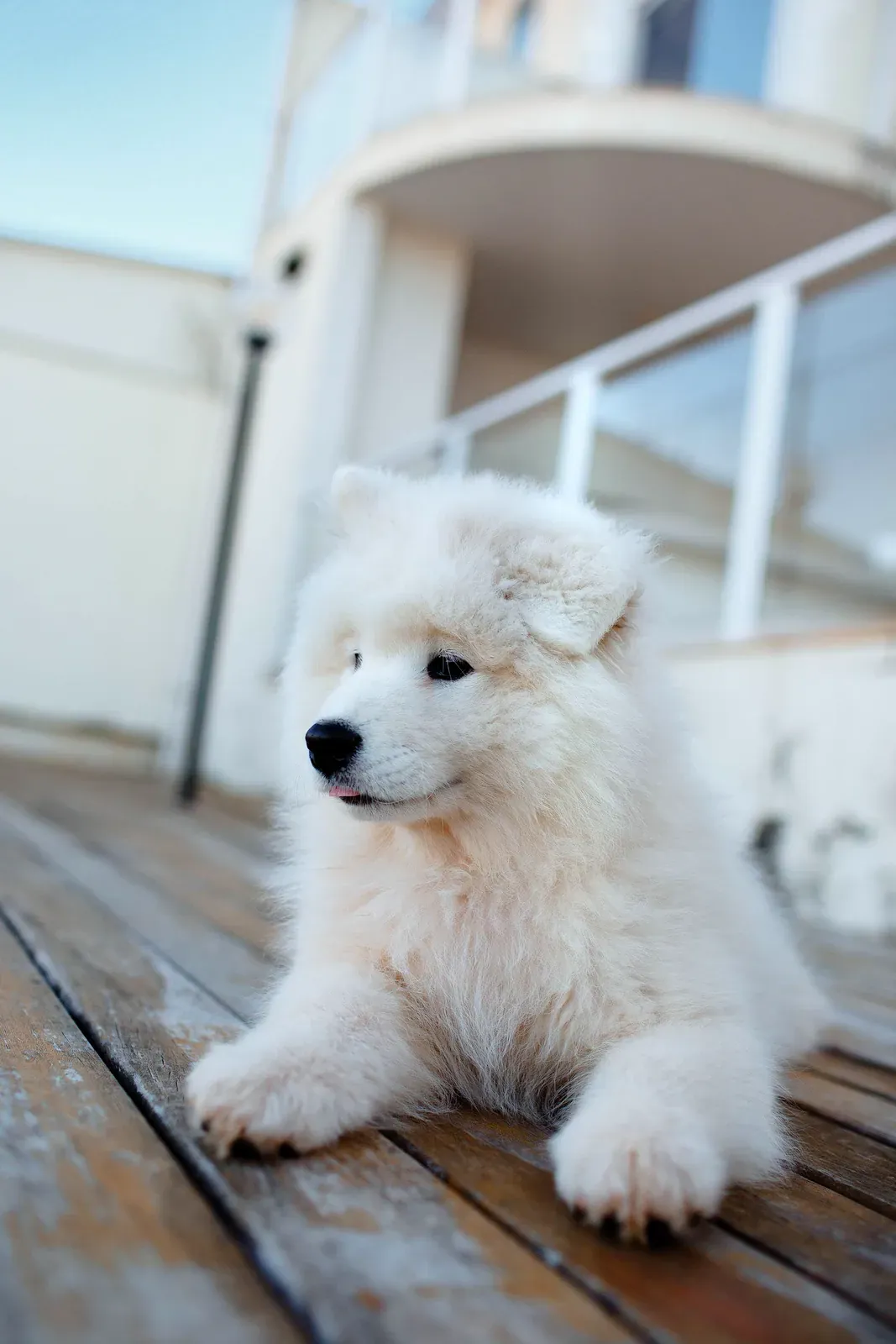
The Samoyed's coat is its signature. The soft undercoat insulates, the longer harsh outer hair sheds snow and keeps the dog dry, and the dense ruff around the neck and shoulders frames the face.
- Colours. White, white with a light biscuit tint, and cream. The AKC standard also accepts all-biscuit. Black, brown or other colour patches are outside the standard.
- Shedding. The coat is "blown" (shed in large amounts) once or twice a year, often in spring or autumn. Fine hair is also lost all year.
- Grooming. Breed guidance recommends brushing several times a week, daily in shedding season. The coat should not be shaved. Shaving damages its insulation and can make heat worse, a point made in veterinary and breed-club advice.
Temperament
 Related breedPekingese700 CE to 1860 · China
The standards and breed clubs describe a friendly, gentle, social dog, eager to be near people. Wikipedia and breed-club accounts say the Samoyed is a poor guard dog because it greets strangers with enthusiasm. It is not a one-person dog. It was bred to live in the tent with the family, and that history still shows: Samoyeds tend to want to be where the people are.
The "Sammy smile" comes from upturned corners of the mouth, a result of the lip shape set by the standard. It was also a practical feature, because it keeps the dog from drooling and forming ice on its face in the cold. This explanation is common in breed literature, but no study we found tests it, so treat it as a plausible breed story. The expression also means the dog looks pleased even when it is not, so read the rest of its body language.
What this means in daily life:
- Social. Most Samoyeds like people and other dogs. Many are talkative, using a range of "woo" sounds.
- Busy. A bored Samoyed can dig, chew or bark. Breed pages describe destructiveness when left alone and under-exercised.
- Independent streak. Spitz breeds think for themselves. Positive, varied training works better than repetition.
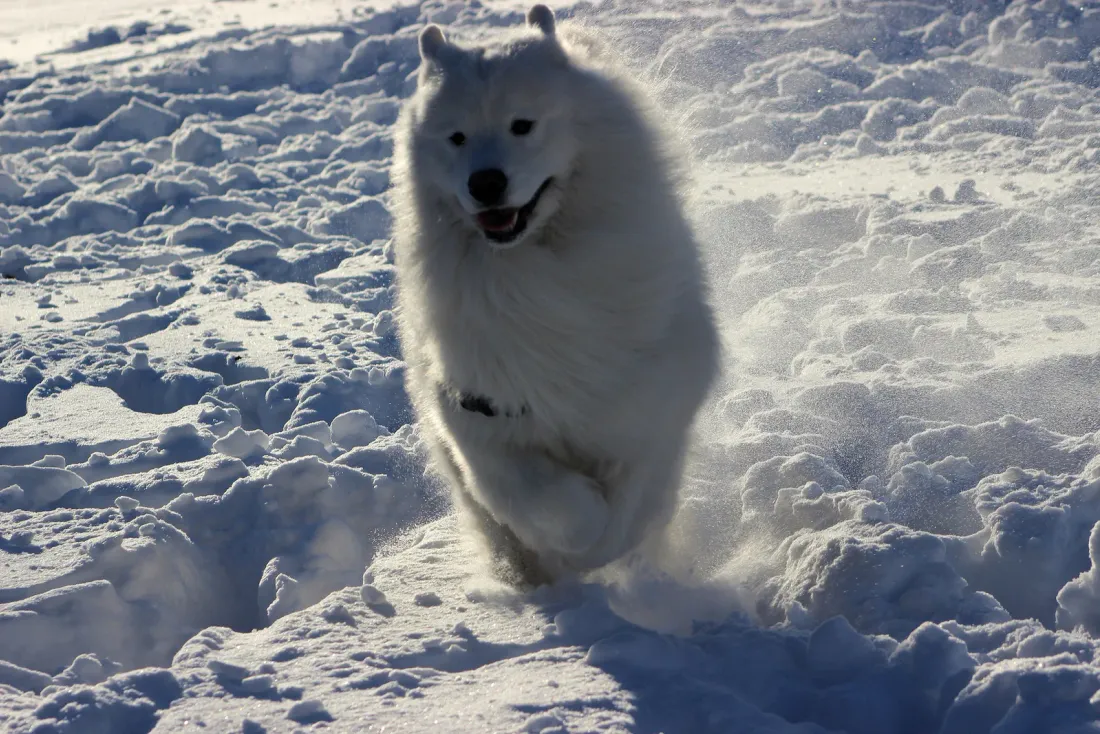
- Prey drive. As a reindeer dog and not a hunter, prey drive is moderate, but cats and small pets need careful introduction.
Health
 Related breedPembroke Welsh Corgi1100 to 1934 · United Kingdom
Most Samoyeds live healthy lives, and the breed is known as a fairly long-lived medium-large dog. Project data gives 12 to 14 years, and a 2024 UK study reported by Wikipedia gives an average near 13 years. This section lists what breeders screen for and what owners can watch for. It is general information and not a substitute for a vet's advice.
| Condition | What it is | How common | What helps |
|---|---|---|---|
| Samoyed hereditary glomerulopathy (SHG) | A kidney disease caused by a faulty collagen gene (COL4A5) on the X chromosome. The kidney filters leak protein. It is similar to Alport syndrome in people | Uncommon in tested lines. No breed-wide carrier percentage found. Affected males are usually diagnosed young; carrier females are affected more slowly | DNA test for the COL4A5 variant before breeding; urine checks and vet care for affected dogs |
| X-linked progressive retinal atrophy (XLPRA) | An inherited eye disease in which the retina slowly loses cells. Signs often start with night blindness at 2 to 5 years | Uncommon. Zhang et al. 2002 found the RPGR gene deletion in Samoyeds and Siberian Huskies. No breed-wide frequency found | DNA test for the RPGR variant; annual eye examination of breeding stock |
| Diabetes mellitus | The body cannot control blood sugar. Usually appears in middle-aged and older dogs; median age at diagnosis about 9 to 10 years | Seen far more often than in most breeds. In the UK diabetes register, Samoyeds were 3 percent of diabetic dogs but 0.09 percent of all dogs (odds ratio 35.8; Catchpole et al. 2013). Fall et al. 2007 found an odds ratio of 32.1 in North American records | Weight control, regular vet checks, watching for thirst and weight loss. Treated with insulin, and many dogs live well |
| Hip dysplasia | The hip joint forms loosely and can wear early | Seen in many medium-large breeds. We found no current breed median score for the Samoyed | Hip scoring of breeding dogs (BVA/Kennel Club or OFA scheme), a lean body weight |
| Drug sensitivity | Reported more reactions to sulfa-containing medicines | Reported by breed-club veterinary references (Bell, Cavanagh, Tilley and Smith 2012) | Tell the vet the breed before any medicine is prescribed |
Other conditions named in breed references include pulmonary stenosis (a heart valve narrowing) and sebaceous adenitis (an uncommon skin condition), but we found no prevalence figures from a named study.
Practical points. Keep the dog lean. Ask for the SHG and XLPRA DNA test results of both parents. Hip-score and eye-test certificates should be shown for the parents. Samoyeds in warm climates need shade, water and cool floors. Never shave the coat for heat, as mentioned above.
 Ticks and fleasTicks and fleas on dogs: how to check, remove and prevent themTicks and fleas on dogs: how to tell them apart, check your dog, remove a tick safely, break the flea life cycle and prevent both.
 GuidesPractical guidesBehaviour, training, health and adoptionRelated breedPembroke Welsh Corgi1100 to 1934 · United Kingdom
Living with a Samoyed
 Related breedPuli900 CE to 1924 · Hungary
Ratings below follow the breed standard and breed-club guidance named in this article. Where sources are thin, the table says "varies".
| Area | Rating | Reason |
|---|---|---|
| Exercise per day | Medium to High | A working-bred spitz with stamina. Needs a long daily walk or a job; sources differ on the exact time, so it varies by line and age |
| Training needs | Medium | Intelligent and independent. Short, varied, reward-based sessions work best |
| Grooming time | High | Brush several times a week, daily in shedding season |
| Shedding | High | Heavy twice-yearly coat blow plus constant fine hair |
| Barking | High | A vocal breed. Breed pages describe a talkative dog |
| Time alone | Poor | A pack dog raised in the tent. Boredom can mean digging or chewing |
| Children | Good | Friendly and playful; supervise young children because of size and enthusiasm |
| Other dogs | Good | Generally sociable; early socialisation helps |
| Cats and small pets | Varies | Moderate prey drive; introductions need care |
| Flat living | Fair | Possible with real daily exercise, but the barking and shedding matter more in shared buildings |
| Heat tolerance | Poor | Thick double coat. Needs shade, cool rooms and no strenuous exercise in heat |
| Cold tolerance | Good | Bred for Arctic conditions |
| First-time owner | Fair | Friendly, but the grooming, barking and independence need commitment |
A great fit if...
- You like to groom and do not mind white hair on dark clothes and furniture.
- You are home much of the day, or can take the dog to work or give company.
- You enjoy long walks, hiking or cold-weather sport.
- You want a friendly dog that greets guests and does not act as a guard.
Think twice if...
- You live somewhere hot with no air conditioning or cool space.
- Your household is away all day and the dog would be alone.
- You want a quiet dog or live very close to neighbours.
- You want a low-maintenance coat or a dog that comes back reliably off the lead.
Before you get one
- Ask breeders for hip scores, annual eye test results, and DNA results for SHG and XLPRA on both parents.
- Consider an adult dog from a breed rescue. Samoyed rescues exist in many countries.
- Expect the first year to include socialisation, puppy classes, coat care and a lot of chewing and digging.
Similar breeds to consider
- Siberian Husky. Another northern sled breed, often a similar size, with a shorter coat and a stronger pull to roam.
- Alaskan Malamute. Larger and stronger, for owners who want a heavier working spitz.
- American Eskimo Dog. A white spitz with a similar look in smaller sizes.
- Finnish Lapphund. A herding spitz from Lapland with a thick coat and a friendly nature.
 GuidesPractical guidesBehaviour, training, health and adoptionThinking of adopting?How to adopt a dog from a shelter or rescueHow to adopt a dog from a shelter or rescue: the process, costs in general terms, choosing a dog, the first weeks and what if it does not work out.Related breedPuli900 CE to 1924 · Hungary
Samoyed fun facts
- The Samoyed's turned-up mouth gave it the nickname "smiley dog".
- White pups born at the Fram expedition ship in April 1893 are said to have entered the Western Samoyed line.
- A Samoyed called Antarctic Buck, a veteran of Borchgrevink's Antarctic expedition, was brought to England in 1909.
- In 2007 an all-Samoyed team completed the 750-mile Norm Vaughn Serum Run.
Frequently asked questions
Are Samoyeds good with children?
Generally yes, as friendly and playful dogs. Their size and energy mean young children should be supervised.
How long do Samoyeds live?
Project data gives 12 to 14 years.
Do Samoyeds shed a lot?
Yes. They shed fine hair all year and blow the whole undercoat once or twice a year.
What is the Sammy smile?
The upturned corners of the mouth that make the dog look as if it is smiling. A popular explanation is that it kept drool from freezing, but no study has tested this.
Are Samoyeds related to Siberian Huskies?
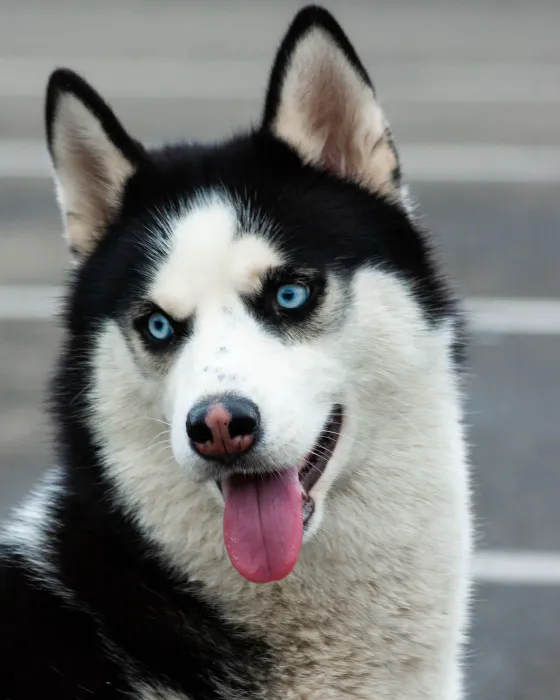
Both are northern sled and working dogs in the Asian Spitz family. They share about 12 Mb of DNA in Parker et al. 2017, which suggests a distant link, not recent crossing.
What health problems do Samoyeds have?
The main ones are diabetes in middle age, , and two inherited conditions with DNA tests: SHG (kidney) and XLPRA (eyes).
How big is a Samoyed?
About 46 to 60 cm at the shoulder depending on sex and club standard, and about 16 to 29 kg.
Did Amundsen use Samoyeds at the South Pole?
Records of the expedition say his dogs were Greenland dogs, so the Samoyed story is a legend.
Read next
Sources (14)
- American Kennel Club, Samoyed breed page, official standard and "Samoyed History" article.
- Bell J.S., Cavanagh K.E., Tilley L.P., Smith F.W.K., Veterinary Medical Guide to Dog and Cat Breeds, 2012 (cited by the Samoyed Club of America).
- Borchgrevink C.E., Antarctic expedition of 1898 to 1900 (via breed histories).
- Catchpole B. et al., study of diabetes mellitus in UK dogs using a diabetes register, 2013.
- Davison L.J. et al., diabetes mellitus in insured dogs in the UK, 2005.
- Fall T. et al., "Diabetes mellitus in a population of 180,000 insured dogs: incidence, survival, and breed distribution", Journal of Veterinary Internal Medicine, 2007.
- Fédération Cynologique Internationale, Samoyed, standard no. 212.
- Parker H.G. et al., "Genomic analyses reveal the influence of geographic origin, migration, and hybridization on modern dog breed development", Cell Reports, 2017.
- Samoyed Club of America, health pages.
- The Kennel Club (UK), Samoyed breed standard and breed information.
- Wikipedia, "Samoyed dog", "Samoyed hereditary glomerulopathy", "Nansen's Fram expedition", "Amundsen's South Pole expedition".
- Zhang Q. et al., "Different RPGR exon ORF15 mutations in canids provide insights into photoreceptor cell degeneration", Human Molecular Genetics, 2002.
- Zheng K. et al., "Canine X chromosome-linked hereditary nephritis: a genetic model for human X-linked hereditary nephritis resulting from a single base mutation in the gene encoding the alpha 5 chain of collagen type IV", Proceedings of the National Academy of Sciences, 1994.
- Project knowledge base, breed records and Parker 2017 shared-haplotype table (this site).