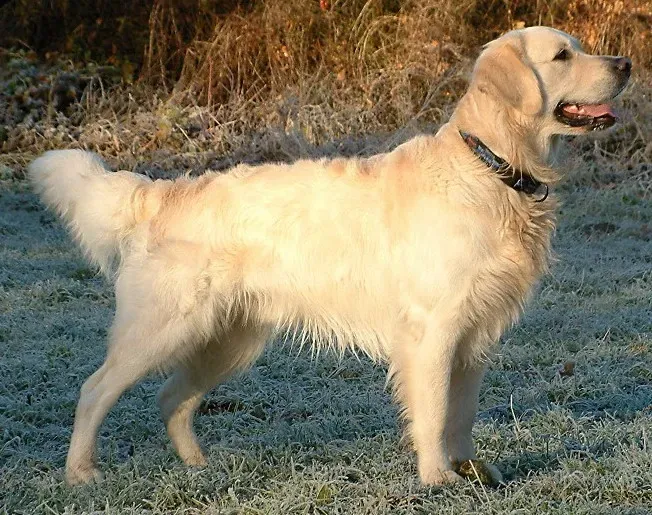
It was bred to find and carry shot game gently and to work in water, and it is now one of the most popular family dogs in the world. The breed is known for a friendly, eager temperament, a dense golden coat and a typical lifespan of 10 to 12 years. It suits active households. Cancer is the breed's main health concern, and owners should plan for regular vet checks.
Quick facts
 Related breedBelgian Malinois1891 to 1901 · Belgium
- Closest DNA relatives
- Flat-coated Retriever, Labrador Retriever, Newfoundland
- Descendant breeds
- Goldendoodle (a crossbreed, not recognised as a breed by major kennel clubs)
- Country of origin
- United Kingdom (Scottish Highlands, Great Britain)
- Period of development
- 1868 to 1911 (project data): first recorded litters 1868, separate Kennel Club listing 1911
- Founder
- Sir Dudley Marjoribanks, later Lord Tweedmouth, Guisachan estate near Glen Affric
- Type
- Retriever gundog (FCI Group 8, Retrievers, Flushing dogs, Water dogs; FCI standard no. 111; AKC Sporting Group; UK Kennel Club Gundog Group)
- Height
- UK Kennel Club standard: dogs 56 to 61 cm, bitches 51 to 56 cm
- Weight
- About 32 to 34 kg for males, 27 to 30 kg for females (UK breed information)
- Coat
- Flat or wavy, water-repellent double coat with feathering
- Colours
- Any shade of gold or cream. Red and mahogany are not accepted in the UK standard
- Life span
- Project data: 10 to 12 years. UK VetCompass study: median about 12.5 years
- Exercise
- About an hour or more a day, plus retrieving and swimming if possible
- DNA family
- Retriever (Parker et al. 2017)
Name and origin
 Related breedBoxer1880 to 1904 · Germany
"Golden" describes the coat colour. "Retriever" describes the job: the dog finds fallen game and brings it back to the hunter undamaged. Early records called the dogs "yellow retrievers". The Kennel Club first listed them in 1903 as a colour variety of the Flat-coated Retriever ("Flat Coats, Golden"), in 1911 as "Retriever (Golden and Yellow)", and the name changed to Golden Retriever in 1920. Other names in use: Golden, Yellow Retriever.
Where the breed came from was a matter of legend for decades. Popular stories said it descended from Russian circus dogs bought at Brighton. The Guisachan record book, which surfaced in 1952, tells a different and documented story (see History below).
History
 Same eraBullmastiff1860 to 1924 · United Kingdom
Why the breed was needed
In the mid 1800s, breech-loading guns and organised shooting estates created demand for dogs that could pick up game on land and from water, over rough ground, and bring it back without damage. Sportsmen crossed several types of water dogs, spaniels, setters and early retrievers. Lord Tweedmouth's aim was a yellow retriever that was steady, intelligent and a good swimmer, suited to the Highland moors and lochs.
Lord Tweedmouth and Guisachan
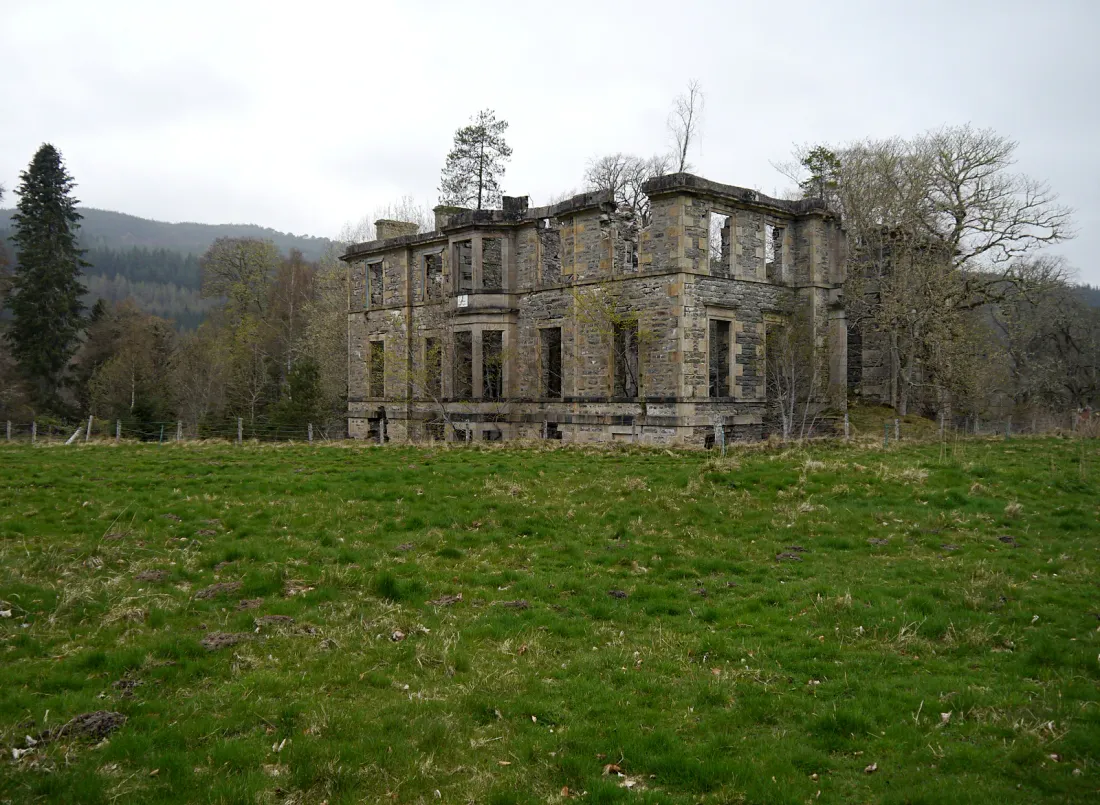
Dudley Coutts Marjoribanks (born 29 December 1820, died 4 March 1894) was a Scottish businessman and Liberal politician. He bought the Guisachan estate near Tomich, in Inverness-shire, in 1854. His breeding records, kept in what is now called the Guisachan record book, covered the years 1865 to 1890. The book came to light only in 1952, when his granddaughter Lady Pentland made it available to the English breed historian Elma Stonex. The record book does not support the circus dog tale.
Nous and Belle
The story, as documented in the record book, runs like this:
- 1864. A yellow puppy is whelped in a litter of black wavy-coated (flat-coated type) retrievers.
- 1865. Marjoribanks buys the yellow puppy, named Nous ("wisdom" in Greek), from a cobbler in Brighton, southern England.
- 1868. Nous is mated to Belle, a Tweed Water Spaniel. Belle was a liver-coloured water dog from the Tweed valley, a type that is now extinct. The litter produced yellow puppies, including Cowslip, Crocus and Primrose. Marjoribanks kept two females and gave a male to his son.
- 1871 and later. A second mating of Nous and Belle produced Ada, once thought to be part of the first litter. Ada went to a nephew, the 5th Earl of Ilchester, and began the Ilchester line of yellow retrievers.
From these dogs Marjoribanks bred for generations, choosing for colour, temperament and working ability. The project knowledge base notes further infusions of Irish Setter and Labrador Retriever blood, and a sandy-coloured Bloodhound in later years, though confidence in these crosses is only medium. Tweed Water Spaniels were used again after Belle.

Spread beyond Scotland
Guisachan dogs went to family, friends and estates across Britain. The Ilchester kennel and other estates kept yellow lines going and shaped the early show breed. The Kennel Club listing of 1911 gave yellow retrievers a class of their own. A Golden Retriever Club was formed in the early 1910s (sources give 1911 and 1913). After the First World War the breed was exported. The American Kennel Club recognised the Golden Retriever in 1925, and the first registrations in Canada followed in 1927.
Recognition timeline
| Year | Event |
|---|---|
| 1854 | Marjoribanks buys Guisachan |
| 1865 | Nous bought in Brighton |
| 1868 | Nous mated to Belle, the Tweed Water Spaniel |
| 1903 | Kennel Club accepts yellow retrievers as "Flat Coats, Golden" |
| 1911 | Listed as "Retriever (Golden and Yellow)" |
| 1920 | Officially renamed Golden Retriever |
| 1925 | AKC recognition |
| 1927 | First Canadian registrations |
| 1952 | Guisachan record book made public |
The FCI lists the breed as standard no. 111 (definitive), with Great Britain as country of origin. Since the late twentieth century, three broad types are talked about: British, American and Canadian lines, which differ in size, build and colour. The FCI standard covers all of them.

Relatives and DNA
 Same familyChihuahua1850 to 1904 · Mexico
The project knowledge base lists these ancestors and crosses:
- Flat-coated Retriever. Nous, the foundation sire, was a yellow dog from flat-coated stock. Confidence: high.
- Tweed Water Spaniel. Belle and later dogs. Extinct breed. Confidence: high.
- Irish Setter. Red Setter blood added later. Confidence: medium.
- Labrador Retriever. Further Labrador blood. Confidence: medium.
- Bloodhound. One sandy Bloodhound in later years. Confidence: medium.
Deeper ancestors in the knowledge base include the Newfoundland, St. John's Water Dog and English Setter.
Descendant breed
- Goldendoodle. A Golden Retriever and Poodle cross. Not a recognised breed with the major kennel clubs.
What does DNA say?
A 2017 study by Parker and colleagues (Cell Reports) analysed 1,346 dogs from 161 breeds and sorted them into 23 supported clades. The Golden Retriever sits in the Retriever with strong support. The study also measured shared , long stretches of identical DNA inherited from common ancestors. The more (Mb) two breeds share, the stronger the sign of crossing or shared founders. The study cannot say which direction genes flowed.
Source: Parker et al. 2017, as recorded in this site's breed database.
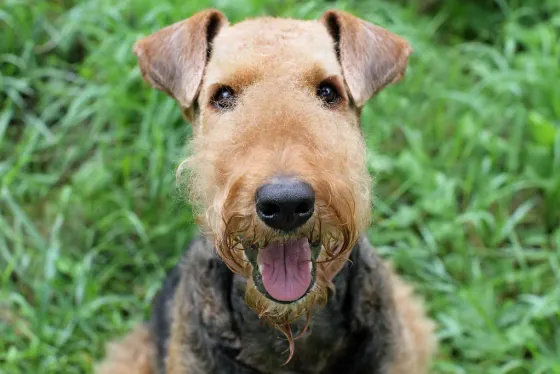
The Flat-coated Retriever shares nearly twice as much DNA as any other breed, which fits the record that Nous came from flat-coated stock. The Labrador, Irish Setter and English Setter all appear, matching the documented crosses and the wider gundog heritage. The Airedale Terrier is an unexpected name in the list, and the study does not explain it.
Descend from it · 1
- GoldendoodleUnited States
- Flat-coated Retriever67.0 Mb 2.8%
- Labrador Retriever35.1 Mb 1.5%
- Newfoundland19.5 Mb 0.8%
- Curly-coated Retriever15.9 Mb 0.7%
- Irish Setter15.4 Mb 0.6%
- Irish Water Spaniel11.4 Mb 0.5%
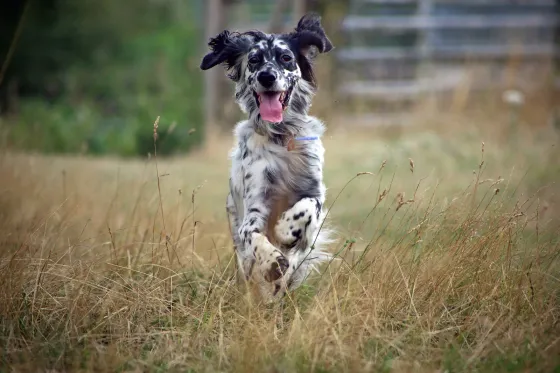
- English Setter11.2 Mb 0.5%
- Airedale Terrier11.1 Mb 0.5%
Source: Parker et al. 2017. Percent of the whole genome.
| Breedwith Golden Retriever | Shared DNA with Golden Retriever (Mb)Shared DNA (Mb) |
|---|---|
| Flat-coated Retriever | 67.0 |
| Labrador Retriever | 35.1 |
| Newfoundland | 19.5 |
| Curly-coated Retriever | 15.9 |
| Irish Setter | 15.4 |
| Irish Water Spaniel | 11.4 |
| English Setter | 11.2 |
| Airedale Terrier | 11.1 |
The breed standard
 Looks relatedDobermann1880 to 1900 · Germany
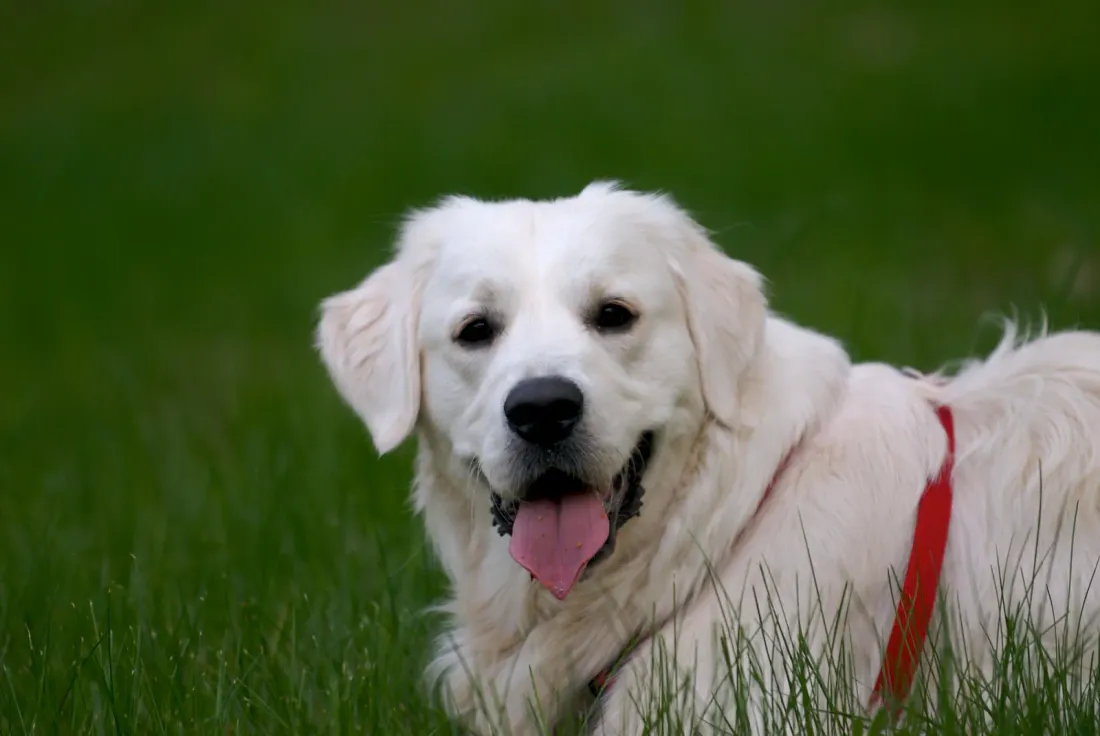
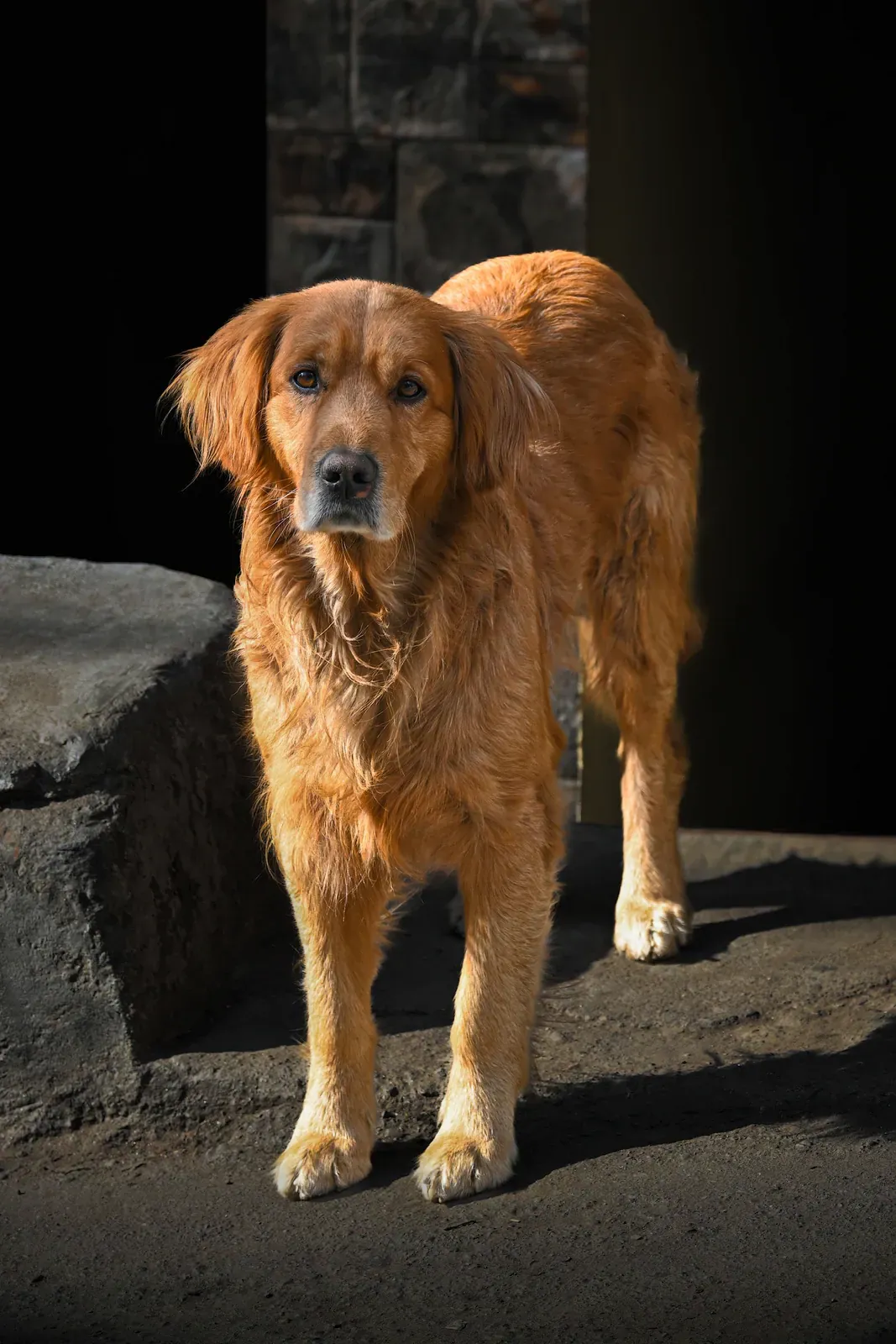
A breed standard is the written ideal a kennel club judges against. The UK Kennel Club standard asks for a symmetrical, balanced, active, powerful dog with a kindly expression. The FCI standard (no. 111) covers the British, American and Canadian types together.
| Trait | AKC | UK KC |
|---|---|---|
| Group | Sporting | Gundog |
| Height, dogs | 23 to 24 inches (about 58 to 61 cm) | 56 to 61 cm |
| Height, bitches | 21.5 to 22.5 inches (about 55 to 57 cm) | 51 to 56 cm |
| Weight, dogs | About 29 to 34 kg | About 32 to 34 kg |
| Weight, bitches | About 25 to 29 kg | About 27 to 30 kg |
Other points from the standards and breed information:
- Head. Broad skull, well-defined stop, deep muzzle, scissor bite.
- Eyes. Dark brown, set well apart, with dark rims. A friendly expression is part of the standard.
- Ears. Moderate size, set level with the eyes, hanging close to the cheeks.
- Coat. Flat or wavy with good feathering on the legs, chest and tail. The undercoat is dense and water-repellent.
- Colours. Any shade of gold or cream. The UK standard does not accept red or mahogany. Show lines in the US and Canada include darker golds, while many British lines are paler. White on the chest is allowed in small amounts.
Temperament
 Related breedFrench Bulldog1850 to 1898 · France
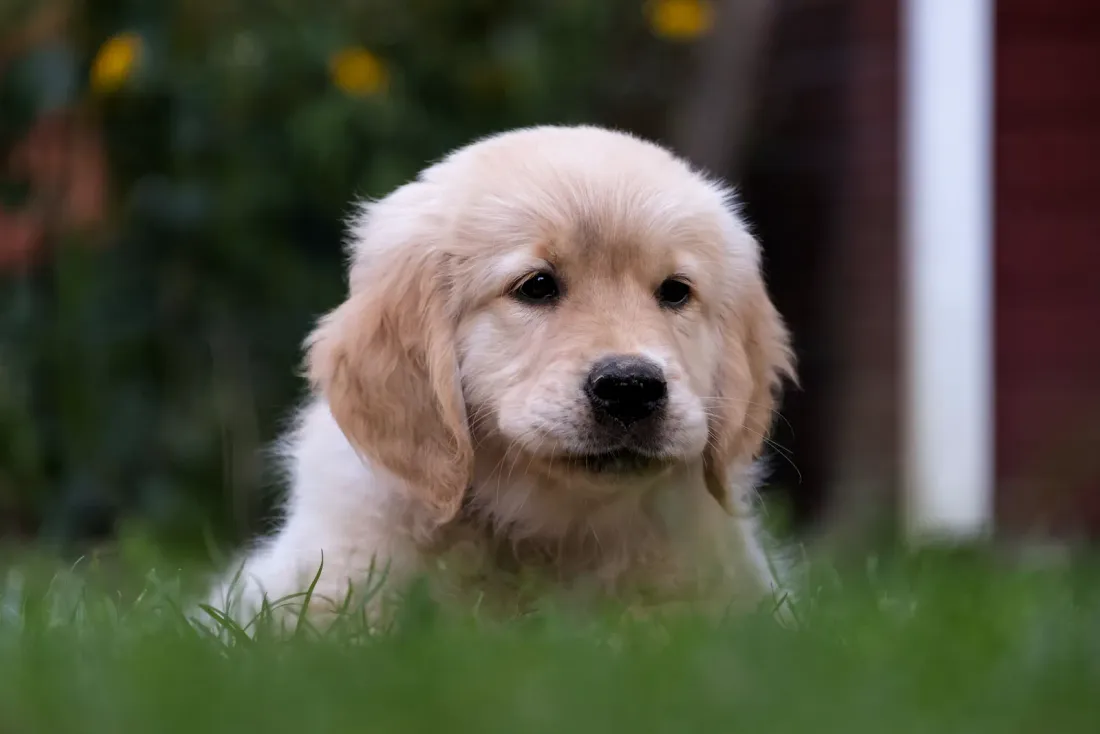
The UK Kennel Club standard describes a "kindly" dog, "friendly" and "confident", with no aggression or nervousness. The AKC describes a "friendly, reliable and trustworthy" dog. In daily life that means a dog that greets visitors, enjoys company and wants to please. Most are patient with children when well socialised, and most get along with other dogs and household pets.
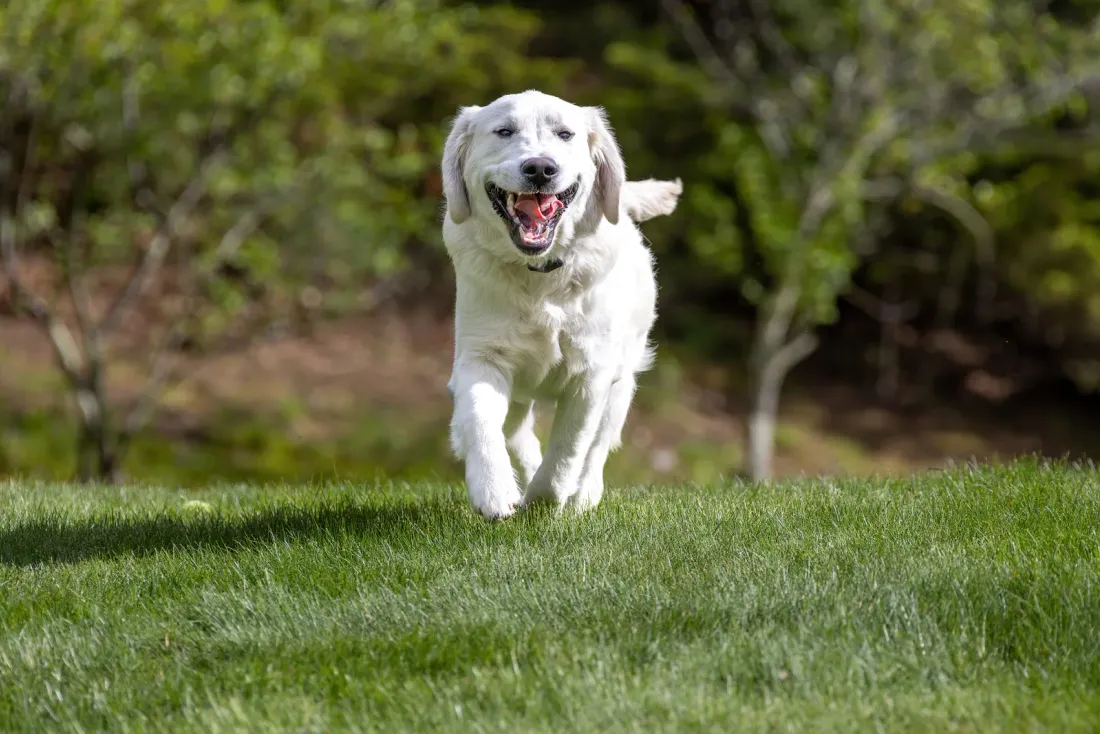
That friendliness is why Golden Retrievers are rarely used as guard dogs. They are likely to welcome strangers rather than challenge them. They also stay playful well into adulthood. Many remain puppyish for two or three years, so a young Golden can be boisterous and mouthy.
Carrying, swimming and retrieving
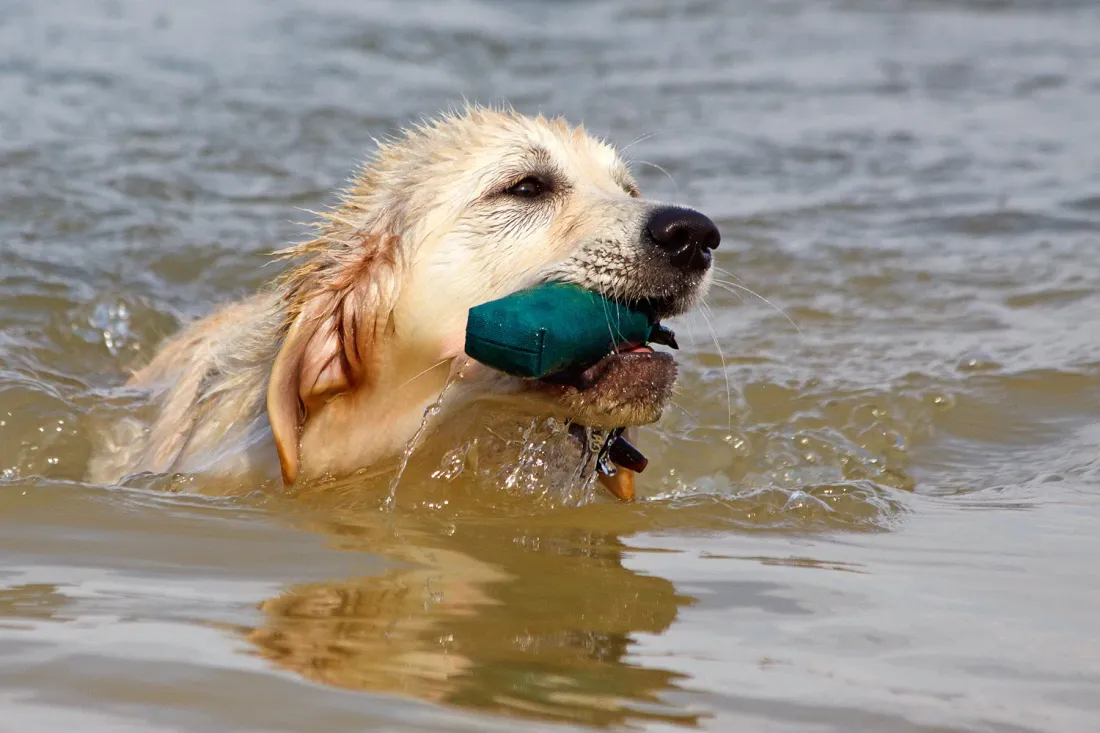
Retrieving is the core of the breed. Generations of selection produced what is called a soft mouth: the ability to carry game without puncturing it.
- Carrying. Many Goldens carry toys, shoes or socks, especially when a person arrives home.
- Water. The dense, water-repellent coat and love of swimming come from the water-dog ancestors, including the Tweed Water Spaniel.
- Working style. Retrievers are asked to mark where game falls, wait until sent, find it, and return calmly to hand.
- Biddable nature. The breed is eager to work with people, which makes it easy to train but also means it tends to suffer when left alone for long periods.
What this means at home:
- Needs. An hour or more of exercise most days is the usual advice from breed clubs. Retrieving games, swimming and training fit the breed better than a lead walk alone.
- Sports. Gundog field trials, dummy retrieving, obedience, agility, scent work, tracking and dock diving.
- Common problems. Mouthing and jumping up in adolescents, scavenging, pulling on the lead, and separation distress in dogs left alone too much. Most of these respond well to early training and enough activity.
Intelligence and trainability
Stanley Coren's 1994 book The Intelligence of Dogs placed the Golden Retriever fourth among 79 breeds for working and obedience intelligence. The ranking comes from a survey of North American obedience judges, so it measures how quickly dogs learn and obey commands, not general intelligence. Goldens are consistently easy to train with reward-based methods, and this is a large part of why they are chosen for work with people.
Assistance and therapy work
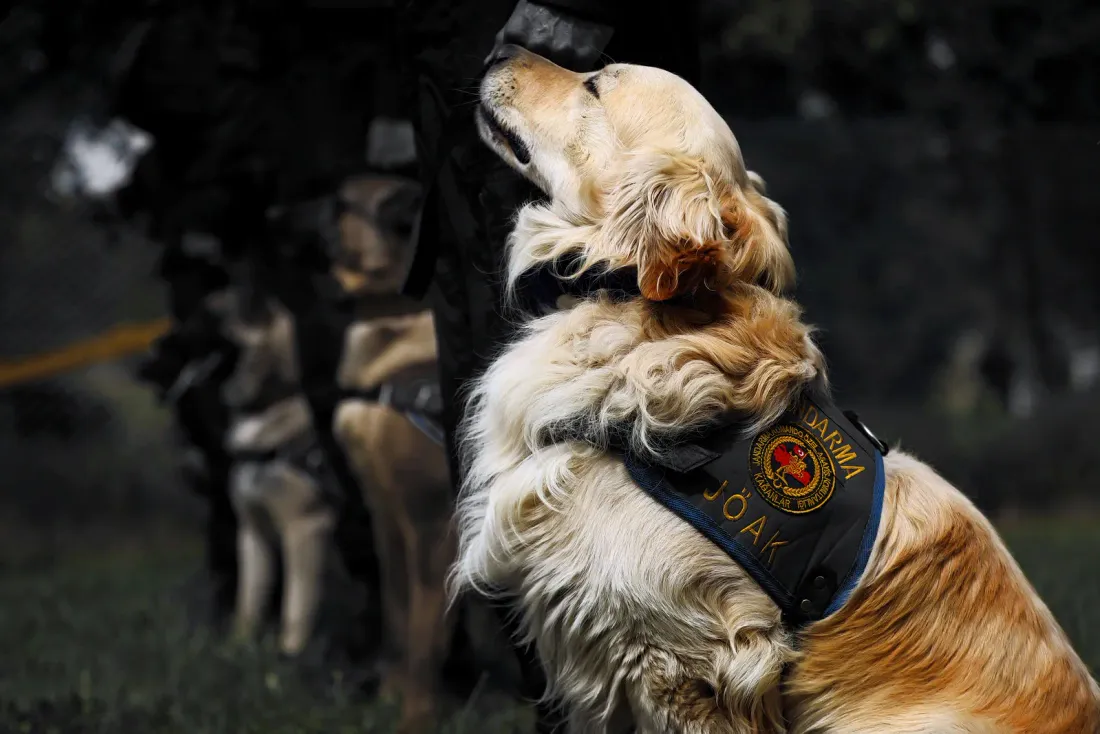
Golden Retrievers, Labrador Retrievers and crosses between them are among the breeds most used by guide and assistance dog organisations. UK charities such as Guide Dogs and Dogs for Good list Golden Retrievers among the breeds they train. Trainers cite the same traits that make a good family pet: a steady temperament, social ease with people, a strong wish to work with a handler and trainability. Retrieving instincts help with fetching dropped items and opening doors for people with mobility needs.
Roles include guide dogs, assistance dogs for people with physical disabilities or hearing loss, therapy dogs in hospitals, schools and care homes, and search and detection work in some programmes. Not every Golden Retriever is suited to this work. Organisations breed and screen their own dogs, and many dogs are released from training because of health, sensitivity or temperament.
Health
 Related breedGerman Shepherd1899 · Germany
Most Golden Retrievers live healthy lives. Longevity data varies by country: a UK VetCompass analysis (Royal Veterinary College) reported a median of about 12.5 years, and the project data range of 10 to 12 years sits slightly below that. The conditions below are what breeders screen for and what owners can watch for. Cancer is the key concern and the leading cause of death in the breed, so regular vet checks matter most.
The information here is general. Talk to a vet about an individual dog. For breeders, the Golden Retriever Club of America (GRCA) recommends screening breeding dogs for , , inherited eye disease, heart disease (subvalvular aortic stenosis) and neuronal ceroid lipofuscinosis (NCL).
| Condition | What it is | How common | What helps |
|---|---|---|---|
| Hemangiosarcoma | Cancer of blood vessel cells, often in the spleen or heart. Often found only after a sudden internal bleed | The cause of about 70 percent of cancer deaths in the Morris Animal Foundation Golden Retriever Lifetime Study cohort. Seen far more often in the breed than in most dogs | Regular vet checks; report pale gums, lethargy or lumps early. No proven prevention yet |
| Lymphoma | Cancer of the lymphatic system. B-cell type is common in the breed | Seen more often than in most breeds. A genome-wide study found risk regions shared with hemangiosarcoma (Tonomura et al. 2015, PLoS Genetics) | Vet check of any swollen glands; early diagnosis |
| Hip dysplasia | Joint malformation causing early arthritis | Common enough that the GRCA lists screening for it. Twice as common in early-neutered males as in intact males (Torres de la Riva et al. 2013) | Hip scoring of parents, lean weight, discussing neutering timing with a vet |
| Elbow dysplasia | Developmental elbow disorder | Common enough that the GRCA lists screening for it | Elbow scoring of parents, lean weight |
| Subvalvular aortic stenosis (SAS) | Narrowing below the aortic valve, restricting blood flow from the heart | Seen in the breed; GRCA recommends heart screening | Heart examination of breeding dogs |
| Neuronal ceroid lipofuscinosis (NCL) | Inherited neurological disease | Inherited, so avoidable | DNA test of breeding dogs (GRCA) |
| Inherited eye disease | Including cataracts and progressive retinal atrophy | Seen in the breed | Annual eye examinations for breeding dogs (GRCA) |
| Skin and ear problems | Allergic skin disease, hot spots, ear infections | Common in retrievers with heavy coats and water exposure | Drying ears after swimming, regular grooming and ear checks |
The cancer research behind the breed
Golden Retrievers are one of the best-studied dog breeds, because of the cancer burden and because owners and breeders cooperate in research.
Golden Retriever Lifetime Study. Morris Animal Foundation launched the study in 2012. By 2015 it had enrolled 3,044 privately owned purebred Golden Retrievers in the contiguous United States, under about 2 years of age at enrollment (median 14 months). Owners and veterinarians complete online questionnaires each year, and dogs receive a yearly exam with blood, urine, faecal and other samples collected and stored. The goal is to identify nutritional, genetic, lifestyle and environmental risk factors for cancer and other diseases. It is described as the first prospective longitudinal study of its kind in veterinary medicine. A 2017 description of the enrolled dogs appeared in Canine Genetics and Epidemiology (Simpson et al.).
Genetic risk. A genome-wide association study (Tonomura et al., PLoS Genetics, 2015) found two shared risk regions on chromosome 5, which together account for roughly 20 percent of the risk of hemangiosarcoma and B-cell lymphoma.
Neutering and health. Torres de la Riva and colleagues (PLoS ONE, 2013, UC Davis) studied Golden Retrievers and found that dogs neutered before six months of age had higher rates of joint disorders, and neutered females had a higher rate of some cancers. Hart and colleagues (PLoS ONE, 2014) compared Labradors and Goldens and found breed differences. These are observational studies from a single hospital population. Many vets now discuss timing with owners of large breeds case by case.
What this means for owners. The research aims to find ways to predict, prevent and treat cancer. There is no proven way to prevent it in an individual dog today, but regular vet checks, a lean body weight and attention to unexplained lethargy, pale gums or lumps are sensible.
 Ticks and fleasTicks and fleas on dogs: how to check, remove and prevent themTicks and fleas on dogs: how to tell them apart, check your dog, remove a tick safely, break the flea life cycle and prevent both.
 GuidesPractical guidesBehaviour, training, health and adoptionRelated breedGerman Shepherd1899 · Germany
Living with a Golden Retriever
 Related breedGiant Schnauzer1850 to 1923 · Germany
| Area | Rating | Why |
|---|---|---|
| Exercise | High | An hour or more a day, with retrieving and swimming if possible |
| Training | Good | Eager to please; easy to train with reward-based methods. Young dogs are mouthy and jump up |
| Grooming | Medium | Feathered double coat needs frequent brushing |
| Shedding | High | Sheds all year, heavily in spring and autumn |
| Barking | Varies | Not covered in the sources checked |
| Time alone | Poor | Biddable and people-focused; tends to struggle when left alone for long periods |
| Children | Good | Usually patient when well socialised; size and exuberance need supervision with toddlers |
| Other dogs and pets | Good | Most get along with other dogs and household pets |
| Flat living | Varies | No figure in the sources; depends on meeting daily exercise |
| Heat and cold | Varies | Dense, water-repellent coat; no figure in the sources checked |
| First-time owner | Good | Easy to train and friendly, but boisterous for two to three years |
A great fit if you:
- enjoy daily walks, swimming or retrieving games
- want a sociable dog that is good with visitors and children
- are prepared for grooming and shedding
- can include a dog in family life
Think twice if you:
- are away most of the day
- want a guard dog
- dislike dog hair
- cannot afford the vet costs that come with a breed at high risk of cancer and joint disease
A young Golden left bored can chew, dig and bark.
Before you get one
- Ask for hip and elbow scores for both parents.
- Ask for current eye examination results and heart (SAS) screening for both parents.
- Ask for the NCL DNA test result.
- Ask about both parents' temperament and working ability, not only coat colour.
- Adult Goldens are often available from breed rescues. Expect a boisterous, mouthy phase in dogs under about three years old.
Similar breeds to consider
- Labrador Retriever: close DNA relative with a similar friendly nature and a shorter coat.
- Flat-coated Retriever: closest DNA relative, a black or liver retriever with a flat coat.
- Newfoundland: large water dog in the same DNA family for owners wanting a calm giant.
GuidesPractical guidesBehaviour, training, health and adoptionThinking of adopting?How to adopt a dog from a shelter or rescueHow to adopt a dog from a shelter or rescue: the process, costs in general terms, choosing a dog, the first weeks and what if it does not work out.Related breedGiant Schnauzer1850 to 1923 · GermanyFun facts
 Related breedMiniature Schnauzer1888 to 1899 · Germany
- Nous, the yellow puppy that founded the line, was bought in 1865 from a cobbler in Brighton.
- The Guisachan record book stayed unknown for decades and only surfaced in 1952, ending the Russian circus dog legend.
- The AKC recognised the Golden Retriever in 1925. The Kennel Club had changed the name to Golden Retriever in 1920.
- Goldens are described as having a "soft mouth", able to carry an egg without breaking it, though that is a popular claim rather than a measured standard.
Frequently asked questions
Are Golden Retrievers good family dogs?
Yes, in most cases. They are friendly, patient and eager to join family life, though they need exercise, training and company.
How long do Golden Retrievers live?
Project data gives 10 to 12 years. A UK study reported a median of about 12.5 years.
How big do Golden Retrievers get?
UK standard: dogs 56 to 61 cm, bitches 51 to 56 cm. Weight is roughly 27 to 34 kg.
Do Golden Retrievers shed?
Yes, all year, with heavier moults in spring and autumn.
What is the Golden Retriever's temperament?
Kind, friendly, confident and eager to please, with no aggression or nervousness in the standard.
Why do Golden Retrievers get cancer so often?
The cause is not fully known. Genetics play a part, as shown by risk regions on chromosome 5 (Tonomura et al. 2015), and the Golden Retriever Lifetime Study is examining lifestyle and environmental factors.
Are Golden Retrievers used as guide dogs?
Yes. They are one of several retriever breeds used by guide and assistance dog charities.
Which breeds are related to the Golden Retriever?
The closest DNA relatives in the 2017 Parker study are the Flat-coated Retriever, Labrador Retriever and Newfoundland.
Read next
Sources (17)
- American Kennel Club, Golden Retriever breed page and "Golden Retriever history".
- Coren S., The Intelligence of Dogs, 1994.
- Dogs for Good (UK), breeds the charity works with.
- Fédération Cynologique Internationale, Golden Retriever, standard no. 111.
- Golden Retriever Club of America, "Brief History of the Golden Retriever" and Health and Research pages (breeding dog screening, elbow dysplasia, SAS, NCL).
- Guide Dogs (UK), breeds used in guide dog training.
- Hart B.L. et al., "Long-term health effects of neutering dogs: comparison of Labrador Retrievers with Golden Retrievers", PLoS ONE, 2014.
- Morris Animal Foundation, Golden Retriever Lifetime Study reports and summaries, 2012 onward.
- O'Neill D.G. et al., VetCompass longevity analysis of dogs under veterinary care in the UK, Royal Veterinary College.
- Parker H.G. et al., "Genomic analyses reveal the influence of geographic origin, migration, and hybridization on modern dog breed development", Cell Reports, 2017.
- Simpson M. et al., "Population characteristics of Golden Retriever Lifetime Study enrollees", Canine Genetics and Epidemiology, 2017.
- The Kennel Club (UK), Golden Retriever breed standard and breed information.
- Tonomura N. et al., "Genome-wide association study identifies shared risk loci common to two malignancies in golden retrievers", PLoS Genetics, 2015.
- Torres de la Riva G. et al., "Neutering dogs: effects on joint disorders and cancers in golden retrievers", PLoS ONE, 2013.
- Wikipedia, "Golden Retriever" and "Dudley Marjoribanks, 1st Baron Tweedmouth".
- Friends of Guisachan and Marjoribanks family history, Lord Tweedmouth's Golden Retrievers (Guisachan record book, Nous, Belle, Ilchester line).
- Project knowledge base, breed records and Parker 2017 shared-haplotype table (this site).