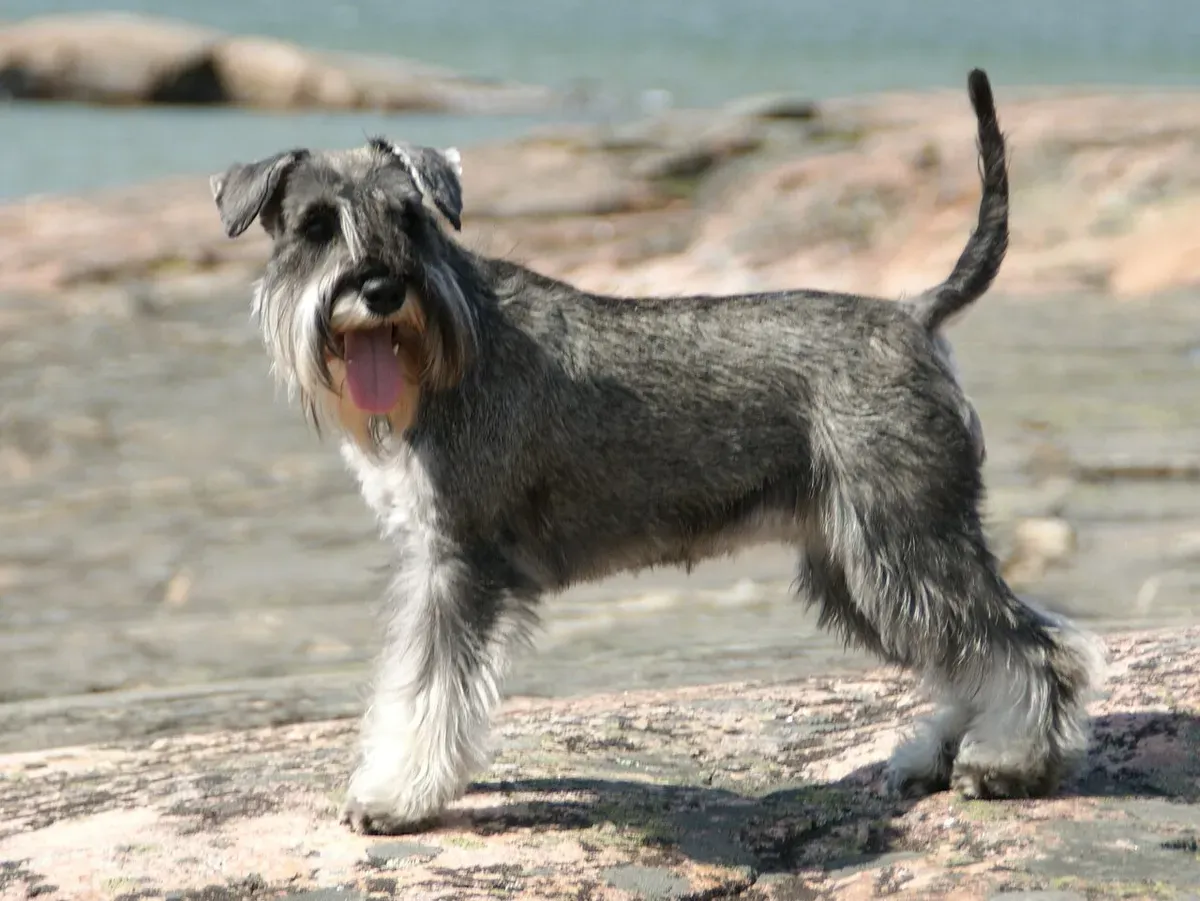
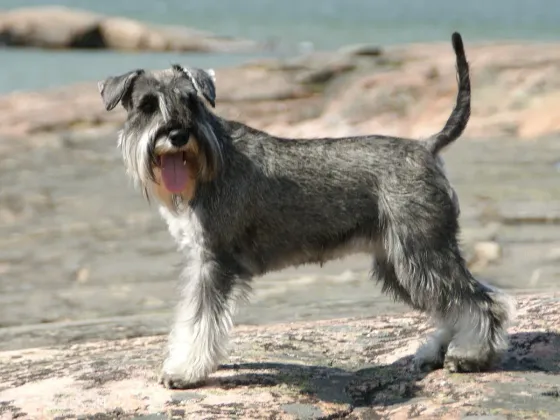
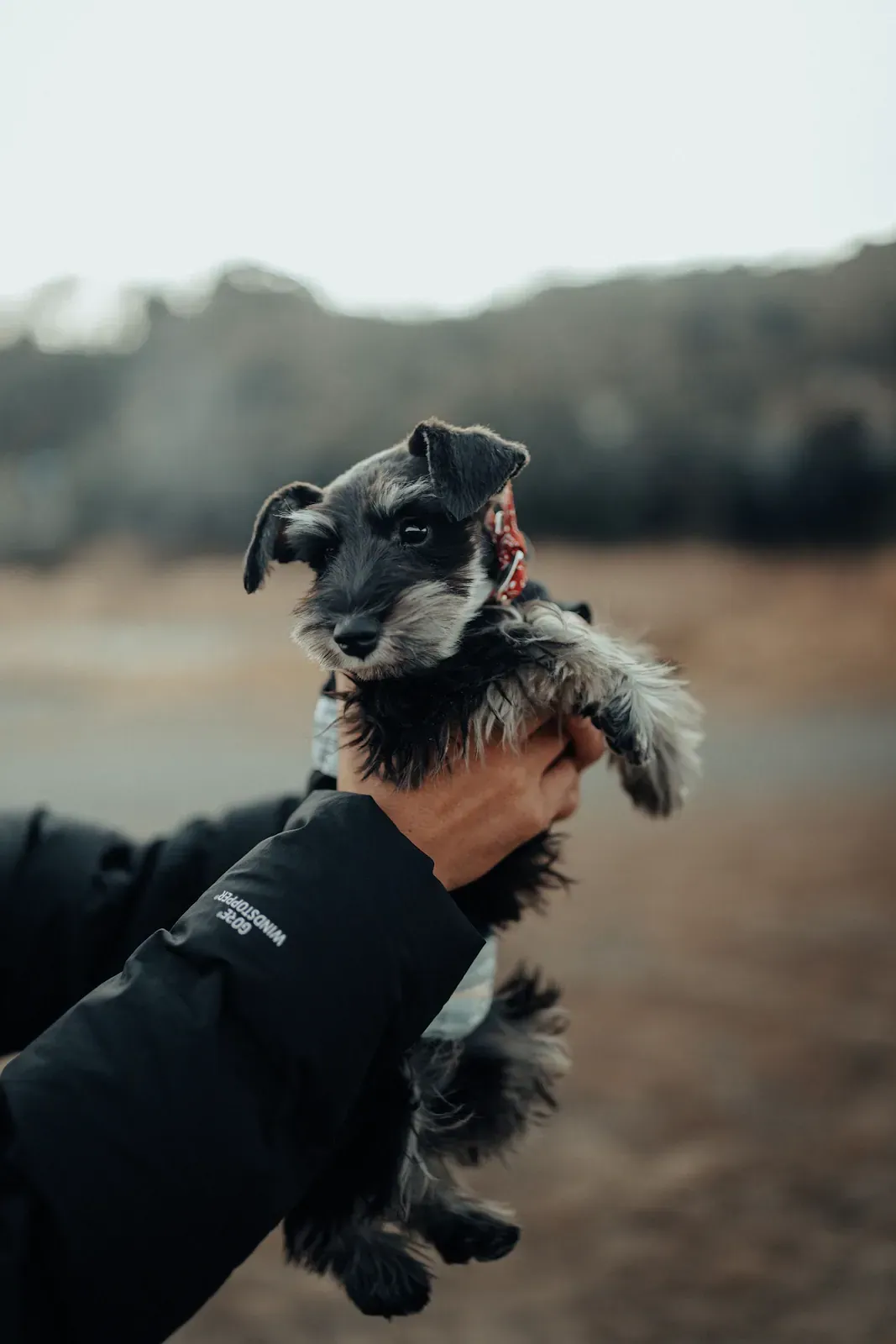
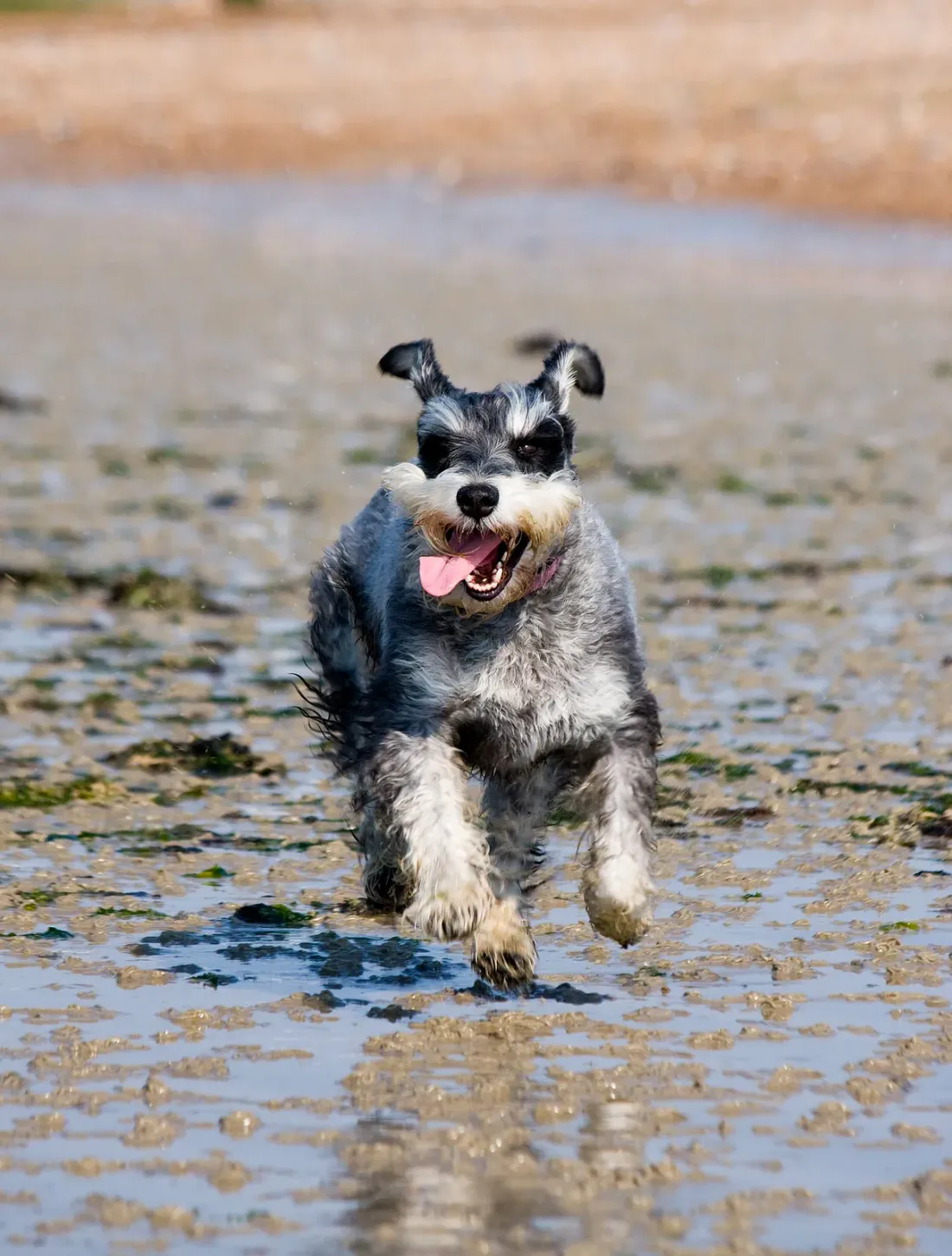
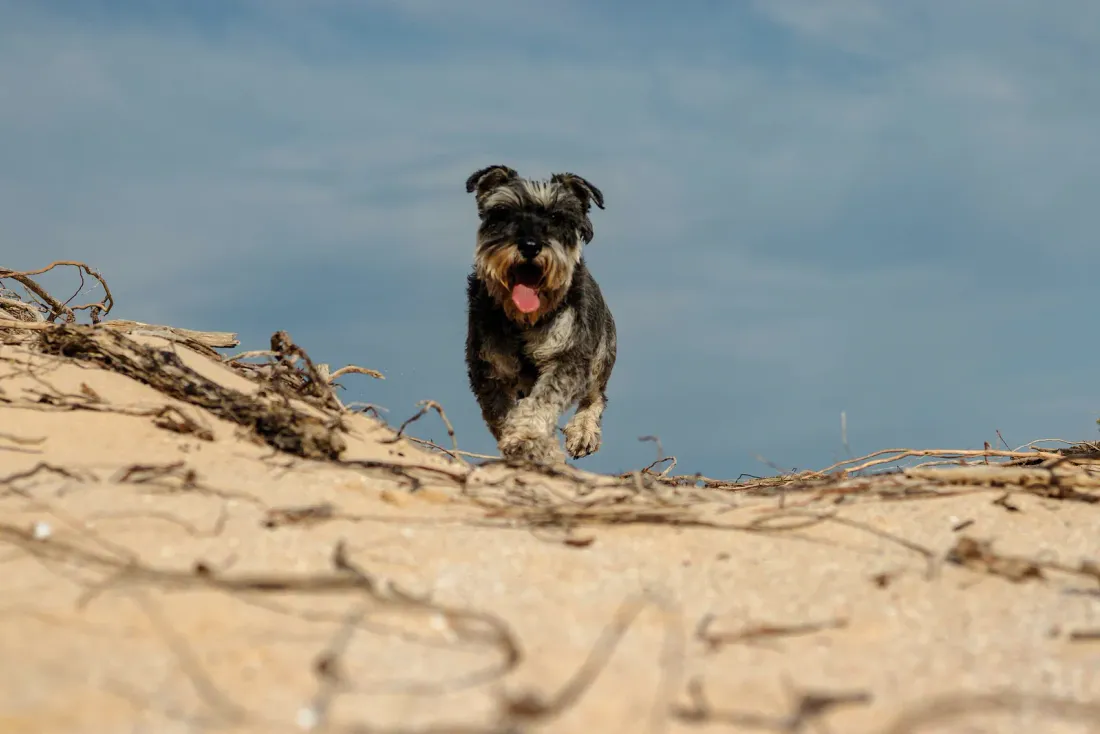
It was developed in the late 1800s, most likely from small Standard Schnauzers, and is first recorded in 1888. Adults stand 30 to 35 cm tall and have a bearded muzzle, bushy eyebrows and an alert, sturdy build. The breed is lively, clever and vocal, and it typically lives 11 to 15 years. It suits owners who want a small, sociable dog and are happy to train it and keep up with regular coat trimming.
Miniature Schnauzer quick facts
 Related breedBelgian Malinois1891 to 1901 · Belgium
- Country of origin
- Germany
- Period of development
- Late 1800s; first recorded 1888 (project data: 1888 to 1899)
- Original job
- Farm ratter and watchdog
- Group
- FCI Group 2 (Pinscher and Schnauzer, Molossoid and Swiss Mountain and Cattledogs), standard no. 183; AKC Terrier Group; UK Kennel Club Utility Group
- Height
- 30 to 35 cm (FCI)
- Weight
- 4 to 8 kg (FCI). UK pet dogs average about 9.9 kg (VetCompass)
- Coat
- Wiry outer coat over a soft undercoat
- Colours
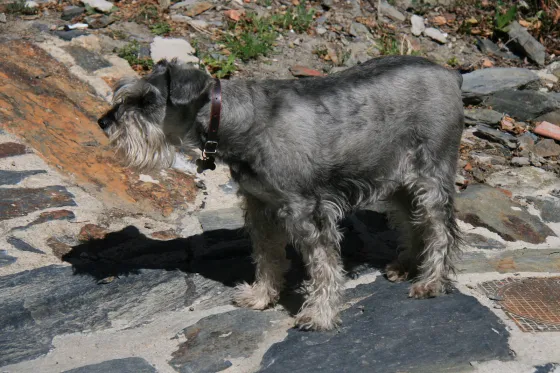
- Black, black and silver, salt and pepper; white in the FCI standard
- Life span
- Project data: 12 to 15 years. UK median: 11.6 years
- DNA family
- Schnauzer clade (Parker et al. 2017)
- Closest DNA relative
- Standard Schnauzer
- Sibling breed
- Giant Schnauzer
Name and origin
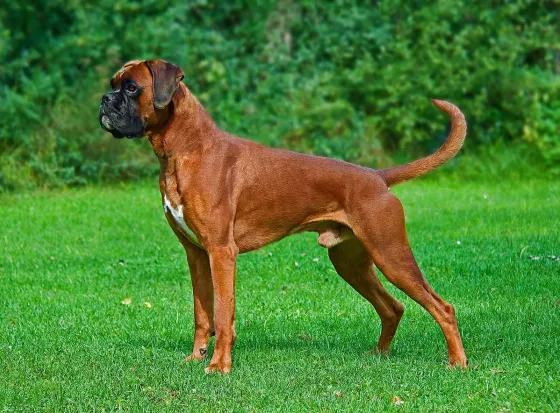 Related breedBoxer1880 to 1904 · Germany
The name
"Schnauzer" comes from German Schnauze, "muzzle" or "snout", and describes the bearded face. The full German name is Zwergschnauzer, with Zwerg meaning "dwarf". A dog called "Schnautzer" is recorded as winning a class at a dog show in Hanover in 1879. Before that, wire-coated dogs of this type were known as rough-haired Pinschers, and the name Schnauzer replaced the old term in 1917 (Wikipedia).
German farm ratter
Germany's stables, farmyards and cart yards had rats, and farmers kept small, hardy, wire-coated dogs to kill them. The Miniature Schnauzer is one of these working terrier-sized dogs. The coat shed dirt and brambles and the dog was tough enough to follow rats into tight spaces. The same dogs also warned of strangers, which explains the watchdog streak that is still obvious today.
Where did the small size come from?
Three explanations are in circulation. Sources do not agree on which is correct, and each is labelled by how well it is supported.
- Selection from small Standard Schnauzers. The most widely held view is that breeders picked the smallest Standard Schnauzers and bred them together. The knowledge base rates this as medium confidence. DNA supports a close link: in Parker et al. (2017) the Miniature shares 28.3 Mb with the Standard Schnauzer, more than with any other breed.
- Crossing with the Affenpinscher. A claim, not a proven fact. Some histories say Affenpinscher blood was added to shrink the dog and give it the bearded face. The knowledge base rates this as low confidence.
- Crossing with the Poodle (and Miniature Pinscher). Also a claim. Poodle blood is often cited to explain the small size and the coat, and the Miniature Pinscher is sometimes named too. Again, low confidence and no breeding records are known to us.
The truth may be a mix. Early breeders did not keep detailed records, and the dogs were first judged by usefulness, not by pedigree.
History
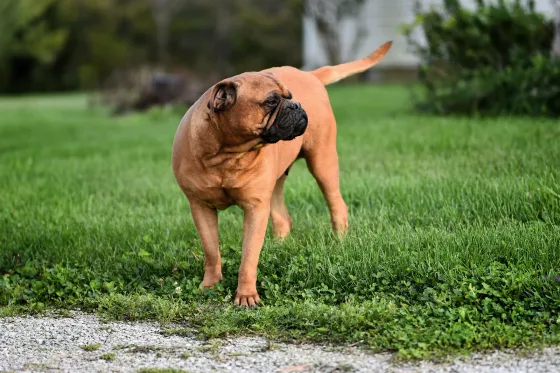 Same eraBullmastiff1860 to 1924 · United Kingdom
First records
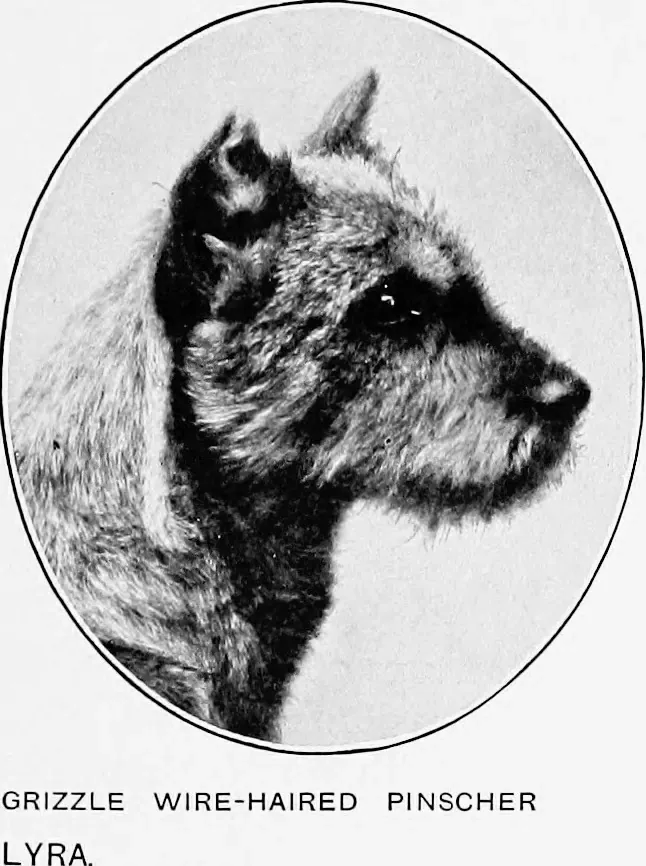
The earliest record in our data is from 1888: an illustration by Jean Bungartz in Der Luxushund that shows both standard-size and miniature rough-haired Pinschers (Canine Chronicle and breed history sources). Project data places the breed's emergence between 1888 and 1899. Breed club histories describe the first Miniature Schnauzers appearing at German shows around the end of that period. We could not verify an exact first show date, so treat it as "by about 1899".
Clubs and standards
German fanciers formed the Pinscher Klub in Cologne in 1895. In 1918 it merged with a rival Bavarian Schnauzer club to form the Pinscher-Schnauzer Klub (PSK), which published a joint studbook in 1924 (breed club histories). The FCI lists the breed as standard no. 183 with Germany as the country of origin.
Across the Atlantic
The breed reached the United States in the early 1920s. The AKC accepted registrations of the Miniature as a separate breed in 1926 (breed history sources), and placed it in the Terrier Group. The Miniature Schnauzer has since become one of the most popular small breeds in the United States, ranking 17th in 2022 (Wikipedia).
Terrier or Pinscher-Schnauzer?
The Miniature Schnauzer is not a terrier by ancestry. Its DNA family is the Schnauzer clade, and the FCI places it in the Pinscher and Schnauzer group. The AKC lists it in the Terrier Group because its job (killing vermin) and its feisty temperament match terrier work. The UK Kennel Club places it in the Utility Group. Same dog, three different homes, depending on the club's rules.
| Club | Group |
|---|---|
| FCI | Group 2: Pinscher and Schnauzer, Molossoid and Swiss Mountain and Cattledogs (no. 183) |
| AKC | Terrier Group |
| UK Kennel Club | Utility Group |

Ancestors, relatives and DNA
 Same familyChihuahua1850 to 1904 · Mexico
Project data lists these possible parent breeds, in descending order of confidence:
- Standard Schnauzer. The likely main ancestor, medium confidence.
- Affenpinscher. A possible cross, low confidence.
- Miniature Pinscher. A possible cross, low confidence.
- Poodle. A possible cross, low confidence.
Older roots in the data run through the German Pinscher and the Barbet. The Miniature has no descendant breeds in our data. Its sibling breed is the Giant Schnauzer, which belongs to the same Schnauzer family.
Parker and colleagues (Cell Reports, 2017) analysed 1,346 dogs from 161 breeds and placed the Miniature Schnauzer in the "Schnauzer" clade with strong support. They measured shared : long stretches of identical DNA inherited from common ancestors. The more (Mb) two breeds share, the closer the shared ancestry or the more likely they were crossed. The study cannot say in which direction genes flowed.
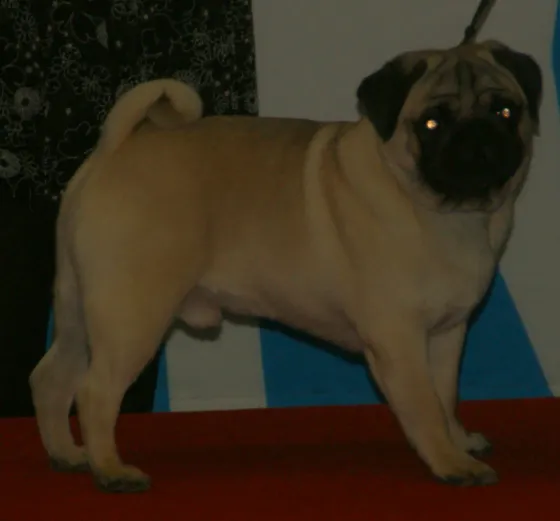
The Standard Schnauzer result fits the main origin story. The Pug and Keeshond figures are less obvious. They show some shared ancestry in the study's sample and do not mean that those breeds were used to build the Miniature Schnauzer.
Sister breeds · 1
- Giant Schnauzer1850 to 1923
- Standard Schnauzer28.3 Mb 1.2%
- Pug17.7 Mb 0.7%
- Keeshond10.2 Mb 0.4%
Source: Parker et al. 2017. Percent of the whole genome.
| Breedwith Miniature Schnauzer | Shared DNA with Miniature Schnauzer (Mb)Shared DNA (Mb) |
|---|---|
| Standard Schnauzer | 28.3 |
| Pug | 17.7 |
| Keeshond | 10.2 |
The breed standard
 Looks relatedDobermann1880 to 1900 · Germany
A breed standard is the written ideal that a kennel club judges dogs against. It describes size, coat, colour, head and build. Clubs write their own versions, so the details differ.
| Trait | FCI (no. 183) | AKC |
|---|---|---|
| Height at withers | 30 to 35 cm | 30.5 to 35.5 cm (12 to 14 inches) |
| Weight | 4 to 8 kg (about 4.5 to 7 kg is common) | Not set in the standard |
| Coat | Wiry, hard outer coat over a dense undercoat | Double coat: hard, wiry outer coat and close undercoat |
| Colours | Black with black undercoat; black and silver; salt and pepper; white with white undercoat | Salt and pepper; black and silver; solid black |
| Head | Strong, rectangular, with a bearded muzzle and bushy eyebrows | Strong, rectangular, with beard and eyebrows |
| Ears | Folded, set high | Natural (drop) or cropped, where legal |
| Build | Sturdy, square, compact | Sturdy, square, compact |
We did not find a verified UK Kennel Club figure for each row, so that column is left out. The AKC row for weight and the height conversion are from breed reference summaries. Check current standards before showing a dog.
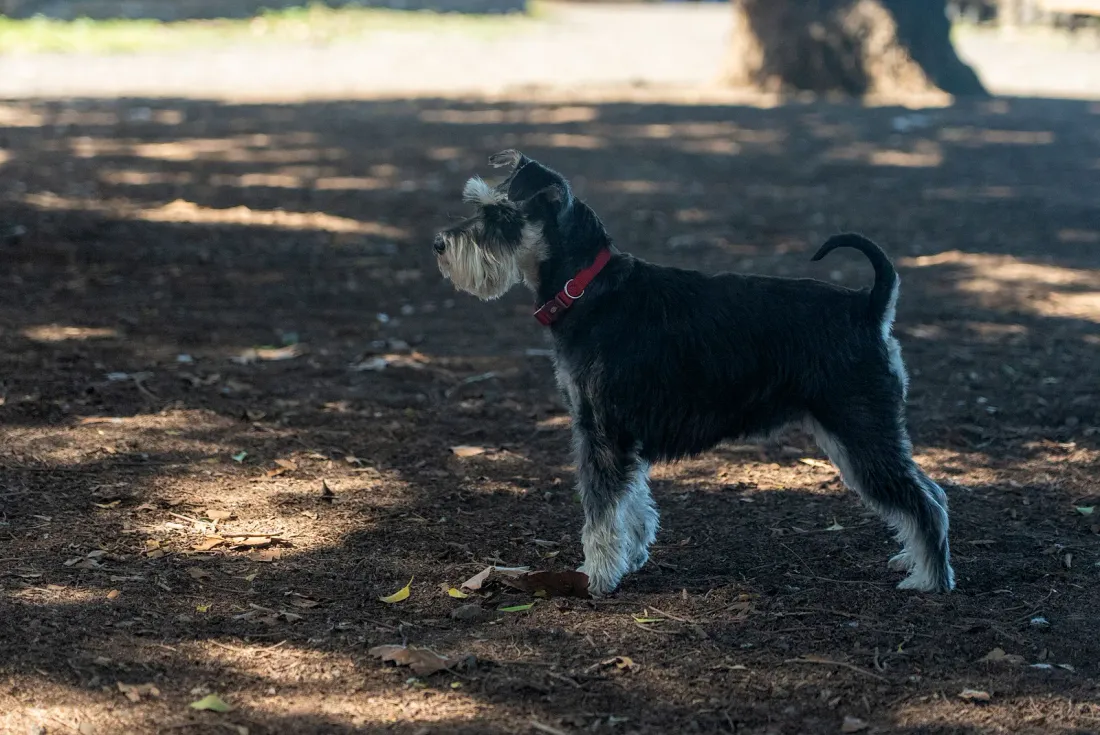
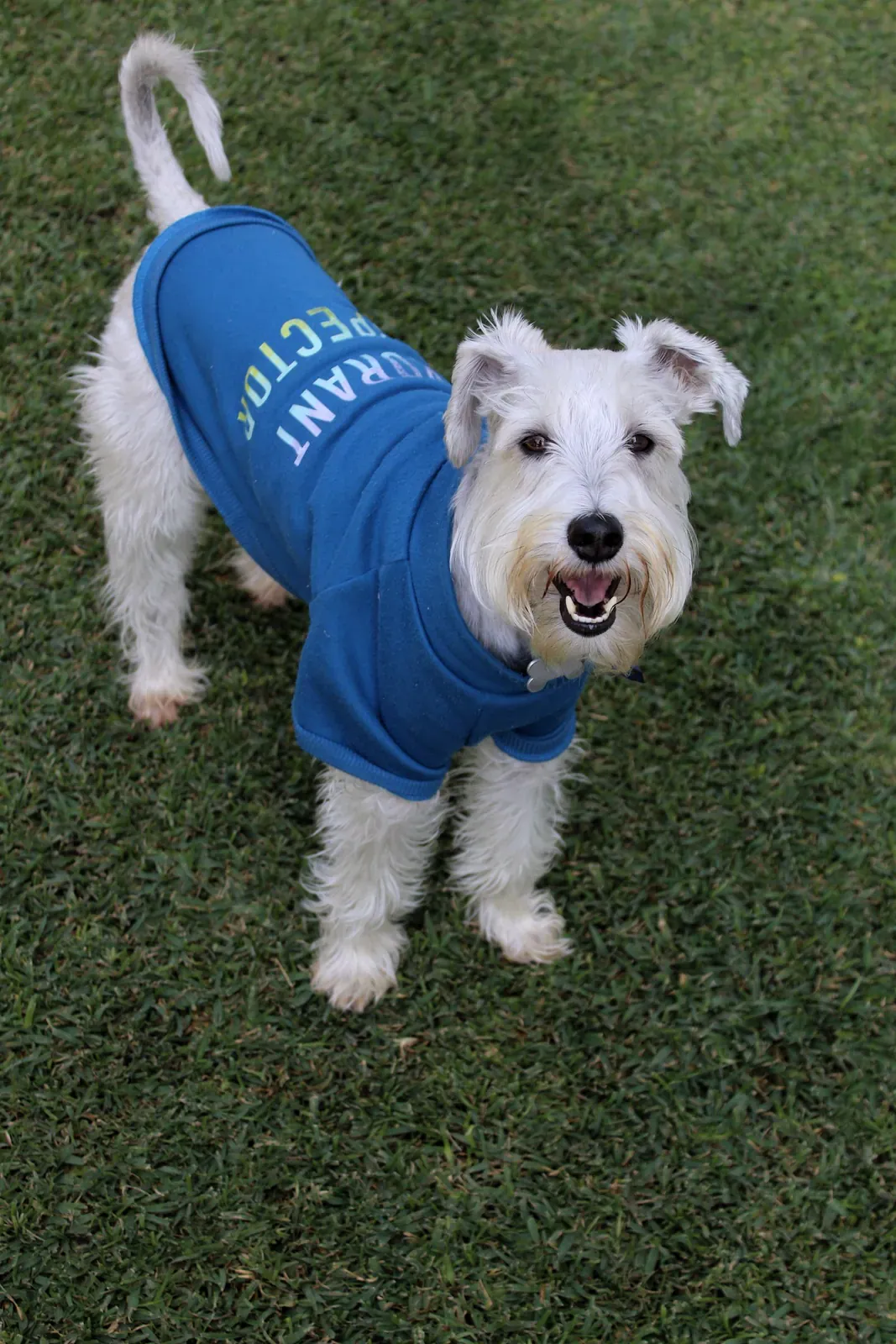
Colours. Black is solid black with a black undercoat. Black and silver is a black body with silver eyebrows, beard, chest, legs and under the tail. Salt and pepper is a mix of black and white banded hairs that gives a grey look, with a darker face mask. White is accepted by the FCI standard but is not an accepted AKC colour, so white dogs can be shown in some countries and not in others.
Size reality. The standard height is 30 to 35 cm and the FCI weight is 4 to 8 kg. In the UK VetCompass study (O'Neill et al., Canine Genetics and Epidemiology, 2019), the mean adult bodyweight of 3,857 Miniature Schnauzers under veterinary care was 9.9 kg (males 10.8 kg, females 9.0 kg). That is above the standard range, which may reflect larger frames and extra weight in pet dogs. Obesity was recorded in 8.3 percent of the study dogs.
Temperament
 Related breedFlat-coated Retriever1860 to 1880 · United Kingdom
The Miniature Schnauzer is described as alert and spirited, yet obedient to command (Wikipedia, summarising the standard). It is a good watchdog and a lively companion. Compared with many small breeds it is sturdy and keen to play. Most are friendly with their family and reserved with strangers until the owner shows they are welcome.
The terrier-like streak is real. Many Miniature Schnauzers bark when someone arrives, chase small animals and enjoy digging or hunting rustling objects. Training and a regular outlet work better than trying to suppress the instinct. Variation between dogs is wide, and early socialisation counts as much as breeding.
Behaviour and daily needs
 Related breedFrench Bulldog1850 to 1898 · France
- Barking. The breed is more inclined to bark than to bite (Wikipedia). Teaching a quiet cue early helps in flats and terraced houses.
- Ratting instinct. Mice, hamsters, rabbits and cats may trigger the chase. Training and management matter around small pets.
- Exercise. A moderate amount: daily walks and play are enough for most dogs. Breed clubs describe it as adaptable, but we do not hold a verified hours figure.
- Training. Clever and food motivated, so reward-based training works well. Some dogs are stubborn and bore easily with repetition.
- Grooming. The wiry coat needs brushing several times a week and trimming or hand stripping at regular intervals, often every 5 to 8 weeks (common breed advice, not a fixed rule). The beard collects food and water and needs wiping.
Health
 Related breedGerman Shepherd1899 · Germany
Most Miniature Schnauzers live healthy lives. The conditions below are the ones breeders screen for and owners can watch for. They do not mean your dog will develop any of them. A large UK study found a median life span of 11.6 years, close to the 12.0 years reported for all breeds with the same method (O'Neill et al., 2019).
The VetCompass study (3,857 dogs, 304 UK clinics, 2013) found these were the most common recorded problems:
- Periodontal (gum) disease: 17.4 percent, about 1 in 6 dogs.
- Obesity or overweight: 8.3 percent, about 1 in 12 dogs.
- Anal sac impaction: 5.8 percent, about 1 in 17 dogs.
- Vomiting: 5.1 percent and ear infection (otitis externa): 5.0 percent, about 1 in 20 dogs each.
The researchers found no breed predisposition to periodontal disease or obesity compared with similar-sized breeds. The leading causes of death were cancer or mass-related disease (25 percent), collapse (13 percent) and brain disorders (11 percent).
| Condition | What it is | How common | What helps |
|---|---|---|---|
| Pancreatitis | Inflammation of the pancreas, a digestive gland. Signs include vomiting, belly pain, low appetite | Lifetime risk about 5 percent, about 1 in 20 dogs (Science for Animal Welfare / UFAW review, citing Lewis 2007). Seen more often than in many breeds | Low-fat diet, healthy weight, avoiding fatty table scraps, quick vet visit if vomiting persists. SPINK1 gene variants are widespread in the breed but are not the only factor (Bishop et al. 2007, 2010) |
| Hyperlipidaemia | High blood fat (triglycerides), often without signs. Linked to pancreatitis risk | About 1 in 3 dogs have abnormally high triglycerides (Xenoulis et al. 2007) | Fasting blood test at the vet, diet advice, weight control. Breeders should not use affected dogs |
| Urinary stones (calcium oxalate) | Mineral stones in the bladder that can cause straining, blood in urine or frequent urination | No breed rate known. Miniature Schnauzers were 2 times more likely to have stones that proved calcium oxalate than other breeds in submitted samples (Minnesota Urolith Center analyses, Lulich and colleagues). Males were over 3 times more at risk than females | Plenty of water, vet urine checks, dietary advice from a vet, removal of stones if present |
| Myotonia congenita | Inherited muscle stiffness after rest, caused by a CLCN1 gene variant. Signs appear from puppyhood | In 372 tested dogs: about 1 in 5 (20.4 percent) and about 1 in 90 affected (1.1 percent) (Bhalerao et al. 2002) | DNA test for both parents before breeding. Carriers are healthy but should only be bred to clear dogs |
| Gum disease | Plaque and gum inflammation, which can lead to tooth loss | About 1 in 6 dogs (O'Neill et al. 2019) | Daily brushing, dental checks |
| Overweight | Extra body fat that puts strain on joints and raises other risks | About 1 in 12 dogs (O'Neill et al. 2019) | Measured meals, regular exercise, body condition checks |
Prevalence numbers come from different populations (UK pet dogs, tested breeding dogs, urolith submissions) and cannot be compared directly. The UFAW review notes that no breed-wide programme currently aims to reduce hyperlipidaemia, and it advises prospective owners to avoid puppies with close relatives that have had hyperlipidaemia, pancreatitis or diabetes mellitus (Bell 2010).
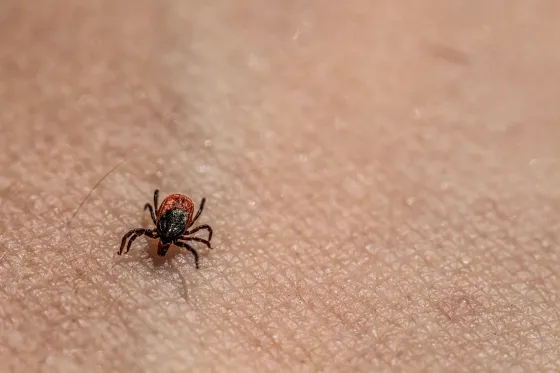 Ticks and fleasTicks and fleas on dogs: how to check, remove and prevent themTicks and fleas on dogs: how to tell them apart, check your dog, remove a tick safely, break the flea life cycle and prevent both.
 GuidesPractical guidesBehaviour, training, health and adoptionRelated breedGerman Shepherd1899 · Germany
Living with a Miniature Schnauzer
 Related breedGiant Schnauzer1850 to 1923 · Germany
| Question | Rating | Reason |
|---|---|---|
| Exercise per day | Medium | Daily walks and play. Not a high-drive working dog, but not a couch ornament either. Varies |
| Training needs | Medium | Quick learner, can be stubborn. Early training matters |
| Grooming | High | Wiry coat needs trimming every 5 to 8 weeks and regular brushing |
| Shedding | Low | Wiry double coat sheds little, but loose hair stays in the coat until stripped. Varies |
| Barking | High | Bred to alert. Watchdog streak is strong |
| Time alone | Fair | Social dog. Needs gradual training to stay alone |
| Children | Good | Sturdy and playful. Supervise young children with any dog |
| Other dogs | Fair | Often fine when socialised. Terrier-type boldness can show |
| Cats and small pets | Fair | Ratter instincts. Varies by dog |
| Flat living | Good | Small size suits it, but barking needs management |
| Heat tolerance | Fair | No evidence of problems, but thick coat and exercise in heat need care. Varies |
| Cold tolerance | Good | Double coat. Wet beard and legs need drying |
| First-time owner fit | Good | Manageable size and eager to learn, but grooming and barking take planning |
A great fit if...
- You want a small dog that will join daily activity and still fits in a flat or small house.
- You will book regular grooming or learn to trim the coat yourself.
- You enjoy training and can keep sessions short and varied.
- You like a dog that announces visitors and don't mind some barking.
Think twice if...
- You want a very quiet dog or live where noise is a problem.
- You have small pets that a ratter instinct could put at risk.
- You want a no-grooming dog.
- You are away from home for long hours with no plan for company.
Before you get one
- Health tests to ask a breeder for. Myotonia congenita DNA test results for both parents. Ask also about pancreatitis, hyperlipidaemia and diabetes in close relatives, and eye screening (ask your national breed club which tests they advise).
- Puppy or adult rescue. Breed rescues exist in many countries. An adult dog's temperament and coat care needs are already visible.
- First year. Plan for socialisation, house training, crate or alone training, and a first grooming appointment at around puppy age. Weigh your dog regularly so weight gain does not creep up.
Similar breeds to consider
- Standard Schnauzer. Same type in a larger, sturdier body with more exercise needs.
- Giant Schnauzer. The largest Schnauzer. Needs an experienced, active owner.
- Affenpinscher. A smaller wire-coated German toy with a similar bearded face.
- Miniature Pinscher. A smooth-coated small German breed with bold manners and less grooming.
GuidesPractical guidesBehaviour, training, health and adoptionThinking of adopting?How to adopt a dog from a shelter or rescueHow to adopt a dog from a shelter or rescue: the process, costs in general terms, choosing a dog, the first weeks and what if it does not work out.Related breedGiant Schnauzer1850 to 1923 · GermanyFun facts
 Related breedGolden Retriever1868 to 1911 · United Kingdom
- Schnauzer means "muzzle" in German, so the breed is literally named for its beard.
- The first record of a miniature Schnauzer is an 1888 book illustration, not a dog show.
- DNA shows the Miniature Schnauzer shares more with the Standard Schnauzer than with the breeds sometimes named as parents.
- The AKC counts it as a terrier. The FCI does not.
Frequently asked questions
How long do Miniature Schnauzers live?
Project data gives 12 to 15 years. A UK study found a median life span of 11.6 years (O'Neill et al., 2019).
How big does a Miniature Schnauzer get?
The FCI standard asks for 30 to 35 cm at the shoulder and 4 to 8 kg. Pet dogs in the UK average about 9.9 kg.
What colours does a Miniature Schnauzer come in?
Black, black and silver and salt and pepper are accepted by the FCI and the AKC. White is accepted by the FCI only.
Is a Miniature Schnauzer a terrier?
Not by DNA. It is in the Schnauzer . The AKC places it in the Terrier Group because of its working history.
Do Miniature Schnauzers bark a lot?
Many do. They were bred to alert and are more inclined to bark than bite.
Do Miniature Schnauzers shed?
Little, because of the wiry coat, but they need regular grooming.
What health problems do Miniature Schnauzers have?
Pancreatitis, high blood fats, urinary stones and myotonia congenita are the best known. See the health table.
Are Miniature Schnauzers good family dogs?
Often yes. They are sturdy and playful, but supervision with young children and training for barking are advisable.
Read next
Sources (14)
- Bhalerao D.P., Rajpurohit Y., Vite C.H., Giger U., "Detection of a genetic mutation for myotonia congenita among Miniature Schnauzers and identification of a common carrier ancestor", American Journal of Veterinary Research, 2002.
- Bishop M.A. et al., SPINK1 variants in Miniature Schnauzers with pancreatitis, 2007 and 2010 (as cited in the Science for Animal Welfare review).
- Bell, advice to prospective owners, 2010 (as cited in the Science for Animal Welfare review).
- Canine Chronicle, "The long rich history of the Miniature Schnauzer".
- Fédération Cynologique Internationale, Zwergschnauzer (Miniature Schnauzer), standard no. 183.
- Lewis, pancreatitis prevalence in Miniature Schnauzers, 2007 (as cited in the Science for Animal Welfare review).
- Lulich J.P. and colleagues, Minnesota Urolith Center, calcium oxalate urolith studies in Miniature Schnauzers.
- O'Neill D.G., Butcher N., Church D.B., Brodbelt D.C., Gough A., "Miniature Schnauzers under primary veterinary care in the UK in 2013: demography, mortality and disorders", Canine Genetics and Epidemiology, 2019.
- Parker H.G. et al., "Genomic analyses reveal the influence of geographic origin, migration, and hybridization on modern dog breed development", Cell Reports, 2017.
- Science for Animal Welfare (formerly UFAW), "Miniature Schnauzer: pancreatitis and hyperlipidaemia".
- The Kennel Club (UK) and American Kennel Club, Miniature Schnauzer breed pages and breed history pages.
- Wikipedia, "Miniature Schnauzer" (used for dates and summaries, checked against the other sources listed).
- Xenoulis P.G. et al., hyperlipidaemia and pancreatitis in Miniature Schnauzers, 2007.
- Project knowledge base, breed record and Parker 2017 shared-haplotype table (this site).