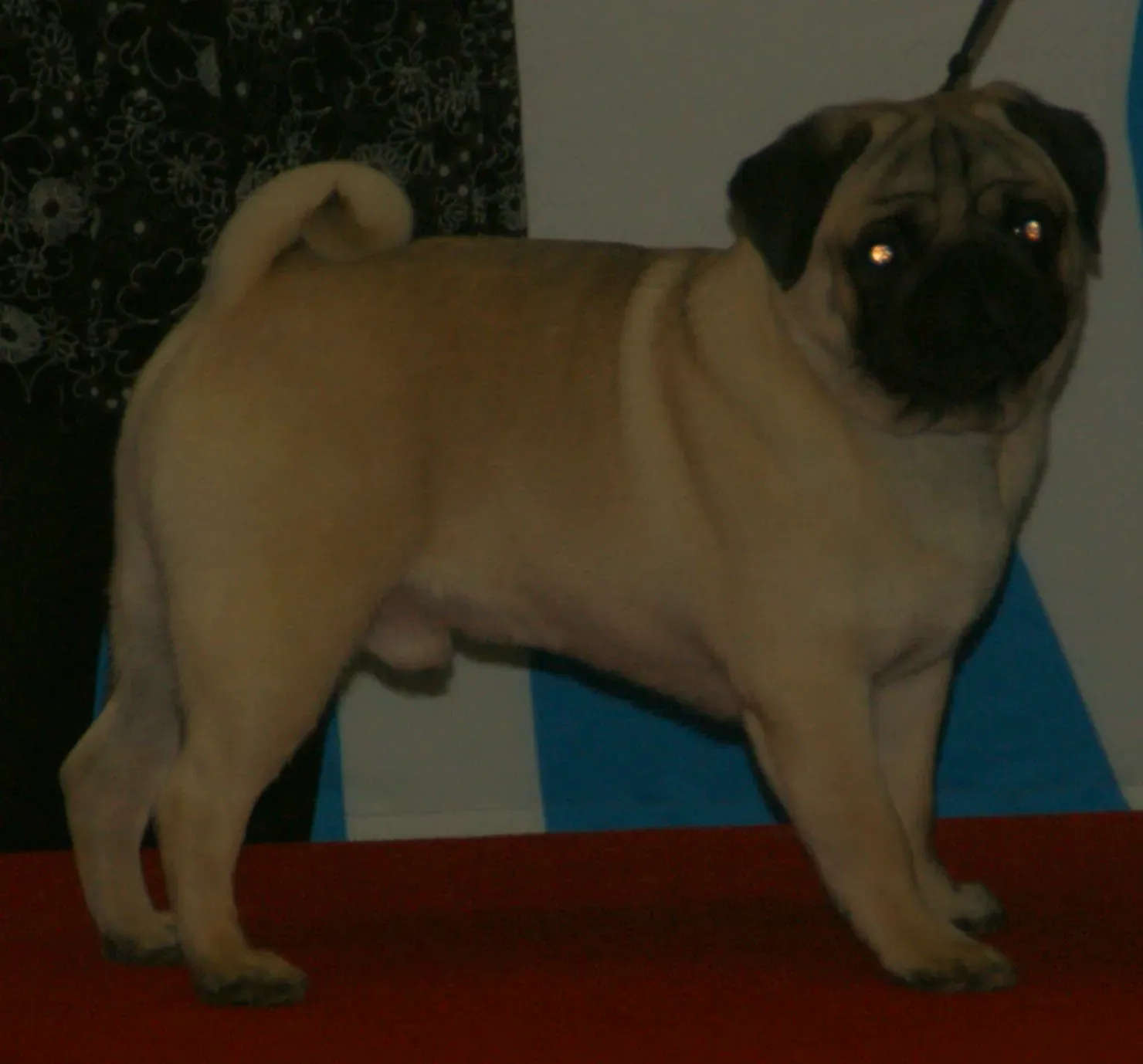
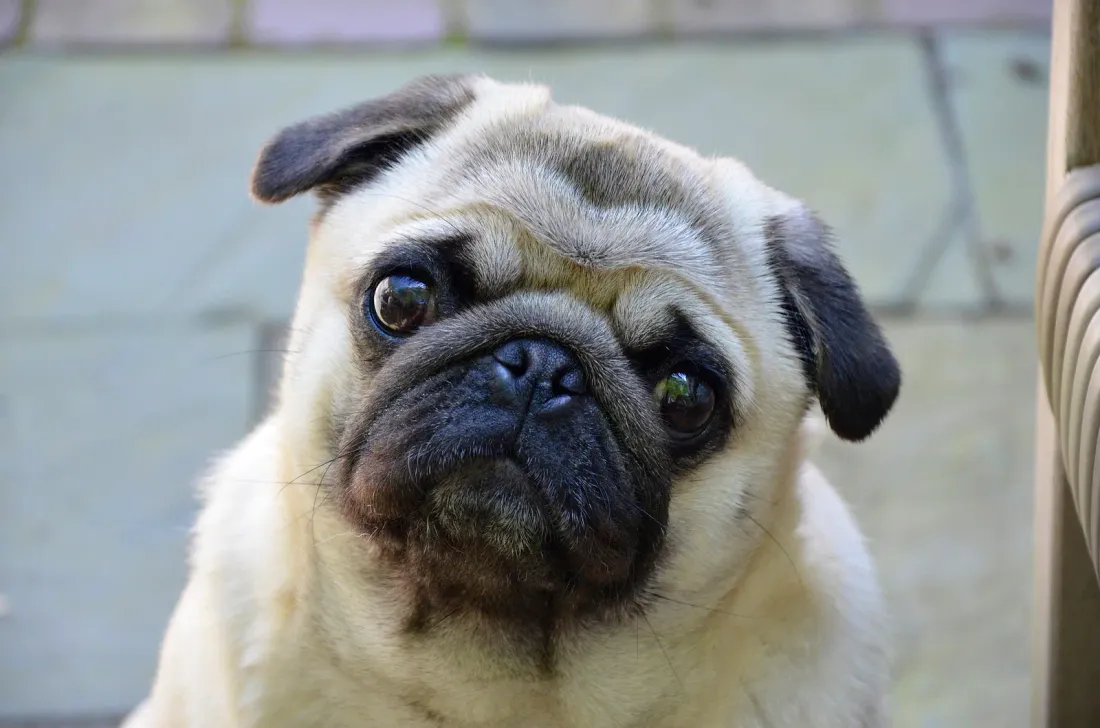
It reached Europe with Dutch traders in the 1500s and 1600s, became a favourite of the House of Orange and later of Victorian Britain, and now lives in homes around the world. Pugs are affectionate, even-tempered and clownish, and they want to be with their people. They are also a flat-faced (brachycephalic) breed, and UK research shows most Pugs have some degree of breathing difficulty. Anyone considering a Pug should read the health section first.
Pug quick facts
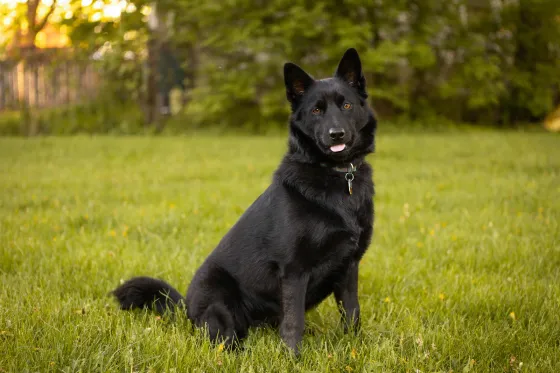 Related breedSchipperke1600 to 1888 · Belgium
- Descendant breeds
- Griffon Bruxellois (project data), Puggle (designer cross)
- Country of origin
- China (FCI); patronage and development in Great Britain
- Period of development
- About 400 BCE to 1885 (project data, medium confidence); modern type shaped in Britain in the 1800s
- Other names
- Mops (German and Dutch), Carlin (French)
- Type
- Companion dog (FCI Group 9, Companion and Toy Dogs, standard no. 253; AKC Toy Group; UK Kennel Club Toy Group)
- Weight
- Ideal 6.3 to 8.1 kg (14 to 18 lb) in FCI, AKC and UK Kennel Club standards
- Height
- Not set by the FCI or UK standards; AKC breed information gives about 25 to 33 cm
- Coat
- Fine, smooth, short, glossy
- Colours
- Silver, apricot, fawn or black (FCI and UK Kennel Club)
- Life span
- Project data: 12 to 15 years
- DNA family
- Toy Spitz clade (Parker et al. 2017)
- Closest DNA relative
- Griffon Bruxellois
Name and origin
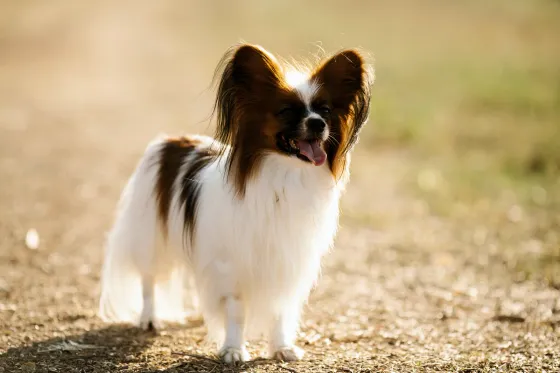 Related breedPapillon1500 to 1935 · France, Belgium
The name
"Pug" is of uncertain origin. Two guesses are common. One links it to Latin pugnus, "fist", for the shape of the face. The other links it to an old English word "pug" for a pet or a monkey, and "pug" was also used for a small, endearing creature in general. Neither is proven. In German and Dutch the dog is the Mops, and in French the Carlin.
Chinese origin
The FCI lists China as the country of origin, and notes that flat-faced dogs have long been popular there. Dogs of this type are usually linked to the Lo-sze (a short form of Lo-Chiang-Sze), a small flat-faced dog kept at the Chinese imperial courts. The project database records the Lo-sze as the Pug's ancestor with medium confidence, and dates the early type from about 400 BCE. Accounts commonly place it at courts of the Han and Song dynasties, and some histories say the dogs were also kept in Buddhist monasteries. These stories rest on art and later writing, not on pedigrees or DNA, so they are best read as likely but unproven. No written record names a single founding dog.
The Dutch route to Europe
The FCI standard says the Pug reached Europe with traders of the Dutch East India Company and was admired in the Netherlands from the 1500s. Other sources place the main imports in the late 1500s and 1600s. The breed's old Dutch name, Mops, reflects that link.
History of the Pug
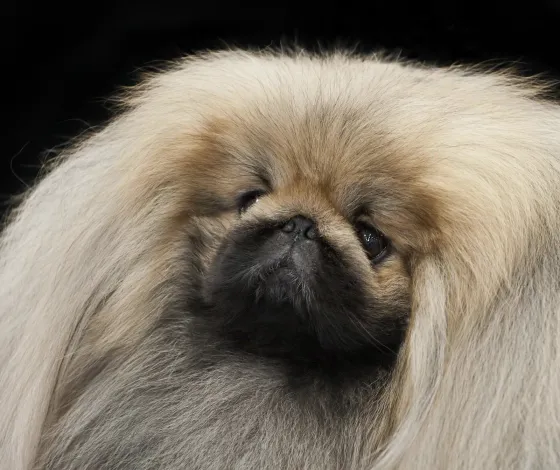 Same eraPekingese700 CE to 1860 · China
Pug and the House of Orange
Two stories tie the Pug to Dutch royalty. Both are legends, not documented history.
- Pompey and William the Silent (1572). The story says William the Silent, Prince of Orange, was saved from a Spanish night attack when his pet Pug, Pompey, scratched and barked to wake him. Versions of the tale are widely repeated, but no contemporary source for it is cited in the references used here.
- William III and Mary (1688). Pugs are said to have travelled with William of Orange and Mary to England when they took the throne in 1688, and courtiers are said to have tied orange ribbons on their Pugs as a sign of loyalty. The FCI summary says the Pug "arrived in England when William III came to the throne" and became a symbol of the Dutch royal patriots.
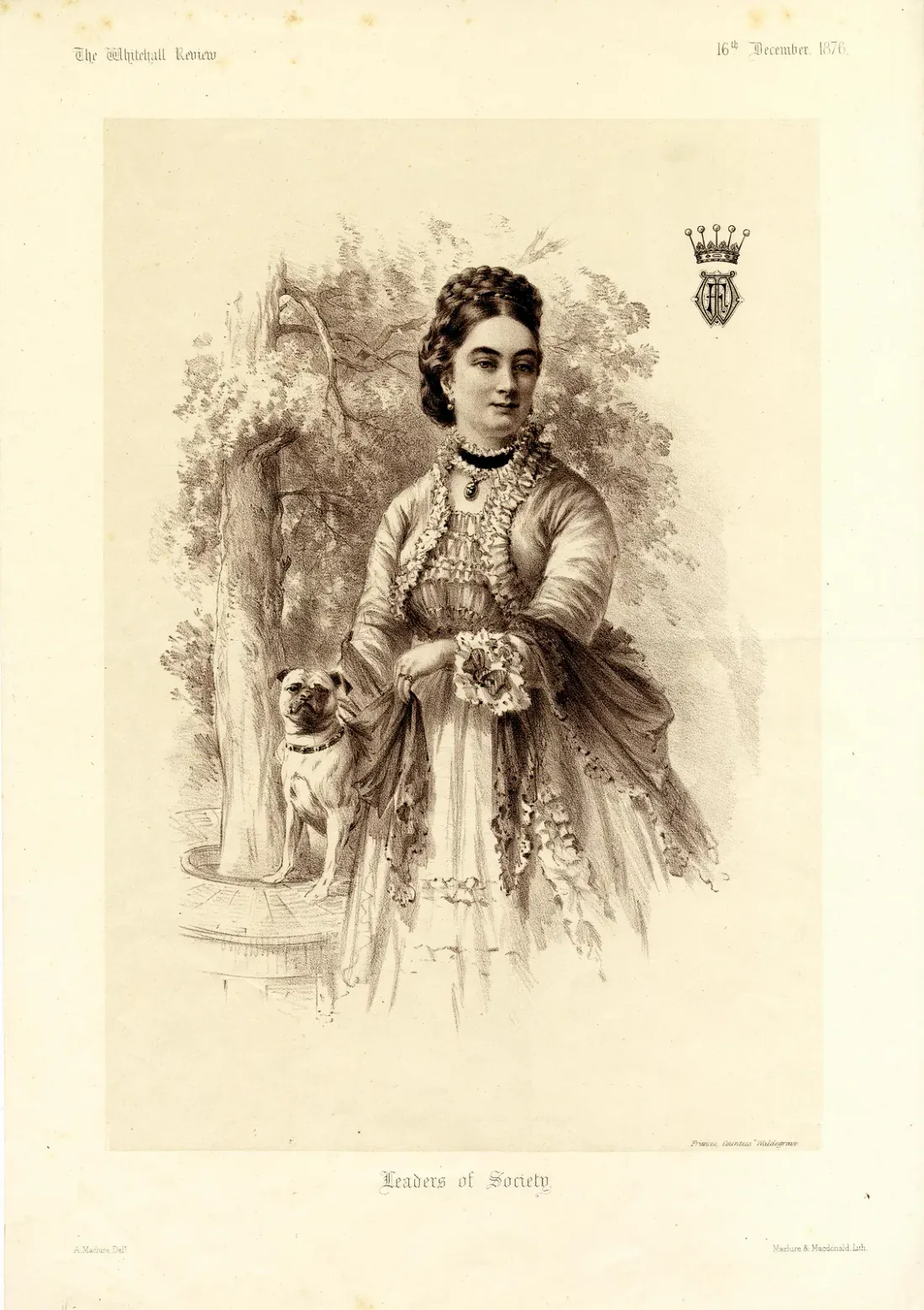
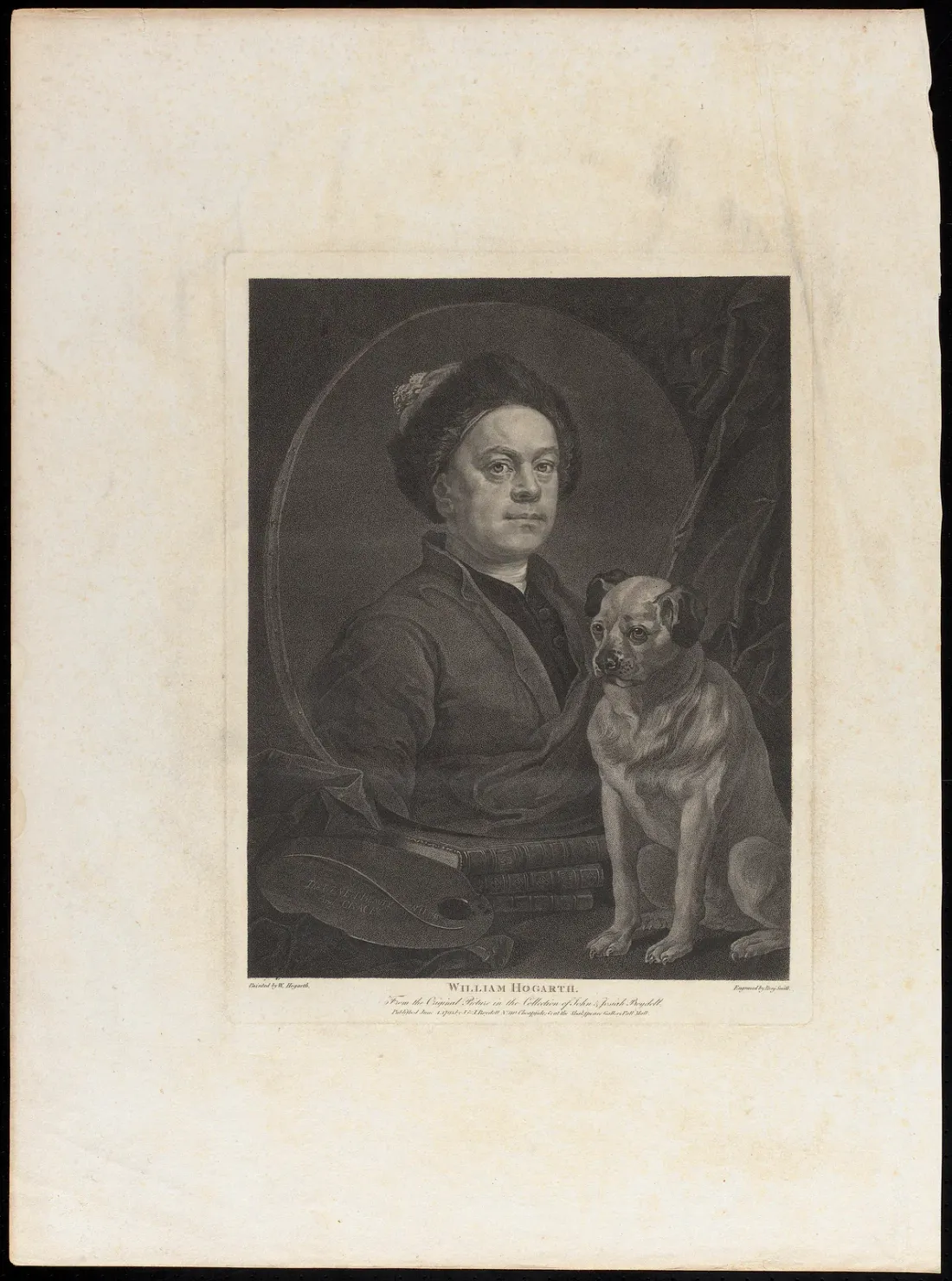
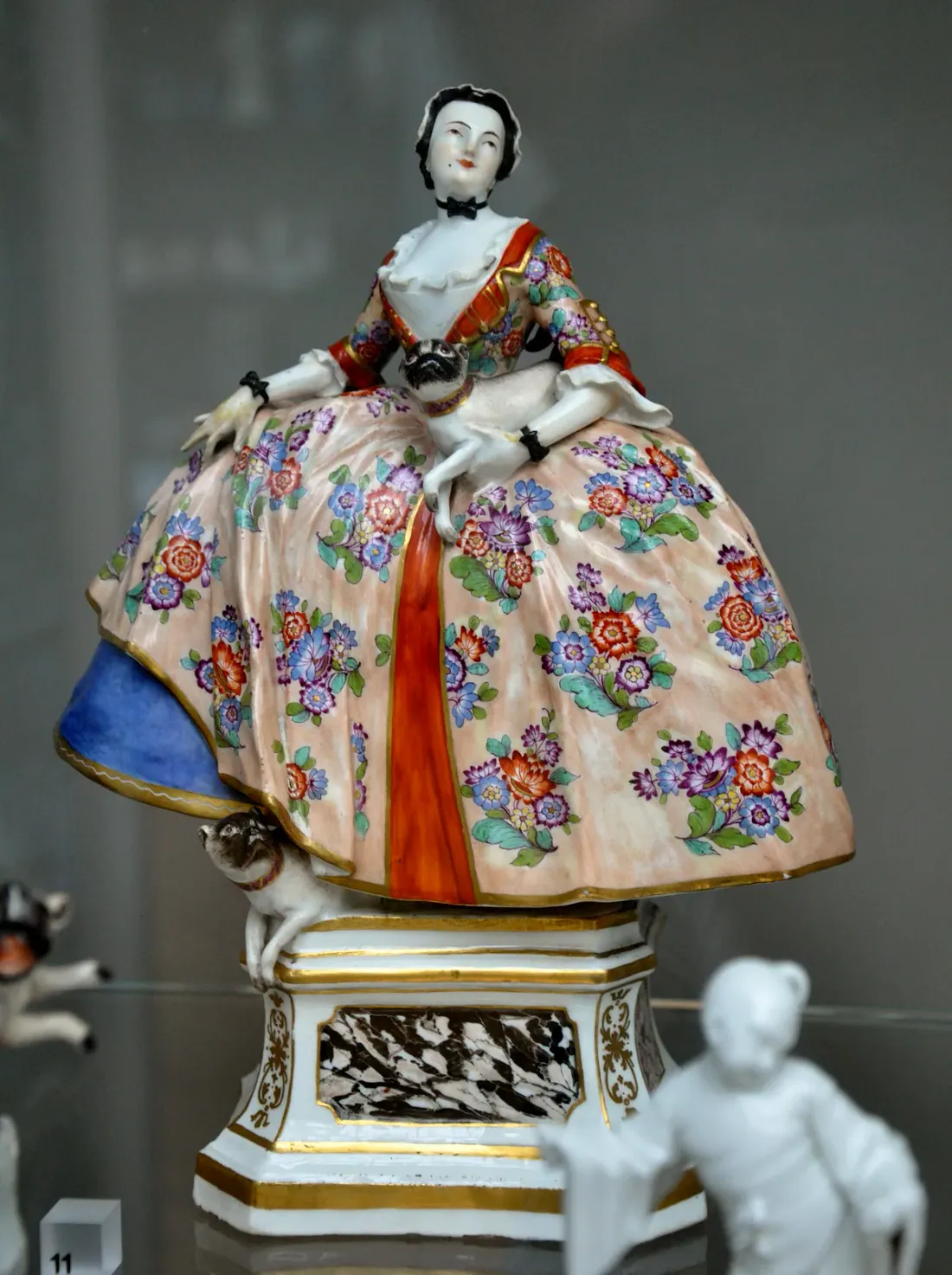
What is firmly documented is that Pugs were present in the Netherlands and Britain by the 1600s and 1700s, and that artists painted them often. The William Hogarth self-portrait with his Pug, Trump, from about 1745, is a well-known example.
Victorian popularity and the breed type
In the 1800s the Pug became a fashionable pet, kept in homes from the royal family downwards. This is when the modern type was set by British breeders. Several details fit the project's "Victorian breed boom" period, which the database gives as the time the breed became established:
- Until 1877 Pugs in Britain were mostly fawn. In that year a black pair from the Orient was introduced, and black became a recognised colour (FCI standard).
- The Pug Dog Club in England was founded in 1883, and is described by breed histories as one of the first single-breed clubs.
- The American Kennel Club registered the Pug in 1885.
Show type and flatter faces
Over the 20th century, show and companion breeding favoured shorter muzzles and rounder heads in many brachycephalic breeds. Today's standards push back against this: the current FCI and UK standards say the muzzle is "relatively short, blunt, square, not upfaced", that nostrils must be open, and that eyes should never protrude. Whether the breed as a whole follows this is covered in the welfare section below.
Recognition
| Year | Event |
|---|---|
| 1877 | Black Pugs introduced to Britain from the Orient |
| 1883 | Pug Dog Club founded in England |
| 1885 | AKC registers the Pug |
The FCI lists the Pug as standard no. 253 (definitive), with China as country of origin and Great Britain as patron of the standard. The UK Kennel Club places it in the Toy Group, and the AKC in the Toy Group.

Ancestors, descendants and relatives
 Same familyChinese Crested Dog1500 to 1965 · China
Ancestor. The Lo-sze, the small flat-faced dog of the Chinese imperial courts (medium confidence in the project data).
Descendants and crosses
- Griffon Bruxellois. The project data lists the Pug as a parent of the Griffon Bruxellois, with other names Belgian Griffon and Petit Brabancon. The Brussels breeds are thought to have been formed from Belgian stable ratting dogs crossed with imported toy breeds such as the Pug.
- Puggle. A modern designer cross between a Pug and a Beagle. It is not a recognised breed.
Relatives. The Pekingese and Shih Tzu are other Chinese court companions. They appear in the Pug's DNA list but are not close, a reminder that "looks similar" and "shares ancestry" are different things.
What does DNA say?
A 2017 study by Parker and colleagues (Cell Reports) analysed 1,346 dogs from 161 breeds and sorted them into 23 supported clades. The Pug sits in the Toy Spitz clade, with strong support. The study also measured shared , long stretches of identical DNA inherited from common ancestors. The more (Mb) two breeds share, the stronger the sign of a common founder or past crossing. It cannot say which way genes flowed.
Source: Parker et al. 2017, as recorded in this site's breed database.
The Griffon Bruxellois is far ahead of every other breed, which fits the story that Pugs were used to build it. The rest of the list is a mix of European toy and small spitz-type breeds and Chinese companions, which fits a toy dog that reached Europe early and was crossed with local small dogs.
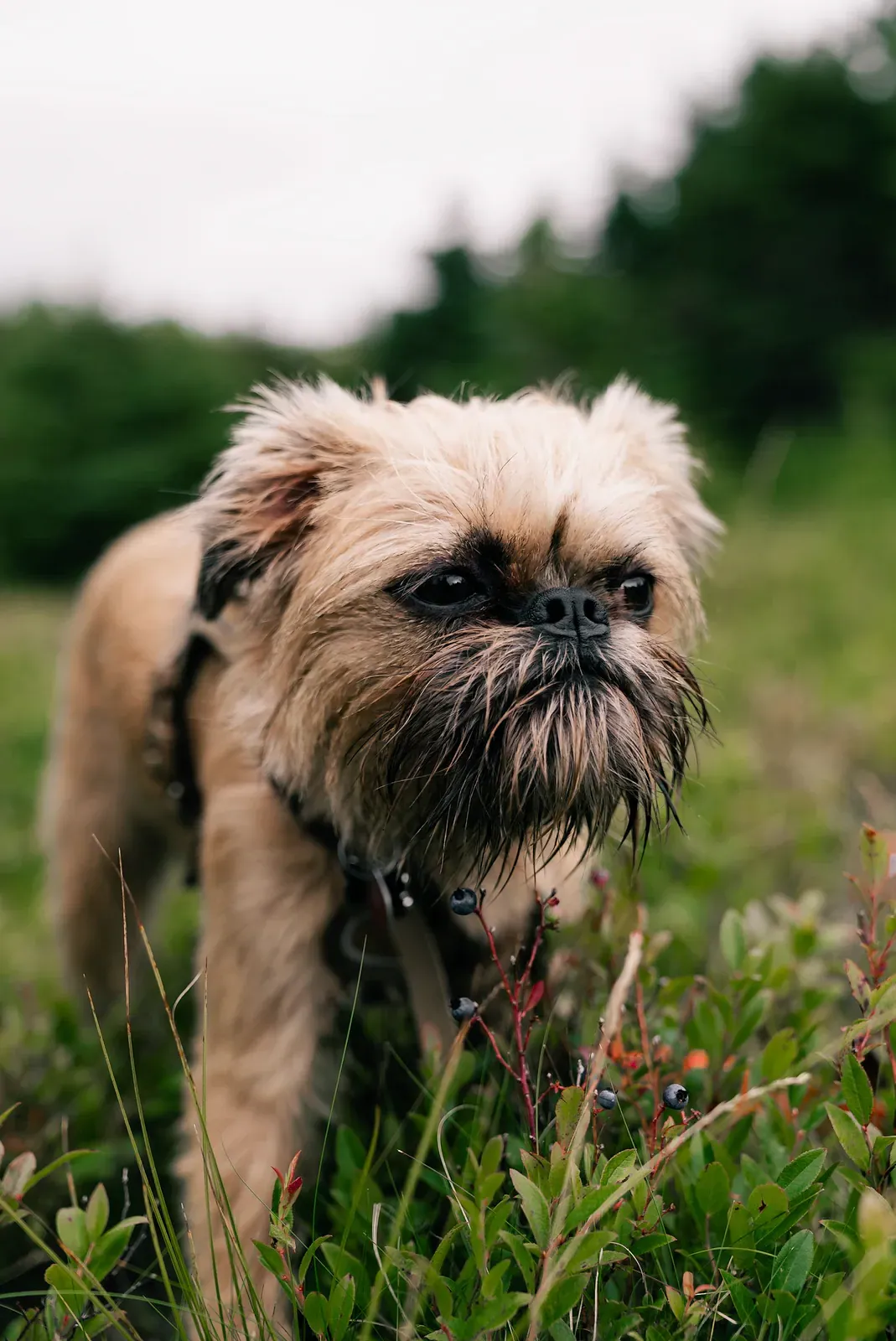
Descend from it · 2
- Griffon BruxelloisBelgium
- PuggleUnited States
- Griffon Bruxellois59.6 Mb 2.5%
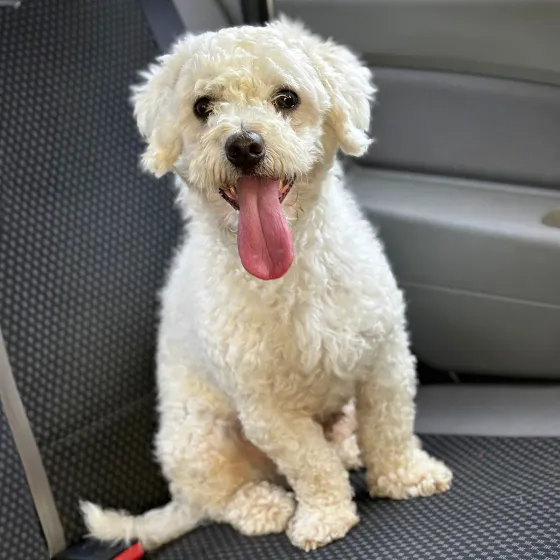
- Coton de Tulear18.8 Mb 0.8%
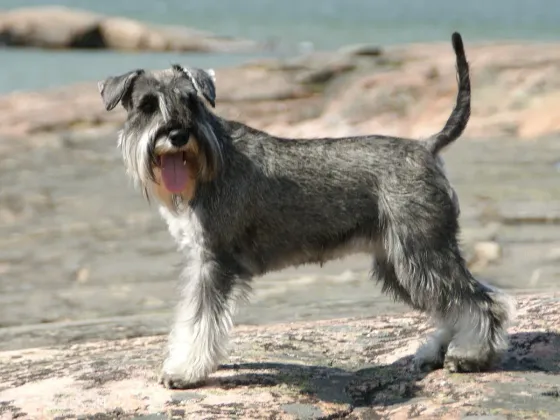
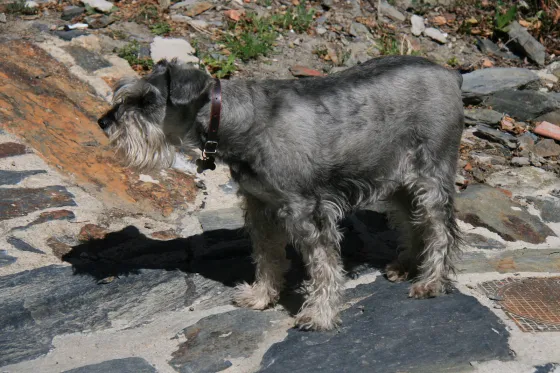
- Miniature Schnauzer17.7 Mb 0.7%
- Schipperke16.3 Mb 0.7%
- Nova Scotia Duck Tolling Retriever14.6 Mb 0.6%
- Tibetan Terrier13.7 Mb 0.6%
- Papillon12.9 Mb 0.5%
- Pekingese12.8 Mb 0.5%
- Shih Tzu12.2 Mb 0.5%
- American Eskimo Dog12.1 Mb 0.5%
- Chinese Crested Dog12.0 Mb 0.5%
- Bichon Frisé11.0 Mb 0.5%
- Standard Schnauzer10.5 Mb 0.4%
- Rat Terrier10.4 Mb 0.4%
- Pomeranian10.3 Mb 0.4%
- Border Terrier10.3 Mb 0.4%
- Puli9.9 Mb 0.4%
- Lhasa Apso9.9 Mb 0.4%
Source: Parker et al. 2017. Percent of the whole genome.
| Breedwith Pug | Shared DNA with Pug (Mb)Shared DNA (Mb) |
|---|---|
| Griffon Bruxellois | 59.6 |
| Coton de Tulear | 18.8 |
| Miniature Schnauzer | 17.7 |
| Schipperke | 16.3 |
| Nova Scotia Duck Tolling Retriever | 14.6 |
| Tibetan Terrier | 13.7 |
| Papillon | 12.9 |
| Pekingese | 12.8 |
| Shih Tzu | 12.2 |
The breed standard
 Looks relatedStandard Schnauzer1400 to 1880 · Germany
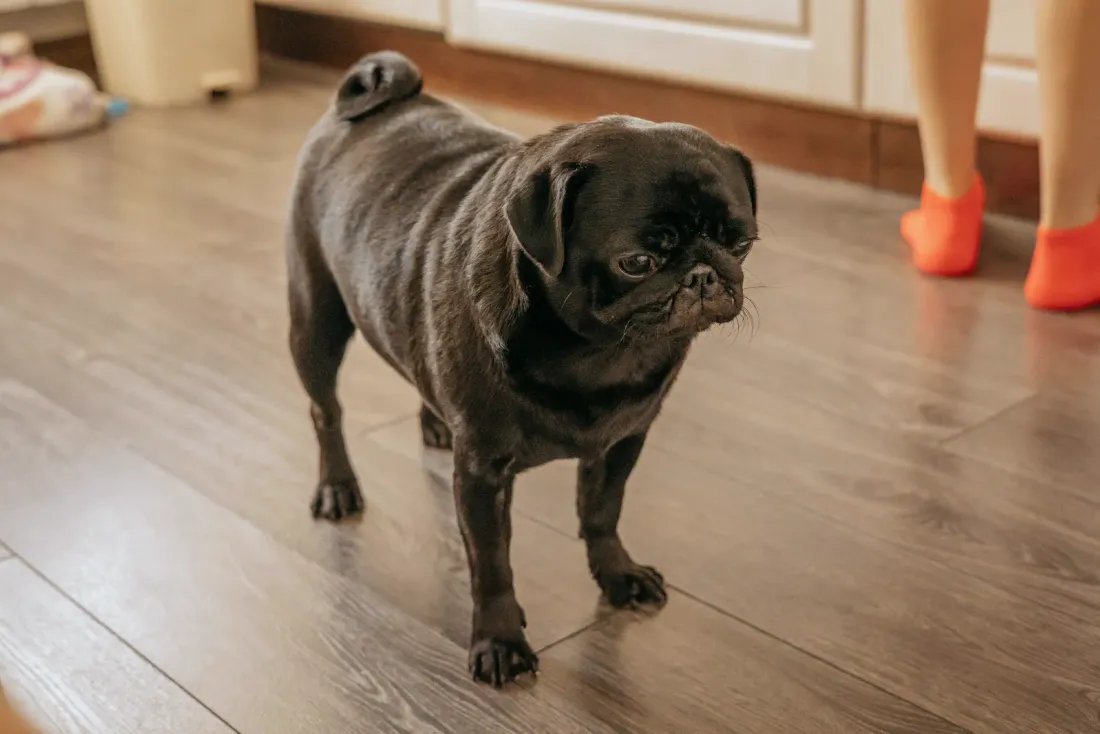
A breed standard is the written ideal for a breed that a kennel club judges dogs against. The FCI, the AKC and the UK Kennel Club all describe a "multum in parvo" dog: a lot of dog in a small space. The FCI wording is "decidedly square and cobby", with good muscle, never low on the leg and never leggy.
| Trait | FCI (no. 253) | AKC | UK Kennel Club |
|---|---|---|---|
| Ideal weight | 6.3 to 8.1 kg | 6.3 to 8.2 kg (14 to 18 lb) | 6.3 to 8.1 kg (14 to 18 lb) |
| Height | Not given | About 25 to 33 cm (breed information) | Not given |
| Coat | Fine, smooth, soft, short, glossy | Fine, smooth, soft, short, glossy | Fine, smooth, short, glossy |
| Colours | Silver, apricot, fawn, black | Fawn (apricot-fawn or silver-fawn) or black | Silver, apricot, fawn, black |
| Head | Relatively large, round, not apple-headed | Large, massive, round | Relatively large, round, not apple-headed |
| Muzzle and nose | Short, blunt, square, not upfaced; open nostrils | Short, blunt, square | Short, blunt, square; well-open nostrils |
| Ears | Small, thin, velvet-soft; drop ear folded forward, or rose | Button or rose; button preferred | Button or rose |
| Tail | High set, tightly curled over the hip; double curl desirable | Curled tightly over the hip; double curl perfection | High set, tightly curled over hip; double curl highly desirable |
The AKC column reflects the AKC standard as widely published; the AKC page itself was not fully retrievable for this draft, so the AKC details should be rechecked before publishing.
A few lines of the standards matter for welfare. The FCI and UK standards both say eyes must never protrude or show white when looking straight ahead, nostrils must not be pinched, heavy nose wrinkles are unacceptable, and body substance "must not be confused with obesity". The UK Kennel Club standard adds that absolute soundness is essential and that any departure is judged by how far it affects health and welfare.
Pugs have a clear black trace (a dark line along the spine) and a black mask, with the body colour clearly defined, in fawn, apricot and silver dogs. Black Pugs are solid black.
Temperament
 Related breedRat Terrier1890 to 1999 · United States
The FCI standard describes "great charm, dignity and intelligence", an even-tempered, happy and lively disposition. Most Pugs are affectionate, social and keen on people, and many follow family members from room to room. They tend to be clownish, sometimes stubborn, and happier among people than alone. Pugs are generally easygoing with visitors and other dogs, though early socialisation helps every dog.
Temperament varies between individuals. A Pug that has trouble breathing, or is in pain from a skin fold or eye problem, may also be less playful and more irritable, so health and behaviour are linked in this breed.
Behaviour and daily needs
 Related breedBorder Terrier1700 to 1920 · United Kingdom
- Exercise. Moderate. Short walks and play suit most Pugs. They tire quickly in warm weather because panting is how dogs cool down, and a Pug's airways make that harder (see the health section).
- Snoring, snorting and noise. Many Pugs snore, snuffle and wheeze. Owners often treat this as a breed quirk. Veterinary research treats loud breathing at rest, or noisy breathing after mild exercise, as a possible sign of airway disease worth a vet check.
- Food. Pugs are keen eaters. In O'Neill and colleagues' 2016 study of 2,709 Pugs in England, overweight or obesity was the most common recorded disorder (13.18 percent), and in the 2022 study it was recorded in 17.4 percent of Pugs against 6.9 percent of other dogs.
- Training. Pugs respond to short, friendly sessions with food and praise, and they can be stubborn if bored.
- Grooming. The coat is short, but Pugs shed. The face folds need regular gentle cleaning and drying to avoid skin infection.
Health
 Related breedPuli900 CE to 1924 · Hungary
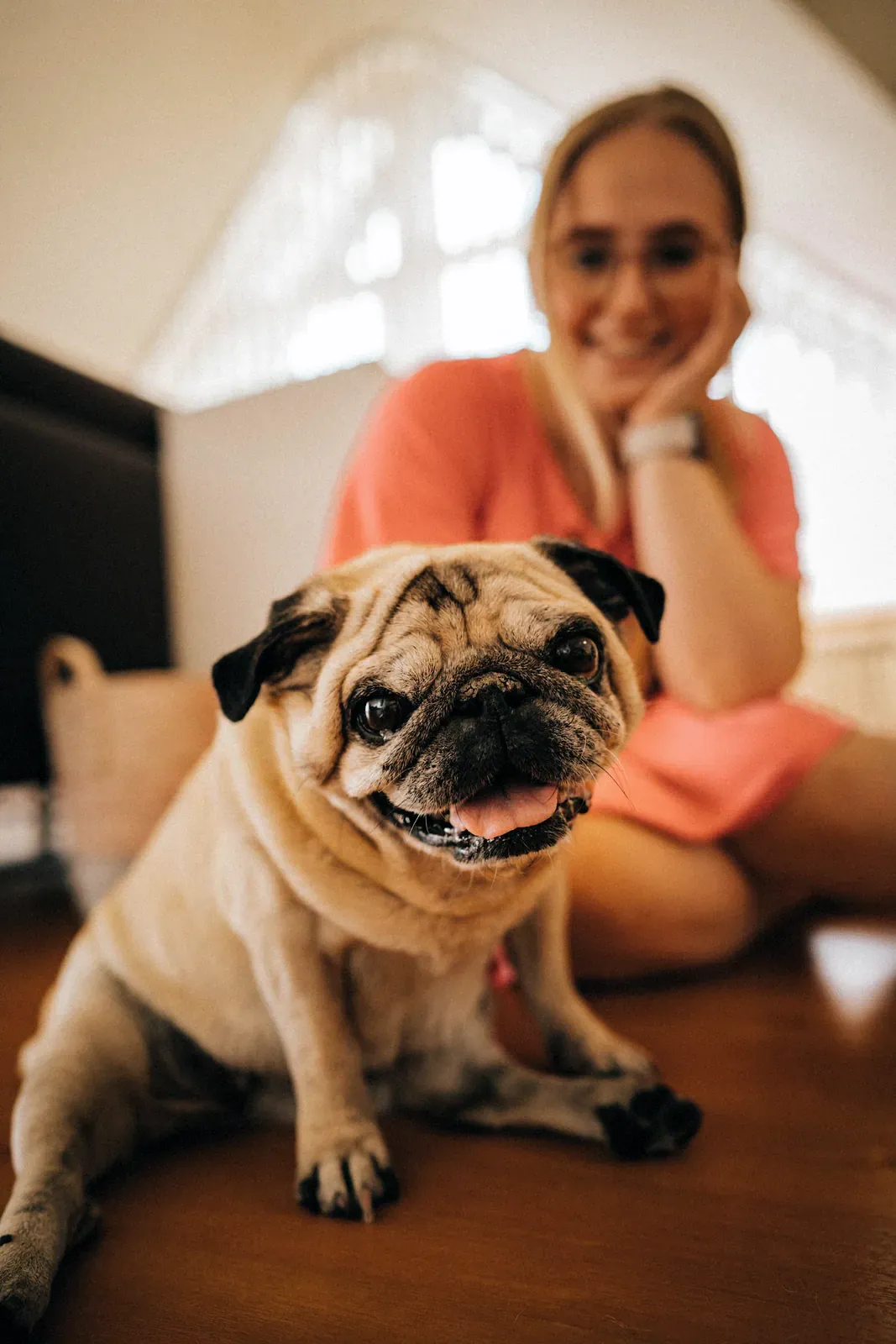
Many Pugs live long, happy lives with their families. The breed has some known risks, mostly linked to the flat face, and good breeders and attentive owners can reduce many of them. What follows is what researchers have found, and what helps. Figures are from named studies. They describe populations, not any single dog, and talk to a vet about your own dog.
"About 1 in N" figures below are the study percentages converted to a simple ratio.
| Condition | What it is | How common | What helps |
|---|---|---|---|
| Brachycephalic obstructive airway syndrome (BOAS) | Airway narrowing from the short skull: narrow nostrils, long soft palate, narrow windpipe. Causes noisy breathing, effort, heat and exercise intolerance | Cambridge study (Liu et al. 2017, 604 dogs): only 7 percent of Pugs (about 1 in 14) were clinically unaffected. In UK primary care (O'Neill et al. 2022), Pugs had about 54 times the odds of a BOAS diagnosis compared with other dogs | Buy from breeders who health-test airways (Respiratory Function Grading Scheme, run by the University of Cambridge with the UK Kennel Club); choose a Pug with a longer muzzle and wide nostrils; keep weight lean; avoid heat and hard exercise; vet check for surgery options |
| Narrow nostrils (stenotic nares) | Small, pinched openings that restrict airflow | Pugs had about 51 times the odds of this diagnosis compared with other dogs (O'Neill et al. 2022) | Check nostril opening when choosing a puppy; the Cambridge team found nostril opening was a useful predictor of BOAS in Pugs and French Bulldogs; surgery in some dogs |
| Corneal ulcer and other eye disorders | Damage to the clear front of the eye, helped by prominent eyes and facial folds | Corneal disorder was recorded in 8.72 percent of Pugs (about 1 in 11; O'Neill et al. 2016). In 2022, Pugs had about 13 times the odds of ulceration | Eye exam by a vet; prompt treatment of red, weepy or squinting eyes; ask for breeding stock with less protruding eyes |
| Pigmentary keratitis | Brown-black pigment spreading across the cornea, which can reduce vision | Found in at least one eye in 91.9 percent of 210 UK Pugs in one eye study (about 9 in 10; linked to age and to inward-rolling lower eyelids) | Regular vet eye checks; treat underlying eyelid or dry-eye causes |
| Overweight and obesity | Extra weight, which worsens breathing and joints | 13.18 percent (about 1 in 8) in 2016; 17.4 percent (about 1 in 6) in 2022 | Measured portions, vet weight checks, activity matched to the dog |
| Skin fold infection | Yeast or bacteria in the face and body folds | Listed among Pugs' most increased risks (O'Neill et al. 2022) | Daily or regular drying and cleaning of folds; vet treatment if red or smelly |
| Ear infection (otitis externa) | Inflamed ear canals | 7.53 percent (about 1 in 13; O'Neill et al. 2016) | Regular ear checks and vet advice |
| Pug dog encephalitis (necrotizing meningoencephalitis, NME) | An inflammatory brain disease, with an immune-system link. Signs include seizures and changes in behaviour. Needs lifelong treatment | A European study (Munich, 2024) found the risk variant at 25.7 percent allele frequency; 7.4 percent of Pugs had two copies (about 1 in 14) and 36.7 percent one copy. Having the variant raises risk; many dogs never develop disease | DNA test for the NME risk variant before breeding; prompt vet care for seizures |
Two points on the table. First, the 2022 RVC study (4,308 Pugs and 21,835 other dogs from a population of 905,544) found Pugs had 1.86 times the odds of at least one recorded disorder compared with other dogs. It also found lower odds than other dogs for 7 of 40 common disorders, so the picture is mixed, not uniformly poor. Second, the authors argued that on health grounds the Pug can no longer be thought of as a typical dog.
Life span. The project database gives 12 to 15 years. UK primary-care studies of Pugs also report longevity figures, and these vary with the method used. Check the latest publication before quoting a median.
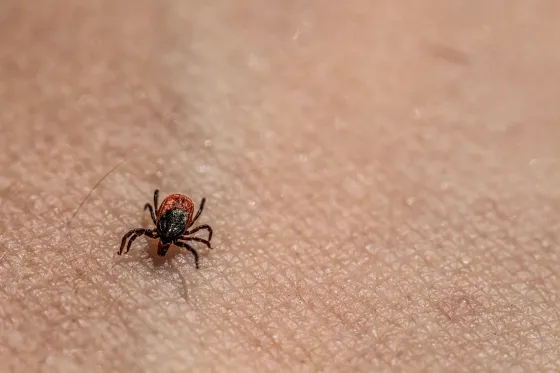 Ticks and fleasTicks and fleas on dogs: how to check, remove and prevent themTicks and fleas on dogs: how to tell them apart, check your dog, remove a tick safely, break the flea life cycle and prevent both.
 GuidesPractical guidesBehaviour, training, health and adoptionRelated breedPuli900 CE to 1924 · Hungary
The breeding and welfare debate
 Related breedLhasa Apso800 CE to 1934 · China
Flat-faced breeds have grown very popular, and veterinary groups, researchers and some kennel clubs have discussed what this means for welfare. The main points, stated plainly:
- The problem is shape, not a rare gene. BOAS comes from the skull and soft tissue proportions that give the Pug its look. That is why airway disease is so common in the breed, and why it cannot be fixed with a single DNA test.
- Some Pugs are healthier than others. In the Cambridge work, measurable features such as nostril openness and neck and skull proportions predicted airway disease with about 80 percent accuracy when combined. Dogs with longer muzzles and wider nostrils generally have fewer problems.
- Breed standards have been tightened. Current FCI and UK Kennel Club texts say nostrils must be open, eyes must not protrude, and heavy nose wrinkles are unacceptable. Critics say judging and breeding practice have not always followed the written standard.
- Screening schemes exist. The Respiratory Function Grading Scheme grades dogs by how they breathe, and the Kennel Club has encouraged its use.
- Buyers matter. Demand for very flat faces keeps such dogs in breeding. Choosing a longer-muzzled Pug from a tested pair, or adopting an adult, shifts demand.
- Positions differ. Some veterinary bodies and welfare groups ask the public not to buy flat-faced breeds, and some countries restrict breeding of extreme types. Breed clubs generally say that responsible breeding, health testing and standards enforcement can improve the breed.
The most useful facts for an owner are practical: ask about airway testing, look at the parents' noses and breathing, and expect to talk about weight, heat and eye care with a vet.
Living with a Pug
 Related breedAfricanis300 CE to 1000 · South Africa
| Daily reality | Rating | Reason |
|---|---|---|
| Exercise per day | Low to medium | Short walks and play suit the breed; hard exercise stresses the airway |
| Training needs | Medium | Intelligent and food-motivated, with a stubborn streak (FCI describes intelligence) |
| Grooming | Medium | Short coat, but folds need regular cleaning and drying |
| Shedding | High | Short coat sheds regularly (breed experience; no study cited here) |
| Barking | Low to medium | Varies by dog; snoring and snorting are common |
| Time alone | Fair | Bred as a companion; most Pugs prefer company |
| Children | Good | Even-tempered, sturdy for a toy breed; supervise small children |
| Other dogs | Good | Generally social; varies |
| Cats and small pets | Varies | No reliable study found |
| Flat living | Good | Small, calm indoors, needs short walks |
| Heat tolerance | Poor | Flat-faced breeds cool less well by panting |
| Cold tolerance | Fair | Short coat and small size; a coat can help in winter |
| First-time owner fit | Fair | Easy to love, but health costs and weight control need attention |
A great fit if...
- You want a calm companion who will sit near you for most of the day.
- You are happy with short daily walks and play.
- You can keep to measured meals and a lean weight.
- You are ready to talk to a vet early about any breathing or eye concern.
Think twice if...
- You live somewhere very hot and cannot keep a Pug cool.
- You want a running, hiking or jogging companion.
- You would struggle with possible vet bills for airway, eye or skin problems.
- You prefer a low-shedding dog.
Before you get one
- Ask a breeder for: airway grading under the Respiratory Function Grading Scheme for both parents; an eye examination; the DNA test for the NME risk variant; and evidence of how parents breathe at rest and after a short walk.
- Look at the dogs: open nostrils, a muzzle with some length, eyes that do not bulge, minimal nose wrinkle, a lean body.
- Adult or rescue. Breed rescues exist and often have adult Pugs whose health and temperament are already known.
- First year. Plan for socialisation, a vet check of nostrils, eyes and weight, and early habits for fold cleaning and a healthy weight.
Similar breeds to consider
- French Bulldog. Also a flat-faced companion, with the same airway concerns, so choose with the same checks.
- Cavalier King Charles Spaniel. A soft, sociable toy spaniel with a longer muzzle, but with its own heart and neurological health risks.
- Papillon. A small, bright companion with a normal-length muzzle.
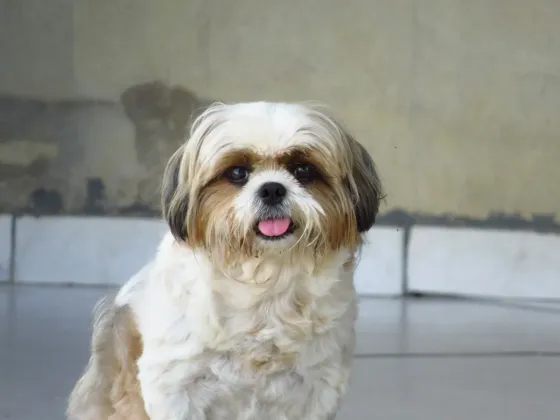
- Shih Tzu. Another Chinese court companion; shorter muzzle, longer coat to groom.
GuidesPractical guidesBehaviour, training, health and adoptionThinking of adopting?How to adopt a dog from a shelter or rescueHow to adopt a dog from a shelter or rescue: the process, costs in general terms, choosing a dog, the first weeks and what if it does not work out.Related breedAfricanis300 CE to 1000 · South AfricaPug fun facts
 Related breedBasenji3000 BCE to 1937 · Democratic Republic of the Congo
- A group of Pugs is traditionally called a "grumble" (a popular naming convention, not an official term).
- Dutch and German speakers call the Pug "Mops", and French speakers call it "Carlin".
- Josephine, wife of Napoleon, is said to have owned a Pug called Fortune; the story that it carried messages to her in prison is a popular legend, not a proven fact.
- The Pug's Chinese court past is why many books call it a breed of emperors; the project data dates the early type to about 400 BCE, with medium confidence.
Frequently asked questions
Are Pugs good family dogs?
They can be. Most are affectionate, sturdy for a toy and even-tempered, but they need heat care and a vet who knows brachycephalic breeds.
How long do Pugs live?
Project data gives 12 to 15 years. Lifespan depends on weight, airway health and care.
How big do Pugs get?
The breed standards give an ideal weight of 6.3 to 8.1 kg. Weight above that is common, and overweight is the most common recorded disorder.
Do Pugs have breathing problems?
Many do. In a Cambridge study of 604 flat-faced dogs, only 7 percent of Pugs were clinically unaffected by BOAS.
What is pug dog encephalitis?
An inflammatory brain disease (necrotizing meningoencephalitis). A DNA test for a genetic risk variant exists and is recommended before breeding.
What colours do Pugs come in?
Silver, apricot, fawn and black.
Do Pugs shed?
Yes, steadily, despite the short coat.
Where do Pugs come from?
China, where small flat-faced dogs lived at imperial courts. They reached Europe with Dutch traders and were refined in Britain.
What breeds are related to the Pug?
The Griffon Bruxellois is its closest DNA relative in the 2017 Parker study, which places the Pug in the Toy Spitz .
Read next
Sources (12)
- American Kennel Club, Pug breed information and breed standard.
- Fédération Cynologique Internationale, Pug, standard no. 253 (current English text).
- Liu N.C. et al., "Conformational risk factors of brachycephalic obstructive airway syndrome (BOAS) in pugs, French bulldogs, and bulldogs", PLOS ONE, 2017.
- O'Neill D.G. et al., "Demography and health of Pugs under primary veterinary care in England", Canine Genetics and Epidemiology, 2016.
- O'Neill D.G. et al., "Health of Pug dogs in the UK: disorder predispositions and protections", Canine Medicine and Genetics, 2022.
- Packer R.M.A. et al., "Impact of facial conformation on canine health: corneal ulceration", PLOS ONE, 2015.
- Parker H.G. et al., "Genomic analyses reveal the influence of geographic origin, migration, and hybridization on modern dog breed development", Cell Reports, 2017.
- Study of pigmentary keratitis in Pugs in the UK, Royal Veterinary College researchers (prevalence 91.9 percent of 210 Pugs).
- University of Munich researchers, "Allele frequency of a genetic risk variant for necrotizing meningoencephalitis in pug dogs from Europe and association with the clinical phenotype", Frontiers in Veterinary Science, 2024.
- The Kennel Club (UK), Pug breed standard (updated April 2025) and breed information; Respiratory Function Grading Scheme information.
- Wikipedia, "Pug" (used for history and legends, checked against the sources above).
- Project knowledge base, breed record and Parker 2017 shared-haplotype table (this site).