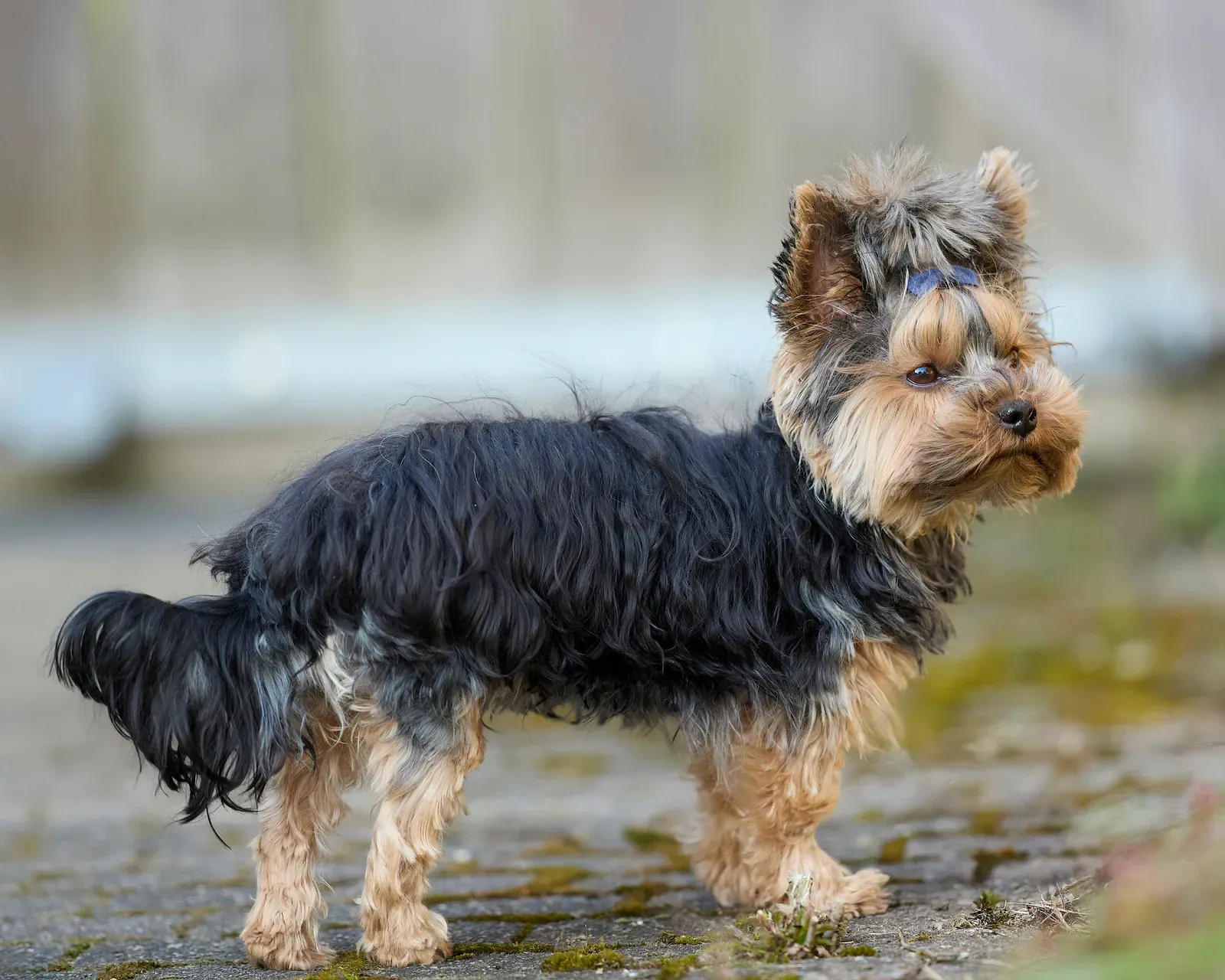
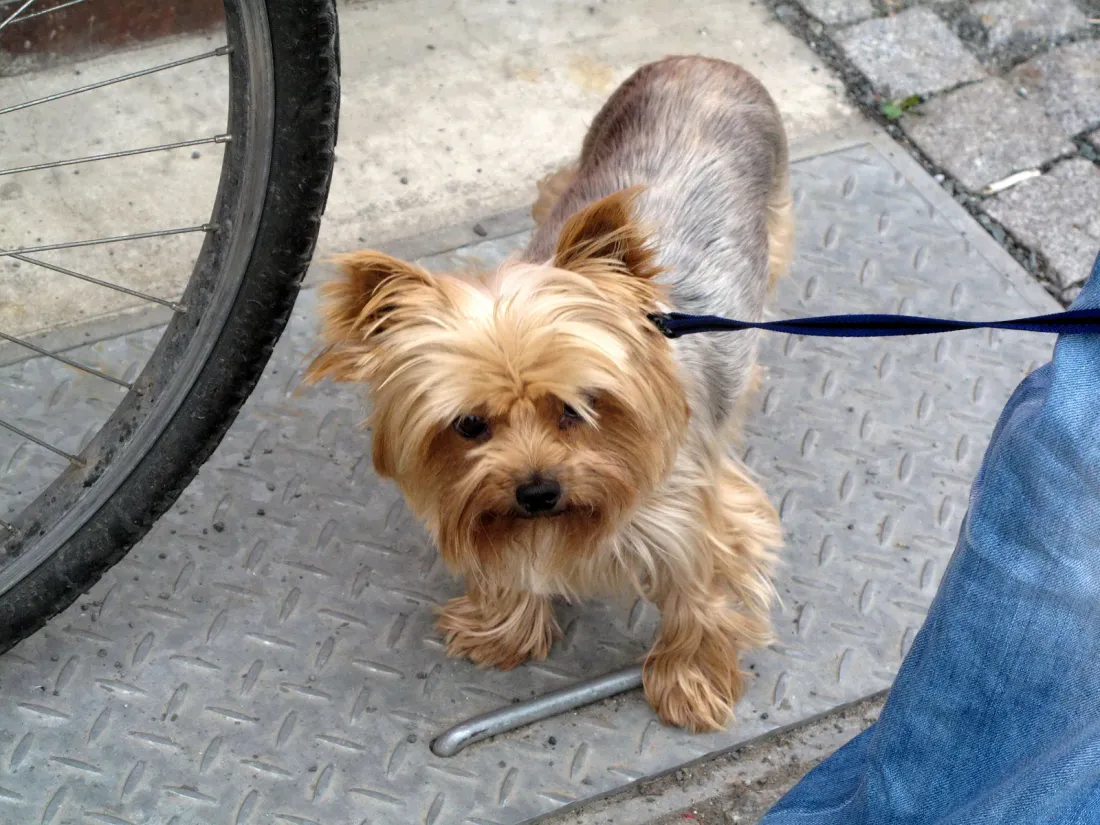
It began as a small ratter in the mills and mines of 19th century Yorkshire, and its long steel blue and tan coat came later with the show ring. Yorkies are lively, bold and often bossy for their size, and in UK veterinary records they live a median of about 13.5 years. They suit owners who want a small, alert companion and will keep up with daily brushing, tooth care and training.
Yorkshire Terrier quick facts
 Related breedBelgian Malinois1891 to 1901 · Belgium
- Closest DNA relatives
- Australian Silky Terrier, Norfolk Terrier, Australian Terrier
- Descendant breeds
- Australian Silky Terrier, Australian Terrier, Norwich Terrier, Biewer Terrier (project data)
- Country of origin
- United Kingdom (Yorkshire, England)
- Period of development
- About 1850 to 1874 (project data)
- Foundation sire
- Huddersfield Ben, born 1865
- Type
- Toy terrier (FCI Group 3, Terriers, standard no. 86; AKC Toy Group; UK Kennel Club Toy Group)
- Weight
- Up to 3.2 kg in the standards. Typical pet Yorkies are heavier: median adult 5.06 kg in UK vets' records
- Coat
- Single coat, long, straight, silky, close to human hair in texture
- Colours
- Dark steel blue and rich tan. Puppies are born black and tan
- Life span
- Project data: 11 to 15 years. UK median age at death 13.56 years (VetCompass 2025)
- Exercise
- Modest. Short daily walks and play suit most adults
- Family (DNA)
- Terrier family (Parker et al. 2017)
Name and origin
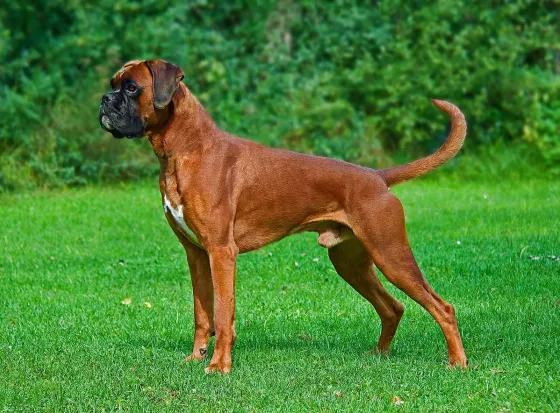 Related breedBoxer1880 to 1904 · Germany
"Yorkshire Terrier" names the English county where the breed was developed. The dogs were first sold as "Broken Haired Scotch" or "Toy" terriers. Popular breed histories say the name Yorkshire Terrier took hold around 1870, because the dog had been so improved in Yorkshire that it no longer looked like a Scottish import. Exact dates for the switch vary between sources.
Scottish weavers and mill-town ratters
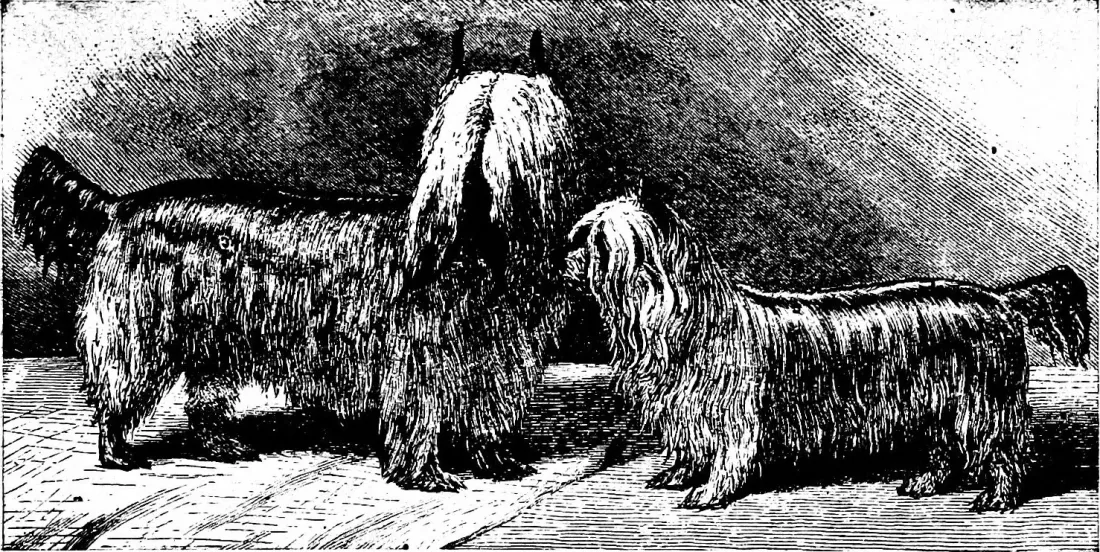
In the mid 19th century, Scottish textile workers moved to Yorkshire and Lancashire for mill and mining jobs and brought small terriers with them. Histories mention a "broken-haired Scotch terrier", and a type called the Clydesdale Terrier, with blue and tan colouring and a long coat. In Yorkshire these dogs met local stock. Accounts name the Waterside Terrier, a long-coated, bluish grey ratter, and the Old English Black and Tan Terrier. Mill and mine workers reportedly did much of the early breeding, and the dogs kept rats and mice down in mills and homes.
Details of the mix are uncertain, as no stud books existed at the time. Project data lists the Paisley Terrier and the Black and Tan Terrier as ancestors (medium confidence). Some authorities believed the Maltese was also used, but project data rates that link low, and it is unproven. Treat the full list of ancestors as likely rather than certain. The breed's name for its job is clearer: it began as a working ratter and became a companion later.
History
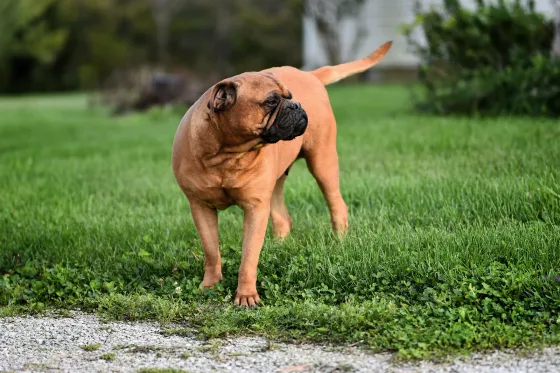 Same eraBullmastiff1860 to 1924 · United Kingdom
Huddersfield Ben
Almost every modern Yorkie traces to one dog, Huddersfield Ben. He was born in 1865 in Huddersfield, bred by W. Eastwood and owned by Mr and Mrs M. A. Foster of Bradford (Mary Ann Foster is the name usually given for the owner). Ben was a larger dog himself, around 4 to 5 kg, but he reportedly sired puppies that came in under the small size limit of the day. He won 74 prizes, including first at Manchester in 1870, and appeared at Crystal Palace in 1870 and 1871. He is widely called the foundation sire of the breed and one of the first to breed true to type. Ben died on 23 September 1871 at age 6 after being hit by a carriage. His stuffed body was later lost, reportedly after World War II. These details come from secondary histories, not from original show records checked for this draft.
Recognition and spread
| Year | Event |
|---|---|
| 1865 | Huddersfield Ben born |
| About 1870 | Name "Yorkshire Terrier" gains use |
| 1870s | UK Kennel Club recognition (summary sources give only the decade) |
| 1872 | Breed reaches North America |
| 1885 | First Yorkshire Terrier registered by the AKC |
| 1944 | Smoky found in New Guinea |
The FCI lists the breed as standard no. 86 (definitive), with Great Britain as country of origin. Victorian owners, including ladies who kept them as lap dogs, favoured the breed, and the long show coat became the standard picture of a Yorkie. The AKC history says popularity in America faded by the 1940s, then recovered after Smoky.
Smoky, the war dog
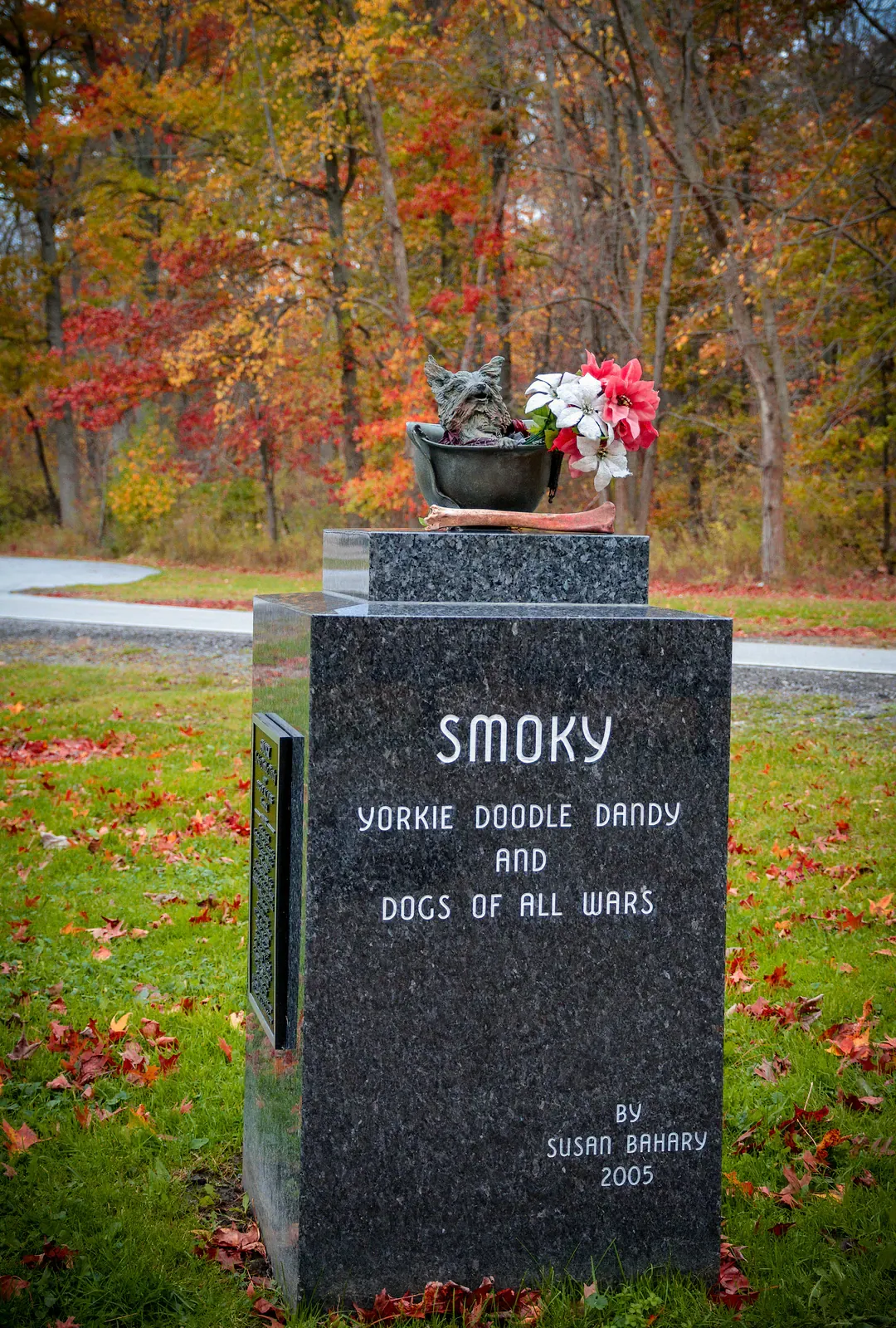
Smoky was a Yorkshire Terrier found in February 1944 in an abandoned foxhole in the New Guinea jungle. She weighed about 1.8 kg and stood about 18 cm tall. Corporal William A. Wynne of the US 5th Air Force, 26th Photo Reconnaissance Squadron, got her from another soldier, and the two stayed together through the war. She is credited with 12 combat missions, 8 battle stars, and surviving 150 air raids and a typhoon at Okinawa. Her best known job was at Lingayen Gulf on Luzon, where she was sent through a pipe about 21 metres long, filled with soil, to pull a telegraph wire through. The story says this saved about 250 ground crew from having to move aircraft and work under fire.
From July 1944 Smoky is often described as the first recorded therapy dog, visiting wounded soldiers. She died on 21 February 1957 at age 14. A bronze statue in Cleveland Metroparks, Ohio, was unveiled on 11 November 2005. These details come from secondary sources (Wikipedia and the AKC), not from military records.

Ancestors, descendants and relatives
 Same familyChihuahua1850 to 1904 · Mexico
Ancestor breeds
- Paisley Terrier. Linked in project data as a likely ancestor (medium confidence).
- Black and Tan Terrier. Crossed with Scottish types by Yorkshire mill and mine workers (medium confidence).
- Maltese. Some old authorities believed it was used. Low confidence.
- Skye Terrier. Listed among ancestors in project data.
Descendant breeds
- Australian Silky Terrier, Australian Terrier, Norwich Terrier and Biewer Terrier list the Yorkshire Terrier among their parents in project data.
What does DNA say?
A 2017 study by Parker and colleagues (Cell Reports) analysed 1,346 dogs from 161 breeds and sorted them into 23 clades. The Yorkshire Terrier sits in the Terrier family. The study also measured shared , long stretches of identical DNA from common ancestors. The more (Mb) two breeds share, the stronger the sign that they were crossed or share founders. The study cannot say which way genes flowed.
Source: Parker et al. 2017, as recorded in this site's breed database.
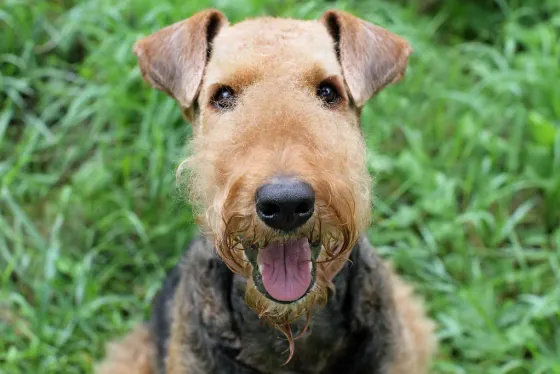
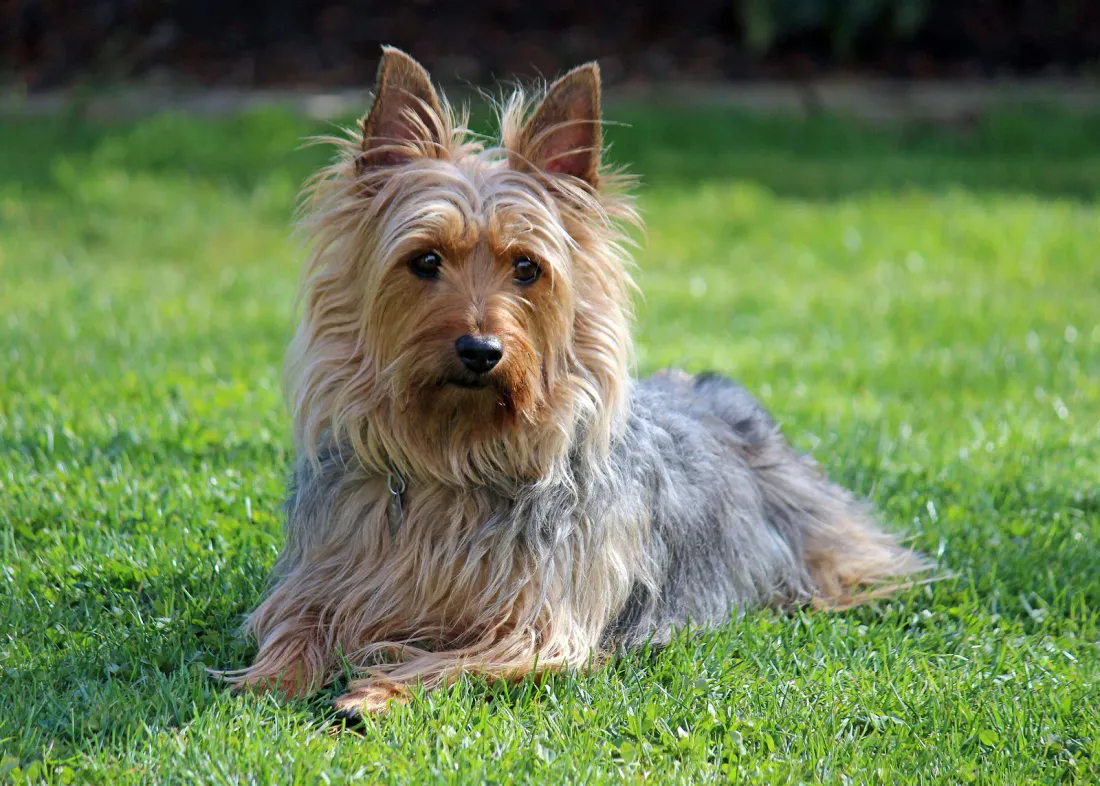
The Australian Silky Terrier shares about twice as much DNA with the Yorkie as any other breed in the table, which fits their shared history as small, silky, blue and tan toy terriers. The Airedale and Irish Terrier results show how far the wider terrier family overlaps.
Descend from it · 4
- Australian TerrierAustralia
- Norwich TerrierUnited Kingdom
- Australian Silky TerrierAustralia
- Biewer TerrierGermany
- Australian Silky Terrier62.4 Mb 2.6%
- Norfolk Terrier30.1 Mb 1.3%
- Australian Terrier29.5 Mb 1.2%
- Norwich Terrier23.6 Mb 1.0%
- Airedale Terrier20.3 Mb 0.8%
- Irish Terrier12.7 Mb 0.5%
Source: Parker et al. 2017. Percent of the whole genome.
| Breedwith Yorkshire Terrier | Shared DNA with Yorkshire Terrier (Mb)Shared DNA (Mb) |
|---|---|
| Australian Silky Terrier | 62.4 |
| Norfolk Terrier | 30.1 |
| Australian Terrier | 29.5 |
| Norwich Terrier | 23.6 |
| Airedale Terrier | 20.3 |
| Irish Terrier | 12.7 |
The breed standard
 Looks relatedDobermann1880 to 1900 · Germany
A breed standard is the written ideal a kennel club judges dogs against. It describes the dog show judges want, not every dog you will meet.
| Trait | FCI (no. 86) | AKC | UK Kennel Club |
|---|---|---|---|
| Weight | Up to 3.2 kg | Up to 7 lb (3.2 kg) | Maximum 3.2 kg |
| Coat | Not verified for this draft | Long, straight, silky | Moderately long, perfectly straight, glossy, fine and silky, not woolly |
| Colour | Dark steel blue (not silver blue) from occiput to tail root; tan on the head and legs | Blue and tan | Dark steel blue from back of head to tail root; rich tan on chest. Any other colour is unacceptable |
| Head | Not verified for this draft | Not verified for this draft | Rather small, flat skull. Black nose |
| Ears | Not verified for this draft | Not verified for this draft | Small, V shaped, upright, set close together |
| Tail | Not verified for this draft | Not verified for this draft | Docked: medium length. Undocked: as straight as possible, ample hair |
Where the standards differ, they differ in wording more than in substance. All three agree on the 3.2 kg ceiling and the blue and tan scheme. The UK Kennel Club standard describes a compact, neat body with an upright carriage, a long coat with a centre parting from nose to tail tip, and a spirited, alert, intelligent temperament. "Teacup" and "micro" Yorkies are sales labels, not varieties in any standard. Dogs far below the standard weight are not the ideal.
Real pet Yorkies are often heavier than the standard. A 2025 VetCompass study of 3,308 Yorkshire Terriers gave a median adult bodyweight of 5.06 kg (males 5.50 kg, females 4.67 kg).
Coat and colour change
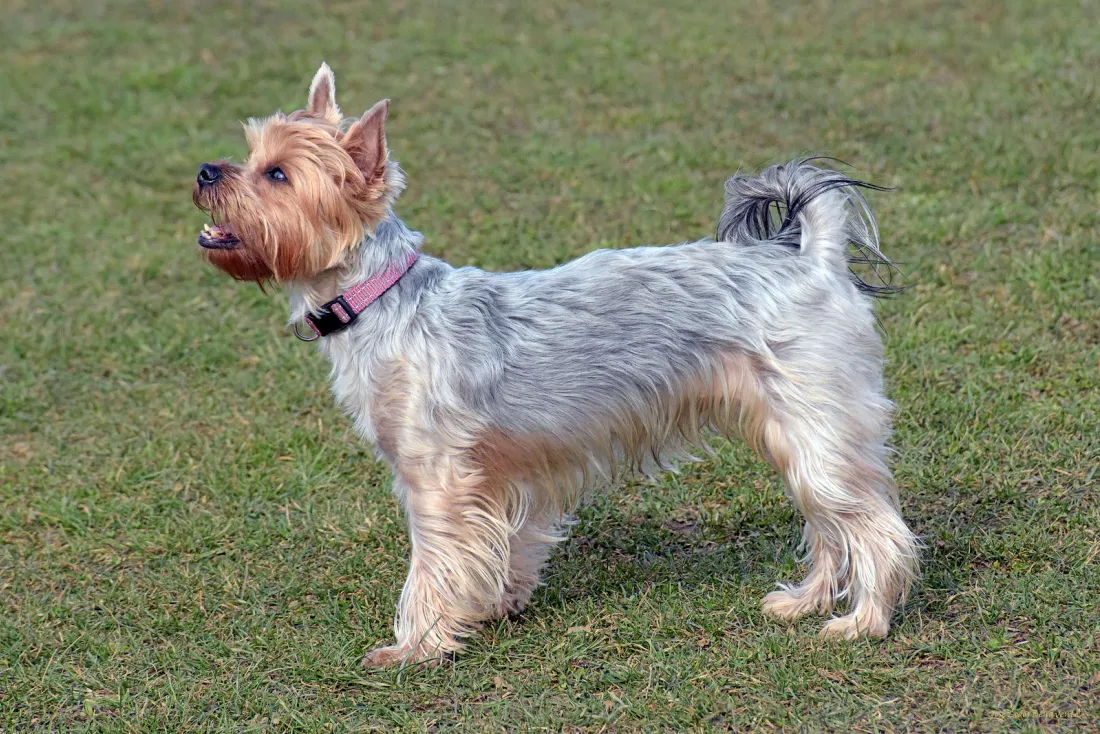
The Yorkie coat is single, with no woolly undercoat. The hair is fine and silky, closer to human hair than to typical dog fur. In breeds like this, that usually means less shedding on furniture but more tangles. The breed is not "hypoallergenic": no dog breed is proven allergy safe, so spend time with a Yorkie before you commit if allergies matter.
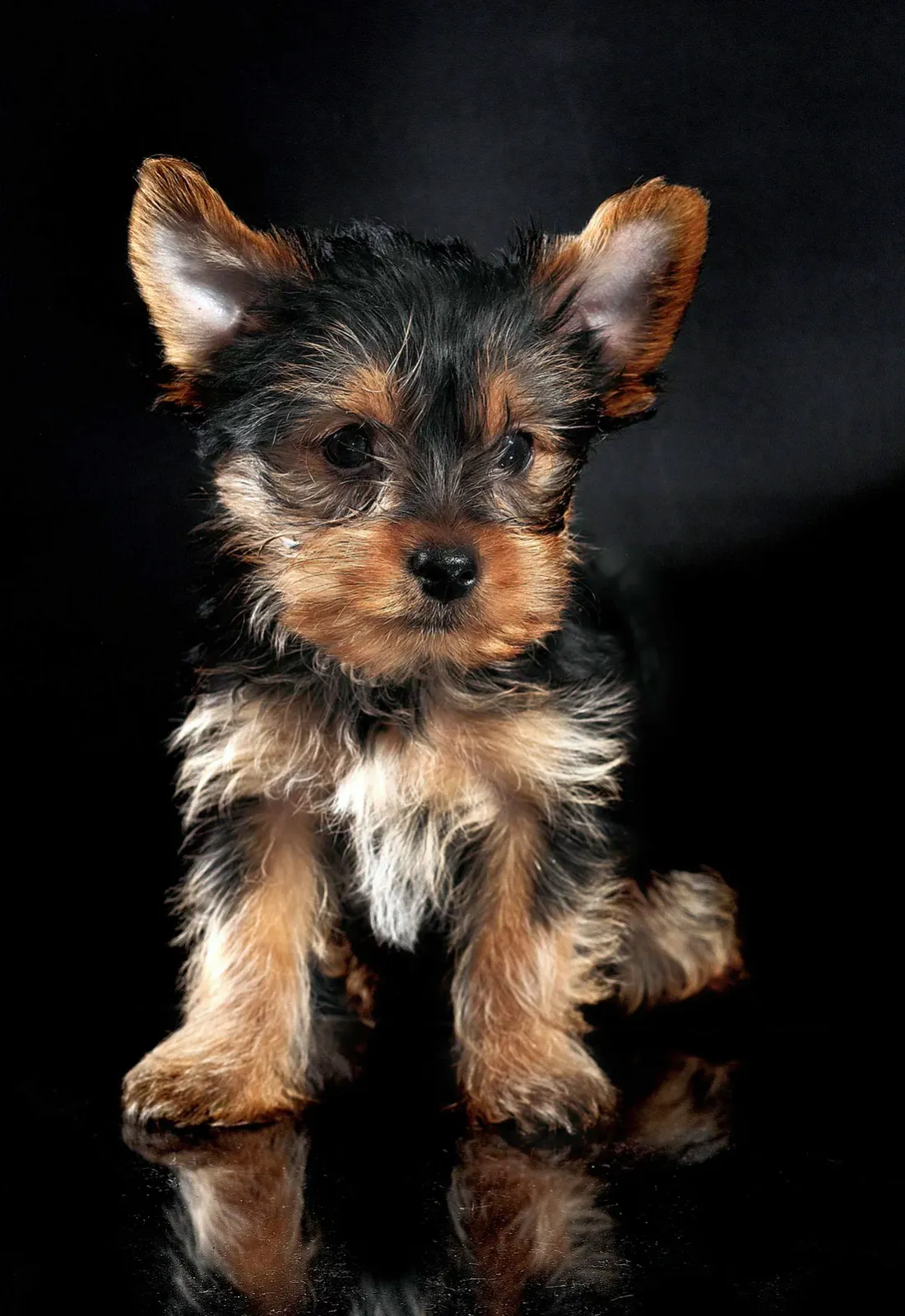
Puppies are born black and tan. As the puppy grows, the black clears to dark steel blue on the body, while the tan on the face and legs deepens and lightens towards the tips. The change is part of normal development, and the final shade varies between dogs. Coat colour is only one consideration, and health and temperament should come first.
Pet owners often keep the coat short in a "puppy cut". Show dogs grow a floor-length coat, kept in wraps and oils. Both need brushing, since a long coat tangles quickly.
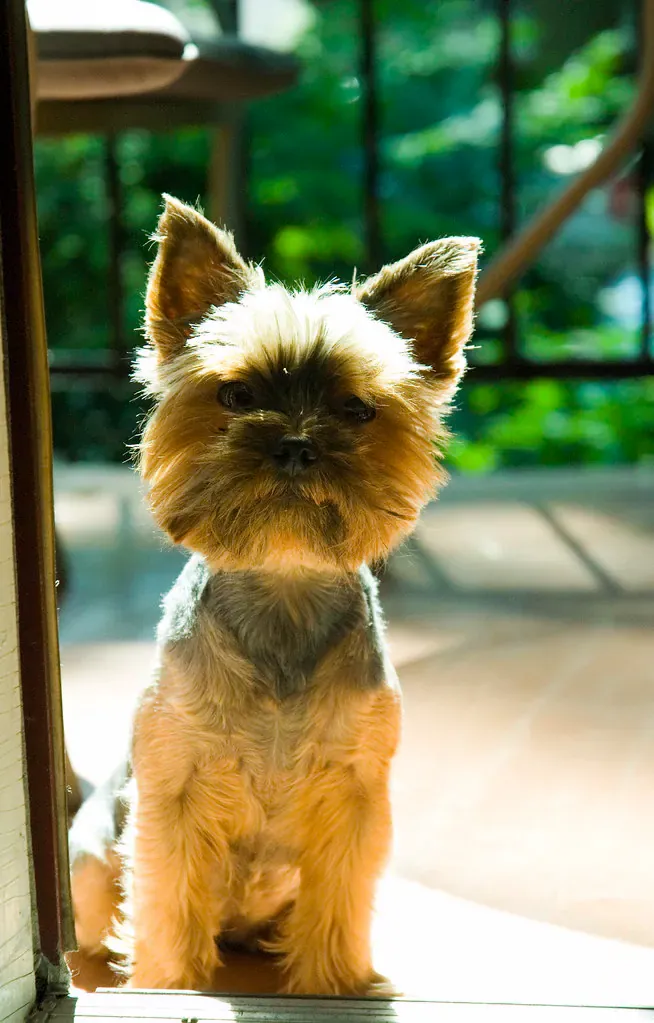
Temperament
 Related breedFlat-coated Retriever1860 to 1880 · United Kingdom
The UK Kennel Club standard describes a spirited dog with an alert, intelligent manner. The AKC introduction calls the breed "feisty" and old-time terrier at heart under the glossy coat. In daily life that means a dog that barks at the doorbell, tests limits, and often acts much bigger than it is.
Most Yorkies bond closely to one or two people and are watchful with strangers. Terrier traits include digging, chasing small moving things and a strong voice. Small dogs are often carried around, which can teach a puppy that every worry gets fixed by an owner's arms, so early practice with being put down, handled and left alone helps.
Temperament varies between dogs and lines. Ask a breeder to let you meet the parents.
Behaviour
Yorkies were bred to chase and kill rats, so some will chase squirrels, cats or small pets. A fenced garden and a lead outside are sensible. Housetraining can take longer with very small dogs, since small bladders mean more trips outside. Frequent barking is common and is best handled with early training. Yorkies can do agility, rally and trick training and learn quickly when work is short and rewarded.
Health
 Related breedFrench Bulldog1850 to 1898 · France
Most Yorkshire Terriers live long, healthy lives. A 2025 VetCompass study from the Royal Veterinary College, using the primary care records of 28,032 Yorkshire Terriers in the UK, gave the breed a good bill of health overall, with a median age at death of 13.56 years in 464 dogs that died. This section covers what breeders screen for and what owners can watch for. It is general information, not advice for your own dog.
At the time of writing the UK Kennel Club lists no recommended pre-breeding health screening for the breed, and says it may change as evidence builds.
| Condition | What it is | How common | What helps |
|---|---|---|---|
| Gum and tooth disease (periodontal disease) | Plaque and infection around the teeth. Small mouths crowd teeth | Diagnosed in about 1 in 5 Yorkies (21.1%) in one year of UK records. Seen more often than in other breeds (VetCompass 2025) | Daily tooth brushing, vet dental checks, treating early |
| Retained baby teeth (persistent deciduous teeth) | Milk teeth do not fall out when adult teeth arrive | About 1 in 28 (3.57%). Seen more often than in other breeds (VetCompass 2025) | Vet check at 5 to 6 months. Teeth may need removing under anaesthetic |
| Kneecap slipping (patellar luxation) | The kneecap slides out of its groove, causing skipping steps | The breed has 5.5 times the odds of a diagnosis compared with crossbred dogs. Across all dogs, 1.3% are diagnosed (O'Neill et al. 2016, VetCompass, 210,824 dogs) | Healthy weight, vet check of knees, surgery in more serious cases |
| Collapsing windpipe (tracheal collapse) | The windpipe flattens, causing a honking cough | About 1 in 15 (6.7%) at one referral hospital (Weisse et al., 2026). That figure comes from a specialist hospital, so it overstates the rate for all Yorkies | Chest strap instead of a collar, healthy weight, avoid smoke, vet treatment. Usually shows in middle to older age |
| Liver shunt (congenital portosystemic shunt) | A blood vessel bypasses the liver. Signs usually show in young dogs | About 1 in 125 (0.8%) at the same referral hospital (Weisse et al., 2026). Seen far more often than in most breeds. Median age at diagnosis 2.7 years | Vet blood tests (bile acids) for young dogs that grow slowly or act strangely. Surgery or diet can help. Ask breeders about shunt history in the line |
| Overweight and obesity | Extra weight strains joints and windpipe | About 1 in 27 (3.72%) diagnosed (VetCompass 2025) | Measured meals, regular walks, weight checks |
| Low blood sugar (hypoglycaemia) | Very small puppies can drop their blood sugar if they do not eat | Not quantified in the sources used. Mainly very small or young dogs | Small, frequent meals. See a vet at once if a puppy is weak or shaky |
Hypoglycaemia is a particular worry in very small puppies, so choose a puppy near the standard size. Brain disorders (9.79%) and kidney disorders (8.73%) were the most common disorder groups recorded as causing death in the VetCompass study, and 85.7% of deaths involved euthanasia, which is typical for dogs in veterinary care.
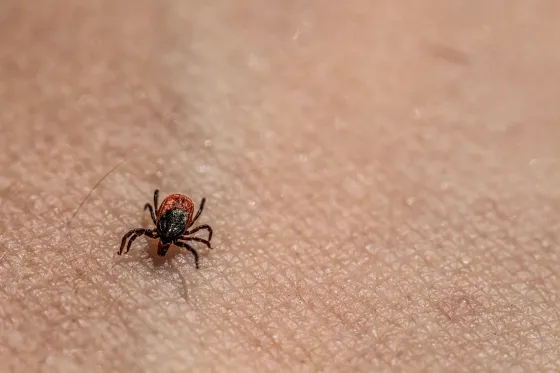 Ticks and fleasTicks and fleas on dogs: how to check, remove and prevent themTicks and fleas on dogs: how to tell them apart, check your dog, remove a tick safely, break the flea life cycle and prevent both.
 GuidesPractical guidesBehaviour, training, health and adoptionRelated breedFrench Bulldog1850 to 1898 · France
Living with a Yorkshire Terrier
 Related breedGerman Shepherd1899 · Germany
| Need | Rating | Why |
|---|---|---|
| Exercise per day | Low to Medium | Small dog, short walks and play. Many enjoy a lot more if offered |
| Training needs | Medium | Quick learner, but terrier stubbornness and barking need steady work |
| Grooming | High | Long single coat tangles. Daily brushing for a full coat. Pet cuts need regular trims |
| Shedding | Low | Single silky coat. Loose hair tends to stay in the coat |
| Barking | High | Alert terrier. Many Yorkies are vocal |
| Time alone | Fair to Poor | Bond closely with owners. Varies by dog and training |
| Children | Fair | Very small and easy to injure. Better with older, gentle children |
| Other dogs | Fair | Often confident, sometimes too bold with larger dogs |
| Cats and small pets | Fair | Ratter instinct, varies by dog |
| Flat living | Good | Small size suits it, if barking is managed |
| Heat tolerance | Fair | Not a flat faced breed. Coat and tiny size mean care in hot weather |
| Cold tolerance | Fair to Poor | Single coat gives little insulation. Many wear a coat in winter |
| First time owner fit | Fair | Easy to handle, harder to groom and train well |
A great fit if...
- You want a small dog that goes everywhere and stays close to you.
- You can brush a coat every day or pay for regular trims.
- You enjoy short training sessions and tricks.
- You have a quiet adult household or older children.
Think twice if...
- Your home is full of toddlers or boisterous dogs.
- You work long hours away and your dog would be alone.
- You live next to people who dislike barking.
- You want a dog that needs no coat care.
Before you get one
- Health. Ask the breeder about shunt history in the line, knee checks, and how the parents' teeth are. The UK Kennel Club lists no required tests, so ask what the breeder screens for and ask to see records.
- Size. Choose a puppy near the standard weight. Avoid "teacup" sellers.
- Puppy or adult. Yorkie breed rescues exist in many countries. An adult Yorkie from rescue often has a known personality and is already housetrained.
- First year. Expect puppy teething, dental care from the start, vet checks for baby teeth, careful feeding to avoid low blood sugar, and early practice with being left alone.
Similar breeds to consider
- Australian Silky Terrier. A close DNA relative, a bit larger, with the same silky coat.
- Maltese. Another small, long coated companion, quieter and less terrier-like.
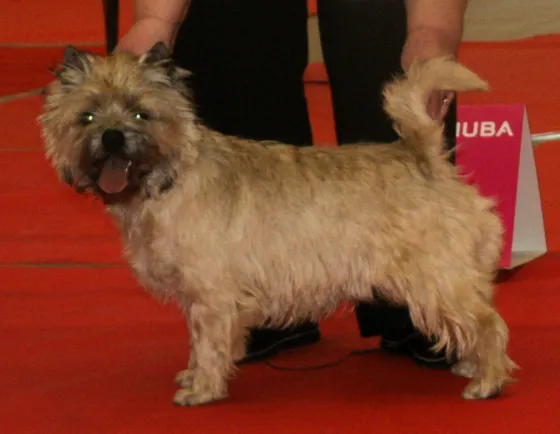
- Norwich Terrier. A sturdier terrier with an easier coat.
- Biewer Terrier. A descendant with similar size and coat care in different colours.
 GuidesPractical guidesBehaviour, training, health and adoptionThinking of adopting?How to adopt a dog from a shelter or rescueHow to adopt a dog from a shelter or rescue: the process, costs in general terms, choosing a dog, the first weeks and what if it does not work out.Related breedGerman Shepherd1899 · Germany
Yorkshire Terrier fun facts
 Related breedGiant Schnauzer1850 to 1923 · Germany
- Huddersfield Ben weighed more than the modern limit but sired puppies in the toy size, and he won 74 prizes in six years of life.
- Smoky weighed about 1.8 kg and crawled through a pipe about 21 metres long to pull a telegraph wire through.
- Yorkie puppies are born black and tan and turn steel blue as they grow.
- The average pet Yorkie in UK vet records weighs about 5 kg, well above the 3.2 kg limit in the standards.
Frequently asked questions
How long do Yorkshire Terriers live?
Project data gives 11 to 15 years. In UK vet records the median age at death was 13.56 years ( 2025).
How big does a Yorkshire Terrier get?
The standards set a ceiling of 3.2 kg. Pet Yorkies in UK records have a median adult weight of 5.06 kg.
Are Yorkshire Terriers good family dogs?
They can be with older, gentle children and calm handling. They are small and easily hurt, and they are bold with strangers.
Do Yorkshire Terriers shed?
Little. The coat is single and silky, but it tangles and needs regular brushing.
What colour are Yorkshire Terrier puppies?
Black and tan at birth. The black fades to steel blue as the dog grows.
What health problems do Yorkshire Terriers have?
Dental disease, kneecap slipping, collapsing windpipe and liver shunts are the best documented. See the Health table for numbers.
Where does the Yorkshire Terrier come from?
Yorkshire, England, in the mid 19th century, from Scottish terriers brought by mill workers and local ratters.
Is the Yorkshire Terrier related to the Silky Terrier?
Yes. The Australian Silky Terrier is its closest DNA relative in Parker et al. 2017.
Read next
Sources (10)
- American Kennel Club, Yorkshire Terrier breed page and "Yorkshire Terrier history".
- Fédération Cynologique Internationale, Yorkshire Terrier, standard no. 86.
- O'Neill D.G. et al., "Epidemiology of patellar luxation in dogs attending primary-care veterinary practices in England", Canine Genetics and Epidemiology, 2016 (VetCompass).
- O'Neill D.G., Witkowska S.D., Brodbelt D.C., Church D.B., "Yorkshire Terriers under primary veterinary care in the UK: demography, mortality and disorders", Companion Animal Health and Genetics, 2025 (VetCompass).
- Parker H.G. et al., "Genomic analyses reveal the influence of geographic origin, migration, and hybridization on modern dog breed development", Cell Reports, 2017.
- Royal Veterinary College, VetCompass news release on Yorkshire Terrier health, August 2025.
- The Kennel Club (UK), Yorkshire Terrier breed standard and breed information.
- Weisse C., Kwok S.Y., Berent A., "Prevalence of tracheal collapse syndrome, congenital portosystemic shunts, or both in Yorkshire Terriers at one veterinary hospital", Journal of Veterinary Internal Medicine, 2026.
- Wikipedia, "Yorkshire Terrier", "Huddersfield Ben" and "Smoky (war dog)" (used for dates and summaries, not checked against original records).
- Project knowledge base, breed records and Parker 2017 shared-haplotype table (this site).