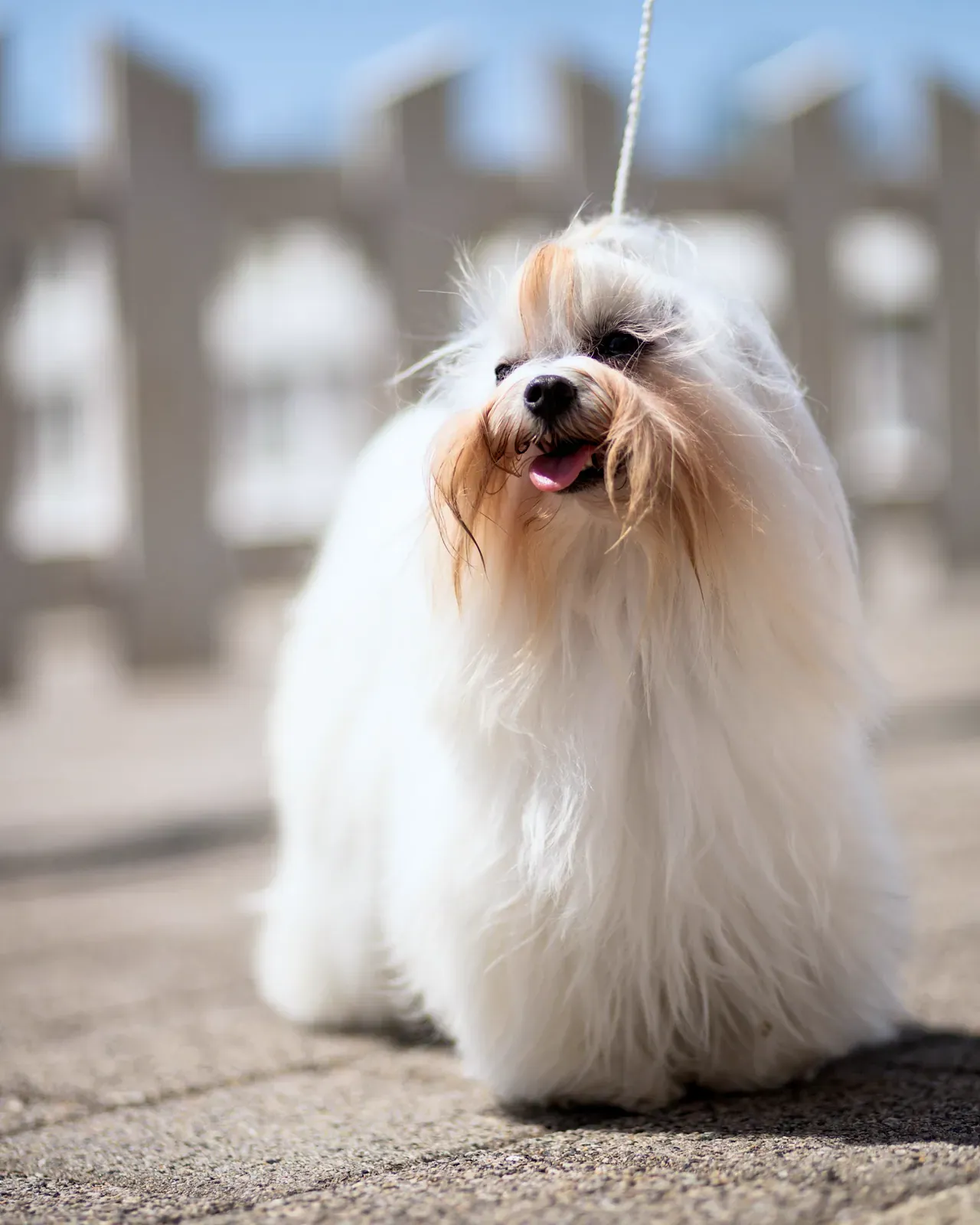
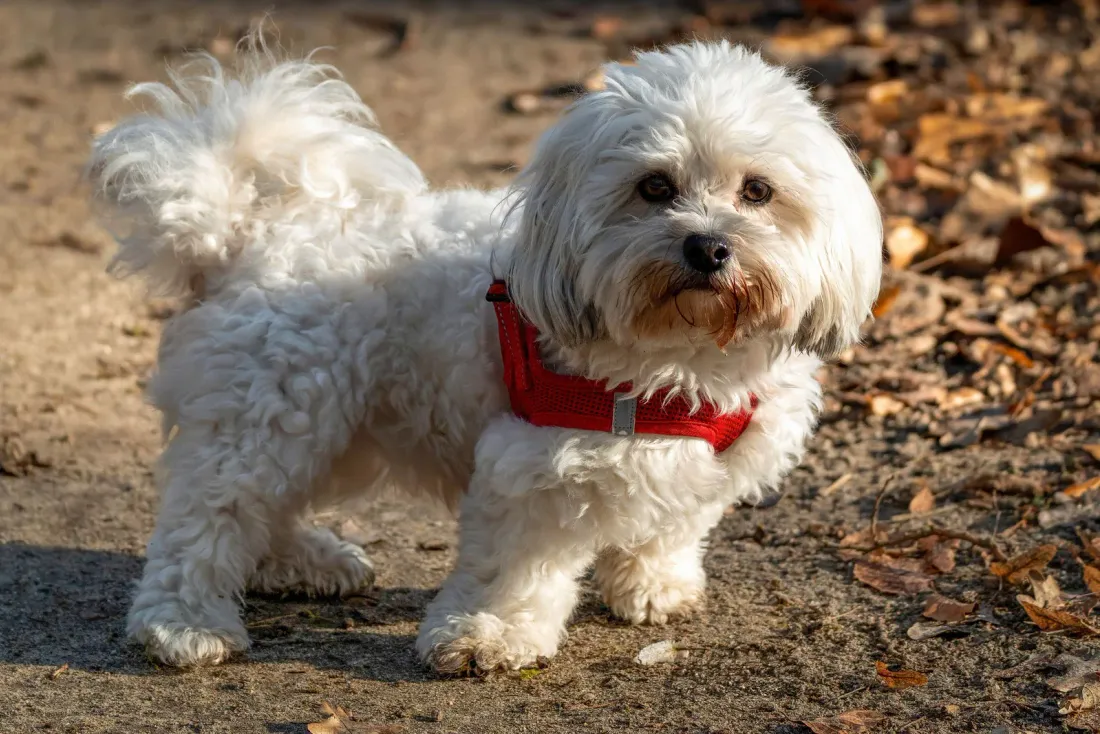
Small white lap dogs called "Melitan dogs" are described by Greek and Roman writers, but the modern Maltese was shaped by Victorian breeders and cannot be traced to those ancient dogs by pedigree. It is a lively, affectionate dog that suits owners who want a close companion and will keep up with daily coat care. Typical life span is 12 to 15 years in our data, and its small mouth and small joints are where owners should pay most attention.
Maltese quick facts
 Related breedAfricanis300 CE to 1000 · South Africa
- Closest DNA relatives
- Havanese, Coton de Tulear, Bichon Frise
- Descendant breeds
- King Charles Spaniel, Yorkshire Terrier, Maltipoo (project data)
- Country of origin
- Central Mediterranean area (FCI). Project data lists Malta, with low confidence
- Period of development
- About 500 BCE to 1888 (project data, low confidence). Modern breed shaped in the Victorian era
- Other names
- Bichon Maltais, Maltese Dog
- Type
- Companion and toy dog (FCI Group 9, Section 1 Bichons and related breeds, standard no. 65; AKC Toy Group; UK Kennel Club Toy Group)
- Height
- FCI: males 21 to 25 cm, females 20 to 23 cm. UK Kennel Club: not more than 25 cm
- Weight
- FCI: 3 to 4 kg. AKC: under 7 lb (about 3.2 kg), 4 to 6 lb preferred (about 1.8 to 2.7 kg)
- Coat
- Single, long, straight, silky, no undercoat
- Colour
- Pure white. FCI allows a pale ivory tinge. UK Kennel Club allows slight lemon markings
- Life span
- Project data: 12 to 15 years
- Family (DNA)
- Poodle family (Parker et al. 2017)
Name and origin
 Related breedBasenji3000 BCE to 1937 · Democratic Republic of the Congo
What does "Maltese" mean?
The name suggests a link to the island of Malta, and project data records Malta as the place of origin. The FCI standard argues for caution. Its historical summary says the name does not necessarily point to the island of Malta. It traces "Maltese" to a Semitic word, malat, meaning refuge or harbour, found in several Mediterranean place names: the Adriatic island of Mljet (Latin Melita, also called Meleda), a Sicilian town called Melita, and Malta itself. In the FCI's account the ancestors of the breed lived in ports and harbour cities of the central Mediterranean, hunting mice and rats in warehouses and ships' holds.
The Malta or Mljet debate
Ancient writers disagree about which "Melita" produced the little dogs. This is the main open question in the breed's history.
- Malta side. Strabo, writing around the start of the first century CE (Geography, book 6), is cited as saying the Melitan dogs came from the island of Melite near Cape Pachynus, which is Malta. Modern writers on the subject generally favour this identification, though the question is not settled.
- Mljet side. Pliny the Elder (Natural History, book 3) places a Melite in the Adriatic, which is Mljet off the Dalmatian coast. Pliny says the poet Callimachus, around 280 BCE, identified the dogs' Melite as the Adriatic island.
Aristotle (384 to 322 BCE) is also cited. The FCI standard says a list of dogs from Aristotle's time includes a small breed it calls canes melitenses, and other sources say Aristotle uses the adjective "Melitan". We could not check the Aristotle passage itself for this draft, so treat that link as secondhand. Greek texts refer to a small "Melitaion kunidion" (small dog from Melita), and later writers including Plutarch, Lucian and Aelian mention pampered lap dogs of this name.
One correction on the FCI text: it calls Strabo a Latin poet. Strabo was a Greek geographer, so this detail of the standard is unreliable.
Classical references
- Strabo. Names the Melitan dog as a small dog from Melite near Pachynus.
- Pliny the Elder. Locates Melite in the Adriatic, and in another book mentions Melitan dogs held against the stomach as a folk remedy.
- Plutarch. Describes a little Melitan dog cuddled in the lap of a widow.
- Martial. The Roman poet wrote verses about a lap dog called Issa, owned by a friend named Publius. It is possible, not certain, that Issa was a Melitan dog.
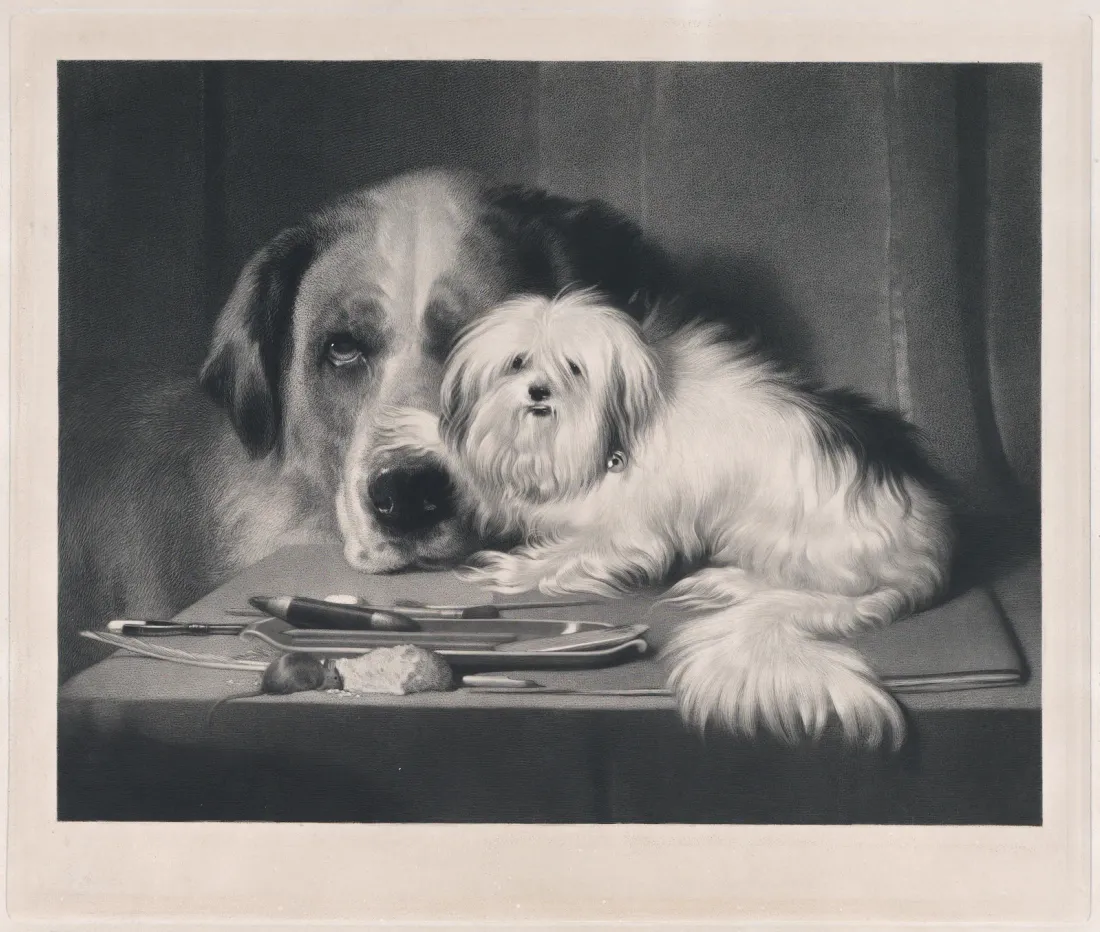
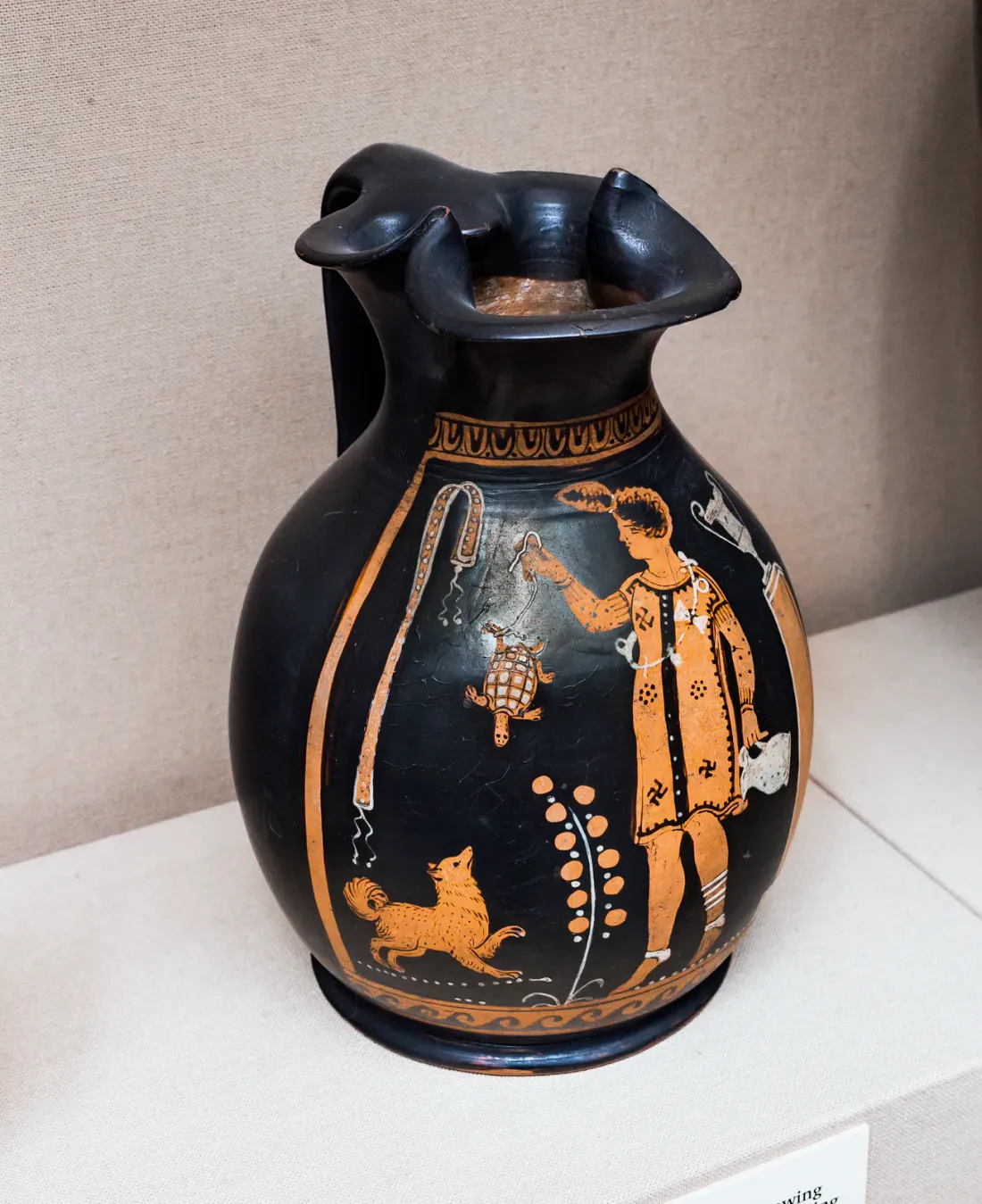
The FCI standard adds that the little dog was a favourite companion of Roman matrons and appears at the side of fine ladies in Renaissance paintings. All of this shows that small white lap dogs from the Mediterranean existed for a very long time. It does not show that today's Maltese descends from them. Genomic experts say the modern Maltese, like most breeds, cannot be linked by pedigree to that ancient line (Wikipedia, "Maltese dog", summarising breed historians).
"Bichon" and "Barbichon"
The FCI lists the breed as the Bichon Maltais. In France and Italy a group of small, long-haired companion dogs was long called the barbichon type, from barbe, "beard". Bichon is usually explained as a short form of that word. The FCI puts the Maltese, Bichon Frise, Bolognese, Havanese and Coton de Tulear together in one section, "Bichons and related breeds". Wikipedia describes the group as a family of similar type and temperament without one single founder.
History
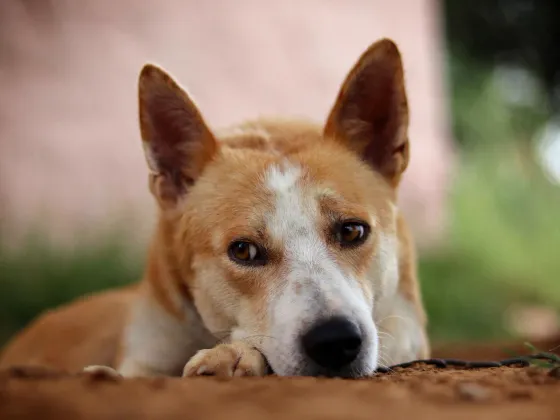 Same eraCanaan Dog2000 BCE to 1966 · Israel
From antiquity to the Victorian show ring
Between the classical writers and the nineteenth century, small white dogs appear in the art and households of European courts. The documented history of the modern breed starts in Britain:
| Year | Event |
|---|---|
| 1862 | Maltese accepted as a separate class at the Agricultural Hall show, Islington |
| 1877 | Breed shown at the first Westminster Kennel Club dog show in the United States |
| 1888 | AKC recognition |
| 1955 | FCI definitive acceptance |
Dates from Wikipedia, "Maltese dog". The FCI lists standard no. 65 as definitive, with Italy as patron country, and the current FCI text was published in 2015.
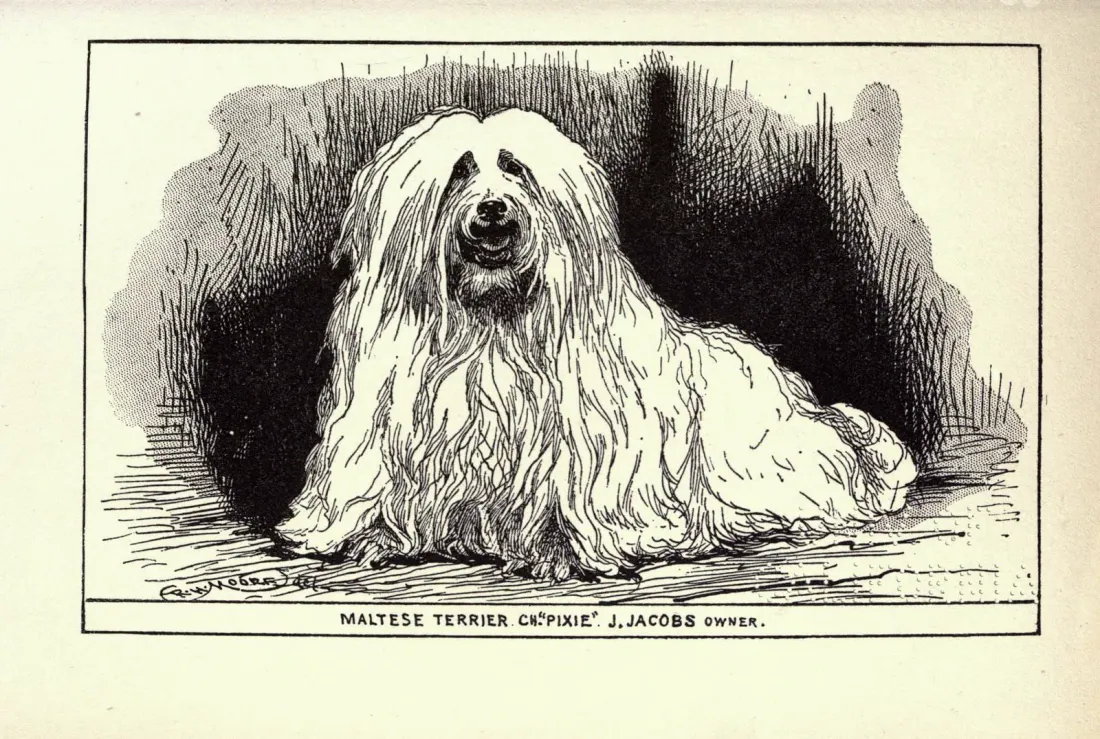
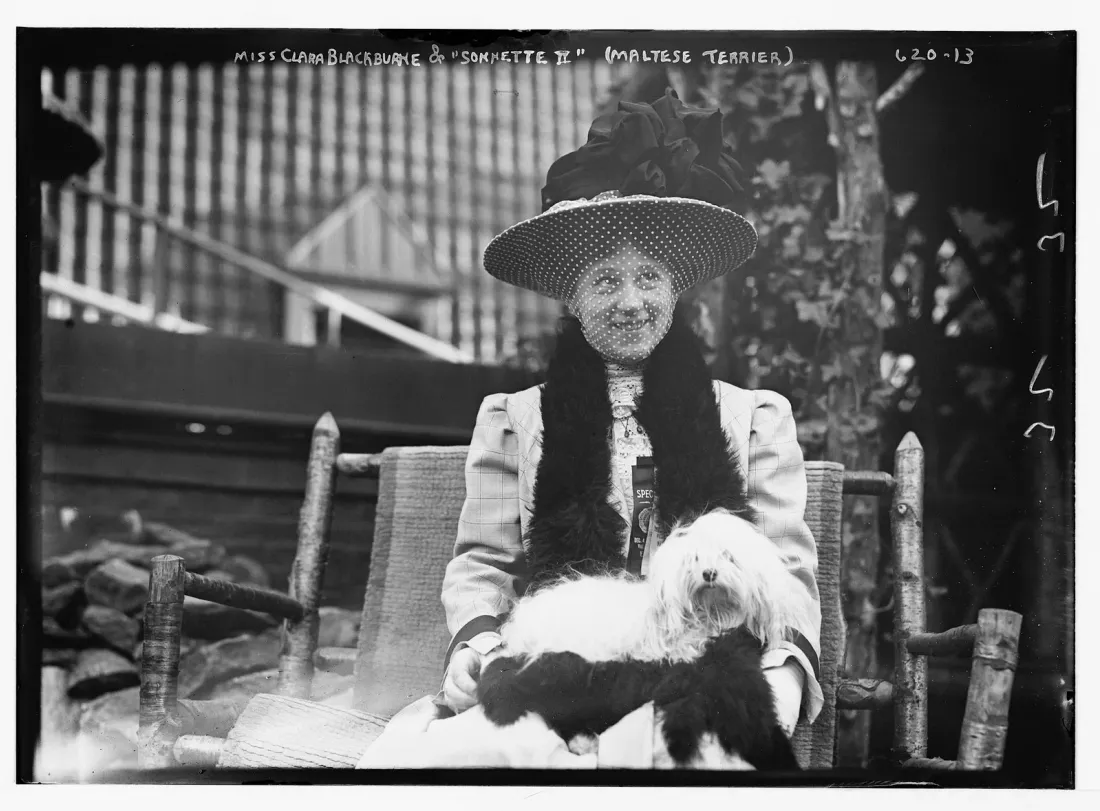
Victorian breeders took existing small white dogs and standardised them into a registered breed. This is why the breed's pedigree history in the show ring is about 150 years long even though its "Melitan" story is twenty centuries older.

Ancestors, descendants and relatives
 Same familyDingo3000 BCE to 1500 BCE · Australia
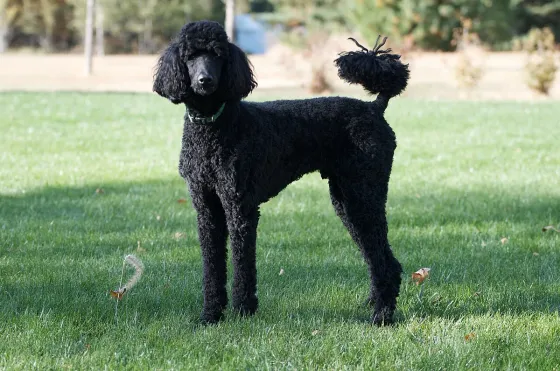
The project knowledge base lists no fixed parent breeds for the Maltese. It places the breed in the Poodle family, one of the 23 clades in a 2017 study by Parker and colleagues (Cell Reports) that analysed 1,346 dogs from 161 breeds. "Family" here means that DNA . The study also measured shared stretches of identical DNA, in (Mb). More shared DNA is a sign of common founders or past crossing, but the study cannot say which way genes flowed.
Source: Parker et al. 2017, as recorded in this site's breed database.
The Havanese figure stands far above the rest, a sign of close shared ancestry in the bichon group. The Poodle sits in the same DNA family, linking the Maltese to the Poodle family.
Descendant breeds (project data)
- Yorkshire Terrier. The data lists the Maltese among the small dogs behind this silky-coated toy.
- King Charles Spaniel. Listed as a Maltese descendant. Toy spaniels were also mixed with other small dogs, so treat this as one contribution among several.
- Maltipoo. A modern cross between the Maltese and the Poodle. It is a designer cross, not a recognised breed.
The knowledge base also lists many further breeds in the wider descendant tree, including the Cavalier King Charles Spaniel, Australian Silky Terrier and Biewer Terrier, through these three lines.
Descend from it · 3
- King Charles SpanielUnited Kingdom
- Yorkshire TerrierUnited Kingdom
- MaltipooUnited States
- Havanese125.9 Mb 5.2%
- Coton de Tulear16.1 Mb 0.7%
- Bichon Frisé15.3 Mb 0.6%
- Poodle10.7 Mb 0.4%
Source: Parker et al. 2017. Percent of the whole genome.
| Breedwith Maltese | Shared DNA with Maltese (Mb)Shared DNA (Mb) |
|---|---|
| Havanese | 125.9 |
| Coton de Tulear | 16.1 |
| Bichon Frisé | 15.3 |
| Poodle | 10.7 |
The breed standard
 Looks relatedIbizan Hound500 BCE to 1950 · Spain
A breed standard is the written ideal that a kennel club or the FCI uses to judge dogs. Pet Maltese vary around it, and a dog does not need to be show quality to be a good companion.
| Trait | FCI (no. 65) | AKC | UK Kennel Club |
|---|---|---|---|
| Height | Males 21 to 25 cm, females 20 to 23 cm | Not verified for this draft | Not more than 25 cm at the withers (an ideal measurement) |
| Weight | 3 to 4 kg | Under 7 lb (about 3.2 kg). 4 to 6 lb preferred | Not verified for this draft |
| Coat | Dense, shiny, silky, very long on the body, straight, no waves or curls, no undercoat | Single coat, no undercoat, long, flat, silky, hanging almost to the ground | Reasonable length, straight, silky, never woolly or crimped, no undercoat |
| Colour | Pure white. Pale ivory tinge allowed. Pale orange traces tolerated but not wanted | Pure white. Light tan or lemon on the ears allowed but not desirable | Pure white. Slight lemon markings allowed |
| Head | Rather broad skull, strong stop at 90 degrees, black nose, black lip edges | Not verified for this draft | Not verified for this draft |
| Eyes | Larger than expected, round, dark ochre, no white of the eye showing | Not verified for this draft | Not verified for this draft |
| Ears | Almost triangular, set high, hanging close to the head | Not verified for this draft | Not verified for this draft |
| Tail | Single large curve, tip falling between the haunches | Not verified for this draft | Not verified for this draft |
| Build | Body about one third longer than the height at the withers | Not verified for this draft | Not verified for this draft |
Sources: FCI standard no. 65 (2015 text), AKC standard (weight and coat), Kennel Club standard (height, coat, colour).
Varieties in the standard
The Maltese has one variety. All three standards describe a single white coat, with no colour or coat-type variants. The FCI also names disqualifying faults, including any colour other than white (with pale ivory excepted), a frizzy coat and a shortened tail.
The FCI describes the skin as pigmented with dark patches and patches of a reddish wine colour, especially on the back. Owners sometimes notice this when they part the coat.
The silky white coat
 Related breedPug400 BCE to 1885 · China
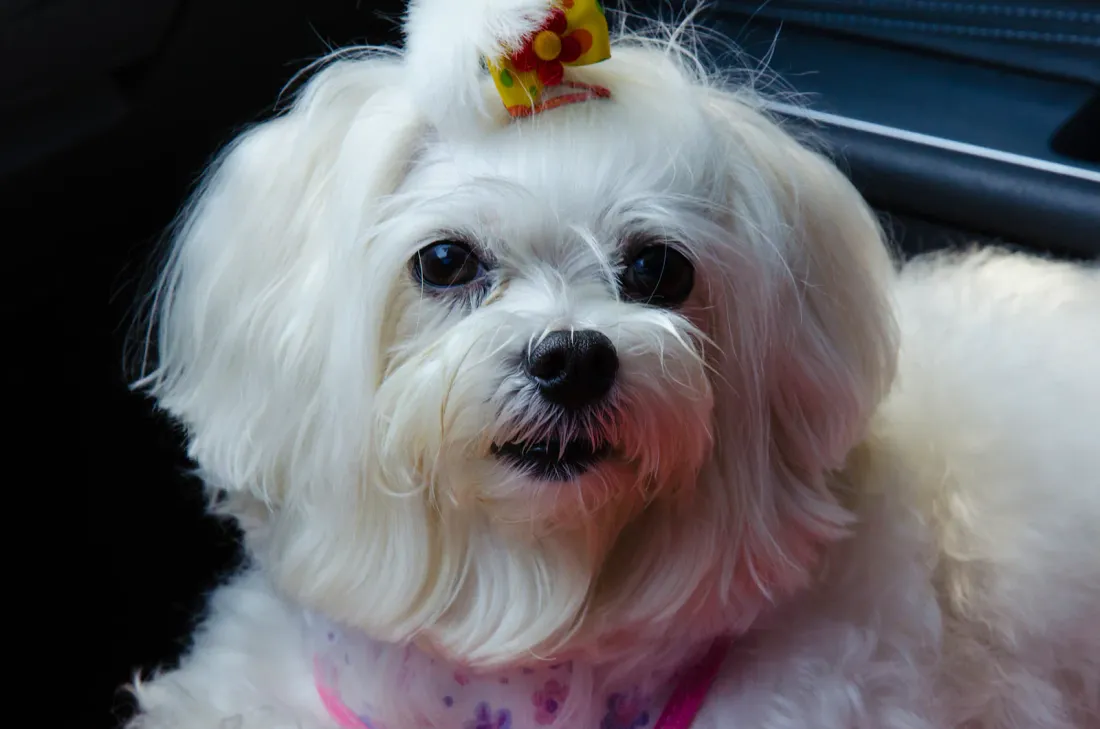
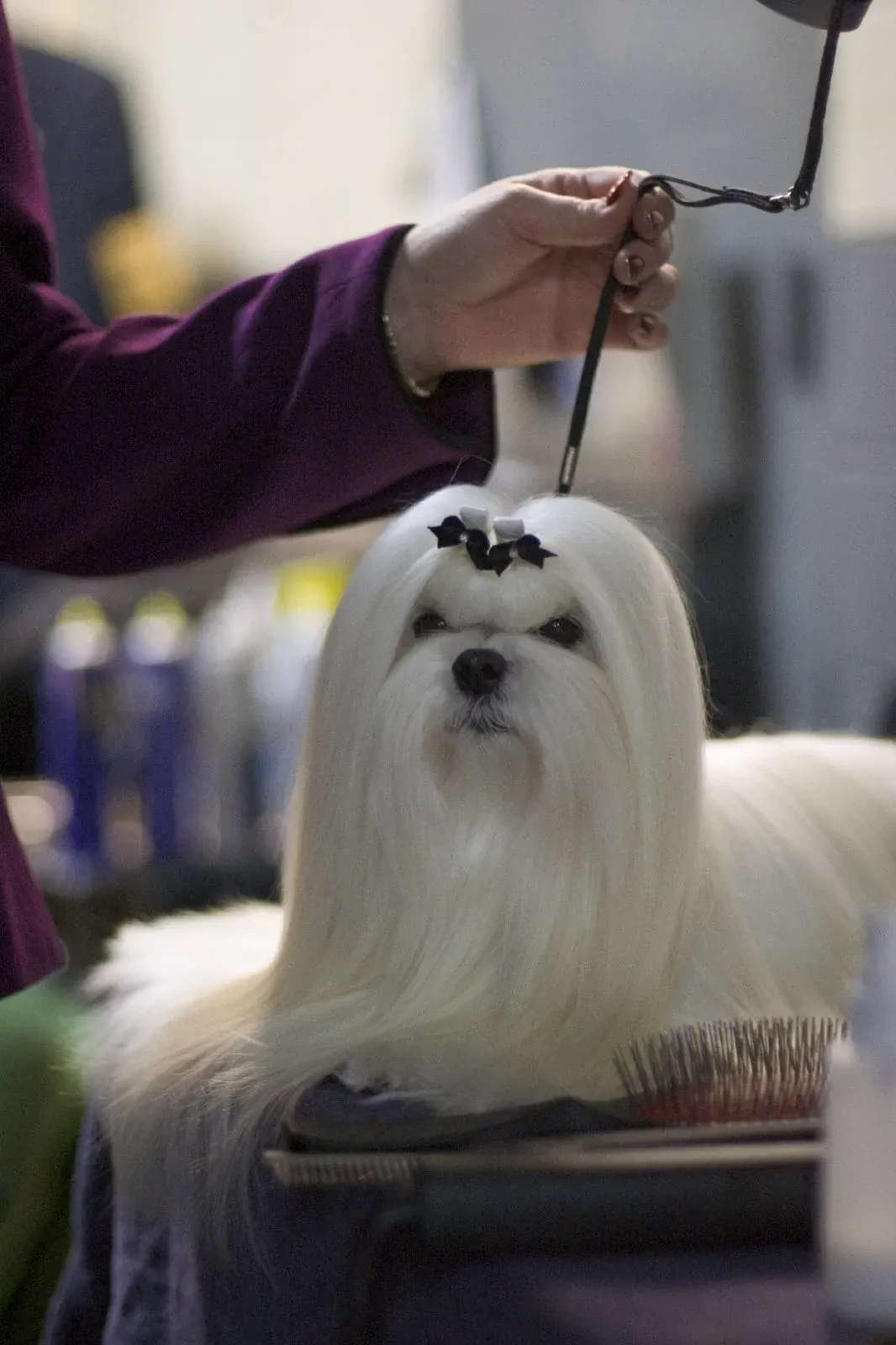
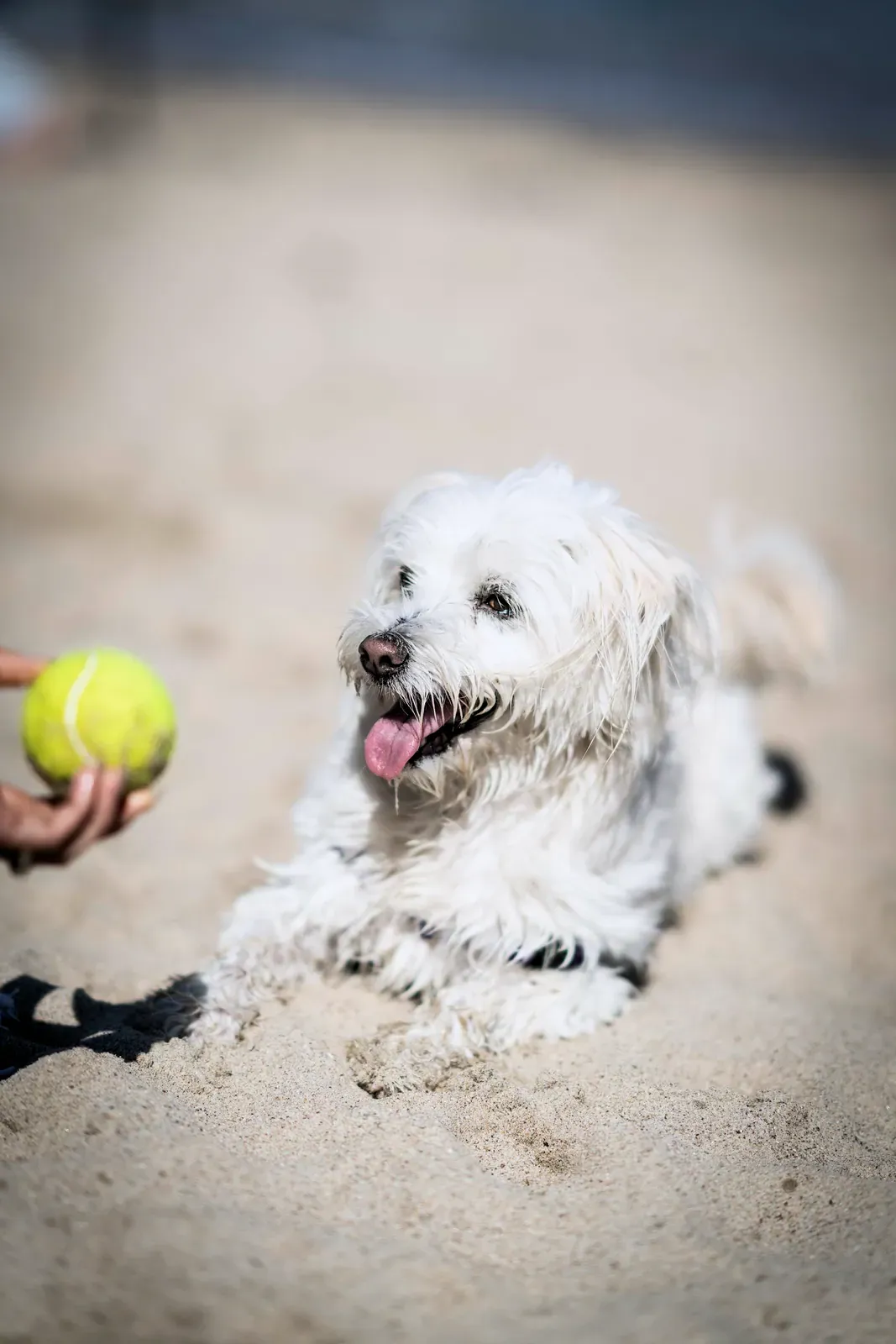
The coat is the breed's signature. The FCI wants it dense, glossy and straight, falling like a cape over the body, with hair on the head so long that it mingles with the beard and ears. There is no undercoat, which is why the coat hangs flat and silky rather than fluffy.
What that means in practice:
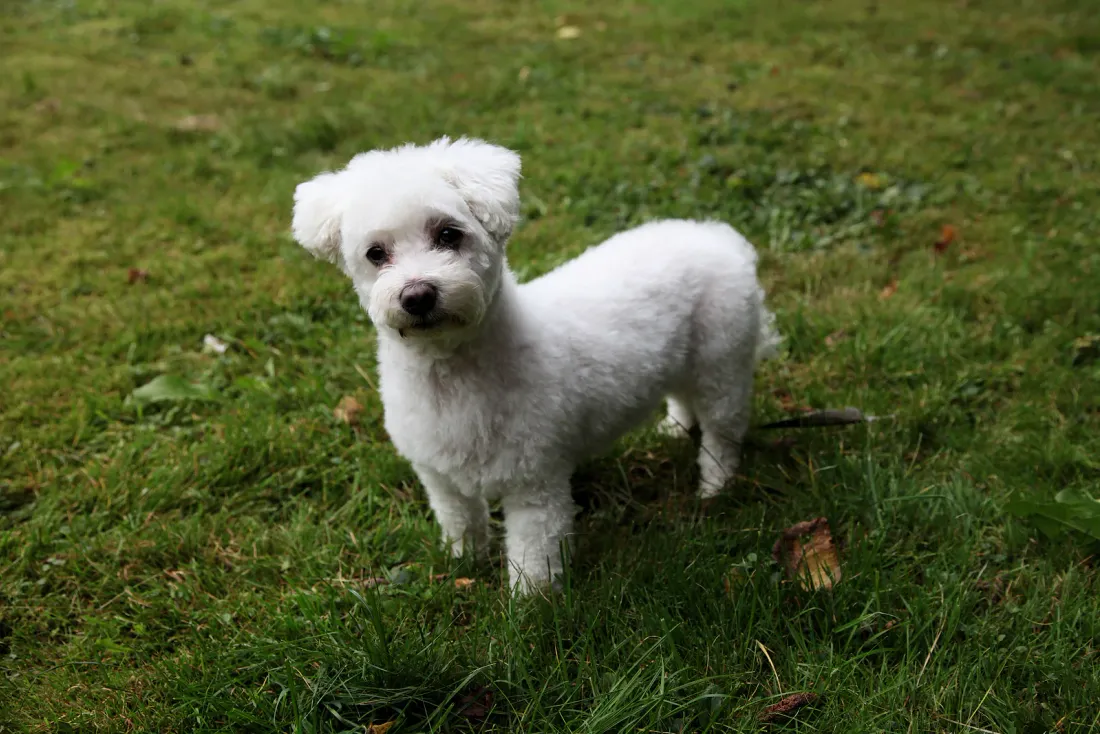
- Brushing. Long hair tangles and mats unless it is brushed through often. Show coats are brushed and oiled with care. Many pet owners choose a shorter "puppy clip", which is a style of trimming, not a coat type.
- Shedding. With no undercoat, loose hair tends to stay in the coat until brushed out, so there is little hair on the floor. Hair also breaks, so a full coat is a work in progress.
- Tear staining. Reddish-brown streaks below the eyes are a common trait in white-faced dogs (Wikipedia, "Maltese dog"). Cleaning the face daily and checking with a vet if staining is heavy or the eyes are watery is sensible.
- Colour. Puppies and adults should be pure white. Pale ivory or lemon markings are tolerated in the standards.
Are Maltese hypoallergenic?
 Related breedRottweiler100 CE to 1901 · Germany
The Maltese is often sold as "hypoallergenic" because it has no undercoat and sheds little. The research does not support that label for any breed.
- Vredegoor et al. 2012 (Journal of Allergy and Clinical Immunology) measured Can f 1, the main dog allergen, in hair and in homes. Breeds sold as hypoallergenic had no lower levels, and the title of the paper says it plainly: lack of evidence to describe any dog breed as hypoallergenic.
- Nicholas et al. 2011 (American Journal of Rhinology and Allergy) compared dust in homes with "hypoallergenic" dogs and other dogs. Allergen levels did not differ by that classification.
Allergens come from skin flakes, saliva and urine, not only from hair. A Maltese may suit one allergic person and not another. If allergies matter, spend time with the individual dog before committing. We found no study that measured allergen levels for the Maltese alone and report none here.
Temperament
 Related breedSaluki3000 BCE to 1922 · Iraq
The FCI standard calls the Maltese lively, affectionate, very calm and very intelligent. The UK Kennel Club asks for a lively, intelligent, alert, sweet-tempered dog. The AKC describes it as a playful, charming and adaptable toy companion.
In daily life that means a dog that wants to be near its people, follows them from room to room, and enjoys short bursts of play more than long hikes. Individual dogs differ, and early socialisation shapes how confident a Maltese becomes. The standards state the ideal; they do not guarantee every dog.
Behaviour
- Companionship. Bred for centuries as lap dogs, Maltese usually bond closely and may dislike long periods alone. Training short, calm absences from puppyhood helps.
- Barking. Alert dogs often announce visitors. Evidence on barking in this breed specifically is thin, so it varies by dog.
- Handling. At about 3 to 4 kg a Maltese can be hurt by a fall or a rough hug, so young children need supervision.
- Training. Intelligent and eager to please, with a short attention span for repetition. Short, rewarding sessions work. House training small dogs can take patience.
Health
 Related breedShiba Inu300 BCE to 1936 · Japan
Most Maltese live healthy lives. The conditions below are what breeders screen for and what owners can watch for. This is general information; talk to a vet about your own dog.
No breed-specific paper on the Maltese turned up in our searches, so most numbers below are not Maltese figures. Where a figure covers all dogs, the table says so. We give "1 in N" only where a named study gives one.
| Condition | What it is | How common | What helps |
|---|---|---|---|
| Gum and tooth disease (periodontal disease) | Plaque and infection around the teeth. Small jaws crowd teeth | Across all UK dogs, about 1 in 8 (12.5%) were diagnosed (O'Neill et al. 2021, VetCompass, BMC Veterinary Research). No Maltese-specific figure found. Small breeds are widely reported to be affected more often | Daily tooth brushing, vet dental checks, treating early |
| Kneecap slipping (patellar luxation) | The kneecap slides out of its groove, so a dog skips or holds up a back leg | Across all UK dogs, about 1 in 77 (1.3%) (O'Neill et al. 2016, VetCompass, 210,824 dogs). Small breeds are affected more often. No Maltese-specific figure found | Healthy weight, vet check of the knees, surgery in more serious cases |
| Liver shunt (congenital portosystemic shunt) | A blood vessel bypasses the liver. Signs usually show in young dogs: slow growth, odd behaviour | Uncommon. Tobias and Rohrbach (2003, JAVMA) listed the Maltese among small breeds with a predisposition to the extrahepatic form. No Maltese-specific prevalence found | Bile acid blood tests in young dogs that grow slowly. Surgery or diet can help. Ask breeders about shunt history in the line |
| White shaker syndrome (steroid-responsive tremor syndrome) | Whole-body tremors, usually from about 1 to 2 years of age. Suspected to be immune-mediated | Uncommon. Reported most often in small white dogs such as the Maltese, West Highland White Terrier and Poodle. No prevalence found | Vet examination to rule out other causes. Most dogs respond to steroid treatment within days, and some need low doses longer |
| Heart valve disease (degenerative mitral valve disease) | The valve between two heart chambers thickens and leaks, usually in older dogs | Common in small breeds with age. In one Korean small-breed hospital series, 30% of cases (51 dogs) were Maltese, which reflects who attends that hospital, not prevalence | Regular vet checks and heart listening from middle age. Medication can slow progress |
| Collapsing windpipe (tracheal collapse) | The windpipe flattens, causing a honking cough | The Maltese is among the four most common breeds in a 2022 to 2024 small-breed case series (110 cases). Prevalence not given | Chest strap instead of collar, healthy weight, vet treatment |
Sources: O'Neill et al. 2021; O'Neill et al. 2016; Tobias and Rohrbach 2003; Korean Journal of Veterinary Science 2017 retrospective study of mitral valve disease in small-breed dogs; retrospective study of tracheal collapse in small-breed dogs, 2022 to 2024. White shaker syndrome details from veterinary teaching hospital and clinical sources.
Life span
Project data gives 12 to 15 years. A UK Kennel Club health survey (Adams et al. 2010, Journal of Small Animal Practice) gave a median age at death of 11 years 3 months across all breeds. We did not verify a Maltese-specific median.
What breeders and buyers can ask for
There is no single breed-specific DNA test list for the Maltese in the sources we used. Ask the breeder about shunt history, bile acid tests in the line, knee examination (patella grading) for the parents, dental condition, and any tremor or heart murmur in relatives.

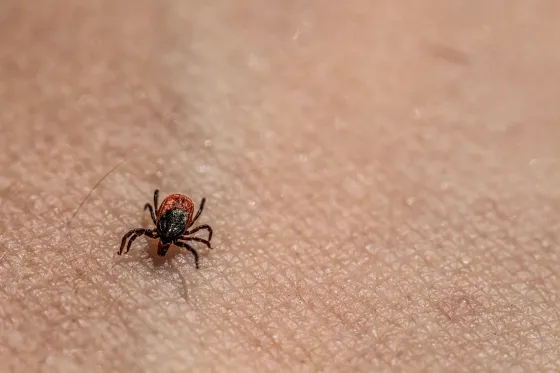 Ticks and fleasTicks and fleas on dogs: how to check, remove and prevent themTicks and fleas on dogs: how to tell them apart, check your dog, remove a tick safely, break the flea life cycle and prevent both.
 GuidesPractical guidesBehaviour, training, health and adoptionRelated breedShiba Inu300 BCE to 1936 · Japan
Living with a Maltese
 Related breedXoloitzcuintle1000 BCE to 1956 · Mexico
| Need | Rating | Why |
|---|---|---|
| Exercise per day | Low to Medium | Toy dog. Short walks and play suit most adults. Varies by dog |
| Training needs | Medium | Intelligent (FCI), but house training and manners need steady work |
| Grooming | High | Long single coat tangles. Frequent brushing for a full coat. Pet clips reduce this |
| Shedding | Low | No undercoat (all three standards). Hair tends to stay in the coat |
| Barking | Varies | Alert, lively breed. No strong evidence either way |
| Time alone | Fair to Poor | Bred as a close companion. Varies by dog and training |
| Children | Fair | Fragile at 3 to 4 kg. Better with older, gentle children |
| Other dogs | Good | Lively and sociable in the standard. Varies by dog |
| Cats and small pets | Good to Fair | No hunting job in recent centuries. Varies by dog |
| Flat living | Good | Small size suits it |
| Heat tolerance | Fair | Not flat-faced, but a long coat. Evidence is thin |
| Cold tolerance | Fair to Poor | Single coat gives little insulation. Many wear a coat in winter |
| First-time owner fit | Fair | Easy to handle. Coat care and house training take work |
A great fit if...
- You want a dog that stays close, and someone is home for much of the day.
- You will brush the coat often or are comfortable paying for regular clips.
- You live in an apartment or small house and prefer short walks.
- You can supervise gentle play with children.
Think twice if...
- You are away most of the day, and the dog would be alone for long stretches.
- You want a dog for running, hiking or rough play.
- You expect an allergy-free dog (see above).
- You have toddlers who may handle the dog roughly.
Before you get one
- Health. Ask the breeder about shunt screening in the line, knee grading, dental condition, and heart checks in the parents.
- Puppy or adult. Breed rescues and rehoming groups often have adult Maltese whose size and temperament are already known.
- First year. Expect puppy vaccination, neutering decisions, house training, a dental plan and coat habits. Start brushing and tooth care early.
Similar breeds to consider
- Havanese. The closest DNA relative in our data, with a longer, softer coat and a sturdier build.
- Bichon Frisé. Same bichon family, curly white coat instead of straight.
- Coton de Tulear. Another bichon relative, with a cotton-like coat.
- Yorkshire Terrier. A silky-coated toy with a Maltese contribution and a bolder terrier outlook.
GuidesPractical guidesBehaviour, training, health and adoptionThinking of adopting?How to adopt a dog from a shelter or rescueHow to adopt a dog from a shelter or rescue: the process, costs in general terms, choosing a dog, the first weeks and what if it does not work out.Related breedXoloitzcuintle1000 BCE to 1956 · MexicoMaltese fun facts
- Roman poet Martial wrote about a pet called Issa, a tiny lap dog that may have been a Melitan dog.
- Pliny credits the poet Callimachus, around 280 BCE, with linking the dogs to an Adriatic island, which is Mljet, not Malta.
- At the first Westminster Kennel Club dog show in 1877 the breed was already entered.
- The FCI says the ancestors of the breed hunted mice and rats in harbour warehouses and in the holds of ships.
Frequently asked questions
How big does a Maltese get?
Usually 3 to 4 kg (FCI) and 20 to 25 cm at the withers. The AKC standard says under 7 lb (about 3.2 kg).
How long do Maltese live?
Project data gives 12 to 15 years.
Are Maltese hypoallergenic?
Research found no evidence that any breed is hypoallergenic (Vredegoor et al. 2012; Nicholas et al. 2011). Low shedding is not the same as low allergen.
Do Maltese bark a lot?
It varies. Many are alert, so some bark at visitors. Training and exercise help.
Is the Maltese the same as the Bichon Frise?
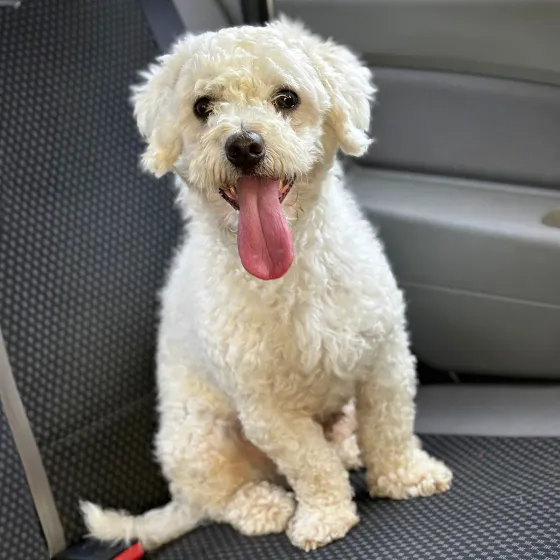
No. Both are bichon-type dogs in one FCI section and share DNA, but the Bichon Frise has a curly coat and the Maltese a straight, silky one.
Are Maltese good with children?
With older, gentle children, usually. At 3 to 4 kg, very young children can injure them by accident.
Where does the Maltese come from?
The name points to the island of Malta, but ancient writers also place the "Melita" of the little dogs in the Adriatic, on Mljet. Malta is the more common modern view, and the debate remains open.
What health problems do Maltese have?
Dental disease, slipping kneecaps, liver shunt, white shaker syndrome, and heart valve disease in older age are the main ones to know about. See the health table.
Read next
Sources (14)
- American Kennel Club, Maltese breed page and breed standard.
- Adams V.J. et al., "Methods and mortality results of a health survey of purebred dogs in the UK", Journal of Small Animal Practice, 2010.
- Fédération Cynologique Internationale, Maltese, standard no. 65 (2015 text).
- Nicholas C.E. et al., "Dog allergen levels in homes with hypoallergenic compared with nonhypoallergenic dogs", American Journal of Rhinology and Allergy, 2011.
- O'Neill D.G. et al., "Epidemiology of patellar luxation in dogs attending primary-care veterinary practices in England", Canine Genetics and Epidemiology, 2016 (VetCompass).
- O'Neill D.G. et al., "Prevalence of commonly diagnosed disorders in UK dogs under primary veterinary care: results and applications", BMC Veterinary Research, 2021 (VetCompass).
- Parker H.G. et al., "Genomic analyses reveal the influence of geographic origin, migration, and hybridization on modern dog breed development", Cell Reports, 2017.
- Pliny the Elder, Natural History; Strabo, Geography (as cited in secondary sources on the Melitan dog, not read in the original).
- Tobias K.M., Rohrbach B.W., "Association of breed with the diagnosis of congenital portosystemic shunts in dogs: 2,400 cases (1980 to 2002)", Journal of the American Veterinary Medical Association, 2003.
- The Kennel Club (UK), Maltese breed standard.
- Vredegoor D.W. et al., "Can f 1 levels in hair and homes of different dog breeds: lack of evidence to describe any dog breed as hypoallergenic", Journal of Allergy and Clinical Immunology, 2012.
- Wikipedia, "Maltese dog" (used for dates, ancient references and summary of scholarship; not checked against original records).
- Retrospective study of degenerative mitral valve disease in small-breed dogs, Journal of Veterinary Science, 2017; retrospective study of tracheal collapse in small-breed dogs, 2022 to 2024.
- Project knowledge base, breed records and Parker 2017 shared-haplotype table (this site).