France has a refuge for dogs in almost every region, from big city sites to small local associations, and this page lists 253 of them on a map and by region. Our list covers about 30% of the roughly 880 shelters in the country, so use the finder to see what is close to you, then read how adoption works, what it costs and what to prepare, whether you live in a family or on your own.
What is a refuge and howdo shelters work in France?
A refuge is a shelter that cares for lost and given-up animals and finds them new homes. Most are run by animal protection associations. The name SPA is easy to misread: La SPA is one national association based in Paris, while many shelters called SPA, in Lyon, Marseille, Toulouse, Strasbourg, Bordeaux and Nantes among others, are fully independent local groups. Check who runs the shelter you plan to visit.
Every commune must have a pound (fourrière) for found dogs and cats, and it can be run by the commune, a group of communes, a private firm or an association. A found dog is held for 8 working days. If nobody claims it, it passes to an animal protection association with a refuge, and only those associations may offer found animals for adoption. If you find a dog, go through your town hall (mairie) and report it to I-CAD, the national identification file.
There is no single official list of shelters. Our list comes from open map data and has not been checked shelter by shelter, apart from the cities above.
How much does it cost toadopt a dog in France?
The adoption fee is a contribution to the shelter's costs and usually covers identification, vaccination and neutering. Among the shelters we checked, published dog fees range from 50 EUR for a senior dog in Lyon or Toulouse to 400 EUR for a puppy in Toulouse. La SPA charges the same at all its refuges: 275 EUR for an adult dog and 365 EUR for a puppy under 6 months, plus a 300 EUR cheque deposit if the dog is not yet neutered. Strasbourg asks 300 EUR, Marseille and Lille 250 EUR, and Bordeaux 270 EUR for a male dog and 300 EUR for a female.
Older dogs usually cost much less. Many shelters take card or cash only, so ask before you go. Add food and vet care, and liability insurance if you keep a category 1 or 2 dog, see banned dog breeds.
What to expectwhen you visit
A shelter visit is closer to a conversation than a shopping trip. Staff will ask about your home, your days, who lives with you and what experience you have. These questions are not a test. They help match the right dog to the right home, and your answers help you decide too.
You will usually meet a dog with a member of staff, and often more than once. Several shelters ask you to bring everyone in the household and a dog you already own so that the dogs can meet on neutral ground. Take your time: a dog that seems shy in a kennel often behaves differently outside.
What the contractusually says
Contracts differ, but most cover the same ground. You sign the commitment certificate at least a week before the handover, the dog is chipped and registered, you provide vet care, you do not sell or breed the dog and you bring it back to the shelter if you can no longer keep it. Some shelters limit adoption to nearby departments, as in Toulouse, and some charge a return fee. Read the contract, ask about anything unclear and keep a copy.
Older dogs anddogs from abroad
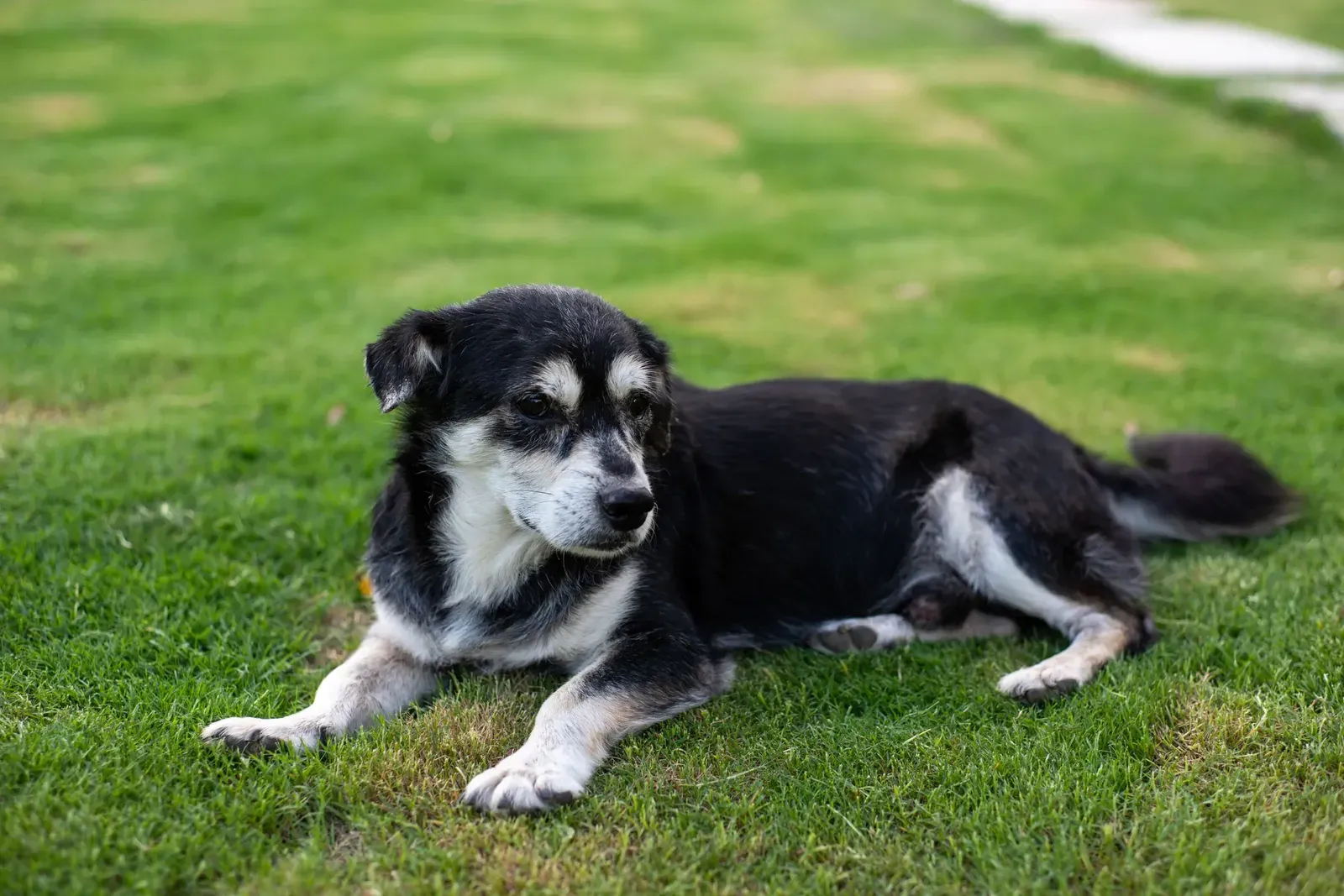
Older dogs are often calm and already house trained, and they tend to wait longest for a home. Several French shelters set a much lower fee for dogs over 10 years, and some help with vet costs. Dogs that came from other countries can be lovely companions as well. Ask where the dog came from, which health checks were done and whether you get its papers. Our adopting a dog guide has a longer section on this.
Preparing your homeand the first weeks
Before the dog arrives, set up a quiet resting place, put away anything chewable, check that the garden or balcony is secure and agree who walks and feeds the dog and when. Renters should ask the landlord early.
A shelter dog has just left a busy place, and the first days are often quiet. Keep visitors few, stick to a simple routine, offer short walks on a lead and let the dog set the pace. It can take weeks before the dog shows its full character. Register with a local vet soon after arrival and ask the shelter for the vaccination record. If something worries you, call the shelter: most are glad to help after the adoption.