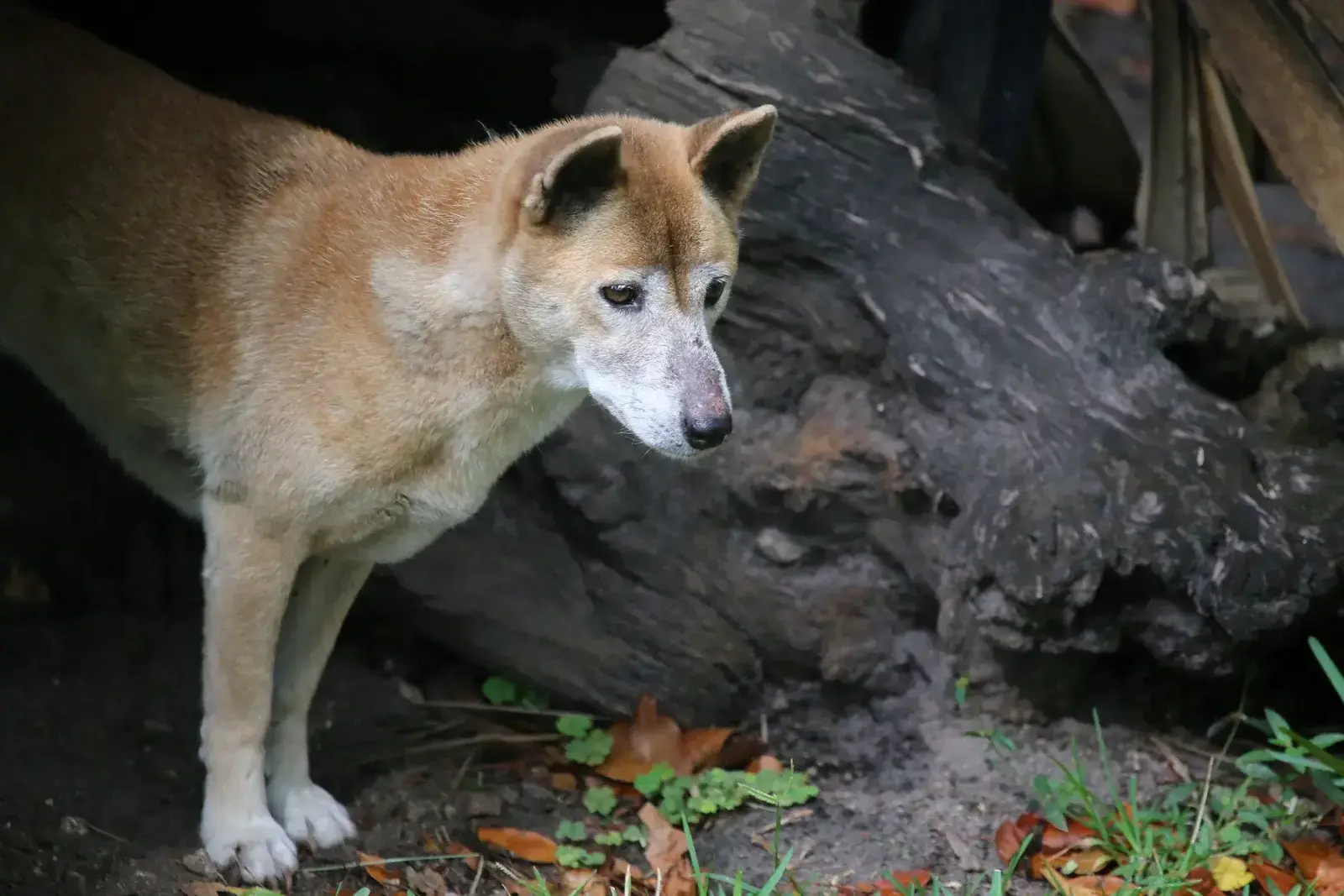
It is not a kennel club breed. For decades it was known mainly from a small captive population, and the wild animals were thought to be gone. A 2020 genome study (Surbakti and colleagues, PNAS) found that the wild "highland wild dogs" of Papua are the source of that captive line. Its closest relative is the Australian dingo: the two are sister lineages from the same East Asian branch of the dog family tree. This page covers what DNA studies say about its origin, how it looks and behaves, and why it is a demanding dog to keep.
New Guinea Singing Dog quick facts
- Country of origin
- Papua New Guinea and the Indonesian province of Papua (island of New Guinea), highlands
- Period
- Atlas data: arrival of dingo-like dogs estimated around 8000 BCE (low confidence). No dated bones exist. First described to science in 1957
- Type
- Wild or free-living dog; captive population kept by conservation breeders
- Scientific names
- Canis hallstromi (Troughton, 1957), now usually treated as a form of the domestic dog, Canis familiaris
- Other names
- New Guinea Highland Dog, NGSD, Highland wild dog (for the wild population)
- Recognition
- Not recognised by the , or UK Kennel Club
- Height
- About 32 to 46 cm at the withers in captive dogs (Koler-Matznick et al. 2003); wild-caught dogs in 2020 measured 37 to 52 cm
- Weight
- About 9 to 14 kg in captive dogs; wild-caught dogs 8 to 15.8 kg
- Coat
- Short to medium double coat; ginger or tan, black and tan, or , usually with white points
- Life span
- Atlas data: 15 to 20 years. Keeper accounts give about 12 to 15 years in captivity
- DNA family
- Dingo and Pacific (Parker et al. 2017 , per atlas data)
- Closest relative
- Dingo, a sister
- Famous for
- A yodel-like howl; very flexible joints; being rediscovered in the wild in 2016
Drawn to scale in real centimetres. Its back reaches about 42 cm, just below your knee; its head about 53 cm, just above your knee.
Where it sits in the tree
Prehistory · 50,000 BCE to 3,001 BCE
Name and origin
The name joins the island, New Guinea, with the dog's most unusual trait: a long, harmonic howl that observers compared to singing. The Latin name Canis hallstromi was given in 1957 by Ellis Troughton of the Australian Museum, after a pair of dogs brought out of the New Guinea highlands. The 1950s pair led to the captive population that exists today.
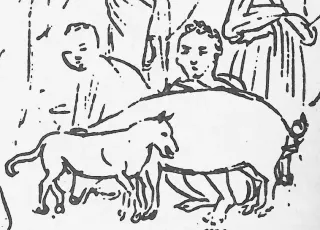
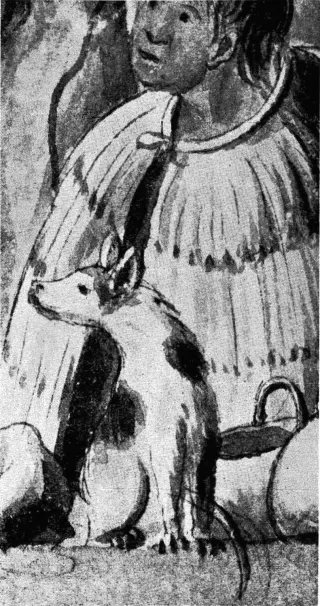
Where the dog comes from is a question about people as much as dogs. No wild canid is native to New Guinea. The ancestors of the Singing Dog must have arrived with people, travelling by sea from island Southeast Asia. The atlas data places the arrival of dingo-like dogs around 8000 BCE, marked as low confidence and as an estimate, not a dated find. No bone of an early New Guinea dog has been directly dated, so no study can say yet how old the Singing Dog's line is on the island.
What DNA says is firmer. Bergström and colleagues (Science, 2020) compared ancient and modern dog genomes and placed the New Guinea Singing Dog and the dingo at the eastern edge of dog ancestry, alongside dogs from East Asia and pre-contact North America. Both are descended from East Asian dogs and carry little recent ancestry from European breeds.
Species, subspecies or dog?
The Singing Dog was first named as its own species, and that name is still seen in older books. Jackson and colleagues (Zootaxa, 2017) argued that dingoes and Singing Dogs should stay within the domestic dog, Canis familiaris. Smith and colleagues (Zootaxa, 2019) replied with an argument for treating the dingo as a distinct species. Most researchers now treat the Singing Dog as a free-living or captive form of the domestic dog. Because the atlas covers dogs, this page follows that view.

History
Highland dogs and the people who lived with them
The New Guinea highlands are a cold, wet region above 3,000 metres, with villages in valleys and forest-covered slopes. The island is also home to village dogs that live around settlements. Field accounts describe the wild dogs of the highlands as shy and mostly seen at a distance. Such accounts are notes from visitors, not controlled studies, so they cannot say how often or for how long highland people lived alongside these dogs.
The captive line
In the 1950s a small number of dogs were taken from the highlands to Australia, and the Australian Museum described the species in 1957. A 2020 genome study found that the captive population traces back to eight founders. Later generations were bred from those few animals in zoos, wildlife parks and private conservation centres, mostly in the United States and Australia. The same study found the captive line to be highly inbred and to have lost many genome variants that wild dogs still carry.
The wild dogs were not seen by scientists for about 50 years. Reports from the 1970s were the last sightings by outsiders for decades, and many people called the wild population extinct.
Rediscovery in 2016
In 2016 a team working in the high mountains of Papua near the Grasberg mining area caught and sampled three highland wild dogs. Their DNA was compared with captive Singing Dogs and with dingoes, village dogs and breed dogs. Surbakti and colleagues reported the results in PNAS in 2020 under the title "New Guinea highland wild dogs are the original New Guinea singing dogs."
What the highland wild dog studies found
The 2020 paper is the central study on this dog, and it is worth reading carefully. Here is what it reported and where it was challenged.
- Wild and captive dogs are one lineage. The wild-caught dogs are genetically close to the captive Singing Dogs, which means the captive animals descend from highland wild dogs and are not a different breed.
- They are not identical. The wild dogs carry genome variants that the captive dogs lack. The authors attribute the gap to decades of separation and in captivity.
- The wild dogs are the older group. The highland wild dogs hold more genetic variety and sit at the root of the lineage shared with the dingo.
- Conservation proposal. The authors suggested that wild dogs could, in future, be bred with captive ones to restore lost variation. That is a proposal, not a programme.
The study was small: the wild sample was three animals, and critics pointed this out. Dwyer and Minnegal, writing in the Memoirs of the Queensland Museum, argued that the village-dog data used for comparison were not suited to the question and that there is no evidence the original captive founders were wild-living animals and not village dogs. The NIH National Human Genome Research Institute described the findings in its news release as showing that the two groups are related but not the same. Both readings agree on the basic point, that the captive dogs and the highland wild dogs are close kin. They disagree on how strongly the captive line can be said to come from wild-living animals.
A further note on wild status: sightings and genetic samples show that wild-living dogs still exist in the highlands. No study gives a population count, and it is not known how many are pure highland wild dogs as opposed to dogs mixed with village dogs.
The link to the dingo
The Singing Dog and the dingo are the two best-known members of the Dingo and Pacific family. The two are called sister lineages. Both come from East Asian dogs that travelled by sea. The route is thought to be island Southeast Asia and then New Guinea, with one branch going on to Australia, which would have needed a boat.
What studies agree on:
- Savolainen and colleagues (PNAS, 2004) found that dingoes carry a mitochondrial lineage shared with East Asian dogs, pointing to a small founding group from East Asia.
- Bergström and colleagues (Science, 2020) placed both dogs in the eastern group of dog ancestry.
- A 2020 genome study of dingoes and Singing Dogs from a Chinese research team reported that dingoes trace to dogs from southern East Asia that travelled through island Southeast Asia.
- A 2024 PNAS study of ancient dingo genomes (University of Western Australia and ANU releases) found extra shared ancestry between Singing Dogs and ancient dingoes from coastal New South Wales, and suggested at least two waves of dogs reaching Australia. The dingo article gives the full picture of that study.
- Surbakti and colleagues (2020) described the highland wild dogs as lying close to the root of both.
What studies do not agree on is when the lineages split. Published dates differ, and none is firmly established. The dingo's best-dated bones are about 3,000 years old (Balme et al. 2018), which is the only hard fix on this side of the story. For New Guinea, the arrival date is still an estimate.
Relatives and DNA
The atlas data places the Singing Dog in the Dingo and Pacific family, a branch that also covers old island dogs of the Pacific. The family's founder on the island of New Guinea in the atlas is the Singing Dog itself. The atlas data lists the dingo as the only sibling and records no parent breeds, no descendant breeds and no shared figures. For that reason no DNA web chart is drawn here.
The Singing Dog belongs to the same old layer as the pariah and village dogs, free-living dogs that were never part of the kennel club breeding system. Parker and colleagues (Cell Reports, 2017) sorted 161 breeds into clades; village dogs and wild-type dogs were mostly outside that sample, so the atlas data records the family placement from the wider literature.
 Save
Sister breeds · 1
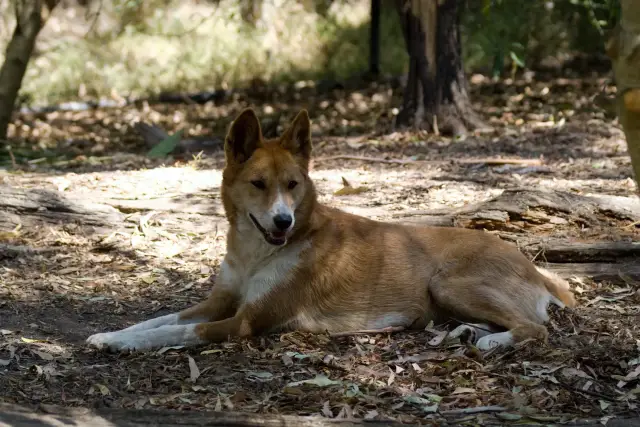
- Dingo3000 BCE to 1500 BCE
Size and appearance
No major kennel club has a written standard for the Singing Dog. The FCI, AKC and UK Kennel Club do not list it, so there is no club standard table here. What is known about size and look comes from research measurements.
Koler-Matznick and colleagues (Journal of Zoology, 2003) gave a description of the captive Singing Dog. The numbers below are those the 2020 Surbakti study cited for comparison with the wild-caught dogs.
| Trait | Captive dogs (Koler-Matznick et al. 2003) | Wild-caught dogs (Surbakti et al. 2020) |
|---|---|---|
| Height at withers | 31.8 to 45.7 cm | 37 to 52 cm |
| Weight | 8.6 to 14.4 kg | 8 to 15.8 kg |
The wild-caught group was only three dogs, so that column is a small sample.
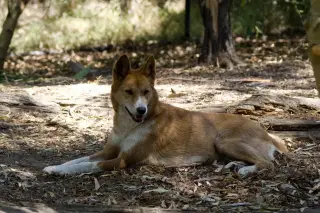
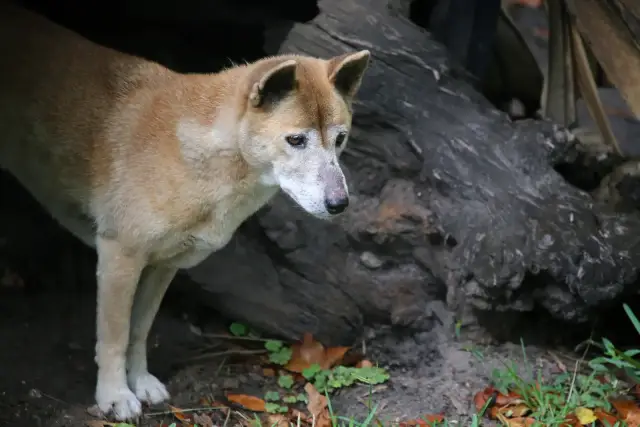
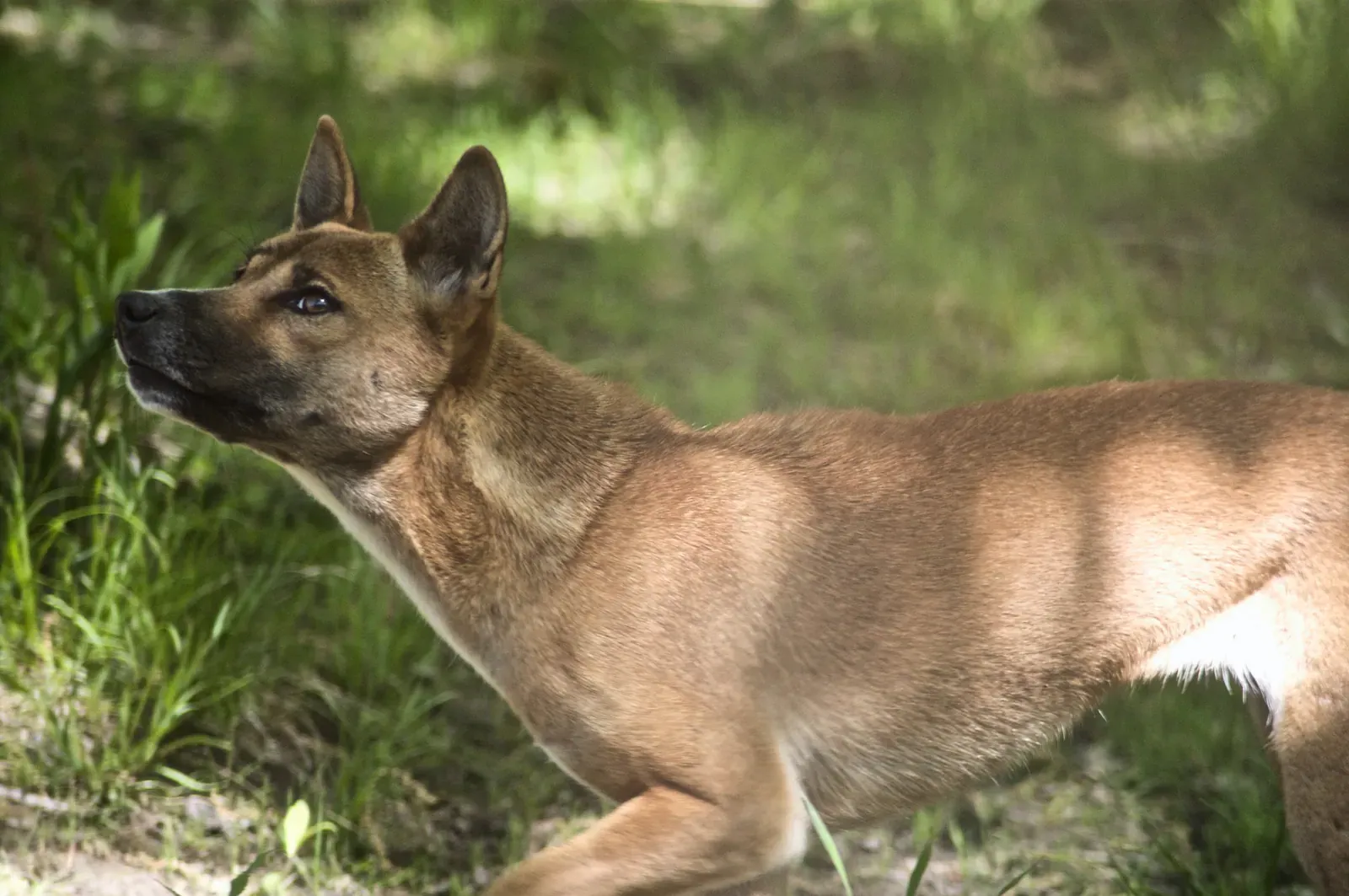
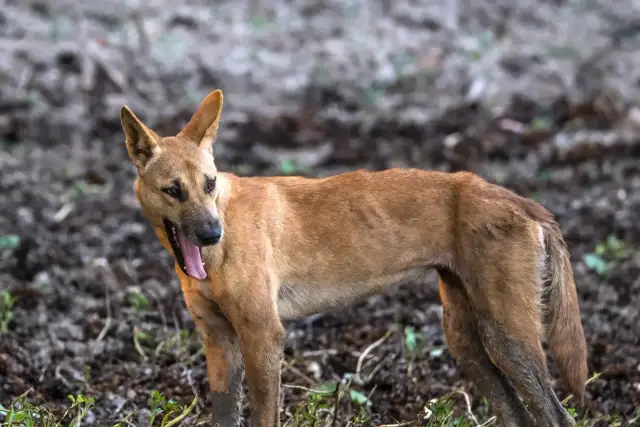
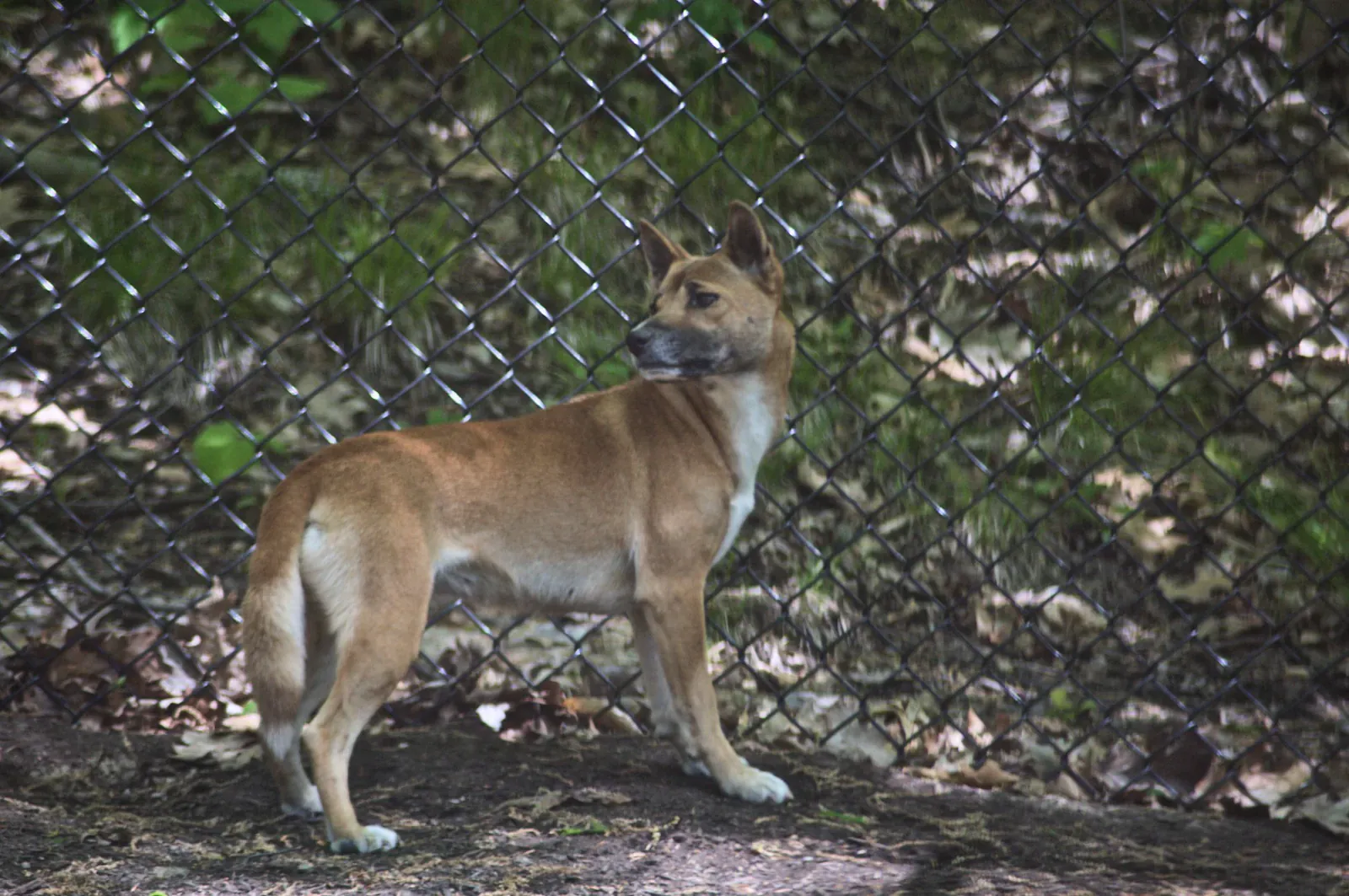
Build. A compact, light dog with a wedge-shaped head, wide cheekbones, upright ears and a bushy tail that curls over the back. The body is slightly longer than tall. Keepers describe a fox-like look, sometimes compared with a small dingo.
Coat and colour. Short to medium coat with a dense undercoat that thickens in cooler weather. Reported colours are ginger or tan, black and tan, and sable, often with white on the chest, feet and tail tip.
Flexible joints. Conservation breeders and papers on the breed describe unusual flexibility: the dog can turn its forelegs and hind legs outward, climb trees in a limited way and squeeze through small gaps. No controlled study has measured the joint range against other dogs.
 Save
The howl
The Singing Dog is named for its voice. The howl starts at a high pitch, then rises and falls in a wavering, yodel-like song. When one dog howls, others often join in, and the sound can change as individuals add notes. Researchers have said that the voice of the Singing Dog may be of interest for studies of how vocal communication evolved. A 2020 release from the NIH National Human Genome Research Institute noted this link. No published study gives a number for how often the dogs howl or how far the sound carries.
Keepers say howling tends to occur at dusk and at dawn, and when one dog in a group is separated from the others. It is a main reason neighbours and local rules matter when keeping the dog.
Temperament
Information on temperament comes from keeper accounts and the captive-breeding literature, not from controlled behaviour studies. Reported features:
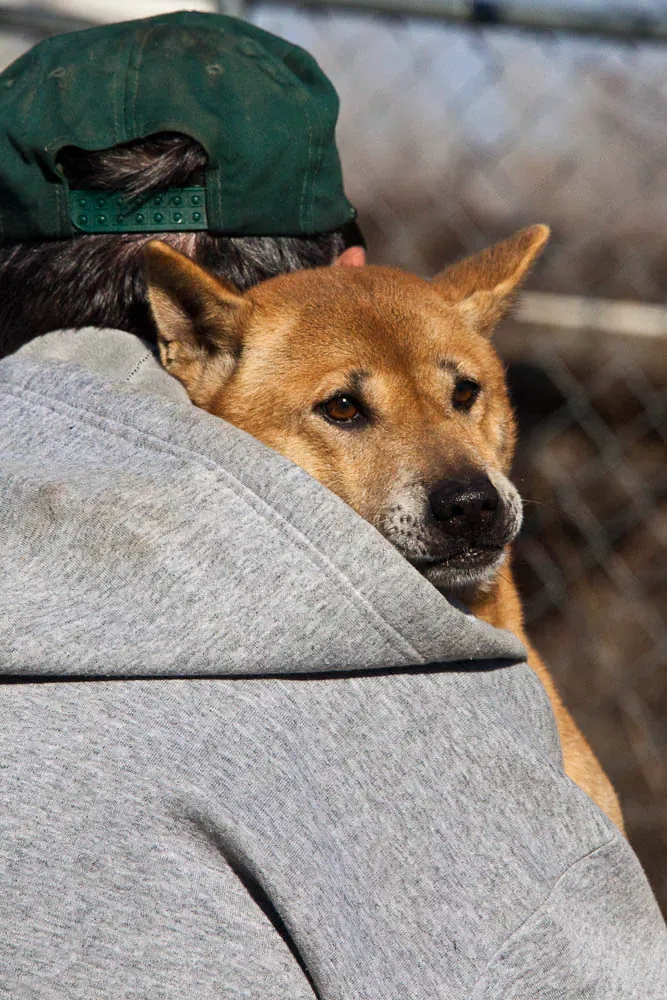
- Shy and independent. The dog does not live to please people. It tends to be wary of strangers and slow to warm up, especially if it was not handled much as a puppy.
- Strong bond with its own people. Dogs raised with handling are often affectionate with their family, though they remain independent.
- High prey drive. The Singing Dog is a hunting canid. Small pets, birds and poultry are at risk.
- An escape artist. Flexible joints and climbing ability mean ordinary fences may not hold it.
- Social with other dogs. Keepers describe them as living best in pairs or groups, and a lone dog can be unhappy.
No survey of Singing Dog owners exists, so there are no behaviour percentages for this dog.

Health
The captive population is small, comes from eight founders and is highly inbred (Surbakti et al. 2020). The same study found that the captive line has lost many genome variants. Loss of variation can raise the risk of inherited disease, but no study has measured how often particular diseases occur in Singing Dogs. This table says so plainly.
| Condition | What it is | How common | What helps |
|---|---|---|---|
| Loss of genetic variety | Captive line from eight founders; many variants missing compared with wild dogs | Documented in the 2020 genome study; no disease rate given | Careful pairing by conservation breeders using pedigree records; the authors propose crossing with wild dogs in future |
| Hip and elbow problems | Joint formation problems seen in many breeds | No published figure | Ask the breeder for screening records, if any exist |
| Dental disease | Gum disease and tooth wear | No published figure | Routine vet checks, regular tooth care |
| Parasites | Worms, fleas and ticks | No published figure | Preventive care from a vet; the dog is often kept outdoors, which raises exposure |
The honest summary is that there is no large health survey for this dog. Keepers report lifespans of about 12 to 15 years in captivity. The atlas data gives 15 to 20 years, which is higher than any account on record; read it as a ceiling, not a typical figure.

Living with a New Guinea Singing Dog
 Save
This dog is not a pet in the usual sense, and few people keep one. Ratings follow the research and keeper accounts above; where evidence is thin the table says so.
| Daily reality | Rating | Why |
|---|---|---|
| Exercise per day | High | Active canid; needs more than lead walks |
| Training needs | High | Independent; recall is unreliable |
| Grooming | Low | Short coat; seasonal shed |
| Shedding | Medium | Dense undercoat sheds in seasons |
| Barking and howling | High | Yodel-like howling, especially at dawn and dusk |
| Time alone | Poor | Reported to do best with a canine companion |
| Children | Varies | Shy; evidence is thin |
| Other dogs | Good | Often kept in pairs or groups |
| Cats and small pets | Poor | High prey drive |
| Flat living | Poor | Needs a secure yard and room to move |
| Heat tolerance | Fair | Highland dog with a thick coat; evidence is thin |
| Cold tolerance | Good | Native to cold mountains |
| First-time owner fit | Poor | Rare, shy, escape-prone |
A great fit if
- You have a tall, secure enclosure that no dog can climb or dig out of.
- You want a dog of rare lineage and you are ready to join a conservation breeding programme.
- You can keep two dogs, and have the time for socialisation from puppyhood.
- You have neighbours who will accept howling.
Think twice if
- You want a dog that comes when called or walks off lead.
- You have cats, rabbits, poultry or other small pets.
- You rent, live in a flat or share close walls.
- You want a dog with an extensive health history.
Before you get one
- Check local law. Rules for keeping wild-type dogs differ by country, state and county. Ask the local authority before looking for a dog.
- Choose a breeder tied to conservation. The captive population is small and every pairing matters. A serious breeder keeps pedigrees and can tell you the line the dog came from. Ask for the pedigree and any vet reports.
- Puppy or adult. Handling in the first weeks seems to decide how the dog behaves with people. Adults that were not handled can stay wary for life. Rescue is rare.
- First year. Plan for slow, patient socialisation, double-height fencing and microchipping.
Similar breeds to consider
- Dingo. The sister lineage, wilder and legally more restricted.
- Carolina Dog. A primitive free-living dog from the southeastern United States, kept more often as a pet.
- Canaan Dog. A semi-wild Middle Eastern dog now bred as a working dog and companion.
- Basenji. A primitive African hunting dog, famous for its unusual voice, which is a yodel-like "baroo" and not a bark.

New Guinea Singing Dog fun facts
- The wild dogs sampled for the 2020 study were caught high in the mountains of Papua, in a place few biologists had worked.
- The captive population started with eight founders, and every Singing Dog in captivity descends from them.
- Dogs of the species were described to science in 1957, but the dog had been known to highland people long before.
- The howl is often a chorus: when one dog starts, others usually join in.
Frequently asked questions
Is the New Guinea Singing Dog extinct in the wild?
No. The 2020 PNAS study showed that wild highland dogs are alive and are the source of the captive line. There is no published population count.
How is the Singing Dog related to the dingo?
They are sister lineages from the same East Asian branch. The 2024 ancient- study of dingoes found extra shared ancestry between Singing Dogs and some ancient dingoes.
Why is it called a singing dog?
For a long, harmonic howl that rises and falls like a yodel, often shared by several dogs at once.
How big is a New Guinea Singing Dog?
Captive dogs are about 32 to 46 cm tall and 9 to 14 kg (Koler-Matznick et al. 2003). Wild-caught dogs measured 37 to 52 cm and 8 to 15.8 kg in 2020.
How long do they live?
Keeper accounts give about 12 to 15 years in captivity. The atlas data lists 15 to 20 years, which is high.
Can you keep one as a pet?
Some conservation breeders place dogs with experienced homes, but the dog is shy, escape-prone and has a strong prey drive. It is not a good first dog, and local rules may restrict it.
Read next
 Sister breedDingo3000 BCE to 1500 BCE
 FamilyDingo & PacificThe whole family
 Adopt a dogDog Shelters in EuropeFind dog shelters in Europe, learn how shelters differ from country to country and why adopting a dog is a good option.
Sources (14)
- Surbakti S., Parker H.G., McIntyre J.K. et al., "New Guinea highland wild dogs are the original New Guinea singing dogs", Proceedings of the National Academy of Sciences, 2020.
- National Human Genome Research Institute (NIH), news release on the New Guinea highland wild dog genome study, 2020.
- Dwyer P.D. and Minnegal M., commentary on the highland wild dog study, Memoirs of the Queensland Museum, Nature 63.
- Koler-Matznick J., Brisbin I.L., Feinstein M. and Bulmer S., "An updated description of the New Guinea singing dog (Canis hallstromi, Troughton 1957)", Journal of Zoology, 2003.
- Troughton E., description of Canis hallstromi, Records of the Australian Museum, 1957.
- Bergström A. et al., "Origins and genetic legacy of prehistoric dogs", Science, 2020.
- Savolainen P. et al., "A detailed picture of the origin of the Australian dingo, obtained from the study of mitochondrial DNA", PNAS, 2004.
- Parker H.G. et al., "Genomic analyses reveal the influence of geographic origin, migration, and hybridization on modern dog breed development", Cell Reports, 2017.
- Zhang S.-J. et al., genome study of dingoes and New Guinea Singing Dogs showing a southern East Asian origin, Nature Communications, 2020.
- University of Western Australia and ANU, news releases on ancient dingo genomes (PNAS, 2024).
- Balme J., O'Connor S. and Fallon S., "New dates on dingo bones from Madura Cave provide oldest firm evidence for arrival of the species in Australia", Scientific Reports, 2018.
- Jackson S.M. et al., "The Wayward Dog: Is the Australian native dog or Dingo a distinct species?", Zootaxa, 2017.
- Smith B.P. et al., "Taxonomic status of the Australian dingo: the case for Canis dingo Meyer, 1793", Zootaxa, 2019.
- Crowther M.S. et al., "An updated description of the Australian dingo (Canis dingo Meyer, 1793)", Journal of Zoology, 2014.