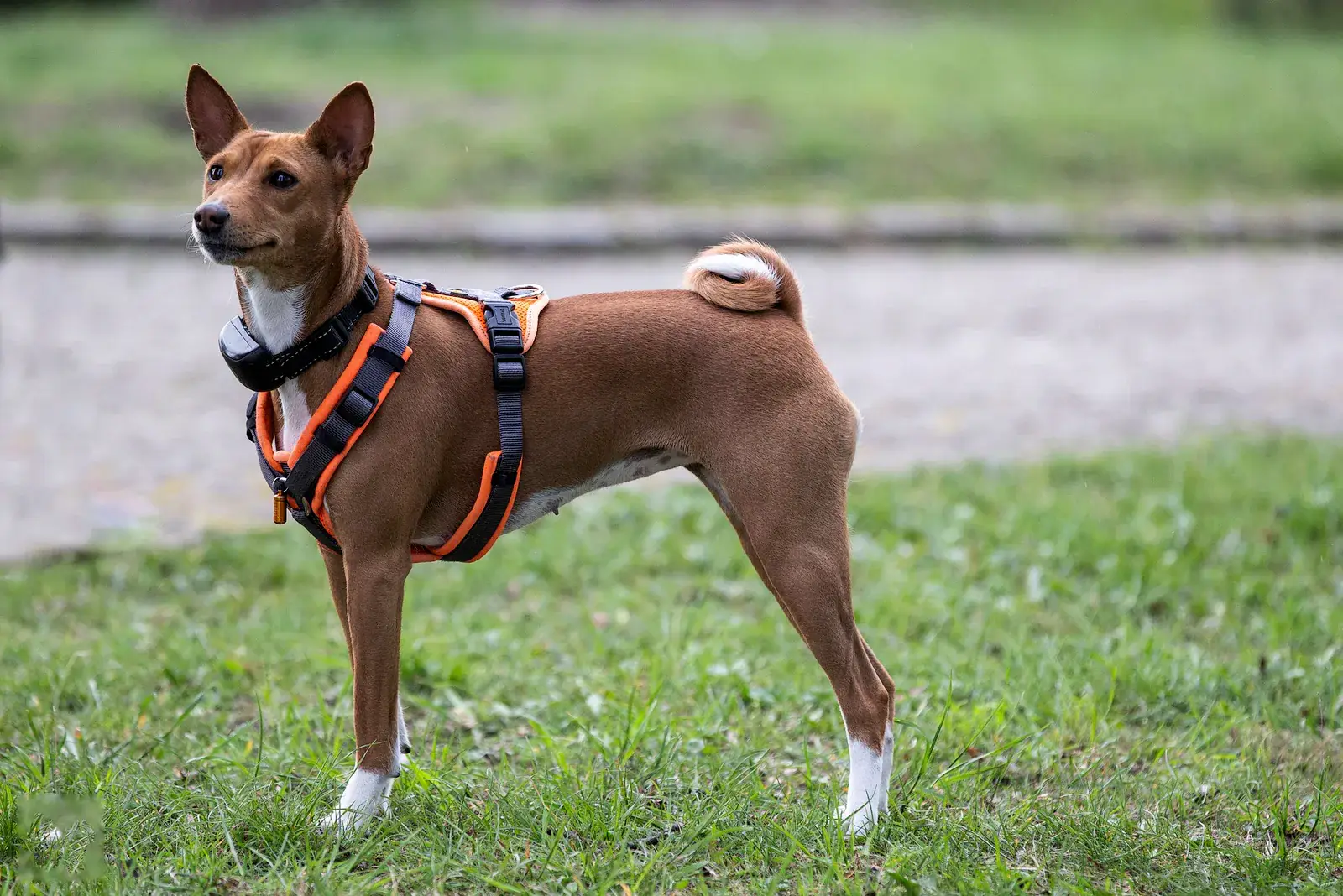
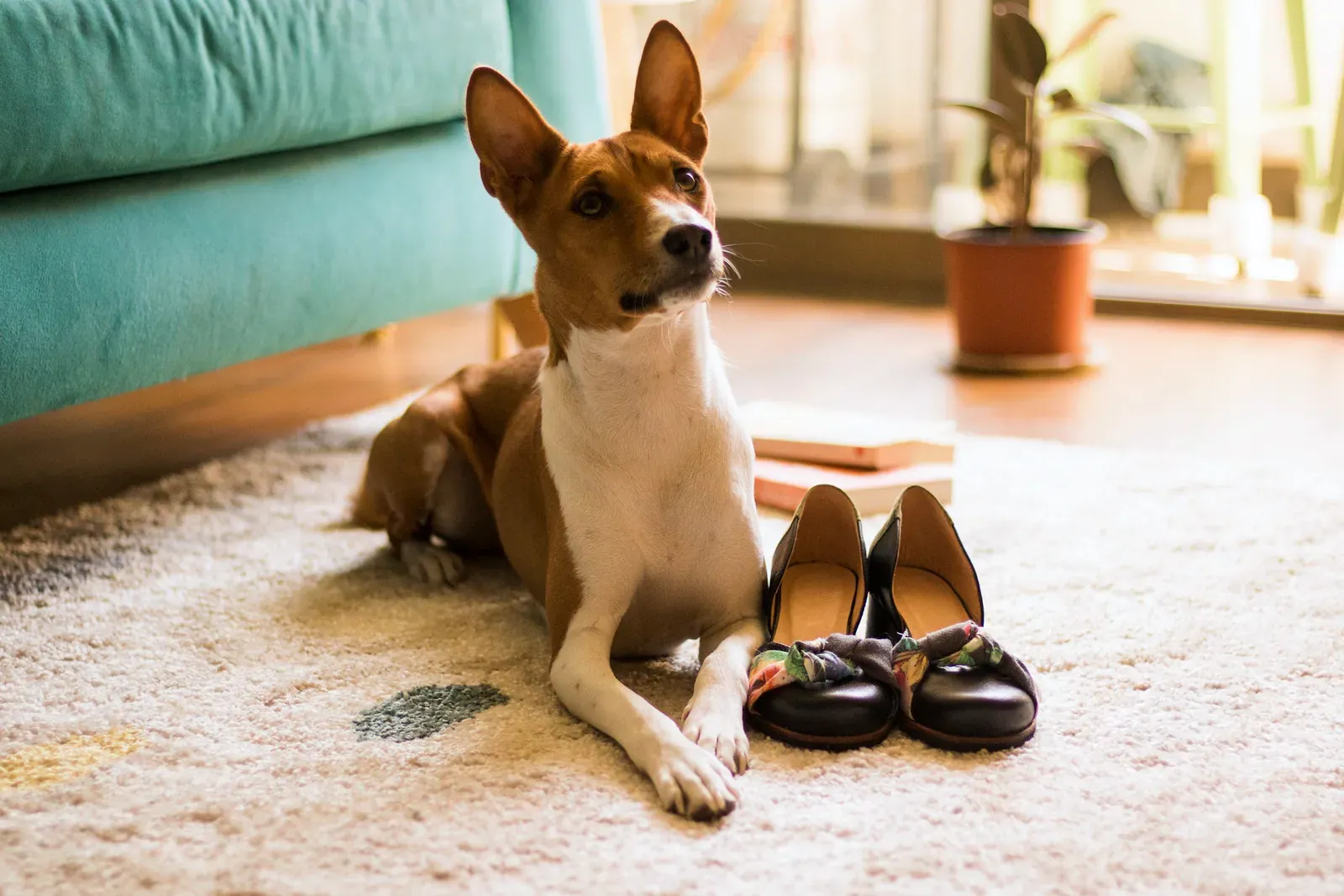
It is best known as the "barkless dog": it does not bark in the usual way, but it yodels, crows, growls and screams. Its coat is short and fine, its tail curls over its back, and it cleans itself like a cat. It is clever, independent and quick, and it suits owners who like a dog with its own opinions, who can offer daily exercise, a secure garden and patience in training. Breeders and owners should know about one genetic condition above all: Fanconi syndrome, which has a DNA test. UK Kennel Club survey data (2004) put the median life span at 13.6 years in a small sample.
Basenji quick facts
 Related breedAlaskan Malamute1000 BCE to 1935 · United StatesAncient World
- Country of origin
- Central Africa (atlas data: Democratic Republic of the Congo, Congo basin)
- Period of development
- Ancient village dog; Western breed from the 1930s (atlas data: low-confidence 3000 BCE to 1937)
- Original job
- Hunting small game and driving it into nets
- Type
- Primitive hound (FCI Group 5, Spitz and primitive types, standard no. 43; AKC Hound Group; UK Kennel Club recognised)
- Height
- About 43 cm dogs, 40 cm bitches (FCI, as reported); AKC ideal 17 in dogs, 16 in bitches
- Weight
- About 11 kg dogs, 9.5 kg bitches (FCI, as reported); AKC about 24 lb dogs, 22 lb bitches
- Coat
- Short, fine, close
- Life span
- Atlas data: 13 to 14 years; UK Kennel Club 2004 survey median 13.6 years (46 dogs)
- Heat cycle
- Usually once a year
- Key health test
- Fanconi syndrome DNA test (FAN1 deletion)
- DNA family
- Ancient Basal in this site's data; no in the Parker 2017 clustering
- Closest DNA links in the study
- Rat Terrier, Azawakh
Drawn to scale in real centimetres. Its back reaches about 42 cm, just below your knee; its head about 53 cm, just above your knee.
Where it sits in the tree
Ancient World · 3,000 BCE to 499
Name and origin
 Related breedCarolina Dog1000 BCE to 1990 · United StatesAncient World
The breed name comes from a Lingala word for "villager" or "dog of the bush", in this site's data. Other names are Congo Dog, Zande Dog and African Barkless Dog. Early British writers also used "Congo terrier" and "African bush dog". The Zande people of the northern Congo and southern Sudan are often tied to the name "Zande dog".
The home region is the forest and savanna of the Congo basin. Early Western observers found the dogs in villages, kept for hunting rather than as pets. Olivia Burn, who travelled in the Belgian Congo in 1929, wrote that the dogs were kept mainly for hunting and that the best ones came from hunting peoples such as the Bapendi. The Basenji Club of America's archive of her writing records this.
Dates are rough. The Basenji is called "ancient" in many breed books, and the idea that it appears in pictures from ancient Egypt is a popular story, not proved. This site's data gives 3000 BCE as a low-confidence start date and 1937 for the date the breed was established in the West.
 Save

History
 Same eraCaucasian Shepherd Dog500 BCE to 1920 · RussiaAncient World
Village hunting dogs
In Central Africa the Basenji was a working village dog. Burn's 1937 article in the American Kennel Gazette ("The Barkless Dog of the Congo") describes small chestnut dogs hunting with their people. They drove game into nets, according to the accounts in this region. Written records from the field are few, and most of what Western readers know comes from a handful of travellers and early importers. Treat any detail beyond "village hunting dog in the Congo basin" as lightly sourced.
The first Western imports
The first Basenjis shown in the West were a pair exhibited at Crufts in London in 1895 as African Bush Dogs or Congo Terriers. Both died of distemper soon afterwards, a pattern repeated for decades because dogs from Africa had never met the disease.
Lady Helen Nutting brought six dogs to England; sources differ on the date (1923 or 1928) and on the place (Sudan is named in one). They also died after distemper inoculation. The sources give both dates, so this article does too.
Olivia Burn imported dogs from 1929. Her first five dogs also died of distemper, and only one bitch survived. In 1933 a dog named Kiluba came through quarantine, and she went back to the Congo for more. The kennel foundation in England traces to Bongo of Blean, Bokoto of Blean (imported in whelp to Bongo), Bashele of Blean, Bereke of Blean, Bungwa of Blean and Bakuma of Blean. In 1937 Burn exhibited dogs at Crufts, where they were a success. The Kennel Club registered them as "Basenji" in the Hound Group. From England, dogs went to the United States and Canada, and the American breed grew from those few lines. Bakuma was exported to the United States.
A narrow gene pool and the 1980s African imports
Because nearly all Western Basenjis came from a small number of founders, the gene pool was small. The Basenji Club of America (BCOA) says the American gene pool was never very large and was based mostly on dogs from the "Of the Congo" kennel in England. Earlier African imports, such as those of the 1960s, added little new blood, less than a quarter of the pedigrees of the dogs finally registered by the AKC.
In 1987 and 1988, American breeders travelled to the Democratic Republic of the Congo (then Zaire) to bring back new stock and widen the pool. Sources give the number imported from the two trips as 19 or 21; the discrepancy is unresolved. Thirteen of these dogs, plus Esenjo, who arrived in 1978, were chosen to be registered with the AKC in a one-time opening of the . The stud book reopened in 1990 after a petition to the AKC. It was reopened again for selected imported dogs from 1 January 2009 to 31 December 2013, and an American-led expedition collected stock in villages around Basankusu in the Democratic Republic of the Congo in 2010.
Narrow breeding caused trouble. The BCOA says line breeding allowed inherited disease to spread, and names Fanconi syndrome (a kidney condition) and pyruvate kinase deficiency (a red blood cell condition) as the worrying ones. An older article estimated the Fanconi gene at over 70% of the US population at the time; that figure is historical and should not be read as current.
Clubs and recognition
The FCI lists the Basenji as standard no. 43, with country of origin Central Africa, in Group 5. The AKC places it in the Hound Group; the UK Kennel Club recognises it. The AKC standard is used and quoted by the BCOA.
Relatives and DNA
 Same familyCentral Asian Shepherd Dog2000 BCE to 1990 · Turkmenistan, Uzbekistan, KazakhstanAncient World
This site's breed data places the Basenji in the Ancient Basal family, a group of lineages that branched off early in dog history, and lists no parent breeds. The Parker et al. 2017 study (Cell Reports) analysed 1,346 dogs from 161 breeds and sorted them into 23 clades. In this site's copy of that data the Basenji has no clade assigned and its support is marked "unclustered", meaning it did not fall firmly inside one of the 23 groups. This fits other studies of "basal" breeds: they sit near the base of the dog family tree and are not close to many modern breeds.
The study also measured shared , long stretches of identical DNA that suggest shared ancestors or crosses. Two links are recorded for the Basenji:
Source: Parker et al. 2017, as recorded in this site's breed database. The numbers are small. The Rat Terrier link is the larger one but does not show an obvious history, and the study cannot say which way genes flowed. The Azawakh is a sighthound from the Sahel and the more natural African relative, but at 12.5 the link is light.
The site's own family page for the group is Ancient Basal. The short message of the DNA is that the Basenji is genetically distinct from the bulk of European breeds, which supports the "village dog from Africa" story but does not prove a date.
- Rat Terrier24.6 Mb 1.0%
- Azawakh12.5 Mb 0.5%
Source: Parker et al. 2017. Percent of the whole genome.
| Breedwith Basenji | with Basenji (Mb)Shared DNA (Mb) |
|---|---|
| Rat Terrier | 24.6 |
| Azawakh | 12.5 |
Source: Parker et al. 2017, Cell Reports, shared haplotypes between 161 breeds (1,346 dogs).
The breed standard
 Looks relatedChow Chow200 BCE to 1895 · ChinaAncient World
A is the written ideal for a breed that kennel clubs judge dogs against. The FCI figures below are quoted by a secondary source; the full FCI document could not be read for this article, so the FCI column is "as reported". The AKC figures come from the standard as reproduced by the Basenji Club of America. No UK Kennel Club figures were found in the searches, so that column is left out.
| Trait | FCI (no. 43, as reported) | AKC |
|---|---|---|
| Height, dogs | About 43 cm | Ideal 17 in (43 cm) |
| Height, bitches | About 40 cm | Ideal 16 in (41 cm) |
| Weight, dogs | About 11 kg | About 24 lb (11 kg) |
| Weight, bitches | About 9.5 kg | About 22 lb (10 kg) |
| Build | Not listed | Lightly built; kept in the height to weight ratio |
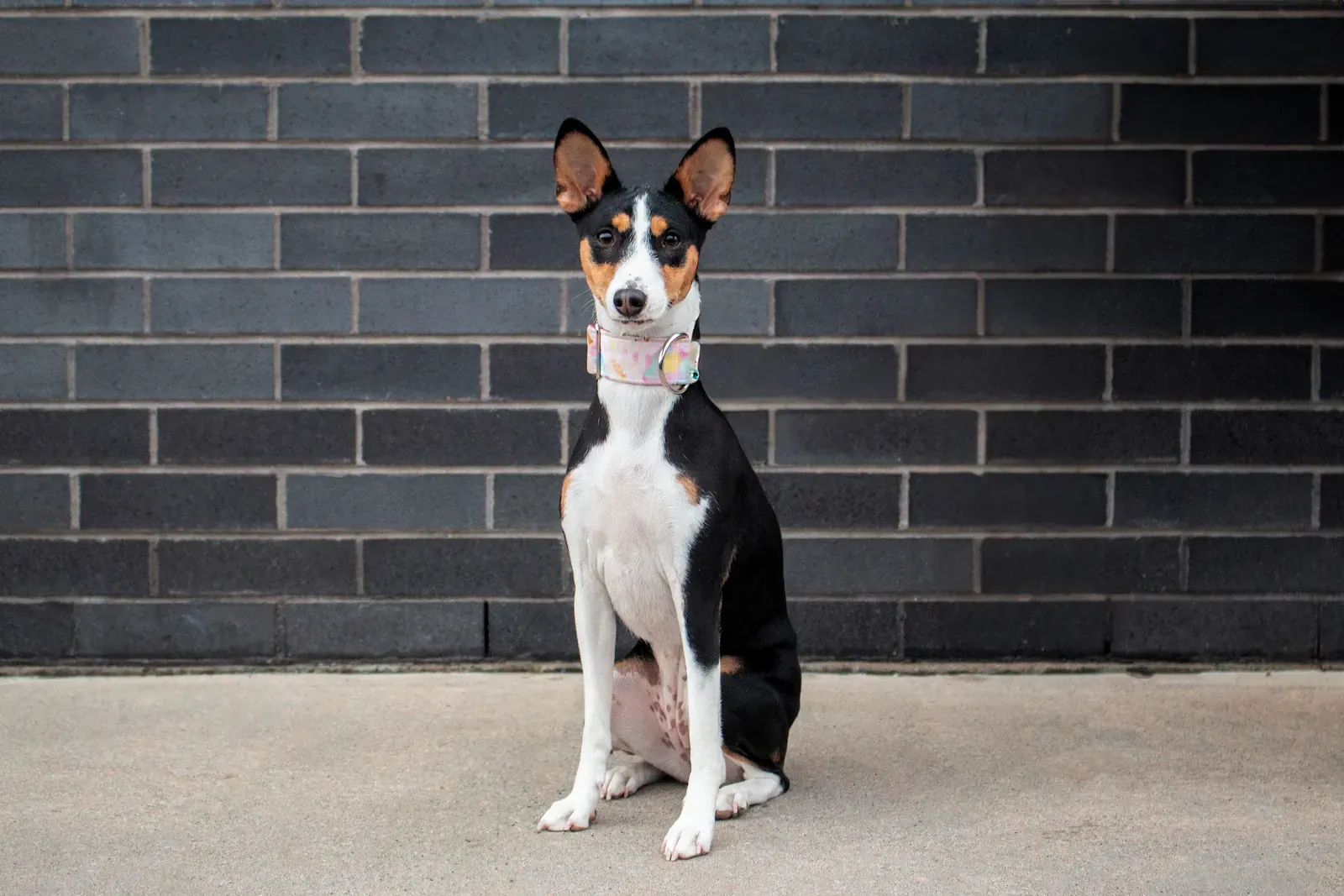
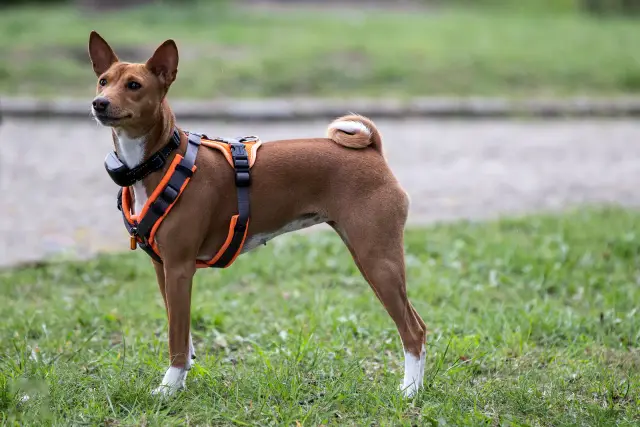
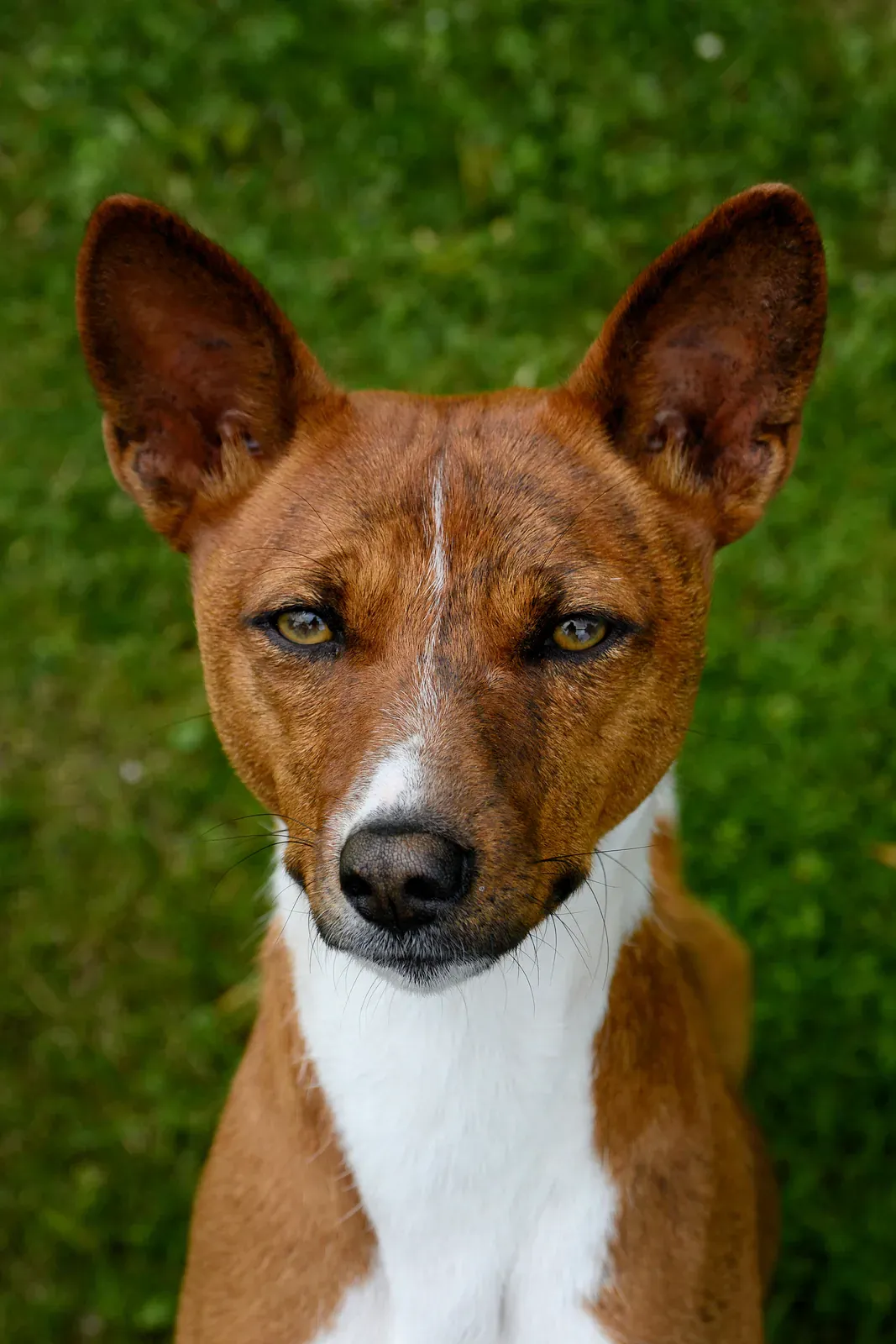
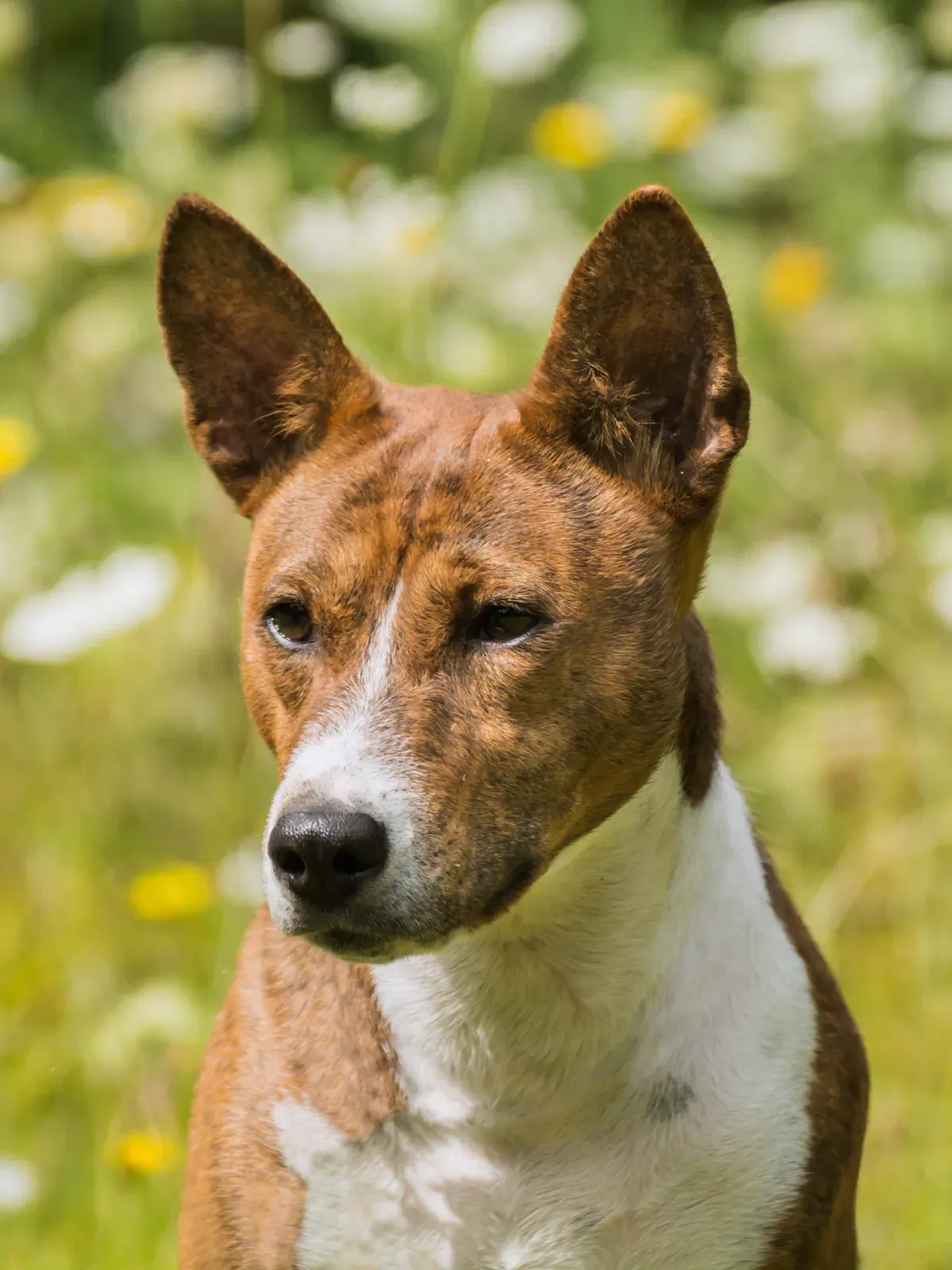
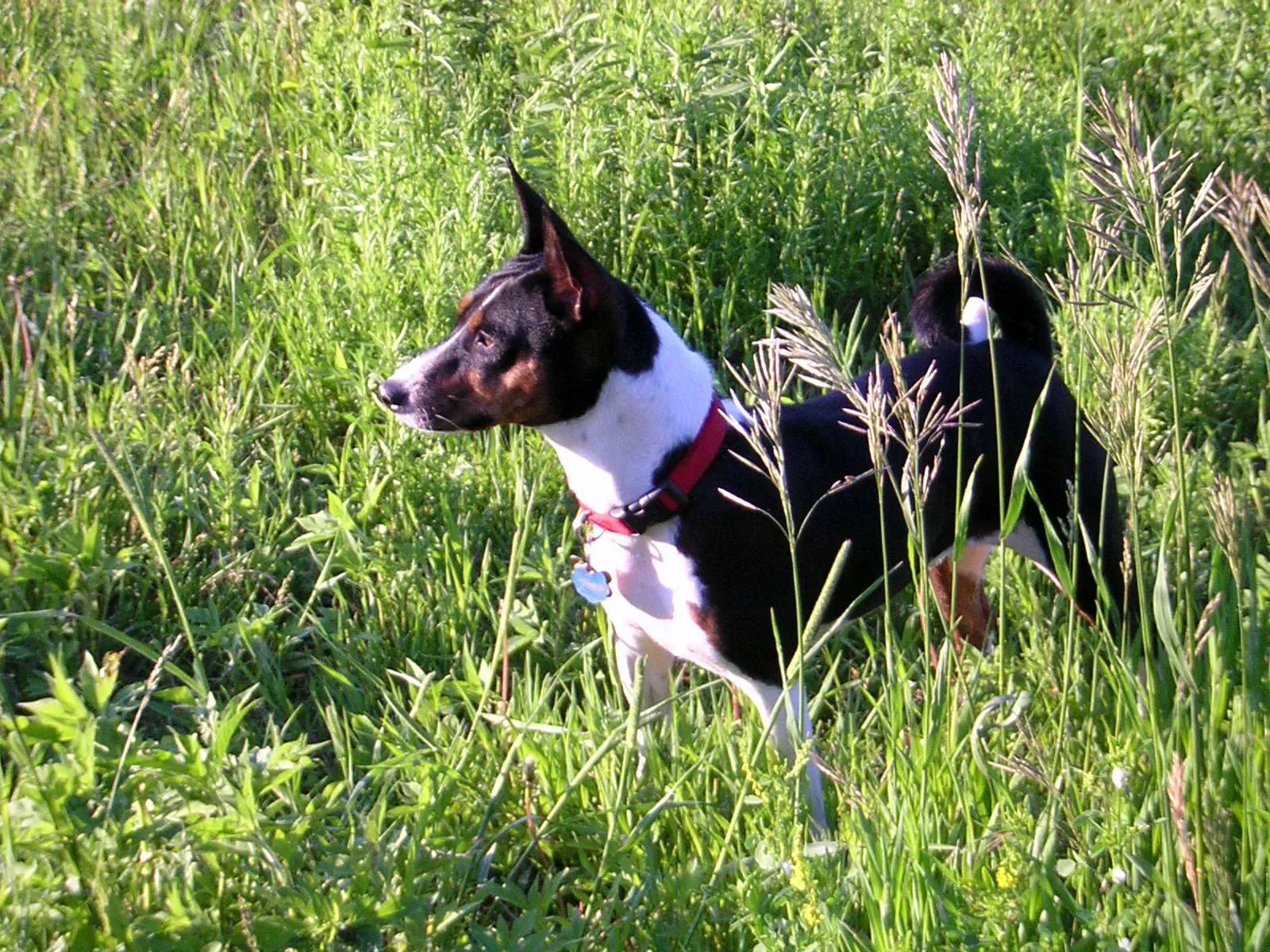
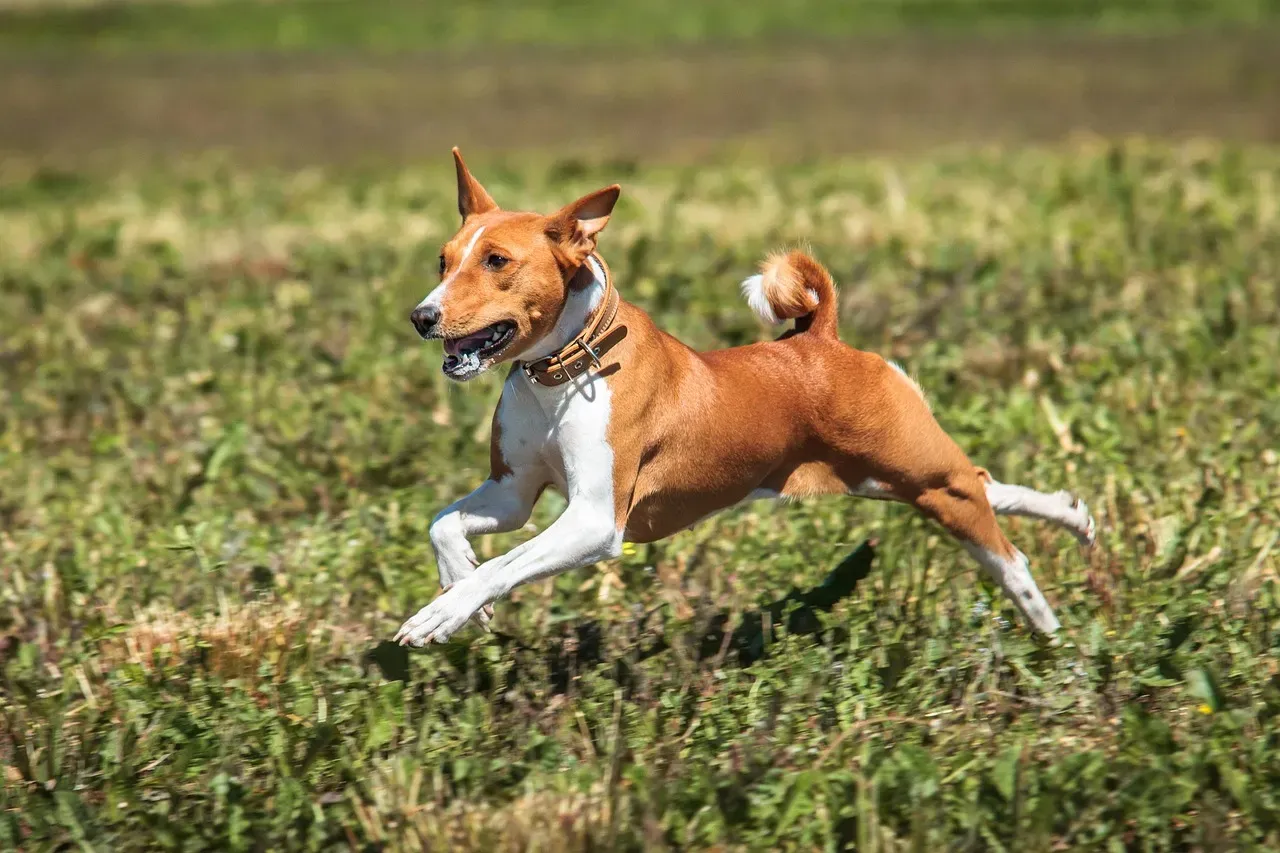
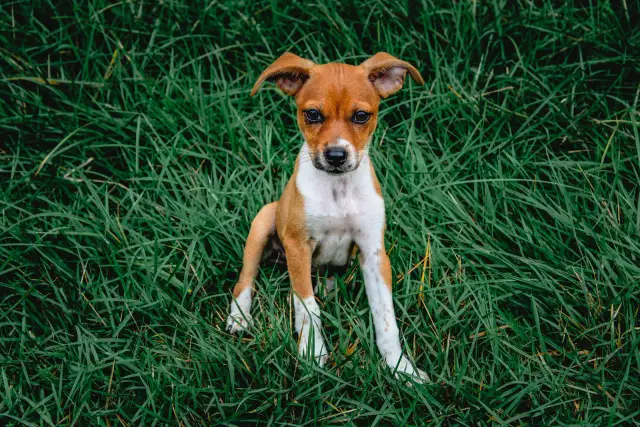
Both standards describe a small, fine-boned, elegant dog with a wrinkled forehead, pricked ears, a tightly curled tail and a short, close coat. Colours commonly seen are chestnut red, black, tricolour and brindle with white markings; the exact colour wording differs between the standards. The AKC standard asks that the dog stay lightly built within its height and weight ratio.
The barkless dog: what the Basenji does instead
 Related breedDingo3000 BCE to 1500 BCE · AustraliaAncient World
Popular books say the Basenji "cannot bark". Closer to the truth: it rarely barks in the usual way and makes a range of other sounds. These include a yodel-like call (often written "baroo"), a crow, a growl, a whine and a loud scream-like noise when excited or unhappy.
Why? The best-known explanation is anatomical. In the 1970s, L.E. St. Clair at the University of Illinois and R.R. Ashdown at the Royal Veterinary College studied the larynx (voice box) of a small number of Basenjis and found an unusual, shallow laryngeal ventricle compared with other dogs. This is a documented observation. But Ashdown himself said his findings were inconclusive. The sample was small (four dogs from central Africa or direct descendants), the dogs had died before the studies, and nobody has since compared barking and non-barking Basenjis to see whether the shape of the larynx matches the sound. So "the larynx explains it" is a reasonable hypothesis, not a settled fact.
Some Basenji owners also report that a Basenji can learn to bark a little, especially after living with barking dogs. That is an owner report, not a study.
For a household, the practical points are:
- Quieter, not silent. A Basenji is quieter than many breeds, but the yodel and scream can be loud and carry.
- Neighbours. A bored dog may vocalise more.
- Not a reason by itself. Reasons to choose or avoid the breed lie elsewhere (see Living with a Basenji).
Temperament
 Related breedIrish Wolfhound100 BCE to 1885 · IrelandAncient World
Breed clubs describe the Basenji as intelligent, alert, curious and independent. It is a hound, not a retriever: it makes its own decisions, learns fast and gets bored with repetition. It is described as affectionate with its own family and reserved with strangers. It is often said to groom itself like a cat and to dislike wet weather, but those are owner descriptions and not studies. See the smartest dog breeds for how this breed compares with others on trainability.
For homes, that means:
- Independent thinking. Training works best with short, varied, reward-based sessions. A Basenji that does not see the point may simply walk away.
- Prey drive. A village hunting dog will chase small animals. Off-lead walking needs a secure area, because recall cannot be assumed.
- Climbing and escaping. A fenced garden should be tall and secure; breed clubs warn about climbers and diggers.
- Other dogs. Varies. Early socialisation helps.
- Children. Varies; the dog is lively and quick, so supervise children and teach them gentle handling.
No named behaviour study for the Basenji was found for this article, so no figures are given for these points.
 Save

Working instincts and exercise
 Related breedItalian Greyhound500 BCE to 1900 · ItalyAncient World
The Basenji was bred to run, track and drive game. Expect a dog that needs a daily run or long active walk and real play time, ideally in a secure area, plus mental work such as scent games or lure coursing. Without it, a smart dog may chew, dig and climb.
The single yearly heat cycle
 Related breedMaltese500 BCE to 1888 · MaltaAncient World
Most breeds come into season about twice a year. The Basenji, like a few other primitive breeds, usually comes into heat once a year. The Basenji Club of America's African Stock Project notes a seasonal pattern, most often in September and October in the northern hemisphere, with an occasional second season in March or April in some dogs. Why this is so is not settled; breeders often link it to the breed's closeness to its village-dog origins, but that is a belief, not a proved finding.
For owners, once-a-year timing can make planning easier, but it does not remove the need to manage a bitch in season. For the full picture of what happens during a season, see the dog heat cycle guide.
Health
 Related breedPug400 BCE to 1885 · ChinaAncient World
Most Basenjis live long, healthy lives. This section lists what breeders screen for and what owners can watch for. "About 1 in N" figures appear only where a named study gives them. Many figures from breed clubs come from dogs that were tested by choice, so they do not describe the whole breed.
| Condition | What it is | How common | What helps |
|---|---|---|---|
| Fanconi syndrome | Kidneys lose the ability to hold on to sugar, salts and other substances, so they leak into the urine. Usually appears between about 4 and 8 years | Of Basenjis voluntarily tested in a 2011 BCOA data set: about 40% probable , about 3% probably affected, about 6% indeterminate. Selective testing, so not a breed-wide rate | FAN1 DNA test for both parents; yearly urine check from about 3 years; early treatment |
| Pyruvate kinase deficiency | A red blood cell enzyme defect that causes anaemia | In 186 Australian dogs: 20 carriers (about 1 in 9) and no affected dogs. Older breeder reports: the gene fell below 1% of puppies by 1975 | DNA test; do not breed two carriers |
| Progressive retinal atrophy (PRA) | Gradual vision loss from retinal cell decline, often late in life | Described by the BCOA as reduced through testing; no figure found | PRA-BJ1 DNA test (about half of cases in the breed); eye exams |
| Weight and activity | Lean build, quick dog | No figure found | Lean body condition, regular vet checks |
Fanconi syndrome and its DNA test
Fanconi syndrome is the breed's best-known inherited problem. A 2024 paper by Farias and colleagues in the journal Genes ("FAN1 Deletion Variant in Basenji Dogs with Fanconi Syndrome") traced the disease to a region on chromosome 3, and sequencing of an affected dog found a homozygous 317 base-pair deletion in the last exon of the FAN1 gene. In 78 Basenjis of known disease status, the test almost perfectly matched the disease; only one dog with two copies of the deletion showed no signs. The condition is autosomal : a dog needs two copies to be affected, and a carrier with one copy is normal. Two carriers bred together can on average produce 25% affected puppies. The UC Davis Veterinary Genetics Laboratory offers the test, and a second lab offers the same deletion test.
The BCOA says a Fanconi DNA test has been available since 2011; the 2011 BCOA table of results (about 50% probably clear, 40% probable carriers, 3% probably affected, 6% indeterminate) came from a linkage-based test before the FAN1 variant was found. The club itself warns that these figures are not a breed-wide rate, because affected dogs are not usually tested.
What helps: DNA-test both parents before mating, keep a lean, well-watered dog, and ask a vet for a urine glucose check yearly after about 3 years. Early treatment reduces organ damage.
Other conditions
The BCOA lists pyruvate kinase deficiency and PRA as major conditions with DNA tests. The Australian survey (186 dogs, Hogg and Horton, 1978) found 20 carriers and no affected dogs. Intestinal disease is reported by breed groups, but no prevalence figure was found, so none is given.
Life span
The UK Kennel Club health survey of 2004 reported a median life span of 13.6 years in 46 deceased dogs, with the oldest at 17.5 years. The sample is small, so treat it as a rough guide. This is about one to two years longer than other breeds of similar size, according to the figure's source. Atlas data gives 13 to 14 years.

Living with a Basenji
 Related breedPyrenean Mountain Dog1000 BCE to 1923 · FranceAncient World
 Save
| Daily reality | Rating | Why |
|---|---|---|
| Exercise per day | High | Built to run; daily run or long active walk plus play |
| Training needs | High | Independent hound that tests rules; short, varied sessions |
| Grooming | Low | Short fine coat; weekly brushing is enough (breed club descriptions) |
| Shedding | Low | Short coat; no source gives an amount |
| Barking | Good | No bark in the usual sense, but yodel and scream can be loud |
| Time alone | Poor | Intelligent and bored easily; may chew and climb if left |
| Children | Varies | Quick and lively; best with older, gentle children and supervision |
| Other dogs | Varies | Depends on socialisation and individual |
| Cats and small pets | Poor | Hunting dog with strong prey drive |
| Flat living | Fair | Quiet and clean, but needs daily exercise and a secure place to run |
| Heat tolerance | Good | Short coat and slim build; no source rates it |
| Cold tolerance | Poor | Thin short coat; dislikes cold and wet (owner reports) |
| First-time owner fit | Fair | Small and clean, but independent; first-timers need patience |
A great fit if
- You enjoy a clever, independent dog and can accept that it will not obey on repeat.
- You can give a daily run in a secure area and fence the garden well.
- You want a quiet dog that is clean and easy to groom.
- You are at home for much of the day.
Think twice if
- You want a dog that comes reliably when called off-lead.
- You have cats, rabbits or other small pets loose at home.
- You are away for long hours, or leave a dog alone in a flat.
- You want a very quiet dog: the yodel and scream can still be loud.
Before you get one
- Health tests. Ask the breeder for a Fanconi DNA result (FAN1) for both parents, plus PK deficiency and PRA DNA results and an eye exam. Ask to see the certificates.
- Puppy or adult rescue. Basenji rescues exist in several countries and place adults whose temperament is known; an adult can suit a first-time owner who wants predictability.
- First year. Puppy classes, a secure garden before the puppy comes home, supervised introductions to other animals, and a routine yearly urine check once the dog is a few years old.
Similar breeds to consider
- Rhodesian Ridgeback. African hunting hound, larger and calmer indoors, with a different set of needs.
- Azawakh. Sahel sighthound and a light DNA relative; tall, reserved and independent.
- Whippet. Gentle, quiet sighthound that suits home life, with a lower prey-drive risk for most owners.
- Pharaoh Hound. Primitive-type hunting hound with similar athletic needs.

Basenji fun facts
 Related breedRottweiler100 CE to 1901 · GermanyAncient World
- A pair of Basenjis shown at Crufts in 1895 as African Bush Dogs or Congo Terriers were the first seen in the West; both died of distemper soon after.
- A Basenji usually comes into heat once a year, not twice.
- In this site's copy of the Parker 2017 DNA study, the Basenji has no firm clade and shares the most DNA with the Rat Terrier (24.6 Mb) and the Azawakh (12.5 Mb).
- The 1987 and 1988 trips to the Congo brought stock that was registered in a one-time opening of the AKC stud book in 1990.
Frequently asked questions
Why don't Basenjis bark?
They rarely bark but do yodel, crow, growl and scream. A shallow laryngeal ventricle was found in a few dogs in the 1970s, but the researcher said the link to barklessness was not proved.
Are Basenjis good family dogs?
They can be, in homes that offer exercise, patience and supervision around children. They are independent and not an easy first dog for everyone.
How big is a Basenji?
About 43 cm and 11 kg for dogs and 40 cm and 9.5 kg for bitches (, as reported). The gives an ideal of 17 in (dogs) and 16 in (bitches).
How long do Basenjis live?
The 2004 UK Kennel Club survey median was 13.6 years in 46 dogs. Atlas data gives 13 to 14 years.
What is Fanconi syndrome in Basenjis?
An inherited kidney condition, often showing between 4 and 8 years. A DNA test for the FAN1 deletion exists, and early treatment reduces damage.
How often does a Basenji come into heat?
Usually once a year, often in autumn in the northern hemisphere. See the dog heat cycle guide.
Read next
 Closest DNARat Terrier24.6 Mb sharedFamilyAncient BasalThe whole family
 Adopt a dogDog Shelters in EuropeFind dog shelters in Europe, learn how shelters differ from country to country and why adopting a dog is a good option.
Sources (13)
- Fédération Cynologique Internationale, Basenji, standard no. 43.
- American Kennel Club, Basenji breed standard, as reproduced by the Basenji Club of America.
- Basenji Club of America, African Stock Project pages (history, 1987 and 1988 expeditions, stud book reopening 1990 and 2009 to 2013).
- Basenji Club of America, "History of the breed presented to the AKC board" and "For consideration in reopening the Basenji stud book".
- Burn O., "The Barkless Dog of the Congo", American Kennel Gazette, June 1937.
- Basenji Club of America, health pages and Fanconi syndrome linkage test document, 2011.
- Farias F.H.G. et al., "FAN1 Deletion Variant in Basenji Dogs with Fanconi Syndrome", Genes, 2024.
- University of California Davis Veterinary Genetics Laboratory, Fanconi syndrome in the Basenji.
- Inherited pyruvate kinase deficiency and normal haematological values in Australian Basenji dogs, Hogg G.G. and Horton B.J., Australian Veterinary Journal, 1978.
- St. Clair L.E., University of Illinois, and Ashdown R.R., Royal Veterinary College, anatomical studies of the Basenji larynx, 1970s (as described in secondary sources).
- Kennel Club (UK), Purebred Dog Health Survey, 2004 (Basenji median life span, as reported on Wikipedia).
- Parker H.G. et al., "Genomic analyses reveal the influence of geographic origin, migration, and hybridization on modern dog breed development", Cell Reports, 2017 (as recorded in this site's breed database).
- Wikipedia, Basenji (FCI figures and survey summary).