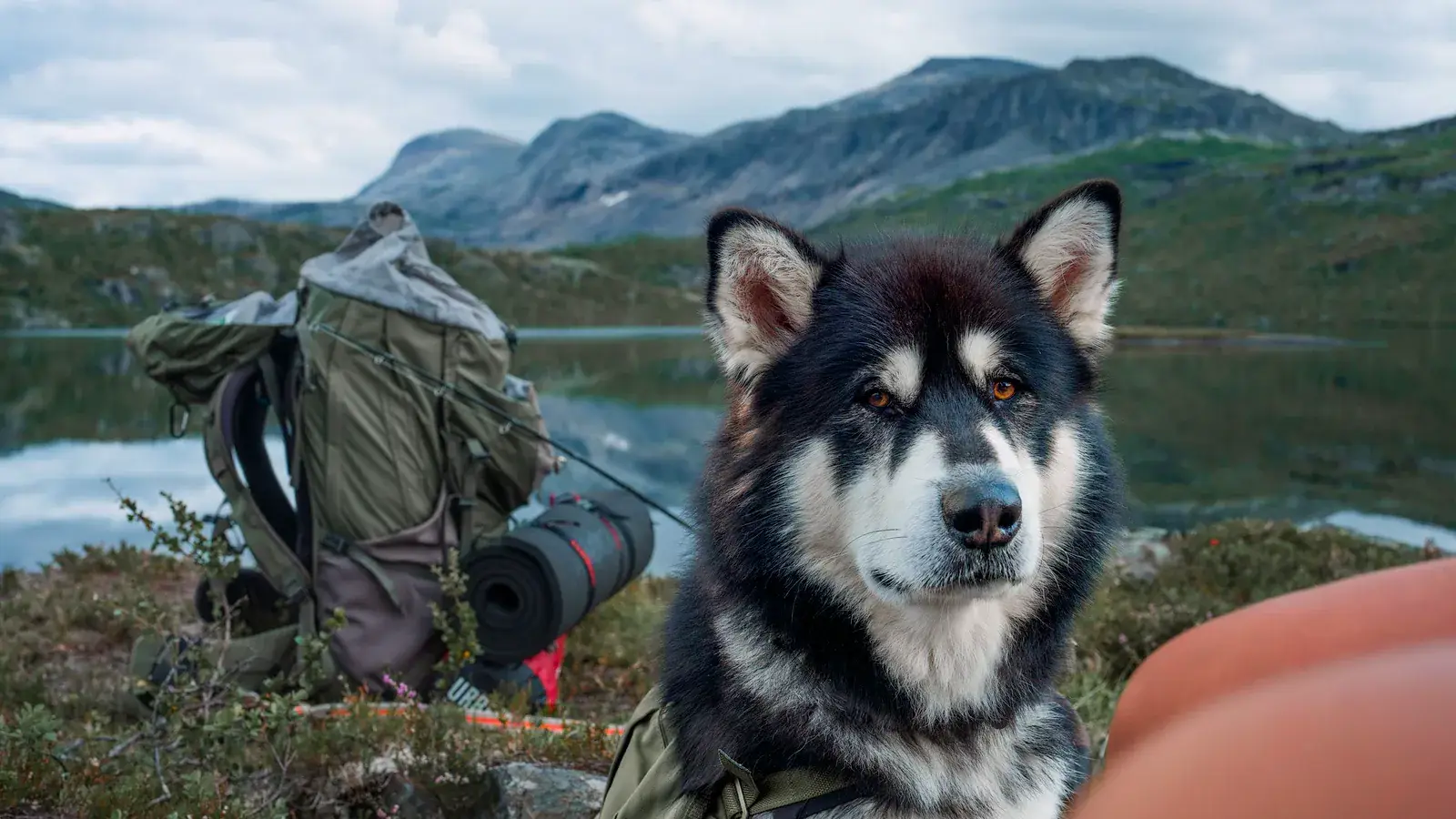
It is a heavy, powerful freight dog from Alaska, named after the Mahlemiut (Malimiut) Inupiat people, who kept and bred big dogs to haul loads across snow and ice. It is not a racing dog: the breed was built for strength and endurance at a steady pace. Today most Malamutes are companions and show dogs, and a few still pull sleds, carts and weight-pulling rigs. It is friendly, strong-willed and very physical. It suits active owners with a secure garden, a cool climate or a lot of patience in summer, and a sense of humour about shedding, digging and howling. DNA studies place it among the oldest-looking Arctic dog lineages alive.
Alaskan Malamute quick facts
 Related breedChow Chow200 BCE to 1895 · ChinaAncient World
- Closest DNA relatives
- Greenland Dog, Siberian Husky, Chinook
- Descendant breeds
- Alaskan Husky, Northern Inuit Dog, Tamaskan Dog, Shiloh Shepherd, King Shepherd, Argentine Polar Dog, Alaskan Klee Kai (atlas data)
- Country of origin
- United States (Alaska)
- Period of development
- Arctic thousands of years old; modern registered breed from the 1920s and 1930s; AKC recognition 1935
- Original job
- Hauling heavy freight by sled, carrying packs, helping hunters with seals and bears
- Type
- Sled dog (FCI Group 5, Spitz and primitive types, standard no. 243; AKC Working Group; UK Kennel Club Working Group)
- Parent club
- Alaskan Malamute Club of America (AMCA), founded 1935
- Height
- Dogs about 64 cm, bitches about 58 cm (AKC, FCI, UK Kennel Club)
- Weight
- Dogs about 38 kg, bitches about 34 kg (AKC, FCI, UK Kennel Club); many pet Malamutes are heavier
- Coat
- Thick, coarse outer coat with a dense, oily, woolly undercoat
- Colour
- Light gray through black, to red, always with white underparts; solid white also allowed
- Life span
- Atlas data: 10 to 14 years. A UK survey (Adams et al. 2010) reports a median of about 10 years 8 months
- DNA family
- Asian Spitz family (Parker et al. 2017)
Drawn to scale in real centimetres. Its back reaches about 61 cm, just above your knee; its head about 77 cm, your hip.
Where it sits in the tree
Ancient World · 3,000 BCE to 499
Name and origin
 Related breedJindo1200 to 1962 · South KoreaLate Middle Ages
The name comes from the Mahlemiut (also written Mahlemut, Malemute, Malimiut), an Inupiat people of northwest Alaska. The AKC and the AMCA place them along Kotzebue Sound. The atlas record names Norton Sound instead; early sources are loose with the exact place, and the Inupiat Mahlemiut are tied to the Kotzebue Sound region in most breed histories. The older spelling "Malemute" is still common in print, and "Mal" or "Mally" is the nickname owners use.
The Inupiat bred and kept large, strong dogs for hunting, hauling and as pack animals. Breed histories say the dogs helped hunt seals, guarded camps against polar bears and carried loads across long distances. A dog worth keeping through an Arctic winter had to pull weight on little food, and that selection explains the modern body: a deep chest, heavy bone and thick feet.
Two points are often repeated and need care.
- "The breed is 4,000 to 20,000 years old." Figures in popular sources range from about 4,000 to 20,000 years. The honest reading is that the dog type is old and the Arctic lineage it comes from is old (see the DNA section), while the registered breed is only about a century old.
- "The Mahlemiut kept them pure." Breed histories say a remote group of Mahlemiut still had many pure dogs after the Gold Rush, and that these dogs helped revive the breed. This is a breed-club narrative, not a documented pedigree.
 Save

History
 Same eraSamoyed500 CE to 1912 · RussiaEarly Middle Ages
Freight dogs of Kotzebue Sound
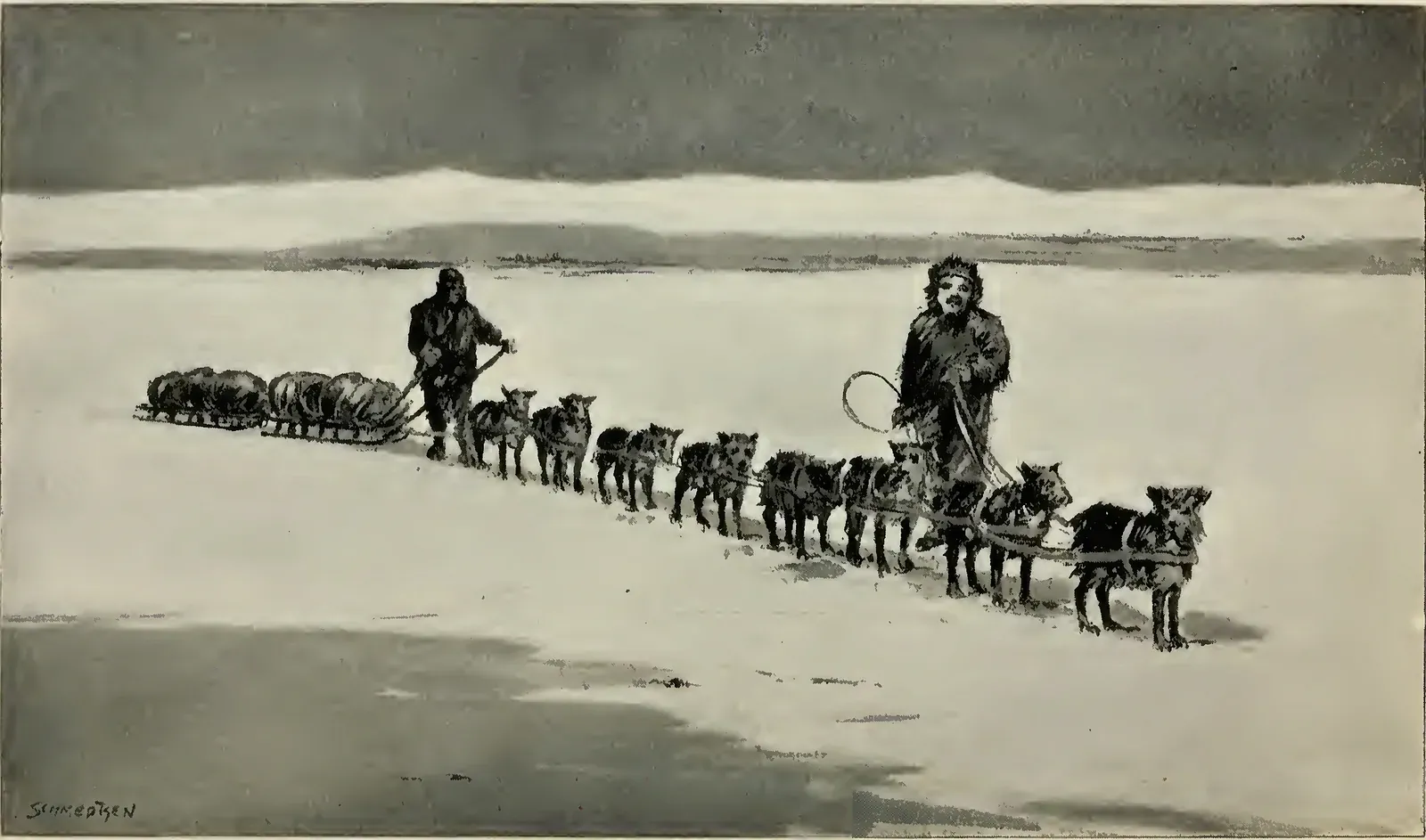
For most of its history the Malamute was a working dog living with an Inupiat family, not a registered breed with a studbook. Dogs of this type hauled sled loads, carried packs on summer trails and worked at the hunt. Early outside visitors wrote about the Mahlemiut and their dogs together; breed histories note that the people are seldom mentioned without the dogs.
The Gold Rush and near disappearance
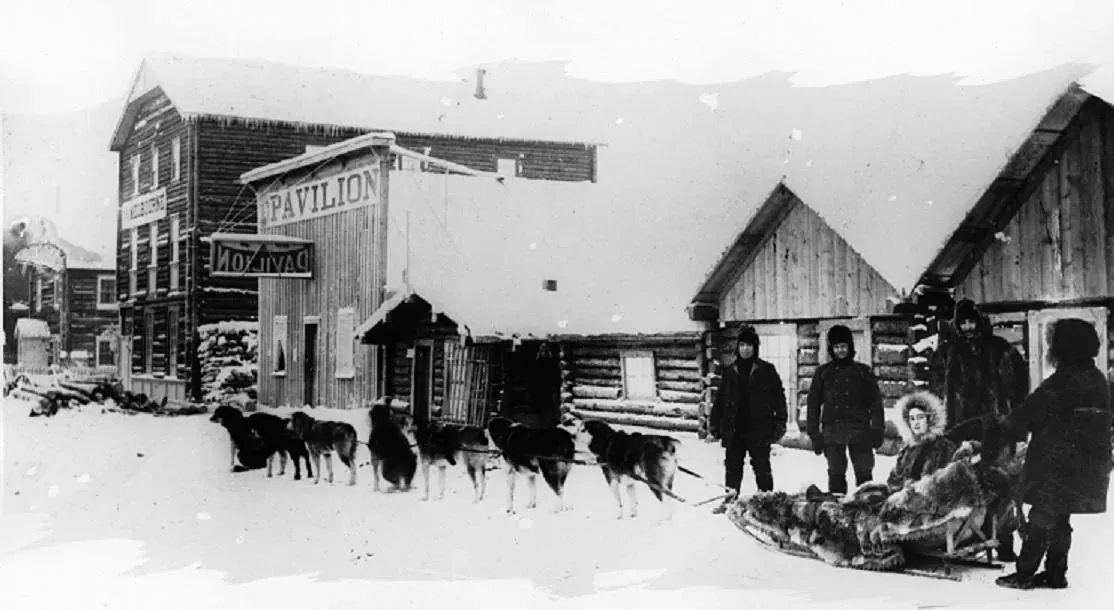
The Klondike and Alaska gold rushes from 1896 brought thousands of prospectors, a huge demand for sled dogs and a lot of crossbreeding. Faster, lighter dogs and imported breeds were mixed with native freight dogs. By the early 1900s, breed histories say the older Malamute type had become rare outside a few remote communities.
 Save
The three lines: Kotzebue, M'Loot and Hinman
The modern Malamute descends from three groups of dogs. Breed-club accounts agree on the outline but not on every detail.
| Line | Key people | What it was |
|---|---|---|
| Kotzebue | Milton and Eva "Short" Seeley (Chinook Kennels, New Hampshire); Arthur Walden is often credited with the early dogs | Dogs collected from the Kotzebue Sound region in the late 1920s and early 1930s. They had consistent type and size and formed the base of the first |
| M'Loot | Paul Voelker | A larger line, with less angulation and more variation in coat and colour. Voelker did not pursue AKC registration, so these dogs were not registered at first |
| Hinman | Dick Hinman and Irwin (as named in AMCA material) | The most disputed line. The AMCA describes only a few dogs that added important qualities; other sources describe it as a full line created by Hinman |
Robert Zoller later combined M'Loot and Hinman/Irwin dogs with selected Kotzebue dogs to produce the Husky-Pak line, which is the third pillar of many pedigrees. A modern Malamute often traces to all three lines.
AKC recognition in 1935
The AKC recognised the breed in 1935, largely through the efforts of Eva Seeley, and the Alaskan Malamute Club of America was founded the same year. The first standard was based on the Kotzebue dogs. The breed later received a Fédération Cynologique Internationale standard (no. 243), with the United States as the country of origin.
Byrd's Antarctic expeditions and World War II
Chinook Kennels, which started as a Chinook breeding kennel under Arthur Walden, supplied and trained dogs for Admiral Richard Byrd's Antarctic expeditions. The AMCA states that dogs for both Byrd expeditions and for the United States Service Expedition were trained and supplied by Chinook Kennels. Walden led the dog department for Byrd's first expedition, and he and his dogs were described by Byrd as the backbone of the expedition transport. One veterinary breed profile says Malamutes helped Byrd's trek to the South Pole in 1933; no second source confirms that, so it is best read as "Malamutes were at the kennels and among the expedition dogs" until a clearer record is cited. (The first Byrd expedition ran from 1928 to 1930 and the second from 1933 to 1935.)
In World War II the US Army Air Forces ran a sled dog search-and-rescue program to retrieve pilots and cargo from crashed aircraft in the Arctic. Breed histories say Malamutes served mainly in search and rescue in Greenland, and as freight and pack dogs in Europe. Recovery numbers differ by source: one account says at least 100 downed pilots were recovered by the end of the war, another gives about 150 survivors and 300 casualties plus equipment. The totals are unconfirmed.
Near loss and recovery
Wartime losses and the shift away from dog teams hit the breed hard. Estimates say only about 30 registered Malamutes remained in 1947. The AKC reopened the to unregistered dogs that could win points in the ring: sources date this to 1947 or 1950, so both dates appear in the literature. Reopening let in M'Loot dogs and other unregistered lines and rebuilt the gene pool. One AMCA account states that some surviving dogs were destroyed after wartime service; no other source confirms it, so it is left out of the main story.
 Save
Relatives and DNA
 Same familyShar Pei200 BCE to 1973 · ChinaAncient World
The Malamute belongs to the Asian Spitz family in the 2017 study by Parker and colleagues (Cell Reports), which analysed 1,346 dogs from 161 breeds and sorted them into 23 clades. The study measured shared : long stretches of identical DNA that come from shared ancestors or past crosses. More shared () means a closer link, but the data cannot say which breed gave genes to which.
Source: Parker et al. 2017, as recorded in this site's breed database.
Two features stand out. The Greenland Dog is the closest match by a wide margin, which fits the Arctic sled dog story. The Chinook link fits history: the Seeleys of Chinook Kennels were early Malamute breeders. The Malamute and the Siberian Husky share a deep Arctic ancestry but are separate breeds with different jobs (see the comparison below).
Ancient Arctic lineage
Three named studies shed light on how old the sled dog type is.
- Skoglund et al. 2015 (Current Biology). A draft from a wolf that lived about 35,000 years ago on the Taimyr Peninsula showed gene flow from that wolf lineage into some dogs. The study estimated that Taimyr-wolf ancestry makes up between 1.4 and 27.3 percent of the genome in dogs from northeast Siberia and Greenland. Dog breeds elsewhere show far less.
- Sinding et al. 2020 (Science). The team sequenced a roughly 9,500-year-old dog from Zhokhov Island, in the Siberian Arctic, with modern dogs and the Taimyr wolf. The majority of modern Arctic sled dog ancestry traced back to the same distinct lineage as the Zhokhov dog. The Greenland sled dog, relatively isolated, showed the least mixing. The authors described the Zhokhov dog as most similar to Greenland sled dogs, Alaskan Malamutes and Siberian Huskies.
- Parker et al. 2004 (Science). An earlier breed study placed the Siberian Husky and Alaskan Malamute among the breeds that branch off earliest from the wolf, in a group often called ancient or basal breeds.
What this means: the Malamute carries part of an old Arctic dog lineage, not a recent artificial design. What it does not mean: the DNA does not show that any single living dog is "a wolf in disguise", and it does not tell us how much of today's Malamute comes from the Mahlemiut dogs and how much from the Gold Rush crosses and the three registered lines.
Alaskan Malamute vs Siberian Husky
The two are related Arctic breeds, not the same dog in two sizes. For the breed profile of the smaller one see Siberian Husky.
Descendants
According to the atlas data, the Malamute helped shape the Alaskan Husky (a working type, not a standardised breed), the Northern Inuit Dog and the Tamaskan Dog (wolf-like companion breeds), the Shiloh Shepherd, the King Shepherd and the Argentine Polar Dog. The Alaskan Klee Kai is also listed as a descendant.
Descend from it · 6
- Alaskan HuskyUnited States
- Argentine Polar DogArgentina
- Shiloh ShepherdUnited States
- Northern Inuit DogUnited Kingdom
- Tamaskan DogFinland
- King ShepherdUnited States
- Greenland Dog282.7 Mb 11.8%
- Siberian Husky99.3 Mb 4.1%
- Chinook41.0 Mb 1.7%
Source: Parker et al. 2017. Percent of the whole genome.
| Breedwith Alaskan Malamute | with Alaskan Malamute (Mb)Shared DNA (Mb) |
|---|---|
| Greenland Dog | 282.7 |
| Siberian Husky | 99.3 |
| Chinook | 41.0 |
Source: Parker et al. 2017, Cell Reports, shared haplotypes between 161 breeds (1,346 dogs).
| Trait | Alaskan Malamute | Siberian Husky |
|---|---|---|
| Original job | Freight: heavy loads at a steady pace | Light, fast sled work over long distance |
| Size (standards) | About 64 cm and 38 kg (dogs) | Smaller and lighter (see the Siberian Husky article) |
| Build | Heavy bone, broad chest, strong head | Lighter, fine-boned, built for speed |
| Origin of breed | Alaska, Mahlemiut Inupiat | Chukchi people of Siberia |
| DNA relationship | Share 99.3 Mb in Parker 2017 | Share 99.3 Mb |
Freight dogs and racing dogs
 Related breedShiba Inu300 BCE to 1936 · JapanAncient World
A key point for anyone choosing a sled-type dog: the Malamute is a freight dog. Its standard describes the breed as built for power and endurance, "not a racing sled dog". A Malamute hauls a heavy load at a steady pace; a racing Alaskan Husky or Siberian Husky runs a lighter sled much faster. Modern sled dog races favour the lighter dogs, and Malamutes today compete mostly in weight pulling, carting, skijoring and recreational sledding. Many are also simply family pets.
The breed standard
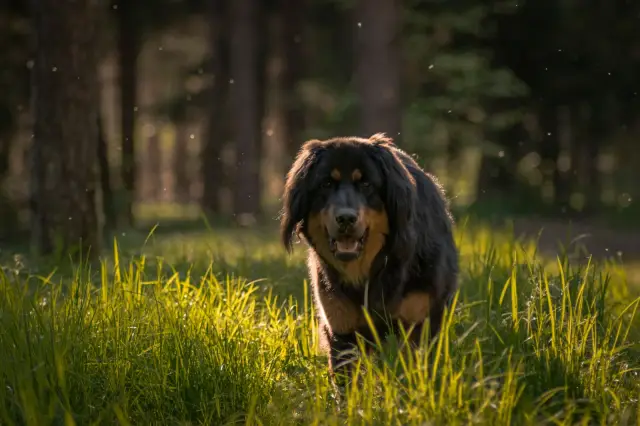 Looks relatedTibetan Mastiff1000 BCE to 1931 · ChinaAncient World
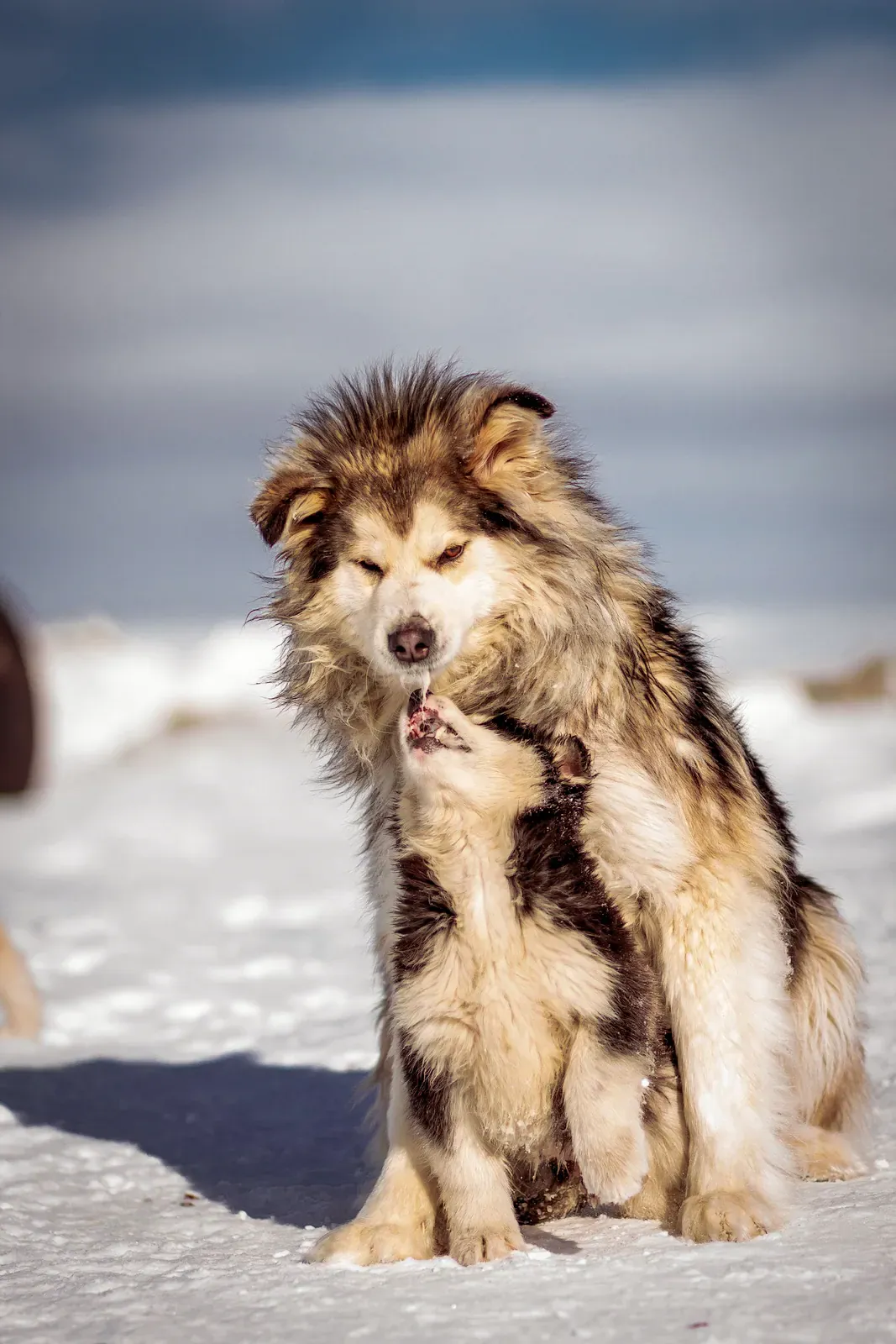
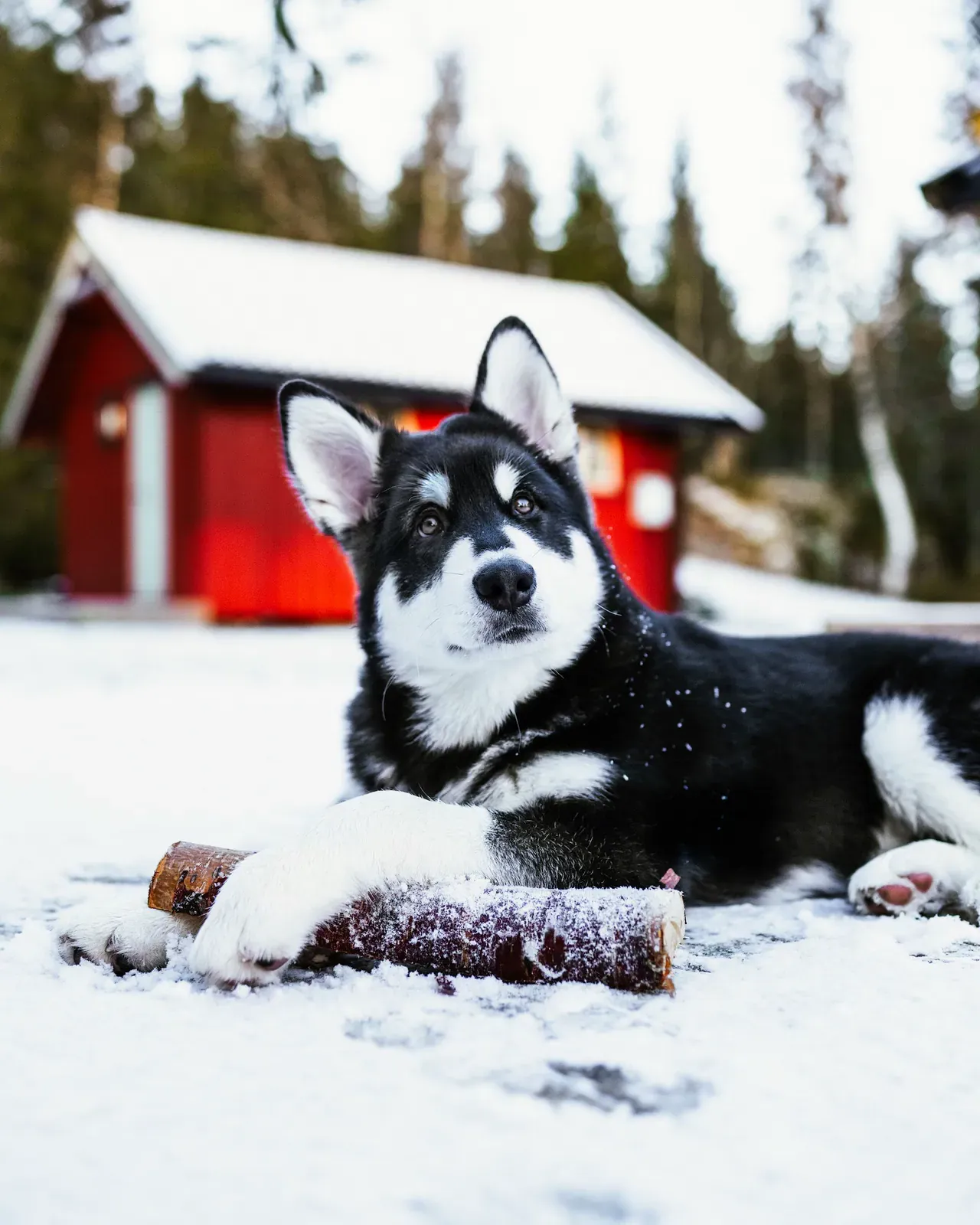
A breed standard is the written ideal that kennel clubs judge dogs against. The AKC, FCI and UK Kennel Club standards for the Malamute agree closely, because all three descend from the same American original.
| Trait | What the standards say |
|---|---|
| Height, dogs | AKC: about 64 cm. FCI: about 64 cm. UK Kennel Club: about 64 cm |
| Height, bitches | AKC, FCI and UK Kennel Club: about 58 cm |
| Weight | Dogs about 38 kg, bitches about 34 kg (AKC, FCI, UK Kennel Club). Larger dogs are not penalised as long as they stay sound and balanced |
| Coat | Thick, coarse guard coat standing off the body, with a dense, oily, woolly undercoat 2.5 to 5 cm deep (AKC, FCI) |
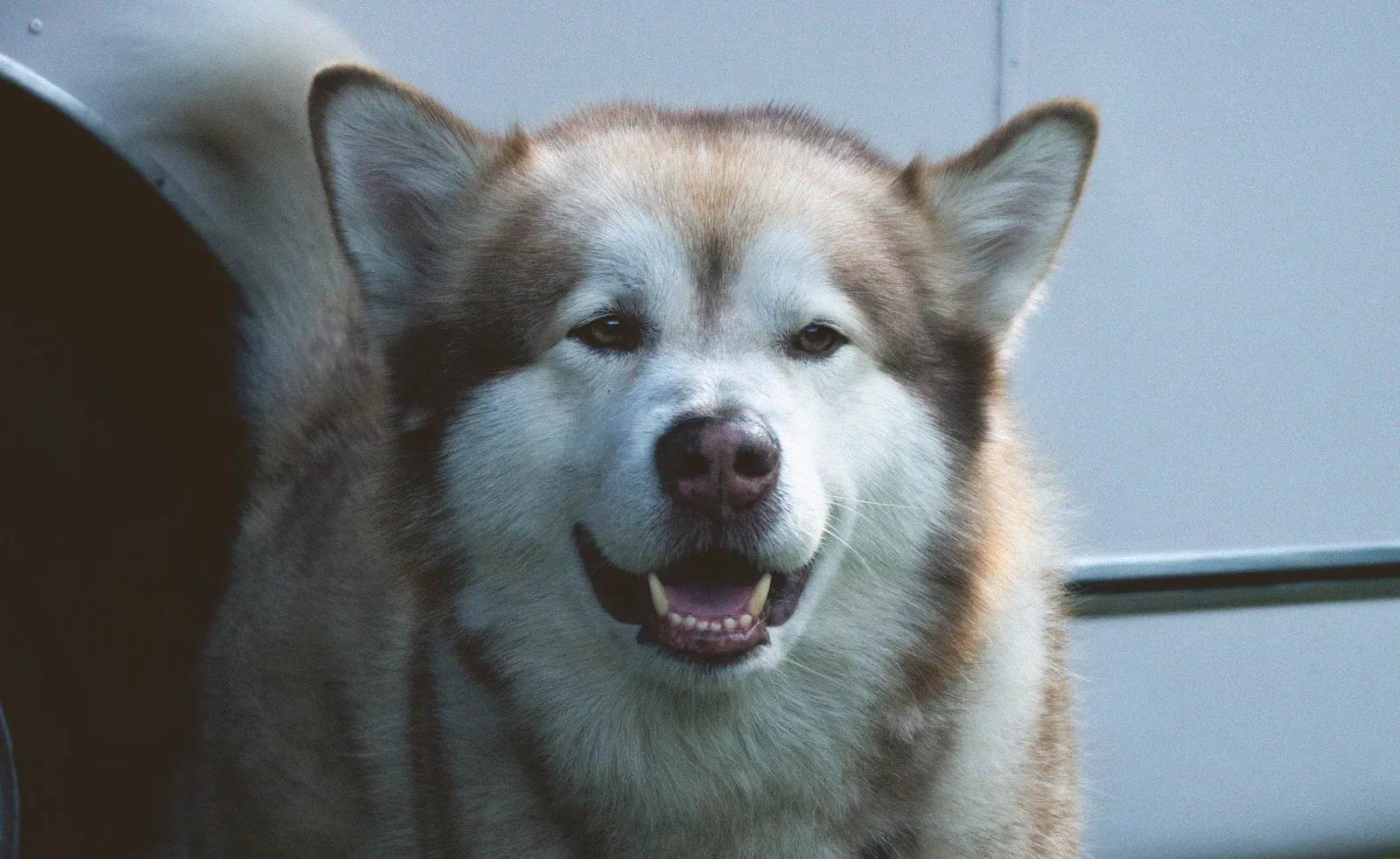
| Colour | Light gray through intermediate shades to black, and sable to red; underbody, legs and face markings white. Solid white is the only solid colour accepted (AKC) |
| Head and eyes | Broad skull, medium muzzle; eyes almond-shaped and brown, with dark eyes preferred. Blue eyes are a fault or disqualification (AKC) |
| Ears | Medium, triangular, erect when alert, set wide apart |
| Tail | Moderately high, carried over the back like a waving plume |
These figures come from the three clubs' standards. Check the current standard text before quoting a single number, since wording is revised from time to time. The overall picture is a strong, deep-chested dog with heavy bone, a broad head and a plumed tail. Gray-and-white is the best-known colour, but black and white, sable and white, red and white, and all white all appear.
Giant Malamutes. Some breeders advertise "giant" Malamutes of 45 kg or more. They are not a separate variety in any standard, and oversize is a fault in the show ring. A heavier dog puts more load on joints.
Temperament
 Related breedBasenji3000 BCE to 1937 · Democratic Republic of the CongoAncient World
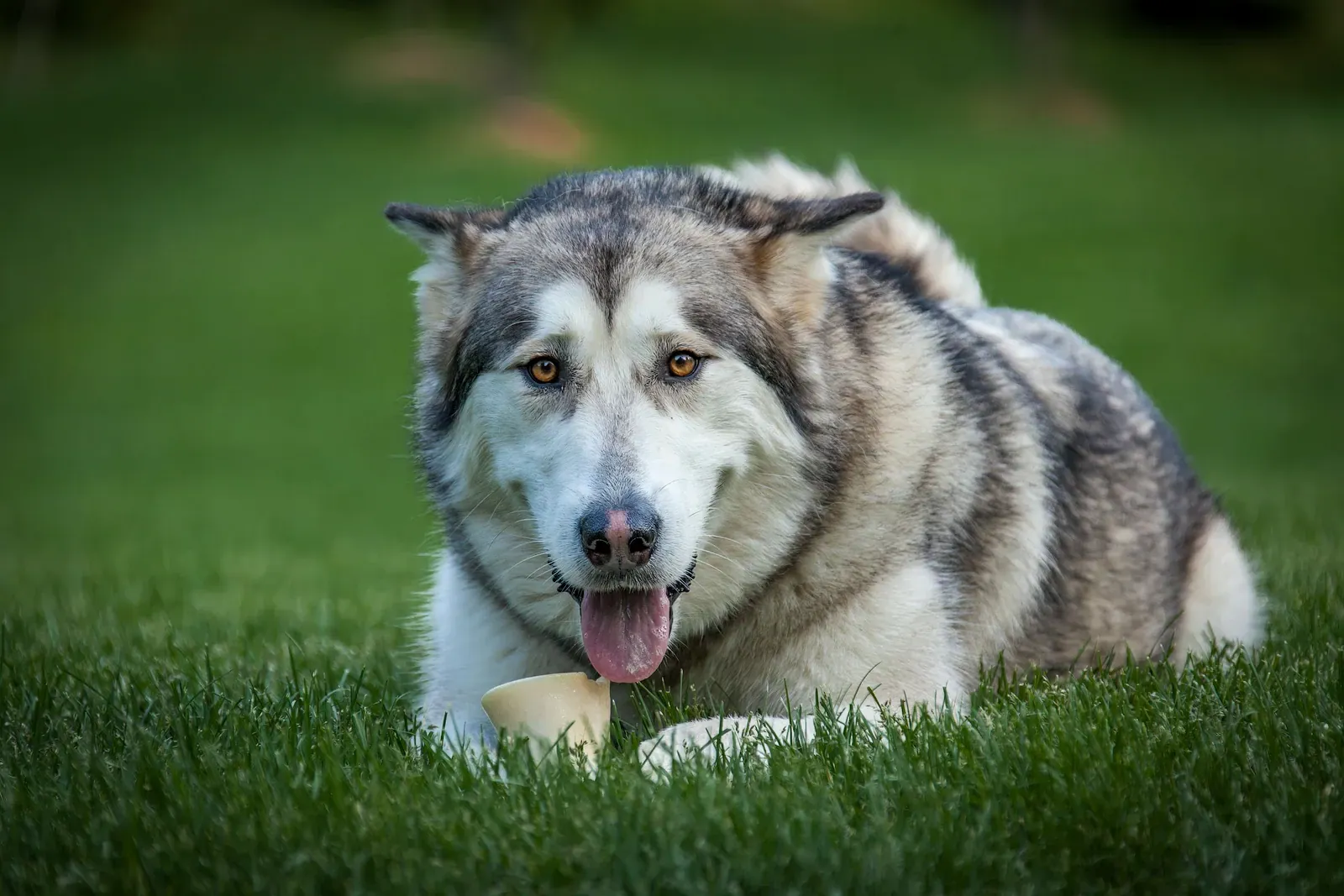
The standard describes the Malamute as an affectionate, friendly, loyal and playful dog, "not a one-man dog" in the AKC wording, and as a dog of dignity at maturity. In daily life the usual picture is cheerful and social with people, often too friendly to make a good guard, and strong-willed in training.
- Social and talkative. Malamutes tend to greet strangers with interest. They rarely bark much but howl, "talk" and groan to communicate.
- Independent. The breed was bred to work in a team, pull on its own initiative and keep going, which makes it less keen on repeating drills than a retriever. Short, varied, reward-based sessions work better than long, strict ones.
- Strong. An adult can pull a person off their feet. Loose-lead walking and recall need steady work from puppyhood.
- Prey drive. Sled dogs hunted. Many Malamutes chase cats, rabbits and sometimes small dogs. Early introduction to household pets helps but is no guarantee, and off-lead freedom in unfenced places is a risk.
- Dog manners. Breed histories describe dominance between same-sex adult Malamutes. Early socialisation and neutral introductions reduce problems.
- Digging and escaping. Malamutes dig cooling pits and can climb or tunnel out of weak fencing.
For more on why dogs behave this way, see why does my dog do that.
 Save

Health
 Related breedCaucasian Shepherd Dog500 BCE to 1920 · RussiaAncient World
Most Malamutes live healthy lives. This section lists what breeders screen for and what owners can watch for, with figures from named studies. The information is general: talk to a vet about your own dog.
Life span. Breed sources give 10 to 14 years. A UK survey of dogs that had died, Adams and colleagues (2010, Journal of Small Animal Practice, Kennel Club data), is reported in a veterinary clinic summary as giving a median of about 10 years 8 months for the breed. No recent large primary-care study covers Malamutes, so treat the typical life span as about 10 to 12 years.
| Condition | What it is | How common | What helps |
|---|---|---|---|
| The hip joint forms loosely and wears early | In OFA records summarised by VIN (13,777 Malamutes), about 10.9 percent were dysplastic, roughly 1 in 9. The share fell from 13.7 percent before 1980 to 8.1 percent in 2006 to 2010, about 1 in 12. OFA data come from dogs whose owners chose to submit x-rays | Hip scoring (OFA, PennHIP or the BVA/Kennel Club scheme) of both parents; lean puppies; no hard jumping while growing | |
| Chondrodysplasia (dwarfism) | An inherited growth condition with short, bowed front legs | Rare; no prevalence figure is published. Thought to be (AKC Canine Health Foundation grant 01901-A). The AMCA reports a long-running screening programme based on pedigrees | The causal gene has not been identified, so there is no DNA test; breeders avoid pairings that can produce it |
| Polyneuropathy (NDRG1) | An inherited nerve disease in young dogs with weak, wobbly hind legs and reduced reflexes | Not a prevalence figure: Bruun et al. 2013 (PLoS ONE) tested 102 Malamutes from the Nordic countries and the USA. Considered nearly gone from the breed, then new cases appeared in the Nordic countries and the USA | A DNA test for the NDRG1 Gly98Val variant; can be bred to clear dogs |
| Cataracts and cone degeneration | Eye conditions; an inherited cone degeneration with a CNGB3 variant is described in the breed | No prevalence found | Annual eye exams for breeding dogs; DNA test where available |
| Bloat (gastric dilatation and volvulus) | The stomach fills with gas and may twist; an emergency | Not measured for Malamutes in the sources used; deep-chested breeds are at higher risk | Several small meals, calm time after eating, know the signs and see a vet at once |
| Hypothyroidism | Low thyroid hormone | Reported in breed health guides; no figure found | Blood tests when a dog gains weight, sheds oddly or seems dull |
Research on polyneuropathy
Bruun and colleagues (PLoS ONE, 2013) compared the coding sequence of the NDRG1 gene in one healthy and one affected Malamute and found a G to T change in exon 4 that swaps glycine for valine (Gly98Val). They genotyped 102 Malamutes from the Nordic countries and the USA, including affected, carrier and healthy dogs. A later paper in Acta Veterinaria Scandinavica (2017) linked historical and recent Norwegian cases to the same mutation and traced affected pedigrees to a common North American ancestor. The practical message is clear: a DNA test exists, and a responsible breeder uses it before mating.
Heat
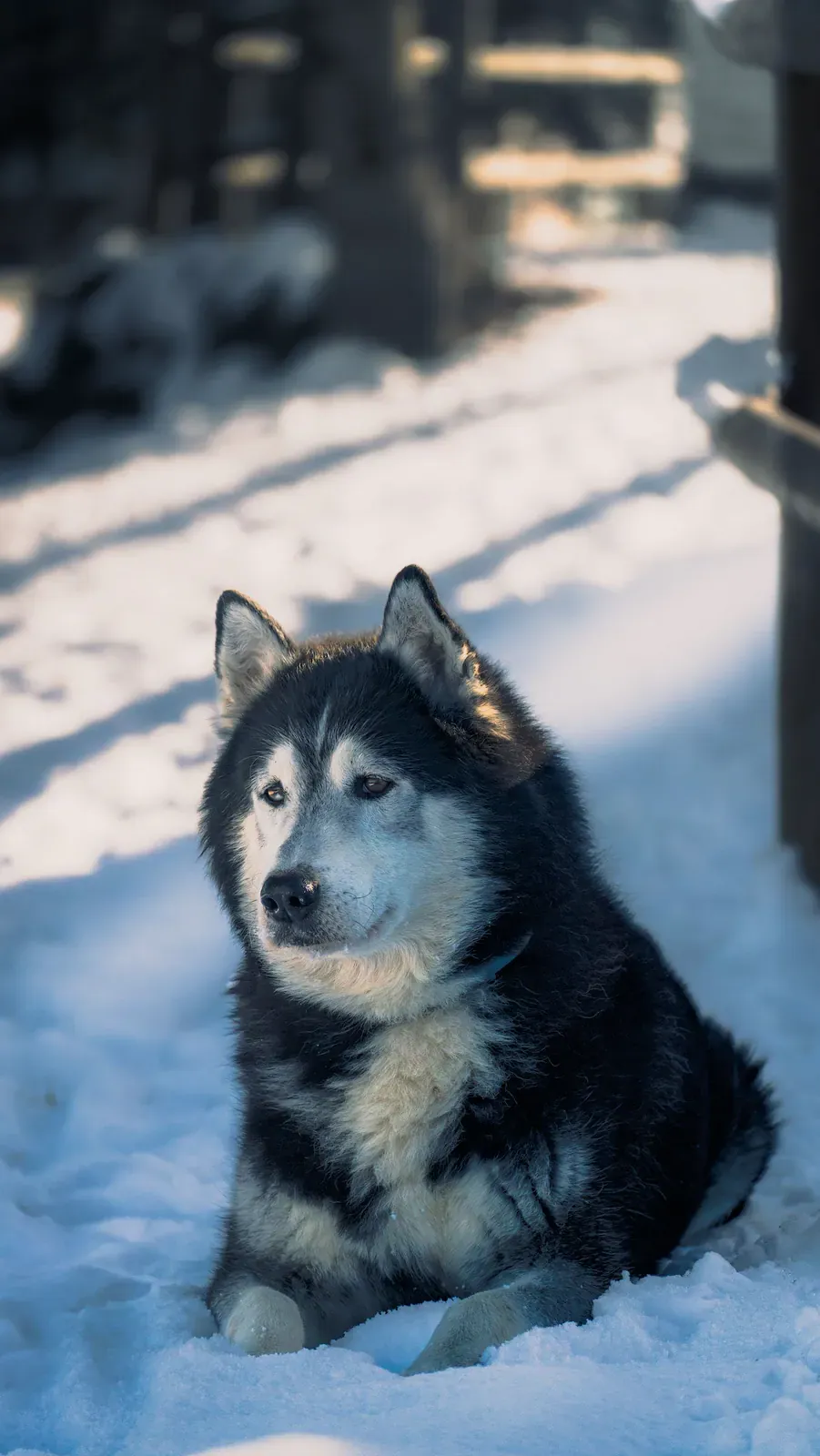
The thick double coat is made for cold. In warm weather Malamutes overheat easily. Keep exercise to cool hours, give shade and fresh water and never leave one in a parked car. Shaving the coat does not help: the undercoat insulates against heat as well as cold, and a shaved coat can grow back patchy.
 Save

Living with an Alaskan Malamute
 Related breedCentral Asian Shepherd Dog2000 BCE to 1990 · Turkmenistan, Uzbekistan, KazakhstanAncient World
| Daily reality | Rating | Why |
|---|---|---|
| Exercise per day | High | A working sled breed built to haul loads for hours; expect 1.5 to 2 hours or more of walking, running or pulling |
| Training needs | High | Strong, independent and strong-willed; early classes and steady routines |
| Grooming | Medium | A weekly brush most of the year, daily during the heavy seasonal coat blow |
| Shedding | High | Thick undercoat sheds in large clumps twice a year, and some all year |
| Barking | Low to medium | Not a big barker, but howls and talks |
| Time alone | Poor | A pack worker that bonds with people; bored dogs dig, chew and howl |
| Children | Fair | Playful and friendly, but large and strong; supervise small children |
| Other dogs | Fair | Often social, but dominance can arise between same-sex adults |
| Cats and small pets | Poor | Strong prey drive in many dogs; varies by individual |
| Flat living | Poor | A large, active dog with a big voice and big needs |
| Heat tolerance | Poor | Heavy double coat bred for cold |
| Cold tolerance | Good | Built for Arctic work |
| First-time owner fit | Fair | Friendly, but strength and independence need a committed owner |
A great fit if
- You love long walks, hikes, skijoring or weight pulling in cool weather.
- You have a secure garden with a high, dug-in fence, or can build one.
- You can work with an independent dog and enjoy its humour.
- You will happily vacuum, brush and clear fur every week.
Think twice if
- You live in a hot climate without strong air conditioning.
- You are out all day or want a dog that comes when called off lead in every setting.
- You keep cats, rabbits or other small pets.
- You want a guard dog; most Malamutes greet strangers.
Before you get one
- Health tests. Ask the breeder for hip scores, an NDRG1 polyneuropathy DNA result, an eye certificate and any other tests the parent club lists. Ask for the original certificates. Ask what they know of the pedigree for chondrodysplasia.
- Puppy or adult rescue. Malamute rescues exist in many countries and often place adults with known manners. See adopting a dog for how it works.
- First year. Plan puppy classes, secure fencing, calm exercise on soft ground for growing joints, and a lean body weight.
Similar breeds to consider
- Siberian Husky. A related Arctic breed, lighter and faster, with similar escaping and exercise needs.
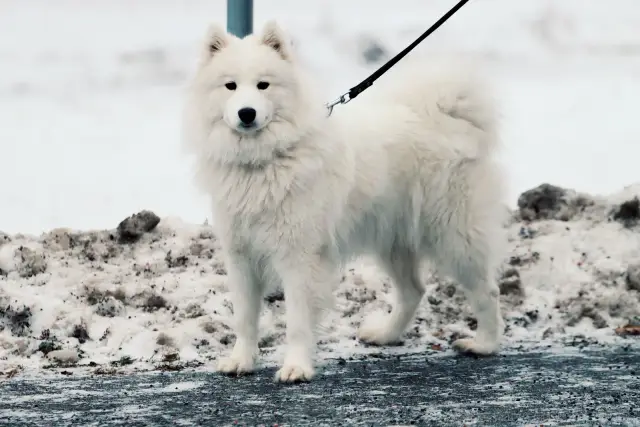
- Samoyed. A white Arctic spitz with a soft, social nature and a coat that needs a lot of brushing.
- Greenland Dog. The closest DNA relative; still a working sled dog, rarely kept as a pet.
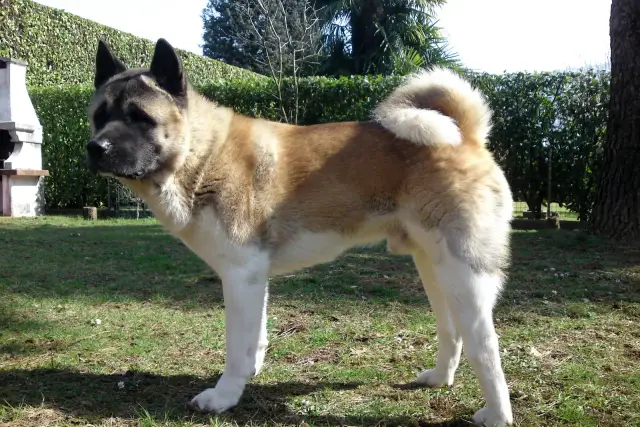
- Akita. A large spitz-type dog from Japan, also strong and independent but more reserved with strangers.
 Thinking of adopting?How to adopt a dog from a shelter or rescueHow to adopt a dog from a shelter or rescue: the process, costs in general terms, choosing a dog, the first weeks and what if it does not work out.Related breedCentral Asian Shepherd Dog2000 BCE to 1990 · Turkmenistan, Uzbekistan, KazakhstanAncient World
Alaskan Malamute fun facts
 Related breedDingo3000 BCE to 1500 BCE · AustraliaAncient World
- Alaska named the Alaskan Malamute its state dog in 2010, after school pupils asked the legislature to do so.
- Malamutes appear in breed histories on Byrd's Antarctic expeditions and in wartime Arctic rescue work.
- The Greenland Dog shares 282.7 Mb of DNA with the Malamute in Parker 2017, nearly three times the figure for the Siberian Husky (99.3 Mb).
- The M'Loot line gets its name from Paul Voelker's kennel, a different spelling from the people called Mahlemiut.
Frequently asked questions
Are Alaskan Malamutes good family dogs?
Many are friendly and playful, but they are large and strong. Supervise small children and plan for exercise and training.
How big is an Alaskan Malamute?
About 64 cm and 38 kg for dogs, and about 58 cm and 34 kg for bitches in the , and UK Kennel Club standards. Many pet dogs weigh more.
How long do Malamutes live?
The atlas data gives 10 to 14 years. A UK survey reports a median of about 10 years 8 months.
What is the difference between a Malamute and a Siberian Husky?
The Malamute is larger and heavier and was bred for freight; the Siberian Husky is lighter and was bred for speed over long distance. Parker 2017 puts both in the Asian Spitz family.
Do Alaskan Malamutes shed a lot?
Yes. The thick undercoat sheds heavily, especially in the seasonal coat blow, and needs regular brushing.
Can a Malamute live in a hot climate?
It can with careful management: cool hours for exercise, shade, water and air conditioning. The breed is not a good match for most hot places.
Are Malamutes aggressive?
The standard describes a friendly dog. Dominance between same-sex adult dogs and prey drive towards small animals are the usual concerns, not aggression to people.
Read next
 Closest DNASiberian Husky99.3 Mb sharedFamilyAsian SpitzThe whole family
 Adopt a dogDog Shelters in EuropeFind dog shelters in Europe, learn how shelters differ from country to country and why adopting a dog is a good option.
Sources (16)
- Alaskan Malamute Club of America (AMCA), breed history and chondrodysplasia pages.
- Alaskan Malamute Club of Victoria (Australia), health and hip dysplasia information.
- American Kennel Club, Alaskan Malamute breed standard and history articles.
- AKC Canine Health Foundation, grant 01901-A, "Identifying the Gene Responsible for Dwarfism in Malamutes".
- Adams V.J. et al., "Methods and mortality results of a health survey of purebred dogs in the UK", Journal of Small Animal Practice, 2010 (Malamute median as reported in a veterinary clinic summary of UK longevity studies).
- Bruun C.S. et al., "A Gly98Val mutation in the N-Myc downstream regulated gene 1 (NDRG1) in Alaskan Malamutes with polyneuropathy", PLoS ONE, 2013.
- Acta Veterinaria Scandinavica, 2017, study of Scandinavian Alaskan Malamutes with NDRG1 polyneuropathy.
- Fédération Cynologique Internationale, Alaskan Malamute, standard no. 243.
- Parker H.G. et al., "Genetic structure of the purebred domestic dog", Science, 2004.
- Parker H.G. et al., "Genomic analyses reveal the influence of geographic origin, migration, and hybridization on modern dog breed development", Cell Reports, 2017.
- Sinding M.S. et al., "Arctic-adapted dogs emerged at the Pleistocene-Holocene transition", Science, 2020.
- Skoglund P. et al., "Ancient wolf genome reveals an early divergence of domestic dog ancestors and admixture into high-latitude breeds", Current Biology, 2015.
- The Kennel Club (UK), Alaskan Malamute breed standard.
- VIN (Veterinary Information Network), analysis of OFA hip dysplasia database, Alaskan Malamute evaluations by period.
- Alaska State Legislature committee materials on the state dog designation (2009 to 2010).
- Dogs Atlas breed records and Parker 2017 shared-haplotype table (this site).