What are Nordic spitz breeds?
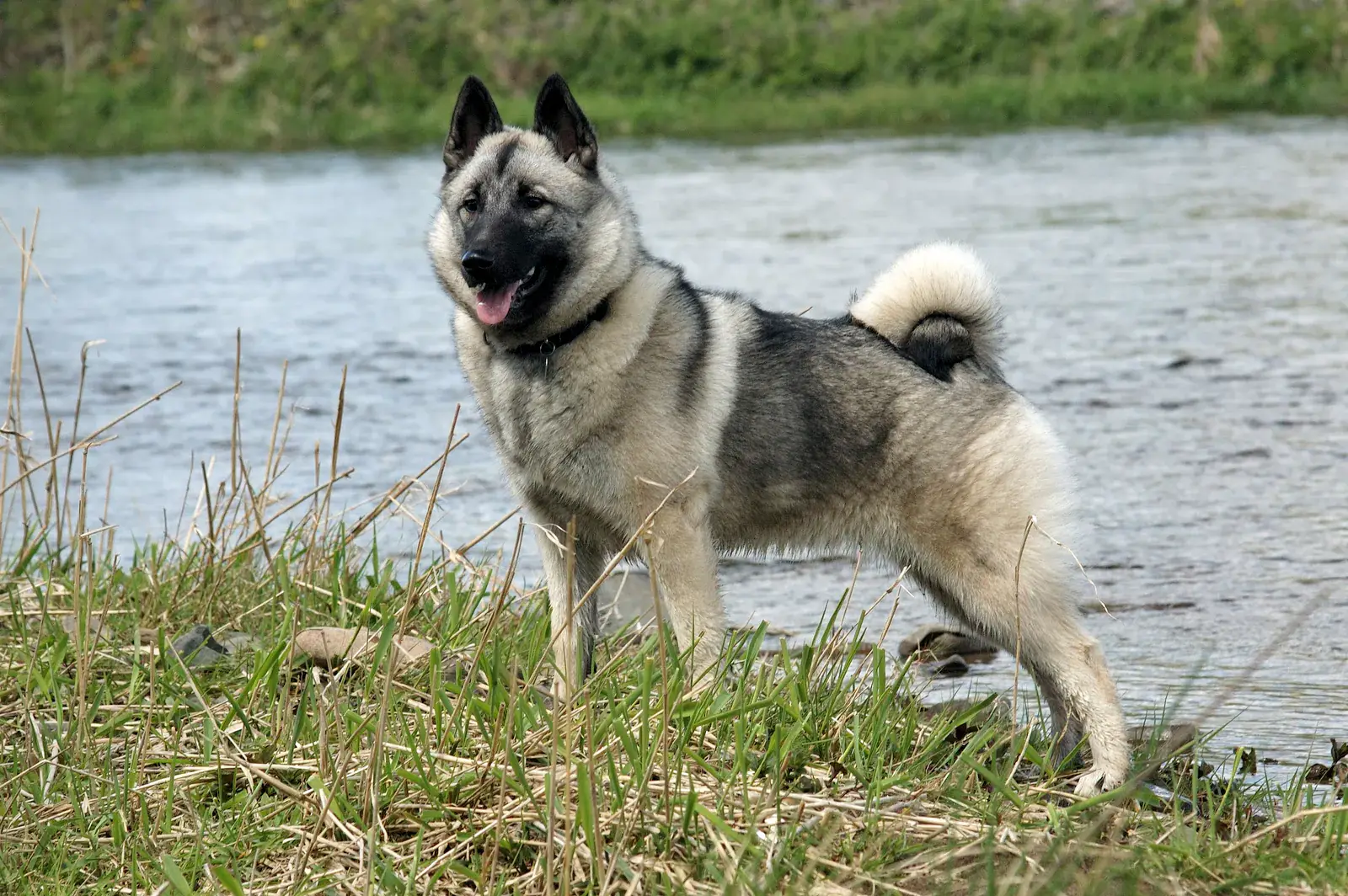
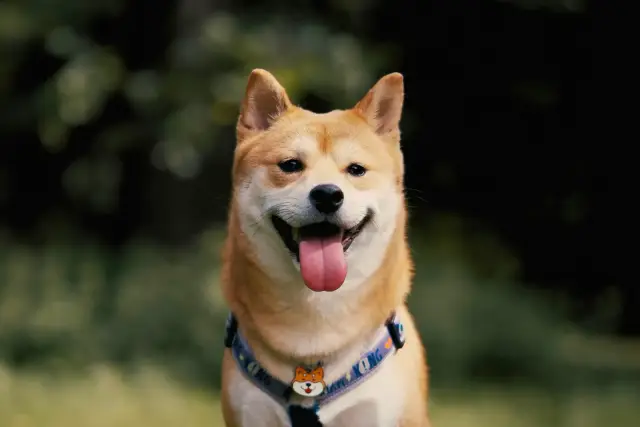
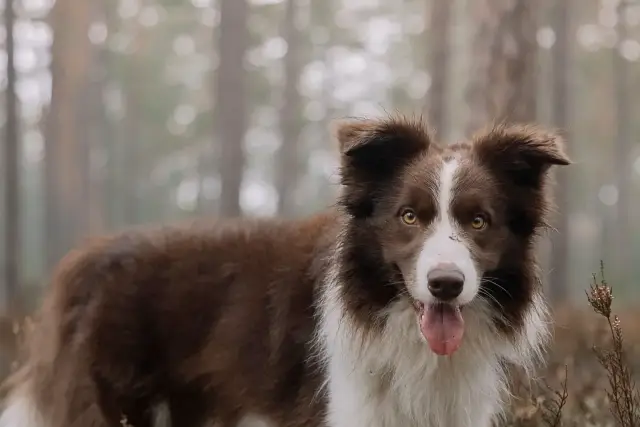
Nordic spitz breeds are the hunting and herding dogs of Norway, Sweden, Finland and Iceland, plus a few cousins that travelled south. Most have prick ears, a curled tail and a thick double coat. They were bred to find moose, grouse and bears, to herd reindeer and sheep, or to guard farms, and many of them use their voice as a tool.
 GuideBest dog breeds for familiesBest dog breeds for families, small homes, allergies, first-time owners and seniors, ranked from our breed ratings, with honest limits and a table.
In this atlas, the Nordic Spitz family is a group of 19 breeds that share DNA and history. It is a genetic family, not a kennel club "group". The Keeshond and the American Eskimo Dog are here, and so are a puffin hunter with six toes and a herder that no longer exists. This page explains who belongs, why, and how the breeds are tied together.
Quick facts about the Nordic Spitz family
| Fact | Answer |
|---|---|
| Family type | Genetic clade (Parker et al. 2017) |
| Parent | European dogs |
| Breeds in this atlas | 19 (18 living, 1 extinct) |
| Breeds with DNA tested in the study | 6 |
| Main homelands | Finland (5) and Sweden (5), then Norway (4) |
| Typical size | Medium (13 of 19). Also 5 small and 1 large |
| Core jobs | Hunting elk and game birds, herding, guarding |
| Shared look | Prick ears, curled tail, dense double coat |
| Shared temperament | Alert, vocal, independent, loyal to their people |
 GuideBanned and restricted dog breeds by countryWhich dog breeds are banned or restricted, country by country: UK, Ireland, France, Germany, Denmark, Norway, Spain, Australia and more.
Family or group: what is the difference?
In this atlas, "family" always means a DNA clade, a branch of the family tree found by comparing genomes. "Group" is used only for kennel club groups such as the AKC Herding Group or FCI Group 5, which holds spitz and primitive types.
 GuideSmartest dog breeds: what the rankings measure and what they missCoren's smartest dog breeds list, what it measured, what newer dog cognition research says, three kinds of dog intelligence and why smart dogs need work.
The two do not match. Kennel clubs sort dogs by type and job. DNA sorts them by shared ancestry. Six of our 19 breeds were sampled by Parker et al. (2017): the Norwegian Elkhound, Finnish Spitz, Swedish Vallhund, Icelandic Sheepdog, Keeshond and American Eskimo Dog. They fall into one Nordic Spitz clade with strong support. The other 13 are placed here by written history and by looks, so they are best estimates. In the table below, the first six rows are DNA-tested and the rest are placed by history.
Where do Nordic spitz breeds come from?
From the forests and fells of northern Europe, where people needed dogs that worked in snow and cold.
 GuideDogs in Legends and Fairy TalesDogs in folklore and fairy tales: Black Shuck, The Tinderbox, Saint Guinefort, Panhu, Greyfriars Bobby, Barry and Old Drum, with legend and history kept apart.
The atlas gives dates for the oldest types, and they are rough. The Norwegian Elkhound is placed in the period 2000 BCE to 1877 and the Finnish Spitz from 1000 BCE to 1892, which means the type is old and the modern breed is not. The Icelandic Sheepdog is dated from 874 CE, the traditional year Norse settlers began to arrive in Iceland with their dogs.
The family sits under European dogs in our tree. That matters for one common question. The sled and spitz breeds of the far north, such as the Siberian Husky, Alaskan Malamute and Samoyed, sit in a different branch, Asian Spitz, under Arctic dogs. Nordic spitz look like their cousins but belong to a European branch. There is one DNA bridge in the study: the American Eskimo Dog shares 14.4 Mb with the Samoyed, a hint of the mixing that happens between spitz types.
Why are they called Nordic spitz?
"Nordic" is the region. "Spitz" is a German word for a pointed muzzle and ears, and the name is now used for the whole prick-eared, curly-tailed type. The family label in this atlas comes from the Parker study clade, which is called Nordic Spitz.
 GuideDogs in myth around the worldFrom Anubis and Cerberus to Fenrir, Xolotl and the Tiangou: how cultures across the world imagined dogs as guardians, guides and monsters.
Breed names carry stories too. The Norwegian Elkhound's "elk" is the European elk, called moose in North America. In Norwegian, elg means moose. The Finnish Spitz is suomenpystykorva in Finnish, "Finnish prick-ear". The Finnish Lapphund is named for Lapland and the Sámi reindeer herders. The Hällefors Elkhound is named for the Swedish town of Hällefors. The American Eskimo Dog was renamed from "American Spitz" in 1917, to drop German associations during the First World War.
What is the history of Nordic spitz breeds?
 GuideDog laws by country: tax, insurance and licencesDog tax, compulsory liability insurance, licences, microchips and leash rules in Germany, Austria, Switzerland, Spain, Ireland, the UK, the US and more.
Before 1800: working dogs without studbooks
Hunters and herders kept local dogs and bred the ones that worked. At Viste Cave in Norway, remains of two dogs with skeletons similar to present Elkhounds are reported from about 5000 to 4000 BCE (Norwegian Elkhound Association of America history; the first identification is credited to Professor Brinchmann of the Bergen Museum). That shows spitz-type dogs lived in Norway very early. It does not prove a straight line to today's Elkhound. Popular claims that Elkhound bones lie in Viking graves are repeated widely, but the excavation they come from is not documented.
The Icelandic Sheepdog came with Norse settlers and herded sheep and ponies. The Keeshond appears from about 1700. Breed histories link it to the Dutch Patriot movement of the 1780s and a leader named Kees de Gyselaer. That story is not documented, so treat it as legend.
1800 to 1900: shows and first standards
- 1877. The first benched dog show in Norway had 124 hunting dogs, including 15 Elkhounds (Norwegian Elkhound Association of America). A second show followed in 1880. The Elkhound standard grew out of these events.
- 1892. A "Finnish barking bird dog" was entered in the pedigree book of the Finnish Kennel Club. Breed characteristics drafted by the forester Hugo Richard Sandberg were approved, and the name Finnish Spitz was confirmed with a new standard in 1897 (Finnish Kennel Club; Finnish Spitz Society).
- 1899 to 1900. The Norsk Dyrehundklub was founded in 1899. The 1900 show was the first with separate classes for grey and black Elkhounds. The atlas lists the Black Norwegian Elkhound from the same period.
1900 to 1960: breeds saved and made
- 1900s. German Spitz brought by European immigrants became the base of the American Eskimo Dog. The name was set in 1917.
- 1920s. The Keeshond was recognised in the Netherlands and Britain in the 1920s. The atlas dates its breed formation from 1926.
- 1930s. The Lapponian Shepherd was made from Finnish Lapphunds taken to southern Finland and crossed with the Karelian Bear Dog. It is the one extinct member of the family.
- 1940s. Several Nordic breeds were recognised or rebuilt after the war, among them the Swedish Vallhund (the atlas: 1943), the Norwegian Lundehund (1943), the Jämthund (1946), the Karelian Bear Dog (1946) and the Russo-European Laika (1949).
1960 to today: rescue and recovery
- 1960s. The Icelandic Sheepdog had become very rare. Sources disagree on why, naming dog taxes, a ban on imports and distemper epidemics. The English enthusiast Mark Watson exported breeding stock to Britain and California, and Icelandic breeders began a programme in the mid-1960s. The Icelandic Kennel Club was set up in 1969. The breed joined the AKC Herding Group in 2010.
- 1980s onward. The Karelo-Finnish Laika (the atlas: 1984) and the Hällefors Elkhound (finished about 2000) are the newest members. The Finnish Spitz became Finland's national dog in 1979.
Who are the members of the Nordic Spitz family?
Here are all 19 breeds. The 6 breeds with DNA tested in the study come first. The other 13 are placed by history and are hidden until you choose to show all 19. "Appeared" is the period in which the breed or type is first documented, and some dates are rough. Only breeds with an article in this atlas are linked.
 GuideIs your dog suited to therapy work?How to make your dog a therapy dog: temperament checklist, first training steps, how Pet Partners, TDI and Pets As Therapy assess dogs, and welfare limits.
| Breed | Country | Status | Size | Appeared | DNA-tested |
|---|---|---|---|---|---|
| Norwegian Elkhound | Norway | Living | Medium | 2000 BCE to 1877 | Yes (Parker 2017) |
| Finnish Spitz | Finland | Living | Medium | 1000 BCE to 1892 | Yes (Parker 2017) |
| Swedish Vallhund | Sweden | Living | Small | 800 CE to 1943 | Yes (Parker 2017) |
| Icelandic Sheepdog | Iceland | Living | Medium | 874 CE to 1969 | Yes (Parker 2017) |
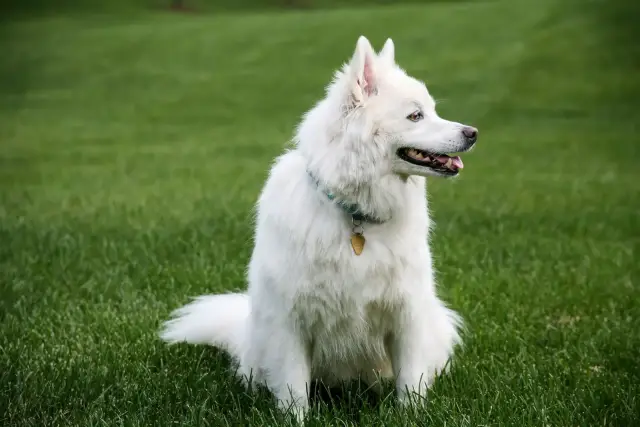
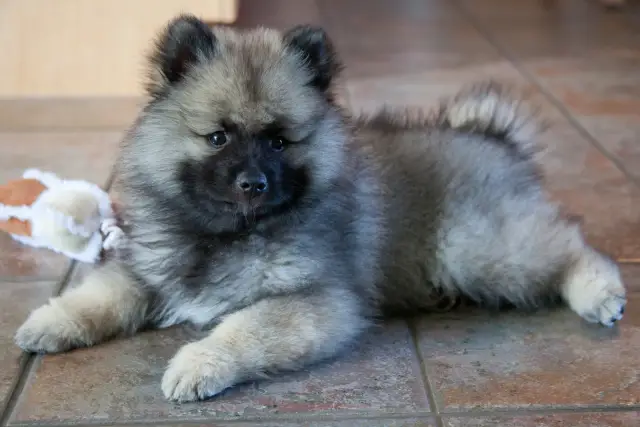
| Keeshond | Netherlands, Germany | Living | Medium | 1700 to 1926 | Yes (Parker 2017) |
| American Eskimo Dog | United States | Living | Small | 1900 to 1917 | Yes (Parker 2017) |
| Finnish Lapphund | Finland | Living | Medium | 1000 BCE to 1945 | By history |
| Swedish Lapphund | Sweden | Living | Medium | 500 CE to 1944 | By history |
| Norwegian Buhund | Norway | Living | Medium | 800 CE to 1920 | By history |
| Norwegian Lundehund | Norway | Living | Small | 1500 to 1943 | By history |
| Karelian Bear Dog | Finland | Living | Medium | 1600 to 1946 | By history |
| Karelo-Finnish Laika | Russia | Living | Small | 1600 to 1984 | By history |
| Black Norwegian Elkhound | Norway | Living | Medium | 1800 to 1900 | By history |
| Jämthund | Sweden | Living | Large | 1800 to 1946 | By history |
| Norrbottenspets | Sweden | Living | Small | 1800 to 1967 | By history |
| Hällefors Elkhound | Sweden | Living | Medium | 1900 to 2000 | By history |
| Lapponian Herder | Finland | Living | Medium | 1900 to 1966 | By history |
| Lapponian Shepherd | Finland | Extinct | Medium | 1900 to 1960 | By history |
| Russo-European Laika | Russia | Living | Medium | 1920 to 1949 | By history |
Who descends from whom, and which ties are strongest?
Two kinds of evidence are used here. One is written history: what breeders say they crossed. The other is DNA: how many megabases (Mb, millions of DNA letters) two breeds share in matching stretches. A larger number means a closer shared ancestry, though it can also reflect a recent split or crossing.
 GuideDogs in science and spaceSpace dogs Laika, Belka and Strelka, Pavlov's dogs, Snuppy the clone, the dog genome and scent detection: what dogs did for science, and what it cost them.
The strongest ties of the Nordic Spitz breeds in the study, as recorded:
| Pair | Shared DNA (Mb) | What it tells us |
|---|---|---|
| Keeshond and Eurasier | 36.7 | The Eurasier was built from the Wolfspitz, the German name for the Keeshond |
| Keeshond and Swedish Vallhund | 16.0 | Two northern spitz of medium and small size |
| Keeshond and Pomeranian | 15.1 | Close spitz cousins of different sizes |
| American Eskimo Dog and Icelandic Sheepdog | 14.6 | A shared northern spitz background |
| American Eskimo Dog and Samoyed | 14.4 | A tie across two families |
| Icelandic Sheepdog and Swedish Vallhund | 13.8 | Both are old Nordic farm herders |
| Icelandic Sheepdog and Keeshond | 12.4 | Both are in the clade, a more distant tie |
Source: Parker et al. 2017, Cell Reports, shared haplotypes between 161 breeds (1,346 dogs).
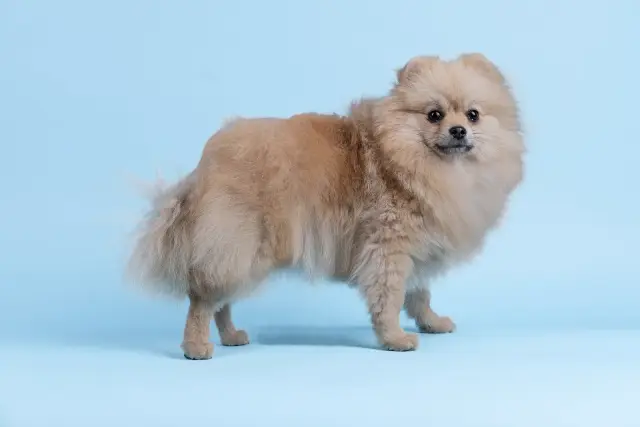
The Keeshond appears in many of the best matches. It is a Dutch and German dog by name, yet it fits here by DNA, and FCI treats it as a variety of the German Spitz, which the atlas places in the Small Spitz family. See Small Spitz.
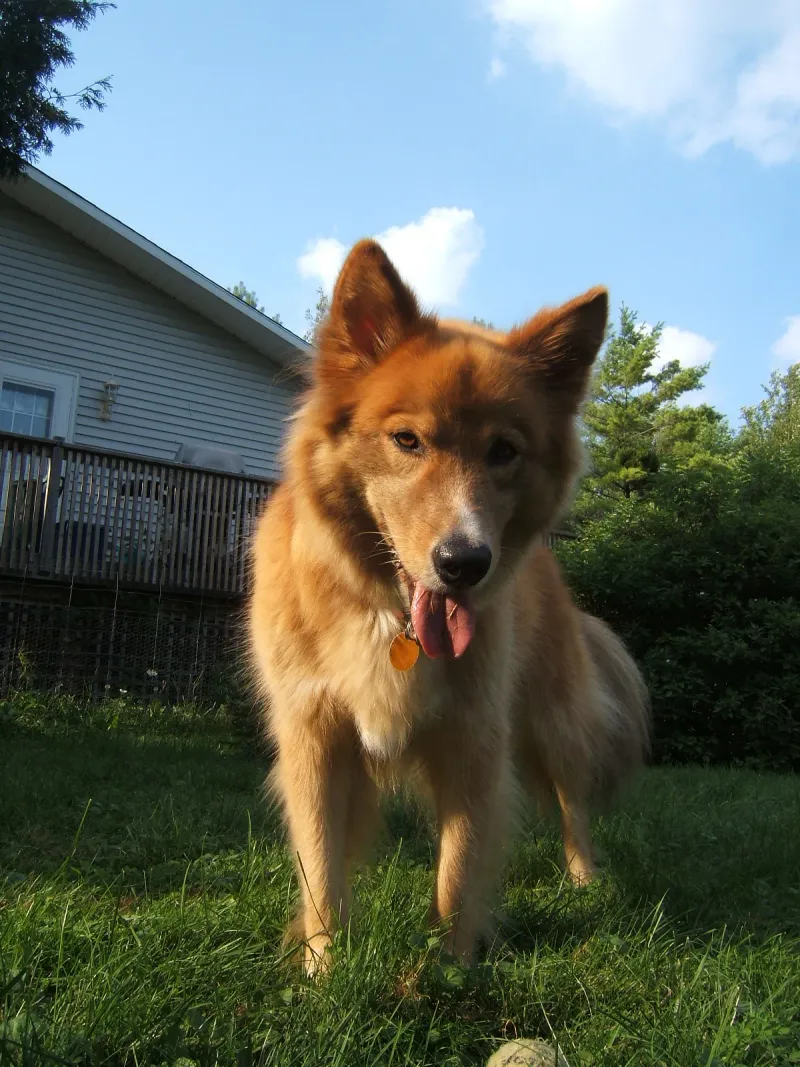
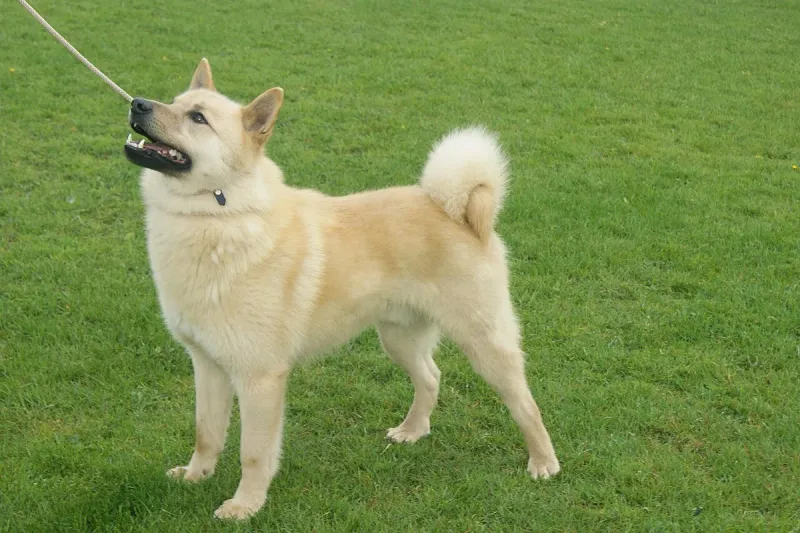
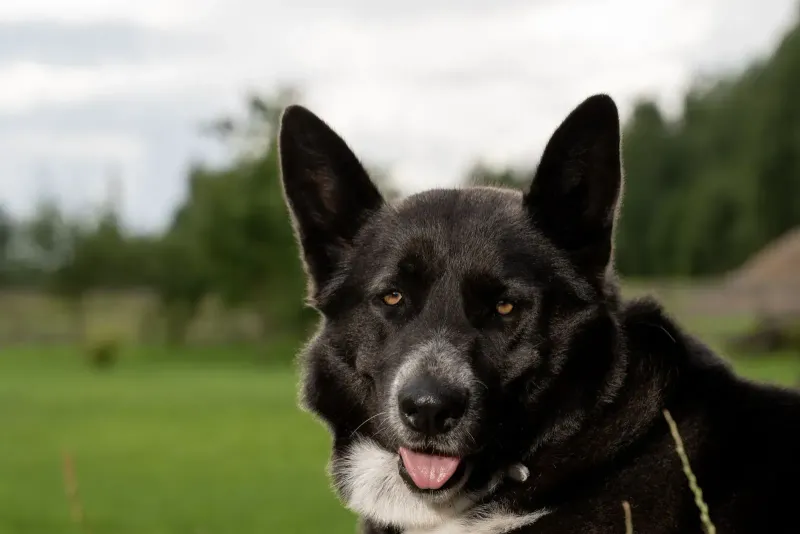
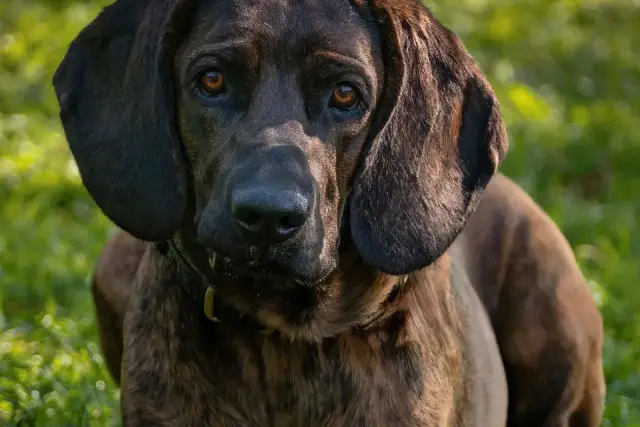
In the written record, a few breeds clearly come from others. The Karelo-Finnish Laika was once one breed with the Finnish Spitz and later split. The Hällefors Elkhound goes back to the Finnish Spitz and to the Ostyak Laika, a type the atlas holds in the Asian Spitz family. The Lapponian Shepherd was made from the Finnish Lapphund and the Karelian Bear Dog. The American Eskimo Dog descends from German Spitz, with Keeshond, Pomeranian and Volpino Italiano blood reported at low confidence.
 Karelo-Finnish Laikaonce one breed with the Finnish Spitz
 Hällefors Elkhoundalso Ostyak Laika
 Karelian Bear Dogother parent of the Lapponian ShepherdKarelo-Finnish Laikaonce one breed with the Finnish SpitzHällefors Elkhoundalso Ostyak LaikaKarelian Bear Dogother parent of the Lapponian Shepherd
What do Nordic spitz breeds have in common?
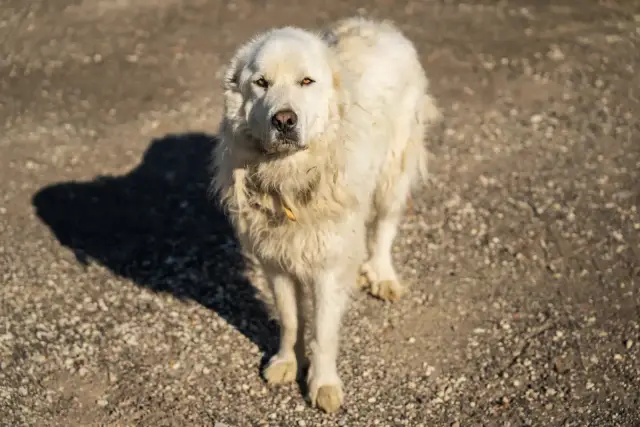
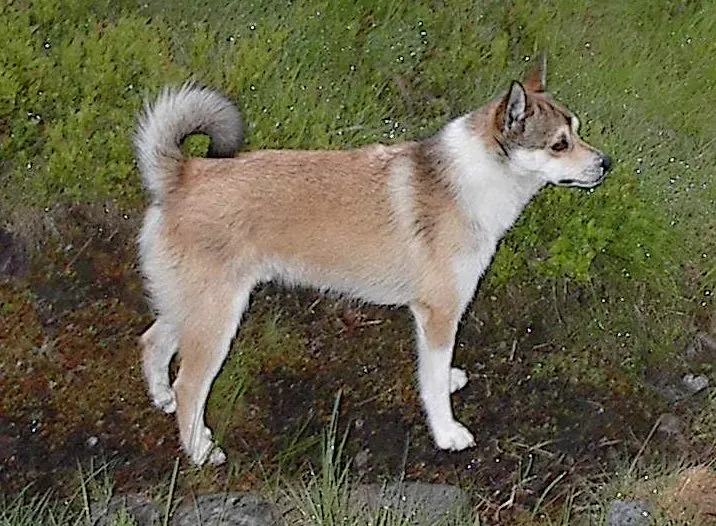
Look. Prick ears, a tail curled over the back, a dense double coat, and a wedge-shaped head. Most are medium sized. The Jämthund is the one large breed.
 GuideLivestock guardian dogs: what they do and who they suitWhat livestock guardian dogs do, how they differ from herding dogs, 40 LGD breeds by country, the DNA evidence, and whether they make good pets.
Hunting by voice. Several members find game and then bark. The Finnish Spitz is called a bark pointer. It follows a bird until it settles in a tree, then barks and sways its tail while the hunter walks up (Finnish Spitz Society). It is still used in Finland for capercaillie and black grouse. The Elkhound holds a moose at bay with its barking.
Herding. The Icelandic Sheepdog, Swedish Vallhund, Norwegian Buhund and the Lapphunds were herders. The Lapphunds worked reindeer for the Sámi.
Temperament. Alert, vocal, and bonded to their people, with a stubborn streak. A dog bred to bark at game will bark at the postman too. Early training and enough exercise help.

What health issues are linked to Nordic spitz breeds?
Most Nordic spitz live healthy lives, and several have long lifespans, around 12 to 15 years. Health depends on the breed, not on the family, so only a few well-documented examples are given.
 GuideHow to get an assistance dogHow to get a service dog or assistance dog in the USA, UK, Germany, France, Spain, Italy and the Netherlands: accredited schools, waits, owner-training and travel.
- Lundehund syndrome. The Norwegian Lundehund is prone to a group of gut problems that includes protein-losing enteropathy, where the gut loses protein it should keep. A genome study (Metzger, Pfahler and Distl 2016, BMC Genomics) found a region on chromosome 34 and a gene variant, in LEPREL1, linked to it. No peer-reviewed survey of how common it is exists. A research project page from the Institute of Canine Biology puts it near 2 in 5 dogs, but it does not say how that number was reached. What helps: choose breeders who follow the breed club's health advice, and talk to a vet about diet and early signs such as diarrhoea and weight loss.
- A very small gene pool. The Lundehund passed through at least two severe bottlenecks, in the 1940s and 1960s, partly caused by canine distemper. A pedigree study (Kettunen et al. 2017, PLoS ONE) found the breed had lost 38.8 percent of the diversity of its base population, with an effective population size between 13 and 82. The authors concluded that outcrossing is needed. The outcross programme uses three Nordic breeds from this family, the Norwegian Buhund, Icelandic Sheepdog and Norrbottenspets.
- Elkhound health lists. Veterinary breed guides list hip dysplasia, hypothyroidism, skin cysts, Fanconi syndrome (a kidney problem) and eye conditions including progressive retinal atrophy and glaucoma. These are lists of conditions seen, not prevalence figures. No Elkhound study with numbers has been published. The Norwegian Elkhound Association of America takes part in the Canine Health Information Center programme, which lists the screening tests breeders do.
- Weight and joints. For the thick-coated medium breeds, a lean body and checked hips and knees are sensible for any owner. Ask the breed club which tests apply.
Ask a vet or the breed club which tests apply to the breed before choosing a puppy.
 Save
Which Nordic Spitz breeds are extinct?
One. The Lapponian Shepherd was made in the 1930s in southern Finland, from Finnish Lapphunds crossed with the long-haired Karelian Bear Dog. It was dated by the atlas to 1900 to 1960 and is now gone as a separate breed. Its herding work is carried on by the Lapponian Herder and the Finnish Lapphund, which are still living.
 GuideService, therapy and emotional support dogs: what's the difference?Service dog vs emotional support dog vs therapy dog: the real differences, your rights in the USA and Europe, and why online certificates mean nothing.
 ArticleThe first known dog on every continentEarliest accepted dog on each continent, from Bonn-Oberkassel to the dingo: dates, sites, how dogs arrived and which breeds carry those first dogs.GuideService, therapy and emotional support dogs: what's the difference?Service dog vs emotional support dog vs therapy dog: the real differences, your rights in the USA and Europe, and why online certificates mean nothing.
Are there surprises in the Nordic Spitz family?
- Arctic sled breeds are not here. The Husky, Malamute and Samoyed look like northern dogs, yet the atlas places them in Asian Spitz. See Asian Spitz and Arctic dogs.
- The Keeshond is a spitz that DNA sorts with the north. It has a German name for its type, yet clusters with Nordic breeds.
- An American breed with German roots. The American Eskimo Dog fits the clade by DNA even though it was built in the United States from German Spitz.
- A hunter that bends backwards. The Lundehund has a very flexible neck and extra toes for climbing cliffs after puffins (breed standard).
- A surprising tie. The Icelandic Sheepdog shares 12.3 Mb with the Toy Manchester Terrier. That looks odd, and we read it as shared background in the sample, not as a crossing.
 GuideHow to adopt a dog from a shelter or rescueHow to adopt a dog from a shelter or rescue: the process, costs in general terms, choosing a dog, the first weeks and what if it does not work out.
 ArticleDog Breed Family Tree: How All Dog Breeds Are RelatedThe dog breed family tree from Ice Age wolves to 29 breed families.GuideHow to adopt a dog from a shelter or rescueHow to adopt a dog from a shelter or rescue: the process, costs in general terms, choosing a dog, the first weeks and what if it does not work out.
What does research say about Nordic spitz breeds?
- Parker et al. (2017, Cell Reports) sampled the six DNA-tested breeds and grouped them into one clade.
- Kettunen et al. (2017, PLoS ONE) studied the Lundehund pedigree and showed how narrow the gene pool is.
- Metzger, Pfahler and Distl (2016, BMC Genomics) searched the Lundehund genome for the cause of its gut syndrome.
- A 2023 study in Frontiers in Microbiology sampled gut bacteria of 75 dogs, purebred Lundehunds and crosses with the Buhund. It linked gut bacteria patterns to the dog's genetics and to the high rate of the syndrome.
 Family storyAlpineRead the family's story: origins, members, DNA

Which Nordic Spitz breed suits which owner?
This is a guide to temperament, not a promise for any single dog.
 Family storyAmerican Cur & FeistRead the family's story: origins, members, DNA
- Active outdoor owners. The Norwegian Elkhound and Finnish Spitz love long walks in any weather. Both are vocal.
- Families with a small home. The Swedish Vallhund and American Eskimo Dog are compact and lively. They shed.
- Herding fans. The Icelandic Sheepdog and Finnish Lapphund are friendly and trainable. The Lapphund is known for a sociable nature.
- People who want a calm companion. The Keeshond is traditionally a family dog and watchdog, not a worker.
- Experienced owners only. The Karelian Bear Dog and Jämthund were bred for big game, and they need firm, confident handling.
- Collectors of rare breeds. The Lundehund, Norrbottenspets and Hällefors Elkhound are uncommon, and buyers should expect waiting lists.

Fun facts about Nordic spitz breeds
- The Finnish Spitz is Finland's national dog, named so in 1979.
- The Norwegian Elkhound dates its modern breed to a show in 1877 with 15 Elkhounds.
- The Lundehund was a puffin hunter on the Norwegian coast and can close its ear canals.
- The American Eskimo Dog was renamed in 1917 during the First World War.
- Norwegian Elkhound, Black Norwegian Elkhound and Jämthund are three separate elk hunters from three regions.
 Family storyAmerican TerrierRead the family's story: origins, members, DNA

Related families
- European dogs: the parent of the Nordic Spitz family.
- Small Spitz: German Spitz, Pomeranian and Eurasier, close cousins of the Keeshond.
- Asian Spitz: Siberian Husky, Alaskan Malamute, Samoyed and the Laikas.
- Arctic dogs: the older lineage of sled and polar spitz.
- dog family tree: see where every family sits.
 Family storyAmerican ToyRead the family's story: origins, members, DNA

Frequently asked questions
What are the Nordic spitz breeds?
In the atlas: Norwegian Elkhound, Black Norwegian Elkhound, Jämthund, Finnish Spitz, Karelian Bear Dog, Karelo-Finnish Laika, Finnish Lapphund, Swedish Lapphund, Swedish Vallhund, Norwegian Buhund, Norwegian Lundehund, Icelandic Sheepdog, Norrbottenspets, Hällefors Elkhound, Lapponian Herder, Russo-European Laika, Keeshond, American Eskimo Dog and the extinct Lapponian Shepherd.
Is a Husky a Nordic spitz?
Not in the atlas. The Siberian Husky sits in Asian Spitz, in the Arctic lineage. See Siberian Husky.
What is a bark pointer?
A dog that finds game and signals its place by barking, instead of freezing in a point. The Finnish Spitz is the best known.
Is the Keeshond a Nordic dog?
It was developed in the Netherlands, and DNA places it with the Nordic spitz.
Are Nordic spitz good family dogs?
Many are, with exercise, training and tolerance for noise and shedding.
Why is the Lundehund so rare?
It lost most of its population to distemper in the mid 1900s, and all living dogs come from a very small group (Kettunen et al. 2017).
How long do Nordic spitz live?
Breed sources give 12 to 15 years for most, though it depends on the breed.
Read next
 Family storySchnauzerRead the family's story: origins, members, DNA
 Family storyArctic dogsRead the family's story: origins, members, DNA
 Family storyPinscherRead the family's story: origins, members, DNA
Sources (9)
- Parker, H. G., et al. (2017). Genomic analyses reveal the influence of geographic origin, migration, and hybridization on modern dog breed development. Cell Reports, 19(4), 697 to 708.
- Kettunen, A., Daverdin, M., Helfjord, T., Berg, P. (2017). Cross-breeding is inevitable to conserve the highly inbred population of puffin hunter Norwegian Lundehund. PLoS ONE.
- Metzger, J., Pfahler, S., Distl, O. (2016). Variant detection and runs of homozygosity in next generation sequencing data elucidate the genetic background of Lundehund syndrome. BMC Genomics.
- Frontiers in Microbiology (2023). Gut microbiome dysbiosis is associated with host genetics in the Norwegian Lundehund.
- Norwegian Elkhound Association of America, illustrated guide and breed history.
- Finnish Kennel Club and Finnish Spitz Society, breed history pages.
- Institute of Canine Biology, Norwegian Lundehund project page.
- Fédération Cynologique Internationale, breed standards for the Norwegian Elkhound Grey (242), Finnish Spitz (49), Icelandic Sheepdog (289) and Norwegian Lundehund (265).
- Breed records in the atlas data (Dogs Atlas, internal data).