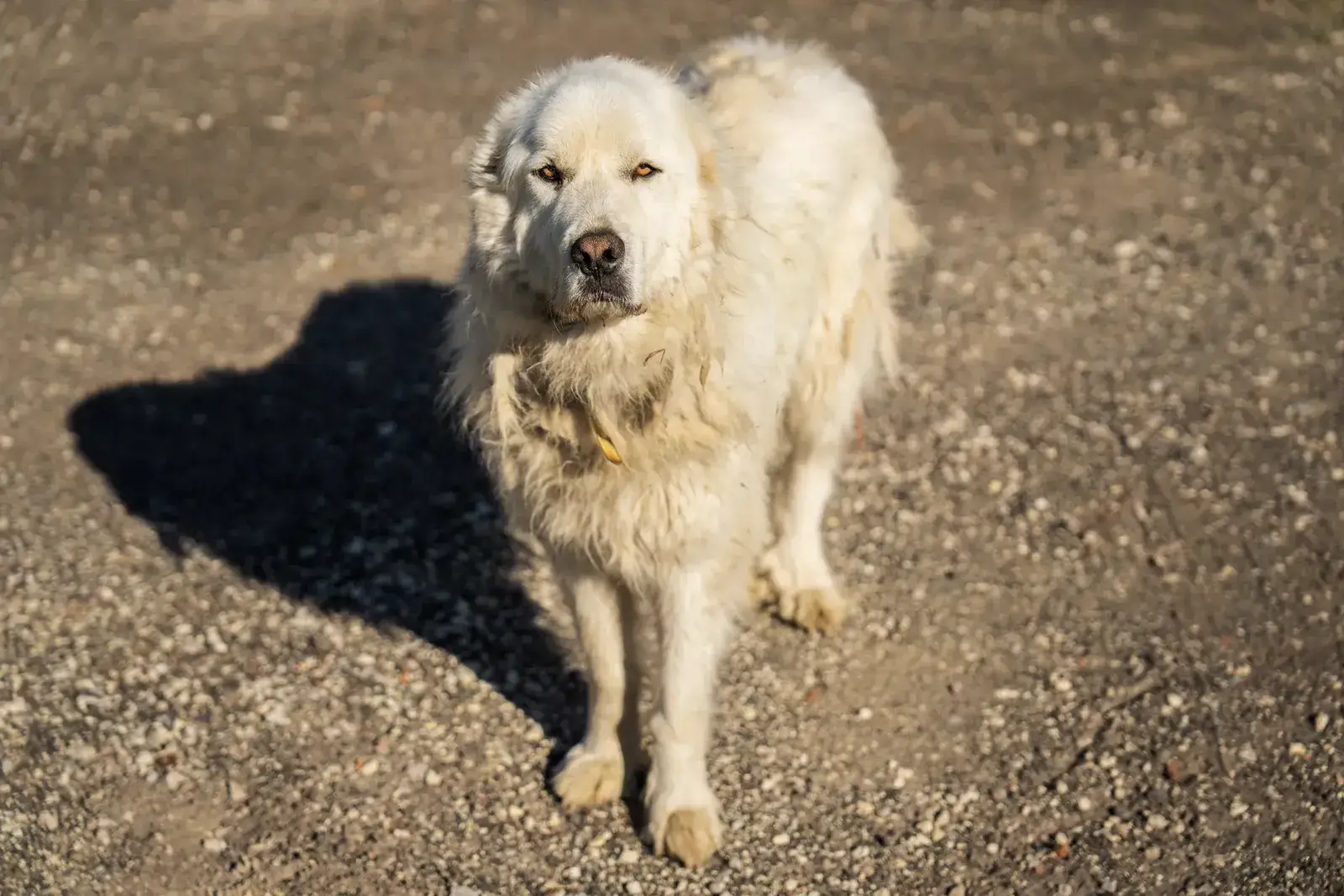
They do not chase, gather or drive animals the way a herding dog does. They stay with the animals, treat them as their own group, and put themselves between the flock and anything that looks like a threat. Famous examples include the Kangal Shepherd Dog, the Pyrenean Mountain Dog (Great Pyrenees), the Komondor, the Maremmano-Abruzzese Sheepdog and the Caucasian Shepherd Dog.
This guide explains how a flock guardian dog works, how it differs from a herding dog, where these dogs come from, how they are used today to protect cheetahs, wolves and bears, and why most of them are a hard fit for a pet home. It also lists the 40 guardian breeds in our knowledge base and is honest about the DNA picture: only 5 of them have been tested.
How livestock guardian dogs work
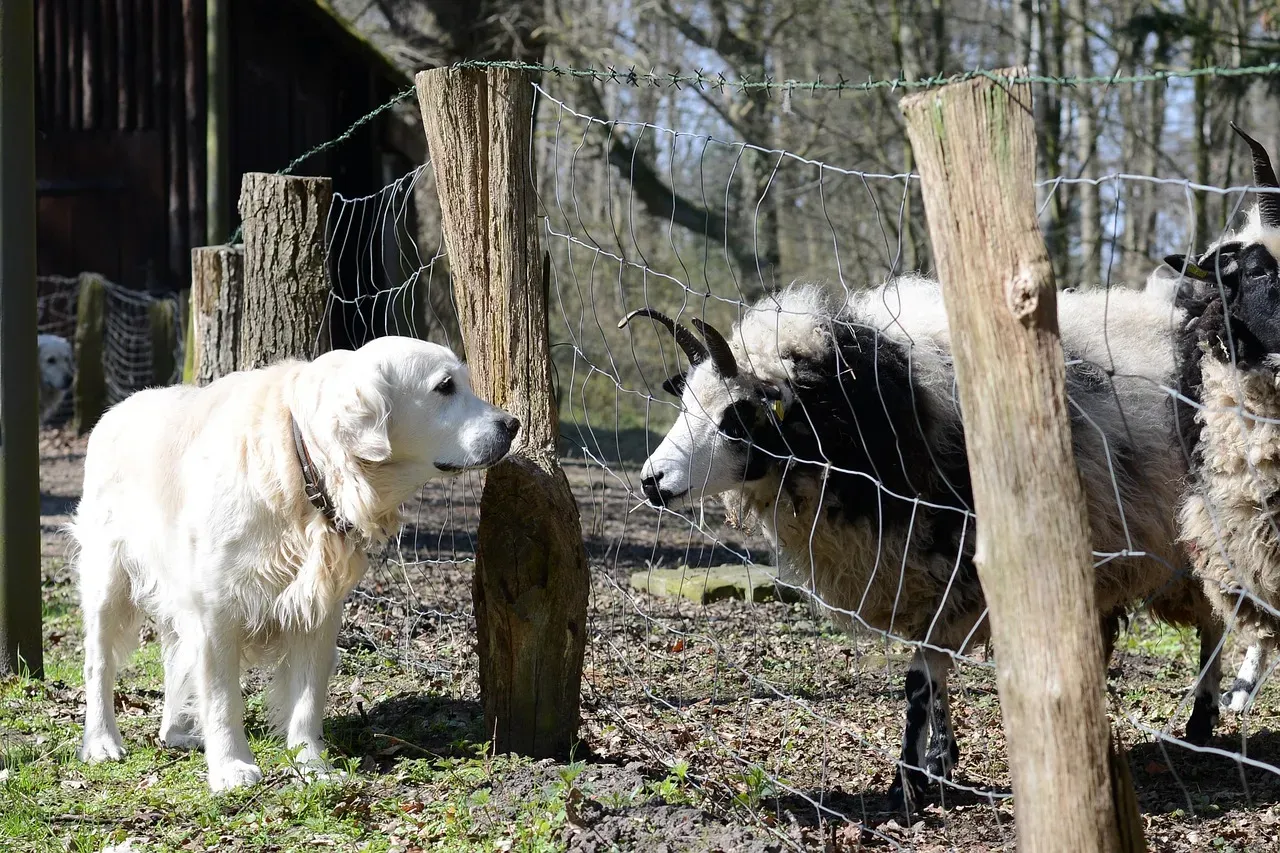
The idea behind the guardian is simple. A puppy raised among sheep or goats grows up thinking they are its family. As an adult it stays close to them, watches the surroundings and reacts to strangers, whether a fox, a wolf or an unfamiliar person.
 GuideHow to calm a reactive dogHow to calm a reactive dog: why dogs bark and lunge, what to do in the moment, a step-by-step training plan, what to avoid and when to get help.
Descriptions of the work, including the Texas A&M AgriLife extension material on guardian dogs, describe the same pattern: the dogs blend in with the livestock and aim to deter threats. Their guarding instinct is mostly inherited, but it is strengthened by close bonding with livestock at a young age.
Research by Raymond and Lorna Coppinger, who began working with guardian dogs in the 1970s, set out three requirements for a good flock guardian. It must not harm the sheep or goats, it must stay with the flock instead of wandering off, and it must protect the flock against predators. In the guide written by Lorenz and Coppinger, a predator such as a coyote usually avoids the dog's threatening approach and withdrawal display, so real fights are rare.
Typical working behaviours include:
- Patrolling the edge of the pasture and marking it.
- Barking to warn and to tell intruders the area is taken.
- Placing the body between the flock and a threat.
- Staying with the flock through the night, when many predators are active.
Guardians, not herders
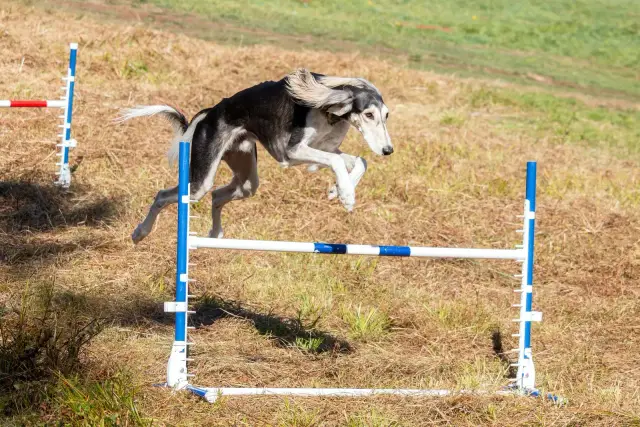
A guardian dog and a herding dog solve opposite problems. A herder controls where the animals go. A guardian keeps predators away from animals that are already where they should be.
| Trait | Livestock guardian dog | Herding dog |
|---|---|---|
| Main job | Protects the flock from predators | Moves, gathers and controls the flock |
| Relationship to livestock | Lives with them and bonds to them | Works them on command, then goes home |
| Typical build | Large, heavy, strong | Medium, athletic, agile |
| Decision making | Works alone, with little direction | Works closely with a handler |
| Example breeds | Kangal, Komondor, Maremmano-Abruzzese | Border Collie, Briard |
Herding breeds in our data sit in other families, such as UK Rural and Continental Herder. Most guardians sit in the Mediterranean family. For how these families fit together, see the dog family tree.
 GuideDog Breeds by Country: Which Nations Made the Most?Dog breeds by country: how many breeds each nation produced in the Dogs Atlas data, from the UK and France to Japan, plus national dogs and families.GuideHow to calm a reactive dogHow to calm a reactive dog: why dogs bark and lunge, what to do in the moment, a step-by-step training plan, what to avoid and when to get help.
History of the flock guardian
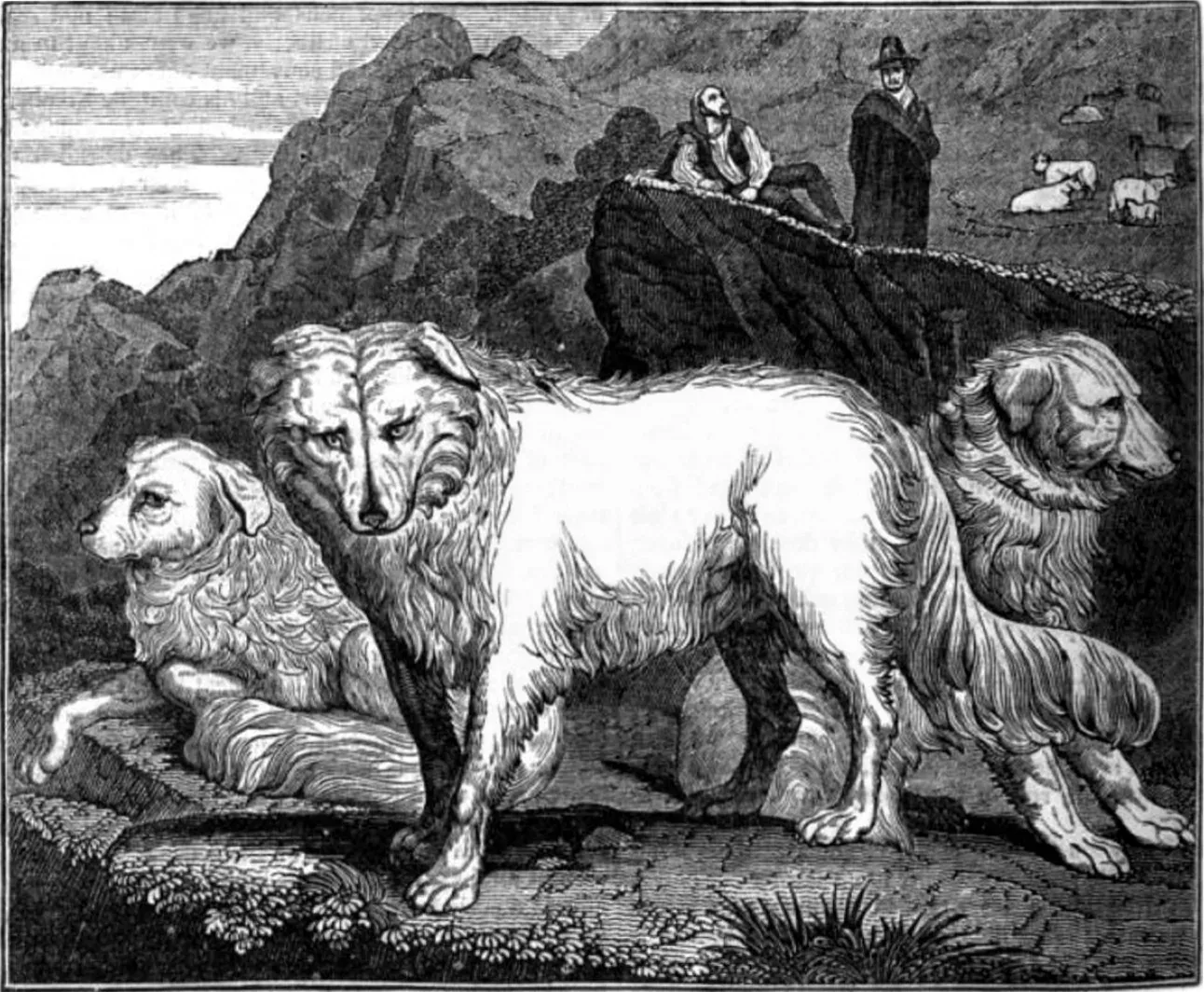
Dogs that guard livestock are as old as livestock keeping in the regions where herders moved their animals over long distances, a pattern called transhumance. Shepherds moved sheep and goats between winter lowlands and summer mountain pastures, and a dog that stayed with the flock made that possible.
 GuideMale vs Female Dogs: Differences, Myths and NeuteringMale vs female dogs: what research says about size, trainability and affection, marking, mounting, roaming, and the spay or neuter timing decision.
Breed club and kennel club histories place the ancestors of the Anatolian type in what is now Turkey, with some sources suggesting dogs of this type were already there about 6,000 years ago, and one source linking them to the dogs of ancient Mesopotamia. No archaeological source backs these dates, so treat them as estimates rather than facts. The American Kennel Club notes that Anatolian Shepherd Dogs were not widely exported from Turkey until the twentieth century and only received a firm breed standard in the 1970s, when Western interest grew.
The regions that produced guardian types are spread across the old shepherding world:
- Anatolia (Turkey): Kangal Shepherd Dog, Akbash, Kars Dog and several local types.
- The Caucasus and Central Asia: Caucasian Shepherd Dog, Armenian Gampr, Central Asian Shepherd Dog.
- The Pyrenees and Iberia: Pyrenean Mountain Dog, Estrela Mountain Dog, Rafeiro do Alentejo.
- Italy and the Balkans: Maremmano-Abruzzese Sheepdog, Šarplaninac, Karakachan.
- Hungary and the Carpathians: Komondor, Kuvasz, Carpathian Shepherd Dog, Slovak Cuvac, Tatra Shepherd Dog.
- The Himalayas and Tibet: Tibetan Kyi Apso, Himalayan Sheepdog, Bankhar Dog.
 Save
Many of these breeds carry stories about ancient war dogs or lion hunters. These are legends, not documented history, and we label them that way in the breed articles.
 GuideSmartest dog breeds: what the rankings measure and what they missCoren's smartest dog breeds list, what it measured, what newer dog cognition research says, three kinds of dog intelligence and why smart dogs need work.GuideMale vs Female Dogs: Differences, Myths and NeuteringMale vs female dogs: what research says about size, trainability and affection, marking, mounting, roaming, and the spay or neuter timing decision.
Guardian dogs at work today
Flock guardians are no longer only a farm tradition. They are also used by conservation groups as a way to keep predators and farmers from fighting.
 GuideWhy does my dog do that? 15 common behavioursWhy does my dog lick me, stare, eat grass, spin, sigh or roll in smelly things? 15 everyday dog behaviours explained, with when to ask a vet.
Kangals and cheetahs in Namibia
The Cheetah Conservation Fund has bred and placed guarding dogs with Namibian farmers since 1994. The dogs are Anatolian Shepherds, also called Kangals in the programme's own wording. The idea is that if a dog protects the goats or cattle, the farmer has less reason to shoot a cheetah.
The programme's own 25-year review reports that the dogs reduced livestock losses for 91 percent of the farmers who answered, and that farmers were highly satisfied. Reported placement totals differ between CCF documents (figures of 450 and 634 dogs appear for different periods), so we give no single number.
An independent view comes from a 2015 study by Potgieter, Kerley and Marker, based on 2009 and 2010 interviews with 73 farmers using 83 dogs. All the farmers stopped killing cheetahs and leopards during the study year, and one dog killed a cheetah. But the authors also found that some dogs killed non-target wildlife, and they concluded that guardian dogs should not simply be called a non-lethal method. Most data in this field comes from CCF or from researchers working with it, so it is worth reading with that in mind.
Wolves and bears in Europe and the US
Evidence against large carnivores is more mixed than the dogs' reputation suggests.
- Slovakia: A study of guarded and unguarded sheep flocks found an average of 1.1 sheep lost per guarded flock against 3.3 per unguarded flock. The difference was not statistically significant, and dogs had been placed first at farms with high previous losses, which complicates the comparison.
- Norway: A 1999 field trial in bear habitat concluded that guardian dogs can protect rangeland sheep, though open terrain and widely ranging sheep made it harder.
- French Alps: Shepherds rely on the dogs, but losses to wolves have still been increasing. Newer work uses thermal imaging to watch dog and wolf encounters at night.
- United States: Researchers have said that breeds commonly used there appear ineffective against wolves and grizzly bears. A federal project has been testing European breeds including the Kangal, Karakachan and Cão de Gado Transmontano with GPS collars; no results are published.
A 2019 review also notes that the dogs' effect on wolf, bear and cougar attacks has been suggested but not yet properly tested. The honest summary is that guardian dogs help, especially against smaller predators and when combined with fencing and a present shepherd, but they are not a guarantee against wolves or bears.
 Save
 GuideDogs of Japan: the native breeds and their storiesJapanese dog breeds explained: the six Nihon Ken, the Chin, Tosa, Japanese Spitz and Terrier, Hachiko, wartime near-extinction, DNA and who they suit.GuideWhy does my dog do that? 15 common behavioursWhy does my dog lick me, stare, eat grass, spin, sigh or roll in smelly things? 15 everyday dog behaviours explained, with when to ask a vet.
Do livestock guardian dogs make good pets?
For most households, no. A guardian dog is bred to work with little direction, and that is the opposite of what many owners expect from a family dog.
 GuideHow to Groom a Dog: Brushing, Baths, Nails and CoatsHow to groom a dog at home: coat types, brushing, how often to bathe, cutting nails, ears, teeth, shedding, matting and whether to shave a double coat.
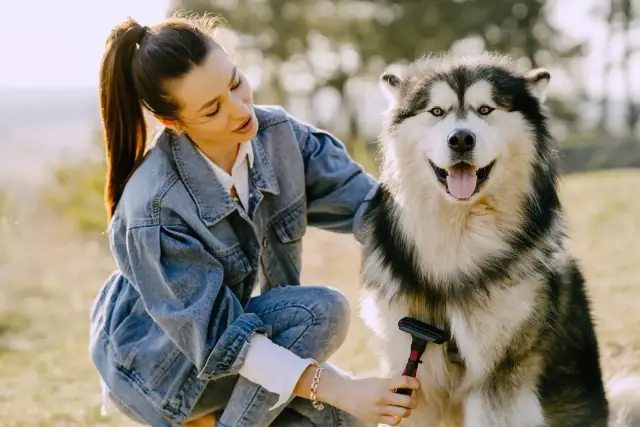
- Independent: The Coppinger approach rewards dogs that think for themselves and stay with the flock rather than follow a person. Obedience in the sports sense is not their strength.
- Territorial: Defending a space is the job. A garden can become the flock, and visitors, delivery drivers and neighbours can become the predator.
- Vocal: Barking is part of how a guardian warns and deters. Breeds that work at night may bark more in the evening and early hours, which matters in towns.
- Large and strong: Most guardians are big dogs, and handling a heavy, unsure or protective dog takes experience.
- Bonded to a group: Without animals to guard, a dog may attach to the family and yard instead, or roam to patrol a wider area. Secure, tall fencing matters.
A guardian can be a loving companion in the right home: rural, with space, secure fencing, tolerant neighbours and an owner who understands the type. It is a poor match for a first-time owner in a flat.
If you are choosing between guardian types, the Mediterranean family page and the breed articles on our site show size, coat and temperament differences. Ask breed rescues about adult dogs, since temperament is easier to judge in an adult than in a puppy.
 GuideAdvanced dog trainingAdvanced dog training explained: the 3 Ds, proofing, off-lead recall, formal heel, distance stays, impulse control, tricks, scent work, dog sports and Good Citizen schemes.GuideHow to Groom a Dog: Brushing, Baths, Nails and CoatsHow to groom a dog at home: coat types, brushing, how often to bathe, cutting nails, ears, teeth, shedding, matting and whether to shave a double coat.
Farm guard dog breeds: the 40 guardian breeds in our data
Our knowledge base holds 40 livestock guardian breeds in the Mediterranean family. They cover Portugal to Mongolia. The table lists them by country, with whether each breed was part of the DNA study by Parker and colleagues (2017) that built the modern dog family tree.
 GuideHow to adopt a dog from a shelter or rescueHow to adopt a dog from a shelter or rescue: the process, costs in general terms, choosing a dog, the first weeks and what if it does not work out.
| Breed | Country | DNA-tested |
|---|---|---|
| Kuchi | Afghanistan | No |
| Armenian Gampr | Armenia | No |
| Tornjak | Bosnia and Herzegovina, Croatia | No |
| Karakachan | Bulgaria | No |
| Tibetan Kyi Apso | China | No |
| Pyrenean Mountain Dog | France | Yes |
| Georgian Shepherd | Georgia | No |
| Greek Shepherd | Greece | No |
| Komondor | Hungary | Yes |
| Kuvasz | Hungary | Yes |
| Bakharwal | India | No |
| Sarabi | Iran | No |
| Kurdish Mastiff | Iraq | No |
| Maremmano-Abruzzese Sheepdog | Italy | Yes |
| Bankhar Dog | Mongolia | No |
| Aidi | Morocco | No |
| Himalayan Sheepdog | Nepal, India | No |
| Macedonian Shepherd Dog Karaman | North Macedonia | No |
| Šarplaninac | North Macedonia | No |
| Vikhan | Pakistan, India | No |
| Tatra Shepherd Dog | Poland | No |
| Cão de Gado Transmontano | Portugal | No |
| Castro Laboreiro Dog | Portugal | No |
| Estrela Mountain Dog | Portugal | No |
| Rafeiro do Alentejo | Portugal | No |
| Bucovina Shepherd Dog | Romania | No |
| Carpathian Shepherd Dog | Romania | No |
| Romanian Mioritic Shepherd Dog | Romania | No |
| Romanian Raven Shepherd Dog | Romania | No |
| Caucasian Shepherd Dog | Russia | No |
| Slovak Cuvac | Slovakia | No |
| Karst Shepherd | Slovenia | No |
| Dalbo Dog | Sweden | No |
| Akbash | Turkey | No |
| Aksaray Malaklisi | Turkey | No |
| Kangal Shepherd Dog | Turkey | Yes |
| Kars Dog | Turkey | No |
| Rize Koyun | Turkey | No |
| Central Asian Shepherd Dog | Turkmenistan, Uzbekistan, Kazakhstan | No |
| South Russian Ovcharka | Ukraine | No |
- Portugal 4 breeds, including the Estrela Mountain Dog and Rafeiro do Alentejo
- France Pyrenean Mountain Dog
- Morocco Aidi
- Italy Maremmano-Abruzzese Sheepdog
- Slovenia Karst Shepherd
- Bosnia and Herzegovina, Croatia Tornjak
- North Macedonia Šarplaninac and Macedonian Shepherd Dog Karaman
- Hungary Komondor and Kuvasz
- Slovakia Slovak Cuvac
- Poland Tatra Shepherd Dog
- Romania 4 breeds, including the Carpathian Shepherd Dog
- Bulgaria Karakachan
- Greece Greek Shepherd
- Sweden Dalbo Dog
- Ukraine South Russian Ovcharka
- Russia Caucasian Shepherd Dog
- Georgia Georgian Shepherd
- Armenia Armenian Gampr
- Turkey 5 breeds, including the Kangal and Akbash
- Iraq Kurdish Mastiff
- Iran Sarabi
- Central Asia Central Asian Shepherd Dog
- Afghanistan Kuchi
- Pakistan Vikhan
- India Bakharwal
- Nepal Himalayan Sheepdog
- China Tibetan Kyi Apso
- Mongolia Bankhar Dog
 GuideMy Dog Is Lethargic: Causes and When to Call a VetDog tired, weak or not himself? Normal tiredness vs lethargy, emergency signs, common causes, what to note for the vet and what to avoid.GuideHow to adopt a dog from a shelter or rescueHow to adopt a dog from a shelter or rescue: the process, costs in general terms, choosing a dog, the first weeks and what if it does not work out.
What DNA tells us, and what it does not
Parker and colleagues (2017) analysed the DNA of 161 breeds and grouped them into 23 supported clades, which we call families. Of the 40 guardians in our data, only five were in that study: the Kangal Shepherd Dog, Komondor, Kuvasz, Maremmano-Abruzzese Sheepdog and Pyrenean Mountain Dog. All five fell in the Mediterranean clade.
 GuideDog Grooming Competitions and Show Standards ExplainedHow breed standards shape dog grooming, from hand-stripped terriers to Poodle show clips, and how grooming competitions and creative grooming work.
The other 35 have not been DNA-tested in this way. We keep them in the Mediterranean family because of their ancestry, region and type, which is inference, not proof. The family pages on this site mark tested and inferred breeds separately for that reason. Some of these dogs may turn out to sit elsewhere once DNA is available. The Caucasian Shepherd Dog and Central Asian Shepherd Dog, for example, are placed by type and region.
 GuideBorder Collie behaviour problems and how to train themBorder Collie behaviour and training: why they nip, chase, fixate and fear noise, what to do about each, and a weekly plan for owners.GuideDog Grooming Competitions and Show Standards ExplainedHow breed standards shape dog grooming, from hand-stripped terriers to Poodle show clips, and how grooming competitions and creative grooming work.
Choosing a guardian breed
There is no single best livestock guardian dog. The right breed depends on the job and the climate.
 GuideDogs in Legends and Fairy TalesDogs in folklore and fairy tales: Black Shuck, The Tinderbox, Saint Guinefort, Panhu, Greyfriars Bobby, Barry and Old Drum, with legend and history kept apart.
- Predator pressure: Large predators such as wolves and bears call for large, serious dogs, usually in pairs and with a shepherd. Smaller predators need less.
- Climate: Heavy double coats, as on the Pyrenean Mountain Dog, suit cold mountains.
- Neighbours: Quiet is a quality that does not come easily to a breed that guards by barking.
- Source: A puppy from working parents raised with stock is a different animal from a show-line pet.
 GuideBanned and restricted dog breeds by countryWhich dog breeds are banned or restricted, country by country: UK, Ireland, France, Germany, Denmark, Norway, Spain, Australia and more.GuideDogs in Legends and Fairy TalesDogs in folklore and fairy tales: Black Shuck, The Tinderbox, Saint Guinefort, Panhu, Greyfriars Bobby, Barry and Old Drum, with legend and history kept apart.
Frequently asked questions
What is a livestock guardian dog?
A dog that lives with livestock, bonds with it and protects it from predators. It deters threats instead of herding animals.
How do livestock guardian dogs work?
They bond with the flock as puppies, patrol, bark to warn, and stand between the flock and a threat. Real fights with predators are uncommon.
What is the difference between a livestock guardian dog and a herding dog?
A herding dog moves and controls animals on direction from a person. A guardian stays with the animals and protects them with little direction.
What is the best livestock guardian dog?
It depends on the predators, climate and neighbours. Kangals, Pyrenean Mountain Dogs, Maremmano-Abruzzese Sheepdogs and Komondors are among the best known, and the Kangal is the breed used in the Namibian cheetah programme.
Which dogs are best for sheep?
For protecting sheep, a livestock guardian dog is the type to look at: it lives with the flock and protects it from predators, while a herding dog only moves animals on direction. Kangals, Pyrenean Mountain Dogs, Maremmano-Abruzzese Sheepdogs and Komondors are among the best known.
Do livestock guardian dogs make good pets?
Rarely. They are independent, territorial, loud and large. They suit experienced owners with space and secure fencing.
Can livestock guardian dogs stop wolves and bears?
Sometimes. Evidence is mixed, and studies in Slovakia, Norway and France show benefits but not complete protection. Dogs work best with fences and people.
Do Kangals really protect cheetahs?
By protecting livestock, Kangals give farmers less reason to kill cheetahs. The Cheetah Conservation Fund reports lower losses, but an independent study found some dogs also killed other wildlife.
Are all guardian breeds DNA-tested?
No. Of the 40 in our data, 5 were tested, and 35 are placed by ancestry and type.
Read next
 Family storyMediterraneanRead the family's story: origins, members, DNA
 Family storyContinental HerderRead the family's story: origins, members, DNA
 Family storyUK RuralRead the family's story: origins, members, DNA
Sources (9)
- Parker H.G. and colleagues (2017). Genomic analyses reveal the influence of geographic origin, migration, and hybridization on modern dog breed development. Cell Reports, 19(4), 697 to 708.
- Cheetah Conservation Fund (2019). Dogs saving cheetahs: 25 years of livestock guarding dog success.
- Potgieter G.C., Kerley G.I.H. and Marker L.L. (2016). More bark than bite? The role of livestock guarding dogs in predator control on Namibian farmlands. Oryx, 50(3).
- Lorenz J.R. and Coppinger L. Raising and training a livestock guarding dog. Oregon State University Extension.
- Texas A&M AgriLife Extension, San Angelo, livestock guardian dog research notes.
- Mitigating carnivore-livestock conflict in Europe: lessons from Slovakia. Conservation Evidence.
- Norwegian field trial of livestock guarding dogs in bear habitat (1999), as summarised in a research abstract.
- American Kennel Club, Anatolian Shepherd Dog history.
- Dogs Atlas knowledge base: breed and family files for the 40 guardian breeds.