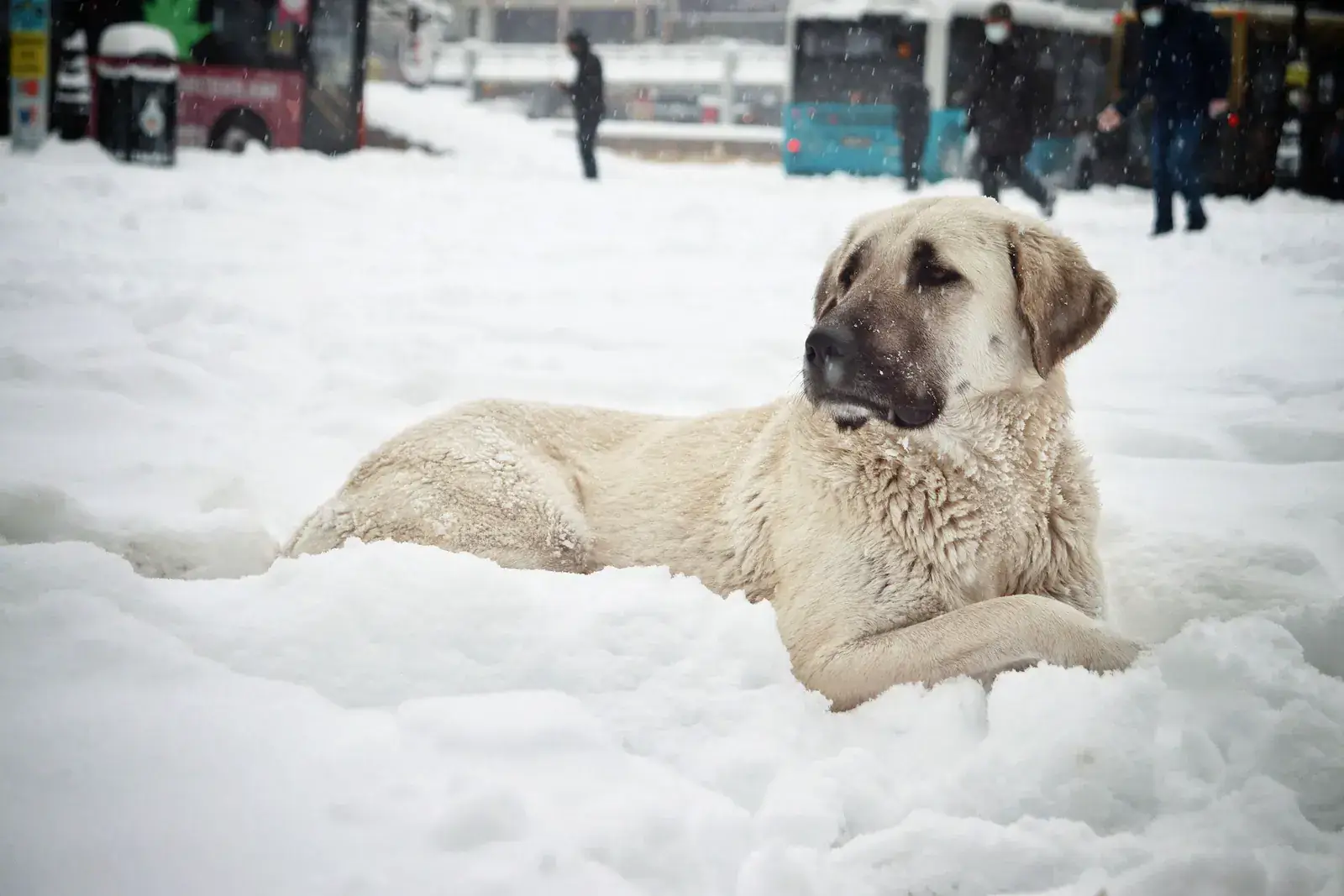
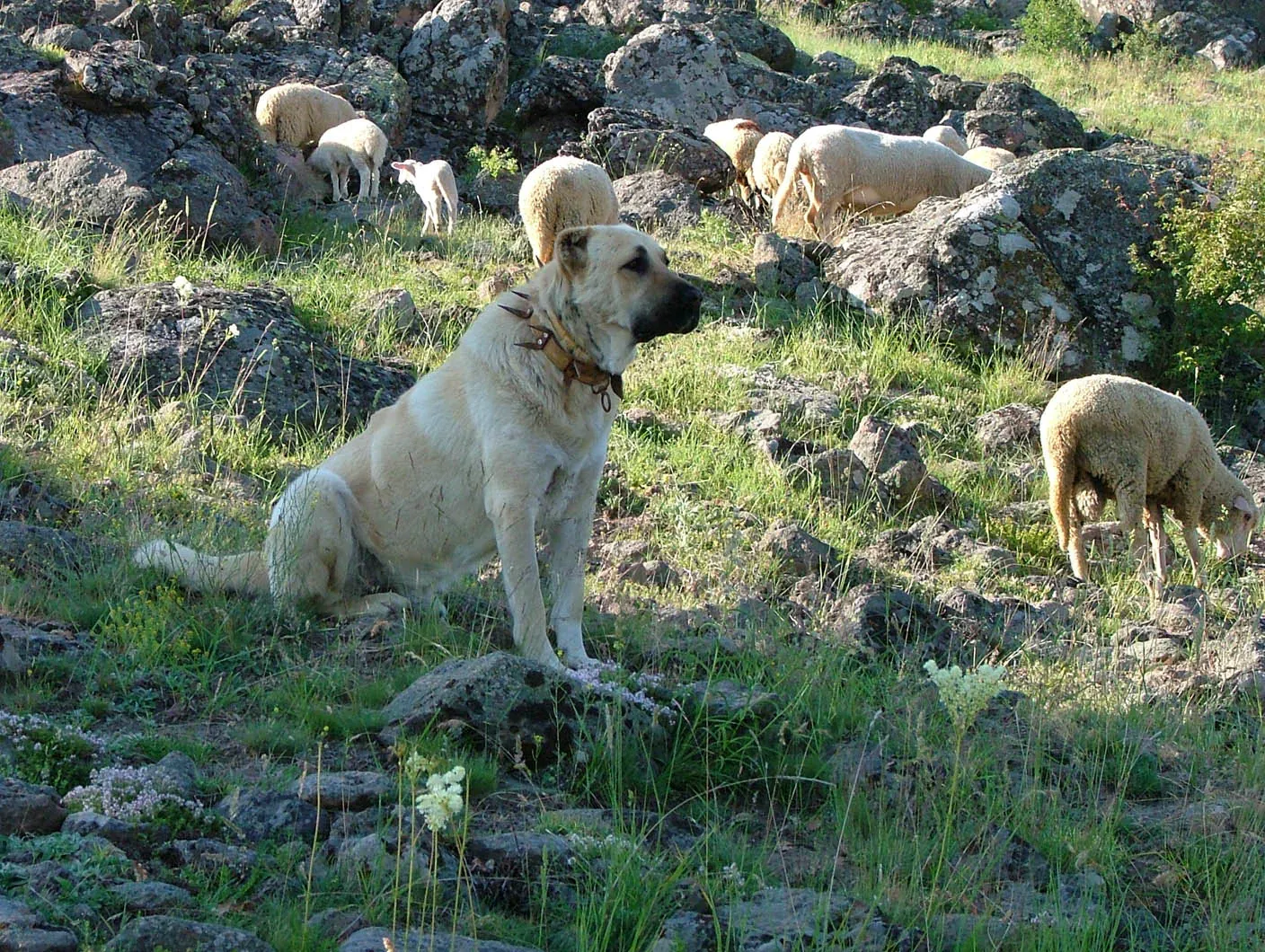
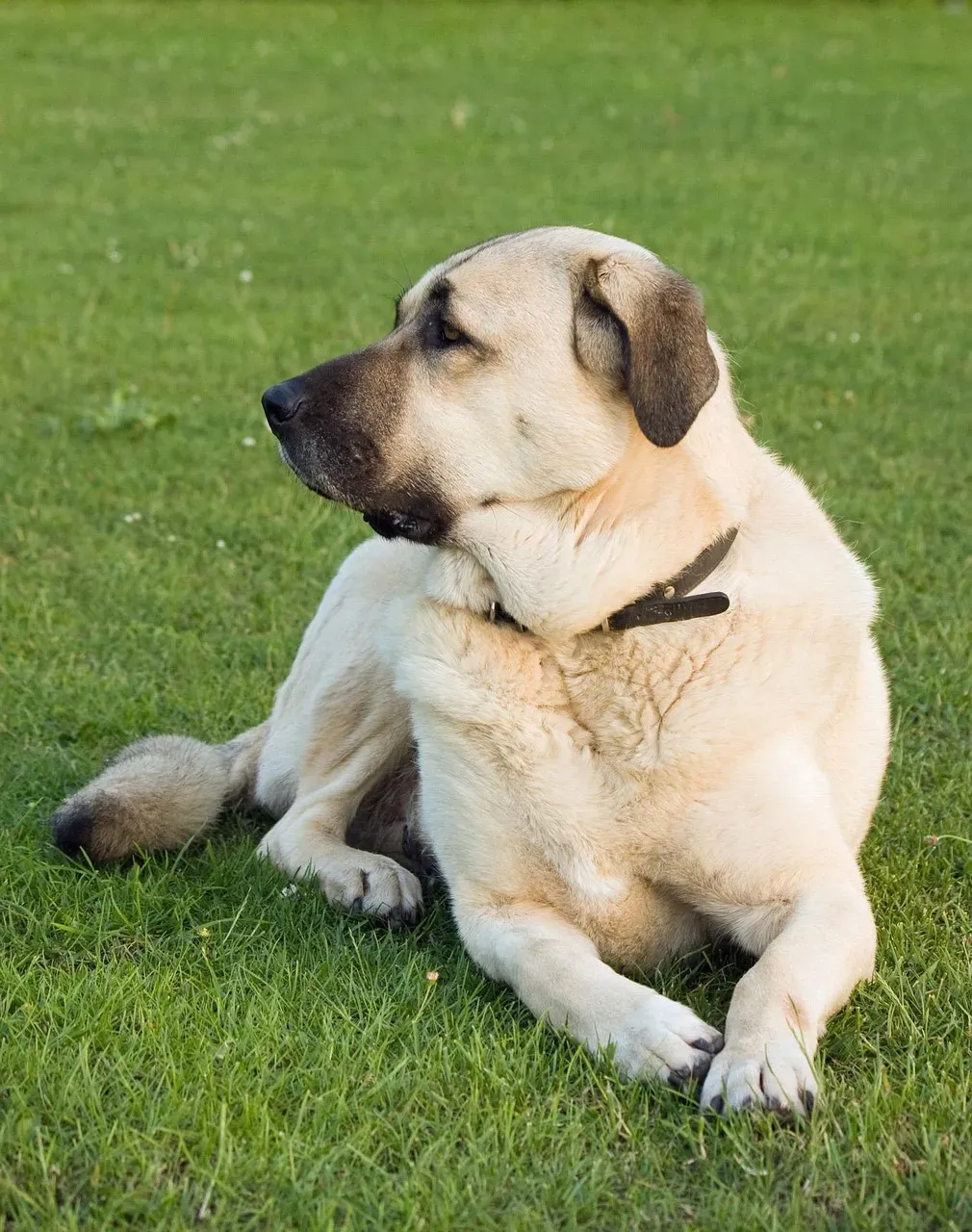
It is named after the Kangal district of Sivas Province. Shepherds there kept these dogs with flocks on open plateau, where they watched for wolves and other predators. The Kangal is a short-coated, fawn dog with a black mask, and it is calm, watchful and fiercely loyal to its own flock or family. Today it is also used far from Turkey: the Cheetah Conservation Fund places Kangals and Anatolian Shepherds with farmers in Namibia. It is a working dog first, and it suits owners with space, land and a firm, patient approach. The atlas data gives a life span of 12 to 15 years.
Kangal quick facts
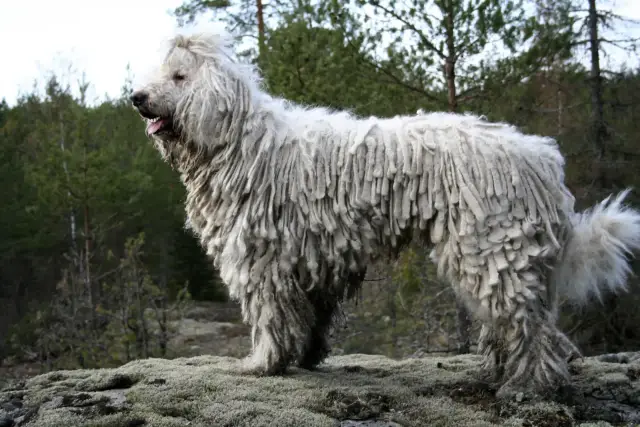 Related breedKomondor1200 to 1920 · HungaryLate Middle Ages
- Country of origin
- Turkey (Sivas Province, Kangal district)
- Original job
- Guarding sheep and goats against wolves and other predators
- Type
- Livestock guardian (FCI Group 2, Pinscher and Schnauzer, Molossoid and Swiss Mountain and Cattledogs; FCI standard no. 331; UK Kennel Club recognises it as the Turkish Kangal Dog)
- FCI recognition
- Definitive standard no. 331 (atlas data; the date is reported as 1989 in the sources seen)
- Height
- FCI (as reported): dogs about 72 to 78 cm, bitches about 65 to 73 cm. UK Kennel Club: dogs 74 to 81 cm, bitches 71 to 79 cm
- Weight
- FCI (as reported): dogs about 48 to 60 kg, bitches about 40 to 50 kg
- Coat
- Short, dense double coat
- Colour
- Fawn to pale dun with a black mask (see the standard section)
- Life span
- Atlas data: 12 to 15 years
- DNA family
- Mediterranean family (Parker et al. 2017)
- DNA relative in the study
- Saluki, 9.8 shared
Drawn to scale in real centimetres. Its back reaches about 73 cm, mid-thigh; its head about 93 cm, your hip.
Where it sits in the tree
Early Middle Ages · 500 to 1199
Name and origin
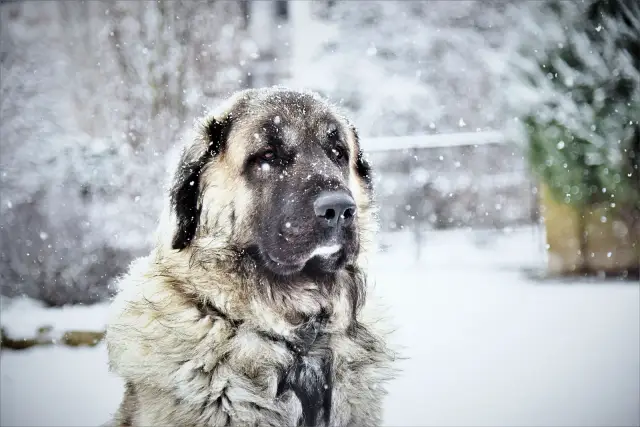 Related breedLeonberger1846 to 1895 · GermanyIndustrial Revolution
The breed takes its name from Kangal, a town and district in Sivas Province in Central Anatolia. In Turkish it is Kangal Coban Kopegi, "Kangal shepherd dog". Villagers there kept large dogs to guard flocks that grazed away from the village.
The name causes the most confusion in the breed's story, so it helps to separate three things.
- The dog in Turkey. People in the Kangal district and the Turkish breed community treat the Kangal as its own, distinct type of guardian from Sivas. Other Turkish guardian types exist, such as the Akbash, and are usually described as different dogs.
- The "Anatolian Shepherd" name abroad. Dogs from Turkey were exported to Europe and North America under a general name, Anatolian Shepherd Dog. The American Kennel Club (AKC) registers one breed, the Anatolian Shepherd Dog, and treats the Kangal as part of it. The AKC gives that breed any colour, with fawn and a black mask as the traditional look.
- The split in the registries. The FCI's standard no. 331 is the Kangal Shepherd Dog. One source seen in research says the FCI groups the Kangal, Akbash and other Turkish types under one Anatolian Shepherd number, and that the Kangal is recognised separately in the sense that matters for Turkey; the sources disagree on this point, so treat it carefully. The UK Kennel Club recognised the Turkish Kangal Dog as a breed with effect from April 2013 (as reported by a breed information source), and dogs registered as Anatolian Shepherds could be re-registered under the Kangal name. The United Kennel Club lists the Kangal Dog as its own breed.
The two views, side by side.
- "They are one breed." The AKC view, and the older export view, is that Turkey's livestock guardians share a common ancestry and a common job. On this reading "Anatolian Shepherd" is the umbrella name, and the Kangal is the best-known regional type.
- "The Kangal is its own breed." The Turkish and FCI view, and now the UK Kennel Club's, is that the Kangal is a defined breed with its own standard, colour pattern (fawn with black mask) and home region. Supporters point to a published genetic study, "Genetic evidence for the distinctness of Kangal dogs", which describes the Kangal as genetically distinct from other Turkish guardian types.
Neither view is a matter of fact that a DNA test can settle on its own. A breed is partly a genetic population and partly a decision by clubs about where to draw the line. In practice, check which registry a puppy is papered with before you buy.
Where the breed came from. The usual story is that the Kangal descends from old Anatolian flock guardians that spread with herders. The study named above, as reported, found that dogs from Kazakhstan, Uzbekistan, Tajikistan and Afghanistan were genetically closest to the Kangal, which would fit an origin with nomadic herding peoples moving west. That finding comes from a secondary summary and should be read as a possibility. The atlas data puts the dog's first appearance at about 1000 CE (medium confidence) and the established modern breed at 1989, the year the FCI standard became definitive.

A national symbol
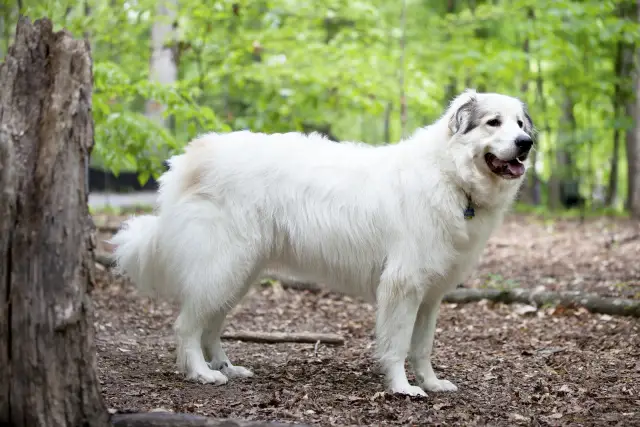 Related breedPyrenean Mountain Dog1000 BCE to 1923 · FranceAncient World
Turkey treats the Kangal as a national dog. One source says it appears on stamps, commemorative coins and at regional festivals, but the stamp and coin claims are not backed by a second source. What is better documented is research and protection in Sivas. Cumhuriyet University in Sivas runs a Kangal Dog Application and Research Centre that receives visitors, and a 2016 news report described a project by the Central Anatolia Development Agency, coordinated by the university's veterinary school, to support breed conservation. Hurriyet Daily News reported that around 100 Kangals were microchipped in the first phase of a monitoring scheme. A breed page says Turkey considers the Kangal a national treasure and has restricted exports, but no official source confirms this.
 Save
History
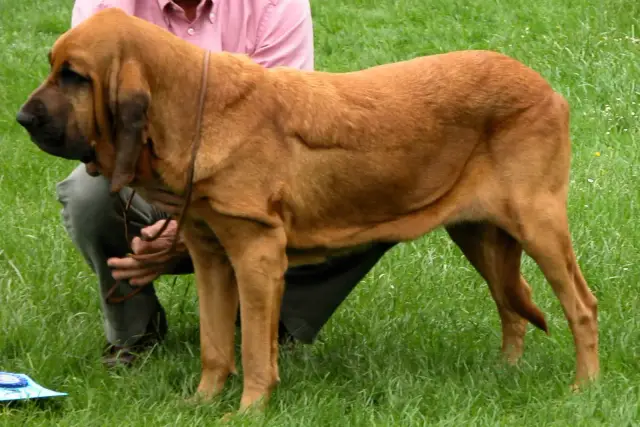 Same eraBloodhound1000 to 1100 · Belgium, FranceEarly Middle Ages
Flock guardian on the plateau. For most of its history the Kangal was a village dog, not a show dog. Shepherds in central Anatolia moved sheep and goats between summer and winter grazing, and a dog that lived with the flock could drive off a wolf without a human present. Selection came from work: dogs that stayed with the flock, deterred predators and were not aggressive to the shepherd were kept.
Export and the Anatolian Shepherd years. Turkish guardians left the country, and in North America and Europe they were registered as Anatolian Shepherd Dogs. The AKC recognised the Anatolian Shepherd Dog in its Working Group in 1996, according to one breed guide. Our sources did not cover the early imports in detail.
Standardisation. The atlas data records the Kangal as established in 1989, the year the FCI gave definitive acceptance to the Kangal Shepherd Dog standard. The UK Kennel Club followed in 2013.
Conservation work. From 1994 the Cheetah Conservation Fund (CCF) in Namibia began placing livestock guarding dogs with farmers, using Anatolian Shepherds and Kangals (see the next section).
Cheetah conservation in Namibia
 Related breedCane Corso1000 to 1996 · ItalyEarly Middle Ages
Farmers in Namibia who lose calves, sheep and goats to predators often shoot or trap cheetahs. The Cheetah Conservation Fund set out to give them a non-lethal alternative: a guardian dog.
- How the programme works. According to CCF, the dogs are bred and raised at its model farm in Namibia and given free or for a nominal fee to farmers at about 11 weeks of age. CCF says the Anatolian Shepherd and Kangal were chosen because they cope with a harsh climate and terrain like Namibia's.
- What CCF reports. CCF says most farmers report an 80 to 100 percent drop in livestock killed by cheetahs and other predators. A 25-year monitoring study, "Twenty-five years of livestock guarding dog use across Namibian farmlands", found that the dogs reduced livestock losses for 91 percent of respondents, and farmers were highly satisfied.
- The scale. CCF's own figures vary by date. A 2013 report said more than 400 Anatolian Shepherd and Kangal dogs had been placed. A later CCF page says more than 800 dogs have been placed in Namibia, South Africa and Tanzania.
- The caution. A 2016 study of 83 dogs on Namibian farms, "More bark than bite? The role of livestock guarding dogs in predator control on Namibian farmlands", found that the results challenge treating guarding dogs as strictly non-lethal: dogs and farmers together killed more black-backed jackals in the survey year than farmers had reported killing before getting dogs. The 25-year study also linked poor dog performance to behaviour such as "staying at home" and "chasing game", which went with dogs getting less care and being in poorer body condition.
In plain terms: guarding dogs do help many farmers, but the best outcomes come from dogs that are raised with the flock and cared for properly. Much of the outcome data comes from CCF itself, and the independent studies are more mixed.
Relatives and DNA
 Same familyGreyhound800 CE to 1850 · United KingdomEarly Middle Ages
The Kangal belongs to the Mediterranean family, which also holds the sighthounds and podencos of the Mediterranean and the heavy guardians of Europe and Asia. The family is a from Parker et al. (2017, Cell Reports), who analysed 1,346 dogs from 161 breeds.
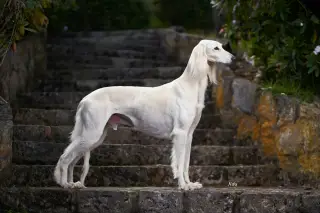
What the study says about the Kangal. The Kangal was one of the tested breeds, and our data records a strong placement in the Mediterranean clade. Its one recorded shared-haplotype link is with the Saluki, at 9.8 (Mb) of identical DNA. A Saluki is a lean hunting sighthound, a very different dog, yet both come from Southwest Asia. A shared stretch of DNA that long suggests a common ancestor or some old crossing, but the study cannot say which way genes flowed or when.
Not yet tested. Many other guardians are placed in the same family by history and type, not by DNA. The Akbash is one example. They sit in the family because of their ancestry and appearance, not because they were sequenced.
Relatives in the atlas data. The data lists no parent breeds or descendant breeds for the Kangal.
 Save
- Saluki9.8 Mb 0.4%
Source: Parker et al. 2017. Percent of the whole genome.
The breed standard
 Looks relatedJapanese Chin700 CE to 1900 · JapanEarly Middle Ages
A is the written ideal for a breed that kennel clubs judge dogs against. Clubs differ on the Kangal because some treat it as a breed on its own and some fold it into the Anatolian Shepherd. The table gives the figures seen in research. Where a club's figure was not seen, it is left out.
| Trait | What the standards say |
|---|---|
| Height, dogs | FCI (as reported): about 72 to 78 cm, with a 2 cm tolerance. UK Kennel Club: 74 to 81 cm. AKC (Anatolian Shepherd): at least 29 inches, about 74 cm |
| Height, bitches | FCI (as reported): about 65 to 73 cm. UK Kennel Club: 71 to 79 cm. AKC (Anatolian Shepherd): at least 27 inches, about 69 cm |
| Weight | FCI (as reported): dogs about 48 to 60 kg, bitches about 40 to 50 kg. AKC (Anatolian Shepherd): dogs 110 to 150 pounds, about 50 to 68 kg; bitches 80 to 120 pounds, about 36 to 54 kg |
| Colour | FCI and UK breed descriptions: fawn to pale dun with a black mask. AKC (Anatolian Shepherd): any colour, traditionally fawn with a black mask |
| Proportions | UKC: length slightly greater than height at the withers; front leg slightly more than half the height |
| Note | The UK Kennel Club standard says the sizes given do not mean a dog must match the measurements exactly |
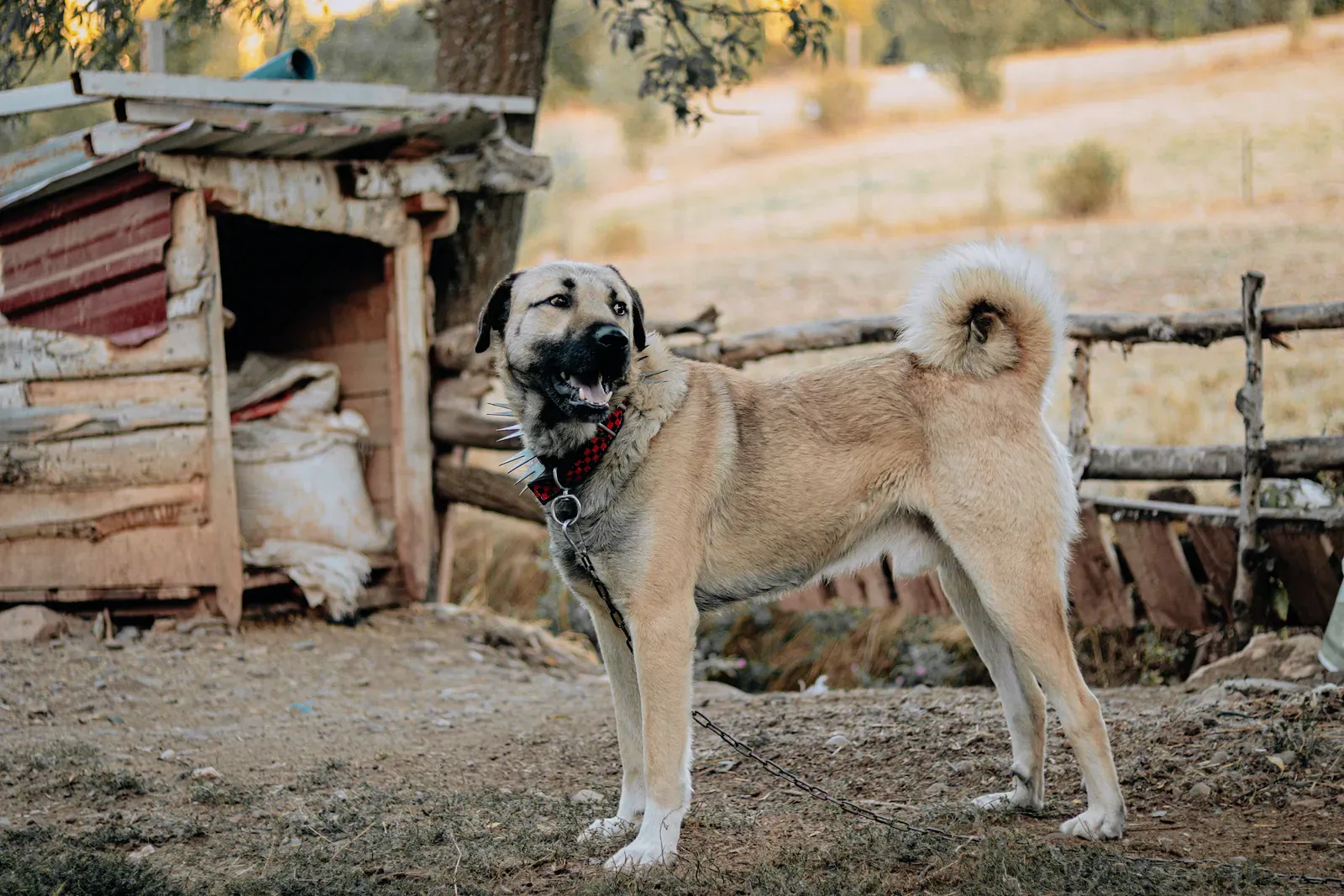
The standards describe a powerful, well-muscled, dignified dog of giant size, built for speed and endurance over rough ground. The AKC allows more colour variation because it registers the wider Anatolian group.
Why the figures differ. The UK Kennel Club's range is larger than the FCI's. This is partly because standards are written by different clubs for different dogs, and partly because working dogs from Turkey vary. If you want a Kangal for work, ask for the sire and dam's actual size, not only the standard.
Temperament
 Related breedLhasa Apso800 CE to 1934 · ChinaEarly Middle Ages
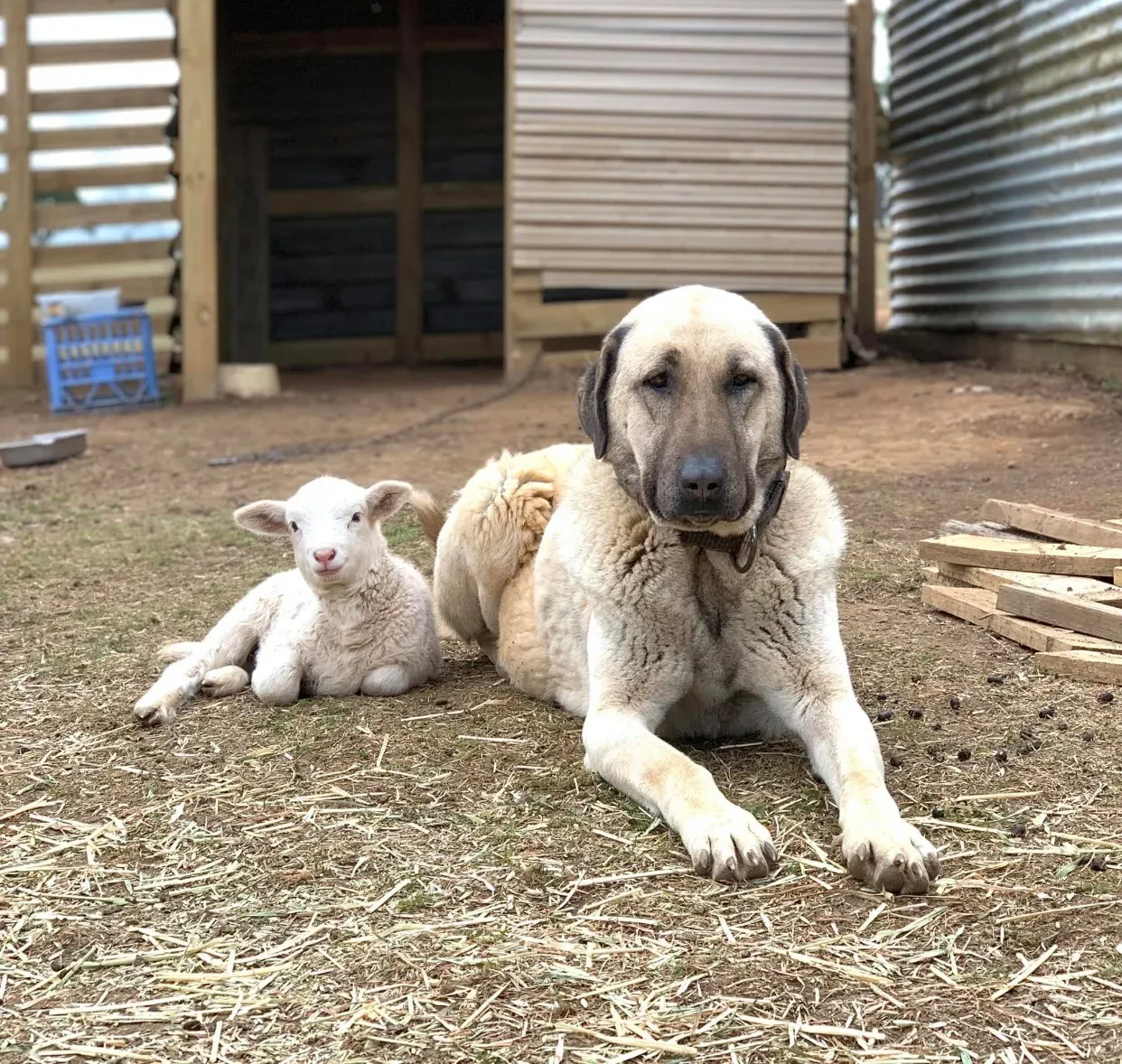
The United Kennel Club describes the breed as alert, territorial and defensive of the domestic animals or the human family it has bonded to. That is the Kangal in one line.
- Bonded to its flock. A Kangal raised with sheep or goats treats them as its own. It will stay with them and challenge anything that looks like a threat.
- Calm until needed. Working guardians are typically quiet and watchful and move deliberately. They do not herd; they deter. See the guide to livestock guardian dogs for how this differs from herding breeds.
- Independent. The Kangal makes its own decisions. It was bred to act without instructions, which makes it a poor fit for owners who expect quick obedience.
- Protective of people. In a home setting the same instinct is aimed at the family, the garden and visitors. Early, careful socialisation matters, but remember that no amount of training removes the guarding instinct.
- Barking. Guardians often bark at night, because that is when predators come. Expect noise in a built-up area.
Because the Kangal is so large and protective, accidents with strangers, delivery workers and children's friends are a real risk. Secure fencing, controlled introductions and a leash in public are basic needs.
 Save

The bite-force myth
 Related breedPekingese700 CE to 1904 · ChinaEarly Middle Ages
Online, the Kangal is often said to have a bite of 743 PSI, and some pages call it the strongest of any dog. No breed-specific, peer-reviewed bite-force study supports that number.
- What is not documented. The 743 PSI figure is widely repeated but poorly sourced. Dogster says the origin of the figure is hard to trace, calls it very likely highly overestimated, and notes there had been no studies of bite force across breeds when it wrote. Canine Bible treats the figure as an estimate and notes that individual differences in size, conditioning and age can cause large variation within a breed.
- A more cautious estimate. Dogster suggests a more defensible range of 250 to 400 PSI. That is also an estimate, not a measured result for the breed.
- Unreliable pages. Some pages claim a "veterinary forensic institute" validated bite-force tests. No real source backs these claims.
A Kangal is very strong, and that is enough to take it seriously. The exact PSI is marketing, not science.
Health
 Related breedPembroke Welsh Corgi1100 to 1934 · United KingdomEarly Middle Ages
Most Kangals live healthy lives, with a life span of 12 to 15 years. No breed-specific prevalence study exists for the Kangal, and the studies that exist cover the wider Anatolian Shepherd group. So this section gives plain-word guidance with no invented figures.
| Condition | What it is | How common | What helps |
|---|---|---|---|
| The hip joint forms loosely and wears early | Named as one of the most common concerns in breed health overviews; no reliable prevalence study for the Kangal was found | Ask for hip scores on both parents (OFA or BVA/Kennel Club scheme); keep puppies lean; avoid hard jumping on growing joints | |
| Abnormal development of the elbow joint | Listed with hip problems in orthopedic overviews; no figure found | Elbow scores for breeding dogs; weight control | |
| Entropion | The eyelid rolls inward and the lashes rub the eye | Named in breed overviews as a concern in Anatolian-type dogs; no figure found | Eye check by a vet; surgery in some cases |
| Bloat (GDV) | The stomach fills with gas and may twist | A known risk in large, deep-chested dogs in general; no Kangal-specific figure found | Several small meals; rest after eating; know the signs and see a vet at once if they appear |
| Overweight | Extra body fat loads the joints | Not measured for this breed | Measured meals; regular exercise |
| Skin and parasites | Demodex mange and allergies | Mentioned in insurance breed guides; no figure found | Vet care; check coat and skin |
Do not rely on claims of exact prevalence found on commercial or pet-blog pages, since several of those pages give numbers that are not documented.
Reading the evidence. The breed's wider health picture comes from Anatolian Shepherd overviews, not studies of Kangals in Sivas. Working dogs from village stock are likely to be less inbred than show lines, but no study checks this. Ask the breeder for certificates, not stories.

Living with a Kangal
 Related breedSamoyed500 CE to 1912 · RussiaEarly Middle Ages
 Save
 Save
| Daily reality | Rating | Why |
|---|---|---|
| Exercise per day | Medium | Needs space to patrol and walk daily; it is not a runner or a jogging partner |
| Training needs | High | Independent and strong-willed; calm, consistent handling and early socialisation are needed |
| Grooming | Low to Medium | Short double coat; brushing weekly and more at the seasonal shed |
| Shedding | High | Double coat; heavy seasonal shed |
| Barking | Poor | Guardians bark at night; neighbours will hear |
| Time alone | Fair | Used to long hours on guard, but needs a secure area; bored guardians dig and roam |
| Children | Varies | Protective of its own family; strangers' children and play fights need supervision |
| Other dogs | Varies | Territorial; early socialisation helps |
| Cats and small pets | Varies | Can live with animals it grew up with; unfamiliar ones may be treated as intruders |
| Flat living | Poor | Giant guardian; needs a secure garden or land |
| Heat tolerance | Good | No source rates it; bred in central Anatolia |
| Cold tolerance | Good | Dense double coat; no source rates it directly |
| First-time owner fit | Poor | Experienced, calm owners with large-dog experience suit it best |
A great fit if
- You have land or a large, very secure garden, and enough fencing for a dog that may try to patrol past it.
- You have lived with a giant, independent breed before and know how to set clear, calm limits.
- You want a working guardian for livestock and can raise a puppy with the animals it will guard.
- You live where a nighttime barking dog will not cause problems.
Think twice if
- You live in a flat, a terrace or a busy residential street.
- You want a dog that is friendly with every visitor and eager to please.
- You are away most of the day or often away for days.
- You want a first dog, or a dog for a family with small children and many visitors.
Before you get one
- Health tests. Ask for hip and elbow scores on both parents and an eye check. Ask for the original certificates, not summaries.
- Which registry. Ask which registry the puppy is papered with: Kangal (FCI, UK Kennel Club, UKC) or Anatolian Shepherd (AKC). The standards differ.
- Working or pet lines. Dogs bred for work from village stock may differ in temperament from show lines. Ask to see the parents with stock or at home.
- Puppy or adult rescue. Breed and guardian-dog rescues exist and can place adults whose behaviour is already known.
- First year. Plan for early socialisation, controlled introductions, secure fencing and a calm, steady approach to training.
Similar breeds to consider
- Akbash. Another Turkish guardian, lighter in build and white-coated.
- Kuvasz. A Hungarian white guardian of similar size, sometimes more people-oriented.
- Maremmano-Abruzzese Sheepdog. Italian white guardian, slightly smaller.
- Tibetan Mastiff. A different family, but another independent, giant guardian.

Kangal fun facts
 Related breedSiberian Husky1000 to 1930 · RussiaEarly Middle Ages
- The Kangal takes its name from a district in Sivas Province, Turkey.
- The Cheetah Conservation Fund has placed hundreds of Kangals and Anatolian Shepherds with Namibian farmers since 1994.
- The Sivas research centre has microchipped Kangals to monitor the breed, according to Hurriyet Daily News.
- The only DNA link recorded in the Parker 2017 study is with the Saluki, a sighthound, at 9.8 Mb.
Frequently asked questions
What is the difference between a Kangal and an Anatolian Shepherd?
It depends on the club. The treats the Kangal as part of the Anatolian Shepherd Dog. The , the UK Kennel Club (since 2013) and the UKC list the Kangal as its own breed. Supporters of the separate-breed view cite a genetic study of Kangal distinctness.
How big is a Kangal?
FCI-based figures put dogs at about 72 to 78 cm and 48 to 60 kg. The UK Kennel Club gives 74 to 81 cm for dogs.
How long do Kangals live?
Breed sources give 12 to 15 years. No breed-specific longevity study exists.
Is a Kangal a good family dog?
It is loyal and protective with its own family, but it is a giant guardian that can be wary of strangers and needs experienced owners.
Is the Kangal's bite really 743 PSI?
There is no peer-reviewed, breed-specific study behind that figure. Treat it as an undocumented internet number.
Do Kangals really protect cheetahs?
In Namibia the Cheetah Conservation Fund places Kangals and Anatolian Shepherds with farmers, and a 25-year study found reduced livestock losses for 91 percent of respondents. A 2016 study found mixed results on predators killed.
Read next
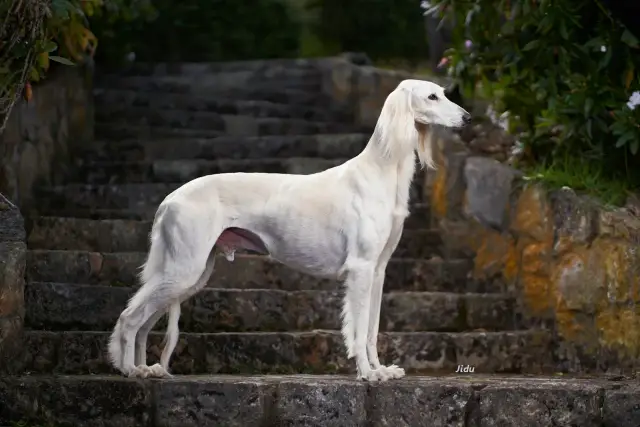 Closest DNASaluki9.8 Mb shared
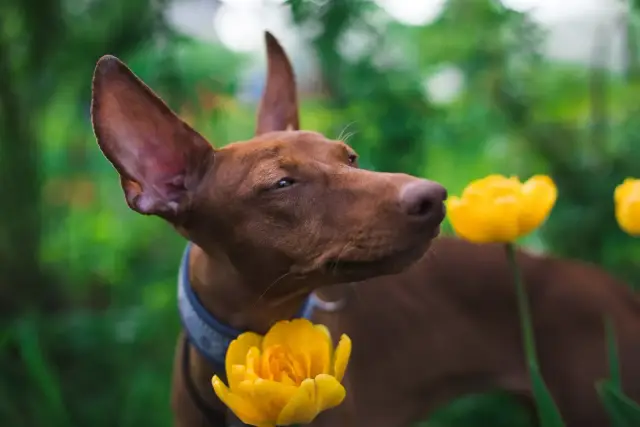 FamilyMediterraneanThe whole family
 Adopt a dogDog Shelters in EuropeFind dog shelters in Europe, learn how shelters differ from country to country and why adopting a dog is a good option.
Sources (16)
- American Kennel Club, Anatolian Shepherd Dog history and breed pages.
- Breed health overviews for the Anatolian Shepherd (pet insurance and veterinary clinic guides, used for general risk names only).
- Canine Bible, bite force breed rankings.
- Cheetah Conservation Fund, Livestock Guarding Dog Program pages.
- Dogster, Kangal breed page.
- Fédération Cynologique Internationale, Kangal Shepherd Dog, standard no. 331 (as reported through the South African Kennel Union's breed standards page).
- Genetic evidence for the distinctness of Kangal dogs (published genetic study).
- Hurriyet Daily News, report on microchipping Kangals in Sivas.
- Hill's Pet, Anatolian Shepherd Dog breed guide.
- More bark than bite? The role of livestock guarding dogs in predator control on Namibian farmlands (2016 study).
- Parker H.G. et al., "Genomic analyses reveal the influence of geographic origin, migration, and hybridization on modern dog breed development", Cell Reports, 2017.
- Sivas Cumhuriyet University, Kangal Dog Application and Research Centre, as covered in Turkish and English news reports.
- The Kennel Club (UK), Turkish Kangal Dog breed standard.
- Twenty-five years of livestock guarding dog use across Namibian farmlands (monitoring study).
- United Kennel Club, Kangal Dog breed standard.
- Dogs Atlas breed records and Parker 2017 shared-haplotype table (this site).