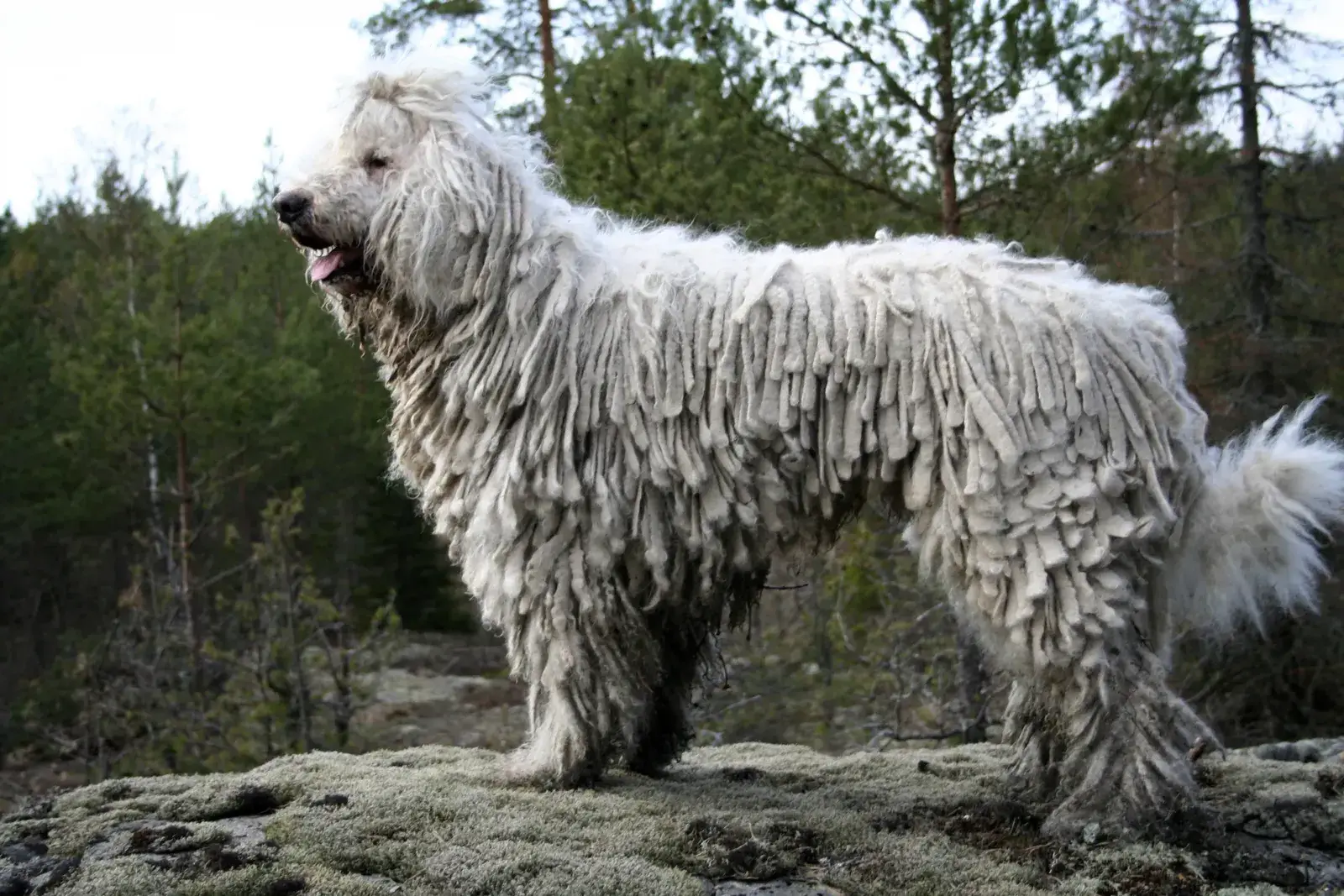
Hungarian shepherds used it to guard flocks from wolves and thieves, and the cords are thought to have helped it blend in with the sheep. It is calm and serious with its family and wary of strangers. This guide covers the history and the legends, where the breed sits in the DNA tree, how the cords form and what they cost in daily care, its work against coyotes in the United States, its health and who it suits.
Komondor quick facts
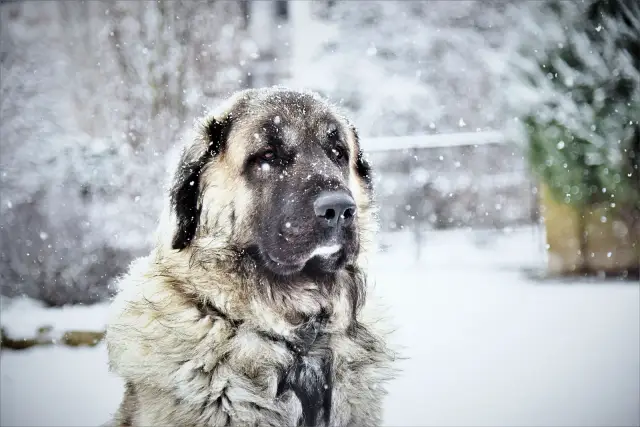 Related breedLeonberger1846 to 1895 · GermanyIndustrial Revolution
- Country of origin
- Hungary
- Period of development
- Atlas data: about 1200 to 1920, medium confidence; the Cuman origin story is a claim
- Original job
- Guarding flocks and farms
- Type
- Livestock guardian; FCI Group 1 (Sheepdogs and Cattledogs), standard no. 53; Working Group; UK Kennel Club recognised
- Other name
- Hungarian Sheepdog
- Height
- FCI: at least 70 cm for dogs and 65 cm for bitches
- Weight
- FCI: 50 to 60 kg for dogs, 40 to 50 kg for bitches
- Coat
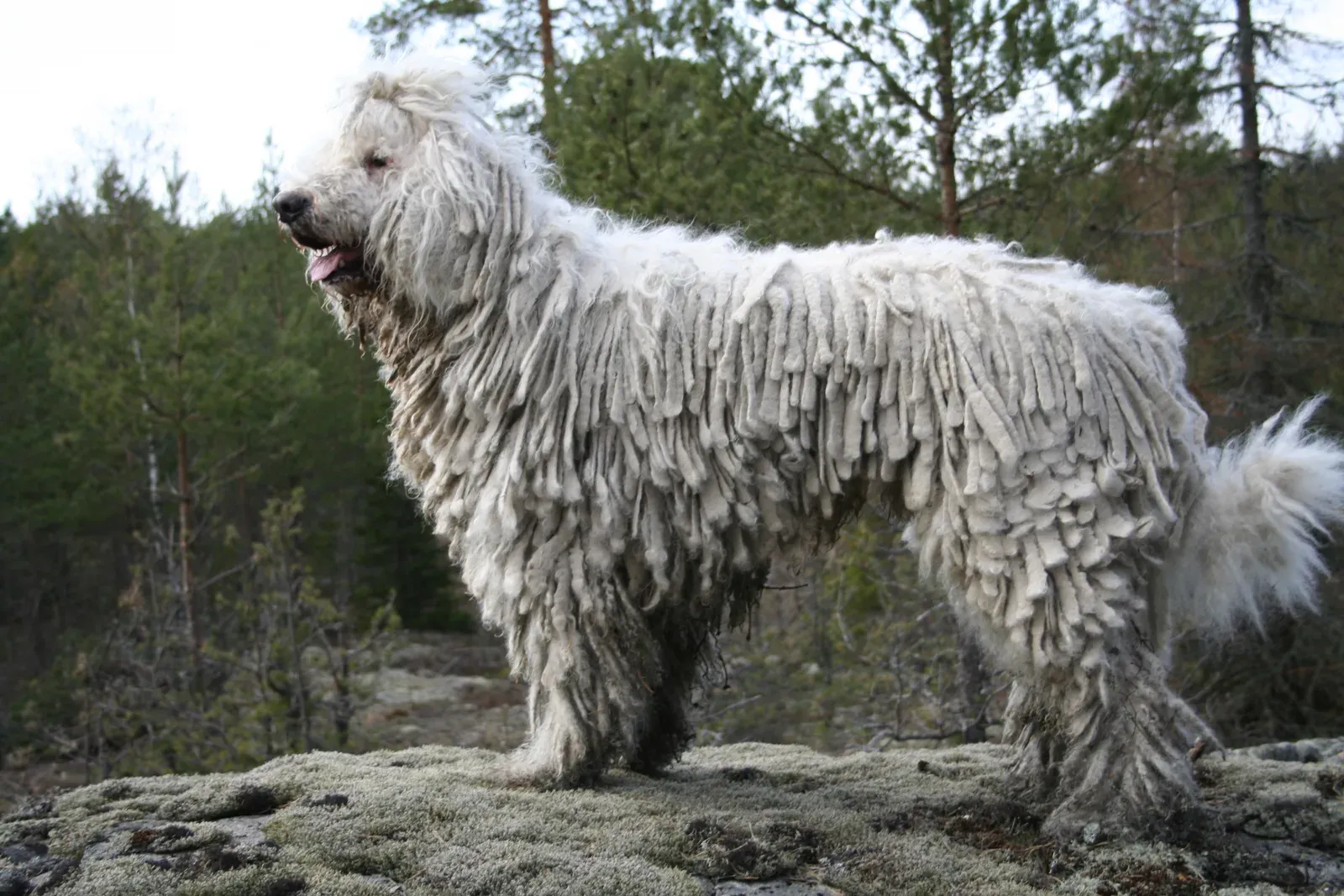
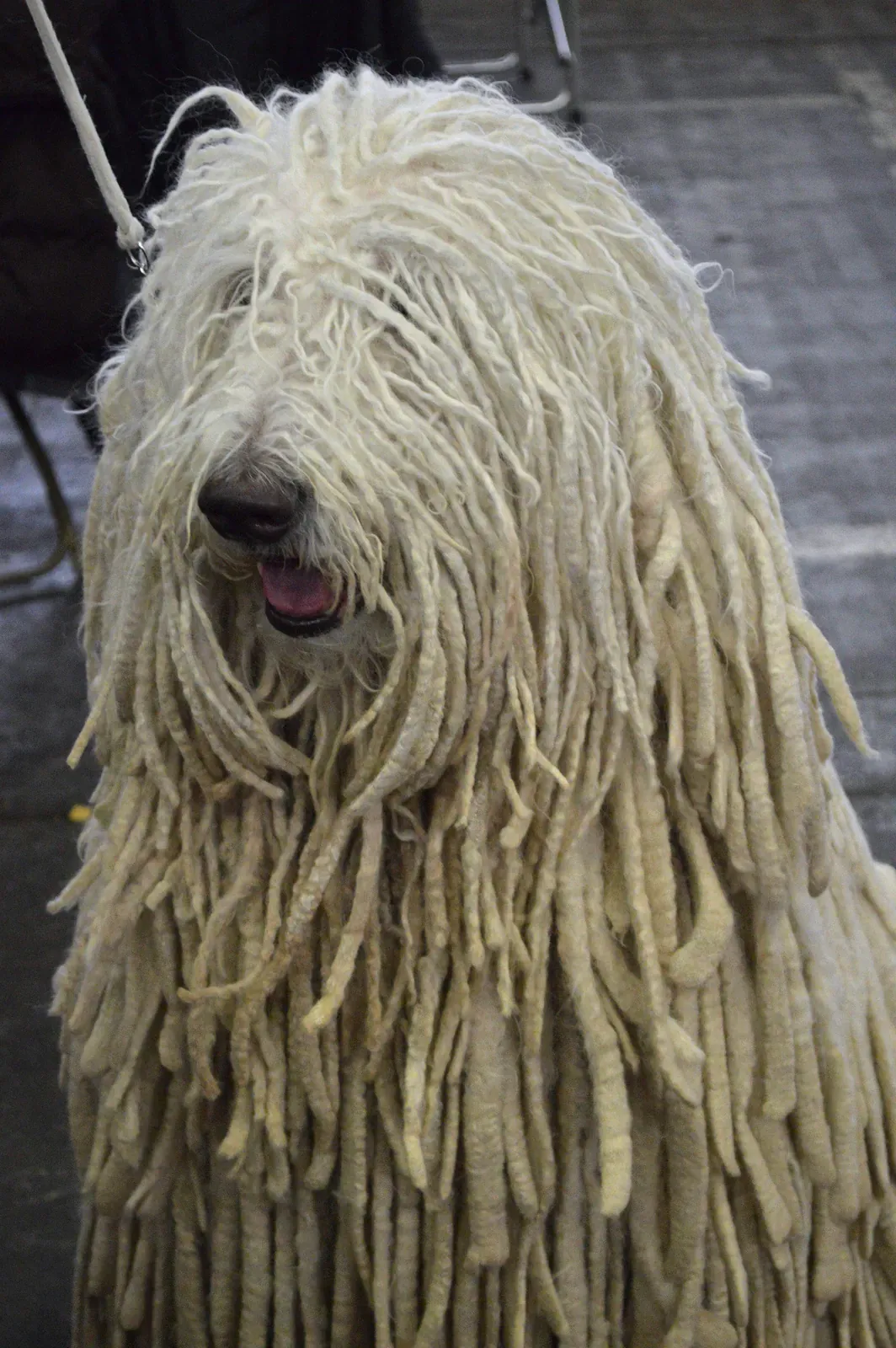
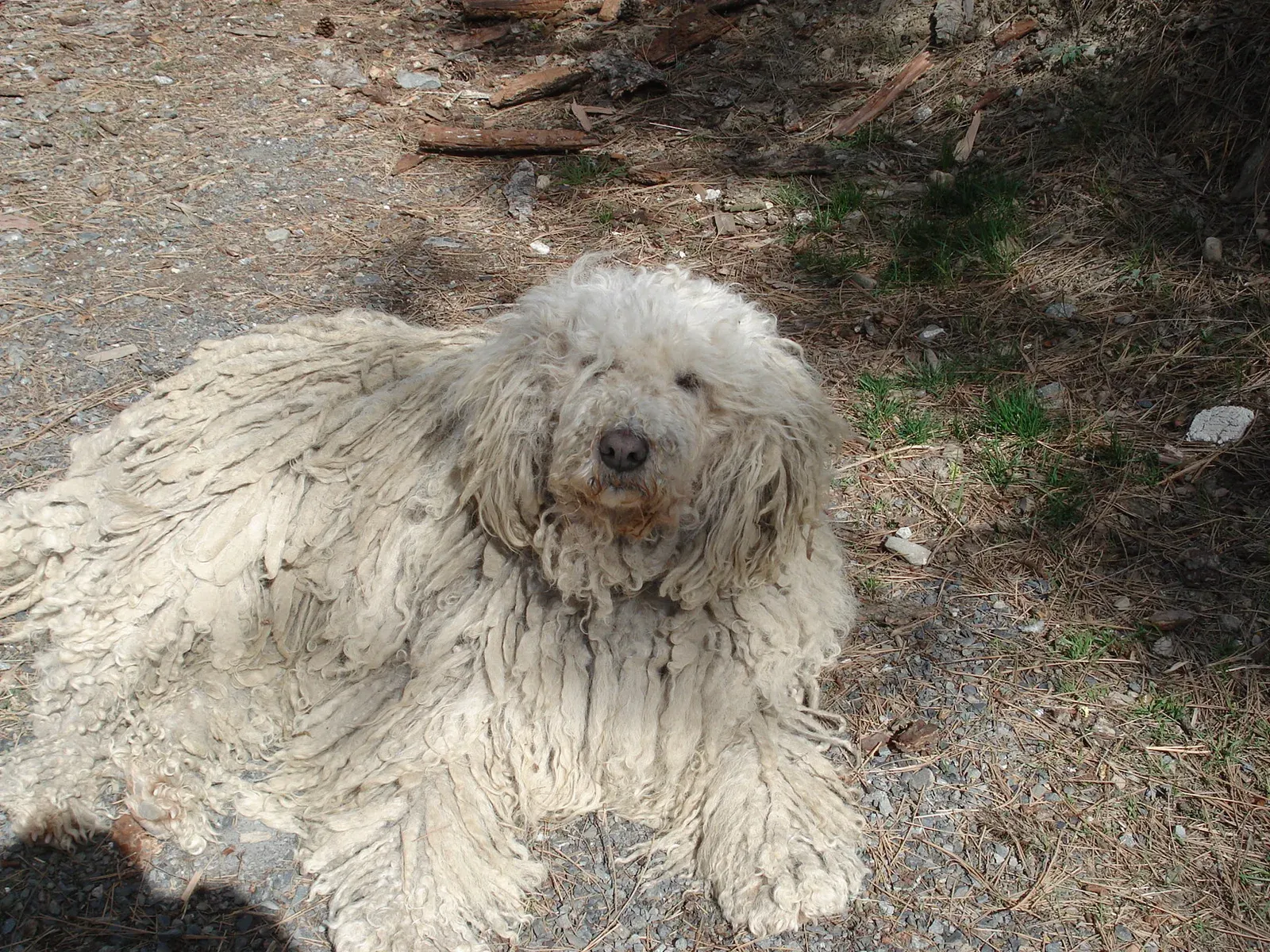
- Long, dense, corded, ivory (FCI and UKC wording)
- Life span
- Atlas data: 10 to 12 years
- DNA family
- Mediterranean (Parker et al. 2017, strong support)
- Hungarian relatives
- Puli, Pumi and Mudi are in the Hungarian family in our data; Kuvasz is also Mediterranean
Drawn to scale in real centimetres. Its back reaches about 68 cm, mid-thigh; its head about 86 cm, your hip.
Where it sits in the tree
Late Middle Ages · 1200 to 1499
Name and origin
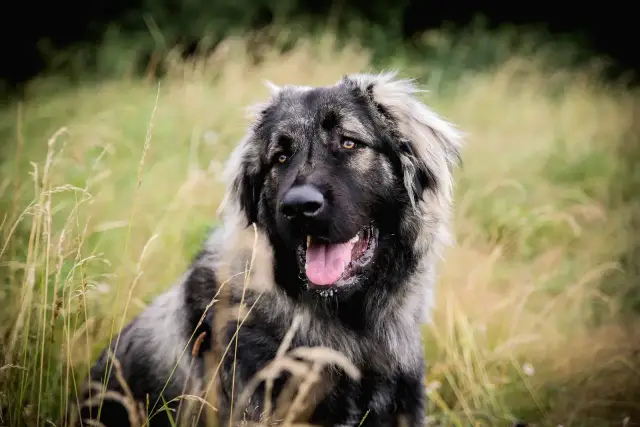
 Related breedPyrenean Mountain Dog1000 BCE to 1923 · FranceAncient World
The name is generally read as "dog of the Cumans". Our data gives the likely root as the Cuman words koman and dor. The AKC history page says the word "komondor" was written down as early as the mid-1500s. The Cumans were a nomadic people of the steppe who were given refuge in Hungary in 1239 under their leader Koten Khan.
That is where the story gets less certain. The Cuman origin is the favourite explanation, but breed writers admit that the true origin of the Komondor and of its name is disputed. Two points are worth knowing:
- Some popular sources say the Komondor came from Asia with the Cumans and descends from Tibetan dogs. This is a legend with thin support, and no DNA study has shown it.
- Other accounts point out that Cumans and Magyars did not mix much in Hungary, so one account argues that a shared origin of their dogs is unlikely. The same writers describe the Komondor and the Kuvasz as two separate guardian types that grew up independently, one tied to the Cumans and one to the Magyars. These are historical narratives, not genetic findings.
The honest summary: the Komondor is a Hungarian guardian breed with a long working history in the Carpathian Basin. The name very likely points to the Cumans, but the breed's roots cannot be dated or traced to a place beyond that.

History
 Same eraSaluki3000 BCE to 1922 · IraqAncient World
Shepherds and flocks
Hungarian shepherds kept Komondorok with their flocks day and night. The dog's job was to stay and guard, not to herd. It was the guardian of the flock against wolves, bears and human thieves, and its size and its temper were the tools. The white coat is often said to help it pass for a sheep in the dark, so a predator does not see the dog until too late. This is a common explanation from breed writers, not a tested fact.
The cords also have a practical use that is easier to defend: a thick, matted coat adds padding against bites and cold. Again, that is a sensible reading rather than a documented use.
Clubs and recognition
Organised breeding began in the early 1900s. According to a Wikipedia-derived account, a German Komondor club, now the Club for Hungarian Shepherd Dogs, was founded in 1922. The FCI standard is no. 53 and the country of origin is Hungary.
In the United States, Dr Tibor de Cholnoky is credited with importing what are believed to be the first two Komondorok in 1935, and the AKC recognised the breed in 1937, adopting the Hungarian standard in translation (AKC history).
Nearly lost after the Second World War
The war was hard on the breed. Several accounts say that by the end of the war breeders in Europe believed only a few dozen Komondorok remained. Most of these numbers are estimates, and the figure "a few dozen" is the one that is repeated, so treat it as approximate. One account adds that in Hungary the suspicious dogs resisted soldiers arriving at farms and were often shot.
Recovery was slow. Hungary came under communist rule, and purebred dogs were frowned upon (AKC and Showsight history). The breed recovered mainly through breeders in Hungary and Germany. In the United States, imports from Hungary had stopped during the war, and sources differ on whether the American line died out or was only interrupted. Importation resumed in the late 1950s and early 1960s. One source describes the Komondor as uncommon everywhere except its native Hungary.
Guardian work in the United States
In the 1970s, American sheep ranchers looked for non-lethal ways to protect flocks. Livestock guardian dogs were nearly unknown in the United States before the mid-1970s, and interest grew after the 1972 presidential ban on the poison Compound 1080.
The Komondor was one of the first breeds tested. Linhart and colleagues (1979), at the US Fish and Wildlife Service's Denver Wildlife Research Center, trained four adult Komondorok to stay with sheep and attack coyotes, and tested them in three ranch trials in fenced pastures. Sheep killed by coyotes fell significantly during and after the dogs' use. A 1982 study by McGrew and Blakesley watched nine Komondorok guarding lambs in enclosures. It found that the more aggressive dogs usually protected their sheep better, and that coyotes learned to attack the flock when the dog was away.
Texas A&M's San Angelo extension service has a summary of this work titled "How Komondor Dogs Reduce Sheep Losses to Coyotes". The studies were small, and they were done in fenced pastures, not open range. They show that the dogs can work, not that every Komondor will.
Relatives and DNA
 Same familyBichon Frisé1300 to 1933 · Belgium, FranceLate Middle Ages
The Komondor was tested in Parker et al. 2017, and in our data it sits in the Mediterranean family with strong support. The Mediterranean in that study includes many guardian and mountain dogs. It is one of only five guardian breeds in our data that were . The other guardians in the family are placed there by ancestry and type, not by their own DNA.
Hungarian relatives
The Komondor is Hungarian, but it is not in the Hungarian family in our data. This is a good example of why a family means DNA and not nationality. The Hungarian family is a small clade (in our data, the Puli, Pumi and Mudi). The Komondor and the Kuvasz, Hungary's other big white guardian, both fall in the Mediterranean clade.
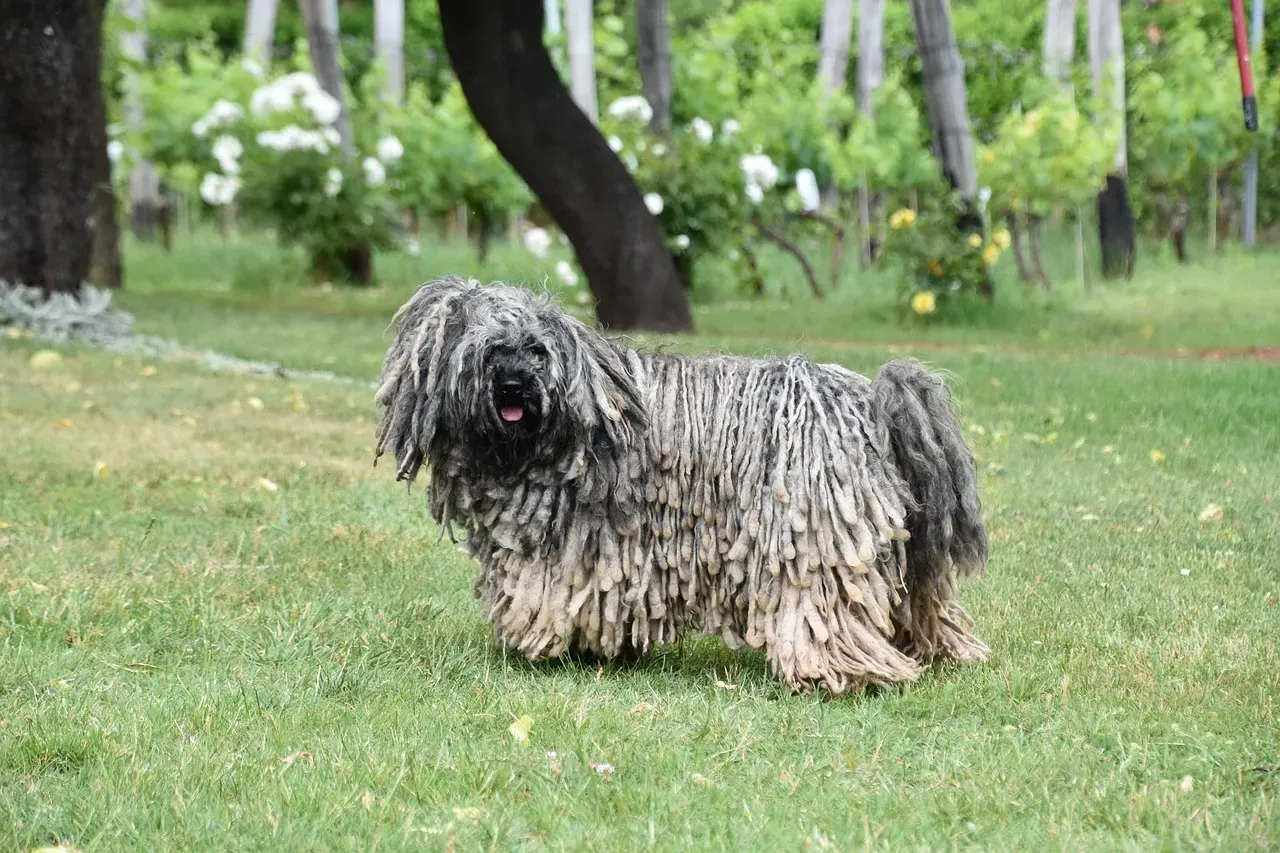
- Puli. A small corded herding dog. It shares the cords with the Komondor but is a herder, and DNA places it in the Hungarian family.
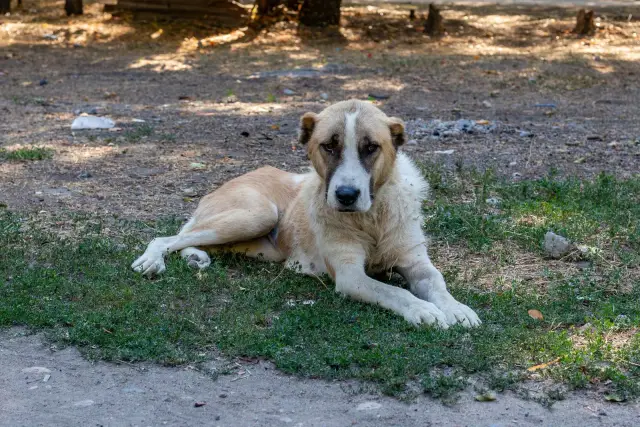
- Kuvasz. Hungary's other large white guardian. It is smooth-coated and also in the Mediterranean family. The Komondor and the Kuvasz look alike in size and role, but some historians say they have different origins.
- Pumi and Mudi. Hungarian herding dogs, not guardians.
No study measures how close the Komondor is to the Puli or Kuvasz, so no figure is given. The corded coat appears in more than one unrelated breed, so cords alone do not prove kinship.
The breed standard
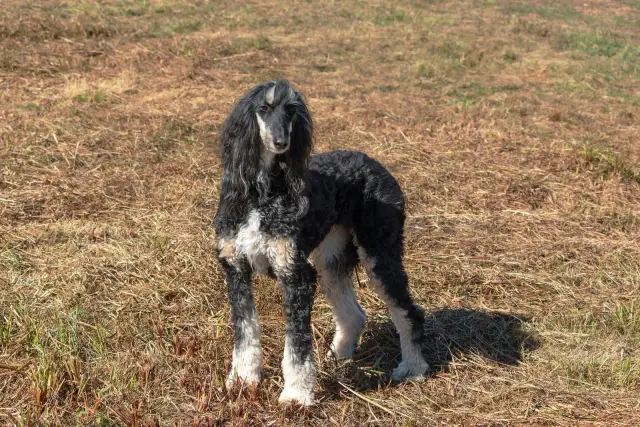
 Looks relatedBorzoi1200 to 1650 · RussiaLate Middle Ages
A is the written ideal that kennel clubs judge dogs against. Only figures each club publishes are given.
| Trait | What the standards say |
|---|---|
| Height | FCI: males at least 70 cm, females at least 65 cm; many dogs are taller, and there is no upper limit in the FCI text |
| Weight | FCI: males 50 to 60 kg, females 40 to 50 kg |
| Coat | UKC: long, dense and corded; Canadian Kennel Club: corded at maturity, of varying lengths |
| Colour | FCI: ivory; UKC: ivory; Canadian Kennel Club: white is the only colour allowed |
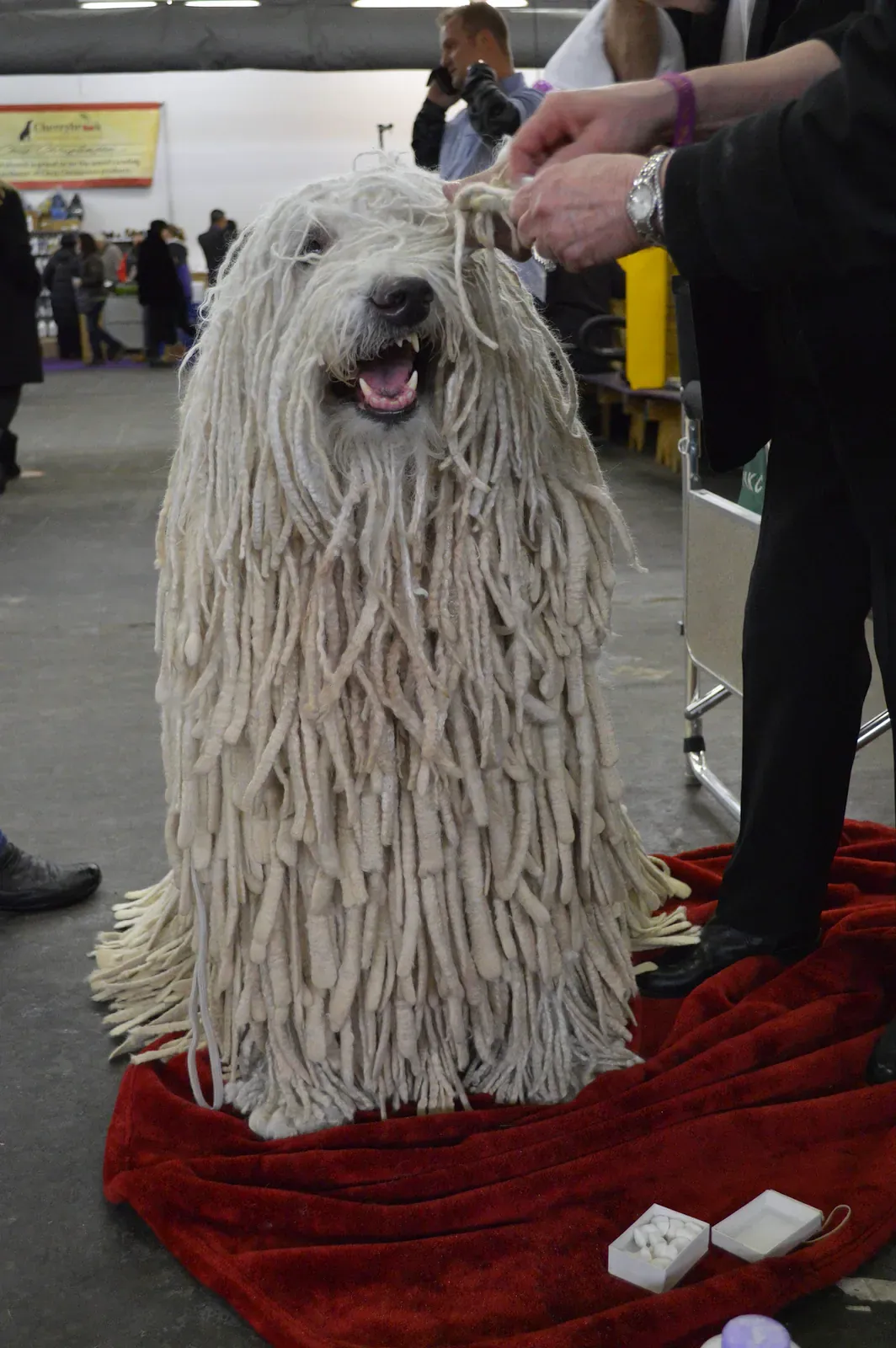
The standards describe a big, muscular dog with plenty of bone, a strong, deep-chested body and a covering of long cords over the whole body, including the head and tail.
Cords and cleanliness. The Canadian Kennel Club notes that the coat cords naturally but needs help to produce an even corded effect. The colour is called ivory in the FCI and UKC standards, which is a warm white, not a pure bleached white. Dirt and weather show on it.
Temperament
 Related breedCardigan Welsh Corgi1200 to 1934 · United KingdomLate Middle Ages
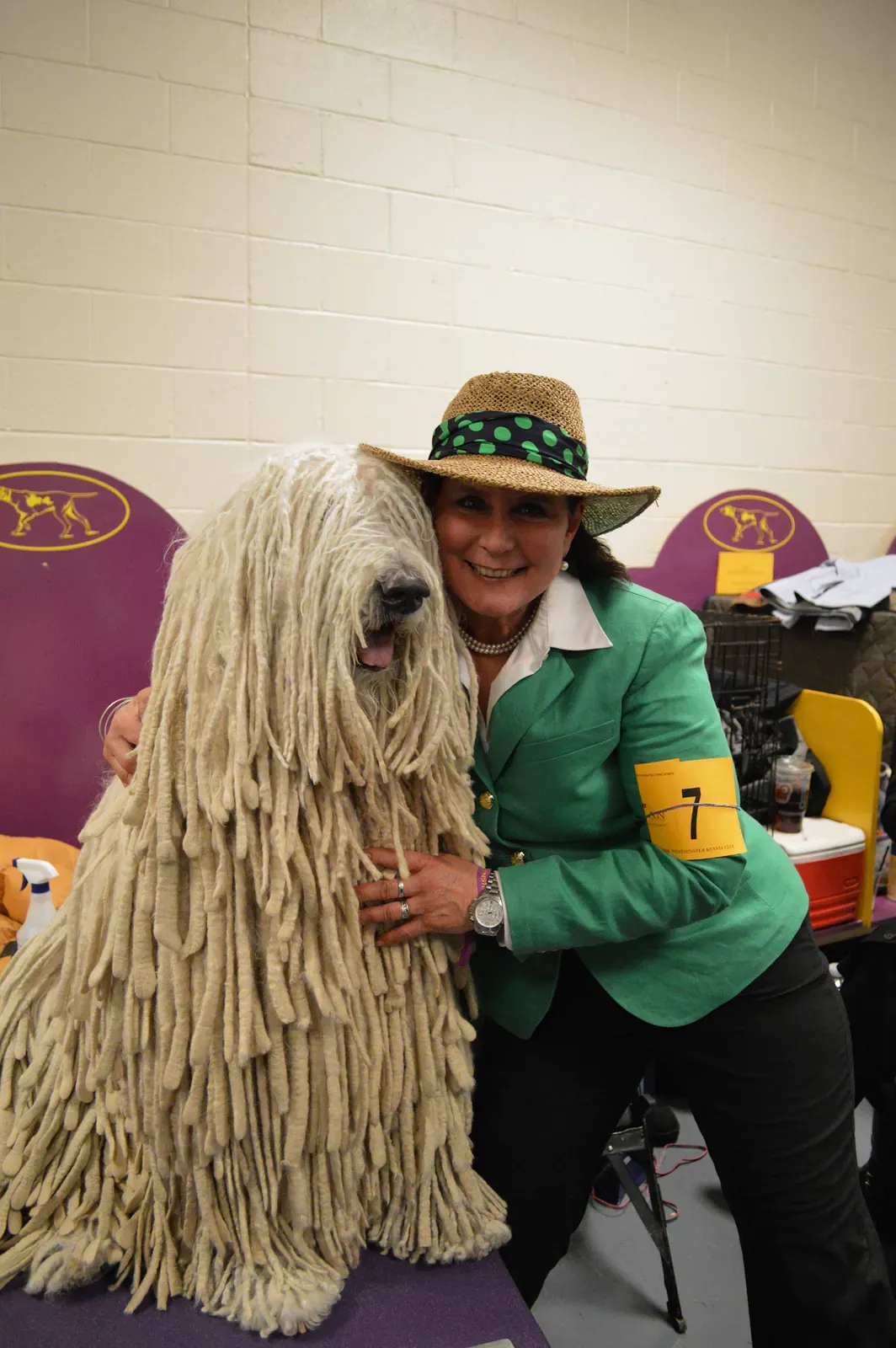
The Komondor is a calm, serious and watchful dog. It was bred to guard on its own, so it makes decisions on its own and does not wait to be told.
- Protective and wary of strangers. The breed's job is to see off intruders. It is usually reserved with people it does not know. The McGrew and Blakesley study found that more aggressive Komondorok protected sheep better, which is the same trait that needs careful management in a home.
- Devoted to its family. Breed accounts describe a quiet dog that is gentle with those it knows. That is a general pattern, not a promise for each dog.
- Independent. It does not respond to repeated commands the way a herding dog does. Training is about a good relationship and clear rules, not drilling.
- Needs early socialisation. A guardian this big needs to meet many people, places and other animals as a puppy, because an unsocialised adult is a safety problem.
Plenty of breed guides also say the Komondor needs a secure property with a high fence. No source gives a barking or time-alone rating, so those are rated as varies.
 Save

Cords: how they form and how to care for them
 Related breedDogue de Bordeaux1300 to 1896 · FranceLate Middle Ages
How cords form
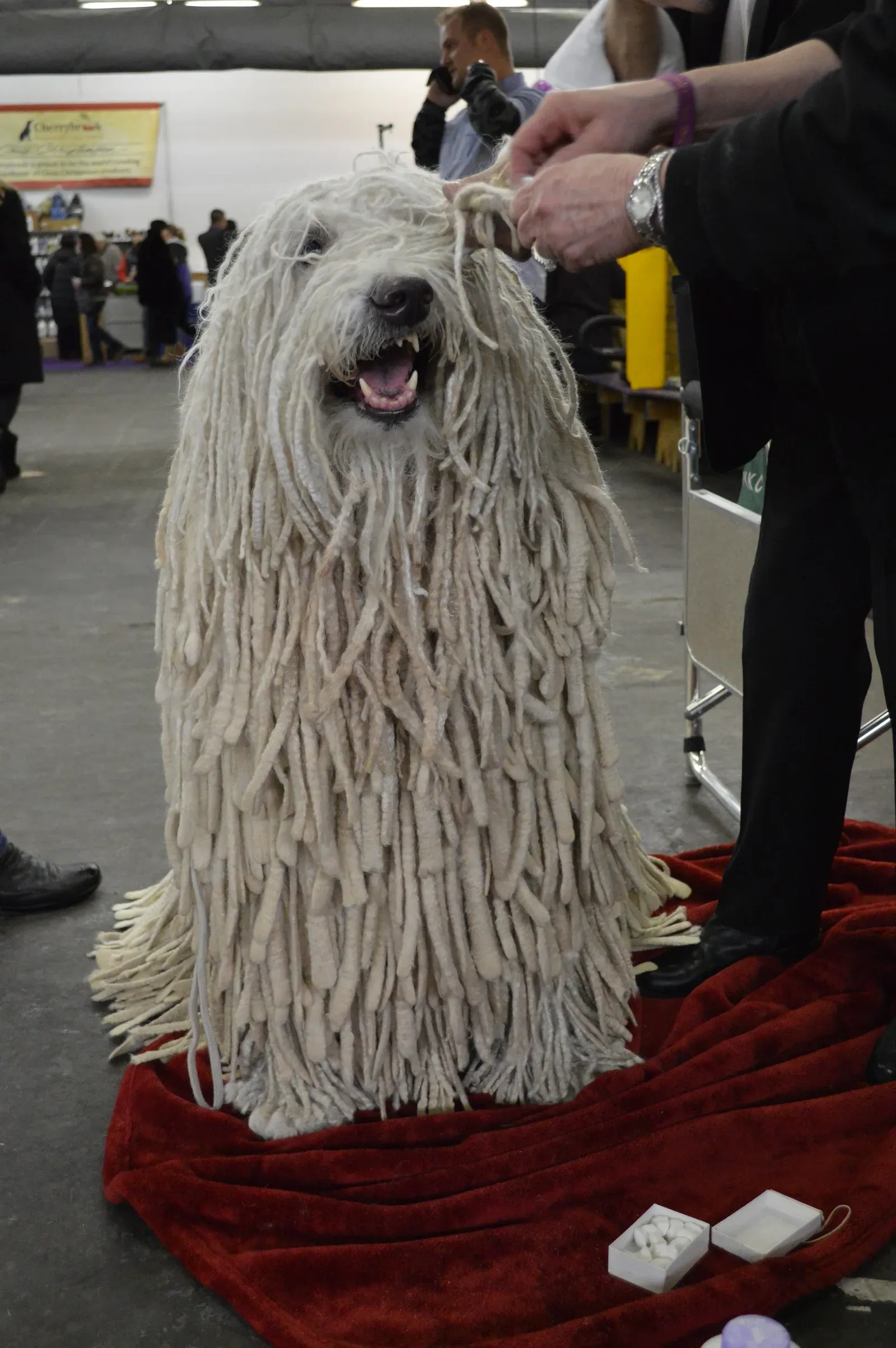
A Komondor puppy has a soft, fluffy, curly coat. Cords form as the coat grows and the undercoat and topcoat twist and mat together into tassels and ropes. The Canadian Kennel Club says the coat is corded at maturity and that it cords naturally but needs help to get a neat result. That help is done by hand: the owner splits the mats into separate cords as they form, so they do not merge into one big mat.
Daily and weekly care
Cord care is less about brushing and more about separating and drying. We follow Hill's Pet and other breed care pages here, and we flag where they disagree.
- Separate by hand. The cords are not brushed. At shedding time, they must be separated by hand so that they do not mat together near the skin. Hill's advises keeping the cords tidy weekly.
- Trim for upkeep. Hill's notes that many guardians trim the cords to about 20 to 25 cm (8 to 10 inches) because a floor-length coat is hard to keep clean.
- Bathing. Sources disagree. Hill's advises regular baths to keep dirt out of the cords. Other sources say owners bathe seldom and avoid it unless needed.
- Drying is the hard part. Burke's Backyard says a fully coated Komondor takes 24 to 48 hours to dry. Wikipedia gives about two and a half days. A damp cord that never dries can hold moisture next to the skin, so plan the bath for a warm, dry day with good airflow.
- Check the skin. VCA's breed page ("Cords Galore") notes skin problems under the coat among the breed's concerns, so lift the cords and look at the skin regularly.
Plan for hours of work every week for a coat in full cord, and for a longer session at shedding time. For general coat care, see our guide to dog grooming, but keep in mind that most grooming advice does not apply to corded coats. A trimmed coat is the usual compromise for a pet.
 Save
Health
 Related breedEnglish Mastiff1300 to 1880 · United KingdomLate Middle Ages
Most Komondorok live healthy lives. The main tasks for an owner are buying from a breeder who tests the parents, feeding well and watching weight. No breed-specific prevalence study exists, so there are no "1 in N" figures for this breed.
| Condition | What it is | How common | What helps |
|---|---|---|---|
| A loose or misshapen hip joint that wears early | Named by several breed health pages as a main concern; no figure found | Hip evaluation of breeding dogs by OFA or the national scheme; lean weight | |
| Bloat (GDV) | A twisted, gas-filled stomach, an emergency | Named by vet pages as the breed's most serious issue, as in other deep-chested breeds; no figure found | Several small meals, no fast eating, no hard exercise around meals; a vet can discuss preventive stomach tacking (gastropexy) |
| Entropion | An eyelid rolling inward and rubbing the eye | Listed by breed health pages; no figure found | Eye checks by a vet |
| Juvenile cataracts | Clouding of the eye lens in young dogs | Listed by breed health pages; no figure found | Eye certification of breeding dogs (CERF) |
| Skin problems under the coat | Irritation from damp or matted cords | Noted by VCA; no figure found | Dry the coat well; check the skin; trim if needed |
One monograph notes that there is no screening test for bloat, so prevention relies on feeding management and surgery, and breeders can help by avoiding lines with many bloat cases. The Komondor Club of America is reported to require hip evaluations of fair, good or excellent from the OFA for its members' breeding dogs.
Life span in our data is 10 to 12 years.

Living with a Komondor
 Related breedJindo1200 to 1962 · South KoreaLate Middle Ages
 Save
| Daily reality | Rating | Why |
|---|---|---|
| Exercise per day | Medium | Sources range from 20 to 40 minutes (Hill's) to up to 1 hour (UK guides), plus mental stimulation |
| Training needs | High | Independent guardian; early socialisation is a must |
| Grooming | High | Cords need hand separation, careful bathing and long drying |
| Shedding | Low | Breed blogs say it needs a lot of grooming but does not really shed; cords hold dead hair |
| Barking | Varies | Alert guardian; depends on dog and setting; no source rating |
| Time alone | Varies | Evidence thin |
| Children | Varies | Big and protective; needs supervision; evidence thin |
| Other dogs | Varies | Territorial; early introductions help; evidence thin |
| Cats and small pets | Varies | Depends on early exposure; evidence thin |
| Flat living | Poor | Giant guardian that needs a secure property |
| Heat tolerance | Fair | Heavy corded coat; keep exercise to cooler hours; no source rating |
| Cold tolerance | Good | Dense coat |
| First-time owner fit | Poor | Independent guardian plus a demanding coat |
A great fit if
- You have a large, securely fenced property.
- You enjoy hands-on coat care or accept a trimmed coat.
- You have owned a strong, independent dog and will train and socialise early.
- You want a quiet guardian, not a dog that greets every visitor.
Think twice if
- You live in a flat or a small plot with neighbours close by.
- You want a low-grooming dog or live where it is muddy and wet most of the year.
- You want a dog that is friendly with everyone without effort.
- You are a first-time owner.
Before you get one
- Health tests. Ask the breeder for hip evaluations of both parents (OFA or the national scheme) and eye certificates, and ask how they manage bloat risk in their lines. Ask for the original certificates.
- Puppy or adult rescue. Breed rescue groups exist. An adult has a known size, temperament and coat state. The coat of an adult in full cord is a big job to start from.
- First year. Plan for puppy classes, calm short walks (hard exercise is not good for growing joints), a lean weight and a plan for coat care before the cords start to form.
Similar breeds to consider
- Kuvasz. Hungary's other large white guardian, with a smooth coat that needs far less grooming.
- Pyrenean Mountain Dog. A white guardian with a long but non-corded coat.
- Kangal Shepherd Dog. A guardian with a short coat, much easier to keep.
- Puli. A much smaller corded dog for owners who like the look but not the size.

Komondor fun facts
 Related breedPoodle1400 to 1874 · FranceLate Middle Ages
- The name is generally read as "dog of the Cumans". The word is recorded in writing from the mid-1500s (AKC).
- A fully coated Komondor can take 24 to 48 hours to dry after a bath, or about two and a half days by another count.
- In 1979, US government researchers trained four Komondorok to guard sheep against coyotes, and sheep losses fell during the trials.
- By the end of the Second World War, breeders believed only a few dozen Komondorok were left in Europe.
Frequently asked questions
How big is a Komondor?
The asks for at least 70 cm for dogs and 65 cm for bitches, with weights of 50 to 60 kg and 40 to 50 kg. Many are taller.
Why does the Komondor have cords?
The coat mats naturally into cords as it matures. The popular explanation is that the cords help the dog blend in with sheep and give padding against bites. These are common explanations, not tested ones.
How do you care for Komondor cords?
Separate them by hand, trim them if you want easier care, and make sure the coat dries fully after a bath, which can take one to two days.
Is the Komondor a good family dog?
It can be calm and protective with its own family, but it is a giant, independent guardian that needs early socialisation and a secure property. It does not suit most first-time owners.
Is the Komondor related to the Puli and Kuvasz?
All three are Hungarian. In DNA data the Puli is in the Hungarian family, and the Komondor and Kuvasz are in the Mediterranean family. No study measures the closeness of the three.
How long do Komondorok live?
Our data gives 10 to 12 years.
Read next
 FamilyMediterraneanThe whole family
 Adopt a dogDog Shelters in AustriaFive big cities checked, more shelters being added
Sources (15)
- Fédération Cynologique Internationale, Komondor, standard no. 53.
- American Kennel Club, Komondor history pages.
- Showsight Magazine, Komondor history article.
- United Kennel Club, Komondor breed standard.
- Canadian Kennel Club, Komondor breed standard.
- PDSA, Komondor breed information.
- VCA Animal Hospitals, "Cords Galore" Komondor breed page.
- Vetstreet, Komondor breed profile.
- Hill's Pet Nutrition, Komondor breed and coat care page.
- Burke's Backyard, Komondor coat and drying information.
- Linhart S.B. et al., "Komondor guard dogs reduce sheep losses to coyotes: a preliminary evaluation", Journal of Range Management, 1979.
- McGrew J.C. and Blakesley C.S., "How Komondor dogs reduce sheep losses to coyotes", Journal of Range Management, 1982.
- Texas A&M AgriLife Extension (San Angelo), livestock guardian dog literature archive.
- Parker H.G. et al., "Genomic analyses reveal the influence of geographic origin, migration, and hybridization on modern dog breed development", Cell Reports, 2017.
- Fogle B., The New Encyclopedia of the Dog, 2009.