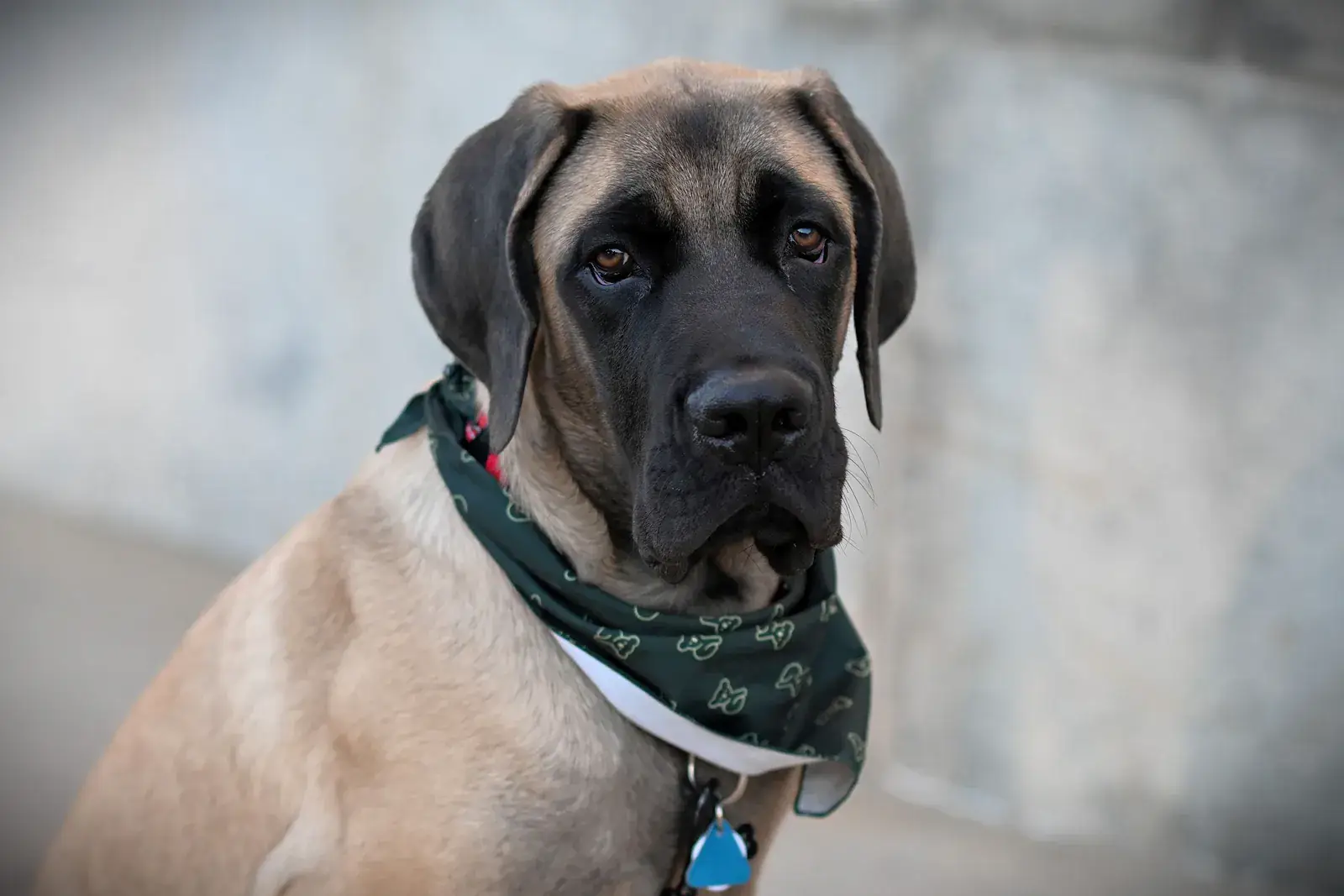
It is calm, watchful and gentle with its own family, and it has a long and partly legendary history in England. It also lives a short life for a dog, as most giant breeds do. This guide covers the history (with the legends labelled), how the breed nearly vanished in the 1940s, its DNA relatives, the , the Zorba record, temperament, health and what living with one is really like.
Mastiff quick facts
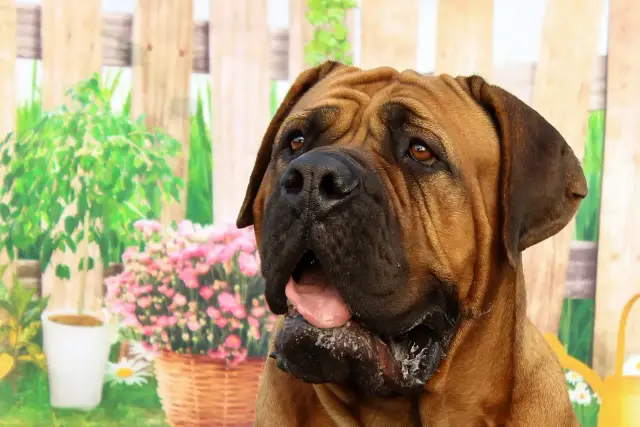 Related breedDogue de Bordeaux1300 to 1896 · FranceLate Middle Ages
- Country of origin
- Great Britain (England); lists "Great Britain"
- Period of development
- Atlas data gives 1300 to 1880, medium confidence; the older roots are disputed
- Original job
- Guarding property and people; in the past, also baiting and war-dog roles (legend and record mixed)
- Type
- Mastiff / molossoid; FCI Group 2 (Pinscher and Schnauzer, Molossoid and Swiss Mountain and Cattledogs), standard no. 264; Working Group; UK Kennel Club recognised
- FCI official name
- Mastiff
- Height
- UKC and Canadian Kennel Club: dogs at least 76 cm, bitches at least 70 cm (30 and 27.5 inches)
- Colour
- Apricot, fawn or brindle with a dark mask (FCI, UK Kennel Club)
- Life span
- Atlas data: 6 to 10 years. Owner survey median age at death: 8 years (Bell and Hesketh 2021)
- DNA family
- European Mastiff (Parker et al. 2017, strong support)
- Related breeds in our data
- Bullmastiff, Boerboel, Saint Bernard, Cane Corso, Dogue de Bordeaux
Drawn to scale in real centimetres. Its back reaches about 73 cm, mid-thigh; its head about 93 cm, your hip.
Where it sits in the tree
Late Middle Ages · 1200 to 1499

Name and origin
 Related breedBulldog1835 to 1875 · United KingdomIndustrial Revolution
"Mastiff" is traced to the Old French "mastin", which in turn is said to come from the Latin "mansuetus", meaning "tame" or "domesticated". The UK breed is called the Mastiff, the Old English Mastiff or the English Mastiff. "English" is a handle used in North America to tell it from other mastiff-type breeds such as the Neapolitan Mastiff or Tibetan Mastiff.
Many guides say the Mastiff is thousands of years old and trace it to Egyptian, Assyrian or Roman war dogs. Those ancient claims are not backed by a written chain. What our data (from Wikipedia, medium confidence) says is more modest: the Mastiff is likely descended from the Alaunt, a hunting and war dog of medieval Europe, and from the Pugnax Britanniae, a fighting dog of Roman Britain, and in the 19th century Alpine Mastiff stock gave significant input. "Likely" is the right word. These are names of types found in old texts, not of breeds with studbooks.

History
 Same eraGreat Dane1600 to 1880 · GermanyEarly Modern Era
Mastiffs of the English estates
From the Middle Ages, large guard dogs were kept on English estates. The word "mastiff" then covered several heavy dog types. Over the centuries the dogs were used for guarding, for baiting bulls and bears (until the practice was banned in 1835), and in some accounts for war. In the 1800s the breed was refined by show breeders into the type we know today. The Old English Mastiff Club is said to have been founded in 1883 to define the standard (one secondary source; check before quoting).
Lyme Hall and Sir Piers Legh (legend)
The most repeated story is that Sir Piers Legh of Lyme Hall in Cheshire was wounded at the battle of Agincourt in 1415 and was guarded on the field by his Mastiff, which stood over him until he was found. The AKC records the story as legend: Legh was rescued by his squire and servants but died in Paris, and the dog was taken back to Lyme Hall, where she is said to have had a litter that founded the Lyme Hall strain. Versions differ on whether the dog was male or female, and no document of the time confirms any of this. The Lyme Hall kennel itself is real: it is described as one of the oldest Mastiff kennels, and with the Duke of Devonshire's kennel at Chatsworth it provided breeding stock for the modern breed. Treat the Agincourt scene as a legend that grew with the breed.
Near-extinction after the Second World War
Two world wars hit the Mastiff badly. Food was rationed, large dogs were costly to feed, and kennels closed. The UK Kennel Club says that by the end of the Second World War a single bitch, Nydia of Frithend, was left in Britain. Several Mastiffs had been exported to the United States between the wars, and the dogs descended from them (14 Mastiffs in the Kennel Club's account) were sent back to Britain after the war to restart the breed. Other secondary sources tell it differently: one says about 14 dogs remained in England, another says breeders used crosses with the Saint Bernard, Great Dane or Bullmastiff to keep the line going. These details are not settled, and the pattern is more important than the numbers: a breed that nearly died in Britain was rebuilt with help from dogs bred in North America.
One account credits a puppy called Beowulf, born in Canada in 1918 to a pair of imported British Mastiffs, with helping to re-establish the breed in North America. That is a single-source story.
Relatives and DNA
 Same familyNewfoundland1600 to 1886 · CanadaEarly Modern Era
The Mastiff is the namesake of the European Mastiff family, a DNA from Parker et al. 2017 with strong support. The family covers the mastiffs, bulldogs and bull breeds of Europe and their descendants, including the "bully" dogs. See European Mastiff for the whole group.
Bullmastiff and other close relatives
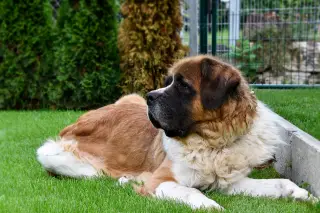
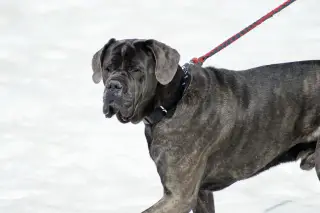
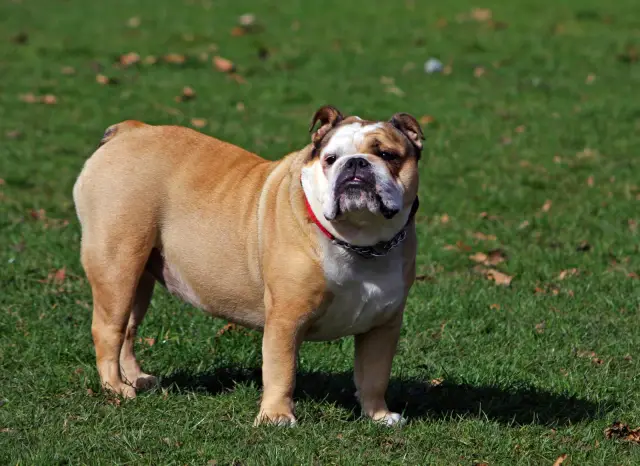
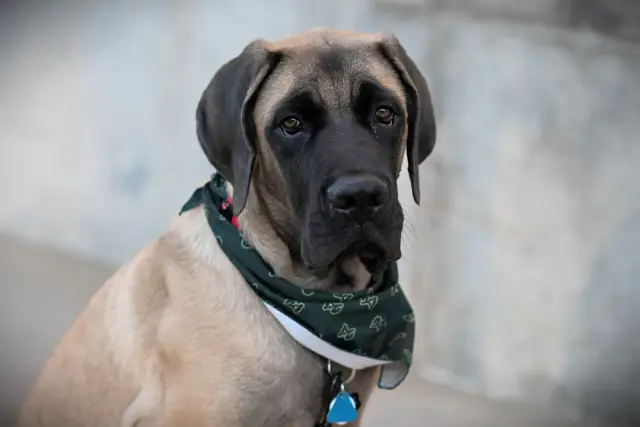
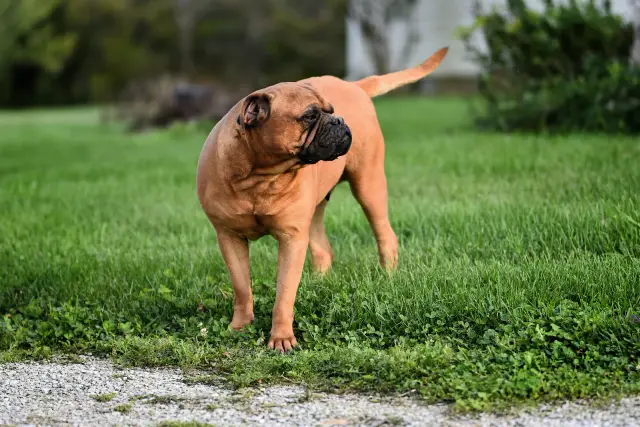
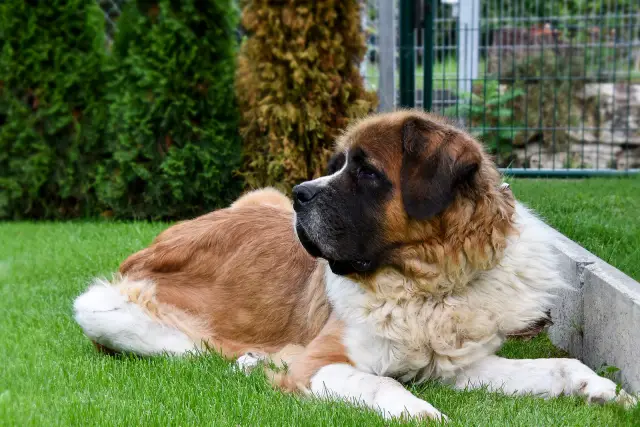
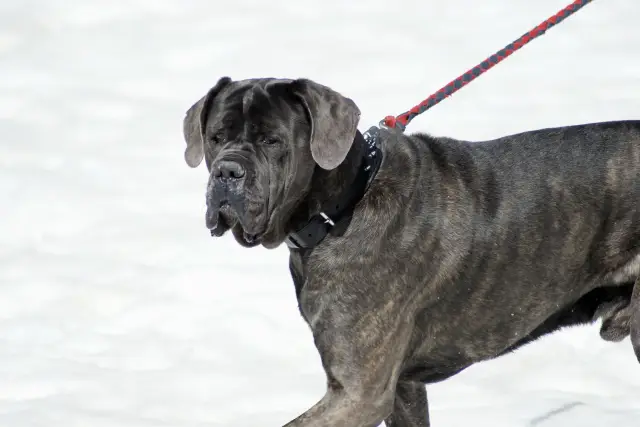
The Mastiff's closest DNA match in the data is the Bullmastiff, which shares 143.9 (Mb) of its in the Parker study. The Bullmastiff was made in the 1800s by crossing the Mastiff with the old Bulldog, so the match is not a surprise. The next matches are far lower: the Boerboel (41.8 Mb), Saint Bernard (37.1), Cane Corso (26.4) and Dogue de Bordeaux (26.2). A larger shared figure means more shared genetic stretches (more recent common ancestry or crossbreeding), not that one breed is "better".

- Mastiff and Bullmastiff
- Mastiff and Boerboel
- Mastiff and Saint Bernard
- Mastiff and Cane Corso
- Mastiff and Dogue de Bordeaux
Ancestors and descendants in our data
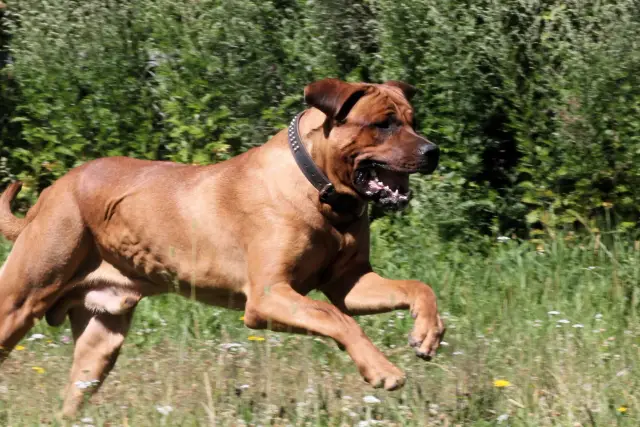
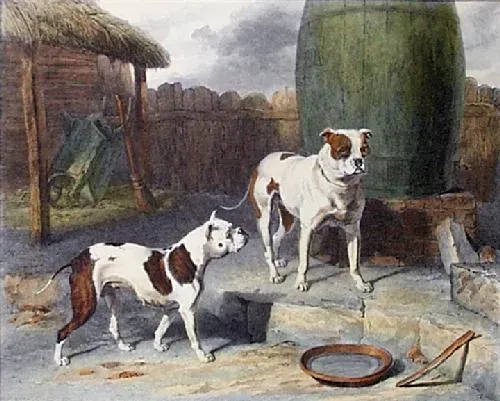
Our data lists the Alaunt and the Pugnax Britanniae as likely ancestors and the Alpine Mastiff as a cross. It also lists breeds that came from the Mastiff, or that the Mastiff helped make, such as the Bullmastiff, the Newfoundland, the Boerboel, the Tosa and the Old English Bulldog. These come mostly from breed histories, not from DNA tests, and the confidence is medium.
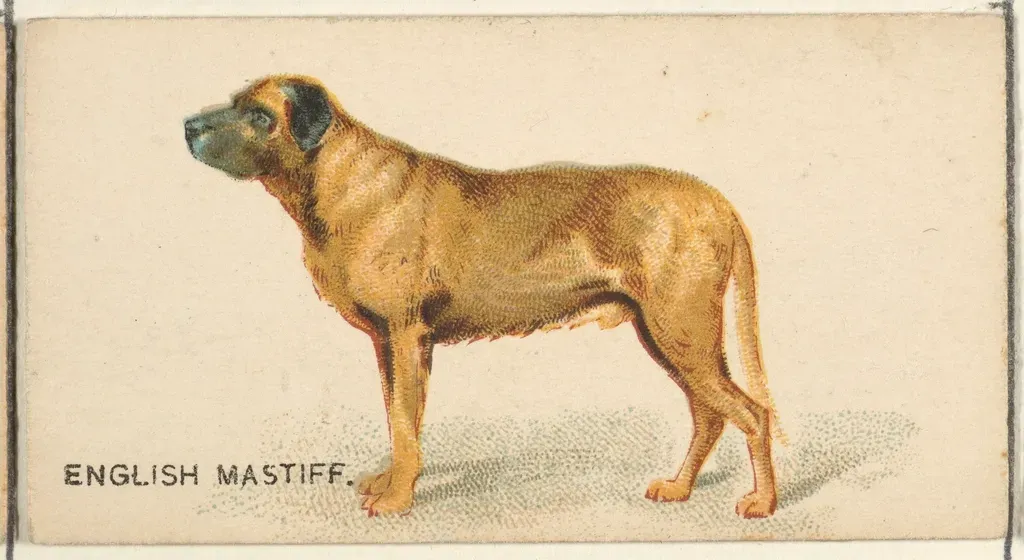 Save
Sister breeds · 2
- Alano Español1300 to 1500
- Old English Bulldog1500 to 1835
Descend from it · 7
- Old English BulldogUnited Kingdom
- NewfoundlandCanada
- BoerboelSouth Africa
- Mackenzie River HuskyCanada
- BullmastiffUnited Kingdom
- TosaJapan
- Bull ArabAustralia
- Bullmastiff143.9 Mb 6.0%
- Boerboel41.8 Mb 1.7%
- St. Bernard37.1 Mb 1.5%
- Cane Corso26.4 Mb 1.1%
- Dogue de Bordeaux26.2 Mb 1.1%
- Bulldog16.3 Mb 0.7%
- Great Dane12.3 Mb 0.5%
- Newfoundland12.1 Mb 0.5%
- Leonberger11.3 Mb 0.5%
- Boxer11.3 Mb 0.5%
Source: Parker et al. 2017. Percent of the whole genome.
The breed standard
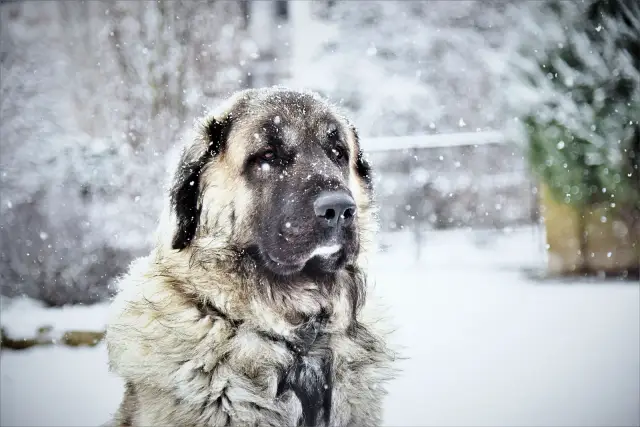 Looks relatedLeonberger1846 to 1895 · GermanyIndustrial Revolution
A breed standard is the written ideal that a kennel club judges against. The FCI standard (no. 264) is based on the British one.
| Trait | What the standards say |
|---|---|
| Group | FCI: Group 2, molossoid; AKC: Working Group |
| Height | UKC and Canadian Kennel Club: dogs at least 76 cm and bitches at least 70 cm at the shoulder (a minimum, so taller dogs are allowed) |
| Colour | FCI and UK Kennel Club: apricot, fawn or brindle |
| Mask | FCI and UK Kennel Club: muzzle, ears and nose black, with black round the eyes and extending upward between them |
| White | FCI: excessive white on body, chest or feet is not wanted |
| Brindle | Canadian Kennel Club: fawn background fully covered with very dark stripes |
| Weight | Not fixed in the texts checked; the breed is heavy, with males often over 70 kg in breed overviews |
Temperament
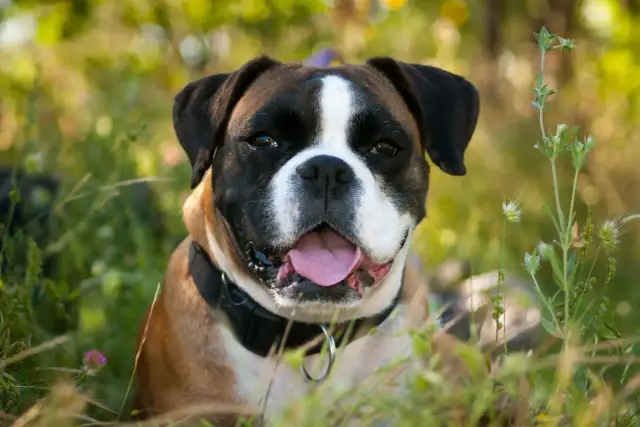 Related breedBoxer1880 to 1904 · GermanyVictorian Breed Boom
The Mastiff is known as a calm, dignified dog, courageous when it needs to be and gentle at home. Breed overviews describe a good-natured guardian that is loyal to its people and watchful with strangers. It does not need to bark much, because its size does the talking.
- With family. Usually affectionate and patient; it can be clumsy, and a dog of this weight can knock over a toddler without meaning to.
- With strangers. Reserved. Early socialisation matters in a dog that may weigh as much as an adult person.
- Training. Not a hard dog to teach, but slow to mature and stubborn when it chooses. Start in puppyhood; a 70 kg adult cannot be hauled around. Use patience and reward.
- Energy. Low to moderate in the house, with short bursts. It is not built for long runs, especially as a growing puppy.

Health
 Related breedAmerican Bulldog1700 to 1980 · United StatesEarly Modern Era
Most Mastiffs live to old age for a giant breed, and many are free from serious illness. The main points for owners are cancer, bloat, joint trouble and heart disease, and the main fact is that giant breeds have shorter lives than small ones. These are the points breeders screen for and owners can watch for.
How long Mastiffs live
Bell and Hesketh (Veterinary and Animal Science, 2021) ran an online owner survey of 1,036 Mastiff-group dogs that had died, aimed at hobbyist and registered breeders. The median age at death was 8 years, with a mean of 7.72 years in Europe and 8.17 years in North America. The leading causes were cancer (47%, about 1 in 2 of the deaths), old age (16%), heart disease (8%) and stomach problems including bloat and twist (7%, about 1 in 14). Osteosarcoma (bone cancer) was the cancer recorded most often. These are shares of deaths, not the share of living dogs with each disease, and the owners who answered may not represent every Mastiff.
Other studies of related giant dogs point the same way. A Czech survey of 241 giant dogs (Scientia Agriculturae Bohemica, 2020) found an average life of 7.60 years, and stomach dilatation and twist caused 30% of deaths in the mastiff-type breeds. A veterinary study of Bullmastiffs in Australia (, 2008 to 2017) found a median age at death of 8.5 years. These are not Mastiff figures, so use them only to see the pattern. Our atlas data gives 6 to 10 years for the Mastiff.
Health table
| Condition | What it is | How common | What helps |
|---|---|---|---|
| Cancer, especially osteosarcoma | Tumours of bone and other tissue | About 1 in 2 of the deaths in the Bell and Hesketh survey were from cancer | Vet checks for lumps or limping; no screening test |
| Bloat (stomach dilatation and twist) | A gas-filled, twisted stomach; an emergency | About 1 in 14 of the deaths in the same survey; 30% of deaths in mastiff-type giants in a Czech survey | Smaller meals, no hard exercise around meals, know the signs and go to the vet at once |
| Cranial cruciate ligament rupture | A torn knee ligament | A 1999 case-control study (Duval et al., JAVMA) found Mastiffs among the breeds at higher risk in young dogs; no prevalence figure found | Lean body weight; vet care |
| Hip and | Loose or misshapen joints that wear early | The AKC lists hip and elbow checks among the breed's health tests; no figure found | Hip and elbow scores for both parents |
| Heart disease | Weakening of the heart muscle in some lines | The AKC lists a cardiac exam for breeding stock; cardiac causes were 8% of deaths in the survey | Cardiac exam by a vet or cardiologist |
| Cystinuria | An inherited kidney and bladder stone condition | Listed by the AKC as a breed test; no figure found | Cystinuria DNA test of breeding stock |
The AKC's Working Group health testing list for the Mastiff names a cardiac exam, a cystinuria DNA test, and patella, hip and elbow evaluations. Insurance and breed guides add eye checks, but those are secondary sources.

Living with a Mastiff
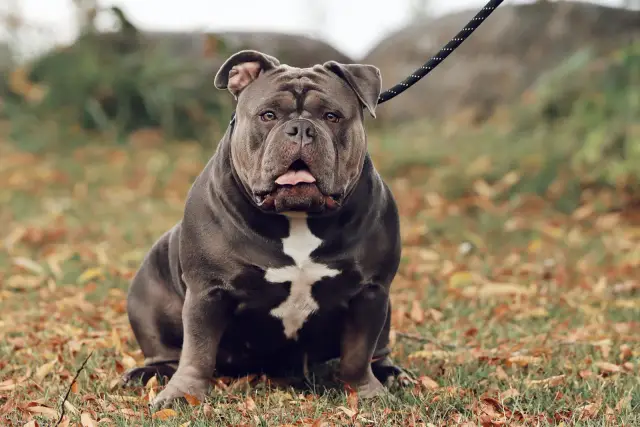 Related breedAmerican Bully1980 to 2004 · United StatesModern Era
The ratings below follow the sources in this article. Where evidence is thin, the table says "Varies".
| Daily reality | Rating | Why |
|---|---|---|
| Exercise per day | Low | A calm giant; short walks, not hard runs; evidence is breed-overview level |
| Training needs | Medium | Slow to mature but biddable; early training matters because of size |
| Grooming | Low | Short coat; a weekly brush |
| Shedding | Medium | Short coat that sheds; evidence thin |
| Barking | Low | Typically watchful but quiet; varies by dog |
| Time alone | Fair | Devoted to its family; evidence thin |
| Children | Varies | Gentle but huge and clumsy; always supervise |
| Other dogs | Varies | Depends on socialisation; evidence thin |
| Cats and small pets | Varies | Depends on early exposure; evidence thin |
| Flat living | Poor | A giant that needs space; stairs and small rooms are hard |
| Heat tolerance | Poor | Heavy body; evidence thin on exact limits |
| Cold tolerance | Fair | Short coat; no thick undercoat |
| First-time owner fit | Fair | Gentle but big; plan for cost, size and a short life |
A great fit if
- You have space inside and a secure garden, and a car big enough for a dog this size.
- You want a calm guardian, not a running partner.
- You are ready for a dog that may live about 8 years and for large vet bills.
- You can train a puppy that will become heavier than most adults.
Think twice if
- You live in a small flat or on upper floors without a lift.
- You want a dog for jogging or long hikes.
- You cannot afford giant-dog food, insurance and vet costs.
- You have toddlers and little space; a big dog can knock them down by accident.
Before you get one
- Health tests. Ask for hip and elbow scores, a cardiac exam, and a cystinuria DNA result for both parents (AKC working group list). Ask what the breeder knows about cancer and bloat in the line, and ask to see the paperwork.
- Puppy or adult rescue. Mastiff breed rescues exist in several countries. An adult has a known size, manner and health picture, and some are handed in because owners did not expect the cost.
- First year. Plan for puppy classes, restrained exercise while the joints grow, and a lean body. Ask a vet about feeding a giant puppy; fast growth does not help the joints.
Similar breeds to consider
- Bullmastiff. Smaller and lighter, from the Mastiff and the old Bulldog, with a bit more drive.
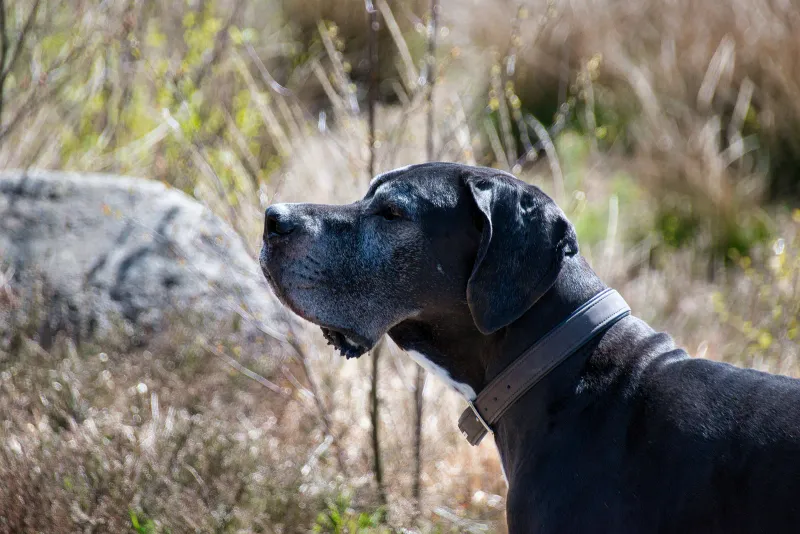
- Great Dane. Equally gentle, taller and leaner, with a short life of its own.
- Dogue de Bordeaux. A French mastiff with a similar calm temperament and a short life.
- Neapolitan Mastiff. An Italian mastiff with loose skin, a guard breed.

Mastiff fun facts
 Related breedAmerican Pit Bull Terrier1850 to 1898 · United StatesVictorian Breed Boom
- A Mastiff called Zorba was long listed as the heaviest dog ever. Figures conflict: Wikipedia gives about 143 kg in 1987 and 156.5 kg in 1989; the Guinness page gives 144.66 kg in 1987, and says he reached 153.5 kg in 1989 after being overfed by a relative, then returned to a normal weight. His shoulder height is 94 cm in one source and 88.7 cm in the other. The record is real, but the numbers depend on the source and date.
- The word "Mastiff" is said to come from the Latin for "tame", though the word has been used for several heavy dog types.
- Bull and bear baiting, in which mastiff-type dogs were used, was banned in England in 1835.
- The AKC calls Lyme Hall the home of one of the oldest Mastiff kennels, and the Sir Piers Legh story is told as legend.
Frequently asked questions
How big is an English Mastiff?
The UKC and Canadian Kennel Club ask for dogs of at least 76 cm and bitches of at least 70 cm at the shoulder. Males are often over 70 kg, and the heaviest on record, Zorba, was around 145 to 156 kg depending on the source.
What is the difference between a Mastiff and a Bullmastiff?
The Bullmastiff was made in the 1800s from the Mastiff and the old Bulldog. It is smaller and lighter, and shares more DNA with the Mastiff (143.9 ) than any other breed in the Parker study.
How long do Mastiffs live?
Our data gives 6 to 10 years. An owner survey of 1,036 Mastiff-group dogs found a median age at death of 8 years.
Are Mastiffs good family dogs?
Usually calm and gentle with their own families, but very large, and children and dog should be supervised. They are not for small homes.
Is the Lyme Hall story true?
It is a legend. The Lyme Hall kennel is real and old, but the Agincourt tale and its details are not documented, and versions differ.
Did the Mastiff nearly die out?
After the Second World War, the UK Kennel Club says one bitch, Nydia of Frithend, was left in Britain, and the breed was rebuilt from Mastiffs descended from dogs exported to the United States.
Read next
Closest DNABullmastiff143.9 Mb shared FamilyEuropean MastiffThe whole family
 Adopt a dogDog Shelters in EuropeFind dog shelters in Europe, learn how shelters differ from country to country and why adopting a dog is a good option.
Sources (14)
- Fédération Cynologique Internationale, Mastiff, standard no. 264.
- The Kennel Club (UK), Mastiff breed standard (effective 1 January 2018) and breed information pages.
- American Kennel Club, Mastiff history pages and Working Group breed health testing requirements.
- United Kennel Club, Mastiff breed standard.
- Canadian Kennel Club, Mastiff breed standard.
- Bell J. and Hesketh S., "Mastiff breed mortality: A study of owner experience, dog age and longevity", Veterinary and Animal Science, 2021.
- "The Demography, Longevity and Mortality of Bullmastiffs Attending Veterinary Practices in Australia", Animals, 2024 (VetCompass Australia).
- "Average Life Expectancy, the Most Common Cause of Death and Illness of Giant Dog Breeds", Scientia Agriculturae Bohemica, 2020.
- Duval J.M. et al., "Breed, sex, and body weight as risk factors for rupture of the cranial cruciate ligament in young dogs", Journal of the American Veterinary Medical Association, 1999.
- Guinness World Records, Zorba (heaviest dog) entry.
- Wikipedia, English Mastiff and Zorba (dog), used with care.
- Dogster, Mastiff history article (secondary source).
- Parker H.G. et al., "Genomic analyses reveal the influence of geographic origin, migration, and hybridization on modern dog breed development", Cell Reports, 2017.
- Fogle B., The New Encyclopedia of the Dog, 2009.