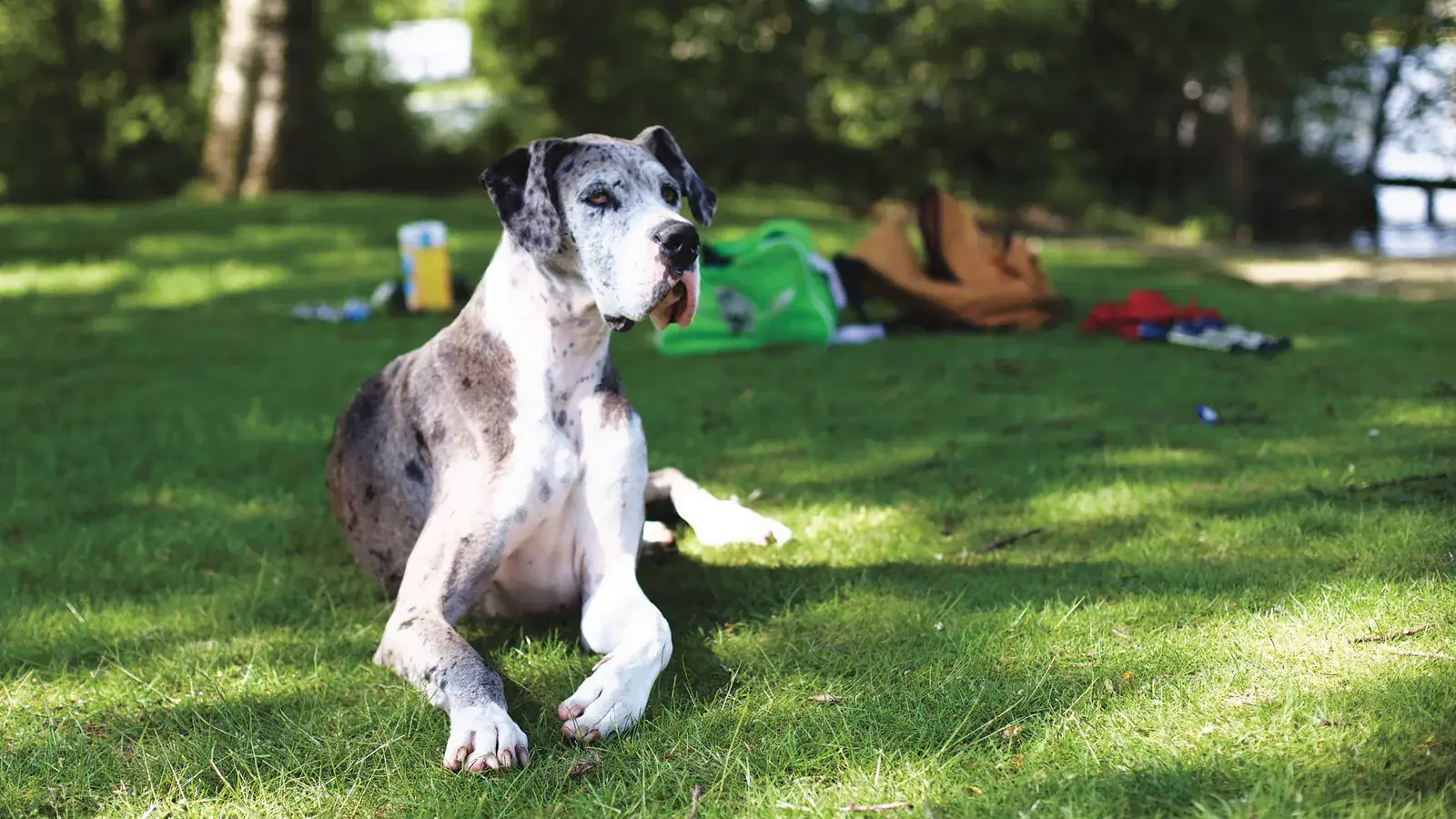
Males stand at least 76 to 80 cm at the shoulder, and the tallest dog ever recorded was a Great Dane. Despite the name, the breed has no known link to Denmark. Its average lifespan is short for a dog, around 7 to 10 years, and owners should know about bloat and heart disease before bringing one home.
Quick facts
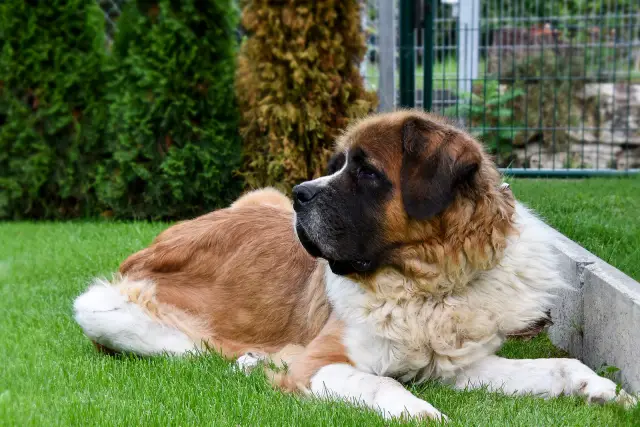 Related breedSt. Bernard1650 to 1884 · SwitzerlandEarly Modern Era
- Other names
- Deutsche Dogge, German Mastiff, Boarhound
- Origin
- Germany
- Original job
- Boar hunting, later estate guardian and companion
- Size
- Giant
- Height
- About 71 to 90 cm at the shoulder, depending on sex and club
- Typical lifespan
- 7 to 10 years
- Family (Parker 2017 DNA)
- European Mastiff
- Registered by
- FCI (no. 235, Group 2), AKC (Working Group), UK Kennel Club
- Colours
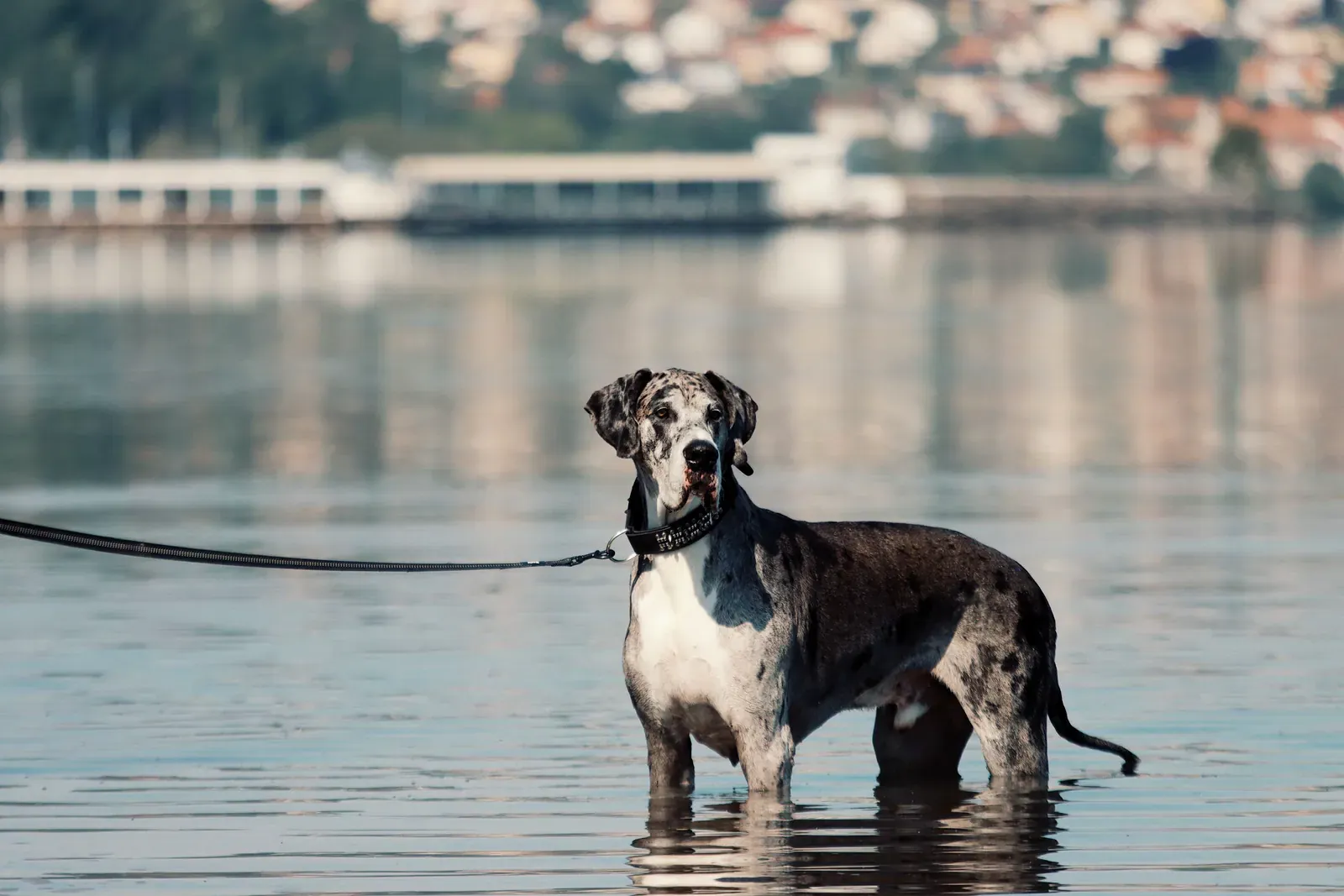
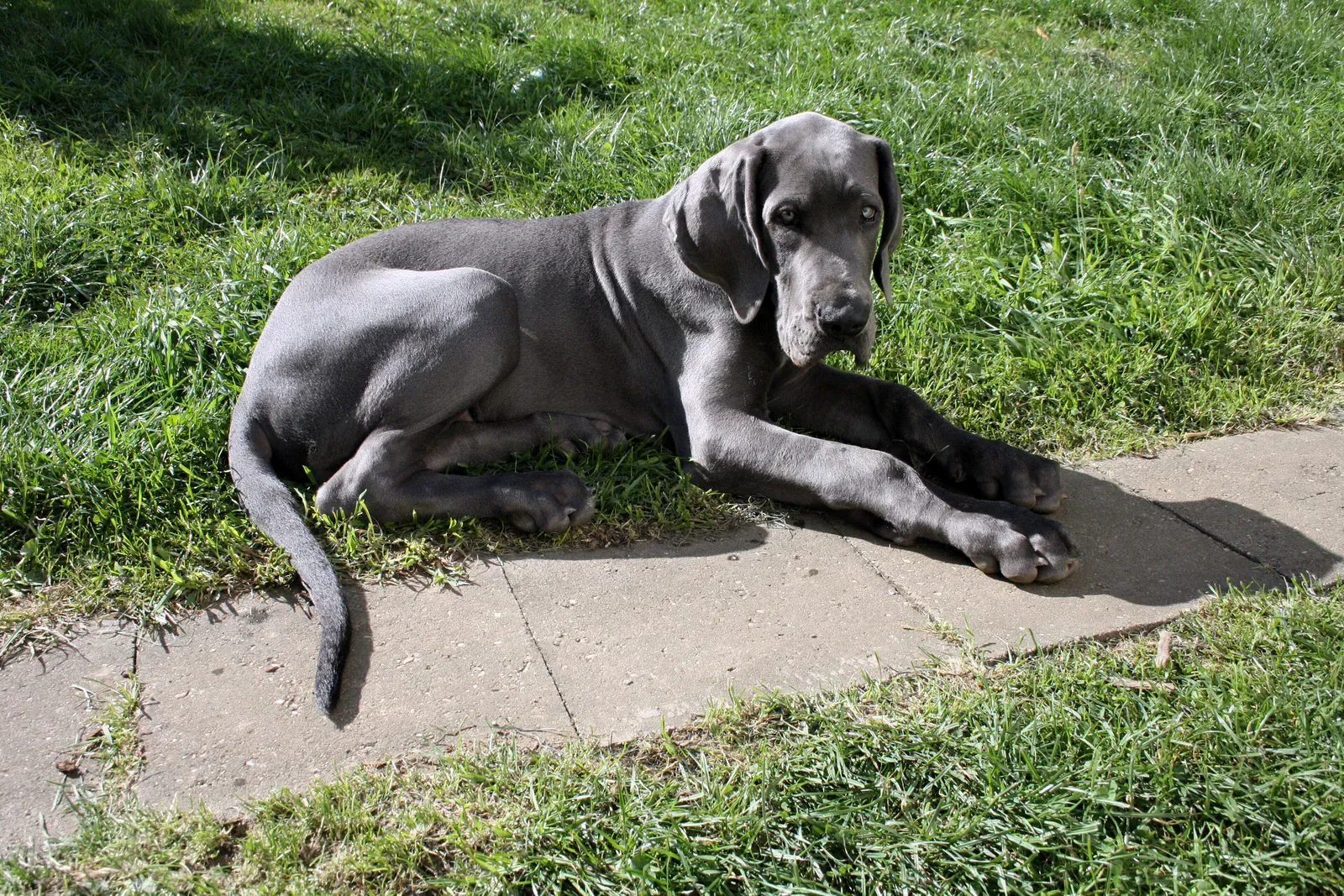
- Fawn, brindle, blue, black, harlequin, mantle
Drawn to scale in real centimetres. Its back reaches about 81 cm, your hip; its head about 102 cm, your waist.
Where it sits in the tree
Early Modern Era · 1600 to 1799
Name and origin
 Related breedBoerboel1650 to 1983 · South AfricaEarly Modern Era
Deutsche Dogge, the German name
In Germany the breed is the Deutsche Dogge, which means "German mastiff". That is also its official name in the FCI, the international federation that lists the breed under number 235 with Germany as country of origin. "Dogge" is the old German word for a large mastiff-type dog, and the breed has also been called the German Mastiff and the Boarhound.
Why is it called a Great Dane?
The English name is a misnomer. Three explanations are told, and none is proven.
- Buffon's grand danois. The most repeated account credits the French naturalist Buffon, whose 1755 natural history used "grand danois", "great Danish dog", for a tall boarhound-type dog. English speakers translated it as "Great Dane". One telling adds that he saw such a dog on a trip to Denmark and assumed it was Danish.
- A mishearing. A second idea says Buffon may have confused the French words for a fallow deer buck and doe (daim and daine) with Danois, because of the dog's deer-like shape.
- Danish Dogge as an old trade name. The list of older German names for the dogs includes "Danish Dogge" alongside Ulmer Dogge, Hatzruede, Saufaenger and others, so Danish may simply have been one of many local labels.
The name stuck even though no Danish origin is documented, and Denmark appears to have contributed little to the breed. In the 19th century English speakers still called the dog the "German boarhound", which points to where it really came from.
Where the breed comes from
Germany is the development country. The breed was shaped from mastiff-type and sighthound-type dogs into a tall, fast, strong boar hunter. The knowledge base dates the breed's appearance from about 1600 to 1880, with medium confidence, because boarhounds of this type blur into each other in old records.

History
 Same eraBlack Russian Terrier1949 to 1984 · RussiaModern Era
For centuries, German nobles hunted wild boar with large dogs. A boar is fast, armed with tusks and can weigh well over 100 kg, so the dog needed height to reach the animal, speed to catch it and weight to hold it. Breeders combined mastiff-type dogs (weight and grip) with sighthound-type dogs (reach and speed). When boar hunting declined and the nobility's estates changed, the dogs found a second job guarding homes and, later, living as companions.
Before the modern breed, German sources used many local names for these big hunting dogs: Boarhund, Tiger Dog, German Mastiff, Hatzruede, Saufaenger, Ulmer Dogge, Metzgerhund and Deutsche Dogge. "Dogge" at first meant any large powerful dog and not one specific breed.
The modern breed was standardised in Germany in the late 1800s. In 1878 a seven-member committee in Berlin under Dr. Bodinus decided to group all those varieties as "Deutsche Doggen", laying the foundation for one German breed. Max Hartenstein, owner of the Plavia kennel in Saxony, is named as a committee member. Sources date the first written standard to 1880 (at a Berlin show) or 1881, and the breed club, today the Deutsche Doggen Club 1888 e.V., has looked after the standard since 1888. One source puts the formal club standard at 1891, so the dates are not fully consistent.
Britain was early. A Great Dane Club was set up in England in 1883, and sources give the Kennel Club recognition as 1884 or 1893. No record settles which. In the United States a German Mastiff or Great Dane Club of America was founded in Chicago in 1889 and renamed the Great Dane Club of America in 1891. Several sources give 1887 for AKC registration in what is now the Working Group, but no AKC document confirms that year. The English name took hold in both countries, while Germany kept Deutsche Dogge and in Berlin the breeders chose to drop the other designations.
Tallest dogs on record
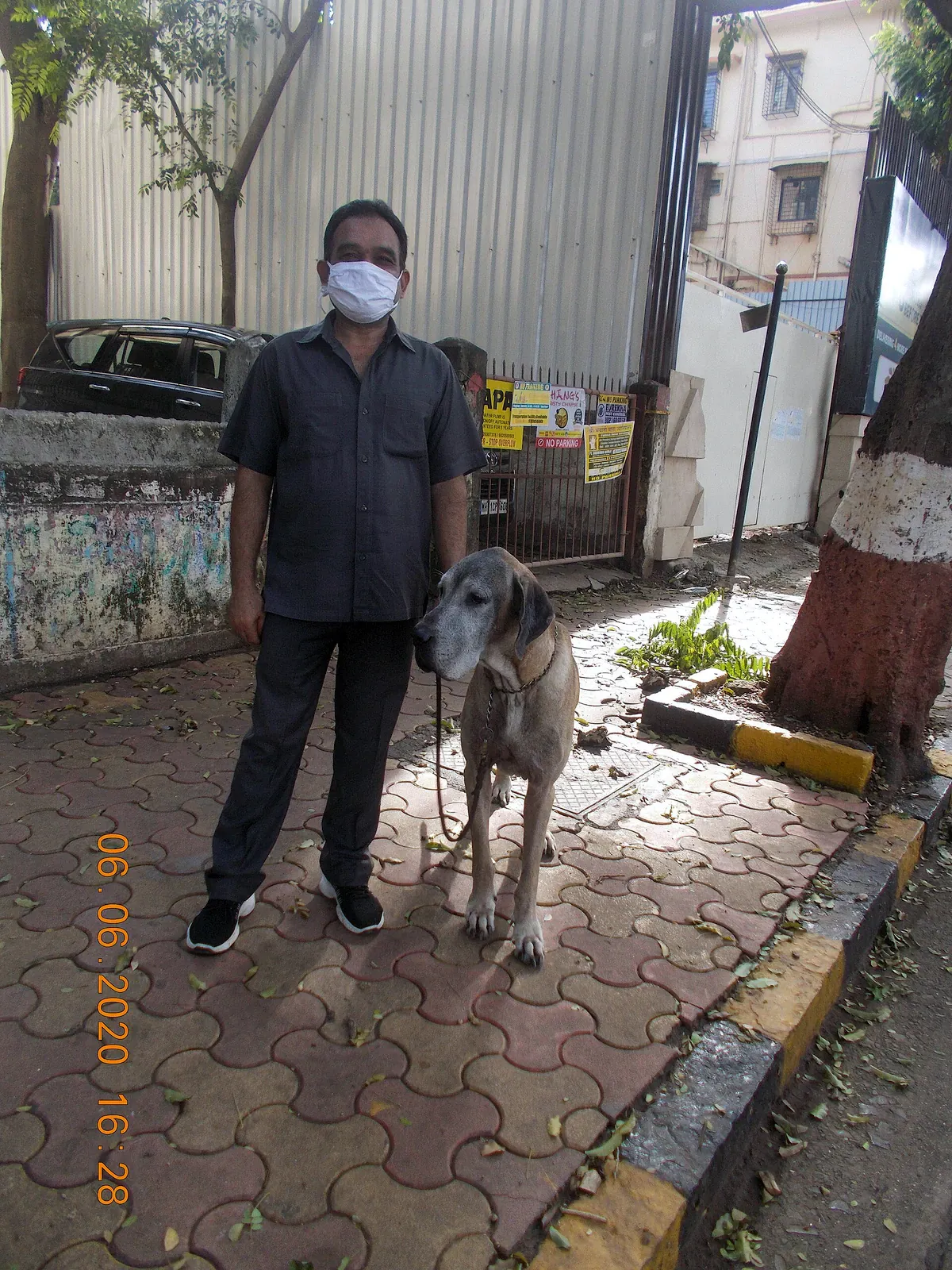
The Great Dane is the breed of record height. Zeus, owned by the Doorlag family in Michigan, stood 111.8 cm (3 ft 11 in) at the shoulder and was named the tallest dog ever by Guinness World Records. He died in 2014. Before him, Freddy of Essex, England, measured 103.5 cm at the shoulder and held the title for a time. He died at 8 years old. In 2022 another Zeus, from Texas, was confirmed as the tallest living dog at about 104.6 cm. Records like these are exceptions. Most Great Danes are smaller, and extreme height is not something responsible breeders aim for.
 Save
Relatives and DNA
 Same familyEnglish Mastiff1300 to 1880 · United KingdomLate Middle Ages
In the 2017 Parker study of dog breed relationships, the Great Dane sits in the European Mastiff , the DNA family of heavy, mastiff-type working dogs. The clade support is strong. segments in that study link the Great Dane most closely to:
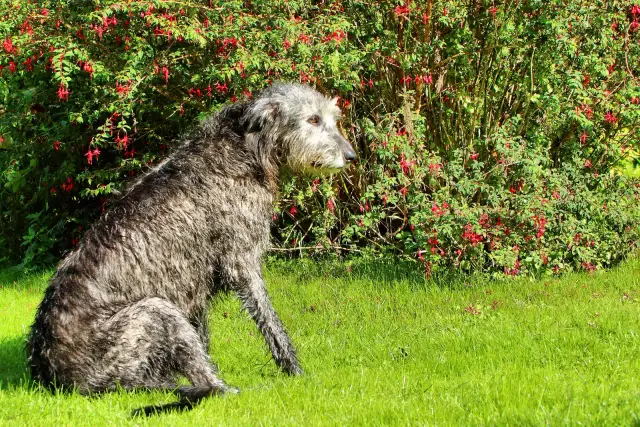
- Irish Wolfhound (38.4 shared), another giant hunting breed, sighthound in shape
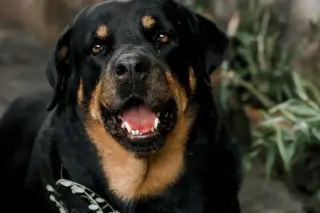
- Rottweiler (24.1 Mb)
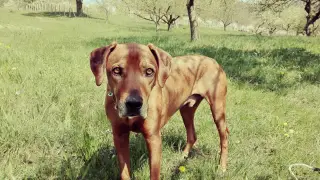
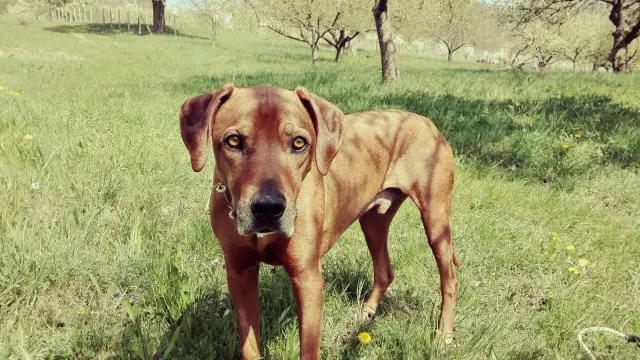
- Rhodesian Ridgeback (20.7 Mb)
- Leonberger (19.8 Mb)
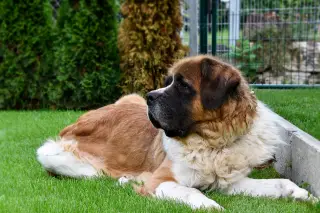
- St. Bernard (19.3 Mb)
- English Mastiff (12.3 Mb)
The Great Dane itself is listed as a parent in the Parker clade tree of several other breeds, among them the Irish Wolfhound, the Rhodesian Ridgeback and the Dalmatian. See the European Mastiff family for the wider group.
Descend from it · 7
- Irish WolfhoundIreland
- Rhodesian RidgebackSouth Africa
- DalmatianCroatia
- TosaJapan
- Laizhou HongChina
- Dogo ArgentinoArgentina
- Bull ArabAustralia
- Irish Wolfhound38.4 Mb 1.6%
- Rottweiler24.1 Mb 1.0%
- Rhodesian Ridgeback20.7 Mb 0.9%
- Leonberger19.8 Mb 0.8%
- St. Bernard19.3 Mb 0.8%
- Boerboel16.2 Mb 0.7%
- Black Russian Terrier13.1 Mb 0.5%
- English Mastiff12.3 Mb 0.5%
- Bernese Mountain Dog11.4 Mb 0.5%
Source: Parker et al. 2017. Percent of the whole genome.
The breed standard
 Looks relatedAmerican Bulldog1700 to 1980 · United StatesEarly Modern Era
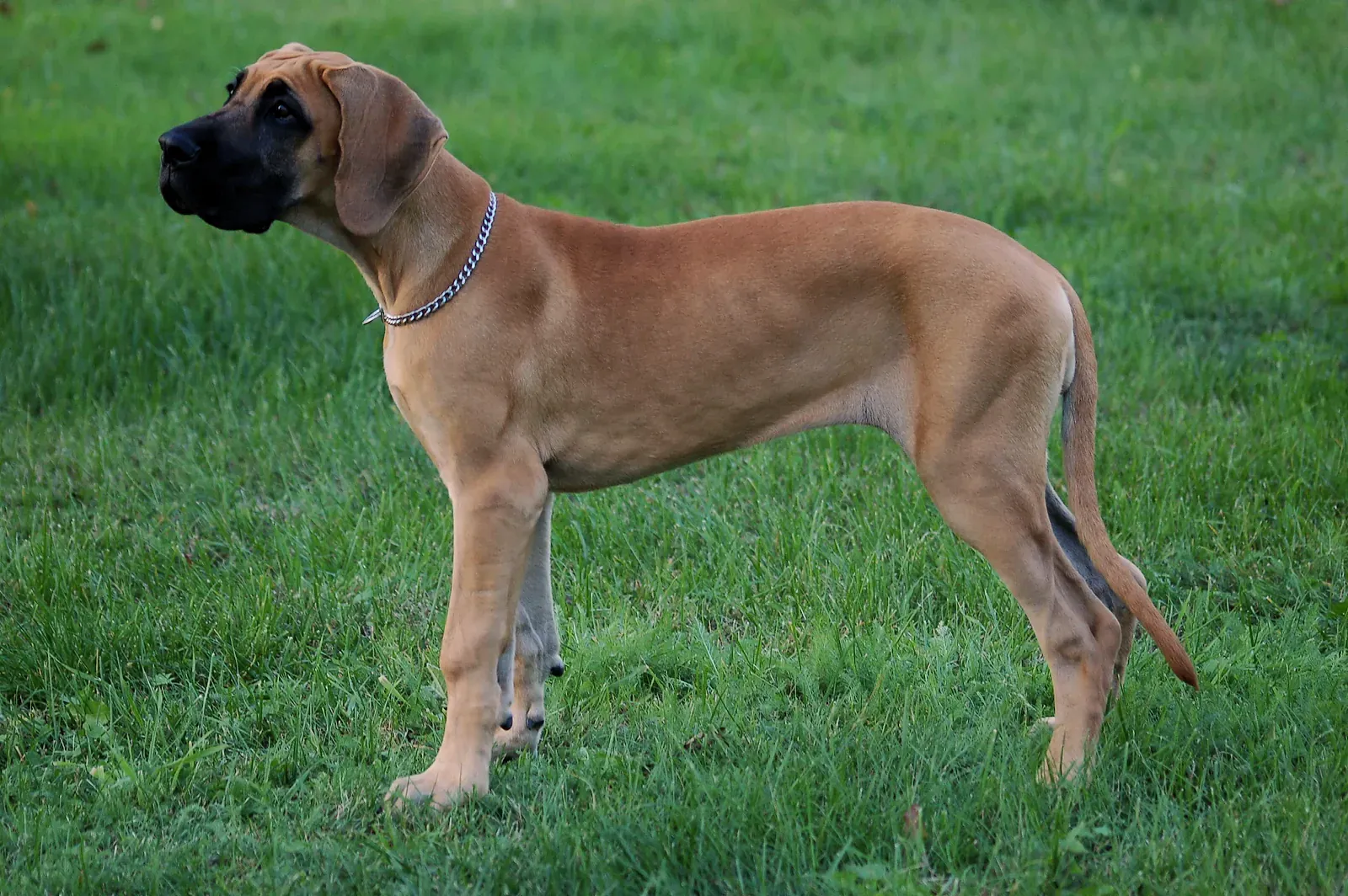
A is the written description of the ideal dog that a kennel club judges against. Great Dane standards agree on the overall picture: a very large, powerful but elegant dog, often described as the "Apollo of dogs", with a long, noble head, a strong neck and a deep chest.
| Trait | FCI (Deutsche Dogge) | AKC | UK Kennel Club |
|---|---|---|---|
| Male height | About 80 to 90 cm | At least 76 cm, 81 cm or more preferred | About 76 cm minimum (older KC text) |
| Female height | About 72 to 84 cm | At least 71 cm, 76 cm or more preferred | About 71 cm minimum (older KC text) |
| Weight | Males at least 54 kg, females at least 45 kg in older standards | Minimum weight removed from the standard | Older KC text: minimum 54 kg (males) and 45 kg (females) over 18 months |
| Colours | Fawn, brindle, blue, black, harlequin, mantle | Same six colour patterns | Same colour groups |
| Build | Square, strong, noble, deep chest | Square, powerful, well-balanced | Same |
Notes on the standard:
- Dogs under the minimum height are disqualified in the AKC ring.
- Heights are measured at the withers (the top of the shoulders). A pet Great Dane from a health-tested line of 75 to 85 cm is normal.
- Great Danes are very heavy for their height. The Royal Veterinary College giant-breed study recorded an average weight of about 60.5 kg for the breed, among the heaviest of the 29 giant breeds studied.
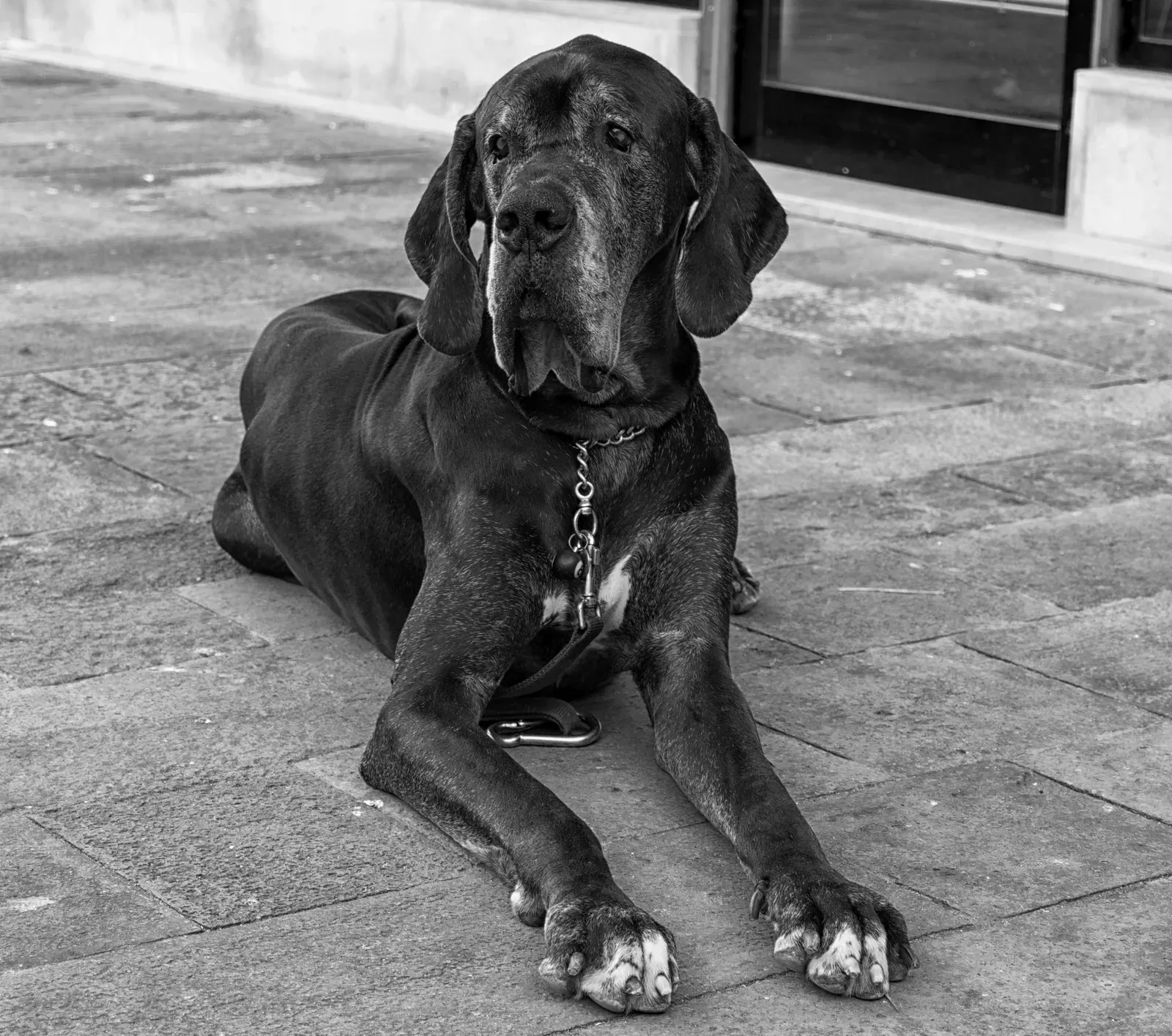
- The six colours are fawn, brindle, blue, black, harlequin (white with black patches) and mantle (black with a white collar and chest). Some dogs with white-heavy patterns can have hearing problems, so ask a breeder about hearing tests.
- Ear cropping was historically common in some countries. It is banned in the UK and many European countries, and natural ears are normal.
Temperament
 Related breedAmerican Bully1980 to 2004 · United StatesModern Era
Despite the size, the usual Great Dane is gentle, people-focused and a little goofy. The breed is often called a "gentle giant", and the phrase fits most family dogs. Common traits:
- Affectionate. Danes want to be near their people and often lean on them or sit in a lap that is far too small.
- Calm indoors. After puppyhood, many are couch dogs who nap for much of the day.
- Sensitive. A shouting owner or harsh training can upset them quickly. Reward-based training works best.
- Watchful. The breed was once an estate guardian. A Dane's deep bark and size deter strangers, but a well-bred dog is not meant to be aggressive.
- Slow to mature. Great Danes stay puppies in mind for two to three years, in a body the size of an adult.
Early socialisation matters more than usual. A 60 kg dog that has never met other dogs, children or crowds is hard to handle. The puppy stage is also destructive. A teething Dane can chew furniture at table height.
 Save

Health
 Related breedAmerican Pit Bull Terrier1850 to 1898 · United StatesVictorian Breed Boom
Most Great Danes live comfortable lives, and good breeders screen for the problems below. The list is not a reason to avoid the breed. It is what to ask breeders about and what owners can watch for. The breed's biggest health facts are its short life and two serious conditions, bloat and heart disease.
Lifespan
The usual range for the breed is 7 to 10 years, shorter than for small dogs but typical for giant breeds. The Royal Veterinary College VetCompass study of giant dogs in UK primary-care practice (records from 2019, 28,345 giant dogs of 29 breeds) found an average lifespan of 8.9 years for giant dogs as a group, more than three years below the all-dog average in VetCompass. Female giants lived about 0.8 years longer than males (9.3 against 8.5 years). Cancer was the leading cause of death in giant dogs overall. The earlier VetCompass analysis of English primary-care records (O'Neill and colleagues, 2013) ranked the Great Dane and the Dogue de Bordeaux as the shortest-lived breeds, and found that heavier body weight went with shorter life. Earlier surveys gave median Great Dane lifespans of 8.4 years (Michell, 1999) and 6.5 years (Adams and colleagues, 2010). Seventy-four in 100 giant dogs had at least one disorder recorded in the year, against 66 in 100 for all breeds.
Bloat (gastric dilatation volvulus, GDV)
Bloat, in veterinary terms gastric dilatation volvulus or GDV, is when the stomach fills with gas and can twist on itself. It is an emergency and needs a vet within hours. Deep, narrow chests raise the risk, which is why the Great Dane is the classic example.
The best known study is Glickman and colleagues, published in the Journal of the American Veterinary Medical Association in 2000. It followed 1,914 dogs of large and giant breeds with no history of bloat. The Great Dane had the highest estimated lifetime risk of any breed, about 42 percent, or roughly 2 in 5 dogs. The study named risk factors such as a deep and narrow chest, older age, a first-degree relative with bloat, fast eating and a fearful temperament.
What helps:
- Preventive gastropexy (a surgery that tacks the stomach to the body wall so it cannot twist), often done with a spay or neuter. Many vets recommend it for the breed.
- Two or three smaller meals instead of one large meal, and calm eating.
- Knowing the warning signs: a swollen belly, unproductive retching, restlessness, drooling.
Dilated cardiomyopathy (DCM)
Dilated cardiomyopathy is a heart muscle disease in which the heart chambers stretch and pump less well. The Great Dane is on the list of predisposed breeds. In a UK screening study by Stephenson and colleagues (Journal of Veterinary Internal Medicine, 2012), the estimated prevalence in the screened Great Danes was 35.6 percent, about 1 in 3. Inheritance in the breed appears to differ from the usual autosomal dominant pattern seen in many other breeds, and in Great Danes males are more often affected. Screening dogs with echocardiogram and ECG before breeding is how breeders reduce it.
The genetics is not solved. A Swedish University of Agricultural Sciences thesis that compared 62 affected and 65 unaffected Great Danes found two candidate regions on chromosome 19, and a study funded by the AKC Canine Health Foundation of two X-linked genes found no causal mutation. No DNA test for DCM in Great Danes is yet established, so heart screening remains the tool.
What helps: ask for the parents' heart screening results, and have a vet listen to the heart at routine checks. Early signs can be easy to miss, including tiredness and coughing.
Other conditions
| Condition | What it is | How common | What helps |
|---|---|---|---|
| Bone cancer (osteosarcoma) | Tumour of the bone, mostly in the limbs | More often seen in giant breeds than in small dogs (RVC giant-dog study lists cancer as the top cause of death) | Vet checks for new lameness or swelling |
| Loose or poorly formed hip joint | Seen in large and giant breeds | Hip scoring of parents, lean weight | |
| Wobbler syndrome | Narrowing of the neck spine, affecting walking | Seen more often than in many other breeds | Careful breeding, early vet review of unsteady gait |
| Overweight | Excess body weight | 8.0 percent of giant dogs in VetCompass | Measured meals, steady exercise |
| Ear disease | Ear infections | Most common specific disease in giant dogs, 8.2 percent | Regular ear checks |
Giant puppies grow fast, so most vets advise a puppy food made for large breeds and no hard jumping or long runs on hard ground while the bones are growing.
 Save

Living with a Great Dane
 Related breedAmerican Staffordshire Terrier1850 to 1936 · United StatesVictorian Breed Boom
| Daily reality | Rating | Why |
|---|---|---|
| Exercise per day | Medium | Walks of 30 to 60 minutes plus play. Not a runner, but needs daily movement |
| Training needs | Medium | Eager to please but sensitive. Manners matter at 60 kg |
| Grooming | Low | Short coat, weekly brush |
| Shedding | Medium | Short hairs, but a lot of surface area |
| Barking | Low to Medium | Deep alert bark, not a constant barker |
| Time alone | Poor | Bonded to people. Long days alone can lead to destruction |
| Children | Good | Gentle but too big to leave unsupervised with small children |
| Other dogs | Good | Usually friendly with good socialisation |
| Cats and small pets | Varies | Depends on the individual and early introductions |
| Flat living | Fair | Calm indoors, but needs space to turn and stairs are hard on joints |
| Heat tolerance | Fair | Large body, short coat. Watch in hot weather |
| Cold tolerance | Fair | Short coat and little body fat. Often wears a coat in winter |
| First-time owner | Fair | Gentle character, but size, cost and health needs are real |
A great fit if
- You have space indoors and a safe garden or park nearby.
- You are home for much of the day.
- You can lift and handle a 50 kg dog, including in an emergency.
- You are ready for vet bills that rise with size.
Think twice if
- You rent a small flat with narrow stairs.
- You travel often or work long hours away from home.
- You want a long-lived dog. Most Danes live under 10 years.
- You want a dog that will not drool, since many Danes do.
Before you get one
- Ask the breeder for heart screening (echocardiogram) results of both parents, hip scores and hearing tests for harlequin and white-patterned dogs, and ask whether they know of bloat in the family line.
- Discuss gastropexy with your vet early.
- Breed rescues for Great Danes exist in many countries, and adult dogs are often calm and already trained.
- Plan for the first year: fast growth, rising food costs, and training that must happen before the dog is fully grown.
Similar breeds to consider
- Irish Wolfhound: giant and gentle, a close DNA relative, with a similarly short lifespan.
- St. Bernard: heavy, calm and family-friendly, with more grooming.
- English Mastiff: even heavier and calmer, less athletic.
- Leonberger: giant, gentle and a bit more active.
 Thinking of adopting?How to adopt a dog from a shelter or rescueHow to adopt a dog from a shelter or rescue: the process, costs in general terms, choosing a dog, the first weeks and what if it does not work out.Related breedAmerican Staffordshire Terrier1850 to 1936 · United StatesVictorian Breed Boom
Fun facts
 Related breedBoston Terrier1870 to 1893 · United StatesVictorian Breed Boom
- Zeus, the tallest dog ever, measured 111.8 cm at the shoulder, taller than many tables.
- The name "Great Dane" is a translation of a French phrase and has nothing to do with Denmark. The German name is "German mastiff".
- A Berlin committee in 1878 merged a dozen local names into Deutsche Dogge, and the first Great Dane club in England dates to 1883.
- Great Danes and Dogue de Bordeaux were the shortest-lived breeds in the 2013 VetCompass longevity analysis.
- Great Danes were bred to hunt boar, and the breed's large, heavy head and deep chest still reflect that job.
FAQ
How big does a Great Dane get?
Males are at least 76 cm () or about 80 cm () at the shoulder and often reach 81 to 90 cm. Females are at least 71 to 72 cm and often reach 76 to 84 cm. Adults commonly weigh 45 to 80 kg. Growth is fast during the first year, and the dog fills out until about two years.
How long do Great Danes live?
Usually 7 to 10 years. In the RVC giant-dog study, giant dogs overall had an average lifespan of 8.9 years. Good breeding, a lean body weight and early vet care help.
Are Great Danes good family dogs?
Yes, for families with space and time. Most are gentle, patient and attached to people. Supervise play with small children, since the dog's size alone can knock a child over.
What is bloat in Great Danes and can it be prevented?
Bloat (GDV) is when the stomach swells with gas and may twist. The 2000 Glickman study estimated a lifetime risk of about 42 percent in Great Danes. Preventive gastropexy is the most effective step, along with smaller meals and knowing the signs.
Why is a Great Dane called a Dane?
It is a historical misnomer. The tale most often told is that Buffon used the French name "grand danois" in 1755. Another idea is a mishearing of the French words for fallow deer. The dog is German, and in Germany it is called the Deutsche Dogge.
When was the Great Dane breed recognised?
A Berlin committee grouped the German varieties as Deutsche Dogge in 1878, and the first standard dates from 1880 or 1881. The German club dates from 1888, the American club from 1889, and the English Great Dane Club from 1883. Recognition years for the Kennel Club (1884 or 1893) and AKC (1887) are cited inconsistently.
Read next
 Closest DNAIrish Wolfhound38.4 Mb shared
 FamilyEuropean MastiffThe whole family
 Adopt a dogDog Shelters in GermanyTen big cities checked, how adoption works, what it costs
Sources (15)
- FCI breed standard no. 235, Deutsche Dogge (Great Dane)
- American Kennel Club, Great Dane breed standard
- Great Dane Club of America, Illustrated Standard
- Parker HG et al., 2017, Genomic analyses reveal the influence of geographic origin, migration and hybridization on modern dog breed development, Cell Reports
- Glickman LT et al., 2000, Non-dietary risk factors for gastric dilatation-volvulus in large and giant breed dogs, Journal of the American Veterinary Medical Association
- Stephenson HM et al., 2012, Screening for dilated cardiomyopathy in Great Danes in the United Kingdom, Journal of Veterinary Internal Medicine
- Royal Veterinary College, VetCompass, giant dog breeds in UK primary care (2019 records), published in Canine Medicine and Genetics
- Guinness World Records, entries for Zeus (tallest dog ever) and Freddy
- O'Neill DG et al., 2013, Longevity and mortality of owned dogs in England, The Veterinary Journal (VetCompass, Royal Veterinary College)
- Deutsche Doggen Club 1888 e.V., breed history
- Great Dane Club of America, history of the breed
- The Kennel Club (UK), Great Dane breed standard
- AKC Canine Health Foundation, projects on Great Dane dilated cardiomyopathy
- Swedish University of Agricultural Sciences, genomic regions in Great Dane DCM (thesis)
- Fogle B., 2009, The New Encyclopedia of the Dog