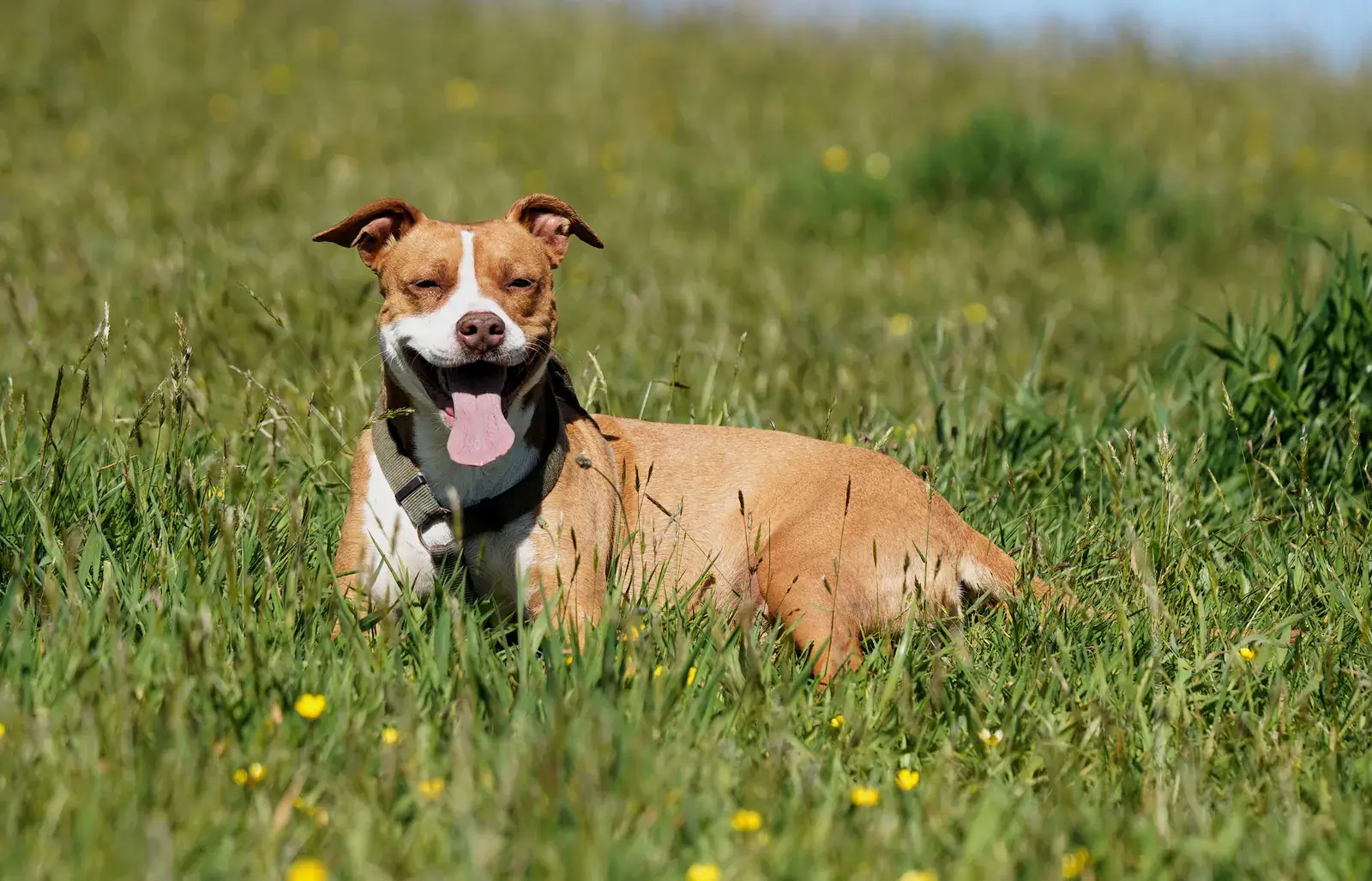
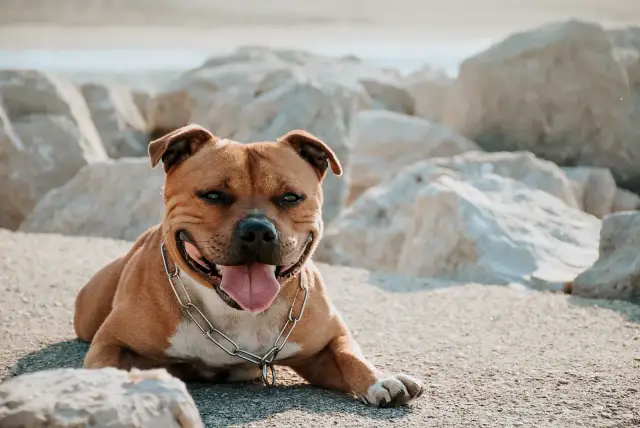
It was bred for dog fighting, a practice now illegal in the countries where the breed lives, and it was also used on farms for catching stock and as a household dog. It is registered by the United Kennel Club (UKC, since 1898) and the American Dog Breeders Association (ADBA, since 1909). The American Kennel Club (AKC) does not recognise it under that name. "Pit bull" is also a loose label for a whole group of look-alike dogs, which makes the breed hard to discuss and harder to legislate. The atlas data gives a life span of 12 to 14 years.
American Pit Bull Terrier quick facts
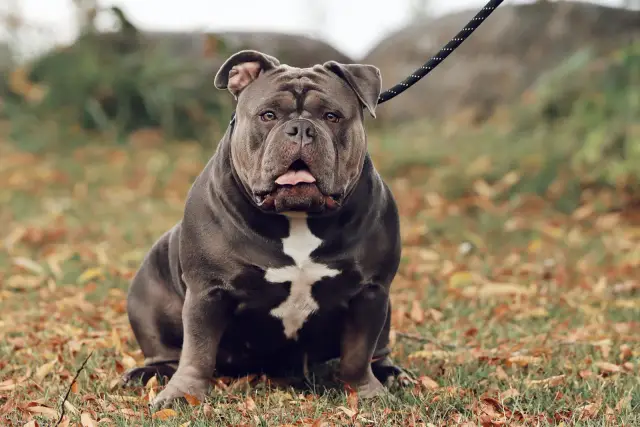
 Related breedBoston Terrier1870 to 1893 · United StatesVictorian Breed Boom
- Descendant breeds
- American Staffordshire Terrier, American Bully
- Country of origin
- United States
- Period of development
- About 1850 to 1898 (atlas data)
- Ancestors
- Bull-and-terrier dogs from Britain; Old English Bulldog and terrier stock behind them
- Original job
- Pit fighting (historic), catching and holding farm stock, vermin control, companion
- Type
- Bull and fighting dog; medium size
- Registries
- UKC (1898), ADBA (1909). Not recognised by the AKC under this name, the or the UK Kennel Club
- Height (UKC, as reported)
- Males about 18 to 21 in (46 to 53 cm), females about 17 to 20 in (43 to 51 cm)
- Weight (UKC, as reported)
- Males about 16 to 27 kg, females about 14 to 23 kg
- Coat
- Short, smooth, glossy
- Life span
- 12 to 14 years (atlas data)
- DNA family
- European Mastiff (placed with its tested relatives; the breed itself was not sampled in Parker et al. 2017)
- Closest relatives
- American Staffordshire Terrier, Staffordshire Bull Terrier, Bull Terrier, Boston Terrier
Drawn to scale in real centimetres. Its back reaches about 48 cm, your knee; its head about 61 cm, just above your knee.

Where it sits in the tree
Victorian Breed Boom · 1850 to 1913


Name and origin
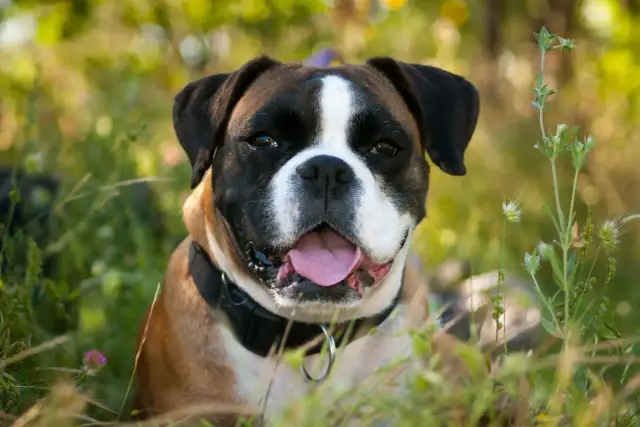 Related breedBoxer1880 to 1904 · GermanyVictorian Breed Boom
The name is a compact history. "Pit" refers to the pit in which fighting dogs were matched. "Bull" comes from the bulldog half of the ancestry, and "terrier" from the other half. "American" marks where the breed was fixed. The longer and older name was simply "bull-and-terrier dog", which is the stock that gave rise to several modern breeds.
"Pit bull" as a breed and as a label. Two meanings are in use, and they are often mixed up.
- The breed. The APBT is a specific registered breed with a written standard in the UKC and the ADBA, with pedigrees going back more than a century.
- The type. In shelters, news reports and many laws, "pit bull" means any dog that looks like a short-coated, broad-headed, muscular bull-breed dog. Depending on who is using the term, it can cover the APBT, the American Staffordshire Terrier, the Staffordshire Bull Terrier, the American Bully and many mixed-breed dogs. There is no agreed definition of the type in science, law, kennel clubs or shelters (Olson et al. 2015 make this point directly).
When a number or a law is quoted, it is worth asking which meaning is behind it. Much of the public argument about "pit bulls" is an argument about the type, not about registered APBTs.

History
 Same eraBull Terrier1850 to 1888 · United KingdomVictorian Breed Boom
From bull-baiting to the bull-and-terrier
In Britain, bulldogs of the 1700s and early 1800s were used in bull-baiting, a spectacle in which dogs seized a tethered bull. Terriers were kept to kill rats and other vermin. Sometime around the early 1800s, breeders crossed the two, looking for a dog with the bulldog's grip and the terrier's speed and agility. The result was the bull-and-terrier, a smaller and quicker dog than the old bulldog. The atlas data lists the bull-and-terrier as the direct parent of the APBT and the Old English Bulldog further back.
Blood sports were restricted in Britain by the Cruelty to Animals Act 1835, which banned bull-baiting and dog fighting, and by later acts. Organised fighting did not stop at once. It moved indoors and underground, and bull-and-terrier dogs were still bred for it.
Arrival and development in the United States
Bull-and-terrier dogs reached the United States between about 1845 and 1860 with emigrants from Britain and Ireland. In America they were used for pit fighting, which was legal or tolerated in many places in the second half of the 1800s. They were also used on farms and ranches for catching feral pigs, holding cattle and guarding property, and they lived in family homes. American breeders selected for gameness (the will to continue a task despite pain), strength and a tractable attitude toward people, because handlers had to pick up and separate fighting dogs.
State that plainly, because it explains the breed: the APBT's body and drive were shaped by fighting. Dog fighting is now a crime in all US states and in Britain, and its history is part of why the breed is regulated and distrusted in some countries.
Registries: UKC 1898 and ADBA 1909
The United Kennel Club was founded in 1898 by Chauncey Bennett. It registered the breed under the name American Pit Bull Terrier, and the first dog entered in its studbook is reported to be Bennett's Ring. The American Dog Breeders Association followed in 1909 as a second registry for the breed, formed, according to the ADBA's own history, by fanciers who wanted a different approach to preserving it. Both clubs still register APBTs today. The UKC and ADBA standards differ in detail, and the ADBA has long put emphasis on performance and working ability.
The AKC split: 1936
Fanciers who wanted to show their dogs at AKC events faced a naming problem. The AKC did not want a name tied to fighting. In 1936 it accepted about fifty UKC-registered dogs under the name Staffordshire Terrier. The name was changed to American Staffordshire Terrier in 1972 (some sources say 1973), to separate it from the English Staffordshire Bull Terrier. That is why a single bull-and-terrier now has two names, and why some dogs are dual registered: an APBT with the UKC or ADBA can also be an AmStaff with the AKC. Over time the show-ring line (AmStaff) and the working or performance line (APBT) have drifted apart in type, but they remain close relatives. See American Staffordshire Terrier.
Twentieth century: from mascot to controversy
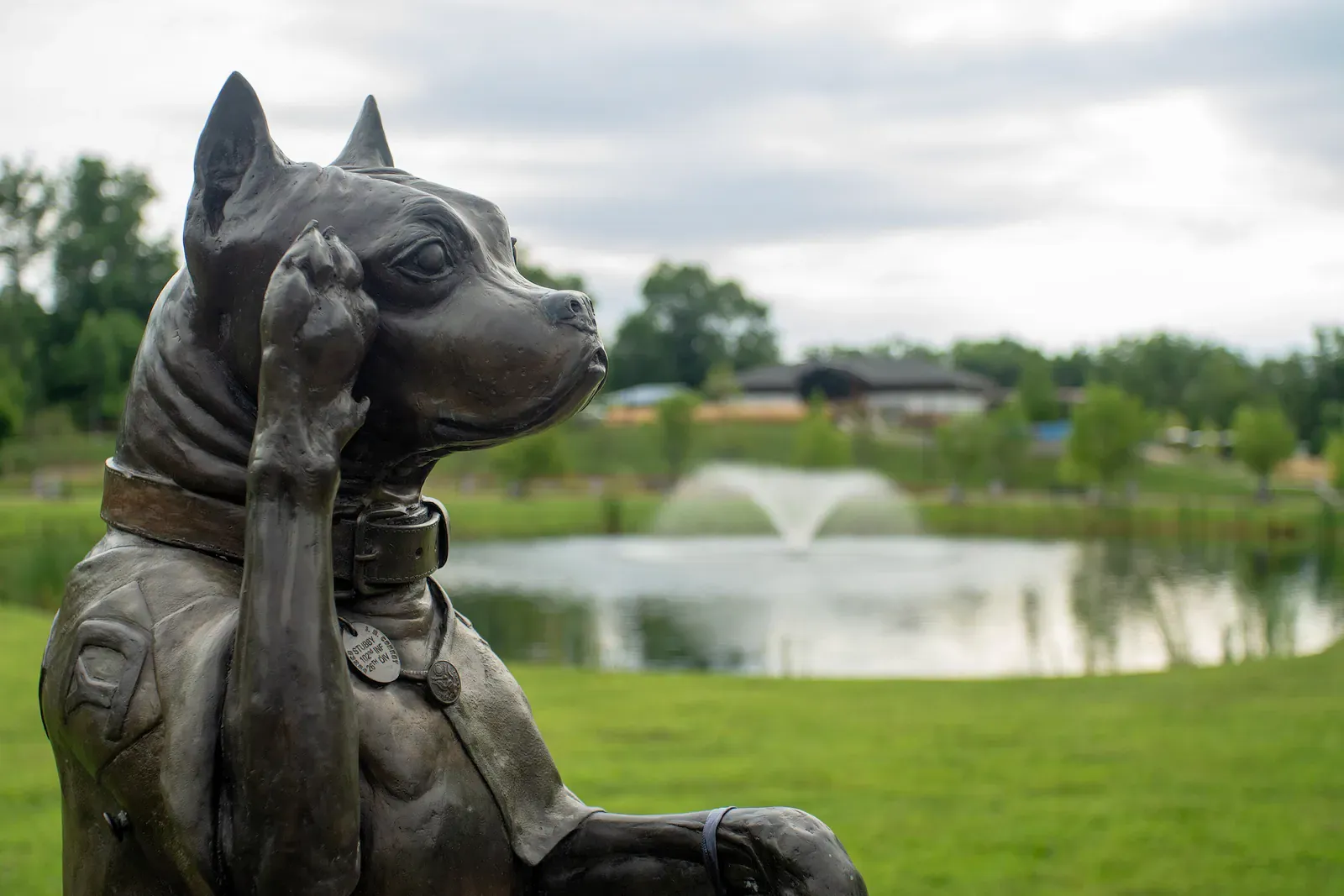
In the early 1900s, pit bull type dogs were used in US advertising, films and war-time imagery as symbols of loyalty and courage. Sergeant Stubby, the best-known American war dog of the First World War, is often described as a pit bull type or bull terrier mix, though his exact type is not documented. The reputation changed in the 1980s, when media coverage of dog fighting and bite incidents grew, and when the dogs became popular with people who wanted a fierce image. Breed-specific laws followed (see the legal section below).
 Save

Relatives and DNA
 Same familyBulldog1835 to 1875 · United KingdomIndustrial Revolution
The APBT sits in the European Mastiff family in the atlas data. It was not sampled in the 2017 Parker et al. study of breed genetics, so its placement is inferred from its tested relatives (Bull Terrier, Staffordshire Bull Terrier, American Staffordshire Terrier and Boston Terrier), which all fall in that cluster. That is an inference, not a finding on APBT dogs.
DNA ancestry tests and visual identification both struggle with this group. Because so many bull-type dogs share one recent root, a mixed dog can look very much like an APBT while carrying little APBT ancestry. This is the source of the identification problem discussed under the bite-statistics debate.
Sister breeds · 3
- Staffordshire Bull Terrier1800 to 1935
- Bull Terrier1850 to 1888
- Boston Terrier1870 to 1893
Descend from it · 2
- American Staffordshire TerrierUnited States
- American BullyUnited States
| Relationship | Breed | Note |
|---|---|---|
| Parent stock | Bull-and-terrier | Direct ancestor, Britain, early 1800s |
| Deeper ancestors | Old English Bulldog, English Mastiff | Bulldog and mastiff lines |
| Closest relative | American Staffordshire Terrier | Split off through the AKC from 1936 |
| Sibling breeds | Staffordshire Bull Terrier, Bull Terrier, Boston Terrier | Same bull-and-terrier root |
| Descendant | American Bully | Developed from APBT and AmStaff lines from the 1990s |
The breed standard
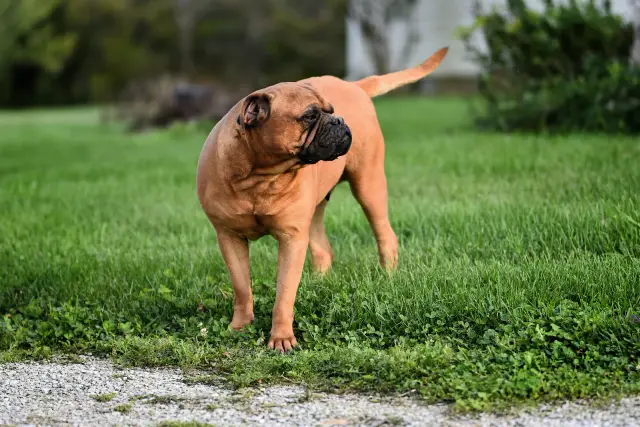 Looks relatedBullmastiff1860 to 1924 · United KingdomVictorian Breed Boom
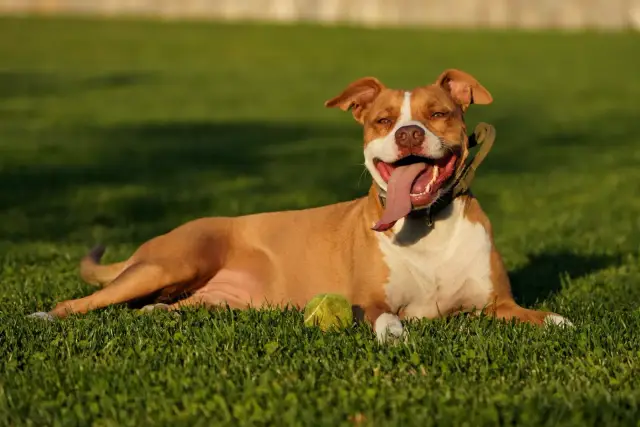
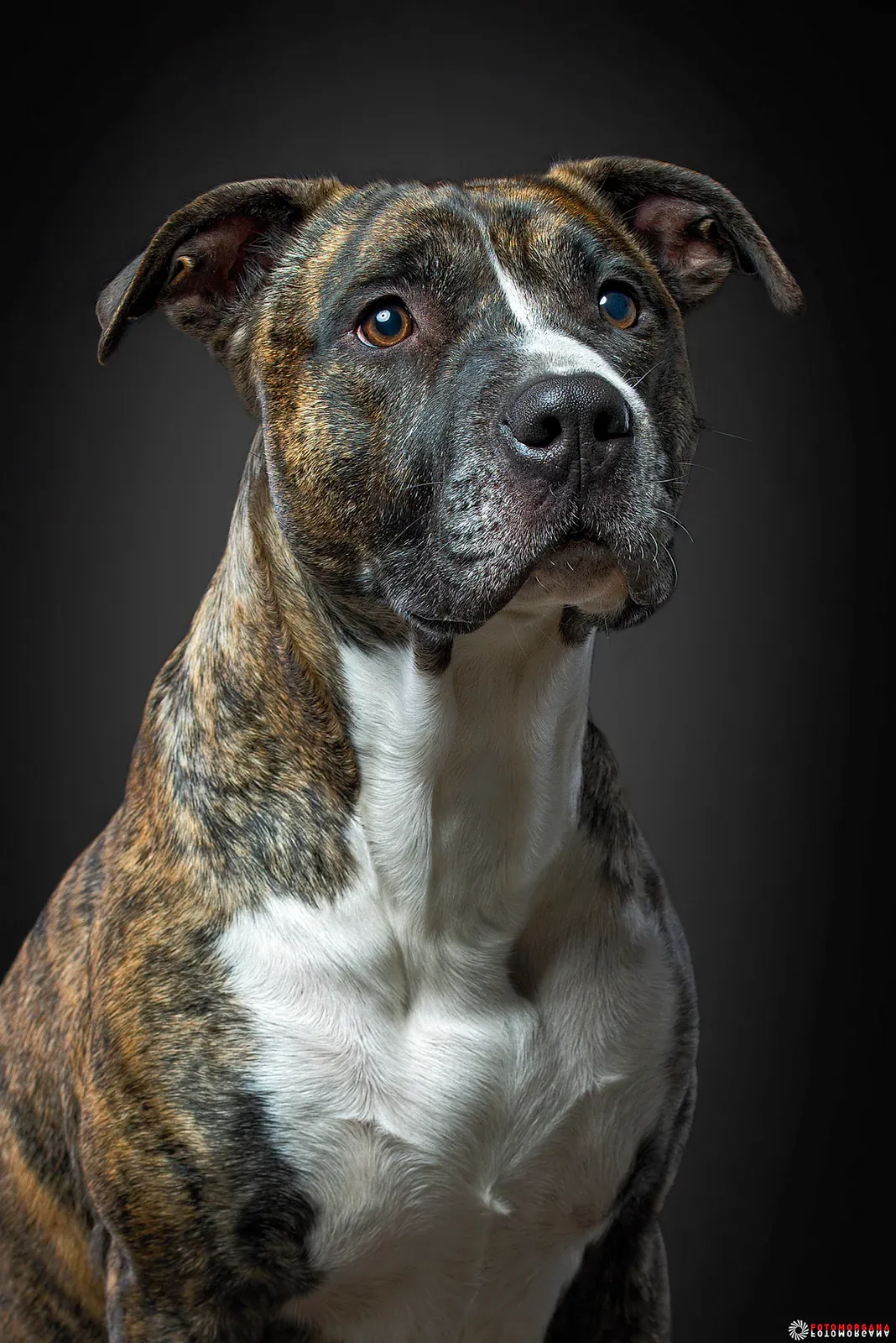
A is the written ideal that a kennel club judges a breed against. The APBT has standards from the UKC and the ADBA. No standard exists from the FCI or the UK Kennel Club, which do not recognise the breed. The AKC column below is for the American Staffordshire Terrier, the AKC's name for the related dogs, and is shown for comparison. Figures marked "as reported" come from secondary summaries of the UKC document (revised 2017), not from a reading of the full text.
| Trait | What the standards say |
|---|---|
| Height | UKC (as reported): males about 18 to 21 in (46 to 53 cm), females about 17 to 20 in (43 to 51 cm), given as a guide. AKC (American Staffordshire Terrier): about 46 to 48 cm for males and 43 to 46 cm for females |
| Weight | UKC (as reported): males about 35 to 60 lb (16 to 27 kg), females about 30 to 50 lb (14 to 23 kg). ADBA: a wider show-weight range, up to about 34 kg (75 lb) |
| Build | UKC: medium-sized, solidly built, with smooth, defined muscle; athletic, with a balanced outline |
| Coat | UKC: short, glossy, close to the body |
| Colour | UKC: all colours and patterns accepted except |
| Head and ears | UKC: medium length, broad skull, wedge-shaped; ears may be natural or cropped (the UKC accepts both) |
Colour and cropping. Merle is excluded because it is linked to a gene that causes eye and hearing problems in some dogs and is not native to the breed. Ear cropping is banned or restricted in many countries, including the UK, and a natural ear is fully acceptable.
Variation within the breed. Working-line APBTs are often leaner and lighter than show-line AmStaffs. Dogs sold as "pit bulls" outside the registries vary much more than either, which is part of why generalising from one dog to the type is unreliable.

Temperament
 Related breedCane Corso1000 to 1996 · ItalyEarly Middle Ages
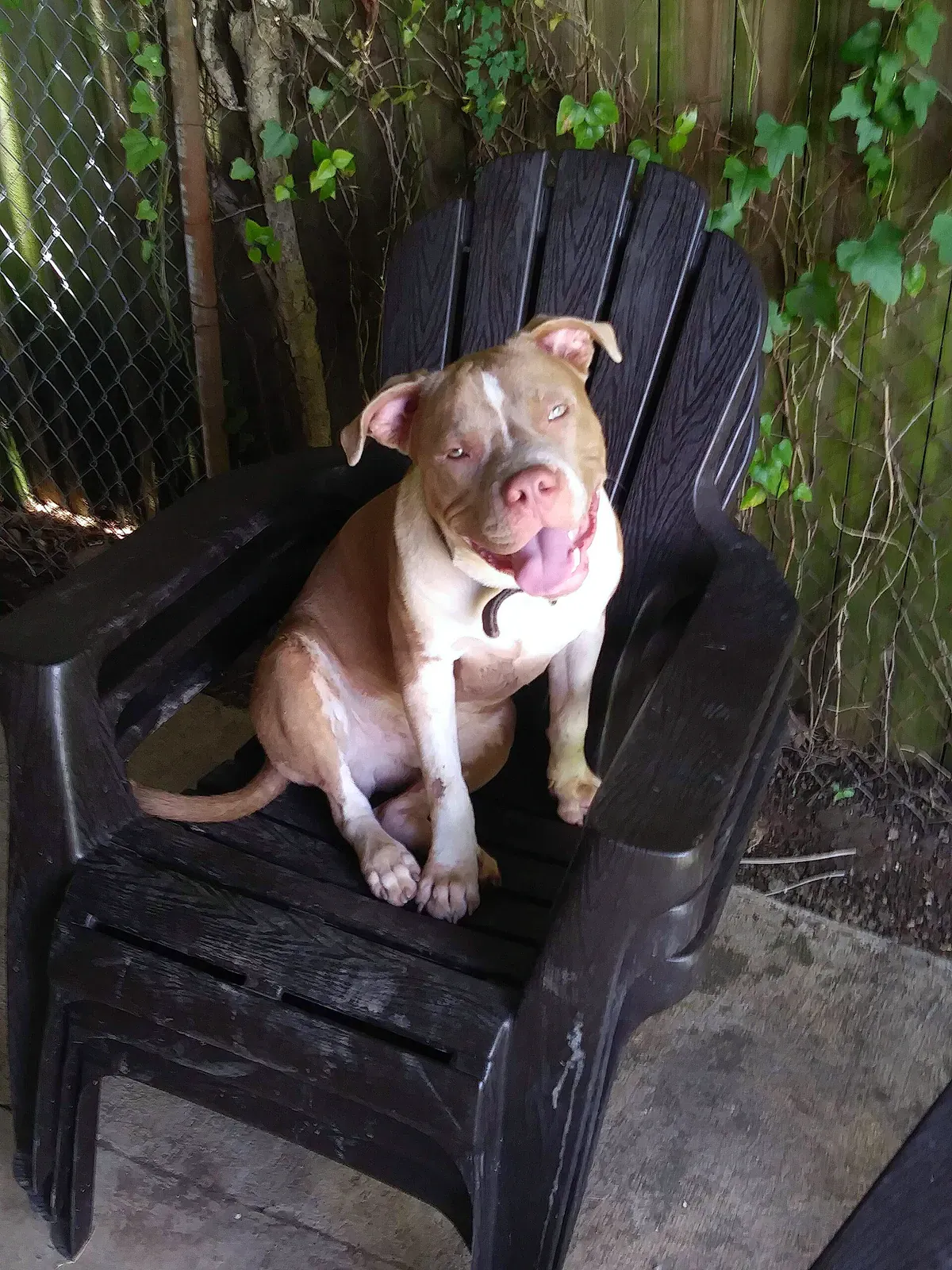
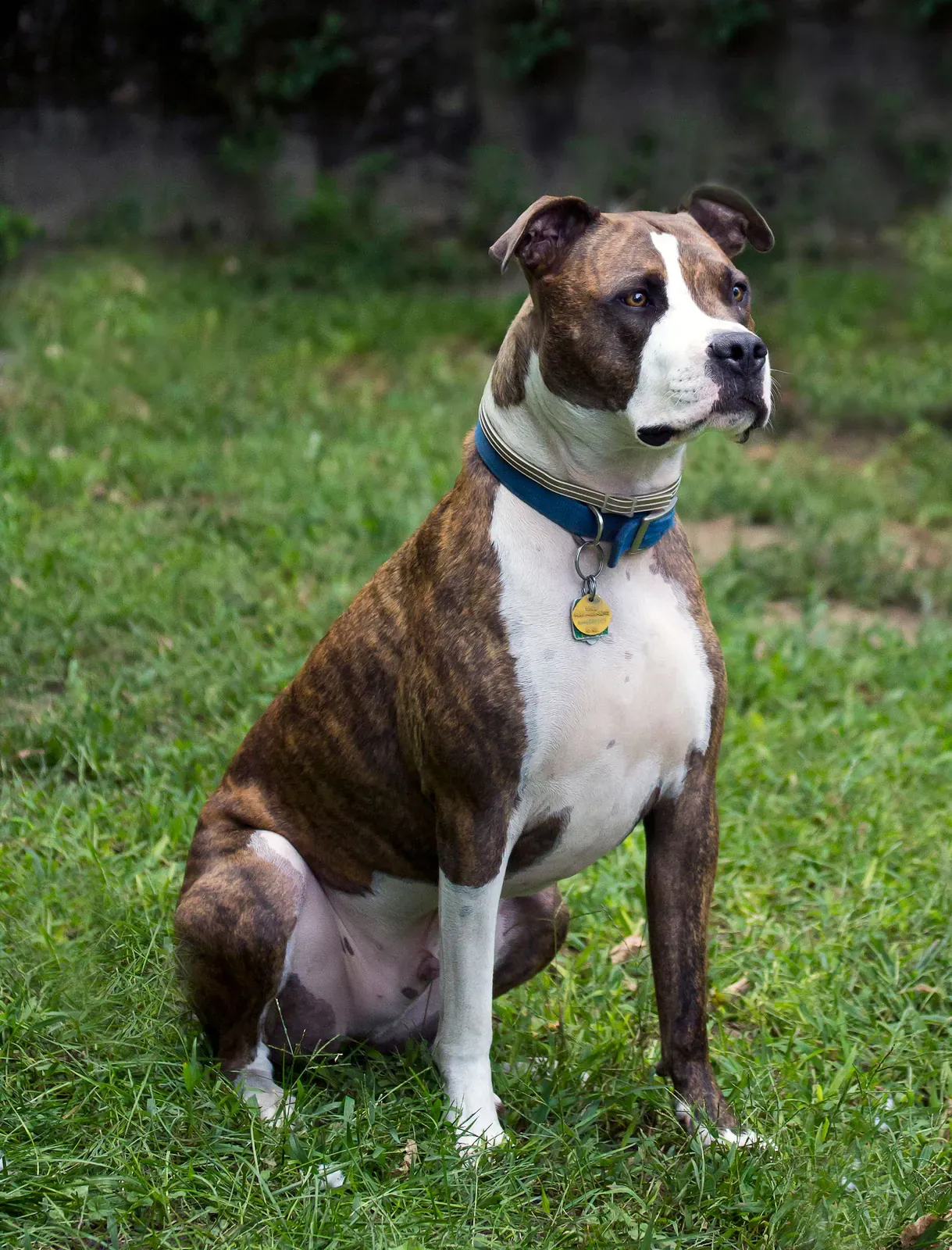
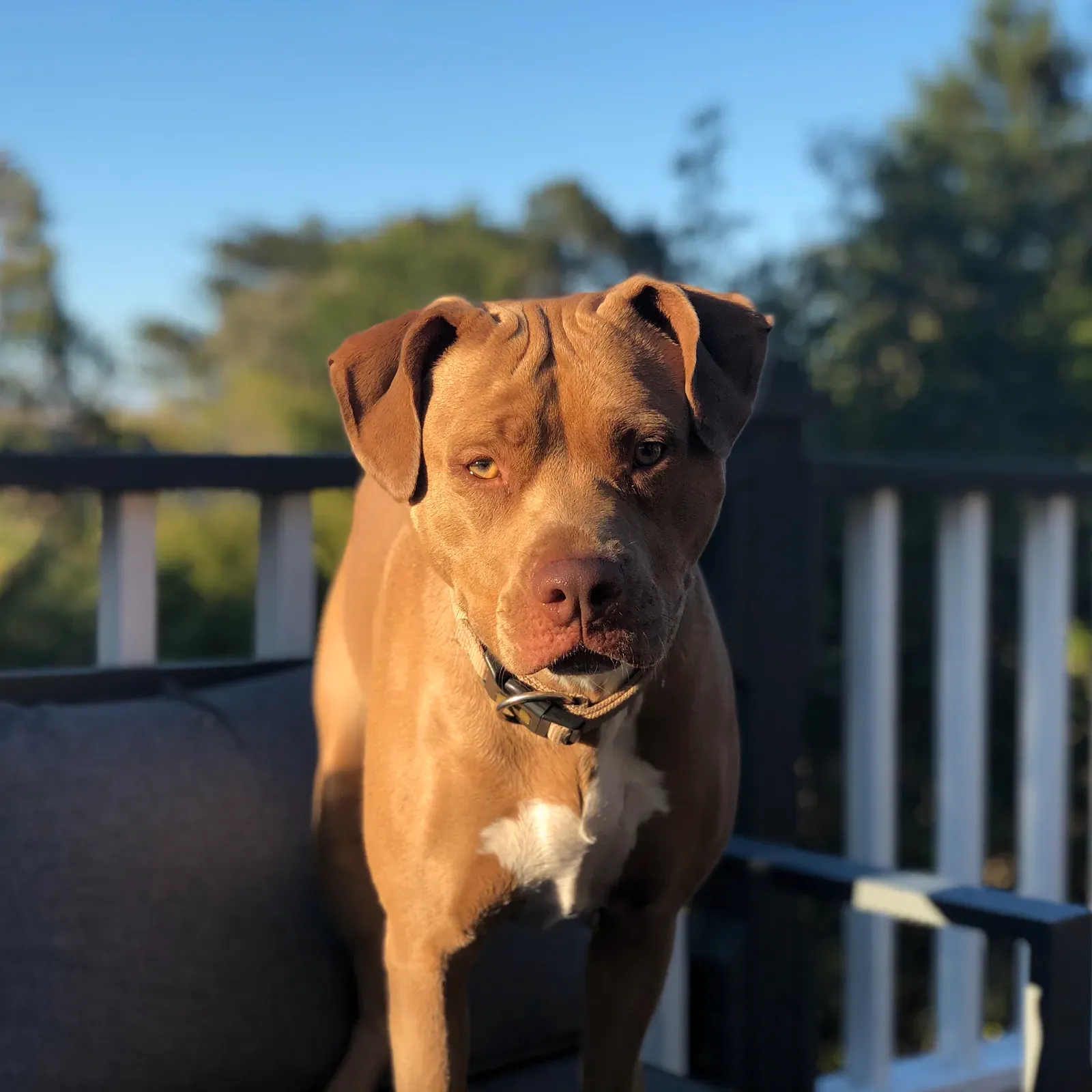
Breed clubs and owners describe the APBT as people-oriented, energetic, strong-willed and eager to please, and as a dog that does best with an active household. The breed was selected so that people could handle fighting dogs safely, and the UKC standard states that excessive aggression toward people is undesirable. That is a statement of the ideal, not a guarantee of any individual dog.
Three points are consistent across the breed literature and club guidance.
- Dog-to-dog behaviour. Because the breed was developed for fighting other dogs, many APBTs are intolerant of other dogs, particularly those of the same sex, from adolescence on. This varies by individual and by socialisation, but the trait is the reason many breed clubs and rescues advise controlled introductions and secure fencing.
- People. The breed is usually reported as friendly toward people, and its reputation as a poor guard dog comes from that. No source places it above other breeds on human aggression in controlled research. The Patronek and AVMA findings below show why bite statistics are a weak guide here.
- Energy and strength. A short-coated dog of 16 to 27 kg with high drive can pull hard and chew energetically. Exercise, structure and training are what keep that energy useful.
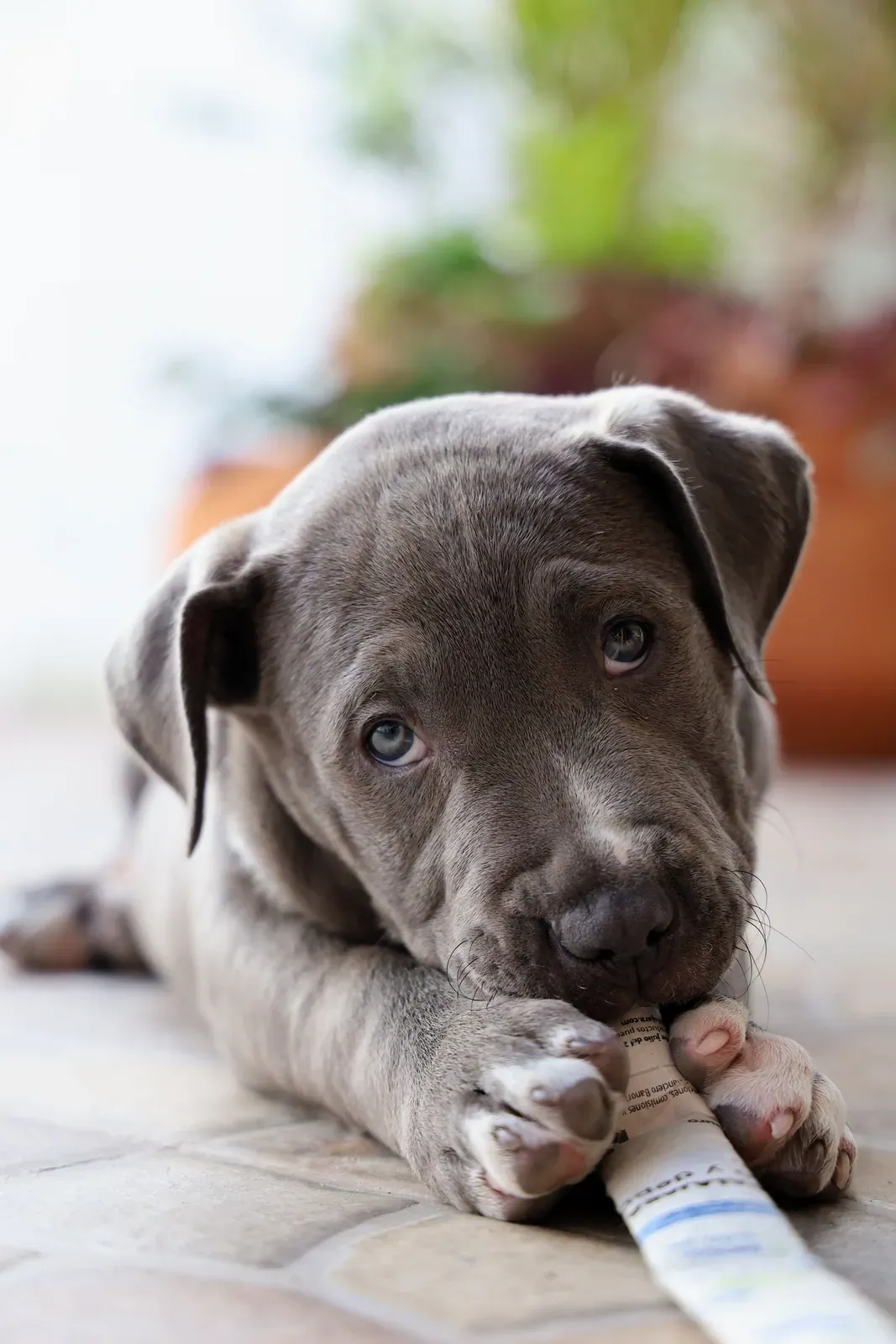
Early socialisation, positive reward-based training and sensible management (a good lead, a secure garden, supervision with children and other animals) matter far more to an individual dog's behaviour than the breed label.

Health
 Related breedDogo Argentino1928 to 1973 · ArgentinaModern Era
Most APBTs live healthy lives to 12 or 14 years, according to the atlas data. This section lists the conditions owners and breeders watch for. Unlike the Rottweiler or the Labrador Retriever, the APBT has no large published veterinary population study that gives breed-wide prevalence figures, so the table does not offer "about 1 in N" numbers. A figure from a different breed is not applied here.
| Condition | What it is | How common | What helps |
|---|---|---|---|
| A loose or malformed hip joint that can lead to arthritis | Reported in the breed; the OFA database holds APBT records, but no named study figure was verified | Hip scoring of breeding dogs, lean body weight, joint-friendly exercise | |
| Skin allergies and irritation | Itchy skin from allergy, parasites or contact; short coats show it easily | Commonly reported by vets and breed clubs; no verified study figure | Vet diagnosis, parasite control, diet trials where advised |
| Cerebellar degeneration | Loss of balance and coordination from damage to the cerebellum | Described in adult American Staffordshire Terriers (Olby et al. 2004, 63 dogs); not measured in APBTs | Report unsteadiness early to a vet; breeders can avoid affected lines |
| Obesity | Excess body weight, which worsens joint and heart health | Common in pet dogs of all breeds | Measured meals, regular exercise |
Why the numbers are thin. Registered APBTs are a small, mostly private-breeder population, and many dogs called "pit bulls" in vet records are of mixed or unknown breeding. Studies that pool them with other bull types describe the type, not the breed. If you want data, ask a breeder for hip scores and for the health history of the sire and dam.

Breed laws and the bite-statistics debate
 Related breedDogue de Bordeaux1300 to 1896 · FranceLate Middle Ages
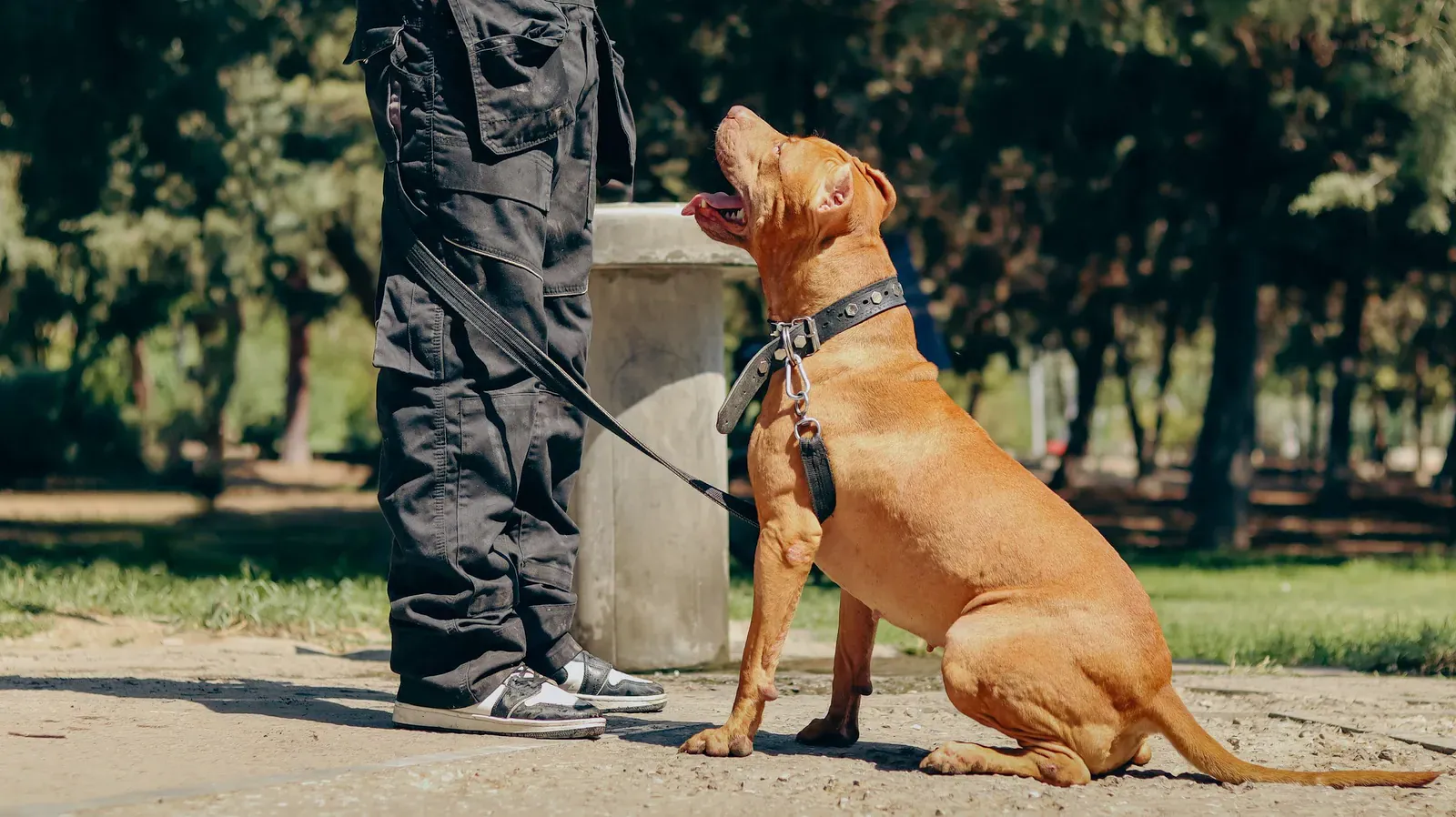
Many countries ban or restrict pit bull type dogs. The rules for each country are in banned dog breeds by country.
What the research can and cannot say
Opinions on pit bull type dogs are strong on both sides, so the evidence needs to be stated carefully.
- Identification is unreliable. Olson et al. (2015, The Veterinary Journal) asked 16 shelter staff to identify the breed of dogs and compared their calls with DNA analysis. DNA showed 21% of the study dogs had pit bull-type ancestry, none of them purebred. Visual calls agreed with DNA only moderately (median agreement 67 to 78% for pit bull type versus not), and among dogs that DNA placed outside the type, 38% were still labelled pit bull type by at least one assessor. Voith et al. (2009) reported similar disagreement between shelter breed labels and DNA results. The same problem affects bite reports: a dog called a pit bull in a news story or a police record may not be one.
- Bite statistics lack a denominator. The CDC's 1997 report on dog-bite fatalities noted that a breed-specific fatality rate would require the number of dogs of each breed, and that such data are not available. Licensing records cannot be used because owners of some breeds are less likely to register their dogs.
- Many factors occur together. Patronek et al. (2013, JAVMA) examined 256 fatal dog bite cases in the United States from 2000 to 2009. They found that four or more preventable factors occurred together in about 80% of cases, such as no able-bodied person present to intervene, a victim with no relationship with the dog, and an owner who had not neutered the dog.
- The AVMA review. The American Veterinary Medical Association's literature review (2014) states that pit bull type dogs are reported more often among the small number of very severe or fatal cases, and says this may reflect local popularity, reporting bias and how the dog was kept, including use as a fighting dog. It also concluded that it has not been shown that breed bans reduce the rate or severity of bite injuries.
A calm reading: severe bites by large, strong dogs cause more harm than bites by small dogs, and bull-type dogs are numerous and are often kept by owners who do not follow good practice. Those facts and the breed's fighting history are all real. What the evidence does not support is a precise breed ranking of bite risk, or a confident claim that any single breed label predicts an individual dog's behaviour.
 Save
Laws by country
Rules change often, so check current local law, which may also depend on whether a dog is judged to be of the "type".
- United Kingdom. Section 1 of the Dangerous Dogs Act 1991 bans the "pit bull terrier" type (and the Japanese Tosa; the Dogo Argentino and Fila Brasileiro were added by order). It is an offence to own, breed, sell or abandon such a dog, unless the owner holds a Certificate of Exemption. The Dangerous Dogs (Amendment) Act 1997 removed mandatory destruction and let courts consider exemption. The law covers type, judged on appearance, not pedigree, which is the heart of criticism of it by the Kennel Club and the Dog Control Coalition ("deed not breed"). England and Wales extended the Act to the American XL Bully in 2023 to 2024 (see American Bully).
- Ireland. The Control of Dogs Regulations 1998 list the American Pit Bull Terrier among restricted breeds, requiring a muzzle and a short strong lead held by a person aged 16 or over in public.
- Ontario, Canada. The 2005 amendment of the Dog Owners' Liability Act bans owning, breeding, importing and transferring pit bulls (including APBT, American Staffordshire Terrier, Staffordshire Bull Terrier and dogs of substantially similar appearance), with grandfathering for dogs owned at the time.
- Netherlands. The country banned pit bull type dogs in 1993 and repealed the ban around 2008 and 2009, after concluding it had not worked as intended.
- Denmark. The 2010 ban covers 13 breeds, including the pit bull terrier.
- France. First-category dogs ("pit-bull" type, which in practice includes look-alikes) cannot be sold or imported, and owners must register, sterilise and muzzle them under the 1999 law.
- United States. There is no national ban. Some cities and counties have restrictions, and a number of states have laws that stop local governments from passing breed-specific rules.
- Other places. Several countries restrict import or ownership, including Australia (import restrictions and state rules) and Germany (federal import limits and state lists).
Living with an American Pit Bull Terrier
 Related breedEnglish Mastiff1300 to 1880 · United KingdomLate Middle Ages
 Save
Ratings below reflect breed club descriptions and the points made in this article. Where evidence is thin, the rating says "Varies".
| Daily reality | Rating | Why |
|---|---|---|
| Exercise per day | High | Athletic, high-drive terrier; an hour or more daily is a common recommendation |
| Training needs | High | Strong, clever and strong-willed; early reward-based training pays off |
| Grooming | Low | Short coat; weekly brushing |
| Shedding | Medium | Short hair sheds year-round |
| Barking | Low | Not a noted barker |
| Time alone | Fair | People-oriented; long hours alone can lead to boredom and chewing |
| Children | Varies | Often affectionate, but strong; all dogs need supervision with young children |
| Other dogs | Poor | Breed history means many do not accept other dogs; manage introductions |
| Cats and small pets | Poor | Strong prey and terrier drive; risky without careful early exposure |
| Flat living | Fair | Possible with real daily exercise; shared walls and neighbours are a factor |
| Heat tolerance | Fair | Short coat, muscular build; keep exercise to cooler hours |
| Cold tolerance | Poor | Thin coat, little undercoat |
| First-time owner fit | Fair | Rewarding for committed owners, but demanding without training support |
A great fit if
- You want an athletic dog for running, hiking or sport such as weight pull or agility, and have hours to spare each day.
- You can keep it away from off-lead dog contact and have secure fencing.
- You will go to training classes and keep working with the dog for life.
- You are happy to live with a breed that draws suspicion in some places and to deal with local rules.
Think twice if
- You want a dog that can meet other dogs freely at parks.
- You live where the breed or its type is banned, or your landlord or insurer excludes it.
- You have cats or small pets and cannot keep them strictly separate.
- You want a dog that is calm without much exercise or training.
Before you get one
- Check the law first. Confirm that the breed or type is legal where you live, and what happens if you move or travel.
- Health and papers. Ask a registered breeder for UKC or ADBA pedigrees, hip scores for both parents and the health history of the line.
- Puppy or adult. Breed-specific and pit bull rescues exist and often place adults with known behaviour. Ask about the dog's history with other animals.
- First year. Plan for early socialisation, puppy classes, secure exercise and good lead skills.
Similar breeds to consider
- Staffordshire Bull Terrier. A smaller, KC-recognised relative known for being people-loving.
- American Staffordshire Terrier. The AKC cousin with a show-ring emphasis.
- Bull Terrier. Distinct egg-shaped head and playful temperament; also needs training.
- Boston Terrier. A much smaller bull-and-terrier descendant for a flat.

American Pit Bull Terrier fun facts
 Related breedFrench Bulldog1850 to 1898 · FranceVictorian Breed Boom
- The UKC was founded in 1898 largely to register this one breed.
- One lineage has two names: an APBT with the UKC can be an American Staffordshire Terrier with the AKC.
- In the 2015 Olson study, shelter staff labelled 38% of dogs that DNA placed outside the pit bull type as pit bull type.
- The Netherlands banned pit bull type dogs in 1993 and later repealed the ban.
Frequently asked questions
What is the difference between a pit bull and an American Pit Bull Terrier?
"Pit bull" is a loose label for bull-breed look-alikes. The American Pit Bull Terrier is a registered breed with a standard, UKC and ADBA pedigrees and a documented history.
Is an American Pit Bull Terrier the same as an American Staffordshire Terrier?
They share ancestry. The accepted UKC-registered dogs in 1936 as the Staffordshire Terrier, now the American Staffordshire Terrier. Today the two are bred for somewhat different types, though some dogs are dual registered.
How big is an American Pit Bull Terrier?
About 46 to 53 cm for males and 43 to 51 cm for females, and roughly 14 to 27 kg (UKC, as reported).
How long do American Pit Bull Terriers live?
The atlas data gives 12 to 14 years.
Are American Pit Bull Terriers dangerous?
Any strong dog can cause serious harm, so owners must manage them. Research does not show that breed alone predicts bites: identification is unreliable, there is no denominator, and preventable factors cluster (Patronek et al. 2013; AVMA 2014).
Are pit bulls banned anywhere?
Yes. Examples include the UK (Dangerous Dogs Act 1991), Ontario (2005) and Denmark (2010). Ireland restricts the breed. The Netherlands repealed its ban.
Read next
 Sister breedStaffordshire Bull Terrier1800 to 1935
 FamilyEuropean MastiffThe whole family
 Adopt a dogDog Shelters in EuropeFind dog shelters in Europe, learn how shelters differ from country to country and why adopting a dog is a good option.
Sources (17)
- American Dog Breeders Association (ADBA), history of the breed and breed standard.
- American Kennel Club, American Staffordshire Terrier breed history and standard.
- American Veterinary Medical Association, "The role of breed in dog bite risk and prevention", literature review, 2014.
- Centers for Disease Control and Prevention, "Dog-bite-related fatalities, United States, 1995 to 1996", MMWR, 1997.
- Control of Dogs Regulations 1998, S.I. No. 442/1998 (Ireland).
- Danish Veterinary and Food Administration, information on Danish legislation on dogs (2010).
- Dangerous Dogs Act 1991 and Dangerous Dogs (Amendment) Act 1997 (UK).
- Dog Owners' Liability Act, R.S.O. 1990, c. D.16, as amended in 2005 (Ontario).
- Fogle B., The Encyclopedia of the Dog, 2009.
- Olby N.J. et al., "Cerebellar cortical degeneration in adult American Staffordshire Terriers", Journal of Veterinary Internal Medicine, 2004.
- Olson K.R. et al., "Inconsistent identification of pit bull-type dogs by shelter staff", The Veterinary Journal, 206, 2015.
- Parker H.G. et al., "Genomic analyses reveal the influence of geographic origin, migration, and hybridization on modern dog breed development", Cell Reports, 2017.
- Patronek G.J. et al., "Co-occurrence of potentially preventable factors in 256 dog bite-related fatalities in the United States (2000 to 2009)", JAVMA, 2013.
- The Kennel Club (UK) and Dog Control Coalition, statements on the Dangerous Dogs Act.
- United Kennel Club, American Pit Bull Terrier breed standard (revised 2017).
- Voith V.L. et al., "Comparison of adoption agency breed identification and DNA breed identification of dogs", Journal of Applied Animal Welfare Science, 2009.
- Atlas data, breed records (this site).