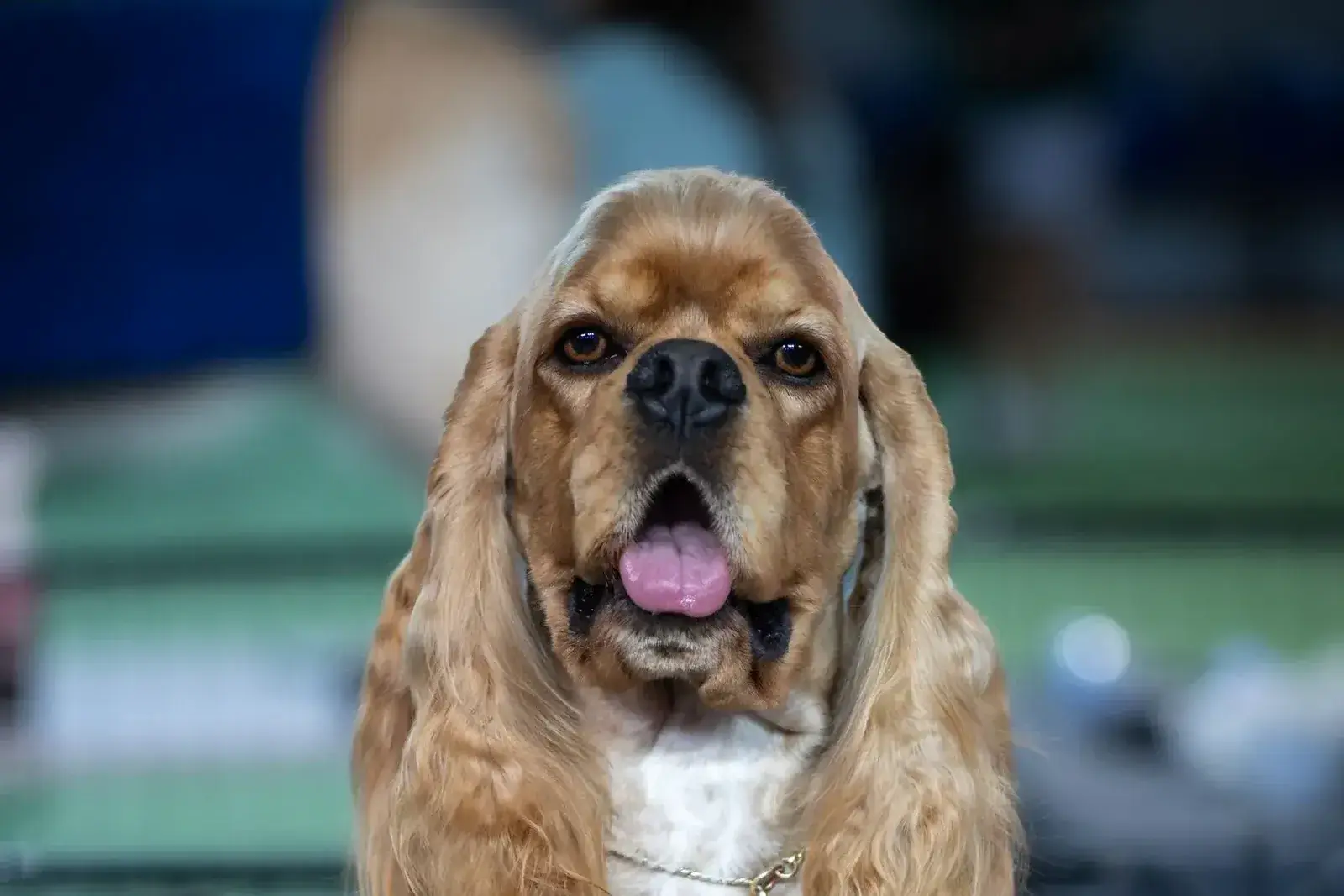
It stands about 34 to 39 cm tall, comes in black, solid colours and parti-colours, and is known for a merry, people-loving nature. It suits owners who enjoy daily walks and regular brushing, and who will keep up with ear care and eye checks, because ear disease and glaucoma are the breed's best-documented health issues.
American Cocker Spaniel quick facts
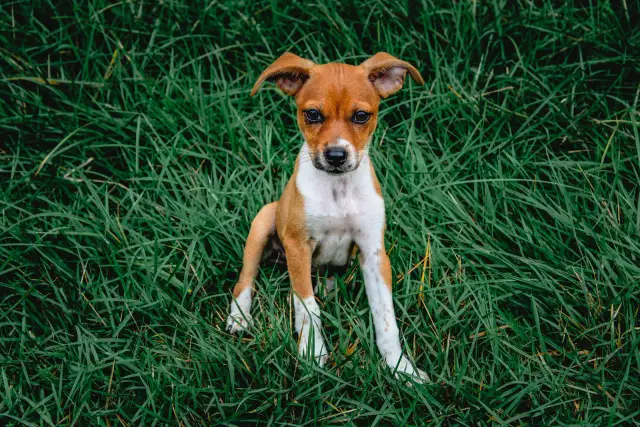 Related breedRat Terrier1890 to 1999 · United StatesVictorian Breed Boom
- Closest DNA relatives
- English Cocker Spaniel, Field Spaniel, English Springer Spaniel
- Descendant breeds
- Boykin Spaniel, Cockapoo (atlas data)
- Country of origin
- United States
- Period of development
- About 1870 to 1946 (atlas data); recognised as separate from the English Cocker in the 1940s
- Type
- Flushing spaniel ( Group 8, Retrievers, Flushing dogs and Water dogs, standard no. 167; AKC Sporting Group; UK Kennel Club Gundog Group)
- Height
- Dogs 37 to 39 cm, bitches 34 to 37 cm (Royal Kennel Club and AKC standards)
- Weight
- Not given in the standard
- Coat
- Short and fine on the head, medium length on the body, silky, flat or slightly wavy, with long feathering on ears, chest, belly and legs
- Colours
- Black (with or without tan), any solid colour other than black, parti-colour including roans, tricolour
- Life span
- Atlas data: 12 to 15 years
- DNA group
- "Spaniel" (Parker et al. 2017)
Drawn to scale in real centimetres. Its back reaches about 37 cm, just below your knee; its head about 46 cm, your knee.
Where it sits in the tree
Victorian Breed Boom · 1850 to 1913


Name and origin
 Related breedKing Charles Spaniel1600 to 1903 · United KingdomEarly Modern Era
"Cocker" comes from the breed's old job of flushing woodcock from cover. A cocker spaniel was a small spaniel that worked close to the gun and put birds into the air. In the United States the breed is simply called the Cocker Spaniel, and the AKC rankings and show classes use that name. Everywhere else it is the American Cocker Spaniel, to tell it apart from the English Cocker Spaniel. The FCI lists it under the full name, with the United States of America as country of origin.

History
 Same eraKooikerhondje1500 to 1966 · NetherlandsAge of Exploration
Spaniels in America before 1900
Spaniels came to North America with English and European settlers. The American Spaniel Club was founded in 1881 and is described as the oldest breed club in the United States. It first covered spaniels of several types and wrote separate standards later.
Obo II and the American type
The dog most often named as the father of the modern American Cocker is Obo II. He was a small, low, long-bodied dog. Breeders in the United States then selected for a shorter back, a domed head, a shorter muzzle and a heavier coat than the English dogs. That shaped what the show ring now calls the American type.
Two breeds from one name
For decades the United States registered every cocker as one breed. The AKC introduced separate classes for the two types in 1935, and the English Cocker Spaniel Club of America was founded in 1935 or 1936 to protect the English type. The Cocker Spaniel Club of America discouraged crosses between the types in 1938. The AKC recognised the English Cocker as its own breed in 1946, and the split took effect in 1947. The American dog kept the name "Cocker Spaniel" in the United States.
From top of the charts to pet and show dog
The breed was the most registered in the United States for sixteen years, from 1936 to 1952, helped by the Best in Show wins of My Own Brucie in the early 1940s. AKC says it reached number one again from 1983 to 1990 and held the top spot 23 times in all, until the Labrador Retriever took over in 1991. In 1955 the Disney film Lady and the Tramp made a buff Cocker Spaniel its heroine. The breed has since dropped in the rankings and was around 30th in recent AKC lists.
Relatives and DNA
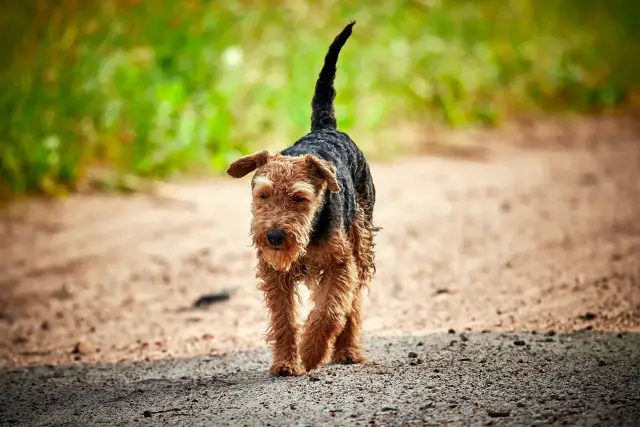 Same familyAiredale Terrier1850 to 1880 · United KingdomVictorian Breed Boom
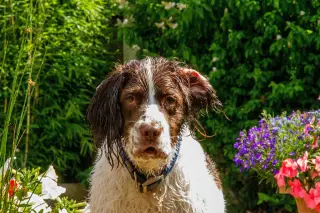
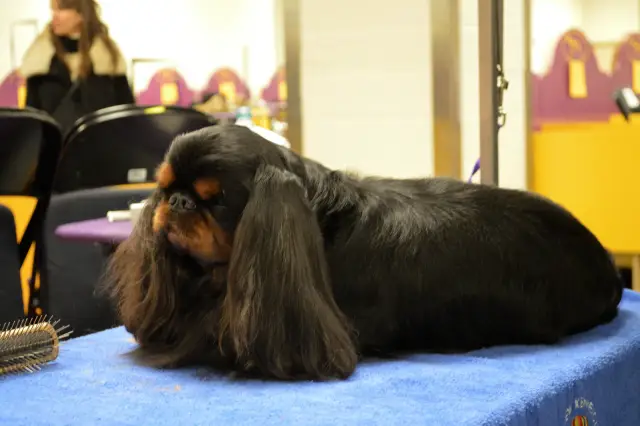
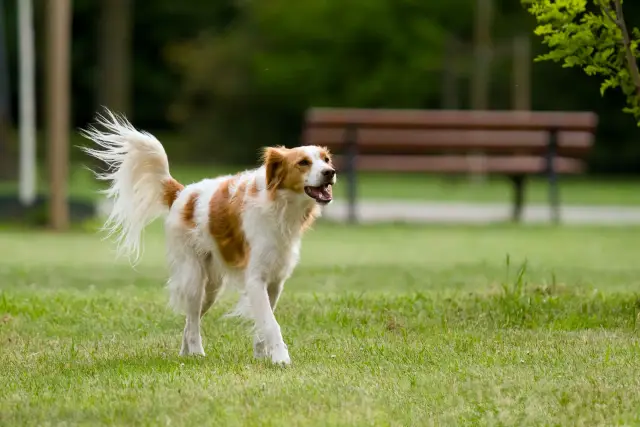
In the atlas data the American Cocker descends from the English Cocker Spaniel, with medium confidence. It is itself the parent of the Boykin Spaniel, a South Carolina hunting dog, and the Cockapoo, a Cocker and Poodle cross. The Russian Spaniel is listed as a sibling breed.
A 2017 study by Parker and colleagues (Cell Reports) sorted 161 breeds into clades by DNA. The American Cocker falls in the "Spaniel" clade, which the study rates as strongly supported. The study also measured shared : long stretches of identical DNA inherited from common ancestors. More () shared points to a closer link, but the study cannot say which way genes flowed. For related reading see the Spaniel family page.
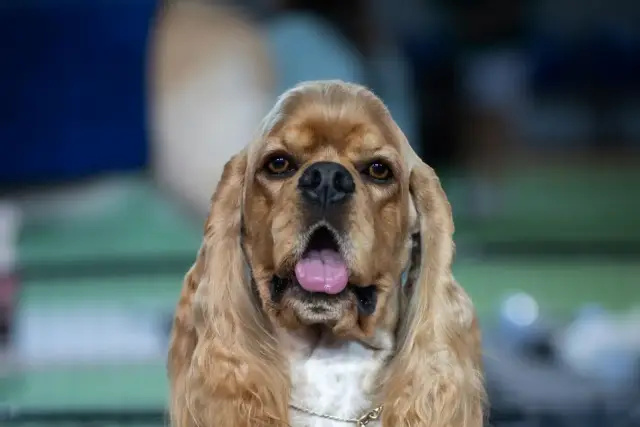
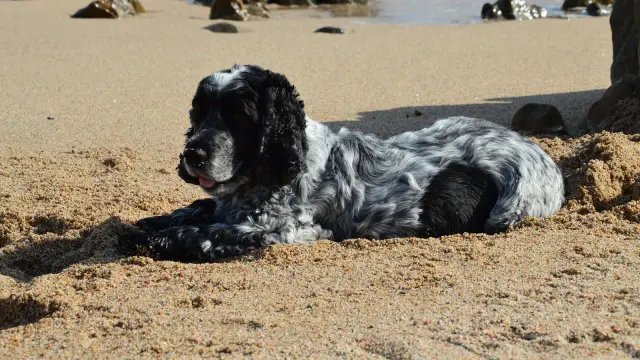
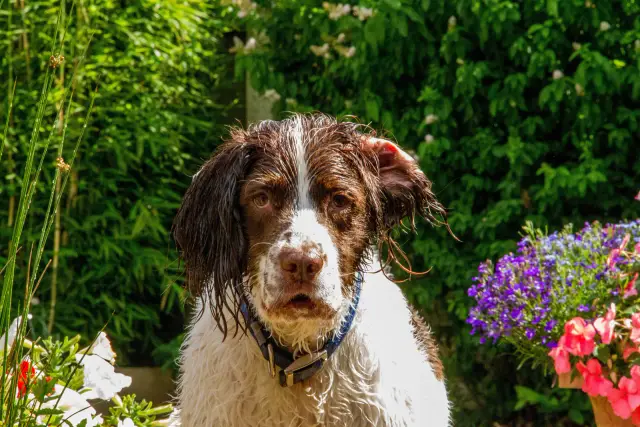
- American Cocker Spaniel and English Cocker Spaniel
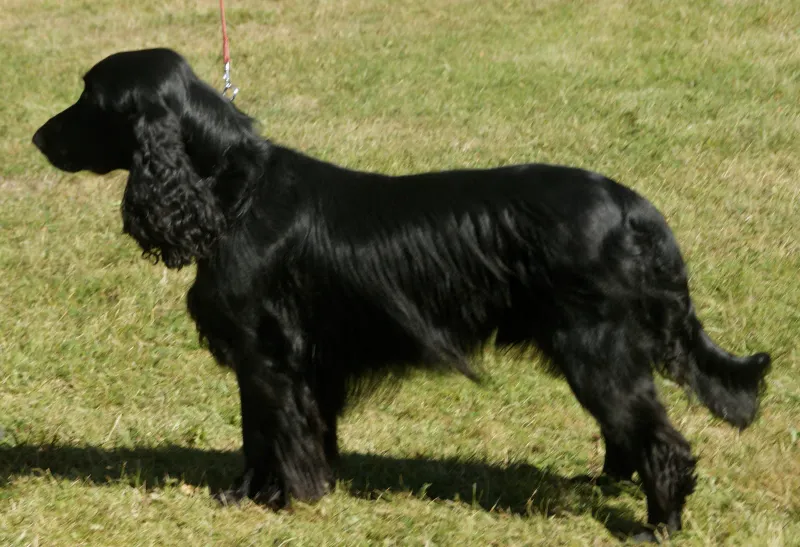 American Cocker Spaniel and Field Spaniel
- American Cocker Spaniel and English Springer Spaniel
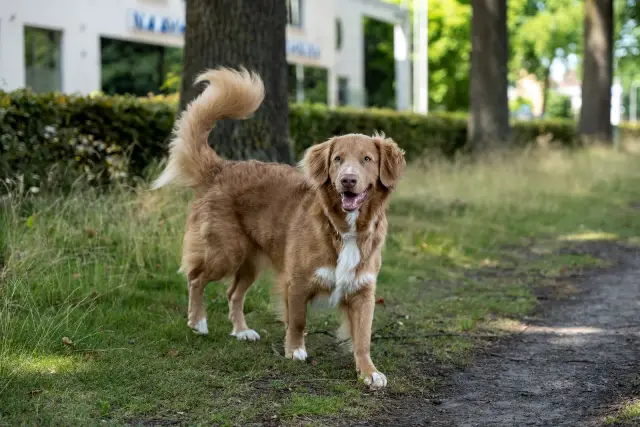
- American Cocker Spaniel and Nova Scotia Duck Tolling Retriever
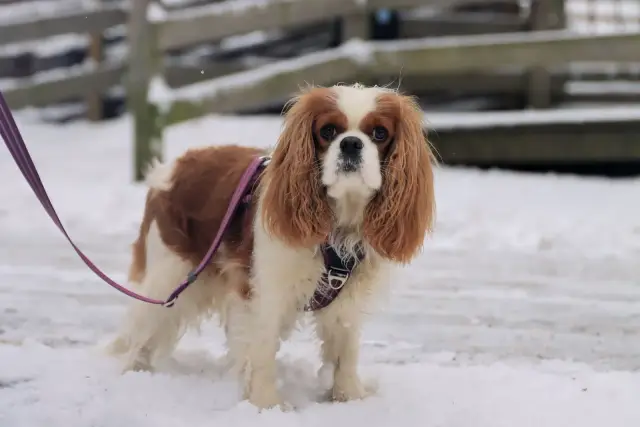
- American Cocker Spaniel and Cavalier King Charles Spaniel
The English Cocker at the top fits the written history. The Field Spaniel in second place is a surprise, and so is the Rat Terrier near the bottom of the list; the study does not explain either result.
Sister breeds · 1
- Russian Spaniel1930 to 1951
Descend from it · 2
- Boykin SpanielUnited States
- CockapooUnited States
- English Cocker Spaniel60.1 Mb 2.5%
- Field Spaniel40.4 Mb 1.7%
- English Springer Spaniel20.9 Mb 0.9%
- Nova Scotia Duck Tolling Retriever19.9 Mb 0.8%
- Cavalier King Charles Spaniel14.8 Mb 0.6%
- Rat Terrier11.5 Mb 0.5%
- Irish Water Spaniel11.3 Mb 0.5%
Source: Parker et al. 2017. Percent of the whole genome.
| Breedwith American Cocker Spaniel | with American Cocker Spaniel (Mb)Shared DNA (Mb) |
|---|---|
| English Cocker Spaniel | 60.1 |
| Field Spaniel | 40.4 |
| English Springer Spaniel | 20.9 |
| Nova Scotia Duck Tolling Retriever | 19.9 |
| Cavalier King Charles Spaniel | 14.8 |
| Rat Terrier | 11.5 |
| Irish Water Spaniel | 11.3 |
Source: Parker et al. 2017, Cell Reports, shared haplotypes between 161 breeds (1,346 dogs).
The breed standard
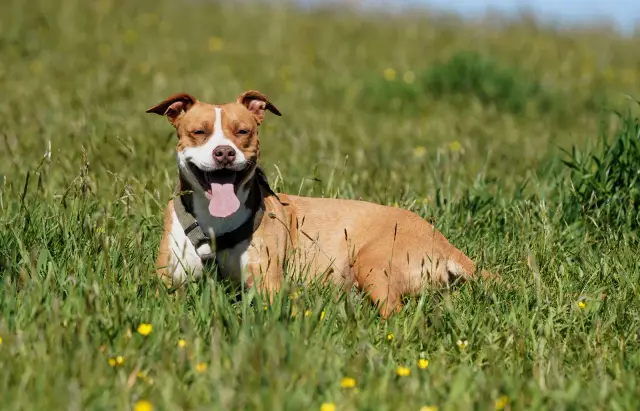 Looks relatedAmerican Pit Bull Terrier1850 to 1898 · United StatesVictorian Breed Boom
A is the written ideal that judges compare each dog against. The Royal Kennel Club standard calls the American Cocker a "serviceable-looking dog with refined chiselled head", with strong, well-boned legs and a compact, sturdy body. Its stated character is "merry, free, sound, keen to work". The AKC standard is close to the Royal Kennel Club text on size and colour. It also disqualifies males over 39.4 cm and bitches over 36.8 cm in the show ring. The FCI standard is no. 167.
| Trait | What the standards say |
|---|---|
| Height | Royal Kennel Club and AKC: dogs 37 to 39 cm, bitches 34 to 37 cm |
| Weight | Not stated in the Royal Kennel Club standard |
| Head | "Refined chiselled head" (Royal Kennel Club) |
| Eyes | Round, full, looking straight ahead; dark brown to black in most colours, dark hazel in reds and browns (Royal Kennel Club) |
| Ears | Lobular, set no higher than the lower line of the eyes, with long silky hair (Royal Kennel Club) |
| Coat | Short and fine on the head, medium length on the body; "silky, flat or slightly wavy", texture is most important (Royal Kennel Club) |
| Colours | Royal Kennel Club: black (with or without tan), solid colours other than black, parti-colours including roans, tricolours. AKC judges three varieties: black, parti-colour, and any solid colour other than black (ASCOB) |
| Tail | Traditionally docked; undocked tails are set in line with the , moderate in length with feathering (Royal Kennel Club) |
| Temperament | "Equable with no suggestion of timidity" (Royal Kennel Club) |
Temperament
 Related breedAmerican Staffordshire Terrier1850 to 1936 · United StatesVictorian Breed Boom
The standards describe a cheerful, keen and even-tempered dog, and that fits the breed's purpose. A spaniel was bred to work near the hunter, to flush birds and to take direction. Most American Cockers are therefore people-oriented dogs that want to be with their family and enjoy training that uses food and praise.
Two cautions are worth keeping in mind. First, a dog bred mainly for the show ring and the pet home can be softer and more sensitive than a working spaniel, so harsh handling backfires. Second, temperament varies by line and by early socialisation. A puppy that meets many people, places and sounds in its first months is more likely to be relaxed as an adult. The atlas data has no breed-wide behaviour survey for the American Cocker, so any breed-level rate for shyness or separation distress would be a guess.

Health
 Related breedAustralian Kelpie1870 to 1902 · AustraliaVictorian Breed Boom
Most American Cockers live a good number of years. The atlas data gives 12 to 15 years. Large UK studies mostly count "Cocker Spaniel" as the English type, so published UK longevity figures do not reliably describe the American breed. Information here is general; talk to a vet about your own dog.
The best-documented problem is ear disease. A Finnish study of 98,736 dogs seen at 55 clinics in 2010 (Kaimio and colleagues, Acta Veterinaria Scandinavica, 2017) found otitis externa in 27.0 percent of American Cockers (89 of 329), compared with 15.7 percent of English Cockers. Among ear-diseased dogs, American Cockers had the highest number of episodes and the most ear surgeries. In the owner questionnaire for 151 dogs, 56 percent had had otitis externa, and about 1 in 6 of those (16 percent) needed surgery or were euthanised because of severe ear disease. First signs before 1 year of age raised the risk of end-stage disease (odds ratio 3.8). Single-country clinic data may not match every country.
| Condition | What it is | How common | What helps |
|---|---|---|---|
| Otitis externa (ear canal disease) | Inflammation and infection of the ear canal; long, heavy ears and narrow canals trap moisture | 27.0% of American Cockers in Finnish clinic records (about 1 in 4); 56% in the owner questionnaire | Regular ear checks, early vet treatment, especially in a young dog; see the dog ear infection guide |
| Primary angle closure glaucoma | Blocked fluid drainage in the eye raises pressure quickly; painful and sight-threatening | No published breed rate in the sources used; the breed is a known case, and an AKC Canine Health Foundation study at UC Davis found a region on chromosome 10 linked to it | Eye exams for breeding dogs; see a vet the same day for a red, painful or cloudy eye |
| prcd-PRA (progressive retinal atrophy) | inherited eye disease: rod cells, then cone cells, degenerate, leading to blindness (Zangerl et al. 2006 identified the mutation) | No carrier rate in the sources used | DNA test of both parents; the Royal Kennel Club has offered a test for American Cockers since 2020 |
| Obesity and weight gain | Small, food-loving dog with a modest exercise need | No breed rate in the sources used | Measured meals, daily walks, regular weigh-ins |
Breeders in many countries test eyes and use the prcd-PRA DNA test. The American Spaniel Club runs a health registry that expects eye examinations for breeding stock. A healthy-looking dog can still carry a recessive gene, which is why testing both parents matters.

Living with an American Cocker Spaniel
 Related breedBasset Hound1860 to 1885 · United KingdomVictorian Breed Boom
| Daily reality | Rating | Why |
|---|---|---|
| Exercise | Medium | A small gundog that enjoys walks, play and scent games; not an extreme athlete |
| Training needs | Medium | Eager and sensitive; reward-based methods work best |
| Grooming | High | Silky coat mats easily; regular brushing and trimming at a groomer, with ear care, are part of ownership |
| Shedding | Medium | Sheds, and feathering holds loose hair |
| Barking | Varies | No breed data in the sources used |
| Time alone | Fair | People-oriented dogs often dislike long absences |
| Children | Good | Usually gentle and playful, but supervise young children |
| Other dogs | Good | Usually friendly with good socialisation |
| Cats and small pets | Fair | Bred to flush birds; introduce with care |
| Flat living | Good | Small size suits flats if walks happen |
| Heat tolerance | Fair | Dense, silky coat; avoid hard exercise in heat |
| Cold tolerance | Fair | Coat is fine, short on the head |
| First-time owner | Good | Eager to please, as long as grooming and ear care are accepted |
A great fit if you...
- want a small, affectionate dog that joins family life;
- enjoy brushing and a regular groomer visit;
- will check and clean ears on a schedule and see a vet early when something looks wrong;
- like daily walks and short training games.
Think twice if you...
- want a low-grooming dog;
- are away from home for most of the day;
- cannot afford regular grooming and possible ear or eye vet bills;
- want a dog with a drive for long hard days in the field.
Before you get one. Ask the breeder for eye examination results for both parents, prcd-PRA test results and what they know about ear health in the line. Ask whether the dogs come from show or field-bred lines, because they differ in coat length and energy. Rescue groups often have adult Cockers whose temperament is already clear. For another small spaniel choice see the Cavalier King Charles Spaniel.
Similar breeds to consider
- English Cocker Spaniel: slightly bigger and often more energetic, with a flatter head and a longer muzzle.
- Cavalier King Charles Spaniel: a gentler lapdog type with its own heart and brain health concerns.
- English Springer Spaniel: a taller, more athletic flushing spaniel.
- Brittany: a lively gundog for people who want more exercise and work.

American Cocker Spaniel fun facts
 Related breedBelgian Malinois1891 to 1901 · BelgiumVictorian Breed Boom
- The American Spaniel Club, founded in 1881, is described as the oldest breed club in the United States.
- The breed was the most popular in the United States for sixteen years in a row, from 1936 to 1952.
- AKC counts 23 years at number one for the Cocker Spaniel, more than any other breed.
- Lady, the heroine of Disney's Lady and the Tramp (1955), is a buff Cocker Spaniel.
- The AKC kept the name "Cocker Spaniel" for the American type, so a US "Cocker Spaniel" is the American breed.
Frequently asked questions
What is the difference between an American and an English Cocker Spaniel?
They share ancestry but were separated by selective breeding. The American is smaller, with a shorter back, a domed head, a shorter muzzle and a heavier coat. The English is taller and more athletic, with a longer muzzle and a lighter, more practical coat. The recognised them as separate breeds in 1946.
How big is an American Cocker Spaniel?
Dogs are 37 to 39 cm and bitches 34 to 37 cm at the shoulder, according to the Royal Kennel Club and AKC standards.
How long do American Cocker Spaniels live?
The atlas data gives 12 to 15 years.
Are American Cocker Spaniels good family dogs?
Generally yes. The standards describe a merry, even-tempered dog, and the breed is people-oriented. Supervise young children and plan for grooming time.
Why do Cocker Spaniels get so many ear infections?
Heavy, hairy ears and narrow canals trap moisture and wax. In a Finnish study, 27.0 percent of American Cockers had otitis externa. Regular checks and early treatment help.
Do American Cocker Spaniels shed?
Yes, moderately. The long coat also tangles easily and needs frequent brushing.
What colours do American Cockers come in?
Black (with or without tan), solid colours other than black such as buff or red, parti-colours including roans, and tricolours.
Read next
Closest DNAEnglish Cocker Spaniel60.1 Mb sharedFamilySpanielThe whole family Adopt a dogDog Shelters in EuropeFind dog shelters in Europe, learn how shelters differ from country to country and why adopting a dog is a good option.
Sources (12)
- American Kennel Club, Cocker Spaniel breed page and Cocker Spaniel history.
- American Kennel Club, Cocker Spaniel breed standard.
- American Kennel Club, "Top ten breeds of the 1940s" and "Top ten breeds of the 1980s".
- American Spaniel Club, club history.
- AKC Canine Health Foundation, "Exploring genetic causes of glaucoma in the American Cocker Spaniel".
- Fédération Cynologique Internationale, American Cocker Spaniel, standard no. 167.
- Kaimio M. et al., "Survey of otitis externa in American Cocker Spaniels in Finland", Acta Veterinaria Scandinavica, 2017.
- Parker H.G. et al., "Genomic analyses reveal the influence of geographic origin, migration, and hybridization on modern dog breed development", Cell Reports, 2017.
- Royal Kennel Club (UK), Spaniel (American Cocker) breed standard and new DNA testing scheme for American Cocker Spaniels, 2020.
- American Spaniel Club, history of the Cocker Spaniel and the ASC; American Kennel Club, English Cocker Spaniel history.
- Wikipedia, "American Cocker Spaniel", "Obo II" and "My Own Brucie" (used for dates and summaries, checked against the other sources listed).
- Zangerl B. et al., "Identical mutation in a novel retinal gene causes progressive rod-cone degeneration in dogs and retinitis pigmentosa in humans", Genomics, 2006.