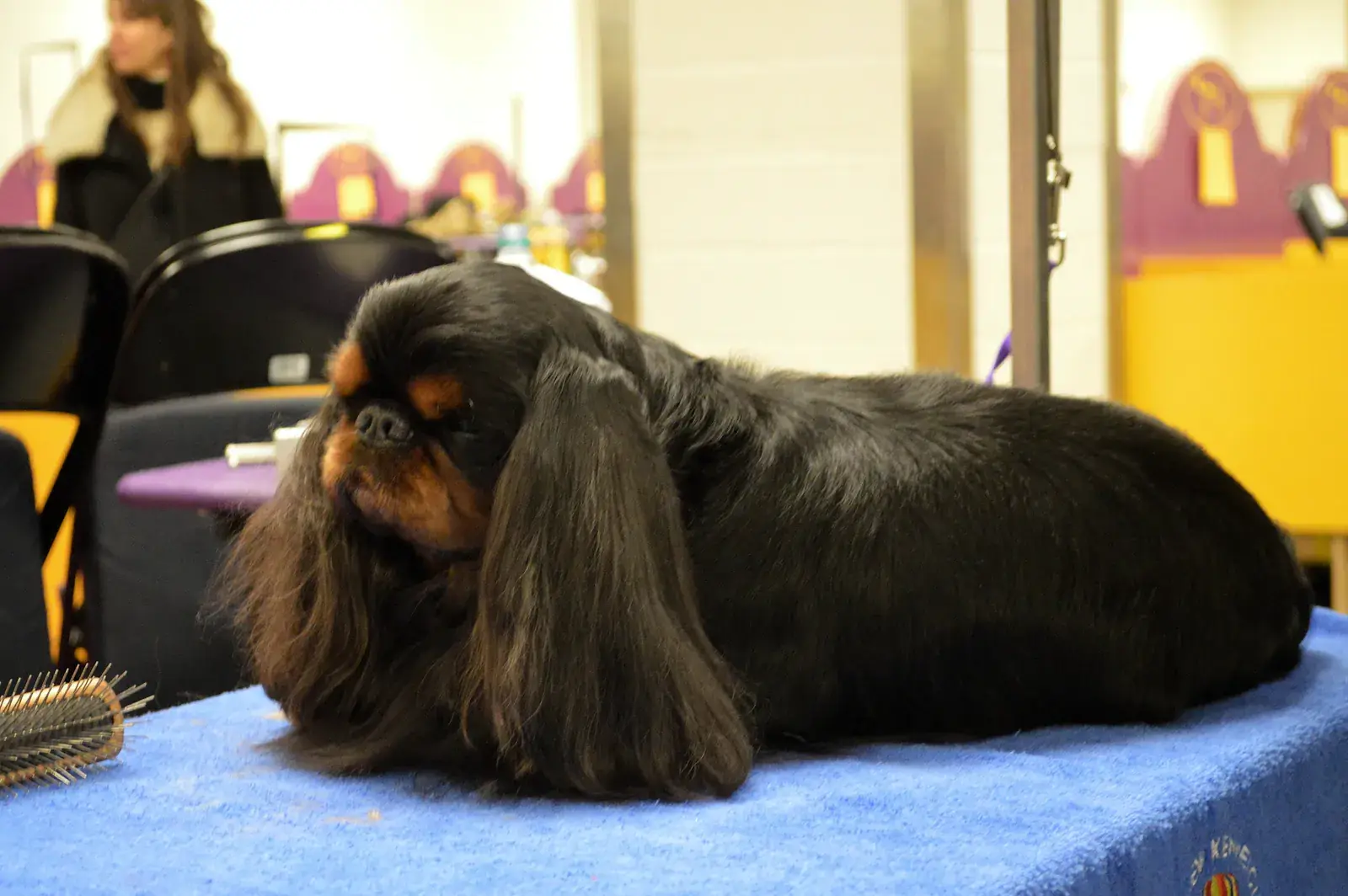
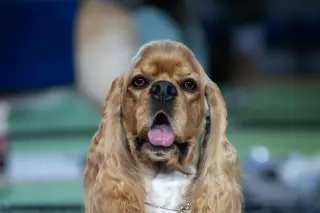
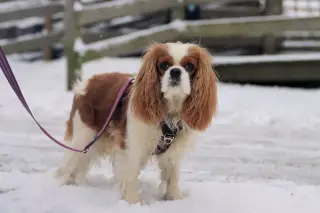
It has a domed skull, a short upturned nose, long feathered ears and a silky coat in four colours: Blenheim, Ruby, Prince Charles and King Charles. It is named for Charles II of England, who was famous for his small spaniels, and it is the older of two breeds that share the royal name. The other is the Cavalier King Charles Spaniel, recreated in the 1920s with a longer muzzle and a flatter skull. The two are often mixed up, and most of this page is about telling them apart. The King Charles Spaniel is a quiet, affectionate lap companion that suits calm homes, and it is far rarer than the Cavalier.
King Charles Spaniel quick facts
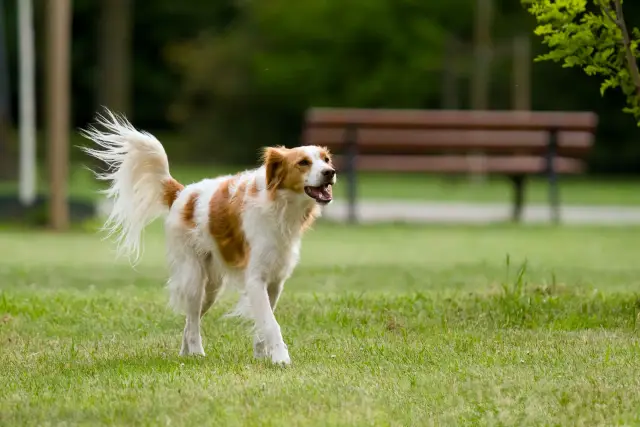 Related breedKooikerhondje1500 to 1966 · NetherlandsAge of Exploration
- Other names
- English Toy Spaniel ( and the United States), Charlie (nickname)
- Country of origin
- Great Britain (England)
- Period of development
- Toy spaniels at court from the 1500s and 1600s; type fixed in the Victorian era. Atlas data: about 1600 to 1903
- Original job
- Lap and companion dog at court and in wealthy homes
- Type
- Toy companion spaniel. Group 9 (Companion and Toy Dogs), standard no. 128; AKC Toy Group; recognised by the UK Kennel Club
- Weight
- UK Kennel Club: 3.6 to 6.3 kg. English Toy Spaniel Club of America standard: 8 to 14 lb (about 3.6 to 6.4 kg)
- Coat
- Long, silky, feathered on ears, chest, legs and tail
- Colours
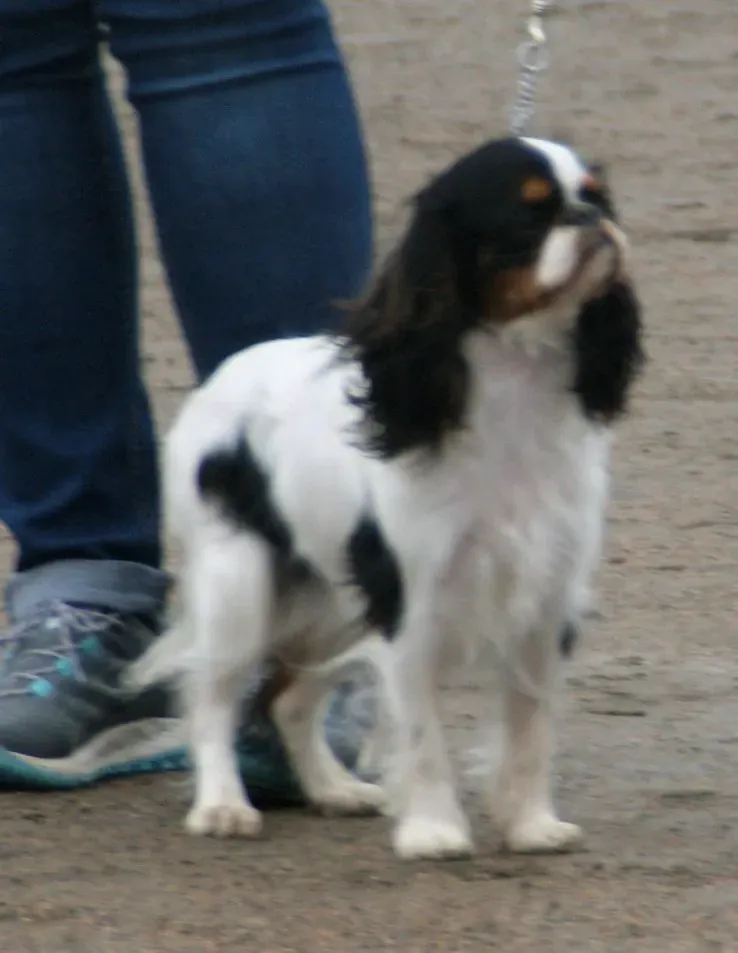
- Blenheim, Ruby, Prince Charles (tricolour), King Charles (black and tan)
- Life span
- Atlas data: 10 to 12 years
- Closest comparison
- Cavalier King Charles Spaniel: larger, longer-nosed, flat-skulled
- DNA family
- Spaniel family in the atlas (Parker et al. 2017 did not test the breed itself)
Drawn to scale in real centimetres. Its back reaches about 26 cm, your shin; its head about 32 cm, your shin.
Where it sits in the tree
Early Modern Era · 1600 to 1799
Name and origin
 Related breedAkita1600 to 1931 · JapanEarly Modern Era
The breed carries the name of King Charles II, who ruled England from 1660 and was known as the Merry Monarch. Accounts describe small spaniels following him everywhere, and the name has stuck for centuries. In Britain and under the FCI the dog is the King Charles Spaniel. In the United States the American Kennel Club calls it the English Toy Spaniel, a name that dates from the days when the American breed clubs wanted to separate it from the Cavalier. British owners sometimes call it a "Charlie".
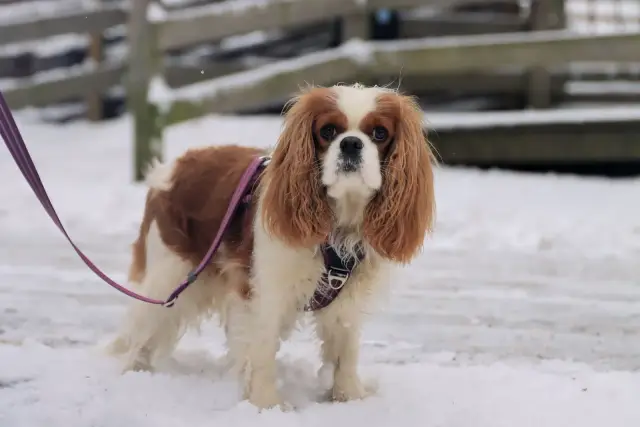
The word "Cavalier" in the other breed's name refers to the royalist Cavaliers of the English Civil War, and was added in 1928. The King Charles Spaniel never had it. So "King Charles Spaniel" on its own means the round-headed dog, and "Cavalier King Charles Spaniel" means the longer-nosed one.
Four colour names
Each coat colour of the breed used to be a separate variety with its own name. They were merged into one breed, and the names survive as colours.
- Blenheim. Pearly white with chestnut-red patches. The name is tied to Blenheim Palace and the Dukes of Marlborough. One account says the 1st Duke of Marlborough kept red and white spaniels of this type for hunting in the early 1700s.
- Ruby. A whole-coloured, rich chestnut or mahogany red.
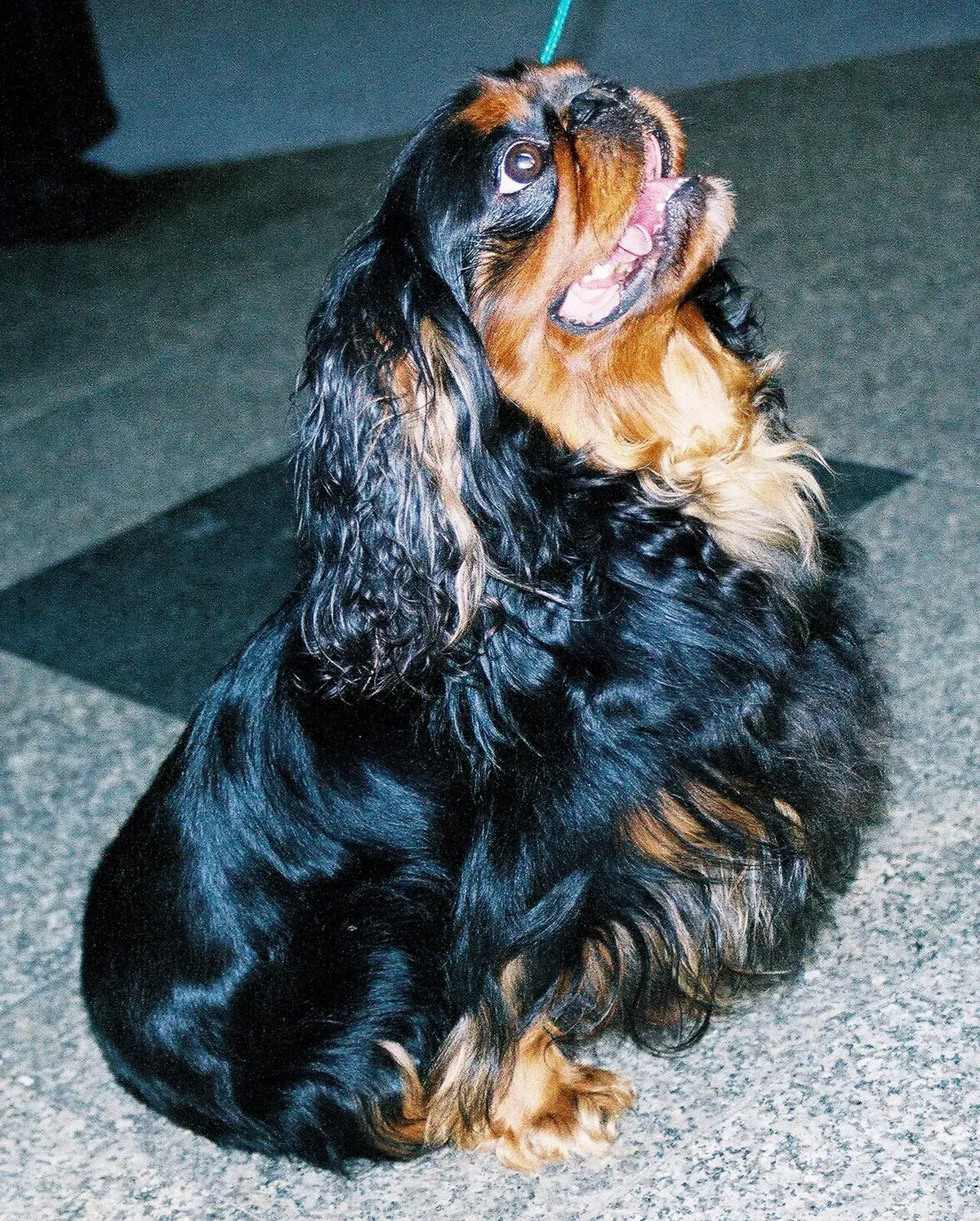
- Prince Charles. Called tricolour in Britain: a pearly white ground with black patches and tan markings. In the English Toy Spaniel Club of America standard it has black patches, solid black ears and black face markings, with tan spots over the eyes.
- King Charles. Rich glossy black with bright mahogany tan markings. In the US this is called King Charles, and the FCI calls the colour black and tan.
The FCI recognises four varieties: black and tan, ruby, Blenheim and tricolour. The UK Kennel Club standard describes Blenheim as a pearly white ground with well-distributed chestnut-red patches, and Ruby as a rich chestnut red.

History
 Same eraAmerican Bulldog1700 to 1980 · United StatesEarly Modern Era
Toy spaniels at court
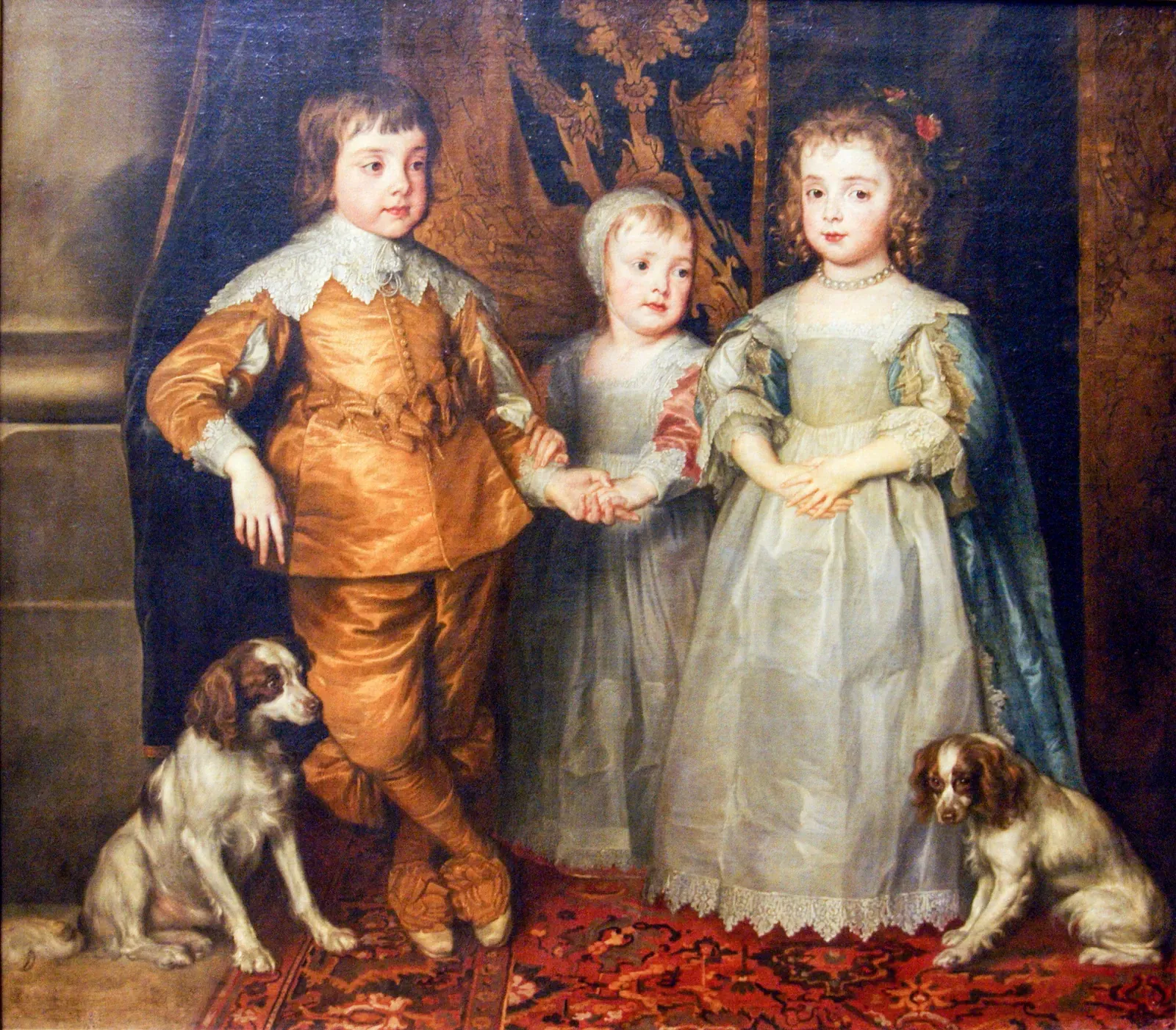
Small spaniels were kept as lap dogs in Europe long before Charles II came to the throne. They appear in portraits of the Stuart court, among them paintings of the royal children with small red and white and black and tan spaniels at their feet. In those pictures the dogs have a longer muzzle than the modern King Charles Spaniel, much like the modern Cavalier. A well-known story says that Charles II was so attached to his spaniels that they were allowed in the council chamber and on the royal bed. Stories of this kind are traditions repeated in breed histories, so treat the details as colour, not documented fact.
Spaniels were a Stuart habit, not only Charles II's, which is why the royal name stuck to the whole type.
The Blenheim spot
A popular story says the thumb-sized chestnut mark on the forehead of many Blenheim dogs, the "Blenheim spot" or lozenge, appeared when a duchess of Marlborough pressed her thumb on a dog's head while waiting anxiously for news of the Duke at the Battle of Blenheim in 1704. This is a legend, not a documented event. The spot is, in fact, an old and prized feature of the colour.
The flat-faced fashion
By the 1800s breeders favoured shorter noses and more domed heads. Breed histories link the change to the fashion for flat-faced Asian dogs such as the Pekingese, the Japanese Chin and the Pug. The King Charles Spaniel of Victorian dog shows was the result: a rounder head, a very short nose and a heavier ear fringe than the dogs in the Stuart pictures. Atlas data dates the older King Charles Spaniel to about 1600 to 1903. The long-muzzled type of the old paintings became rare.
Roswell Eldridge and the Cavalier
In 1926 an American, Roswell Eldridge, persuaded the Kennel Club to allow him to offer prizes at Crufts for toy spaniels of the old type seen in the paintings from Charles II's reign. The prizes were 25 pounds for the best dog and 25 pounds for the best bitch, offered for five years. Sources differ on the form: most call it 25 pounds in cash, one says 25 pounds of sterling silver. The dogs were to be Blenheims with the longer face and flat skull of the old pictures.
Few dogs entered at first. Four dogs came to Eldridge's special classes at Crufts in 1926. In 1928, the third year of the prizes, breeders founded a club for the new type, and a male named Ann's Son won Best of Breed and was used as a model for a standard. The new dogs were first treated as a "Cavalier type" variety of the King Charles Spaniel. By 1945 the UK Kennel Club recognised the Cavalier as a separate breed with its own championships.
So the Cavalier is not a King Charles Spaniel with a longer nose. It was bred from King Charles Spaniels, chosen to look like the older paintings, and became its own breed. Eldridge's prizes started that process and the King Charles Spaniel itself was left behind as the round-headed original.
| Year | Event |
|---|---|
| 1660 | Charles II returns to the throne; his spaniels become the name for the type |
| 1704 | Battle of Blenheim; the duchess's thumb legend is attached to it |
| 1800s | Short nose and domed skull become the show fashion |
| 1926 | Roswell Eldridge offers his Crufts prizes for the old long-nosed type |
| 1928 | Cavalier breed club founded at Crufts; "Cavalier" added to the name |
| 1945 | UK Kennel Club recognises the Cavalier as a separate breed |
 Save
Relatives and DNA
 Same familyBlack Mouth Cur1700 to 1900 · United StatesEarly Modern Era
The King Charles Spaniel is placed in the Spaniel family in the atlas. The 2017 study by Parker and colleagues (Cell Reports), which sorted 161 breeds into 23 DNA clades, did not include the King Charles Spaniel itself, so no shared-DNA figure exists for it. Its Cavalier cousin was tested, and the Cavalier shares the most DNA with the Griffon Bruxellois (27.9 ), a sign that toy spaniels helped build the Brussels breeds.
Breed literature suggests three older links, all low confidence:
- Italian toy spaniels may have been crossed with small local dogs such as the Maltese, and the atlas lists the Maltese as an ancestor.
- The King Charles Spaniel may share common ancestry with the Pekingese and the Japanese Chin.
- The Papillon is the continental descendant of similar toy spaniels.
Breeds that descend from it include the Cavalier King Charles Spaniel, the Griffon Bruxellois and the Clumber Spaniel.
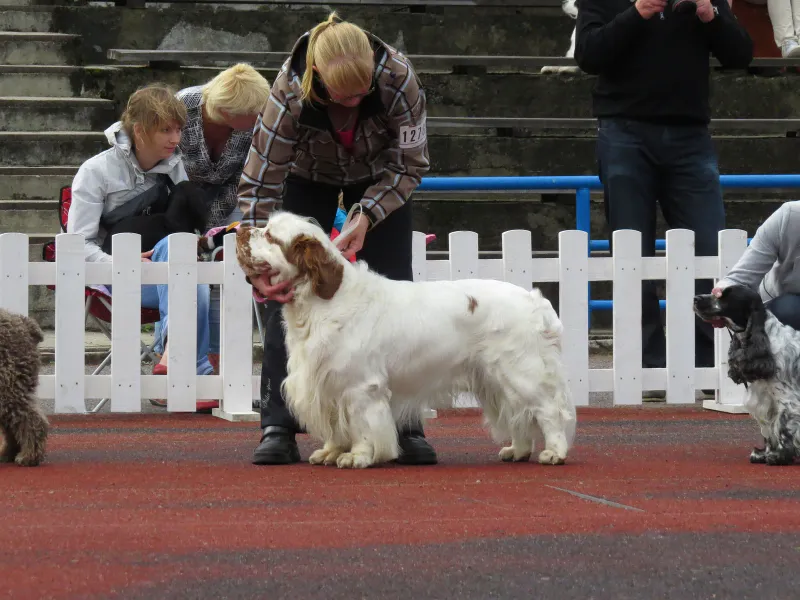
Sister breeds · 3
- Japanese Chin700 CE to 1900
- Pekingese700 CE to 1904
- Papillon1500 to 1935
Descend from it · 4
- Clumber SpanielUnited Kingdom
- Griffon BruxelloisBelgium
- Toy Trawler SpanielUnited Kingdom
- Cavalier King Charles SpanielUnited Kingdom
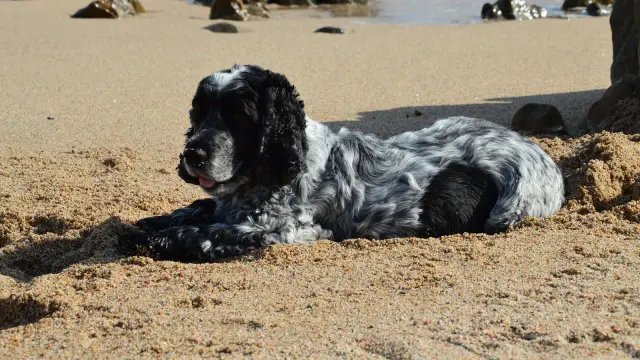
King Charles Spaniel or Cavalier? The differences
 Related breedBluetick Coonhound1700 to 1945 · United StatesEarly Modern Era
The two breeds share a royal name, long silky ears and a gentle manner, and the same four colour names are used by both. The differences are in the head, the size and the health picture.
| Trait | King Charles Spaniel | Cavalier King Charles Spaniel |
|---|---|---|
| Size | 3.6 to 6.3 kg (UK Kennel Club) | 5.4 to 8.2 kg (UK Kennel Club) |
| Skull | Well domed (FCI) | Nearly flat between the ears (UK Kennel Club) |
| Muzzle | Short, nose turned up (FCI) | Longer muzzle, shallow stop |
| Colours | Blenheim, Ruby, Prince Charles (tricolour), King Charles (black and tan) | Blenheim, tricolour, ruby, black and tan |
| Origin and dates | Stuart court toy spaniel; round-headed type fixed in the 1800s; dated 1600 to 1903 | Recreated from 1926 (Eldridge prizes); club 1928; separate breed 1945 |
| FCI standard | No. 128 | No. 136 |
| US name | English Toy Spaniel | Cavalier King Charles Spaniel |
| Health | Short nose: airway risk. Heart disease reported. No breed-wide study gives figures | Heart valve disease and syringomyelia common; large studies exist |
| Numbers | Rare | Common |
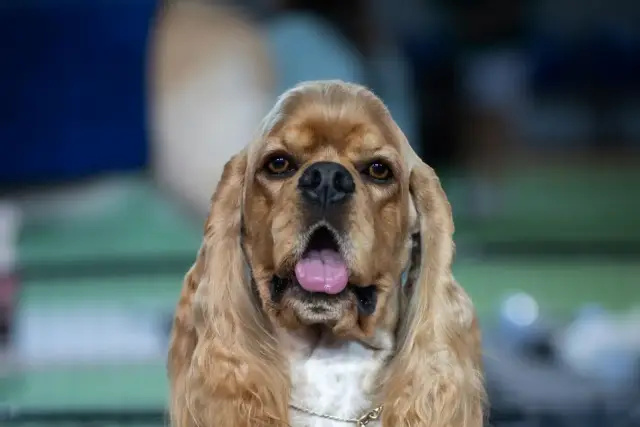
The Cavalier is the larger, more athletic and far more popular of the two. The King Charles Spaniel is smaller, rounder in the head and has a flatter face. Both are in the Toy Group.
The breed standard
 Looks relatedBoerboel1650 to 1983 · South AfricaEarly Modern Era
A is the written ideal for a breed that a kennel club judges dogs against. The clubs agree on the overall picture: a small, compact, sturdy toy spaniel with a short nose and a domed head.
| Trait | What the standards say |
|---|---|
| Weight | UK Kennel Club: 3.6 to 6.3 kg (8 to 14 lb). English Toy Spaniel Club of America (AKC parent club): most desirable weight 8 to 14 lb, with overall symmetry and substance more important than the exact weight |
| Height | Not set in the standards; breed summaries give about 23 to 28 cm at the withers |
| Skull | FCI: moderately large for the size, well domed and full over the eyes |
| Nose | FCI: black, with large open nostrils, short and turned up |
| Eyes | Large and dark, set wide apart (all standards) |
| Ears | Long, set low and hung close to the cheeks, heavily feathered |
| Coat | Long, silky and straight or slightly waved, with feathering on ears, chest, legs and tail |
| Colours | FCI: black and tan, ruby, Blenheim, tricolour. English Toy Spaniel Club of America: Prince Charles, King Charles, Ruby, Blenheim |
| White markings | English Toy Spaniel Club of America: a small white chest patch is allowed in King Charles and Ruby; other white is a serious fault |
Coat length. The American standard notes that Blenheim and Ruby dogs rarely reach the coat and ear length of the Prince Charles and King Charles, though good coats are still prized.
Why the nose is short. The short nose gives the breed its sweet round expression, but it also places the dog among the flat-faced (brachycephalic) breeds. The health section covers what this means.
Temperament
 Related breedBorder Terrier1700 to 1920 · United KingdomEarly Modern Era
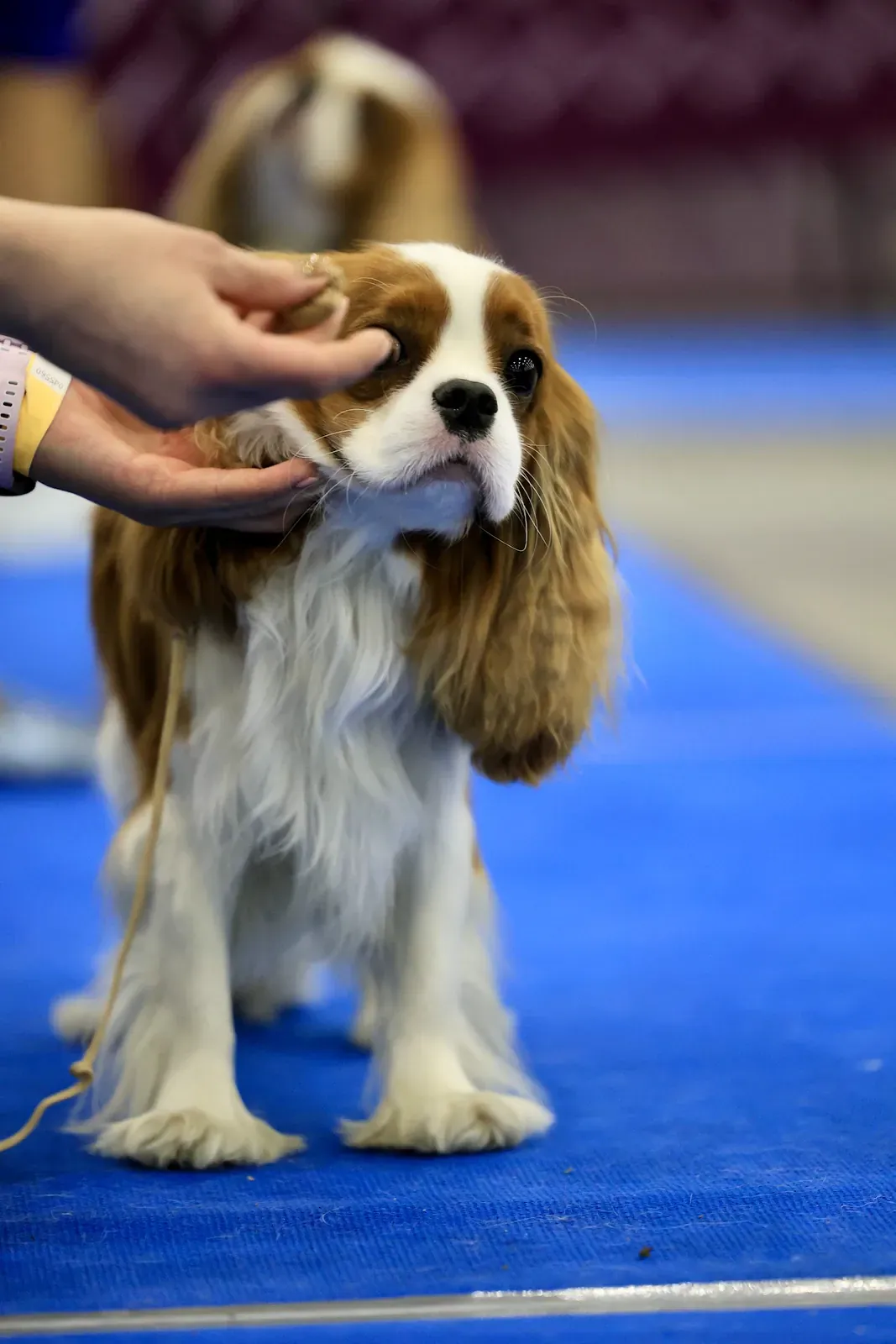
The King Charles Spaniel is bred to be a lap companion, and that shows. Breed clubs describe it as gentle, affectionate, quiet and eager to please. It tends to attach itself to one person or a small household and follows them from room to room. It is quieter and more reserved than many toys, and less bouncy than the Cavalier, which usually has more sporting spaniel energy.
- With people. Friendly and calm with family. It can be shy with strangers if poorly socialised. The standard calls for a gentle expression and a quiet disposition.
- With children. Good with gentle, older children. It is small and fragile, so rough handling or being dropped can hurt it. Supervise young children.
- With other pets. Usually sociable with dogs and cats when introduced early. It is not a hunter in practice, though it is still a spaniel.
- Alone. A people dog. Long hours alone do not suit it, and it can fret.
- Trainability. Bright and keen to please, but it can be sensitive. Short, gentle, reward-based sessions work better than firm corrections.
 Save

Exercise, grooming and daily care
 Related breedCatahoula Leopard Dog1700 to 1979 · United StatesEarly Modern Era
The King Charles Spaniel needs less exercise than the Cavalier. A couple of short walks a day and some play indoors are enough for most adults. Its short nose means it should not be exercised hard in hot or humid weather, and a harness is better than a collar for walks because it does not press on the throat.
Grooming is the larger job. The long silky coat and ear feathering tangle easily, so plan on brushing several times a week and a trim of the feet and ear fringes. The ears hang close and heavy, which keeps air out, so check and clean them regularly. Wipe the facial folds and tear stains if the dog has them, and brush the teeth, because small mouths crowd teeth and plaque builds up.
Health
 Related breedCoton de Tulear1600 to 1970 · MadagascarEarly Modern Era
Most King Charles Spaniels live full lives, with a typical life span of 10 to 12 years. This section covers what the breed is known to be prone to, so owners and breeders can screen and watch for it. A key point: no large published study gives breed-wide percentages for the King Charles Spaniel, which is rare and small in numbers. The big Cavalier studies cannot be applied to it, so no figures are quoted here.
| Condition | What it is | How common | What helps |
|---|---|---|---|
| Brachycephalic airway syndrome (BOAS) | A short nose and narrow nostrils or a long soft palate restrict airflow, giving noisy breathing, snoring or tiring easily | Seen more often in flat-faced breeds than in long-nosed ones; no published figure for this breed | Choose a dog with a visibly open nose and quiet breathing; keep weight lean; avoid heat and hard exercise; a vet can assess for airway surgery |
| Mitral valve disease | The heart's mitral valve thickens and leaks over time, which a vet hears as a murmur | Breed guides list it as common in the breed; no published figure | Breeders who listen to the heart of breeding dogs and repeat checks over their lives; regular vet checks as the dog ages |
| Patellar luxation | The kneecap slips out of its groove, causing skipping steps | Common in toy breeds; no published figure for this breed | Breeders who have knees checked; healthy weight; surgery for severe cases |
| Chiari-like malformation and syringomyelia | A skull too small for the brain and fluid pockets in the spinal cord | Listed in some breed guides; no published figure | Ask about MRI screening in the line; see a vet if the dog scratches at the neck or seems sore |
| Eye problems | Dry eye, cataracts, and exposure of the eyes because they are large and set forward | Seen in some lines; no published figure | Eye tests by a specialist; regular wipes and vet checks |
How this differs from the Cavalier. The Cavalier has been studied heavily because of the Norwegian court case and the screening schemes. The Cavalier article gives numbers for its heart disease and syringomyelia, and the Norwegian Supreme Court ruled in 2023 that breeding the Cavalier as it is breaches the country's animal welfare law. None of that applies directly to the King Charles Spaniel, but the breed has a shorter nose and its own list of risks. A short nose is a recognised welfare concern, and choosing a dog with a longer, open nose and healthy breathing is worth doing.
The airway point, plainly. A flat face affects how a dog breathes, sleeps and copes with heat. Many dogs are fine, and some need surgery. Ask to see the parents, listen to them breathe and watch them walk for a few minutes. A dog that is noisy at rest is a warning sign.

Living with a King Charles Spaniel
 Related breedDachshund1600 to 1888 · GermanyEarly Modern Era
| Daily reality | Rating | Why |
|---|---|---|
| Exercise per day | Low | Short walks and indoor play suit a small companion |
| Training needs | Medium | Keen to please, sensitive; gentle methods work |
| Grooming | High | Long silky coat and ear feathering need brushing several times a week |
| Shedding | Medium | Sheds moderately; hair collects on furniture |
| Barking | Low | Quiet by breed description |
| Time alone | Poor | A lap dog that fares badly alone for long periods |
| Children | Fair | Gentle with careful children, fragile for toddlers |
| Other dogs | Good | Usually sociable when introduced early |
| Cats and small pets | Varies | Evidence is thin; early introduction helps |
| Flat living | Good | Small and calm; fits flats |
| Heat tolerance | Poor | Short nose; breed guides flag heat intolerance |
| Cold tolerance | Fair | Long coat helps, but a small body chills; coat in winter walks |
| First-time owner fit | Good | Gentle and easy to handle; grooming and health screening take effort |
A great fit if
- You want a calm lap dog for a flat or small house.
- You are home for much of the day.
- You enjoy brushing and grooming.
- You will accept a rare breed and wait for the right puppy.
Think twice if
- You want a jogging or hiking partner.
- You are out at work for long hours.
- You live somewhere hot and humid without cooling.
- You have toddlers who might drop or squeeze a small dog.
Before you get one
Ask the breeder for the results of heart checks on the parents, knee checks, eye tests, and MRI results for syringomyelia where the line has been screened. Ask to see the parents breathing at rest. The breed is rare, so waiting lists are common and puppies may be some distance away. Adult rescues sometimes turn up through toy spaniel rescue groups. In the first year plan for vaccinations, spaying or neutering decisions with your vet, socialisation classes, and getting used to grooming from week one.
Similar breeds to consider
- Cavalier King Charles Spaniel. Bigger, longer-nosed, more active and much easier to find, but with its own well-documented heart and spinal risks.
- Papillon. A lively continental toy spaniel with a longer nose and an easy-care coat.
- Pekingese. A flat-faced companion with a similar Asian toy history, and also airway-prone.
- Japanese Chin. A quiet, cat-like toy with a feathered coat.

King Charles Spaniel fun facts
 Related breedDalmatian1700 to 1890 · CroatiaEarly Modern Era
- The same four colour names (Blenheim, Ruby, Prince Charles, King Charles) began as separate varieties.
- The Cavalier name was added in 1928; the King Charles Spaniel never carried it.
- Roswell Eldridge, an American, offered 25 pounds each for the best dog and bitch at Crufts in 1926, which started the Cavalier.
- The Blenheim spot is said to be a duchess's thumbprint, a legend, not a recorded fact.
Frequently asked questions
What is the difference between a King Charles Spaniel and a Cavalier King Charles Spaniel?
The King Charles Spaniel is smaller (3.6 to 6.3 kg), with a domed head and a short upturned nose. The Cavalier is larger (5.4 to 8.2 kg), with a flat skull and a longer muzzle. The Cavalier was recreated from 1926 to look like the dogs in Stuart paintings.
Is the English Toy Spaniel the same as the King Charles Spaniel?
Yes. English Toy Spaniel is the American Kennel Club's name for the King Charles Spaniel.
What colours does a King Charles Spaniel come in?
Four: Blenheim (white with chestnut patches), Ruby (solid red), Prince Charles (white with black patches and tan spots, called tricolour in Britain) and King Charles (black and tan).
How big does a King Charles Spaniel get?
Most weigh 3.6 to 6.3 kg and stand about 23 to 28 cm at the withers.
How long do King Charles Spaniels live?
The typical life span is 10 to 12 years. No large published study gives a breed-specific average.
Are King Charles Spaniels good family dogs?
Yes for calm homes with gentle, older children. They are fragile and attach strongly to their people.
Read next
 Sister breedJapanese Chin700 CE to 1900
 FamilySpanielThe whole family
 Adopt a dogDog Shelters in EuropeFind dog shelters in Europe, learn how shelters differ from country to country and why adopting a dog is a good option.
Sources (14)
- American Kennel Club, English Toy Spaniel breed information.
- English Toy Spaniel Club of America, Official Standard of the English Toy Spaniel.
- Canine Chronicle, history of the Cavalier and the American connection.
- Cavalier King Charles Spaniel Club (USA), general history.
- Encyclopaedia Britannica, English toy spaniel.
- Fédération Cynologique Internationale, King Charles Spaniel, standard no. 128.
- Fédération Cynologique Internationale, Cavalier King Charles Spaniel, standard no. 136.
- Fogle B., The New Encyclopedia of the Dog, 2009.
- Norwegian Supreme Court, HR-2023-1901-A, 10 October 2023.
- Parker H.G. et al., "Genomic analyses reveal the influence of geographic origin, migration, and hybridization on modern dog breed development", Cell Reports, 2017.
- The Kennel Club (UK), King Charles Spaniel breed standard.
- The Kennel Club (UK), Cavalier King Charles Spaniel breed standard.
- Wikipedia, King Charles Spaniel and Cavalier King Charles Spaniel.
- Atlas data, breed records (this site).