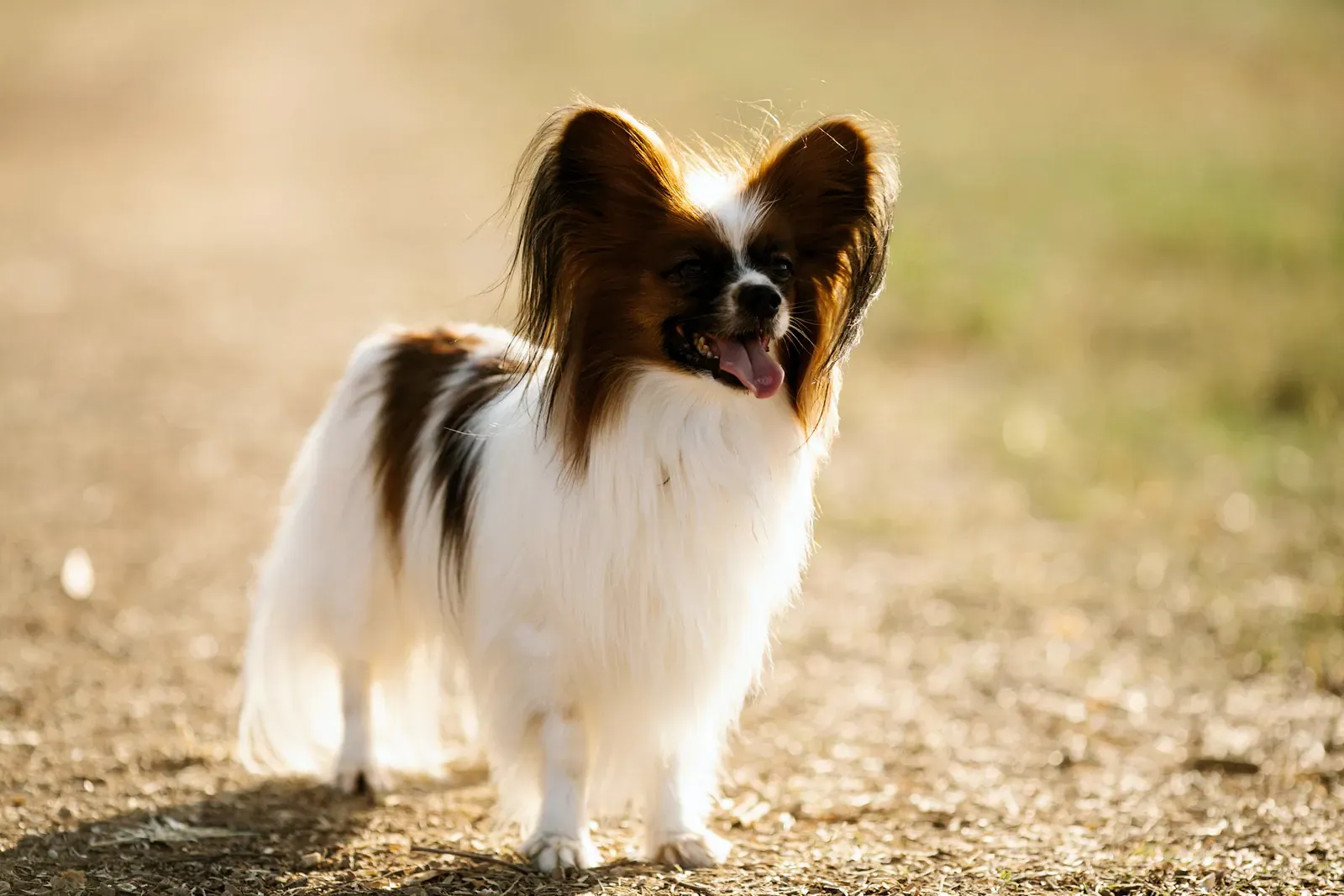
It stands 20 to 28 cm tall, weighs roughly 2 to 5 kg and often lives 14 to 16 years. The drop-eared version is called the Phalène ("moth"). Both are one breed with two ear types. The Papillon suits people who want a small, quick, trainable dog that stays close to them, and it is a poor match for homes that need a sturdy dog for rough play with young children.
Papillon quick facts
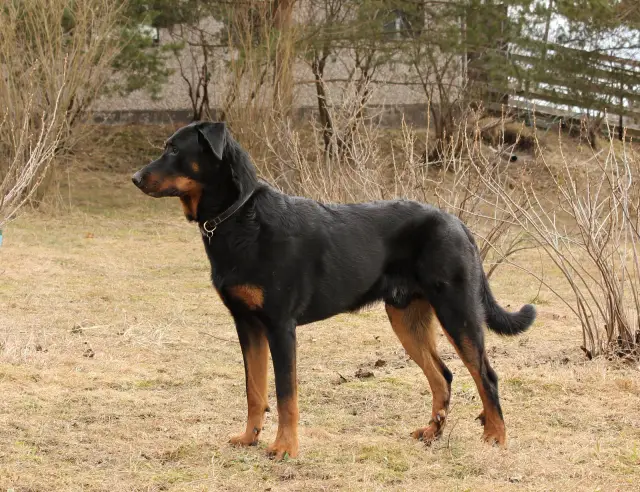 Related breedBeauceron1500 to 1896 · FranceAge of Exploration
- Closest DNA relatives
- Pug, Griffon Bruxellois
- Country of origin
- France and Belgium ( lists both)
- Official name (FCI)
- Epagneul Nain Continental (Continental Toy Spaniel), standard no. 77
- Other names
- Continental Toy Spaniel, Phalène (drop-eared type), Épagneul Nain Continental
- Group
- FCI Group 9 (Companion and Toy Dogs); AKC Toy Group; UK Kennel Club Toy Group
- Period of development
- About 1500 to 1935 (atlas data, medium confidence)
- Height
- 20 to 28 cm (Kennel Club); 8 to 11 inches (AKC)
- Weight
- AKC page: 5 to 10 pounds (about 2.3 to 4.5 kg); the Kennel Club standard gives no weight
- Coat
- Long, silky, flowing, no undercoat; frill on the chest, plume tail
- Colours
- White with patches of any colour except liver; tricolours also occur
- Life span
- Atlas data: 14 to 16 years. A UK study lists a median of 14.5 years
- DNA family
- Toy Spitz clade (Parker et al. 2017)
Drawn to scale in real centimetres. Its back reaches about 24 cm, your shin; its head about 30 cm, your shin.
Where it sits in the tree
Age of Exploration · 1500 to 1599

Name and origin
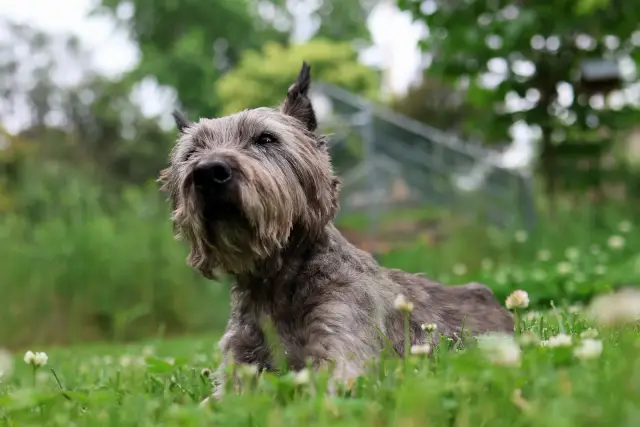 Related breedCairn Terrier1500 to 1910 · United KingdomAge of Exploration
"Papillon" is French for "butterfly". The Kennel Club standard says the name comes from the shape and position of the ears: when erect they are carried at an angle of about 45 degrees, like the spread wings of a butterfly. A narrow white blaze on the face is meant to look like the butterfly's body. When the ears are fully dropped, the dog is a Phalène, French for "moth". The two ear types are born in the same litters, and the AKC and FCI treat them as one breed. Some countries and breed councils talk about them as two varieties of the same dog.
The FCI name is Continental Toy Spaniel, which explains the name "Continental" in everyday use: this is the toy spaniel of the European mainland, as opposed to the English toy spaniels such as the King Charles Spaniel. The FCI lists both France and Belgium as countries of origin, and each country says the breed is its own. The atlas data follows the FCI and gives both.

History
 Same eraChinese Crested Dog1500 to 1965 · ChinaAge of Exploration
Little spaniels in paintings, 1500 onwards
The Papillon Club of America's history, adapted from its 1957 handbook, traces the ancestors of the breed through paintings. Beginning about 1500, Titian painted a number of tiny spaniels in his portraits. Later painters in several countries, down to Mignard, kept showing the same dog. In every one of those pictures the ears hang down. So the first well-documented ancestor of the Papillon looked like a Phalène, not like a Papillon.
Where those little spaniels came from is not known. Some writers have proposed Italy, where the Renaissance courts fed a fashion for toy dogs. Others have pointed to trade with China. The club's own history treats this as speculation. The same history rejects a popular story that the Papillon descends from the Chihuahua brought from Mexico, calling it a tale without historical basis, partly because the Titian spaniel existed before that conquest.
Royal lore is part of the picture too. Popular accounts say Louis XIV, Madame de Pompadour and Marie Antoinette owned dogs of this type. Treat those as stories: portraits support small spaniels at court, but not every named owner.
The erect ear arrives in the late 1800s
The Papillon Club history says that "toward the end of the 19th Century" the erect-ear carriage suddenly became fashionable, and the name Papillon quickly came to cover the whole breed. Breeders refined the head, the bone and the silky feathering. Some popular accounts place the first erect ears much earlier, so the exact date is not settled. What the sources agree on is that the erect type took over the name and the fashion, and that the drop-eared Phalène became the rarer of the two.
Recognition
The FCI lists the breed as standard no. 77 (definitive) under Group 9. In the United States, the AKC registered its first Papillon in 1915, and the Papillon Club of America was founded in 1935. In the UK the breed sits in the Kennel Club's Toy Group. On the AKC breed page the Papillon currently ranks 44th of 210 breeds in popularity.
Relatives and DNA
 Same familyEnglish Setter1500 to 1850 · United KingdomAge of Exploration
The name "spaniel" suggests the Papillon belongs with the gundog spaniels. DNA says otherwise. In the 2017 study by Parker and colleagues (Cell Reports), which analysed 1,346 dogs from 161 breeds, the Papillon falls in the Toy Spitz clade, with strong support. The study measured shared , long stretches of identical DNA that two breeds inherited from common ancestors. The more () two breeds share, the stronger the sign of crossing or shared founders. It cannot say which way genes flowed.
Both figures are modest compared with close pairs such as the two corgis, so the Papillon has no near twin in this study. Its closest partners are other continental toy breeds, which fits a small court dog that was crossed with whatever tiny companions were around. The atlas data lists the King Charles Spaniel as a sister breed, but with low confidence, based on the idea that the two come from similar toy spaniels. The family page Spaniel describes the gundog branch for comparison.
Sister breeds · 1
- King Charles Spaniel1600 to 1903
- Pug12.9 Mb 0.5%
- Griffon Bruxellois12.6 Mb 0.5%
Source: Parker et al. 2017. Percent of the whole genome.
| Breedwith Papillon | with Papillon (Mb)Shared DNA (Mb) |
|---|---|
| Pug | 12.9 |
| Griffon Bruxellois | 12.6 |
Source: Parker et al. 2017, Cell Reports, shared haplotypes between 161 breeds (1,346 dogs).
The breed standard
 Looks relatedKooikerhondje1500 to 1966 · NetherlandsAge of Exploration
A is the written ideal that judges compare each dog against. The tables below use the UK Kennel Club standard and the AKC breed page.
| Trait | What the standards say |
|---|---|
| General look | Kennel Club: "Dainty, well-balanced, little dog", alert bearing, intelligent expression |
| Height | Kennel Club: 20 to 28 cm. AKC: 8 to 11 inches. The dog looks slightly longer than tall when fully coated |
| Weight | AKC page: 5 to 10 pounds. The Kennel Club says its size figures are a guide, not a limit |
| Head | Kennel Club: skull slightly rounded, muzzle finely pointed, clear stop, black nose |
| Eyes | Kennel Club: medium, rounded, never bulging, dark with dark rims, set rather low |
| Ears | Kennel Club: very large, mobile, rounded tips, heavily fringed. Erect ears at about 45 degrees (Papillon) or fully dropped (Phalène) |
| Bite | Kennel Club: complete scissor bite, thin, tight, dark lips |
| Coat | Kennel Club: abundant, long, silky, falling flat, no undercoat; profuse chest frill; short on skull, muzzle and front of legs |
| Colour | Kennel Club: white with patches of any colour except liver; tricolours: black and white with tan spots over the eyes, inside the ears, on the cheeks and under the tail |
| Tail | Kennel Club: long, well fringed, set high, arched over the back with a plume |
| Feet | Kennel Club: fine, fairly long, hare-like, with tufts between the toes |
The standard asks for symmetrical head markings around a narrow, clear blaze. That blaze is "desirable but not essential".
Papillon temperament
 Related breedLagotto Romagnolo1500 to 1991 · ItalyAge of Exploration
The Kennel Club describes the Papillon as "lively, intelligent, friendly, with no aggression; always alert". In daily life that means a small dog that is quick to learn, attached to its person and aware of everything that happens at the door. Most Papillons are happy to meet visitors once they have decided the visitor is safe. Many will bark to announce them first.
Stanley Coren's 1994 book The Intelligence of Dogs ranked the Papillon 8th of 131 breeds for working and obedience intelligence, based on a survey of North American obedience judges. That ranking measures how fast a breed learns commands, not intelligence in general, but it fits what owners report: Papillons learn tricks and routines quickly and do well in obedience and agility. See the smartest dog breeds for where it sits against other breeds, and dog training basics for how to start.
Toy dogs are small enough that bad habits go unnoticed: a Papillon that barks at every noise, or that is carried everywhere and never socialised, can turn into a nervous or yappy adult. Short, cheerful training sessions and early meetings with calm people and dogs help. Socializing your dog has a step-by-step approach.

Papillon health
 Related breedPresa Canario1500 to 1990 · SpainAge of Exploration
Most Papillons are long-lived and healthy. The conditions below are what breeders screen for and what owners can watch for. Information here is general, so talk to a vet about your own dog.
How long do Papillons live? The AKC lists 14 to 16 years and the atlas data gives the same range. A UK study of 155 breeds, McMillan and colleagues (Scientific Reports, 2024), reports a median of 14.5 years for the Papillon. The median for all dogs in the study was 12.5 years, so the Papillon is among the longer-lived breeds, as small dogs tend to be.
Neuroaxonal dystrophy (NAD). NAD is an inherited, rapidly progressive nerve disease. Franklin and colleagues described it in 1995 in a litter of five Papillon puppies, 14 weeks old, that were referred for wobbly back legs. It is : a puppy needs two copies of the faulty gene, one from each parent. Raj and Giger (Canine Medicine and Genetics, 2020) surveyed a missense variant in the PLA2G6 gene. In a 2015 to 2017 sample of 660 Papillons, 17.5 percent (about 1 in 6) were , and three puppies were affected, one each from the USA, Canada and Europe. Screening data from 2017 to 2019 gave a variant frequency of 0.047, about half the earlier level, which the authors link to breeders using the DNA test. They warn that the surveys are biased, because breeders with affected or carrier dogs are more likely to test.
| Condition | What it is | How common | What to do |
|---|---|---|---|
| Neuroaxonal dystrophy | Recessive nerve disease; signs in young puppies, including unsteady back legs | About 1 in 6 tested dogs was a carrier in 2015 to 2017, falling since; affected puppies are rare | DNA test of both parents; never mate two carriers |
| Patellar luxation | The kneecap slips out of its groove, causing skipping or a lifted back leg | No published Papillon figure. In a UK primary-care study, 1.30 percent of all dogs had the diagnosis, and small breeds had the highest rates (O'Neill et al. 2016) | Vet knee check; breeding dogs should be examined; keep weight lean |
| Dental disease | Plaque, gum disease and tooth loss, common in toy breeds with small mouths | No published Papillon figure | Daily brushing; regular vet dental checks |
| Progressive retinal atrophy and other eye disease | Inherited eye problems that can reduce vision | Reported in the breed; no breed figure | Eye exams for breeding dogs; ask for test results |
| Injury from falls | Fine bones; jumps from sofas and arms can break a leg | No published figure | Steps or ramps; hold the dog securely |
A healthy-looking dog can carry a recessive gene, which is why testing both parents matters. Before you buy, ask the breeder for the NAD result of both parents and for knee and eye checks.

Living with a Papillon
 Related breedSpanish Water Dog1500 to 1980 · SpainAge of Exploration
| Daily reality | Rating | Why |
|---|---|---|
| Exercise | Moderate | Daily walks and play; fit for a small dog that enjoys running |
| Training needs | Medium | Learns fast; needs patient, upbeat training |
| Grooming | Medium | Long silky coat with no undercoat mats less than many breeds; brush a few times a week |
| Shedding | Low to medium | Seasonal |
| Barking | Medium to high | Alert dog; will announce visitors |
| Time alone | Fair | Attached to its person; build alone time gently |
| Young children | Poor | Fragile; toddlers can injure it |
| Older children | Good | Gentle handling, supervised play |
| Flat living | Good | Small size suits apartments; barking may need work |
| Cold tolerance | Fair | Small body and no undercoat; coat in winter |
| First-time owner | Good | Trainable, but needs early socialising |
A good fit if you...
- want a small, quick dog that likes training and tricks;
- live in a flat or small house and walk daily;
- are home often, or can share the day with the dog;
- will handle the dog gently and keep up with teeth and knees.
Think twice if you...
- have toddlers or a rough-and-tumble household;
- want a dog that never barks;
- are away most of the day;
- want a dog that can run with a large dog or jog long distances.
Similar breeds to consider
- Pug: another toy companion with a closer DNA link, but a flat face and different health needs.
- King Charles Spaniel: a calmer toy spaniel with drop ears.
- Cavalier King Charles Spaniel: a slightly bigger, gentler lap dog.

Papillon fun facts
- The Papillon is a Toy spitz by DNA, even though its official name says spaniel.
- Titian painted spaniels of this type around 1500, so the breed's look is among the best documented in art.
- The FCI name, Continental Toy Spaniel, puts the breed on the mainland side of the English toy spaniels.
- Every Papillon litter can contain both erect-eared Papillons and drop-eared Phalènes.
- The Chihuahua-origin story is rejected by the Papillon Club of America's own history.
Frequently asked questions
What is the difference between a Papillon and a Phalène?
Only the ears. A Papillon has erect, fringed ears like butterfly wings. A Phalène has ears that fold down. They are one breed and can appear in the same litter.
How big do Papillons get?
The Kennel Club gives 20 to 28 cm. The page lists 5 to 10 pounds, about 2.3 to 4.5 kg.
How long do Papillons live?
The AKC and the atlas data give 14 to 16 years. A UK study lists a median of 14.5 years.
Are Papillons good family dogs?
They suit families with older, gentle children. Toddlers can hurt them without meaning to.
Do Papillons bark a lot?
They are alert and will often bark at visitors and noises. Training and exercise reduce it.
Is a Papillon a spaniel?
By name and old paintings, yes. By DNA, no: the 2017 Parker study places it in the Toy Spitz .
What health tests matter?
The NAD DNA test for both parents, plus knee and eye checks for breeding dogs.
Read next
 Closest DNAPug12.9 Mb shared
 Sister breedKing Charles Spaniel1600 to 1903
 Adopt a dogDog Shelters in FranceTen big cities checked, how adoption works, fees in euros
Sources (12)
- American Kennel Club, Papillon breed page.
- Fédération Cynologique Internationale, Continental Toy Spaniel, standard no. 77.
- Coren S., The Intelligence of Dogs, 1994.
- Franklin R.J.M. et al., "Neuroaxonal dystrophy in a litter of papillon pups", Journal of Small Animal Practice, 1995.
- American Kennel Club, Breeds by year recognized; Papillon joins AKC Century Club.
- McMillan K.M. et al., "Longevity of companion dog breeds: those at risk from early death", Scientific Reports, 2024.
- O'Neill D.G. et al., "The epidemiology of patellar luxation in dogs attending primary-care veterinary practices in England", Canine Genetics and Epidemiology, 2016.
- Papillon Club of America, "A Brief History of the Papillon" (adapted from the 1957 PCA Handbook).
- Parker H.G. et al., "Genomic analyses reveal the influence of geographic origin, migration, and hybridization on modern dog breed development", Cell Reports, 2017.
- Raj K., Giger U., "Initial survey of PLA2G6 missense variant causing neuroaxonal dystrophy in Papillon dogs in North America and Europe", Canine Medicine and Genetics, 2020.
- The Kennel Club (UK), Papillon breed standard.
- Wikipedia, "Papillon dog".