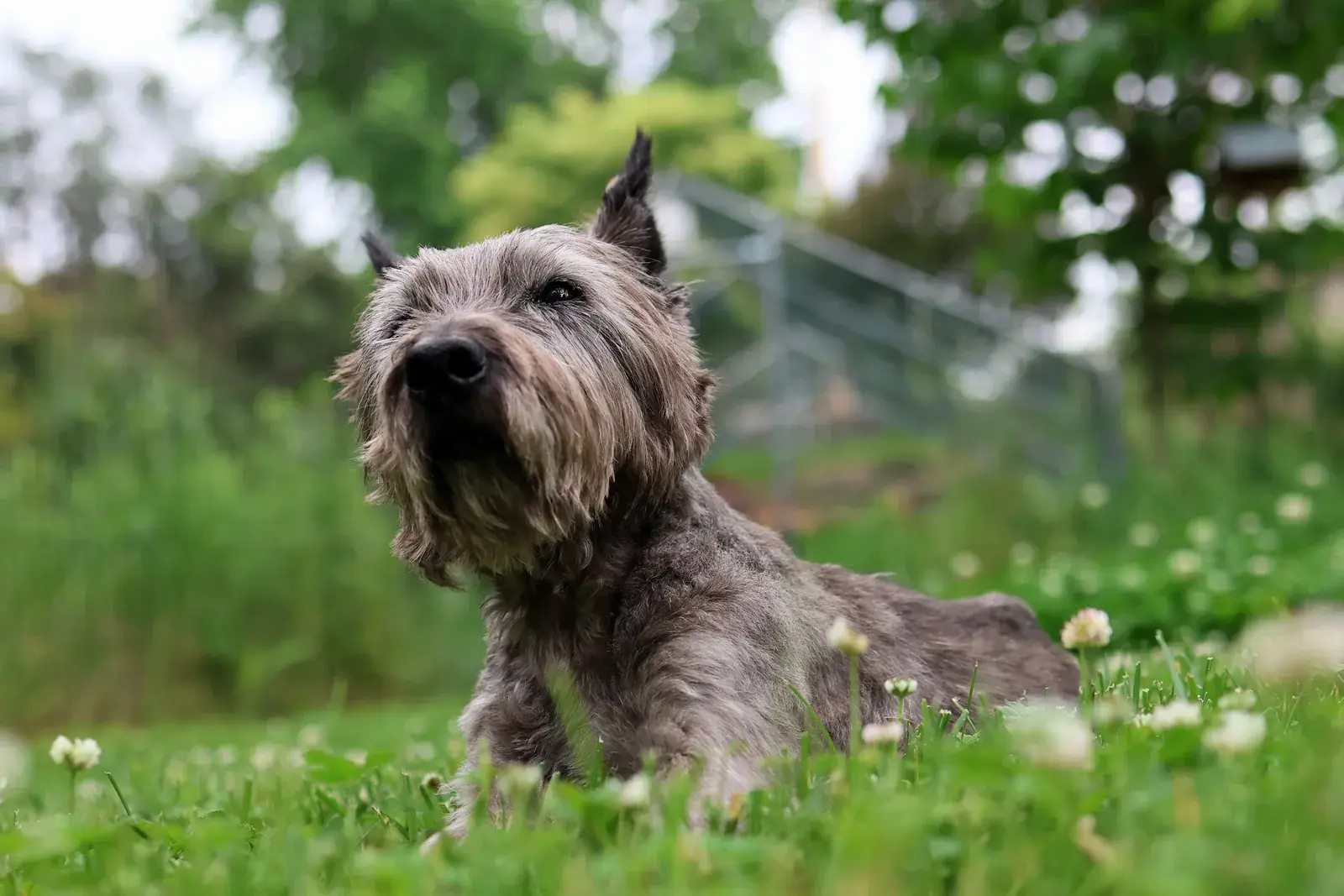
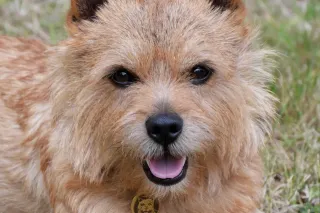
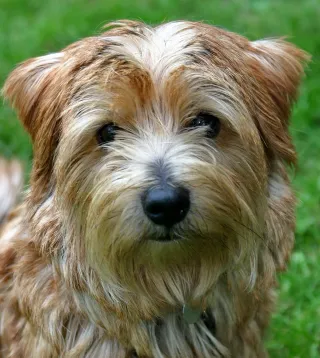
It was bred to bolt foxes and other quarry out of cairns, the piles of stones that dot the hills, and its name comes from that job. Until 1910 it was shown as a "Short-haired Skye Terrier". Most people know the breed from Toto in the 1939 film The Wizard of Oz. Today it is a sturdy, cheerful companion of about 6 to 7.5 kg, with a harsh double coat that is traditionally hand-stripped and a few eye and jaw conditions that careful breeders screen for.
Cairn Terrier quick facts
 Related breedJack Russell Terrier1819 to 1976 · United KingdomIndustrial Revolution
- Closest DNA relatives
- West Highland White Terrier (156.7 Mb), Scottish Terrier (87 Mb)
- Country of origin
- Great Britain (FCI); Scottish Highlands and the Isle of Skye
- Period of development
- About 1500 to 1910 (atlas data, medium confidence); named and registered as a separate breed in 1910 to 1912
- Original job
- Bolting foxes and other quarry from cairns and rock crevices
- Type
- Small terrier. FCI: Group 3, Terriers, standard no. 4. : Terrier Group. UK Kennel Club: recognised
- Other names
- Short-haired Skye Terrier (old name)
- Height
- FCI and UK Kennel Club: about 28 to 31 cm at the withers
- Weight
- FCI and UK Kennel Club: ideally 6 to 7.5 kg
- Life span
- Atlas data: 12 to 15 years. No named survey figure exists for the breed
- DNA family
- Terrier (Parker et al. 2017)
Drawn to scale in real centimetres. Its back reaches about 30 cm, your shin; its head about 37 cm, just below your knee.
Where it sits in the tree
Age of Exploration · 1500 to 1599
Name and origin
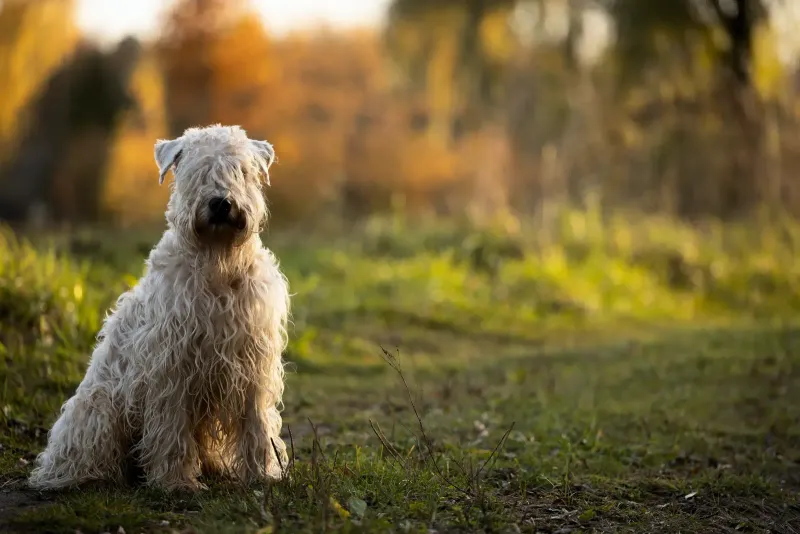 Related breedSoft-coated Wheaten Terrier1700 to 1937 · IrelandEarly Modern Era
"Cairn" is the Scots and Gaelic-derived word for a heap of stones. In the Highlands and on Skye, cairns were left as markers and graves, and foxes and otters sheltered among them. A small terrier that could squeeze between the stones, find the quarry and hold it or drive it out into the open was worth keeping. The Cairn Terrier clubs of the UK and Canada both give the stone piles as the source of the name, and the atlas data gives the same etymology.
The breed has older, looser names. Breed-club histories mention Highland Terriers, Skye Otter Terriers and "Todhunters" for the dogs that came before the Cairn. The Skye link matters because the first show dogs were called Short-haired Skye Terriers. Breed-club histories name the Drynock strain, founded by Captain Martin MacLeod of Drynock on Skye, as one of the oldest known strains.

History
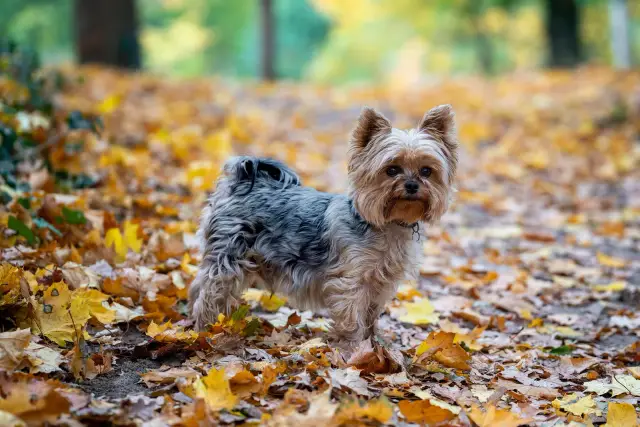 Same eraYorkshire Terrier1850 to 1874 · United KingdomVictorian Breed Boom
Working terriers of the Highlands and Skye
Written proof from before the 1800s is thin. The atlas data places the origin in the Scottish Highlands from about 1500, with medium confidence, and the Cairn Terrier Club of Canada tells a story of small "earth dogs" working Highland estates. The same clubs also quote a 1625 reference to "Earth Dogges", a claim that comes from breed-club sites and has no older source, so treat it as breed tradition.
What is better supported is the shape of the terrier world in Scotland. A Showsight breed article says the Scottish, Skye, Cairn, Dandie Dinmont and West Highland White Terriers are all short-legged terriers of Scotland that share the same roots. Hill farmers and estate keepers bred working terriers for nerve, small size and a weatherproof coat, not for a written standard. Colour and ear shape were mixed in the same litters. The breeds we know today were sorted out later, by show people.
The 1910 naming dispute
Early exhibitors entered their dogs as Short-haired Skye Terriers. The story, as told by the UK and North American breed clubs, is that at Crufts in 1910 the judge, Miss Clifton, judged them against the Skye Terrier standard and found nothing in them that matched it. Breeders Mrs Campbell and the Hon. Mary Hawke had entered their dogs in the regular Skye Terrier classes on purpose to force the issue. On 6 April 1910 the Kennel Club received a deputation from the Skye Terrier clubs, and it ruled that the dogs should be registered under a new name: Cairn Terrier. The Kennel Club gave the breed its own separate register on 29 May 1912.
Sources differ on when the first breed club formed. The UK Cairn Terrier Club says a club was formed in 1910, with Mrs Campbell as first secretary and Allan MacDonald of Waternish, Skye, as first president. A North American history says a club was organised a year after the naming. Both are given.
Toto and the Wizard of Oz
Toto in the 1939 MGM film The Wizard of Oz was played by a female brindle Cairn Terrier named Terry, trained by Carl Spitz. Wikipedia and several fan sites say she was paid $125 a week, with the money going to her owner and trainer. During filming one of the actors playing the Wicked Witch's guards stepped on her foot and broke it, and a stand-in dog worked while she healed. Sources disagree on how many films she appeared in (13 per Wikipedia, 16 per an Oz fan wiki) and on her dates, with a birth in 1933 and a death in 1945 given in one place. The film made the Cairn one of the best-known small terriers in the English-speaking world, and the Cairn Terrier Club of America and others mention the film's effect on the breed's popularity.
Recognition
The FCI lists the Cairn Terrier as standard no. 4, Group 3, Terriers, with Great Britain as the country of origin. The AKC places it in the Terrier Group, and the UK Kennel Club recognises it. The breed's low FCI number reflects its early place in the list.
Cairn, Westie and Skye: how they are related
 Related breedBeauceron1500 to 1896 · FranceAge of Exploration
The Cairn Terrier is often confused with its white cousin the West Highland White Terrier. The Westie was developed from white Highland terriers, with Colonel Edward Donald Malcolm of Poltalloch, Argyllshire, usually credited with fixing the colour. The colour white appears in Cairn and Scottish Terrier litters, and a mentalfloss history says the pale dogs were bred together until they bred true. The famous story of Malcolm shooting a favourite dog by mistake and then choosing white terriers is told as legend and is not documented. Dates for the Westie differ too: a Malcolm line from about 1830 to 1905 in one account, first public attention in 1907 as the Poltalloch Terrier in another, with the modern name usually dated to 1908.
The Skye Terrier is the other relative in the story, as the breed whose name the Cairn used until 1910. The 1910 Crufts judge found nothing in the Cairns that matched the Skye standard, so the two were separated.
| Question | Cairn Terrier | West Highland White Terrier |
|---|---|---|
| Colour | Cream, wheaten, red, grey, nearly black, with brindling | White only |
| Origin | Highlands and Skye | Argyllshire and the Highlands |
| DNA | 156.7 Mb shared with the other | 156.7 Mb shared with the other |
Relatives and DNA
 Same familyChinese Crested Dog1500 to 1965 · ChinaAge of Exploration
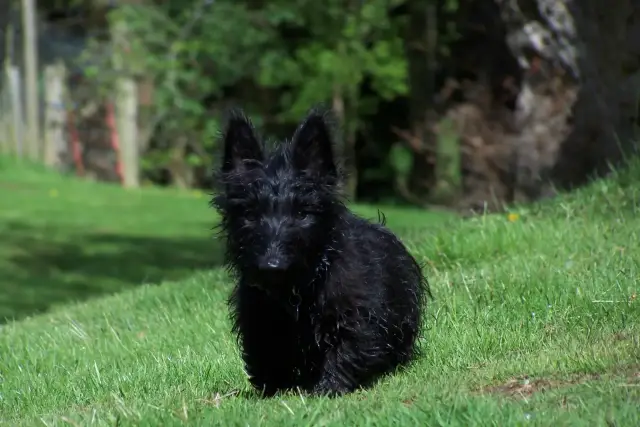
The Cairn Terrier is in the Terrier family of Parker et al. (2017, Cell Reports). Its closest tested relative is the Westie, which shares 156.7 Mb of DNA in that study, followed by the Scottish Terrier at 87 Mb. The atlas data lists the Westie as a descendant of the Cairn, although breed histories describe the Westie as a cousin that came from the same Highland terrier stock.
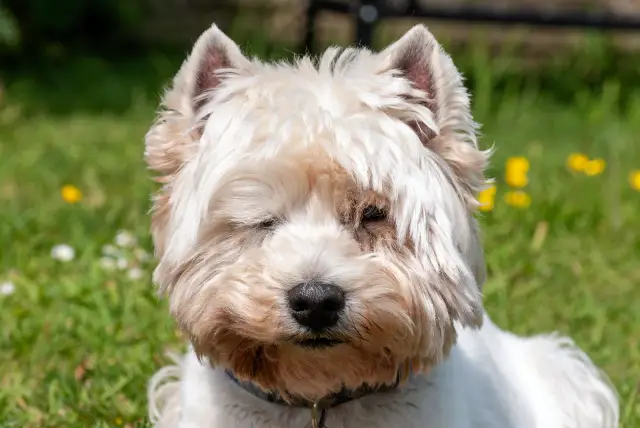
- Cairn Terrier and West Highland White Terrier
- Cairn Terrier and Scottish Terrier
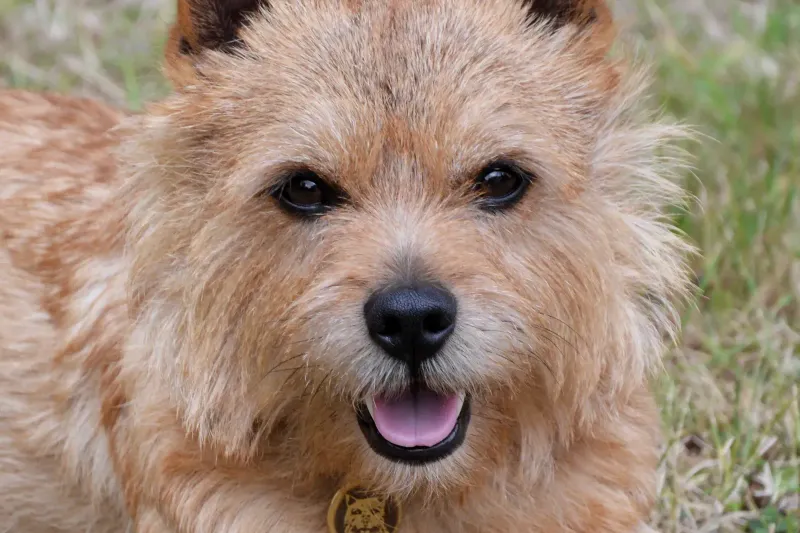 Cairn Terrier and Norwich Terrier
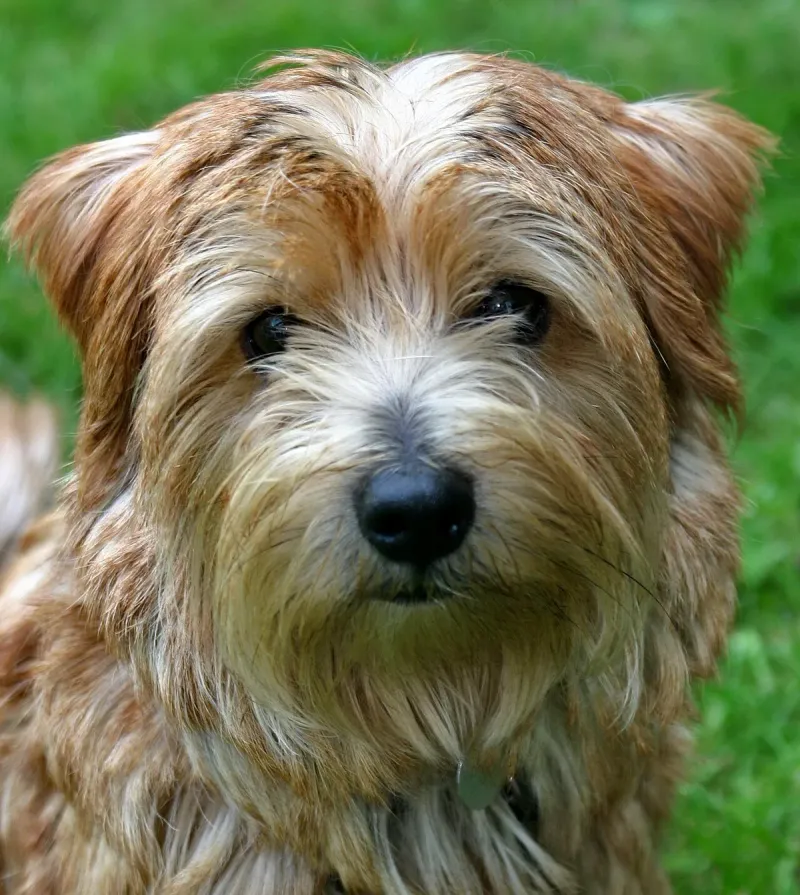 Cairn Terrier and Norfolk Terrier
West Highland White Terrierwhite Highland terriersDescend from it · 1
- West Highland White TerrierUnited Kingdom
- West Highland White Terrier156.7 Mb 6.5%
- Scottish Terrier87.0 Mb 3.6%
- Norwich Terrier31.3 Mb 1.3%
- Norfolk Terrier23.1 Mb 1.0%
Source: Parker et al. 2017. Percent of the whole genome.
The breed standard
 Looks relatedEnglish Setter1500 to 1850 · United KingdomAge of Exploration
 Save
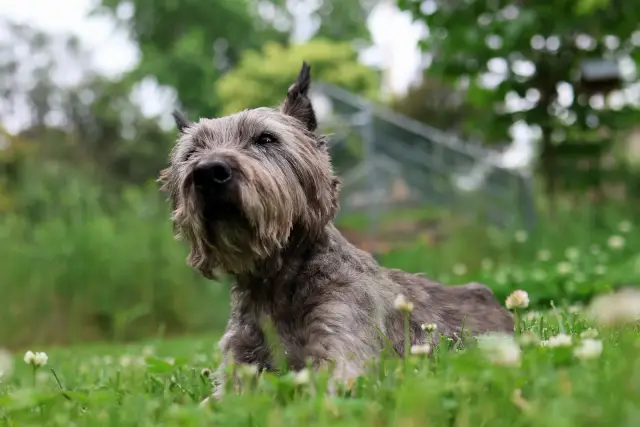
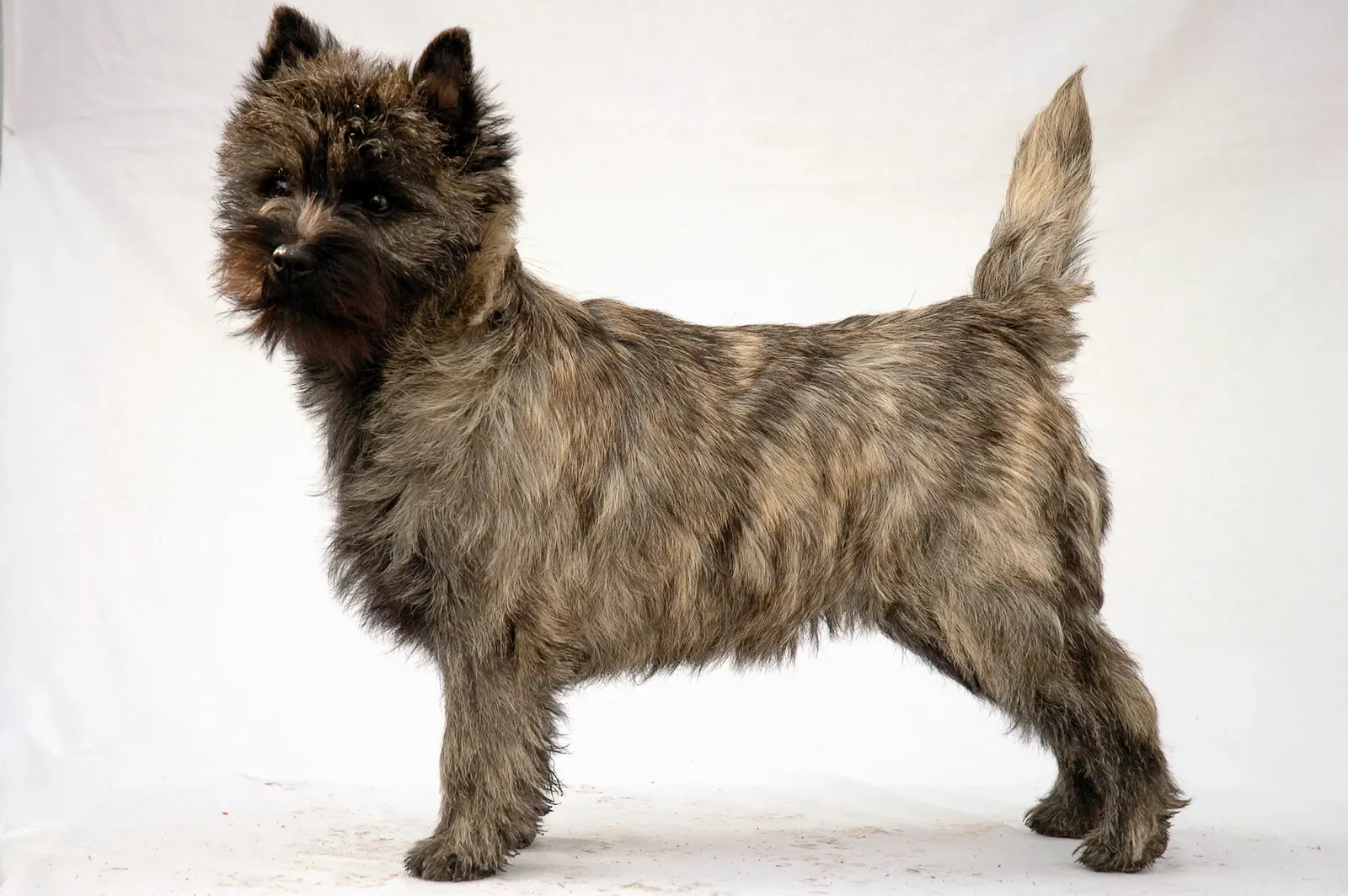
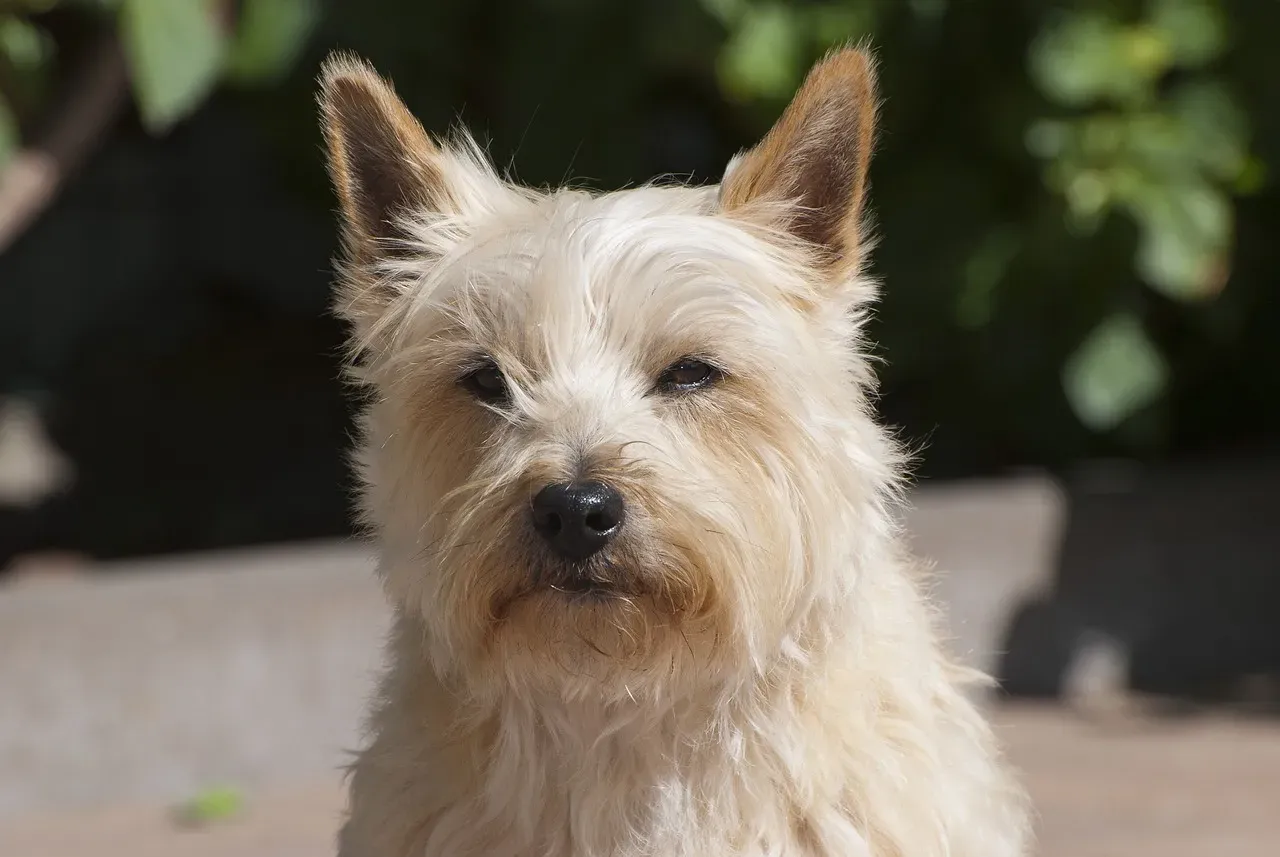
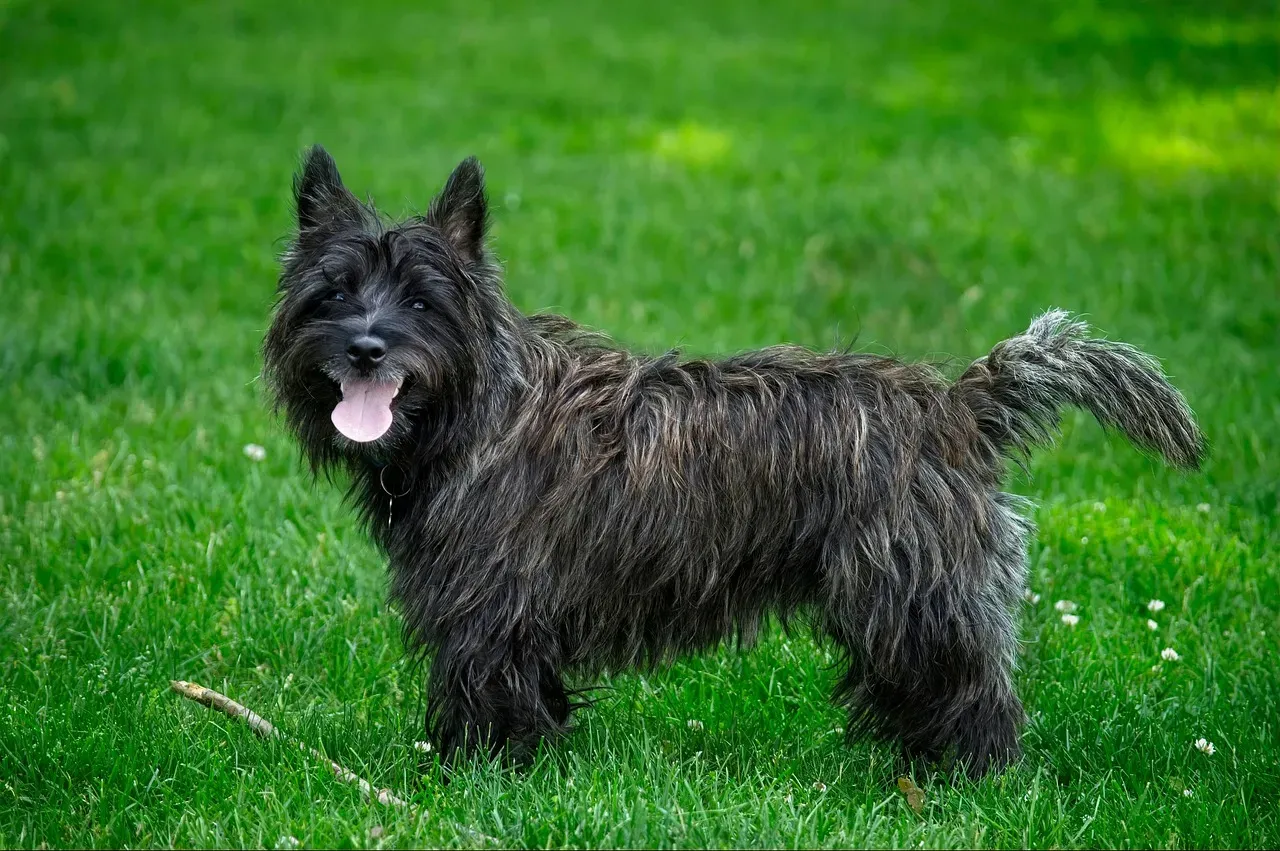
A is the written ideal a kennel club judges dogs against. The Cairn Terrier standard asks for a small, active, hardy terrier with a short, strong body, a broad head with a foxy look, small pointed ears and a harsh weather-resistant double coat.
| Trait | What the standards say |
|---|---|
| Group | FCI: Group 3, Terriers, standard no. 4, origin Great Britain. AKC: Terrier. UK Kennel Club: recognised |
| Height | FCI and UK Kennel Club: about 28 to 31 cm at the withers, in proportion to weight |
| Weight | FCI and UK Kennel Club: ideally 6 to 7.5 kg |
| Colours | FCI: cream, wheaten, red, grey or nearly black, with brindling in all of these. Solid black, solid white and black and tan are not accepted |
| Coat | Double coat with a harsh, profuse outer coat and a soft, close undercoat (breed-club descriptions) |
| US figures | A US breed magazine (Showsight) quotes a standard of 13 to 14 lb (about 6 to 6.4 kg) and 9.5 to 10 in (about 24 to 25 cm), and notes the average size has grown over about 25 years |
 Save
 Save
 Save
Because the breed has grown larger over time, the FCI and Kennel Club figures say a dog may be larger or smaller than the given measurements. The AKC cells are left out.
Temperament
 Related breedKooikerhondje1500 to 1966 · NetherlandsAge of Exploration
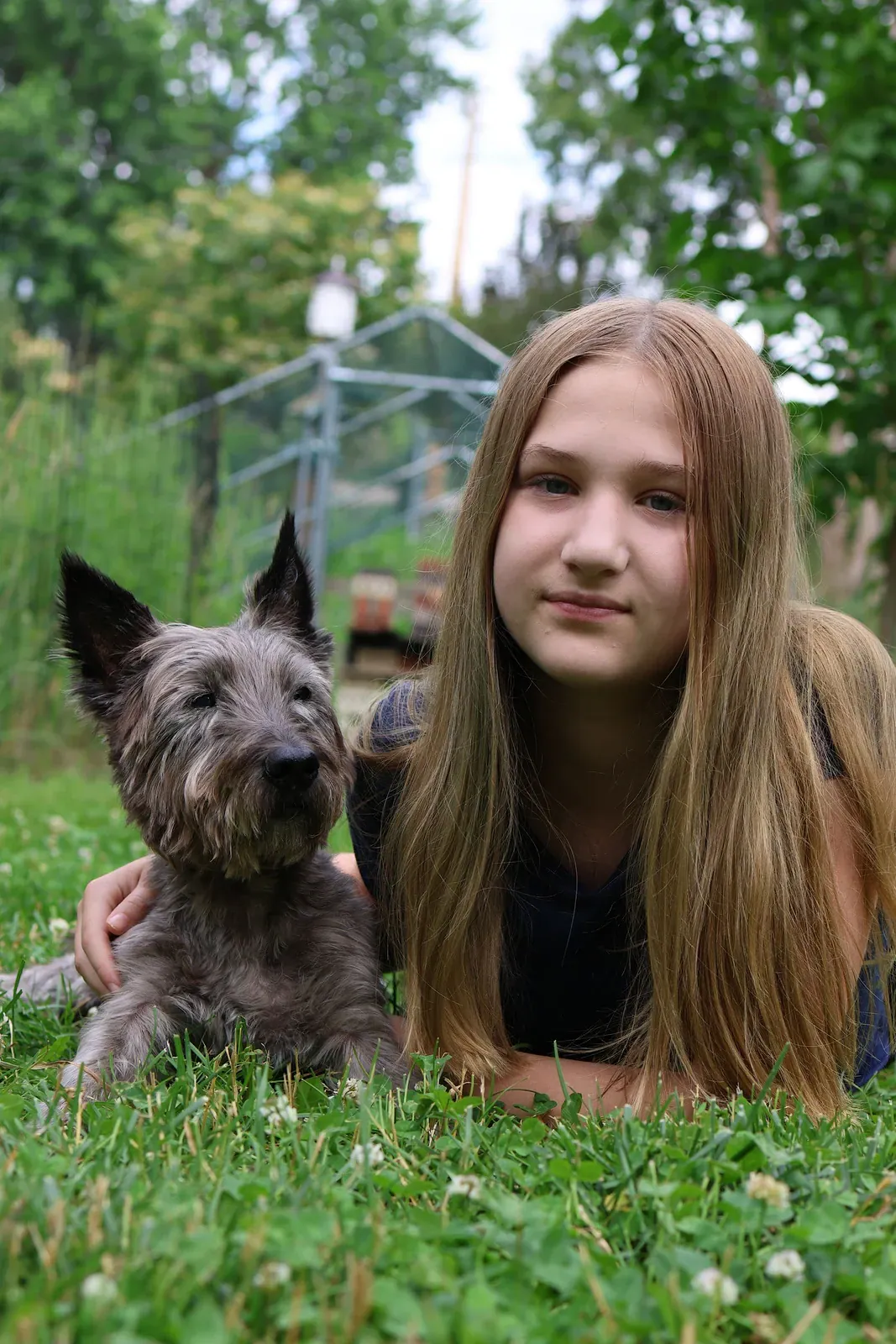
Breed clubs and breed magazines describe the Cairn as bold, curious and cheerful, a small dog with a big opinion of itself. The job it was bred for needs courage and independence, because a terrier in a cairn works out of sight of its owner. That history shows in daily life.
- Digging and chasing. A terrier bred to go to ground will dig, and one bred to bolt quarry will chase small animals.
- Independent but friendly. Breed guides describe a dog that likes people and likes to be part of the family, but thinks for itself.
- Alert. Cairns notice sounds and will bark to report them.
- Active indoors and out. They are playful for years, and they enjoy short games as much as a long walk.
Early, calm socialisation and reward-based training suit the breed. Harsh training tends to make a terrier stubborn.

Coat and grooming
 Related breedLagotto Romagnolo1500 to 1991 · ItalyAge of Exploration
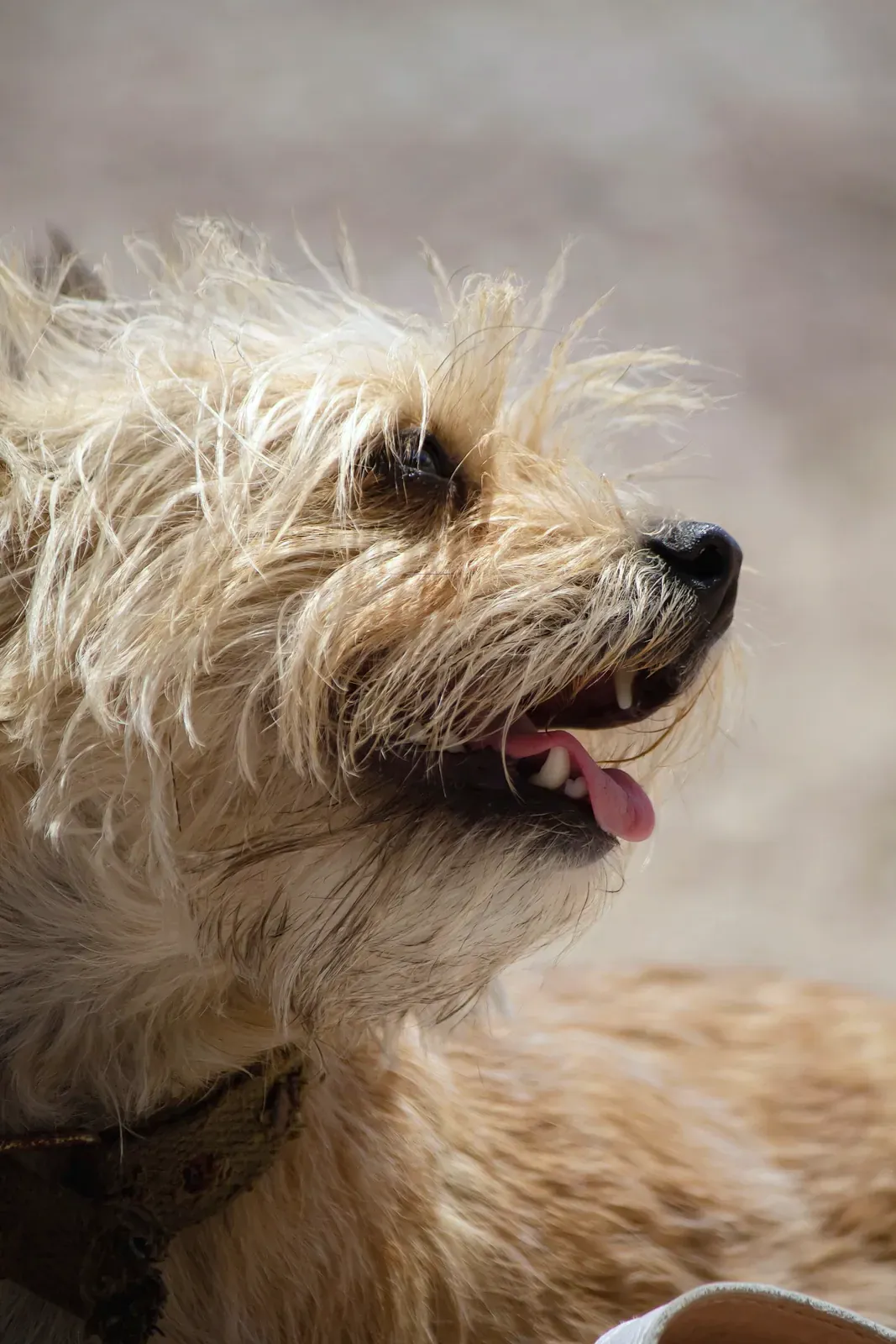
The Cairn has a double coat: a harsh, shaggy outer coat over a soft undercoat. The Cairn Terrier Club of Canada describes it as insulating, water-shedding and dirt-repellent. The US national club recommends a weekly pin brush, infrequent bathing, so the coat does not lose its natural oils, and periodic hand-stripping to keep it harsh and dirt-proof.
Hand-stripping means pulling out the dead outer hairs by hand or with a stripping knife, not cutting them. The club guidance says the knife should be held so it plucks the hair and does not cut it. Many pet Cairns are clipped instead. The Canadian club says the choice is personal unless the dog will be shown in , but clipping softens the coat, lightens the colour and reduces its water- and dirt-shedding qualities. Groomers who hand-strip can be hard to find, and breeders can often mentor a new owner or recommend one. For a wider look at coat types and grooming methods, see dog grooming.
Health
 Related breedPapillon1500 to 1935 · France, BelgiumAge of Exploration
Most Cairn Terriers are healthy, sturdy dogs, and the Cairn Terrier Club of America describes the breed as basically healthy. This section names the conditions breed clubs and veterinary studies discuss, and gives numbers only from named studies. Where no number exists, the table says so.
| Condition | What it is | How common | What helps |
|---|---|---|---|
| Ocular melanosis | Pigment builds up in the front of the eye and can block fluid drainage, leading to glaucoma | A UK study of 93 adult Cairns found signs in about 10%, about 1 in 10 (2025) | Slit lamp and gonioscopy eye exams for breeding dogs and yearly checks |
| Craniomandibular osteopathy (CMO) | Extra bone grows on the jaw, making chewing painful, usually in young dogs | Seen in the breed; no prevalence figure found | A DNA test exists, and breeders can test before breeding |
| Portosystemic (liver) shunt | A blood vessel bypasses the liver | Listed for the breed by UK and Canadian sources; no figure found | Bile acid tests and vet checks in puppies that grow poorly |
| Patellar luxation | The kneecap slips out of its groove | Listed for the breed; no figure found | Knee checks, healthy weight |
| Renal dysplasia | Kidneys do not develop normally | Listed by the Canadian Cairn club; no figure found | Ask the breeder about kidney screening |
Ocular melanosis in detail. A study titled "Ocular melanosis in the adult Cairn Terrier population within the United Kingdom" (2025) examined 93 adult Cairns and found changes consistent with the disease in about 10% of them, with more than half of the affected dogs under 7 years old. The authors suggested that pre-breeding screens include slit lamp and gonioscopy exams, because early changes can be missed. An earlier study of 114 affected dogs, "Ocular melanosis in the Cairn Terrier: clinical description and investigation of mode of inheritance", described thickening of the iris root as the earliest sign, followed by pigment plaques on the white of the eye and in the drainage angle, with secondary glaucoma in the most severely affected dogs. It found a pattern that fitted dominant inheritance. A separate review of 169 dogs by Mentzer and colleagues reported that changes first appeared between ages 4 and 12. One clinic page says there is no cure and that surgery has low success for this condition, so screening matters.
Craniomandibular osteopathy. The Cairn Terrier Club of America says CMO has been seen in the breed but did not appear among the top ten conditions in its 2011 to 2015 health survey. The club says a causal gene mutation has been identified and that DNA testing is available. A DNA test result lets a breeder avoid carrier-to-carrier matings.
Life span. The atlas data gives 12 to 15 years. One list gives a median of 14 years but names no source, so it is not relied on. The Kennel Club's 2010 and 2014 breed surveys have breed-level tables.

Living with a Cairn Terrier
 Related breedPresa Canario1500 to 1990 · SpainAge of Exploration
 Save
| Daily reality | Rating | Why |
|---|---|---|
| Exercise per day | Medium | A small working terrier that likes walks and play; breed clubs describe it as active |
| Training needs | Medium to High | Bright but independent; a terrier mind |
| Grooming | Medium | Weekly brushing and periodic stripping or clipping |
| Shedding | Low | Harsh coat that sheds little when hand-stripped (breed-club description) |
| Barking | Medium | Alert; will bark at sounds |
| Time alone | Fair | Bonds with family; boredom can bring digging and barking |
| Children | Good | Sturdy and playful; children should handle a small dog gently |
| Other dogs | Fair | Terrier boldness varies by dog |
| Cats and small pets | Poor | Bred to hunt small animals |
| Flat living | Good | Small, if it gets walks and does not bark all day |
| Heat tolerance | Fair | Double coat; avoid hard exercise in heat |
| Cold tolerance | Good | Weatherproof coat |
| First-time owner fit | Fair | Friendly, but stubborn and a digger |
A great fit if
- You want a small dog that is sturdy enough for real walks.
- You enjoy a spirited, funny personality.
- You can brush weekly and book a groomer who strips or clips the coat.
- You have a fenced garden where digging can be managed.
Think twice if
- You have pet rabbits, hamsters or other small animals.
- You want a quiet, lap-bound dog.
- You cannot tolerate holes in the lawn.
- You want a dog that always comes back off lead.
Before you get one
- Ask the breeder for the parents' eye exam results, including slit lamp and gonioscopy, and the CMO DNA test result.
- Ask about liver shunt and kidney history in the lines.
- Breed rescues exist; an adult may suit a home that cannot manage puppy training.
- In the first year expect puppy classes, early grooming practice and secure fencing.
Similar breeds to consider
- West Highland White Terrier. The white cousin with the closest DNA match.
- Scottish Terrier. A more formal, dignified Scottish terrier.
- Norfolk Terrier. A small, friendly working terrier from East Anglia.
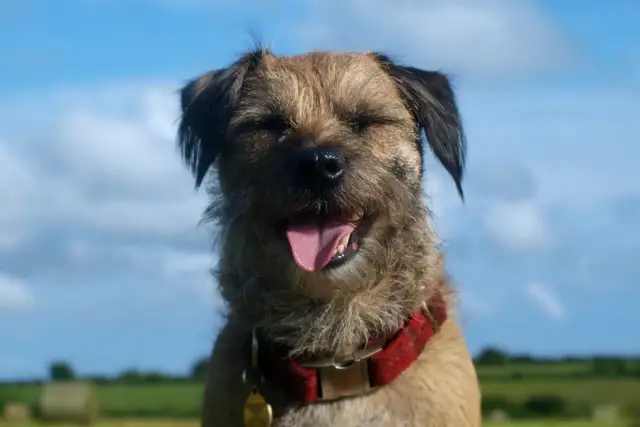
- Border Terrier. A working terrier with an otterlike head and a harsh coat.

Cairn Terrier fun facts
 Related breedSpanish Water Dog1500 to 1980 · SpainAge of Exploration
- The name "cairn" comes from the stone piles the dogs hunted in.
- Toto was played by a brindle Cairn named Terry, reportedly paid $125 a week.
- Until 1910 the breed was shown as the Short-haired Skye Terrier.
- The Kennel Club gave the breed its own register on 29 May 1912.
Frequently asked questions
Where does the Cairn Terrier come from?
The Scottish Highlands and the Isle of Skye. The lists Great Britain as the country of origin.
Why is it called a Cairn Terrier?
After the cairns, piles of stones, where it hunted foxes and other quarry.
What is the difference between a Cairn and a Westie?
Colour first: the Westie is white, the Cairn comes in cream, wheaten, red, grey and brindle. Both are related Highland terriers, with 156.7 of in Parker et al. (2017).
How big is a Cairn Terrier?
The FCI and UK Kennel Club say about 28 to 31 cm and ideally 6 to 7.5 kg.
What health problems do Cairn Terriers have?
Ocular melanosis and craniomandibular osteopathy are the best-named breed conditions. A 2025 UK study found signs of ocular melanosis in about 10% of 93 adult Cairns.
Do Cairn Terriers need hand-stripping?
Breed clubs recommend it for keeping the coat harsh and weatherproof, and it matters for the show ring. Many pet owners clip instead, which softens the coat.
Read next
Closest DNAWest Highland White Terrier156.7 Mb shared FamilyTerrierThe whole family
 Adopt a dogDog Shelters in EuropeFind dog shelters in Europe, learn how shelters differ from country to country and why adopting a dog is a good option.
Sources (14)
- Fédération Cynologique Internationale, standard no. 4, Cairn Terrier, origin Great Britain (height, weight, colours).
- The Kennel Club (UK), Cairn Terrier breed standard.
- The Cairn Terrier Club (UK), history pages (1910 Kennel Club ruling, 1912 register, Drynock strain).
- Cairn Terrier Club of Canada, history, grooming and health pages.
- Cairn Terrier Club of America, history, grooming and health pages (CMO, 2011 to 2015 survey, DNA testing).
- Showsight magazine, Cairn Terrier and West Highland White Terrier breed articles (US size figures, shared Scottish terrier roots).
- Wikipedia, "Toto (Oz)" and "West Highland White Terrier" (secondary: Terry, Carl Spitz, wage, Westie background).
- Mentalfloss, "9 facts about West Highland White Terriers" (secondary: white puppies, Malcolm).
- "Ocular melanosis in the adult Cairn Terrier population within the United Kingdom", 2025 (PubMed 39229804).
- "Ocular melanosis in the Cairn Terrier: clinical description and investigation of mode of inheritance", Veterinary Ophthalmology (PubMed 17973836).
- Mentzer A.L. et al., "Clinical and pathologic manifestations of ocular melanosis in the Cairn Terrier dog", via the Cairn Terrier Club of America.
- Purina UK breed profile (secondary: UK-listed conditions).
- Parker H.G. et al., "Genomic analyses reveal the influence of geographic origin, migration and hybridization on modern dog breed development", Cell Reports, 2017.
- Atlas data, Cairn Terrier knowledge record (etymology, lineage, DNA links, life span).