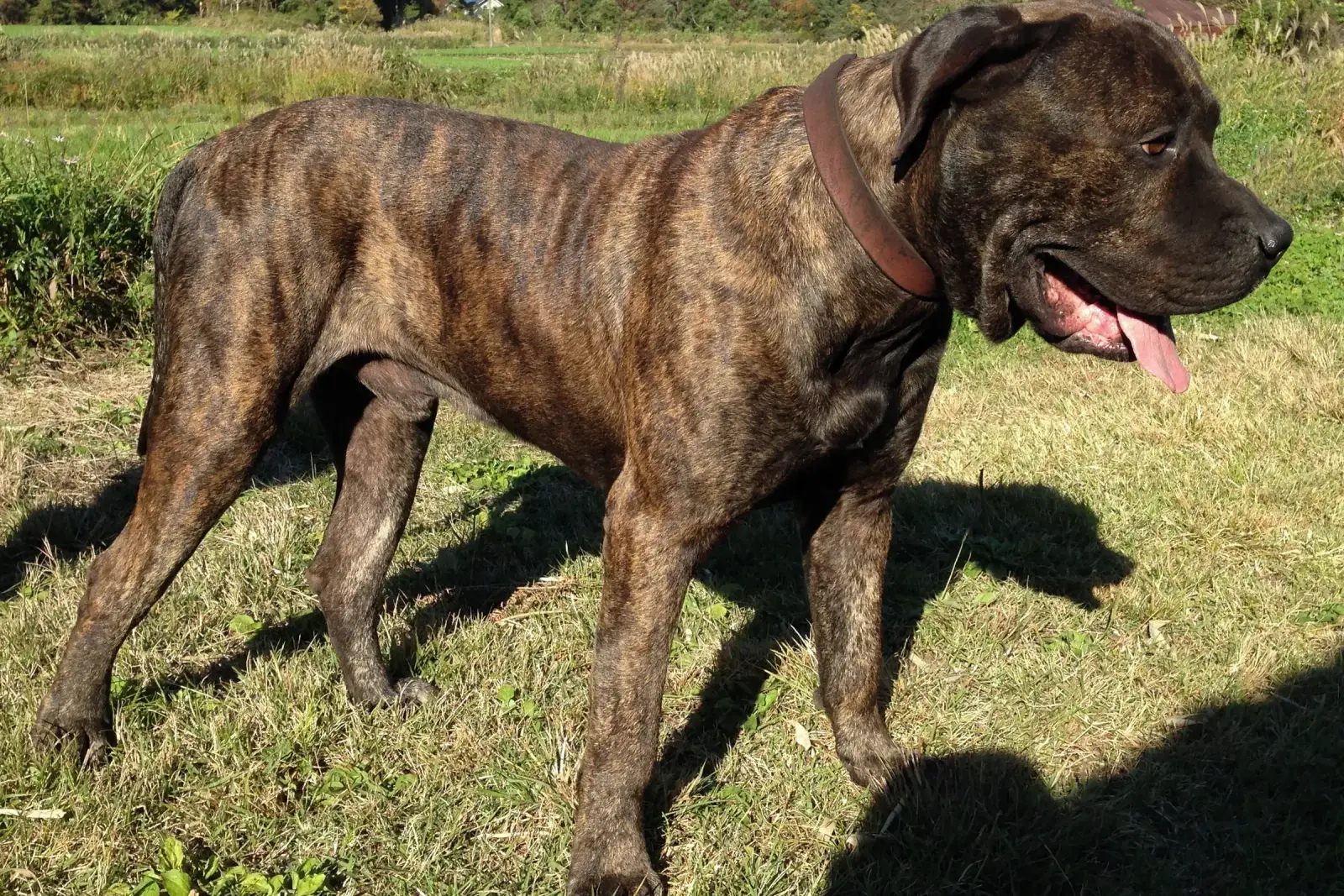
It was bred to guard farms and herd cattle, and was known until 2018 as the Dogo Canario. Adult males stand 61 to 66 cm tall and weigh about 45 to 57 kg under the current FCI standard. The breed is calm with its own family, reserved with strangers, and needs an experienced, confident owner. It is restricted or banned in a few countries, so check the law where you live before you look for a puppy.
Presa Canario quick facts
 Related breedBoerboel1650 to 1983 · South AfricaEarly Modern Era
- Country of origin
- Spain (Canary Islands, mainly Gran Canaria)
- Other names
- Perro de Presa Canario, Dogo Canario (FCI name until December 2018), Canary Mastiff, Canary Dogo
- Type
- Mastiff or catch dog (molossoid); FCI Group 2, standard no. 346; Foundation Stock Service only
- Height
- FCI 2023: dogs 61 to 66 cm, bitches 57 to 62 cm at the withers
- Weight
- FCI 2023: dogs about 45 to 57 kg, bitches about 40 to 50 kg
- Coat
- Short, coarse, close-lying
- Life span
- Atlas data: 9 to 11 years. UK study median: 7.7 years
- Original jobs
- Farm and cattle guarding, herding, and (until it was banned) dog fighting
- DNA group
- None assigned. The atlas places it in the European Mastiff family by history
- Ancestor in the atlas
- Perro Majorero (Bardino)
- Legal status
- Banned or restricted in some countries (see below)
Drawn to scale in real centimetres. Its back reaches about 62 cm, mid-thigh; its head about 78 cm, your hip.

Where it sits in the tree
Age of Exploration · 1500 to 1599



Name and origin: where does "Presa Canario" come from?
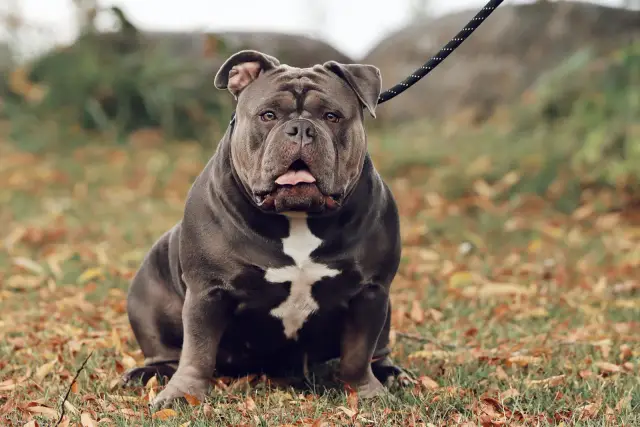
 Related breedBoston Terrier1870 to 1893 · United StatesVictorian Breed Boom
The Spanish word presa means "grip" or "catch", and canario means "of the Canary Islands". So the name describes a dog that grips and holds, from the Canaries. The same idea sits behind the English term "catch dog", used for mastiff-type dogs that seized livestock for herders and butchers.
For most of the 20th century the breed was called the Dogo Canario ("dogo" is the Spanish word for a mastiff-type dog). In December 2018 the FCI changed the official name to Presa Canario, at the request of the Spanish kennel club (Real Sociedad Canina de España, RSCE). The older name is still common online and in older books.

History of the Presa Canario
 Same eraBoxer1880 to 1904 · GermanyVictorian Breed Boom
The island dogs
The Presa Canario descends from the Perro Majorero, also called Bardino, a herding and guarding dog that was once spread across the Canary Islands. Dogs of this type were crossed with several molossoid (mastiff-type) dogs brought to the islands at different times during the colonial period. The Canary Islands were conquered by Castile in the 15th century. The exact crosses are not documented, and stories that name specific mastiff, bulldog or hound breeds are mostly guesswork.
British residents who arrived in large numbers in the late 19th century brought dogs of their own, and these are thought to have influenced the breed. A Spanish government field guide to native breeds (2009) is the main reference for this period.
Farm dog and fighting dog
The Presa Canario worked as a farm guard and as a herding dog for sheep and cattle. It was also used for dog fighting. Dog fighting was legal in Spain until 1936 and may have continued in secret afterwards. That history is part of why the breed is treated cautiously in law and in public opinion today.
Near extinction and revival
By the 1960s the breed was close to extinction. Other dogs had replaced it on farms and the fighting tradition had faded. A breeder-led revival followed. The Club Español del Presa Canario was formed in 1982 and drew up a provisional standard, which the government of the islands published. The RSCE approved the standard in 1989.
Recognition timeline
| Year | Event |
|---|---|
| 1982 | Breed club formed in Spain; provisional standard drawn up |
| 1989 | Standard approved by the RSCE |
| 1991 | Presa Canario named a symbol of the island of Gran Canaria in the Canary Islands nature-symbols law |
| 2001 | Official recognition by the Spanish government |
| 2018 | FCI name changed to Presa Canario |
| 2023 | Revised FCI standard published |
The FCI lists the breed as standard no. 346, with Spain as the country of origin.

Relatives and DNA
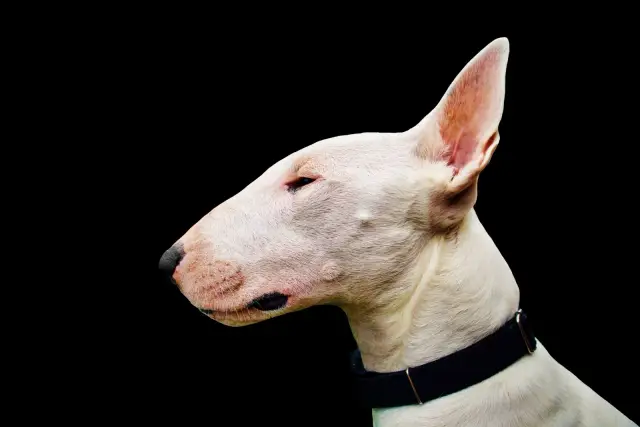 Same familyBull Terrier1850 to 1888 · United KingdomVictorian Breed Boom
The atlas data lists one ancestor for the Presa Canario: the Perro Majorero. It places the breed in the European Mastiff family because of its mastiff history, not because of a DNA result. The 2017 Parker study of 161 breeds did not give the Presa Canario its own place in the haplotype-sharing table in the atlas data, so no DNA relatives are listed here.
Dogs people often compare it with:
- Cane Corso. An Italian guarding mastiff with its own FCI standard. A similar job, a different country and a different history.
- Dogo Argentino. A white Argentine big-game and guard dog. Also restricted in several countries.
- Boerboel. South African farm mastiff, also a large guarding breed.
- Neapolitan Mastiff. Heavier, with loose skin, an Italian guard dog of the same broad mastiff group.

The Presa Canario breed standard
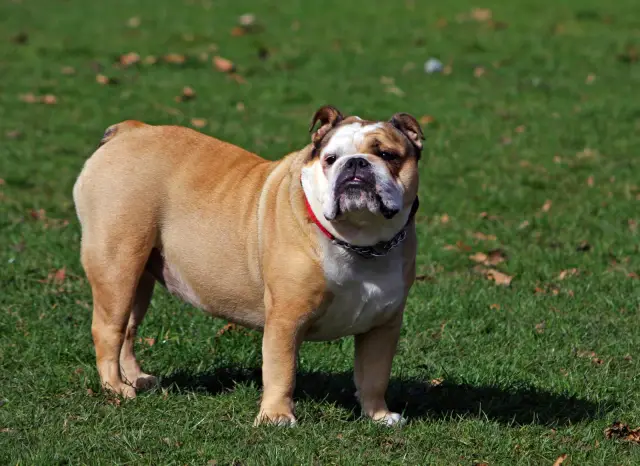 Looks relatedBulldog1835 to 1875 · United KingdomIndustrial Revolution
A is the written ideal that judges compare each dog against. The FCI standard describes a large, heavily built, muscular dog with a broad, square, powerful head. Ears may be cropped in countries that allow it. Where cropping is banned, the ears hang close to the head.
| Trait | What the standards say |
|---|---|
| Height (FCI 2023) | Dogs 61 to 66 cm; bitches 57 to 62 cm at the withers |
| Weight (FCI 2023) | Dogs about 45 to 57 kg; bitches about 40 to 50 kg (medium type) |
| Head | Broad, massive and square, with a short, strong muzzle and pendulous upper lips that meet in an inverted V |
| Ears | Erect if cropped; otherwise close-fitting, hanging or rose-shaped |
| Coat | Short, coarse and close-lying |
| Temperament | Balanced, calm, confident and somewhat distant, obedient and loyal to its family |
The AKC lists the Presa Canario only in its Foundation Stock Service, the record-keeping stage before full recognition. The AKC has not given it full recognition and places it in no group.

Presa Canario temperament
 Related breedBullmastiff1860 to 1924 · United KingdomVictorian Breed Boom
The FCI standard calls the breed balanced and confident, calm in the home and somewhat distant with people it does not know. It is meant to be obedient and devoted to its family. In practice, the breed's guarding history shows up as a dog that watches strangers closely, does not rush to make friends and takes its job seriously.
Three points matter for owners.
- Guarding is the point of the breed. A Presa Canario is bred to guard property and stock. It does not need to be taught to be wary. It needs to be taught when wariness is not wanted.
- Early socialisation is not optional. A powerful dog that is wary of strangers should meet many calm people, dogs, sounds and places between about 8 and 16 weeks of age, with a positive trainer.
- Control matters more than size. A dog of 45 kg or more can injure someone by accident. Reliable recall, a solid sit and stay, and calm leash manners are basic safety skills.
Same-sex dog aggression is a common concern with mastiff-type guarding breeds. Many Presa Canario owners keep a single dog or choose a pair of opposite sexes. No published study gives a breed-specific figure, so treat this as breeder and trainer experience, not data.
Training and exercise
The breed is intelligent and responds to calm, fair, consistent training. Harsh methods tend to make a large guarding dog more reactive, not less. Exercise needs are moderate: a long daily walk plus time to patrol a secure garden. A bored Presa Canario can dig, bark and guard the fence.

Presa Canario health and lifespan
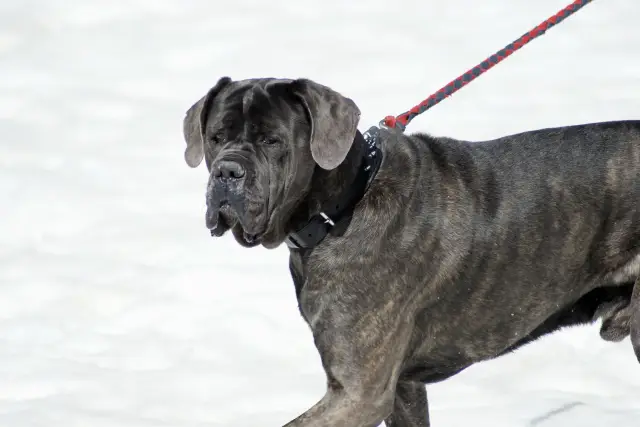 Related breedCane Corso1000 to 1996 · ItalyEarly Middle Ages
The atlas data gives 9 to 11 years. A UK study of companion dog breeds (McMillan and colleagues, Scientific Reports, 2024) found a median longevity of 7.7 years for the Presa Canario, against 12.5 years for all dogs. That is a short life, in line with other large and giant breeds.
No Presa Canario-specific health surveys with condition rates were found, and the breed is not part of the main UK health schemes. The conditions below are those that vets watch for in large, heavy dogs.
| Condition | What it is | How common | What helps |
|---|---|---|---|
| Hip joint that forms loosely, leading to arthritis | No published figure for this breed | Hip X-ray scoring of breeding dogs; lean body weight | |
| Abnormal elbow joint growth, causing lameness | No published figure for this breed | Elbow scoring of breeding dogs; controlled exercise while growing | |
| Bloat (gastric dilatation and volvulus) | Stomach fills with gas and may twist; an emergency | Deep-chested large breeds are at higher risk in general; no figure for this breed | Learn the signs (swollen belly, retching with nothing coming up) and go to a vet at once |
| Heat stress | Short muzzle and heavy muscle make heat harder to lose | No published figure for this breed | Exercise in the cool of the day; always give shade and water |
| Skin and ear problems | Skin folds and ears can trap moisture | No published figure for this breed | Regular checks; vet advice for itching |
Information here is general. A vet knows your own dog. Ask any breeder to show hip and elbow results for both parents, and avoid breeders who cannot.

Is the Presa Canario banned? Breed laws by country
 Related breedDogo Argentino1928 to 1973 · ArgentinaModern Era
Rules about the Presa Canario change by country, and sometimes by region or town. This section is a summary, not legal advice. Always read the current rules from the authority named for your area. For the wider picture, see banned and restricted dog breeds by country and dog laws by country.
| Country | Status of the Presa Canario | Named source |
|---|---|---|
| Australia | Import prohibited | Customs (Prohibited Imports) Regulations 1956 |
| New Zealand | Import prohibited; classed as menacing | Dog Control Act 1996, Schedule 4 |
| Spain | Not on the national breed list; local and regional rules may apply | Real Decreto 287/2002 |
| United Kingdom | Not a banned type | Dangerous Dogs Act 1991 |
Australia. The federal Customs (Prohibited Imports) Regulations 1956 prohibit importing the Perro de Presa Canario, along with four other breeds. A dog already in the country is governed by state and council rules.
New Zealand. Schedule 4 of the Dog Control Act 1996 lists the Presa Canario. Importing is prohibited, and listed dogs are classed as menacing, which brings leash and muzzle rules in public.
Spain. The national rules on potentially dangerous dogs, Real Decreto 287/2002, name eight breeds in its annex: the Pit Bull Terrier, Staffordshire Bull Terrier, American Staffordshire Terrier, Rottweiler, Dogo Argentino, Fila Brasileiro, Tosa Inu and Akita Inu. The Presa Canario is not among them. The decree also covers any dog that shows aggressive behaviour or has attacked someone, and some regions and councils publish their own breed lists, so owners should ask their town hall. For dogs that are covered, an owner needs a licence, an insurance policy and leash and muzzle in public.
United Kingdom. The Dangerous Dogs Act 1991 bans four types: the Pit Bull Terrier type, Japanese Tosa, Dogo Argentino and Fila Brasileiro, and the XL Bully type was added in 2023. The Presa Canario is not one of the named types. UK law judges a dog by its build and behaviour, not its paperwork, so a dog that closely matches a banned type can still be seized.
Wherever you live, check three things before buying or travelling with a Presa Canario: the national rules, the regional or town rules, and the rules of any airline or country you pass through.
Living with a Presa Canario
 Related breedDogue de Bordeaux1300 to 1896 · FranceLate Middle Ages
| Daily reality | Rating | Why |
|---|---|---|
| Exercise | Medium | A long walk plus time in a secure garden |
| Training needs | High | Strong, wary dog that needs early, steady, kind training |
| Grooming | Low | Short coat; weekly brushing |
| Shedding | Medium | Short hair that sheds year round |
| Barking | Medium | Guards by presence, but will bark at strangers |
| Time alone | Fair | Bonds closely; long hours alone can cause trouble |
| Children | Fair | Needs supervision because of size, not because of bad intent |
| Other dogs | Poor | Can be intolerant, especially of the same sex |
| Cats and small pets | Varies | Depends on early exposure and the individual |
| Flat living | Poor | Large dog that needs space and a secure garden |
| Heat tolerance | Fair | Short muzzle and heavy muscle; avoid hot hours |
| Cold tolerance | Fair | Short single coat |
| First-time owner | Poor | Strength and guarding drive call for experience |
A good fit if you...
- have owned large guarding breeds and understand how to manage them;
- have a secure garden with high, solid fencing;
- will work on socialisation and training from the first week;
- live somewhere the breed is legal and your insurer and landlord accept it.
Think twice if you...
- are a first-time dog owner;
- want a dog that greets every visitor;
- have a busy home with many unfamiliar guests;
- rent or live under rules that restrict large or listed breeds.

Presa Canario fun facts
 Related breedEnglish Mastiff1300 to 1880 · United KingdomLate Middle Ages
- The breed is a symbol of Gran Canaria in a 1991 Canary Islands law on nature symbols.
- The name Dogo Canario was used by the FCI until December 2018.
- Its ancestor, the Perro Majorero, is a separate breed from Fuerteventura.
- A UK longevity study found the breed's median lifespan at 7.7 years.
- Australia and New Zealand both prohibit importing the breed.
Frequently asked questions
Is the Presa Canario banned?
Not everywhere. It is prohibited for import in Australia and New Zealand. It is not banned in the UK or on Spain's national list, but local rules can apply. Check your own authority.
What is the difference between a Presa Canario and a Dogo Canario?
Nothing. Dogo Canario was the name until December 2018, when it became Presa Canario.
How big does a Presa Canario get?
Under the FCI 2023 standard, dogs reach 61 to 66 cm and about 45 to 57 kg. Bitches reach 57 to 62 cm and about 40 to 50 kg.
How long do Presa Canarios live?
The atlas data gives 9 to 11 years. A UK study gave a median of 7.7 years.
Is the Presa Canario a good family dog?
In experienced hands, with early socialisation and supervision around children, it can be calm and devoted. It is not a good match for first-time owners.
Is the Presa Canario the same as a Cane Corso?
No. They are separate breeds from different countries, with separate FCI standards. Both are large guarding mastiffs.
Where does the Presa Canario come from?
From the Canary Islands, mainly Gran Canaria, where it descends from the island's herding and guarding dogs.
Read next
 FamilyEuropean MastiffThe whole family
 Adopt a dogDog Shelters in EuropeFind dog shelters in Europe, learn how shelters differ from country to country and why adopting a dog is a good option.
Sources (14)
- Fédération Cynologique Internationale, Presa Canario, standard no. 346 (breed page).
- Fédération Cynologique Internationale, "New name for Dogo Canario (346)", December 2018.
- Fédération Cynologique Internationale, FCI-Standard No. 346, Presa Canario, 2023 revision.
- American Kennel Club, Presa Canario breed page.
- Wikipedia, "Presa Canario" and "Perro Majorero" (history).
- Fernandez Rodriguez M. et al. (eds.), Guia de campo de las razas autoctonas espanolas, Ministerio de Medio Ambiente y Medio Rural y Marino, Madrid, 2009.
- McMillan K.M. et al., "Longevity of companion dog breeds: those at risk from early death", Scientific Reports, 2024.
- Real Decreto 287/2002, Boletin Oficial del Estado (Spain), applying Ley 50/1999 on potentially dangerous animals.
- Real Decreto 558/2001, Boletin Oficial del Estado (Spain), on official recognition of pure-breed dog breeder associations.
- Customs (Prohibited Imports) Regulations 1956 (Australia).
- Dog Control Act 1996, Schedule 4 (New Zealand).
- Dangerous Dogs Act 1991 (United Kingdom), with the Dangerous Dogs (Designated Types) Order 1991 and the 2023 order adding the XL Bully type.
- Parker H.G. et al., "Genomic analyses reveal the influence of geographic origin, migration, and hybridization on modern dog breed development", Cell Reports, 2017.
- Atlas data, breed records (this site).