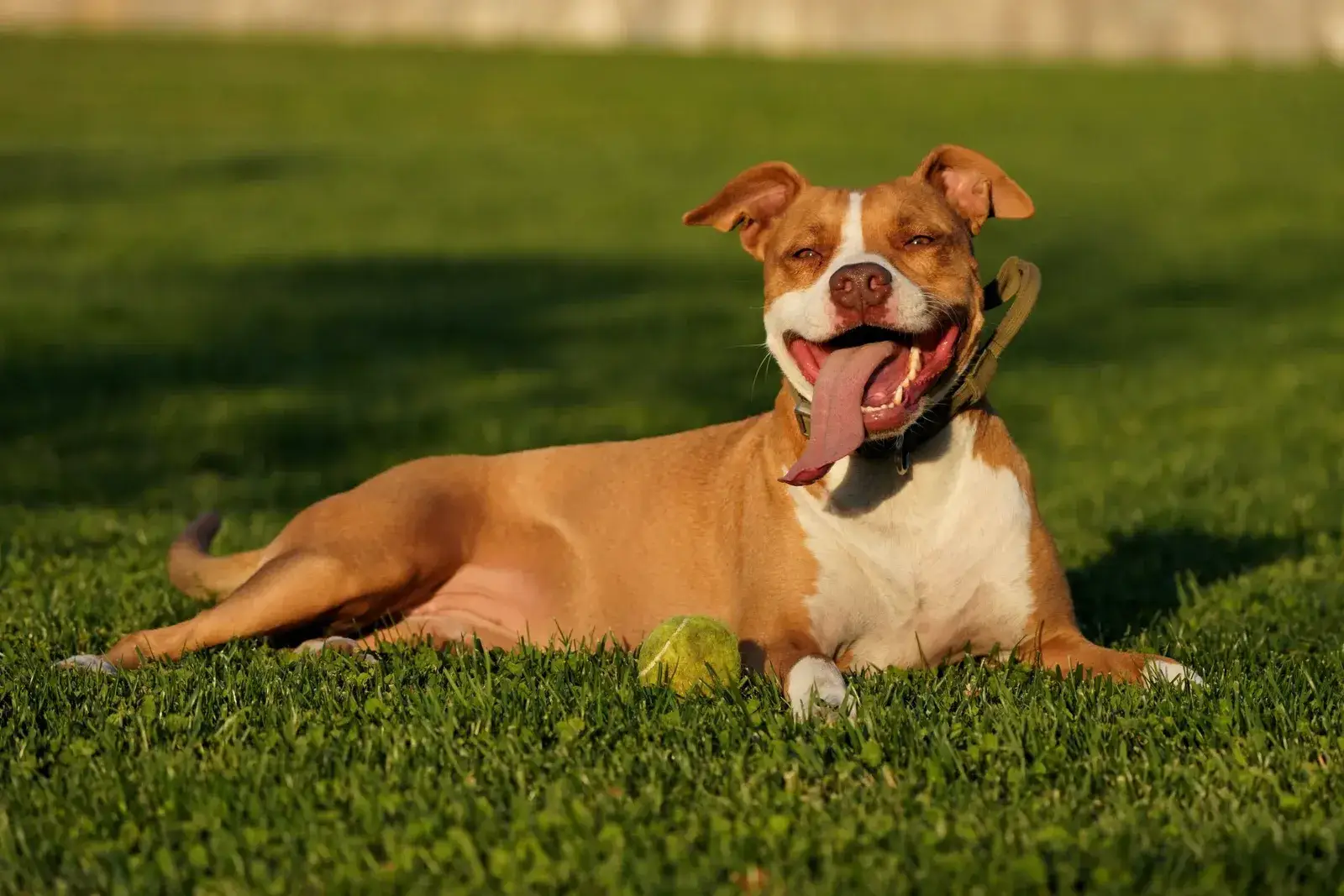
Its forebears were bred in Britain in the 1800s from bulldogs and terriers, then carried to the United States. The American Kennel Club (AKC) registered it in 1936 as the "Staffordshire Terrier" and renamed it "American Staffordshire Terrier" in 1972. It is a close relative of the American Pit Bull Terrier, and the label "pit bull" is often applied to it, which matters because several countries restrict the breed or the type by law. Its best-documented inherited problem is an adult-onset cerebellar disease (NCL-A) for which a DNA test exists.
American Staffordshire Terrier quick facts
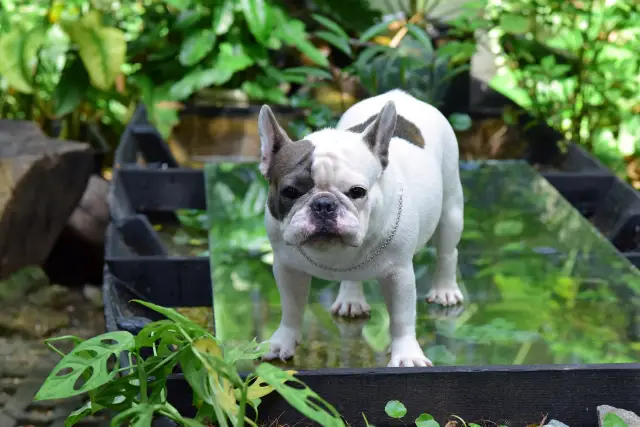 Related breedFrench Bulldog1850 to 1898 · FranceVictorian Breed Boom
- Closest DNA relatives
- Bull Terrier (29 ), Staffordshire Bull Terrier (25.5 Mb)
- Country of origin
- United States (FCI standard no. 286)
- Period of development
- Bull-and-terrier stock from the early 1800s; AKC breed from 1936 (atlas data: 1850 to 1936)
- Original job
- Bull-and-terrier dogs: baiting and pit fighting in Britain, then farm dogs, catch dogs and companions in the US
- Type
- Terrier. FCI: Group 3, Terriers. AKC: Terrier Group
- Other names
- AmStaff; "Staffordshire Terrier" (AKC name 1936 to 1972)
- Height (FCI)
- Preferred about 46 to 48 cm for dogs, 43 to 46 cm for bitches
- Life span
- 12 to 16 years (atlas data)
- DNA family
- European Mastiff (Parker et al. 2017)
Drawn to scale in real centimetres. Its back reaches about 46 cm, just below your knee; its head about 58 cm, just above your knee.
Where it sits in the tree
Victorian Breed Boom · 1850 to 1913
Name and origin
 Related breedBoxer1880 to 1904 · GermanyVictorian Breed Boom
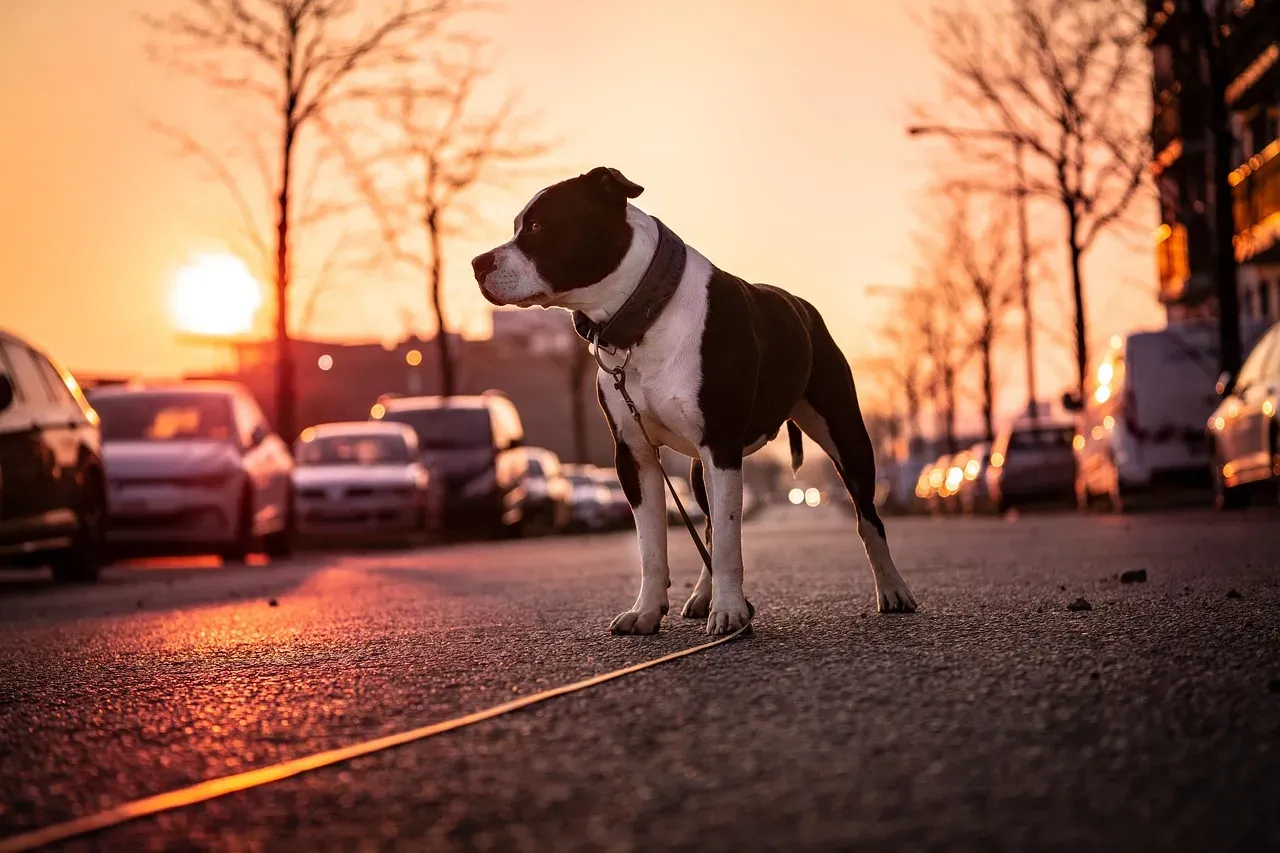 Save
The name points to Staffordshire, England, home of the bull-and-terrier dogs that the breed descends from. "American" was added in 1972 to tell it apart from the English Staffordshire Bull Terrier. The AKC's own first name, in 1936, was "Staffordshire Terrier".
"Pit bull" as a label. Two meanings are in use. As a breed, "pit bull" refers to the American Pit Bull Terrier registered with the United Kennel Club (UKC) and the American Dog Breeders Association. As a type, it is a loose description of a short-coated, broad-headed, muscular dog, and in shelters, news reports and many laws it can cover the AmStaff, the Staffordshire Bull Terrier, the American Bully and many mixed dogs. Olson et al. (2015, The Veterinary Journal) make the point that no agreed definition of the type exists. An AmStaff is a recognised breed with a written standard and pedigree, but a law that bans the "pit bull type" can still reach it, because such laws usually judge a dog by looks.

History
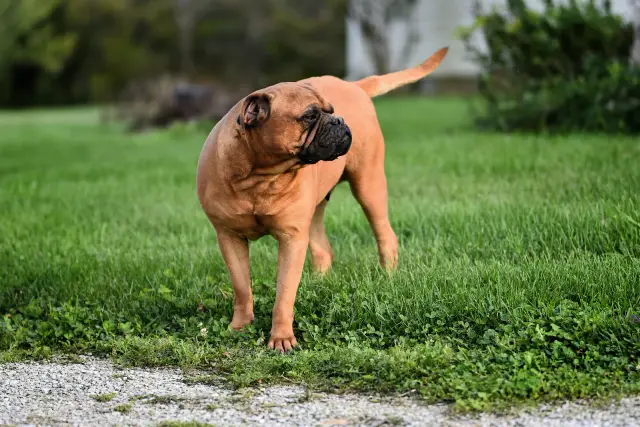 Same eraBullmastiff1860 to 1924 · United KingdomVictorian Breed Boom
Bull-and-terrier roots in Britain
Bull-baiting, the sport of setting dogs on a tethered bull, was banned in Britain by the Cruelty to Animals Act of 1835. Dog fighting did not stop at once. It moved indoors and underground, and dogs bred from bulldogs and terriers were prized for it. The fighters were lighter and quicker than the old Old English Bulldog, with the terrier's drive added. This bull-and-terrier stock is the common root of the Staffordshire Bull Terrier, the American Pit Bull Terrier and the AmStaff. Dog fighting is illegal in the UK and the US today, and it is part of this breed's history that no honest account leaves out.
Dogs cross the Atlantic
Bull-and-terrier dogs reached the United States in the 1800s with immigrants. American breeders kept them for fighting, but also as hunting dogs for boar and other game, as farm dogs that drove and caught cattle and pigs, and as family companions. The American type grew heavier than the English dog, which is one reason the two breeds are now separate.
The AKC and its two names
Some owners wanted to show their dogs at AKC events and to separate them from the fighting scene. By the early 1920s, some had petitioned the AKC for recognition. In 1936 the AKC accepted the first dogs into its as "Staffordshire Terriers". A French breed history says about fifty dogs already registered with the UKC as American Pit Bull Terriers were the first admitted. The AKC avoided the word "pit" in the name to distance the breed from fighting.
The name changed to "American Staffordshire Terrier" effective 1 January 1972. Most sources agree on 1972, though a few other accounts give 1973. The stated reason was to avoid confusion with the English Staffordshire Bull Terrier. One profile says the change came when the AKC accepted the English breed, but the order of those two events is not documented.
From that split, the show line (AmStaff, AKC) and the working or performance line (APBT, UKC) have drifted apart in type, while remaining close relatives. Some dogs are dual registered. The FCI later took the breed in as its standard no. 286, with the United States as country of origin.
AmStaff, American Pit Bull Terrier and Staffordshire Bull Terrier
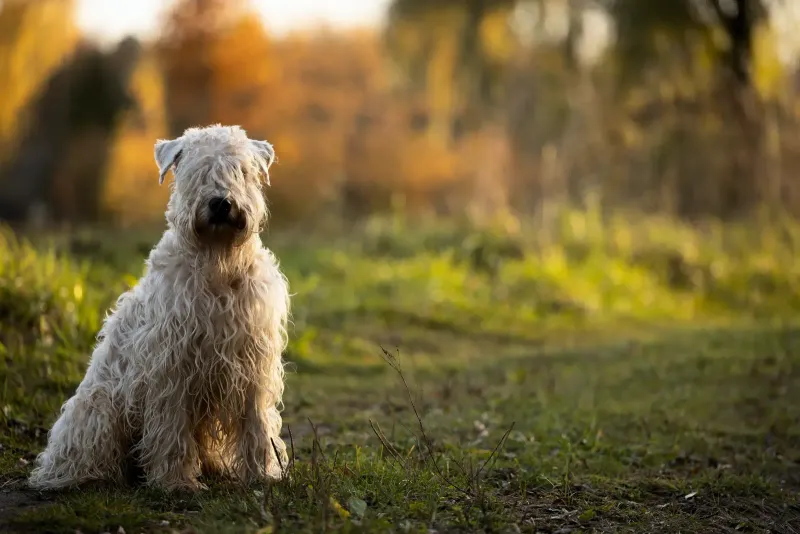 Related breedSoft-coated Wheaten Terrier1700 to 1937 · IrelandEarly Modern Era
| Point | American Staffordshire Terrier | American Pit Bull Terrier | Staffordshire Bull Terrier |
|---|---|---|---|
| Registers | AKC, FCI (no. 286) | UKC, ADBA | UK Kennel Club, FCI (no. 76), AKC |
| Size | Medium; FCI 43 to 48 cm | Medium; varied | Smaller; 36 to 41 cm |
| Origin | United States | United States | England |
| Link | AKC show line from 1936 | Fighting and working line | English bull-and-terrier |
The three share bull-and-terrier ancestry. See American Pit Bull Terrier for the working line and its laws, and Staffordshire Bull Terrier for the smaller English breed.
Relatives and DNA
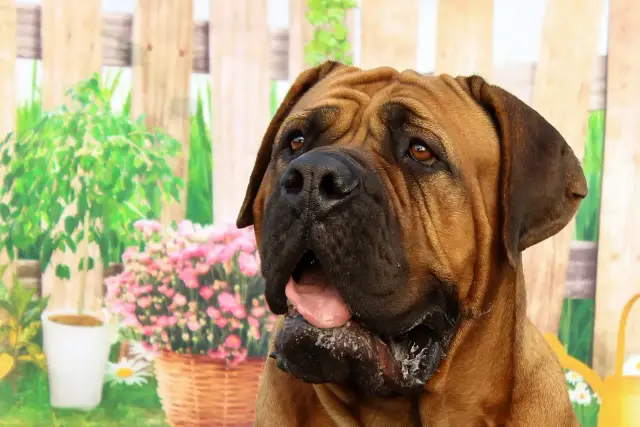 Same familyDogue de Bordeaux1300 to 1896 · FranceLate Middle Ages
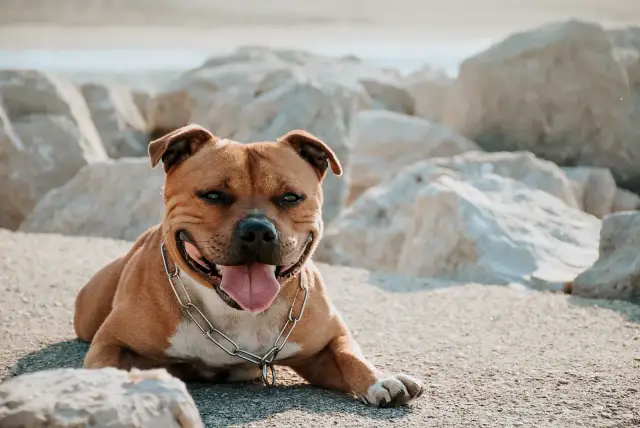
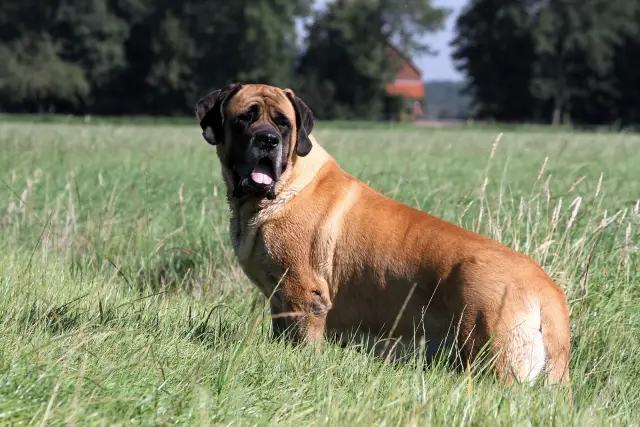
The AmStaff sits in the European Mastiff family in Parker et al. (2017, Cell Reports). The study placed the AmStaff close to the Bull Terrier and the Staffordshire Bull Terrier. The American Pit Bull Terrier was not sampled in that study, so the tie to it rests on registry and breed history, not on DNA.
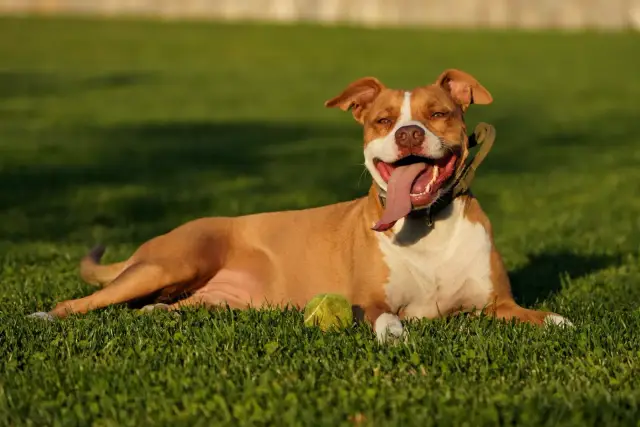
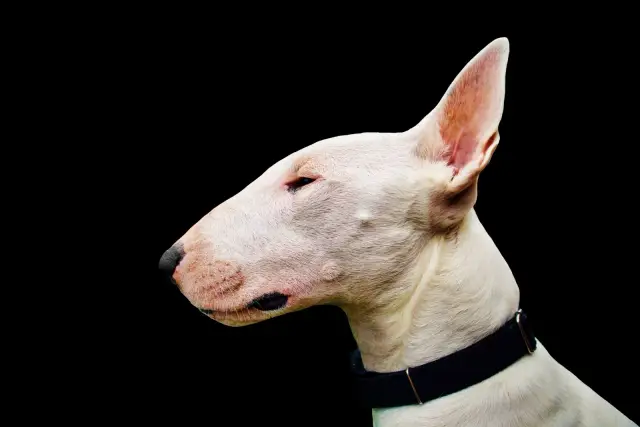
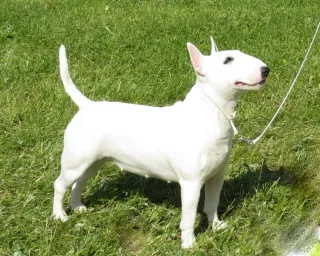
- AmStaff and Bull Terrier
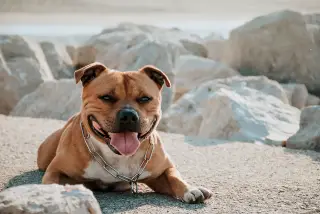
- AmStaff and Staffy
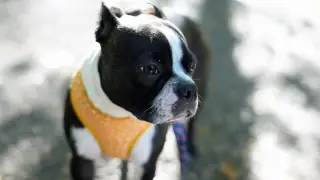
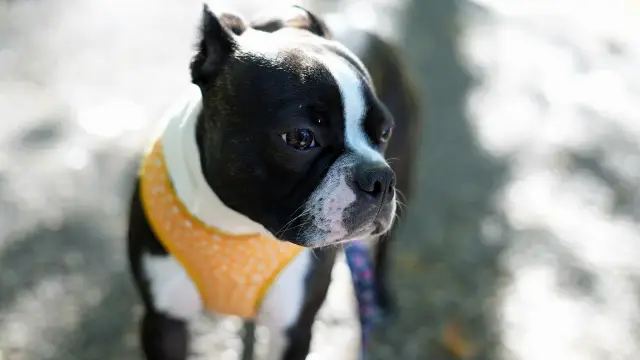
- AmStaff and Boston Terrier
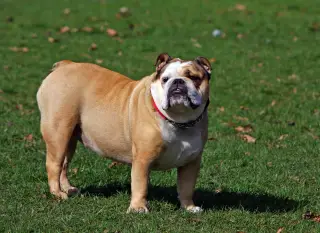
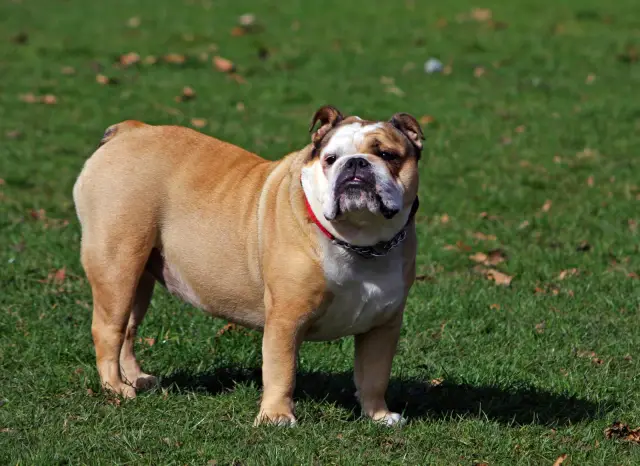
- AmStaff and Bulldog
Sister breeds · 1
- American Bully1980 to 2004
- Bull Terrier29.0 Mb 1.2%
- Staffordshire Bull Terrier25.5 Mb 1.1%
- Miniature Bull Terrier25.3 Mb 1.1%
- Boston Terrier21.8 Mb 0.9%
- Bulldog18.9 Mb 0.8%
- French Bulldog16.0 Mb 0.7%
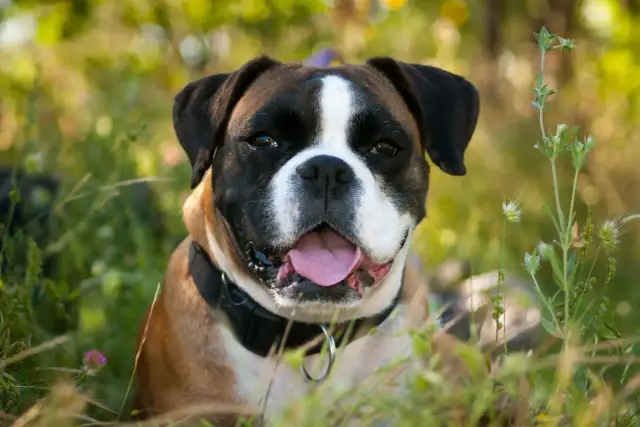
- Boxer14.8 Mb 0.6%
- Glen of Imaal Terrier11.7 Mb 0.5%
- Bullmastiff11.3 Mb 0.5%
- Soft-coated Wheaten Terrier11.2 Mb 0.5%
- Dogue de Bordeaux11.2 Mb 0.5%
- Kerry Blue Terrier10.7 Mb 0.4%
Source: Parker et al. 2017. Percent of the whole genome.
The breed standard
 Looks relatedAmerican Bulldog1700 to 1980 · United StatesEarly Modern Era
 Save
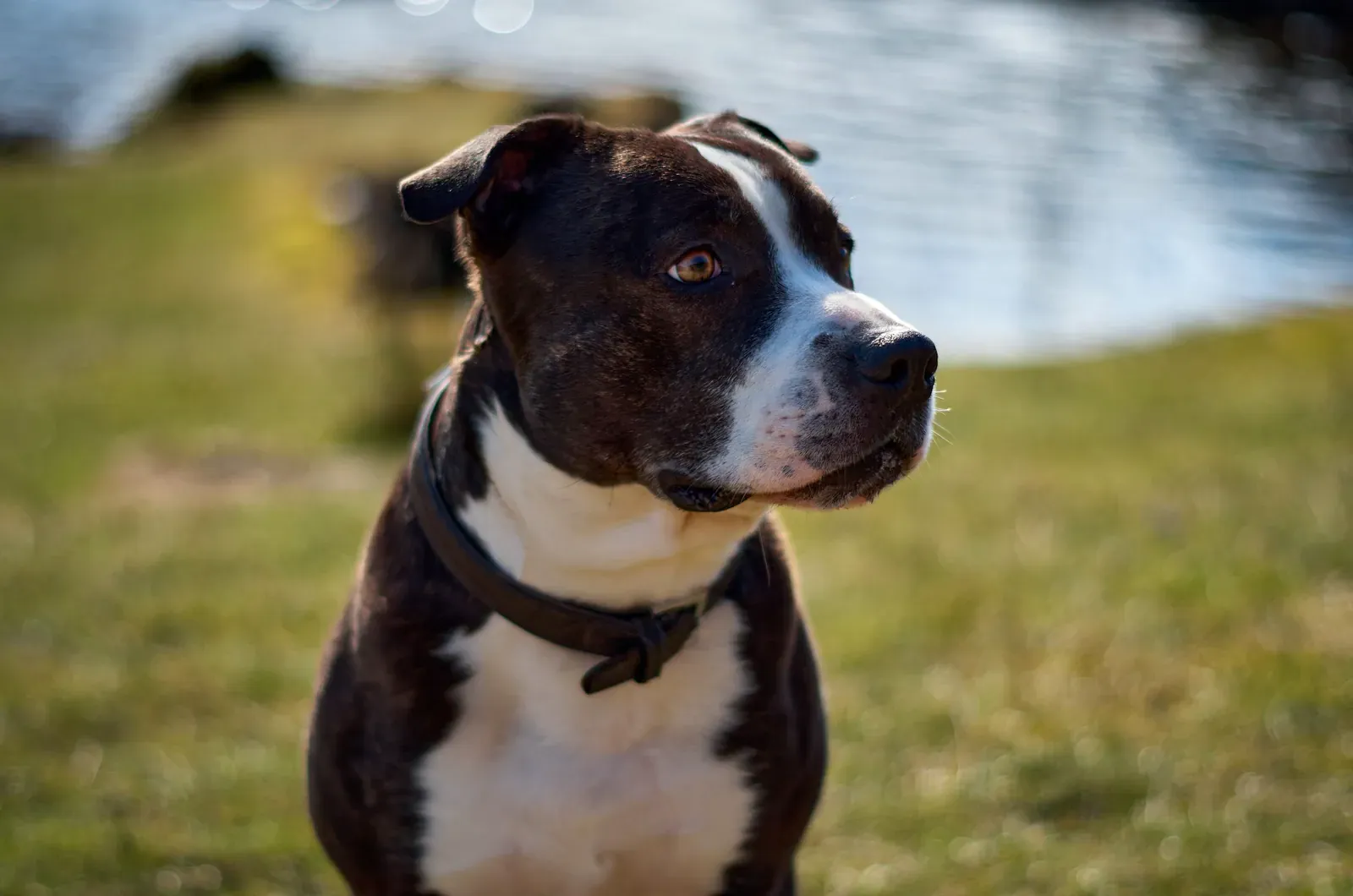
A is the written ideal a kennel club judges dogs against. The FCI standard (no. 286) asks for a medium-sized, stocky, muscular dog that is agile and strong for its size, with a short, close coat.
| Trait | What the standards say |
|---|---|
| Group | FCI: Group 3, Terriers (definitive). AKC: Terrier Group |
| Height | FCI: preferred about 46 to 48 cm for dogs and 43 to 46 cm for bitches. Height and weight should be in proportion |
| Weight | The FCI text gives no numeric range. Other sources vary (about 18 to 36 kg), so no figure is given |
| Coat | Short, close, stiff to the touch, glossy |
| Colours | Colour wording varies between standards, so none is listed here |
| Ears | Cropping is banned or restricted in many countries; natural ears are fully acceptable |
Temperament
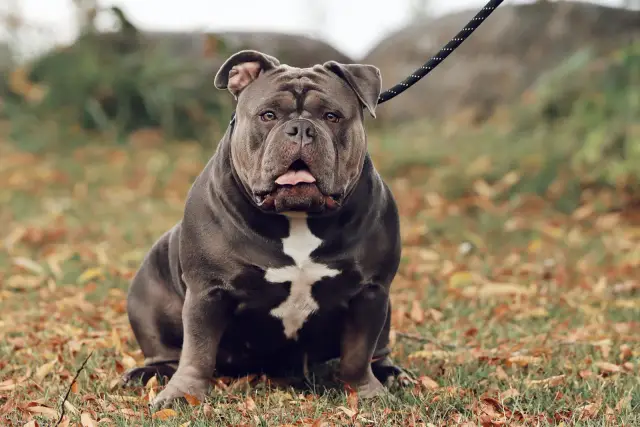 Related breedAmerican Bully1980 to 2004 · United StatesModern Era
The AKC describes the AmStaff as confident, smart and good-natured. Its standard says courage is proverbial. Breeders and owners describe a loyal, people-oriented dog that is athletic and eager.
The breed's fighting past is the other half of the picture. The breed club in the US points out that aggression toward other dogs can appear even in well socialised dogs, so AmStaffs should not be left alone with unfamiliar dogs. A stable dog still needs early socialisation, impulse-control training and secure fencing. No study can say how an individual dog will behave from its breed label alone (Olson et al. 2015 discuss how unreliable such labels are).

Breed laws by country
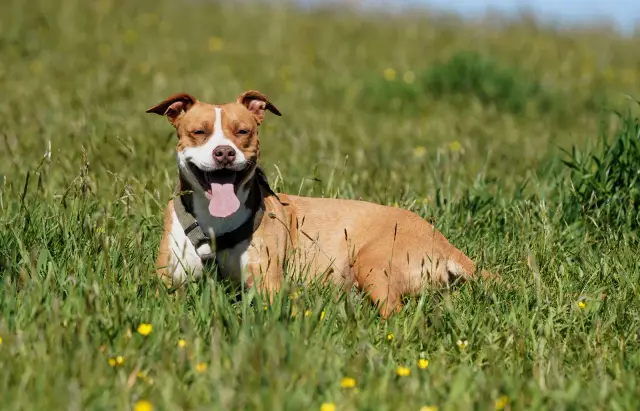 Related breedAmerican Pit Bull Terrier1850 to 1898 · United StatesVictorian Breed Boom
Rules change often, so check current local law. An overview by country is in banned dog breeds by country. A few points are settled.
- United Kingdom. Section 1 of the Dangerous Dogs Act 1991 bans the "pit bull terrier" type. The AmStaff is not named, but the law goes by type and appearance, not by pedigree, so a dog can be seized if it looks like the type. Owners with a pedigree and papers are in a better position, but the court decides.
- Denmark. The Act on Dogs bans keeping and breeding 13 named breeds, and the American Staffordshire Terrier is among them. The ban was reviewed in 2013 and Parliament decided to leave it unchanged.
- Germany. The Dog Transfer and Import Restrictions Act of 2001 bars importing or transferring several breeds, including the AmStaff, into Germany. German customs notes an exception for tourists staying no longer than four weeks. Keeping a listed dog also needs a local permit, and states have their own lists.
- Ontario, Canada. The 2005 amendment of the Dog Owners' Liability Act bans owning, breeding and importing pit bulls, defined to include the American Staffordshire Terrier, with grandfathering.
- United States. No national ban. Some cities and counties restrict the breed or the type, and a number of states block local bans. Landlords and insurers often apply their own rules.
What the evidence says. The AVMA literature review (2014) found that pit bull type dogs are reported more often in the small number of very severe or fatal bites, and said this may reflect local popularity, reporting bias and how the dogs were kept. It concluded that breed bans have not been shown to reduce bite injuries. Patronek et al. (2013, JAVMA) found that four or more preventable factors occurred together in about 80% of 256 fatal bite cases in the US from 2000 to 2009. Identification matters too: Olson et al. (2015) found shelter staff often disagreed with DNA results on whether a dog was pit bull type. A calm reading is that large, strong dogs cause more damage when they do bite, and that how a dog is raised, kept and supervised matters more than its label.
Health
 Related breedBoerboel1650 to 1983 · South AfricaEarly Modern Era
Most AmStaffs live healthy lives of 12 to 16 years in the atlas data. This section lists the problems that research and breed health groups mention. Where no named study gives a prevalence, the table says so.
| Condition | What it is | How common | What helps |
|---|---|---|---|
| Cerebellar degeneration (NCL-A, NCL4A) | A part of the brain that controls balance and movement slowly loses cells, so a young adult dog becomes unsteady | Olby et al. (2004) estimated about 1 in 400 dogs; the variant is a trait carried by apparently healthy dogs | DNA test for the ARSG variant; do not mate two |
| Hip and | Loose or misshapen joints that cause stiffness and arthritis | Two North American datasets quoted in a general breed summary give very different hip figures (24.4% and 1.84%); the original studies are not traceable, so no prevalence is given | Hip and elbow scoring of breeding dogs, lean weight |
| Heart disease | Subaortic and pulmonic stenosis are narrowings near the heart valves | Listed as screening targets; no prevalence figure found | Heart check by a vet or cardiologist before breeding |
| Skin allergies | Itchy skin, often in short-coated bull breeds | Seen often in practice; no breed figure found | Vet diagnosis, diet and parasite control |
| Cancers, thyroid | Common in many medium and large dogs | No breed figure found | Regular vet checks and lump checks |
Cerebellar ataxia in detail. Olby et al. (2004, Journal of Veterinary Internal Medicine) described cerebellar cortical degeneration in adult American Staffordshire Terriers in a study of 63 affected dogs. Pedigrees pointed to an autosomal recessive trait, meaning a dog needs one faulty copy from each parent to be affected, and the paper estimated a prevalence of about 1 in 400. The condition was later tied to a variant in the ARSG gene (Abitbol et al. 2010, PNAS), which causes a form of neuronal ceroid lipofuscinosis called NCL4A. The Kennel Club's DogWellNet lists the variant as c.296G>A and notes that several laboratories offer a DNA test. No published paper gives a verified carrier frequency, so none is given. A carrier is healthy, and careful breeding can use carriers while avoiding carrier-to-carrier matings.
A breeder who tests breeding stock for this variant, scores hips and elbows and checks hearts is doing what the research recommends.

Living with an American Staffordshire Terrier
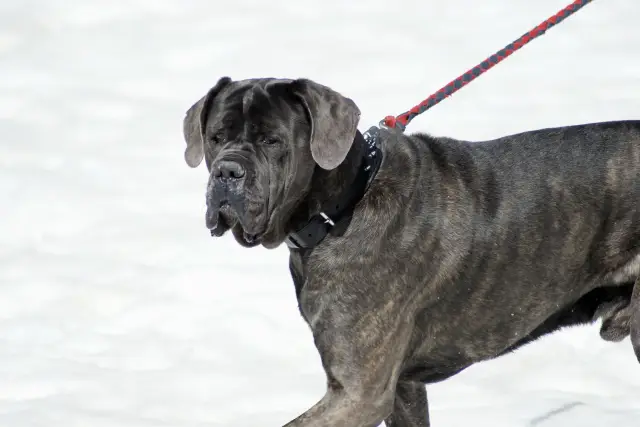 Related breedCane Corso1000 to 1996 · ItalyEarly Middle Ages
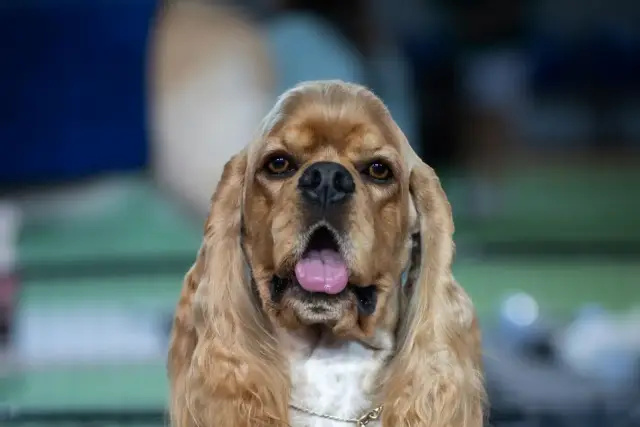
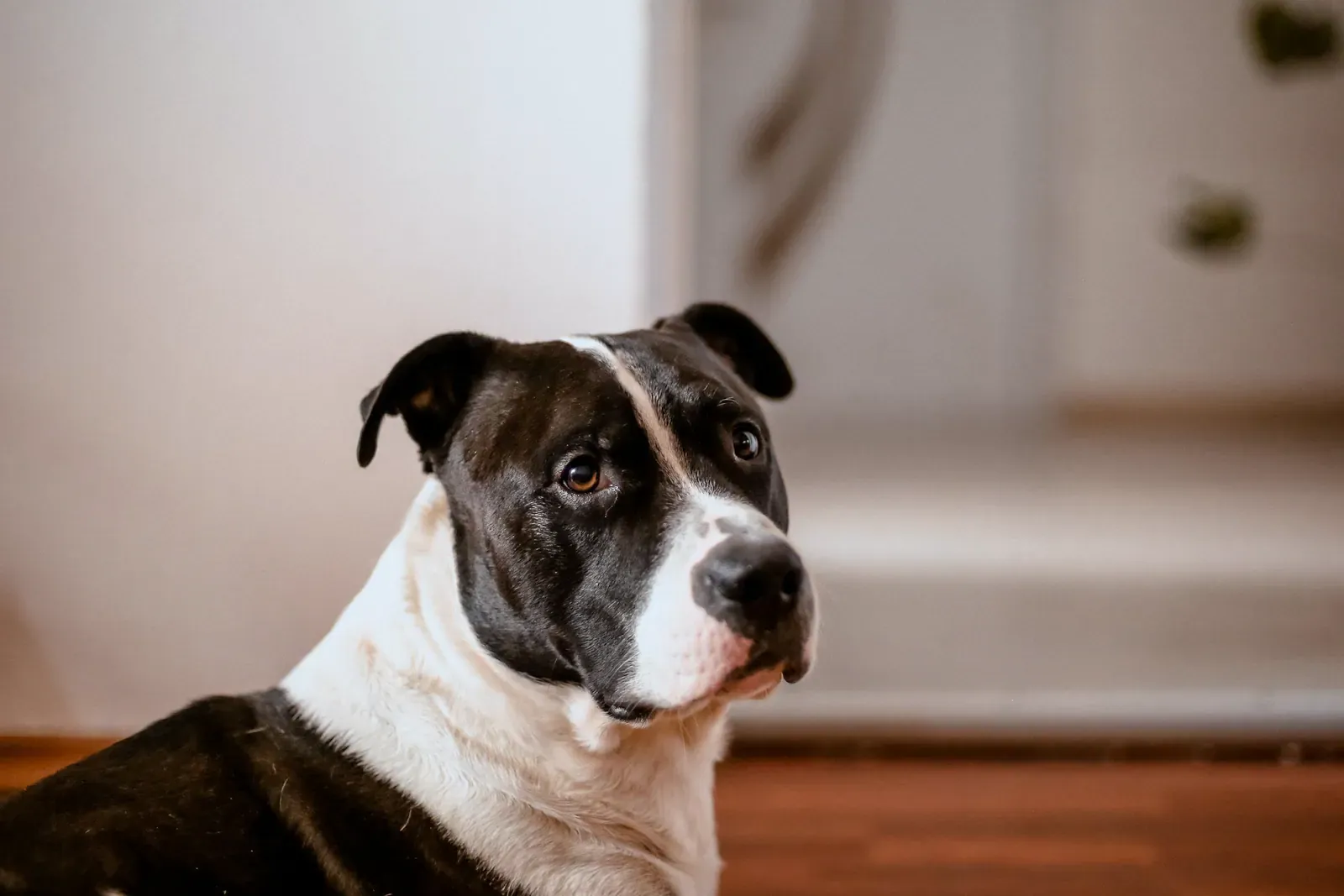 Save
| Daily reality | Rating | Why |
|---|---|---|
| Exercise per day | High | Strong, athletic terrier; about an hour or more of walking and play (breed guides) |
| Training needs | High | Eager to please but strong and driven; needs consistent, reward-based training |
| Grooming | Low | Short coat; a weekly brush |
| Shedding | Medium | Short hairs shed year round |
| Barking | Low to Medium | Varies by dog |
| Time alone | Fair | Bonds closely; boredom can bring chewing |
| Children | Fair to Good | Often affectionate with family children; always supervise, as with any strong dog |
| Other dogs | Poor to Fair | Breed club warns of dog aggression even after socialisation |
| Cats and small pets | Fair | Terrier prey drive; varies, careful introductions |
| Flat living | Fair | Fine indoors with enough exercise; check landlord rules |
| Heat tolerance | Fair | Short coat, broad head; avoid midday heat |
| Cold tolerance | Fair | Short coat; a jacket helps in cold, wet weather |
| First-time owner fit | Fair | Rewarding, but strength and public attitudes need preparation |
A great fit if
- You want an affectionate, athletic companion and enjoy daily training.
- You can offer secure fencing and careful supervision around other dogs.
- You accept a public image that may need explaining.
- You are ready to check local laws and rental rules first.
Think twice if
- You live where the breed or the pit bull type is banned, or your landlord or insurer excludes it.
- You want a dog that mixes freely with unknown dogs at the park.
- You cannot give daily exercise or training.
- You have small pets that must not meet a terrier.
Before you get one
- Health tests to ask a breeder for: a DNA result for NCL4A (ARSG) for both parents, hip and elbow scores, and a heart check.
- Puppy or adult rescue: AmStaff and bull-breed rescues exist. Many shelter dogs labelled AmStaff are mixed, since visual labels are unreliable.
- First year: socialisation classes, lead training and checking local law before the puppy comes home.
Similar breeds to consider
- Staffordshire Bull Terrier. A smaller English cousin, often called a family dog by its breed club.
- Boston Terrier. A lighter American bull-and-terrier descendant with a flat face; check breathing health.
- Boxer. A medium, playful dog with similar strength and a clownish style.
- Bull Terrier. Closest in DNA, with a distinct look and a stubborn side.

American Staffordshire Terrier fun facts
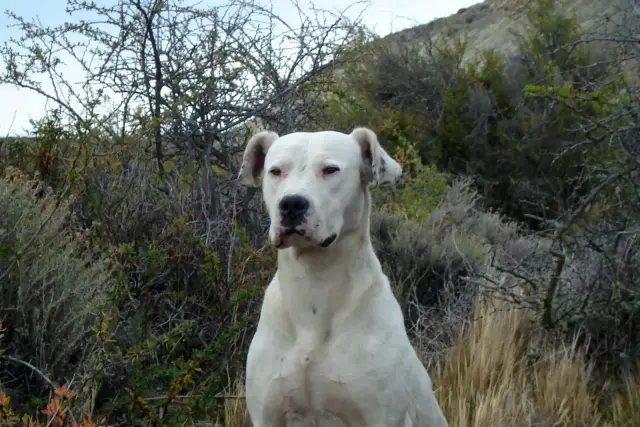 Related breedDogo Argentino1928 to 1973 · ArgentinaModern Era
- The AKC's first name for the breed, in 1936, was "Staffordshire Terrier"; "American" was added in 1972.
- The Staffordshire Bull Terrier, the AmStaff and the American Pit Bull Terrier all trace back to bull-and-terrier dogs of 1800s Britain.
- The 2004 paper on cerebellar degeneration covered 63 affected dogs, and the cause was traced to the ARSG gene six years later.
- Denmark and Germany list the AmStaff among restricted breeds.
Frequently asked questions
Is an American Staffordshire Terrier a pit bull?
It is a close relative of the American Pit Bull Terrier and often counts as "pit bull type" in laws and news. It is its own and breed with its own standard.
What is the difference between an AmStaff and a Staffordshire Bull Terrier?
The AmStaff is taller and heavier (FCI 43 to 48 cm) and was developed in the US. The Staffy is 36 to 41 cm and English.
When was the AmStaff recognised?
The AKC accepted the breed in 1936 as the Staffordshire Terrier and renamed it American Staffordshire Terrier in 1972.
Are American Staffordshire Terriers banned?
In Denmark, yes; in Germany importing is restricted. The UK bans the pit bull type, and Ontario names the breed.
Are AmStaffs good with children?
Many are affectionate, but any strong dog needs supervision. Their dog-to-dog behaviour needs the most care.
How long do American Staffordshire Terriers live?
The atlas data gives 12 to 16 years.
Read next
Closest DNABull Terrier29.0 Mb sharedSister breedAmerican Bully1980 to 2004 Adopt a dogDog Shelters in EuropeFind dog shelters in Europe, learn how shelters differ from country to country and why adopting a dog is a good option.
Sources (15)
- Fédération Cynologique Internationale, standard no. 286, American Staffordshire Terrier.
- American Kennel Club, breed page and standard for the American Staffordshire Terrier (history, temperament, 1936 recognition).
- Dogs New South Wales and Dogs Queensland breed pages (1936 registration, January 1972 renaming).
- Chien.com, "L'histoire de l'American Staffordshire Terrier" (about fifty UKC dogs admitted, the choice of name).
- Olby N.J. et al., "Cerebellar cortical degeneration in adult American Staffordshire Terriers", Journal of Veterinary Internal Medicine, 2004.
- Abitbol M. et al., "A canine Arylsulfatase G (ARSG) mutation leading to a sulfatase deficiency is associated with neuronal ceroid lipofuscinosis", PNAS, 2010.
- The Kennel Club DogWellNet, NCL4A entry for the American Staffordshire Terrier.
- AKC Canine Health Foundation, grants on cerebellar degeneration in American Staffordshire Terriers.
- Parker H.G. et al., "Genomic analyses reveal the influence of geographic origin, migration and hybridization on modern dog breed development", Cell Reports, 2017.
- Olson K.R. et al., "Inconsistent identification of pit bull-type dogs by shelter staff", The Veterinary Journal, 2015.
- Patronek G.J. et al., "Co-occurrence of potentially preventable factors in 256 dog bite-related fatalities in the United States (2000 to 2009)", JAVMA, 2013.
- American Veterinary Medical Association, "The role of breed in dog bite risk and prevention" literature review, 2014.
- Danish Veterinary and Food Administration, information on Danish legislation on dogs.
- German Customs (Zoll), page on dangerous dogs and the 2001 Dog Transfer and Import Restrictions Act.
- Atlas data, American Staffordshire Terrier knowledge record (lineage, DNA links, life span).