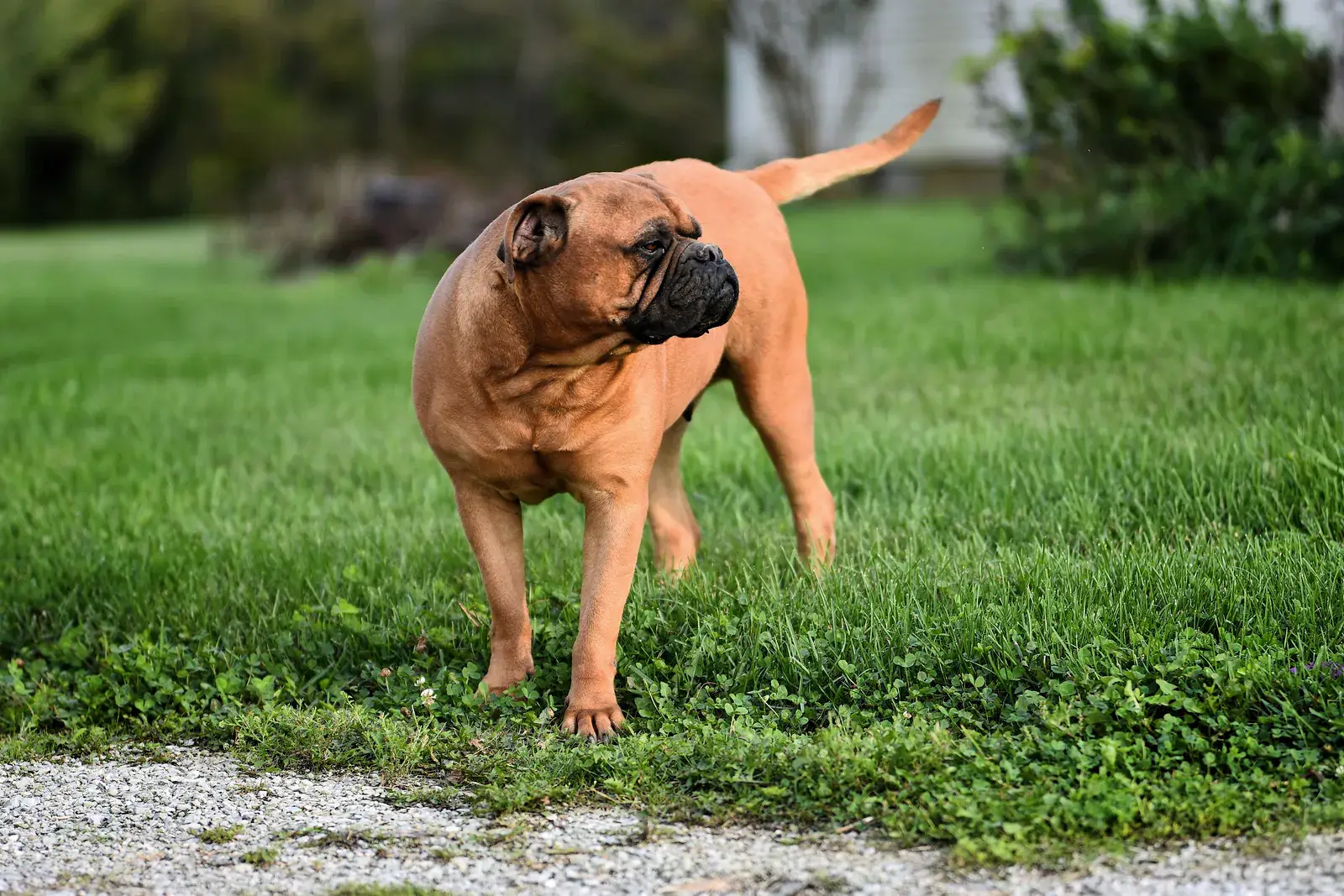
English gamekeepers built it in the second half of the 1800s by crossing the English Mastiff with the Old English Bulldog, to hold poachers on country estates at night without savaging them. Today it is a calm, loyal and fairly quiet family guardian. It suits owners who have space, can handle a dog of 40 to 60 kg, and will train and socialise it from puppyhood. The atlas data gives a life span of 7 to 9 years, and an Australian vet-records study found a median of 8.5 years.
Bullmastiff quick facts
 Related breedDogue de Bordeaux1300 to 1896 · FranceLate Middle Ages
- Country of origin
- United Kingdom (England)
- Period of development
- About 1860 to 1924 (atlas data, high confidence)
- Original job
- Gamekeeper's night dog: guarding estates and holding poachers
- Type
- Guard dog ( Group 2, Pinscher and Schnauzer, Molossoid and Swiss Mountain and Cattledogs; FCI standard no. 157; AKC Working Group; UK Kennel Club Working Group)
- Family
- European Mastiff (Parker 2017 DNA )
- Parent breeds
- English Mastiff and Old English Bulldog
- Height
- Dogs 64 to 69 cm, bitches 61 to 66 cm (UK Kennel Club); AKC dogs 25 to 27 in, bitches 24 to 26 in
- Weight
- Dogs 50 to 59 kg, bitches 41 to 50 kg (UK Kennel Club)
- Colours
- Any shade of brindle, fawn or red (UK Kennel Club)
- Life span
- 7 to 9 years in the atlas data; median 8.5 years in an Australian vet-records study
- Other names
- Gamekeeper's Night Dog
Drawn to scale in real centimetres. Its back reaches about 65 cm, mid-thigh; its head about 83 cm, your hip.
Where it sits in the tree
Victorian Breed Boom · 1850 to 1913
Name and origin
 Related breedBoston Terrier1870 to 1893 · United StatesVictorian Breed Boom
The name is simple: Bull(dog) plus Mastiff, its two parent breeds. In the late 1800s dog writers used "Gamekeeper's Night Dog" and "Bullmastiff" side by side. At the 1871 Crystal Palace dog show, a class for "Yard or Keeper's Night Dogs" drew six entries, which shows that the type already had a name before it had a standard.
The breed comes from England. Poaching on large country estates was a serious problem in Victorian Britain, and gamekeepers wanted a dog that was big enough to knock a man down and pin him, quiet enough not to warn him, and gentle enough not to kill him. The Mastiff gave size and calm. The Old English Bulldog, a more athletic and aggressive dog than today's Bulldog, gave speed and courage.

History
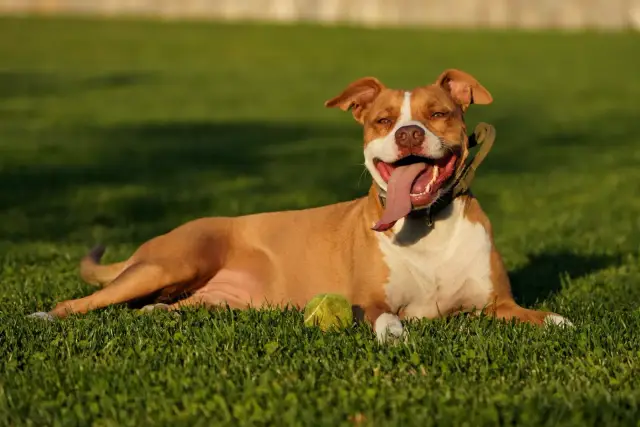 Same eraAmerican Staffordshire Terrier1850 to 1936 · United StatesVictorian Breed Boom
Gamekeepers and the night dog
The story is usually told this way. A gamekeeper's night dog worked quietly at night, tracked a poacher, knocked him down and held him until the keeper arrived. The Mastiff alone was seen as too slow, and the Bulldog alone as too fierce and short-winded. The cross produced a dog that fitted the job.
A figure often repeated by breeders is that the ideal mix was about 60 percent Mastiff and 40 percent Bulldog. This is a breeders' tradition, and no named record gives these proportions. The atlas data records both parents with high confidence but gives no percentages.
Breeding to a type
Through the late 1800s keepers and estate owners bred the cross for type. By the early 1900s a few breeders were working to make the dogs breed true, so that bullmastiff to bullmastiff would give the same type again. That is the step that turns a cross into a breed.
Kennel Club recognition
Sources give slightly different dates for recognition by the UK Kennel Club. Most place it in 1924, with the Kennel Club admitting the breed in December of that year. Other accounts say classes were opened in 1925 and Challenge Certificates were not awarded until 1928. The atlas data uses 1924. The first written is dated to 1935 in one source.
Arrival in the United States
The American Kennel Club recognised the Bullmastiff in the early 1930s. Sources give 1933 and 1934. The breed is in the AKC Working Group.
After the war
The breed became a pet and show dog as estate keeping declined. Its guard role stayed, as a home and property guard in several countries. It also appears in the family trees of several later bulldog-type and mastiff-type dogs (see below).
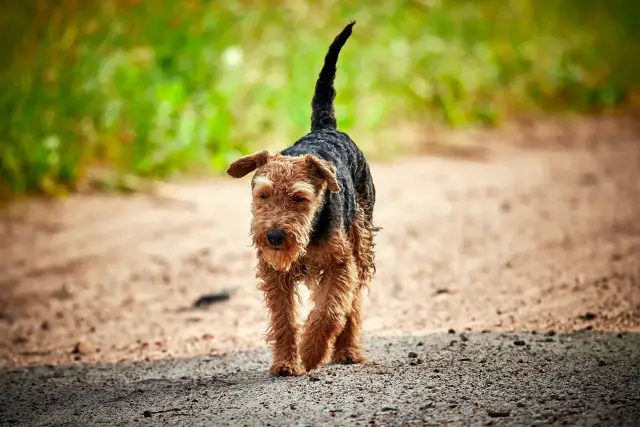
Ancestors, descendants and relatives
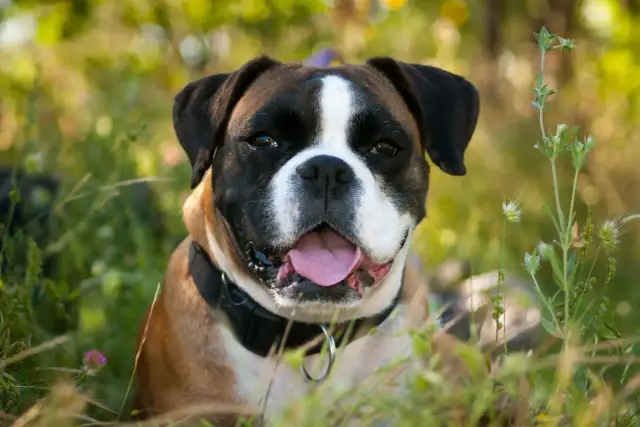 Same familyBoxer1880 to 1904 · GermanyVictorian Breed Boom
The atlas data places the Bullmastiff in the European Mastiff clade of the Parker 2017 DNA study. It records two parents, the English Mastiff and the extinct Old English Bulldog, and the Old English Bulldog also appears as a sibling in the data because both breeds sit on the same branch. Older ancestors in the atlas data include the Alaunt and the Alpine Mastiff.
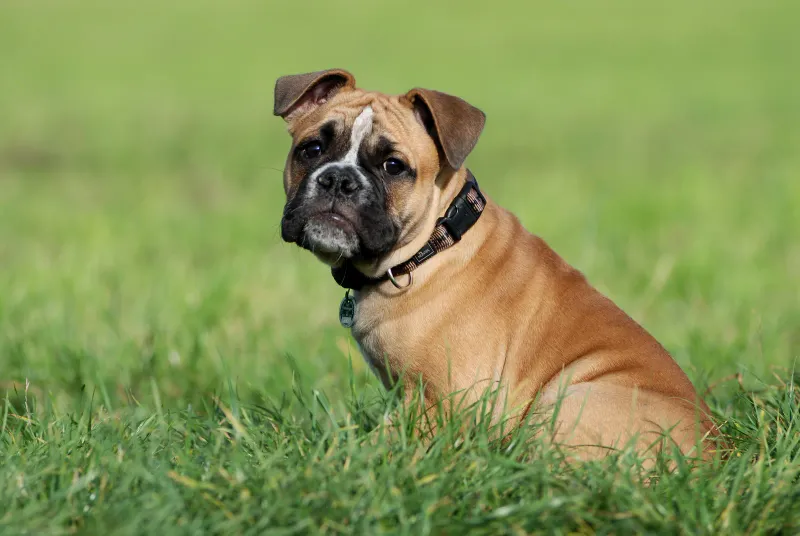 Olde English BulldoggeOlde English Bulldogge
Three modern breeds list the Bullmastiff in their ancestry in the atlas data: the Olde English Bulldogge, the American Bully and the Continental Bulldog.
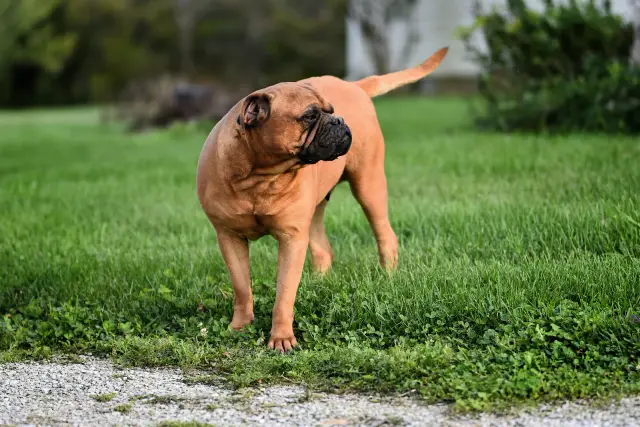
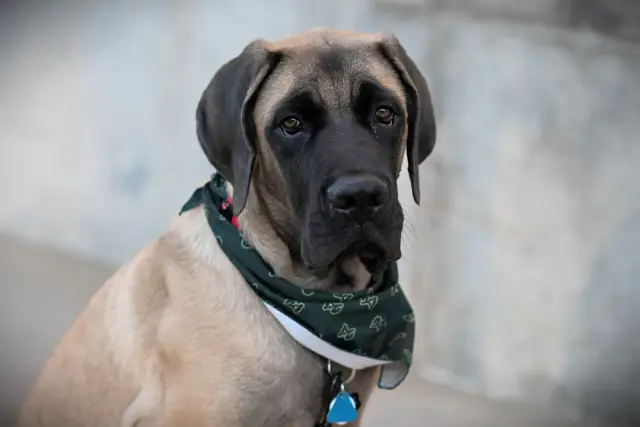

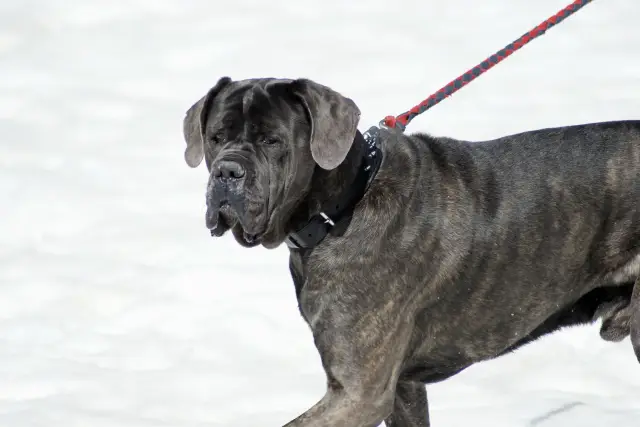
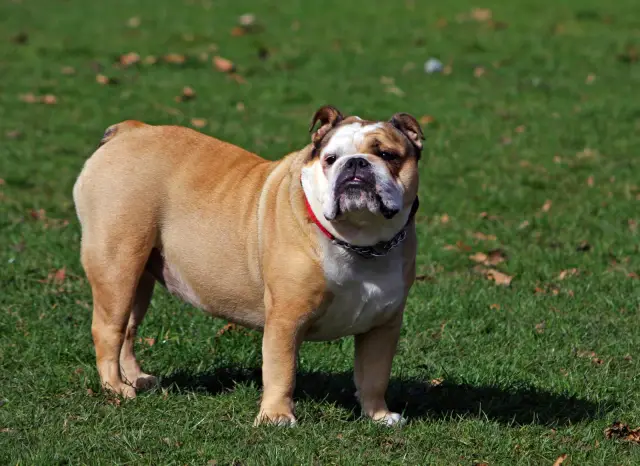
- Bullmastiff and English Mastiff
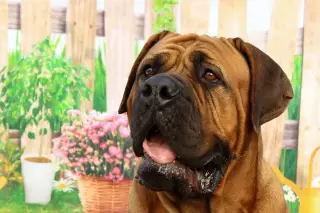
- Bullmastiff and Boerboel
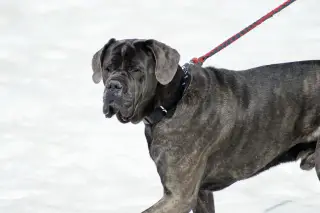
- Bullmastiff and Cane Corso
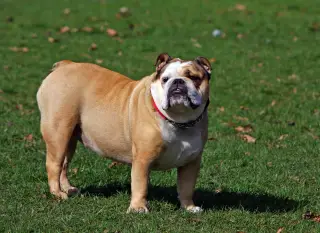
- Bullmastiff and Bulldog
The large shared stretch with the English Mastiff matches the written story. The Bulldog in the data is today's Bulldog, which is a different dog from the extinct Old English Bulldog that went into the cross.
Sister breeds · 1
- Old English Bulldog1500 to 1835
Descend from it · 1
- Olde English BulldoggeUnited States
- English Mastiff143.9 Mb 6.0%
- Boerboel83.4 Mb 3.5%
- Cane Corso44.3 Mb 1.8%
- Bulldog42.8 Mb 1.8%
- Dogue de Bordeaux18.0 Mb 0.8%
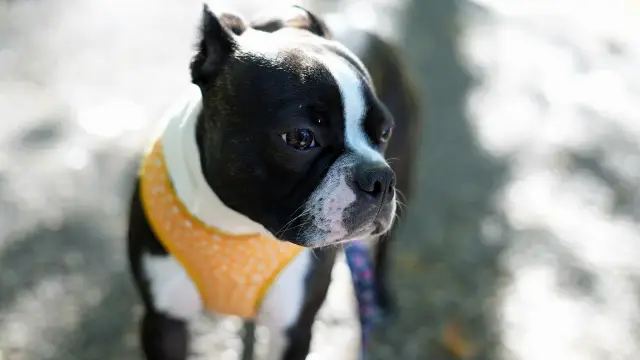
- Boston Terrier12.4 Mb 0.5%
- American Staffordshire Terrier11.3 Mb 0.5%
- Boxer10.3 Mb 0.4%
- St. Bernard10.1 Mb 0.4%
Source: Parker et al. 2017. Percent of the whole genome.
| Relative | Relationship in the data | (Parker 2017) |
|---|---|---|
| English Mastiff | Parent breed | 143.9 Mb |
| Boerboel | Same clade | 83.4 Mb |
| Cane Corso | Same clade | 44.3 Mb |
| Bulldog | Same clade | 42.8 Mb |
| Dogue de Bordeaux | Same clade | 18.0 Mb |
Source: Parker et al. 2017, Cell Reports, shared haplotypes between 161 breeds (1,346 dogs).
The breed standard
 Looks relatedSt. Bernard1650 to 1884 · SwitzerlandEarly Modern Era
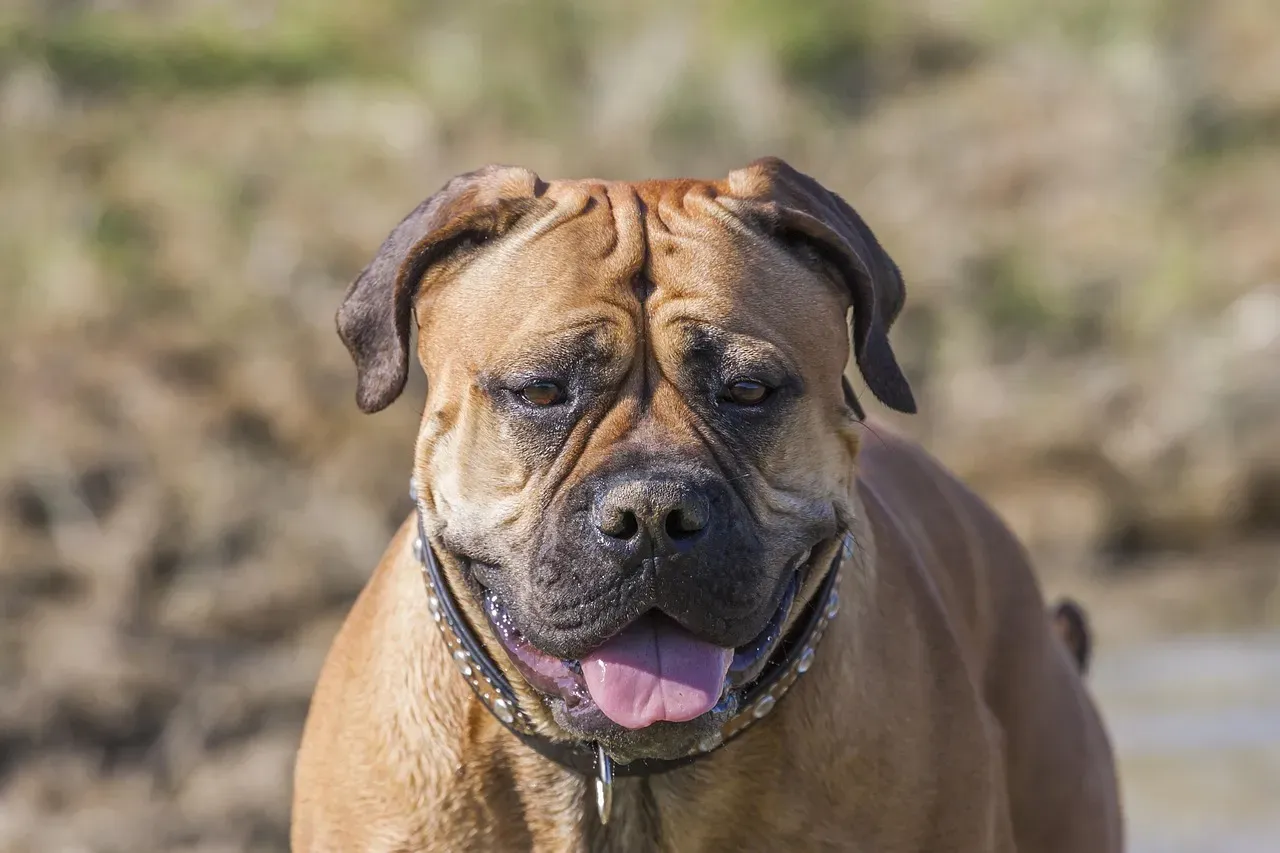
A breed standard is the written ideal a kennel club judges dogs against. The Bullmastiff standards describe a powerful, symmetrical dog, strong but active, with a broad skull, a short muzzle and a dark mask. The UK Kennel Club says its size figures are a guide to the ideal, and that a dog need not match them exactly.
| Trait | What the standards say |
|---|---|
| Height, dogs | UK Kennel Club: 64 to 69 cm. AKC: 25 to 27 in (about 64 to 69 cm) |
| Height, bitches | UK Kennel Club: 61 to 66 cm. AKC: 24 to 26 in (about 61 to 66 cm) |
| Weight, dogs | UK Kennel Club: 50 to 59 kg. AKC: 110 to 130 lb (about 50 to 59 kg) |
| Weight, bitches | UK Kennel Club: 41 to 50 kg. AKC: 100 to 120 lb (about 45 to 54 kg) |
| Colour | UK Kennel Club: any shade of brindle, fawn or red, pure and clear; other colours and combinations are not acceptable. AKC: fawn, red and brindle shades, with a dark muzzle preferred |
| White markings | UK Kennel Club: a slight white mark on the chest is allowed |
| Head | Broad, with a deep, short muzzle and a dark mask; the head is a defining feature of the breed |
| Coat | Short and dense, weather-resistant |
Colours. The three accepted colours are fawn, red and brindle in their different shades. Other colours, such as blue or white, are not in the UK standard.
Bullmastiff or Mastiff? The Bullmastiff is the smaller, lighter and more athletic of the two. It has a shorter muzzle and a more compact body than the English Mastiff, which is taller and heavier.
 Save
Temperament
 Related breedAmerican Bulldog1700 to 1980 · United StatesEarly Modern Era
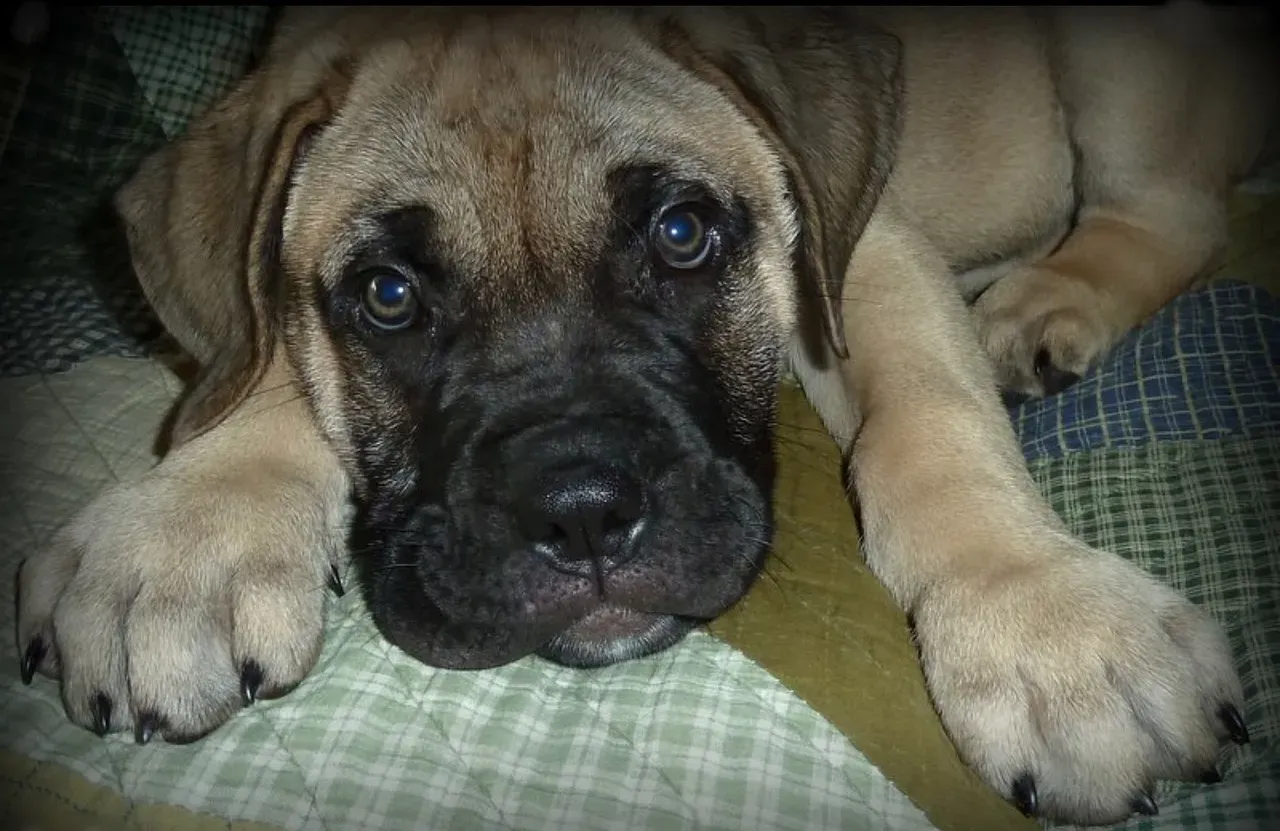
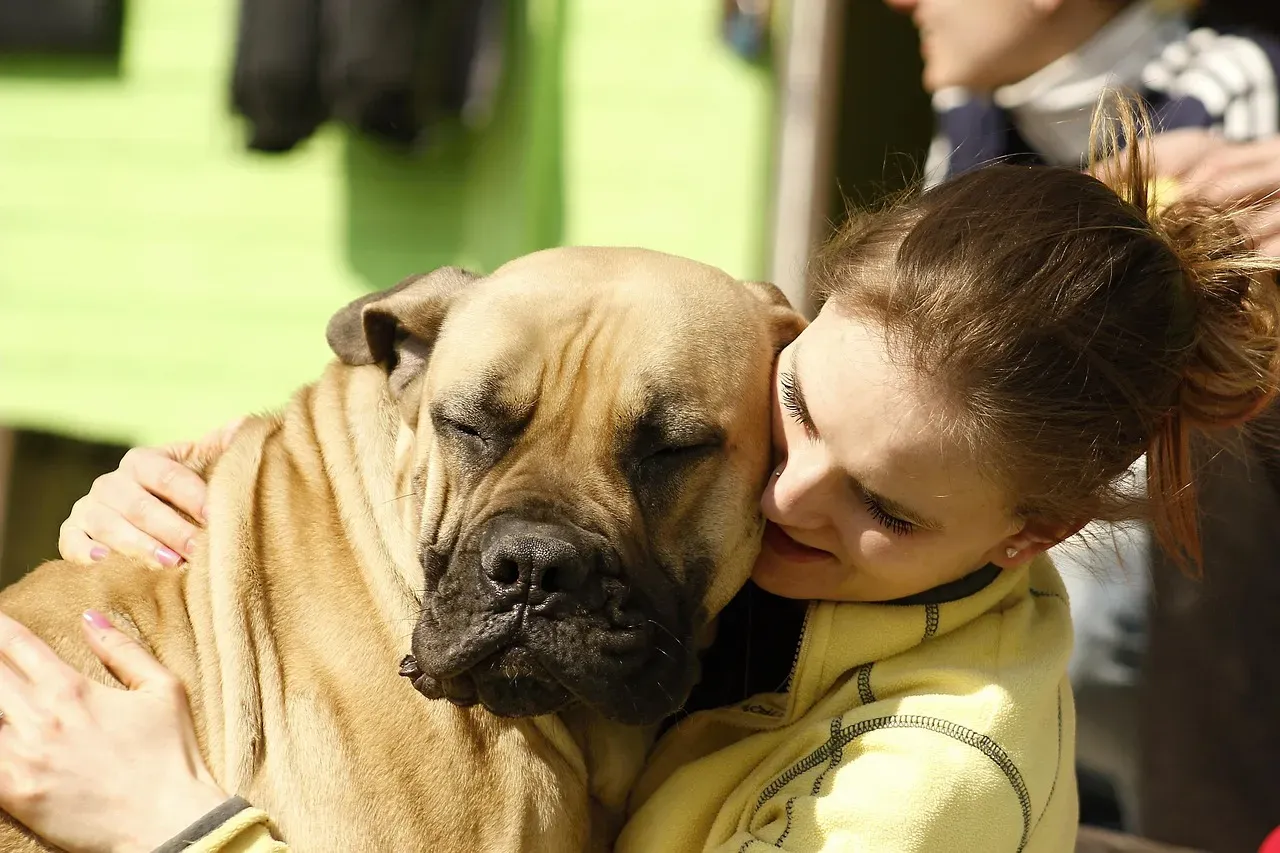
The Bullmastiff is calm, loyal and steady. Breed clubs describe a dog that is affectionate with its family, reserved with strangers, and confident enough not to bark without reason. It was built to guard without noise, and many pet Bullmastiffs still wait and watch rather than bark.
- With people. Devoted to its family and often leans against owners. It is wary of strangers and needs clear signals from the owner about who is welcome.
- With children. Patient with children it knows, but its sheer size means a thump from a tail or a shoulder can knock a small child over. Supervise.
- With other dogs. Can be dominant with dogs of the same sex. Early socialisation and calm introductions help.
- Training. Intelligent but not eager to please in the way a retriever is. It can be stubborn. Use short, calm, reward-based sessions; harsh handling backfires with a dog this size.
- Barking. Low. It is more likely to stand and stare than to bark.
- Drool and snoring. Common with a short muzzle and loose lips, so expect both.
 Save

Health
 Related breedAmerican Bully1980 to 2004 · United StatesModern Era
Many Bullmastiffs live comfortable lives. Like most giant breeds, they have a shorter life span than small dogs, and cancer is a leading cause of death. This section sets out what researchers have measured and what breeders and owners can do.
What the studies found
- Life span. A 2024 Australian VetCompass study of 2,771 Bullmastiffs seen at veterinary practices between 2008 and 2017 found a median longevity of 8.5 years.
- Causes of death. In that study, mass lesions (lumps and tumours) were the leading cause at 28.2 percent of deaths, followed by old age and musculoskeletal disease (9.9 percent each), neurological disorders (5.3 percent) and behavioural disorders (4.8 percent). The study does not break the mass lesions down into cancer and non-cancer types.
- Lymphoma. The same review reports that the Bullmastiff has a higher risk of lymphoma than other dogs, with odds ratios of 6.76 in Australian patient data and 4.8 in insurance data.
- UK survey. In the large Kennel Club survey of 169 breeds (Adams and colleagues, 2010), cancer was the leading cause of death across all breeds at 27 percent. A later review cites a Bullmastiff figure of 34.2 percent for cancer deaths in the UK survey.
- Mastiff-group survey. An owner survey of 1,036 dogs across several mastiff breeds (2021) found cancer to be the leading cause of death at 47 percent, with osteosarcoma the most common type. This covers the group, not the Bullmastiff alone.
| Condition | What it is | How common | What helps |
|---|---|---|---|
| Lymphoma | Cancer of the lymph system; often found as swollen lymph nodes | Higher risk than other breeds (odds ratios 4.8 to 6.76); no published figure as "1 in N" | Regular checks of lymph nodes; see a vet for any lump |
| Other tumours and mass lesions | Lumps and growths, benign or cancerous | Mass lesions were 28.2 percent of deaths (Australian VetCompass 2024) | Check the body regularly; have any new lump examined |
| Hip and | Loose or poorly formed joints that wear early | Seen in giant breeds; no published figure for the Bullmastiff in the studies above | Hip and elbow scoring of both parents; lean body weight; no hard exercise while growing |
| Musculoskeletal disease | Joint and bone problems, including arthritis | 9.9 percent of deaths (Australian VetCompass 2024) | Weight control, joint care, vet advice |
| Gastric dilatation and volvulus (bloat) | The stomach fills with gas and may twist | Deep-chested giant breeds are at higher risk; no published figure here | Several small meals, calm time after eating, and know the emergency signs |
| Eye and eyelid problems | Loose eyelids can roll in or out | Seen in the breed; no published figure | Eye checks of puppies and parents |
| Heat stress | A short muzzle makes it harder to cool down | Seen in the breed; no published figure | Exercise in cool hours, shade and water |
The big picture is clear even without exact figures: choose a breeder who tests, keep the dog lean, and see a vet quickly for lumps or swollen glands. Because Bullmastiffs are large, the median life span of about 8.5 years is not unusual for the size.

Living with a Bullmastiff
 Related breedAmerican Pit Bull Terrier1850 to 1898 · United StatesVictorian Breed Boom
 Save
| Daily reality | Rating | Why |
|---|---|---|
| Exercise per day | Medium | Moderate walks; calm indoors, but needs daily outings. Avoid hard exercise while growing |
| Training needs | High | Strong and independent; early socialisation and calm training are needed |
| Grooming time | Low | Short coat; a weekly brush |
| Shedding | Medium | Short coat sheds, more in spring and autumn |
| Barking | Low | Watchful rather than noisy |
| Time alone | Fair | Bonds closely to family; varies with the individual |
| Children | Fair | Gentle with familiar children but very large; supervise |
| Other dogs | Fair | Can be dominant, especially same sex; early socialisation helps |
| Cats and small pets | Varies | Depends on early exposure; evidence is thin |
| Flat living | Poor | A giant dog needs space for lying, moving and a garden or nearby outdoor space |
| Heat tolerance | Poor | Short muzzle and heavy build |
| Cold tolerance | Good | Short dense coat on a large body; fine in cool weather |
| First-time owner fit | Fair | Calm but very strong; a first-time owner needs a trainer and a plan |
A great fit if
- You want a calm guardian that watches rather than barks.
- You have a home with room for a giant dog and a car that can carry one.
- You will join puppy classes and keep training for the first two years.
- You can budget for large-dog vet bills and accept a shorter life span.
Think twice if
- You want a dog that is friendly with every visitor.
- You live in a small flat or somewhere very hot.
- You cannot lift or control a 50 kg dog.
- You dislike drool.
Before you get one
- Health tests. Ask the breeder for hip and elbow scores for both parents, eye checks and the family history of cancer and early deaths. Ask to see original certificates.
- Puppy or adult rescue. Breed rescues exist and place adults whose size and temperament are known.
- First year. Plan for puppy classes, calm socialisation, a lean growth rate (a fat puppy is a joint risk) and early vet checks.
Similar breeds to consider
- English Mastiff. The parent breed: taller, heavier and calmer, with the same giant-breed health issues.
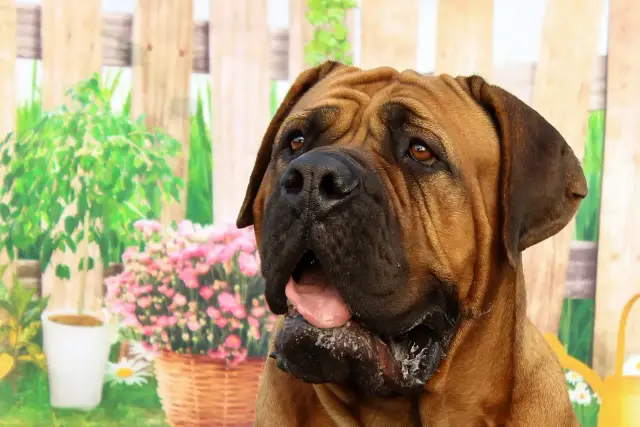
- Dogue de Bordeaux. French mastiff with a similar calm nature and a wrinkled head.
- Boerboel. South African mastiff, the second-closest DNA relative in the atlas data after the English Mastiff.
- Rottweiler. A smaller working guard dog with more energy and a bigger exercise need.

Bullmastiff fun facts
 Related breedBull Terrier1850 to 1888 · United KingdomVictorian Breed Boom
- The name "Gamekeeper's Night Dog" was in use in the late 1800s, before the Bullmastiff was a recognised breed.
- Six night dogs were shown at the Crystal Palace in 1871, in a class made for them.
- The Bullmastiff shares 143.9 Mb of DNA with the English Mastiff, the highest value in its atlas data.
- Three modern breeds list the Bullmastiff in their ancestry: the Olde English Bulldogge, the American Bully and the Continental Bulldog.
Frequently asked questions
How big does a Bullmastiff get?
The UK Kennel Club gives 64 to 69 cm and 50 to 59 kg for dogs, and 61 to 66 cm and 41 to 50 kg for bitches. The gives 25 to 27 in for dogs and 24 to 26 in for bitches.
How long does a Bullmastiff live?
The atlas data gives 7 to 9 years. A 2024 Australian study of 2,771 Bullmastiffs found a median longevity of 8.5 years.
Is a Bullmastiff a good family dog?
It can be, in a family that understands giant breeds. It is calm and loyal, but very strong. Supervise children and train from puppyhood.
What is the difference between a Bullmastiff and an English Mastiff?
The Bullmastiff is smaller, lighter and more athletic, and has a shorter muzzle. The English Mastiff is one of its two parent breeds and is taller and heavier.
Is a Bullmastiff aggressive?
It is bred to guard, and is reserved with strangers, but a well-bred, socialised Bullmastiff is steady rather than aggressive. Early socialisation matters.
What are the most common Bullmastiff health problems?
Cancer, including lymphoma, leads the lists in the studies. Joint disease, bloat and heat stress also matter in a big, short-muzzled dog. See the Health section.
Read next
Closest DNAEnglish Mastiff143.9 Mb shared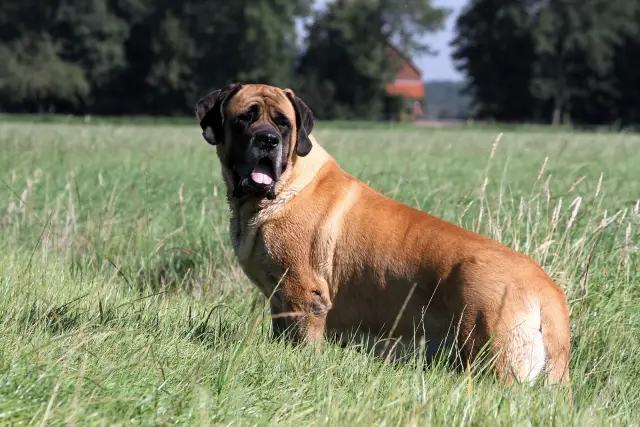 FamilyEuropean MastiffThe whole family
 Adopt a dogDog Shelters in EuropeFind dog shelters in Europe, learn how shelters differ from country to country and why adopting a dog is a good option.
Sources (14)
- The Kennel Club (UK), Bullmastiff breed standard and breed information.
- American Kennel Club, Bullmastiff breed standard and breed history.
- Fédération Cynologique Internationale, Bullmastiff, standard no. 157.
- "The Demography, Longevity and Mortality of Bullmastiffs Attending Veterinary Practices in Australia", VetCompass Australia, Animals, 2024.
- Adams V.J. et al., "Methods and mortality results of a health survey of purebred dogs in the UK", Journal of Small Animal Practice, 2010.
- "Mastiff breed mortality: A study of owner experience, dog age and longevity", Veterinary and Animal Science, 2021.
- Parker H.G. et al., "Genomic analyses reveal the influence of geographic origin, migration, and hybridization on modern dog breed development", Cell Reports, 2017.
- Fogle B., The New Encyclopedia of the Dog, Dorling Kindersley, 2009.
- United Kennel Club, Bullmastiff breed standard.
- Canadian Kennel Club, Bullmastiff breed standard.
- Dogs Australia, Bullmastiff breed information.
- Showsight Magazine, reprint of the AKC Bullmastiff standard and breed history.
- Institute of Canine Biology, Bullmastiff breed page.
- Dogs Atlas breed records and Parker 2017 shared-haplotype table (this site).