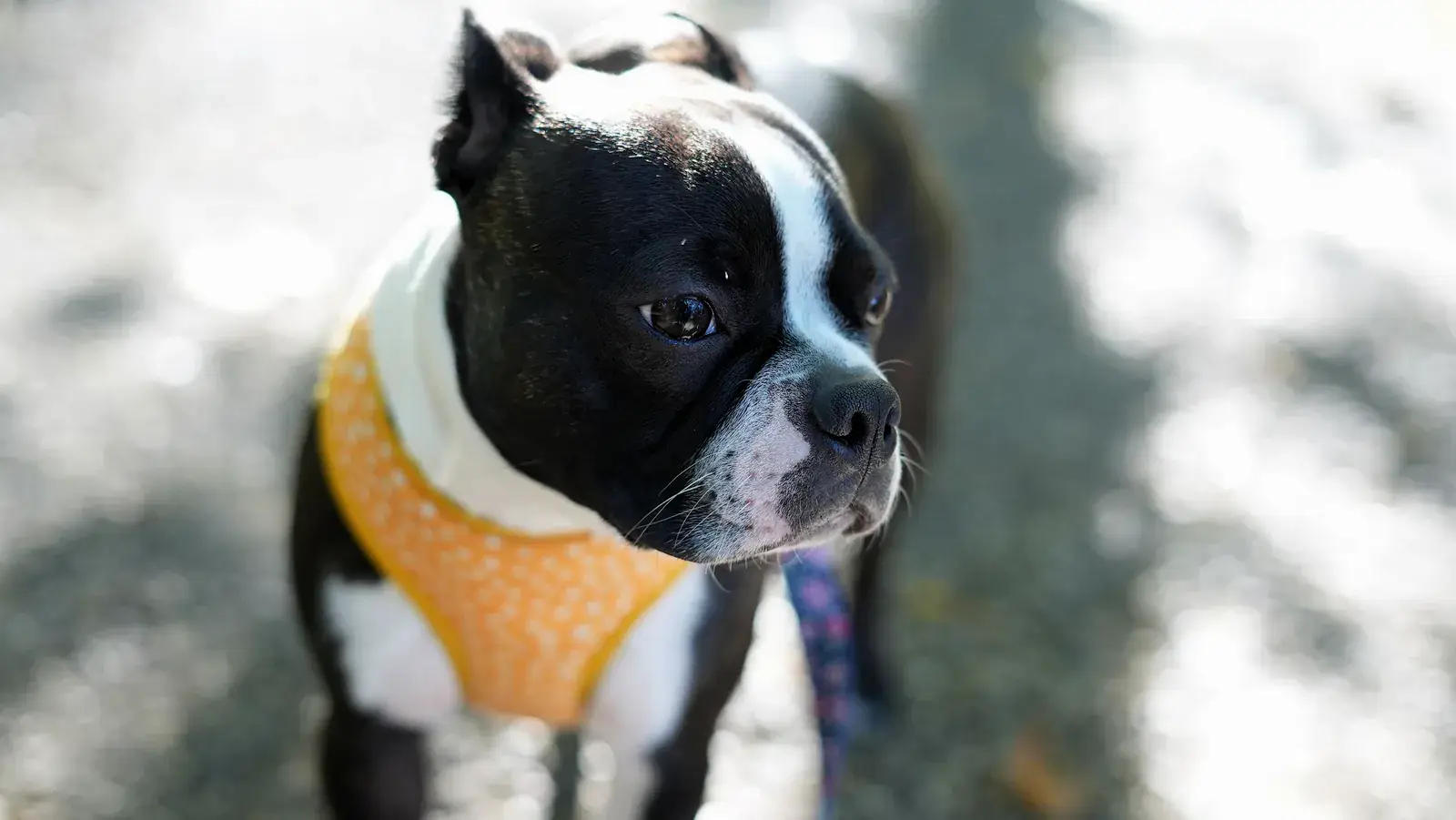
It grew out of crosses of bull-and-terrier type dogs and is nicknamed the "American Gentleman" for its neat black-and-white coat, which looks like formal dress. It is one of the few dog breeds created in the United States, and in 1979 it became the official state dog of Massachusetts. Most Boston Terriers are cheerful, people-focused house dogs that need modest exercise and short grooming sessions. The main thing to plan for is the flat face: it affects breathing, eyes and heat tolerance, and the amount of the effect varies a lot between individual dogs.
Boston Terrier quick facts
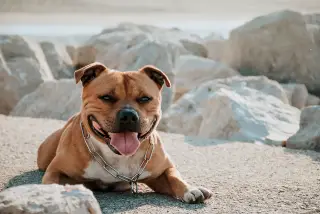
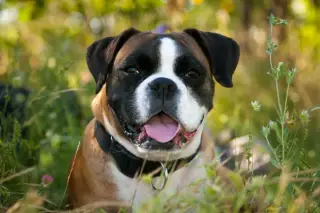
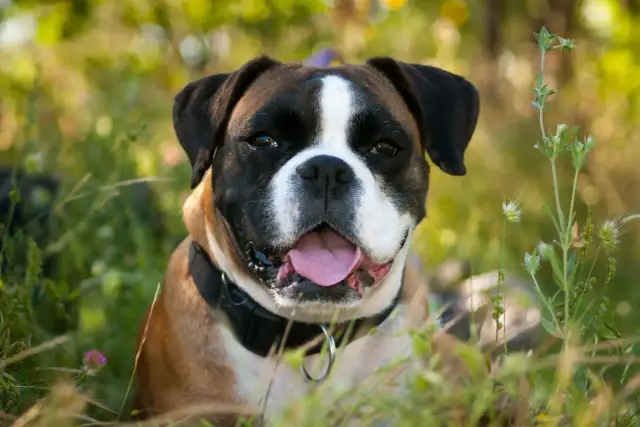 Related breedBoxer1880 to 1904 · GermanyVictorian Breed Boom
- Closest DNA relatives
- French Bulldog, American Staffordshire Terrier, Bulldog, Staffordshire Bull Terrier
- Country of origin
- United States (Boston, Massachusetts)
- Period of development
- About 1870 to 1893 (atlas data: 1870 to 1893)
- Original job
- Companion; ancestors were fighting and ratting dogs of bull-and-terrier type
- Other names
- American Gentleman, Boston Bull, Tuxedo Dog
- Type
- Companion dog ( Group 9, Companion and Toy Dogs, Section 11; FCI standard no. 140; AKC Non-Sporting Group)
- Size
- Small. AKC standard sorts dogs into three weight classes: under 6.8 kg, 6.8 kg to under 9.1 kg, 9.1 kg to 11.3 kg
- Coat
- Short, smooth, fine; brindle, seal or black with white markings
- Life span
- Atlas data: 11 to 13 years. No median from a named UK study was found for this article
- Exercise
- Moderate; daily walks and play
- DNA family
- European Mastiff family (Parker et al. 2017)
- Recognition
- Admitted to the AKC in 1893; Massachusetts state dog since 1979
Drawn to scale in real centimetres. Its back reaches about 41 cm, just below your knee; its head about 51 cm, your knee.
Where it sits in the tree
Victorian Breed Boom · 1850 to 1913

Name and origin
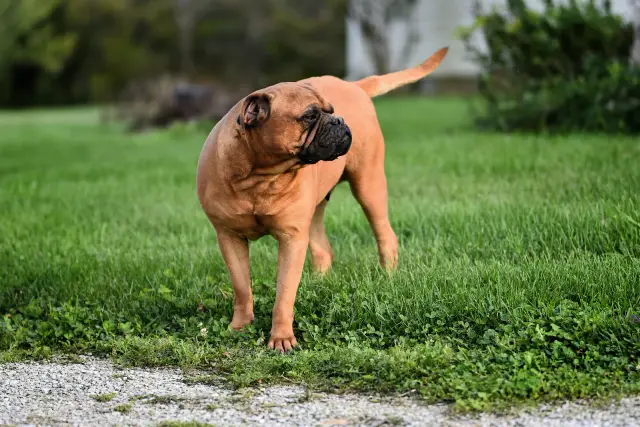 Related breedBullmastiff1860 to 1924 · United KingdomVictorian Breed Boom
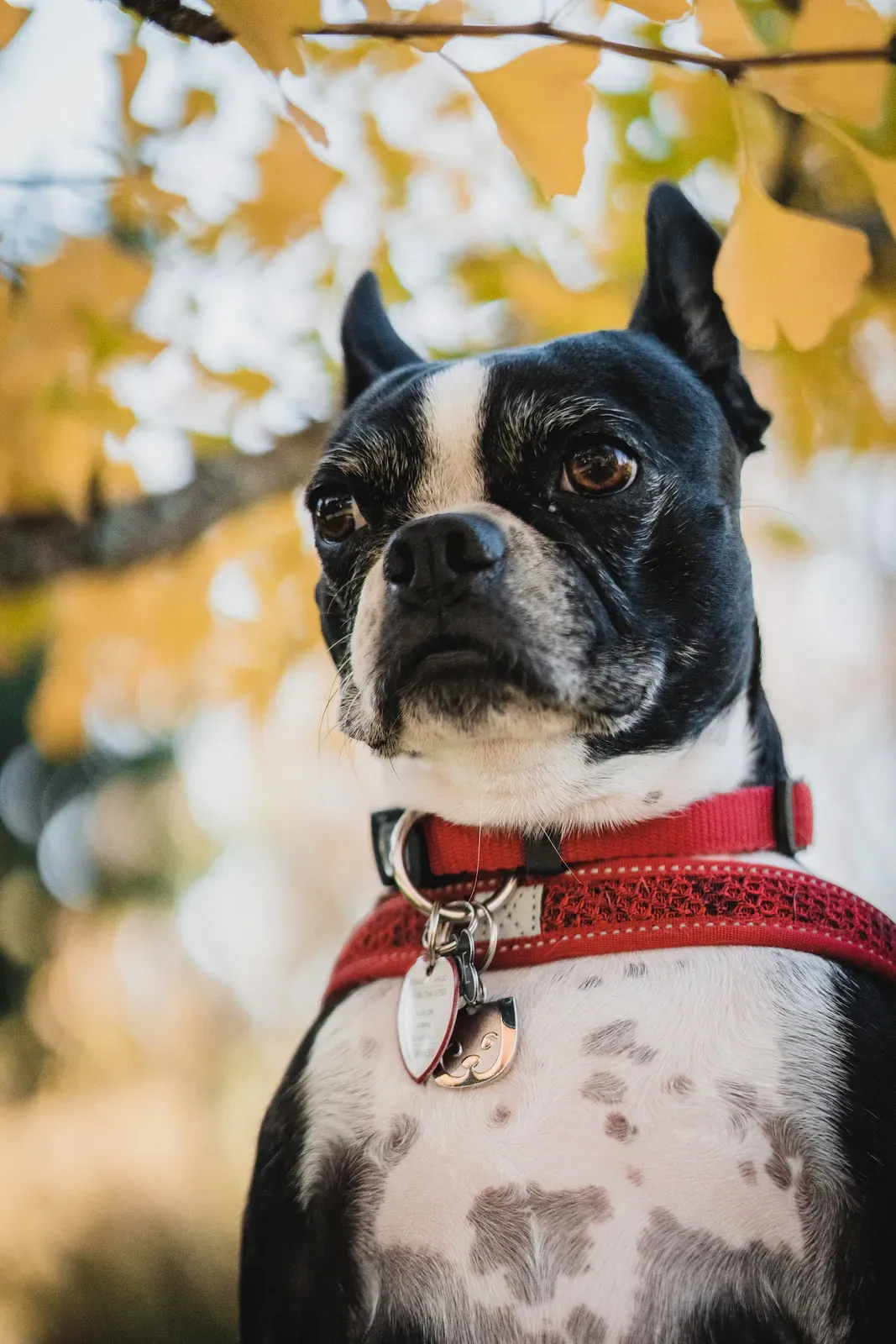
The breed is named for its home city. Atlas data also lists "Boston Bull" as an older name. The nickname "American Gentleman" is tied to the coat. The black-and-white pattern looks like a tuxedo, which is also where "Tuxedo Dog" comes from. The AKC adds a second reason for the gentleman label: the Boston was among the very few breeds made in the United States, and in 1923 it became the first member of the AKC's newly formed Non-Sporting Group.
The breed is a good example of a breed with a clear place and period of origin but a debated list of ancestors. Everyone agrees on Boston and the 1870s. The detail of what went into the first dogs is where accounts split, as the next section shows.
 Save

History
 Same eraBull Terrier1850 to 1888 · United KingdomVictorian Breed Boom
Hooper's Judge
Most accounts place the start of the breed around 1870, when Robert C. Hooper of Boston acquired a dog named Judge. The AKC treats Hooper's Judge as the ancestor of nearly all true modern Boston Terriers. Judge is usually described as a cross of an English Bulldog and a White English Terrier, a terrier type that was popular in England in the late 19th century and is now extinct.
The details of how Judge reached Boston are disputed. In one version, William O'Brien bought Judge in England in the 1860s and sold him to Hooper in 1870. In another, Hooper himself brought Judge to the United States in 1865. Judge's reported weight also varies, from about 14 kg to about 15 kg (30 to 32 pounds in the sources). Because the accounts conflict, the safest reading is that Judge arrived in Boston between the mid 1860s and 1870 and that Hooper owned him by 1870.
The atlas data lists Hooper's Judge as a dog of bull-and-terrier , and it records the English White Terrier cross as lower confidence, since it rests on the AKC's retelling.
 Save
From one litter to a breed
Judge was bred to a white bulldog-type female named Gyp, owned by Edward Burnett. The AKC account says the mating produced only one puppy, a male called Well's Eph. Later matings of Eph produced the dogs that became the foundation of the modern breed. In other words, the breed passed through a very small starting group, which is a common pattern for 19th-century breeds and explains why Bostons share so much DNA with their bulldog-type relatives.
During these first decades, dogs differed in size and look. Breeders bred down from larger bull-and-terrier types, and the Wikipedia article on the breed describes the early "Old Boston Bulldogs" as the result of that smaller selection. The weight classes still in the AKC standard are a leftover from that period of mixed sizes. An encyclopedia mirror also says the breed was historically graded as lightweight, middleweight and heavyweight.
Clubs and recognition
The breed was admitted to the AKC Stud Book on 27 February 1893. The 1893 date is consistent across sources. One account says the club was admitted to AKC membership that year, which would make the Boston the first US-bred breed recognised. Another notes the Stud Book entry carried a condition: only dogs with an approved three-generation pedigree could be registered. Because those two accounts describe the same year, they are best read as describing the same step from slightly different angles.
The Federation Cynologique Internationale lists the Boston Terrier as standard no. 140, in Group 9, Companion and Toy Dogs, with the United States as country of origin.
Relatives and DNA
 Same familyDogue de Bordeaux1300 to 1896 · FranceLate Middle Ages
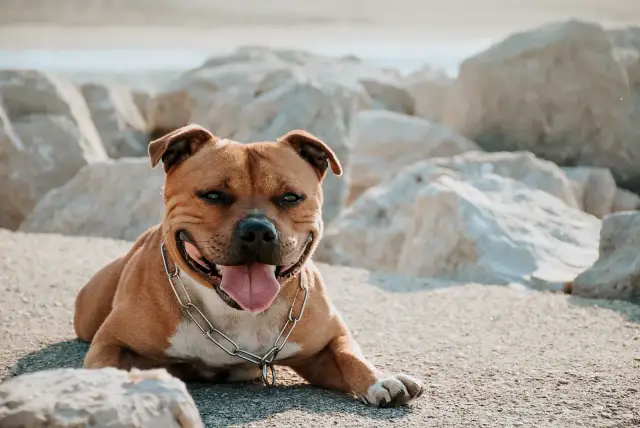
The Boston Terrier sits in the European Mastiff family in the 2017 study by Parker and colleagues (here "family" means the DNA , as opposed to a kennel club group). Within the study the Boston's strongest haplotype sharing was with the French Bulldog (about 24.1 ), followed by the American Staffordshire Terrier (about 21.8 Mb), the Bulldog (about 21.1 Mb), the Staffordshire Bull Terrier (about 19.8 Mb), the Boxer (about 13.9 Mb) and the Miniature Bull Terrier (about 13 Mb). That fits the history: bulldog and bull-and-terrier blood from England.
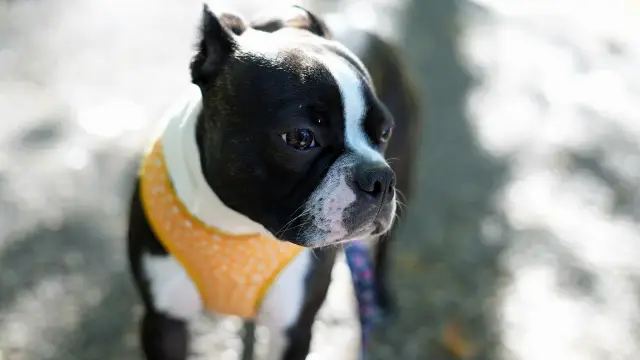 Boston Terrierthrough Hooper's Judge
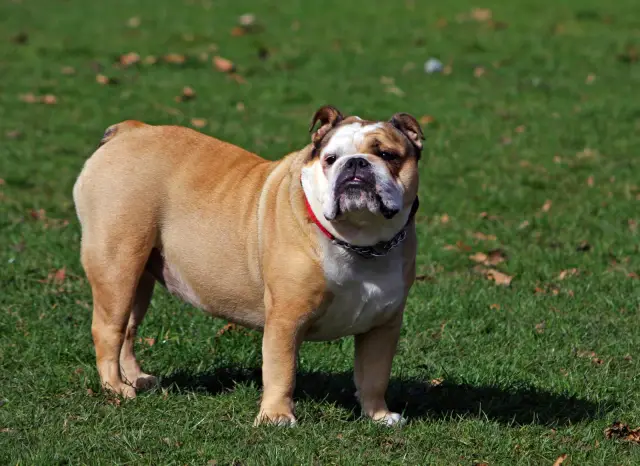 Bulldogreported parent of Judge
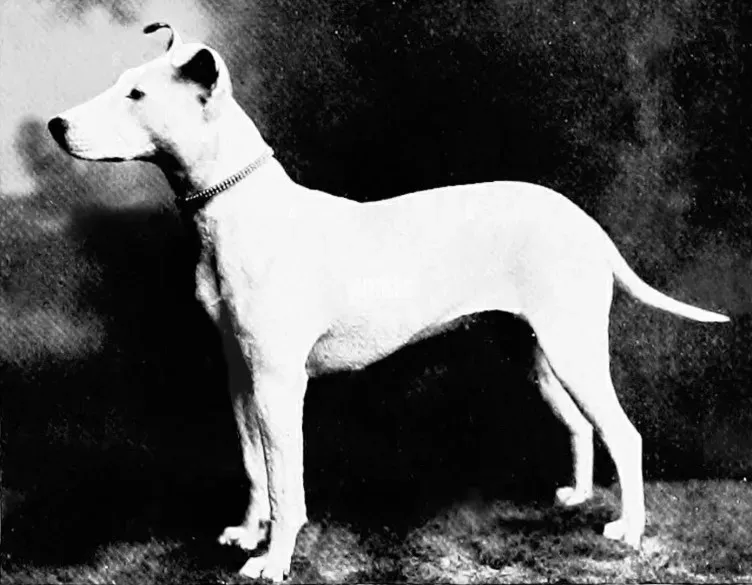 English White Terrierextinct, reported parent of JudgeEnglish White Terrierextinct, reported parent of Judge
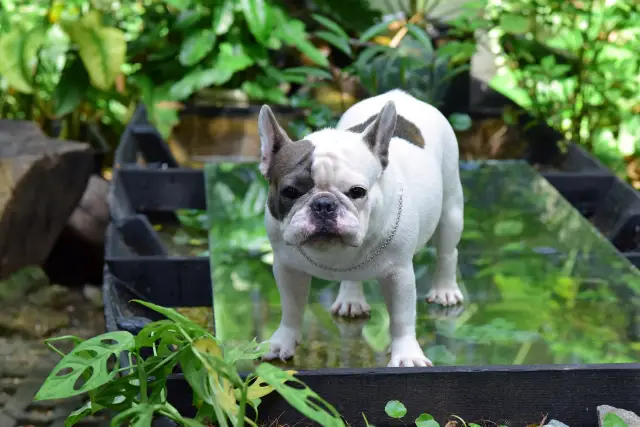
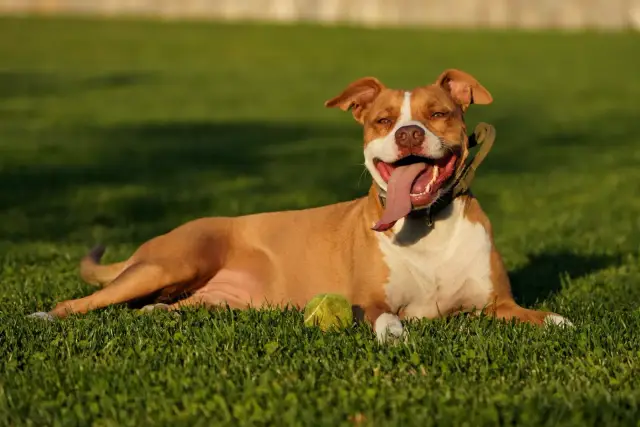
- Boston Terrier and French Bulldog
- Boston Terrier and American Staffordshire
- Boston Terrier and Bulldog
- Boston Terrier and Staffordshire Bull Terrier
- Boston Terrier and Boxer
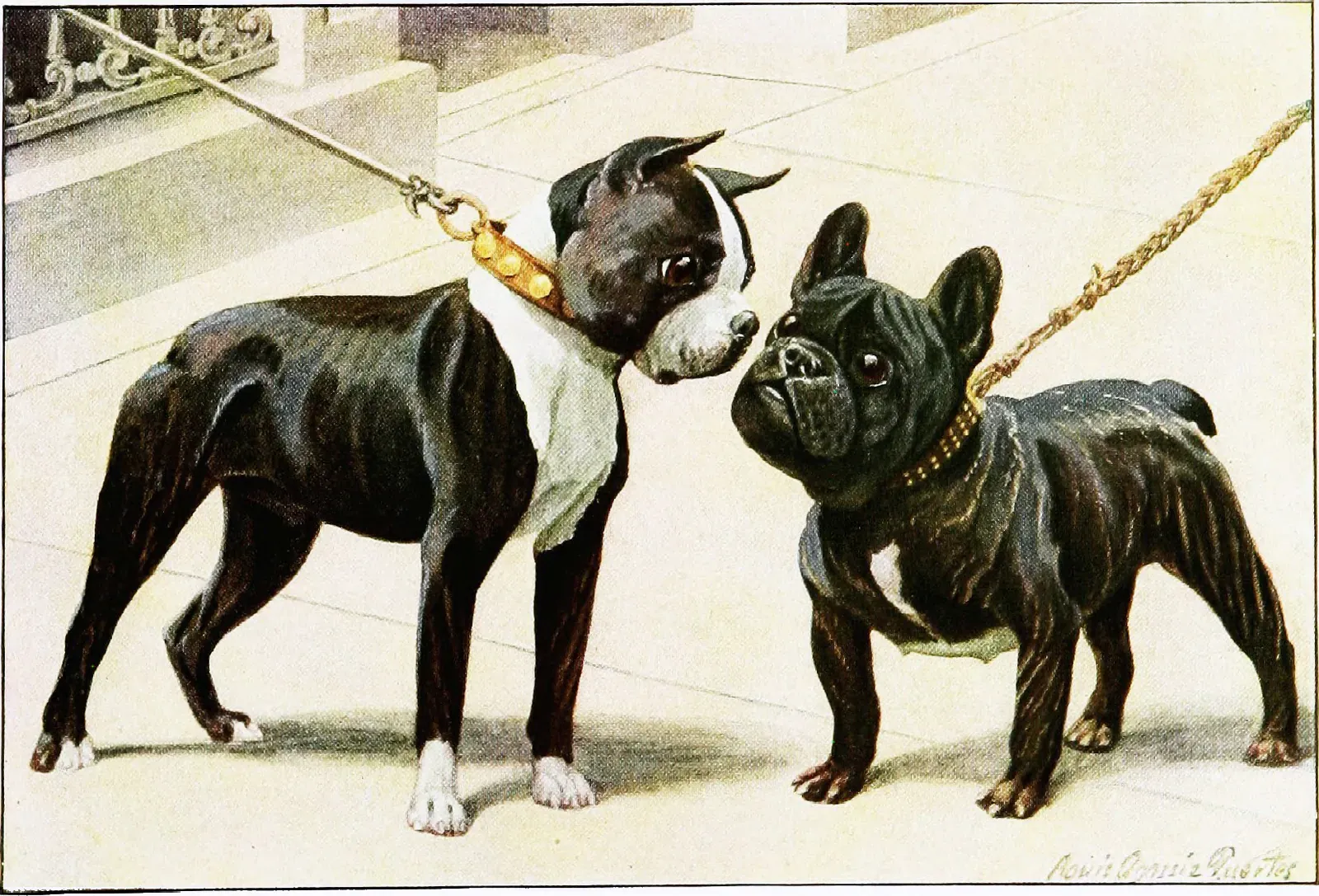
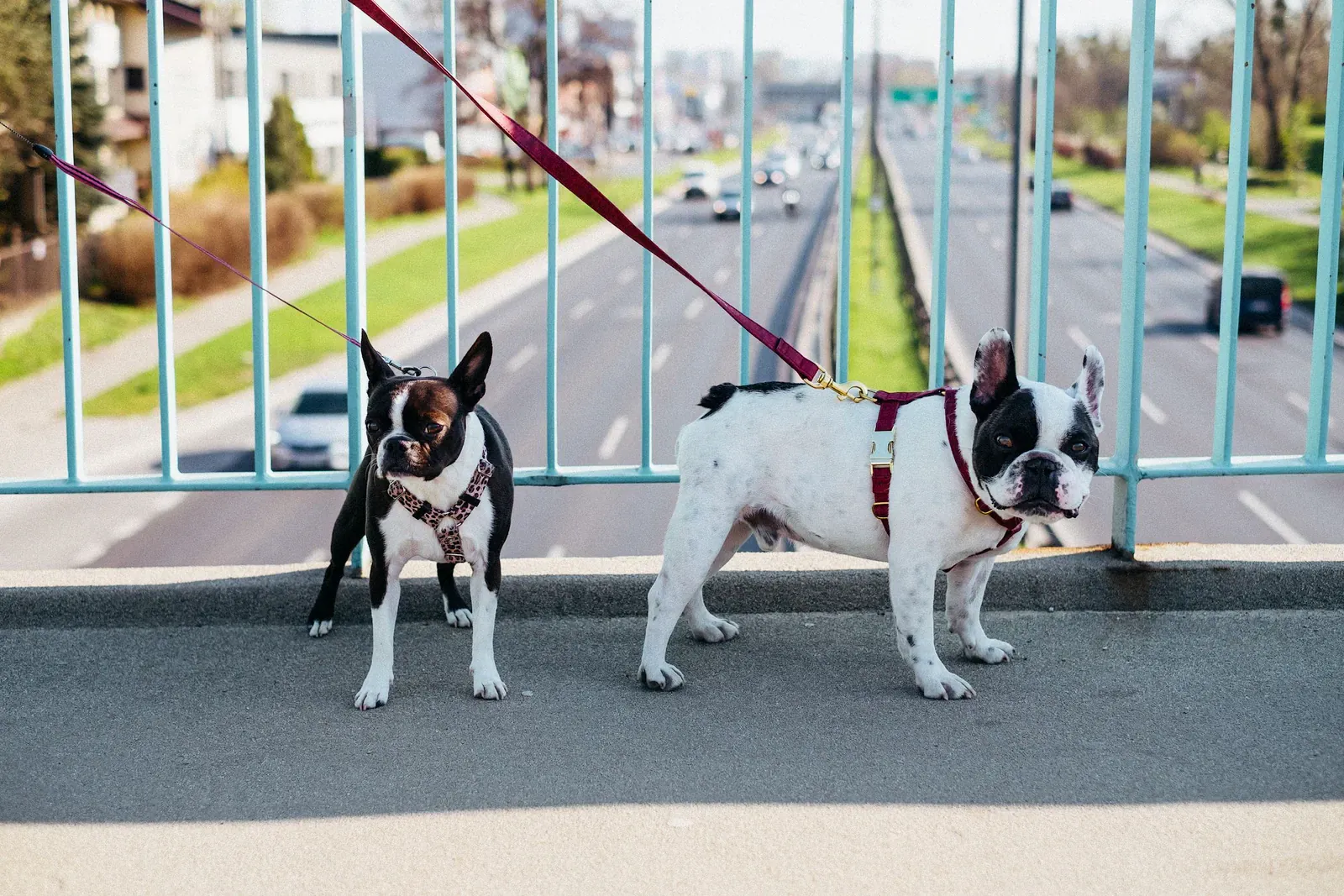
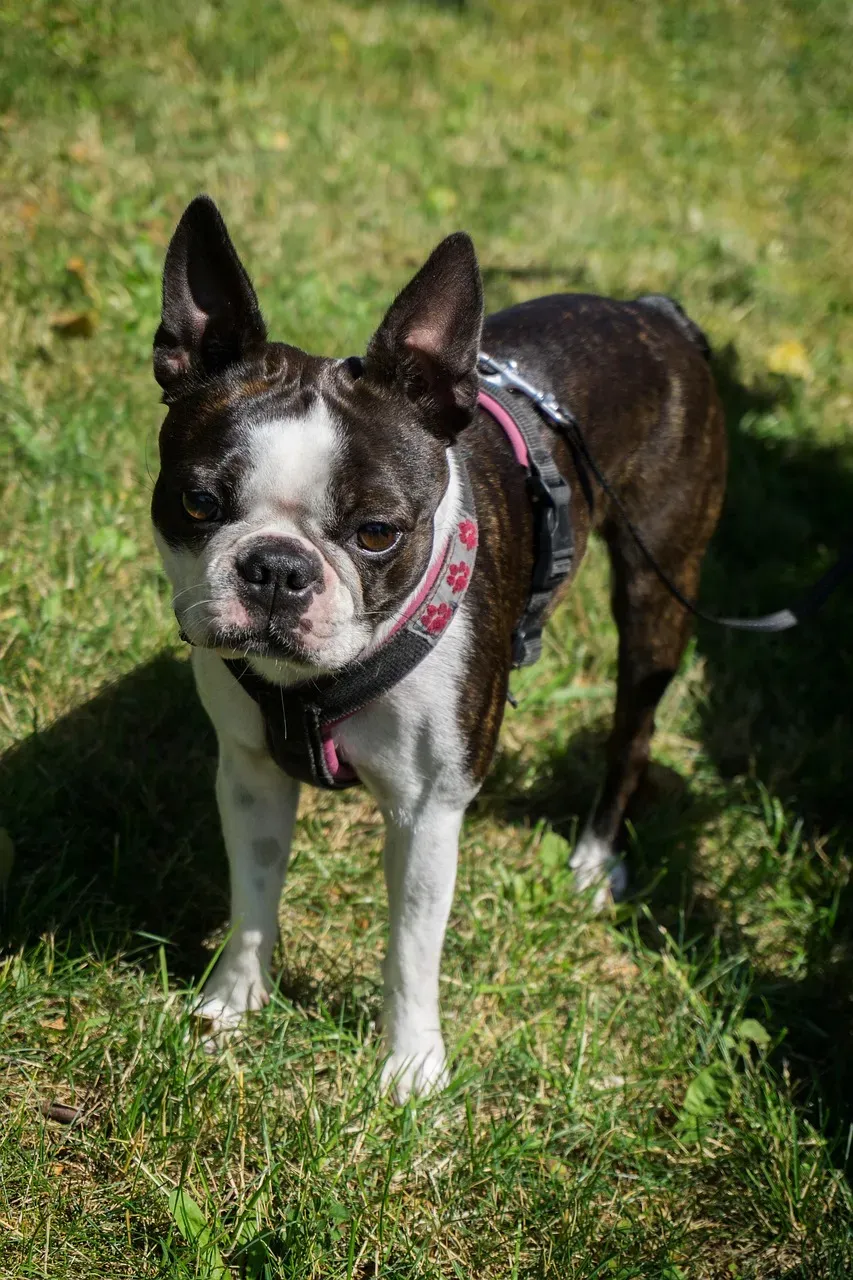
The French Bulldog link is worth a note, because the two breeds are often confused. They are both small, short-faced companions, but they come from different countries, the French Bulldog has upright "bat" ears and a wider body, and the Boston is lighter and squarer with a straighter profile. Read more about the cousin in French Bulldog.
 Save
Sister breeds · 3
- Staffordshire Bull Terrier1800 to 1935
- American Pit Bull Terrier1850 to 1898
- Bull Terrier1850 to 1888
- French Bulldog24.1 Mb 1.0%
- American Staffordshire Terrier21.8 Mb 0.9%
- Bulldog21.1 Mb 0.9%
- Staffordshire Bull Terrier19.8 Mb 0.8%
- Boxer13.9 Mb 0.6%
- Miniature Bull Terrier13.0 Mb 0.5%
- Bullmastiff12.4 Mb 0.5%
- Kerry Blue Terrier11.6 Mb 0.5%
- Bull Terrier11.2 Mb 0.5%
- Dogue de Bordeaux10.7 Mb 0.4%
- Boerboel9.9 Mb 0.4%
Source: Parker et al. 2017. Percent of the whole genome.

The breed standard
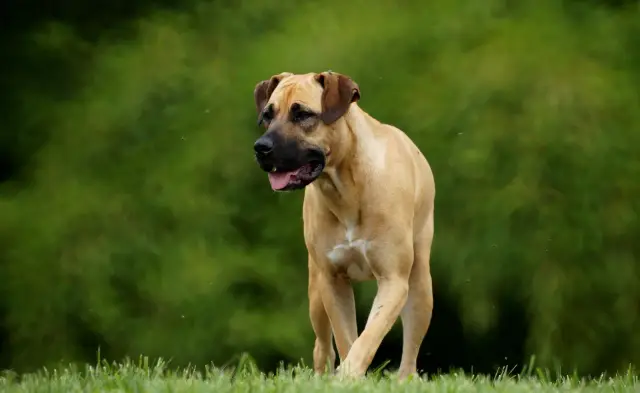 Looks relatedBoerboel1650 to 1983 · South AfricaEarly Modern Era
A is the written ideal for a breed that kennel clubs judge dogs against. For the Boston Terrier, the AKC standard is the most detailed in the sources checked. It does not set one ideal weight. It sorts dogs into three classes, in pounds: under 15, 15 to under 20, and 20 to no more than 25. In kilograms that is under 6.8 kg, 6.8 kg to under 9.1 kg, and 9.1 kg to 11.3 kg. AKC's general breed weight chart gives a broader overall range of 12 to 25 pounds (about 5.4 to 11.3 kg), without the classes.
| Trait | What the standards say |
|---|---|
| Weight (AKC) | Three classes: under 6.8 kg; 6.8 kg to under 9.1 kg; 9.1 kg to 11.3 kg |
| Weight (AKC breed weight chart) | About 5.4 to 11.3 kg overall |
| Classification (FCI) | Standard no. 140, Group 9 (Companion and Toy Dogs), Section 11; country of origin: United States |
| Group (AKC) | Non-Sporting Group |
| Coat (AKC) | Short, smooth, fine; brindle, seal or black with white markings |
| Head and ears (AKC) | Square head, short muzzle, small ears carried erect |
| Tail (AKC) | Short, either screw or straight; not docked |
| Height | Not a set figure in the AKC standard; commonly quoted at about 38 to 43 cm at the withers |
| UK Kennel Club | No verified figures found; omitted |
Height deserves a caution. Pages that quote height give different ranges, from about 38 to 43 cm to a shorter range, and none of them are the standard text itself. Weight class is the better guide to a dog's size.
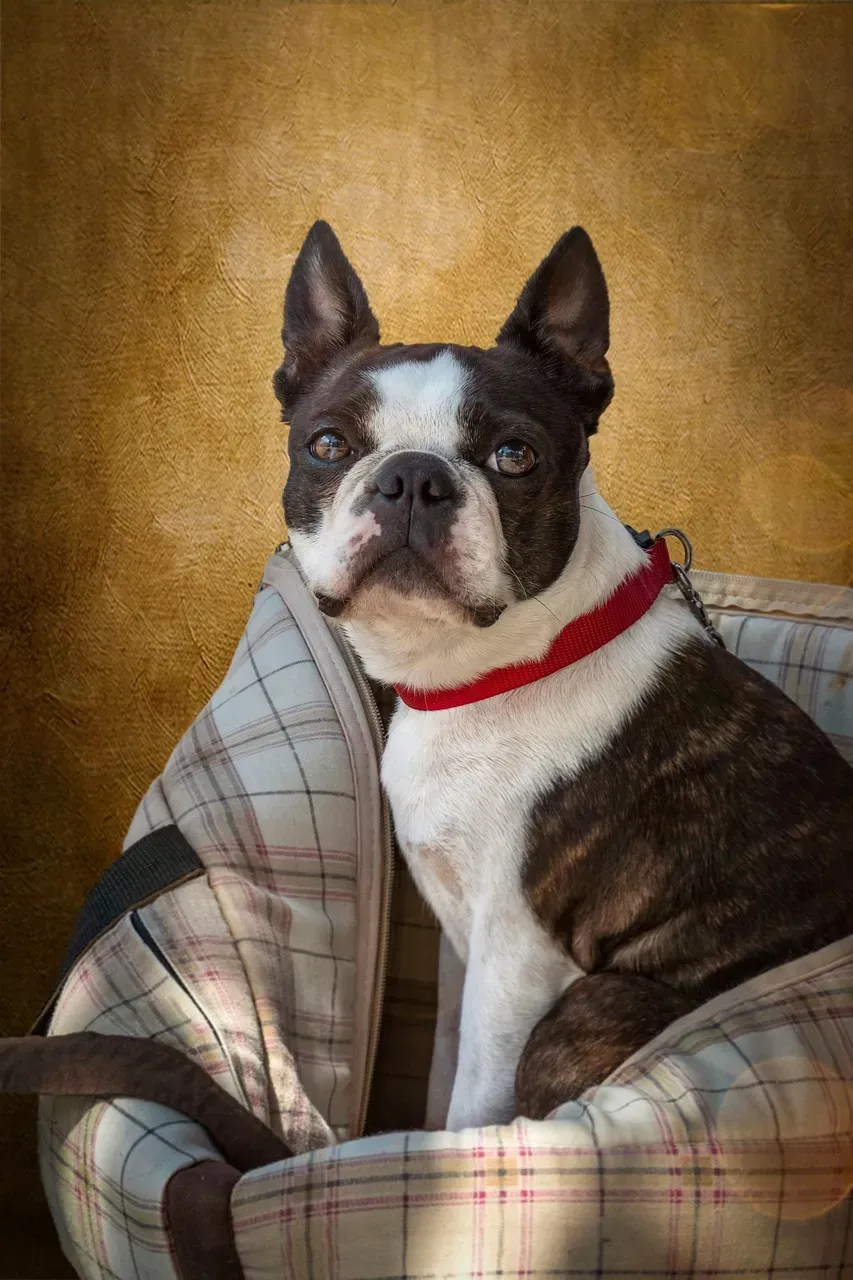
Colour. The standard asks for a pattern: an even white blaze between the eyes, a white muzzle and chest, and white on parts of the legs, on a coat of brindle, seal or black. Seal looks black but shows a red cast in bright light. Other combinations, such as solid dogs, are not in the pattern the standard describes.
Eyes, nose and muzzle. The standard asks for a short, broad, square muzzle with no wrinkle. Judges mark down dogs with an extreme face. The 2024 research (see Health) found that dogs with more extreme short-face measurements were at higher risk of breathing trouble, so a moderate face is better for the dog as well as for the ring.
Temperament
 Related breedAmerican Bulldog1700 to 1980 · United StatesEarly Modern Era
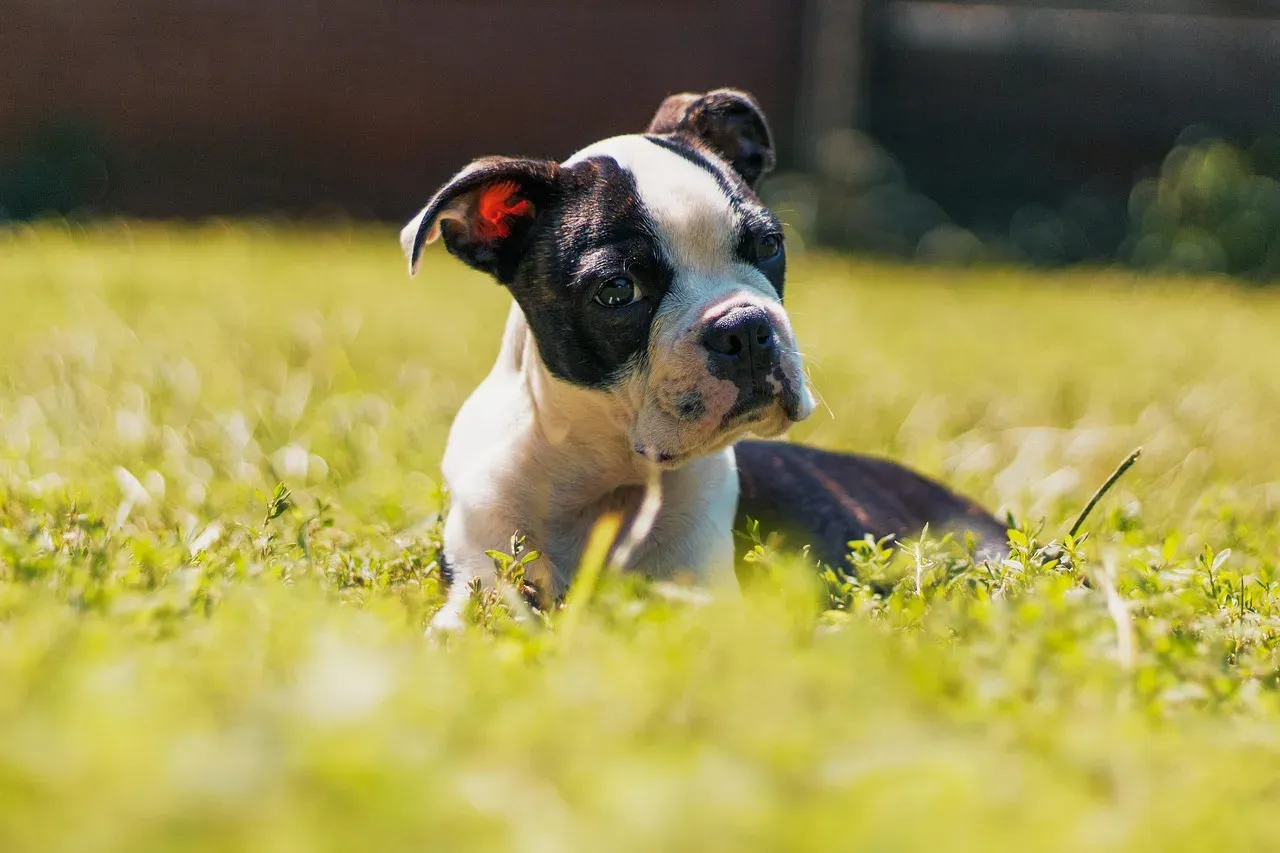
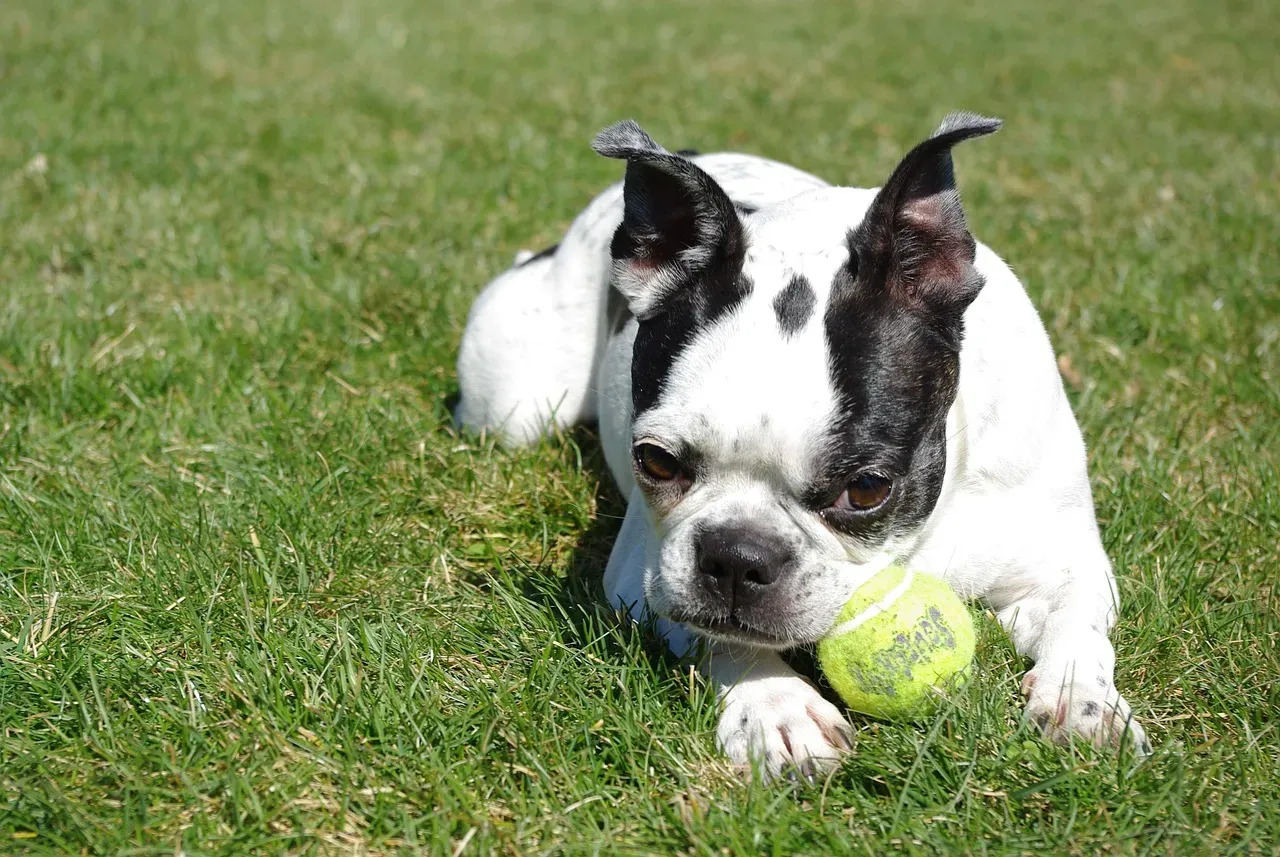
Boston Terriers are usually described as friendly, lively and eager to be with people. The AKC places the breed in the Non-Sporting Group, and for a dog bred entirely as a companion that is a good summary: it was not made to herd, retrieve or guard, but to share a home. That is why they tend to follow their owner from room to room and settle on the sofa.
Most owners describe a dog that is playful in bursts and calm at other times, with a sense of humour that comes out in games. Their bull-and-terrier past shows up as some stubbornness. Training works best when it is short, upbeat and rewarding, since a bored Boston may drift off to do something else.
Some points that help:
- Greetings. Many are very sociable and may jump up at visitors. Teach a sit for greetings early.
- Other dogs. Some Bostons can be pushy with strange dogs. Puppy classes and calm meetings with different dogs are useful.
- Barking. Usually moderate. No source in this article rates it, so expect it to vary with the individual.
- Time alone. Companion breeds do worst when left for long hours. Build up absences slowly.
 Save

Health
 Related breedAmerican Bully1980 to 2004 · United StatesModern Era
Most Boston Terriers live healthy lives. The sections below describe what breeders screen for and what owners can watch for. Where a named study gives a prevalence, the figure is given as about 1 in N dogs. Where no study was found, the text says so and gives no number.
Breathing: brachycephalic obstructive airway syndrome (BOAS)
Brachycephalic means short-skulled. Dogs with short, wide skulls can have narrow nostrils, a long soft palate and a narrow windpipe, and together these problems are called BOAS. Affected dogs may snore or snort more than normal, breathe noisily, tire quickly or struggle in hot weather. Some breathe well at rest and show trouble only when they exercise or the day is warm.
The most direct evidence is a 2024 PLOS One study by Tomlinson, O'Neill, Liu, Sargan and Ladlow, "BOAS in the Boston Terrier: A healthier screw-tailed breed?" It assessed 107 UK Boston Terriers with clinical examination, respiratory function grading and body measurements, and compared a smaller group with whole-body barometric plethysmography. The Kennel Club's summary of the work (the study was funded by the Kennel Club Charitable Trust) reports that about 62.5% of the dogs were unaffected, or about 5 in 8. The paper's own grading shows 37.5% at grade 0, which is the same proportion read the other way. Because those two statements conflict in how they are phrased, read the paper for the exact breakdown before quoting it.
Two findings stand out. First, the Boston Terrier had a higher share of unaffected dogs than French Bulldogs and Bulldogs have in other studies, so coverage of the work describes the breed as affected but less severely than some of the more popular flat-faced breeds. Second, within the breed, more extreme was linked to more BOAS: narrower nostrils (nostril stenosis), a shorter face, more white of the eye showing (scleral show) and a higher neck-to-chest girth ratio. The authors point out that measurements of affected and unaffected dogs overlap a lot, and they favour respiratory function grading over measurements when choosing breeding dogs.
For an owner, the plain message is that BOAS in Boston Terriers is common enough to take seriously, and not all dogs have it. Choose a puppy from parents with a clear respiratory function grade, a longer muzzle and open nostrils, and keep your dog lean and cool.
Eyes
Short-faced dogs have shallow eye sockets, so the eyes sit prominently and the cornea is more exposed. The 2017 study of corneal ulcerative disease in England, by O'Neill and colleagues, looked at 104,233 dogs at 110 clinics in 2013 and found 834 with confirmed ulcers, an overall prevalence of 0.80%, or about 1 in 125 dogs. Purebred dogs had about 2.2 times the odds of crossbreds. The Pug was about 19 times as likely as crossbreds and the Boxer about 12 times. The authors concluded that brachycephalic breeds as a type are predisposed. The Boston Terrier figure itself was not visible in the passages checked for this article, so no breed number is given; treat it as a brachycephalic type with raised risk.
What helps: keep the eye area clean, see a vet quickly for a squint, redness, cloudiness or a watery eye, and have eye tests (see Before you get one).
Other conditions
No published study gives a named prevalence for other breed-specific problems, so the table below keeps to what the sources support.
| Condition | What it is | How common | What helps |
|---|---|---|---|
| BOAS | Narrow nostrils, long palate and small windpipe that restrict airflow | Tomlinson et al. 2024: a large share of UK Bostons were unaffected (about 5 in 8 by the Kennel Club summary), the rest affected to varying degrees | Respiratory function grading of parents, moderate face, lean weight, cool exercise |
| Corneal ulcers | Scratch or sore on the clear front of the eye | Overall UK rate about 1 in 125 dogs (O'Neill 2017); brachycephalic breeds higher; Boston figure not seen | Eye checks, quick vet visits |
| Dental disease | Tartar, gum disease; crowded teeth in short jaws | UK all-dog rate of periodontal disease about 1 in 8 dogs (12.52%, O'Neill 2021); no Boston figure seen | Daily tooth brushing, dental checks |
| Ear infection | Inflammation of the ear canal | UK all-dog rate about 1 in 14 dogs (7.30%, O'Neill 2021); no Boston figure seen | Dry ears, vet check for head shaking |
| Overweight | Extra body fat that makes breathing and joints worse | UK all-dog rate about 1 in 14 dogs (7.07%, O'Neill 2021); no Boston figure seen | Measured meals, regular weighing |
Life span
Atlas data gives 11 to 13 years for the breed. No named UK median was found for this article, so this range is an estimate and not a study result.
Heat and anaesthesia
Short-faced dogs lose heat less efficiently, because panting is how dogs cool. On warm days, exercise early or late, carry water, never leave the dog in a parked car, and watch for loud, rasping breathing or blue-tinged gums, which need a vet at once. Tell any vet that your dog is a short-faced breed before a procedure, so the anaesthetic plan can account for the airway.
 Save

Living with a Boston Terrier
 Related breedAmerican Pit Bull Terrier1850 to 1898 · United StatesVictorian Breed Boom
 Save
 Save
| Daily reality | Rating | Why |
|---|---|---|
| Exercise per day | Medium | Small and playful, but short-faced; moderate walks and play, less in heat |
| Training needs | Medium | Eager to please, with some terrier stubbornness; short sessions work |
| Grooming | Low | Short smooth coat; wipe the face folds and keep nails short |
| Shedding | Low | Short coat; some shedding is normal |
| Barking | Varies | No source rates it; depends on the individual |
| Time alone | Fair | Companion breed that prefers company; build up gradually |
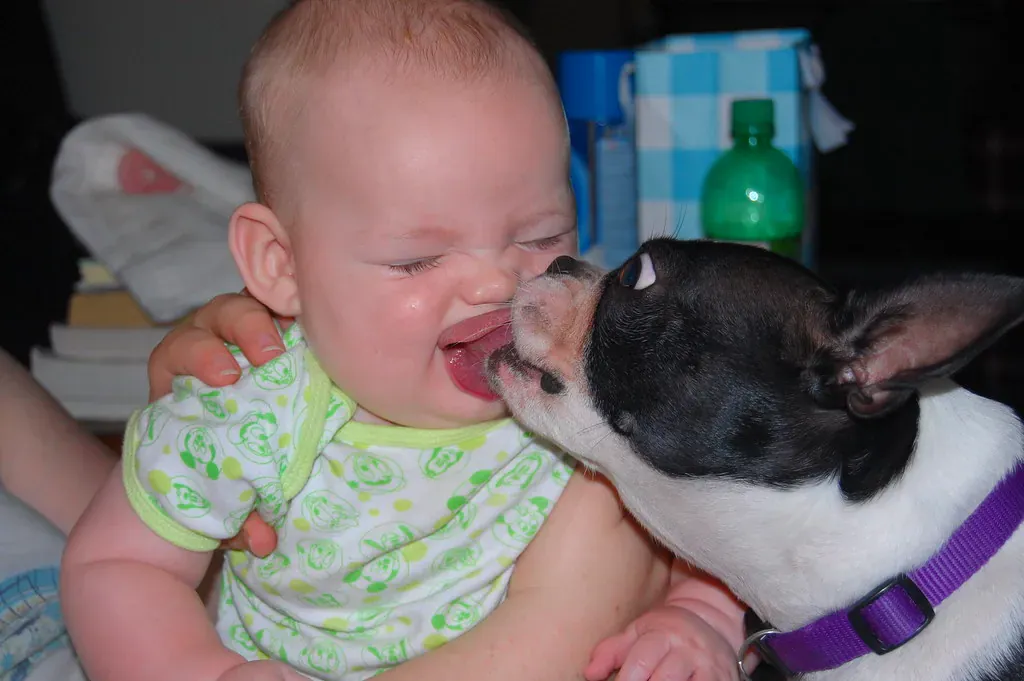
| Children | Good | Sturdy for its size and sociable; supervise with young children |
| Other dogs | Varies | Usually sociable; some are pushy, so socialise early |
| Cats and small pets | Varies | Depends on early exposure; evidence is thin |
| Flat living | Good | Small size and moderate exercise suit flats |
| Heat tolerance | Poor | Short face limits cooling (see BOAS above) |
| Cold tolerance | Fair | Thin short coat; a coat or jumper helps in cold, wet weather |
| First-time owner fit | Good | Friendly and manageable, provided you choose a breeder carefully |
A great fit if
- You want a small companion that lives in the house with you and follows you around.
- You can offer a couple of short walks and play sessions a day, with rest on hot days.
- You live in a flat or a small home and want a dog that does not need a big garden.
- You are willing to look for a puppy with a longer muzzle and a clear breathing assessment, even if that means waiting.
Think twice if
- You live somewhere very hot, with no air conditioning or cool rooms.
- You want a running or hiking partner for long distances.
- You would find loud snoring, snorting or wheezing stressful.
- You are away from home most of the day.
Before you get one
- Health tests. Ask the breeder for the parents' respiratory function grade (the UK scheme for flat-faced breeds) and eye checks. Ask for the certificates and for the name of the vet who performed them. Where possible, meet the parents and see how they breathe after a short walk.
- Puppy or adult rescue. Breed rescues exist and often place adults whose temperament and breathing are already known. For a flat-faced breed, an adult with a known health picture can be a good choice.
- First year. Plan for puppy classes, house training, dental care from the start, and a lean body weight. Avoid hard exercise in warm weather.
Similar breeds to consider
- French Bulldog. The closest DNA relative in the study, with upright ears and a stockier build. Its breathing problems are better documented and tend to be more severe, so health research matters even more.
- Pug. A small companion with a similar flat face, shown in the corneal ulcer study to carry a high risk of eye ulcers.
- Bulldog. A larger and heavier relative with a calm temperament and its own set of health needs.
- Staffordshire Bull Terrier. A bull-and-terrier relative with a longer muzzle, a sturdier build and more energy.

Boston Terrier fun facts
 Related breedCane Corso1000 to 1996 · ItalyEarly Middle Ages
- A state dog. Massachusetts named the Boston Terrier its official state dog in 1979. One source gives the date as 14 May 1979.
- A true American. The AKC notes the Boston was one of very few breeds made in the United States and the first member of its Non-Sporting Group in 1923.
- One litter. In the AKC's account, the mating of Hooper's Judge and Gyp produced a single puppy, Well's Eph, and his descendants founded the modern breed.
- Born in a tuxedo. The black-and-white pattern gave the breed the nicknames "American Gentleman" and "Tuxedo Dog".
Frequently asked questions
How big does a Boston Terrier get?
The standard sorts adults into three weight classes: under 6.8 kg, 6.8 kg to under 9.1 kg, and 9.1 kg to 11.3 kg. Height is usually quoted around 38 to 43 cm at the withers, but that figure comes from secondary sources.
Is a Boston Terrier a good family dog?
Many are friendly, sociable and sturdy for their size. Supervise play with small children, and teach the dog manners for greetings. The health side, mainly breathing and heat, matters more than temperament when choosing.
How long does a Boston Terrier live?
Atlas data gives 11 to 13 years. No named UK median was found for this article, so treat it as an estimate.
Do Boston Terriers have breathing problems?
Some do. The 2024 PLOS One study of 107 UK dogs found that more extreme face shape was linked to more BOAS and that the breed had a higher share of unaffected dogs than French Bulldogs and Bulldogs. Ask the breeder for a respiratory function grade for the parents.
What is the difference between a Boston Terrier and a French Bulldog?
They are DNA cousins, and both are small and short-faced. The French Bulldog has upright "bat" ears and a stockier body. The Boston is squarer and lighter, with small ears and a straighter muzzle line. See French Bulldog for more.
Why is it called the American Gentleman?
Because its black-and-white coat looks like a tuxedo and because it is an American-made breed. The AKC links the name to its coat and to its status as one of the few home-grown breeds.
Read next
Closest DNAFrench Bulldog24.1 Mb sharedSister breedStaffordshire Bull Terrier1800 to 1935 Adopt a dogDog Shelters in EuropeFind dog shelters in Europe, learn how shelters differ from country to country and why adopting a dog is a good option.
Sources (12)
- American Kennel Club, "Boston Terrier History" (breed history article).
- American Kennel Club, "Facts About the Boston Terrier You May Not Know".
- American Kennel Club, Official Standard of the Boston Terrier, and Non-Sporting Group breed standards amended 1 January 2025.
- American Kennel Club, Breed Weight Chart.
- Fédération Cynologique Internationale, Boston Terrier, standard no. 140.
- Tomlinson C., O'Neill D.G., Liu N.C., Sargan D., Ladlow J., "BOAS in the Boston Terrier: A healthier screw-tailed breed?", PLOS One, 2024.
- The Kennel Club (UK), "New research explores respiratory health of Boston Terriers", media centre news, January 2025.
- O'Neill D.G. et al., "Corneal ulcerative disease in dogs under primary veterinary care in England: epidemiology and clinical management", Canine Genetics and Epidemiology, 2017.
- O'Neill D.G. et al., "Prevalence of commonly diagnosed disorders in UK dogs under primary veterinary care: results and applications", BMC Veterinary Research, 2021.
- Parker H.G. et al., "Genomic analyses reveal the influence of geographic origin, migration, and hybridization on modern dog breed development", Cell Reports, 2017.
- Wikipedia, "Boston Terrier" (history and FCI classification summary).
- Dogs Atlas breed records, breed record for the Boston Terrier and Parker 2017 shared-haplotype table (this site).