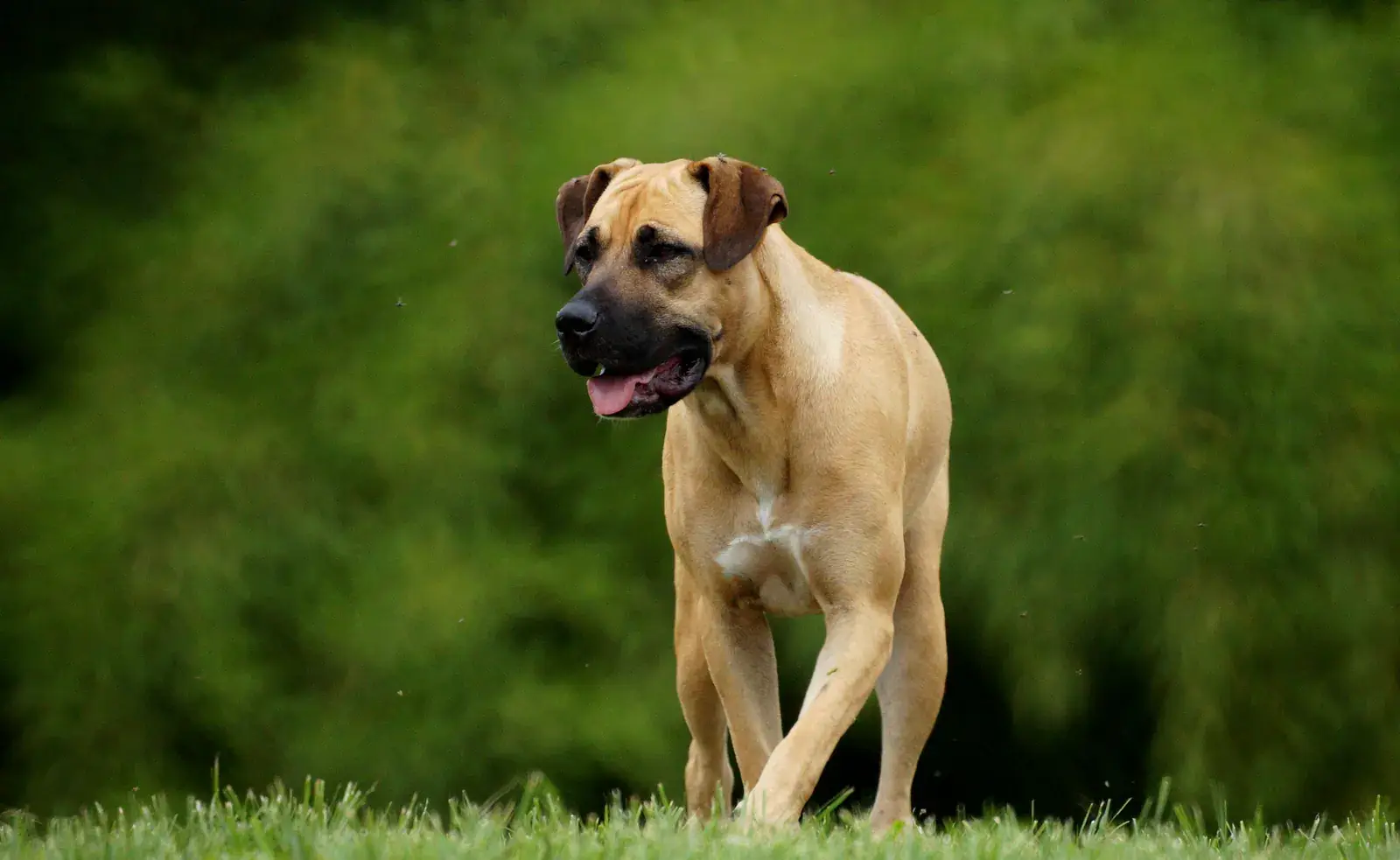
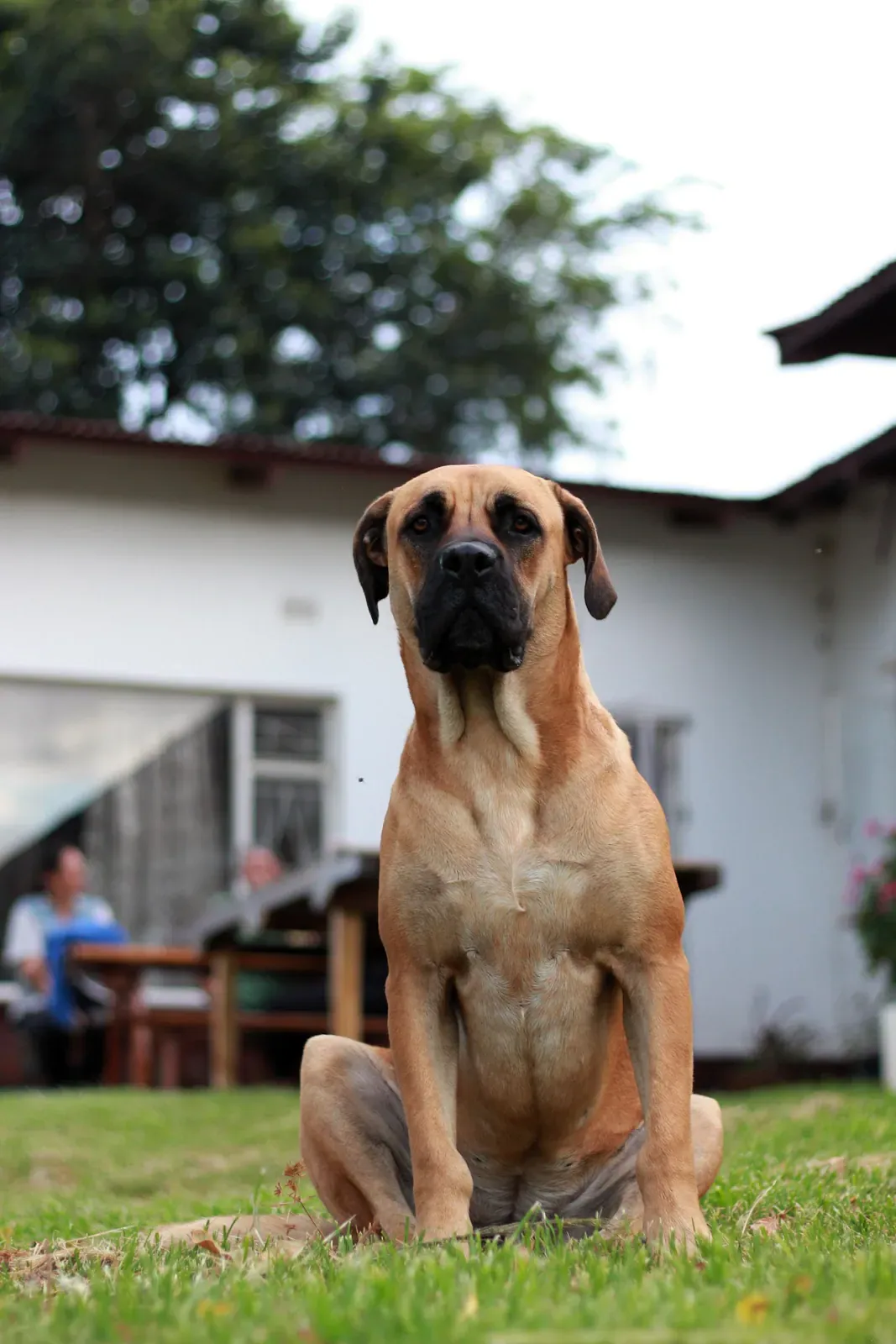
The name means "farmer's dog" in Afrikaans. It is a confident, protective and loyal dog that needs a firm, experienced owner, early socialisation and a secure property. The American Kennel Club recognised it in the Working Group in 2015, while some countries restrict or ban it, so the rules where you live matter before you look for a puppy. Most Boerboels are healthy, and the joints are the area owners and breeders watch most closely.
Boerboel quick facts
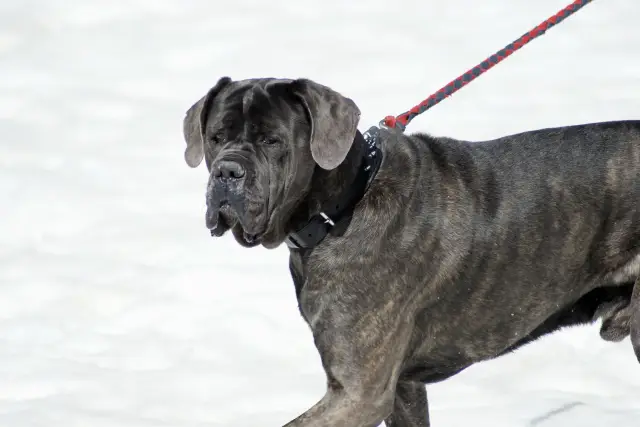 Related breedCane Corso1000 to 1996 · ItalyEarly Middle Ages
- Closest DNA relatives
- Bullmastiff, Bulldog, English Mastiff
- Country of origin
- South Africa
- Period of development
- Settler dogs from the 17th century; organised breeding and a written standard in the 1980s (atlas data: 1650 to 1983, medium confidence)
- Original job
- Guarding farms, families and livestock against predators and intruders
- Other names
- South African Mastiff, South African Boerboel
- Classification
- AKC Working Group (full recognition 2015); United Kennel Club Guardian Dog Group; status disputed in sources (see below)
- Home clubs
- South African Boerboel Breeders' Society (SABBS); Kennel Union of Southern Africa (KUSA) standard
- Height
- KUSA (as reported): ideal 66 cm dogs, 61 cm bitches. AKC (as reported): dogs about 61 to 69 cm, bitches about 56 to 64 cm
- Weight
- Reported for the AKC standard: dogs about 68 to 91 kg, bitches about 50 to 73 kg
- Coat
- Short, smooth, dense
- Colour
- Fawn, brown, brindle, with a dark mask (varies by club)
- Life span
- Atlas data: 9 to 11 years
- DNA family
- European Mastiff (Parker et al. 2017)
Drawn to scale in real centimetres. Its back reaches about 62 cm, mid-thigh; its head about 79 cm, your hip.
Where it sits in the tree
Early Modern Era · 1600 to 1799





Name and origin
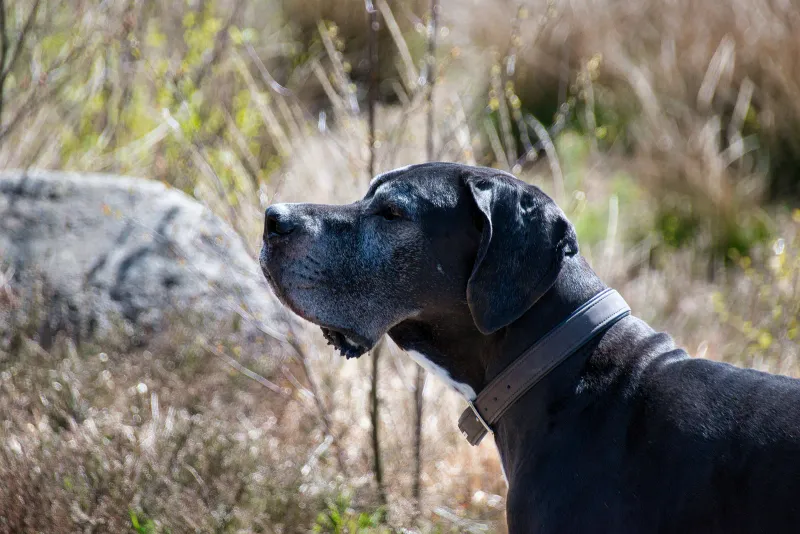 Related breedGreat Dane1600 to 1880 · GermanyEarly Modern Era
"Boerboel" combines "Boer", the Afrikaans word for farmer, and "boel", which is usually explained as short for "bulldog" or "bullenbeisser", although the exact origin of the second half is debated. The breed is also called the South African Mastiff. The word describes the job: the farmer's mastiff.
The Boerboel developed from large guard dogs that came to southern Africa with settlers, then mixed with local dogs over generations. The atlas data lists several ancestors at low confidence: old mastiff and bulldog types, named at type level only, along with the extinct Alaunt and the Alpine mastiff. Treat them as a family of mastiff types, not a precise pedigree.
The Jan van Riebeeck story (legend). A popular account says that Jan van Riebeeck, who arrived at the Cape in 1652 for the Dutch East India Company to found a colony, brought a bullenbeisser with him. The bullenbeisser was a now-extinct German boarhound type, thought to have contributed to the Boxer. The AKC's history article tells this story, but other accounts describe the bullenbeisser as one of several ancestors, with Dutch, German and Huguenot settlers all bringing dogs. No pedigree records exist from this time, so this is best read as tradition, not proven fact.
What the evidence supports. Settlers, farmers and travellers in the Cape Colony needed dogs that could hold off leopards, baboons, hyenas and intruders. They brought mastiff and bulldog types from Europe, and later generations bred for size, courage and soundness on the farm. Wikipedia describes the breed as descending from an old colonial cross of mastiffs and bulldogs, called the "Boer dog".
 Save

History
 Same eraRhodesian Ridgeback1600 to 1922 · South AfricaEarly Modern Era
Farm dogs of the Cape
For most of its history the Boerboel was a working farm dog, selected by farmers for what it did, not for how it looked. Dogs that guarded well and stayed sound were kept and bred. There was no and no show ring, so there is no written record of the dogs. The settler dogs mixed with local African dogs, and the result was a large, strong guardian suited to the climate and the work.
Later mastiff influences (dates conflict). The AKC's history piece says De Beers imported Bullmastiffs to guard diamond mines in South Africa. One source dates the imports to the 1920s, while another gives 1938. The Bullmastiff is the Boerboel's closest DNA relative in the Parker 2017 study data held by the atlas (about 83.4 Mb shared), so mixing with mastiff-type dogs in the 20th century is plausible, though the link on DNA does not prove the cause.
The 1980s revival
By the late 20th century, the farm dog had become rarer and less uniform, as farming changed and imported breeds became popular. Breeders in South Africa then began to organise. A breed association was set up in 1983, credited to Johan de Jager, a Boerboel breeder since 1960. Farmer's Weekly dates the formalising of the breed to 1983 and the first official to 1987. The two sources do not agree on every detail, so the exact early history is uncertain.
Wikipedia also describes a later reorganisation: a new association, the South African Boerboel Breeders' Society (SABBS), formed in 2012 and registered with the national Department of Agriculture, Forestry and Fisheries in 2014, absorbing the earlier body. Under South Africa's Animal Improvement Act of 1998, the Boerboel is classed as a , and SABBS is described as the only organisation authorised under the Act to register Boerboels officially. It is responsible for the breed standard, identification, evaluation and improvement.
Other societies exist outside South Africa, and breeders in other countries run their own registries and standards (an Elite or "EBBS" type society is sometimes mentioned, but its status is unclear, so it is not described here).
Export and AKC recognition
Boerboels began to be exported in numbers from the 1990s, and the breed spread across North America, Europe and Asia. The AKC's path was gradual. Sources report that the breed entered the AKC Foundation Stock Service in 2006, moved to the Miscellaneous Class in 2010, and gained full recognition in the Working Group in January 2015. The American Boerboel Club is the breed's AKC parent club. The United Kennel Club places the breed in its Guardian Dog Group.
FCI status
Sources conflict. One says the FCI does not recognise the breed. Another says the FCI places it in Group 2, Section 2.1 (Molossoid breeds, Mastiff type). It is unclear which is correct, so check the FCI breed list directly. In South Africa, the Kennel Union of Southern Africa (KUSA) lists the breed with its own standard.
 Save
Relatives and DNA
 Same familyDogue de Bordeaux1300 to 1896 · FranceLate Middle Ages
In the 2017 study by Parker and colleagues, the Boerboel falls in the European Mastiff family, along with other large mastiff, bulldog and molosser breeds. data held by the atlas show the closest matches:
Two points stand out. First, the large number for the Bullmastiff fits the history of that breed in South Africa, but the study does not say how the sharing arose. Second, the Rhodesian Ridgeback, another South African breed, shows a small amount of sharing, which suggests some overlap in the country's farm dog populations, but the numbers are modest. The Boerboel has no descendant breeds in the atlas data.
- Bullmastiff83.4 Mb 3.5%
- Bulldog44.7 Mb 1.9%
- English Mastiff41.8 Mb 1.7%
- Boxer31.8 Mb 1.3%
- Cane Corso16.7 Mb 0.7%
- Great Dane16.2 Mb 0.7%
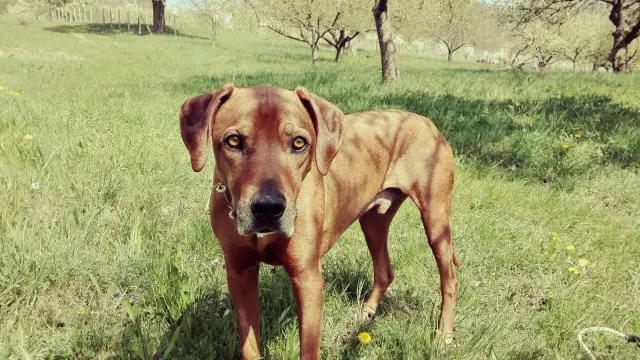
- Rhodesian Ridgeback13.1 Mb 0.5%
- Dogue de Bordeaux11.6 Mb 0.5%
- French Bulldog11.2 Mb 0.5%
- Rottweiler10.6 Mb 0.4%
- Boston Terrier9.9 Mb 0.4%
Source: Parker et al. 2017. Percent of the whole genome.
| Breed | Shared DNA (Mb) |
|---|---|
| Bullmastiff | 83.4 |
| Bulldog | 44.7 |
| English Mastiff | 41.8 |
| Boxer | 31.8 |
| Cane Corso | 16.7 |
| Great Dane | 16.2 |
| Rhodesian Ridgeback | 13.1 |
| Dogue de Bordeaux | 11.6 |
| Rottweiler | 10.6 |
Source: Parker et al. 2017, Cell Reports, shared haplotypes between 161 breeds (1,346 dogs).

The breed standard
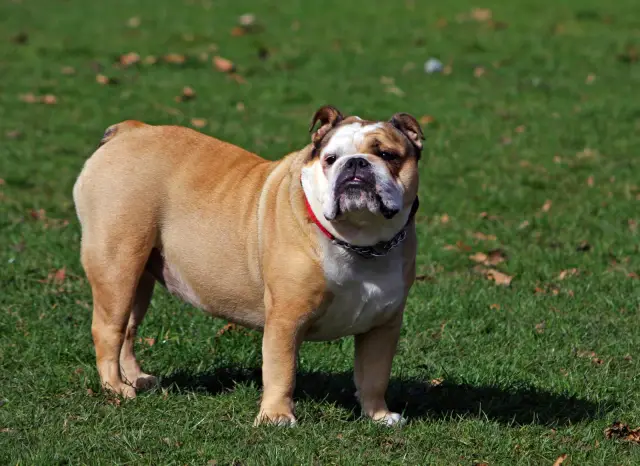
 Looks relatedFrench Bulldog1850 to 1898 · FranceVictorian Breed Boom
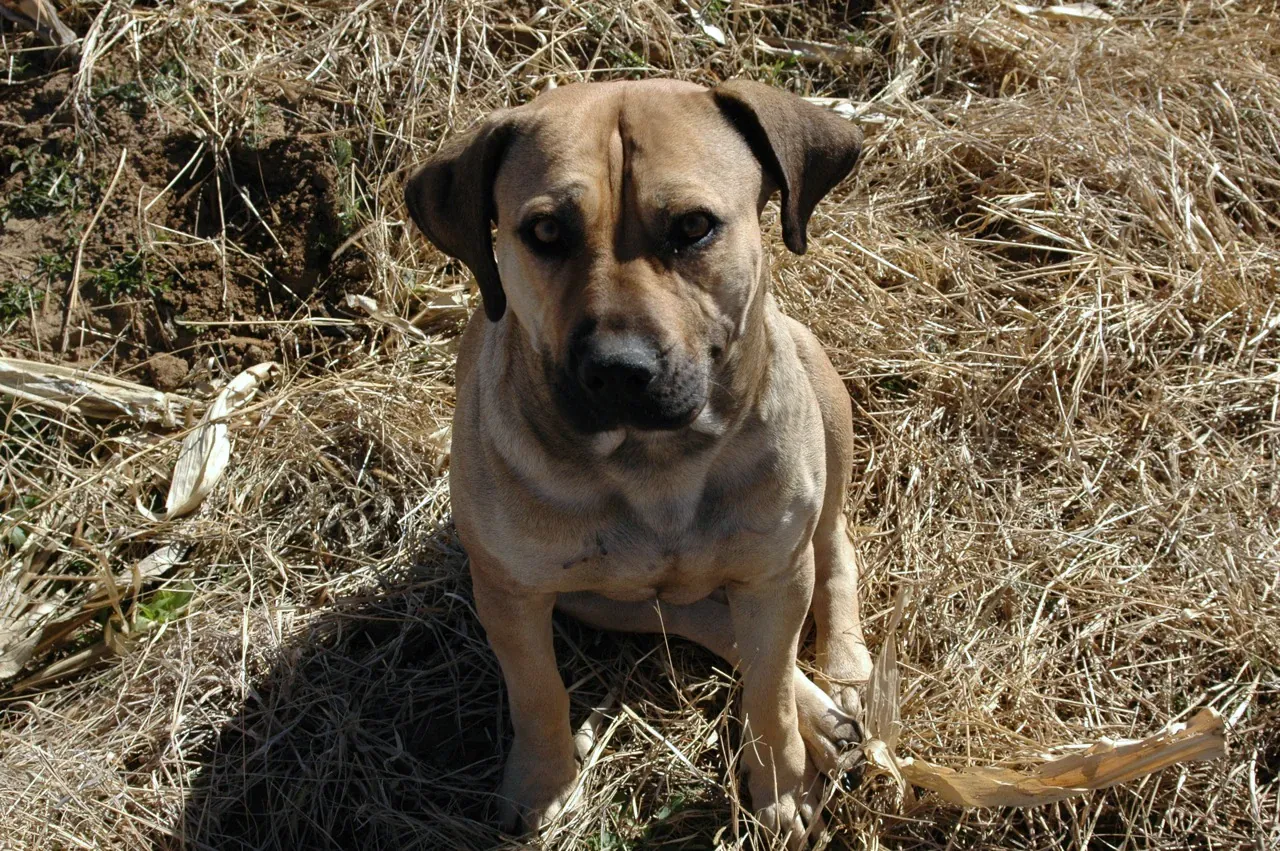
A breed standard is the written ideal for a breed that kennel clubs judge dogs against. For the Boerboel, there are separate standards from the South African bodies (KUSA and SABBS) and the AKC. The figures below are as reported on breed pages, so check them against the current documents.
| Trait | What the standards say |
|---|---|
| Height, dogs | KUSA (as reported on Wikipedia): ideal 66 cm, minimum 60 cm. AKC (as reported): about 24 to 27 in (61 to 69 cm) |
| Height, bitches | KUSA (as reported): ideal 61 cm, minimum 55 cm. AKC (as reported): about 22 to 25 in (56 to 64 cm) |
| Weight | AKC (as reported): dogs about 150 to 200 lb (68 to 91 kg); bitches lighter, with figures between about 110 and 160 lb (50 to 73 kg). KUSA: no weight figure found |
| Coat | Short, smooth and dense (all clubs, as described in breed profiles) |
| Head | Broad, powerful head with a strong square muzzle and a defined stop |
| Body | Large, muscular, with a deep chest and strong, straight limbs |
Colour. Breed profiles list fawn, brown and brindle, with a dark face mask, as the accepted colours. Rules on white markings and other colours differ by registry, so check the standard of the club you plan to register with.
Size in practice. The Boerboel is a heavy, muscular dog, and the difference between height-for-weight in a working type and a show type can be large. Standards describe a dog with athletic structure, not an overweight one.
Temperament
 Related breedRottweiler100 CE to 1901 · GermanyAncient World
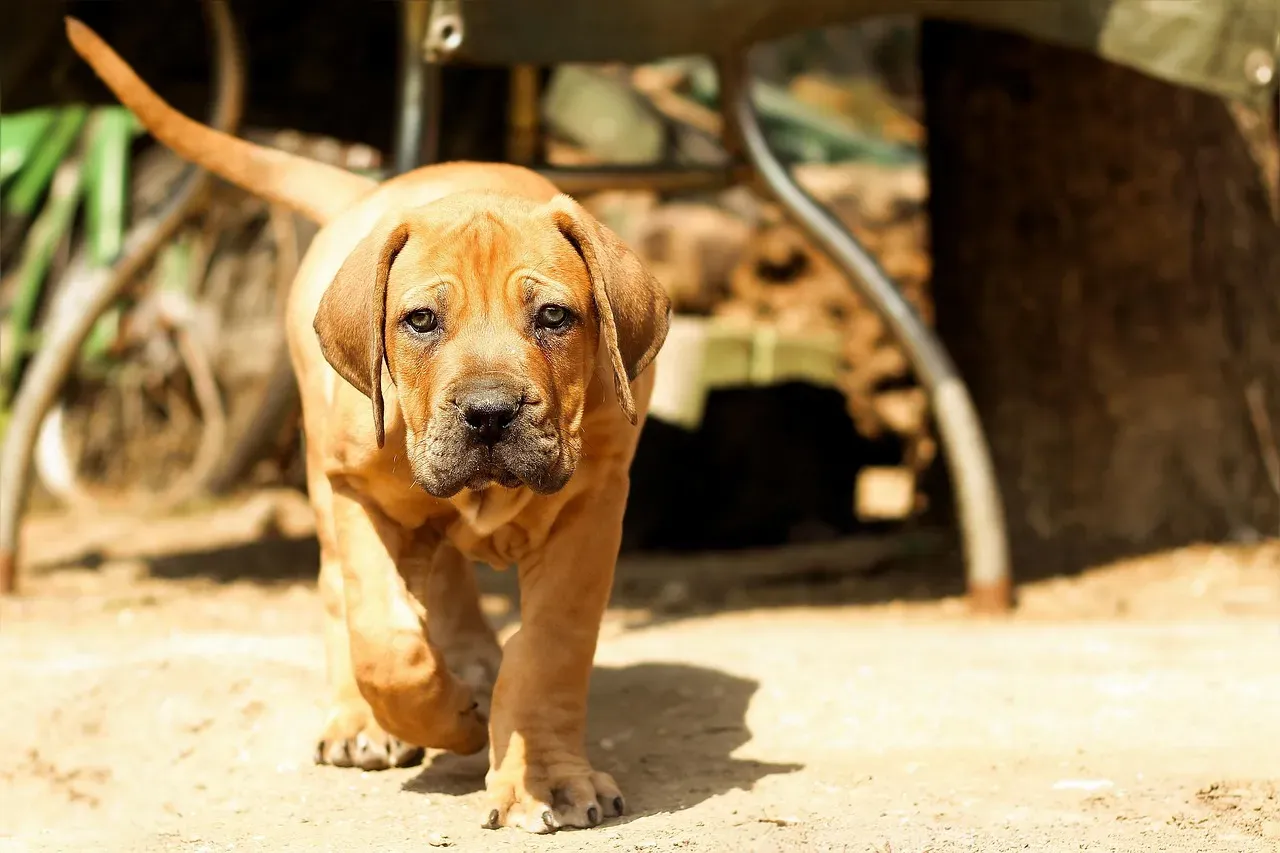
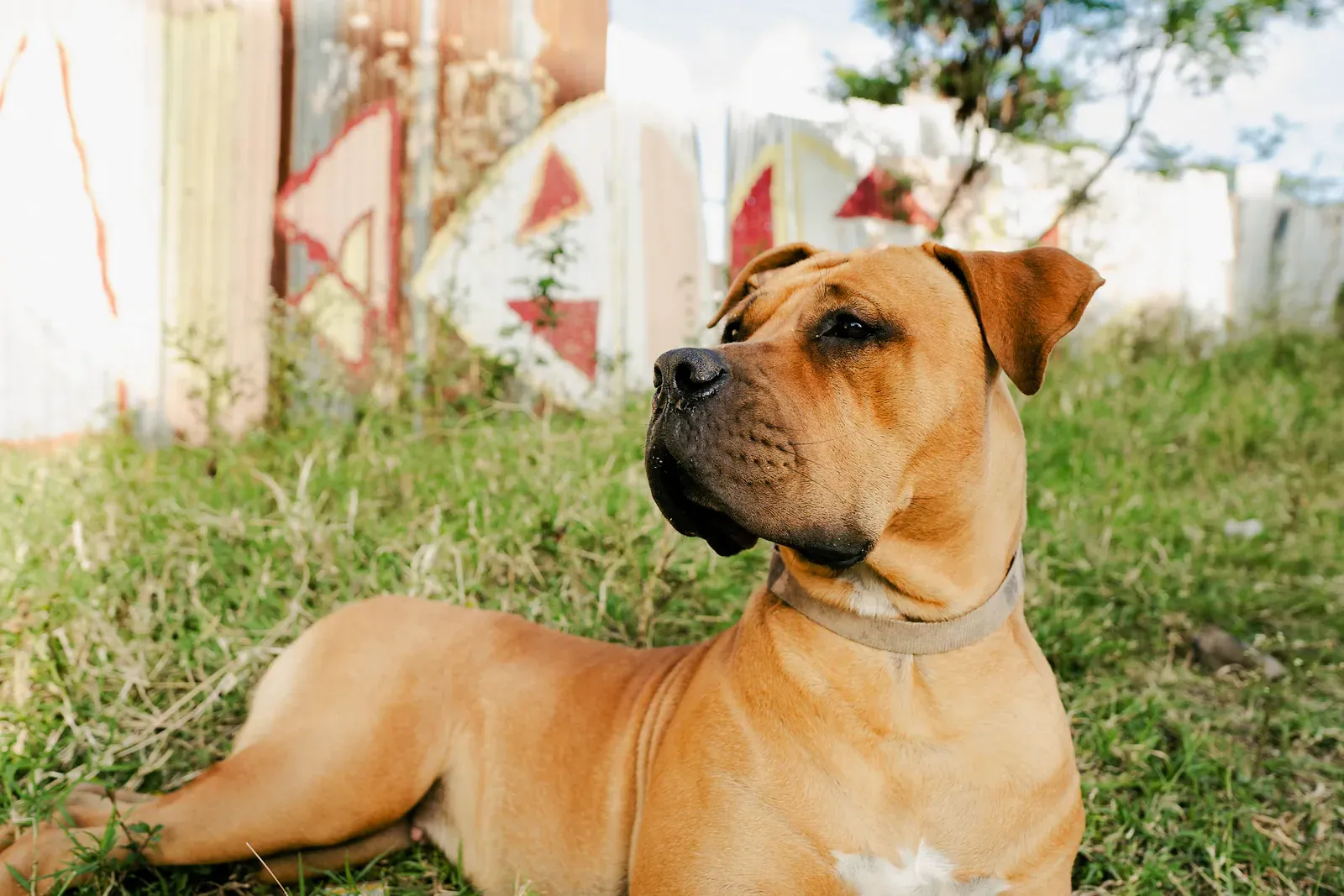
The Boerboel was bred to guard, and the breed shows it. Breed profiles describe it as confident, protective and calm, close to its family and wary of strangers. It will usually watch rather than bark without reason, and a well-bred, well-raised dog is settled and steady at home. It can also be strong-willed, and an untrained adult weighing 70 kg or more is hard to manage.
What owners and breed groups say:
- Loyal to the family. Many Boerboels form close bonds with their people and are gentle with children they know.
- Protective. The guarding instinct is built in, so visitors need to be introduced calmly.
- Strong-willed. The breed does not suit owners who avoid training or want a dog that is friendly with everyone without effort.
- Dog aggression. Some Boerboels are intolerant of other dogs, especially of the same sex. Early socialisation helps, but not every dog will be sociable.
- Slow to mature. Many Boerboels need two to three years to settle.
Temperament varies by individual, line and upbringing. A good breeder will select for stable temperament as well as soundness.
 Save

Exercise and training
 Related breedBoston Terrier1870 to 1893 · United StatesVictorian Breed Boom
A Boerboel needs regular daily exercise, but it is not a high-energy breed like a herding dog. Walks, play and some training each day suit an adult. Puppies should not be over-exercised, because large and giant dogs have growing joints that are easily stressed.
Points for training:
- Start early. Puppy classes and socialisation with people, other dogs, noises and places in the first months make a real difference.
- Be consistent. Use calm, firm, reward-based methods. A heavy, strong dog needs to learn lead manners as a puppy.
- Secure property. A strong, tall fence and a secure gate are essential, and the dog should not be left to guard unsupervised.
- Control in public. A Boerboel in many places is treated as a dangerous breed in law, so a lead and good control are the owner's job.
Health
 Related breedAmerican Bulldog1700 to 1980 · United StatesEarly Modern Era
Most Boerboels live healthy lives. They are large, heavy dogs, so joint health is the area breeders screen for most. What follows is what the evidence says, and what owners can watch for. Figures are given only when a named study provides them, and no figure from a related breed is applied to the Boerboel. The Boerboel has been studied far less than many popular breeds, so a lot of the evidence is thin.
| Condition | What it is | How common | What helps |
|---|---|---|---|
| The hip joint forms loosely, which can cause wear and pain | A preliminary study of 20 Boerboels in Nigeria (Ajadi and Doyin-Dada) found it in 13 dogs (about 2 in 3). The sample is very small | Hip scoring of breeding dogs (FCI or OFA style), healthy weight, no overexercise in puppies | |
| Abnormal elbow development, causing front-leg lameness | The same Nigerian study found it in 5 of 20 dogs (about 1 in 4). Very small sample | Elbow scoring (IEWG grades) of breeding dogs, vet checks if a young dog limps | |
| Eyelid problems (entropion, ectropion) | Eyelids that turn in or hang loose | No Boerboel-specific study found. Seen in other mastiff-type breeds, but no figure is given for this breed | Check the eyes of breeding dogs; see a vet if the eyes water or squint |
| Weight and joint strain | Extra weight adds load on large-breed joints | No Boerboel-specific figure found | Lean body weight, measured food, steady exercise |
What the studies say, and do not say. The Nigerian preliminary evaluation looked at 20 Boerboels of both sexes with a mean age of 2.4 years. Hips were graded on the FCI A to E scale and elbows on the International Elbow Working Group 0 to 3 scale. Sex and age were not significantly linked to either condition. The authors noted that they could find no earlier breed prevalence figures, and called for more work on large African dog breeds. A separate retrospective study of hip screening of Boerboels in Nigeria from 2016 to 2022 was published in the Nigerian Veterinary Journal in 2023, but its results are not covered here. With 20 dogs, the figures above are rough estimates and could differ in a larger or different population, such as the dogs bred in South Africa.
What is not known. No OFA breed statistics, Boerboel-specific heart or cancer study, or breed lifespan study has been published. Breed sources give a lifespan of 9 to 11 years, though no named study supports it.
Large mastiff-type dogs, in general, are vulnerable to joint problems and to bloat, but figures from other breeds are not applied here. If you are considering a Boerboel, ask the breeder about the health of the parents and their relatives.

Breed restrictions and laws
 Related breedAmerican Bully1980 to 2004 · United StatesModern Era
Some countries and local areas restrict or ban the Boerboel, and the rules change. The points below are dated and sourced where possible, but this is not legal advice. Check the current official rules for your country, state and town before you buy, import or travel.
| Place | What the sources say | Source quality |
|---|---|---|
| Denmark | The Boerboel is one of 13 breeds whose keeping and breeding is banned under the Danish Act on Dogs, including mixes. The ban covers tourists bringing dogs in. Parliament reviewed the list in 2013 and kept it | Danish Veterinary and Food Administration page; Copenhagen Post report |
| Australia | The Boerboel is not on the federal list of banned imports (dogo Argentino, fila Brasileiro, Japanese tosa, American pit bull terrier, Perro de Presa Canario) under the Customs (Prohibited Imports) Regulations 1956. State and council rules may still apply; check the current rules | Legislation text; council pages |
| Romania | Reported import ban from 2002 with ownership limits | Secondary source, not confirmed |
| Russia | Reported as an "especially dangerous breed" from 2011, with registration rules | Secondary source, not confirmed |
| Ukraine | Reported as a dangerous dog needing microchip, muzzle and insurance | Secondary source, not confirmed |
| Mozambique | Reported ban on importing 23 breeds including Boerboel, in 2024 | News report |
| Democratic Republic of the Congo | In April 2024 the government said it would move to regulate breeding and ownership of Boerboels and pit bulls; a proposal, not a ban | News report (Channel24) |
Several other countries are named in secondary articles (Switzerland, France, Mauritius, Qatar), but no official source confirms them, so they are not listed as fact. Breed-specific rules often include mixed-breed dogs, and they can change without much notice. Insurers and landlords may also have their own restrictions.
Living with a Boerboel
 Related breedAmerican Pit Bull Terrier1850 to 1898 · United StatesVictorian Breed Boom
| Daily reality | Rating | Why |
|---|---|---|
| Exercise per day | Medium | Regular walks and play; not an endurance breed |
| Training needs | High | Strong, protective and strong-willed; early training and socialisation are essential |
| Grooming | Low | Short coat; weekly brushing is enough |
| Shedding | Medium | Short coat sheds moderately; varies |
| Barking | Varies | Alert guard; depends on training and the individual |
| Time alone | Fair | Bonds closely with family; long hours alone are not ideal |
| Children | Varies | Often gentle with its own family, but very large and strong; supervision is a must |
| Other dogs | Poor | Some are intolerant of other dogs, especially the same sex; varies |
| Cats and small pets | Varies | Depends on early exposure; evidence is thin |
| Flat living | Poor | Large, heavy dog; needs space and a secure property |
| Heat tolerance | Good | Short coat and a farm-dog history in a warm climate; no study rates this, so keep exercise to cooler hours in hot weather |
| Cold tolerance | Fair | Short coat with little undercoat |
| First-time owner fit | Poor | Needs experienced, confident handling and secure property |
A great fit if
- You have owned large guardian breeds before and understand their needs.
- You have a large, securely fenced property and live where the breed is legal.
- You will start puppy classes early and keep up training for years.
- You want a calm, loyal home guardian, not a dog that meets everyone with a wagging tail.
Think twice if
- You are a first-time owner, or you are away from home most of the day.
- You live in a flat, a rental with breed rules, or an area where the breed is restricted.
- You have other dogs, or want a dog that is friendly with every dog it meets.
- You cannot afford the cost of feeding, vet care and insurance for a very large dog.
Before you get one
- Local rules first. Check breed laws, insurance and landlord rules for your country, state and town.
- Health tests. Ask the breeder for hip and elbow scores for both parents and for the original certificates, and ask about the health history of relatives. Because the Boerboel has little published health data, asking questions matters.
- Puppy or adult rescue. Breed rescues and Boerboel clubs exist in several countries, and an adult dog's temperament is already known.
- First year. Plan for puppy classes, calm exercise while the joints grow, a lean weight and a secure home before the puppy arrives.
Similar breeds to consider
- Bullmastiff. The Boerboel's closest DNA relative in the data, with a generally calmer manner and a shorter, lower build.
- Cane Corso. Italian guardian mastiff, a little lighter, also needing experienced handling.
- Rhodesian Ridgeback. Another South African breed, athletic and independent, but not a mastiff.
- Rottweiler. A large working guardian that is widely available, with extensive health testing.

Boerboel fun facts
 Related breedAmerican Staffordshire Terrier1850 to 1936 · United StatesVictorian Breed Boom
- "Boerboel" means "farmer's dog" in Afrikaans.
- The AKC's path took nine years: Foundation Stock Service in 2006, Miscellaneous Class in 2010, Working Group in 2015.
- The Boerboel is classed as a landrace under South Africa's Animal Improvement Act of 1998.
- Denmark's ban on 13 breeds includes the Boerboel, even though no attack by it was recorded there, according to a Copenhagen Post report.
Frequently asked questions
Are Boerboels good family dogs?
In experienced homes with training and supervision, they can be loyal and gentle with their family. They are very large and protective, so they are not an easy choice for beginners.
How big is a Boerboel?
The reported height is about 61 to 69 cm for dogs and 56 to 64 cm for bitches, with weights of about 68 to 91 kg for dogs. South African standards give slightly smaller ideal heights (66 cm and 61 cm).
How long do Boerboels live?
Breed sources give 9 to 11 years. No named lifespan study confirms this.
Is the Boerboel banned anywhere?
Denmark bans it under the Danish Act on Dogs. Other countries are reported to restrict it, but sources vary. Check the current official rules for your location.
Is the Boerboel recognised by the AKC?
Yes. The AKC gave it full recognition in the Working Group in 2015, after Foundation Stock Service entry in 2006.
What is the difference between a Boerboel and a Cane Corso?
Both are mastiff-type guardians, but the Boerboel is South African and generally heavier, while the Cane Corso is Italian and somewhat lighter in build. They share only a small amount of DNA (16.7 in the atlas data).
Read next
 Closest DNABullmastiff83.4 Mb shared
 FamilyEuropean MastiffThe whole family
 Adopt a dogDog Shelters in EuropeFind dog shelters in Europe, learn how shelters differ from country to country and why adopting a dog is a good option.
Sources (15)
- American Kennel Club, "Boerboel History: South African Farm Dog" and Boerboel breed pages.
- South African Boerboel Breeders' Society (SABBS), breed standard and registry information.
- Kennel Union of Southern Africa (KUSA), Boerboel standard.
- Farmer's Weekly, "The Boerboel: a proudly South African dog breed".
- Wikipedia, Boerboel (history, associations, recognition, restrictions).
- Canine Chronicle, "The Boerboel: the South African Mastiff".
- Parker H.G. et al., "Genomic analyses reveal the influence of geographic origin, migration, and hybridization on modern dog breed development", Cell Reports, 2017.
- Morris D., Mosby's Dog Breed Encyclopedia, 2001.
- Ajadi R.A. and Doyin-Dada O.A., "Preliminary evaluation of prevalence of hip and elbow dysplasia in Boerboel dogs", Sokoto Journal of Veterinary Sciences, 2019.
- "Prevalence of hip dysplasia in Boerboel dogs in Nigeria: a retrospective study of radiographic screening between 2016 and 2022", Nigerian Veterinary Journal, 2023.
- Danish Veterinary and Food Administration, information on Danish legislation on dogs.
- Copenhagen Post, report on the review of the Danish list of banned dog breeds, 2013.
- Customs (Prohibited Imports) Regulations 1956 (Australia).
- Channel24, report on the DR Congo government's plan to regulate Boerboels and pit bulls, April 2024.
- United Kennel Club, Boerboel breed information.