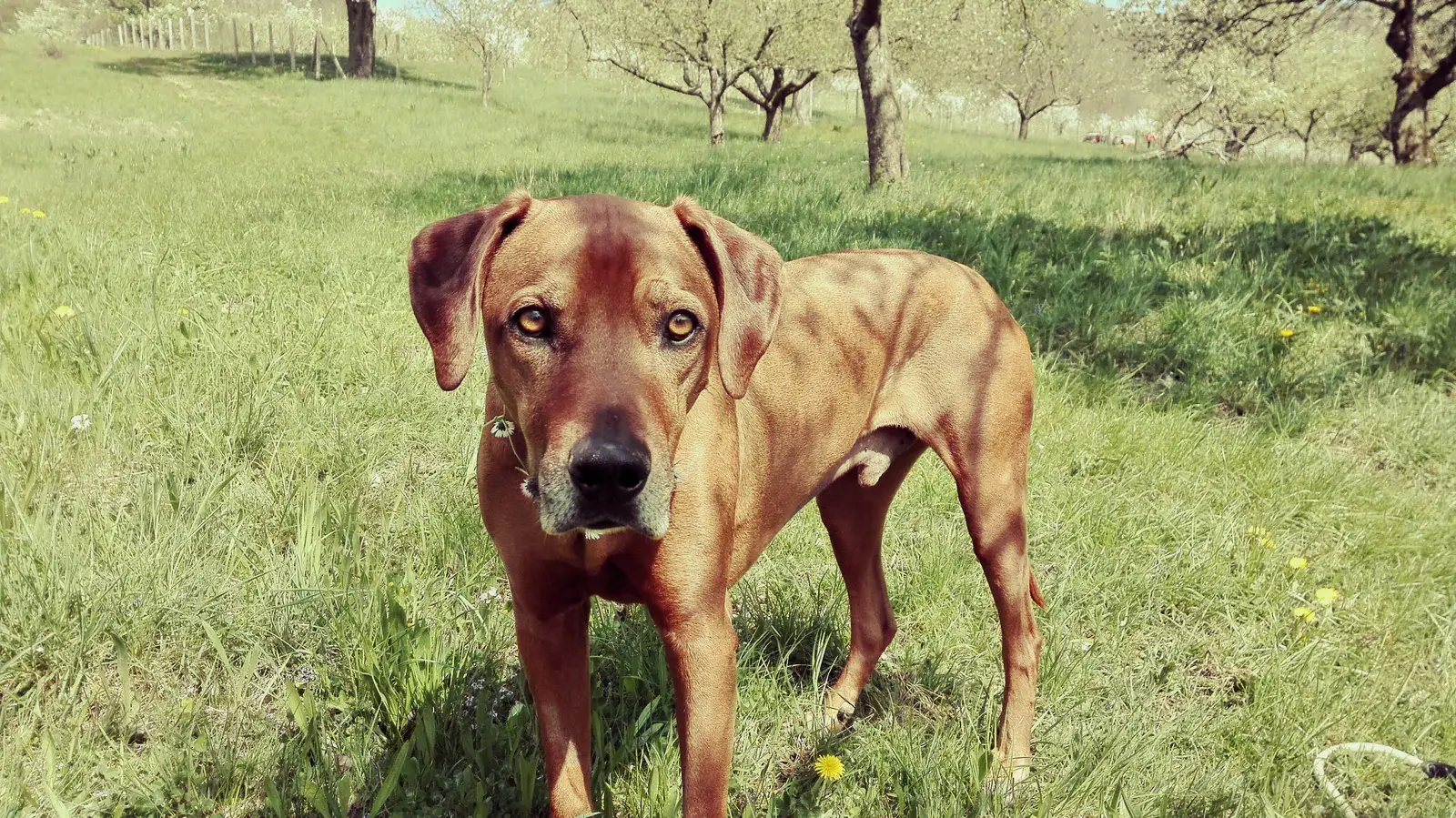
It was shaped in the Cape Colony and in what is now Zimbabwe from ridged local dogs of the Khoikhoi people crossed with European breeds, and for a long time it was called the African Lion Hound. The legend of dogs that held lions at bay is partly true and partly told better than it happened. Today it is a dignified, reserved and independent companion, and a strong runner. It suits owners with a fenced garden, time to exercise it every day and patience for gentle, consistent training. The ridge is the result of a single, well-studied gene change that also explains the breed's best-known health issue.
Rhodesian Ridgeback quick facts
 Related breedAmerican Bulldog1700 to 1980 · United StatesEarly Modern Era
- Closest DNA relatives
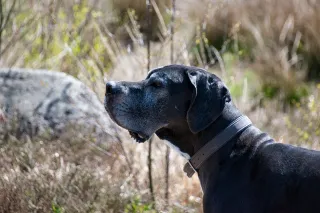
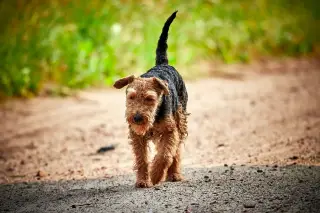
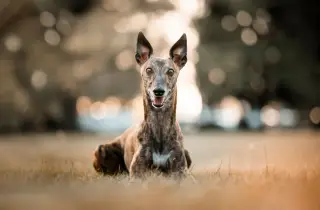
- Great Dane, Boerboel, Airedale Terrier, Greyhound
- Country of origin
- South Africa (FCI); developed in the Cape Colony and in Rhodesia, now Zimbabwe
- Period of development
- From about 1600 to 1922; first standard drafted in Bulawayo in 1922
- Original job
- Hunting and guarding for settlers and farmers; tracking and holding big game at bay
- Type
- Hound (FCI Group 6, Scenthounds and related breeds, standard no. 146; Hound Group; UK Kennel Club Hound Group)
- Home club
- Kennel Union of Southern Africa (KUSA), the successor to the South African Kennel Union
- Height
- Dogs 63 to 69 cm, bitches 61 to 66 cm (FCI and UK Kennel Club)
- Weight
- FCI: about 36.5 kg dogs, about 32 kg bitches
- Coat
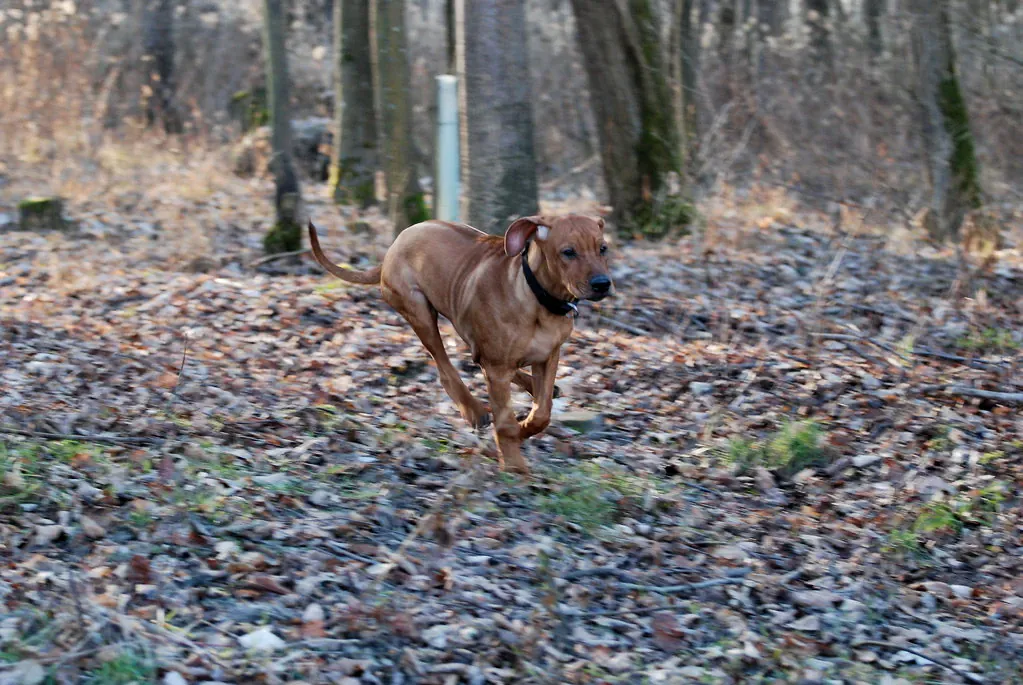
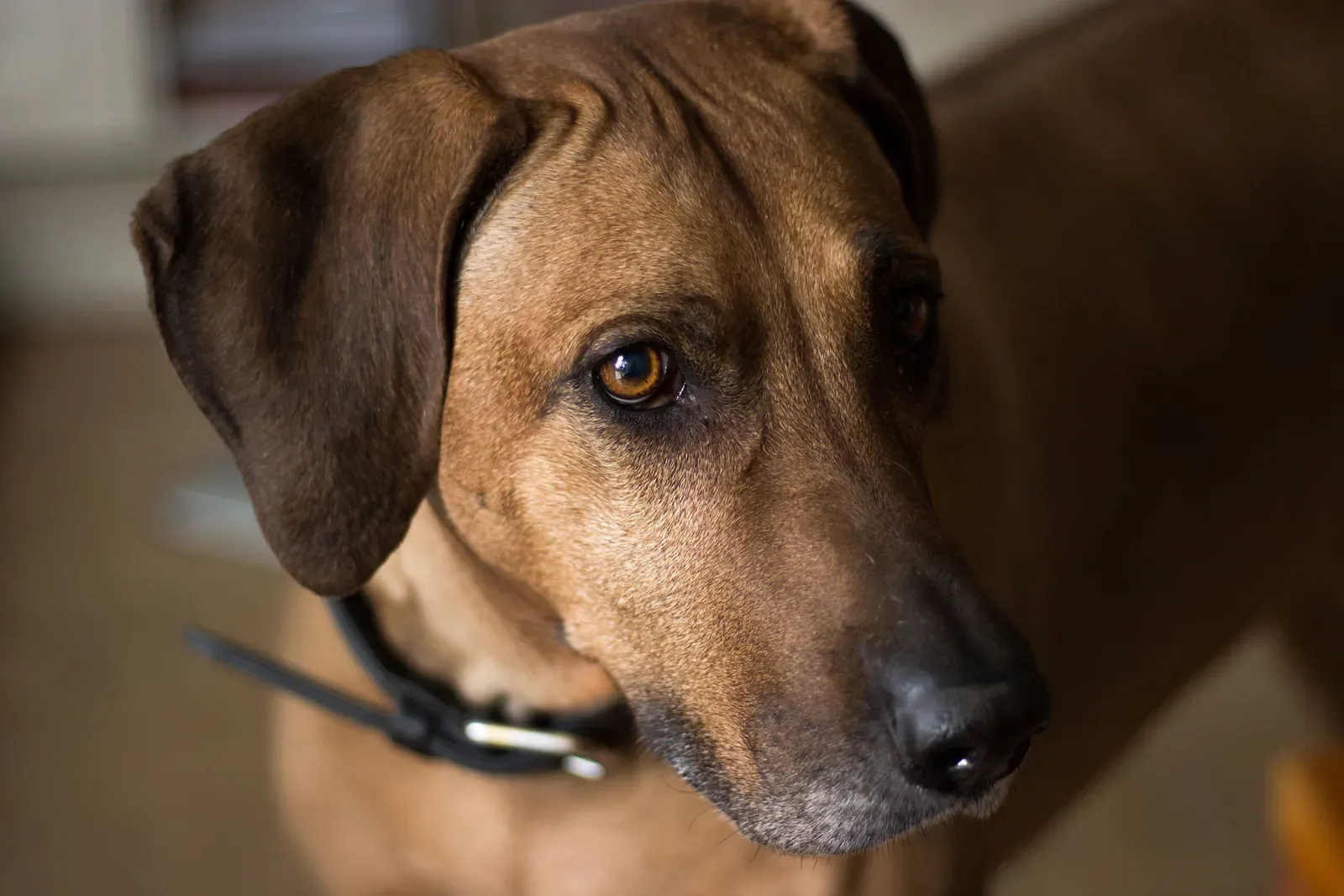
- Short, dense, sleek and glossy, with the ridge on the back
- Colour
- Light wheaten to red wheaten
- Life span
- Atlas data: 10 to 12 years
- Exercise
- High; a fit athletic hound that needs daily running room
- DNA family
- European Mastiff family (Parker et al. 2017)
Drawn to scale in real centimetres. Its back reaches about 65 cm, mid-thigh; its head about 83 cm, your hip.

Where it sits in the tree
Early Modern Era · 1600 to 1799

Name and origin
 Related breedAmerican Bully1980 to 2004 · United StatesModern Era
The name has two parts. "Ridgeback" describes the ridge of hair that grows against the lie of the rest of the coat. "Rhodesian" comes from Rhodesia, the territory that is now Zimbabwe, where the first written standard was drafted in 1922. In the first decades the dogs were also called Lion Dogs or African Lion Hounds, because settlers used them in packs to find big game and to hold a lion at bay until the hunter arrived.
The breed's roots run back to the Cape Colony in the 1600s. Settlers there found ridged, semi-feral hunting and guarding dogs kept by the Khoikhoi, the indigenous herders of the Cape. These dogs lived beside people, hunted, and guarded camps and stock. European colonists bred them with the dogs they brought, and the breed's later history is usually told as a mix of Khoikhoi stock with Mastiff-type guard dogs, Greyhounds and scent hounds such as the Bloodhound. The atlas data lists the Great Dane, Greyhound and Bloodhound among the likely European partners, plus a Cuban bloodhound type, with the Khoikhoi dog as the oldest layer. The exact mix was never recorded, so this is the accepted account, not a documented pedigree.
Where the breed gets its look is a question the breed's own historians still argue over. Some say the ridge came from the Khoikhoi dogs; others hold that the ridged dogs the settlers saw were rare and the trait was kept alive by selection. DNA studies cannot show which dog carried it first, but they show that the ridge is old: the same gene change exists in the Thai Ridgeback on the other side of the Indian Ocean (see below).

History
 Same eraAmerican Pit Bull Terrier1850 to 1898 · United StatesVictorian Breed Boom
Khoikhoi dogs and settlers
Most accounts begin with the ridged dogs of the Khoikhoi. As the Cape Colony grew in the 1600s, Dutch and later British and German settlers brought their own breeds and crossed them with these local dogs. The mix was selected for toughness, stamina in heat and the ability to work with little water, which are the traits that remained in the breed. Settlers who trekked inland in the 1800s took the dogs with them into what are now the Free State, Transvaal and Matabeleland.
Van Rooyen and the lion hunting story
The best-known part of the legend comes from Matabeleland, now western Zimbabwe. Cornelius van Rooyen, a big game hunter born in 1860 in Uitenhage in the Eastern Cape, lived near Hope Fountain mission near Bulawayo. According to breed histories, a missionary, Charles Helm, brought two rough-coated grey-black bitches to the mission in 1879. Van Rooyen bred his own dogs to them, hoping to add their guarding ability to his hunting pack. His dogs became known across the region, and breeders later traced the breed's founding line to his pack.
Two points here are told as fact in popular articles but are really legend or uncertain. First, the idea that the dogs killed lions is not supported; the dogs were used to find a lion and keep it occupied by circling and barking until the hunter could shoot, and they were often injured doing it. Second, one breed historian points out that it is not clear that Helm's two bitches had ridges at all, even though they are treated as the origin of the ridge. The van Rooyen story is a credible founding tale about a real hunter and a real pack, but its details come from later breed histories, not from records made at the time.
The 1922 Bulawayo meeting and the first standard
The better-documented step comes in 1922. According to a firsthand account by B. W. Durham, published in the Kennel Union Gazette in 1950, Francis Richard Barnes circulated owners of "Ridgebacks" or "Lion Dogs" and asked them to bring their dogs to a meeting held on the second day of the Bulawayo Kennel Club show. At that meeting Barnes founded the first breed club in Bulawayo and drafted a standard. Breed histories report that Barnes based his draft on the standard of the Dalmatian, since that was the best-known spotted-and-ticked breed of its day with a written standard to borrow from. This is where the name Rhodesian Ridgeback became fixed.
The standard was then approved by the South African Kennel Union. The sources disagree on the year: the FCI standard text gives 1926, while Wikipedia and many breed histories give 1927. This article uses "the mid-1920s" for that reason. The first registered dogs, according to a history by S. H. Stewart, include Grootedam Gwen and Grootedam Leo.
Spread abroad
From southern Africa the breed spread to the United Kingdom and the United States. According to one breed history, the first Challenge Certificates in the UK were awarded in 1954 to dogs shown as Rhodesian Ridgebacks. The AKC placed the breed in its Hound Group, and the FCI lists it under Group 6, Scenthounds and related breeds, as standard no. 146, with South Africa as the country of origin. The breed is a hunting hound in the club system, though the Ridgeback is used more as a sight and scent tracker, not as a pointer or retriever.
 Save
Relatives and DNA
 Same familyAmerican Staffordshire Terrier1850 to 1936 · United StatesVictorian Breed Boom
Parker et al. (2017) placed the Rhodesian Ridgeback in the European Mastiff family, the DNA family that includes the Great Dane, Boerboel, Bullmastiff and related breeds. Here "family" means the DNA family from that study, which is not the same thing as a kennel club group. The kennel clubs put the breed in a hound group, but the DNA puts it close to the mastiff-and-Great-Dane side of the tree.
in that study () was highest with the Great Dane (20.7 ), then the Boerboel (13.1 Mb), the Airedale Terrier (12.2 Mb) and the Greyhound (11.9 Mb). The Boerboel link is expected, since it was also shaped by settlers in southern Africa. The Greyhound link fits the sighthound speed in the Ridgeback's build. The Bloodhound is listed as an ancestor in the histories but is not among the top DNA matches in the study.
The atlas data lists the African dog type called Africanis as a forebear, which is the modern name for the unregistered dogs of the region. The related Thai Ridgeback has a similar ridge and carries the same gene change, which suggests that the trait is old and may have a shared origin, perhaps from dogs that moved by trade across the Indian Ocean. This is an inference from the sequencing work, not a historical record.
The Ridgeback has no descendant breeds in the atlas data. It stands as a distinct breed, and no other registered breed claims it as a parent.
 Save
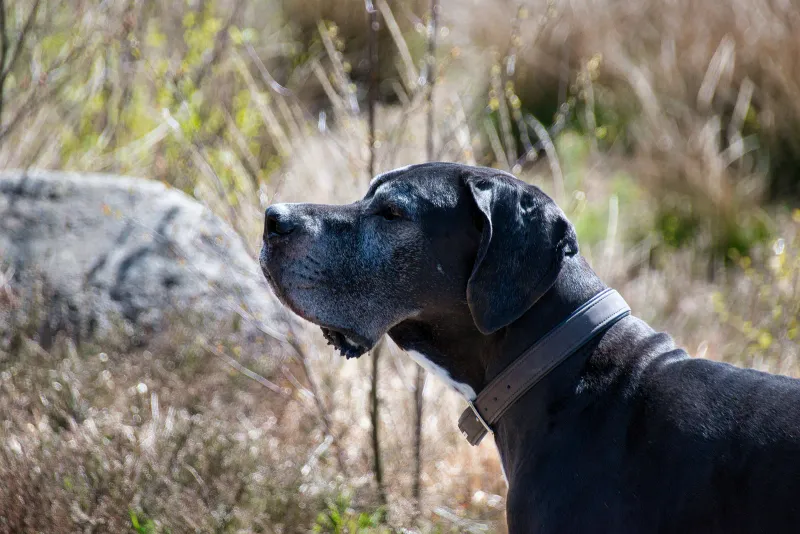
- Great Dane20.7 Mb 0.9%
- Boerboel13.1 Mb 0.5%
- Airedale Terrier12.2 Mb 0.5%
- Greyhound11.9 Mb 0.5%
Source: Parker et al. 2017. Percent of the whole genome.
The breed standard
 Looks relatedBoston Terrier1870 to 1893 · United StatesVictorian Breed Boom
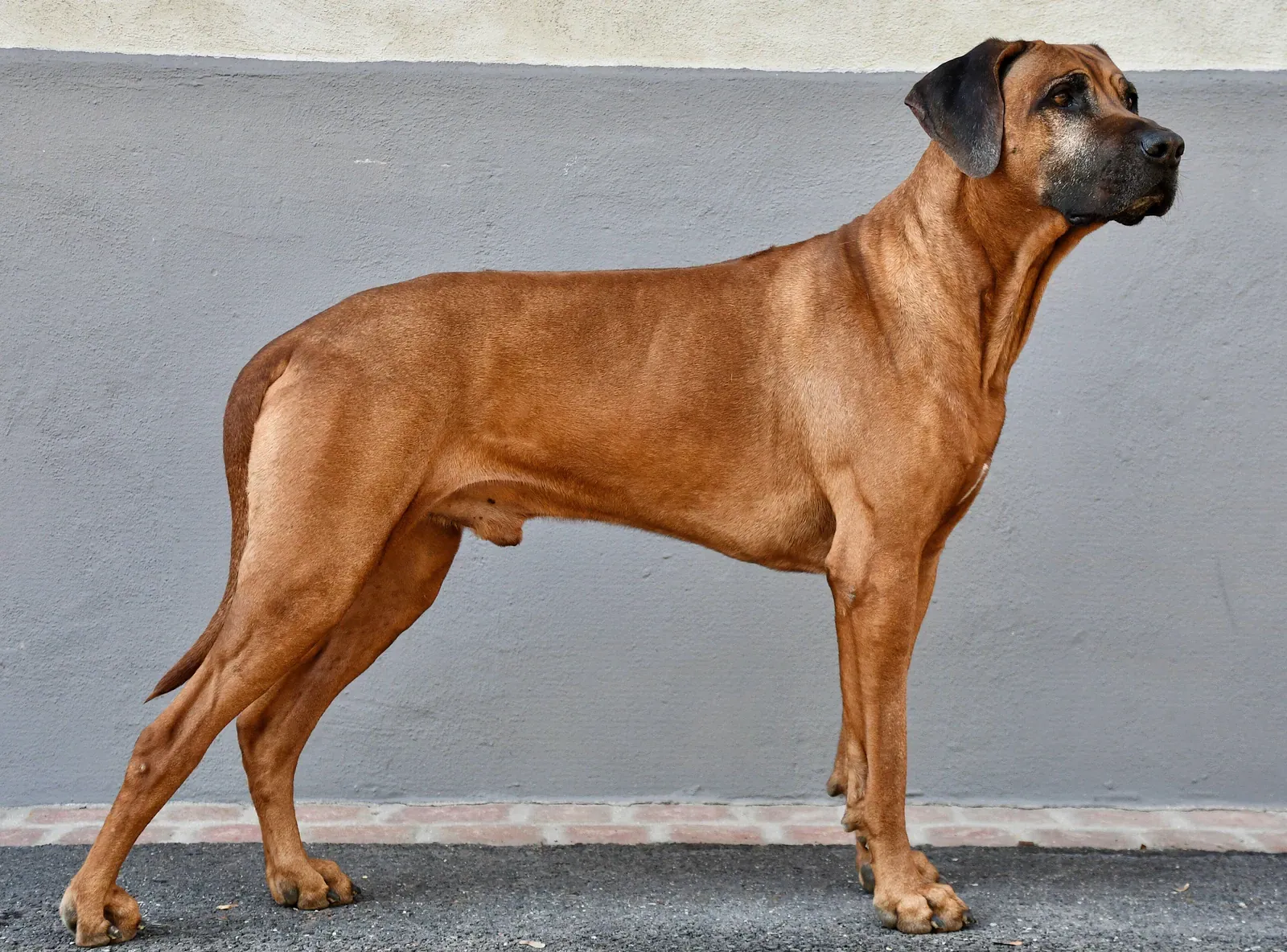
A is the written ideal for a breed that kennel clubs judge dogs against. The FCI, UK Kennel Club and AKC standards for the Rhodesian Ridgeback agree on height and colour. The ridge itself gets the most attention in all three.
| Trait | What the standards say |
|---|---|
| Height, dogs | 63 to 69 cm (FCI); 63 to 69 cm (UK Kennel Club); 25 to 27 inches, about 64 to 69 cm (AKC) |
| Height, bitches | 61 to 66 cm (FCI); 61 to 66 cm (UK Kennel Club); 24 to 26 inches, about 61 to 66 cm (AKC) |
| Weight | FCI: about 36.5 kg dogs, about 32 kg bitches. AKC: desirable weight about 39 kg dogs, about 32 kg bitches (as reproduced in secondary sources) |
| Colour | Light wheaten to red wheaten (FCI, UK Kennel Club). Small white on chest and toes permitted (FCI); dark muzzle and ears permissible (FCI) |
| Ridge | A clearly defined ridge of hair growing against the lie of the coat, starting just behind the shoulders and tapering, with two matching crowns (whorls) opposite each other (FCI, AKC) |
| Coat | Short, dense, sleek and glossy (FCI) |
| Build | Strong, muscular, active, symmetrical; moderately deep chest; powerful hindquarters (FCI) |
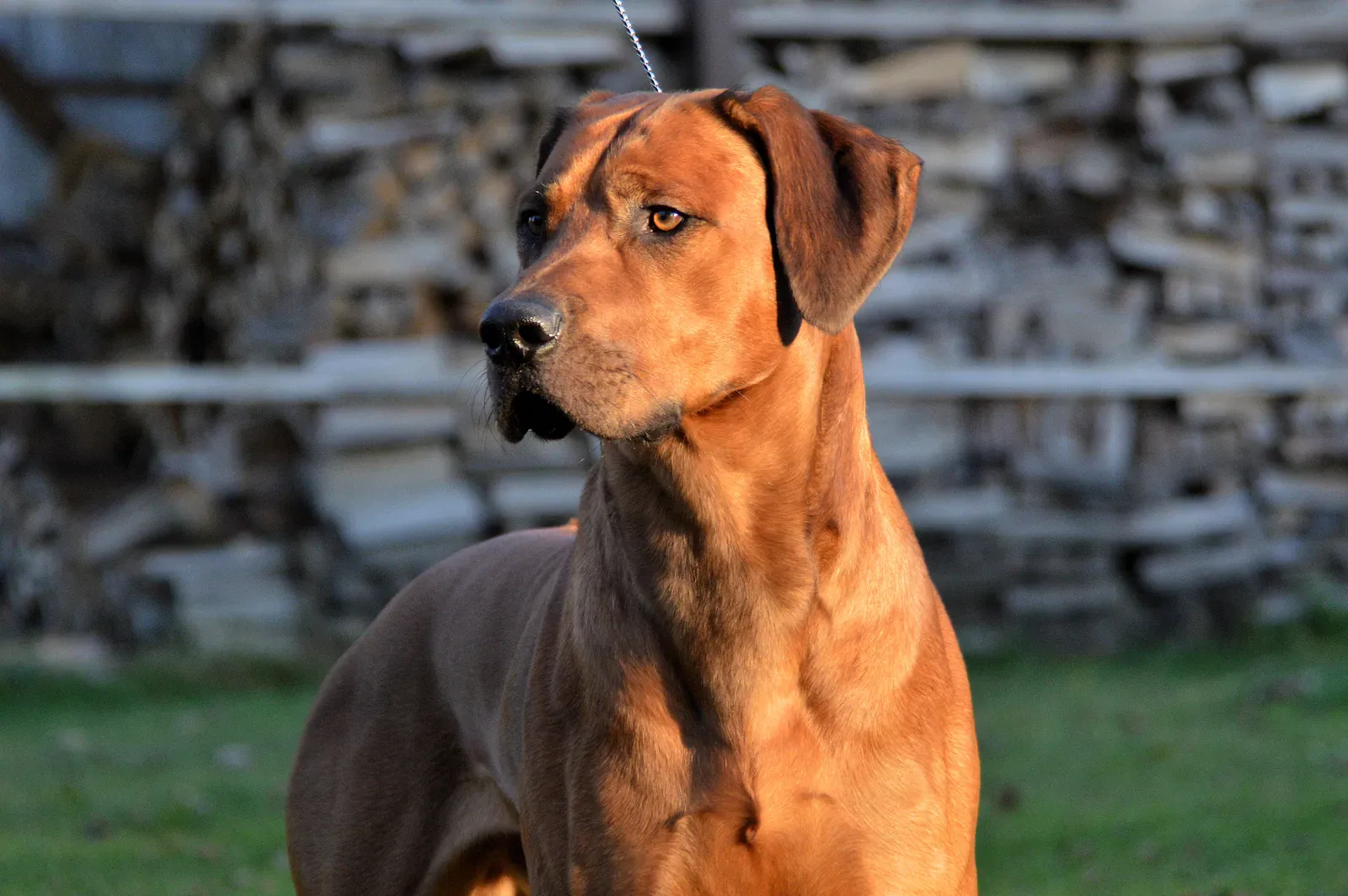
The ridge is a defining feature in all three standards. It is not a cosmetic extra: a dog that is born without it (a "ridgeless" Ridgeback) cannot be shown and is not considered to meet the standard. The UK Kennel Club states that any other colour or combination of colours is unacceptable.
Colour. The accepted colour is wheaten, from light cream-gold to a deep red. The shade is a matter of preference. A little white on the chest and toes is allowed, but a large amount is considered a fault. A dark muzzle and dark ears are permitted in the FCI standard. Colours seen in the pet trade, such as black or brindle, are outside the standards.
Weight. The UK Kennel Club standard gives height ranges but, as far as could be checked, no weight figure. The FCI figures are a single reference weight and the AKC figures are described as desirable.

The ridge gene
 Related breedBoxer1880 to 1904 · GermanyVictorian Breed Boom
The ridge is the most studied feature of the breed. In 2007, a team led by Salmon Hillbertz published a paper in Nature Genetics titled "Duplication of FGF3, FGF4, FGF19 and ORAOV1 causes hair ridge and predisposition to dermoid sinus in Ridgeback dogs" (volume 39, issue 11). A companion paper by Karlsson and colleagues in the same issue mapped the trait to a region on dog chromosome 18 containing several genes, three of them fibroblast growth factors (FGFs). The Salmon Hillbertz team then found a duplication of about 133 kilobases in that region.
Plain version: a short stretch of the dog's DNA that carries growth-factor genes is present twice instead of once. Growth factors guide how hair follicles and skin form in the embryo. With the extra copy, hair on part of the back grows in the opposite direction, which makes the ridge.
The ridge is a dominant trait. A dog needs only one copy of the duplication to be ridged. Dogs with two copies look the same as dogs with one, so the ridge alone does not show how many copies a dog has. The same duplication was found in the Thai Ridgeback, which suggests a shared origin of the mutation. Waldo and Diaz (2015) later reported a DNA test for the copy number, according to the OMIA database, which lets breeders tell apart dogs with one copy from those with two.
The link to dermoid sinus
The same 2007 paper reported that the duplication predisposes dogs to dermoid sinus, a congenital condition in which a narrow tube of skin runs from the surface of the back inward, sometimes down toward the spine. Because the ridge and the sinus come from the same gene change, the risk cannot be bred out without giving up the ridge. According to the OMIA database, the authors described low penetrance in dogs with one copy and high penetrance in dogs with two. Penetrance here means how often a dog that carries the change shows the condition. This is why breeders who test for copy number can lower the chance that a litter includes affected puppies.
Colour
 Related breedBull Terrier1850 to 1888 · United KingdomVictorian Breed Boom
Wheaten is the only accepted colour, and it has been since the first standard. Early accounts mention dogs of other shades in the founding packs, and the grey-black bitches linked to Helm in the legend would have been outside the later standard. The ridge and the wheaten coat were fixed by selection after 1922. No named colour study for this breed was found, so this article does not give the gene behind the wheaten coat.
Temperament
 Related breedBulldog1835 to 1875 · United KingdomIndustrial Revolution
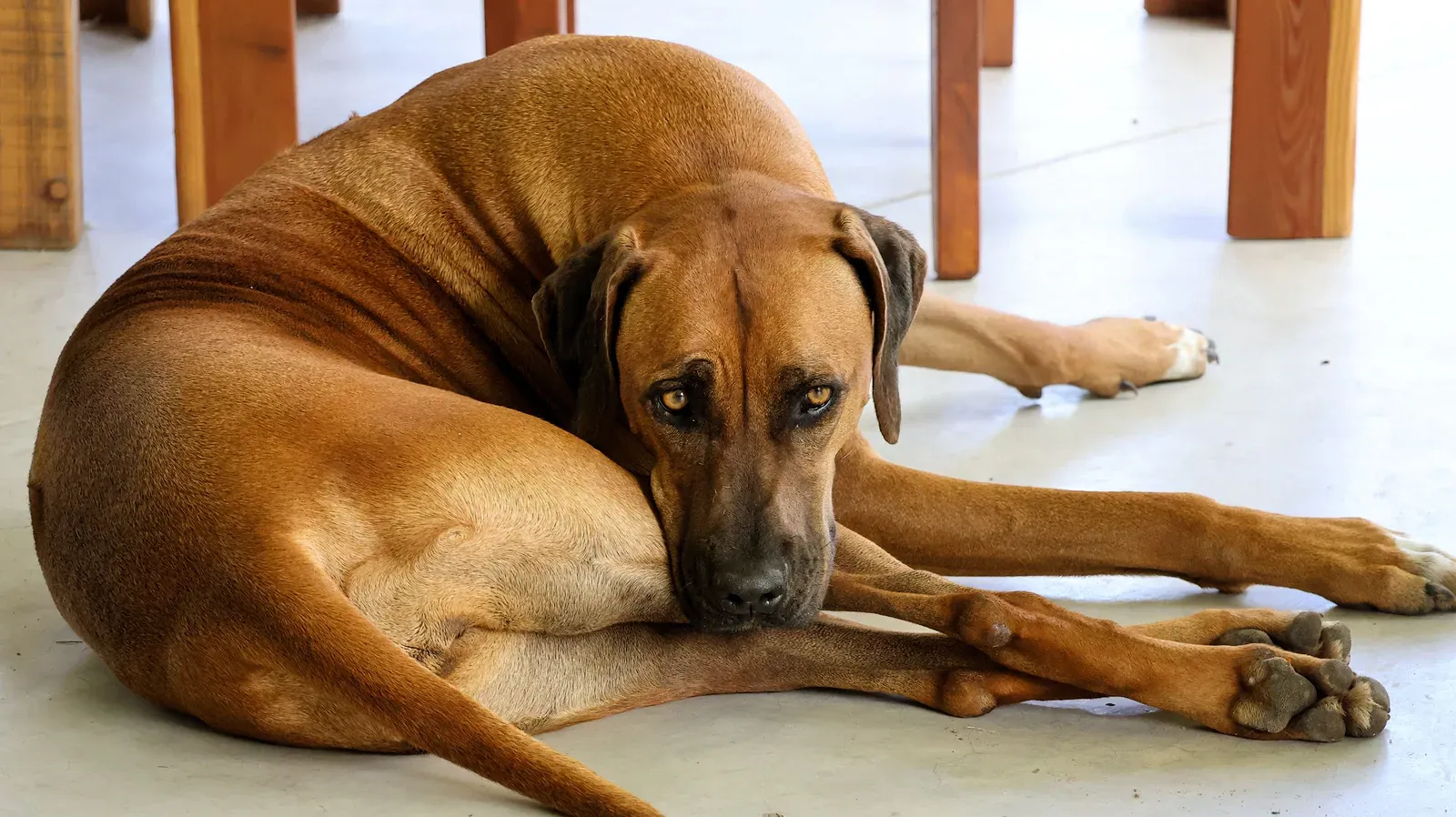
The Rhodesian Ridgeback is dignified, intelligent and reserved. The standards ask for a dog that is aloof with strangers without being aggressive or shy. Most owners and breed guides describe it as devoted and affectionate with its own family, and watchful and reserved with people it does not know.
Training. The breed is independent and strong-willed. It is bright, but it was bred to work at a distance from its hunter and make decisions, so it tends to question a command that seems pointless. It responds poorly to harsh correction and does better with calm, consistent, reward-based training. Early training matters, because an adult is large and very strong.
Prey drive. The Ridgeback is a hunting hound and a fast runner. The urge to chase is strong, and for most young dogs it overrides training. Safe, fenced spaces matter, and a reliable recall is something to build slowly and not assume.
Guarding. It is alert and watchful but not usually a noisy dog. Early socialisation helps it learn that visitors are normal.
Children. A well-socialised Ridgeback can do well with children when contact is supervised and both sides learn how to behave. It is large and strong, and an adult dog can knock over a toddler without meaning to.
Other animals. Ridgebacks often live with other dogs, but some are dominant with dogs of the same sex. Because of the prey drive, small animals such as cats may be seen as prey unless the dog grew up with them. Evidence on this is thin, and it varies by individual.
 Save

Health
 Related breedBullmastiff1860 to 1924 · United KingdomVictorian Breed Boom
Most Rhodesian Ridgebacks live healthy lives. Breeders and breed clubs run health testing programmes, and many conditions can be managed or lowered by screening parents. This section describes what is most often discussed in the breed, with numbers only where a named source gave one.
| Condition | What it is | How common | What helps |
|---|---|---|---|
| Dermoid sinus | A congenital tube of skin that runs inward from the back, often near the ridge; can become infected | About 1 in 25 to 1 in 33 puppies (3 to 4 percent, an estimate on the DogWellNet breed health pages; the underlying data was not named) | Puppy checks by a vet or breeder; DNA copy number test; surgery if a sinus is found |
| (DM) | A late-onset nerve disease of the spinal cord that affects the hind legs | About 1 in 11 tested dogs were (9 percent; GENOCAN, 400 tested Ridgebacks, no dog had two copies; a private test cohort, not a random sample) | DM DNA test (UK Kennel Club approved a scheme for the breed); breed from clear or carrier dogs with care |
| A loose or misshapen hip joint that can lead to arthritis | Seen in the breed; no named prevalence found | Hip scoring of parents (BVA/Kennel Club scheme in the UK); keeping a lean weight | |
| A developmental problem in the elbow joint | Seen in the breed; no named prevalence found | Elbow scoring of parents; steady exercise while growing | |
| Hypothyroidism | Low thyroid hormone, which can cause weight gain and coat changes | Reported as more frequent than in many breeds; no named prevalence found | Blood test and daily hormone tablet if diagnosed |
| Juvenile myoclonic epilepsy | An inherited form of epilepsy in young dogs | A DNA test was approved by the UK Kennel Club in 2017 | DNA test of breeding dogs |
The UK Kennel Club's Breed Health and Conservation Plan for the Rhodesian Ridgeback lists the tests it recommends before breeding, split into Good Practice and Best Practice. Other conditions named for the breed in the sources include gastric dilatation and volvulus (bloat or twisted stomach, a risk for deep-chested breeds), an inherited heart rhythm problem in young dogs and early onset adult deafness. For none of these did the search return a named study with a prevalence, so no figures are given.
A 2025 study in the journal Veterinarni medicina looked at lumbosacral transitional vertebrae and their link to hip dysplasia in Ridgebacks in Germany. Only the title and abstract record were available, so its findings are not reported here.
Life span. The atlas data gives 10 to 12 years. No breed-specific VetCompass longevity study was found, so it is treated as a typical range and not a measured median.
What helps in practice
- Ask for puppy checks. A vet or experienced breeder checks the ridge and the line of the spine for a sinus.
- Ask for the copy number result for the parents where the test is offered.
- Choose breeders who score hips and elbows and who use the DM test.
- Keep the dog lean. It protects the joints.
- A deep-chested dog should not exercise hard right after a large meal.
 Save

Living with a Rhodesian Ridgeback
 Related breedCane Corso1000 to 1996 · ItalyEarly Middle Ages
The Ridgeback is a quiet, clean, short-coated dog that needs a lot of exercise and a calm, firm owner. It is a loyal dog that does not seek attention from everyone, and its independence suits people who like a dog with character.
| Daily reality | Rating | Why |
|---|---|---|
| Exercise per day | High | An athletic hound; sources suggest an hour or more of running and walking |
| Training needs | High | Independent and strong-willed; calm, reward-based training from puppyhood |
| Grooming | Low | Short coat; a quick brush once a week, plus nails, teeth and ears |
| Shedding | Medium | Short hair that sheds year round |
| Barking | Low | Alert but not usually noisy; varies by dog |
| Time alone | Fair | Bonded to its family and can be destructive when bored; varies |
| Children | Varies | Can do well with supervised, respectful contact; large and strong |
| Other dogs | Varies | Some are dominant with dogs of the same sex; socialise early |
| Cats and small pets | Varies | Strong prey drive; depends on early exposure; evidence is thin |
| Flat living | Poor | Large and active; needs a garden and daily outdoor time |
| Heat tolerance | Good | Developed for southern Africa; still avoid hard exercise in peak heat |
| Cold tolerance | Fair | Short coat with little insulation; a coat may help in a cold, wet climate |
| First-time owner fit | Fair | Independent and strong; a first-timer can manage with a trainer |
A great fit if
- You can give an hour or more of running room every day, with a fenced space.
- You like a reserved, dignified dog and do not need it to greet everyone.
- You will train calmly and consistently, and enjoy a dog that thinks for itself.
- You are home for a good part of the day.
Think twice if
- You live in a small flat without easy outdoor access.
- You want a dog that is very sociable with all strangers and all dogs.
- You have small pets that must live loose with a hound.
- You want a dog that will walk off lead without long, patient recall work.
Before you get one
- Health tests. Ask the breeder for hip scores and elbow scores, the DM DNA result, the copy number or dermoid sinus checks for the litter, and the juvenile myoclonic epilepsy DNA result where relevant. Ask to see the original certificates.
- Puppy or adult rescue. Breed rescues exist and often place adults whose size and character are known. This can suit a first-time owner who wants a clear picture.
- First year. Plan for puppy classes, safe off-lead places and a lean body weight. Do not let a growing puppy run hard on hard ground, since large breeds grow fast and their joints need time.
Similar breeds to consider
- Great Dane. The closest DNA relative in the study; much larger, calmer and more of a house dog.
- Boerboel. Another southern African breed with a guarding role and a heavier build.
- Greyhound. Fast and quiet in the house, with a lighter build and less guarding interest.
- Thai Ridgeback. Shares the ridge gene, but is a different, more independent breed with its own needs.

Rhodesian Ridgeback fun facts
 Related breedDogo Argentino1928 to 1973 · ArgentinaModern Era
- The ridge comes from a duplicated stretch of about 133 kilobases of DNA, which includes three growth-factor genes (Salmon Hillbertz et al., 2007).
- The breed's first standard, drafted in Bulawayo in 1922, is said to have been based on the Dalmatian standard.
- The same ridge gene exists in the Thai Ridgeback, which lives on the other side of the Indian Ocean.
- A "ridgeless" puppy can be born in a litter of ridged parents, but it cannot be shown.
Frequently asked questions
Are Rhodesian Ridgebacks good family dogs?
They can be, in homes that train and socialise them and supervise contact with young children. They are loyal and calm indoors but strong, reserved with strangers, and need daily exercise.
How big is a Rhodesian Ridgeback?
Dogs stand 63 to 69 cm and bitches 61 to 66 cm ( and UK Kennel Club). The FCI gives about 36.5 kg for dogs and 32 kg for bitches.
How long do Rhodesian Ridgebacks live?
The atlas data gives 10 to 12 years. No breed-specific study was found.
What is the ridge on a Rhodesian Ridgeback?
A strip of hair along the back that grows against the lie of the coat. It comes from a duplication of growth-factor genes (Salmon Hillbertz et al., 2007), and it is a dominant trait.
What is dermoid sinus in Ridgebacks?
A congenital tube of skin that can reach inward from the back. It is linked to the same gene change as the ridge. A breeder estimate on the DogWellNet pages puts it at about 3 to 4 percent of puppies. Vets can check puppies and remove a sinus with surgery.
Did Rhodesian Ridgebacks really hunt lions?
They were used in packs to find big game and keep a lion at bay until the hunter arrived. The idea that they killed lions is legend.
Read next
 Closest DNAGreat Dane20.7 Mb shared
 FamilyEuropean MastiffThe whole family
 Adopt a dogDog Shelters in EuropeFind dog shelters in Europe, learn how shelters differ from country to country and why adopting a dog is a good option.
Sources (15)
- Fédération Cynologique Internationale, Rhodesian Ridgeback, standard no. 146.
- American Kennel Club, Rhodesian Ridgeback breed standard and breed pages.
- The Kennel Club (UK), Rhodesian Ridgeback breed standard and breed information pages.
- Kennel Union of Southern Africa (KUSA), Rhodesian Ridgeback breed standard, 2021 revision.
- Salmon Hillbertz N.H.C. et al., "Duplication of FGF3, FGF4, FGF19 and ORAOV1 causes hair ridge and predisposition to dermoid sinus in Ridgeback dogs", Nature Genetics, 2007.
- Karlsson E.K. et al., "Efficient mapping of mendelian traits in dogs through genome-wide association", Nature Genetics, 2007.
- Online Mendelian Inheritance in Animals (OMIA), dermoid sinus in the dog, entry on the Ridgeback ridge and the Waldo and Diaz (2015) copy number test.
- Parker H.G. et al., "Genomic analyses reveal the influence of geographic origin, migration, and hybridization on modern dog breed development", Cell Reports, 2017.
- Stewart S.H., history of the Rhodesian Ridgeback, Rhodesian Ridgeback International Foundation.
- Durham B.W., account of the 1922 Bulawayo meeting, Kennel Union Gazette, 1950 (as quoted in breed histories).
- DogWellNet, Rhodesian Ridgeback and dermoid sinus health pages.
- GENOCAN, "Genetics of the Rhodesian Ridgeback: Population findings from 400 tested dogs".
- The Kennel Club (UK), Breed Health and Conservation Plan programme and DNA testing schemes for Rhodesian Ridgebacks (2017 and 2024 announcements).
- Fogle B., The New Encyclopedia of the Dog, 2009.
- PDSA, Rhodesian Ridgeback breed information.