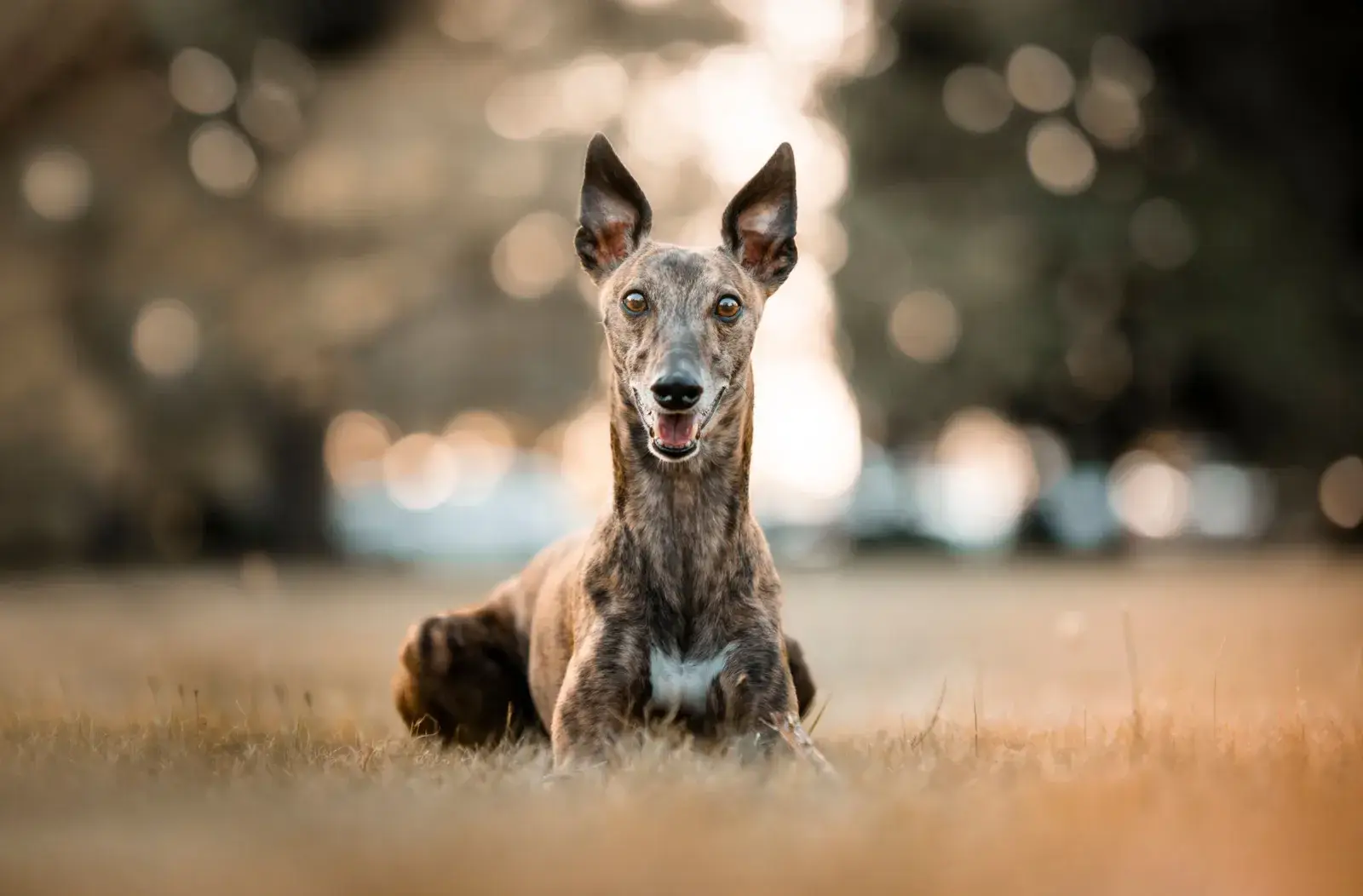
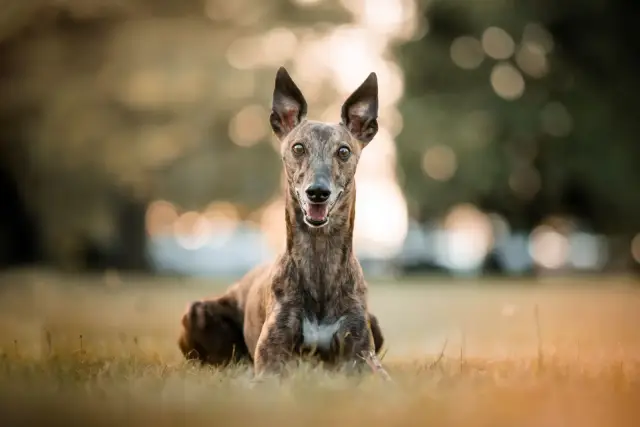
For centuries it was a coursing dog of the nobility, then a track racing dog, and today it is also one of the most popular rescue breeds, because thousands of retired racers need homes. In the house it is a gentle, quiet, soft-voiced dog that sleeps for much of the day, which is where the nickname "45 mph couch potato" comes from. It suits calm homes with a securely fenced space for a short daily run and a lot of sofa time. The UK VetCompass study of 5,419 pet Greyhounds put the average lifespan at 11.4 years.
Greyhound quick facts
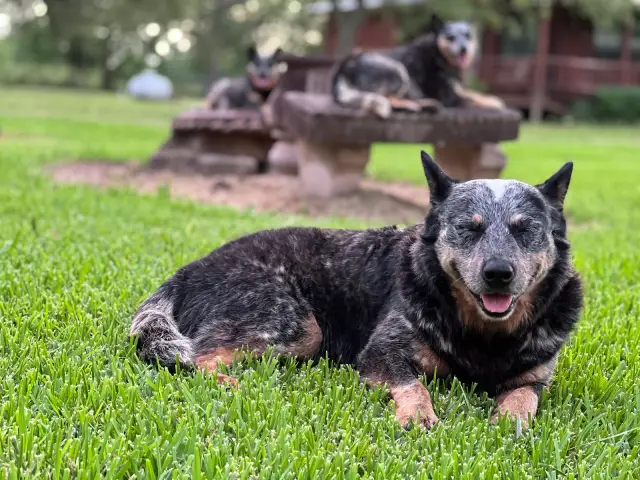 Related breedAustralian Cattle Dog1840 to 1903 · AustraliaIndustrial Revolution
- Closest DNA relatives
- Whippet, Scottish Deerhound, Irish Wolfhound, Italian Greyhound
- Descendant breeds
- Whippet, Galgo Espanol, Magyar Agar, Rampur Greyhound, Rhodesian Ridgeback, Dobermann, Bull Arab (atlas data)
- Country of origin
- Great Britain (England)
- Period of development
- Sighthound types are very old; the English Greyhound took shape over the Middle Ages and was refined by coursing clubs from the 1700s (atlas data: about 800 CE to 1850)
- Original job
- Coursing hares and deer by sight
- Type
- Sighthound ( Group 10, standard no. 158; Hound Group; UK Kennel Club Hound Group)
- Height
- Dogs about 71 to 76 cm, bitches about 68 to 71 cm (FCI and Kennel Club ranges)
- Weight
- UK VetCompass mean adult weight 29.7 kg (males 32.3 kg, females 27.2 kg)
- Coat
- Short, fine, close
- Colour
- Any colour; in the UK VetCompass sample black was most common (39.2 percent), then black and white (20.8 percent) and brindle (12.0 percent)
- Life span
- UK VetCompass mean 11.4 years (O'Neill et al. 2019); atlas data 10 to 14 years
- DNA family
- UK Rural family (Parker et al. 2017)
Drawn to scale in real centimetres. Its back reaches about 72 cm, mid-thigh; its head about 91 cm, your hip.
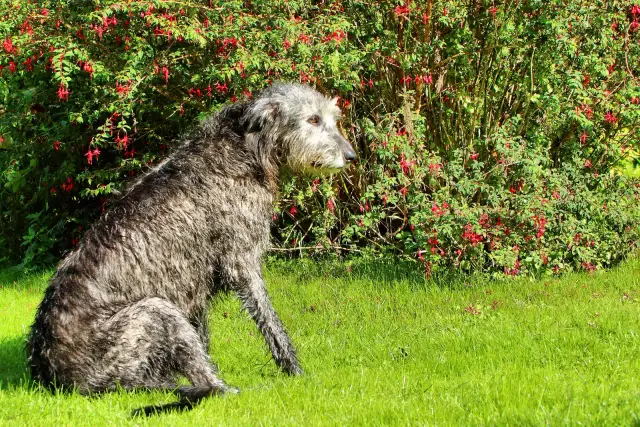
Where it sits in the tree
Early Middle Ages · 500 to 1199
Name and origin
 Related breedAustralian Kelpie1870 to 1902 · AustraliaVictorian Breed Boom
The English word comes from Old English grighund. The "hound" half is plain: it descends from Old English hund. The first half is a genuine puzzle, and linguists have not settled it. The main proposals are:
- "Grey" the colour. The obvious guess, and the one most sources reject. Greyhounds come in many colours, and the Old English first element does not seem to share a root with the colour word.
- "Bitch." Wiktionary links the first part to an Old Norse word meaning "bitch" that was reshaped by folk etymology into "grey". The linguist Anatoly Liberman, writing for the Oxford University Press blog, also discusses this sense.
- "Fair" or "bright." Julius Pokorny's Indo-European dictionary proposed that the name means a "fair dog", from a root meaning "shine" or "bright".
- Other ideas. Celtic words for "hare" or "herd" were put forward and largely dismissed because the word already existed in Old English. A Greek source proposed in 1617 came with no evidence.
The honest answer is "origin uncertain". The Old English form is well recorded; the meaning of the first element is not.

History
 Same eraAustralian Shepherd1840 to 1957 · United StatesIndustrial Revolution
How old is the Greyhound?
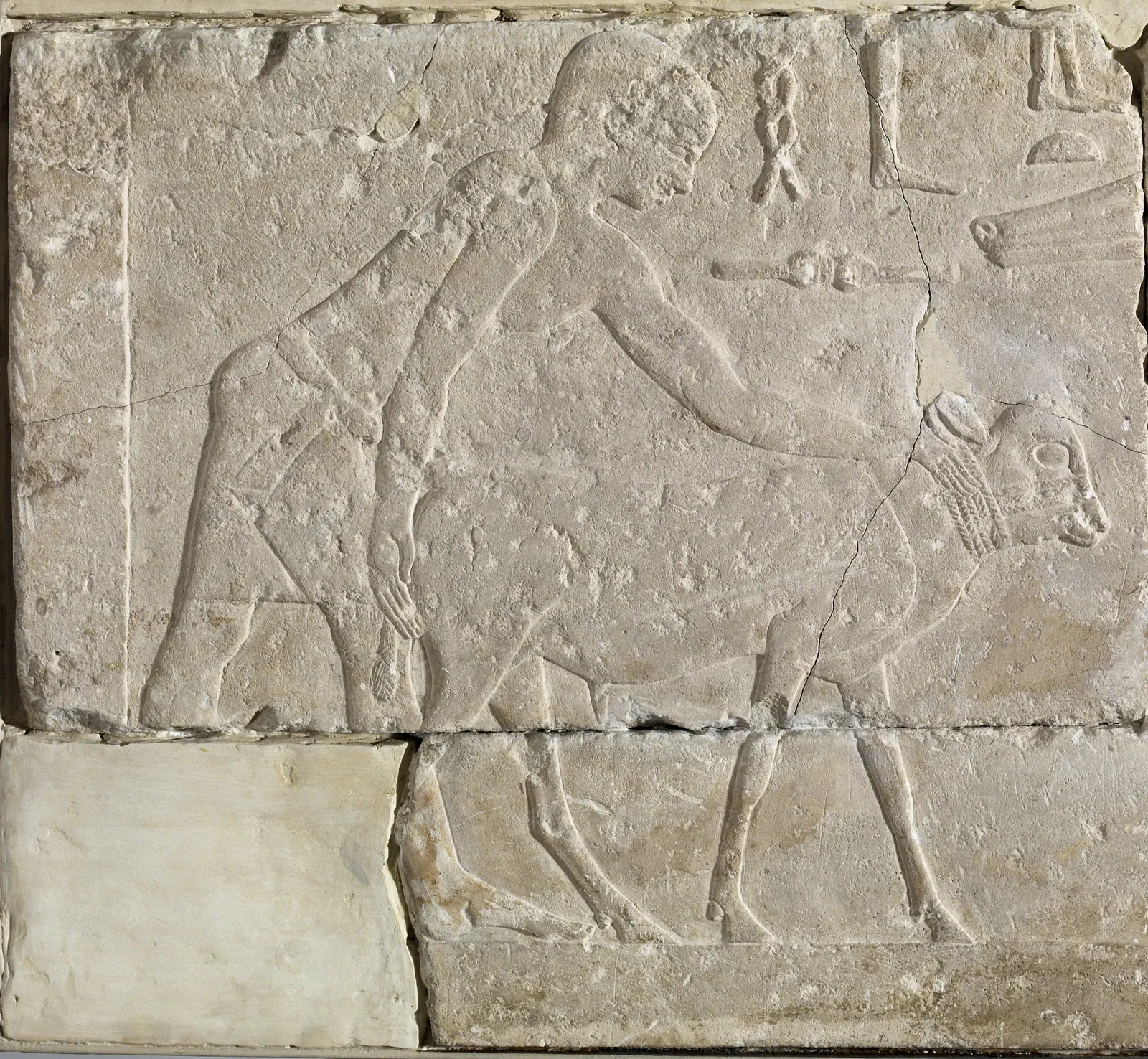
Many books say the Greyhound is 4,000 to 5,000 years old and trace it to Egyptian tomb paintings and carvings. The pictures are real: slim, long-legged hunting dogs with curled tails appear in ancient Egyptian art. But a drawing of a similar-looking dog is not proof of an ancestor, and the genetic work does not support a straight line from those dogs to the modern Greyhound.
- Multiple origins. A 2023 study of 123 sighthounds (Molecular Biology and Evolution) concluded that sighthounds arose from native dogs in different places independently and were later mixed among breeds. That supports the idea that long-legged coursing dogs were developed more than once.
- No direct Egyptian descent. A study of hound-like native dogs of the Mediterranean Basin found that none of the modern populations it sampled were direct descendants of the dogs shown in Egyptian art, although some resemble them.
- Older breeds than the Greyhound. Parker et al. (2004, Science) identified the Afghan Hound and the Saluki as among the most ancient breeds. The Saluki's deep is better supported than the Greyhound's.
The atlas data lists the vertragus, a Celtic hunting dog described by Roman writers, as a possible antecedent (low confidence). Treat the vertragus link as an old tradition.
 Save
Hunting dog of the nobility
By the Middle Ages the Greyhound was a status animal. A law attributed to King Canute (1016) is often quoted as restricting greyhound ownership to the gentry; historians doubt the date of the text, so read it as a later claim about the same idea. The Boke of Saint Albans (1486), an English treatise on hunting, lists the Greyhound among the hunting dogs, and it appears in portraits and tapestries of the period.
Coursing and the Waterloo Cup
Coursing is the sport of two greyhounds chasing a hare while judges score the dogs on speed, turns and skill. Organised coursing clubs began in England in the 1700s; the Swaffham club (1776) is often named as the first, though this is not firmly documented. The best-known event was the Waterloo Cup, founded in 1836 by a Liverpool hotelier on land owned by the 2nd Earl of Sefton at Altcar near Liverpool. It was a knockout tournament between 64 dogs from Britain and Ireland, billed by supporters as the blue riband of coursing. Railways brought large crowds, and by the late 1800s the sport had spread from the aristocracy to working people.
The Hunting Act 2004 made hare coursing events unlawful in England and Wales. The last Waterloo Cup was held in February 2005, just before the Act took effect (sources give the 14th or the 15th). Coursing remains legal in some countries, such as Ireland.
Track racing
Track racing with a mechanical lure replaced coursing as the main use of the breed in the 1900s. Owen Patrick Smith is usually credited with starting modern lure racing in California around 1919, and commercial greyhound racing began in Britain in 1926 (both dates are as reported in standard histories). By the mid-1900s the sport was a major spectator and betting industry in the UK, Ireland, Australia and the United States.
United States. Racing declined sharply in the 2000s as tracks closed. In 2018 Florida voters passed Amendment 13 with about 69 percent of the vote, ending commercial dog racing from 1 January 2021 (tracks had to stop by 31 December 2020); the state had 11 tracks and an estimated 5,000 to 7,000 dogs. Elsewhere tracks in Alabama, Arkansas, Iowa and Texas have also closed or stopped; reports in 2026 say two active tracks remain, both in West Virginia.
United Kingdom. Racing continues in England under the Greyhound Board of Great Britain (GBGB), which publishes injury and fatality data each year as Defra requires. For 2023 it reported 109 trackside deaths and 4,238 injuries across its 20 tracks, with roughly 15,000 active racing dogs; the League Against Cruel Sports said this was the first year the death toll had risen compared with the previous year. Figures for 2024 differ by source (for example, 123 track fatalities in one summary and 346 deaths in all in another, which may count different things), so check the GBGB report itself. The GBGB says racing is regulated and the dogs are cared for; campaigners say injuries and deaths are too high and call for a ban. In March 2026 the Senedd voted 39 to 10 to end greyhound racing in Wales (with a phased ban expected between 2027 and 2030) and the Scottish Parliament passed a bill making it an offence in Scotland (70 to 27). England has no ban, and the UK government is reported to have no plans for one.
Racing is a contested subject. We describe the facts as published and leave the judgement to the reader.
Recognition
The FCI recognises the Greyhound under standard no. 158 with Great Britain as the country of origin. The AKC and the UK Kennel Club both place it in their Hound Group. Show Greyhounds ("show line") and racing Greyhounds ("track line") are bred for different goals: show dogs tend to be bigger and heavier, track dogs lighter and built purely for speed.
Relatives and DNA
 Same familyBearded Collie1500 to 1944 · United KingdomAge of Exploration
The Greyhound belongs to the UK Rural family in the Parker et al. 2017 study (Cell Reports), which analysed 1,346 dogs from 161 breeds and grouped them into 23 clades. The study measured shared : long stretches of identical DNA from common ancestors or past crosses. More shared () means a closer link, though the data does not say which way genes flowed.
Source: Parker et al. 2017, as recorded in this site's breed database.
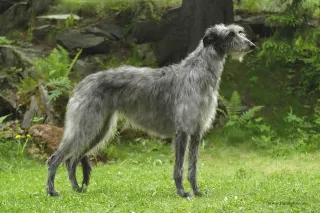
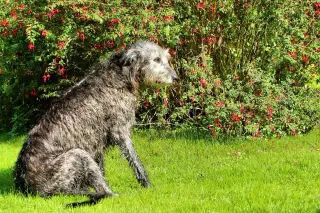
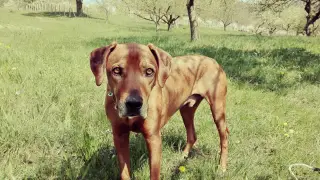
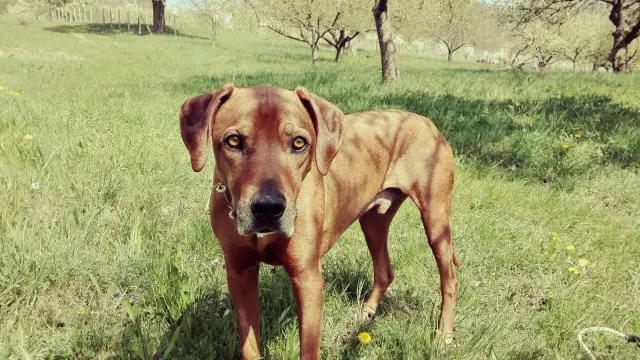
The Whippet share fits its history as a smaller sighthound built partly from Greyhound stock. The Deerhound and Irish Wolfhound shares fit British rough-coated hunting dogs mixed with smooth Greyhounds in the past. The Rhodesian Ridgeback result matches the breed's history: its early development included Greyhound blood.
Atlas data lists these descendants and relatives: Galgo Espanol (a Spanish sighthound, sister breed in our data), Magyar Agar, Rampur Greyhound, Whippet, Rhodesian Ridgeback, Dobermann, Bull Arab and several terrier types such as the Manchester Terrier. Some of these are credited to Greyhound crosses in the old literature; DNA only confirms some links.
Sister breeds · 2
- Galgo Español500 CE to 1900
- Old Croatian Sighthound1200 to 1400
Descend from it · 7
- Galgo EspañolSpain
- Magyar AgárHungary
- Rhodesian RidgebackSouth Africa
- Rampur GreyhoundIndia
- WhippetUnited Kingdom
- DobermannGermany
- Bull ArabAustralia
- Whippet61.7 Mb 2.6%
- Scottish Deerhound37.6 Mb 1.6%
- Irish Wolfhound19.3 Mb 0.8%
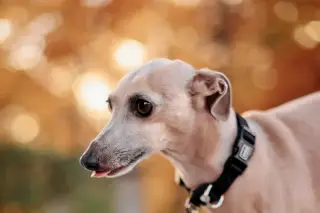
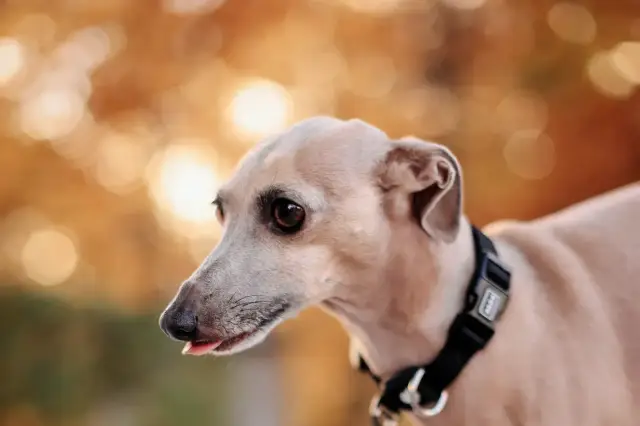
- Italian Greyhound16.5 Mb 0.7%
- Rhodesian Ridgeback11.9 Mb 0.5%
Source: Parker et al. 2017. Percent of the whole genome.
| Breedwith Greyhound | with Greyhound (Mb)Shared DNA (Mb) |
|---|---|
| Whippet | 61.7 |
| Scottish Deerhound | 37.6 |
| Irish Wolfhound | 19.3 |
| Italian Greyhound | 16.5 |
| Rhodesian Ridgeback | 11.9 |
Source: Parker et al. 2017, Cell Reports, shared haplotypes between 161 breeds (1,346 dogs).
The breed standard
 Looks relatedBorder Collie1800 to 1915 · United KingdomIndustrial Revolution
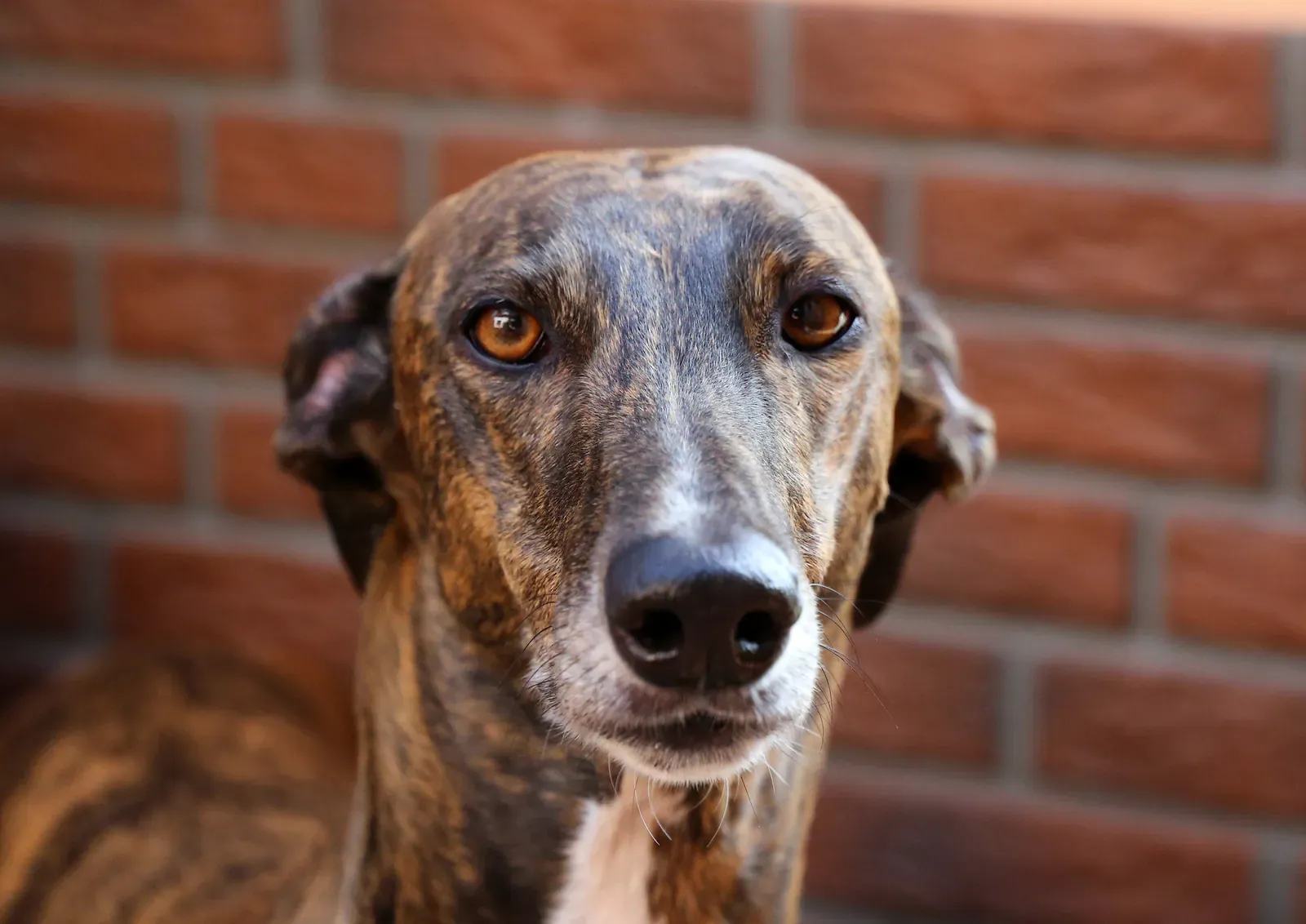
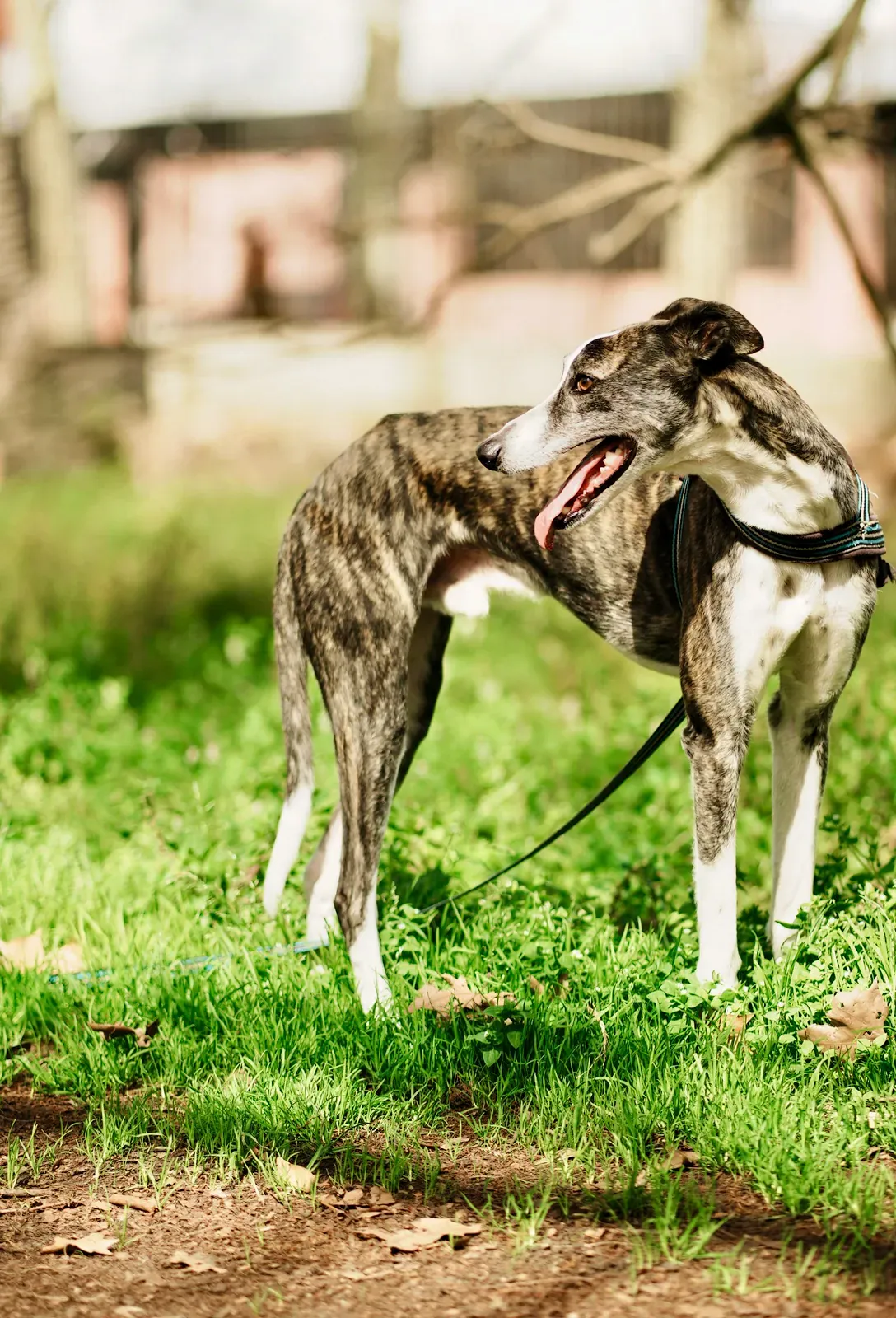
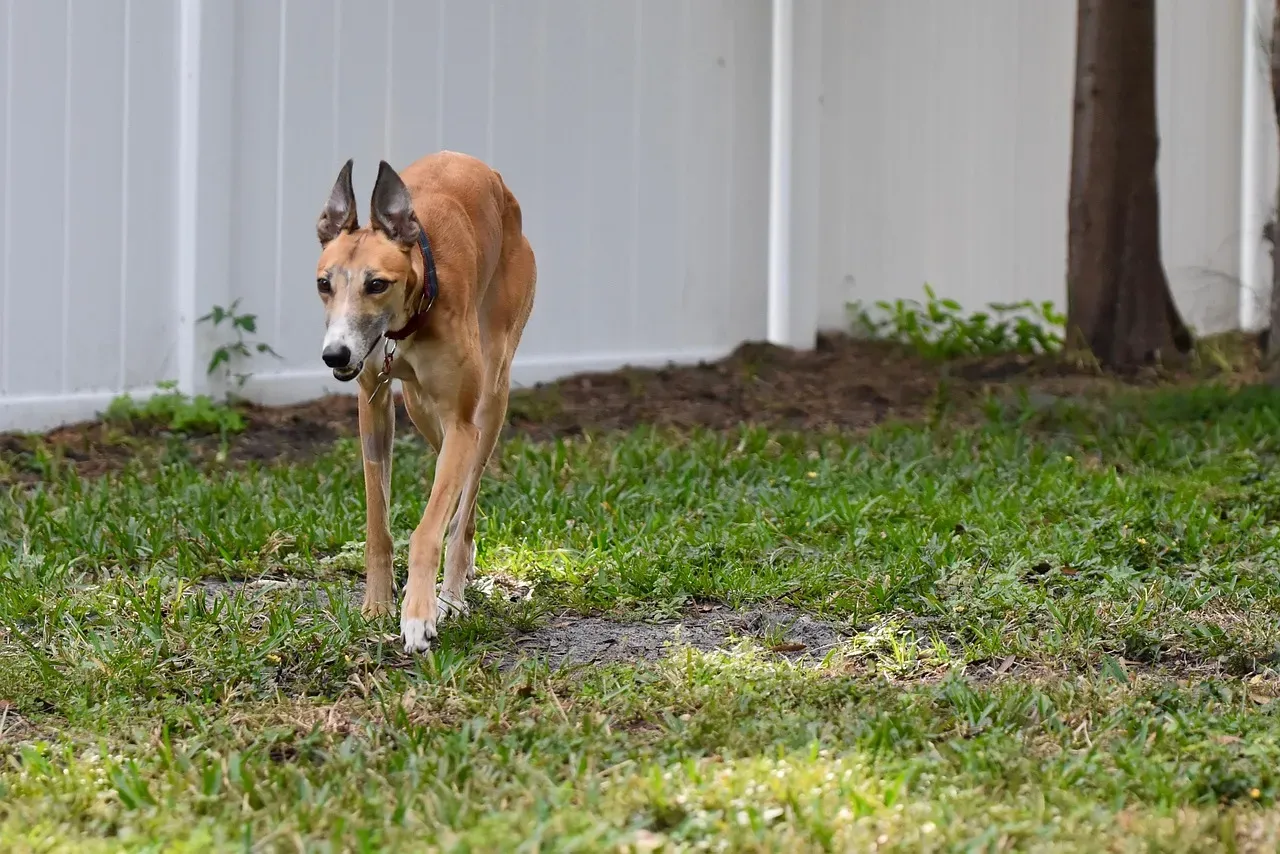
A is the written ideal that kennel clubs judge dogs against. The Greyhound standards of the FCI, AKC and UK Kennel Club agree on the picture: a strong, muscular, symmetrical dog of racing build, with a long head, long neck, deep chest, arched back (loin), tucked-up belly and a long, tapering tail.
| Trait | What the standards say |
|---|---|
| Height, dogs | FCI and Kennel Club: about 71 to 76 cm. AKC: about 71 to 76 cm (28 to 30 inches) |
| Height, bitches | FCI and Kennel Club: about 68 to 71 cm. AKC: about 69 to 71 cm |
| Weight | AKC: about 29 to 32 kg for dogs, 27 to 30 kg for bitches. FCI gives a wider range. Kennel Club: none given |
| Coat | Fine, short and close (all three) |
| Colour | Black, white, red, blue, fawn, fallow or brindle, or any of these broken with white (as the standards list it) |
| Head and ears | Long, flat skull and muzzle; small rose ears folded back, semi-pricked when alert |
| Tail | Long, set low, curving slightly upward |
The figures in the table come from the clubs' published standards; check the latest standard text before quoting any single number. The UK VetCompass study (below) is a useful reality check for pet dogs: its mean adult weight was 29.7 kg, which is lower than a typical big show Greyhound.
Temperament
 Related breedBorzoi1200 to 1650 · RussiaLate Middle Ages
The Greyhound's reputation is "quiet, gentle and sensitive", and it is largely earned. Rescue groups describe racers as calm, clean in the house and affectionate with people they know. See the smartest dog breeds for how this breed compares with others on trainability.
- The 45 mph couch potato. Greyhounds sprint fast and rest a lot. One Australian rescue writer describes dogs sleeping up to 18 hours a day, with short bursts of zooming and a walk. Most retired racers are content with a daily walk and a short run in a secure area.
- Sensitive. Greyhounds respond to a soft voice. Harsh handling makes many shut down. Reward-based training works best.
- Quiet. Barking is uncommon; many live in flats.
- A chaser by nature. A Greyhound sees a movement and goes. Off-lead walks are only safe in a fully fenced field. Racing dogs often learn to chase small fast animals, and many ex-racers may not be safe with cats or small pets unless tested.
- New to home life. Ex-racers may not know stairs, glass doors or windows, and some have not touched grass. Rescue groups say adopters should plan a few weeks of settling in. Toilet training usually takes some time.
- Not a guard dog. Greyhounds are friendly or aloof, rarely protective.
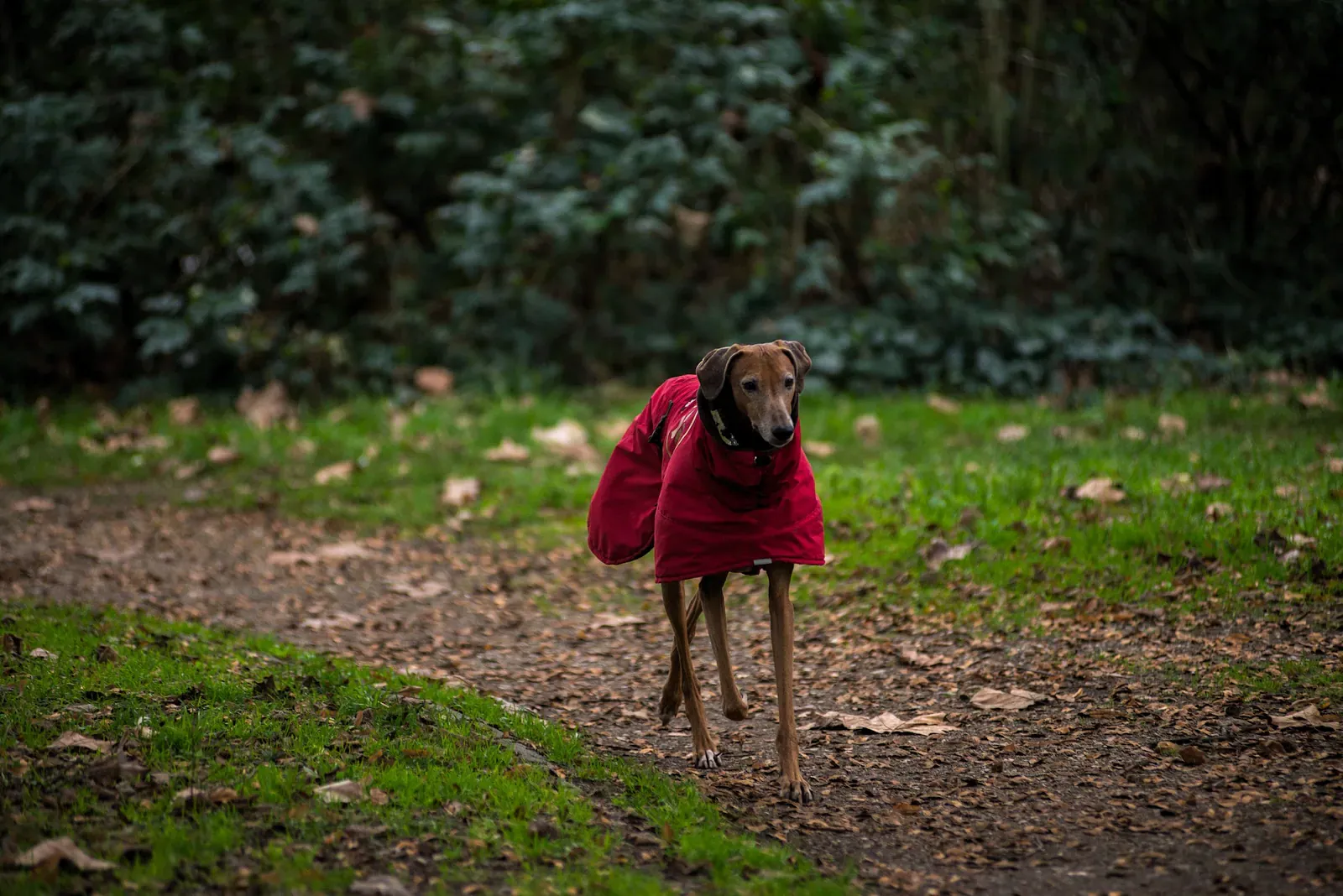
- Cold-prone. Thin coat and little body fat: a coat in cold weather is a normal part of life.

Retired racers as pets
 Related breedCardigan Welsh Corgi1200 to 1934 · United KingdomLate Middle Ages
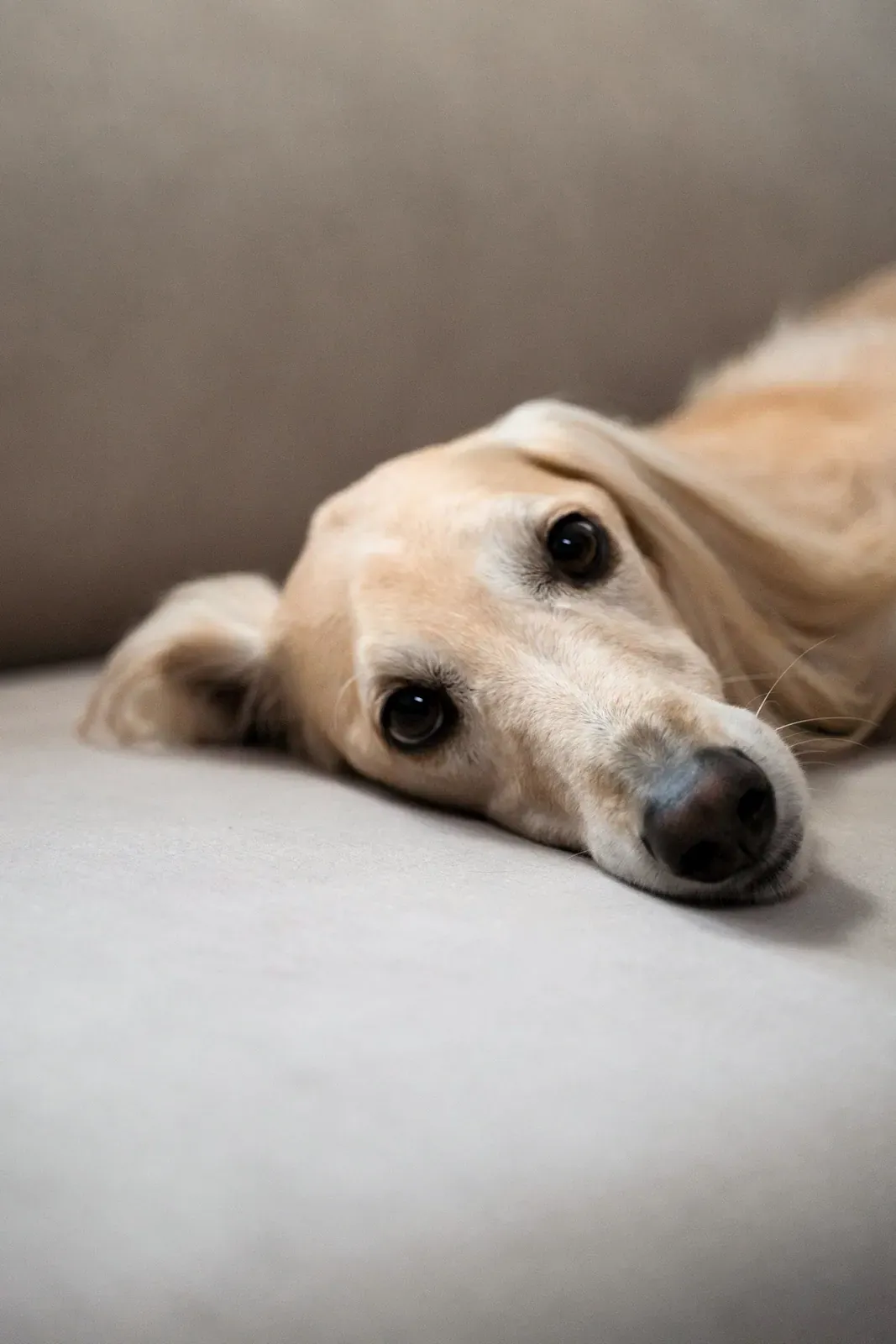
Each year racing dogs retire, often at age 2 to 5, with many years of life left. Rescue charities and breed-specific groups place them in homes, and the Greyhound is among the best-known adoption dogs. Our guide to adopting a dog covers how rescues work; the points specific to greyhounds are these.
- They are usually healthy and settled. Rescues check them, spay or neuter them and often foster them in homes before placement.
- Expect a learning curve. A racing dog has lived in kennels. Houses, stairs, floors, mirrors and other pets are new.
- A secure fence matters more than a large garden. Greyhounds can reach top speed in a few strides and may not return.
- Muzzle and lead use. Many rescues ask adopters to keep a new dog on a lead in public and to use a muzzle in some places, particularly if the dog has not been cat tested.
- Two or more. Many greyhounds enjoy a second dog, and some rescues suggest it.
- Rescues are not a sign of poor health. Dogs retire because of age or slow times, not necessarily injury. A vet check at adoption is sensible.
Racing welfare debates affect adoption: Florida's 2020 closure created a rush of dogs needing homes, and the last dogs there were rehomed. In the UK, the GBGB reported 55 dogs put to sleep in 2023 because no home was found or they were judged unsuitable for rehoming; this figure is from the League Against Cruel Sports summary and should be checked against the GBGB report.
 Save
Health
 Related breedMiniature American Shepherd1968 to 2015 · United StatesModern Era
Most Greyhounds live healthy lives. This section lists what the UK's largest pet study found and what owners can watch for, with figures from named studies. The information is general: talk to a vet about your own dog.
Life span and common disorders. O'Neill and colleagues (Canine Genetics and Epidemiology, 2019) studied 5,419 Greyhounds from 626 UK clinics, 0.60 percent of the 905,544 dogs in the VetCompass data for 2016. Mean age in the sample was 7.6 years. The lifespan estimate came from 474 deaths: the mean was 11.4 years, and females (11.8 years) outlived males. About three-quarters (77.5 percent) had at least one recorded disorder in the year.
| Condition | What it is | How common | What helps |
|---|---|---|---|
| Dental disease | Tartar, gum disease and tooth loss | 39.0 percent, about 1 in 3 (O'Neill et al. 2019). The most common disorder recorded | Tooth brushing from the start, dental checks, vet scale and polish when needed |
| Overgrown nails | Nails that grow long | 11.1 percent, about 1 in 9 | Regular nail trims |
| Wounds | Cuts and scrapes, often on thin skin | 6.2 percent, about 1 in 16 | Check after off-lead runs; clean and see a vet for deep cuts |
| Osteoarthritis | Joint wear with age | 4.6 percent, about 1 in 22 | Healthy weight, steady exercise, vet-led pain care |
| Claw injury | Torn or damaged claw | 4.2 percent, about 1 in 24 | Short nails, careful running surfaces |
| Anaesthetic sensitivity | Slower breakdown of some anaesthetic drugs | Not a disease; see below | Tell the vet it is a Greyhound; a vet who knows sighthounds |
| Different blood values | Greyhound blood tests differ from other breeds (higher red cell counts) | Normal for the breed | Vets use Greyhound reference ranges |
The authors highlight dental disease, trauma and osteoarthritis as the main issues and suggest that rehoming groups can use the findings to advise adopters on preventive care. The sample is dogs seen at primary-care clinics, not a screened breeding population, and the dogs are mostly ex-racers.
Anaesthetic sensitivity
Greyhounds can recover slowly from certain anaesthetic drugs. The best-supported explanation is in the liver. A 2020 study in Scientific Reports (Martinez and colleagues) found that Greyhound livers broke down CYP2B11 enzyme substrates more slowly and had less CYP2B11 protein, even though gene activity was similar or higher than in other breeds, and that the CYP2B11-H3 haplotype was most frequent in Greyhounds among 63 breeds tested. A 2024 PLOS ONE follow-up found that CYP2B11 variants do not fully explain the reduced activity and pointed to a variant in P450 oxidoreductase, an enzyme partner.
Veterinary sources disagree on the role of Greyhounds' lean body, which has fewer fat stores for fat-soluble drugs to enter. One source says it matters; another says the liver effect is the main cause of slow thiobarbiturate recovery. The practical message is the same: remind any vet or dental clinic that your dog is a Greyhound, and ask them to plan the anaesthetic accordingly. Sighthound recovery can be longer than for other breeds, particularly with some older drugs; propofol is described as smooth but slower than in other dogs.
Heat, cold and skin
Greyhounds have thin skin that tears easily, little body fat and a short coat. They feel cold quickly, so coats suit the winter, and they can overheat in hot weather after racing around. Keep runs short and cool in summer.
 Save
 Ticks and fleasTicks and fleas on dogs: how to check, remove and prevent themTicks and fleas on dogs: how to tell them apart, check your dog, remove a tick safely, break the flea life cycle and prevent both.
 GuidesPractical guidesBehaviour, training, health and adoptionRelated breedMiniature American Shepherd1968 to 2015 · United StatesModern Era
Living with a Greyhound
 Related breedOld English Sheepdog1700 to 1888 · United KingdomEarly Modern Era
| Daily reality | Rating | Why |
|---|---|---|
| Exercise per day | Medium | A short sprint in a fenced area plus a daily walk; most are calm indoors |
| Training needs | Medium | Sensitive and bright; recall is unreliable because of the chase instinct |
| Grooming | Low | Short, fine coat; a quick brush |
| Shedding | Low | Short coat |
| Barking | Low | Quiet breed |
| Time alone | Fair | Can settle, but many are not suited to long hours alone; varies |
| Children | Good | Gentle and calm, but fragile skin and a big frame; supervise young children |
| Other dogs | Good | Often sociable, especially with other Greyhounds |
| Cats and small pets | Varies | Strong chase drive; ex-racers should be cat tested by the rescue |
| Flat living | Good | Calm and quiet indoors, if stairs and daily walks are manageable |
| Heat tolerance | Fair | Thin coat and low body fat; can overheat after a sprint |
| Cold tolerance | Poor | Thin coat and little body fat; needs a coat |
| First-time owner fit | Good | Calm, quiet and gentle; a rescue group's support helps |
A great fit if
- You want a calm, quiet companion that sleeps beside you.
- You can walk daily and offer a securely fenced space for a run.
- You will put a coat on it in winter and keep it in the house.
- You are happy to start with an ex-racer who is still learning home life.
Think twice if
- You do not have a secure fence and plan to let the dog off lead in open spaces.
- You live with cats, rabbits or small dogs, and the dog has not passed a cat test.
- You want a guard dog or a dog that loves long runs and hikes.
- You are away all day.
Before you get one
- Health tests. Most adopters get an ex-racer. Ask the rescue for the dog's racing record, vet notes and cat test. If you buy a puppy from a breeder, ask what health screening they do and see the dog's dental, joint and general check.
- Puppy or adult rescue. Greyhound rescues place adults, so you see the dog's manners first. See adopting a dog.
- First year. Plan for a settling-in period, house-training, gradual introduction to stairs and floors, tooth care and a vet who understands sighthounds.
Similar breeds to consider
- Whippet. A smaller, closely related sighthound with similar calm manners.
- Italian Greyhound. A toy-sized sighthound for those who want the look in a small dog, though it is fragile.
- Saluki. An ancient, elegant sighthound, more independent and reserved.
- Scottish Deerhound. A larger, rough-coated relative with a gentle temperament.

Greyhound fun facts
 Related breedPembroke Welsh Corgi1100 to 1934 · United KingdomEarly Middle Ages
- The UK VetCompass study found black was the most common colour (39.2 percent), then black and white (20.8 percent).
- The Whippet shares 61.7 Mb of DNA with the Greyhound in the Parker 2017 study, more than any other breed.
- The Waterloo Cup ended in 2005, with the Hunting Act 2004 coming into force.
- A Greyhound can reach about 72 km/h (45 mph), but only holds the top speed for short bursts, usually a quarter mile or less.
Frequently asked questions
Are Greyhounds good pets?
Yes, for many homes. They are calm, quiet and clean indoors. The main cautions are the chase instinct and sensitivity to cold.
How fast can a Greyhound run?
Most healthy adults reach about 64 to 72 km/h (40 to 45 mph) in short bursts.
How long do Greyhounds live?
The UK mean was 11.4 years (O'Neill et al. 2019). Atlas data gives 10 to 14 years.
How much exercise does a Greyhound need?
A daily walk and a short run in a fenced area. Many sleep up to 18 hours a day.
Why is it called a Greyhound?
The name comes from Old English grighund. The first element is of uncertain origin and probably does not mean the colour grey.
Can Greyhounds live with cats?
Some can, some cannot. Rescue groups test ex-racers with cats; ask for the result.
Are Greyhounds really from Egypt?
Egyptian art shows similar-looking dogs, but DNA studies do not show the Greyhound descends from them.
Read next
 Closest DNAWhippet61.7 Mb shared
 FamilyUK RuralThe whole family
 Adopt a dogDog Shelters in EuropeFind dog shelters in Europe, learn how shelters differ from country to country and why adopting a dog is a good option.
Sources (16)
- American Kennel Club, Greyhound breed standard and breed history pages.
- Fédération Cynologique Internationale, Greyhound, standard no. 158.
- Greyhound Board of Great Britain (GBGB), annual injury, fatality and retirement statistics, 2023 (as summarised by the League Against Cruel Sports).
- Liberman A., "Gray matter, part 2, or going to the dogs again", Oxford University Press blog, 2013 (greyhound etymology).
- Martinez S.E. et al., "Pharmacogenomics of poor drug metabolism in Greyhounds: Cytochrome P450 (CYP) 2B11 genetic variation, breed distribution, and functional characterization", Scientific Reports, 2020.
- Martinez S.E. et al., follow-up on P450 oxidoreductase and CYP2B11 in Greyhounds, PLOS ONE, 2024.
- Molecular Biology and Evolution, 2023, genome study of 123 sighthounds and the multiple origins hypothesis.
- O'Neill D.G. et al., "Greyhounds under general veterinary care in the UK during 2016: demography and common disorders", Canine Genetics and Epidemiology, 2019.
- Parker H.G. et al., "Genetic structure of the purebred domestic dog", Science, 2004.
- Parker H.G. et al., "Genomic analyses reveal the influence of geographic origin, migration, and hybridization on modern dog breed development", Cell Reports, 2017.
- "Phylogeographic and population genetic structure of hound-like native dogs of the Mediterranean Basin", study of Egyptian-type hounds.
- Pokorny J., Indogermanisches Woerterbuch (greyhound as "fair dog").
- The Kennel Club (UK), Greyhound breed standard.
- Waterloo Cup and Hunting Act 2004 histories; Florida Amendment 13 (2018) vote reports; Senedd and Scottish Parliament greyhound racing votes, March 2026.
- Greyhound rescue and adoption guidance from rehoming organisations (settling in, cat testing, exercise).
- Dogs Atlas breed records and Parker 2017 shared-haplotype table (this site).