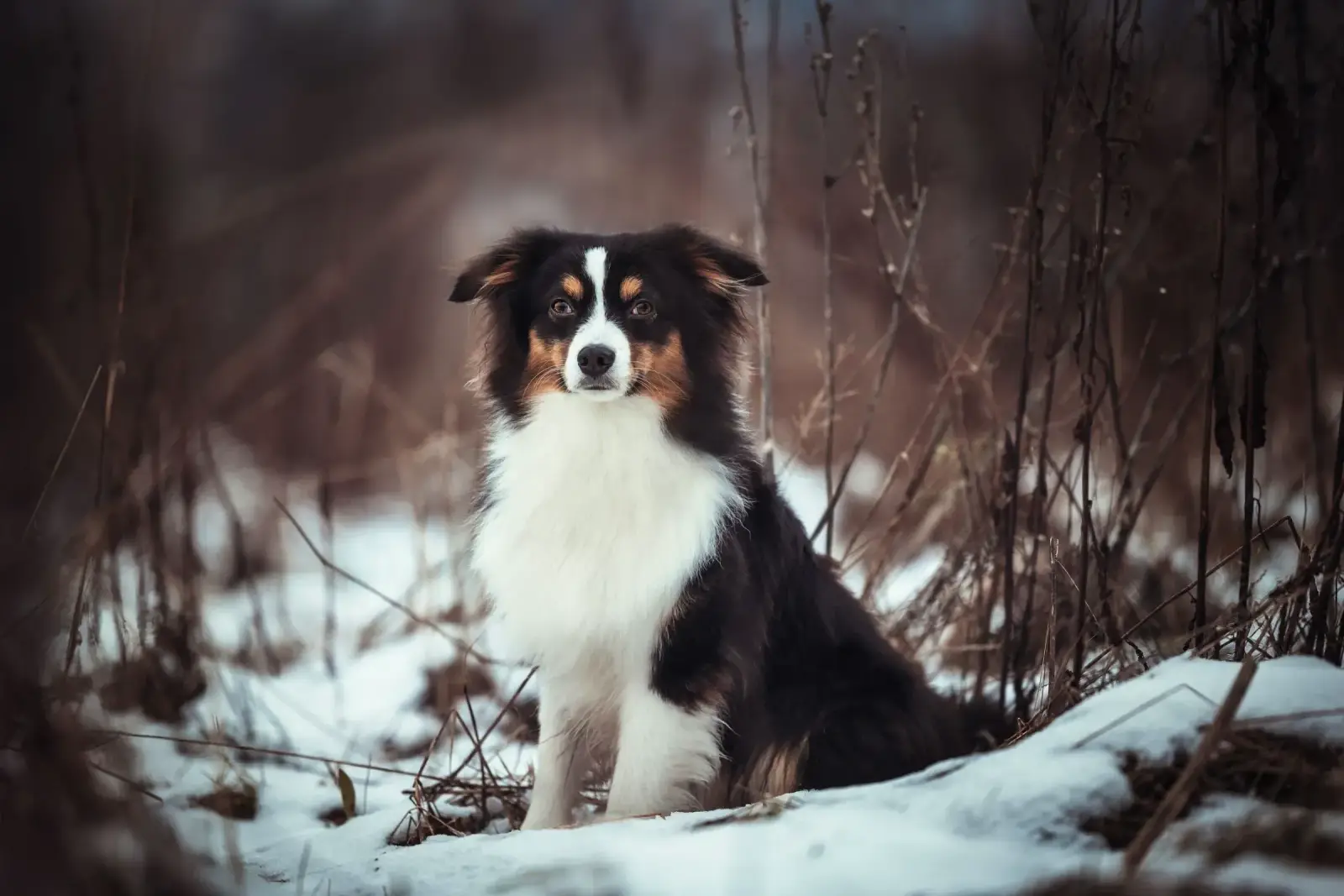
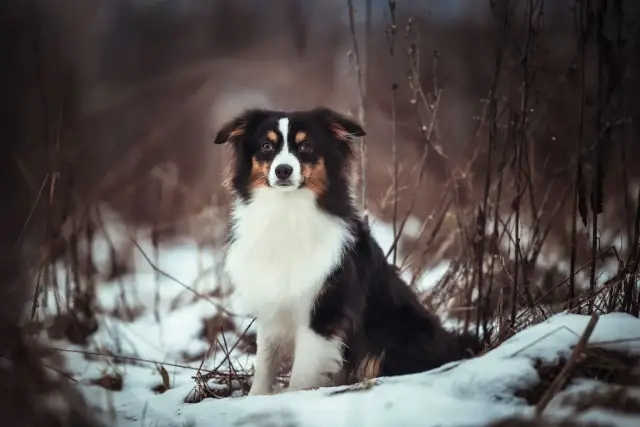
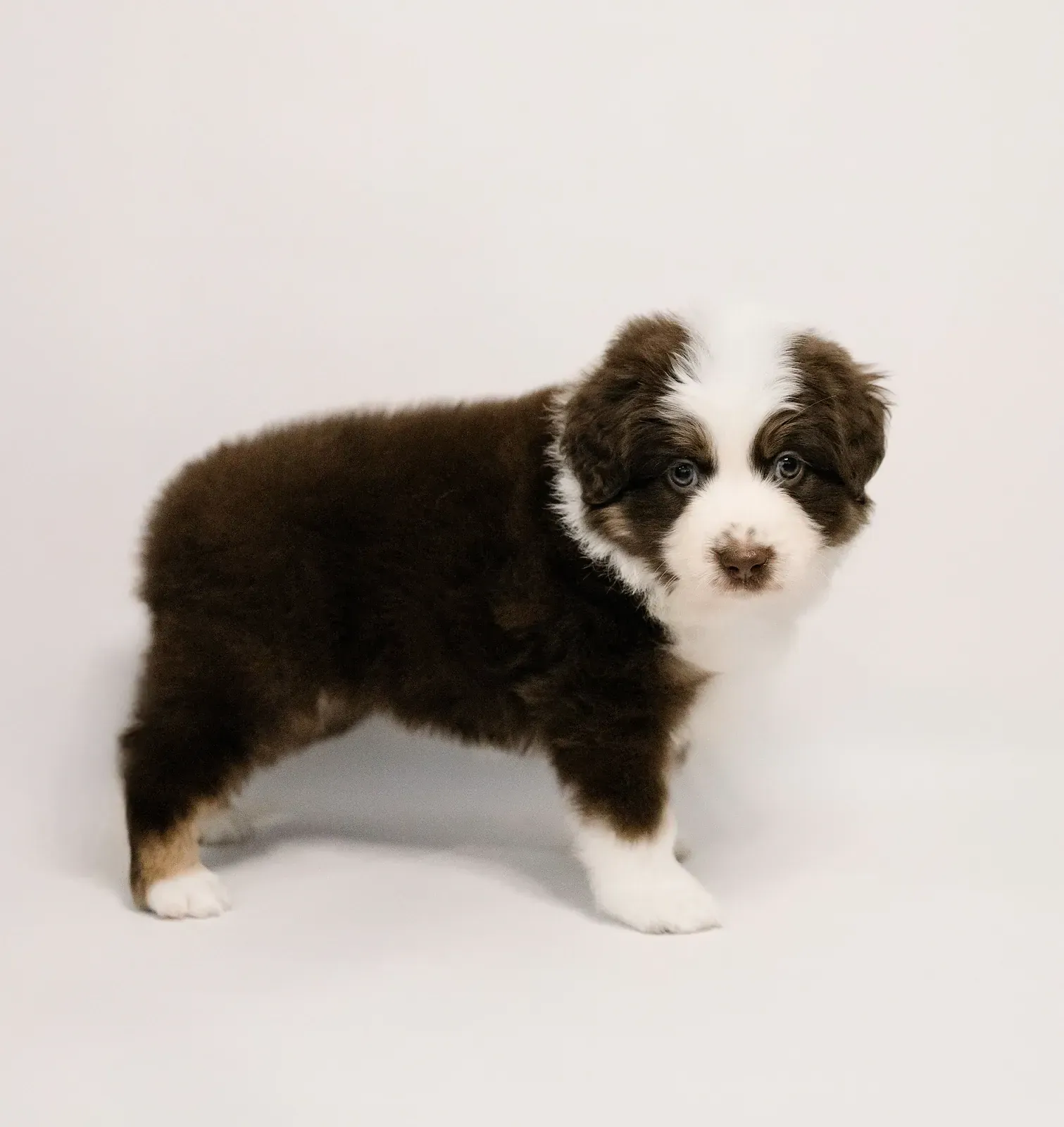
It was developed in California from the late 1960s by breeders who selected the smaller dogs of the Australian Shepherd, and it became a fully recognised AKC breed in 2015. It stands 33 to 46 cm at the withers, wears a medium-length double coat in black, red, blue or red merle, and has the sharp, people-focused mind of its larger relative. Expect a busy, loyal dog that is reserved with strangers, needs a daily job as much as a walk, and lives about 12 to 15 years in the atlas data. This page explains the confusing names, the history, the standard, the health points and daily life.
Miniature American Shepherd quick facts
 Related breedBorder Collie1800 to 1915 · United KingdomIndustrial Revolution
- Country of origin
- United States (California in the atlas data); FCI lists the USA
- Period of development
- 1968 to 2015 (atlas data, high confidence)
- Other names
- Mini Aussie, Miniature Australian Shepherd; earlier North American Shepherd
- Size
- Dogs 36 to 46 cm (14 to 18 in), bitches 33 to 43 cm (13 to 17 in) at the withers (AKC)
- Weight
- AKC standard gives no weight; reference works give roughly 8 to 18 kg
- Life span
- Atlas data: 12 to 15 years
- Coat
- Medium-length, weather-resistant double coat
- Colours
- Black, blue merle, red, red merle, with or without white and tan
- Group
- FCI Group 1, provisional standard no. 367; AKC Herding
- Recognised by
- AKC (full recognition 2015), FCI (provisional)
- Parent breed
- Australian Shepherd
- Energy
- High; needs about an hour or more a day plus mental work
Drawn to scale in real centimetres. Its back reaches about 40 cm, just below your knee; its head about 50 cm, your knee.
Where it sits in the tree
Modern Era · 1914 to today
Name and origin: why "Mini Aussie" and "American"
 Related breedBorzoi1200 to 1650 · RussiaLate Middle Ages
The names are the first thing to untangle, because this breed has had several. Its parent breed is the Australian Shepherd, which was built in the United States and not in Australia, as the Aussie page explains. The small version was first called the Miniature Australian Shepherd, shortened to Mini Aussie, and that nickname is still the most common search term.
Over the years the name changed several times, driven by registry politics and not by the dog:
- Miniature Australian Shepherd. The first name, used by breeders in the western US from the late 1960s. It simply said "a smaller Aussie".
- North American Shepherd. In the 1990s the parent club of that time, the Miniature American Shepherd Club of the USA (MASCUSA, formed in 1990 and incorporated in 1993), renamed its dogs after a rare-breed registry objected to a breed sharing the Australian Shepherd's name. Accounts differ on the exact timing of the changes.
- North American Miniature Australian Shepherd. An in-between name used for a time.
- Miniature American Shepherd. The name the AKC uses. The breed entered the AKC Foundation Stock Service under this name in May 2011, and the atlas records the "American" in the name as dating from 2011. Full AKC recognition followed in 2015, and some sources give the date as 1 July 2015.
The sources agree on the sequence and not on every date. What matters for a searcher is this: a Mini Aussie, a Miniature Australian Shepherd and a Miniature American Shepherd are the same type of dog. The AKC and the FCI use the American name. Some Mini Aussie clubs and registries still exist separately and keep their own registers, and the Miniature Australian Shepherd Club of America is described as no longer accepting dogs registered as Miniature American Shepherds with the AKC. If you see a "Mini Aussie" for sale, ask which registry it belongs to and whether the parents are registered with the AKC or with another body.
The atlas etymology reads: a smaller "miniature" version of the Australian Shepherd, renamed American in 2011. The name "American" also fixes the old mistake: the breed was never from Australia.
Not the same as a Toy or Standard Aussie
Some breeders and clubs have used the terms "Toy Australian Shepherd" for the smallest dogs of the line and "Miniature" for the middle size. The AKC standard has one size range for the Miniature American Shepherd, 13 to 18 inches. Toy Aussie is a size label used by some breeders and registries, and it is not an AKC breed.

History
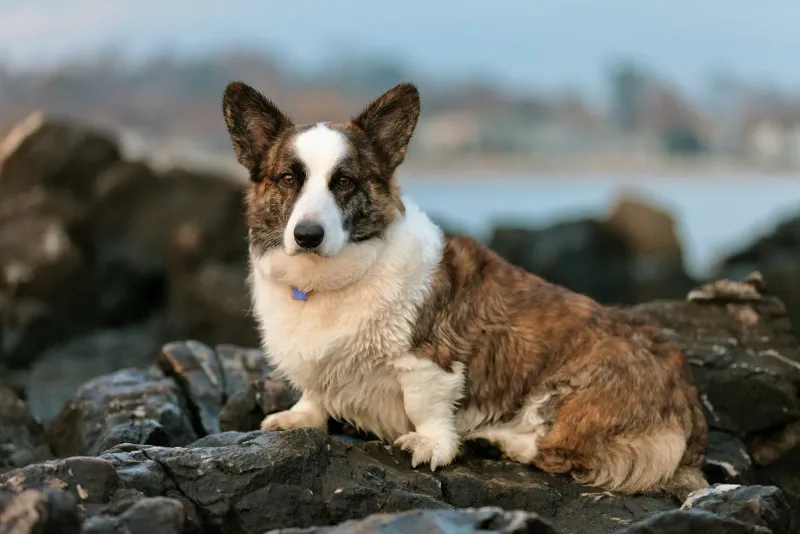 Same eraCardigan Welsh Corgi1200 to 1934 · United KingdomLate Middle Ages
Small dogs inside the Australian Shepherd
Australian Shepherds have always varied in size. From the 1800s sheep ranchers in California, Nevada, Idaho, Colorado and Texas selected dogs for ability, and a litter might hold dogs of several sizes. The Aussie's own AKC standard allows males of 20 to 23 inches. Dogs smaller than that were useful on small ranches, in horse barns and in the small show circuits, but were not a breed of their own.
California, late 1960s
The atlas records the development as starting in 1968. According to AKC-derived histories, the breed was developed in California in the late 1960s by breeding small, unregistered dogs thought to be Australian Shepherds. Breed histories name several early breeders, among them Doris Cordova, Sally and Bill Kennedy and Chas Lasater. The details of who bred which litter come from breed histories and not from archives, so treat the names as part of the breed's story, not as a documented chain.
The early breeders were not crossing the Aussie with another breed to shrink it. Writers on the breed say they selected the smallest dogs of Aussie litters and bred them together over several generations, so the line is considered a size variant of the same stock. The atlas links the Miniature American Shepherd to a single parent, the Australian Shepherd, with high confidence, and also lists the Aussie's claimed ancestors (the Carea Leones and the extinct Cumberland Sheepdog, both low confidence) as ancestors one step back.
Rodeo, horse barns and family dogs
The Aussie became popular through rodeo shows in the 1950s and 1960s, and the small dogs went along with that popularity. They fitted easily into a horse trailer and a house, and they were cheaper to feed. In the 1970s and 1980s the little dogs found a following as show dogs, herding dogs and companions, and breeders started their own clubs and registers.
Clubs and registries
MASCUSA was formed in 1990 and incorporated in 1993 as the first parent club and registry for the breed. In May 2011 the club became the AKC parent club, and the breed entered the AKC's Foundation Stock Service as a step towards full recognition. The AKC accepted the breed into the Herding Group in 2015. The FCI has the breed as no. 367 in Group 1 with provisional status, and gives the United States as the country of origin.
Recognition today
The AKC lists the Miniature American Shepherd in the Herding Group. The FCI lists it in Group 1, Sheepdogs and Cattledogs, with provisional recognition. The atlas data lists only the AKC and the FCI as recognising bodies.
Relatives and DNA
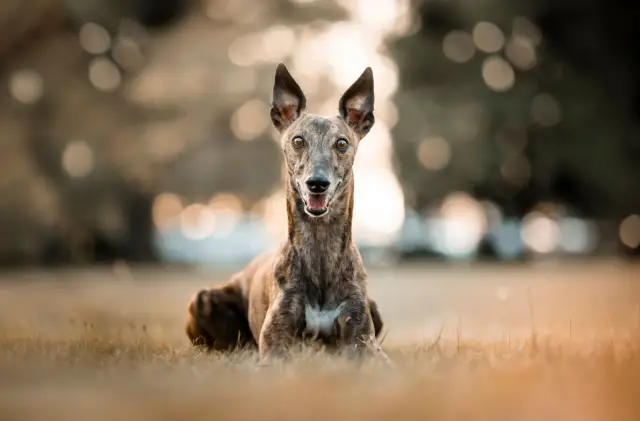 Same familyGreyhound800 CE to 1850 · United KingdomEarly Middle Ages
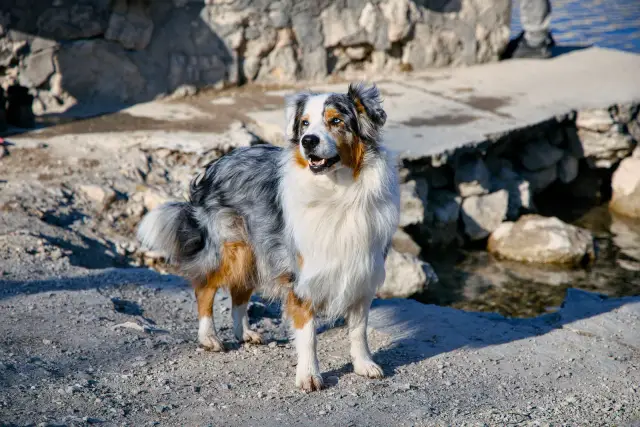
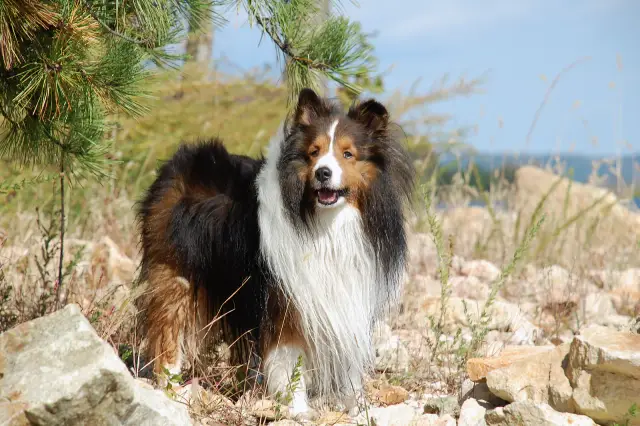
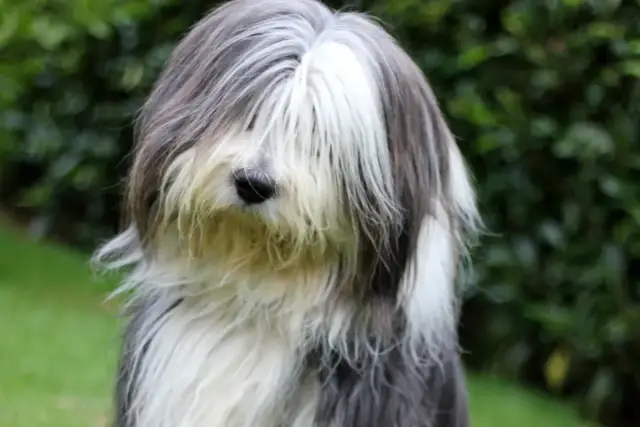
In the atlas the breed belongs to the UK Rural family through its parent. The Parker 2017 DNA study does not provide shared-DNA figures for the Miniature American Shepherd as a breed of its own, so there are no figures for the breed itself. The Aussie's closest relatives in that study give a useful guide, since the Miniature came from the same stock. They are shown in () of , where a larger number means a closer relationship.
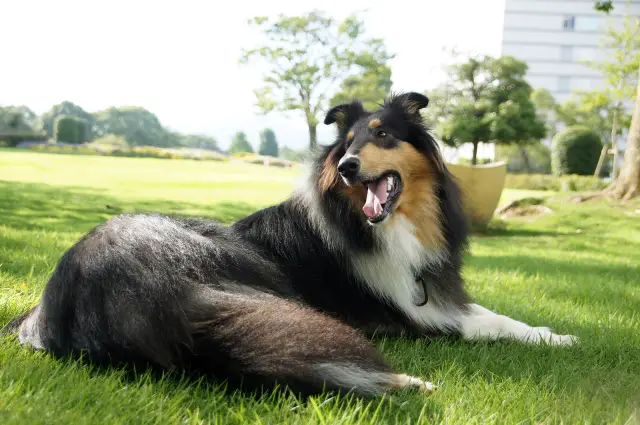
- Australian Shepherd and Rough Collie
- Australian Shepherd and Shetland Sheepdog
- Australian Shepherd and Border Collie
- Australian Shepherd and Bearded Collie
The result matters for a reader who wonders where the Mini Aussie's looks come from. The merle coat, the feathering and the herding style all have a close match in the British collies, and the study does not point to a separate small breed hidden inside the Miniature. The Miniature American Shepherd is, genetically, an Aussie in a smaller frame.
| Breedwith the Australian Shepherd | Shared DNA with the Australian Shepherd (Mb)Shared DNA (Mb) |
|---|---|
| Rough Collie | 61.8 |
| Shetland Sheepdog | 33.6 |
| Border Collie | 20 |
| Bearded Collie | 19.1 |
| Australian Kelpie | 15.4 |
| Pembroke Welsh Corgi | 13.1 |
Source: Parker et al. 2017, Cell Reports, shared haplotypes between 161 breeds (1,346 dogs).
The Miniature American Shepherd breed standard
 Looks relatedIrish Wolfhound100 BCE to 1885 · IrelandAncient World
The AKC standard is the one most owners meet. The FCI standard no. 367 is provisional. The Aussie's page has the matching table for the larger breed.
| Trait | What the standards say |
|---|---|
| General appearance | AKC: small, balanced, agile herding dog, slightly longer than tall, with strong bone and a natural look |
| Height | AKC: dogs 14 to 18 in (36 to 46 cm), bitches 13 to 17 in (33 to 43 cm). |
| Weight | The AKC standard gives no weight. Reference works give roughly 8 to 18 kg |
| Coat | Medium length, straight to wavy, weather-resistant, with a dense undercoat. Trimming allowed only on the ears, feet, back of hocks, pasterns and tail |
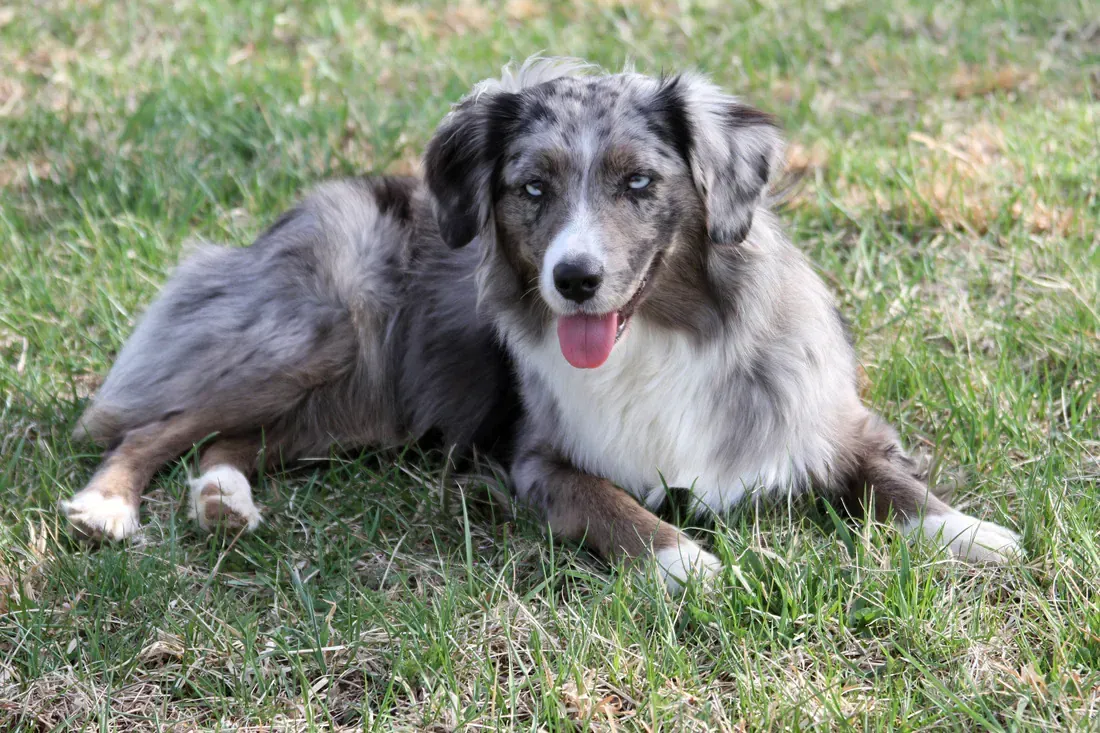
| Colours | Black, blue merle, red, red merle, with no order of preference. Any other colour is a disqualification in the MASCUSA standard. Asymmetrical markings or none are not penalised |
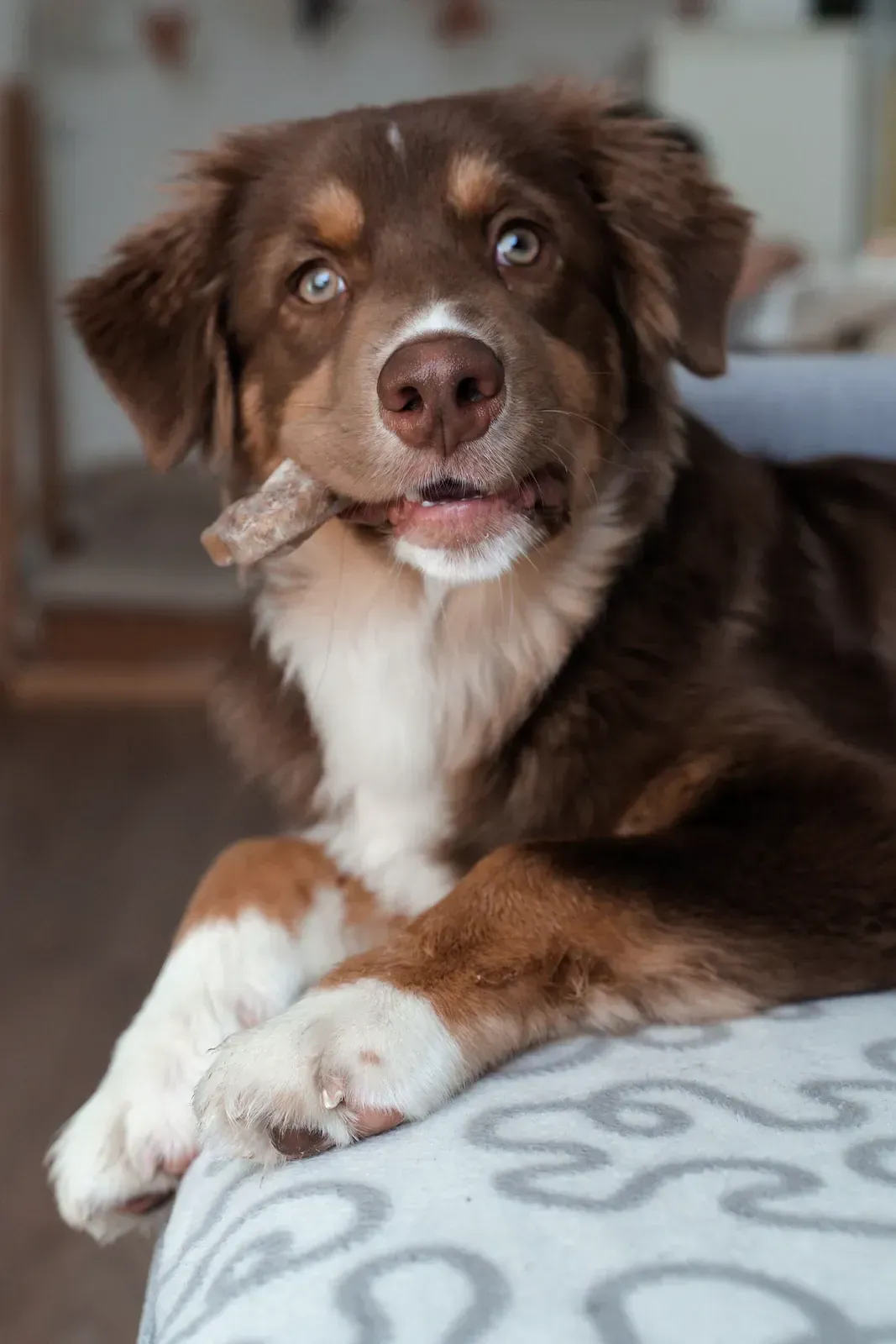
| Eyes | Brown, blue, amber, or any variation or combination, including flecks and marbling |
| Tail | Naturally short or docked traditionally. A natural, undocked tail may show white on the tip |
| Temperament | AKC and club texts: intelligent, with strong herding and guardian instincts, loyal to family, reserved with strangers |
Docking is a point worth knowing about. The standard allows a docked tail or a natural bob, and one breed account says that about one puppy in five is born with a natural bobtail or a very short tail. Docking is banned or restricted in many countries, including most of Europe, and in those countries a dog's tail is left on. The standard does not penalise a natural tail.
The Aussie's size is 46 to 58 cm. The Miniature is 33 to 46 cm, so a large Miniature can overlap in height with a small Aussie. The key difference is in the registry, not in the ruler: the AKC treats them as two separate breeds, and a dog registered in one cannot be registered in the other.
Colours, merle and eyes
 Related breedItalian Greyhound500 BCE to 1900 · ItalyAncient World
The merle pattern is the breed's trademark. It comes from a variant in the SILV gene (Clark and colleagues, 2006). One copy gives the mottled coat. Two copies, a double merle, give an almost white dog with a risk of eye and hearing damage.
Strain and colleagues (2009) measured hearing in merle dogs of several breeds. Among double merles, 10 percent were deaf in one ear and 15 percent in both ears. Among single merles, 2.7 percent were deaf in one ear and 0.9 percent in both. These are figures for merle dogs of several breeds and not for the Miniature American Shepherd alone, and no figure has been published for the Miniature on its own.
What this means for buyers:
- A merle crossed with a non-merle (black or red) produces no double merles. Merle to merle is the risk, and responsible breeders avoid it.
- Some dogs carry merle without showing it. A DNA test finds it, so ask whether both parents were tested.
- Blue eyes are part of the look and are allowed by the standard. They do not mean a dog is a double merle.
- A double merle puppy can live a happy life with training that suits a dog with limited sight or hearing, but it needs an experienced owner.
Miniature American Shepherd temperament
 Related breedOld English Sheepdog1700 to 1888 · United KingdomEarly Modern Era
The Miniature American Shepherd is a working dog first. The AKC and breed club descriptions say it is intelligent, with strong herding and guardian instincts, loyal to its family and often reserved with strangers. Owners describe a dog that follows them from room to room and watches every move.
- With family. Deeply attached. It tends to bond closely, and some dogs pick a favourite person.
- With strangers. Reserved. Early, calm socialisation teaches a puppy that visitors are normal. Without it, reserve can turn into barking or nervousness.
- With children. Fine with children it knows, but it may try to herd them by nipping at heels. Teach children not to run and scream around the dog, and teach the dog a stop signal.
- With other dogs and pets. Usually fine when raised with them. Herding instincts mean it may chase or circle cats and small animals.
- Barking. A watchful, alert breed that notices every sound. Many Minis bark at the door, the window and the postman.
- Trainability. Very high. It picks up commands in a few repeats and gets bored with long drills. Reward-based training works best.
- Sensitivity. Some dogs are touchy about loud voices and harsh handling. Calm, consistent teaching gets better results.
Exercise and mental work
Sources describe the exercise level as high, though less than for a full-size Aussie. A plan of two good walks, a play session and some training each day suits most adults. Yard games alone are rarely enough, because the dog needs to use its mind. Good outlets are agility, rally, obedience, herding trials on goats or sheep, Treibball (the sport in which a herding dog moves large balls), trick training and scent work. Many owners keep one training class a week for the whole of the dog's life.
A bored Mini invents work. Typical signs are barking, nipping at ankles, chasing shadows or light, digging and escaping from the garden. A puzzle toy and short training sessions through the day often help more than another long walk.

Coat care and grooming
 Related breedPembroke Welsh Corgi1100 to 1934 · United KingdomEarly Middle Ages
The double coat sheds all year and heavily twice a year. Brush two or three times a week, and daily in the shedding season, with a slicker brush and an undercoat rake. Mats form behind the ears and in the feathering of the legs and the breeches. A bath every few months is enough, and the standard allows trimming only in a few places, so a clipper cut is not part of the breed's look. Trim the hair between the pads, cut the nails and check the ears. Brush the teeth often, since small breeds are prone to dental disease.
Health
Related breedRough Collie1800 to 1886 · United KingdomIndustrial RevolutionThe atlas gives a life span of 12 to 15 years. There is no published breed-wide longevity survey for the Miniature American Shepherd, so there is no median figure to quote. The Aussie's longevity survey gives a median of 11.6 years for the larger breed, and the Miniature is expected to live as long or a little longer, as most smaller dogs do. That is an expectation and not a measured result.
Health sources note that the breed is not genetically different from the Australian Shepherd apart from size, and so it shares the same conditions. Most of the figures in the table are therefore Aussie figures or have no published figure for the Miniature.
| Condition | What it is | How common | What to do |
|---|---|---|---|
| MDR1 drug sensitivity | A change in the ABCB1 gene that lets some drugs (such as ivermectin at high doses and loperamide) build up in the brain | No published figure for the Miniature. In the Aussie, 37 percent of 1,421 North American dogs carried one copy and 10 percent two copies | DNA test (MDR1 or ABCB1) for both parents or the puppy; tell every vet |
| Progressive retinal atrophy | Slow loss of the retina's light cells, leading to night blindness and then blindness | No published figure | DNA test and yearly eye examination of breeding dogs |
| Hereditary cataracts | Clouding of the lens, appearing from young adulthood | No published figure | Eye examination by a specialist; ask for current certificates |
| Collie eye anomaly | A development problem of the back of the eye, present at birth | No published figure | Eye check of puppies before eight weeks |
| A loosely fitting hip joint that wears and becomes painful | No published figure | Hip scores of both parents; keep the dog lean | |
| Patellar luxation | Kneecap slipping out of its groove, usually in small dogs | No published figure | Knee check by a vet |
| Deafness and eye damage (double merle) | Hearing and sight loss from two copies of the merle gene | See the merle section; figures are for merle dogs of several breeds | Never breed merle to merle; test for hidden merle |
| Epilepsy | Repeated seizures with no other cause | No published figure | Ask about seizures in the pedigree |
 Save
MDR1 in plain words
Dogs with two copies of the MDR1 variant can be seriously ill from doses of certain drugs that other dogs tolerate. The risk is real for herding breeds, and the Aussie figures show that it is common in the larger breed. The test is a cheap cheek swab. Put the result on a card in your wallet and tell every vet, including emergency clinics.
Choosing a puppy
Ask for the DNA results for MDR1 and for hidden merle, the hip scores, and a recent eye examination for both parents. Be careful about labels such as "teacup", "toy" or "micro" Aussies, which are marketing terms and not a size the AKC recognises. Dogs bred to be extra small can carry extra health risks. Meet the mother, ask to see the place where the puppies are raised, and expect a waiting list. Check which registry the parents belong to, since a Mini Aussie from a different register is not an AKC Miniature American Shepherd.
 Ticks and fleasTicks and fleas on dogs: how to check, remove and prevent themTicks and fleas on dogs: how to tell them apart, check your dog, remove a tick safely, break the flea life cycle and prevent both.
 GuidesPractical guidesBehaviour, training, health and adoptionRelated breedRough Collie1800 to 1886 · United KingdomIndustrial Revolution
Living with a Miniature American Shepherd
Related breedShetland Sheepdog1700 to 1909 · United KingdomEarly Modern EraA great fit if
- You want a small dog with a big working brain and enjoy training.
- You do dog sports or want to start: agility, rally, herding, tricks.
- You are active and can offer exercise and mental work every day.
- You want a dog that bonds closely and joins in family life.
- You can groom a double coat weekly and live with shedding.
Think twice if
- You want a lap dog that sleeps all day. The Mini is smaller than its parent breed and not calmer.
- You are out at work for long hours. A bored, lonely herding dog barks, chews and nips.
- You live in a flat with thin walls. Alert barking is common.
- You have toddlers who run and shriek. A herding dog may nip heels.
- You want a friendly dog for every visitor. Reserve with strangers is normal for the breed.
Before you get one
Talk to a breed club, meet adult dogs, and choose a breeder who tests. Plan puppy classes, early socialisation and a daily training habit. Costs are those of a small active dog: food, vet care, insurance or a savings fund, grooming tools and classes.
Similar breeds to consider
- Australian Shepherd. The same dog in a larger frame, with the same needs and a longer track record.
- Shetland Sheepdog. A small collie with a soft temperament and a long coat.
- Pembroke Welsh Corgi. A short-legged herder with the same energy and a shorter back.
- Border Collie. A larger working collie with even more drive.

Miniature American Shepherd fun facts
 Related breedWhippet1800 to 1890 · United KingdomIndustrial Revolution
- The breed has had at least four names: Miniature Australian Shepherd, North American Shepherd, North American Miniature Australian Shepherd and Miniature American Shepherd.
- It is the only descendant of the Australian Shepherd in the atlas data.
- It was admitted to the AKC Foundation Stock Service in 2011 and fully recognised in 2015.
- The standard allows brown, blue and amber eyes, in any combination, so many dogs have two different eye colours.
- About one puppy in five is said to be born with a natural bobtail.
- The Aussie is American by birth, so "American" in the Miniature's name corrects an old mistake.
- The coat is the breed's main grooming task, and the standard bans clipping the body.
Frequently asked questions
What is a Mini Aussie?
It is the common name for the Miniature American Shepherd, a smaller version of the Australian Shepherd bred in California from the late 1960s. The breed was called the Miniature Australian Shepherd before the name was adopted.
Is a Miniature American Shepherd the same as a Miniature Australian Shepherd?
They are the same type of dog. The AKC and the use Miniature American Shepherd. Some separate clubs and registries still use Miniature Australian Shepherd and keep their own registers.
How big does a Miniature American Shepherd get?
Dogs are 14 to 18 inches (36 to 46 cm) at the withers and bitches 13 to 17 inches (33 to 43 cm). The AKC standard gives no weight, and reference works give roughly 8 to 18 kg.
How long do Miniature American Shepherds live?
The atlas gives 12 to 15 years. No breed-wide survey has been published for the Miniature, so there is no median figure.
Are Miniature American Shepherds good family dogs?
Yes, for active families who can train and exercise them. They are loyal and affectionate, but reserved with strangers, and they may herd young children by nipping.
Do Miniature American Shepherds shed?
Yes, all year and heavily twice a year. Brush two or three times a week.
How much exercise do they need?
An hour or more a day, with training, games and a regular outlet such as agility or herding. They need mental work as well as walks.
Do they get MDR1 problems?
The MDR1 variant is common in the Australian Shepherd, and the Miniature shares its stock. No figure is published for the Miniature on its own, so test every dog and tell your vet.
What is the difference between the Miniature American Shepherd and the Australian Shepherd?
Size and registry. The Aussie is 46 to 58 cm and the Miniature 33 to 46 cm. The AKC lists them as two breeds, and their temperament and health issues are very similar.
Read next
 FamilyUK RuralThe whole family
 Adopt a dogDog Shelters in EuropeFind dog shelters in Europe, learn how shelters differ from country to country and why adopting a dog is a good option.
Sources (12)
- FCI Standard no. 367, Miniature American Shepherd (provisional), Group 1
- American Kennel Club, Miniature American Shepherd breed standard
- American Kennel Club, history of the Miniature American Shepherd
- Miniature American Shepherd Club of the USA (MASCUSA), breed standard and history of the breed name
- United Kennel Club, Miniature American Shepherd breed standard
- Parker et al. 2017, Genomic analyses reveal the influence of geographic origin, migration, and hybridization on modern dog breed development, Cell Reports
- Clark et al. 2006, A retrotransposon insertion in SILV is responsible for merle patterning of the domestic dog, Proceedings of the National Academy of Sciences
- Strain G.M. et al., "Prevalence of deafness in dogs heterozygous or homozygous for the merle allele", Journal of Veterinary Internal Medicine, 2009.
- Australian Shepherd Health and Genetics Institute (ASHGI), longevity and MDR1 frequency data for the Australian Shepherd
- Westminster Kennel Club, Miniature American Shepherd breed profile
- Fogle, B. 2009, The New Encyclopedia of the Dog
- Atlas data for the Australian Shepherd and Miniature American Shepherd