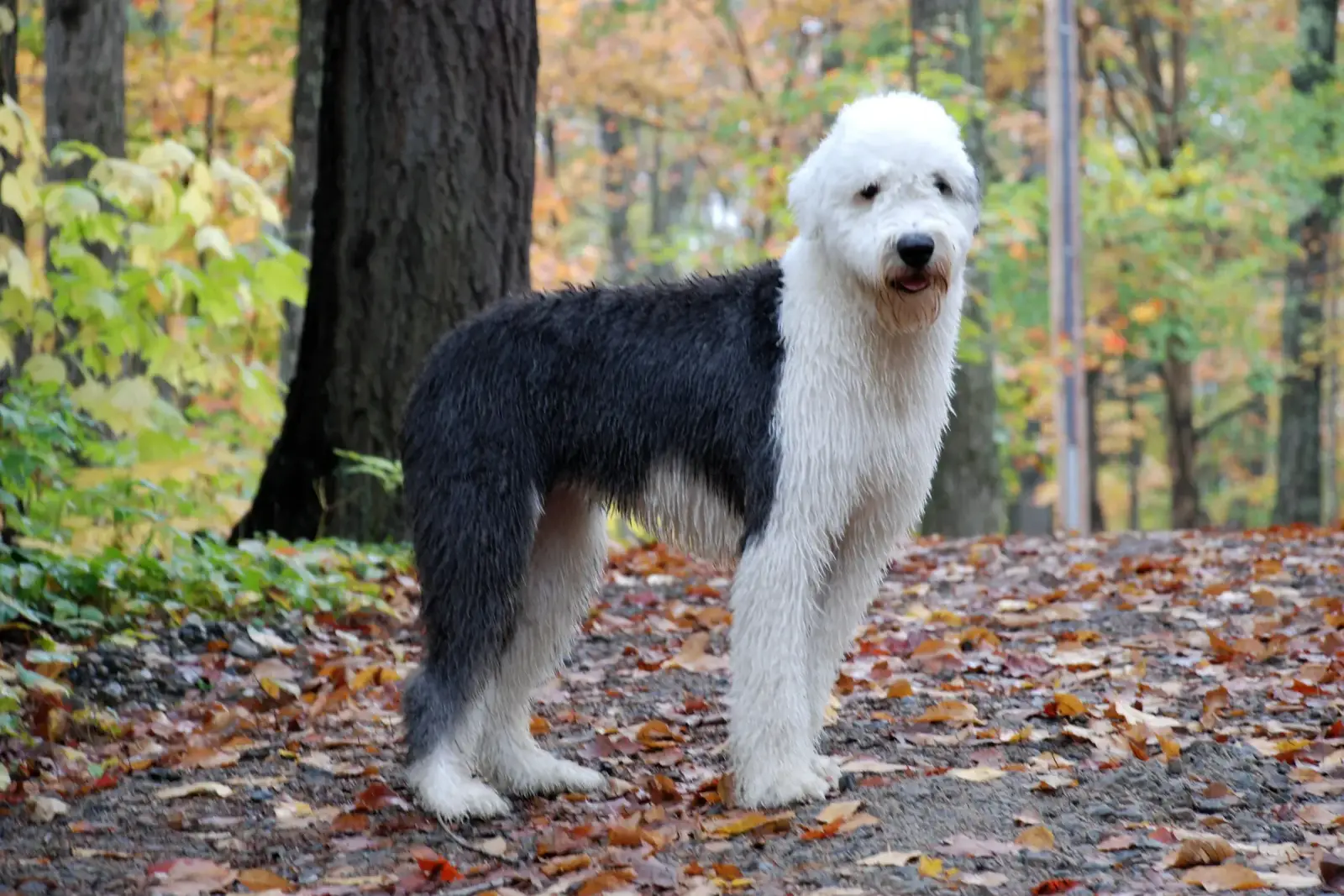
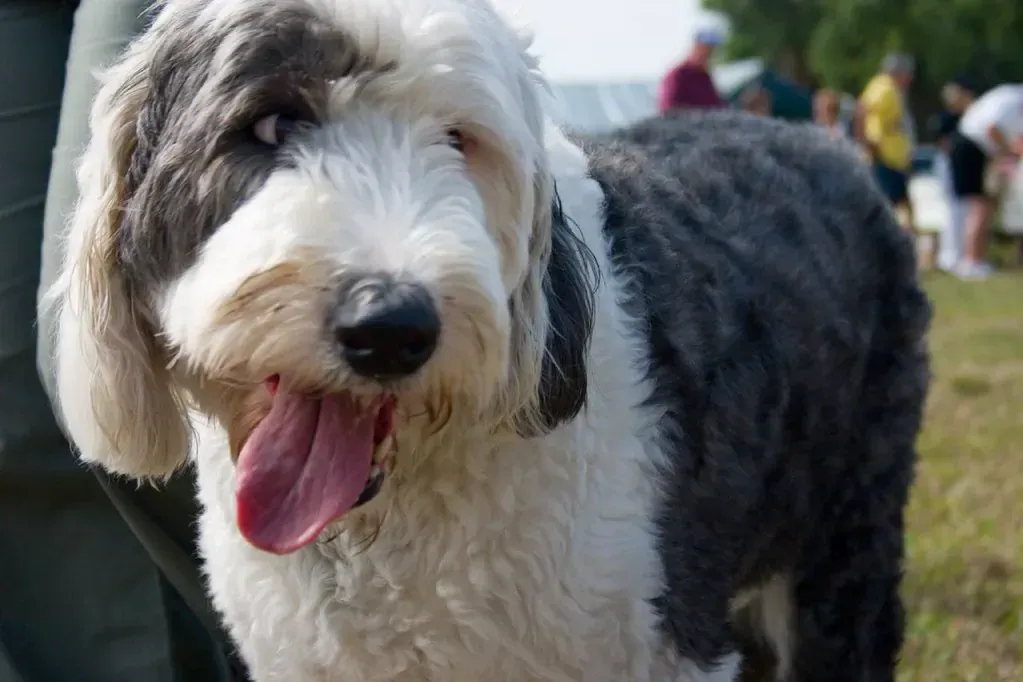
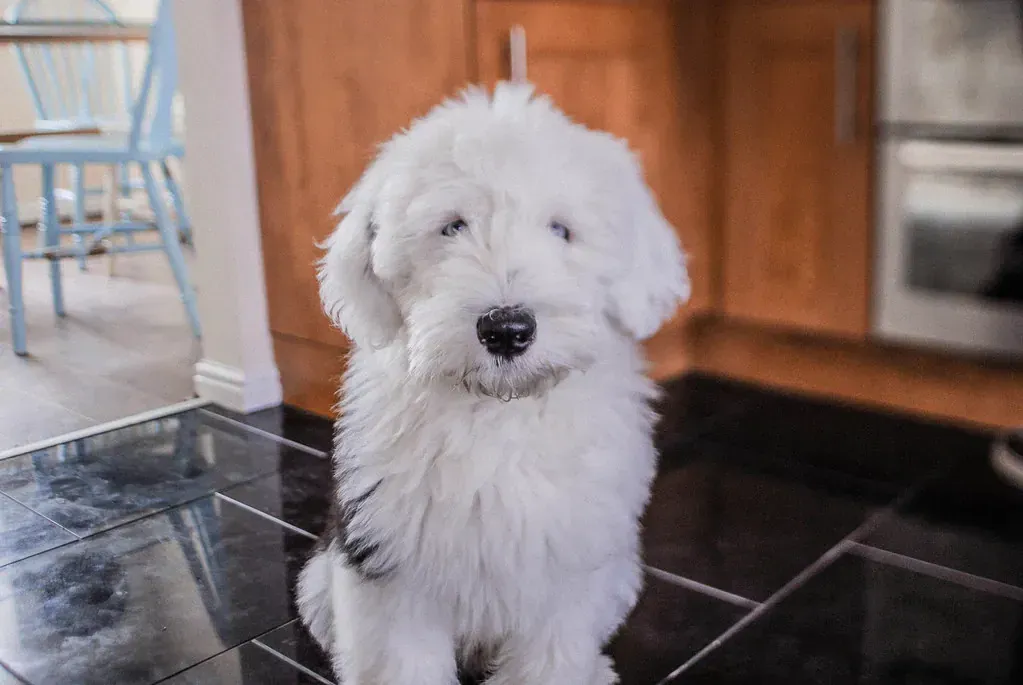
It was a drover's dog, used in the 1700s and 1800s to move sheep and cattle to market, and it is now one of the most recognisable family dogs in the world. Its coat is a double coat of grey, blue or grizzle and white, long enough to cover its eyes. The FCI lists it as breed no. 16 in Group 1, the sheepdogs. Its closest relatives in the DNA study by Parker and colleagues (2017) are the Bearded Collie and the Border Collie, and the atlas data names the old bobtailed Smithfield drovers' dog as a possible ancestor. Expect a cheerful, clownish, people-loving dog, a long weekly grooming session and a life span of about 10 to 12 years. This page covers the history, the standard, the health checks and what a Bobtail is like to live with.
Old English Sheepdog quick facts
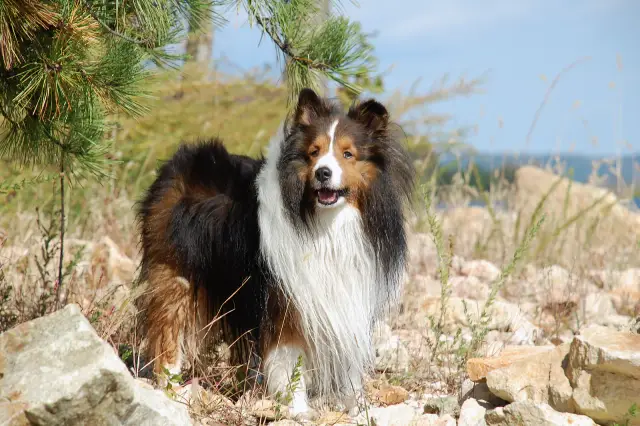 Related breedShetland Sheepdog1700 to 1909 · United KingdomEarly Modern Era
- Country of origin
- Great Britain (FCI); West Country of England in the atlas data
- Period of development
- 1700 to 1888 (atlas data, medium confidence)
- Other names
- Bobtail, Shepherd's Dog; Bobtail in Spanish and German
- Size
- Large; dogs 61 cm and over, bitches 56 cm and over at the withers (FCI)
- Life span
- Atlas data: 10 to 12 years
- Coat
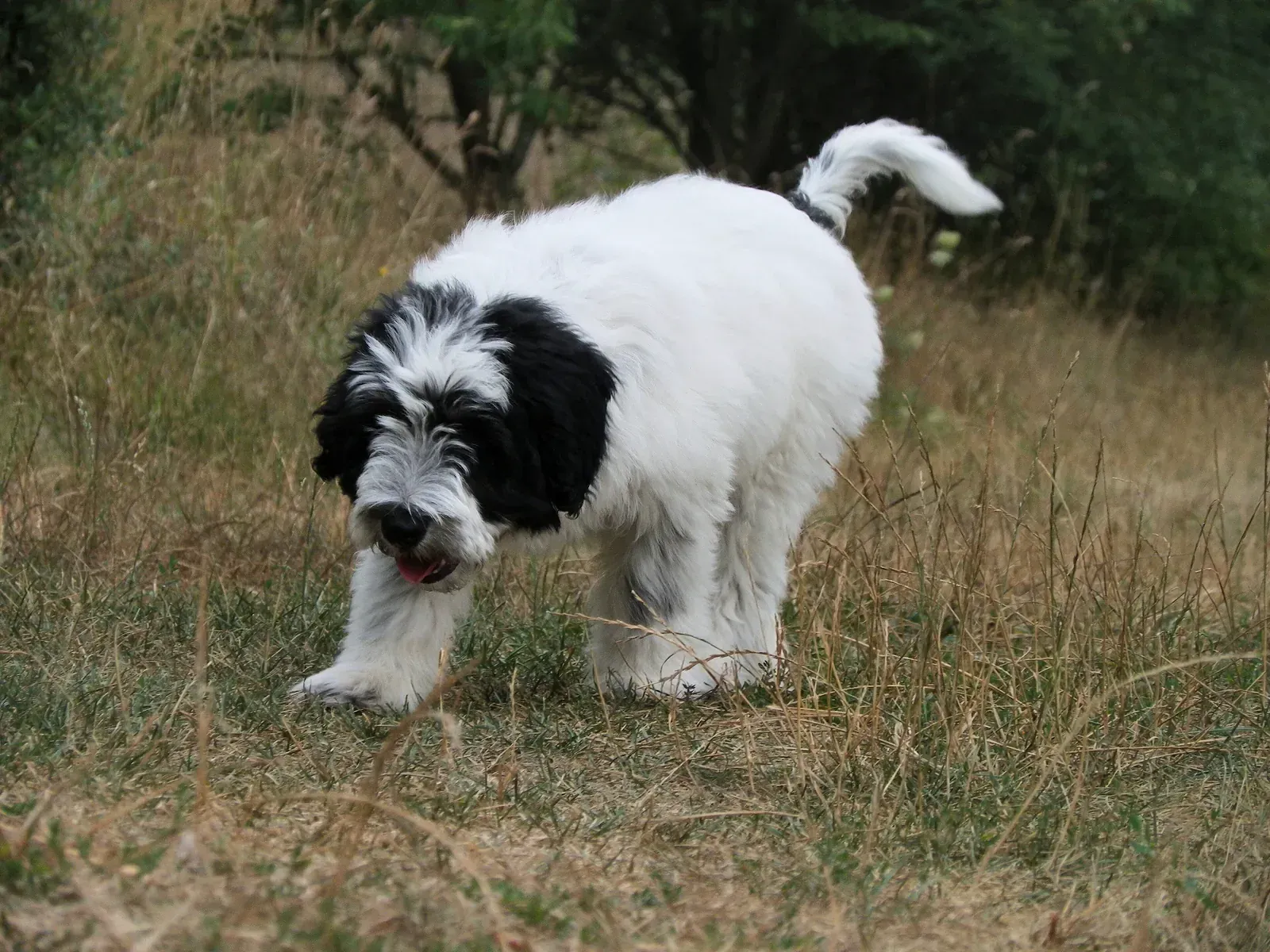
- Profuse, shaggy double coat; grey, grizzle, blue or blue , with white markings
- Group
- FCI Group 1, Section 1, standard no. 16; Herding
- Recognised by
- FCI, AKC, UK Kennel Club
- Family
- UK Rural (Parker 2017, strong support)
- Energy
- Moderate to high; a herding dog that enjoys a long walk and a job
Drawn to scale in real centimetres. Its back reaches about 59 cm, just above your knee; its head about 74 cm, mid-thigh.
Where it sits in the tree
Early Modern Era · 1600 to 1799
Name and origin
 Related breedPembroke Welsh Corgi1100 to 1934 · United KingdomEarly Middle Ages
The name is plain: it is an English sheepdog, and the word "Old" was added to separate the type from the newer sheepdogs of the Victorian dog shows. The nickname Bobtail comes from the tail. Many of the early dogs had no tail or a very short one, and breeders and owners docked the tail of those that did. The FCI gives Great Britain as the country of origin, and the atlas places the early development in the West Country of England, with a date range of 1700 to 1888.
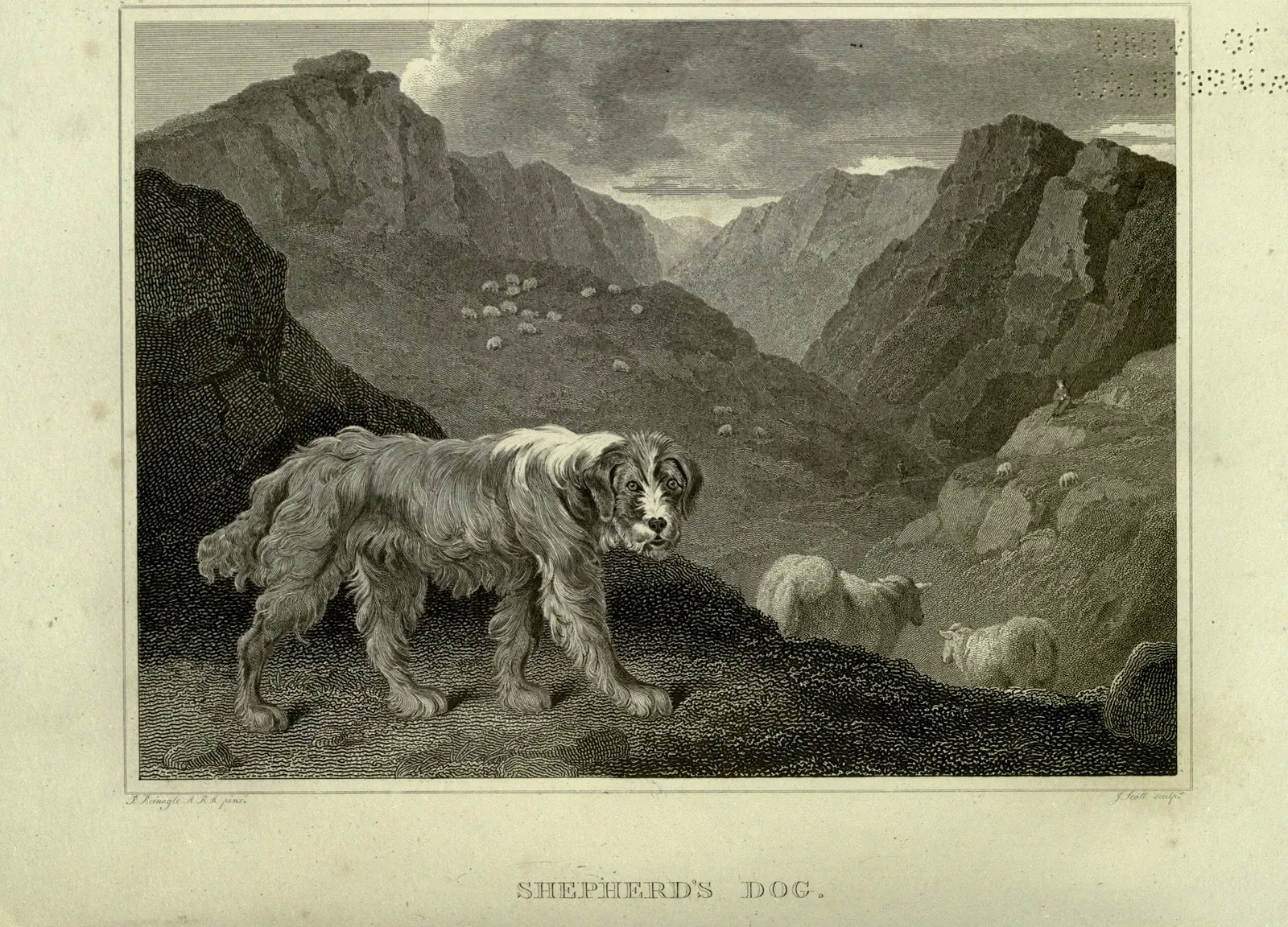
The atlas notes that the name "Shepherd's Dog" was in use before the modern breed name settled. That name is a clue to the dog's job. It was a general working dog of the English drove roads, not a show animal, and it was only in the later 1800s that a fixed type, a written standard and a club turned it into a breed.
The Spanish and German names are both Bobtail, so a search in either language finds the same dog.

History
 Same eraAustralian Shepherd1840 to 1957 · United StatesIndustrial Revolution
Drovers' dogs and the Smithfield link
For centuries sheep and cattle in England walked to market. Drovers brought animals along set routes to towns, and the great meat market at Smithfield in London took many of them. The drovers used strong, rough-coated dogs to hold the flock together and keep it moving. Some of these dogs were bobtailed, and one type was called the Smithfield, after the market. The atlas data lists the Smithfield as a possible ancestor of the Old English Sheepdog with low confidence, and the evidence is old accounts, not records.
The dog was also called the Cotswold Cur in some accounts, a name tied to the south-west of England. Do not take the name as a different breed. It points to the same group of drovers' dogs described by early writers.
The tax story
A story repeated in many breed histories says that dogs working for farmers and drovers were exempt from a dog tax, and that owners docked the tails of working dogs to show that they worked. The story is often told, but the tax rules and the dates are not agreed between accounts, so treat it as a legend, not a fact. What can be said is that tail docking was long the norm for the breed, and gave it the name Bobtail.
Bearded Collie and the other herding relatives
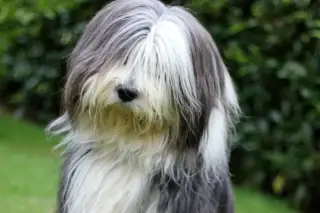
Most fanciers agree that the Bearded Collie, another rough-coated British herding dog, was part of the stock behind the Old English Sheepdog. The atlas lists a crossing with the Bearded Collie as medium confidence, citing breed writers and the Parker 2017 study. Both breeds descend from the same drovers' dogs, so the two cannot be cleanly separated in the 1700s. The Bearded Collie kept a longer, leaner body and a tail, while the Old English Sheepdog became the heavier, squarer dog.
Early pictures
Old paintings show shaggy bobtailed dogs from the late 1700s. One portrait often quoted is by Thomas Gainsborough, painted about 1771, which shows a dog of this type next to its owner. Writers differ on how closely such a dog matches the modern breed, so it is best to read it as a sign that the type existed by the middle of the 1700s.
The dog shows and the 1888 standard
The first dog shows of the 1860s and 1870s brought the breed into the ring. Sources disagree on the date of recognition by the UK Kennel Club: some give 1873 for a separate class, others give 1888, and several tie 1888 to the first written English standard. The atlas uses 1888 as the end of the formation period. The first US standard came in 1904, the Old English Sheepdog Club of America was formed in 1904, and the American Kennel Club accepted the breed in 1905 in one account. Other US dates, such as 1885 and 1888, appear in other accounts, so the American date is not settled in the sources.
 Save
The twentieth century and the paint-tin dog
In the 1900s the breed spread to the United States and then across Europe, and it became a favourite of film and advertising. In Britain a Bobtail appeared in paint advertising from the early 1960s and became so linked with it that many people still call the breed "the Dulux dog". That fame helped its popularity and also fed a problem that all breeds with a film or advertising link share: a puppy bought for its looks by a household that does not plan for the grooming and the exercise.
Recognition today
The FCI lists the Old English Sheepdog as breed no. 16 in Group 1, Sheepdogs and Cattledogs, with Great Britain as the country of origin. The AKC places it in the Herding Group. The UK Kennel Club places it in the Pastoral Group and recognises it as well.
Relatives and DNA
 Same familyAustralian Cattle Dog1840 to 1903 · AustraliaIndustrial Revolution
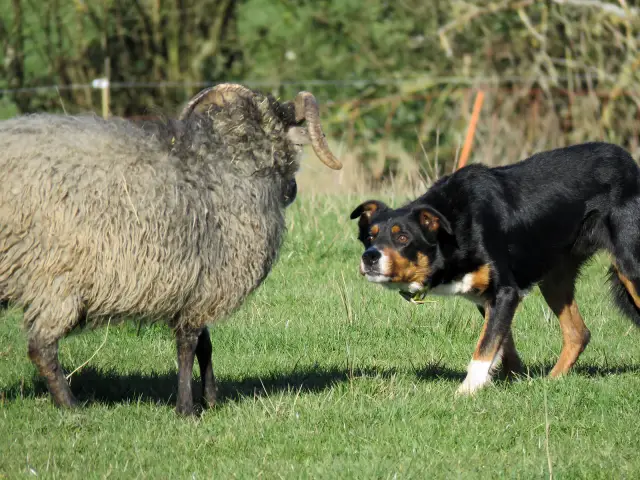
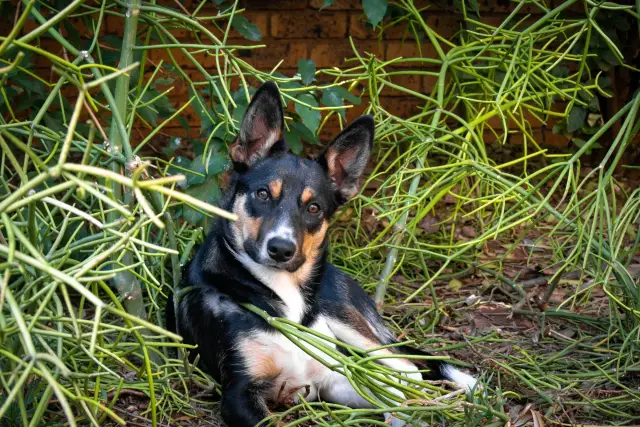
In the Parker 2017 DNA study, the Old English Sheepdog falls in the UK Rural group, which the atlas calls the UK Rural family, with strong support. The breeds that share the most DNA with it are herding dogs of the British Isles and their overseas descendants. The figures below are shared DNA in (Mb) from the study, where a larger number means a closer relationship.
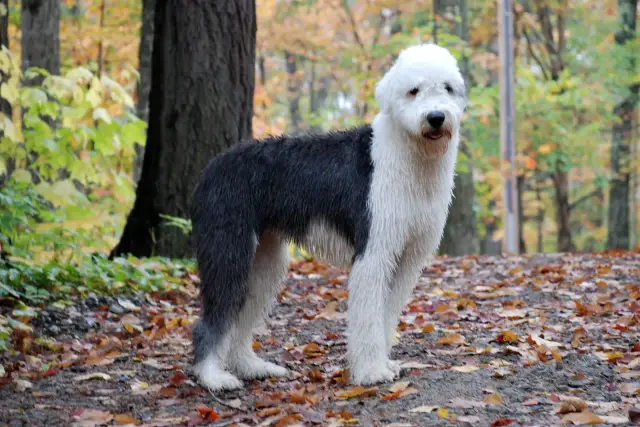
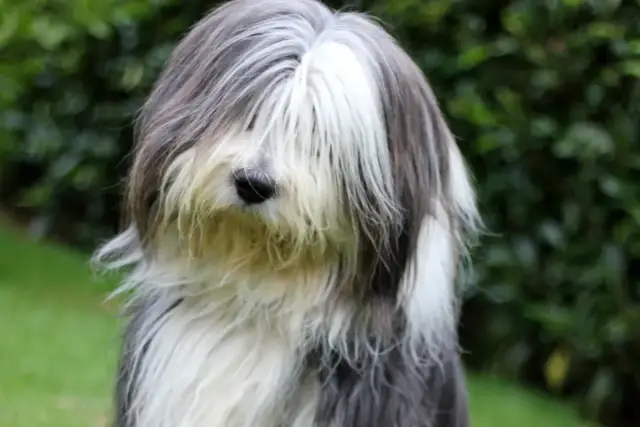
- Old English Sheepdog and Bearded Collie
- Old English Sheepdog and Border Collie
- Old English Sheepdog and Australian Kelpie
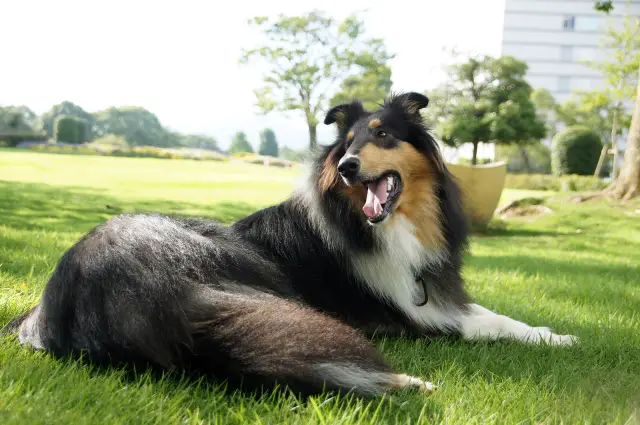
- Old English Sheepdog and Rough Collie
The top figures are close to each other, which fits the history: the British herding dogs of the 1700s and 1800s shared stock, and no single breed stands out as the one parent. The Bearded Collie link matches the written history. The atlas names two possible ancestors.
Old English Sheepdogalso linked to the Bearded CollieBearded Colliecrossed with the stock behind the Old English SheepdogThe Australian Shepherd and Australian Kelpie figures are a useful reminder that British herding blood travelled with emigrants. They do not mean the Old English Sheepdog is an ancestor of those breeds.
- Bearded Collie20.8 Mb 0.9%
- Border Collie19.2 Mb 0.8%
- Australian Kelpie17.9 Mb 0.7%
- Rough Collie16.5 Mb 0.7%
- Shetland Sheepdog14.7 Mb 0.6%
- Pembroke Welsh Corgi12.4 Mb 0.5%
- Australian Shepherd11.7 Mb 0.5%
Source: Parker et al. 2017. Percent of the whole genome.
| Breed | Shared DNA (Mb) |
|---|---|
| Bearded Collie | 20.8 |
| Border Collie | 19.2 |
| Australian Kelpie | 17.9 |
| Rough Collie | 16.5 |
| Shetland Sheepdog | 14.7 |
| Pembroke Welsh Corgi | 12.4 |
| Australian Shepherd | 11.7 |
Source: Parker et al. 2017, Cell Reports, shared haplotypes between 161 breeds (1,346 dogs).
The Old English Sheepdog breed standard
 Looks relatedBorzoi1200 to 1650 · RussiaLate Middle Ages
The FCI, UK Kennel Club and AKC standards describe the same dog: a strong, compact, square, profusely coated dog with a bearlike rolling gait. Wording differs, and figures below come from the FCI text where a number is given.
| Trait | What the standards say |
|---|---|
| Height (FCI) | Dogs 61 cm and over at the withers; bitches 56 cm and over |
| Weight | The FCI standard gives no weight range; breed writers quote about 30 to 45 kg |
| Outline (FCI, UK Kennel Club) | Strong, compact, square, with a pear-shaped outline: smaller in front, fuller behind |
| Coat (FCI, UK Kennel Club) | Profuse, hard in texture, not straight, shaggy, with a waterproof undercoat; not curly |
| Colour (FCI, UK Kennel Club) | Any shade of grey, grizzle, blue or blue merle, with or without white markings; the body and hindquarters are solid, with white on the head, chest and legs |
| Head (FCI) | Skull capacious, square; muzzle strong with a square, black nose |
| Eyes (UK Kennel Club) | Dark brown, blue or one of each is acceptable (wall eyes) |
| Tail (UK Kennel Club) | The standard states no preference for a docked or an undocked tail, and either may be shown |
| Gait (FCI, UK Kennel Club) | Free, elastic and bearlike, with a ambling pace at a walk and a tendency to pace |
The coat is the breed's identity, and also the main care task. The standards ask for a natural coat, not a styled or scissored coat, though the show coat is brushed out and shaped. The hair over the eyes is the feature that makes a Bobtail look the way it does, and a pet owner may trim it for sight and hygiene.
On the tail, a note on law is useful. Docking puppies for cosmetic reasons is banned in England and many other countries, so most Bobtails born in those places have a natural tail. A natural-tail Old English Sheepdog is a full member of the breed. The UK Kennel Club standard accepts both.
 Save
Old English Sheepdog temperament
 Related breedCardigan Welsh Corgi1200 to 1934 · United KingdomLate Middle Ages
A Bobtail is a friendly, sociable, clownish dog, and breed clubs describe it as adaptable and good-natured. It was bred to work with people at close range, and it tends to attach to its household and dislike being left alone for long. It is a herding dog, so many Bobtails try to gather children and other pets by leaning, nudging or circling. Mouthing and heel-nipping can happen in some young dogs and is a habit to train out with gentle, consistent work.
It is a clever dog, and a playful one, with a stubborn side. The breed learns quickly and also decides when it has had enough, so short, lively, varied training sessions work better than drills. Harsh methods do not suit it. Young dogs are boisterous and heavy, and they take two to three years to settle, so a puppy needs steady manners from the start, because a large dog that jumps up is a problem.
Its bark is loud and deep and it is a decent alarm dog. The breed is not usually aggressive. These descriptions come from breed clubs and handlers, not from a behaviour study, and individual dogs vary a great deal with their breeding and upbringing.
Exercise and mental work
An adult Bobtail needs at least a long walk each day and some free running in a secure space. It enjoys herding trials, agility at a gentle level, obedience and long hikes. It does not need the hours of work that a Border Collie asks for, and it often settles at home once exercised. Hot weather is the problem, because the thick coat holds heat.

Coat care and grooming
 Related breedGreyhound800 CE to 1850 · United KingdomEarly Middle Ages
The coat is a double coat: a soft, dense undercoat under a harsh, long outer coat. It does not shed in a tidy way. Loose hair stays tangled in the coat until it is brushed out, so a neglected coat mats close to the skin. The usual advice from breed clubs is a thorough line-brushing session, working down to the skin in layers, at least once a week, with a comb check behind the ears, under the legs and around the trousers.
Many pet owners choose a short "puppy cut" trimmed by a groomer to keep the work manageable. A shortened coat is a practical choice and does not change the dog's health, though it does mean the dog does not look like a show dog. Bathing is occasional, and the coat must be dried through to the skin, because damp, matted hair can hide skin infections.
Other areas to keep clean are the beard, which gets wet and dirty when the dog drinks, the hair around the eyes, the ear canal hair and the rear end. Expect to spend time and money on grooming for the life of the dog. For an overview of grooming at home and with a professional, see dog grooming.
Health
 Related breedIrish Wolfhound100 BCE to 1885 · IrelandAncient World
The atlas gives a life span of 10 to 12 years. No breed-wide health survey with a clear prevalence figure turned up for this breed, so the table gives no number where none is published. The breed's health programmes are run by national clubs and testing schemes, and the usual items are below.
| Condition | What it is | How common | What to do |
|---|---|---|---|
| A loosely fitting hip joint that wears and becomes painful | Listed as the best-known joint problem; no published figure | Hip scoring of both parents; keep the puppy lean | |
| Abnormal elbow joint development | No published figure | Elbow scoring where available | |
| Cataracts | Clouding of the eye lens | Listed in breed health programmes; no published figure | Annual eye examination of breeding dogs |
| Deafness | Hearing loss, in one or both ears, present from birth | Linked in breed information to pale and merle coats; no published figure | BAER hearing test of puppies where the breeder offers it |
| Hypothyroidism | Low thyroid hormone, causing weight gain and dull coat | Listed among the breed's health checks; no published figure | Thyroid test by a vet |
| Gastric dilatation and volvulus (bloat) | The stomach swells and can twist, an emergency in deep-chested dogs | A known risk of large deep-chested breeds; no published figure for this breed | Smaller meals, no hard exercise around meals, know the signs |
| Skin infections under the coat | Hot spots and infections under matted hair | Common if the coat is neglected; no published figure | Regular brushing and drying |
Hips. Hip dysplasia is the item most often named for this breed. Both parents should have a hip score from a national scheme such as the one run by the British Veterinary Association and the UK Kennel Club, or OFA in the United States, and the puppy's score range should be shown by the breeder.
Eyes and hearing. A yearly eye test is standard for breeding dogs, and hearing tests matter for dogs with merle patterning or a lot of white. Ask the breeder what has been tested and see the paper results.
The Kennel Club and the US Canine Health Information Center. Both run health listings that name the tests a breeder should have done for the breed, and you can compare a breeder's list to the club's list. Ask for the actual certificates.
Heat. The coat insulates against cold and also holds heat. In warm weather walk the dog early or late, give shade and water, and consider a summer trim after talking with a groomer.
Choosing a puppy. Meet the mother and, if possible, the father. Ask which health tests both parents have, ask to see the certificates, and expect a waiting list from a careful breeder. Be wary of any seller who offers a Bobtail without the papers or the tests.
 Save
 Ticks and fleasTicks and fleas on dogs: how to check, remove and prevent themTicks and fleas on dogs: how to tell them apart, check your dog, remove a tick safely, break the flea life cycle and prevent both.
 GuidesPractical guidesBehaviour, training, health and adoptionRelated breedIrish Wolfhound100 BCE to 1885 · IrelandAncient World
Living with an Old English Sheepdog
 Related breedItalian Greyhound500 BCE to 1900 · ItalyAncient World
| Daily reality | Rating | Why |
|---|---|---|
| Exercise per day | Moderate to high | A long walk plus play; more in youth |
| Training needs | Medium | Clever and willing, with a stubborn streak |
| Grooming | Very high | A long weekly session, or a groomer every 6 to 8 weeks for a trimmed coat |
| Shedding | Medium to high | Loose hair stays in the coat until brushed out |
| Barking | Medium | A deep alarm bark; may bark when bored |
| Time alone | Poor | Bonds closely and does not like long absences |
| Children | Good | Playful and tolerant; large and boisterous, so supervise small children |
| Other dogs | Good | Usually friendly with early socialisation |
| Cats and small pets | Fair | Herding instinct may show; introduce early |
| Flat living | Fair | Possible with long daily walks, but a large dog with a big coat |
| Heat tolerance | Poor | Thick double coat |
| Cold tolerance | Very good | Waterproof, dense undercoat |
| First-time owner fit | Fair | Friendly, but the grooming and the size are a real commitment |
A great fit if
- You enjoy long walks in all weathers and want a cheerful companion.
- You can brush a coat for an hour or more each week, or pay a groomer.
- You are home for most of the day.
- You have space for a large, shaggy dog and a car that fits one.
Think twice if
- You want a clean, tidy dog in a small home.
- You are away at work for long hours.
- Hot summers are your climate and you cannot offer cool rooms.
- You cannot cover a groomer's bills or the vet costs of a large dog.
Before you get one
Visit the breeder, meet the adult dogs and see how the coats are kept. Ask about the grooming routine from day one, because a puppy needs to learn to stand and be brushed. Adult Bobtails also reach breed rescues and shelters, often because the coat or the size was more than the family expected. An adult dog's grooming needs and temperament are visible before you commit; see adopting a dog.
Similar breeds to consider
- Bearded Collie. The closest relative in the DNA study: smaller, lighter and livelier, with a long coat and a tail.
- Briard. A large French herding dog with a long, wavy coat and a protective streak.
- Komondor. A giant Hungarian livestock guardian with a corded white coat, far more independent.
- Border Collie. The sheepdog of choice for working trials, with much higher energy and far less grooming.

Old English Sheepdog fun facts
 Related breedMiniature American Shepherd1968 to 2015 · United StatesModern Era
- The nickname Bobtail comes from the short or docked tail, though most puppies born in England today have a natural tail.
- The coat is waterproof, and a Bobtail can swim and shake off the water.
- Puppies are born black and white, and the black fades to grey as the coat grows over the first two years.
- Old paintings from the 1700s show shaggy, bobtailed dogs, so the type is older than the written standard.
- The Bobtail became known as the paint-tin dog in Britain in the 1960s.
- In the Parker 2017 study, the Bearded Collie shares the most DNA with it, at 20.8 Mb.
 Save
Frequently asked questions
Where does the Old English Sheepdog come from?
England, according to the . The atlas places its early development in the West Country between 1700 and 1888, among the drovers who took livestock to market.
Why is it called a Bobtail?
For the tail. Many dogs were born with a very short tail, and others had the tail docked, so the breed became the Bobtail.
Is the Old English Sheepdog related to the Bearded Collie?
Yes. Most fanciers agree that the Bearded Collie was part of the stock, and in the Parker 2017 DNA study the Bearded Collie is the closest relative, at 20.8 of .
Are Old English Sheepdogs good family dogs?
Often, yes. They are playful and sociable, but they are large and boisterous and need steady training and a family that is home a lot.
Do Old English Sheepdogs shed?
The coat tangles more than it drops, so loose hair stays in the coat until it is brushed out. Grooming is the real task.
How long do Old English Sheepdogs live?
The atlas data gives 10 to 12 years.
How much grooming does an Old English Sheepdog need?
A full brush-through to the skin about once a week, or a trimmed coat with a groomer visit every 6 to 8 weeks. Neglected coats mat quickly.
Are Old English Sheepdogs born with tails?
Most puppies have a natural tail today, because cosmetic docking is banned in England and many other countries. The UK Kennel Club standard accepts both docked and undocked dogs.
Read next
Closest DNABearded Collie20.8 Mb shared FamilyUK RuralThe whole family
 Adopt a dogDog Shelters in EuropeFind dog shelters in Europe, learn how shelters differ from country to country and why adopting a dog is a good option.
Sources (12)
- FCI standard no. 16, Old English Sheepdog, current text and the 2003 version.
- UK Kennel Club, Old English Sheepdog breed standard and breed information.
- American Kennel Club, Old English Sheepdog breed standard and breed history.
- Old English Sheepdog Club of America, breed history.
- Parker H.G. et al., "Genomic analyses reveal the influence of geographic origin, migration and hybridization on modern dog breed development", Cell Reports, 2017.
- Fogle B., The New Encyclopedia of the Dog, 2009.
- Encyclopaedia Britannica, Old English sheepdog.
- Showsight Magazine, Old English Sheepdog breed article.
- Canine Health Information Center and OFA, Old English Sheepdog health testing requirements.
- UK Kennel Club health testing and breed health information for the breed.
- Gainsborough T., portrait with a bobtailed dog, about 1771.
- Atlas data, Old English Sheepdog knowledge record (dates, life span, lineage, DNA links).