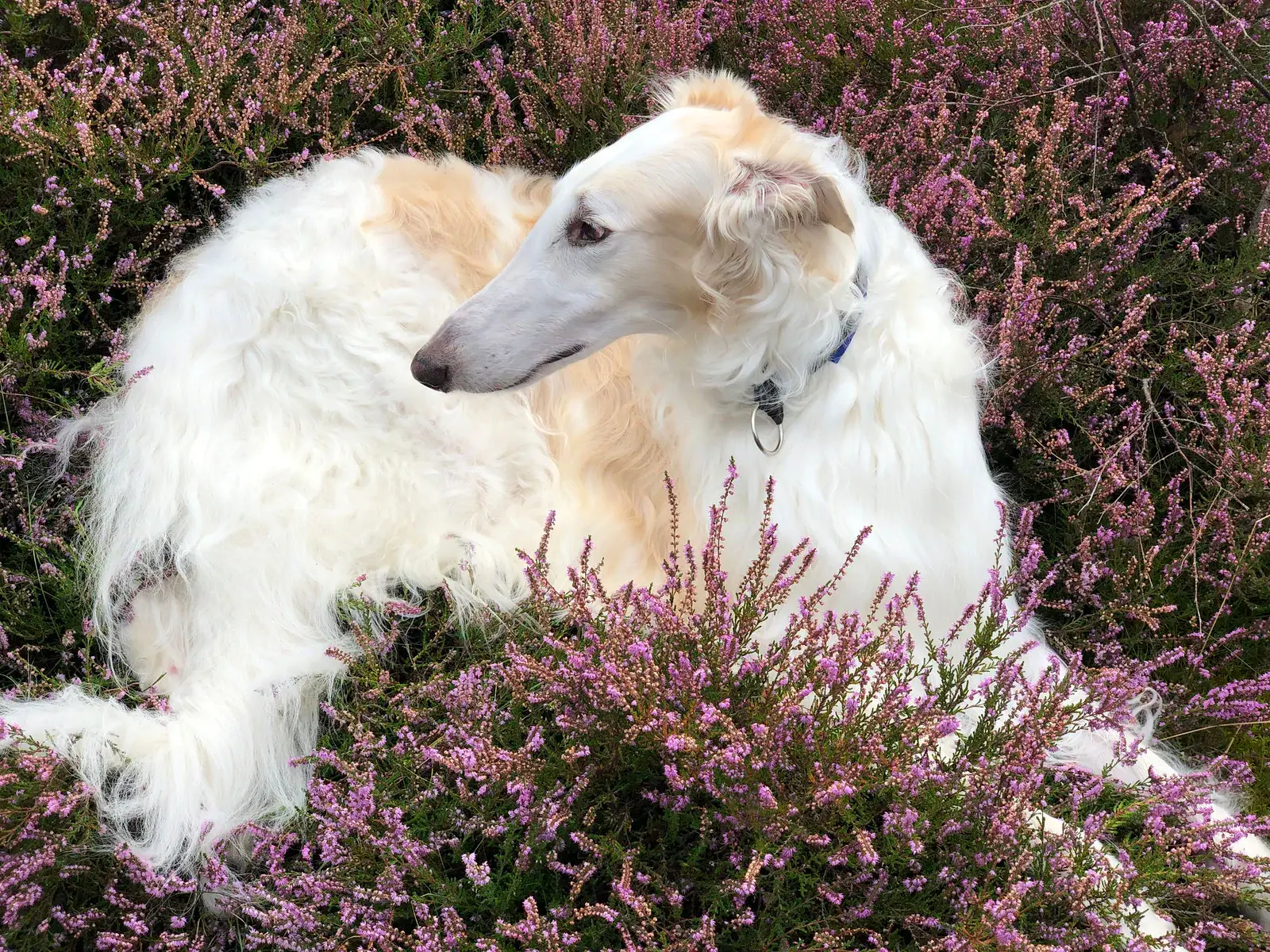
It was the dog of the Russian nobility for centuries, and outside Russia it was called the Russian Wolfhound until the American Kennel Club adopted the name Borzoi in 1936. Today it is a quiet, gentle and rather catlike companion that sprints in short bursts and sleeps for much of the day. It suits owners with a securely fenced garden, patience with an independent mind, and a taste for a calm household. Most Borzoi live healthy lives, and the main thing owners learn about early is bloat, which is covered below.
Borzoi quick facts
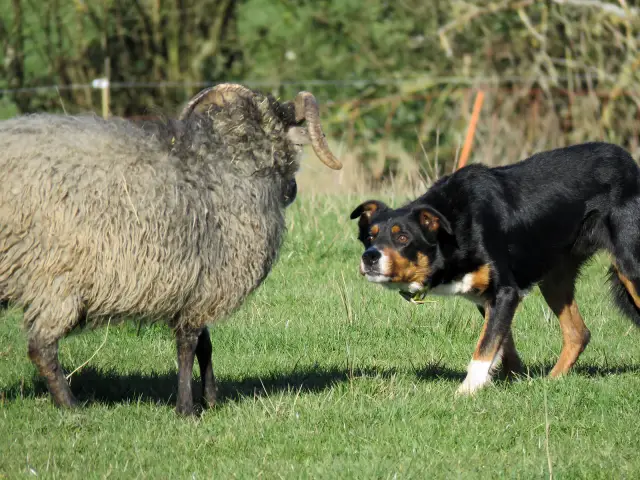 Related breedBorder Collie1800 to 1915 · United KingdomIndustrial Revolution
- Country of origin
- Russia
- Period of development
- Often dated to the 15th to 17th centuries; the Kennel Club and FCI texts give different origin stories (atlas data: 1200 to 1650, medium confidence)
- Original job
- Coursing wolves, hares and foxes in open country, working in pairs or trios
- Official name
- FCI no. 193: Russkaya Psovaya Borzaya (Borzoi, Russian Hunting Sighthound)
- Other names
- Russian Wolfhound (the name used outside Russia until the 1930s)
- Classification
- FCI Group 10, Sighthounds; AKC Hound Group; UK Kennel Club Hound Group
- Height
- Dogs about 74 to 85 cm, bitches about 68 to 78 cm, depending on the club
- Weight
- FCI summary: about 27 to 48 kg. AKC: dogs about 34 to 48 kg, bitches 7 to 9 kg lighter
- Coat
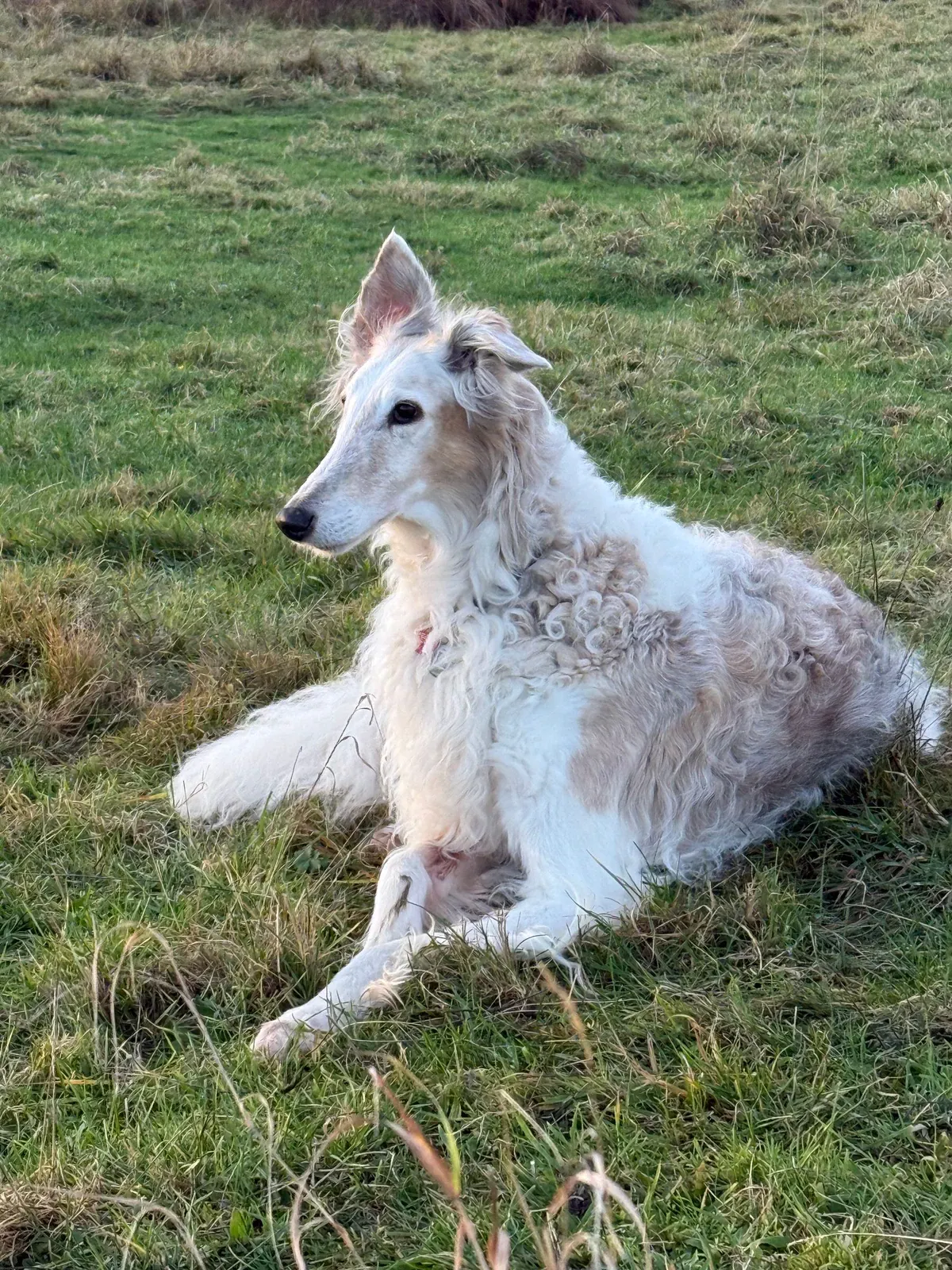
- Long, silky, flat or slightly wavy, with feathering; short and smooth on the head and front legs
- Colour
- Any colour or combination; solid white is allowed
- Life span
- Atlas data: 9 to 14 years. A Dogs Trust table reports a median of 12.0 years from a small sample (142 dogs)
- DNA family
- UK Rural (Parker et al. 2017)
- Closest DNA relative in the study data
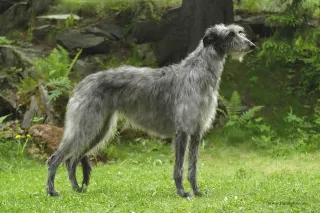
- Scottish Deerhound
Drawn to scale in real centimetres. Its back reaches about 76 cm, mid-thigh; its head about 96 cm, your waist.
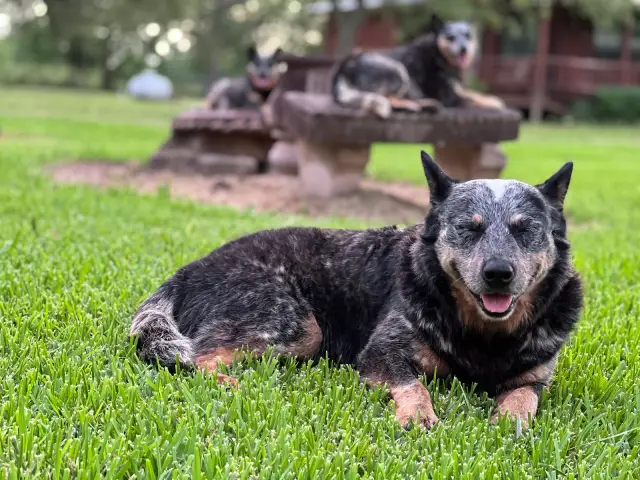
Where it sits in the tree
Late Middle Ages · 1200 to 1499
Name and origin
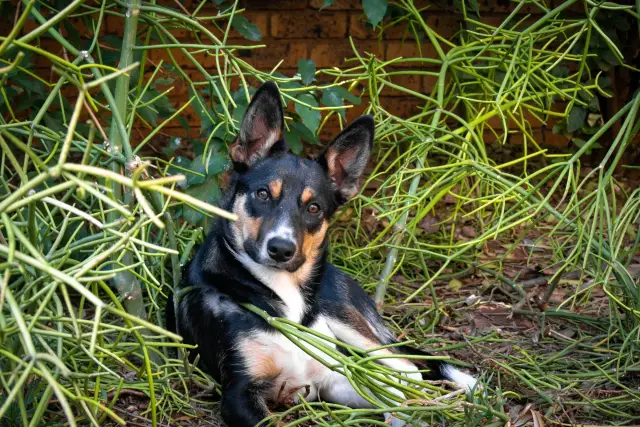
 Related breedCardigan Welsh Corgi1200 to 1934 · United KingdomLate Middle Ages
"Borzoi" comes from the Russian word borzyi, meaning "swift". The same root gives borzaya, the Russian name for a hunting sighthound in general, and the breed's formal Russian name, Russkaya Psovaya Borzaya, means roughly "Russian long-coated sighthound". "Psovaya" refers to the long, wavy "psovina" coat.
The English name has a history of its own. Outside Russia the breed was called the Russian Wolfhound, and in the United States the debate over the name ran through the 1920s and early 1930s. Some fanciers wanted to keep "Wolfhound" because it said what the dog did. Others wanted "Borzoi" so that the name matched the rest of the world's kennel clubs. According to AKC history articles, the AKC accepted Borzoi as the official name in 1936, and the Borzoi Club of America took the same name.
Where the dog came from is less settled, and the sources disagree.
- The FCI account. The FCI standard tells of Tatar sighthounds of Arab origin, called "koutsi", crossed with strong Russian "loshaya" hunting dogs, and says these crosses became the prototype of the Borzoi. It dates the story to the 15th century and links it to the time of the Mongol invasion.
- The Borzoi Club of America account. The club's judges' history says Mongol invaders brought Saluki-type dogs in the 13th century, and that these were crossed with long-legged native swift dogs.
- Other theories. Writers have also named Greyhound, Sloughi, the Russian sheepdog called the Owtcher, and bear-hunting dogs as ingredients. Showsight magazine adds that the Polish sighthound Chart Polski and the Courland "klok" dogs joined the early gene pool, and that Greyhound blood was added in the late 19th century (linked to the brindle colour).
What can be said with confidence is that the Borzoi is a sighthound that reached its present form in Russia over several centuries, from a mix of southern coursing hounds and heavier, long-coated northern dogs. The atlas data lists the Saluki as the Borzoi's closest named ancestor, at medium confidence, and that fits the story most sources tell.
 Save

History
 Same eraGreyhound800 CE to 1850 · United KingdomEarly Middle Ages
Hunting with the nobility
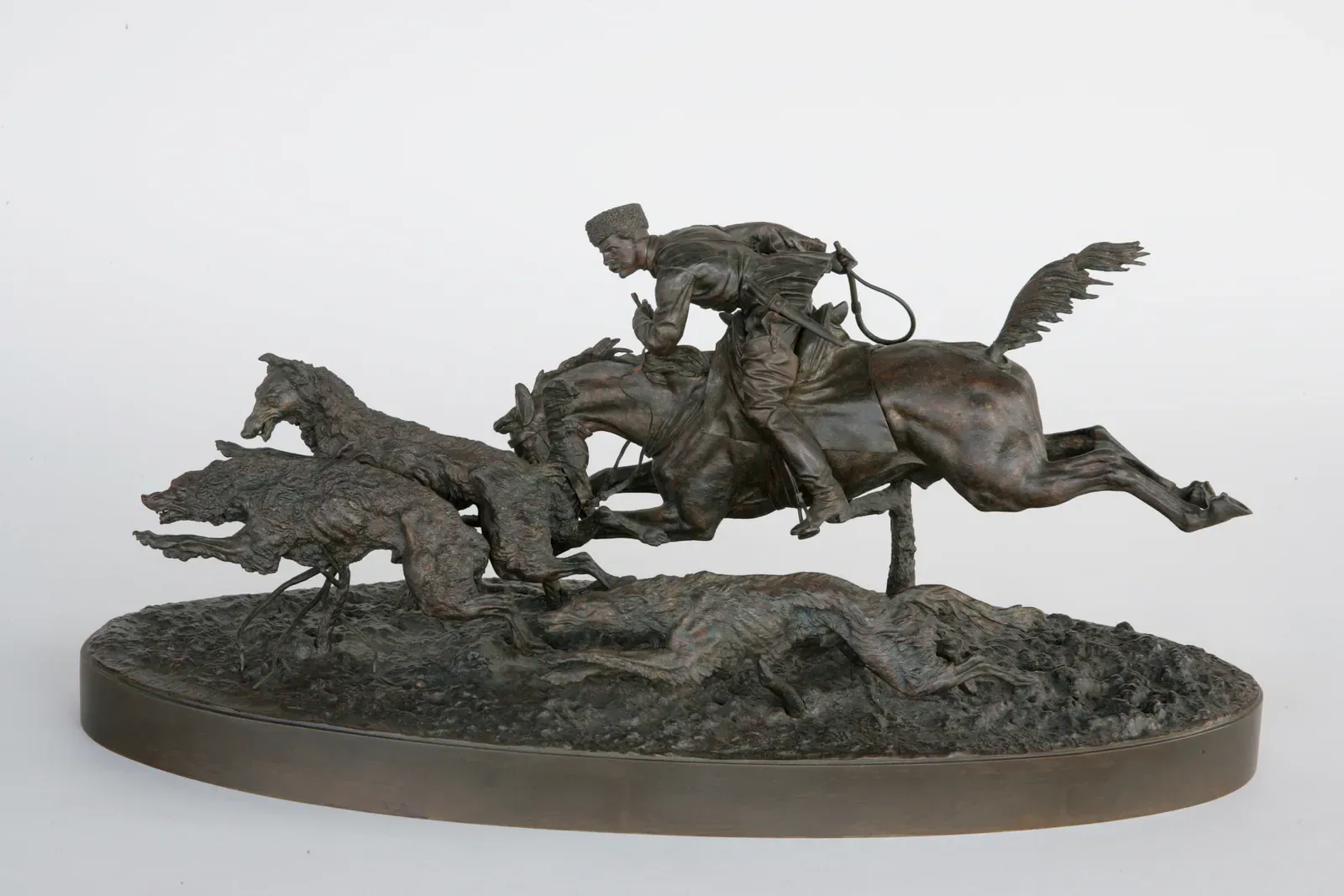
The Russian hunt was a social event as much as a sport. Dogs of the Borzoi type were kept by princes and landowners, and written descriptions and paintings of them go back several centuries. The FCI standard mentions a picture of these dogs in a prayer book belonging to Grand Prince Vasily III, the father of Ivan the Terrible. AKC history articles say that from the time of Ivan the Terrible, Russian nobles kept Borzoi in very large numbers, with some estates keeping hundreds. Another source says imperial kennels were founded in 1613. These dates and numbers come from breed histories, not from archive records, so they are best read as tradition.
The 1650 standard (unconfirmed). One source says the modern is closely based on one first drawn up in Russia in 1650. Only one source says this, and no second source confirms it. Treat it as a claim, not a fact. Breed histories agree that written standards came with the show era, but the date of the first one is not documented.
The hunt itself is well described. Riders on horseback went out with a pack of Borzoi, usually in pairs or trios, along with scent hounds and sometimes smaller hounds that drove the quarry out of cover. When a wolf broke into the open, the Borzoi were slipped. They caught the wolf, and, working together, held it until the hunter arrived. The dogs were fast over short distances but were not made for long chases like some other coursing breeds, which is why they are described as having speed with "staying quality" in the standards.
The Perchino kennel
The best known name in the breed's history is Perchino. This was the estate of Grand Duke Nicholas Nikolaevich, usually identified as the younger Grand Duke (1856 to 1929), where a large kennel and pack were kept. Sources disagree on the exact location. The AKC places it about 200 km (125 miles) from Moscow, while Borzoipedia puts it west of the city of Tula, also about 200 km from Moscow.
The Grand Duke's aim, according to the AKC and Borzoipedia accounts, was to rebuild the old hunting type after it had been diluted, and he sent a kennel manager to look for good dogs in remote parts of the country. At its peak the estate was said to house about 130 adult Borzoi and 60 puppies. His own pack was kept apart, and each colour was represented so that dogs could be leashed together by matching colour. The Perchino hunts became famous among the Russian aristocracy, and the type bred there strongly shaped the Borzoi that went abroad.
The exact numbers, the kennel's exact location and which Grand Duke is meant differ between accounts, because the surviving sources are breed histories. The identification of the younger Grand Duke is the usual one in the breed literature, but one source gives a death date that does not match, so this point is uncertain.
 Save
Decline after 1917
The Revolution of 1917 ended the system that supported the breed. Borzoi had been symbols of the nobility, and after 1917 large numbers were killed or lost as estates were broken up. The AKC history describes the breed as nearly extinct in Russia afterwards, and says survival depended on dogs that had already been taken to Europe and America. The Russian population was later rebuilt from the surviving dogs (details differ between sources).
The breed abroad
Borzoi had been going west since at least the 19th century. Russian nobles gave dogs as gifts to foreign royalty and aristocrats, and the breed became fashionable in Britain, where Queen Alexandra is reported to have kept them, and in the United States. The breed's elegance made it a favourite of painters and fashion photographers through the 1900s. The Borzoi Club of America was founded in the early 20th century, and the American population grew from exports of Russian dogs and later from imports of British lines. The name debate ended in 1936 with the AKC change described above.
Clubs and recognition
The Borzoi is a definitive breed in the FCI (standard no. 193, Group 10, Sighthounds), and is recognised by the AKC (Hound Group) and the UK Kennel Club (Hound Group). The FCI lists Russia as the country of origin and keeps the Russian name in its standard.
Relatives and DNA
 Same familyIrish Wolfhound100 BCE to 1885 · IrelandAncient World
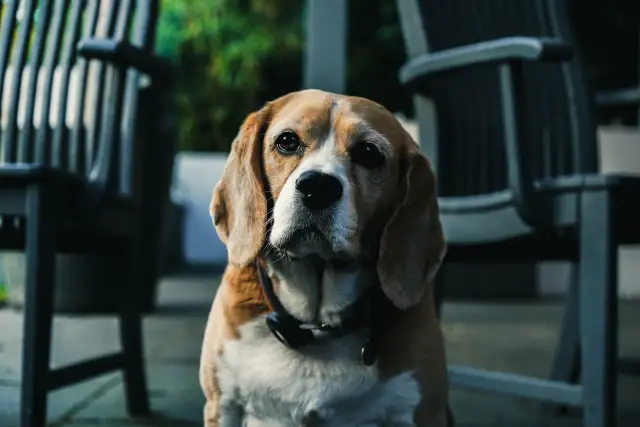
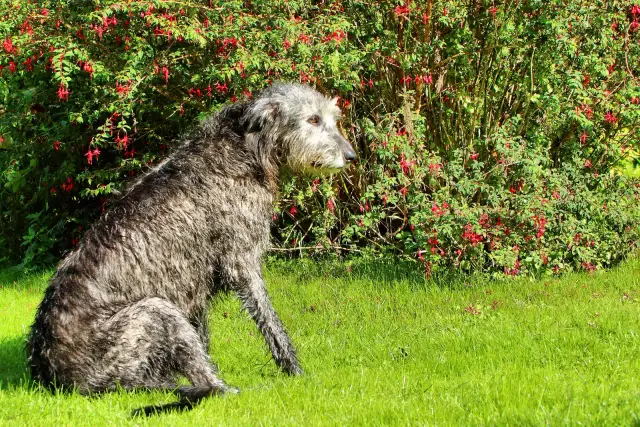
In the 2017 DNA study by Parker and colleagues, the Borzoi sits in the "UK Rural" family, a that includes several sighthounds and herding breeds with British links. In the atlas data, the breed with the most with the Borzoi is the Scottish Deerhound, with about 10 shared. That is a small amount, and it shows a distant link between two tall, rough-coated coursing hounds, not a recent cross.
The atlas data also records:
- Ancestor. Saluki, at medium confidence, as the sighthound at the root of the breed (the Wikipedia breed article and Fogle 2009 give the same story in outline).
- Sister breed. The Polish Greyhound, which is thought to share ancestors with the Borzoi.
- Descendants. Rough Collie and Silken Windhound are listed as children of the Borzoi. The Rough Collie link comes from the story that Borzoi blood was used to refine the Collie's long head in the 19th century. Chinook, Shetland Sheepdog and Nova Scotia Duck Tolling Retriever are listed further down the line.
Borzoi and its sighthound relatives. The Borzoi is often compared to other coursing breeds. The table shows how they differ in practice.
Sister breeds · 1
- Polish Greyhound1300 to 1990
Descend from it · 2
- Rough CollieUnited Kingdom
- Silken WindhoundUnited States
- Scottish Deerhound10.0 Mb 0.4%
Source: Parker et al. 2017. Percent of the whole genome.
| Breed | Origin | Coat | What it was bred to do |
|---|---|---|---|
| Borzoi | Russia | Long, silky | Hold wolves, hares and foxes in open country |
| Saluki | Middle East | Smooth with feathering | Run down gazelle and hares over desert |
| Greyhound | Britain | Short | Course hares; later racing |
| Afghan Hound | Afghanistan | Very long, silky | Hunt in mountain terrain |
| Scottish Deerhound | Scotland | Harsh, wiry | Run down red deer |
The breed standard
 Looks relatedItalian Greyhound500 BCE to 1900 · ItalyAncient World
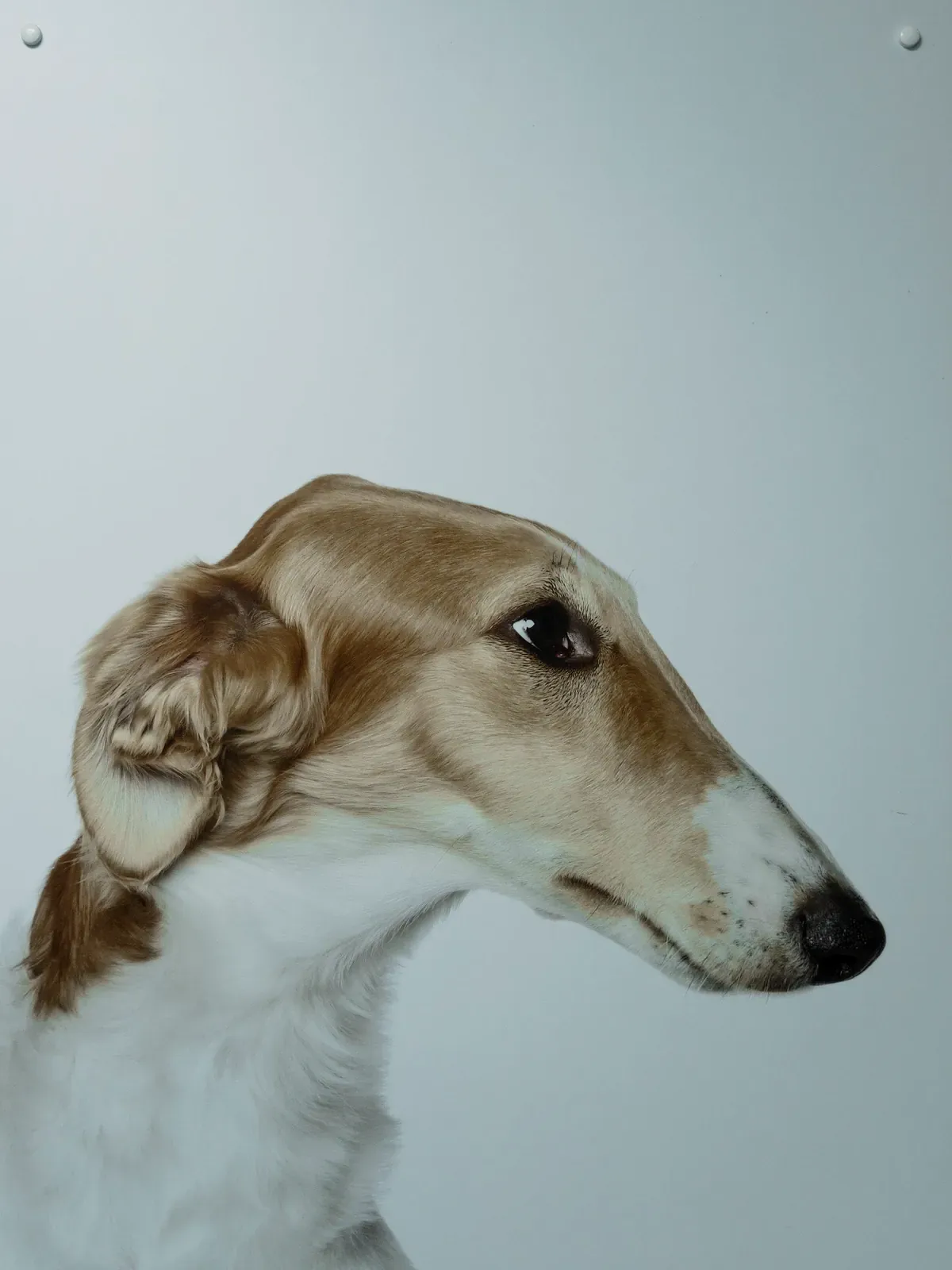
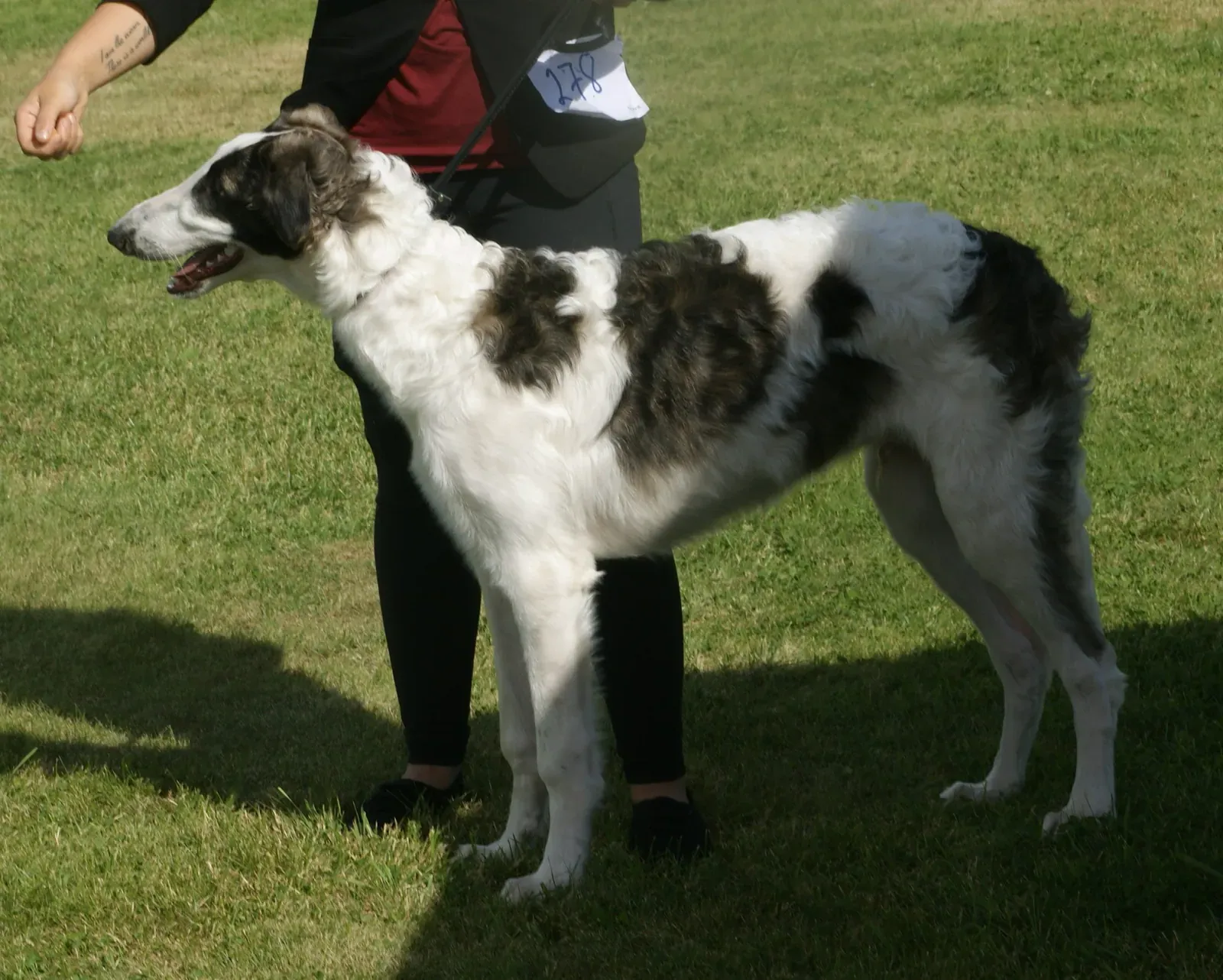
A breed standard is the written ideal for a breed that kennel clubs judge dogs against. The FCI, AKC and UK Kennel Club standards for the Borzoi describe the same dog: a tall, elegant, lightly built sighthound with a long, narrow head, a deep narrow chest, a strongly arched back and a long, silky, wavy coat. The differences are in how size is stated.
| Trait | What the standards say |
|---|---|
| Height, dogs | UK Kennel Club: minimum 74 cm. FCI (as summarised): about 75 to 85 cm. AKC: minimum 28 in (about 71 cm) |
| Height, bitches | UK Kennel Club: minimum 68 cm. FCI (as summarised): about 68 to 78 cm. AKC: minimum 26 in (about 66 cm) |
| Weight | FCI (as summarised): about 27 to 48 kg, though the German text says weight is not fixed. AKC: dogs 75 to 105 lb (about 34 to 48 kg), bitches 15 to 20 lb (7 to 9 kg) less |
| Coat | Long, silky, flat to slightly wavy; short on head, ears and front of legs; heavy feathering on the body and tail (all clubs) |
| Colour | Any colour or combination of colours (all clubs) |
| Head | Long, narrow, lean, with a slight Roman nose (all clubs) |
| Body | Deep, narrow chest; arched loin; long, tapering tail carried low (all clubs) |
The UK Kennel Club figures come from its breed page. The FCI height range and weight are from a secondary summary of standard no. 193, so check the current FCI text for the exact wording. The AKC figures come from an older text of the standard (last modified in 1972, in effect in 1995) quoted on a breed club site; the AKC may have revised the wording since. The UK Kennel Club says its figures are a guide to the ideal and do not mean that every dog will match them.
Size in practice. Both the American and British standards state minimums, and the AKC says dogs above the limits should not be penalised as long as symmetry, speed and staying quality are not harmed. The FCI standard adds that females are generally longer in body than males.
Coat and colour. The coat is made up of a flat, silky top coat with waves or curls, which grows longer on the body than on the head. The AKC and other standards allow any colour, so white, cream, , red, black and brindle, with or without markings, are all correct. Solid colours and patches both appear in the ring.
Temperament
 Related breedMiniature American Shepherd1968 to 2015 · United StatesModern Era
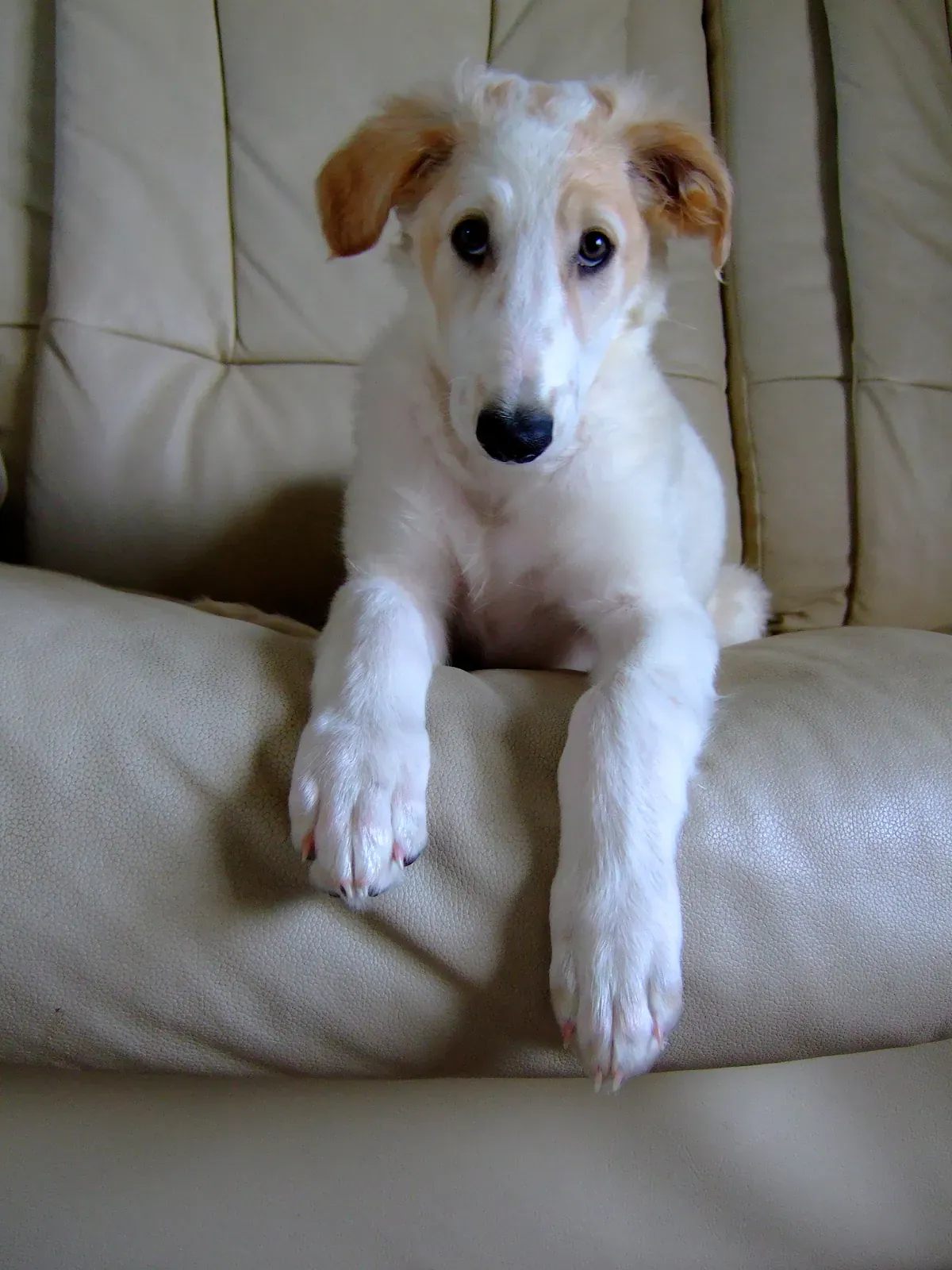
The Borzoi is a quiet and dignified dog. Breed clubs and the Kennel Club describe it as gentle, reserved with strangers and often cat-like in the house, and happy to lie on a sofa for most of the day. It is independent and sensitive to harsh handling, and it is not a "do what I say" breed in the way that a German Shepherd is. Most Borzoi are not guard dogs, and most are not noisy; they may bark rarely, and often at one particular thing. See the smartest dog breeds for how this breed compares with others on trainability.
Behaviour in the field is a different matter. This is a sighthound, which means it has a strong chase instinct. A Borzoi that sees something small and fast running away will often go after it at speed, and recall is unlikely to work in that moment. That is why owners are advised to exercise Borzoi off-lead only in fully fenced areas.
Common points owners report:
- Calm indoors, fast outdoors. Short bursts of speed, then rest.
- Reserved with strangers. Early socialisation with people helps a dog stay calm and not shy.
- Sensitive. Harsh training backfires. Short sessions with praise and food work better.
- Prey drive. Small pets, cats outside the home and wildlife can trigger the chase.
- Slow to mature. Many Borzoi take two to three years to settle both physically and mentally.
Temperament varies between individuals. A calm, social dog needs a puppy that is bred and raised well; the best predictors are the temperament of the parents and how much handling and exposure the puppy gets in the first weeks.
 Save

Exercise and training
 Related breedOld English Sheepdog1700 to 1888 · United KingdomEarly Modern Era
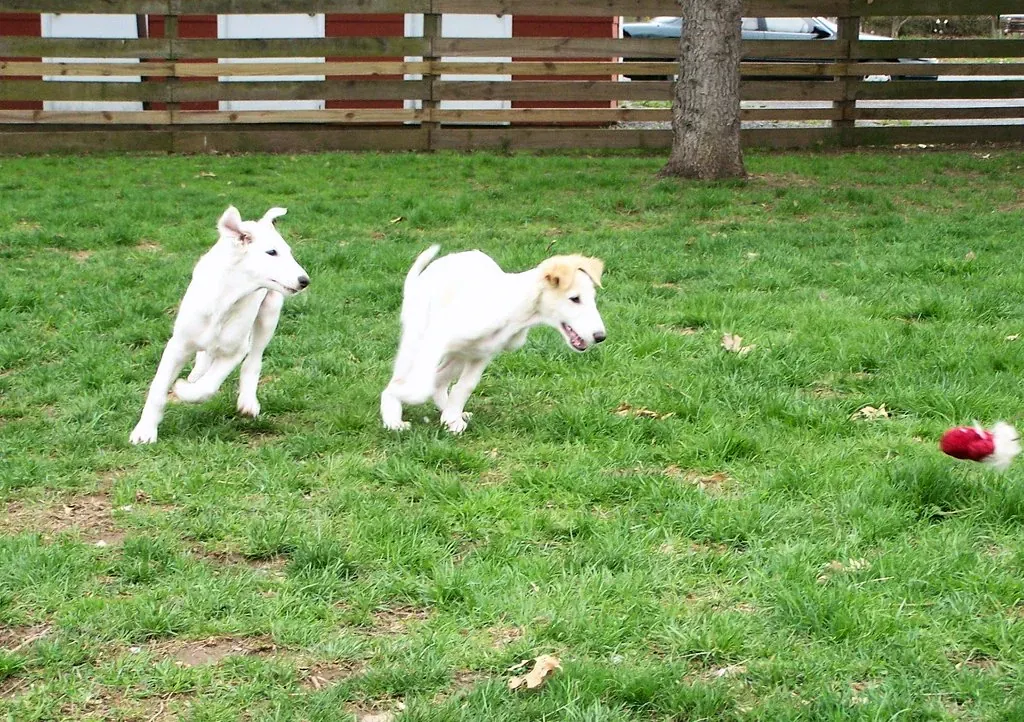
The Borzoi does not need hours of walking every day. A fenced run once or twice a day, plus a couple of steady walks on the lead, suits most adults. Puppies and adolescents will gallop in the garden and then flop. The sighthound pattern is short, hard exercise followed by long rest.
Points that matter for training:
- Off-lead is a risk. Even a well-trained Borzoi can ignore a recall once it sees prey. Most clubs recommend a fenced area for free running. Lure coursing and straight-line runs are popular sports that fit the breed, since they give the dog a legal chase.
- Fences matter. A Borzoi can clear a low fence from a standing start. Fences need to be high and secure.
- Early socialisation. Introduce the puppy to people, other dogs, vehicles and noises in a calm way during the first months.
- Gentle methods. The breed is sensitive. It responds well to reward-based training, and poorly to shouting or force.
- Cats and small pets. A Borzoi raised with a cat from puppyhood often accepts it at home but may still chase cats outside. Treat it as a risk, not a rule.
 Save
Coat and grooming
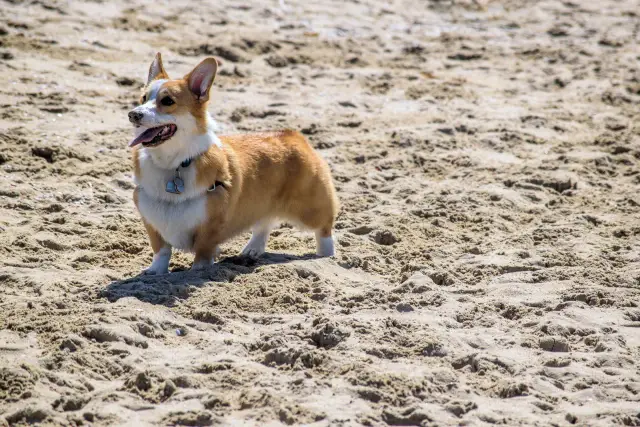 Related breedPembroke Welsh Corgi1100 to 1934 · United KingdomEarly Middle Ages
The long silky coat looks like a lot of work, but it is easier than it appears because it does not tangle as badly as many long coats. A thorough brush once or twice a week keeps it in good order, with extra attention behind the ears, on the "britches" of the hind legs and under the tail, where feathering can mat. Borzoi shed lightly through the year and heavily once or twice a year, when daily brushing helps. Bathing is occasional.
Nails, teeth and ears need regular care like other breeds. Some owners and vets also note that sighthounds have thin skin that can tear on brambles and wire, so a quick check after running through rough ground is a good habit.
Health
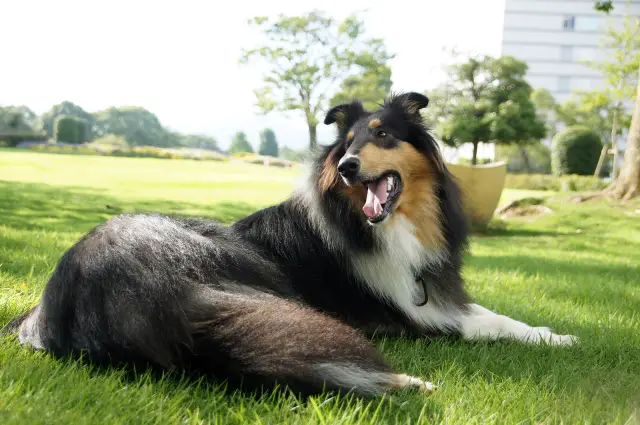 Related breedRough Collie1800 to 1886 · United KingdomIndustrial Revolution
Most Borzoi live healthy lives. The Borzoi Club of America (BCOA) states in its 2024 health statement that the breed overall has relatively few and low incidences of health problems. What follows is what breeders screen for and what owners can watch for. Figures are given as "about 1 in N" only when a named source provides a number, and several of the best figures come from owner surveys, so they are rough guides, not exact rates.
| Condition | What it is | How common | What helps |
|---|---|---|---|
| Bloat (gastric dilatation-volvulus, GDV) | The stomach fills with gas and may twist; an emergency | Borzoi are on the list of breeds with a higher risk, but no breed-specific rate is published | Know the signs, ask a vet about preventive gastropexy, feed sensibly, see a vet at once if the dog is retching without bringing anything up |
| Dilated cardiomyopathy (DCM) | A heart muscle disease in which the heart enlarges and weakens | In a 2023 multicentre study of 152 Borzoi, 65% of the 131 that had an echocardiogram were structurally normal; 13 had DCM and 12 had mitral valve disease. The study used referral practices, so it is not a prevalence figure | Echocardiogram for breeding dogs (the BCOA recommends it); regular vet checks |
| (DM) | A late-onset disease of the spinal cord, with a DNA test | BCOA 2012 survey of 555 dogs in the OFA DNA database: 14 (about 1 in 40) at risk, 142 (about 1 in 4) | DNA test before breeding; DM test is part of the BCOA's recommended panel |
| Cancer | Bone cancer (osteosarcoma) and other tumours | In the BCOA 2009 health survey, cancer was the most commonly reported problem at 21.8% (about 1 in 5 dogs), with osteosarcoma the most common type; the survey was owner-reported | No screening test exists; see a vet about lumps or lameness early |
| Eye disease | Inherited eye conditions | No Borzoi-specific rate found | Annual eye test by a specialist (the BCOA recommends this) |
| Other digestive and orthopaedic problems | Mixed | BCOA 2009 survey: gastrointestinal and orthopaedic disease tied at 7.4% each (about 1 in 14) | Vet checks, healthy weight |
| Sensitivity to anaesthesia | Sighthounds metabolise some drugs differently | Reported for sighthounds in general; no Borzoi-specific rate | Tell the vet the dog is a sighthound before any procedure |
Bloat. Bloat, or gastric dilatation-volvulus, is the condition most often named for this breed. It is a risk for deep-chested dogs in general. Glickman and colleagues' work at Purdue (JAVMA, 2000) ranks breeds by relative risk, with the Great Dane at the top, and its risk factors included being male, being underweight, eating quickly, eating one large meal and a fearful temperament. A Tufts review (2014) lists the Borzoi among the susceptible breeds. No Borzoi-specific figure is published, so no number is given here. The BCOA lists bloat among the conditions with no screening test, and many owners talk to their vet about a preventive gastropexy (stitching the stomach in place) when a dog is neutered or has other abdominal surgery.
Signs of bloat are a swollen, tight belly, restlessness, drooling and unproductive retching. It is an emergency, and the dog needs a vet at once.
Heart. The 2023 study (Frontiers in Veterinary Science) found that most Borzoi examined were structurally normal, that DCM and mitral valve disease turned up at about the same frequency, and that heart rhythm problems were found in 19% of dogs with an echocardiographic diagnosis. The sample came from referral cardiology centres, so it over-represents dogs with problems. The authors call for prospective research.
Life span. The atlas data gives 9 to 14 years. A Dogs Trust table that cites a large life-expectancy study reports a median of 12.0 years for Borzoi, based on 142 dogs of which only 43 had died, so the number has a wide margin of error.
Health tests the breed club recommends. The BCOA's 2024 statement lists a DM DNA test, a CAER eye exam, an echocardiogram and a thyroid test as recommended tests.
 Ticks and fleasTicks and fleas on dogs: how to check, remove and prevent themTicks and fleas on dogs: how to tell them apart, check your dog, remove a tick safely, break the flea life cycle and prevent both.
 GuidesPractical guidesBehaviour, training, health and adoptionRelated breedRough Collie1800 to 1886 · United KingdomIndustrial Revolution
Living with a Borzoi
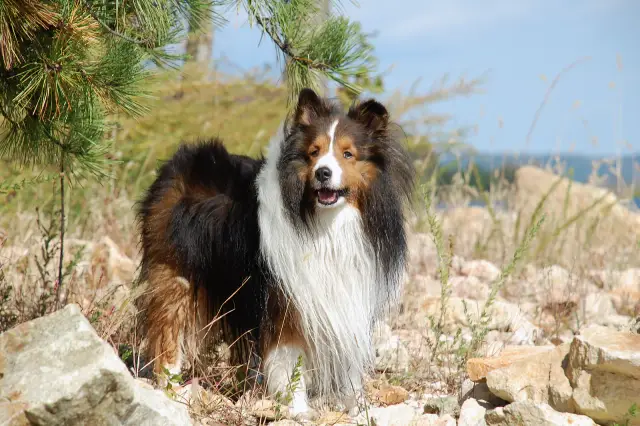 Related breedShetland Sheepdog1700 to 1909 · United KingdomEarly Modern Era
| Daily reality | Rating | Why |
|---|---|---|
| Exercise per day | Medium | A fenced sprint and a couple of walks, then long rest; not as demanding as many working breeds |
| Training needs | Medium | Intelligent but independent; sensitive to harsh methods; recall is unreliable around prey |
| Grooming | Medium | Brushing once or twice a week; more during moults |
| Shedding | Medium | Light most of the year, heavy at the moult |
| Barking | Low | Usually quiet |
| Time alone | Fair | Bonds with family; bored dogs can chew; varies |
| Children | Fair | Gentle, but large and delicate in build; supervise with small children |
| Other dogs | Good | Often good with other sighthounds and familiar dogs |
| Cats and small pets | Varies | Strong chase instinct; depends on early exposure |
| Flat living | Fair | Calm indoors, but needs space and secure access to a fenced run |
| Heat tolerance | Fair | Long coat and large size; keep exercise to cooler hours |
| Cold tolerance | Good | Long, dense coat |
| First-time owner fit | Fair | Gentle, but independent and needs secure fencing; a first-timer can manage with research |
A great fit if
- You have a tall, secure fence and a garden where a dog can run.
- You like a calm, quiet and somewhat independent dog.
- You will train with patience and praise, not force.
- You can fit in a weekly brush and a few daily walks.
Think twice if
- You live where a dog can only be exercised off-lead in open parks.
- You have small pets that the dog could chase.
- You want a dog that follows every command or loves meeting everyone.
- You cannot take on the cost and worry of a deep-chested breed that may bloat.
Before you get one
- Health tests. Ask the breeder for the DM DNA result, a recent eye exam, an echocardiogram for the parents and thyroid results, and ask to see the originals. These are the tests the Borzoi Club of America recommends.
- Puppy or adult rescue. Borzoi and sighthound rescues exist and often place adult dogs whose temperament and prey drive are already known.
- First year. Plan for secure fencing before the puppy arrives, early socialisation, gentle training classes and a lean body weight. Discuss bloat and preventive options with a vet early on.
Similar breeds to consider
- Saluki. A lighter, smooth or feathered sighthound with a similar quiet manner indoors and strong chase drive.
- Greyhound. Short-coated, easy to groom and known for being a sofa dog at home.
- Afghan Hound. A sighthound with a longer coat that needs much more grooming.
- Irish Wolfhound. Larger and rough-coated, with its own health needs and a gentle nature.

Borzoi fun facts
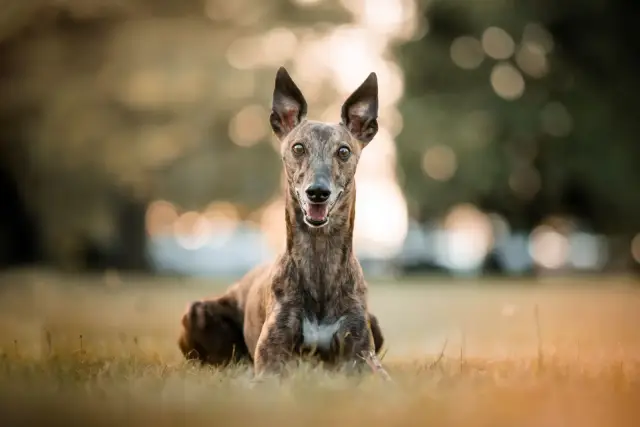 Related breedWhippet1800 to 1890 · United KingdomIndustrial Revolution
- The name means "swift" in Russian, and borzaya is the word for a hunting sighthound.
- Perchino was said to keep about 130 adult Borzoi and 60 puppies at its peak (breed history accounts, not archive records).
- Borzoi hunted wolves in pairs or trios, and the dogs were leashed together by colour on the Grand Duke's hunts.
- The AKC accepted the name Borzoi in 1936, replacing Russian Wolfhound.
Frequently asked questions
Are Borzoi good family dogs?
They can be, in calm homes. They are gentle and quiet, but they are large and fine-boned, and they need a secure fence and supervision around small children.
How big is a Borzoi?
The UK Kennel Club gives minimum heights of 74 cm for dogs and 68 cm for bitches. The and give similar figures, and weights of about 34 to 48 kg for dogs are quoted.
How long do Borzoi live?
The atlas gives 9 to 14 years. A Dogs Trust table gives a median of 12.0 years from a small sample.
Are Borzoi the same as Russian wolfhounds?
Yes. Russian Wolfhound was the English name until the AKC adopted Borzoi in 1936. The name is also used for the FCI's Russkaya Psovaya Borzaya.
Do Borzoi get bloat?
They are on the list of deep-chested breeds with a higher risk of bloat. It is an emergency, and owners should learn the signs and talk to a vet about prevention.
Can a Borzoi live with a cat?
Sometimes, if raised with it, but the chase instinct is strong, so each case varies and supervision is needed.
Read next
 FamilyUK RuralThe whole family
 Adopt a dogDog Shelters in EuropeFind dog shelters in Europe, learn how shelters differ from country to country and why adopting a dog is a good option.
Sources (15)
- Borzoi Club of America, health statement (20 August 2024).
- Borzoi Club of America, judges' information and breed history pages.
- Borzoi Club of America, health survey reports (2009 and 2012 committee reports).
- American Kennel Club, Borzoi breed standard (older text quoted on a breed club site).
- American Kennel Club, "Behind the Breed: Borzoi History" and "The Great Borzoi Controversy".
- Fédération Cynologique Internationale, Russkaya Psovaya Borzaya (Borzoi), standard no. 193.
- The Kennel Club (UK), Borzoi breed standard and breed page.
- Borzoipedia, "The Perchino Hunt" and FCI standard archive pages.
- Showsight magazine, Borzoi breed feature.
- Parker H.G. et al., "Genomic analyses reveal the influence of geographic origin, migration, and hybridization on modern dog breed development", Cell Reports, 2017.
- Fogle B., The New Encyclopedia of the Dog, 2009.
- Glickman L.T. et al., "Non-dietary risk factors for gastric dilatation-volvulus in large and giant breed dogs", Journal of the American Veterinary Medical Association, 2000.
- Multicentre retrospective study of cardiac disease in Borzoi dogs, Frontiers in Veterinary Science, 2023.
- Dogs Trust, shortest and longest lived breeds table (citing a 155-breed life expectancy study).
- Review of gastric dilatation-volvulus risk factors, Topics in Companion Animal Medicine, 2014 (Tufts).