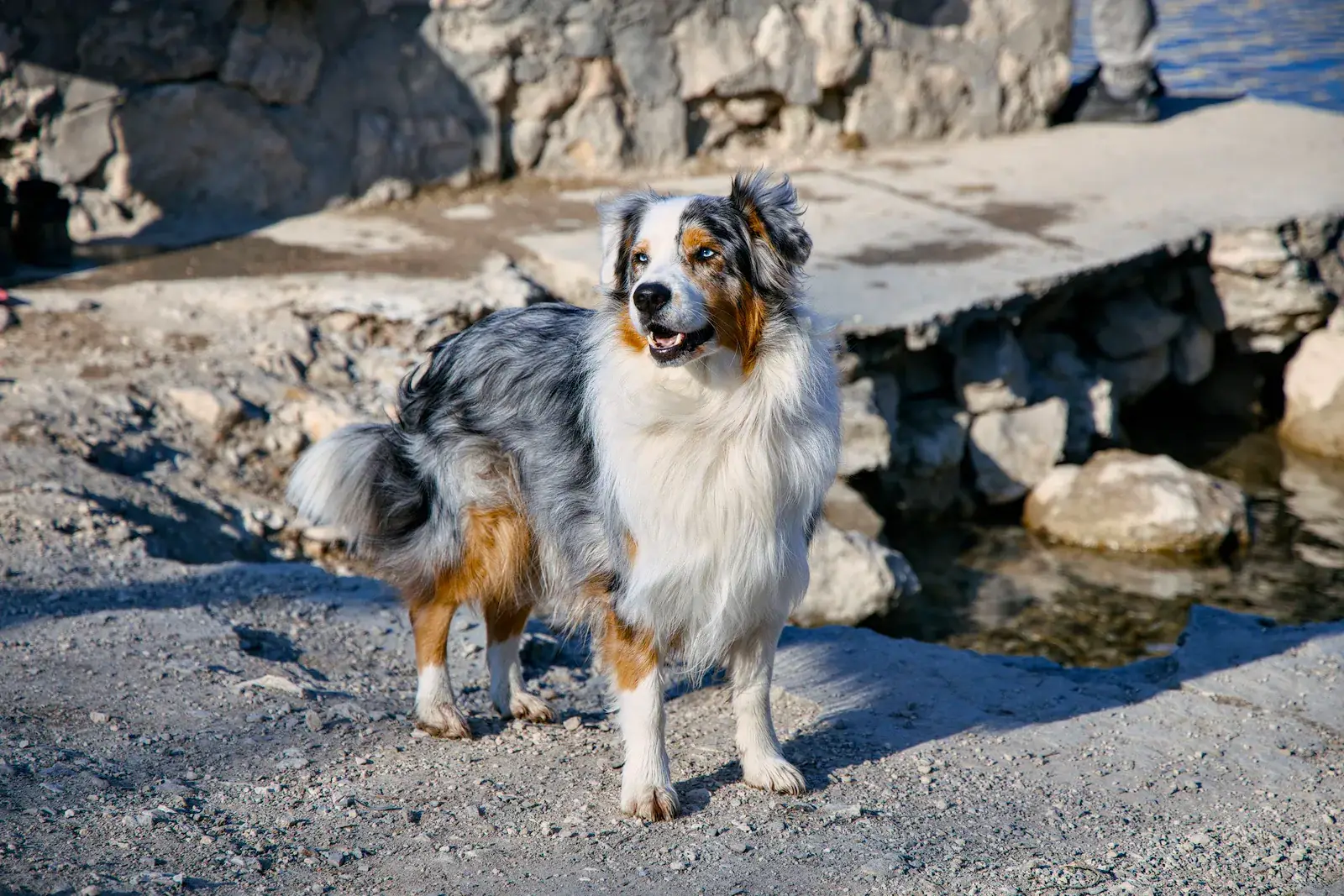
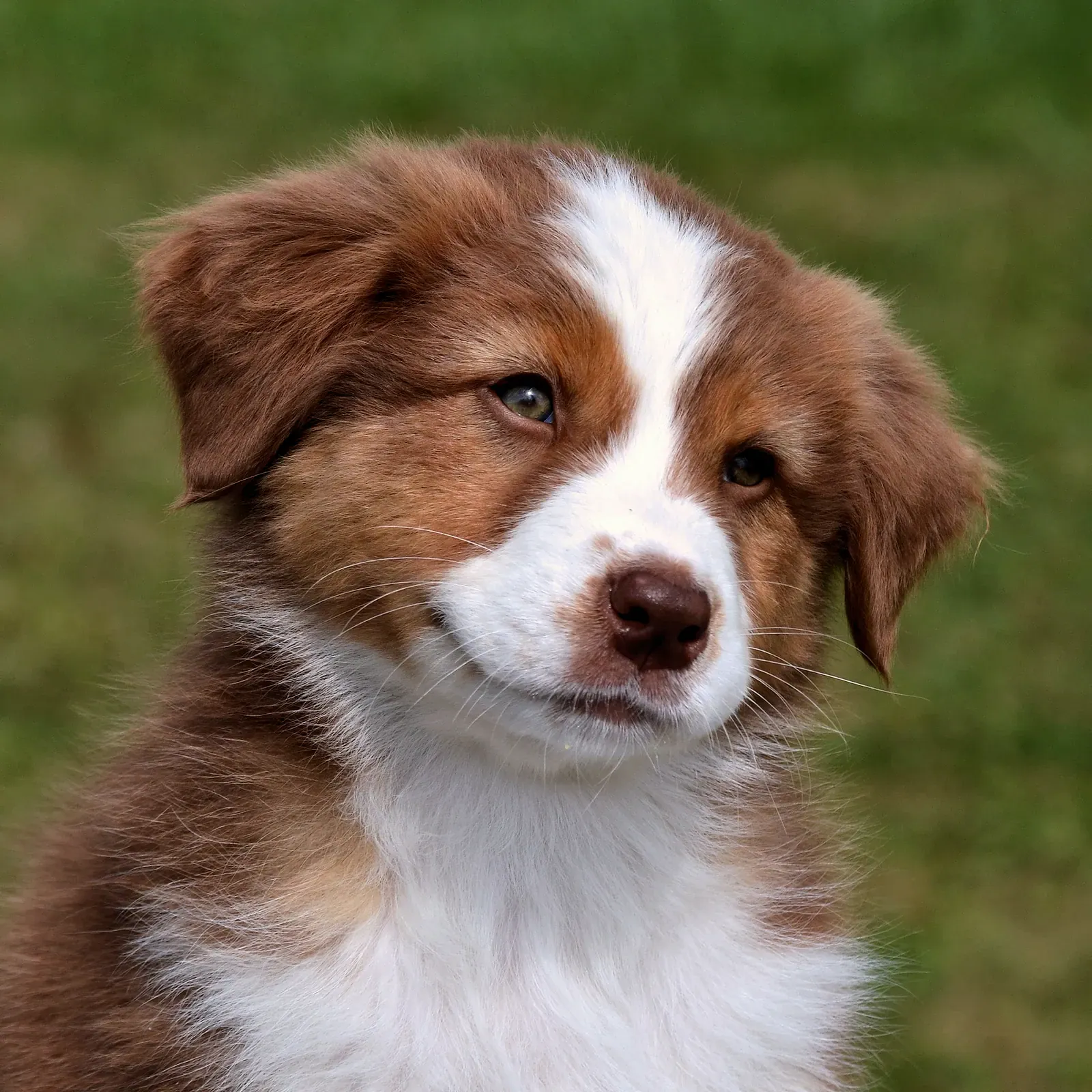
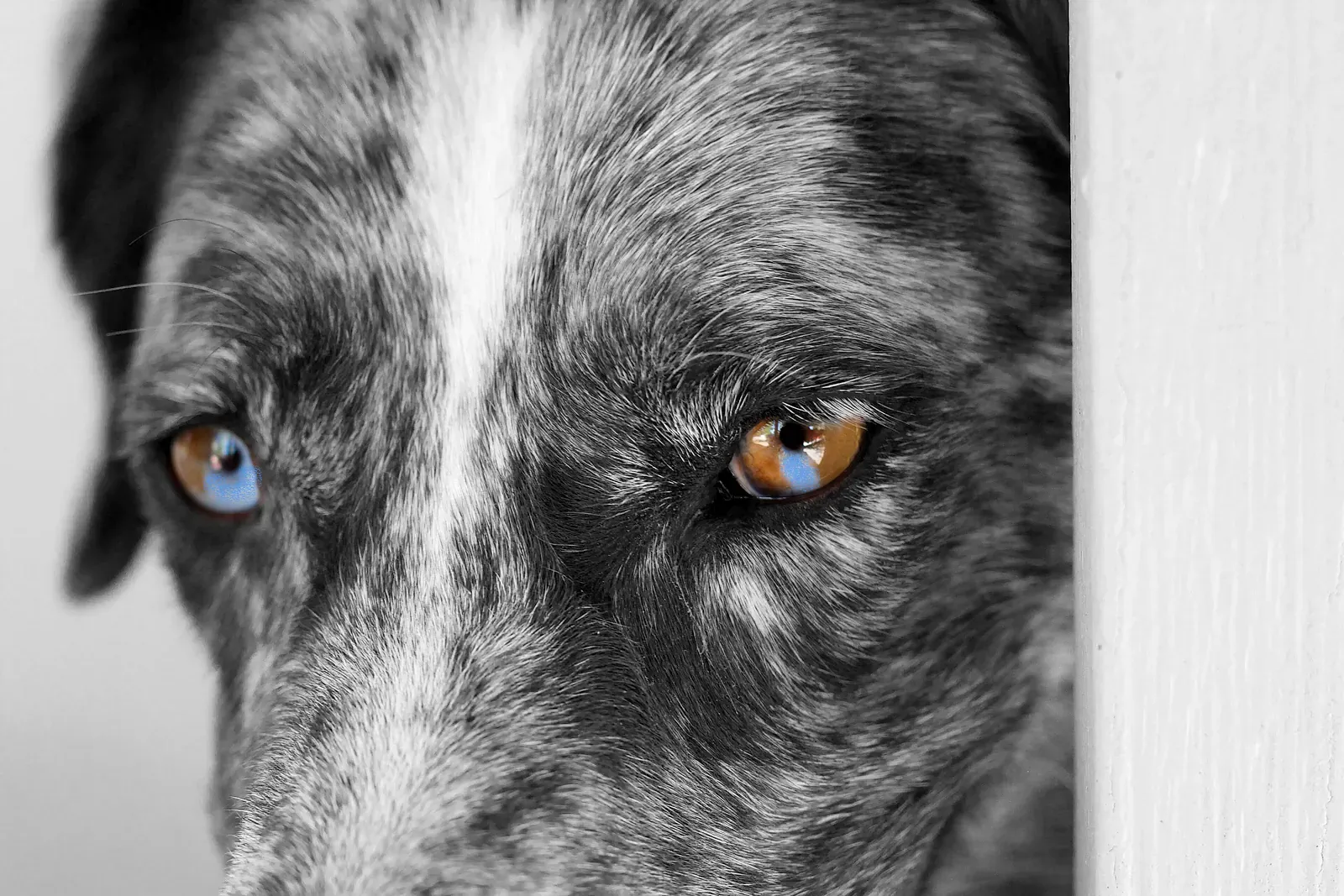
It is known for its merle coats, sometimes blue or two-coloured eyes, and a tireless, people-focused working style. Ranchers used it for decades before rodeo shows in the 1950s and 1960s made it famous. It suits active owners who want a trainable partner, and it needs a daily job as much as a daily walk. Two health points matter for every owner: a common drug sensitivity (MDR1) and the risks of breeding two merle dogs together.
Australian Shepherd quick facts
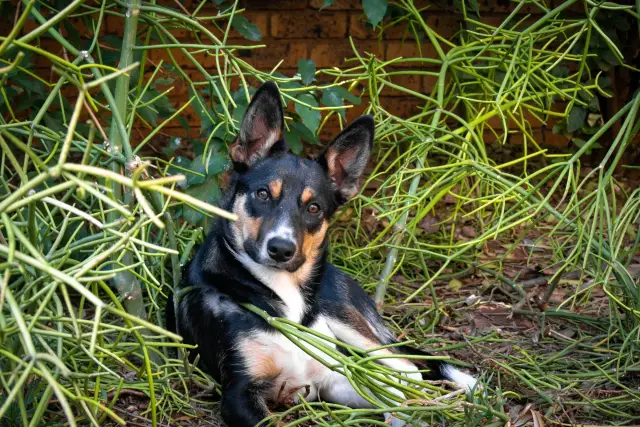 Related breedAustralian Kelpie1870 to 1902 · AustraliaVictorian Breed Boom
- Closest DNA relatives
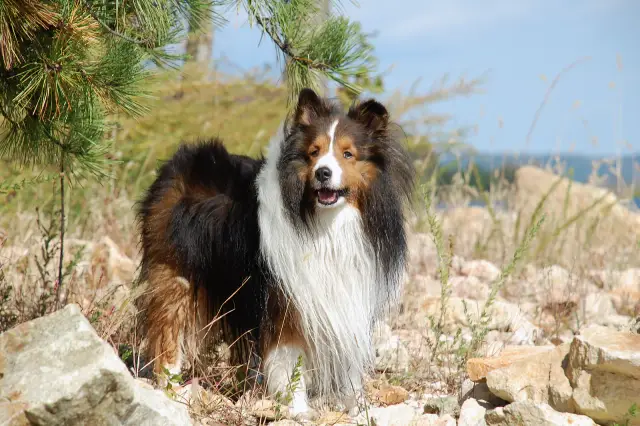
- Rough Collie, Shetland Sheepdog, Border Collie
- Country of origin
- United States (western states). standard no. 342 lists the USA
- Period of development
- About 1840 to 1957 (atlas data); registry founded 1957
- Other names
- Aussie
- Type
- Herding dog (FCI Group 1, Sheepdogs and Cattledogs; Herding Group; UK Kennel Club Pastoral Group)
- Height
- Males 51 to 58 cm, females 46 to 53 cm (FCI and AKC standards)
- Weight
- About 16 to 32 kg in reference works. AKC standard gives no weight
- Coat
- Medium length, straight to wavy, weather-resistant double coat
- Colours
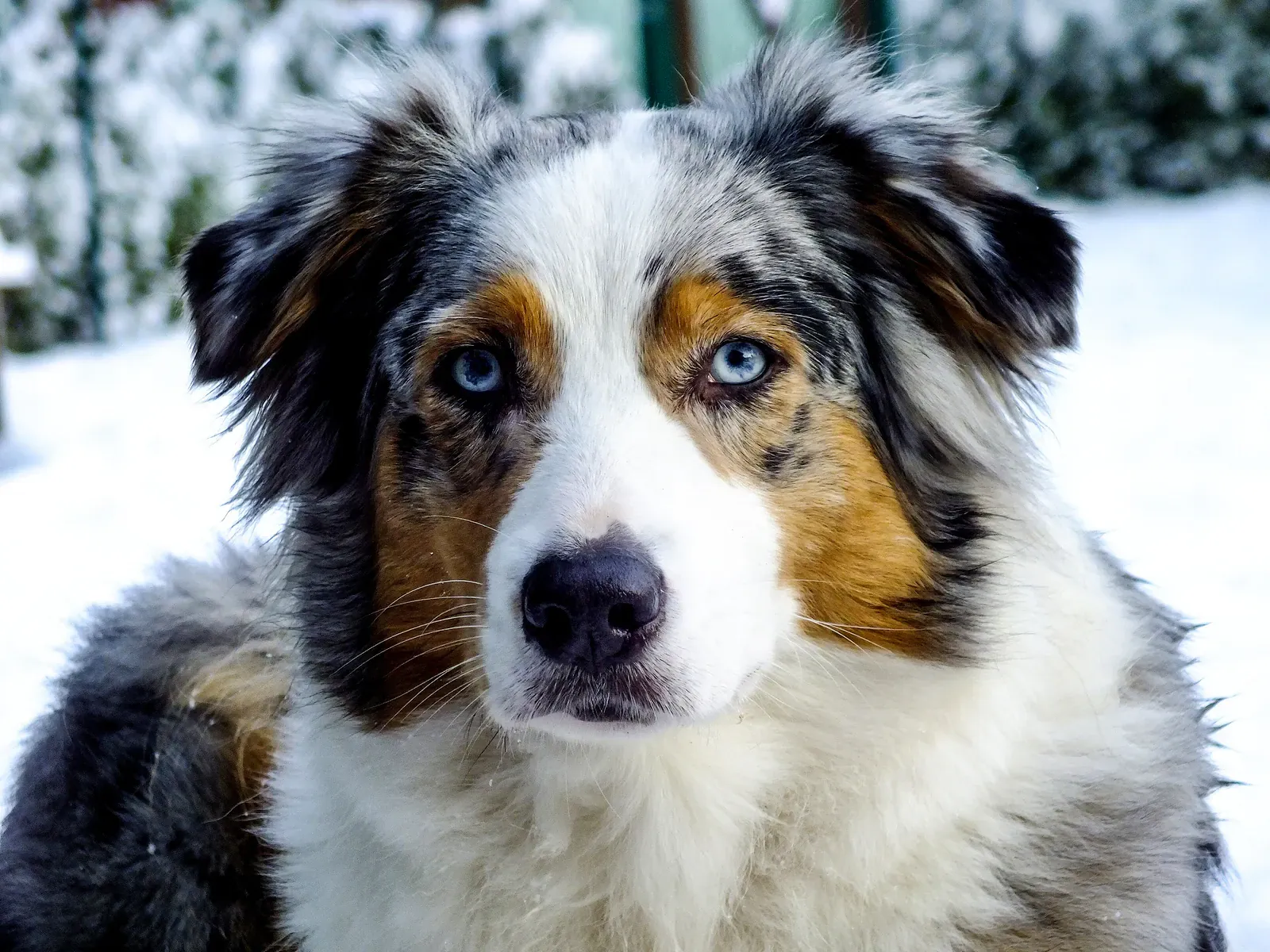
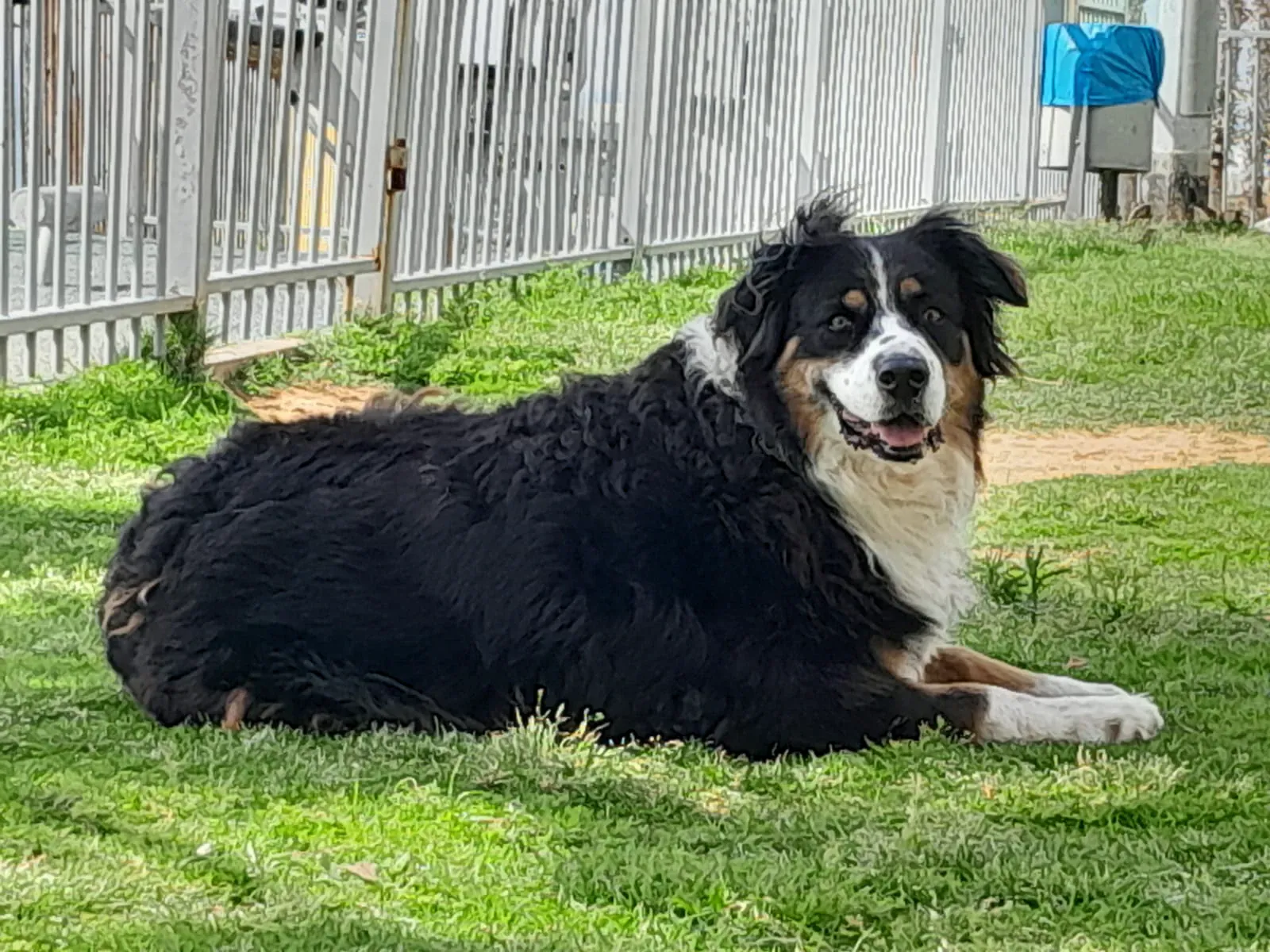
- Blue merle, red merle, black, red, with or without white and tan
- Life span
- Atlas data: 12 to 15 years. ASHGI longevity survey: median 11.6 years
- Exercise
- High: about 1 to 2 hours a day plus mental work (varies by line)
- DNA family
- "UK Rural" (Parker et al. 2017)
- Descendant breed
- Miniature American Shepherd
Drawn to scale in real centimetres. Its back reaches about 52 cm, your knee; its head about 66 cm, mid-thigh.
Where it sits in the tree
Industrial Revolution · 1800 to 1849
Name and origin
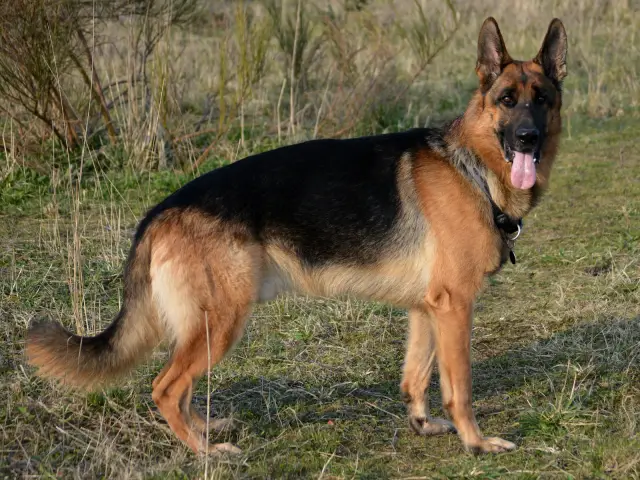 Related breedGerman Shepherd1899 · GermanyVictorian Breed Boom
Why is an American breed called "Australian"?
The Australian Shepherd was built in the United States, yet the name points to Australia. The FCI lists the USA as country of origin, and the atlas data records the name as coming from a mistaken belief that its ancestors arrived with sheep imported from Australia. Several explanations circulate, and none is settled.
- The Basque via Australia story. The most repeated account says Basque shepherds from the Pyrenees emigrated to Australia in the early 1800s with their dogs. From the late 1800s some moved on to California and other western states, shipping sheep and dogs across the Pacific. American ranchers noticed the dogs came off boats from Australia and called them "Australian shepherds". This is the story told by the AKC and by many breed clubs, but it is a breed legend. It is not backed by pedigrees or ship records.
- The direct Basque story. Other accounts skip Australia: Basque shepherds came to the American West directly from Spain and France. Writers who favour this version point out that the name would then be a simple mistake. Sources disagree on when Basque immigration to the western US peaked.
- The sheep theory. Flocks of Australian merino sheep were imported into the western US in the 19th century, and the dogs working them may have been named after the sheep and not the dogs' own origin. This is a reasonable guess, not a documented fact.
- A mixed farm-dog origin. The best-supported view is that the breed grew from many sources: herding dogs brought by settlers from Britain and elsewhere (collie types, the English Shepherd), plus Spanish and Basque dogs. The atlas data lists the Carea Leones and the extinct Cumberland Sheepdog as claimed ancestors, both with low confidence.
The Basque Shepherd Dog and Spanish flock dogs are sometimes named as ancestors because of the Aussie's merle coat and light eyes. Merle also occurs in British collies, so the argument does not prove a Spanish link.
Other names
"Aussie" is the everyday short name. Early ranch dogs were also called "Spanish shepherds", "Pastor Dogs", "New Mexican shepherds" and "California shepherds" in various accounts. Treat these as local names for similar dogs, not separate breeds.

History
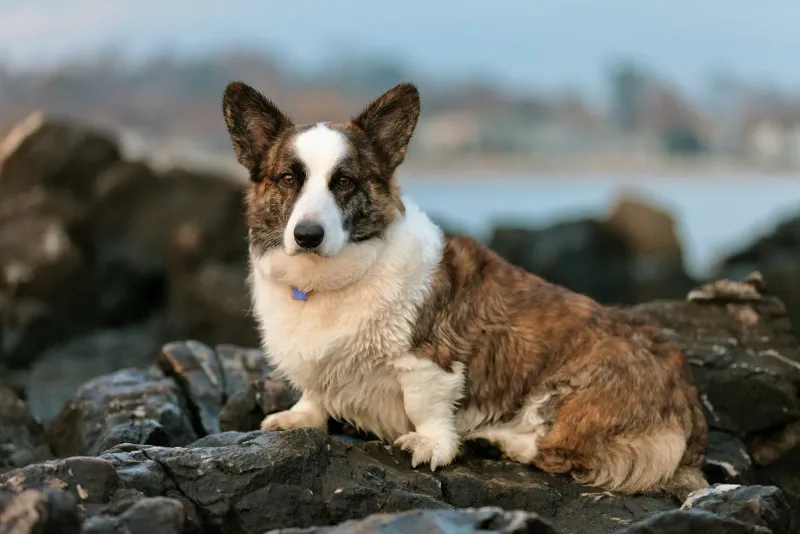 Same eraCardigan Welsh Corgi1200 to 1934 · United KingdomLate Middle Ages
Ranch dog of the American West
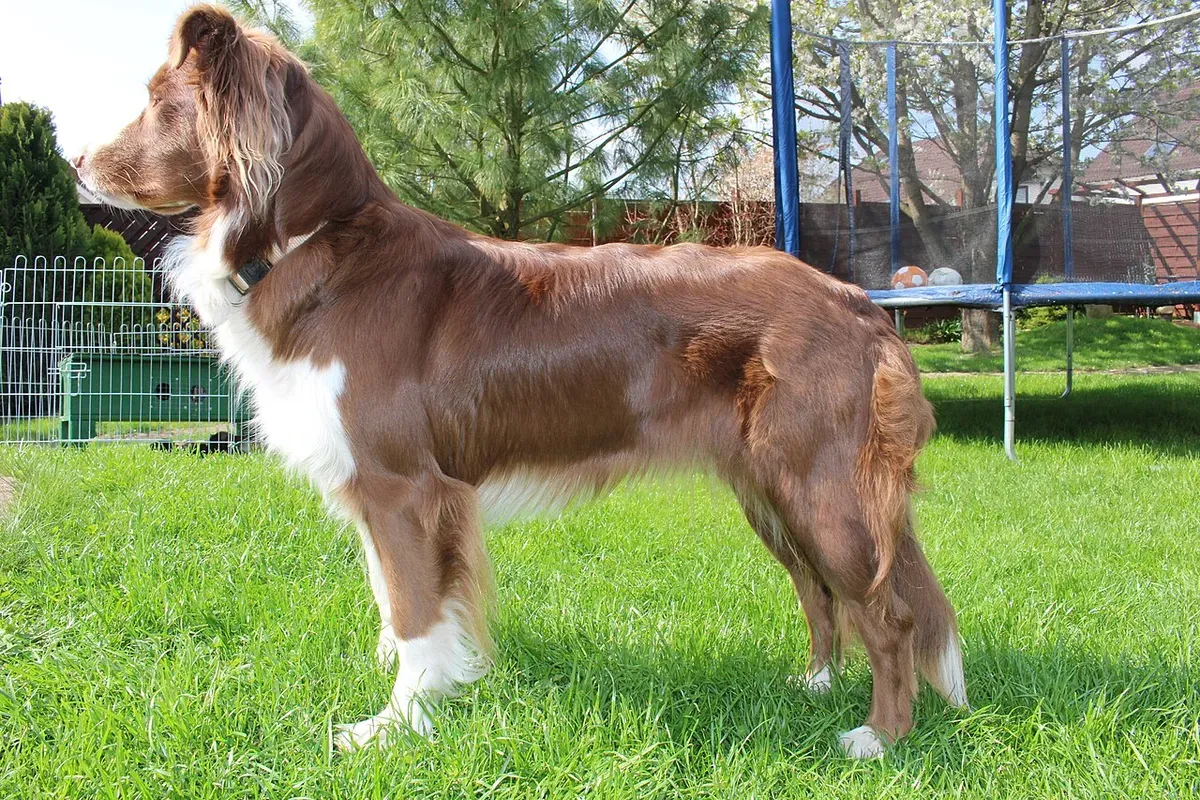
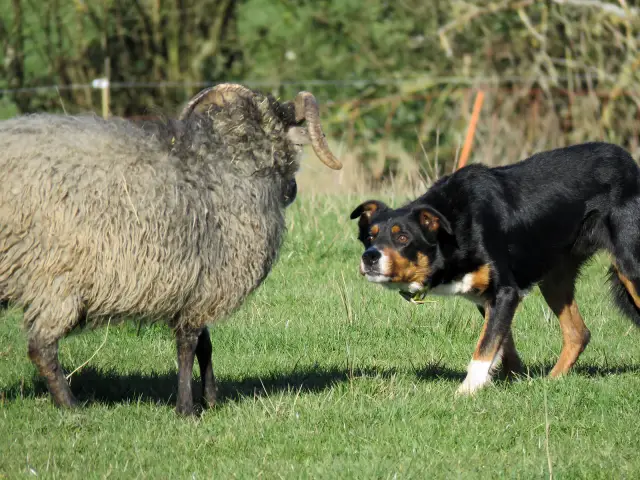
From the mid-1800s, sheep ranching grew across California, Nevada, Idaho, Colorado and Texas. Ranchers wanted a medium-sized dog that could handle sheep, cattle and horses, tolerate heat, cold and rough ground, and think on its own. Dogs of many origins were crossed and selected for this work. Names such as the English Shepherd and several collie types appear in accounts of the founders. Because the breed was selected for ability and not for looks, early Aussies varied widely in size, coat and colour. For about a century they were known mainly to stockmen.
 Save
Rodeos and the show ring
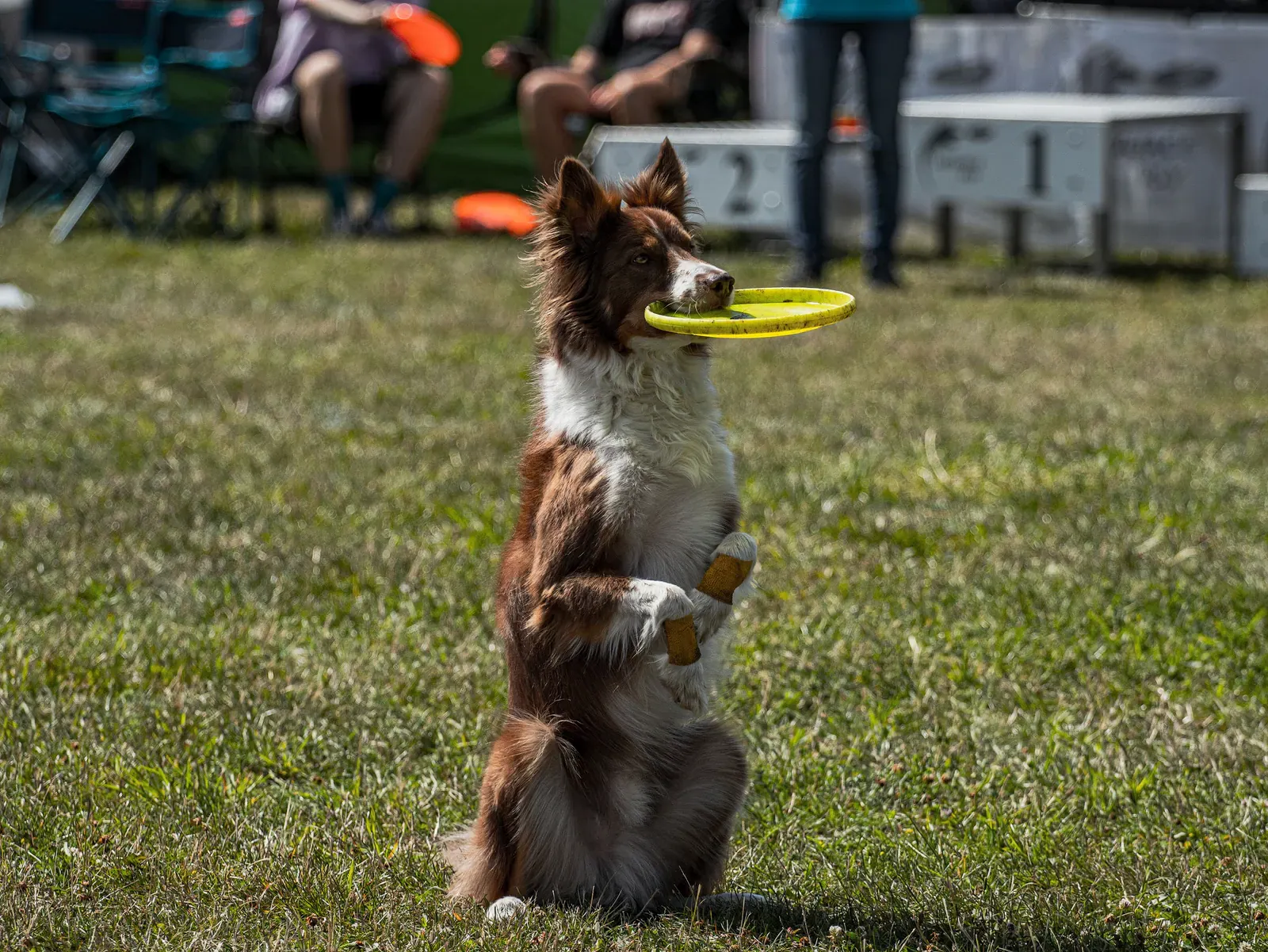
The breed reached the public through rodeo. In the 1950s and 1960s, Jay Sisler, a rancher and rodeo performer from Idaho, toured the United States and Canada with Aussies named Shorty, Stubby and Queenie, who performed tricks for large crowds. Spectators who saw a blue merle dog catching a ball, balancing or working stock wanted one. Sisler's dogs also appeared in films and on television in some accounts. The details of his routines come from breed histories, not from archives checked here.
Interest turned into breed clubs. The Australian Shepherd Club of America (ASCA) was founded in 1957, and it kept its own registry and a working-dog focus. Demand grew with western riding culture, horse owners and ranch families, and the Aussie became a common sight at stock shows and trail rides. Today it is also a top choice in dog sports.
 Save
Kennel club recognition
| Year | Event |
|---|---|
| 1957 | Australian Shepherd Club of America founded |
| 1991 | AKC admits the breed (sources vary on the exact step; full Herding Group status followed) |
| 1996 | FCI standard no. 342 dated 24 July 1996 |
| 1997 | UK Kennel Club recognises the breed (Pastoral Group) |
Many working-dog advocates opposed AKC recognition, fearing it would shift breeding toward appearance. Two populations now exist side by side: working lines and show lines (see below).
Miniature American Shepherd
From the late 1960s, breeders in the western US selected the smaller Aussies and developed a separate small version, first called the Miniature Australian Shepherd. The AKC now recognises it as the Miniature American Shepherd. In our data it is the one listed descendant of the Aussie. See Miniature American Shepherd.
Ancestors, descendants and relatives
 Same familyPembroke Welsh Corgi1100 to 1934 · United KingdomEarly Middle Ages
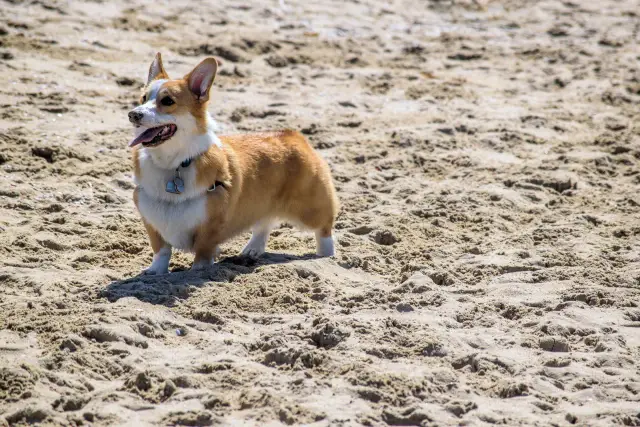
The Aussie has no firm parent breeds. The database lists the Carea Leones (Carea Leonés) and the Cumberland Sheepdog (Cumberland Sheepdog), both low confidence. For related herders, see Border Collie and English Shepherd.
What does DNA say?
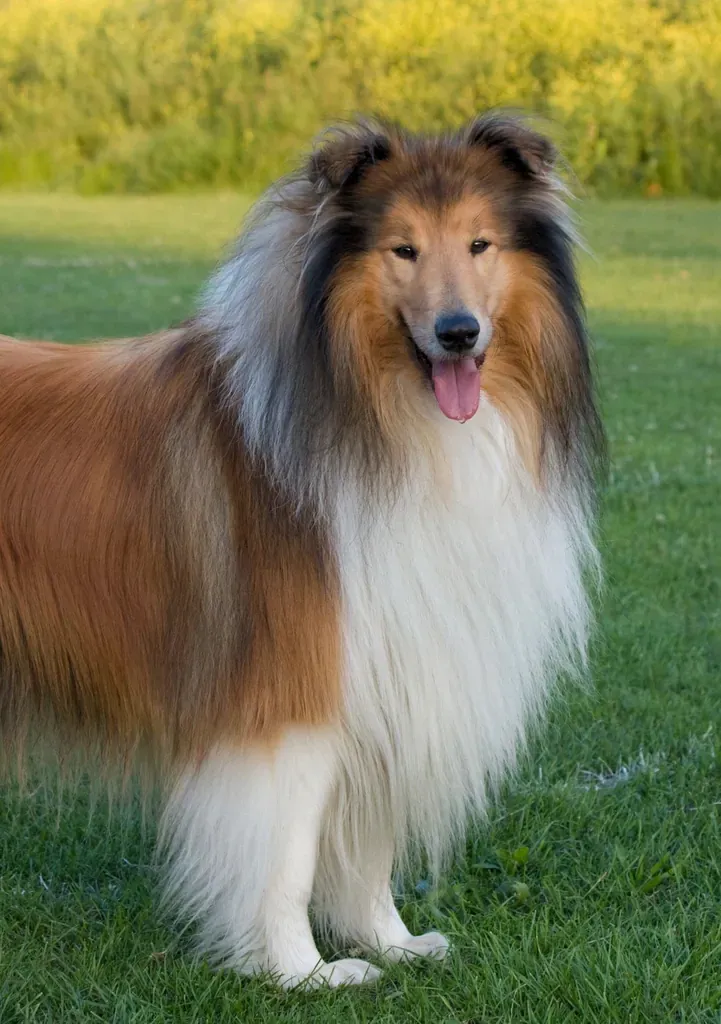
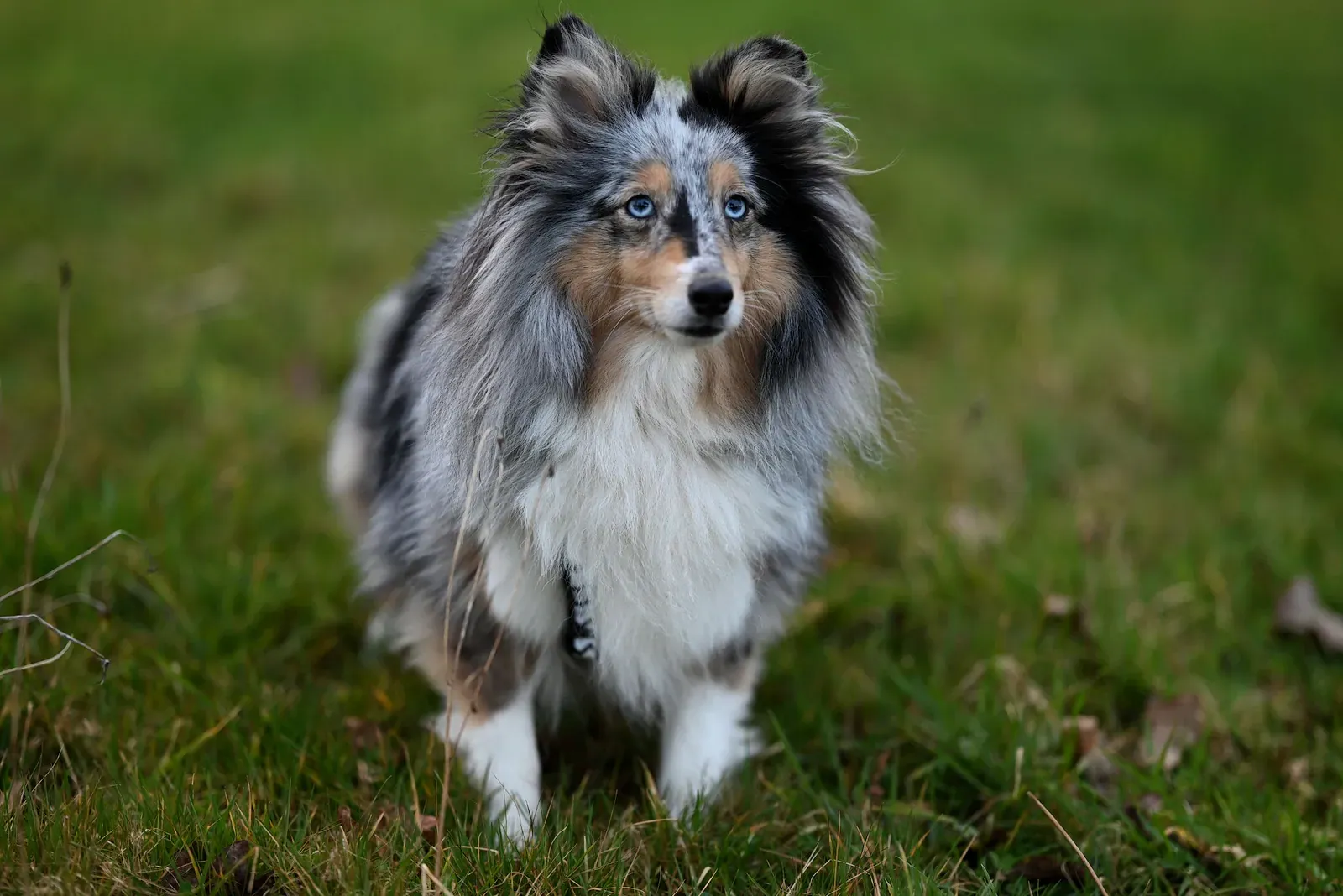
A 2017 study by Parker and colleagues (Cell Reports) analysed 1,346 dogs from 161 breeds and sorted them into 23 supported clades. The Australian Shepherd falls in the UK Rural family with the collies and other British herding breeds. The study also measured shared : long DNA stretches inherited from common ancestors. More () shared means a stronger sign of crossing or shared founders. It cannot show the direction of gene flow.
Source: Parker et al. 2017, as recorded in this site's breed database.
The result is clear: the Aussie's closest DNA relatives are British collies. This fits the collie ancestry in the farm-dog story, and it does not support a Spanish-only origin or any special Australian link. The study was not designed to test the Basque legend, so it cannot rule out some Spanish or Basque dogs in the mix. It shows that collie blood dominates what remains.
 Save
 Save
Descend from it · 1
- Miniature American ShepherdUnited States
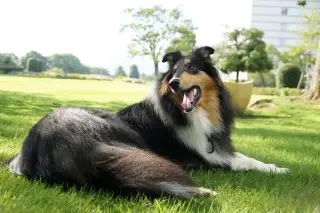
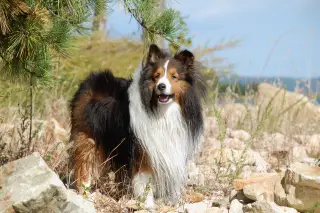
- Rough Collie61.8 Mb 2.6%
- Shetland Sheepdog33.6 Mb 1.4%
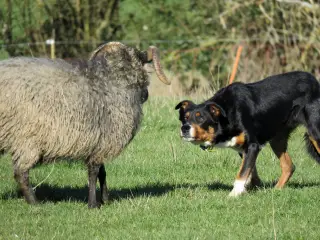
- Border Collie20.0 Mb 0.8%
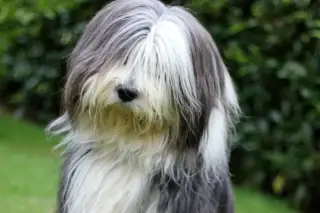
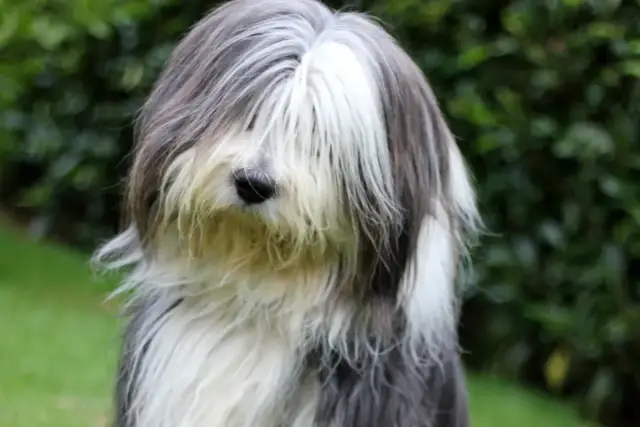
- Bearded Collie19.1 Mb 0.8%
- Chinook16.6 Mb 0.7%
- Australian Kelpie15.4 Mb 0.6%
- German Shepherd14.8 Mb 0.6%
- Cardigan Welsh Corgi14.7 Mb 0.6%
- Pembroke Welsh Corgi13.1 Mb 0.5%
- Old English Sheepdog11.7 Mb 0.5%
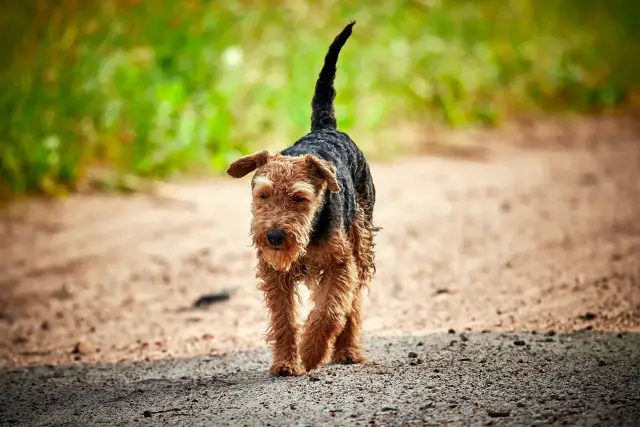
- Airedale Terrier10.3 Mb 0.4%
Source: Parker et al. 2017. Percent of the whole genome.
| Breedwith Australian Shepherd | with Australian Shepherd (Mb)Shared DNA (Mb) |
|---|---|
| Rough Collie | 61.8 |
| Shetland Sheepdog | 33.6 |
| Border Collie | 20.0 |
| Bearded Collie | 19.1 |
| Chinook | 16.6 |
| Australian Kelpie | 15.4 |
| German Shepherd | 14.8 |
| Cardigan Welsh Corgi | 14.7 |
Source: Parker et al. 2017, Cell Reports, shared haplotypes between 161 breeds (1,346 dogs).
The breed standard
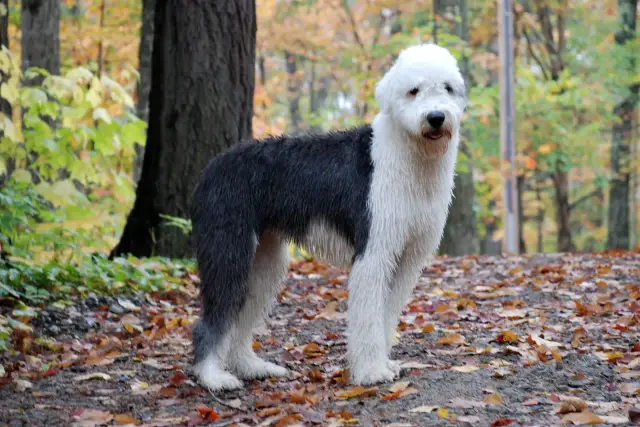 Looks relatedOld English Sheepdog1700 to 1888 · United KingdomEarly Modern Era
A is the written ideal that a kennel club judges dogs against. The FCI and AKC standards for the Australian Shepherd agree closely. The UK Kennel Club recognises the breed and uses a standard of the same type. We verified the FCI and AKC details below.
| Trait | FCI (no. 342) | AKC |
|---|---|---|
| Height | Males 51 to 58 cm, females 46 to 53 cm | Males 51 to 58 cm, females 46 to 53 cm |
| Weight | Not specified | Not specified |
| Build | Slightly longer than tall, strong, agile | Slightly longer than tall, solid |
| Coat | Medium length, straight to wavy, weather-resistant, undercoat varies | Medium length, straight to wavy, weather-resistant |
| Colours | Blue merle, black, red merle, red, with or without white and tan | Blue merle, black, red merle, red, with or without white and tan |
| Eyes | Brown, blue, amber or any combination, including marbling | Brown, blue, amber or any combination, including flecks |
| Ears | Triangular, set high, folding forward | Triangular, set high, folding forward or to the side |
| Tail | Straight, naturally short or docked (in countries where allowed) | Straight, natural bob or docked |
Notes:
- Weight. Neither standard gives weight. Reference works list about 16 to 32 kg. Working-line dogs tend to be lighter and show-line dogs heavier and heavier-coated.
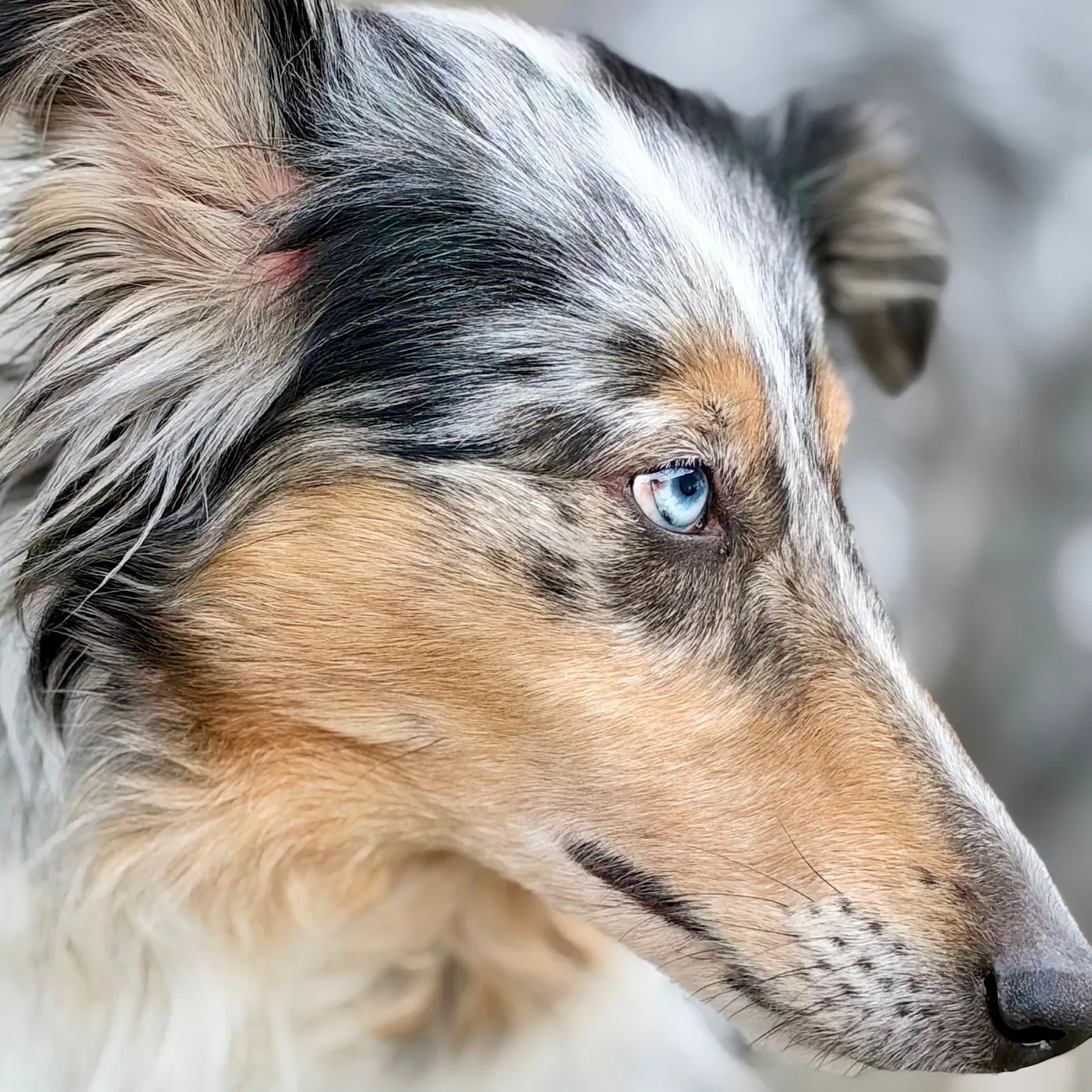
- Merle and eyes. Merle patterning is a mottled mix of dark patches on a diluted base. Blue eyes are part of the look and are allowed, but they do not mean a dog is a double merle.
- Tail. About one in five Aussies is said to be born with a natural bobtail, in breed club accounts. This figure is not backed by a published study found here.
- Colour variants. Red merle and blue merle are the two merle colours. Red dogs have liver pigment, black dogs have black pigment.
Merle genetics and the double-merle risk
 Related breedAiredale Terrier1850 to 1880 · United KingdomVictorian Breed Boom
The merle pattern in Australian Shepherds and many other breeds comes from an insertion in the SILV gene (Clark et al. 2006, Proceedings of the National Academy of Sciences). One copy produces the mottled merle coat. Two copies, called a double merle, produce an almost white dog and are linked to eye and ear problems.
Strain and colleagues (Journal of Veterinary Internal Medicine, 2009) measured hearing in merle dogs of several breeds. Among double merles, 10 percent were deaf in one ear and 15 percent were deaf in both ears. Among single merles, 2.7 percent were deaf in one ear and 0.9 percent in both. Double merles also commonly have small, abnormal eyes and vision loss that can reach blindness. Many carry large white areas that cover pink skin.
What helps:
- Never breed two merles together. A merle crossed with a non-merle produces no double merles. This is the key rule for breeders, and reputable clubs and breeders follow it.
- Test for hidden merle. Some dogs carry merle without showing it ("cryptic merle"). A DNA test for the SILV variant identifies them. Ask a breeder whether both parents were tested.
- Adopting a double merle. Many live happy lives, as hearing and sight impairments are manageable with training, but they need an experienced owner.
Temperament
 Related breedAustralian Cattle Dog1840 to 1903 · AustraliaIndustrial Revolution
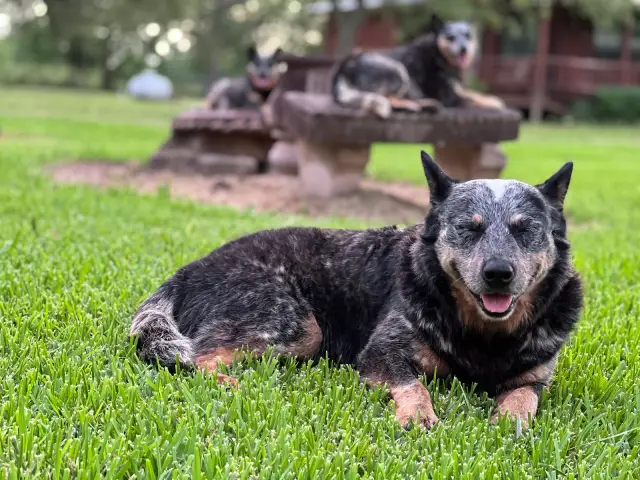
Breed clubs describe the Australian Shepherd as intelligent, loyal, energetic and eager to work. In practice that means a dog that tracks its person closely, learns quickly and gets bored quickly. Many Aussies are reserved with strangers, and the standard calls for reserve, not aggression. Most bond hard with the family and may follow people from room to room. See the smartest dog breeds for how this breed compares with others on trainability.
- Herding behaviour. Aussies often nip at heels, circle and "gather" people, children or other pets. This is natural herding behaviour and responds to training, not punishment.
- Sensitivity. Many are sound-sensitive and react to chaotic homes. Early socialisation and calm training help.
- Boredom. A bored Aussie digs, chews, barks or invents games. This tends to be a result of unmet needs.
Temperament varies by line, and puppy background matters. Ask about the parents' behaviour, not just their titles.
Working lines and show lines
The two populations differ in temperament and body. This comes from breed histories and breeder accounts, not from a controlled study, so treat it as a general pattern.
| Working lines | Show lines | |
|---|---|---|
| Bred for | Ranch and stock work, herding trials | Conformation (the show ring), companionship |
| Build | Lighter, leaner, often shorter coat | Heavier bone, fuller coat |
| Energy | Very high, intense, needs a real job | High, usually easier to settle |
| Best fit | Stock work, advanced dog sports | Active families, sports, show |
Many dogs sit between the two types. If you want a ranch partner or a competitive sport dog, ask about work records. If you want a companion, ask about calm behaviour at home.

Health
 Related breedBorzoi1200 to 1650 · RussiaLate Middle Ages
Most Australian Shepherds live healthy, active lives. The breed has documented inherited conditions, and breeders screen for the main ones. Owners can watch for early signs and use simple tests. Prevalence figures below come from named surveys. Owner-reported surveys are not as exact as vet-confirmed data, so treat the numbers as a guide.
Lifespan
The ASHGI 2017 longevity survey (1,502 dogs from several registries) found a median lifespan of 11.61 years. In that dataset, hemangiosarcoma accounted for 12.12 percent of deaths, lymphoma 4.39 percent and epilepsy 4.13 percent. Atlas data lists 12 to 15 years, which is the range for healthy dogs.
Health table
| Condition | What it is | How common | What helps |
|---|---|---|---|
| MDR1 drug sensitivity | A gene change (ABCB1) that lets some drugs (for example ivermectin at high doses, loperamide and some chemotherapy drugs) build up in the brain. | North America: 37 percent of 1,421 dogs carried one copy and 10 percent two copies (about 1 in 10). Europe: 11 percent of 907 two copies. Source: breed frequency data cited by ASHGI | DNA test (MDR1 or ABCB1). Tell every vet. Keep a result card. Dogs with two copies are at highest risk. |
| Collie Eye Anomaly (CEA) | Inherited, eye development defect; often mild, sometimes causes vision loss | About 4 percent (about 1 in 25) of 223 Aussies in an Australian study, cited by ASHGI | DNA test for the NHEJ1 deletion (Parker et al. 2007). Eye exam of puppies at 6 to 8 weeks |
| Cataracts | Clouding of the lens, the most common eye disease in the breed. Often diagnosed between 2 and 5 years | Described as the most common eye disease in the breed. No prevalence figure verified | Yearly eye exam by a veterinary ophthalmologist (ACVO). Tell a breeder if parents had it |
| Progressive retinal atrophy (PRA, PRCD) | Gradual loss of the retina, often starting with night vision | Rare | DNA test for PRCD. Screen parents |
| Canine multifocal retinopathy (CMR) | Small retinal changes. Rare | Rare | DNA test |
| Loose or malformed hip joint | Reported by 10 percent or more of dogs in the ASHGI 2009 to 2010 survey (612 dogs, owner-reported) | Hip scoring of parents (OFA, BVA/KC). Healthy weight. Avoid hard jumping when young | |
| Epilepsy | Repeated seizures, usually from 1 to 5 years | 4 to 9 percent in the ASHGI survey (about 1 in 11 to 1 in 25). 4.13 percent of deaths in the 2017 survey | Vet work-up. Many dogs are managed well with medicine |
| Hemangiosarcoma and lymphoma | Cancers of blood vessels and lymph tissue, mostly in older dogs | Hemangiosarcoma 12.12 percent of deaths, lymphoma 4.39 percent (ASHGI 2017) | Regular vet checks from middle age. Report unusual swellings or sudden weakness |
| Deafness (merle) | Hearing loss linked to merle pigment genes | See merle section | Never breed merle to merle |
MDR1 in plain words
MDR1 sensitivity is one of the best-known health points for herding breeds, and the Aussie is one of the most affected. The test is a cheap swab. A dog with two copies can react to some common drugs with tremors, drooling, seizures, coma or in the worst case death. Most dogs with one copy have milder reactions. In North America about 47 percent of tested Aussies carried at least one copy, and in Europe the figure was 59 percent (ASHGI summary). Because this is so common, testing is advised for any Aussie or Aussie cross, and the result should be on file with the vet. A negative parent pair means no affected puppies.
Eyes in detail
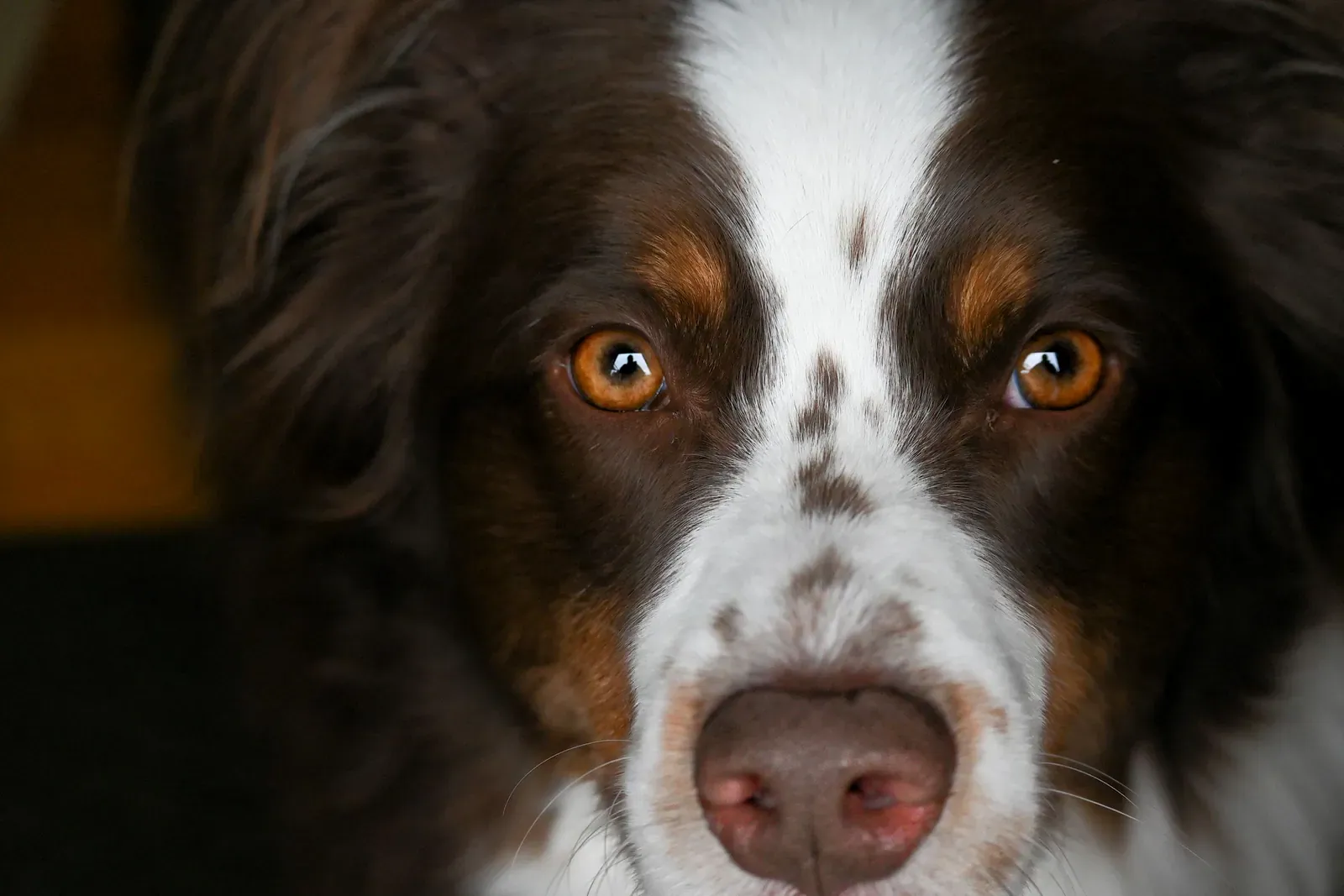
Cataract and Collie Eye Anomaly are the two eye conditions most often reported. An annual eye exam by a board-certified ophthalmologist (ACVO) is the standard way to catch problems early. A breeder's clearances can be searched in the ACVO or OFA registries. Merle dogs can also have small eye changes tied to pigment genes, which is another reason to avoid double merles.
 Save
 Ticks and fleasTicks and fleas on dogs: how to check, remove and prevent themTicks and fleas on dogs: how to tell them apart, check your dog, remove a tick safely, break the flea life cycle and prevent both.
 GuidesPractical guidesBehaviour, training, health and adoptionRelated breedBorzoi1200 to 1650 · RussiaLate Middle Ages
Living with an Australian Shepherd
 Related breedGreyhound800 CE to 1850 · United KingdomEarly Middle Ages
| Area | Rating | Why |
|---|---|---|
| Exercise per day | High | A ranch-bred herding dog. About 1 to 2 hours plus mental work. More for working lines |
| Training needs | High | Learns fast. Needs steady, positive training and a job |
| Grooming time | Medium | Brushing 2 to 3 times a week, daily in shedding season |
| Shedding | High | Double coat, heavy seasonal shed |
| Barking | Medium | Alert, herding dogs bark to control things. Varies |
| Time alone | Poor | Bonds strongly. Long days alone often lead to boredom behaviour |
| Children | Good with supervision | Loyal, but may herd and nip heels |
| Other dogs | Fair to Good | Usually fine with socialisation. Some are reserved |
| Cats and small pets | Fair | Herding instinct. Early introduction helps |
| Flat living | Poor | Possible only with a very high daily exercise commitment |
| Heat tolerance | Fair | Double coat. Avoid midday exercise in hot weather |
| Cold tolerance | Good | Weather-resistant double coat |
| First-time owner fit | Fair | Trainable, but very demanding. Varies by line |
A great fit if...
- You have 1 to 2 hours a day for real exercise, and you enjoy training.
- You want a partner for hiking, herding, agility, scent work or trail rides.
- You are home most of the day or can bring the dog along.
- You have a fenced yard or access to open space.
Think twice if...
- You are out all day and want a low-effort pet.
- You live in a small flat with no outdoor access.
- You have young children and cannot supervise herding behaviour.
- You want a dog that does not shed.
Before you get one
- Ask a breeder for these tests by name: MDR1 (ABCB1), Collie Eye Anomaly, PRCD-PRA, hip scores (OFA or BVA/KC), a current eye exam, and the merle status of both parents. No merle-to-merle pairings.
- Puppy or adult rescue. Aussie rescues exist and often have adults with known temperament. Adult dogs may be calmer than a puppy and easier to read.
- First year. Plan socialisation, basic training, and herding-behaviour management. Make a note of MDR1 status at the first vet visit.
Similar breeds to consider
- Border Collie: more intense, even more exercise.
- Shetland Sheepdog: smaller, softer, still a herding mind.
- Miniature American Shepherd: same look, smaller body.
- Australian Kelpie: lean working dog, high drive.
 Save

Australian Shepherd fun facts
 Related breedIrish Wolfhound100 BCE to 1885 · IrelandAncient World
- Despite the name, the Australian Shepherd was developed in the western United States.
- Jay Sisler's rodeo dogs Shorty, Stubby and Queenie helped make the breed famous in the 1950s and 1960s.
- Aussies can have two different eye colours, for example one blue and one brown, which is allowed by the standard.
- The Miniature American Shepherd was developed from small Aussies in the 1960s and 1970s.
Frequently asked questions
Why is it called an Australian Shepherd?
The most common explanation is that the dogs arrived in the US with Basque shepherds who had been in Australia. This is a legend with no firm proof. The breed was developed in the American West.
Are Australian Shepherds good family dogs?
They can be, in active families that can give them exercise, training and a job, and can supervise them with children.
How much exercise does an Australian Shepherd need?
About 1 to 2 hours a day plus mental work, more for working lines.
How long do Australian Shepherds live?
Atlas data gives 12 to 15 years. The ASHGI 2017 survey found a median of 11.61 years.
What is the MDR1 gene?
A gene change (ABCB1) that causes sensitivity to some drugs. About 47 percent of tested Aussies in North America carry at least one copy, and about 1 in 10 two copies. A simple DNA test shows it.
Do all Australian Shepherds have blue eyes?
No. Eyes can be brown, blue, amber or a mix. Blue eyes are common in merles, but do not signal a health issue by themselves.
What is a double merle?
A dog with two copies of the gene, from breeding two merles together. These dogs can have hearing and vision problems.
What is the difference between working and show lines?
Working lines are bred for herding and are usually leaner and more intense. Show lines are bred for the ring and often have heavier coats.
Do Australian Shepherds shed?
Yes, heavily, and more in spring and autumn.
Read next
 Closest DNARough Collie61.8 Mb shared
 FamilyUK RuralThe whole family
 Adopt a dogDog Shelters in EuropeFind dog shelters in Europe, learn how shelters differ from country to country and why adopting a dog is a good option.
Sources (11)
- American Kennel Club, Australian Shepherd breed information and history articles.
- Australian Shepherd Club of America, breed standard.
- Australian Shepherd Health and Genetics Institute (ASHGI), breed health survey 2009 to 2010, 2017 longevity survey summary, MDR1 and eye pages.
- Clark L.A. et al., "Retrotransposon insertion in SILV is responsible for merle patterning of the domestic dog", Proceedings of the National Academy of Sciences, 2006.
- Fédération Cynologique Internationale, Australian Shepherd, standard no. 342, 24 July 1996.
- Parker H.G. et al., "Genomic analyses reveal the influence of geographic origin, migration, and hybridization on modern dog breed development", Cell Reports, 2017.
- Parker H.G. et al., "Breed relationships facilitate fine-mapping studies: a 7.8-kb deletion cosegregates with Collie eye anomaly across multiple dog breeds", Genome Research, 2007.
- Strain G.M. et al., "Prevalence of deafness in dogs heterozygous or homozygous for the merle allele", Journal of Veterinary Internal Medicine, 2009.
- The Kennel Club (UK), Australian Shepherd breed information.
- Wikipedia, "Australian Shepherd" and "Miniature American Shepherd".
- Dogs Atlas breed records, breed record and Parker 2017 shared-haplotype table (this site).