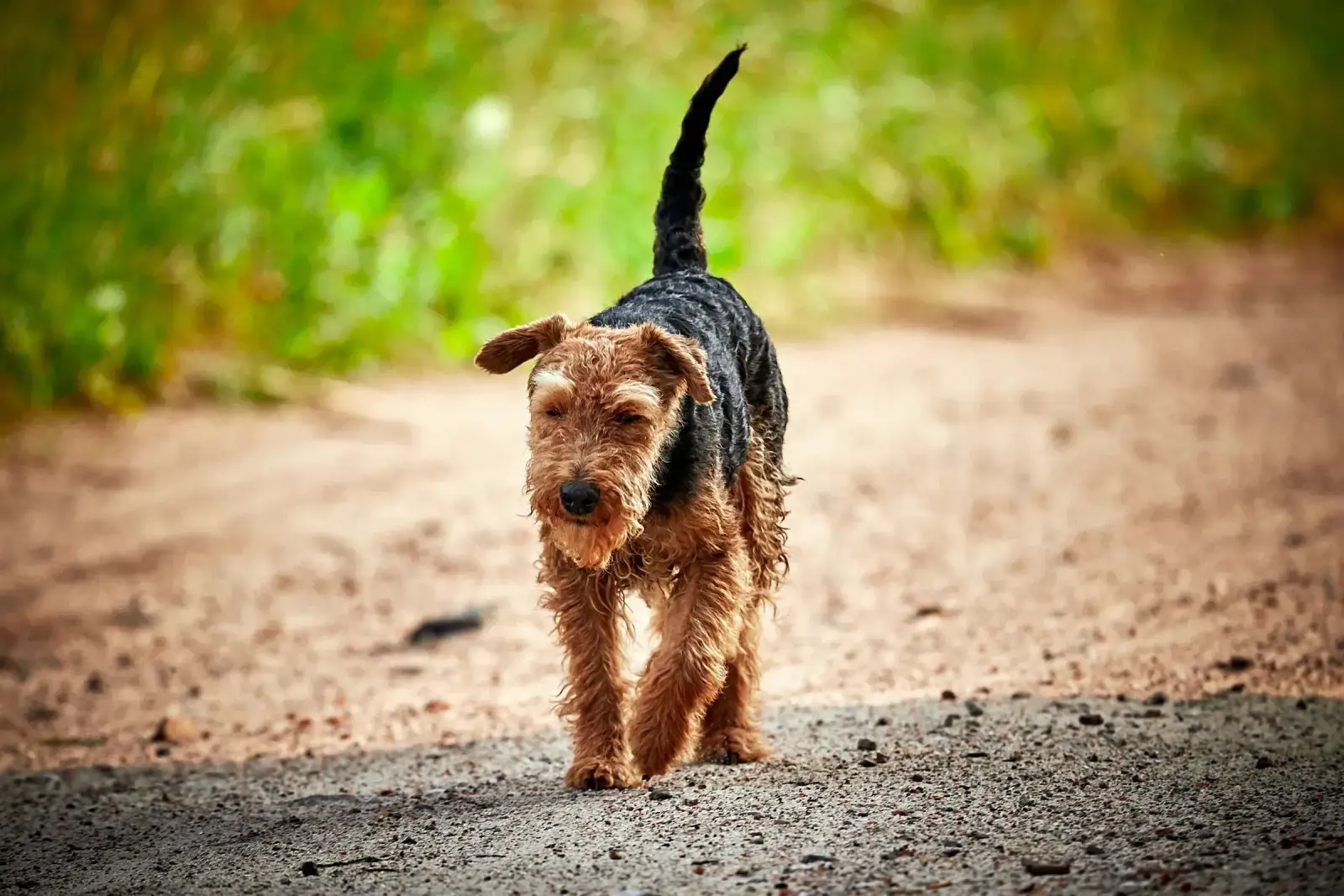
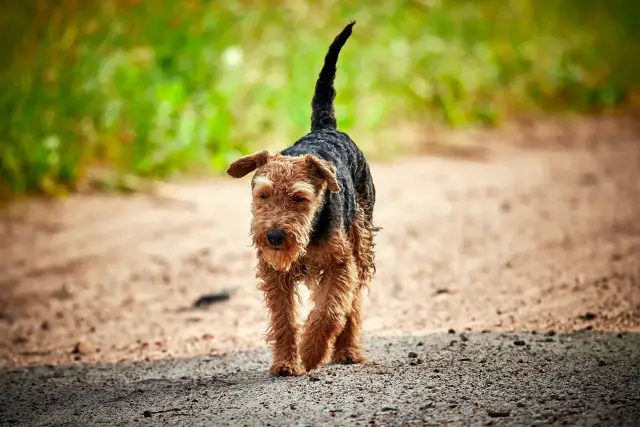
Breed histories say working men in the mid-1800s crossed an old rough-coated Black and Tan Terrier with the Otterhound to get a dog that could hunt rats and otters along the river. It was nicknamed the "King of Terriers", it served as a messenger dog in the First World War and on police patrols, and it is still seen in the show ring, in homes and on the hunting field. The Airedale is clever, bold and playful, with a coat that is traditionally hand-stripped, and its best-documented health risks are cancer and .
Airedale Terrier quick facts
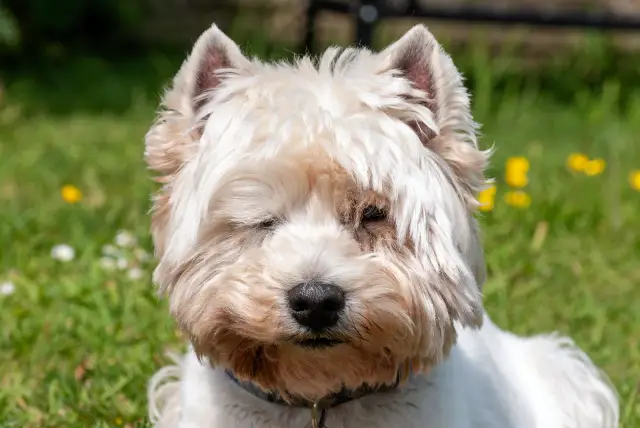 Related breedWest Highland White Terrier1800 to 1904 · United KingdomIndustrial Revolution
- Closest DNA relatives
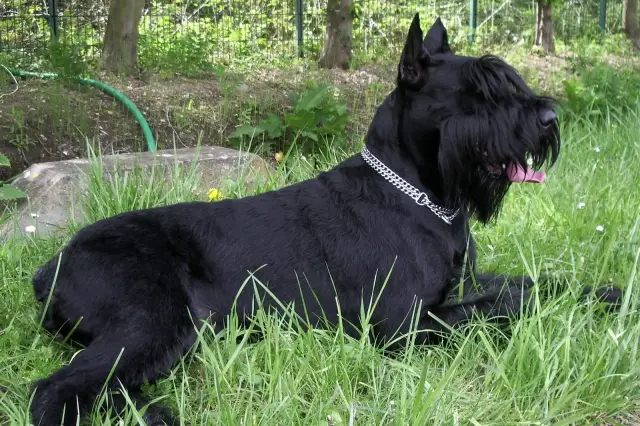
- Black Russian Terrier (38.2 ), Giant Schnauzer (24.6 Mb)
- Country of origin
- Great Britain (FCI); the Aire valley, West Yorkshire
- Period of development
- About 1850 to 1880 (atlas data, high confidence)
- Original job
- Hunting rats and otters along rivers; later messenger, police and farm dog
- Type
- Large terrier. FCI: Group 3, Terriers, standard no. 7. AKC: Terrier Group. UK Kennel Club: recognised
- Other names
- King of Terriers, Waterside Terrier, Bingley Terrier
- Height
- FCI and UK Kennel Club: dogs about 58 to 61 cm, bitches about 56 to 59 cm
- Weight
- The FCI and Kennel Club standards set no weight. Secondary sources give about 20 to 27 kg
- Life span
- Atlas data: 10 to 13 years. UK survey data suggests about 12 years; see Health
- DNA family
- Terrier (Parker et al. 2017)
Drawn to scale in real centimetres. Its back reaches about 59 cm, just above your knee; its head about 74 cm, mid-thigh.
Where it sits in the tree
Victorian Breed Boom · 1850 to 1913
Name and origin
 Related breedRhodesian Ridgeback1600 to 1922 · South AfricaEarly Modern Era
The Airedale is named for the dale, or valley, of the River Aire in West Yorkshire. Before that name settled, the dogs were shown as "Broken-haired Terriers", "Working Terriers" and "Waterside Terriers", and the AKC says "Bingley Terrier" was proposed but rejected so as not to favour one town. Dogster and a Norwegian breed history place the name's adoption by breed fanciers in 1879 and the Kennel Club's approval in 1886. A popular tale has the judge Hugh Dalziel asking at Bingley in 1879 "Why not call them Airedale Terriers?", but the Canine Chronicle says that is not exactly how it went, so treat it as a story.
Sources differ on exactly where the Aire valley breed started: Dogs NSW says the Aire valley of Yorkshire, while WebMD says South Yorkshire. The FCI, Britannica and the atlas data all say Yorkshire, with the Aire valley as the heartland.

History
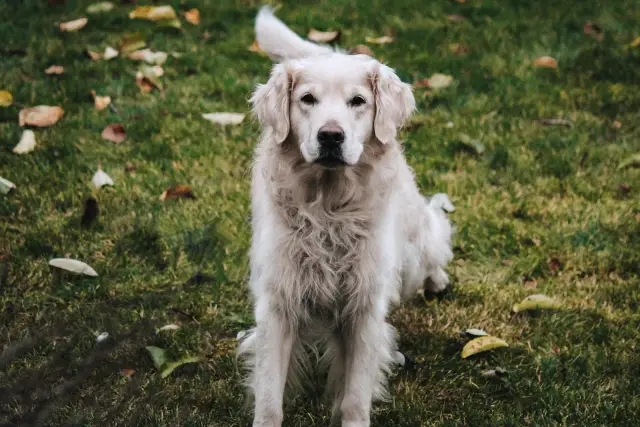 Same eraGolden Retriever1868 to 1911 · United KingdomVictorian Breed Boom
Working men's terriers on the River Aire
Britannica and the AKC describe a breed made by working people in a manufacturing area, not by landowners. The AKC quotes a line that the "King of Terriers" was developed by workingmen, and says that on Saturdays mill and factory workers held river-rat hunts where men bet on which dog would find and catch the most rats. No source calls these formal competitions, so they are described here as hunts and bets.
The dogs needed to swim, face a rat or an otter in the water, and still be the right size for a household. The standard mixture was an old rough-coated Black and Tan Terrier, bred small and hard, and the larger Otterhound. The Black and Tan Terrier is listed as an ancestor with medium confidence, crossed with the Otterhound "plus other breeds". One Norwegian history says the Black and Tan Terrier of that time is "now called the Welsh Terrier", but no second source backs the claim, so treat it as undocumented. Dogster says the other breeds mixed in are not recorded.
The Otterhound cross
The AKC says the Otterhound added size, a good nose and a fondness for water. That fits the breed's later reputation as a strong swimmer and a dog that trails scent well. The atlas data lists the Otterhound as a parent with medium confidence. In the DNA table below the two breeds share 11.7 Mb in Parker et al. (2017), a modest amount, which fits a cross made long ago, with the Terrier side later dominating.
King of Terriers
Britannica calls the Airedale the largest of the terriers, and the AKC says the "King of Terriers" nickname comes from the breed's place as the largest of the earth dogs. WebMD adds size, strength and loyalty. Theodore Roosevelt is credited with a famous quip, "An Airedale can do anything any other dog can do, and then lick the other dog if he has to", which the AKC quotes.
Messenger and Red Cross dogs in the First World War
Lt Col Edwin Hautenville Richardson of the British Army had experimented with military and police dogs since 1898 and pressed for an official programme from 1910. According to a book on his work by Bryan Cummins, more than 2,000 dogs were trained and sent to the front as Red Cross dogs, messengers, sentries and patrol dogs. Richardson's own account is his 1920 book British War Dogs.
Airedales were part of that effort. On New Year's Eve 1916, two Airedales called Wolf and Prince reportedly carried messages over a two-mile stretch, and their success led to the War Dog School of Instruction, which sources place in Hampshire in early 1917; another source says Shoeburyness, Essex, set up in 1916, so the date and place conflict. A popular story concerns an Airedale called Jack, who, badly wounded, ran about half a mile through enemy fire to deliver a message and then collapsed and died. One account says his message brought reinforcements that saved a battalion of the Sherwood Foresters, trapped after their lines were cut. These accounts come from popular histories, and no source places Jack in the Red Cross dogs, so the story is given as reported, not confirmed.
Before the war, Richardson had also supplied dogs, mostly Airedales, to the Russian army at the start of the Russo-Japanese War in 1904 for messages and medical work. A source says the Germans used Airedales for patrols and messages in the 1900 Boxer Rebellion in China.
Police work
Richardson promoted Airedales as police dogs from about 1906. The North Eastern Railway Police put the first four on patrol at Hull Docks in 1908 in one account. The reasons given were intelligence, scenting ability and a hard, wiry coat that needs little care. The first Airedale reached Germany in the 1890s, when that country was experimenting with the modern police dog. The breed was later replaced in most forces by the German Shepherd, but the Airedale remained a farm, guard and hunting dog.
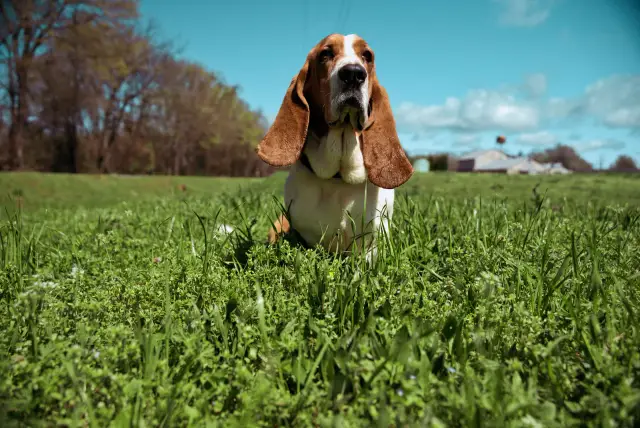
Relatives and DNA
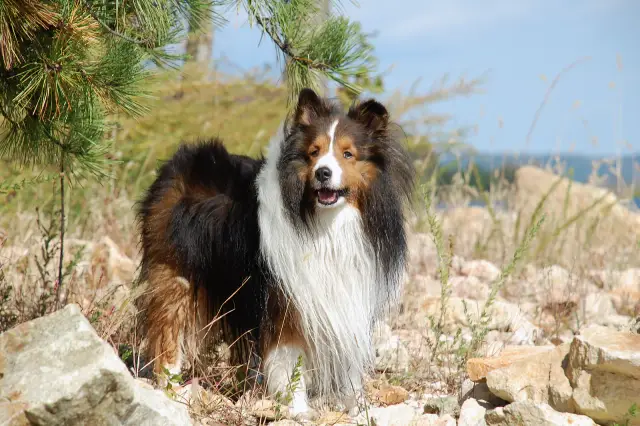 Same familyShetland Sheepdog1700 to 1909 · United KingdomEarly Modern Era
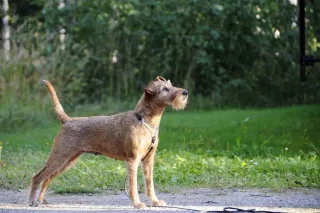
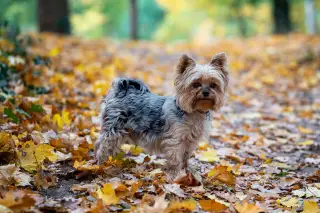
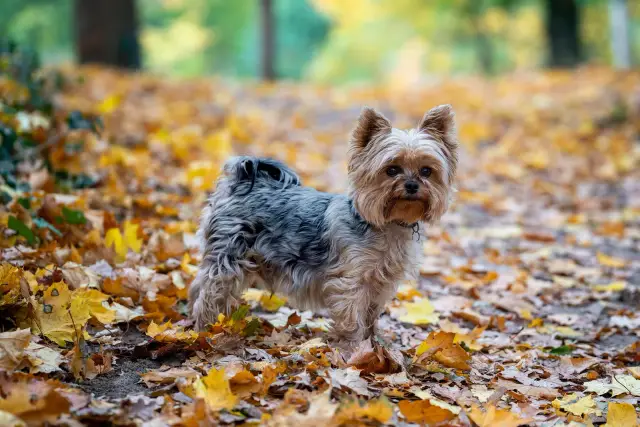
The Airedale is in the Terrier family of Parker et al. (2017, Cell Reports). Its closest tested relative is the Black Russian Terrier at 38.2 Mb, a breed made in the Soviet Union in which the Airedale was one of the parents according to the atlas data. Other matches are the Giant Schnauzer (24.6 Mb), the Irish Terrier (20.6 Mb) and the Yorkshire Terrier (20.3 Mb), the last a distant echo of the Yorkshire home of both breeds.
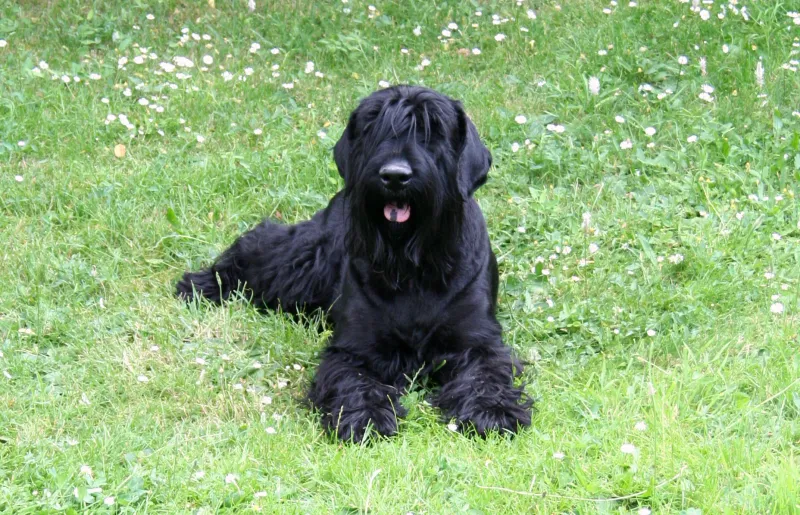
- Airedale Terrier and Black Russian Terrier
- Airedale Terrier and Giant Schnauzer
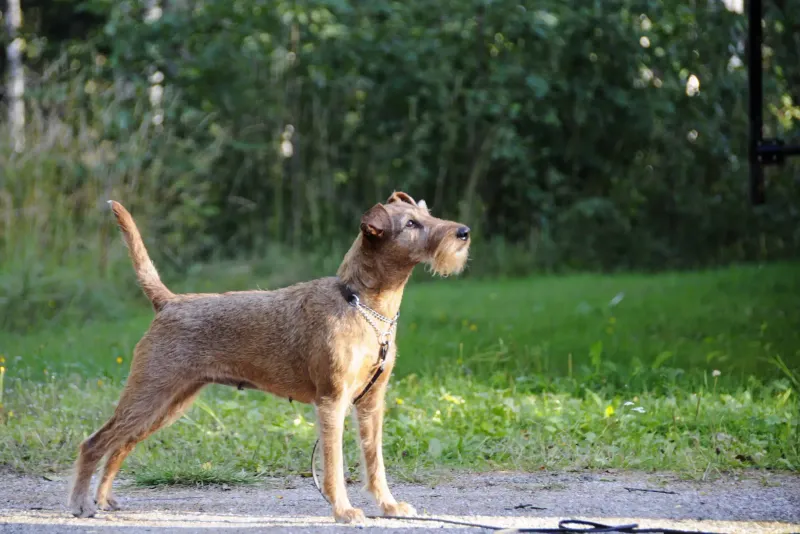 Airedale Terrier and Irish Terrier
- Airedale Terrier and Yorkshire Terrier
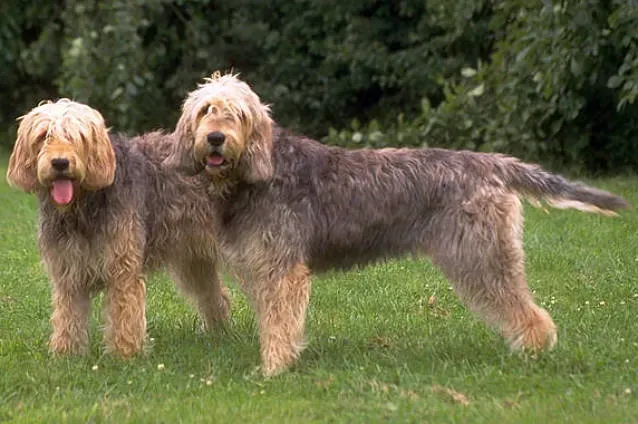 Airedale Terrier and Otterhound
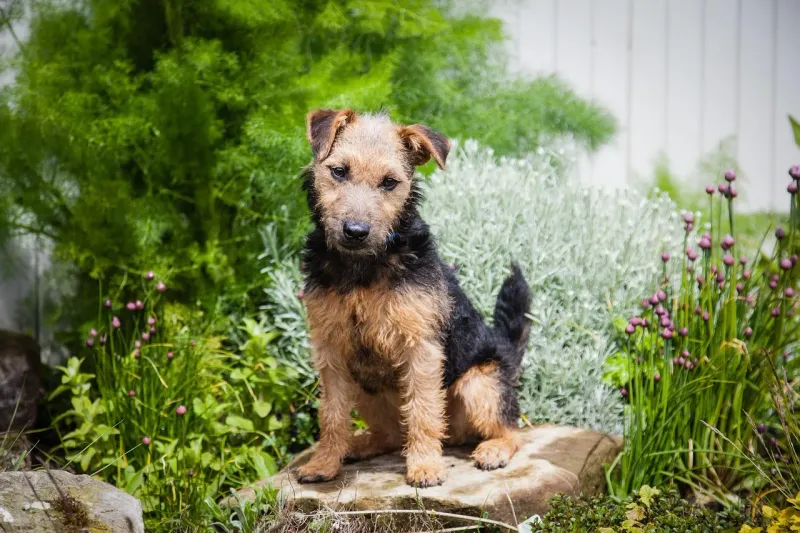 Lakeland TerrierBlack Russian TerrierLakeland TerrierBlack Russian Terrier
Sister breeds · 7
- Irish Terrier1700 to 1879
- Welsh Terrier1700 to 1885
- Smooth Fox Terrier1750 to 1876
- Lakeland Terrier1800 to 1921
- Manchester Terrier1800 to 1860
- Wire Fox Terrier1800 to 1876
- English Toy Terrier1850 to 1960
Descend from it · 2
- Lakeland TerrierUnited Kingdom
- Black Russian TerrierRussia
- Black Russian Terrier38.2 Mb 1.6%
- Giant Schnauzer24.6 Mb 1.0%
- Irish Terrier20.6 Mb 0.9%
- Yorkshire Terrier20.3 Mb 0.8%
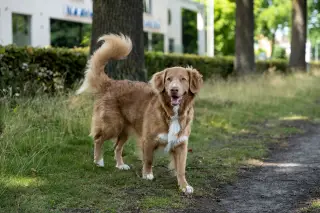
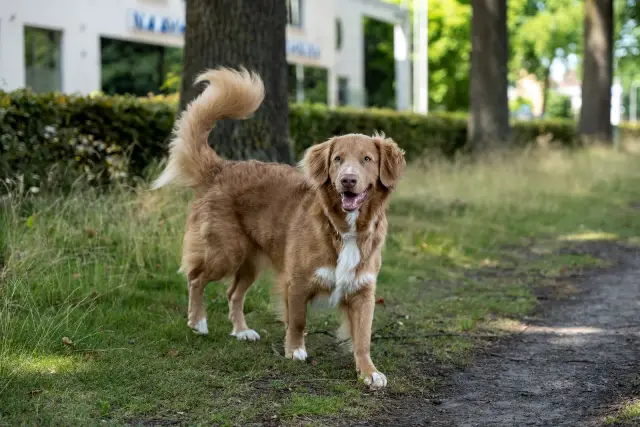
- Nova Scotia Duck Tolling Retriever13.2 Mb 0.5%
- West Highland White Terrier12.7 Mb 0.5%
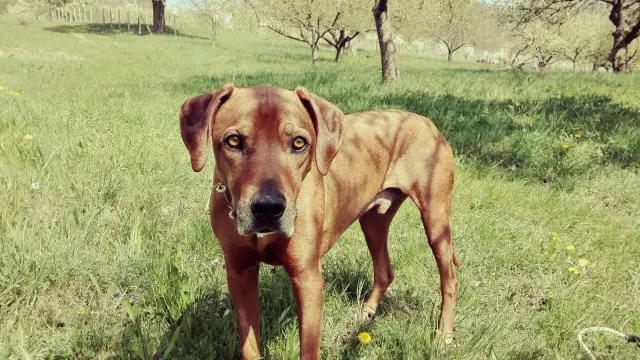
- Rhodesian Ridgeback12.2 Mb 0.5%
- Toy Manchester Terrier12.0 Mb 0.5%
- Glen of Imaal Terrier12.0 Mb 0.5%
- Otterhound11.7 Mb 0.5%
- Golden Retriever11.1 Mb 0.5%
- Shetland Sheepdog11.0 Mb 0.5%
- Australian Kelpie10.9 Mb 0.5%
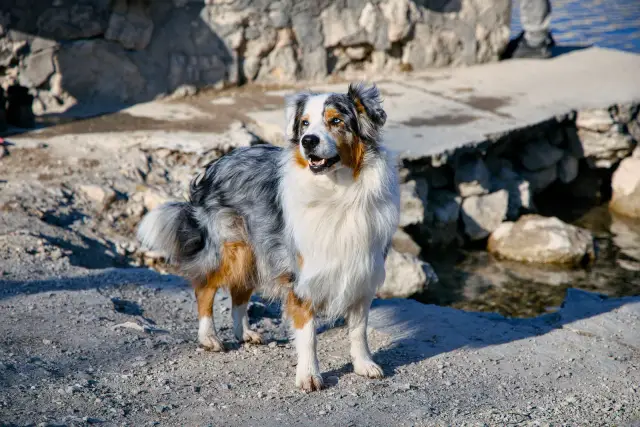
- Australian Shepherd10.3 Mb 0.4%
Source: Parker et al. 2017. Percent of the whole genome.
The breed standard
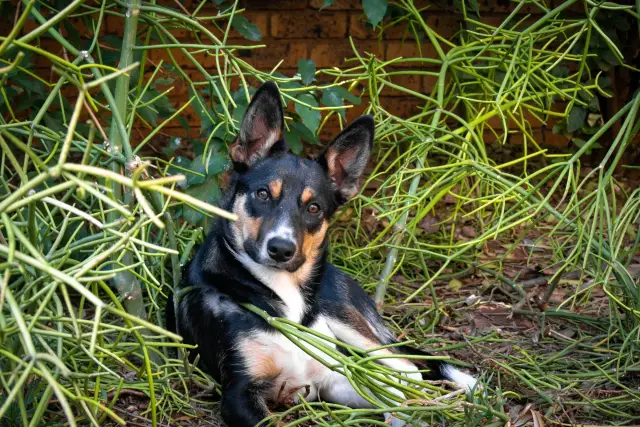 Looks relatedAustralian Kelpie1870 to 1902 · AustraliaVictorian Breed Boom
 Save
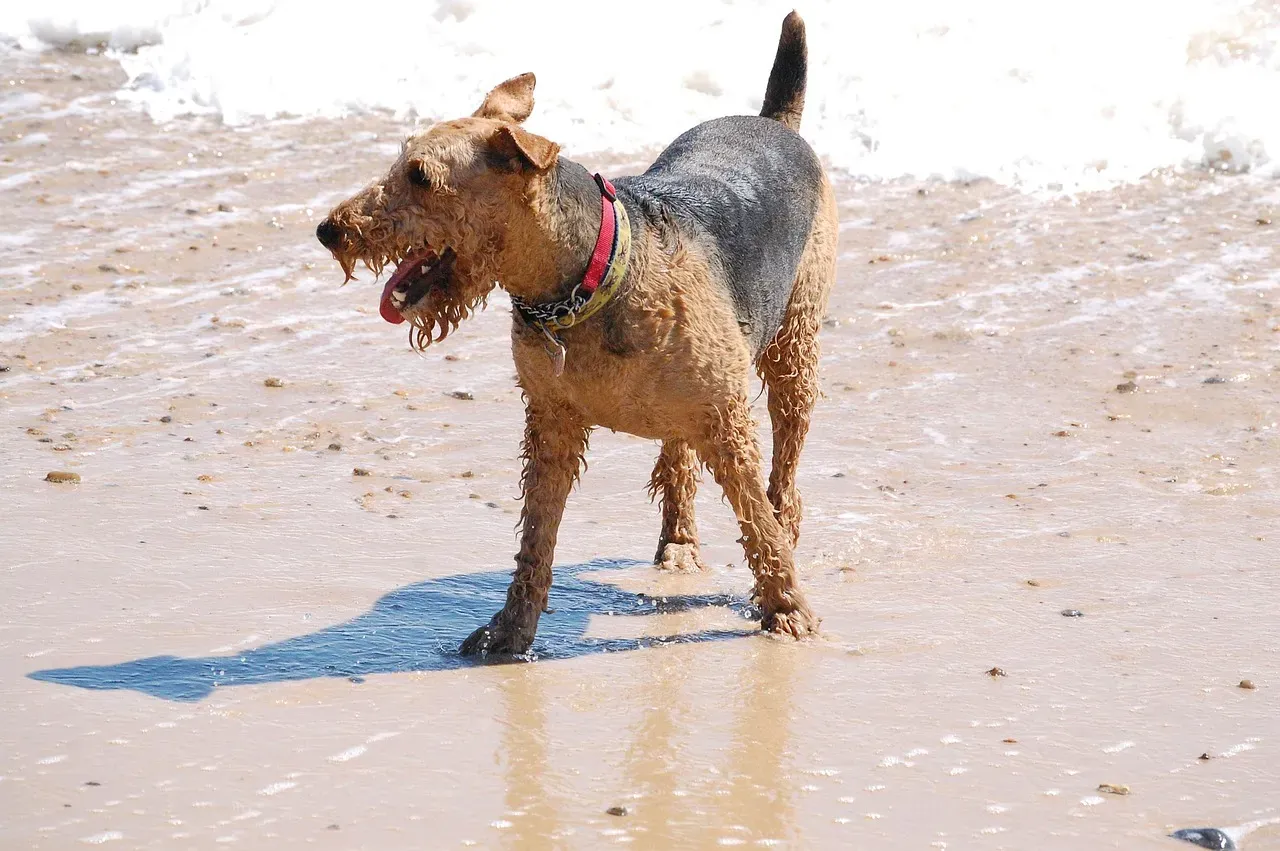
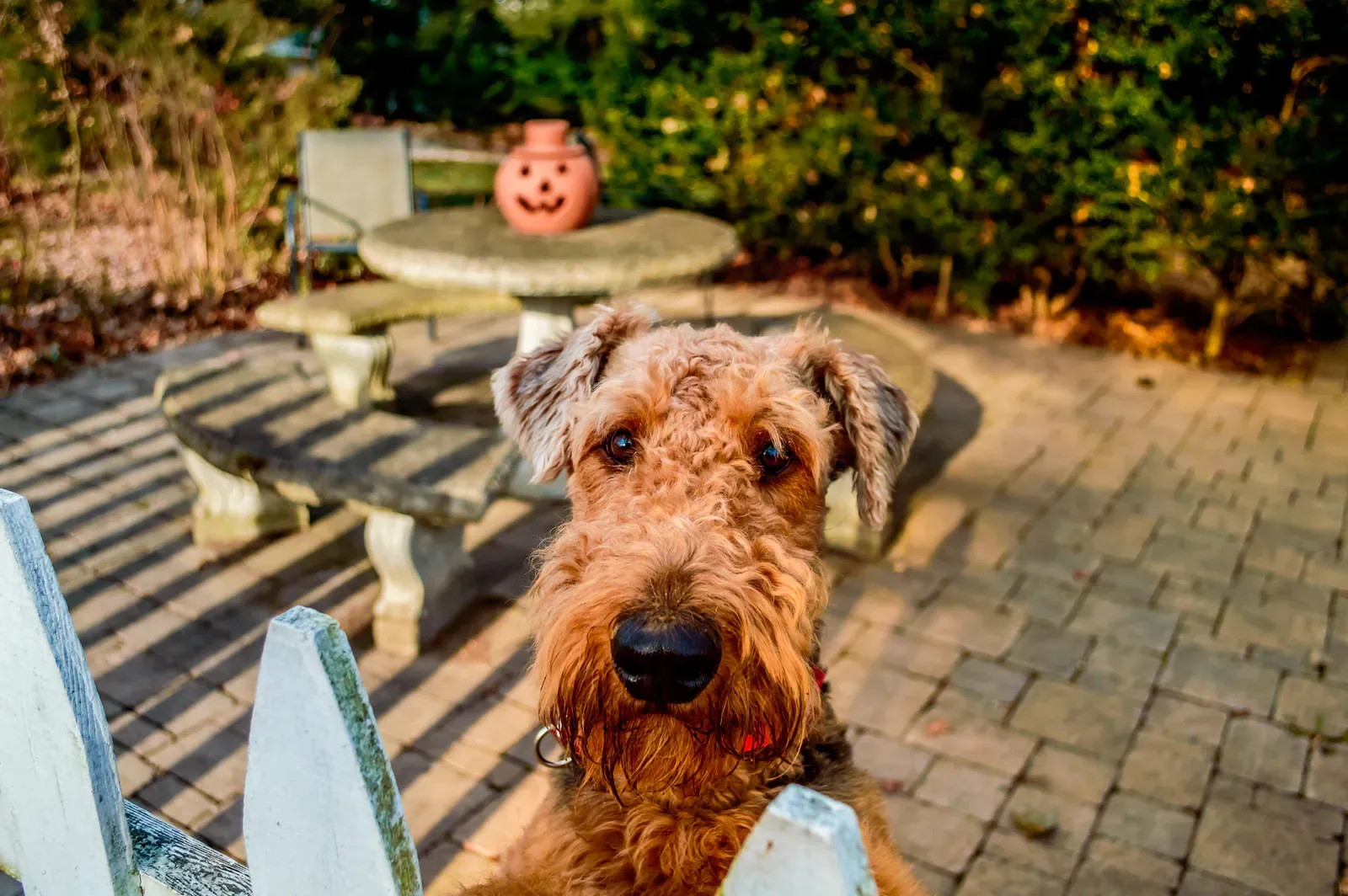
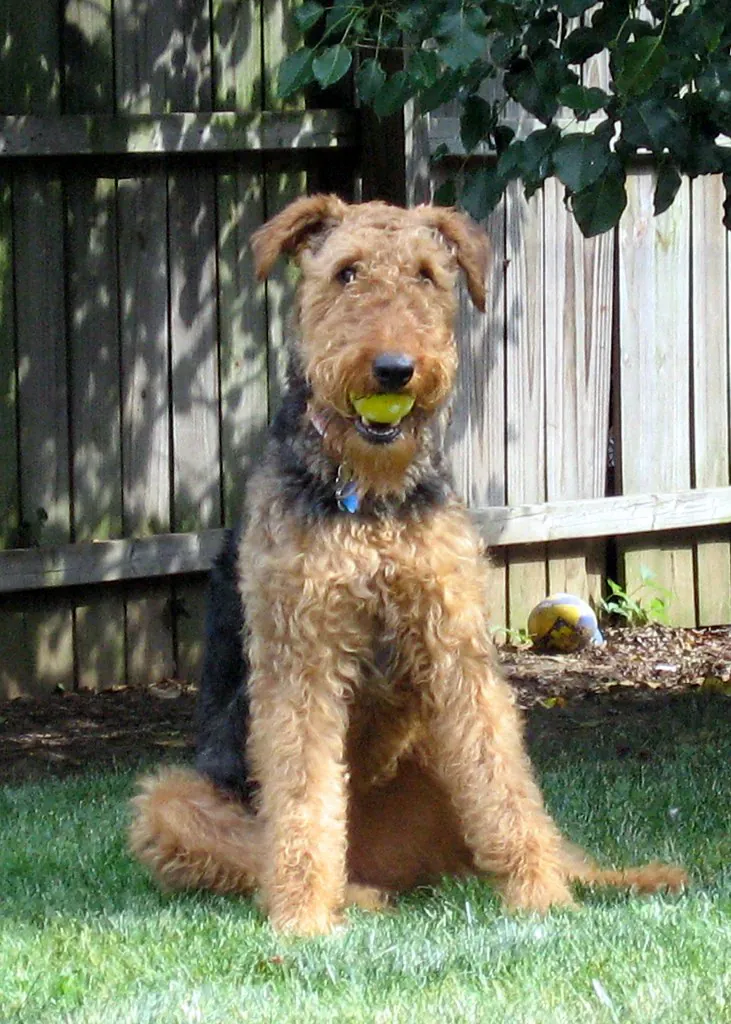
A is the written ideal a kennel club judges dogs against. The Airedale standard asks for a square, muscular terrier with a long flat head, small V-shaped ears, a straight back and a hard, dense, wiry coat.
| Trait | What the standards say |
|---|---|
| Group | FCI: Group 3, Terriers, standard no. 7, origin Great Britain. AKC: Terrier. UK Kennel Club: recognised |
| Height | FCI and UK Kennel Club: dogs about 58 to 61 cm at the shoulder, bitches about 56 to 59 cm |
| Weight | Not set in the FCI or Kennel Club standards. Secondary sources give about 19 to 27 kg, with males at the heavier end |
| Colours | Black or grizzle saddle with tan on the rest of the body; ears often a darker tan; a few white hairs between the forelegs are acceptable. A breed club (National Airedale) says any other colour is unacceptable |
| Coat | Hard, dense, wiry, not so long as to look ragged, lying straight and close. Crinkling or slightly waved coats are the hardest and most desirable; curly or soft coats are highly undesirable. The undercoat is shorter and softer |
 Save
Temperament
 Related breedAustralian Shepherd1840 to 1957 · United StatesIndustrial Revolution
 Save
Breed guides describe the Airedale as intelligent, bold and playful, a clown who is also alert and loyal. The historical jobs explain much of it. A dog that hunts rats and otters needs courage and independence, and a dog that carried messages across a battlefield had to learn fast and keep going.
- Active and strong. It is a large, athletic terrier that needs real exercise.
- Clever and independent. It learns quickly, then gets bored with repeats.
- Alert. It will bark to tell you of visitors.
- Chasing instinct. A terrier bred for rats and otters will chase small animals.
Early socialisation and varied, reward-based training suit the breed. A bored Airedale tends to invent its own jobs.

Coat and grooming
 Related breedBorder Terrier1700 to 1920 · United KingdomEarly Modern Era
The Airedale has a hard, wiry outer coat over a softer undercoat. The traditional method is hand-stripping: pulling the dead outer hair out with the fingers or a small serrated knife. One source says the body of a show Airedale is completely hand-stripped to keep the wiry texture. A Showsight Q&A describes "rolling" the coat, using a rake or stripping knife once the new coat has grown in to take out the undercoat and bring in new hair, as the alternative to stripping the dog bare.
Airedales that are not shown are often clipped with electric clippers. One grooming source says this is easier on the dog and groomer but softens the coat and fades the colour, and may cause skin allergies in some dogs because the roots stay in the follicle. No breed-club text covers this point, so it is a groomer's view. For coat types and grooming methods in general, see dog grooming.
Health
 Related breedCairn Terrier1500 to 1910 · United KingdomAge of Exploration
Many Airedales live long, active lives, and the breed has no single dominant disorder. The numbers here come from named sources. Where no number exists, the table says so.
| Condition | What it is | How common | What helps |
|---|---|---|---|
| Cancer | Tumours of various kinds; the most reported cause of death | A 2004 UK Kennel Club survey recorded cancer as the cause of 39.5% of Airedale deaths, about 2 in 5 | Regular vet checks and lump checks |
| Hip dysplasia | The hip joint forms loosely and wears | Seen somewhat more often than in dogs overall in North American hospital records | Hip scoring of breeding dogs, healthy weight, controlled growth |
| Hypothyroidism | Low thyroid hormone | Listed as a common Airedale problem; no figure found | Blood test, daily tablet when diagnosed |
| Skin problems | Allergic skin disease and sore skin | Listed in breed guides; no figure found | Vet care, coat care |
Causes of death. The 2004 UK Kennel Club health survey, analysed by Adams and colleagues (2010, Journal of Small Animal Practice), covered many breeds. Reported figures say cancer was 39.5% of Airedale deaths, followed by old age (14%), urinary disease (9%) and heart disease (7%). The numbers are quoted as given, not from the original breed table.
Life span. A UK study is reported giving about 12 years for the Airedale, compared with 12.7 for purebreds in general. Another summary gives a median of about 11.5 years across UK, US and Canadian surveys. The atlas data gives 10 to 13 years. No study of the breed exists. The 2014 Kennel Club survey gave an overall median of 10.33 years across breeds.

Living with an Airedale Terrier
 Related breedJack Russell Terrier1819 to 1976 · United KingdomIndustrial Revolution
| Daily reality | Rating | Why |
|---|---|---|
| Exercise per day | High | A large, athletic working terrier |
| Training needs | High | Clever and independent; needs variety |
| Grooming | High | Hand-stripping or rolling several times a year; regular brushing |
| Shedding | Low | A wiry coat that sheds little when stripped |
| Barking | Medium | Alert; barks at visitors |
| Time alone | Fair | Bonds with family; boredom brings digging and chewing |
| Children | Good | Playful and sturdy; a big dog can knock over a toddler |
| Other dogs | Fair | Terrier boldness varies by dog |
| Cats and small pets | Poor | Bred to hunt rats and otters |
| Flat living | Poor | Large and active; a garden suits better |
| Heat tolerance | Fair | Dense wiry coat; avoid hard exercise in heat |
| Cold tolerance | Good | Weatherproof coat |
| First-time owner fit | Fair | Friendly, but strong and strong-minded |
A great fit if
- You want a big, funny terrier that joins long walks, runs and games.
- You enjoy training with variety.
- You can book regular stripping or learn to do it.
- You have a secure garden.
Think twice if
- You keep rabbits, guinea pigs or other small pets.
- You want a calm lap dog.
- You will be away from home most of the day.
- You cannot budget time for grooming.
Before you get one
- Ask the breeder for the parents' hip scores and for any breed-club health testing advice.
- Ask about thyroid and skin history in the lines.
- Breed rescues exist; an adult may suit a home that cannot manage puppy energy.
- In the first year expect puppy classes, daily exercise and a first grooming routine.
Similar breeds to consider
- Irish Terrier. A red, slimmer, hardy terrier of similar spirit.
- Welsh Terrier. A smaller black and tan terrier that looks like a mini Airedale.
- Giant Schnauzer. A large wiry-coated working dog with a DNA link.
- Otterhound. The scent hound in the Airedale's ancestry.

Airedale Terrier fun facts
 Related breedScottish Terrier1700 to 1882 · United KingdomEarly Modern Era
- The nickname "King of Terriers" is tied to the breed's size.
- The Kennel Club approved the Airedale name in 1886, according to one source.
- Two Airedales, Wolf and Prince, reportedly carried messages in December 1916.
- Richardson trained more than 2,000 dogs for the British army in the First World War, per Bryan Cummins.
Frequently asked questions
Where does the Airedale Terrier come from?
The Aire valley in West Yorkshire, England. The lists Great Britain as the country of origin.
What is the Airedale a cross of?
Breed histories say an old rough-coated Black and Tan Terrier and the Otterhound, with other breeds that were never recorded.
How big is an Airedale?
The FCI and UK Kennel Club say about 58 to 61 cm for dogs and 56 to 59 cm for bitches. Weight is not given in those standards.
Why is it called the King of Terriers?
Because it is the largest of the terriers, according to the and Britannica.
Did Airedales serve in war?
Yes. Lt Col Richardson used them as messenger dogs from the 1904 Russo-Japanese War and the First World War, per the sources above.
Does an Airedale need hand-stripping?
Breed advice favours it for show dogs and for keeping the wiry texture. Many pet Airedales are clipped, which softens the coat.
Read next
Closest DNABlack Russian Terrier38.2 Mb shared FamilyTerrierThe whole family
 Adopt a dogDog Shelters in EuropeFind dog shelters in Europe, learn how shelters differ from country to country and why adopting a dog is a good option.
Sources (14)
- Fédération Cynologique Internationale, standard no. 7, Airedale Terrier, origin Great Britain (via a Norwegian breed site).
- The Kennel Club (UK), Airedale Terrier breed standard (height, coat, colour).
- National Airedale Terrier club (UK) breed standard page (colours).
- American Kennel Club, "History of the Airedale Terrier" and "Airedale Terrier facts".
- Encyclopaedia Britannica, "Airedale terrier".
- Canine Chronicle, "The Airedale, Part 1" (naming anecdote).
- Dogster, "What were Airedales bred for" (naming dates).
- Wikipedia, "Airedale Terrier" (secondary: causes of death, hip dysplasia and life span figures).
- Your Dog magazine and Country Life, articles on dogs in the First World War (Wolf and Prince, Jack).
- Cummins B., Colonel Richardson's Airedales (via publisher listing); Richardson E.H., British War Dogs, 1920.
- Showsight magazine, Airedale Terrier Q&A (rolling the coat).
- Adams V.J. et al., "Methods and mortality results of a health survey of purebred dogs in the UK", Journal of Small Animal Practice, 2010.
- Parker H.G. et al., "Genomic analyses reveal the influence of geographic origin, migration and hybridization on modern dog breed development", Cell Reports, 2017.
- Atlas data, Airedale Terrier knowledge record (etymology, lineage, DNA links, life span).