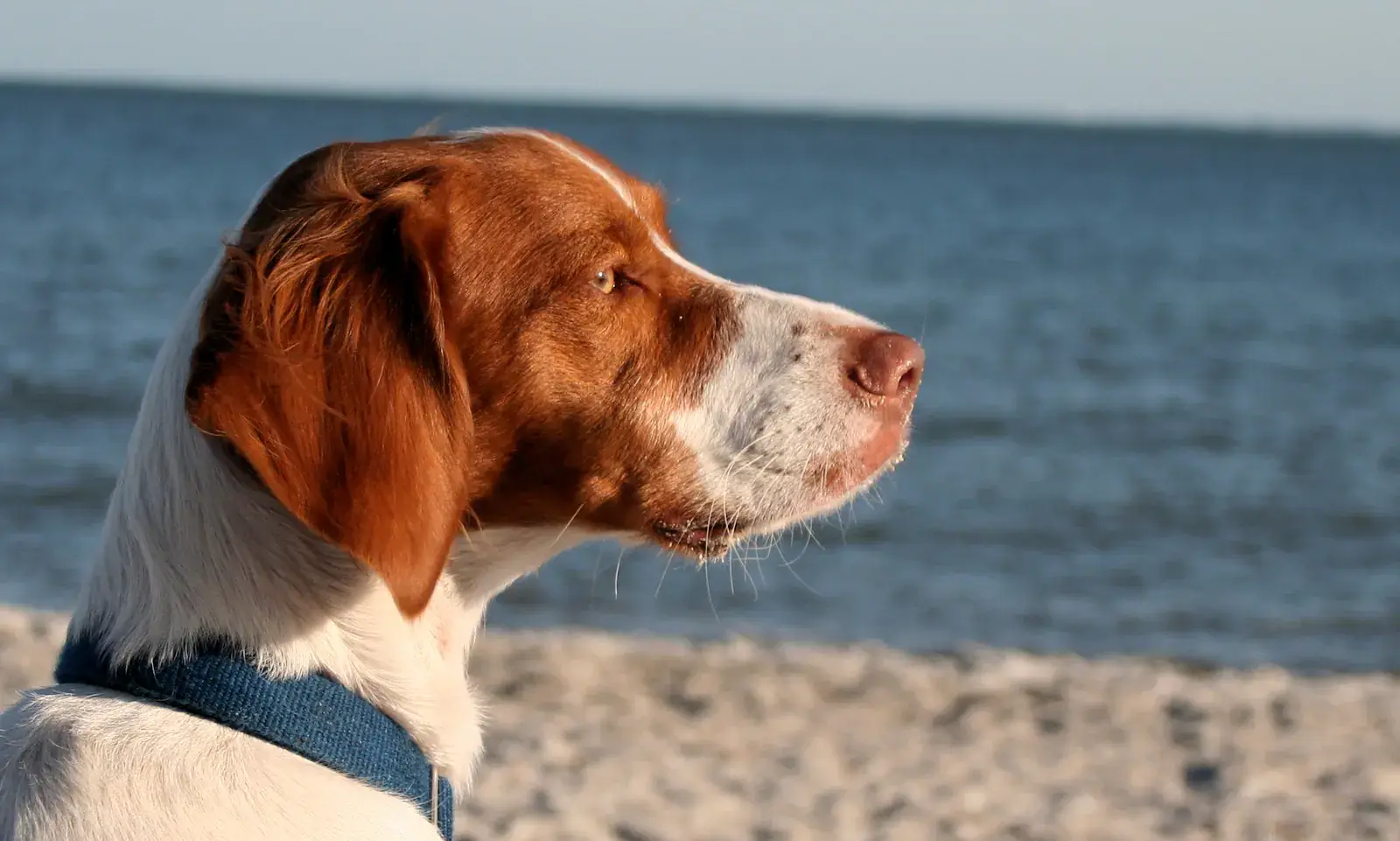
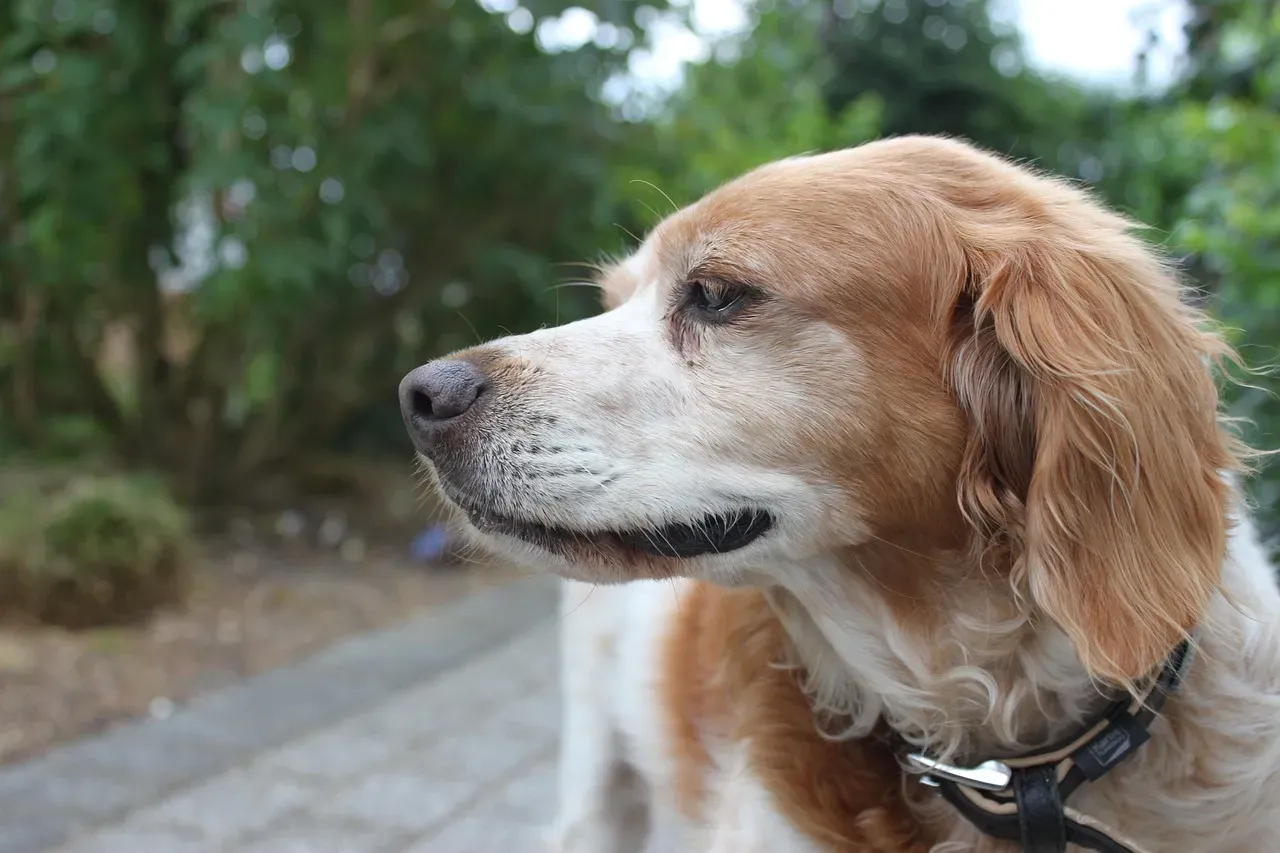
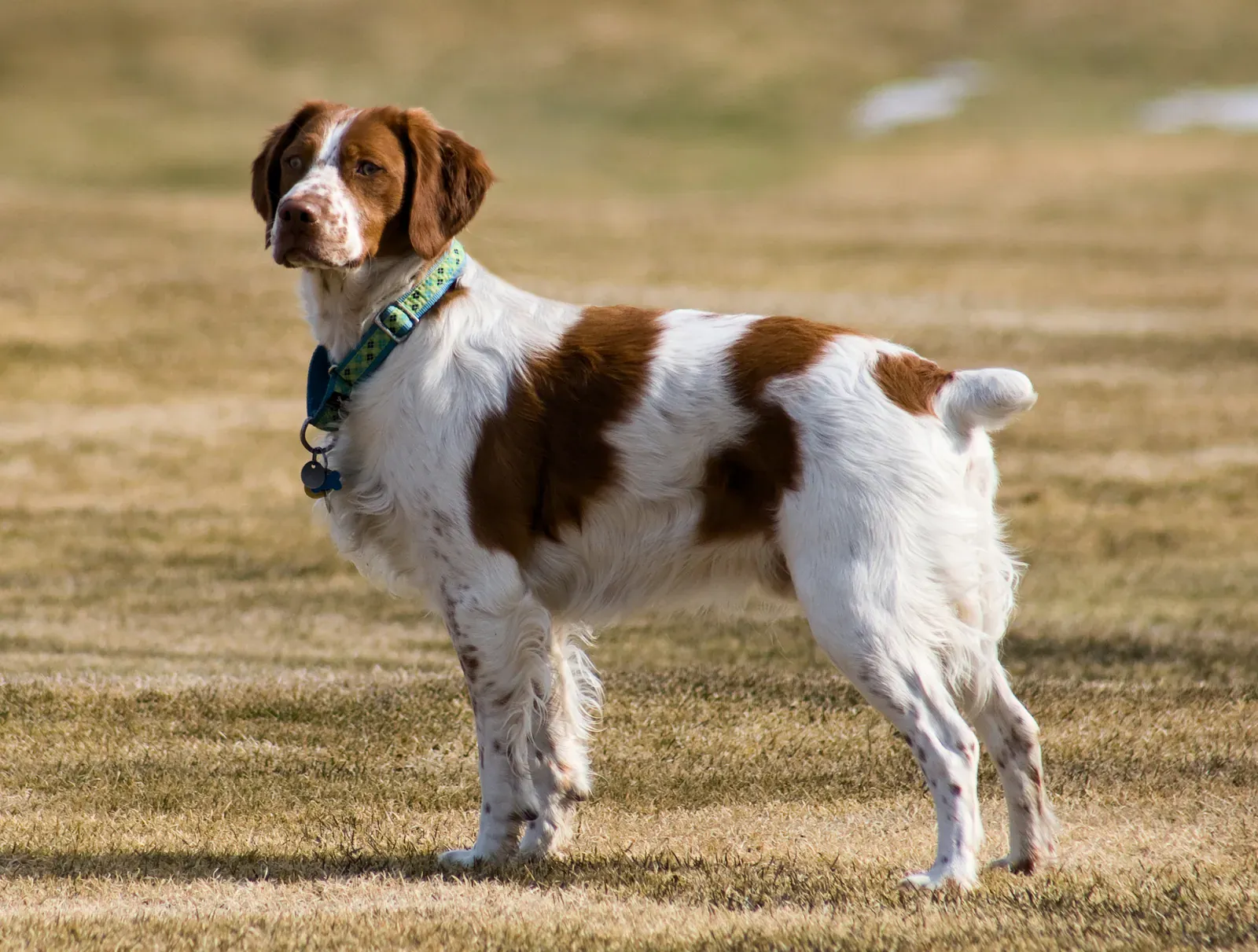
In France and in the FCI list it is the Épagneul Breton, and for decades English speakers called it the Brittany Spaniel. It hunts like a pointer or setter: it finds game by scent, then freezes and points. It is also known for being born with a very short tail or none at all. It is an energetic, soft-natured and eager-to-please breed that suits active owners who will give it hard daily exercise and a job. Typical life span is about 12 to 14 years.
Brittany quick facts
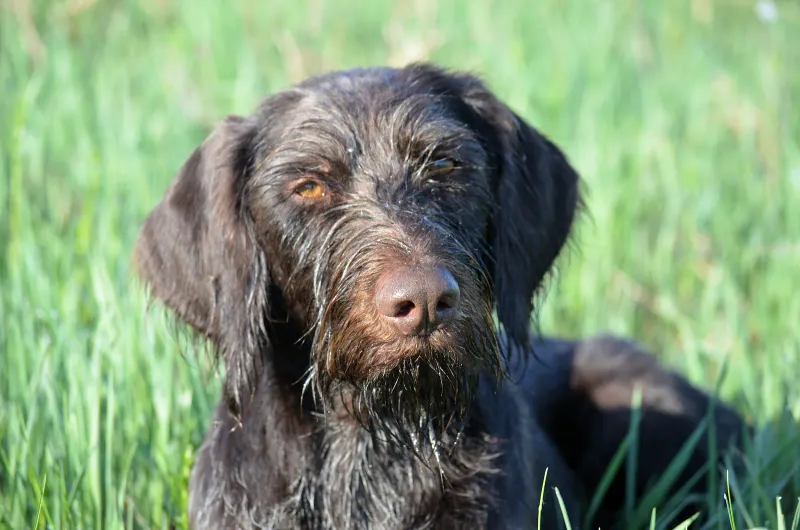 Related breedGerman Wirehaired Pointer1880 to 1902 · GermanyVictorian Breed Boom
- Closest DNA relatives
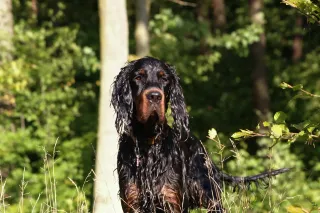
- English Setter, Spinone Italiano, Gordon Setter, Irish Setter
- Country of origin
- France (Brittany)
- Period of development
- About 1850 to 1907 (atlas data); first written standard drafted 1907 and adopted 1908
- Original job
- Finding and pointing game birds, and retrieving them, for hunters on foot
- Type
- Pointing dog (FCI Group 7, standard no. 95; AKC Sporting Group; UK Kennel Club Gundog Group)
- Other names
- Épagneul Breton, Brittany Spaniel (the AKC name until 1982)
- Home club
- Club de l'Épagneul Breton (France), founded 1907
- Height
- AKC: 17.5 to 20.5 inches (about 44 to 52 cm)
- Weight
- AKC: about 30 to 40 pounds (about 14 to 18 kg)
- Coat
- Dense coat
- Colour
- Orange and white and liver and white are the best known
- Tail
- Born tailless or with a short tail; docked short where docking is allowed
- Life span
- Atlas data: 12 to 14 years
- DNA family
- Pointer Setter (Parker et al. 2017)
Drawn to scale in real centimetres. Its back reaches about 48 cm, your knee; its head about 61 cm, just above your knee.
Where it sits in the tree
Victorian Breed Boom · 1850 to 1913

Name and origin
 Related breedDalmatian1700 to 1890 · CroatiaEarly Modern Era
The breed is named after Brittany, the peninsula in north-west France. The FCI lists it as the Épagneul Breton, which means "Breton spaniel" in French. The FCI standard describes it as French in origin and from central Brittany, and as probably one of the oldest spaniel-type dogs.
The name caused confusion for a long time, because the breed does not behave like a spaniel in the field. Spaniels flush birds into the air. The Brittany points, like a setter or a pointer.
- Spaniel to Brittany. The American Brittany Club, formed in 1942, left "spaniel" out of its own name on purpose, because members said a pointing dog should not carry the name of a flushing group. The AKC refused the first request to drop the word. One account gives 1 September 1982 as the day the official AKC name became simply "Brittany". That exact date appears in one source only, so treat it as likely, not proven; the 1980s change itself is consistent across sources.
- Still "spaniel" in places. The FCI keeps the French name Épagneul Breton, and its English translation still includes "Brittany Spaniel". Many people use both names.
- Four names, one dog. In searches you will find Brittany, Brittany Spaniel, Épagneul Breton and Breton Spaniel. They all mean the same breed.
 Save

History
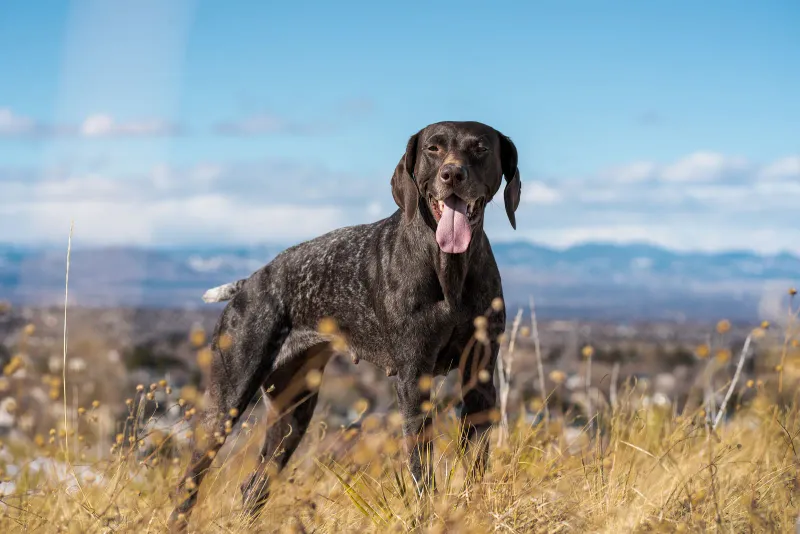 Same eraGerman Shorthaired Pointer1800 to 1872 · GermanyIndustrial Revolution
The Breton hunting dog
Where the Brittany came from is partly documented and partly told as tradition. Both parts are given here, with the tradition labelled.
- The legend of the setters left behind. A story repeated in many breed accounts says that British gentlemen who came to hunt in Brittany in the 1800s left their pointers and setters behind, and that these were crossed with a local small spaniel called the Fougères. The account is widely told, but no written breeding record from that time is cited in the sources, so treat it as a story that fits the evidence, not as proven history.
- What the data support. The atlas data gives a medium-confidence record of English Setter crossing in the mid-1800s, with the modern breed formed around 1850. The Parker 2017 DNA study supports the idea: it places the Brittany in the Pointer Setter family, and its closest among the breeds sampled is with the English Setter. The same pattern is seen for the Gordon Setter and Irish Setter.
- A caution on the FCI text. The FCI standard does not tell the story of English crosses in its history passage. It only says that the breed is French and old.
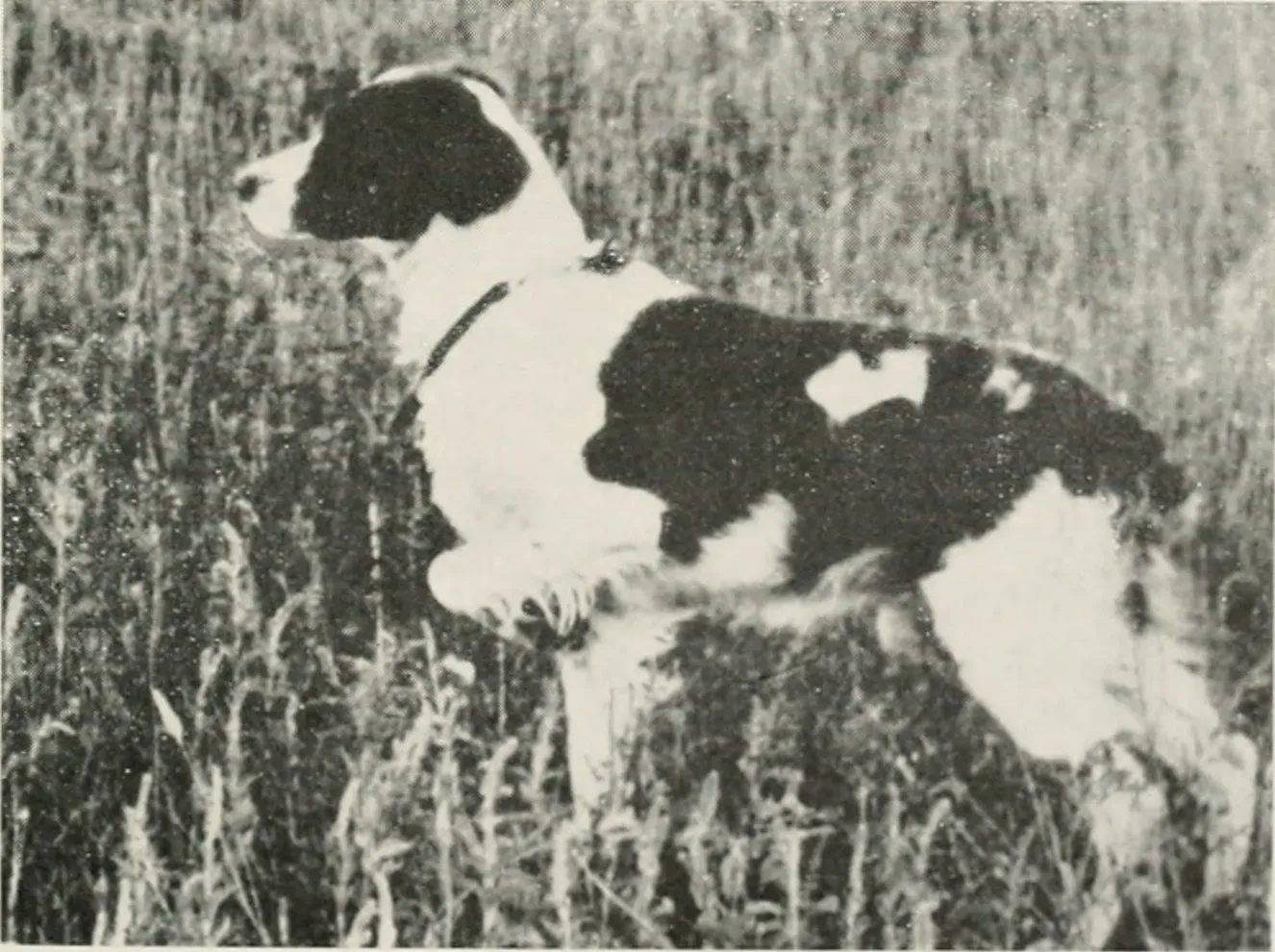
- The bobtail. Some Brittany puppies are born with no tail or a stub. Breed accounts say the trait was kept by choosing tailless parents; the FCI standard treats it as normal for the breed.
The first standard
The breed moved from a type of local hunting dog to a written breed in the early 1900s.
- A draft of a standard was written in Nantes in 1907 and presented to the first General Assembly of the breed's supporters in Loudéac in 1908, where it was adopted (FCI standard no. 95).
- The Club de l'Épagneul Breton, established in 1907, is still the main breed club in France.
- A non-FCI source gives a slightly different account: that the Société Centrale Canine set the first standard in 1907. The two dates are close, and the accounts may describe the same process from different sides.
 Save
Across the Atlantic
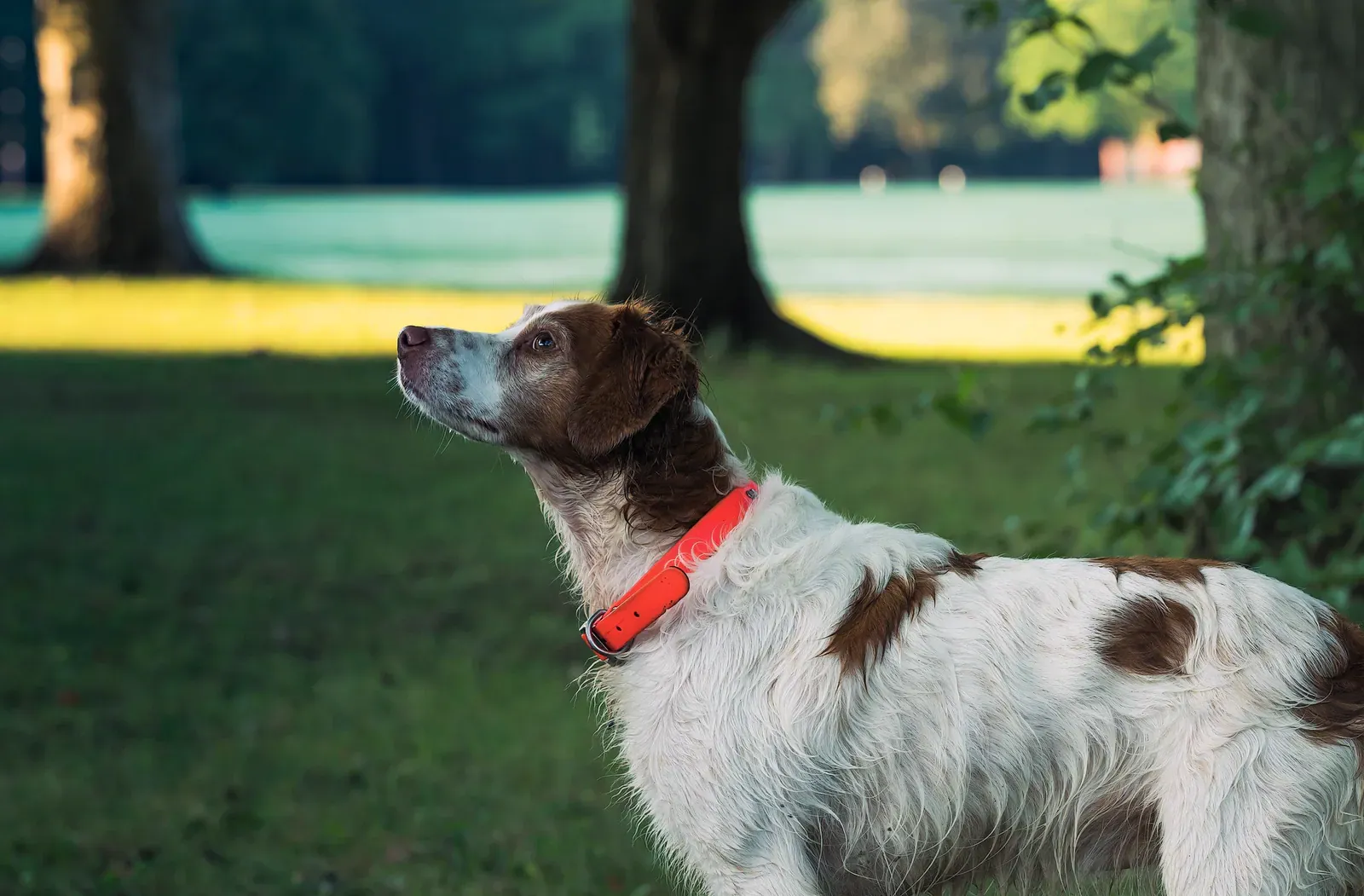
Brittanys went to North America in the early 1900s as bird dogs.
- One account says the breed was first recognised in America in 1931. The AKC approved the Brittany, then named the Brittany Spaniel, in 1934.
- A club of Brittany fanciers and an earlier "Brittany Spaniel Club of North America" lost contact in wartime and joined in 1944. The merged group, working alongside the American Brittany Club (1942), aimed to keep the breed a "dual dog" that could work in the field and win in the show ring, so that it would not split into separate field and bench types.
- The American field-bred Brittany today is typically larger and faster-moving than the old French type. One source notes that North American field lines tend to be larger than the standard describes. That detail is a general observation, not a measured result.
Dual champions
A dual champion is a dog that has won both a bench championship (for looks) and a field championship (for hunting). The Brittany has made a name for this.
- One source says that more than 700 Brittanys have earned the AKC dual champion title since the 1940s, and that this is more than all other sporting breeds combined.
- An older text says that more than 500 Brittanys had earned it about seventy years after recognition. These figures are for different dates, so they do not conflict, but the counts are not exact and depend on the date of the source.
- Why it matters: it shows that, in the American club's own aim, the dog's looks and its working skill were kept in one population for longer than in many gundog breeds.
 Save
Relatives and DNA
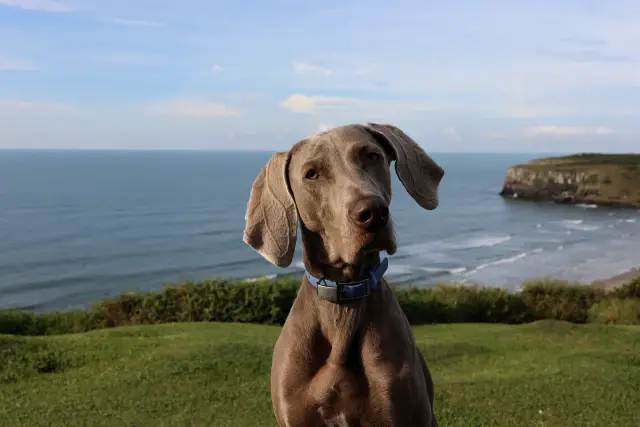 Same familyWeimaraner1810 to 1897 · GermanyIndustrial Revolution
The Brittany belongs to the Pointer Setter family in the Parker et al. 2017 study of 161 breeds. The study sorted most breeds into clades (family groups) by shared DNA. "Family" in this article always means that DNA . "Group" means a kennel club group such as FCI Group 7.
What the Parker data show for the Brittany:
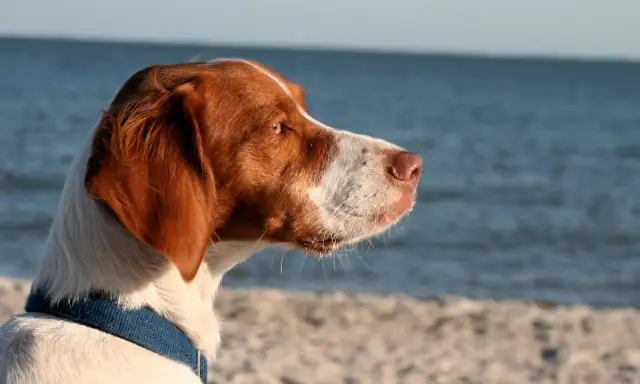
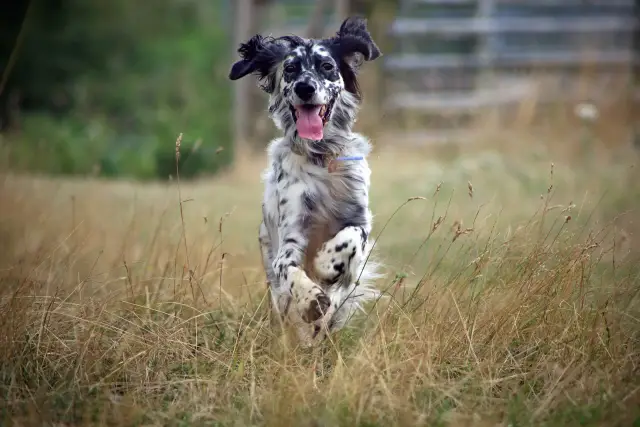

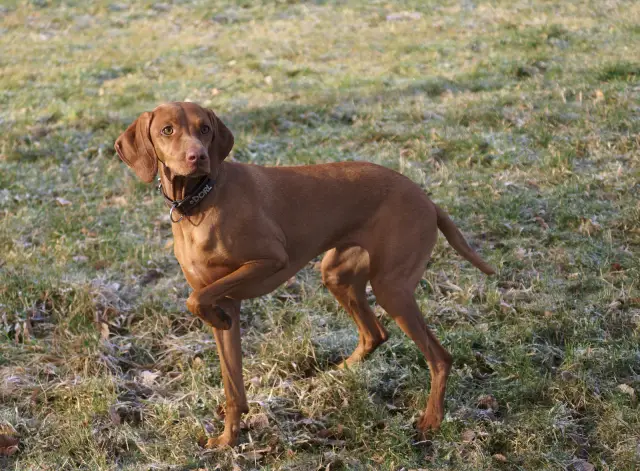
- Brittany and English Setter
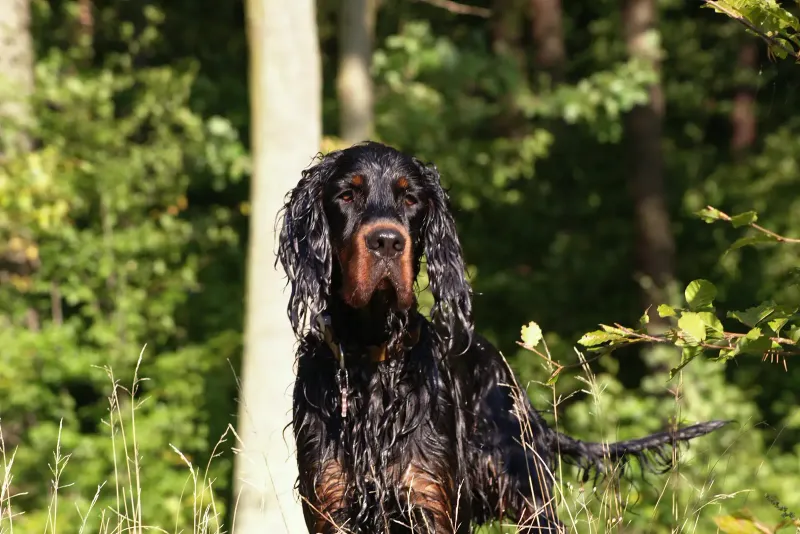 Brittany and Gordon Setter
- Brittany and Irish Setter
- Brittany and Vizsla
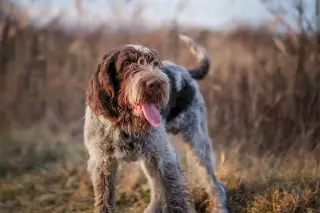
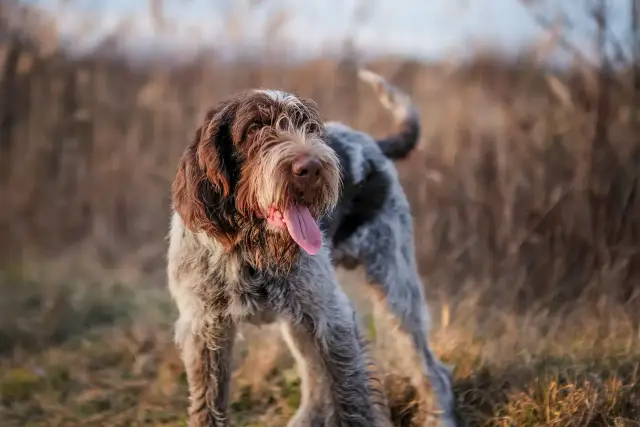
- Brittany and German Wirehaired Pointer
Shared are a measure of how much of the two breeds hold in common blocks. Higher numbers mean a closer link. They show relatedness, not the exact crossing history.
Two points follow:
- The Brittany sits with the setters and pointers in DNA, not with the spaniels, even though the old name placed it among spaniels. This matches the 1982 AKC change.
- Atlas data lists the English Setter as the one parent breed with a recorded cross. It also lists the Old Spanish Pointer and the Bracco Italiano among the older ancestor types of this family.
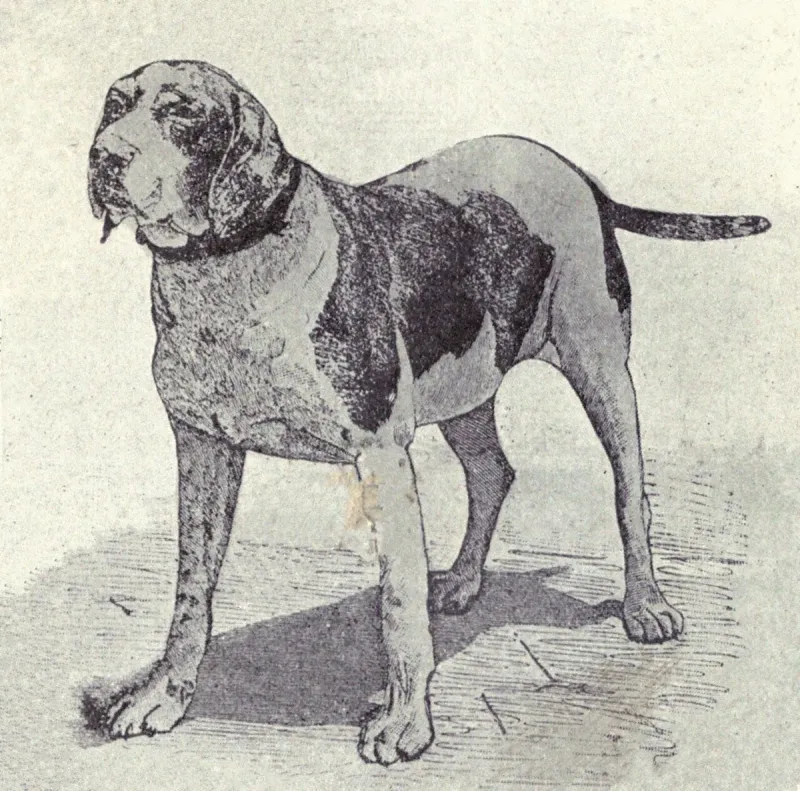 Old Spanish Pointerolder ancestor type of this family
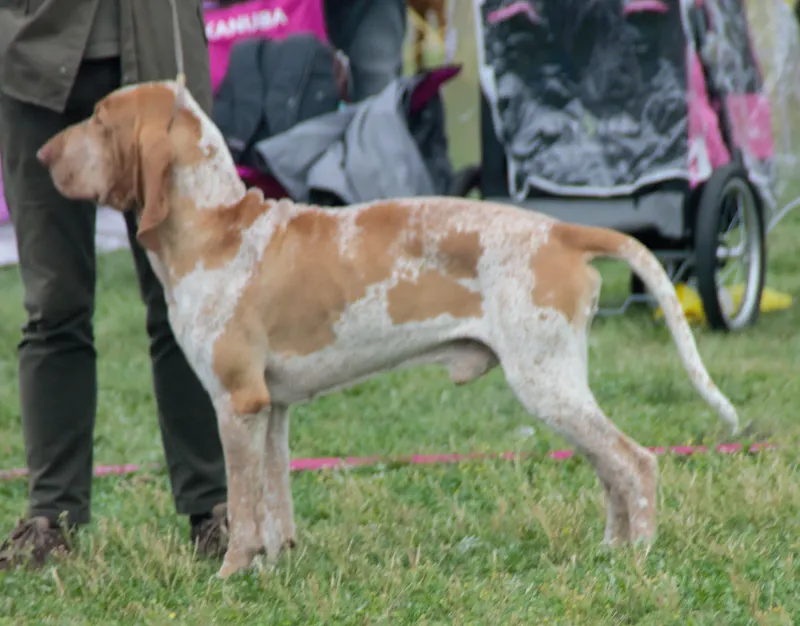 Bracco Italianoolder ancestor type of this familyBrittanycrossed with local spaniels, about 1850Old Spanish Pointerolder ancestor type of this familyBracco Italianoolder ancestor type of this family
If you like the Brittany but want a different size or coat, other pointing and spaniel breeds you can compare are the German Shorthaired Pointer and the English Springer Spaniel.
- English Setter37.3 Mb 1.6%
- Spinone Italiano19.2 Mb 0.8%
- Gordon Setter19.1 Mb 0.8%
- Irish Setter15.8 Mb 0.7%
- Wirehaired Pointing Griffon12.2 Mb 0.5%
- Vizsla10.0 Mb 0.4%
- German Wirehaired Pointer9.9 Mb 0.4%
Source: Parker et al. 2017. Percent of the whole genome.
| Breed | Shared DNA (megabases) | Note |
|---|---|---|
| English Setter | 37.3 | Highest in the sample, consistent with the setter-cross account |
| Spinone Italiano | 19.2 | Italian pointing breed |
| Gordon Setter | 19.1 | Setter |
| Irish Setter | 15.8 | Setter |
| Wirehaired Pointing Griffon | 12.2 | French pointing breed |
| Vizsla | 10.0 | Hungarian pointing breed |
| German Wirehaired Pointer | 9.9 | German pointing breed |
Source: Parker et al. 2017, Cell Reports, shared haplotypes between 161 breeds (1,346 dogs).
The breed standard
 Looks relatedAmerican Cocker Spaniel1870 to 1946 · United StatesVictorian Breed Boom
A is the written ideal for a breed that kennel clubs judge dogs against. Only figures stated by a named club are used. Where a club gives no value, the club is left out.
| Trait | What the standards say |
|---|---|
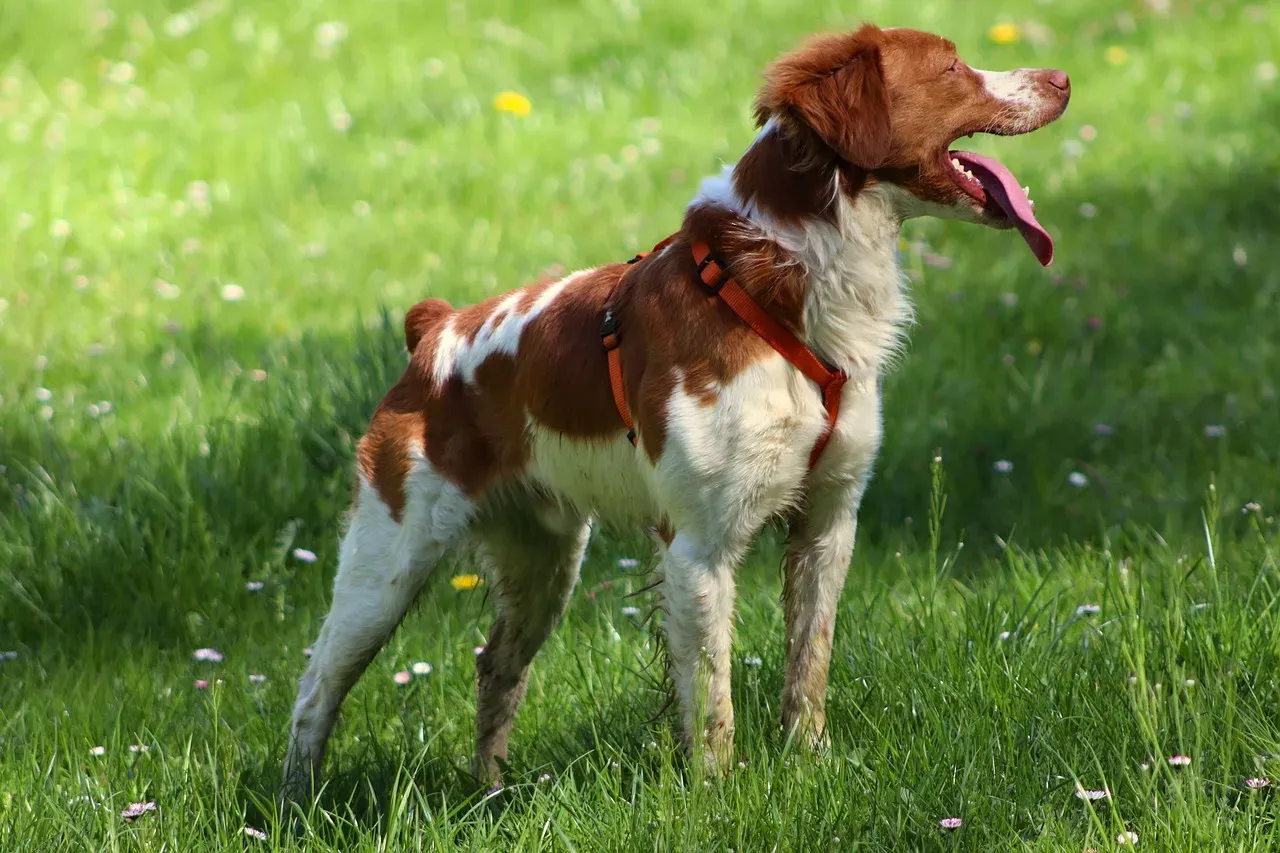
| Height | AKC: 17.5 to 20.5 inches (about 44 to 52 cm), measured at the highest point of the shoulders; a dog outside this range is disqualified from AKC shows |
| Weight | AKC: 30 to 40 pounds (about 14 to 18 kg) |
| Proportions | UKC (United Kennel Club): length from point of shoulder to point of buttock equals height at the withers, so the dog fits a square; depth of chest is slightly less than half the height |
| Tail | FCI: born without a tail or with a short tail; if docked, ideal length 3 to 6 cm, and no more than 10 cm. AKC: tailless or docked to about 4 inches at most |
| Group | FCI Group 7 (pointing dogs), AKC Sporting Group |
Points to know:
- The natural bobtail. The first American standard required a natural bobtail, but this requirement was dropped soon after. Today the AKC accepts a dog that is tailless or docked short. In countries where docking is banned for non-working dogs, many Brittanys have a full-length tail, and the FCI text allows for the natural short or absent tail.
- A medium, square dog. All the standards describe a compact, athletic dog of medium build that can work all day. Height and body length are about equal.
- Height disqualification. The AKC makes size a disqualifying fault, which is unusual. A dog above or below the limits cannot be shown for a conformation title in the United States.
- Field and bench types. Dogs bred for field trials in North America tend to be a little larger than the standard calls for, according to one source. That is a general observation, not a measured result.
- Colours. Club colour lists differ, so colours are not tabulated here.
 Save
Temperament
 Related breedAmerican Eskimo Dog1900 to 1917 · United StatesVictorian Breed Boom
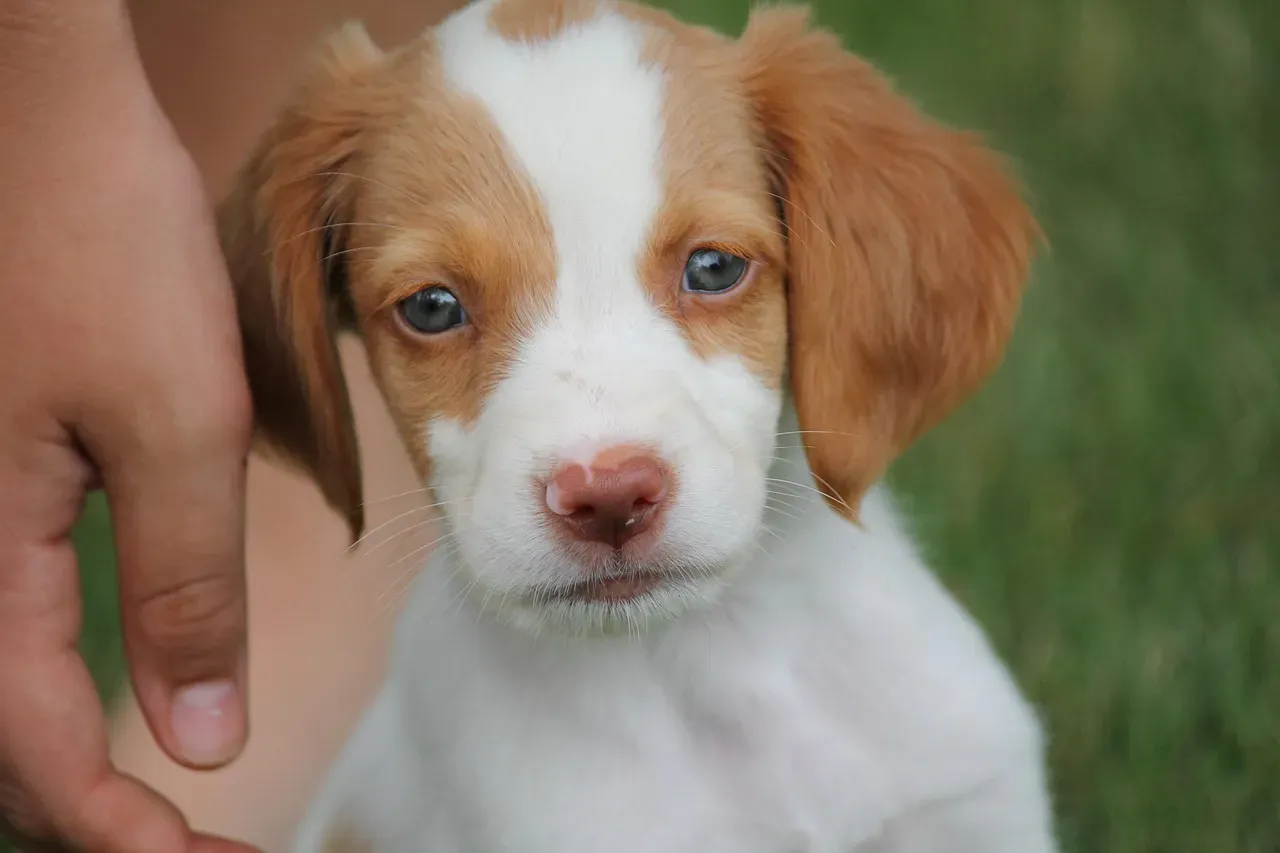
The Brittany is described by breeders and clubs as bright, happy and keen. Several points show up in the standards and club histories that we read:
- Eager to please. Brittanys were bred to hunt close to the hunter on foot, so they tend to check in with their person. This helps training.
- Sensitive. Many Brittanys react to a harsh voice or rough handling by shutting down. Reward-based training usually works better than force.
- Energetic. This is a working gundog. It was designed to cover ground for hours. A Brittany with no outlet often turns to digging, chewing or barking.
- Friendly. The breed is generally sociable with people and with other dogs. It is not a natural guard dog.
- Prey drive. As a bird dog, it will chase and point small animals. Birds, rabbits and squirrels are interesting to it, and recall training is a must near open ground.
These are the breed's tendencies. Every Brittany is an individual, and early socialisation and consistent handling shape how a puppy grows.
 Save

Training and work
 Related breedAmerican Pit Bull Terrier1850 to 1898 · United StatesVictorian Breed Boom
A Brittany is a bird dog first, and that shapes how it learns.
- Start early and keep it short. Puppies are quick to learn and quick to get bored. Several short sessions a day work better than one long one.
- Teach a reliable recall. The breed hunts by scent and sight, and an unrecalled Brittany can be a long way away within minutes. A long line is useful in the early months.
- Give a job. Gundog work such as retrieving, scent games, field training or pointing practice meets the breed's need to use its nose and mind. Dog sports such as agility and canicross also suit it.
- The point. Many Brittanys point as young puppies, with one forefoot raised. This is instinct, not something taught.
- Hunting use today. The breed is used on game birds, working close to the hunter on foot.
Health
 Related breedAmerican Staffordshire Terrier1850 to 1936 · United StatesVictorian Breed Boom
Most Brittanys live active, healthy lives of 12 to 14 years, which is a good span for a dog of this size. The conditions below are the ones that vets and breeders screen for, so that owners can ask the right questions and watch for early signs. Figures are given as "about 1 in N" only when a named study gave a number; otherwise we say so.
| Condition | What it is | How common | What helps |
|---|---|---|---|
| The hip joint does not fit as snugly as it should, which can wear the joint and cause stiffness | OFA data as reported in a secondary source: 14.3% of 18,974 Brittanys evaluated were dysplastic, about 1 in 7. Note below | Hip scoring of parents (OFA in the US; BVA/KC and FCI schemes elsewhere), a lean body weight, steady exercise while growing | |
| Idiopathic epilepsy | Seizures with no other cause found | Listed as occurring more often in the breed than in dogs overall; no prevalence figure is published | Vet diagnosis; medication where needed; ask the breeder about seizures in the family |
| Spinal muscular atrophy (motor neuron disease) | An inherited loss of the nerves that move muscles, seen in young dogs | Rare in the population today; Cork and colleagues (1990) described it as inherited in Brittany spaniels in an autosomal dominant way | Breeding away from affected lines; ask the breeder about the family history |
| Eye problems | Conditions of the lens, lids or retina seen in several gundog breeds | No source quantifies this | Annual eye exams for breeding dogs; vet check if the eyes look cloudy or red |
| von Willebrand's disease | A blood clotting disorder | Listed for the breed; no prevalence figure seen | Pre-surgery vet screening; DNA tests where offered |
A note on the hip figure. The 14.3% figure is an OFA statistic that comes from a secondary report, with no date. The OFA only gets radiographs that owners choose to submit, so the number may differ from the whole population. For context, a large OFA study across all breeds in the US and Canada found an overall hip dysplasia prevalence of 15.56% (Demographics of Canine Hip Dysplasia in the United States and Canada), so the Brittany sits close to the all-breed mean. A French review of 31 breeds (Genevois and colleagues, 2008) found hip dysplasia prevalence ranging from about 4% in the Siberian Husky to about 60% in the Cane Corso; it gives no quoted figure for the Épagneul Breton.
What to ask for. Ask the breeder for hip scores for both parents and for the results of any DNA tests offered for the breed. For a pet puppy, ask whether any relatives had seizures.
Life span. Sources give 12 to 14 years. No large population study gives a Brittany-specific median, so treat this as the range given by breed data, not as a measured median.

Living with a Brittany
 Related breedAustralian Kelpie1870 to 1902 · AustraliaVictorian Breed Boom
 Save
| Daily reality | Rating | Why |
|---|---|---|
| Exercise per day | High | Bred to hunt for hours; no club figure seen, expect long daily hard exercise |
| Training needs | Medium | Eager and quick, but sensitive; needs consistent, kind methods and a reliable recall |
| Grooming | Low | Dense coat; routine brushing and ear checks (no club figure seen) |
| Shedding | Medium | Sheds; varies with season (breed standard describes a dense coat) |
| Barking | Medium | Bored dogs bark; varies by the individual |
| Time alone | Poor | Close to its person; long hours alone often lead to chewing or barking |
| Children | Good | Sociable and sturdy; bouncy with toddlers, so supervise young children |
| Other dogs | Good | Generally sociable; early socialisation helps |
| Cats and small pets | Varies | Bird-dog instincts; a puppy raised with a cat may be fine, but small pets such as birds or rabbits need care |
| Flat living | Poor | Needs an outlet; a flat is hard unless the owner exercises hard every day |
| Heat tolerance | Fair | Medium coat; exercise in the cool hours |
| Cold tolerance | Good | Dense coat; no source rates it, varies by individual |
| First-time owner fit | Fair | Easy to train, but the exercise and recall work can overwhelm a first-timer |
A great fit if
- You run, hike or cycle, and want a dog that joins in every day.
- You hunt over dogs or want to do gundog training and field work.
- You are home for much of the day, or can arrange good care while you are out.
- You like a soft-natured dog and are willing to use reward-based training.
Think twice if
- You are away from home for long hours and the dog would be left alone.
- You want a calm dog for a small flat.
- You have pet birds or other small animals that might be seen as prey.
- You prefer a dog that needs little exercise.
Before you get one
- Health tests. Ask the breeder for hip scores for both parents, and for any DNA test results the club recommends. Ask for the original certificates. If the puppy comes from working or field lines, ask about the parents' hunting records.
- Puppy or adult rescue. Breed rescues exist for the Brittany and often place adults whose energy and training are already known. An adult is a good choice if you want a clearer picture of temperament.
- First year. Plan early socialisation, a long line for recall practice, gentle exercise while the joints grow, and a steady daily routine. A lean weight protects the hips and joints.
Similar breeds to consider
- English Springer Spaniel. A flushing spaniel with a similar love of exercise and a sociable nature.
- German Shorthaired Pointer. Larger pointing breed with a short coat, needing at least as much work.
- Vizsla. A Hungarian pointing dog, a close companion type that is also very energetic.
- English Setter. The closest DNA relative in our data, with a longer coat and a gentle character.

Brittany fun facts
 Related breedBasset Hound1860 to 1885 · United KingdomVictorian Breed Boom
- A Brittany may be born without a tail. This is a natural trait in the breed, not the result of docking.
- The American Brittany Club left "spaniel" out of its name in 1942, forty years before the AKC changed the breed's name.
- Dual champions: the Brittany has produced more AKC dual champions than any other sporting breed (one source puts the count at more than 700; an older text says more than 500).
- The FCI standard says the first breed standard was drawn up in Nantes in 1907 and adopted at Loudéac in 1908.
Frequently asked questions
Is a Brittany a spaniel or a pointer?
It is a pointing dog. The old name, Brittany Spaniel, comes from its look and its French name, Épagneul Breton. In the field it points like a setter. The dropped "spaniel" from the name in 1982 (one source gives the date as 1 September).
Why do some Brittanys have no tail?
Some are born with a very short tail or none, which is a natural trait that breeders have kept. Where docking is allowed, others are docked short. The standard says the ideal docked length is 3 to 6 cm. The AKC allows a tailless or short-docked dog.
How big does a Brittany get?
The AKC standard gives 17.5 to 20.5 inches (about 44 to 52 cm) at the shoulder and 30 to 40 pounds (about 14 to 18 kg). Field-bred dogs in North America may run larger than the standard.
How long does a Brittany live?
Breed data give 12 to 14 years. No large study gives a breed-specific median.
Is a Brittany a good family dog?
Yes, if the family is active. The breed is friendly, sociable and affectionate. It needs a lot of exercise and company, and a bored Brittany finds its own work.
What is a dual champion?
A dual champion is a dog that has won both a bench (show) championship and a field championship. The Brittany has produced many of them, and the American club has worked to keep the breed a dual-purpose dog.
Read next
Closest DNAEnglish Setter37.3 Mb shared FamilyPointer SetterThe whole family
 Adopt a dogDog Shelters in FranceTen big cities checked, how adoption works, fees in euros
Sources (11)
- Fédération Cynologique Internationale, Épagneul Breton, standard no. 95 (2003): origin, 1907 Nantes draft, 1908 Loudéac adoption, tail wording.
- American Kennel Club, Brittany breed standard: height, weight, disqualifying height, tail wording.
- Showsight Magazine, "Development of the Brittany breed standard", and Showsight Brittany breed magazine (American Brittany Club history, 1982 name change).
- American Brittany Club, club history as recounted in Showsight: formation in 1942, dual dog aim, dual champion counts.
- United Kennel Club, Épagneul Breton breed standard: proportions.
- Parker H.G. et al., "Genomic analyses reveal the influence of geographic origin, migration, and hybridization on modern dog breed development", Cell Reports 19(4), 2017.
- Cork L.C. et al., hereditary canine spinal muscular atrophy in Brittany spaniels, Canadian Journal of Veterinary Research, 1990.
- Orthopedic Foundation for Animals (OFA), hip evaluation statistics for the Brittany (figure seen in a secondary report).
- "The Demographics of Canine Hip Dysplasia in the United States and Canada" (OFA analysis, all-breed prevalence).
- Remy D. et al., "Prevalence of hip dysplasia according to official radiographic screening, among 31 breeds of dogs in France", Veterinary and Comparative Orthopaedics and Traumatology 21(1), 2008.
- Wikipedia, "Brittany (dog)" and "Brittany Spaniel": general history and recognition dates.