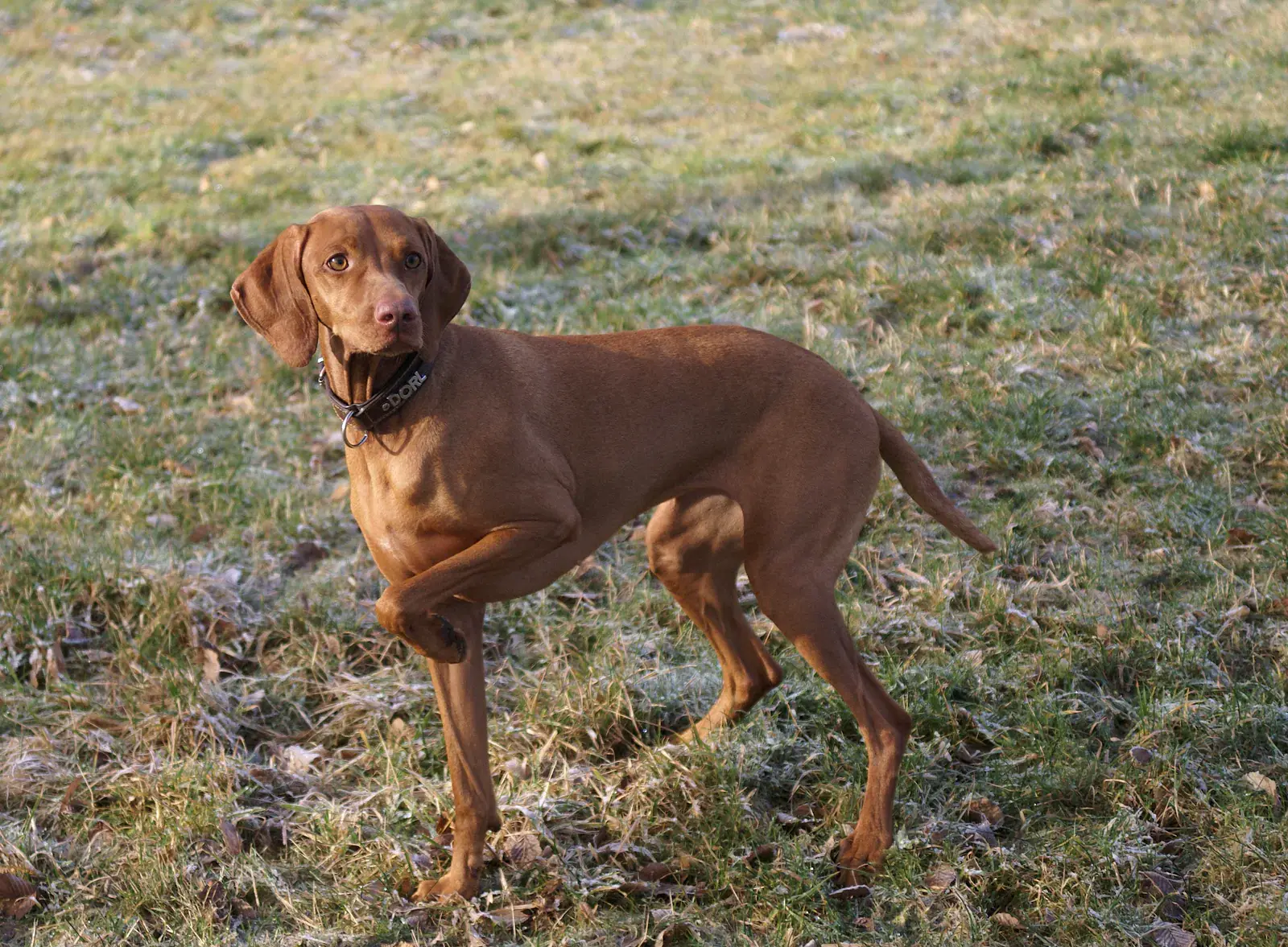
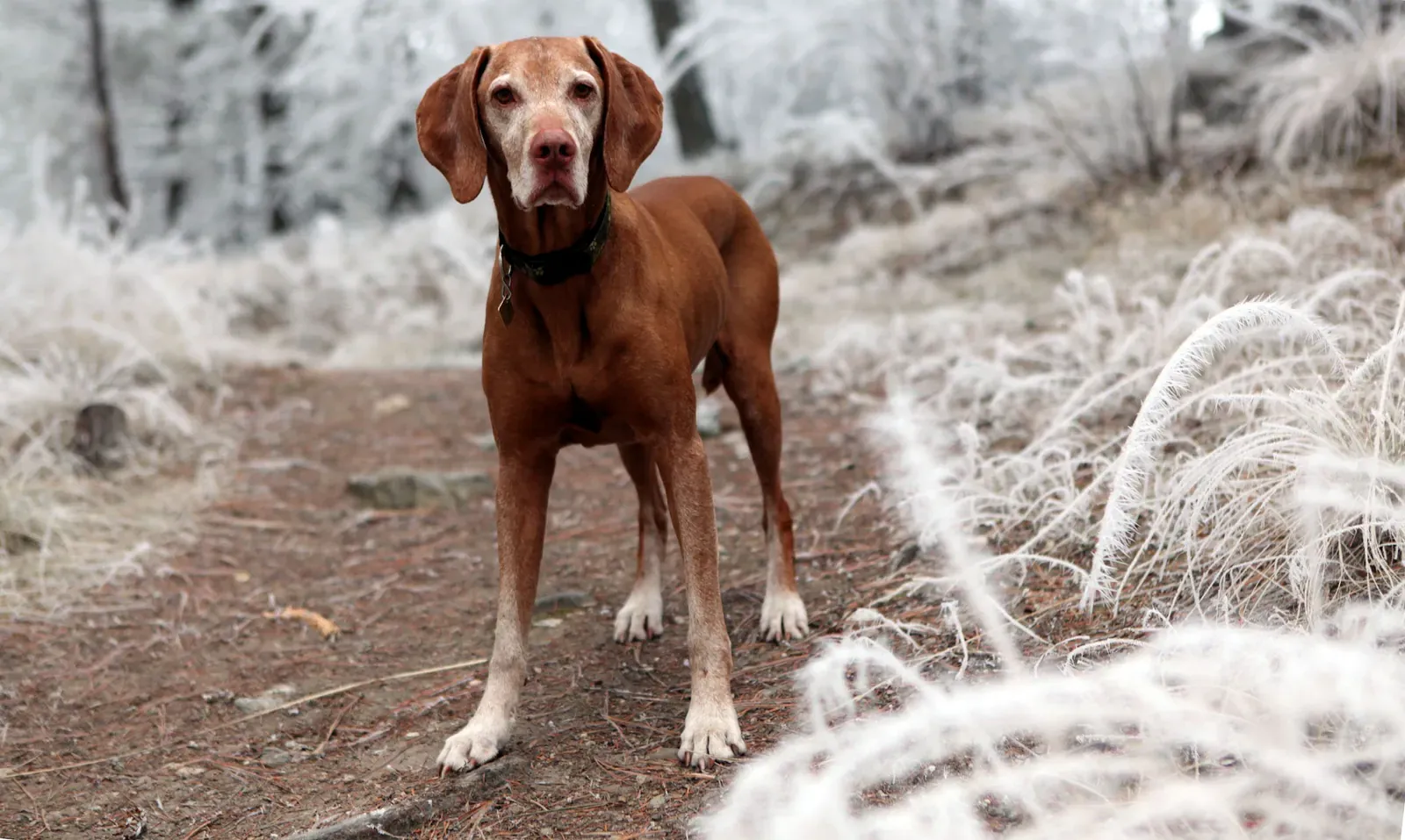
It was bred to find game, point it, and retrieve it, often working close to the hunter. The breed is lean, fast, affectionate and very attached to its people, which is why it is known as the "velcro dog". It suits active owners who can offer hours of company, daily running and training, and it is a poor match for a household that is empty all day. It nearly disappeared after the Second World War, and the dogs that left Hungary with refugees helped rebuild it.
Vizsla quick facts
 Related breedIrish Setter1700 to 1886 · IrelandEarly Modern Era
- Closest DNA relatives
- German Wirehaired Pointer, German Shorthaired Pointer, Gordon Setter, English Setter
- Descendant breeds
- Wirehaired Vizsla
- Country of origin
- Hungary
- Period of development
- Old roots claimed from the Middle Ages; modern pointer shaped from the mid-1700s; about 1350 to 1935
- Original job
- Pointing and retrieving game, working with falconers and later with the gun
- Type
- Pointing dog ( Group 7, Pointing Dogs, standard no. 57; Sporting Group; UK Kennel Club Gundog Group)
- Home club
- Hungarian kennel organisations; the FCI lists the Rövidszőrű Magyar Vizsla (Hungarian Short-haired Pointer)
- Height
- UK Kennel Club: dogs 57 to 64 cm, bitches 53 to 60 cm
- Weight
- UK Kennel Club: 20 to 30 kg
- Coat
- Short, smooth, dense and close-lying
- Colour
- Russet gold (FCI, UK Kennel Club); golden rust in shades (AKC)
- Life span
- Breed sources: 12 to 14 years. A UK club survey of dogs that had died gave a median of 11 years
- Exercise
- High; owners often report an hour or more of vigorous activity
- DNA family
- Pointer and Setter family (Parker et al. 2017)
Drawn to scale in real centimetres. Its back reaches about 59 cm, just above your knee; its head about 74 cm, mid-thigh.
Where it sits in the tree
Late Middle Ages · 1200 to 1499
Name and origin
 Related breedBrittany1850 to 1907 · FranceVictorian Breed Boom
"Vizsla" is a Hungarian word, and a common translation is "pointer" or "tracker". Breed sources links it to the verb vizsgál, "to search or examine". One breed historian argues that the word names a type of dog, like the French "braque", and not one particular breed, and gives its etymology as unknown, so the word-origin story is open. The adjective "Magyar" in "Magyar Vizsla" refers to the Hungarian people.
Where the breed itself began is a matter of tradition. Breed-club writings say the Magyars, the horse-riding people who settled the Carpathian Basin around the tenth century, kept yellow hunting dogs, and some describe stone carvings in the Carpathian region, said to be about 1,000 years old, as showing a Magyar hunter with a falcon and a dog like a Vizsla. That is a claim, not a documented link: the carvings are not securely dated here and the dog could be any yellow hunting dog.
The earliest written mention given in breed histories is the Illustrated Vienna Chronicle, made for King Louis the Great of Hungary (reigned 1342 to 1382), with a falconry chapter that is said to include a picture of a Vizsla. Sources date the chronicle to 1357 or 1375, so the exact year is uncertain.
Another popular tale says the Turkish occupation of Hungary, after 1526, brought a yellow pointer that was crossed with Magyar dogs. This is repeated on breeder sites without independent support, so treat it as legend. A sceptical view is that the old Magyar yellow dogs were hounds, possibly relatives of the Transylvanian Hound, or sighthounds, and not pointers.
What is better supported: serious breeding of a pointing dog in Hungary began around the middle of the 18th century, when hunters in Europe began shooting birds in flight. Hungarian nobles then developed a dog that could point, track and retrieve. English Pointers and German Shorthaired Pointers were used in the 1800s according to one account, and the old yellow type almost disappeared before being rebuilt in the early 1900s.

History
 Same eraDalmatian1700 to 1890 · CroatiaEarly Modern Era
From noble hunting dog to a breed standard
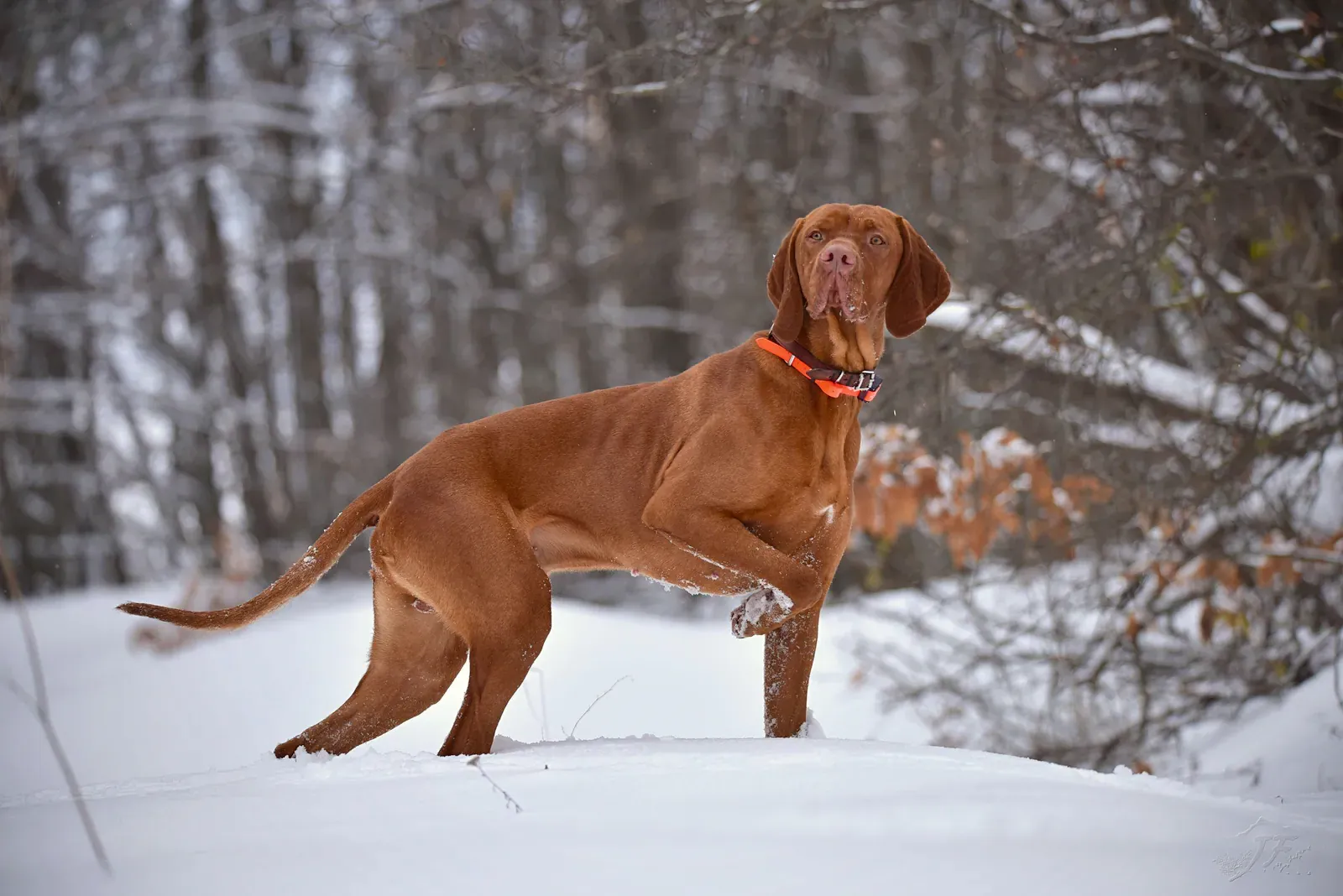
For centuries the Vizsla was a dog of the Hungarian landowning class. It worked alongside falconers, then with guns, covering open plain and marsh. Breed accounts say it was strongly tied to the aristocracy, which later had consequences for the breed. A written and a followed in the early 20th century. The breed is usually dated to 1935, the year the standard is generally cited, though no primary source for that date is given.
 Save
The war years and near-loss
The Second World War nearly ended the breed. One breed club history says about 5,000 Vizslas were registered in Hungary before the war and that around 80 percent were lost or destroyed, but this figure comes from a single breed-club page and is best treated as an estimate. Registration records, photographs and pedigrees were lost. Litters born after the war were registered as of "unknown breeding" in the stud books compiled in 1955.
Politics added to the danger. Because owning a Vizsla was linked to the nobility, some breeders feared the Soviet authorities would kill the dogs. Some owners left Hungary with their dogs: sources describe refugees who took Vizslas with them to other European countries and further abroad, and the breed became established outside Hungary. Much of the modern breed descends from these dogs.
The breed abroad
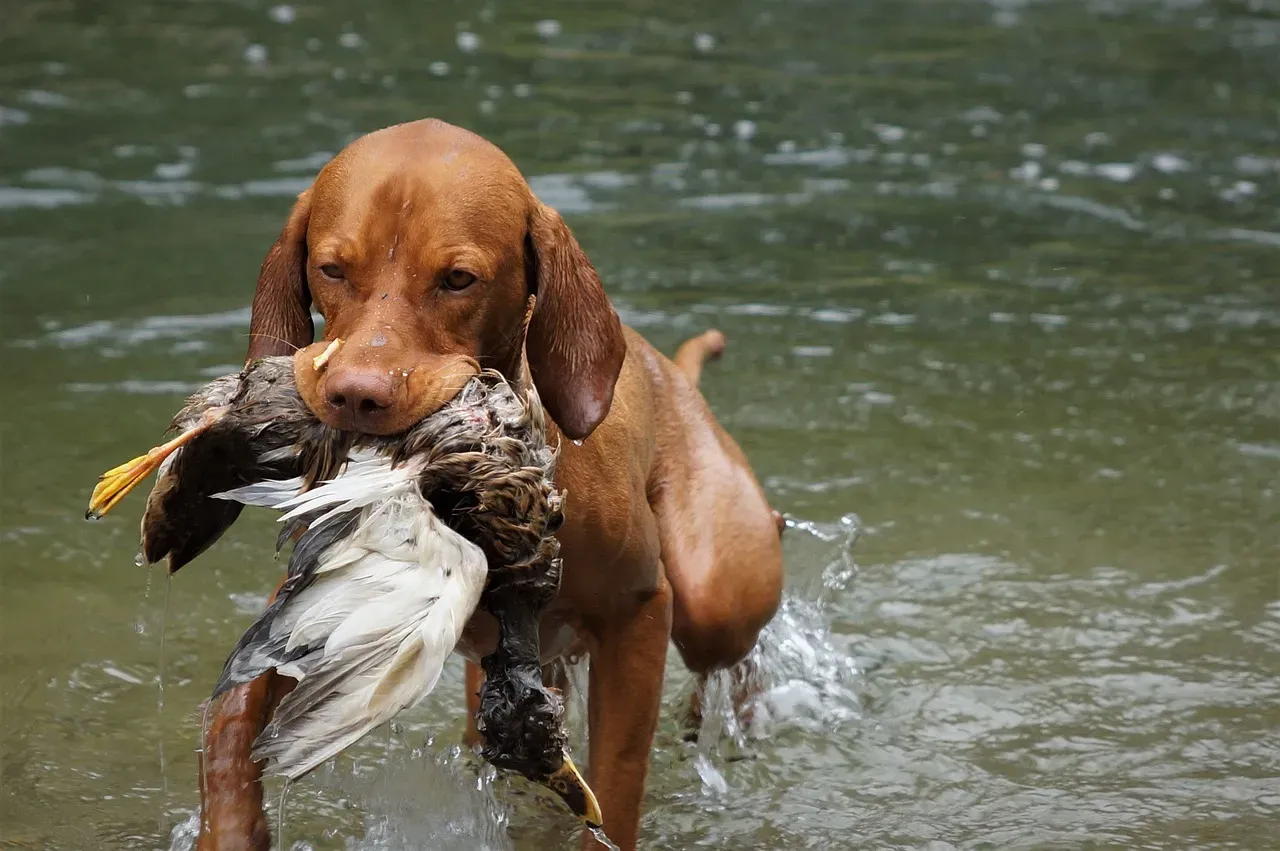
In the United States, the first imports are documented in 1950. One account describes a dam named Sari and her two pups, sent from Italy to Kansas City by a serviceman. Another importer, Dr. Ivan Osborn, brought over more than 40 dogs. One source says the AKC recognised the breed in 1960. The breed then spread across North America, the United Kingdom and Australia as both a show and a field dog. The FCI lists the breed under the Hungarian standard no. 57.
 Save
Relatives and DNA
 Same familyWeimaraner1810 to 1897 · GermanyIndustrial Revolution
Parker et al. (2017) placed the Vizsla in the Pointer and Setter DNA family. "Family" here means the DNA family from that study, not a kennel club group. The kennel clubs also put it in a pointing or gundog group, so the two views agree.
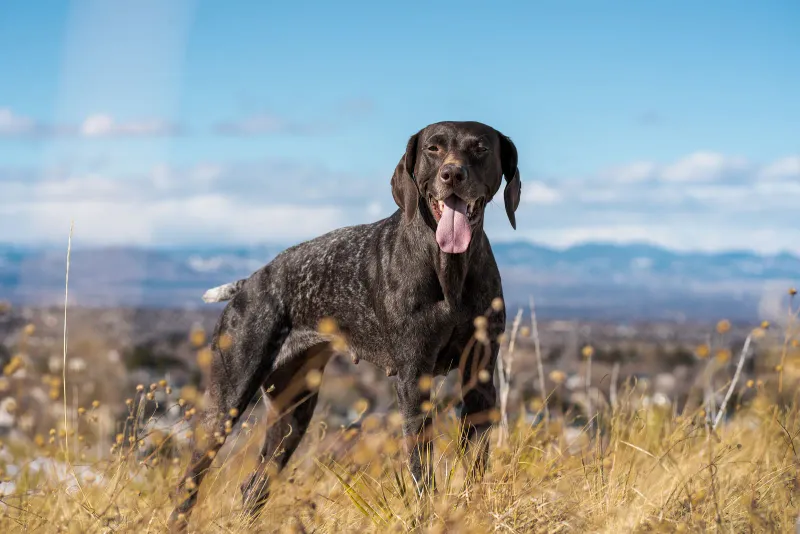
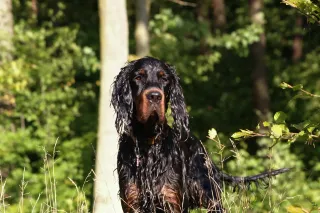
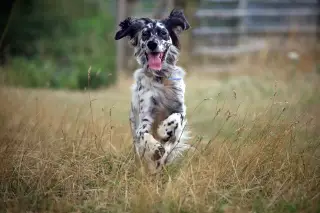
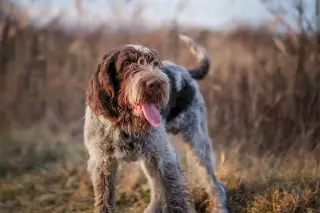
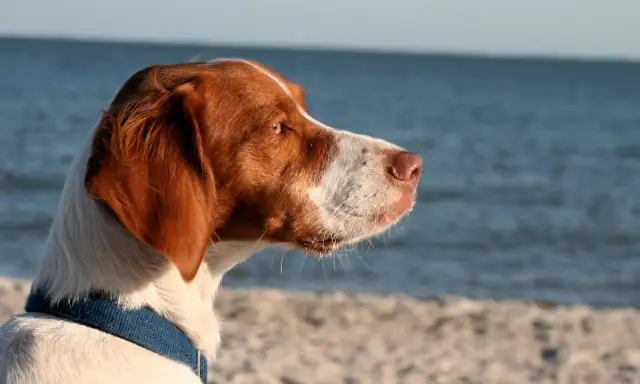
The breeds sharing the most DNA with the Vizsla in that study were the German Wirehaired Pointer (21.5 ), the German Shorthaired Pointer (20.9 Mb), the Gordon Setter (16.6 Mb), the English Setter (13.9 Mb), the Wirehaired Pointing Griffon (13.7 Mb), the Irish Setter and Large Munsterlander (12.5 Mb each) and the Brittany (10 Mb). Central European pointing breeds are therefore the closest relatives.
The Wirehaired Vizsla
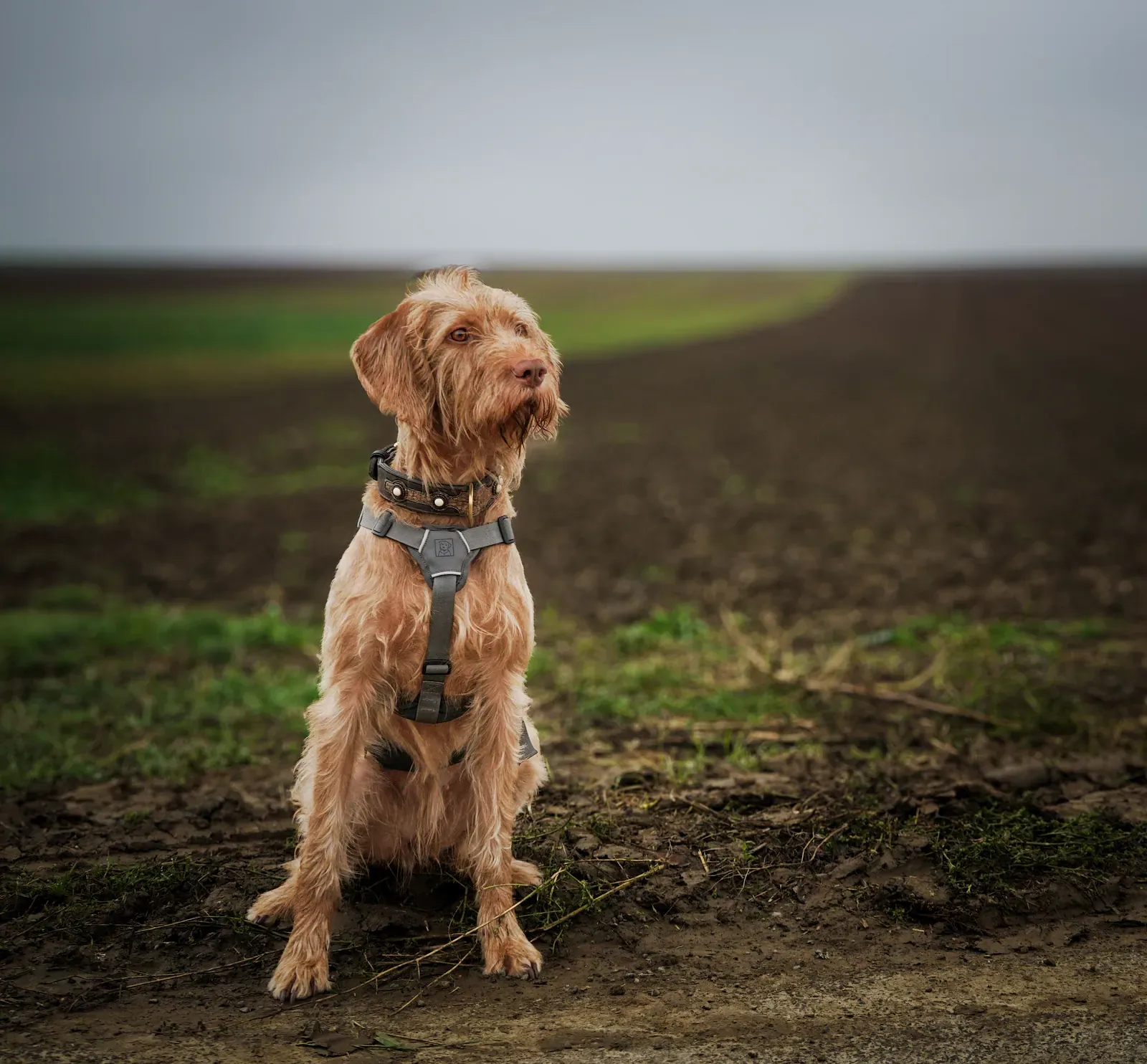
The Wirehaired Vizsla is the Vizsla's only descendant breed. It was developed in the 1930s, according to the sources, by crossing the Vizsla with the German Wirehaired Pointer to add a heavier, harsher coat and a more solid frame for cold weather and rough water. The founders are usually named as Vasas Jozsef and Gresznarik Laszlo, but that detail is not well documented. Some accounts add the Pudelpointer or Irish Setter to the mix, others do not, so the exact parentage is disputed. The two were shown in 1943 and registered about 60 dogs by 1944. The war nearly ended this variety too. One source says the FCI recognised it in 1963.
The Wirehaired Vizsla is a separate breed in the FCI, AKC and UK Kennel Club. Both share the golden-rust colour and the close, affectionate nature, but the wirehaired coat needs more grooming and is better suited to cold water.
 Save
Descend from it · 1
- Wirehaired VizslaHungary
- German Wirehaired Pointer21.5 Mb 0.9%
- German Shorthaired Pointer20.9 Mb 0.9%
- Gordon Setter16.6 Mb 0.7%
- English Setter13.9 Mb 0.6%
- Wirehaired Pointing Griffon13.7 Mb 0.6%
- Irish Setter12.5 Mb 0.5%
- Large Münsterländer12.5 Mb 0.5%
- Brittany10.0 Mb 0.4%
Source: Parker et al. 2017. Percent of the whole genome.
The breed standard
 Looks relatedBichon Frisé1300 to 1933 · Belgium, FranceLate Middle Ages
A breed standard is the written ideal for a breed that kennel clubs judge dogs against. The Vizsla standard is for the smooth-coated Hungarian breed; the Wirehaired Vizsla has its own.
| Trait | What the standards say |
|---|---|
| Overall type | FCI: a medium-sized, elegant, noble gundog with a short russet-gold coat, body length slightly more than height at the withers. AKC: a medium-sized, short-coated hunting dog of distinguished appearance |
| Height | UK Kennel Club: dogs 57 to 64 cm (22.5 to 25 inches), bitches 53 to 60 cm (21 to 23.5 inches). AKC: dogs 22 to 24 inches (about 56 to 61 cm), bitches 21 to 23 inches (about 53 to 58 cm), as reproduced in secondary sources |
| Weight | UK Kennel Club: 20 to 30 kg |
| Coat | Short, smooth, dense and close-lying |
| Colour | FCI and UK Kennel Club: russet gold; small white marks on chest and feet are acceptable but undesirable. AKC: golden rust in varying shades; lighter shading on the neck and shoulders ("saddle") common; solid dark mahogany and pale yellow are faulty; white on the forechest as small as possible, and white on toes permitted |
| Head and expression | Lean, noble, with a moderately broad skull and a tapering muzzle |
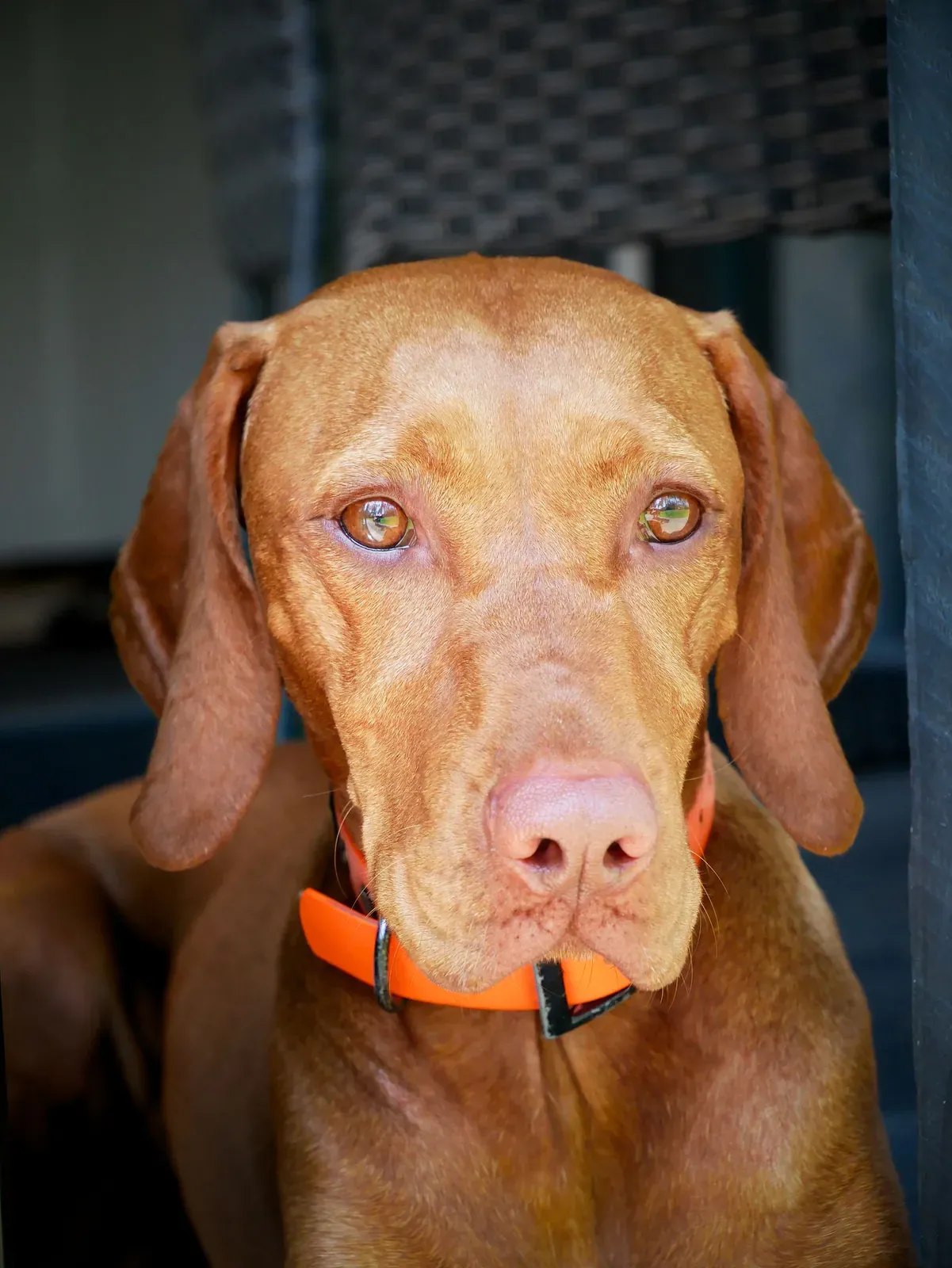
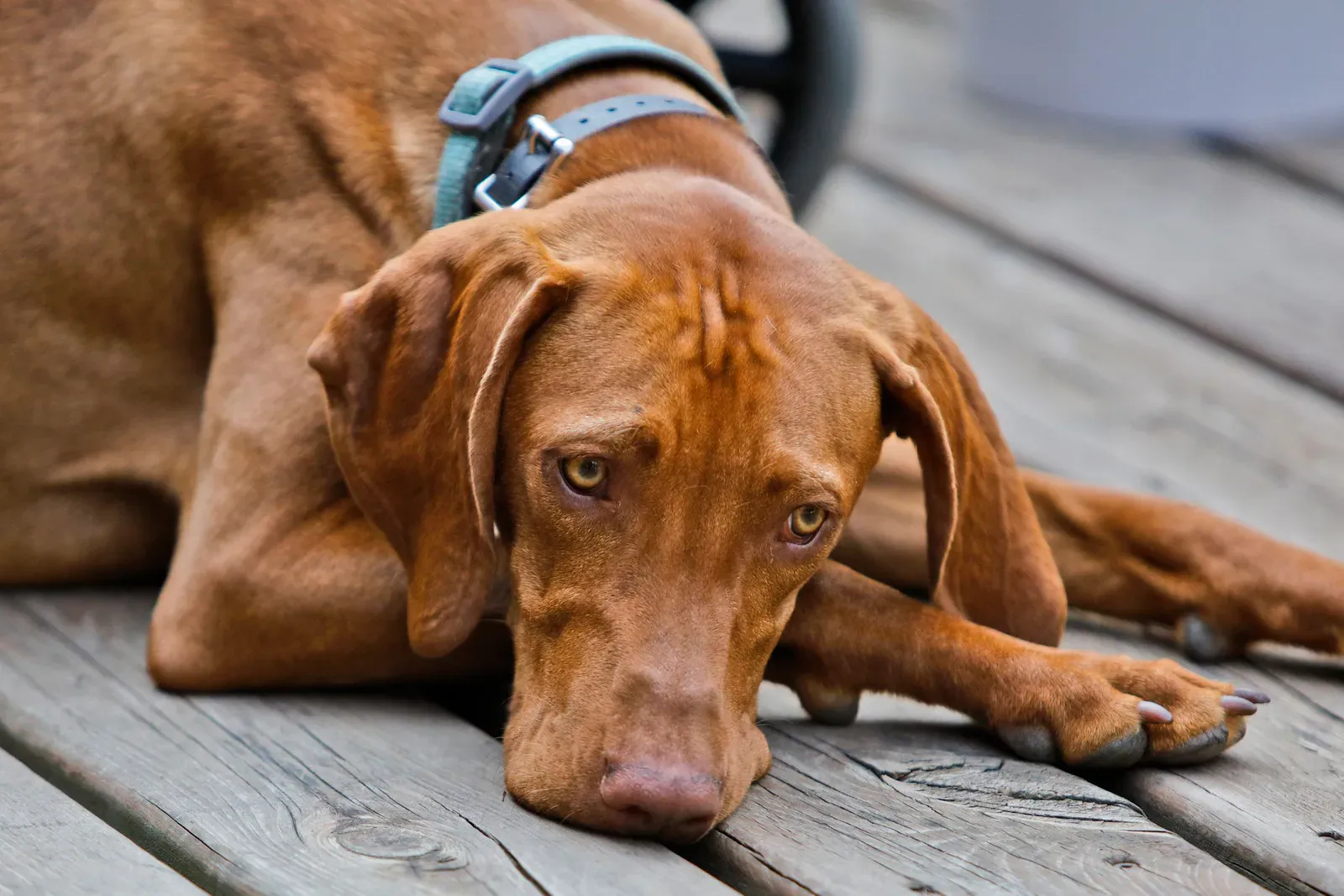
The Kennel Club notes that the standard is a guide to the ideal and that a given dog does not have to match the numbers. Colour is the most distinctive trait: the Vizsla's coat, nose, nails and eyes are meant to blend in one warm tone.
Height. The Kennel Club and AKC ranges overlap closely. The FCI text retrieved for this article did not show a height range, so it is not quoted here.
Coat. The smooth coat gives little protection against cold or wet. This matters in daily life more than the standard suggests.
Temperament
 Related breedBorzoi1200 to 1650 · RussiaLate Middle Ages
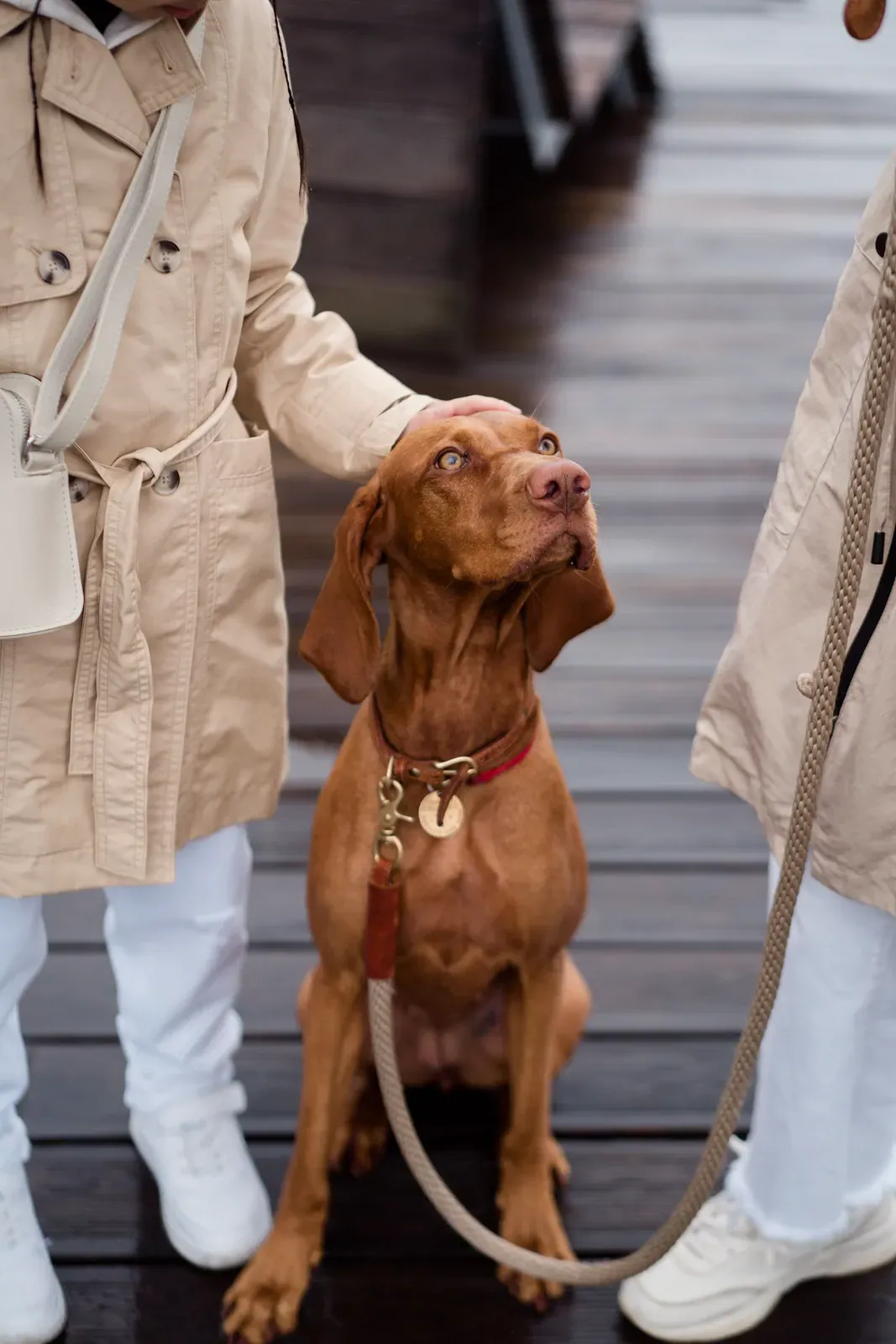
The Vizsla is affectionate, gentle, energetic and eager. Most breed guides describe it as one of the most people-oriented gundogs: it was bred to hunt close to the hunter and to work with him, and the result is a dog that watches its owner and wants to be near.
Velcro dog. The nickname is used by breed clubs and vets alike, with a warning attached: close attachment can lead to separation distress. A breed training article links the trait to the way the dogs were bred to stay within reach of the handler all day. In practice, a Vizsla often follows its person from room to room, leans against them and sleeps on the sofa. Starting early with short, calm separations helps a puppy learn that being alone is safe. No named behaviour study was found for this article, so no prevalence is given.
Energy. The breed has high energy, particularly in its first three years. Owners commonly report needing an hour or more of vigorous exercise every day, and a bored Vizsla can become destructive. One pet site gives 45 to 60 minutes of vigorous exercise, another says many owners need at least an hour of moderate exercise. Figures differ by source and by dog.
Trainability. The Vizsla is eager to please and learns fast, but it is also sensitive. Positive, reward-based training works best, and harsh correction tends to make it anxious or shut down. Without enough training and socialisation, some become overexcited or timid.
Children and other animals. A well-exercised, well-socialised Vizsla is usually a gentle family dog. Young dogs are bouncy and can knock over small children. As a bird dog, it may chase small animals; how it behaves with cats varies and depends on early exposure.
 Save

Health
 Related breedCardigan Welsh Corgi1200 to 1934 · United KingdomLate Middle Ages
Most Vizslas live healthy, active lives, and many reach their early teens. This section describes the conditions that breed clubs and the UK Kennel Club discuss most, with numbers only where a named survey gave one. The surveys below are owner surveys and club surveys, which are useful but not the same as a veterinary population study. No study has been published for the Vizsla.
| Condition | What it is | How common | What helps |
|---|---|---|---|
| Cancer, including haemangiosarcoma | Haemangiosarcoma is a tumour of blood vessel cells, often in the spleen or heart; it can cause sudden internal bleeding | UK Hungarian Vizsla Club 2004 survey: cancer was the leading cause of death, about 1 in 3 deaths (28.9 percent). 2014 survey of 49 deaths: unspecified cancer and liver tumour each about 1 in 7 deaths (14.3 percent). Vizsla Club of America 2023 health survey: about 1 in 6 Vizslas died from haemangiosarcoma over the preceding 10 years (a club survey, not a peer-reviewed study) | Regular vet checks; report lumps, tiredness, pale gums or sudden collapse early; breed clubs fund research and collect data |
| Epilepsy | Repeated seizures with no other cause found | The UK Kennel Club's 2021 plan lists epilepsy as a principal concern, based on US and Australian studies. No named prevalence found | Ask breeders about seizures in the line; a vet manages the dog with medicine; the UK Hungarian Vizsla Club runs epilepsy research |
| Immune-mediated disease | The immune system attacks the dog's own tissues | Listed as a principal concern by the Kennel Club plan; no named prevalence found | Early vet care |
| Vizsla inflammatory polymyopathy | An inflammatory muscle disease | Listed as a principal concern by the Kennel Club plan; no named prevalence found | Vet diagnosis; ask breeders about family history |
| Hip dysplasia | A loose or misshapen hip joint | Listed by the Kennel Club plan; no named prevalence found | Hip scoring of parents; lean weight |
| Glaucoma | Raised pressure in the eye | Listed in breed club summaries; no named prevalence found | Eye tests of parents; early vet care for a red or painful eye |
Cancer is the most documented concern. A literature review by Dobson (2013) reported that 46.7 percent of the Vizslas in its small sample of 15 died of cancer, but with so few dogs the estimate has a wide margin of error (95 percent confidence interval 21.4 to 71.9 percent), so it should not be read as a breed rate.
General health in the UK survey. In the Hungarian Vizsla Club's 2014 morbidity survey, health information was reported for 441 live dogs, and 229 of them (51.9 percent, about 1 in 2) had no reported conditions.
Life span. The same survey recorded 49 deaths with a median age of 11 years. That figure comes only from dogs that had died, which tends to pull a median down, so it is not a measure of how long a living Vizsla can expect to live. Breed sources gives 12 to 14 years as a typical range.
What helps in practice
- Ask breeders about cancer, epilepsy and immune disease in the pedigree.
- Ask for hip scores and eye test results for both parents.
- Keep the dog lean and fit.
- Learn the signs of a problem: sudden weakness, pale gums, a swollen belly or any seizure need a vet the same day.
 Save

Living with a Vizsla
 Related breedDogue de Bordeaux1300 to 1896 · FranceLate Middle Ages
A Vizsla is an affectionate, athletic indoor-outdoor companion. It is happiest when it can run every day and then curl up next to its people.
| Daily reality | Rating | Why |
|---|---|---|
| Exercise per day | High | An athletic gundog; owners report an hour or more of vigorous activity |
| Training needs | Medium | Eager and quick, but sensitive and easily excited; reward-based training |
| Grooming | Low | Short smooth coat; a weekly rub down with a soft brush |
| Shedding | Medium | Short hair that sheds year round; fine and noticeable on fabric |
| Barking | Varies | Not known as a barker, but a bored or lonely dog may vocalise |
| Time alone | Poor | The "velcro" bond; separation distress is a known risk |
| Children | Good | Gentle and playful when exercised; young dogs are bouncy |
| Other dogs | Good | Usually sociable if socialised early; varies |
| Cats and small pets | Varies | A bird dog with prey drive; depends on early exposure |
| Flat living | Poor | High energy; only works with a lot of outdoor time |
| Heat tolerance | Fair | Short coat, but active and lean; avoid hard exercise in peak heat |
| Cold tolerance | Poor | Short coat with little undercoat; a coat helps in a cold, wet climate |
| First-time owner fit | Fair | Easy to train but needs time, company and exercise |
A great fit if
- You work from home or can take the dog with you most of the day.
- You run, hike or cycle and want a partner for it.
- You enjoy a very close, affectionate dog that follows you around.
- You like training, nose work, field work or dog sports.
Think twice if
- The house is empty for long hours on workdays.
- You want a calm, low-key dog that is content with a short walk.
- You dislike a dog that leans, follows and wants to be on the sofa.
- You live somewhere cold and wet with no plan for a coat and indoor time.
Before you get one
- Health tests. Ask the breeder for hip scores, eye test results, and the family history of cancer, epilepsy and immune disease. Ask to see the original certificates.
- Puppy or adult rescue. Breed rescues exist and often place adults whose energy and attachment are already known. An adult can suit a first-time owner who wants a clear picture.
- First year. Plan for puppy classes, calm short separations from the first weeks, steady exercise on soft ground while the dog grows, and a lean body weight.
Similar breeds to consider
- Wirehaired Vizsla. The same character with a harsher coat that protects better in cold and wet weather.
- German Shorthaired Pointer. A close DNA relative; a heavier build with a similar need for exercise.
- Weimaraner. A close-bonded pointing breed with a short coat and a high need for company.
- Pointer. A leaner pointing breed with a more independent approach, still a runner.

Vizsla fun facts
 Related breedEnglish Mastiff1300 to 1880 · United KingdomLate Middle Ages
- The word "vizsla" is Hungarian and is used for a pointing dog; breed sources connect it to the verb "to search".
- The tenth-century Magyar hunter and his Vizsla in stone carvings is a breed tradition, not a confirmed record.
- After the Second World War, some Vizslas left Hungary with refugees and became the base for the breed abroad.
- The Wirehaired Vizsla was first shown in 1943 and had registered about 60 dogs by 1944.
Frequently asked questions
Are Vizslas good family dogs?
They can be, in active homes that give them company and exercise. They are gentle and affectionate, but young dogs are bouncy.
How big is a Vizsla?
The UK Kennel Club gives 57 to 64 cm for dogs and 53 to 60 cm for bitches, and a weight of 20 to 30 kg.
How long do Vizslas live?
Breed sources gives 12 to 14 years. A UK club survey of dogs that had died recorded a median of 11 years.
Why are Vizslas called velcro dogs?
Because they stay very close to their owners and follow them around. The trait is linked to their history as close-working hunting dogs, and it can lead to separation distress.
What health problems do Vizslas have?
Cancer, including haemangiosarcoma, is the most documented, along with epilepsy, immune-mediated disease, inflammatory polymyopathy and (UK Kennel Club plan, 2021).
What is the difference between a Vizsla and a Wirehaired Vizsla?
The Wirehaired Vizsla has a harsher, thicker coat and a more solid build. It was developed in the 1930s by crossing the Vizsla with the German Wirehaired Pointer, and it is a separate breed.
Read next
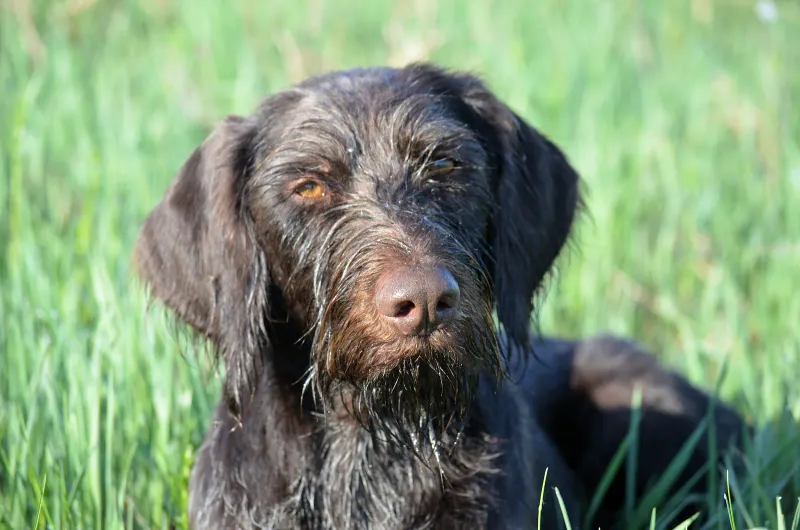 Closest DNAGerman Wirehaired Pointer21.5 Mb shared
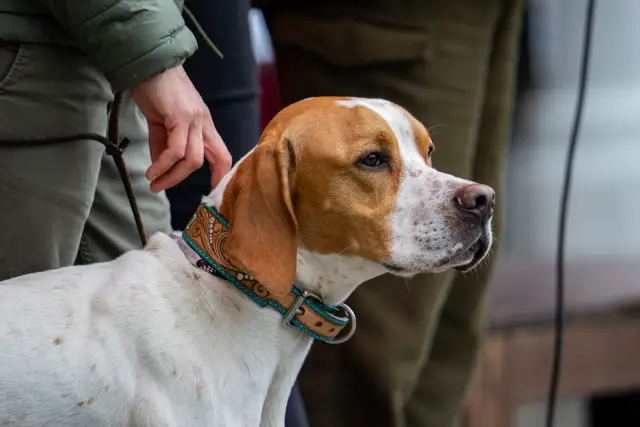 FamilyPointer SetterThe whole family
 Adopt a dogDog Shelters in AustriaFive big cities checked, more shelters being added
Sources (15)
- Fédération Cynologique Internationale, Rövidszőrű Magyar Vizsla (Hungarian Short-haired Pointer), standard no. 57.
- American Kennel Club, Vizsla breed standard, as reproduced in Showsight magazine.
- The Kennel Club (UK), Hungarian Vizsla breed standard.
- Canadian Kennel Club, Vizsla (Smooth) breed standard.
- Parker H.G. et al., "Genomic analyses reveal the influence of geographic origin, migration, and hybridization on modern dog breed development", Cell Reports, 2017.
- The Kennel Club (UK), Breed Health and Conservation Plan for the Hungarian Vizsla, 2021.
- Hungarian Vizsla Club (UK), health survey reports, 2004 and 2014 (morbidity and mortality data).
- Hungarian Vizsla Club (UK), breed history page and health pages.
- Vizsla Association (UK), history of the Vizsla.
- Vizsla Club of America, 2023 health survey summary (haemangiosarcoma).
- Dobson J.M., literature review of breed predispositions to cancer in dogs, 2013.
- Boggs, Vizsla history, 2000 (as cited in breed history summaries).
- Illustrated Vienna Chronicle, falconry chapter, 14th century (as cited in breed histories).
- Dogs Queensland, Hungarian Wirehaired Vizsla breed profile.
- Fogle B., The New Encyclopedia of the Dog, 2009.