
It was built to hunt, point and retrieve over a long working day, first on larger game and later on birds and small game. Its colour earned it the nickname "grey ghost". Today it is a hunting dog, a sport dog and a companion, and it suits owners who can give it hours of exercise, firm and kind training and a lot of company. The usual story of its origin at a grand duke's court is a tradition, not a documented fact, and this article labels it that way.
Weimaraner quick facts
 Related breedDalmatian1700 to 1890 · CroatiaEarly Modern Era
- Closest DNA relatives
- German Shorthaired Pointer, German Wirehaired Pointer, Wirehaired Pointing Griffon, Large Munsterlander
- Country of origin
- Germany (Weimar, Thuringia)
- Period of development
- About 1810 to 1897 (atlas data); German club organised in 1897
- Original job
- Hunting large game, then birds and small game; pointing and retrieving
- Type
- Pointing dog (FCI Group 7, Pointing dogs, standard no. 99; AKC Sporting Group; recognised by the UK Kennel Club)
- Home club
- Weimaraner club of Germany, organised at Erfurt on 20 June 1897 according to one source
- Height
- FCI: males 59 to 70 cm, females 57 to 65 cm. AKC: dogs 25 to 27 in (about 63.5 to 68.6 cm), bitches 23 to 25 in (about 58.4 to 63.5 cm)
- Weight
- FCI: males about 30 to 40 kg, females about 25 to 35 kg. The AKC standard text found gives no weight
- Coat
- Short, smooth and sleek; a long-haired variety is recognised by most clubs except the AKC
- Colour
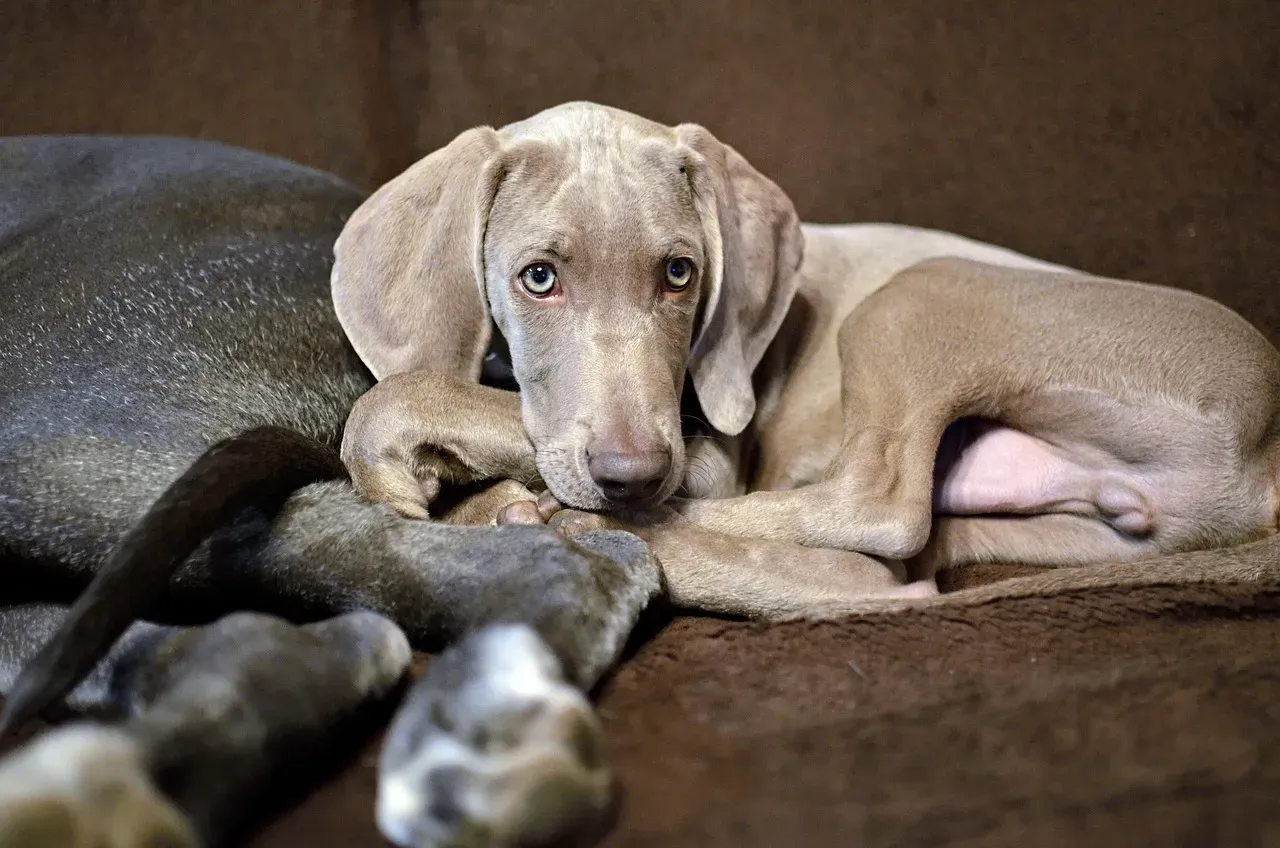
- Silver, roe or mouse grey and shades of these
- Life span
- Atlas data: 10 to 13 years. Other breed sources give 10 to 14
- DNA family
- Pointer and setter family (Parker et al. 2017)
Drawn to scale in real centimetres. Its back reaches about 64 cm, mid-thigh; its head about 81 cm, your hip.
Where it sits in the tree
Industrial Revolution · 1800 to 1849



Name and origin
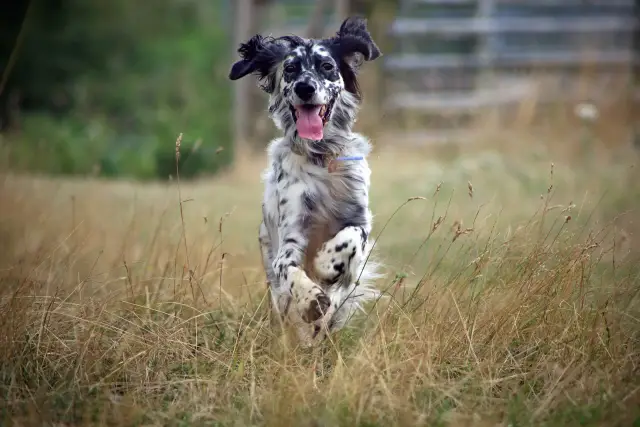 Related breedEnglish Setter1500 to 1850 · United KingdomAge of Exploration
The name. "Weimaraner" means "from Weimar", the city in Thuringia that was the seat of the Grand Duchy of Saxe-Weimar-Eisenach. The atlas data lists the older names Weimar Pointer and Grey Ghost. In German the breed is the Weimaraner Vorstehhund, a pointing dog from Weimar.
The legend. The common short history says the breed was created at the court of Karl August, Grand Duke of Saxe-Weimar-Eisenach, in the early 19th century, where nobles kept the grey dogs for hunting. The Kennel Club in the UK repeats a version of this, saying the breed was created at the German court of Karl August of Weimar. Wikipedia says it is "sometimes claimed" that the dogs were kept at his court. The Weimaraner Club of America's own history piece, "Finding Our Roots", calls the usual account a few short paragraphs and treats it as something to test against evidence. Treat the court link as a tradition. Documents that prove it are thin.
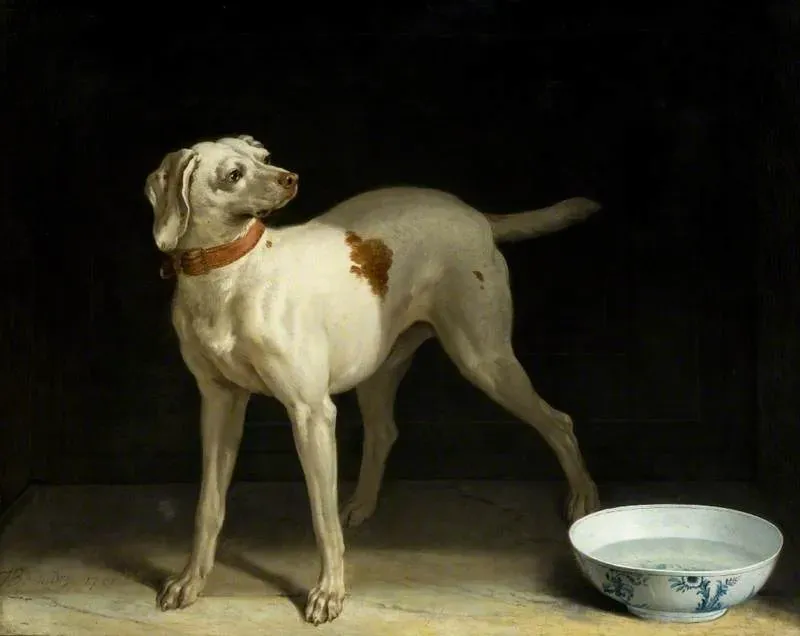
Where did the dogs come from? The sources do not agree, and none of the theories is proven. One theory points to the Chien-gris, a grey French hunting hound, or to the St. Hubert hound (whose descendant is the bloodhound). Other sources say Pointer stock was very likely introduced. Paintings by van Dyck and Oudry that show grey hunting dogs are sometimes cited as early evidence, though the Club of America piece is cautious about reading too much into them. The atlas data lists several older pointing types as ancestors, including the Old Spanish Pointer, the Burgos Pointer, the Bracco Italiano and the Spanish and Navarre hounds, and links the Weimaraner to the German Shorthaired Pointer as a variety of it.
 Save

History
 Same eraIrish Setter1700 to 1886 · IrelandEarly Modern Era
Court hunting dog to bird dog
Early Weimaraners were used on big game. As big game declined across Germany, the breed shifted toward birds and small game, and this change is reported consistently across sources. By the time the breed was organised, it was an all-purpose gundog: a dog that finds game by scent, points it, follows a wounded animal and retrieves, which British writers call a hunt, point, retrieve (HPR) dog. The German Shorthaired Pointer was developed in the same period and for a similar job. The two breeds stayed closely linked, and from 1879 the grey dogs were treated as a blue variant of the German Shorthaired Pointer according to Wikipedia.
The German club and recognition
The dates for formal recognition vary by source:
- The Weimaraner Club of America material says Germany recognised the Weimaraner as a breed in 1896.
- Another source says the Weimaraner Club of Germany was organised at Erfurt on 20 June 1897, and a French breed article also dates the club to 1897.
- Wikipedia gives 1879 as the year dogs began to be treated as a variety of the German Shorthaired Pointer.
These dates do not fully agree, so treat all of them as approximate. What is clear is that by the late 1890s a club of amateur sportsmen existed to protect the breed's future, and that it controlled who could breed and who could own the dogs.
Restricted to members, and the road to America
The German club kept the breed under tight control. According to the Weimaraner Club of America's history, the club's rules barred non-Europeans from owning the dogs. Howard Knight, an American sportsman, joined in 1928 through a German contact, Fritz Grossman, and was accepted as a member. He imported the first Weimaraners to the United States in 1929. Accounts then differ:
- Several sources say the first dogs he received were sterilised, which stopped him from breeding them. One says the club sent two sterilised dogs in October 1929, another says they were sterilised by radiation before leaving Germany, and a third says only the female was sterile.
- The foundation stock for American breeding came later. One Club of America source says Knight obtained Mars aus de Wolfsriede, Dorle von Schwarzen Kamp and Aura von Gaiberg in 1933. The club's 2016 honoree document says the German club sent three bitches and a male puppy in 1938. The two accounts differ on the date.
- The AKC recognised the breed in December 1942, according to the Club of America, with a first appearance at Westminster in 1943. Other sources give 1942 or 1943.
How long the restriction on exports lasted is not settled in the sources seen for this article. They show that the German club's rules restricted ownership by non-Europeans in the late 1920s and that exports were hard to arrange in the 1930s, but they give no end date. Do not read the restriction as a specific "until the 1950s" rule.
The grey ghost
The nickname "grey ghost" refers to the ghostly coat and eye colour and to the breed's stealthy hunting style. One breed article offers a coat-chemistry explanation (the grey is a diluted chocolate), while a blog says the name was popularised in the mid-20th century by American hunters, which is not documented. The origin of the nickname is not documented.
Wegman and pop culture
The American artist William Wegman made Weimaraners famous outside hunting circles. His first Weimaraner was named Man Ray after the Surrealist artist. One source dates the dog's arrival to 1970, when Wegman was teaching at California State University, Long Beach. Another magazine account says the photography began by accident, when Wegman was filming for a video work and the dog kept getting in the way, and he noticed how the grey coat looked on black-and-white film. The Fraenkel Gallery says the collaboration began in the late 1970s and continued until the dog died in 1982 at age 13. His second Weimaraner was Fay Ray, a name that plays on the actress Fay Wray; the museum accounts do not fully agree on when she arrived. The photographs are art, not breed advice, and they say nothing about how a Weimaraner behaves at home.
 Save
Relatives and DNA
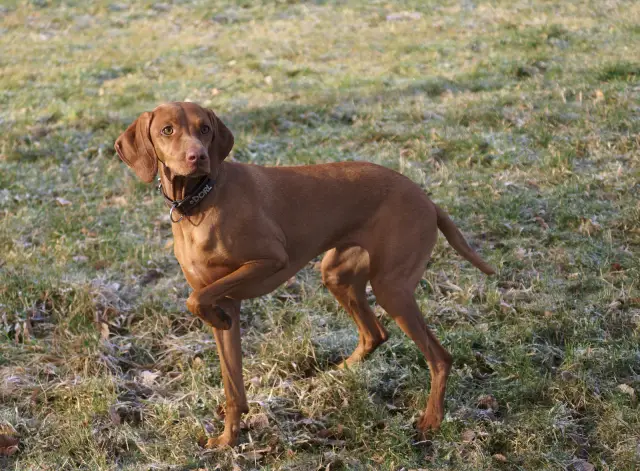 Same familyVizsla1350 to 1935 · HungaryLate Middle Ages
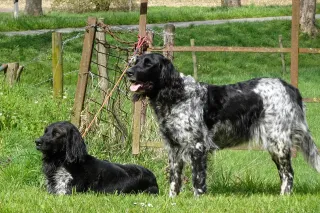
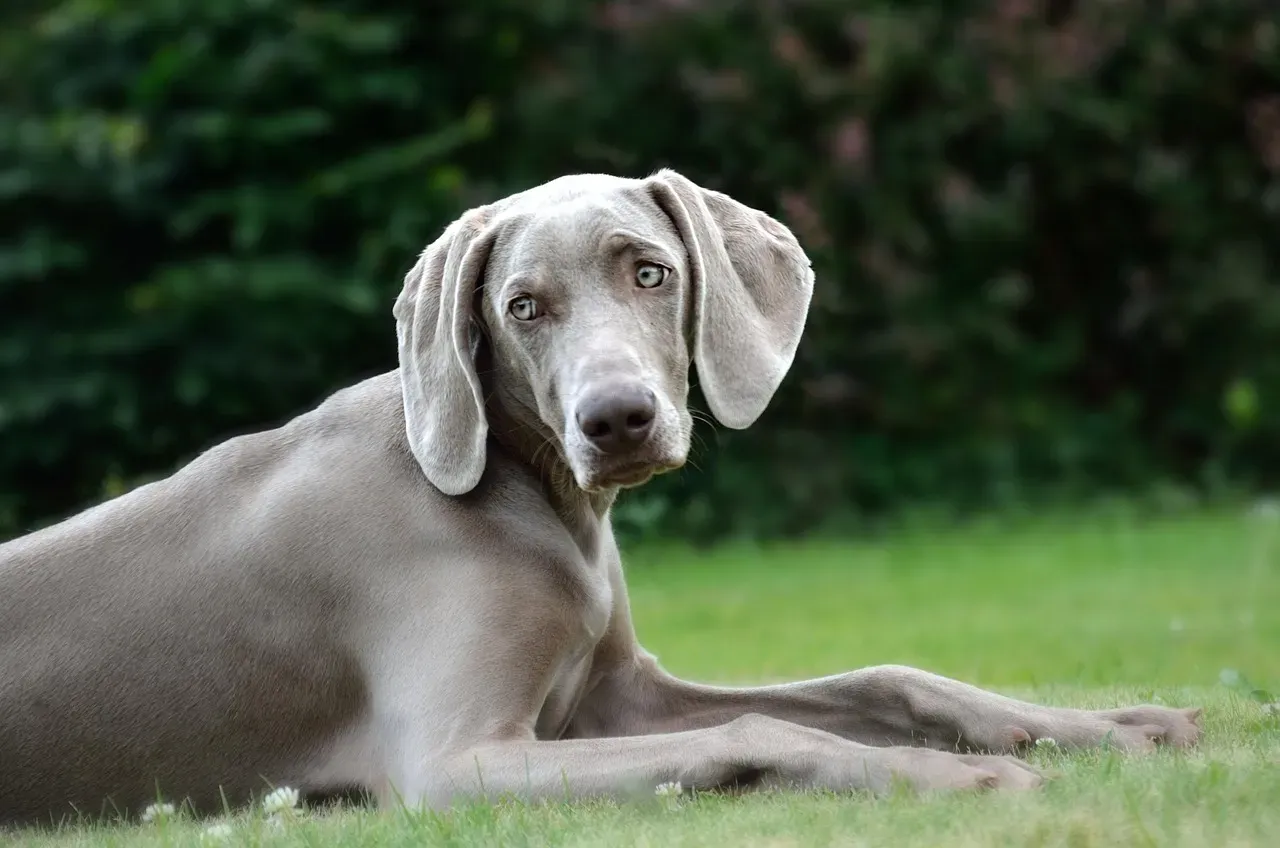
In the 2017 study by Parker and colleagues, the Weimaraner sits in the Pointer and Setter family. Here "family" means a DNA , not a kennel club group. The atlas data records the strongest haplotype sharing with the German Shorthaired Pointer (about 18.7 ), followed by the German Wirehaired Pointer (about 15.6 Mb), the Wirehaired Pointing Griffon (about 11.9 Mb) and the Large Munsterlander (about 11.9 Mb). The sharing numbers are small compared with the numbers for some spaniel pairs, and they show a family link rather than a direct line.


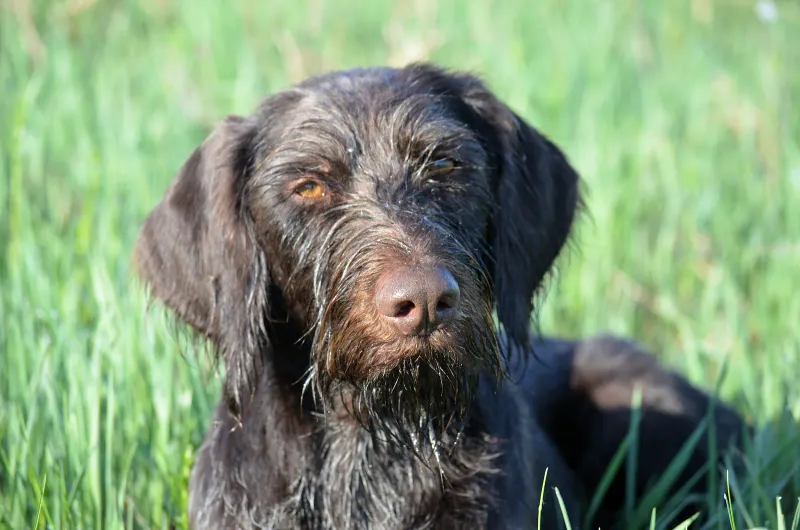

- Weimaraner and German Shorthaired Pointer
- Weimaraner and German Wirehaired Pointer
- Weimaraner and Wirehaired Griffon
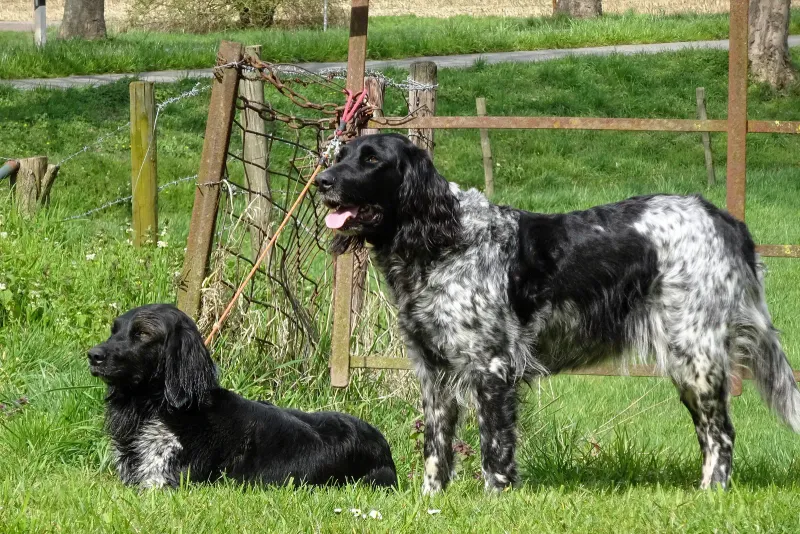 Weimaraner and Large Munsterlander
The knowledge base lists the German Shorthaired Pointer as the parent breed with medium confidence. It lists the Dobermann and the Slovak Rough-haired Pointer as descendants, and the German Wirehaired Pointer and the Bull Arab as siblings. Whether the Weimaraner is a separate breed that grew from the GSP, or a colour variant that was split off, is a question the sources answer differently, which is why the 1879 and 1896 dates differ. For the wider group, see Pointer-Setter.
 Dobermanndescendant
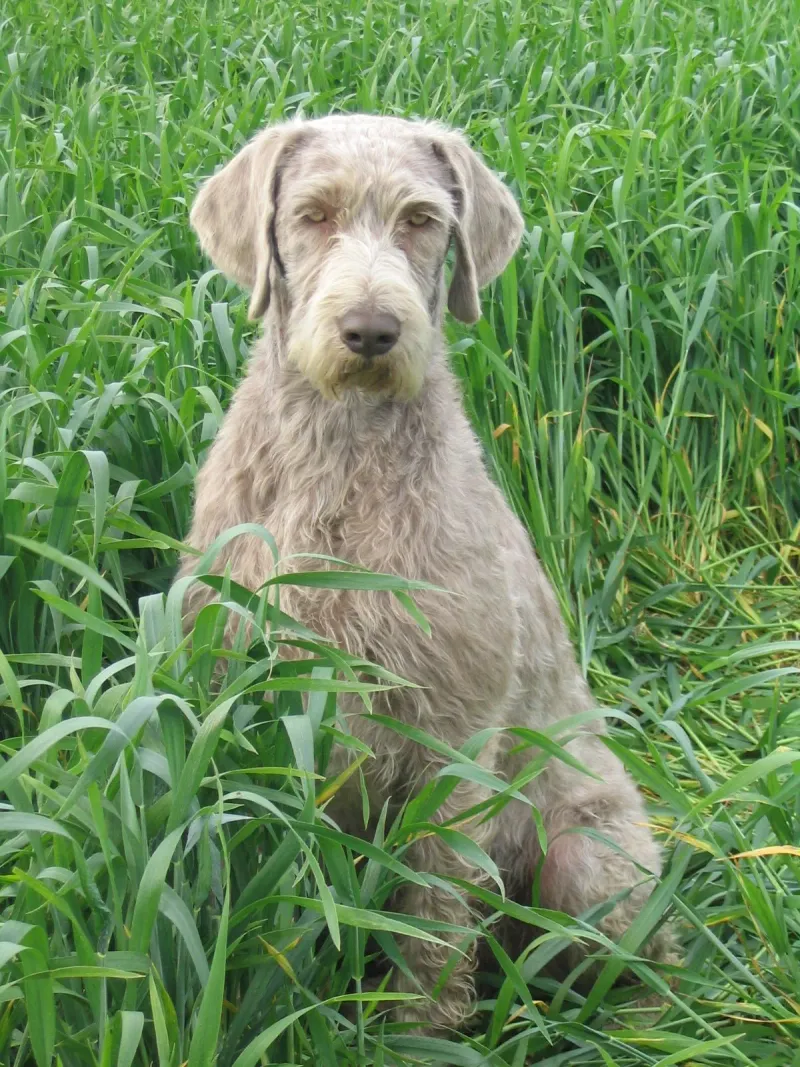 Slovak Rough-haired PointerdescendantDobermanndescendantSlovak Rough-haired Pointerdescendant
 Save
Sister breeds · 2
- German Wirehaired Pointer1880 to 1902
- Bull Arab1970 to 1990
Descend from it · 2
- DobermannGermany
- Slovak Rough-haired PointerSlovakia
- German Shorthaired Pointer18.7 Mb 0.8%
- German Wirehaired Pointer15.6 Mb 0.7%
- Wirehaired Pointing Griffon11.9 Mb 0.5%
- Large Münsterländer11.9 Mb 0.5%
Source: Parker et al. 2017. Percent of the whole genome.
The breed standard
 Looks relatedAustralian Cattle Dog1840 to 1903 · AustraliaIndustrial Revolution
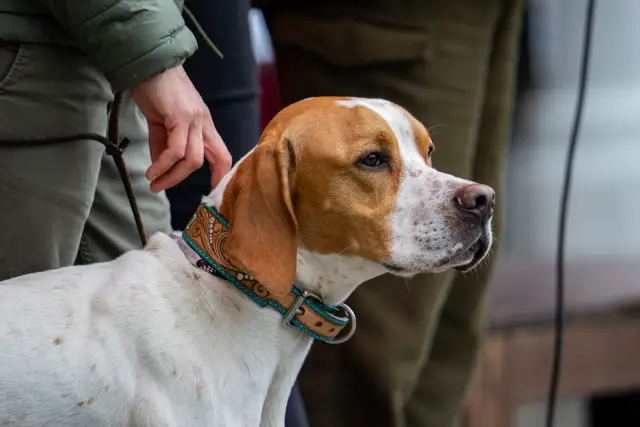
A is the written ideal for a breed that kennel clubs judge dogs against. The FCI and AKC standards agree on a medium-large, athletic dog with a grey coat.
| Trait | FCI (no. 99) | AKC |
|---|---|---|
| Height, dogs | 59 to 70 cm | 25 to 27 in (about 63.5 to 68.6 cm) |
| Height, bitches | 57 to 65 cm | 23 to 25 in (about 58.4 to 63.5 cm) |
| Disqualifying height | Not quoted | Dogs under 24 in or over 28 in; bitches under 22 in or over 26 in (about 61 to 71 cm and 56 to 66 cm) |
| Weight | About 30 to 40 kg (males), 25 to 35 kg (females) | No weight in the standard text seen |
| Colour | Silver, roe or mouse grey and shades of these; head and ears generally paler; only small white markings on chest and toes | A medium-sized grey dog; disqualified for a distinctly blue or black coat, or white other than a spot on the chest |
| Coat | Two varieties in the FCI standard: short and long (the copy seen is titled "2 Varieties") | A distinctly long coat is a disqualification |
The FCI copy seen was the 2016 version of the standard, which lists the 2015 FCI revision as its source, so it may not reflect later changes. The AKC standard was approved in 1971. The UK Kennel Club standard was not reached in the searches done for this article, so it is not shown here.
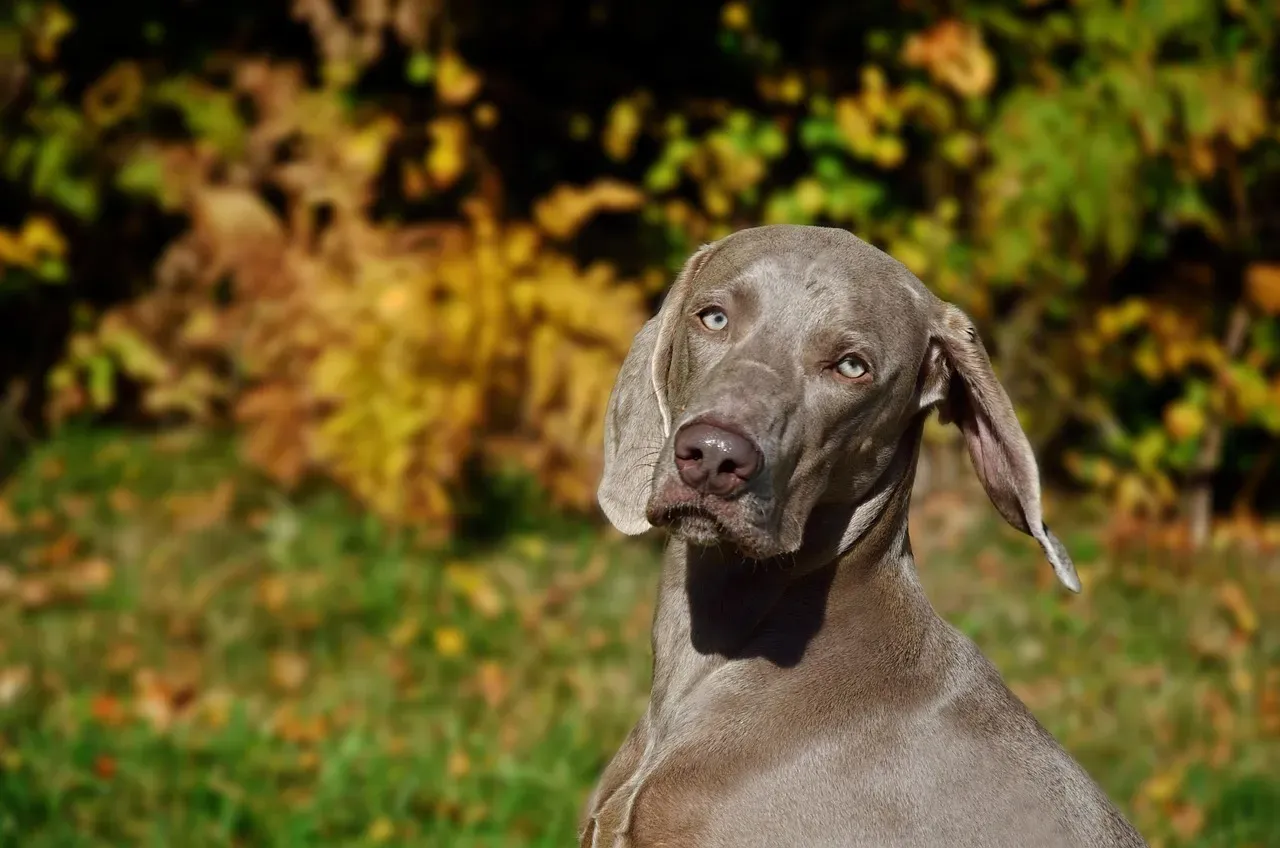
Colour. All the standards describe a grey that ranges from mouse grey to silver. Wikipedia lists the shades as mouse-grey, roe-grey and silver-grey. Distinctly blue or black coats are penalised or disqualified.
Long coat. A long-haired variety is recognised by most kennel clubs around the world except the AKC, according to Wikipedia. The AKC lists a distinctly long coat as a disqualification, which fits its position.
 Save

Temperament
 Related breedAustralian Shepherd1840 to 1957 · United StatesIndustrial Revolution
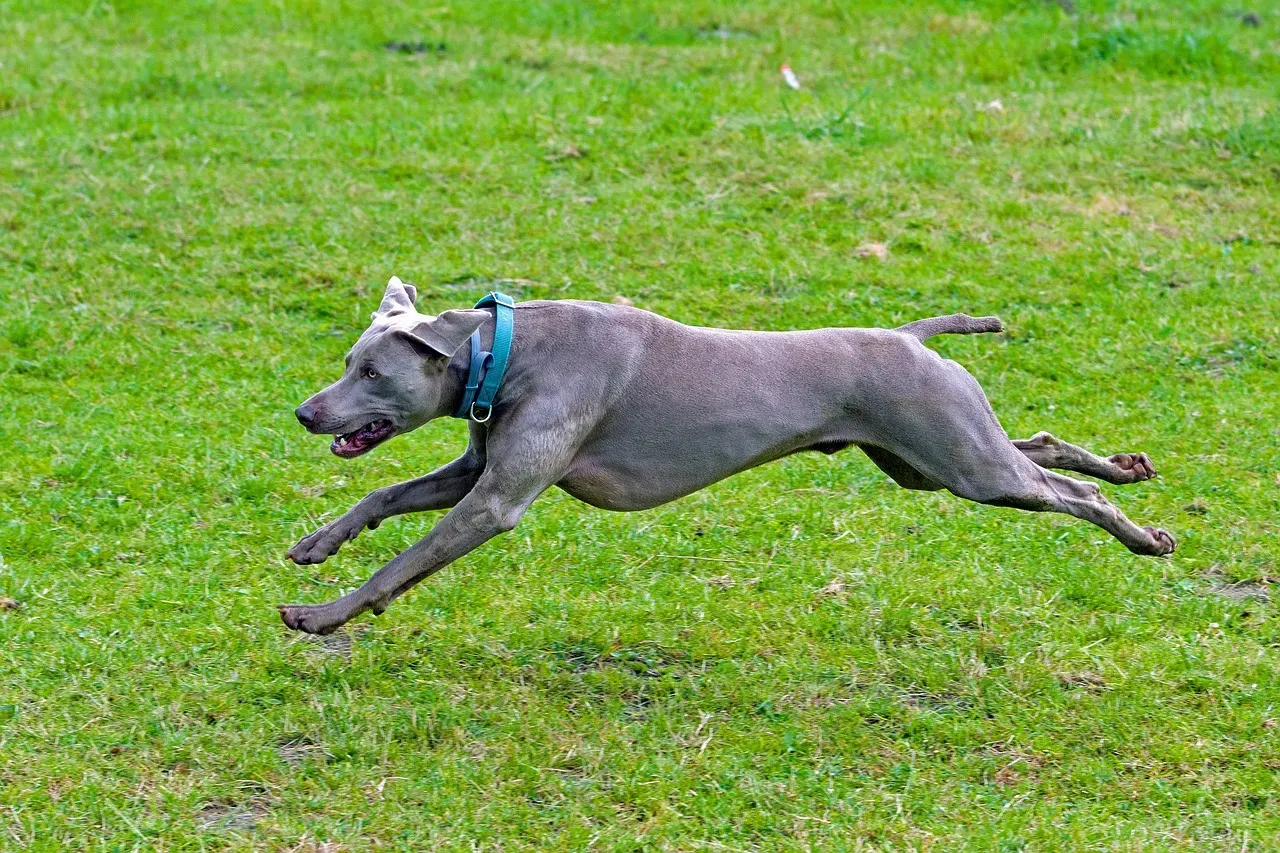
The Weimaraner is a high-energy, intelligent, people-focused hunting dog. It was bred to work close to the hunter, and a dog that does not get mental work can fix on its owner and invent its own work.
Working drive. A Weimaraner needs a job. Scent work, gundog training, tracking, running with a cyclist or a regular off-lead field session are all ways to meet this need. The Weimaraner Club of America says dogs without mental stimulation get overly fixated on their owners.
Training. The Weimaraner Club of America notes that these dogs are very intelligent and need outlets for their capabilities. No study seen here rates the breed's trainability against others.
With children and other pets. The breed is large and bouncy, so supervision with small children matters. As a bird-hunting and game dog it may chase cats and small animals, though no study seen here quantifies prey drive for the breed.
Separation anxiety
Weimaraners have a reputation for not coping with being left alone. The Weimaraner Club of America's public education sheet calls separation anxiety a common problem in the breed. It lists genetics, litter rearing, dominance, submission, boredom and stress as possible contributing factors, and it says under-stimulated dogs can become fixated on their owners in ways that produce the problem. A training site ties the tendency to the breed's origin as a close-working hunting dog, which is a reasonable theory, not study data.
What the evidence does not show is how much more common it is in Weimaraners than in other breeds. The searches done for this article found no peer-reviewed study that compares separation anxiety across breeds, only breed-club guidance and owner stories. The practical lesson is calm: plan the first months carefully, teach short absences in small steps, give plenty of exercise before alone time, and talk to a vet or a qualified behaviourist at the first signs of distress rather than waiting.
 Save

Health
 Related breedBouvier des Flandres1800 to 1912 · Belgium, FranceIndustrial Revolution
Many Weimaraners live healthy lives. This section lists what the best evidence shows, what breeders screen for and what owners can watch for. Lifespan sources differ: the atlas data gives 10 to 13 years, and other breed guides give 10 to 14, so a range of about 10 to 13 years is a fair expectation.
| Condition | What it is | How common | What helps |
|---|---|---|---|
| Bloat (gastric dilatation-volvulus, GDV) | The stomach fills with gas and can twist | Among the higher-risk breeds in several studies; no breed-specific "1 in N" figure was found | Feed set meals, avoid hard exercise around meals, know the signs, preventive stomach tacking if your vet advises it |
| A loose-fitting hip joint that can lead to arthritis | Listed as a concern by the PDSA; no prevalence figure found | Hip scoring of breeding dogs (BVA/Kennel Club hip scheme; OFA or PennHIP in the US), lean weight | |
| Autoimmune thyroiditis | An immune attack on the thyroid | Included in the breed's CHIC test list; no prevalence figure found | Thyroid screening of breeding dogs |
Bloat
Bloat, or GDV, is the health topic most often linked with the Weimaraner, and the breed's deep chest is part of the reason. Three studies in the sources seen support that:
- A 1994 case-control analysis of risk factors by Glickman and colleagues, using veterinary database records, listed the Weimaraner second among breeds with the highest GDV risk, with an odds ratio of 4.6 (95% confidence interval 2.3 to 9.2). The Great Dane was first at 10.0, and the Saint Bernard (4.2), Gordon Setter (4.1) and Irish Setter (3.5) followed.
- A five-year prospective study from Purdue led by Glickman and published in 2000 enrolled dogs from eleven large and giant breeds, including the Weimaraner. A teaching slide set reproduces a breed risk-ratio table from it, but the Weimaraner figure there could not be checked against the original paper, so it is not quoted here.
- A UK study of pedigree dogs by Evans and colleagues, on mortality and morbidity from GDV, listed the Weimaraner among the breeds at greatest risk of GDV morbidity, with the Grand Bleu de Gascogne, bloodhound, otterhound and Irish setter.
An odds ratio of 4.6 means the breed had about 4.6 times the odds of GDV compared with the reference group in that study, not a 1 in N risk for any one dog. No study seen here gives a lifetime figure for the Weimaraner alone, so none is given. Risk factors reported in the literature include being a large or giant breed with a deep, narrow chest, being purebred and having a first-degree relative with GDV. If your dog has a swollen belly, retches without producing anything, drools or seems in pain, it is an emergency and needs a vet at once.
Hips and other tests
The PDSA lists hip dysplasia among Weimaraner concerns and recommends that breeding dogs are screened through the BVA/Kennel Club hip scheme. The Weimaraner Club of America's CHIC profile for the breed lists hip evaluation through OFA or PennHIP (minimum test age 24 months for OFA), autoimmune thyroiditis screening and genetic tests. Ask a breeder to show these results for both parents.

Living with a Weimaraner
 Related breedBulldog1835 to 1875 · United KingdomIndustrial Revolution
| Daily reality | Rating | Why |
|---|---|---|
| Exercise per day | High | All-purpose gundog; no source seen sets a minute figure |
| Training needs | High | Intelligent and strong-willed; needs outlets for its mind (Weimaraner Club of America) |
| Grooming | Low | Short, sleek coat |
| Shedding | Medium | Short coat; evidence thin |
| Barking | Varies | Depends on training and the individual |
| Time alone | Poor | Separation anxiety is called common in the breed by the Weimaraner Club of America |
| Children | Varies | Large and bouncy; supervision matters |
| Other dogs | Varies | Depends on socialisation |
| Cats and small pets | Varies | Hunting dog; depends on early exposure |
| Flat living | Poor | Large, active dog that needs space and daily outdoor work |
| Heat tolerance | Fair | Light short coat; no source rates it, so exercise in cooler hours |
| Cold tolerance | Fair | Thin, short coat; no source rates it |
| First-time owner fit | Fair | Rewarding but demanding; needs training support |
 Save
 Save
A great fit if
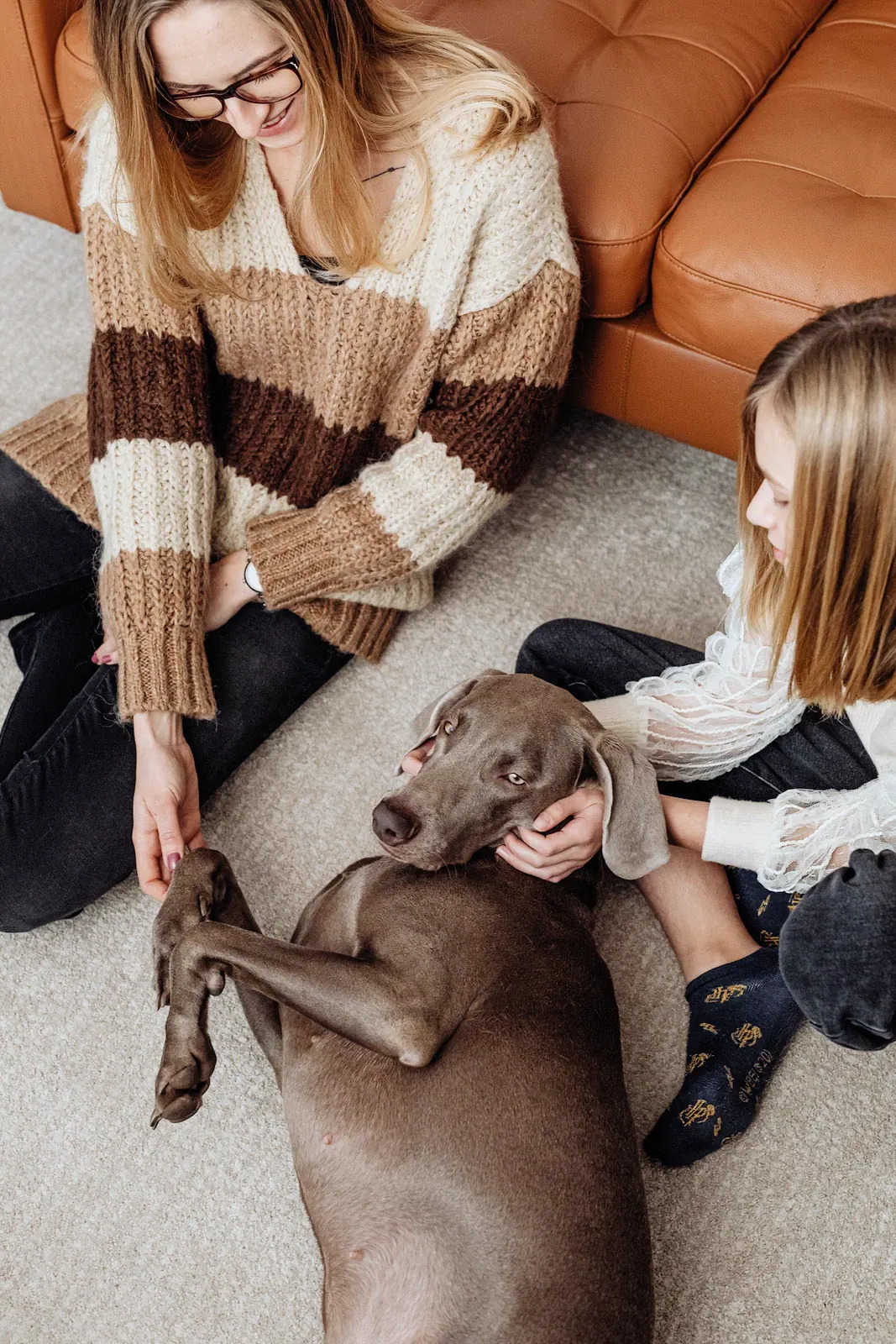
- You are active outdoors and can give the dog long daily exercise.
- You are at home most of the day, or have a household where someone is often there.
- You enjoy training and want a dog to work with, whether in the field or in a sport.
- You have a secure garden and can follow a careful feeding routine.
Think twice if
- You work long hours away from home and the dog would be alone.
- You live in a small flat without easy access to open space.
- You want a quiet, low-energy pet.
- You have cats or small pets and cannot manage a dog with hunting instincts.
Before you get one
- Health tests. Ask the breeder for hip scores, thyroid screening and any breed-specific genetic test results for both parents. Ask to see the original certificates.
- Puppy or adult rescue. Breed rescues exist and often place adults whose energy and separation behaviour is already known.
- First year. Plan puppy classes, short, gradual practice at being alone from the first week, and growth-friendly exercise with no forced running while joints are growing. Talk with your vet about feeding routines that suit a deep-chested breed.
Similar breeds to consider
- German Shorthaired Pointer. The closest relative in the DNA data and in history, with a similar build and drive.
- Vizsla. A short-coated pointing breed of similar build and energy.
- German Wirehaired Pointer. A sibling breed in the atlas data, with a rough, weather-resistant coat.
- Dobermann. Listed as a descendant breed in the atlas data, with a different guard-dog role.

Weimaraner fun facts
 Related breedChesapeake Bay Retriever1807 to 1918 · United StatesIndustrial Revolution
- Early restrictions. The German club's rules barred non-Europeans from owning Weimaraners in the 1920s, which slowed the breed's arrival in America.
- Sterile gift. Accounts disagree on whether one or both of the first two dogs sent to Howard Knight in 1929 were sterile.
- Man Ray. William Wegman's first Weimaraner, Man Ray, lived to age 13 and died in 1982.
- Ghost colour. The "grey ghost" nickname refers to the coat and eye colour and the breed's stealthy hunting style.
Frequently asked questions
Are Weimaraners good family dogs?
They can be in active families who can supervise play with small children, give long daily exercise and avoid leaving the dog alone for long periods.
How big is a Weimaraner?
The standard gives 59 to 70 cm for males and 57 to 65 cm for females, with about 30 to 40 kg and 25 to 35 kg. The gives 25 to 27 in for dogs and 23 to 25 in for bitches.
How long do Weimaraners live?
The atlas data gives 10 to 13 years. Other breed guides give 10 to 14.
Do Weimaraners get separation anxiety?
The Weimaraner Club of America calls it a common problem in the breed. No study found compares the breed with others, so the size of the difference is not known.
What is the biggest health risk for a Weimaraner?
Bloat (GDV) is the problem most often linked with the breed. In a 1994 study, the Weimaraner's odds ratio was 4.6, second to the Great Dane at 10.0.
Why is a Weimaraner called the grey ghost?
The name refers to its ghostly coat and eye colour and its stealthy hunting style.
Was the Weimaraner really bred for a grand duke?
That is the traditional story, linked to Karl August of Weimar, but documents are thin and the Weimaraner Club of America treats the short version as something to test.
Read next
Closest DNAGerman Shorthaired Pointer18.7 Mb sharedSister breedGerman Wirehaired Pointer1880 to 1902 Adopt a dogDog Shelters in GermanyTen big cities checked, how adoption works, what it costs
Sources (14)
- American Kennel Club, Weimaraner breed standard (approved 1971), as published by the Weimaraner Club of America.
- Another Magazine, "The American photographer has been capturing his Weimaraners for 30 years, and it all started with Man Ray".
- Evans et al., "Mortality and morbidity due to gastric dilatation-volvulus syndrome in pedigree dogs in the UK".
- Fédération Cynologique Internationale, Weimaraner, standard no. 99.
- Fraenkel Gallery, William Wegman exhibition page.
- Glickman L.T. et al., 1994, "Analysis of risk factors for gastric dilatation and dilatation-volvulus in dogs", PubMed record 8050972.
- Glickman L.T. et al., 2000, Purdue five-year prospective study of GDV in eleven large and giant breeds, Journal of the American Veterinary Medical Association.
- PDSA, Weimaraner breed information.
- Dogs Atlas breed records, Weimaraner breed data file, citing Parker H.G. et al., 2017 genome study.
- The Kennel Club (UK), Weimaraner breed page.
- Weimaraner Club of America, "Finding Our Roots", Gazette.
- Weimaraner Club of America, history documents including "200 word history" and the 2016 Laureate honoree document for Howard Knight.
- Weimaraner Club of America, public education sheet on separation anxiety, and 2021 CHIC profile.
- Wikipedia, "Weimaraner".