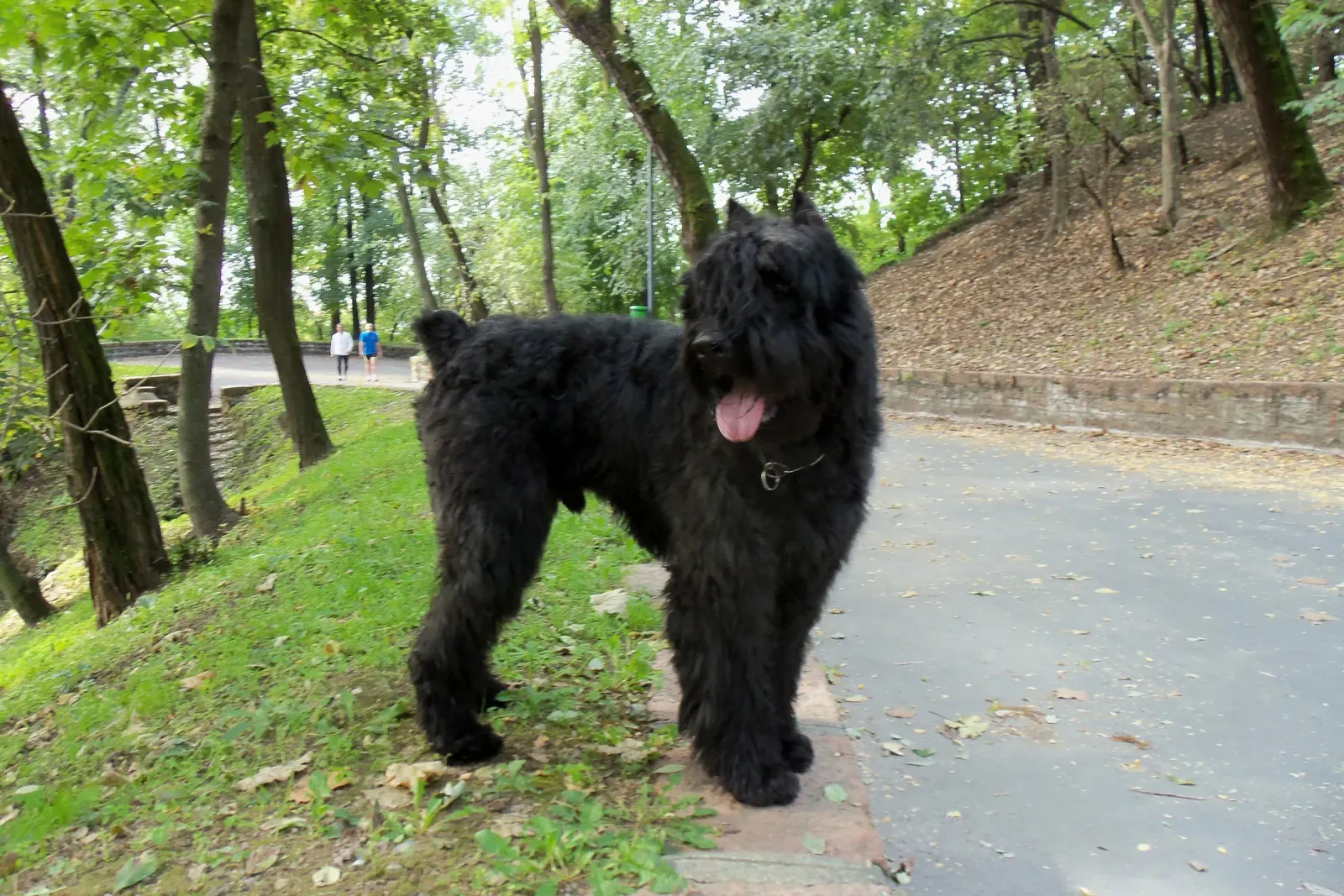
Its name is French for "cow-herder of Flanders". It was bred to drive cattle, pull carts and guard farms, and later served as an army and police dog. It is a calm, sensible, protective dog with a harsh, tousled coat and a bearded face. It suits experienced owners who can give it daily work, early socialisation and regular grooming.
Bouvier des Flandres quick facts
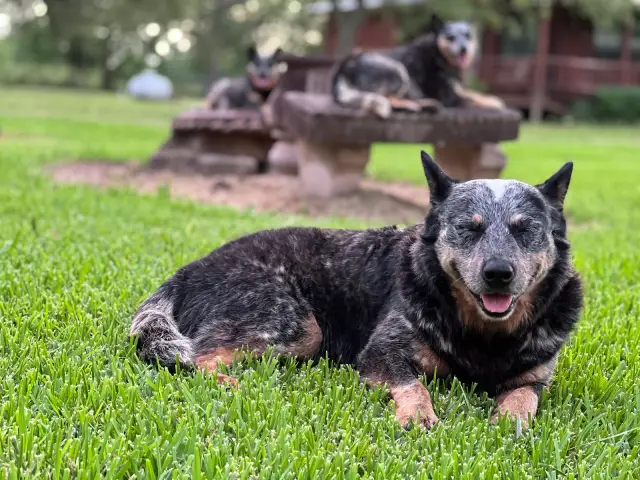 Related breedAustralian Cattle Dog1840 to 1903 · AustraliaIndustrial Revolution
- Closest DNA relatives
- Berger Picard, Belgian Tervuren, Groenendael, Belgian Malinois
- Country of origin
- Belgium and France (Flanders)
- Period of development
- About 1800 to 1912 (atlas data); first standards 1912 and 1913
- Other names
- Vlaamse Koehond, Flanders Cattle Dog
- Type
- Herding dog ( Group 1, Sheepdogs and Cattledogs, standard no. 191; Herding Group; UK Working Group)
- Height
- Royal Kennel Club: dogs 62 to 68 cm, bitches 59 to 65 cm
- Weight
- Royal Kennel Club: dogs about 35 to 40 kg, bitches about 27 to 35 kg
- Coat
- Abundant, harsh, dry, about 6 cm long, with a beard and a dense undercoat
- Colours
- Fawn to black, including brindle; a small white star on the chest allowed
- Life span
- Atlas data: 10 to 12 years
- DNA family
- Continental Herder (Parker et al. 2017)
- Descendant breed
- Bouvier des Ardennes
Drawn to scale in real centimetres. Its back reaches about 64 cm, mid-thigh; its head about 81 cm, your hip.
Where it sits in the tree
Industrial Revolution · 1800 to 1849
Name and origin
 Related breedAustralian Shepherd1840 to 1957 · United StatesIndustrial Revolution
"Bouvier" is the French word for a cattle herder, from boeuf, ox. "Des Flandres" means "of Flanders". The Dutch-language name, Vlaamse Koehond, means Flemish cow dog. The English name Flanders Cattle Dog is used as well. The atlas data lists the etymology as "French for cow-herder of Flanders".
Flanders sits across the present-day border of Belgium and France. The FCI lists both countries as the country of origin, and notes that there is no natural boundary between the two parts of Flanders. That is why national claims on the breed were argued over in the early 1900s.

History of the Bouvier des Flandres
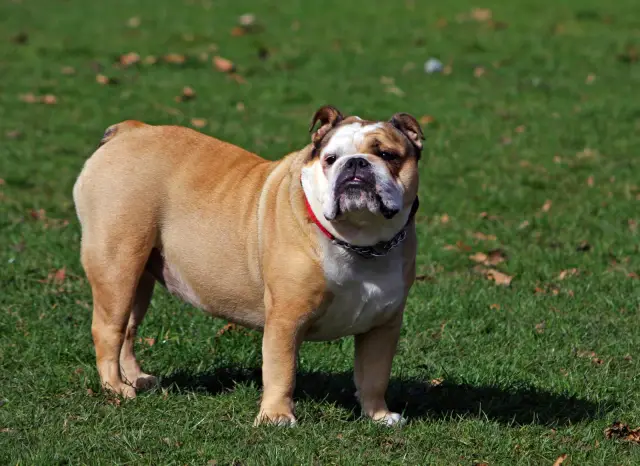 Same eraBulldog1835 to 1875 · United KingdomIndustrial Revolution
Farm dogs of Flanders
Before it was a show breed, the Bouvier was a working type. Farmers and cattle dealers in Flanders used big, rough-coated dogs to drive cattle to market, guard the farm, and pull small carts. They were not bred for a look. They were selected for strength, sense and a coat that shrugged off rain and mud.
A popular story says monks of the Ter Duinen monastery bred early dogs, crossing foreign imports such as the Irish Wolfhound and the Scottish Deerhound with local farm dogs. It is a legend that appears in breed histories rather than a documented record, and it should be read that way.
1910 to 1913: rival standards
Different local types existed, and early fanciers argued about which was correct. Three local variants are named, the Paret, the Moerman or Roeselare, and the Briard, whose differences slowed the writing of one standard. The breed appeared at a dog show in Brussels in 1910, according to a French source. Local kennel clubs recognised standards in 1912 and 1913, but they often disagreed. One account says the Roulers breeders' society drafted the 1912 standard with Belgian experts. Another credits Mr. Fontaine of the Club St Hubert du Nord. The accounts differ on who wrote it, so both are given.
The First World War and Nic
The First World War hit Flanders hard. The war nearly wiped out the breed, and the FCI standard notes its use as a messenger dog. After the war, a dog called Nic, a trench dog and a regular show winner, is regarded as the founder of the early breed. Many pedigrees go back to him.
1936 to 1965: one standard
A French club bulletin quoted in another source describes a unified standard approved on 12 March 1961 by French and Belgian commissions. The Second World War again threatened the breed, and breeders rebuilt it from a small number of dogs. The current FCI standard was published on 25 October 2000. After the war, a dog named Soprano de la Thudinie is listed as an important ancestor of the modern type.
Kennel club recognition
| Year | Event |
|---|---|
| 1912 and 1913 | Local Belgian and French clubs publish early standards |
| 1936 | Joint French-Belgian committee produces a unified standard |
| 1965 | FCI standard adopted (standard no. 191) |
The AKC places the breed in its Herding Group, and the UK Royal Kennel Club in its Working Group.
Relatives and DNA
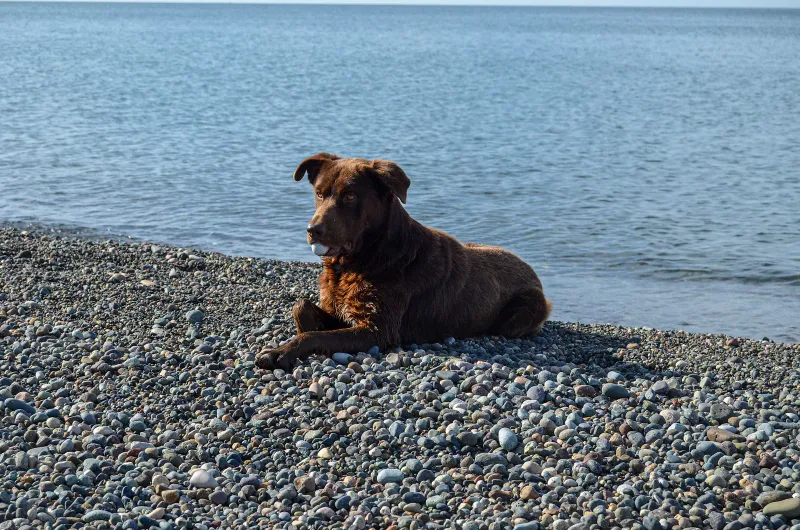 Same familyChesapeake Bay Retriever1807 to 1918 · United StatesIndustrial Revolution
The atlas data lists no fixed parent breeds. The Bouvier belongs to the Continental Herder family by DNA, which also holds the Belgian shepherds. The atlas lists one descendant, the Bouvier des Ardennes, a related Belgian cattle dog.
The Parker et al. 2017 study (Cell Reports) analysed 1,346 dogs from 161 breeds. It also measured shared , which are long stretches of identical DNA inherited from a recent common ancestor. The more () two breeds share, the closer they are likely to be.
Source: Parker et al. 2017, as recorded in this site's breed database.
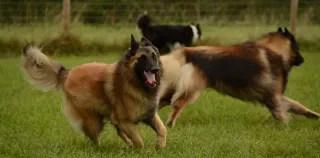
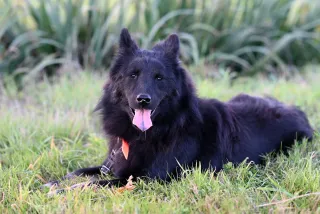
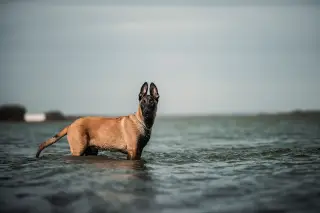
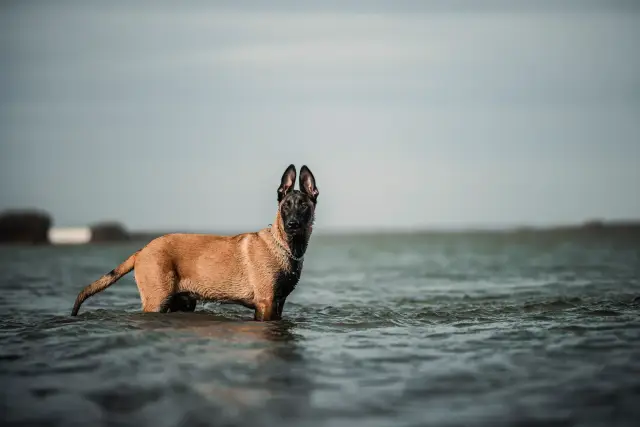
The standout is the Berger Picard, a rough-coated French sheepdog from Picardy. It shares far more DNA with the Bouvier than the Belgian shepherds do, which fits the idea that the two breeds come from the same northern French and Flemish farm-dog stock. The three Belgian shepherd varieties show lower but clear sharing. Read the Belgian Shepherd and Belgian Malinois pages for the cousins. A Bouvier and a Malinois look nothing alike, yet the DNA says they share distant roots.
Descend from it · 1
- Bouvier des ArdennesBelgium
- Berger Picard77.6 Mb 3.2%
- Belgian Tervuren21.4 Mb 0.9%
- Groenendael17.7 Mb 0.7%
- Belgian Malinois15.5 Mb 0.6%
Source: Parker et al. 2017. Percent of the whole genome.
| Breedwith Bouvier des Flandres | with Bouvier des Flandres (Mb)Shared DNA (Mb) |
|---|---|
| Berger Picard | 77.6 |
| Belgian Tervuren | 21.4 |
| Groenendael | 17.7 |
| Belgian Malinois | 15.5 |
Source: Parker et al. 2017, Cell Reports, shared haplotypes between 161 breeds (1,346 dogs).
The breed standard
 Looks relatedEnglish Cocker Spaniel1800 to 1892 · United KingdomIndustrial Revolution
The Royal Kennel Club standard describes a compact, short-coupled, powerfully built dog with strong limbs, "great power but without clumsiness". The FCI standard no. 191 is the international text.
| Trait | What the standards say |
|---|---|
| Height | Royal Kennel Club: dogs 62 to 68 cm, bitches 59 to 65 cm |
| Weight | Royal Kennel Club: dogs about 35 to 40 kg, bitches about 27 to 35 kg; individual dogs may be larger or smaller |
| Head | Royal Kennel Club: strong, flat skull slightly longer than wide, skull to muzzle 3 to 2, black nose |
| Eyes | Royal Kennel Club: alert, slightly oval, as dark as possible for the coat colour; light or wild-looking eyes undesirable |
| Ears | Royal Kennel Club: set high, triangular, very flexible |
| Coat | Royal Kennel Club: abundant, harsh and dry, about 6 cm; unkempt look but never woolly or curly; a flat coat without undercoat is highly undesirable |
| Colours | Royal Kennel Club: fawn to black including brindle; small white star on the chest allowed; predominantly white, chocolate brown or washed-out shades highly undesirable |
| Tail | Royal Kennel Club: traditionally docked to 2 or 3 vertebrae, or born tailless; an undocked tail continues the line of the spine |
| Gait | Royal Kennel Club: powerful and driving; ambling tolerated |
The FCI standard says the coat is usually grey, brindle or overlaid with black. A completely uniform black is accepted, and light, washed-out coats are not. A white star on the chest is tolerated.
The beard is part of the look. The Royal Kennel Club says the harsh beard gives a serious expression. The coat is meant to look a little unkempt, not sculpted, even though show dogs are trimmed.
Temperament
 Related breedEnglish Springer Spaniel1800 to 1902 · United KingdomIndustrial Revolution
The Royal Kennel Club lists the temperament as calm and sensible, and the characteristics as lively and intelligent, with energy and boldness. The AKC calls the breed "smart and steady all-purpose workers" that "make excellent watchdogs".
In practice, a well-bred Bouvier is steady and watchful rather than excitable. It is protective of home and family, and naturally aloof with strangers. That aloofness is part of the breed's guarding job, and it is why early, calm socialisation is needed. A dog this big that is unsure of strangers needs to meet many people and places as a puppy.
The breed is generally good with children. It matures slowly, around 2 to 3 years of age, so expect an adolescent phase that lasts long. It is easy to train, but boredom with repetition can slow learning, so keep sessions short and varied.
A working dog
The Bouvier still does farm and service work. It has been used as a guard dog and police dog, and activities such as obedience, tracking, agility, carting, herding and protection sports suit it. A dog bred to pull carts and move cattle likes a task, and it is a calm worker rather than a frantic one.
Famous Bouviers
US President Ronald Reagan and his wife Nancy owned a Bouvier called Lucky. In fiction, readers have long linked Patrasche in A Dog of Flanders to the breed, although that link is often asserted rather than proved.
Health of the Bouvier des Flandres
 Related breedGerman Shorthaired Pointer1800 to 1872 · GermanyIndustrial Revolution
Most Bouviers are sturdy, but, like most large breeds, they carry some inherited risks. Information here is general. Talk to a vet about your own dog.
How long do they live? Atlas data gives 10 to 12 years. For comparison, a UK study (McMillan and colleagues, Scientific Reports, 2024) found a median of 12.7 years for purebred dogs overall and 12 years for crossbreeds.
What do clubs recommend? The American Bouvier des Flandres Club's 2026 health statement recommends that both sire and dam are screened before breeding. The minimum tests listed are a hip evaluation (OFA radiographs or PennHIP), an elbow evaluation and a cardiac exam.
| Condition | What it is | How common | What helps |
|---|---|---|---|
| Loose or malformed hip joint, leading to arthritis | Listed by the breed club as a test for every breeding dog. No published breed rate | Hip scoring or PennHIP of breeding dogs; healthy weight | |
| Developmental elbow problem | Club screening recommendation. No published breed rate | Elbow evaluation | |
| Heart disease | The club asks for a cardiac exam before breeding | No published breed rate | Cardiac exam by a vet before breeding |
| Laryngeal paralysis | The voice box fails to open fully, causing noisy breathing and trouble in heat or exercise. A hereditary form in young Bouviers was described in a 1980 Utrecht thesis | No published breed rate | Vet exam; surgery in severe cases |
| Eye disease | Goniodysgenesis (abnormal drainage angle of the eye) and glaucoma | A Swiss study of 72 Bouviers found goniodysgenesis of varying degree in 37.5 percent, while glaucoma remained low | Eye exams of breeding dogs |
| Cataracts | Lens clouding | Reported in the breed | Eye exams |
A Dutch breed analysis of Bouvier health exists, and breeders there have restricted dogs with extreme scores for hip and elbow dysplasia. The best protection for a puppy buyer is to ask for the hip, elbow, heart and eye results of both parents.
 Ticks and fleasTicks and fleas on dogs: how to check, remove and prevent themTicks and fleas on dogs: how to tell them apart, check your dog, remove a tick safely, break the flea life cycle and prevent both.
 GuidesPractical guidesBehaviour, training, health and adoptionRelated breedGerman Shorthaired Pointer1800 to 1872 · GermanyIndustrial Revolution
Living with a Bouvier des Flandres
 Related breedJack Russell Terrier1819 to 1976 · United KingdomIndustrial Revolution
| Daily reality | Rating | Why |
|---|---|---|
| Exercise | High | A working breed; a long daily walk plus a job or training |
| Training needs | High | Intelligent but gets bored with repetition |
| Grooming | High | Weekly brushing and combing; show dogs are trimmed regularly |
| Shedding | Low to medium | Harsh coat holds loose hair; it needs combing out |
| Barking | Medium | Alert watchdog |
| Time alone | Poor | Needs company and a job |
| Children | Fair | Generally good if raised with them; its size needs supervision |
| Strangers | Reserved | Aloof by nature; needs early socialisation |
| Other dogs | Varies | Better when raised together |
| Flat living | Poor | A big dog that needs space and daily outdoor work |
| Heat tolerance | Fair | Dense coat; avoid hard exercise in heat |
| Cold tolerance | Good | Weatherproof farm-dog coat |
| First-time owner | Poor | Strength, size and guarding instincts need experience |
The coat is the biggest practical task. A coat that is allowed to mat becomes painful. Plan for weekly brushing and combing to the skin, professional trimming every few weeks if the dog is shown, and care for the beard after meals.
A great fit if you...
- want a calm, watchful companion with a farm-dog sense of purpose;
- can offer a daily job such as obedience, tracking, carting or herding;
- are happy to groom every week;
- have a garden and a quiet home.
Think twice if you...
- want a dog that welcomes every visitor;
- are away most of the day;
- do not want a regular grooming routine;
- live in a small flat.
Similar breeds to consider
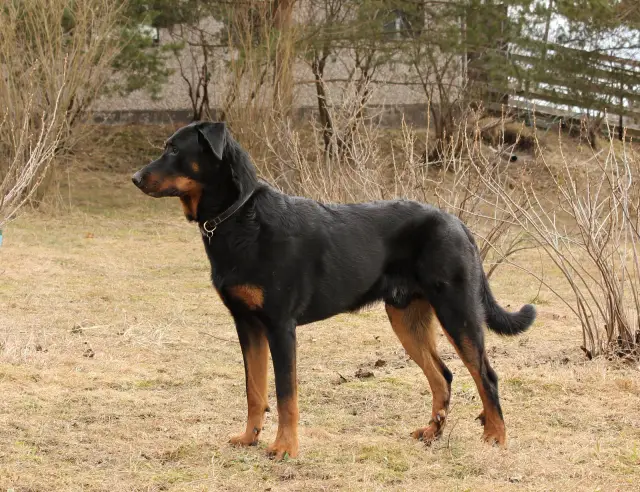
- Beauceron: French herding and guard breed, shorter coat.
- Belgian Shepherd: Belgian herder, more athletic and sharper.
- Giant Schnauzer: bearded, rough-coated working dog.
- Rottweiler: another driving and guarding breed of similar size.

Bouvier des Flandres fun facts
 Related breedLabrador Retriever1800 to 1903 · United KingdomIndustrial Revolution
- The name is French for "cow-herder of Flanders".
- Nic, a trench dog who won shows after the First World War, is regarded as the founder of the early breed.
- Ronald Reagan's family had a Bouvier named Lucky.
- The standard allows a small white star on the chest but not a mostly white dog.
- Tails were traditionally docked to two or three vertebrae, though some pups are born tailless.
- The Bouvier is among the dogs often linked in fiction to Patrasche of A Dog of Flanders.
Frequently asked questions
Are Bouviers des Flandres good family dogs?
They can be, for experienced owners who socialise them early. They are generally good with children they grow up with, but they are large and protective.
How big do Bouviers des Flandres get?
Dogs stand 62 to 68 cm and weigh about 35 to 40 kg under the Royal Kennel Club standard. Bitches stand 59 to 65 cm and weigh about 27 to 35 kg.
Do Bouviers shed?
Less than many breeds, but the harsh coat holds loose hair and needs combing weekly to prevent mats.
How long do Bouviers live?
Atlas data gives 10 to 12 years.
Is the Bouvier a guard dog?
It is a natural watchdog, calm, alert and protective of home and family, and it has served as a police dog.
Which breeds is the Bouvier related to?
In the 2017 Parker study, the closest is the Berger Picard, then the Belgian Tervuren, Groenendael and Belgian Malinois.
What does "Bouvier des Flandres" mean?
Cow-herder of Flanders.
Read next
 Closest DNABelgian Malinois15.5 Mb shared
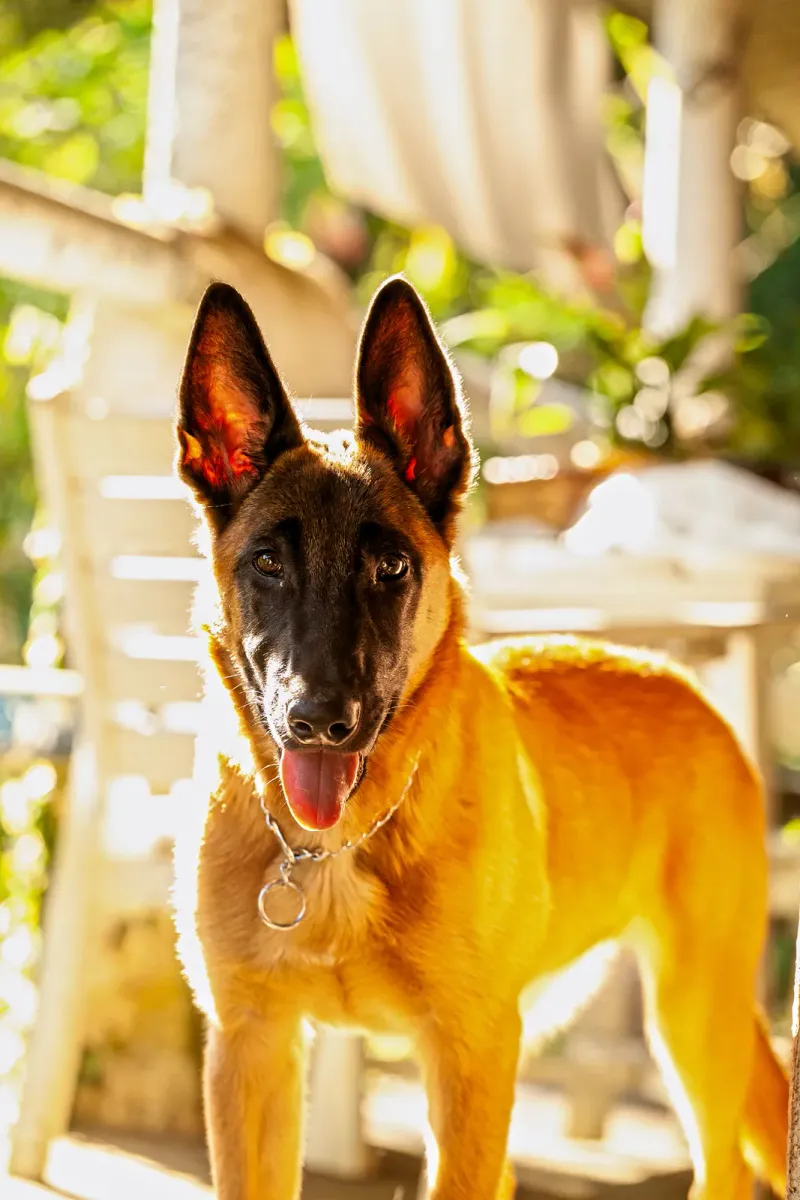 FamilyContinental HerderThe whole family
 Adopt a dogDog Shelters in FranceTen big cities checked, how adoption works, fees in euros
Sources (11)
- Wikipedia, "Bouvier des Flandres".
- American Kennel Club, Bouvier des Flandres breed page.
- American Bouvier des Flandres Club and AKC, Parent Club Health Statement, June 2026.
- Fédération Cynologique Internationale, Bouvier des Flandres, standard no. 191.
- Parker H.G. et al., "Genomic analyses reveal the influence of geographic origin, migration, and hybridization on modern dog breed development", Cell Reports, 2017.
- Royal Kennel Club (UK), Bouvier des Flandres breed standard.
- van Haagen A.J., "Investigations on the pathogenesis of hereditary laryngeal paralysis in the Bouvier", Utrecht, 1980.
- McMillan K.M. et al., "Longevity of companion dog breeds: those at risk from early death", Scientific Reports, 2024.
- Swiss goniodysgenesis study, "Goniodysplasia in the Bouvier des Flandres", 1996.
- Wageningen University, breed analysis of the Dutch Bouvier des Flandres population.
- Atlas data, breed records and Parker 2017 shared-haplotype table (this site).