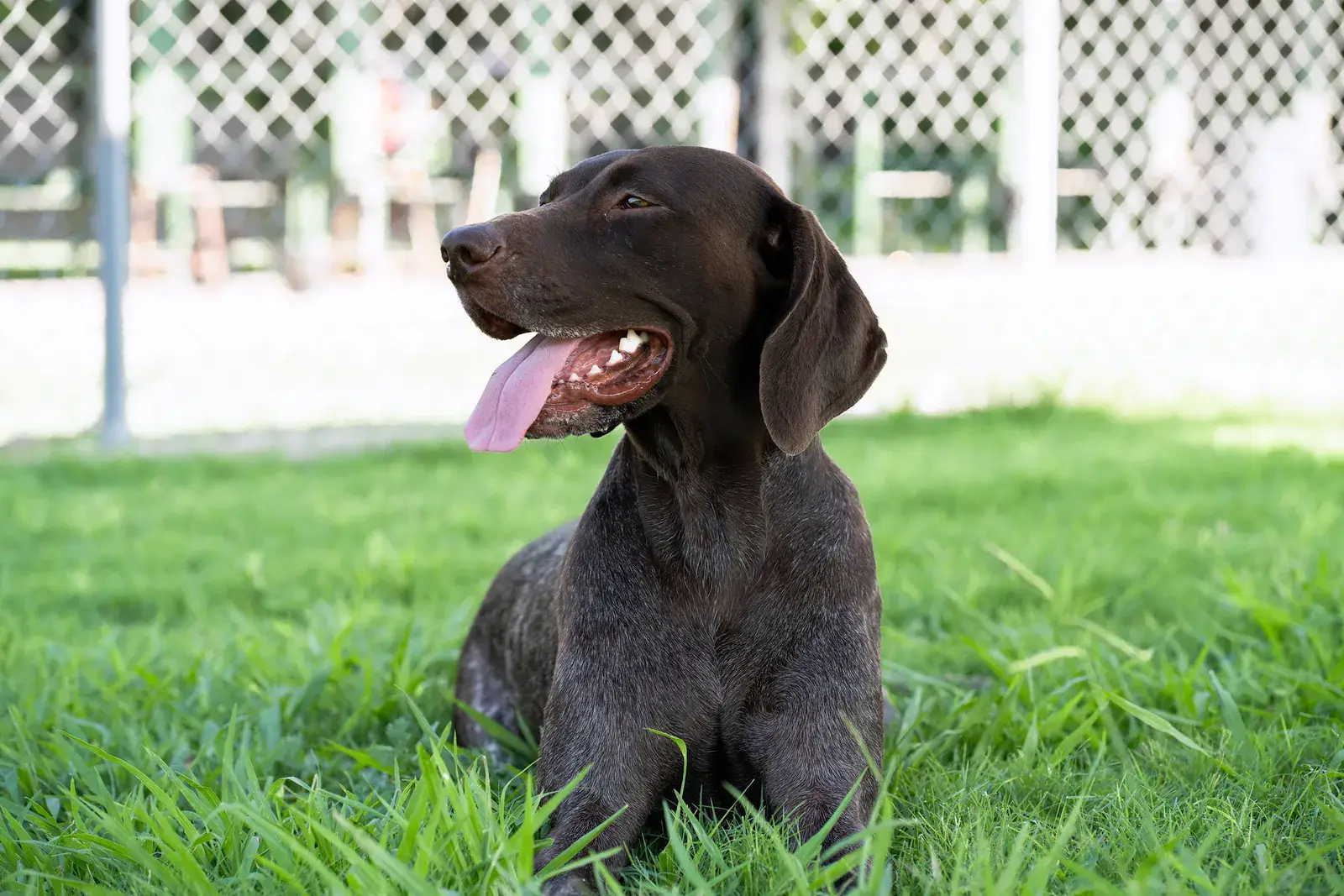
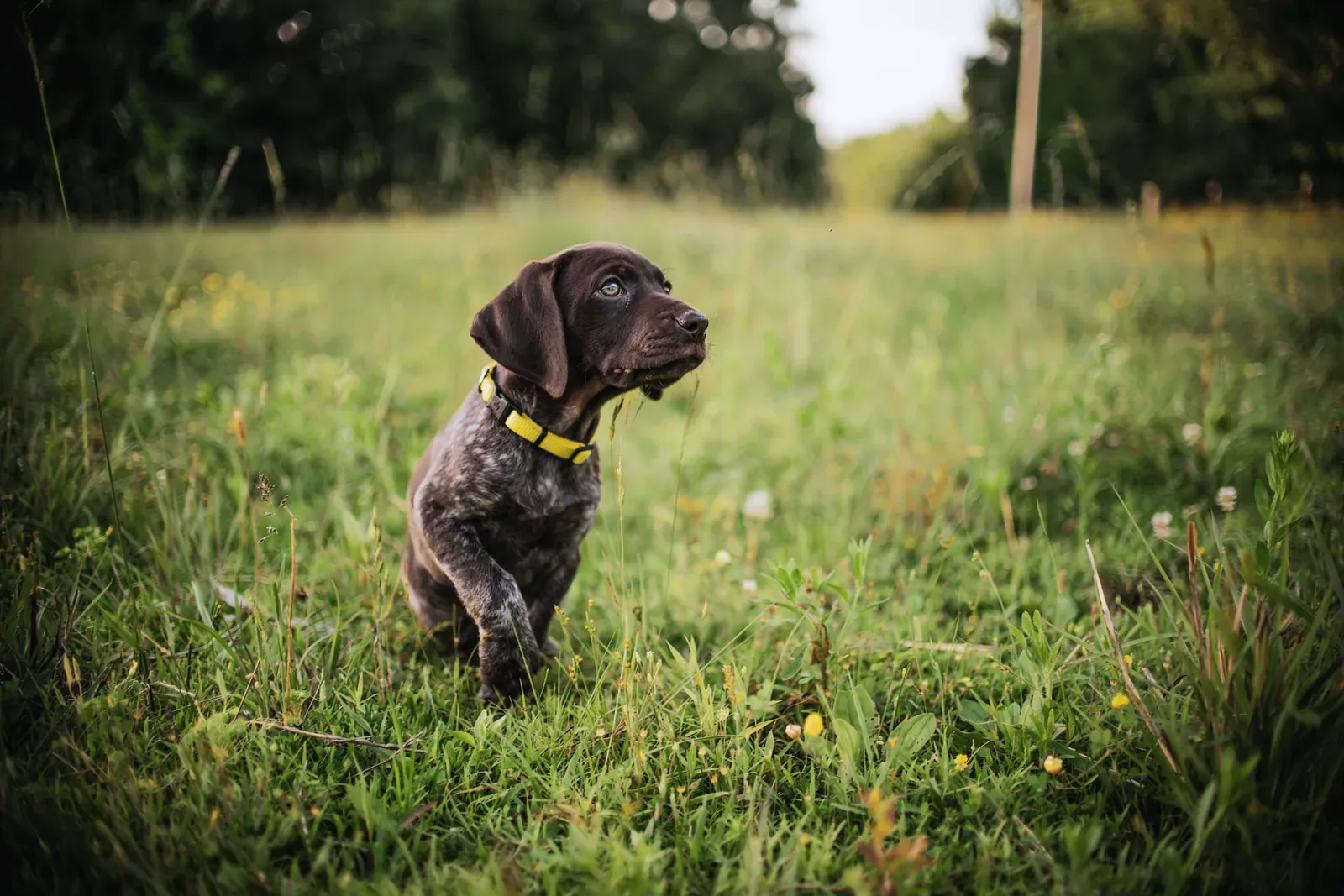
Adults stand about 53 to 66 cm and weigh roughly 20 to 32 kg. Most live around 12 to 14 years. It is athletic, friendly and very driven, and it needs hours of real activity every day, not just a garden.
Quick facts
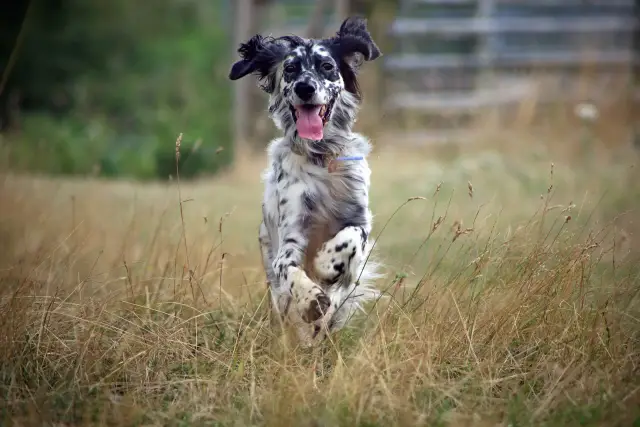 Related breedEnglish Setter1500 to 1850 · United KingdomAge of Exploration
- Other names
- Deutsch Kurzhaar, GSP, German Short-Haired Pointing Dog
- Origin
- Germany
- Appeared
- 1800 to 1872 ( written in 1879)
- Size
- Large (FCI: 62 to 66 cm males, 58 to 63 cm females)
- Weight
- About 20 to 32 kg
- Lifespan
- About 12 to 14 years
- Coat
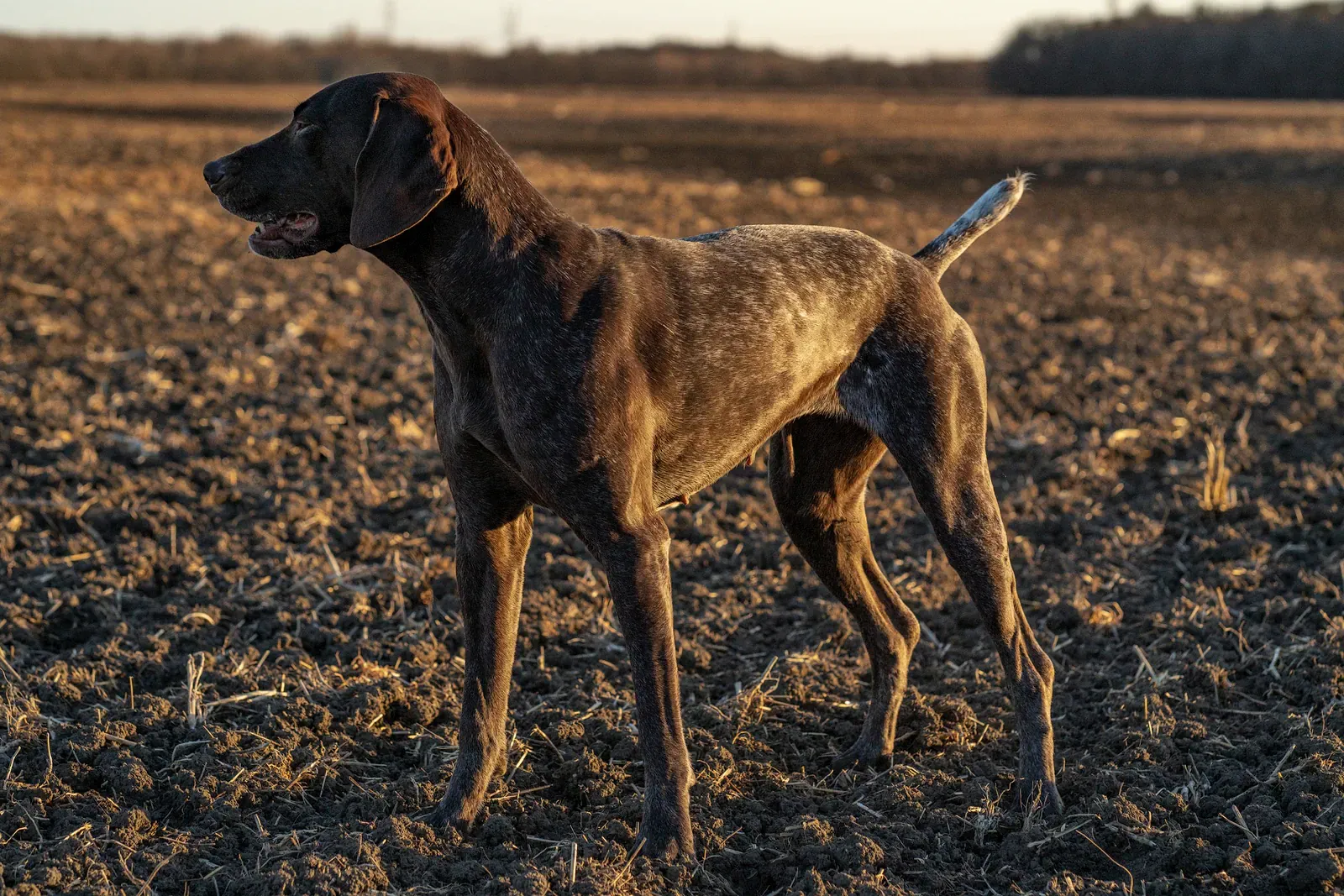
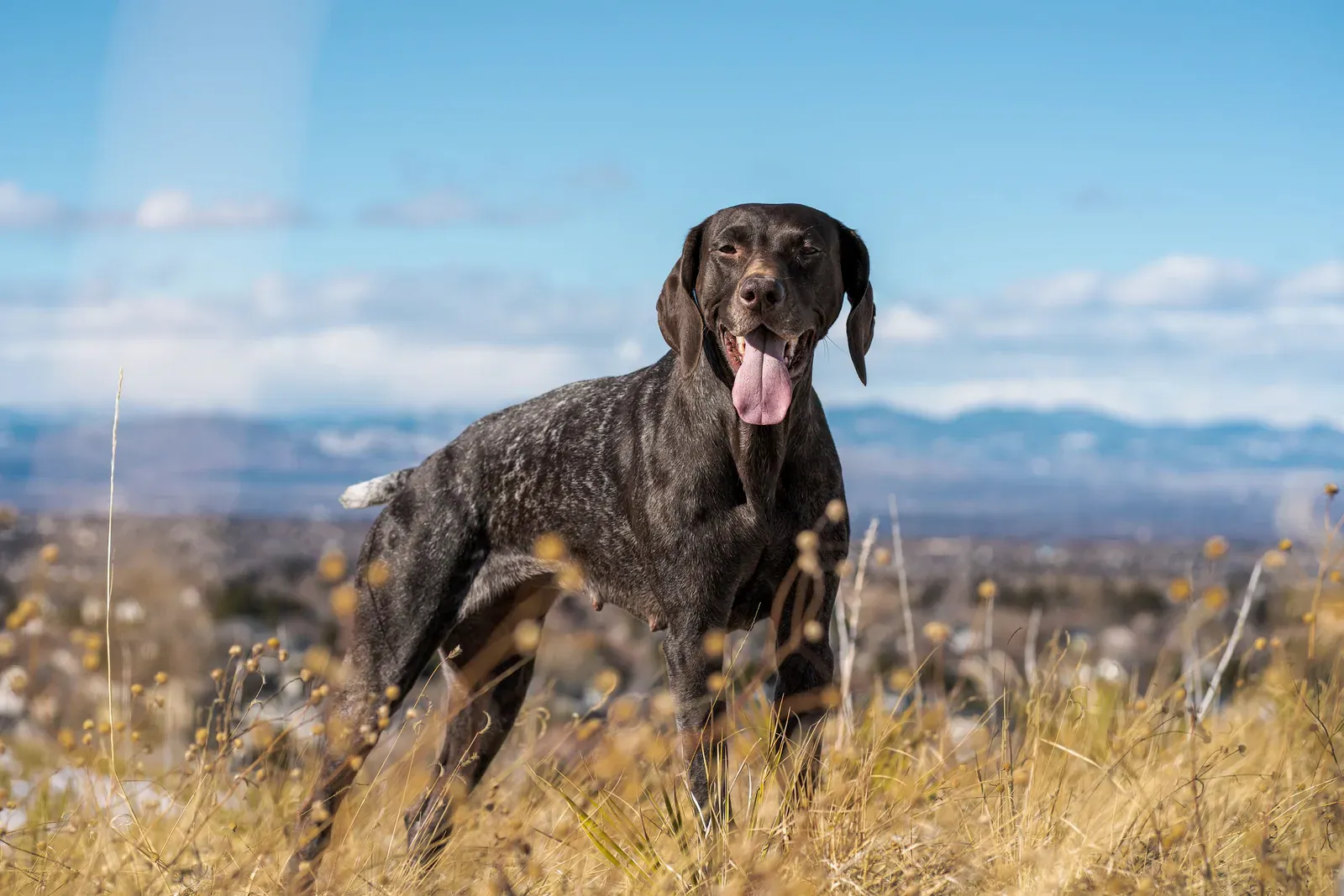
- Short, dense, flat, rough to the touch
- FCI
- No. 119, Group 7, Pointing dogs
- AKC
- Sporting Group
- DNA family
- Pointer Setter (Parker 2017)
- Best known for
- Pointing, retrieving, tracking, hunting tests
Drawn to scale in real centimetres. Its back reaches about 60 cm, just above your knee; its head about 76 cm, mid-thigh.
Where it sits in the tree
Industrial Revolution · 1800 to 1849

Name and origin
 Related breedBrittany1850 to 1907 · FranceVictorian Breed Boom
The breed's German name, Deutsch Kurzhaar, simply means "German short hair". English speakers added "Pointer" because the dog freezes and points toward hidden game, and "Shorthaired" to set it apart from its longer coated cousin, the German Longhaired Pointer and the rough coated German Wirehaired Pointer. The abbreviation GSP is used everywhere in the hunting and show worlds.
In the English-speaking world "Kurzhaar" is often spoken as "Kurz-HAR". The breed's home registry has long been the Klub Kurzhaar and, since 1968 by one account, the Deutsch Kurzhaar Verband, so the German name is also the name on the pedigree papers. Some English sources use "German Short-Haired Pointing Dog" for the FCI title.
The FCI lists the country of origin as Germany, and the breed carries standard number 119 in Group 7, the pointing dogs. The AKC places it in the Sporting Group, and the UK Kennel Club recognises it as well.

History
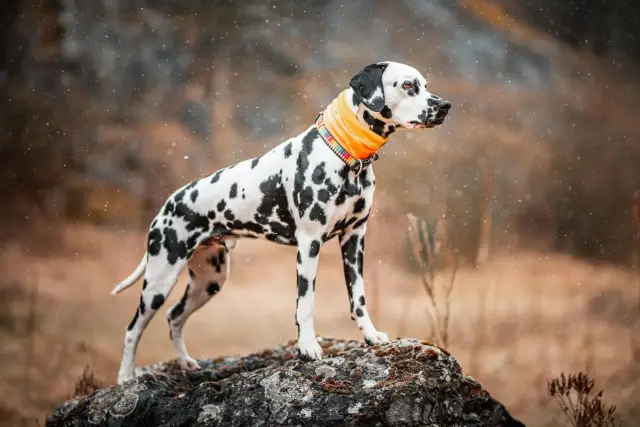 Same eraDalmatian1700 to 1890 · CroatiaEarly Modern Era
A hunting dog for a new kind of hunter
Most histories start in the 1800s. After the political changes of that century, hunting in the German states was no longer only for the nobility. A growing class of ordinary hunters wanted one dog that could do everything: search the field, point, retrieve, follow a wounded animal and swim after waterfowl. Owning a separate hound, pointer and retriever was not realistic for most of them. The all-round dog, a "Vielseitigkeitshund", was the answer.
Old roots
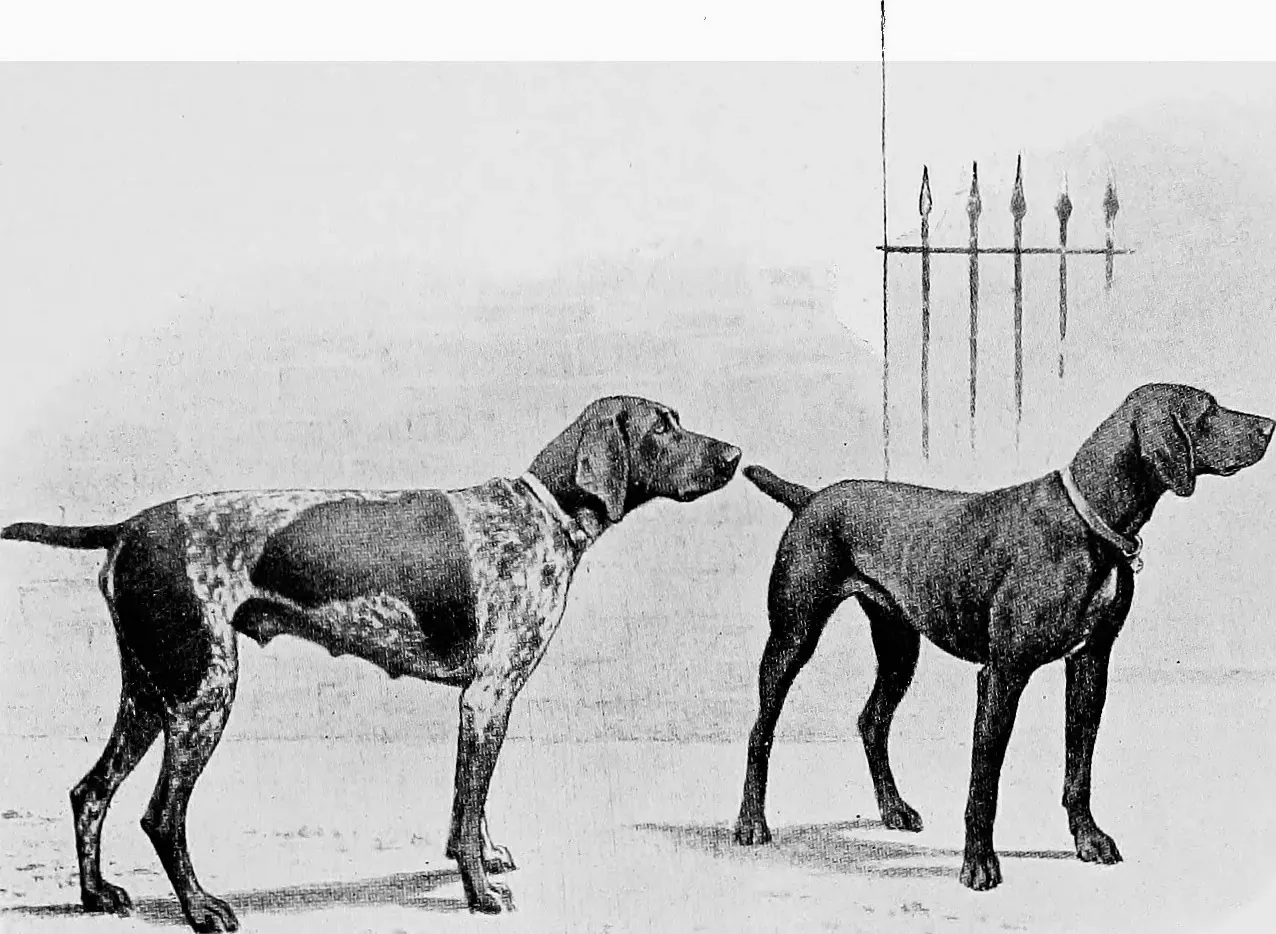
The base was the Old Spanish Pointer, an extinct breed whose descendants spread across Europe, crossed with the heavier German scent hunting dogs, among them the Hanoverian scent hound, a tracking dog that gave steadiness and a good nose for blood trails. In the 19th century, English Pointers were added to give a lighter frame, more style and a faster, wider search. Large numbers of Burgos type pointers also reached Germany in that period, according to the breed histories.
Prince Albrecht zu Solms-Braunfels and the breed club
The man most linked with the breed's shape is Prince Albrecht zu Solms-Braunfels, a German nobleman and hunter. He is credited with compiling the breed characteristics, judging rules for , and simple trial rules for hunting dogs. His guiding idea is usually quoted as "through performance to type": a dog is judged first by what it can do in the field, and its looks follow from that.
Three dates are well documented:
- 1879: breed standards for the Deutsch Kurzhaar and the Deutsch Langhaar were introduced at a show in Hannover.
- 1890: the Klub Kurzhaar was formed to guard the breed's type and working ability. A breeder history puts the first club in 1890, renamed Klub Kurzhaar in 1891, with first field tests in 1892; another source says the first field trials for the breed were held in 1895.
- 1897: the first Kurzhaar stud book was published. The FCI standard and Wikipedia both give this date.
Some popular sources attach other dates to the prince's work. The 1890, 1891 and 1895 dates are not fully confirmed across sources, so read them as approximate.
The AKC history credits the prince and other German breeders with crossing the Old Spanish Pointer, the old German pointer and the French Braque, with a further cross to the English Pointer in the 1860s for speed and style. A breeder history adds that around 1907 some breeders crossed in black English Pointers and kept those dogs in a separate "Preussisch Kurzhaar" section of the stud book; it was discontinued in 1934 or 1935 and the books were merged. That claim has a single source. The same history says the Klub Kurzhaar kept the stud book until the Deutsch Kurzhaar Verband took over in 1968.
Around the world
Dr. Charles Thornton of Missoula, Montana is credited with the first documented import to America. The AKC history says he brought in a solid liver male and a large white ticked female named Senta v. Hohenbruck; another account says the male died in an accident before shipment. A litter born in 1925 was registered in early 1926 in the Field Dog Stud Book under the kennel name "Everyuse", because the AKC did not yet recognise the breed. Most sources give 1930 for AKC recognition, with Greif v.d. Fliegerahalde as the first Shorthair in the AKC stud book; others say 1935, so the year is disputed. The German Shorthaired Pointer Club of America later approved its first standard, adapted from the German one, in May 1946. Two world wars cut deep into European breeding stock.
The breed spread beyond Germany and is now recognised by the AKC and the UK Kennel Club. Today the GSP is a common gundog in many countries and a regular in field trials, hunting tests and, increasingly, in canine sports.
 Save
Relatives and DNA
 Same familyIrish Setter1700 to 1886 · IrelandEarly Modern Era
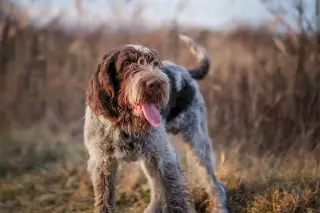
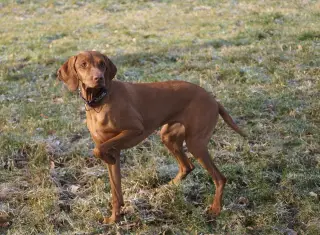
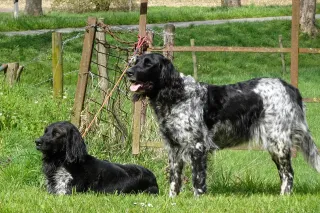
In the 2017 genetic study by Parker and colleagues, the German Shorthaired Pointer sits in the Pointer Setter family, the branch of pointing breeds that leads back to the old Iberian pointers. In that study, its closest match in segments was the German Wirehaired Pointer, which fits the story that wire coated dogs were made partly from Kurzhaar lines. Other breeds with notable shared segments are the Wirehaired Pointing Griffon, the Vizsla, the Large Munsterlander, the Weimaraner and the Spinone Italiano.
The knowledge base lists the Old Spanish Pointer and Burgos Pointer as parent types, and the Italian Bracco, Spanish Sabueso and Pachon Navarro further back. It records the Weimaraner, Czech Fousek, German Wirehaired Pointer, Slovak Rough-haired Pointer and Wirehaired Vizsla among descendants, with the Pointer and the German Longhaired Pointer as siblings. The Parker 2017 study gives the largest shared DNA with the Wirehaired Pointer (46.3 ), then the Wirehaired Pointing Griffon (23.1), Vizsla (20.9), Large Munsterlander (20.3), Weimaraner (18.7), Spinone Italiano (17.3), English Setter (13.8) and Gordon Setter (12.2). Shared show shared DNA, not a family tree. Some knowledge base links to Tosa, Akita and Dobermann as far descendants are weak and are not repeated here.
Breed histories also tie the Kurzhaar to the German Longhaired Pointer, whose standard came in the same year, and to the English Pointer, which supplied part of its refinement. Several other breeds, among them the Weimaraner, the Czech Fousek and the German Wirehaired Pointer, are described as having Kurzhaar blood in their background. Family: Pointer Setter.
Sister breeds · 3
- Pointer1650 to 1865
- Old Danish Pointer1700 to 1962
- German Longhaired Pointer1800 to 1879
Descend from it · 5
- Český FousekCzech Republic
- WeimaranerGermany
- TosaJapan
- German Wirehaired PointerGermany
- Bull ArabAustralia
- German Wirehaired Pointer46.3 Mb 1.9%
- Wirehaired Pointing Griffon23.1 Mb 1.0%
- Vizsla20.9 Mb 0.9%
- Large Münsterländer20.3 Mb 0.8%
- Weimaraner18.7 Mb 0.8%
- Spinone Italiano17.3 Mb 0.7%
- English Setter13.8 Mb 0.6%
- Gordon Setter12.2 Mb 0.5%
Source: Parker et al. 2017. Percent of the whole genome.
The breed standard
 Looks relatedAustralian Cattle Dog1840 to 1903 · AustraliaIndustrial Revolution
A breed standard is the written ideal a kennel club uses to judge a breed. The Kurzhaar standard is a working standard first: the body should look as if it could hunt all day.
| Trait | What the standards say |
|---|---|
| Height, males | FCI: 62 to 66 cm; AKC: 58 to 64 cm (23 to 25 in); UK KC: 58 to 64 cm (23 to 25 in) |
| Height, females | FCI: 58 to 63 cm; AKC: 53 to 58 cm (21 to 23 in); UK KC: 53 to 59 cm (21 to 23 in) |
| Weight, males | FCI: 25 to 32 kg, in proportion to height; AKC: 25 to 32 kg (55 to 70 lb); UK KC: none given |
| Weight, females | FCI: in proportion to height; AKC: 20 to 27 kg (45 to 60 lb); UK KC: none given |
| Coat | FCI: short, thick, rough and hard to the touch; AKC: short, thick and hard; UK KC: short, flat and coarse |
| Build | FCI: noble, powerful, muscular, athletic; AKC: balanced, with strength and speed; UK KC: noble, steady, with a build that shows endurance |
The clubs agree on the general picture, but the FCI standard asks for a slightly taller dog than the AKC and UK KC do, so a show dog from a European line can look bigger than one from an American line. The UK KC also says its size figures are a guide, not a guarantee.
Key features in the standards:
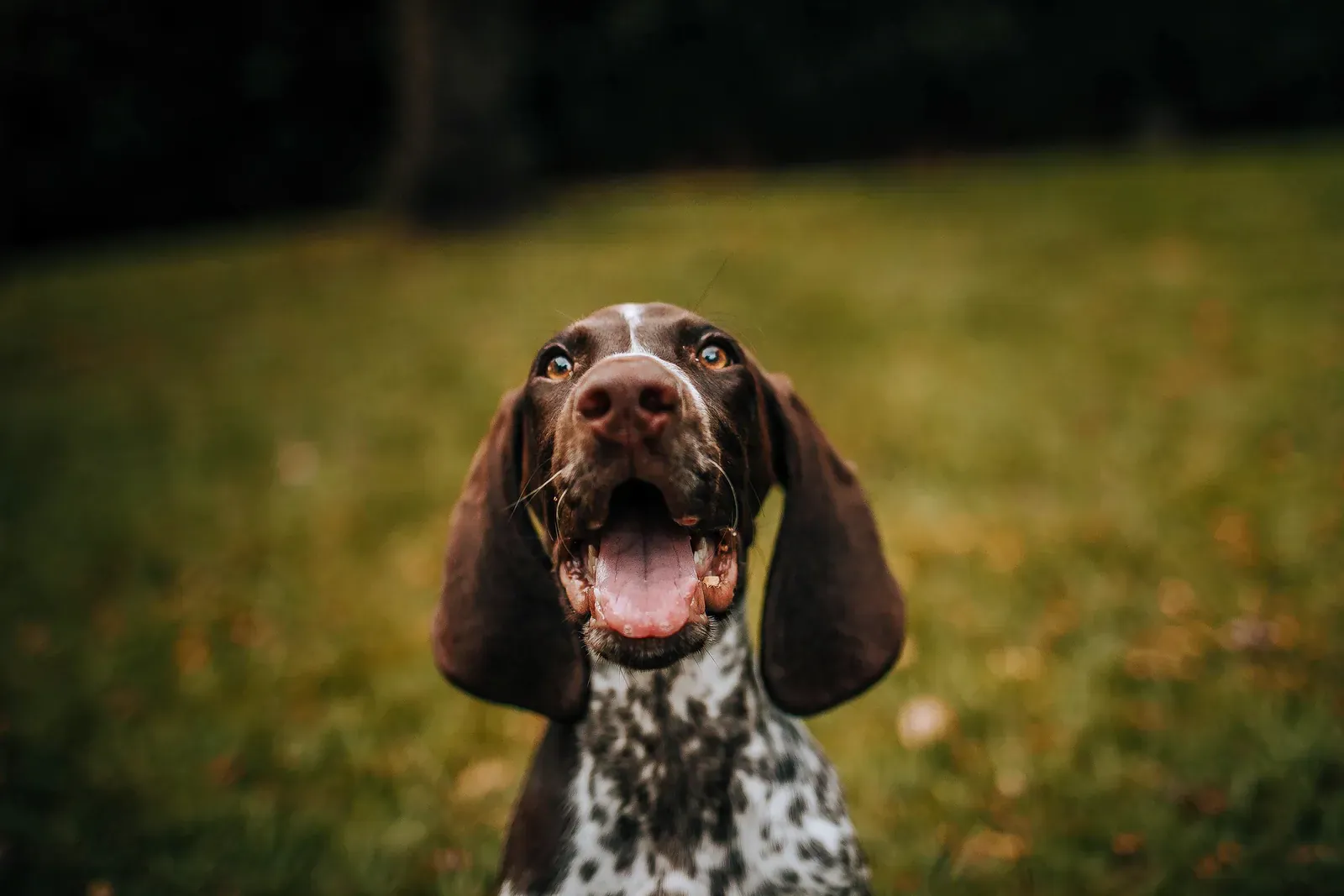
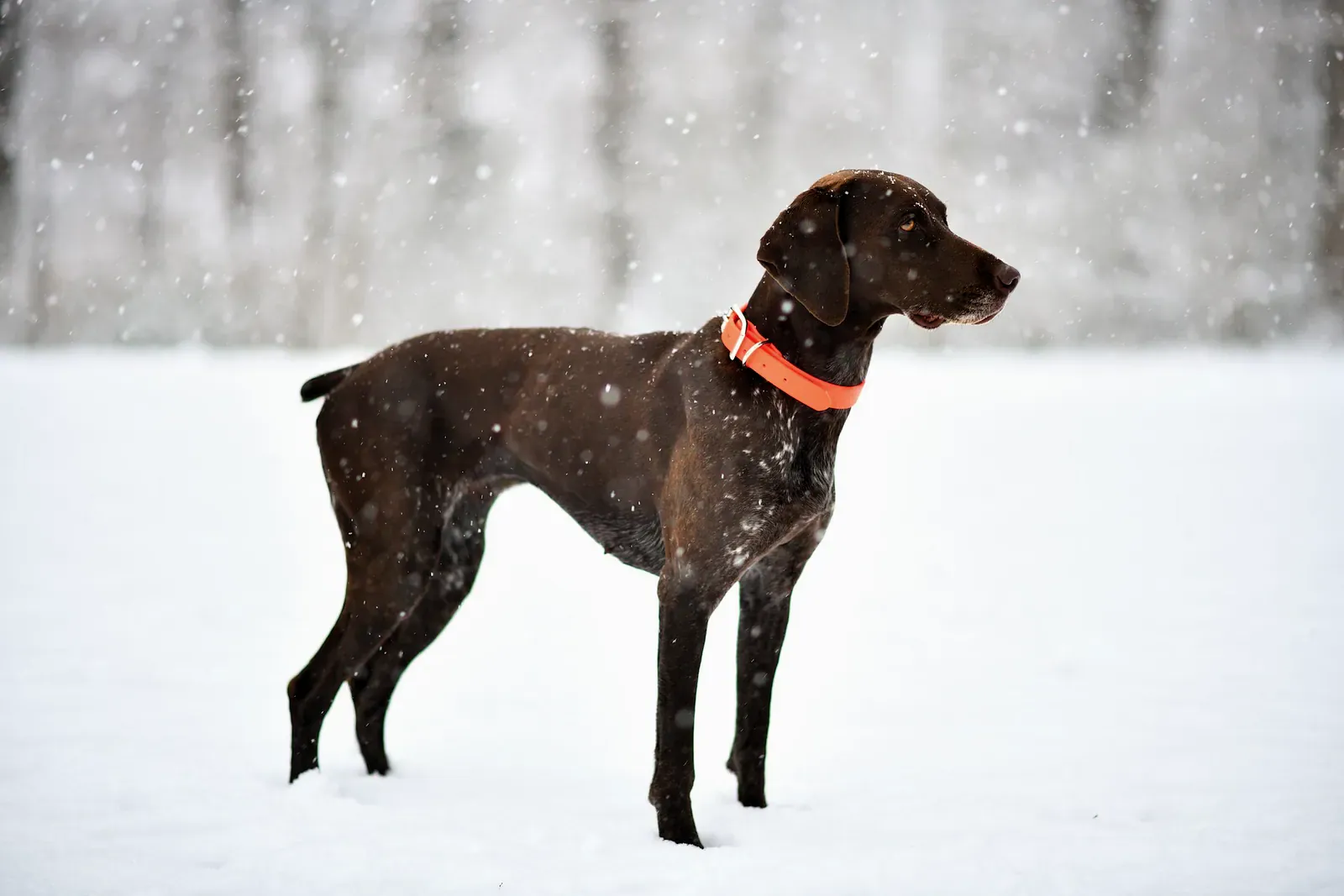
- Head: clean and strong, with a long muzzle and a slightly arched nose line.
- Ears: set high, hanging flat, medium length.
- Tail: carried horizontally or slightly up when working. In some countries the tail is shortened, in others it is left natural, depending on local law.
- Coat: short and tough, thin and soft on the ears and head.
- Colours: liver, or liver and white patterns (ticked, spotted, roan), are the classic look. Black versions exist, and clubs differ on how they treat them, so check the standard your club uses.
Temperament
 Related breedAustralian Shepherd1840 to 1957 · United StatesIndustrial Revolution
The GSP is friendly, eager and bold. It is usually warm with its own people, keen to be in the middle of family life, and often dislikes being left out. Many are clowns well into adulthood. The same drive that makes a good hunter makes a restless house dog if the energy has nowhere to go.
What owners commonly describe:
- Intelligent and quick to learn, but easily bored by repetition.
- Sensitive to harsh handling. Calm, consistent, reward based training works best.
- A strong prey drive: birds, squirrels, rabbits and cats outside the home can trigger a chase.
- Usually good with other dogs, sometimes pushy during play.
- Often wary but not aggressive with strangers, and a loud greeter at the door.
Adolescence, from about 8 months to 2 years, can be loud and distractible. Plan for training classes and a reliable recall early.

Hunting, pointing, retrieving and tracking
 Related breedBouvier des Flandres1800 to 1912 · Belgium, FranceIndustrial Revolution
The breed's main selling point is versatility. A well bred GSP is expected to:
- Search a field in wide, efficient patterns using air scent.
- Point and hold still when it finds game.
- Retrieve fur and feather from land and water. The dog has a water loving streak, and many GSPs swim readily.
- Track wounded game on the ground, a trait inherited from the scent hound side of the breed.
In Germany this variety is tested in formal hunting tests run by the Kurzhaar clubs, designed to prove natural ability and training together. In North America, GSPs compete in AKC hunt tests and field trials, and in clubs such as the German Shorthaired Pointer Club of America. Outside hunting, they also do well in agility, scent work, dock diving and as running or hiking partners.
Health
 Related breedBulldog1835 to 1875 · United KingdomIndustrial Revolution
Most German Shorthaired Pointers live long, active lives. The problems below are what responsible breeders screen for and what owners can keep an eye on. They are not a prediction for any one dog.
The most solid number comes from the Kennel Club longevity study, "Longevity and mortality in Kennel Club registered dog breeds in the UK in 2014" (Lewis and colleagues, published in Canine Genetics and Epidemiology, 2018). It reported a median lifespan of 13.4 years for German Shorthaired Pointers, based on 3,313 dogs of which 947 were recorded as deceased. That is long for a dog of this size.
Few studies give figures for individual conditions in the breed, so the table describes how common each one is in plain words. One named figure exists for hips: an analysis of the Orthopedic Foundation for Animals (OFA) database for 1980 to 2010, reported by VIN, found about 3.9 percent dysplastic hips among 15,711 German Shorthaired Pointers, with 26.3 percent rated excellent. Dysplastic hips fell from 6.9 percent in the earliest period to 1.7 percent in 2006 to 2010. These are screened dogs from health-minded owners, so the rate for all pet GSPs may be higher. No figure for the breed was found. Dilated cardiomyopathy appears in veterinary reviews as a suspected inherited problem in large pointers, but no prevalence figure was found; lymphedema is described in the literature only as a rare condition with a single reported GSP facial case.
| Condition | What it is | How common | What helps |
|---|---|---|---|
| Loose or shallow hip joint that can lead to arthritis | About 3.9 percent of 15,711 OFA-screened dogs, 1980 to 2010 | Hip scoring of parents, healthy weight, avoiding hard jumping while puppies grow | |
| Heart disease (cardiomyopathy) | Weakening of the heart muscle | Heart screening is part of the breed club health programme | Cardiac exam by a specialist, ideally from 24 months, before breeding |
| Entropion | Eyelid that rolls inward and rubs the eye | Reported in the breed | Eye checks, early vet care |
| Lymphedema | Swelling from poor lymph drainage | Rare, case reports exist | Vet diagnosis, careful breeder selection |
| Bloat (gastric dilatation volvulus) | Stomach filling with gas and twisting | A known risk in deep chested dogs | Several small meals, rest after eating, learn the signs |
| Ear infections | Inflammation of hanging, hairy ears | Common in dogs that swim | Dry and check ears after water |
| Injuries | Cuts, torn pads, sprained joints from hard work | Frequent in working dogs | Fitness, paw checks after outings |
The German Shorthaired Pointer Club of America lists cardiac exams by a board certified cardiologist at a minimum of 24 months as part of the tests needed for a CHIC number.

Living with a German Shorthaired Pointer
 Related breedChesapeake Bay Retriever1807 to 1918 · United StatesIndustrial Revolution
| Area | Rating | Reason |
|---|---|---|
| Exercise | High | Often 2 hours or more a day, including off lead running and mental work |
| Training needs | High | Smart and keen, needs steady training from puppyhood |
| Grooming time | Low | Short coat, weekly brush; check ears and nails |
| Shedding | Medium | Short hairs shed all year, more in coat change |
| Barking | Medium | Vocal when bored or excited |
| Time alone | Poor | Bored GSPs can chew and dig |
| Children | Good | Playful and sturdy, but can knock small children over; supervise |
| Other dogs | Good | Usually sociable with good early introductions |
| Cats and small pets | Fair | Strong prey drive, varies with the dog |
| Flat living | Poor | Needs space and daily outdoor hours |
| Heat tolerance | Fair | Thin coat but high working effort; avoid midday hard exercise |
| Cold tolerance | Fair | Short coat, no thick undercoat; coats help in cold wet weather |
| First time owner | Fair | Loving, but demands time and energy |
A great fit if
- You run, hike or cycle every day, in most weather.
- You want a hunting partner or a dog for field sports.
- You have a fenced garden and time for training classes.
- Someone is home for much of the day.
Think twice if
- You work long hours away from home.
- You want a calm lap dog.
- You live in a small flat with limited outdoor access.
- You keep rabbits, birds or free roaming cats.
Before you get one
Ask the breeder for hip scores of both parents and cardiac exam results, and ask about the working record of the lines. A good breeder will explain how the puppies' parents have been tested and will accept questions. Breed rescues exist and often have adult GSPs that need a home, usually young dogs from owners who underestimated the energy. In the first year, expect puppy classes, lots of chewing, and the hardest stretch in adolescence.
Similar breeds to consider
- German Wirehaired Pointer: same versatile job with a harsh, weather proof coat.
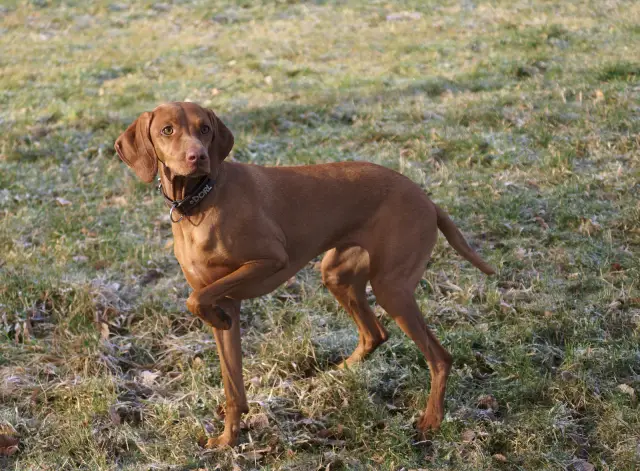
- Vizsla: Hungarian pointer, gentler and more clingy.
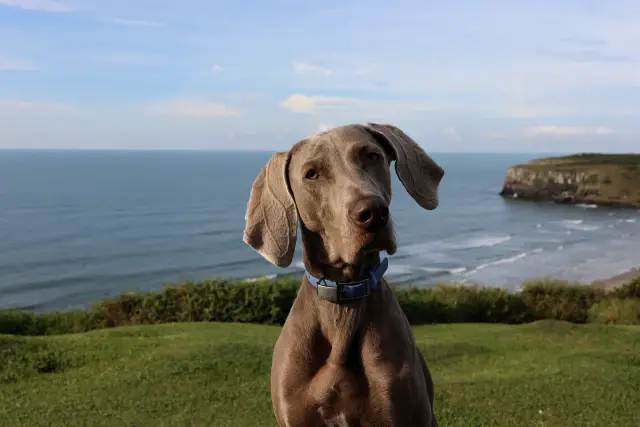
- Weimaraner: grey, striking, strong willed.
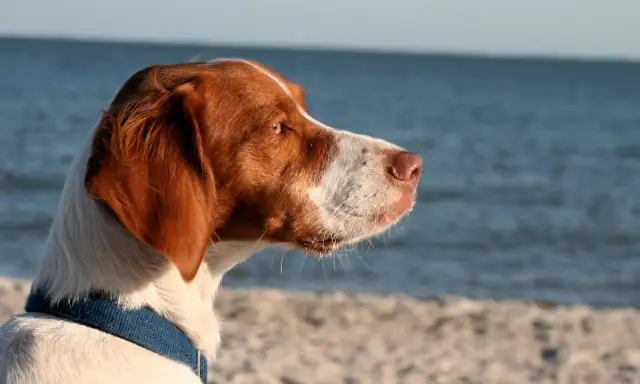
- Brittany: smaller pointing dog with similar drive.
 Save

Fun facts
 Related breedEnglish Cocker Spaniel1800 to 1892 · United KingdomIndustrial Revolution
- The Kurzhaar's guiding rule, performance first and looks second, is credited to Prince Albrecht zu Solms-Braunfels.
- The first Kurzhaar stud book was published in 1897, seven years after the Klub Kurzhaar was formed.
- The breed has been used as a foundation for other pointing breeds, among them the German Wirehaired Pointer, which shares 46.3 Mb of DNA with it.
- The first GSP litter in America was registered in 1926 in the Field Dog Stud Book, years before the AKC recognised the breed.
FAQ
How big does a German Shorthaired Pointer get?
Males stand 62 to 66 cm under the standard and females 58 to 63 cm. The asks for slightly less. Weight is usually 20 to 32 kg.
How long does a German Shorthaired Pointer live?
The UK Kennel Club longevity study of 2014 data (Lewis and colleagues, 2018) gave a median of 13.4 years across 3,313 dogs. Many sources give a range of 12 to 14 years.
Are German Shorthaired Pointers good family dogs?
They can be, if the family can meet their exercise needs. They are affectionate and playful, and enjoy company, but their size and energy mean young children need supervision.
How much exercise does a German Shorthaired Pointer need?
Plan on at least 1.5 to 2 hours of vigorous activity daily, with off lead running in a safe place and some mental work such as scent games or training.
Where does the German Shorthaired Pointer come from?
Germany, in the 19th century, from the Old Spanish Pointer, German scent hunting dogs and English Pointers. Prince Albrecht zu Solms-Braunfels helped shape it, the first standard came in 1879 and the first in 1897.
When did the AKC recognise the German Shorthaired Pointer?
Most sources say 1930, but some say 1935. The first American import is credited to Dr. Charles Thornton in the mid 1920s.
What is the difference between a German Shorthaired Pointer and a Vizsla?
Both are pointing and retrieving dogs with short coats. The GSP is bigger and sturdier, usually liver and white or solid liver, and was bred in Germany from a mix of pointers and scent hounds. The Vizsla is a Hungarian breed, leaner, solid rust gold, and often more clingy.
Read next
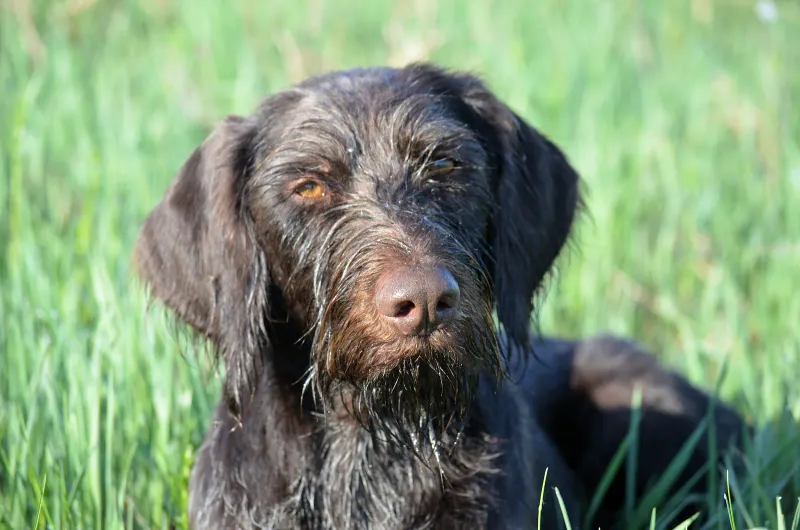 Closest DNAGerman Wirehaired Pointer46.3 Mb shared
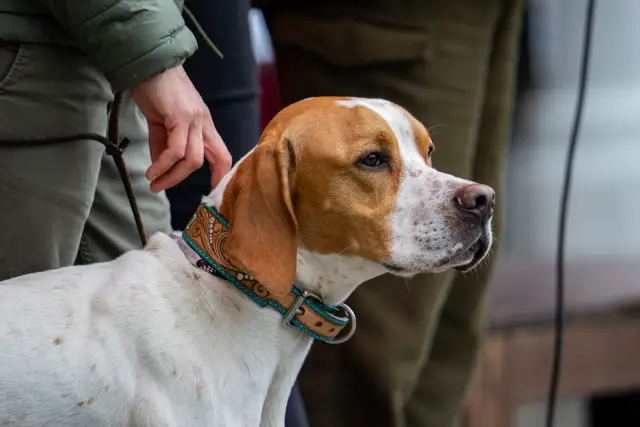 FamilyPointer SetterThe whole family
 Adopt a dogDog Shelters in GermanyTen big cities checked, how adoption works, what it costs
Sources (14)
- FCI Standard No. 119, Deutsch Kurzhaar (German Short-Haired Pointing Dog)
- American Kennel Club, official breed standard, German Shorthaired Pointer
- Lewis TW and colleagues, Longevity and mortality in Kennel Club registered dog breeds in the UK in 2014, Canine Genetics and Epidemiology, 2018
- Parker HG and colleagues, Genomic analyses reveal the influence of geographic origin, migration, and hybridization on modern dog breed development, Cell Reports, 2017
- German Shorthaired Pointer Club of America, breed history and CHIC health programme
- Fogle B, The New Encyclopedia of the Dog, 2009
- The Kennel Club (UK), German Shorthaired Pointer breed standard
- Canadian Kennel Club, German Shorthaired Pointer breed standard
- AKC, German Shorthaired Pointer history
- German Shorthaired Pointer Club of America, breed history (Thornton import, Field Dog Stud Book, 1946 standard)
- Orthopedic Foundation for Animals hip database analysis 1980 to 2010, as reported by VIN
- Wikipedia, German Shorthaired Pointer (1879 and 1897 dates)
- Project Upland, German Shorthaired Pointer breed origins (club history, Preussisch Kurzhaar section)
- Showsight Magazine, German Shorthaired Pointer history