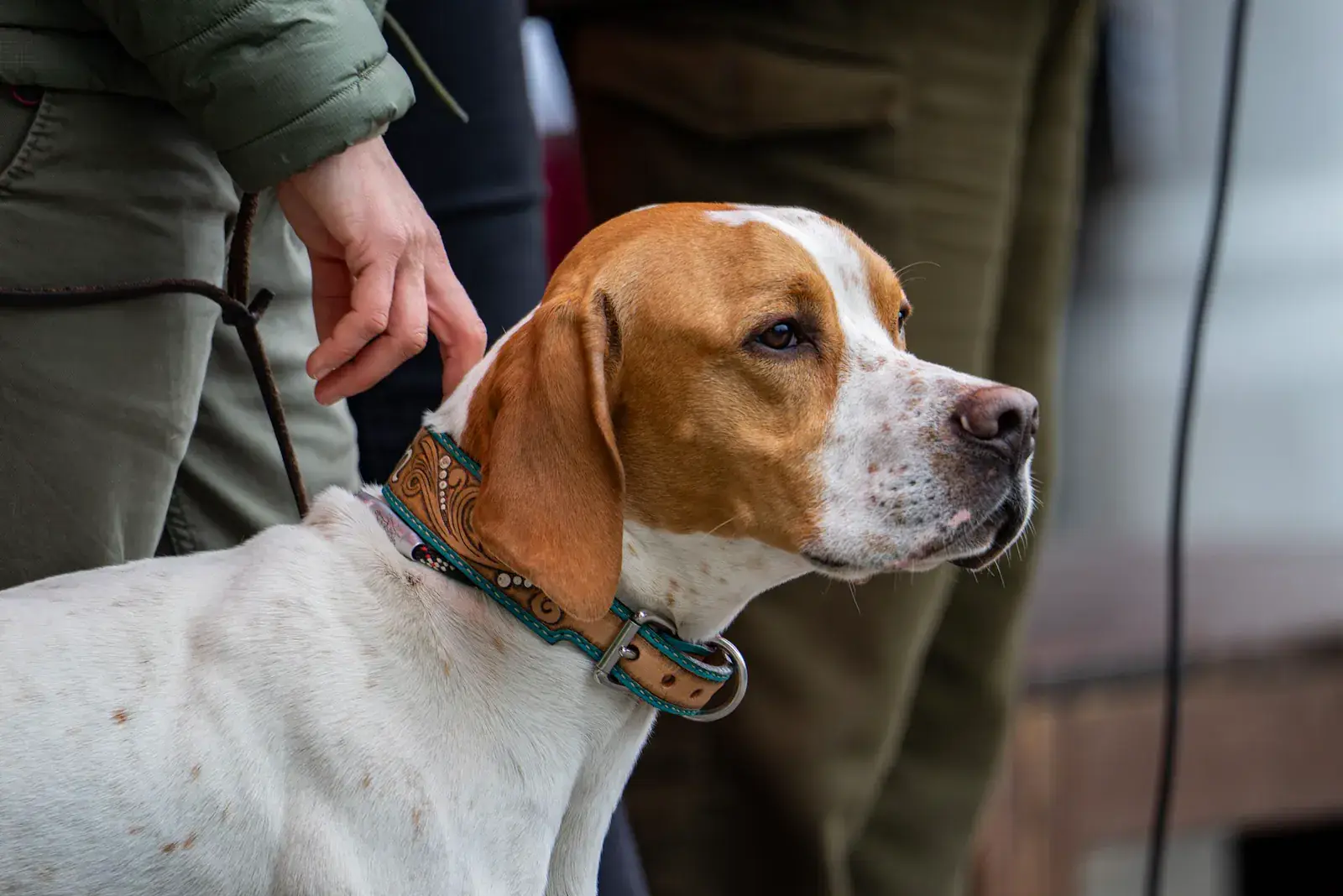
What is a pointer or setter?
A pointer or setter is a gundog that finds hidden game birds by scent and then freezes, so the hunter can walk up and flush them. A pointer stands rigid with its nose toward the birds, usually with one foreleg raised. A setter crouches or drops low. The word "setter" comes from this "setting" posture. Both kinds were bred in Europe, and the family also includes the continental "versatile" dogs that point, track and retrieve.
 Save
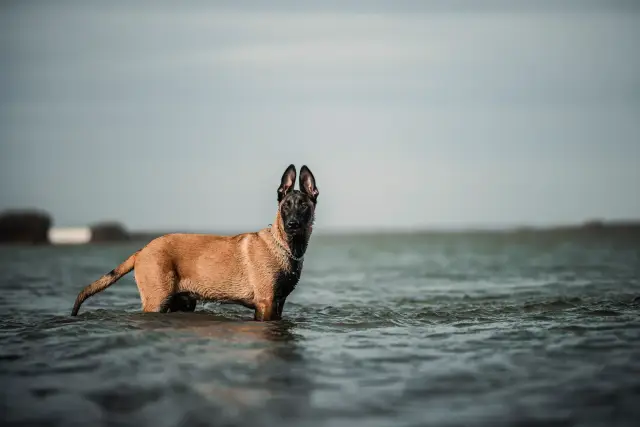 Related familyContinental HerderRead the family's story: origins, members, DNA
In this atlas, the Pointer and Setter family is a group of 36 breeds that share DNA and history. It is a genetic family, not the same thing as the kennel club "Sporting", "Gundog" or "Pointing Dogs" group. The Dalmatian is a member, and the Brittany, though it looks like a spaniel, is a member too. This page explains who belongs, why, and how the breeds are tied together.

Quick facts about the Pointer and Setter family
| Fact | Answer |
|---|---|
| Family type | Genetic clade (Parker et al. 2017) |
| Parent | European dogs |
| Breeds in this atlas | 36 (34 living, 2 extinct) |
| Breeds with DNA tested in the study | 12 (11 with strong support, 1 with weak support) |
| Main homelands | France (9), Germany (7), Spain (5) |
| Typical size | Large (22 of 36) or medium (14) |
| Core job | Finding game by scent and holding a point |
| Shared look | Lean, athletic, deep-chested, with long legs and a carried tail |
| Shared temperament | Keen, energetic, people-focused, strong scenting drive |
 GuideDog Breeds by Country: Which Nations Made the Most?Dog breeds by country: how many breeds each nation produced in the Dogs Atlas data, from the UK and France to Japan, plus national dogs and families.

Family or group: what is the difference?
In this atlas, "family" always means a DNA clade, a branch of the family tree found by comparing genomes. "Group" is used only for kennel club groups such as the AKC Sporting Group or FCI Group 7 (Pointing Dogs).
 GuideBest dog breeds for familiesBest dog breeds for families, small homes, allergies, first-time owners and seniors, ranked from our breed ratings, with honest limits and a table.
The two do not match. Kennel clubs sort dogs by job. DNA sorts them by shared ancestry. Twelve of our 36 breeds were sampled by Parker et al. (2017): the Vizsla, Spinone Italiano, English Setter, Dalmatian, Irish Setter, Gordon Setter, German Shorthaired Pointer, Weimaraner, Brittany, Wirehaired Pointing Griffon, German Wirehaired Pointer and Large Münsterländer. Eleven of them fall in the Pointer Setter clade with strong support. The Dalmatian's support is weak, so it is the least certain DNA-tested member. The other 24 are placed here by written history, so they are best estimates. In the table below, the first 12 rows are DNA-tested and the rest are placed by history.
The kennel clubs split the family too. The Irish Setter and English Setter are in the AKC Sporting Group, while the Dalmatian is in the Non-Sporting Group and in FCI Group 6 with the scent hounds.
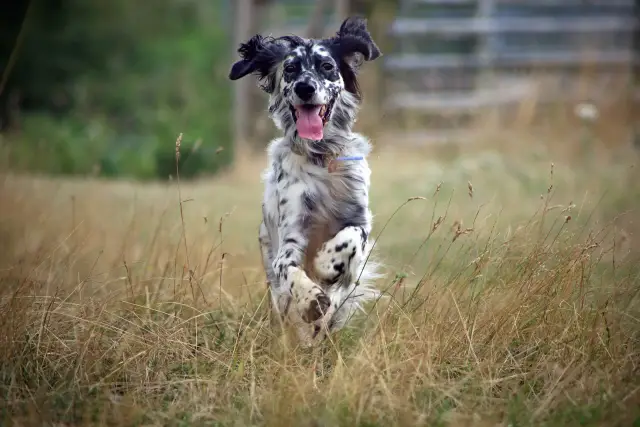
Where does the family sit in the dog family tree?
The Pointer and Setter family hangs from the European dogs branch of the dog family tree. Its siblings under that branch include the Retriever, Spaniel, Scent Hound, Poodle and Continental Herder families, plus the Alpine, Pinscher and Drover families.
 ArticleDog Breed Family Tree: How All Dog Breeds Are RelatedThe dog breed family tree from Ice Age wolves to 29 breed families.
The nearest neighbours are the other bird dogs. The spaniels flush game instead of pointing it. The retrievers collect shot birds. The scent hounds are the likely root of some Iberian pointers, because the Burgos Pointer is believed to come in part from the Spanish Sabueso, a scent hound. The Pudelpointer links the family to the Poodle family.
Why are they called pointers and setters?
- Pointer comes from the habit of "pointing" the muzzle at hidden game. The old Spanish name, perro de punta, means "dog of the point".
- Setter comes from the habit of "setting", meaning crouching on finding game. Old "setting dogs" are said to have dropped low so hunters could throw a net over dog and birds.
- Braque is the French word for a pointing dog, from Italian bracco, "pointing hound".
- Perdigueiro and perdiguero (Portuguese and Spanish) mean "partridge dog".
- Vizsla is Hungarian for "pointer" or "tracker", from vizsgál, "to search".
- Spinone is Italian for "thorn", for its wiry coat and its work in thorny cover.
- Gordon Setter is named for Alexander Gordon, 4th Duke of Gordon.
- Weimaraner is named for the court of Weimar, whose nobles bred the dog.
- Hønsehund, in the Old Danish Pointer, means "chicken (game bird) dog".
 GuideHow to adopt a dog from a shelter or rescueHow to adopt a dog from a shelter or rescue: the process, costs in general terms, choosing a dog, the first weeks and what if it does not work out.
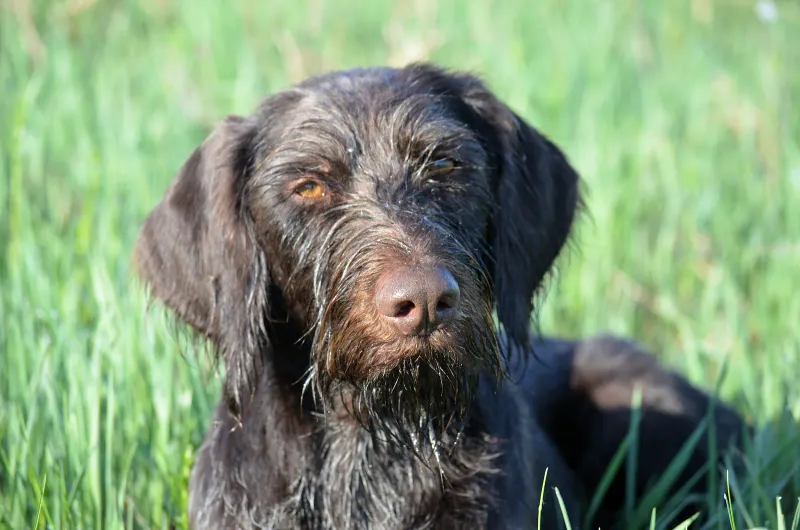
What is the point?
Pointing is a hunting behaviour, not a trick. Wolves and many dogs follow a predatory sequence: orient, eye, stalk, chase, grab and kill. The Coppinger model suggests that breeders shaped each hunting breed by exaggerating some steps and inhibiting others. A pointer shows strong orient and eye behaviour and then freezes, instead of chasing, which is why a bird dog can hold still while the hunter closes in.
 GuideSmartest dog breeds: what the rankings measure and what they missCoren's smartest dog breeds list, what it measured, what newer dog cognition research says, three kinds of dog intelligence and why smart dogs need work.
Genetics may play a part. A 2015 study compared Large Münsterländer and Weimaraner pointers with herding breeds and found fixed differences on chromosome 22, in or near two genes, SETDB2 and CYSLTR2. The authors say these variants may contribute to pointing along with other genetic, training and environmental factors. The study was small, and the result has not been shown to cause the point.

What is the history of pointers and setters?
 GuideDogs in Legends and Fairy TalesDogs in folklore and fairy tales: Black Shuck, The Tinderbox, Saint Guinefort, Panhu, Greyfriars Bobby, Barry and Old Drum, with legend and history kept apart.
Before 1700: Iberian bird dogs
The family traces back to old hunting dogs of Spain, Portugal and Italy that were used with nets and, later, with guns. Our data places the Portuguese Pointer from 1200 and the Bracco Italiano from about 1300 to 1500, with low confidence. The extinct Old Spanish Pointer (1500 to 1700 in our data) is usually named as the root of the pointing breeds. The Spanish type was heavy, slow and steady, with a strong point.
1700 to 1860: Britain builds the Pointer and the setters
Sources disagree on when Spanish Pointers reached England. The AKC says around 1650. Other histories put it in the early 1700s, linked to British officers returning after the War of Spanish Succession in 1714. In either case, British breeders crossed the heavy Spanish dogs with faster hunting breeds, including French pointers, and sometimes Foxhound and Greyhound blood, to make the lighter, speedier English Pointer. Our data puts the Pointer between 1650 and 1865.
The setters were bred alongside. Evidence in our data suggests the English Setter came from crosses that included the Spanish Pointer. The Irish Setter (red) and Irish Red and White Setter came from Ireland, and the Gordon Setter, the black and tan setter, from the estate of the Duke of Gordon in Scotland around the 1780s.
In France, a separate set of regional pointing dogs, the braques, grew up around Auvergne, Bourbonnais, Gascony and the Pyrenees. The Braque Saint-Germain was created around 1830 at Compiègne by crossing English and French pointing dogs.
1860 to 1900: field trials and the Kennel Club
The first dog show, held at Newcastle upon Tyne in June 1859, had only pointers and setters, and a pointer won. In April 1865, the first recorded British field trial was held, open only to setters and pointers. It is placed on the Southill estate of Samuel Whitbread in Bedfordshire, though sources differ on the exact site. The Kennel Club was founded on 4 April 1873 by Sewallis Shirley, and field trials were still only for pointers and setters then. Setter classes were split into English, black and tan, and Irish.
Field trials gave breeders a test. Dogs were scored on how widely they ranged, how steadily they pointed and how well they held it. This pushed the Pointer and the setters toward speed and style.
1800 to 1900: the continental versatile breeds
Meanwhile, German hunters wanted one dog that could find, point, track wounded game and retrieve from water. The result was the "versatile" or HPR (hunt, point, retrieve) family:
- German Shorthaired Pointer: a standard in 1879 and a stud book in 1897. It was shaped by Prince Albrecht zu Solms-Braunfels under the rule "through performance to type". See the German Shorthaired Pointer page.
- Weimaraner: from 1879 treated as a blue-grey variant of the Shorthaired Pointer, with the breed established by 1897 in our data.
- German Wirehaired Pointer: created in the 1880s by Sigismund von Zedlitz und Neukirch from Shorthaired Pointer stock with wire-haired outcrosses.
- Pudelpointer: begun in 1881 by Baron von Zedlitz with an English Pointer and about 90 more Pointers, and about seven Poodles.
- Wirehaired Pointing Griffon: developed in France from 1874, linked to Eduard Korthals.
- Large Münsterländer: split from the German Longhaired Pointer in 1919 over black and white colour.
1900 to today: wars, revival and recognition
The two World Wars put heavy pressure on many continental breeds. The Vizsla in Hungary nearly disappeared and was rebuilt afterwards, and in the 1930s Vizsla bitches were bred to a German Wirehaired Pointer to make the Wirehaired Vizsla (see Vizsla). Czech breeders saved the near-extinct Fousek in the 1920s with versatile outcrosses. The Slovak Rough-haired Pointer was created in the 1950s. Several Spanish island and regional pointers, such as the Perdigueiro Galego and Ca Mè Mallorquí, were recognised only in recent decades.
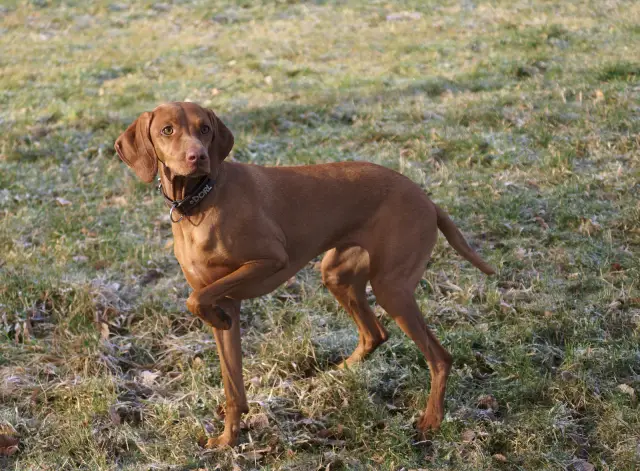
Who are the members of the Pointer and Setter family?
Three layers show in the table. The Iberian and Italian pointers are the old core. The British and Irish setters and the Pointer form a second group. The German and French versatile breeds and their regional cousins are the third.
 GuideLivestock guardian dogs: what they do and who they suitWhat livestock guardian dogs do, how they differ from herding dogs, 40 LGD breeds by country, the DNA evidence, and whether they make good pets.
| Breed | Country | Status | Size | Appeared | DNA-tested |
|---|---|---|---|---|---|
| Vizsla | Hungary | Living | Medium | 1350 to 1935 | Yes (Parker 2017) |
| Spinone Italiano | Italy | Living | Large | 1400 to 1949 | Yes (Parker 2017) |
| English Setter | United Kingdom | Living | Large | 1500 to 1850 | Yes (Parker 2017) |
| Dalmatian | Croatia | Living | Large | 1700 to 1890 | Yes (Parker 2017) |
| Irish Setter | Ireland | Living | Large | 1700 to 1886 | Yes (Parker 2017) |
| Gordon Setter | United Kingdom | Living | Large | 1780 to 1872 | Yes (Parker 2017) |
| German Shorthaired Pointer | Germany | Living | Large | 1800 to 1872 | Yes (Parker 2017) |
| Weimaraner | Germany | Living | Large | 1810 to 1897 | Yes (Parker 2017) |
| Brittany | France | Living | Medium | 1850 to 1907 | Yes (Parker 2017) |
| Wirehaired Pointing Griffon | France | Living | Medium | 1874 to 1887 | Yes (Parker 2017) |
| German Wirehaired Pointer | Germany | Living | Large | 1880 to 1902 | Yes (Parker 2017) |
| Large Münsterländer | Germany | Living | Large | 1900 to 1919 | Yes (Parker 2017) |
| Portuguese Pointer | Portugal | Living | Medium | 1200 to 1930 | By history |
| Bracco Italiano | Italy | Living | Large | 1300 to 1500 | By history |
| Český Fousek | Czech Republic | Living | Large | 1300 to 1963 | By history |
| Braque du Bourbonnais | France | Living | Medium | 1500 to 1925 | By history |
| Burgos Pointer | Spain | Living | Large | 1500 to 1920 | By history |
| Old Spanish Pointer | Spain | Extinct | Medium | 1500 to 1700 | By history |
| Pachón Navarro | Spain | Living | Medium | 1500 to 1930 | By history |
| Perdigueiro Galego | Spain | Living | Medium | 1500 to 1990 | By history |
| Braque Français (Gascogne type) | France | Living | Large | 1600 to 1850 | By history |
| Irish Red and White Setter | Ireland | Living | Large | 1600 to 1944 | By history |
| Pointer | United Kingdom | Living | Large | 1650 to 1865 | By history |
| Braque d'Auvergne | France | Living | Large | 1700 to 1913 | By history |
| Ca Mè Mallorquí | Spain | Living | Medium | 1700 to 2004 | By history |
| Old Danish Pointer | Denmark | Living | Medium | 1700 to 1962 | By history |
| Braque Dupuy | France | Extinct | Large | 1750 to 1850 | By history |
| Ariège Pointer | France | Living | Large | 1800 to 1900 | By history |
| Braque Français (Pyrenean type) | France | Living | Medium | 1800 to 1880 | By history |
| German Longhaired Pointer | Germany | Living | Large | 1800 to 1879 | By history |
| Tarsus Çatalburun | Turkey | Living | Medium | 1800 to 1990 | By history |
| Braque Saint-Germain | France | Living | Large | 1830 to 1913 | By history |
| German Roughhaired Pointer | Germany | Living | Large | 1850 to 1888 | By history |
| Pudelpointer | Germany | Living | Large | 1881 to 1897 | By history |
| Wirehaired Vizsla | Hungary | Living | Medium | 1930 to 1966 | By history |
| Slovak Rough-haired Pointer | Slovakia | Living | Medium | 1950 to 1983 | By history |
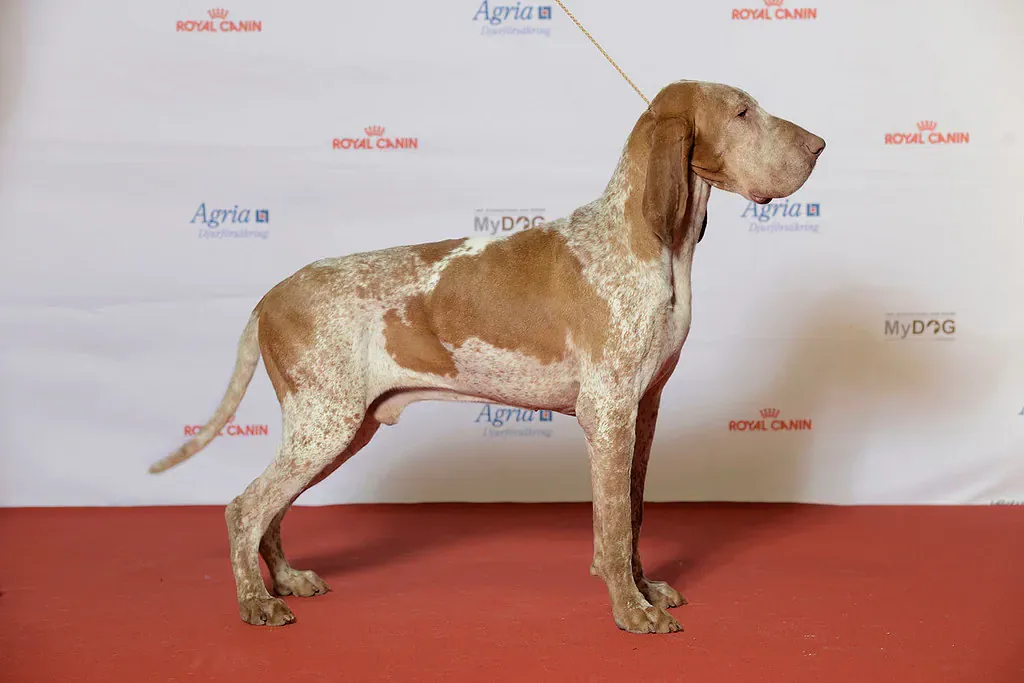
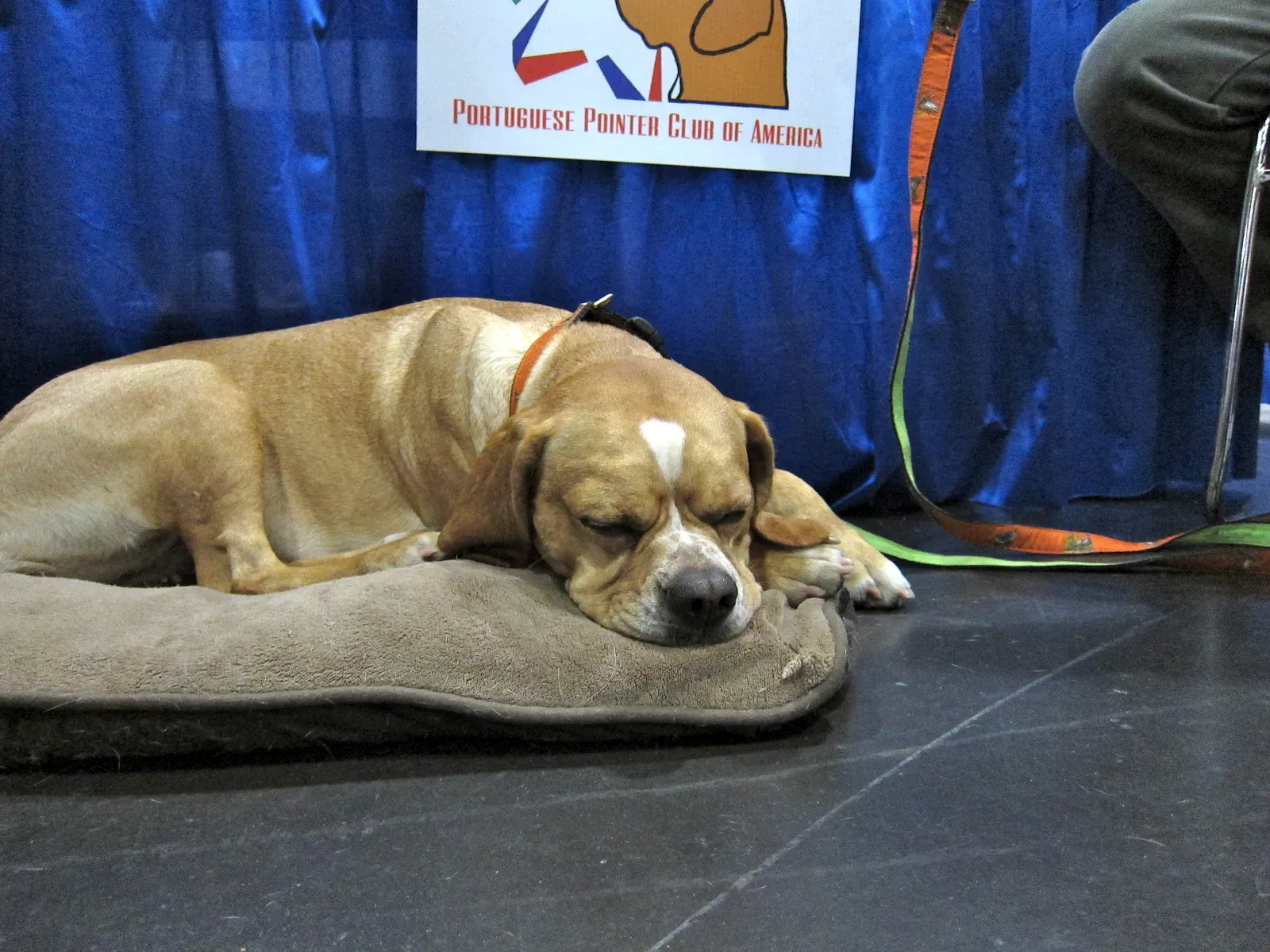

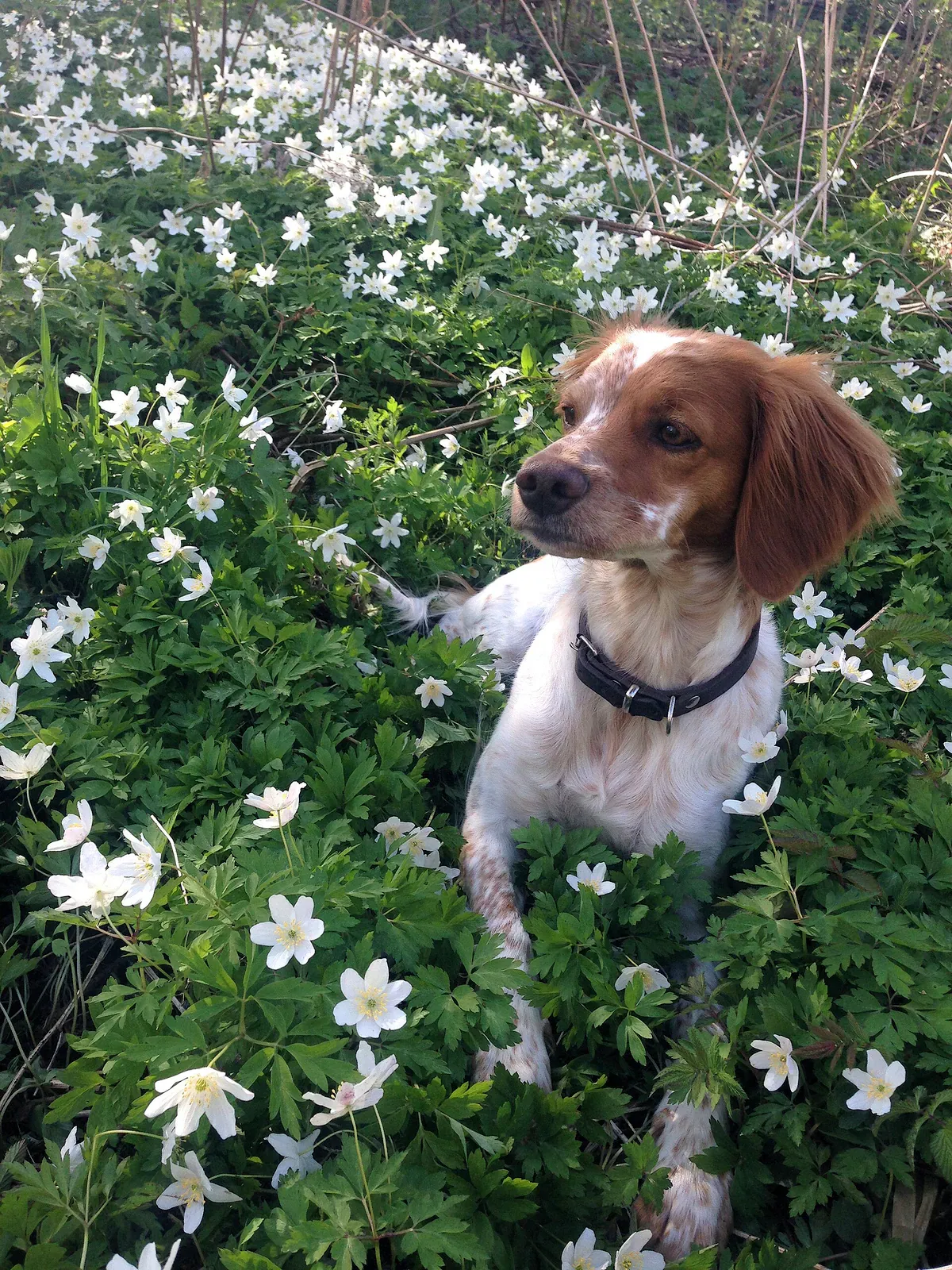

Who descends from whom, and which ties are strongest?
In Parker et al. (2017), the strongest DNA tie is between the English Setter and the Gordon Setter, at 50.1 Mb of shared DNA segments. Next comes the German Shorthaired Pointer and German Wirehaired Pointer (46.3 Mb), and the German Wirehaired Pointer and Wirehaired Pointing Griffon (43.0 Mb). The Brittany shares 37.3 Mb with the English Setter, which fits written history: the modern Brittany was made around 1850 by mating local spaniels with English Setters. The Gordon and Irish Setter share 36.8 Mb.
 GuideDog Clothes: When Dogs Need Coats, and a Short History of Dog FashionDo dogs need coats in winter? When clothes help, when costumes stress a dog, safe fit, reflective gear, and a short history of dog fashion and dog art.
The Vizsla's closest DNA matches are the German Wirehaired Pointer (21.5 Mb) and German Shorthaired Pointer (20.9 Mb), the German pair.
The written record adds more:
- The Pointer, Old Danish Pointer and German Shorthaired Pointer are all said to descend from the extinct Old Spanish Pointer. The German pointer also drew on Burgos Pointers, brought to Germany in large numbers in the 1800s.
- The Burgos Pointer is believed to come from the Sabueso Español (a scent hound) and the Pachón Navarro.
- The Ariège Pointer is a local type said to come from Burgos Pointer and Bracco Italiano crosses.
- The Braque Dupuy was outcrossed extensively to the English Pointer, then died out.
- The Pudelpointer is a deliberate cross of the Pointer and the Poodle.
- The Slovak Rough-haired Pointer was built from German Wirehaired Pointers, Weimaraners and Český Fousek.
- The Dalmatian is thought to have a spotted Great Dane and certain pointers among its early ancestors, at low confidence.
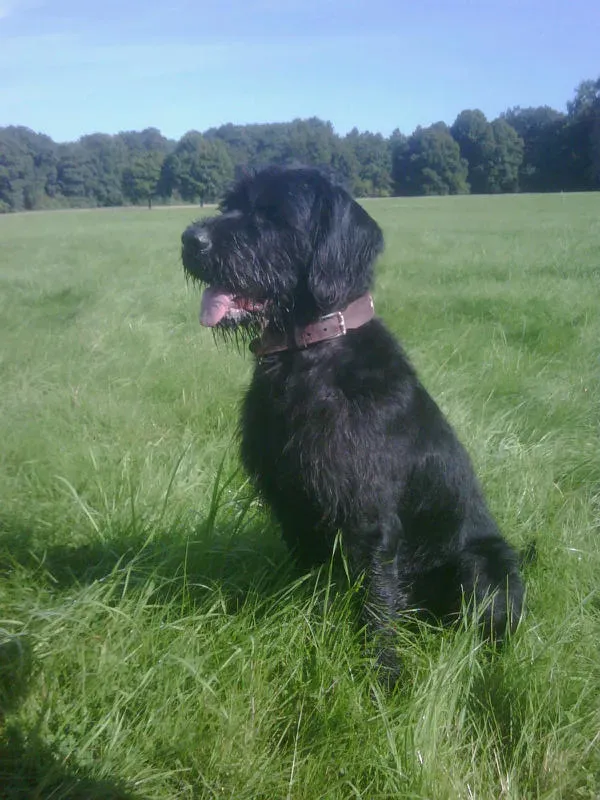 PudelpointerPointer crossed with the Poodle
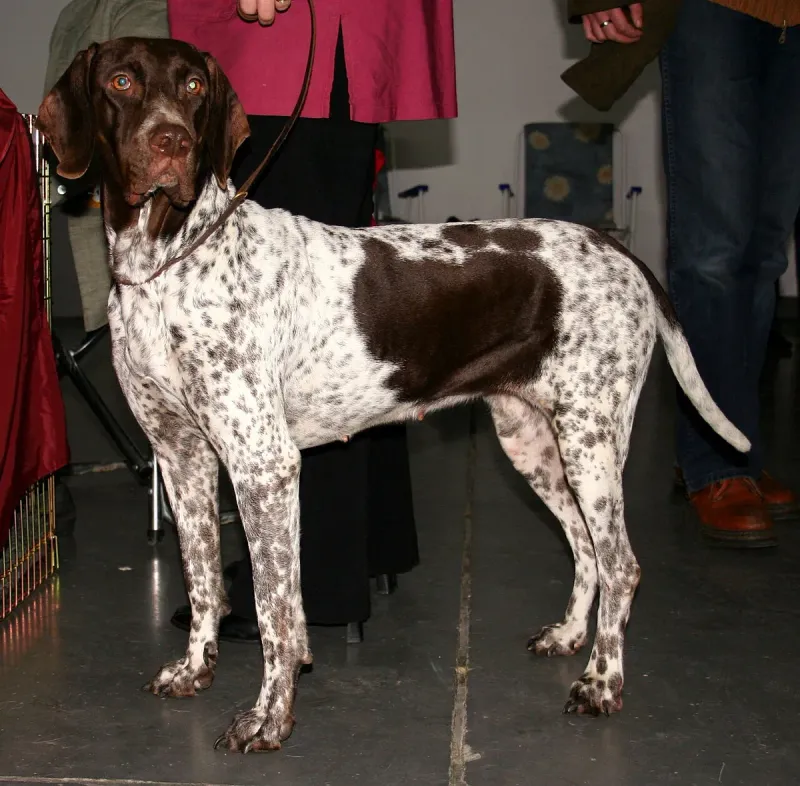 Old Danish Pointer
 German Shorthaired Pointeralso drew on Burgos Pointers
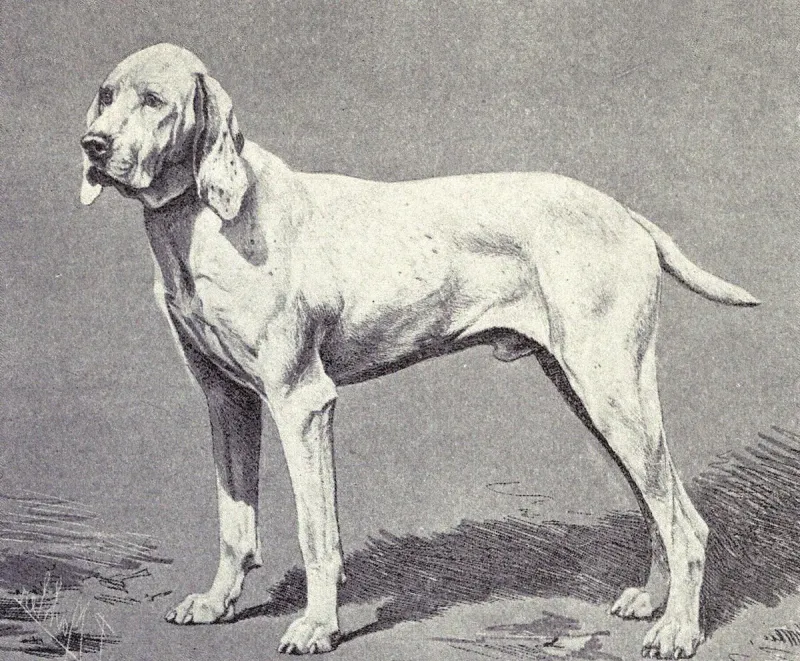 Ariège Pointerwith the Bracco ItalianoPudelpointerPointer crossed with the PoodleOld Danish PointerGerman Shorthaired Pointeralso drew on Burgos PointersAriège Pointerwith the Bracco Italiano
 Member breedWirehaired Pointing Griffon1874 to 1887 · FranceVictorian Breed BoomGuideDog Clothes: When Dogs Need Coats, and a Short History of Dog FashionDo dogs need coats in winter? When clothes help, when costumes stress a dog, safe fit, reflective gear, and a short history of dog fashion and dog art.
What do pointers and setters have in common?
Job. All were bred to find birds by scent and hold still, so a hunter could take the shot. The versatile breeds also track and retrieve.
 GuideDog laws by country: tax, insurance and licencesDog tax, compulsory liability insurance, licences, microchips and leash rules in Germany, Austria, Switzerland, Spain, Ireland, the UK, the US and more.
Build. Lean, deep-chested and athletic, with long legs and strong stamina. The Pointer is leaner and more refined than the German breeds. Nearly two-thirds are large.
Coat. The range is wide. The Pointer, Weimaraner and Vizsla are short-coated. The setters have long, silky feathering. The Spinone, German Wirehaired Pointer and Griffon wear harsh, wiry coats for thorny cover.
Temperament. Keen, energetic and people-focused, but also independent when following a scent. Many need a lot of daily running room and can be too much for small homes. Young dogs are especially bouncy. This is a general tendency, not a promise, and each dog differs.
What health issues are linked to pointers and setters?
Most dogs in this family live active, healthy lives. Breeders of the best-studied breeds screen for a short list of known conditions, and owners can watch for a few more. Numbers below come only from named studies. For lifespan, the UK Kennel Club longevity study (Lewis et al. 2018) gave a median of 13.4 years for German Shorthaired Pointers. Our data gives 10 to 13 years for the Weimaraner and 11 to 13 years for the Dalmatian.
 GuideHow to get an assistance dogHow to get a service dog or assistance dog in the USA, UK, Germany, France, Spain, Italy and the Netherlands: accredited schools, waits, owner-training and travel.
| Condition | What it is | How common | What helps |
|---|---|---|---|
| Deafness in Dalmatians | Hearing loss in one or both ears from birth | A UK study found about 1 in 6 Dalmatians affected (17.8%): 13.4% in one ear and 4.4% in both. Rates have been falling as breeders test | BAER hearing tests on every puppy; ask the breeder for results |
| Urate stones in Dalmatians | Uric acid passes into urine, which can form bladder stones | All Dalmatians carry two copies of the changed SLC2A9 gene, but not all form stones (Bannasch et al. 2008). Low-uric-acid lines exist from Pointer crosses | Plenty of water, vet advice on diet |
| Bloat (stomach twist) | Gas and a twisted stomach in deep-chested dogs, an emergency | In a US study, lifetime risk was about 1 in 4 dogs (24%) across large breeds (Glickman et al. 2000). Weimaraners and Irish Setters were among the higher-risk breeds | Smaller meals, calm time after eating, know the signs and get to a vet fast |
| Immune disorder in Irish Setters (CLAD) | A shortage of working white blood cells that leads to repeated infections | A German study found about 1 in 9 Irish Setters were carriers (11%) (Pfeiffer et al. 2005). A US study found 7 of 54 Irish Red and White Setters were carriers (about 1 in 8) | DNA test of breeding dogs |
| Gluten-sensitive enteropathy in Irish Setters | Diarrhoea and weight loss when the gut reacts to wheat | Seen in related Irish Setter families; inheritance studied by Garden et al. (2000). No prevalence figure found | A gluten-free diet resolves signs |
| Progressive retinal atrophy in Irish Setters | Inherited loss of sight cells (rod-cone dysplasia) | Caused by a PDE6B gene change (Suber et al. 1993). No prevalence figure found | DNA test of breeding dogs |
| Cancer in Vizslas | Includes haemangiosarcoma, a tumour of blood vessel cells | UK Hungarian Vizsla Club 2004 survey: cancer was the leading cause of death, about 1 in 3 deaths (28.9%) | Regular vet checks and prompt exams for lumps |
| Hip dysplasia and ear infections | Loose hips; inflamed ear canals in drop-eared dogs | Reported in large pointers and setters. No family-wide figure found | Hip scoring of parents, healthy weight, regular ear checks |
For lifespan and health in individual breeds, see the German Shorthaired Pointer and Vizsla pages.
Which pointer and setter breeds are extinct?
Two of the 36 are extinct in our records:
 GuideService, therapy and emotional support dogs: what's the difference?Service dog vs emotional support dog vs therapy dog: the real differences, your rights in the USA and Europe, and why online certificates mean nothing.
- Old Spanish Pointer: a medium-size pointing dog of Spain, recorded between 1500 and 1700. It is the usual root of the English Pointer and the German pointers, though that link has medium confidence at best.
- Braque Dupuy: a large French pointer from about 1750 to 1850, outcrossed heavily to the English Pointer before it vanished. It was named for its Poitou breeder.

Are there surprises in the Pointer and Setter family?
- The Dalmatian is a member. It sits in the family by DNA, with weak support, though the kennel clubs call it a non-sporting or scent hound dog.
- The Brittany looks like a spaniel. It was made around 1850 by crossing local spaniels with English Setters.
- Pudelpointer means "poodle pointer". About seven Poodles went into it, along with about 90 English Pointers.
- Weimaraner started as a Shorthaired Pointer variant. From 1879 it was treated as a blue-grey version.
- A national pointer on a small island. The Ca Mè Mallorquí comes from Mallorca and was recognised only in the 2000s.
- Colour split a breed. The Large Münsterländer broke from the German Longhaired Pointer in 1919 over black and white colour.
- One scent hound in the roots. The Burgos Pointer is thought to descend partly from a Spanish scent hound.
 GuideIs your dog suited to therapy work?How to make your dog a therapy dog: temperament checklist, first training steps, how Pet Partners, TDI and Pets As Therapy assess dogs, and welfare limits.
Which pointer or setter suits which owner?
These are general profiles. Individual dogs vary a great deal. Meet the parents and talk to breeders and breed clubs.
 GuideBanned and restricted dog breeds by countryWhich dog breeds are banned or restricted, country by country: UK, Ireland, France, Germany, Denmark, Norway, Spain, Australia and more.
- Active hunters who want one dog for everything: the German Shorthaired Pointer and German Wirehaired Pointer are versatile and hardy, and they need work.
- Runners and hikers: the Vizsla is lean, affectionate and very attached to its person. It is often called a "Velcro dog".
- Families with space: the Irish Setter and English Setter are friendly and active. Setters need regular brushing.
- People who want a quieter gundog: the Spinone Italiano is a sturdy, wiry-coated pointer built for thorny cover. It still needs daily exercise.
- Smaller households that still need exercise: the Brittany is a medium-size pointer with a lot of energy.
- Owners who like striking looks: the Weimaraner has a silver-grey coat and is intense and strong-willed.
- Fans of spots: the Dalmatian is a high-energy runner with its own health checks, such as hearing.
Fun facts about pointers and setters
- The first known dog show, at Newcastle in 1859, had only pointers and setters.
- The English Setter and Gordon Setter share more DNA than any other pair in the family.
- The Pudelpointer began with a single English Pointer named Tell and a poodle named Molly in 1881.
- The Kurzhaar's guiding rule, "through performance to type", puts hunting ability before looks.
- The Spanish name for the Old Spanish Pointer, perro de punta, means "dog of the point".
- The Tarsus Çatalburun of Turkey has a split nose, which is what çatalburun means.
- A Wirehaired Vizsla has been bred only since the 1930s.
 GuideDogs in science and spaceSpace dogs Laika, Belka and Strelka, Pavlov's dogs, Snuppy the clone, the dog genome and scent detection: what dogs did for science, and what it cost them.

Related families
- European dogs: the parent of the Pointer and Setter family.
- Spaniel: land gundogs that flush game, mixed into the Brittany.
- Retriever: gundogs that fetch shot birds, with Irish Setter blood in the Golden.
- Scent Hound: the Spanish Sabueso behind the Burgos Pointer.
- Poodle: the Poodle that helped make the Pudelpointer.
- Continental Herder: another large European working family.
 GuideDog hybrids: what dogs can and cannot breed withCan dogs breed with wolves, coyotes, jackals or foxes? Wolfdogs, coydogs, the Sulimov dog and Dogxim explained, with chromosomes and DNA studies.

Frequently asked questions
What is the difference between a pointer and a setter?
A pointer stands still and points with its nose, often with a raised foreleg. A setter crouches or lowers its body. Both find birds by scent and hold still so the hunter can approach.
What is the difference between an English Setter and an Irish Setter?
The English Setter has a white coat with flecks of colour (belton). The Irish Setter is red. DNA shows the English Setter is closer to the Gordon Setter, with a shared 50.1 Mb in Parker 2017.
Are pointers and setters good family dogs?
Many are, if the family can give hours of daily exercise and training. Young dogs are energetic and can be destructive without it.
Is a German Shorthaired Pointer a pointer or a hunting dog?
Both. It points, tracks and retrieves. That is why it is called a versatile or HPR breed.
Are Dalmatians really related to pointers?
Our data places the Dalmatian in the Pointer and Setter family by DNA, though the support is weak. Early accounts say certain pointers were among its ancestors.
How long do pointers and setters live?
It depends on the breed. The UK Kennel Club study (Lewis et al. 2018) gave 13.4 years as the median for German Shorthaired Pointers. Our data gives 10 to 13 years for the Weimaraner and 12 to 14 for the Brittany.
Which are the rarest breeds in the family?
The Old Danish Pointer, Ca Mè Mallorquí, Pachón Navarro and Perdigueiro Galego have small populations. Two members, the Old Spanish Pointer and Braque Dupuy, are extinct.
Read next
 Family storyDroverRead the family's story: origins, members, DNA
 Family storyMediterraneanRead the family's story: origins, members, DNA
 Family storyEuropean dogsRead the family's story: origins, members, DNA
Sources (14)
- Parker, H. G., et al. (2017). Genomic analyses reveal the influence of geographic origin, migration, and hybridization on modern dog breed development. Cell Reports, 19(4), 697 to 708.
- Akkad, D. A., et al. (2015). Homozygosity mapping and sequencing identify two genes that might contribute to pointing behavior in hunting dogs. Canine Genetics and Epidemiology.
- Coppinger, R., and Feinstein, M. (2015). How Dogs Work. University of Chicago Press.
- Lewis, T. W., et al. (2018). Longevity and mortality in Kennel Club registered dog breeds in the UK in 2014. Canine Genetics and Epidemiology, 5, 10.
- Glickman, L. T., et al. (2000). Incidence of and breed-related risk factors for gastric dilatation-volvulus in dogs. Journal of the American Veterinary Medical Association, 216, 40 to 45.
- Bannasch, D., et al. (2008). Mutations in the SLC2A9 gene cause hyperuricosuria and hyperuricemia in the dog. PLoS Genetics.
- Decline in prevalence of congenital sensorineural deafness in Dalmatian dogs in the United Kingdom (UK study of 1,234 Dalmatians).
- Pfeiffer, I., et al. (2005). Frequency of the canine leucocyte adhesion deficiency (CLAD) mutation among Irish red setters in Germany. Journal of Animal Breeding and Genetics.
- Garden, O. A., et al. (2000). Inheritance of gluten-sensitive enteropathy in Irish Setters. American Journal of Veterinary Research.
- Suber, M. L., et al. (1993). Irish setter dogs affected with rod/cone dysplasia contain a nonsense mutation in the rod cGMP phosphodiesterase beta-subunit gene. PNAS.
- UK Hungarian Vizsla Club health surveys (2004 and 2014).
- The Kennel Club (UK), history of the Kennel Club and of early shows and field trials, 1859 to 1873.
- American Kennel Club, Pointer history page; Fédération Cynologique Internationale, Group 7 pointing dog standards.
- Breed records in the atlas data (Dogs Atlas, internal data).