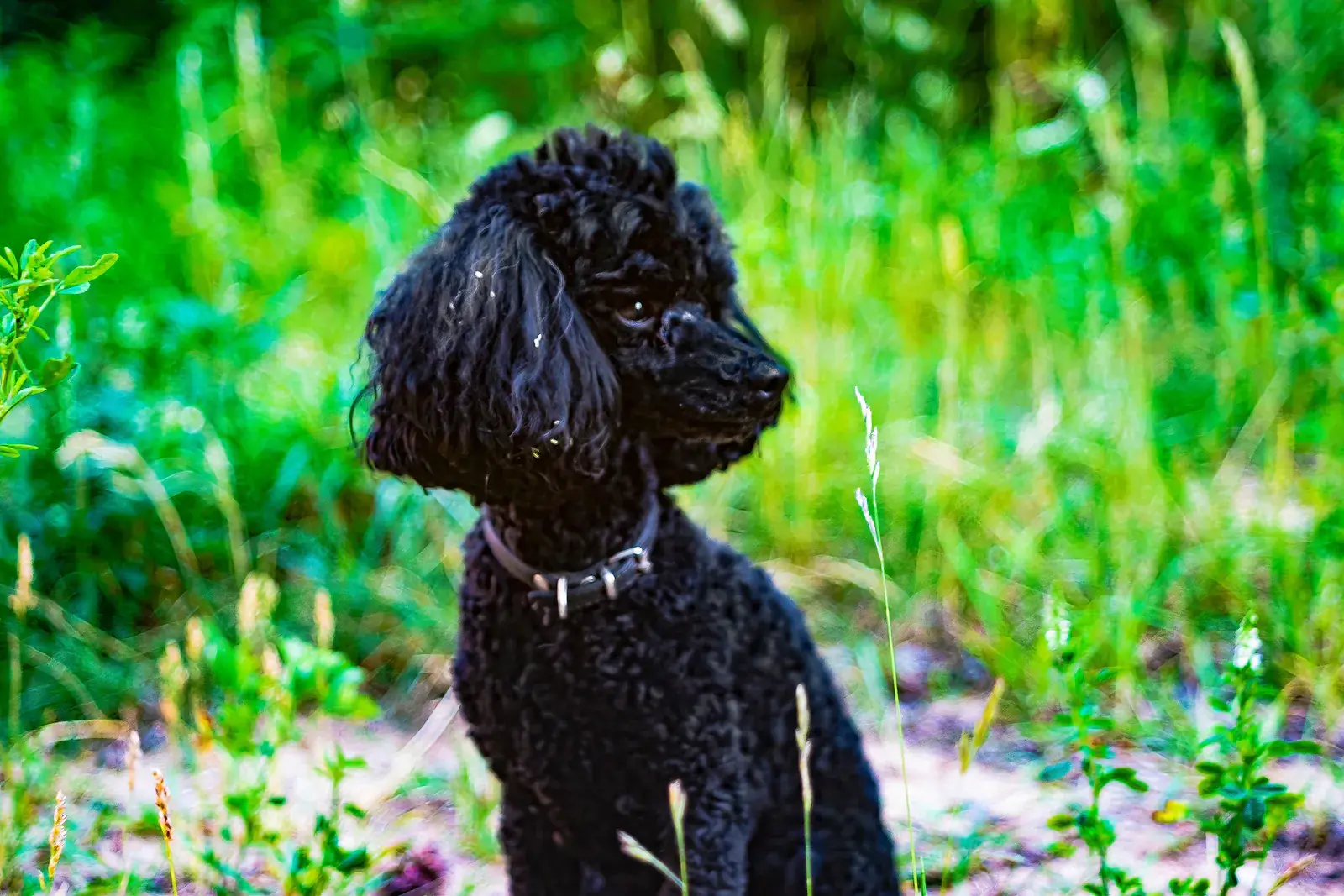
What is the Poodle family?
The Poodle family is the DNA branch that holds the Poodle, a set of curly water dogs, and a set of small white lapdogs called bichons. That sounds like an odd mix, and it is. A Standard Poodle and a Maltese look nothing alike, yet in the atlas data they sit on the same branch of the dog family tree.
 Save
 ArticleDog Breed Family Tree: How All Dog Breeds Are RelatedThe dog breed family tree from Ice Age wolves to 29 breed families.
This page explains what ties them together, who else is in the family (20 breeds in this atlas), and which famous crossbreeds, the doodles, come out of it. Kennel clubs file these dogs in different groups. DNA says many of them are cousins.
Quick facts about the Poodle family
| Fact | Answer |
|---|---|
| Family type | Genetic clade (Parker et al. 2017) |
| Parent | European dogs |
| Breeds in this atlas | 20 (15 living, 5 extinct) |
| Breeds with DNA tested in the study | 6 (4 with strong support, 2 with weak support) |
| Main homelands | France, Italy, Spain, United Kingdom, Netherlands, Malta |
| Typical size | Medium (10 of 20). Also 5 toy, 4 small and 1 large |
| Core jobs | Water retrieving, and lapdog companionship |
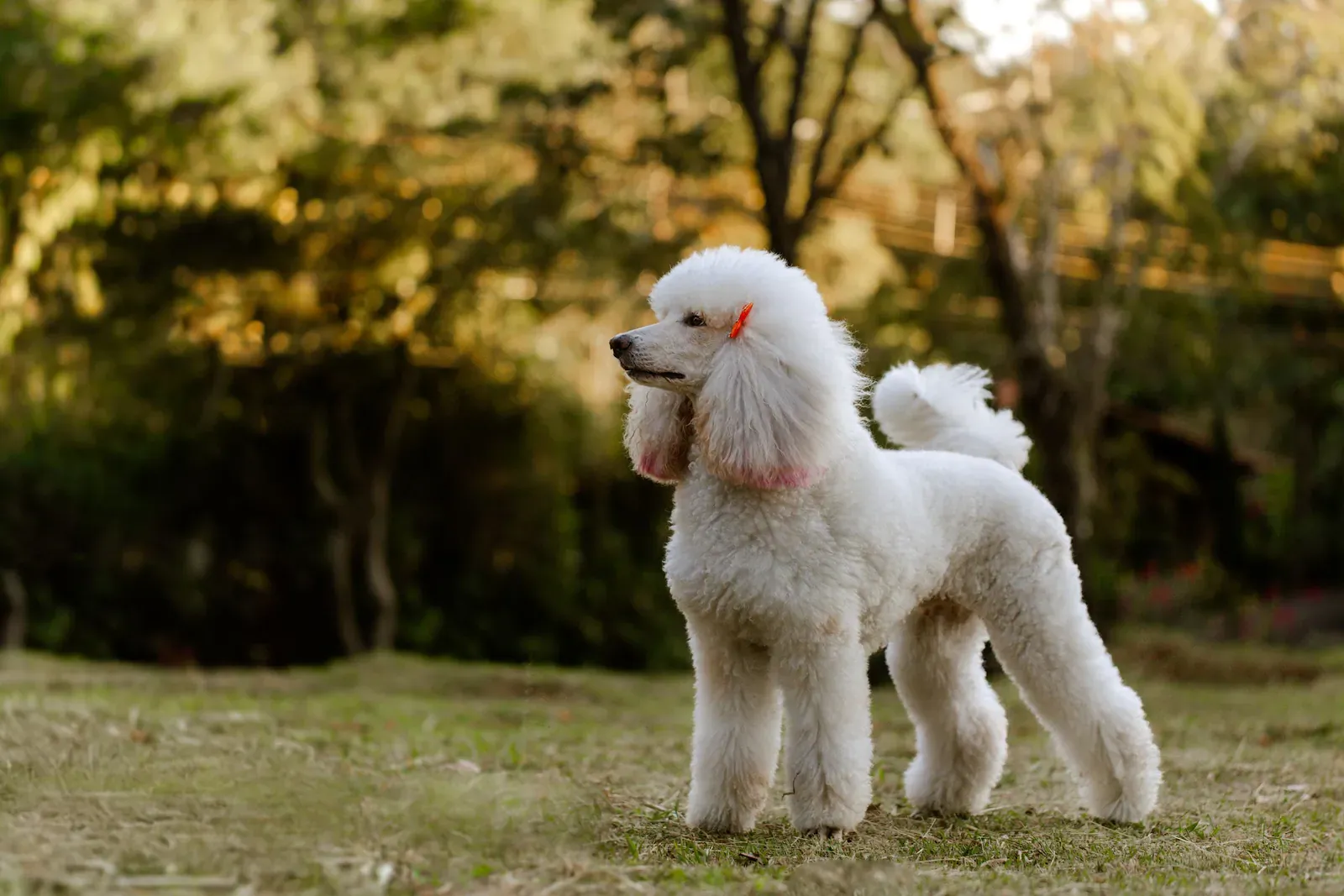
| Shared look | Curly or corded coat, often cut in a clip, in many colours |
| Shared temperament | People-focused, bright, trainable |
 GuideSmartest dog breeds: what the rankings measure and what they missCoren's smartest dog breeds list, what it measured, what newer dog cognition research says, three kinds of dog intelligence and why smart dogs need work.
Family or group: what is the difference?
In this atlas, "family" means a DNA clade, a branch of the family tree found by comparing genomes. "Group" is used only for kennel club groups.
 GuideHow to get an assistance dogHow to get a service dog or assistance dog in the USA, UK, Germany, France, Spain, Italy and the Netherlands: accredited schools, waits, owner-training and travel.
The Poodle is a good example of why the two differ. The AKC puts it in the Non-Sporting Group, the FCI in Group 9 (companion and toy dogs), and the UK Kennel Club in the Utility group. The bichons are toy dogs. The water dogs are gundogs in other registries. DNA sorts them together by shared ancestry, not by job. Of the 20 breeds, 6 were tested by Parker et al. (2017). The other 14 are placed by history and are best estimates.
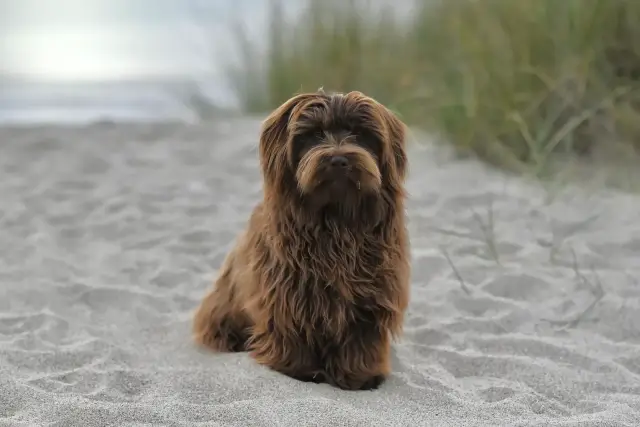
Why do Poodles form their own DNA family?
In the 2017 study, Parker and colleagues sampled 1,346 dogs from 161 breeds and sorted them into clades. The Poodle gave its name to one clade, separate from the spaniels and retrievers that people might expect it to cluster with. A clade is named after a well-known member, so "Poodle" is the label, not proof that the Poodle is the root.
 GuideService, therapy and emotional support dogs: what's the difference?Service dog vs emotional support dog vs therapy dog: the real differences, your rights in the USA and Europe, and why online certificates mean nothing.
Two facts from the atlas data show how the family hangs together:
- The Havanese, a bichon type from Cuba, shares 125.9 Mb of DNA with the Maltese, the highest link in the family. A megabase (Mb) is a million DNA letters, and a larger number means a closer shared ancestry.
- The Poodle shares smaller amounts with the Havanese (17.6 Mb), the Bichon Frisé (12.9 Mb), the Portuguese Water Dog (12.9 Mb) and the Maltese (10.7 Mb).
So the Poodle is not the family's root. It is one branch beside the bichons and the other water dogs. Two of the six tested breeds, the Portuguese Water Dog and the Coton de Tulear, have weak support in the study, so they are the least certain members. The study reports shared ancestry, not the direction of any crossing.
Where do these dogs come from?
Two stories meet in this family.
 GuideLivestock guardian dogs: what they do and who they suitWhat livestock guardian dogs do, how they differ from herding dogs, 40 LGD breeds by country, the DNA evidence, and whether they make good pets.
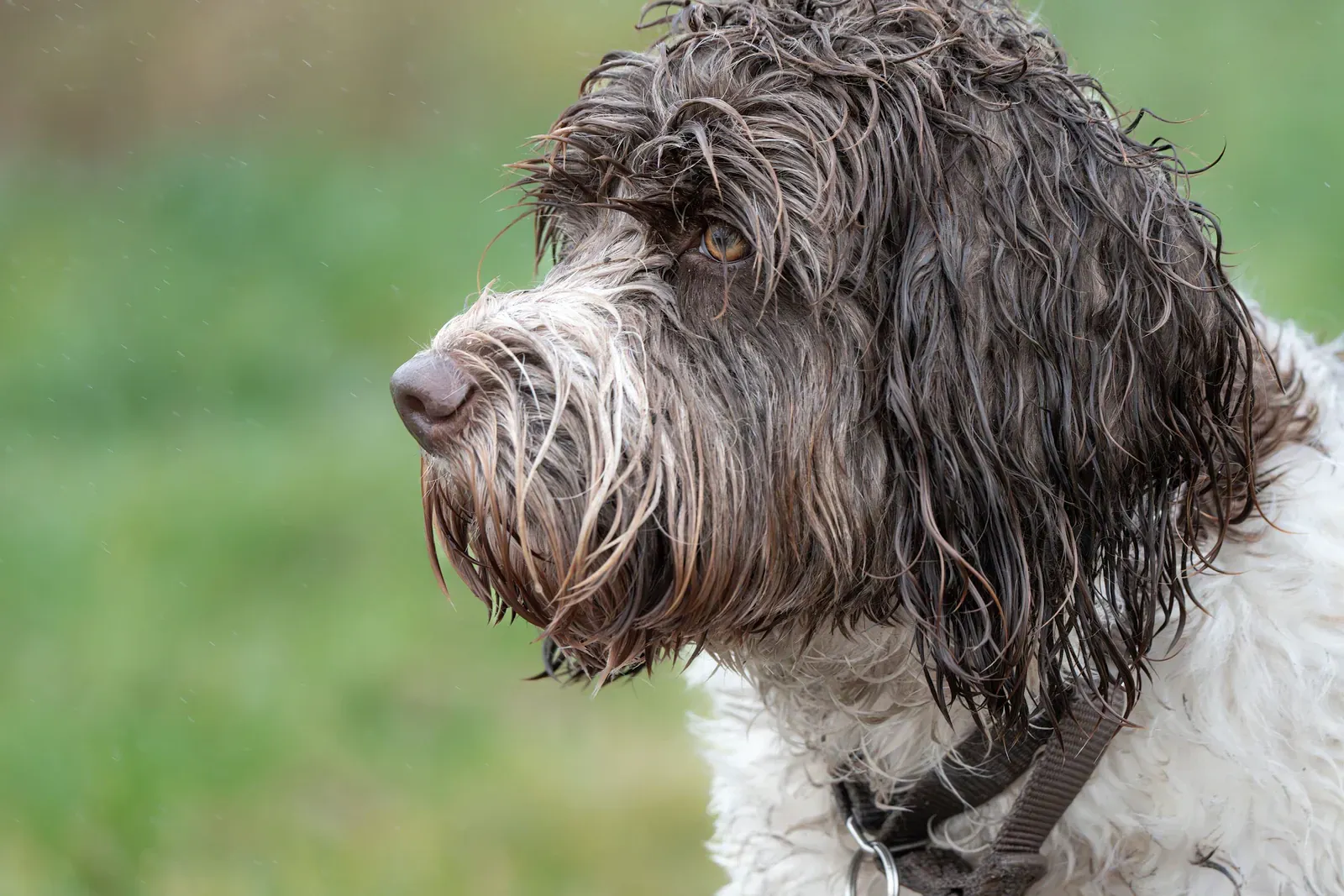
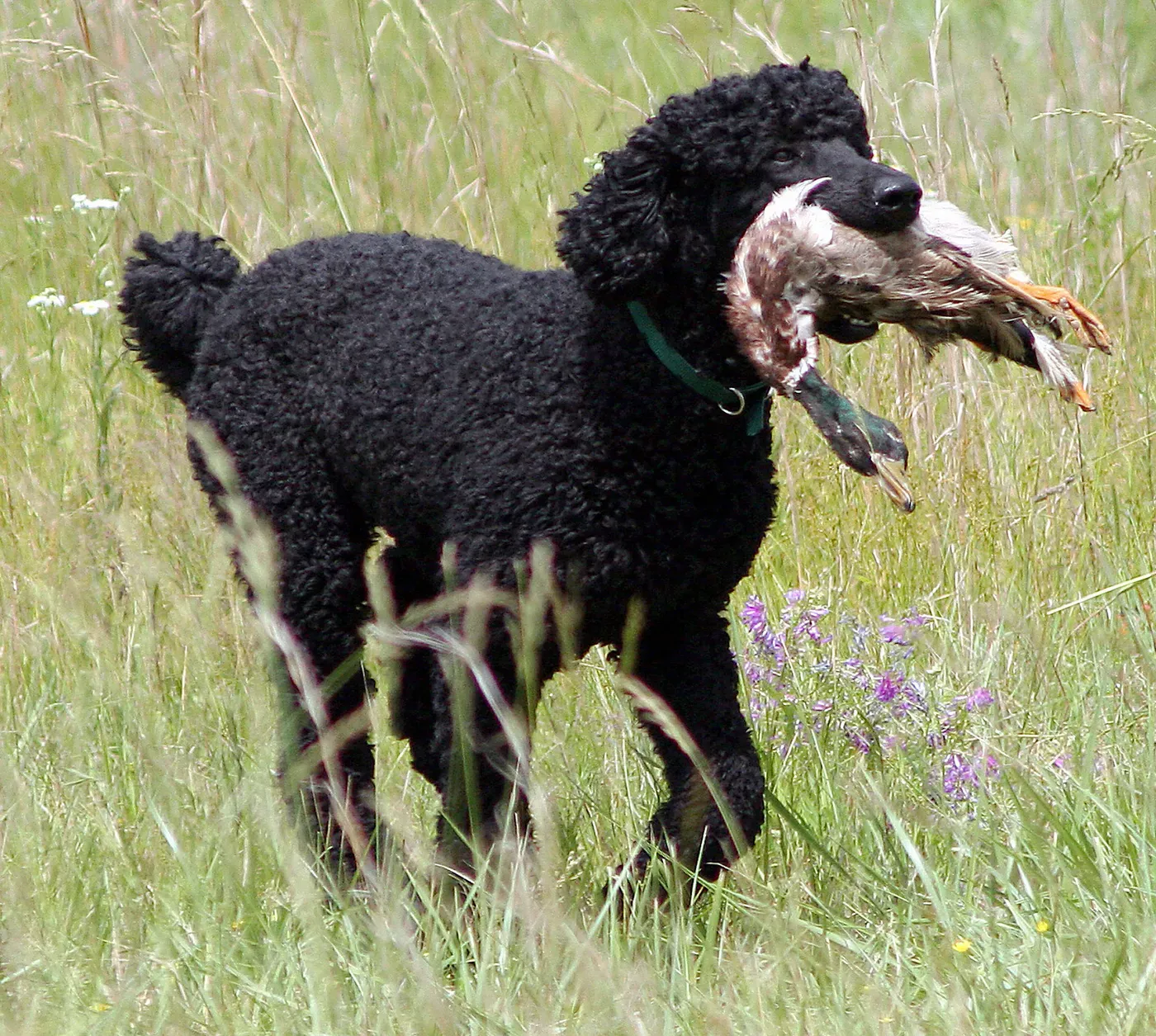
Water dogs. Before the 1800s, many European countries had their own curly water dog, used by hunters to retrieve ducks. France had the Barbet, England the English Water Spaniel, Ireland the Irish Water Spaniel, the Netherlands the Wetterhoun, Spain the Spanish Water Dog, Portugal the Portuguese Water Dog and Italy the Lagotto Romagnolo.
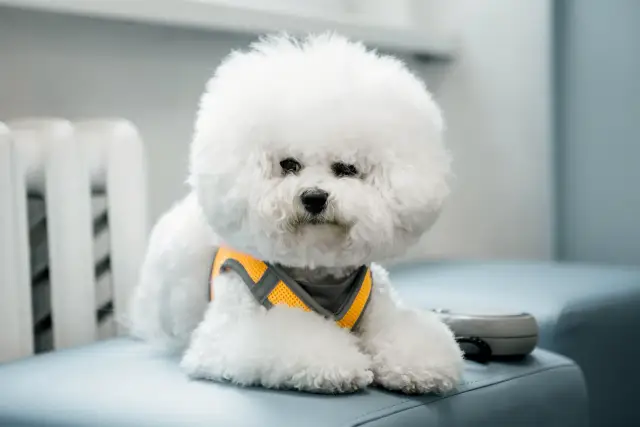
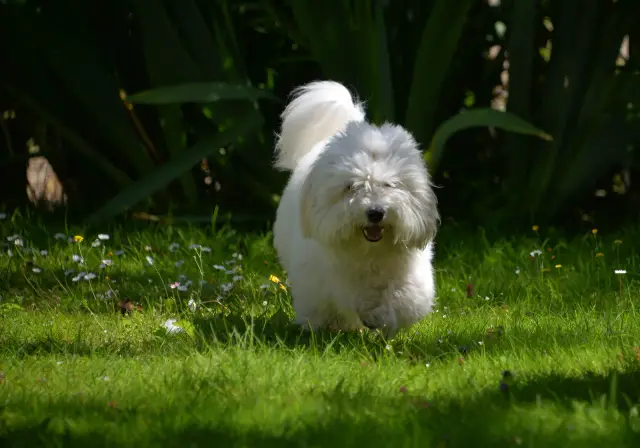
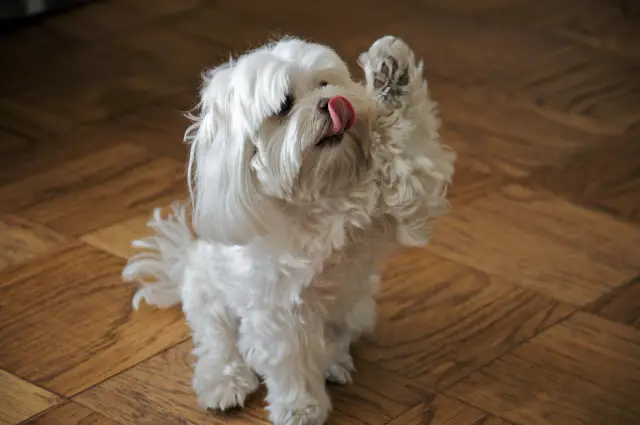
Bichons. These are small white or pale lapdogs from the Mediterranean, with the Maltese and the extinct Melitaean Dog of Malta at the old end. They spread by sea to Spain, France, Italy, Belgium and, by Spanish ships, to the Atlantic islands and Cuba.
The two stories overlap in the Poodle, which is a water dog by origin and a companion by fashion. The French name "barbichon" is the root of the word "bichon," and the Barbet is a "bearded" dog. The names share a root.
Why are they called poodles?
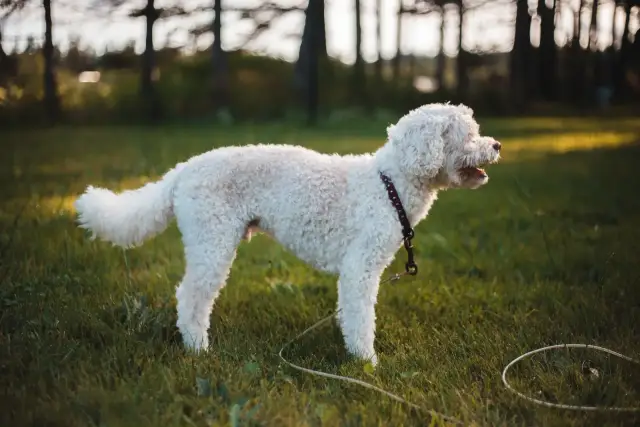
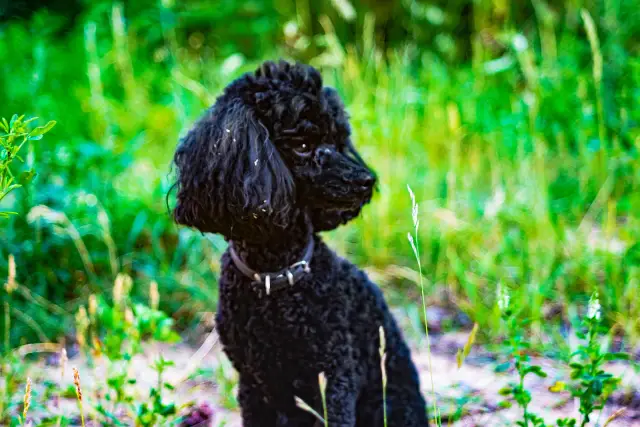
The English word "Poodle" comes from the German Pudel, from Low German pudeln, "to splash." The French name Caniche is tied to duck hunting, from a word for duck (the atlas data notes it as chien canard). The Poodle's origin is disputed. Many sources say Germany. The FCI lists France as the country of origin and holds that the Poodle descends from the Barbet, and some cynologists share that view. The 17th-century artworks from Germany that show Poodle-type dogs are the oldest pictures cited.
 GuideIs your dog suited to therapy work?How to make your dog a therapy dog: temperament checklist, first training steps, how Pet Partners, TDI and Pets As Therapy assess dogs, and welfare limits.
What is the history of the Poodle family?
 GuideDog Clothes: When Dogs Need Coats, and a Short History of Dog FashionDo dogs need coats in winter? When clothes help, when costumes stress a dog, safe fit, reflective gear, and a short history of dog fashion and dog art.
Before 500 CE: lapdogs of Malta
The atlas data date the Melitaean Dog of Malta, a toy dog of Greek and Roman times, from about 400 BCE to 100 CE. It is extinct, and its link to the modern bichons is a matter of history, not DNA. The Maltese appears in the atlas data from 500 BCE.
1200 to 1600: water dogs and lapdogs
- 1200s. The Portuguese Water Dog and the Bolognese are in the atlas data, each with rough dates.
- 1400s. Poodle-type water dogs appear, by the atlas data from about 1400.
- 1500s. The Barbet, Lagotto, Spanish Water Dog, Wetterhoun, Löwchen and English Water Spaniel all appear in the atlas data.
1600 to 1900: bichons across the sea
- 1600s. The atlas data places the Havanese and the Coton de Tulear at about 1600, and the Havanese forerunner, the Blanquito de la Habana, is said to descend from the Bichon Tenerife. The Coton de Tulear is believed to descend from Tenerife dogs brought to Madagascar.
- 1816. The Tweed Water Spaniel is described as a cross with the Newfoundland, probably a St. John's water dog. It was later used to start the Golden Retriever. See Retriever.
- 1874. The UK Kennel Club recognises the Poodle. The American Kennel Club follows in 1886.
1900 to today: new breeds from old types
- 1930s. The atlas data end the "appeared" ranges of the Bichon Frisé and Portuguese Water Dog at 1933 and 1938, the period when they were standardised as modern breeds.
- 1945 to 1960. The Moscow Water Dog, a large Soviet water dog, is made and soon lost.
- 1951 to 1966. The Bolonka is bred in Russia from French lapdogs of Bolognese and Bichon type.
- 1989. The first Labradoodle is bred in Australia. See the doodle section below.
- Late 1900s and 2000s. Spanish Water Dog, Lagotto and Cantabrian Water Dog are recorded or recognised more widely, and the Markiesje is set up in the Netherlands.
Some of these dates are rough and come from breed histories and the atlas data, not from stud books.
 Save
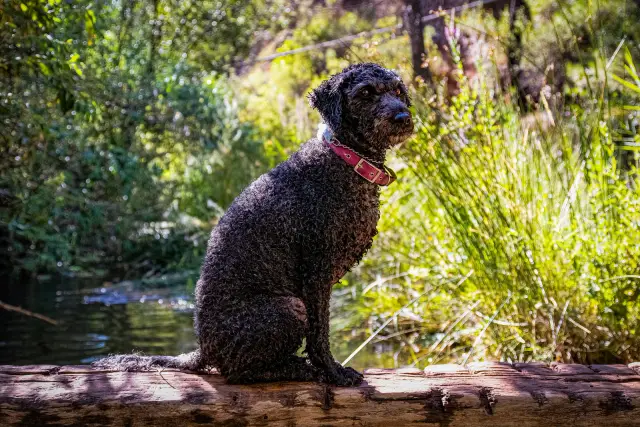
Who are the members of the Poodle family?
Here are all 20 breeds in the atlas data. The 6 breeds with DNA tested in the study come first. The other 14 are placed by history and are hidden until you choose to show all 20. "Appeared" is the period in which the breed or type is first documented in the atlas data, and some dates are rough. Only the breeds with an article in this atlas are linked.
 GuideHow to adopt a dog from a shelter or rescueHow to adopt a dog from a shelter or rescue: the process, costs in general terms, choosing a dog, the first weeks and what if it does not work out.
| Breed | Country | Status | Size | Appeared | DNA-tested |
|---|---|---|---|---|---|
| Maltese | Malta | Living | Toy | 500 BCE to 1888 | Yes (Parker 2017) |
| Portuguese Water Dog | Portugal | Living | Medium | 1200 to 1938 | Yes (Parker 2017) |
| Bichon Frisé | Belgium, France | Living | Small | 1300 to 1933 | Yes (Parker 2017) |
| Poodle | France | Living | Medium | 1400 to 1874 | Yes (Parker 2017) |
| Coton de Tulear | Madagascar | Living | Small | 1600 to 1970 | Yes (Parker 2017) |
| Havanese | Cuba | Living | Toy | 1600 to 1991 | Yes (Parker 2017) |
| Melitaean Dog | Malta | Extinct | Toy | 400 BCE to 100 CE | By history |
| Bolognese | Italy | Living | Small | 1200 to 1500 | By history |
| Barbet | France | Living | Medium | 1500 to 1600 | By history |
| English Water Spaniel | United Kingdom | Extinct | Medium | 1500 to 1800 | By history |
| Lagotto Romagnolo | Italy | Living | Medium | 1500 to 1991 | By history |
| Löwchen | France | Living | Toy | 1500 to 1961 | By history |
| Spanish Water Dog | Spain | Living | Medium | 1500 to 1980 | By history |
| Wetterhoun | Netherlands | Living | Medium | 1500 to 1943 | By history |
| Red Decoy Dog | United Kingdom | Extinct | Medium | 1600 to 1800 | By history |
| Cantabrian Water Dog | Spain | Living | Medium | 1700 to 2011 | By history |
| Tweed Water Spaniel | United Kingdom | Extinct | Medium | 1700 to 1850 | By history |
| Moscow Water Dog | Russia | Extinct | Large | 1945 to 1960 | By history |
| Bolonka | Russia | Living | Toy | 1951 to 1966 | By history |
| Markiesje | Netherlands | Living | Small | 1975 to 1990 | By history |
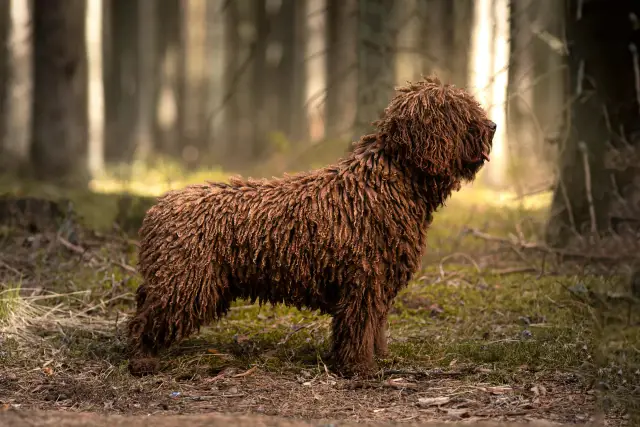
Who descends from whom, and which ties are strongest?
Two kinds of evidence are used here. One is written history: what breeders say they crossed. The other is DNA, measured in megabases (Mb).
 GuideBanned and restricted dog breeds by countryWhich dog breeds are banned or restricted, country by country: UK, Ireland, France, Germany, Denmark, Norway, Spain, Australia and more.
The strongest ties among Poodle family breeds, from the Parker study as recorded in the atlas data:
| Pair | Shared DNA (Mb) | What it tells us |
|---|---|---|
| Havanese and Maltese | 125.9 | Bichon cousins, long linked by sea trade |
| Bichon Frisé and Havanese | 29.0 | The Havanese descends from Bichon-type dogs |
| Havanese and Poodle | 17.6 | A smaller but clear link between lapdogs and Poodle |
| Coton de Tulear and Maltese | 16.1 | The Coton is a bichon of Madagascar |
| Bichon Frisé and Maltese | 15.3 | Mediterranean lapdog stock |
| Bichon Frisé and Poodle | 12.9 | Both are French-named curly dogs |
| Poodle and Portuguese Water Dog | 12.9 | Curly water dogs of different countries |
| Maltese and Poodle | 10.7 | Small, but present |
Source: Parker et al. 2017, Cell Reports, shared haplotypes between 161 breeds (1,346 dogs).
The Maltese and Havanese result is the clearest. The two are far apart on the map, but the Havanese forerunner is said to descend from the Bichon Tenerife, so a high shared figure fits a common bichon root.
In the written record, the Bolonka comes from Bolognese and Bichon types, with Poodle, Shih Tzu and Pekingese listed as possible extra ancestors at low confidence. The Poodle may descend from the Barbet, a view held by the FCI and some cynologists, and the atlas data give it a low confidence. The Tweed Water Spaniel is recorded as a cross with the Newfoundland.
Several of the atlas placements follow function more than ancestry. The Moscow Water Dog, for example, is recorded as derived from the Newfoundland, the Caucasian Shepherd Dog and the East European Shepherd, none of which is in this family, so it sits here as a "water dog" by name and job.
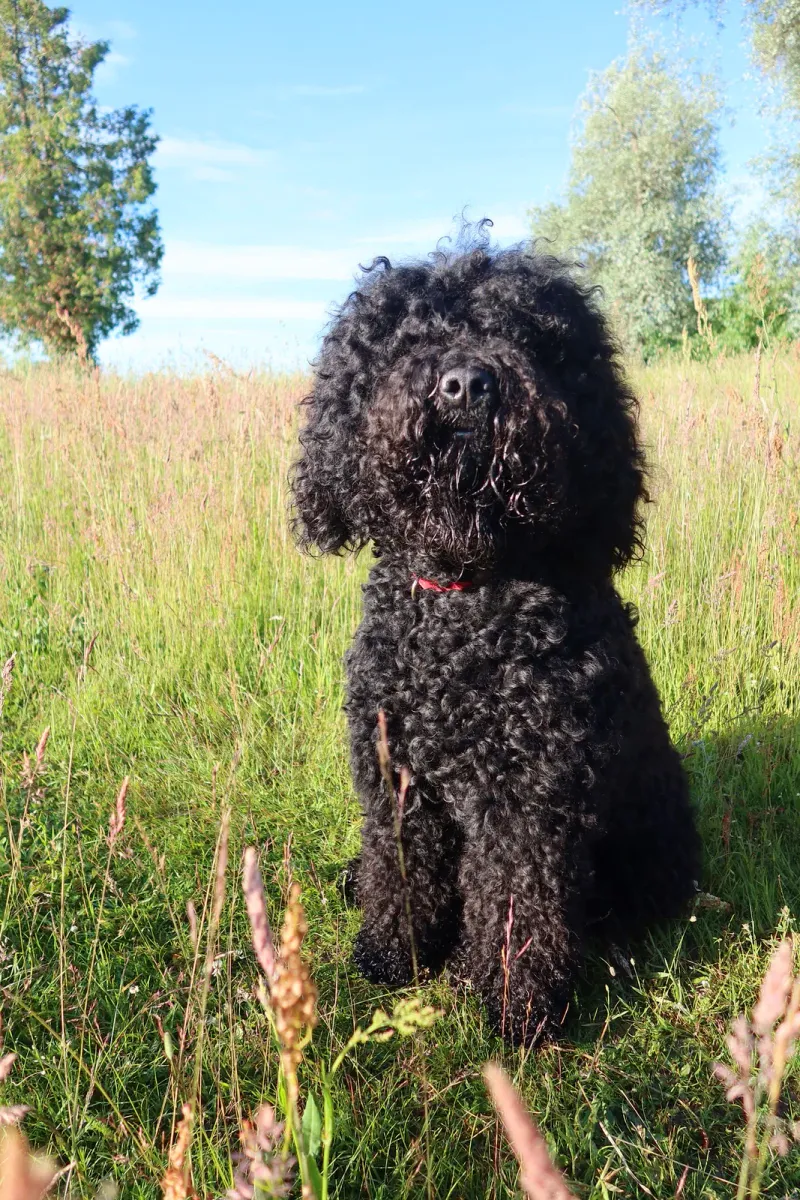
What do members of the Poodle family have in common?
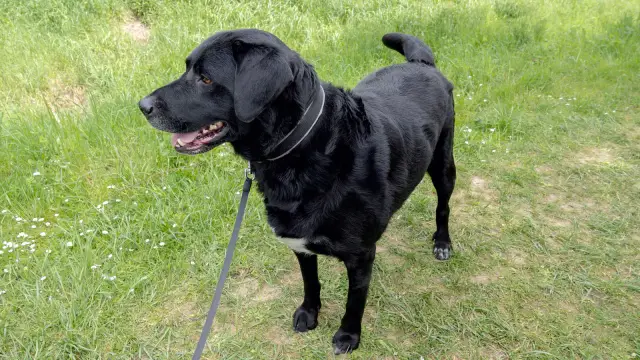
Coat. Curly, wavy or corded hair that sheds little. Shedding is low but not zero, and the coat needs regular brushing and trimming. The Löwchen's "lion clip" and the Poodle's continental clip both began as working or practical cuts.
 ArticleThe first known dog on every continentEarliest accepted dog on each continent, from Bonn-Oberkassel to the dingo: dates, sites, how dogs arrived and which breeds carry those first dogs.
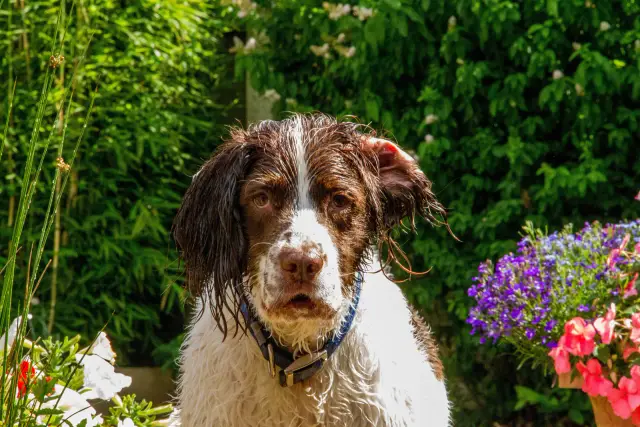
Water work. The water dogs have a dense, water-shedding coat and are strong swimmers. The Poodle's famous clip is said to have started as a working haircut: hair cut from the hindquarters to swim better, with hair left on the chest and joints for warmth. This is a common account, not a documented one.
Size range. The family covers toy, small, medium and large dogs, though most are medium or small.
Temperament. People-focused, bright and easy to train. The bichons are cheerful companions, and the water dogs are working dogs that want a job. This is a general tendency, not a promise, and each dog differs.
What health issues are linked to the Poodle family?
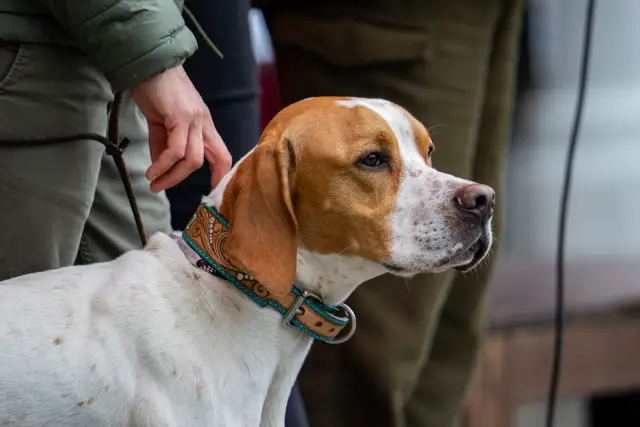
Most dogs in this family live healthy lives. Health depends on the breed, not on the family, so only a few well-documented examples are given.
 GuideDog hybrids: what dogs can and cannot breed withCan dogs breed with wolves, coyotes, jackals or foxes? Wolfdogs, coydogs, the Sulimov dog and Dogxim explained, with chromosomes and DNA studies.
- Autoimmune disease in Standard Poodles. Sebaceous adenitis, a skin disease, and Addison's disease, which affects the adrenal glands, both rose in Standard Poodles after the mid-1900s. Pedersen et al. (Canine Genetics and Epidemiology, 2015) studied 761 Poodles and linked the rise to inbreeding from a small group of founders. No breed-wide percentage was found. Vets treat Addison's with daily medicine, and breeders choose pedigrees carefully.
- Heart and storage disease in Portuguese Water Dogs. Juvenile dilated cardiomyopathy is an inherited heart disease of young puppies. A study of 124 puppies found 10 affected (Sleeper et al. 2002), but that is one group, not a breed-wide rate. GM1 gangliosidosis is another inherited disease with a DNA test.
- Eye and knee problems in small types. Progressive retinal atrophy (prcd-PRA) in Toy and Miniature Poodles, and patellar luxation in toy dogs generally, are screened by breed clubs. A DNA test exists for PRA.
- Bloat in large types. Glickman and colleagues at Purdue (1994) listed the Standard Poodle among higher-risk breeds for gastric dilatation-volvulus.
Ask a vet or the breed club about the specific breed's known conditions before choosing a puppy. See the Poodle article for more.
Doodles and other Poodle crosses
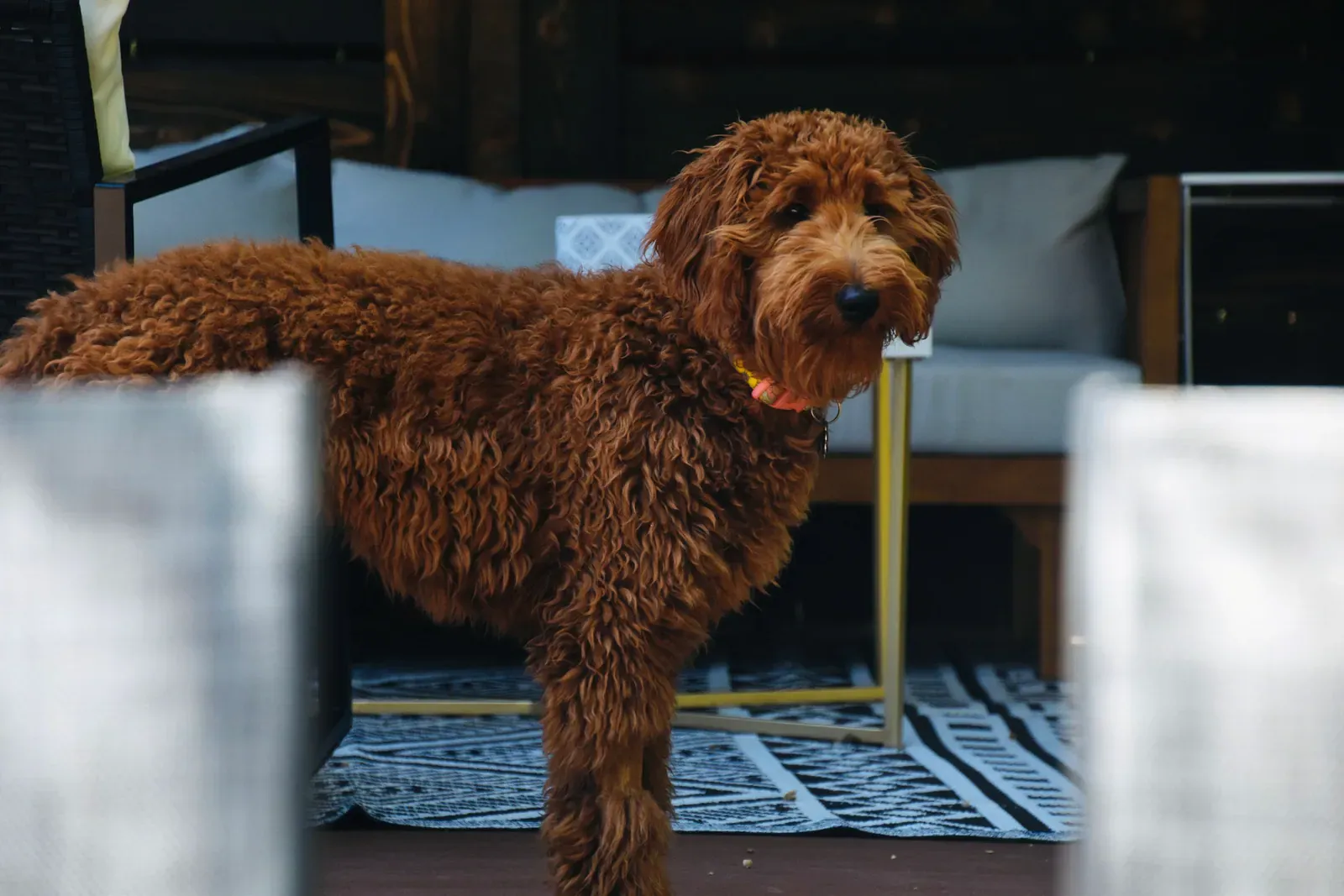
The Poodle is the base for the largest group of designer crosses, the doodles. These are crossbreeds, not recognised breeds, so they are not members of the family in this atlas.
 GuideDogs of Japan: the native breeds and their storiesJapanese dog breeds explained: the six Nihon Ken, the Chin, Tosa, Japanese Spitz and Terrier, Hachiko, wartime near-extinction, DNA and who they suit.
- Labradoodle. Wally Conron, a breeder at Royal Guide Dogs Victoria in Australia, crossed a Labrador Retriever and a Poodle in 1989 to try to produce a guide dog for a blind woman whose husband was allergic. Years later he said publicly that he regretted the result, because breeders with little concern for health followed his idea (interviews reported in 2019).
- Goldendoodle, Cockapoo, Cavapoo, Maltipoo. Crosses of the Poodle with a Golden Retriever, a Cocker Spaniel, a Cavalier King Charles Spaniel and a Maltese. The Maltipoo is a cross within this family, since the Maltese is a member.
In practice, a first-generation cross has no fixed coat, size or temperament. One puppy may have a low-shedding curly coat while its sibling sheds like a Labrador. Health depends on both parents, and a well-bred cross needs screening for the conditions of both breeds. A purebred Poodle is more predictable. See Modern crossbreed.
Which Poodle family breeds are extinct?
Five of the 20 are extinct in the atlas data.
 GuideDogs in science and spaceSpace dogs Laika, Belka and Strelka, Pavlov's dogs, Snuppy the clone, the dog genome and scent detection: what dogs did for science, and what it cost them.
- Melitaean Dog: an ancient toy dog of Malta, from about 400 BCE to 100 CE.
- English Water Spaniel: a water dog of England, 1500 to 1800, and listed as a possible ancestor of the Curly-coated Retriever.
- Tweed Water Spaniel: a liver-coloured water dog of the Tweed valley, 1700 to 1850, and the mother of the first Golden Retrievers.
- Red Decoy Dog: a red dog used to lure waterfowl into netted traps, 1600 to 1800.
- Moscow Water Dog: a large Soviet water dog, 1945 to 1960.

Are there surprises in the Poodle family?
- Poodles are not spaniels. The English Water Spaniel and Tweed Water Spaniel have the name, but they sit here, not in the Spaniel family.
- The Poodle family feeds the Retriever family. The Tweed Water Spaniel is a parent of the Golden Retriever, and the English Water Spaniel is a possible parent of the Curly-coated. See Retriever.
- Bichons and water dogs share a family. Lapdogs and gundogs do not share a kennel club group, but they share DNA.
- The Irish Water Spaniel is not here. It groups with retrievers in the atlas data.
- The Moscow Water Dog is placed by job. Its recorded parents are all outside the family.
 GuideDogs in myth around the worldFrom Anubis and Cerberus to Fenrir, Xolotl and the Tiangou: how cultures across the world imagined dogs as guardians, guides and monsters.
What does research say about the Poodle family?
The key paper is Parker et al., "Genomic analyses reveal the influence of geographic origin, migration, and hybridization on modern dog breed development," Cell Reports, 2017. It built a family tree of 161 breeds from 1,346 dogs. A Poodle clade came out, though only 6 of the atlas 20 breeds were in the study, and two of those have weak support. The other 14 follow written history. These assignments are best estimates that could shift when more breeds are sequenced. For the bigger picture, see the dog family tree.
 GuideDogs in Legends and Fairy TalesDogs in folklore and fairy tales: Black Shuck, The Tinderbox, Saint Guinefort, Panhu, Greyfriars Bobby, Barry and Old Drum, with legend and history kept apart.
Which Poodle family breed suits which owner?
This is a guide to temperament, not a promise for any single dog.
 GuideDog laws by country: tax, insurance and licencesDog tax, compulsory liability insurance, licences, microchips and leash rules in Germany, Austria, Switzerland, Spain, Ireland, the UK, the US and more.
- Apartment or city life. Bichons such as the Bichon Frisé, Maltese and Havanese fit small homes. All still need daily walks and brushing.
- Active families. The Standard Poodle and Portuguese Water Dog like swimming and jobs.
- First-time owners. A Poodle or Havanese is usually easy to train. Water dogs such as the Spanish Water Dog or Lagotto need more work.
- Allergy-minded owners. The low-shedding coats of the Poodle, Bichon Frisé and Havanese shed less, but no dog is allergen-free.
- Owners who like grooming. All of them. Plan regular trims or learn to do them yourself.
Fun facts about the Poodle family
- The word "Poodle" means "splasher," from German.
- The Havanese and the Maltese share 125.9 Mb of DNA, the highest link in the family.
- The UK Kennel Club recognised the Poodle in 1874, the American Kennel Club in 1886.
- The Markiesje is named for the Dutch "little marquis."
- The Löwchen's name means "little lion," for its traditional clip.
- The Tweed Water Spaniel is extinct, yet it lives on in every Golden Retriever.
 Family storyAlpineRead the family's story: origins, members, DNA

Related families
- European dogs: the parent of the Poodle family.
- Retriever: the Golden and Curly-coated Retrievers trace partly to Poodle family water dogs.
- Spaniel: the land spaniels, often confused with the water spaniels here.
- Modern crossbreed: the doodles and other designer crosses.
- Asian toy: the Shih Tzu and Pekingese, listed among possible Bolonka ancestors.
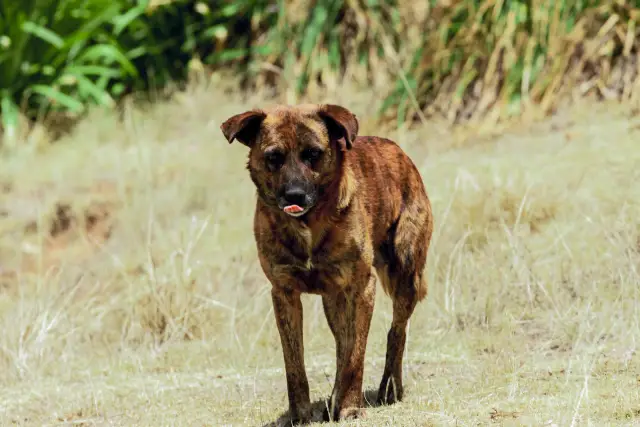 Family storyAmerican Cur & FeistRead the family's story: origins, members, DNA

Frequently asked questions
What breeds are related to Poodles?
In the atlas data, the bichons (Maltese, Bichon Frisé, Havanese, Coton de Tulear) and water dogs (Portuguese Water Dog, Barbet, Spanish Water Dog, Lagotto).
Is the Portuguese Water Dog related to the Poodle?
Yes. They share 12.9 Mb in the Parker study, though the Portuguese Water Dog has weak clade support.
Is a Poodle a water dog?
By origin, yes. It began as a gundog that retrieved from water.
Are doodles in the Poodle family?
No. They are crossbreeds, not recognised breeds, so they sit with Modern crossbreed.
Do Poodle family breeds shed?
Little, but not never. Plan regular grooming.
How long do Poodles live?
The atlas data gives 12 to 16 years. A UK study (Lewis et al., Canine Genetics and Epidemiology, 2018) reported a median near 12 years for Standards, about 14 for Miniatures and nearly 15 for Toys.
Read next
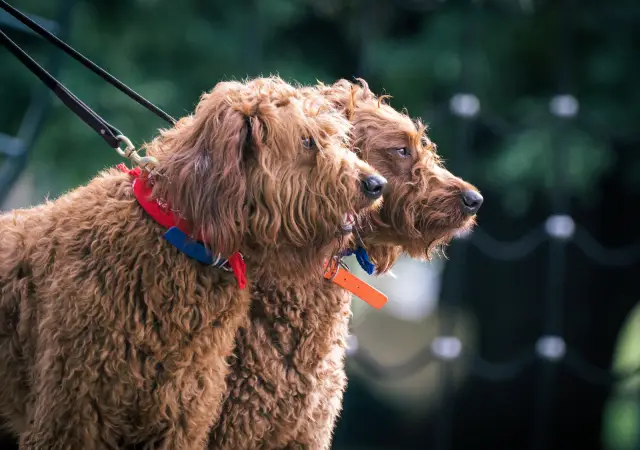 Family storyModern CrossbreedRead the family's story: origins, members, DNA
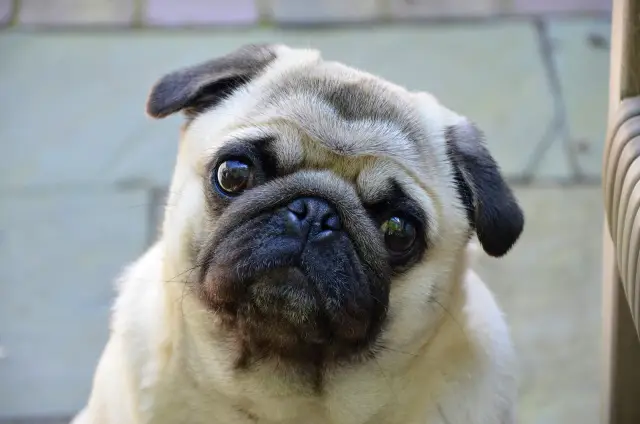 Family storyToy SpitzRead the family's story: origins, members, DNA
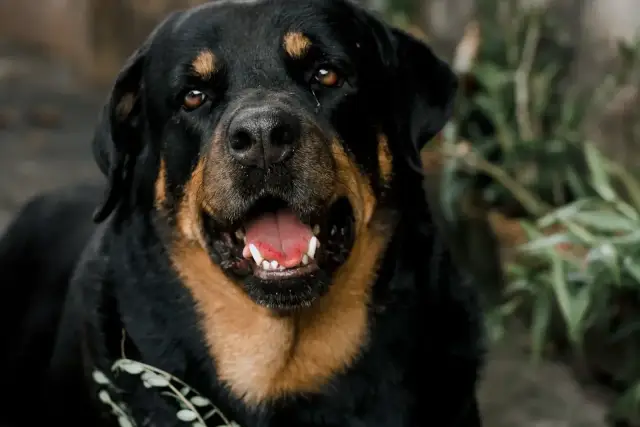 Family storyDroverRead the family's story: origins, members, DNA
Sources (10)
- Parker, H. G., et al. (2017). Genomic analyses reveal the influence of geographic origin, migration, and hybridization on modern dog breed development. Cell Reports, 19(4), 697 to 708.
- Pedersen, N. C., et al. (2015). The effect of genetic bottlenecks and inbreeding on the incidence of two major autoimmune diseases in standard poodles, sebaceous adenitis and Addison's disease. Canine Genetics and Epidemiology.
- Sleeper, M. M., et al. (2002). Juvenile dilated cardiomyopathy in Portuguese Water Dogs.
- Lewis, T. W., et al. (2018). Longevity and mortality in Kennel Club registered dog breeds in the UK in 2014. Canine Genetics and Epidemiology.
- Glickman, L. T., et al. (1994). Purdue University study on risk factors for canine gastric dilatation-volvulus.
- Fédération Cynologique Internationale, Caniche (Poodle), standard no. 172.
- The Kennel Club (UK) and American Kennel Club, Poodle breed information and history.
- News interviews with Wally Conron on the Labradoodle, September to October 2019.
- University of California Davis Veterinary Genetics Laboratory, Portuguese Water Dog test pages.
- Breed records in the atlas data (Dogs Atlas, internal data).