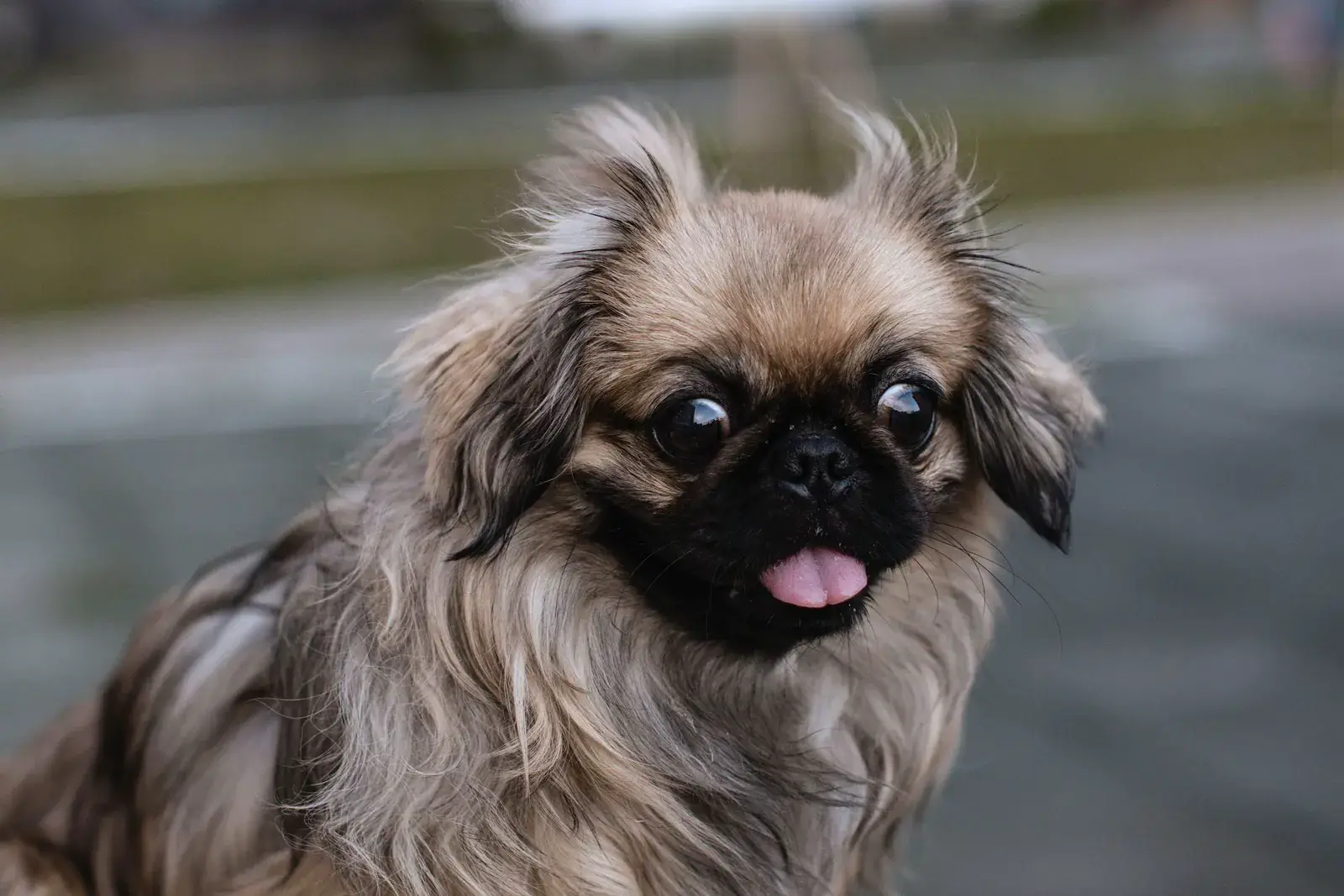
What are the Asian Toy breeds?
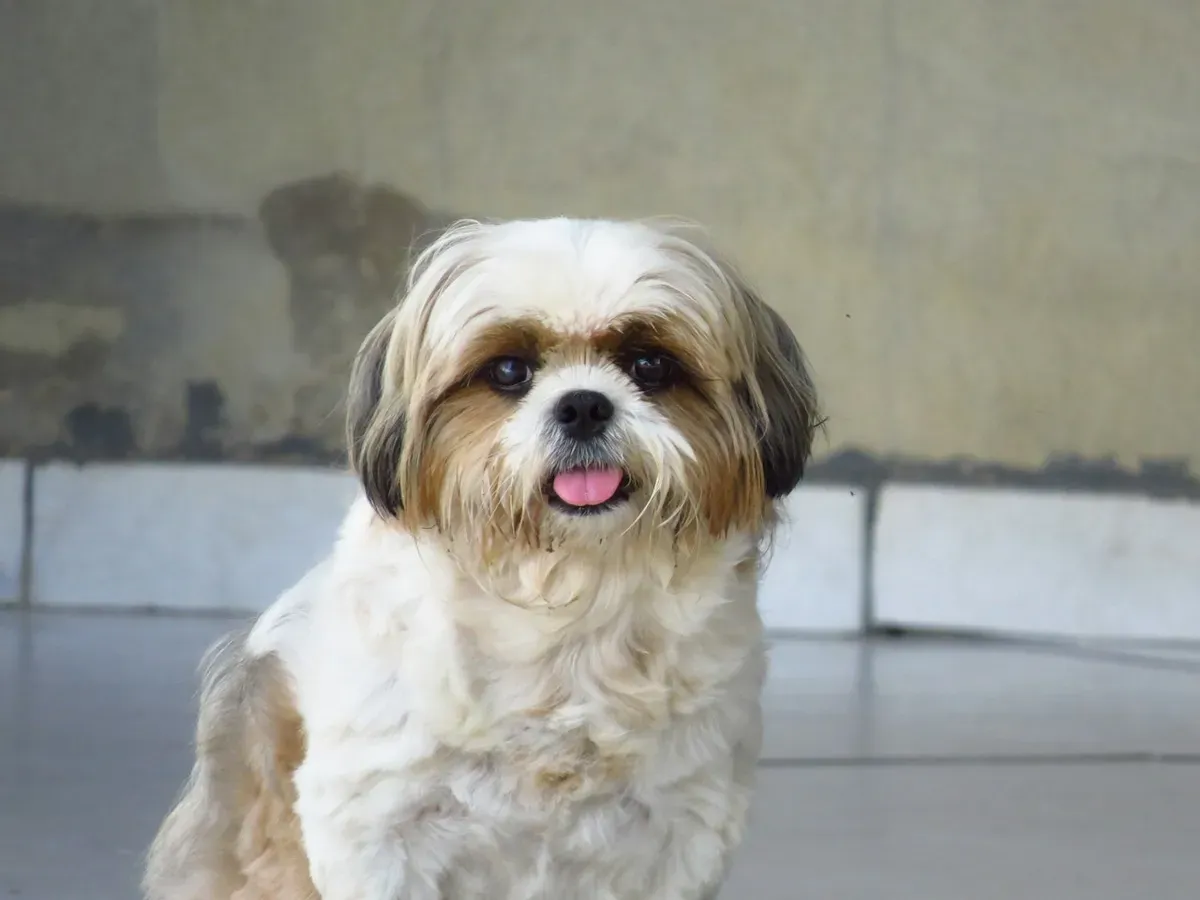
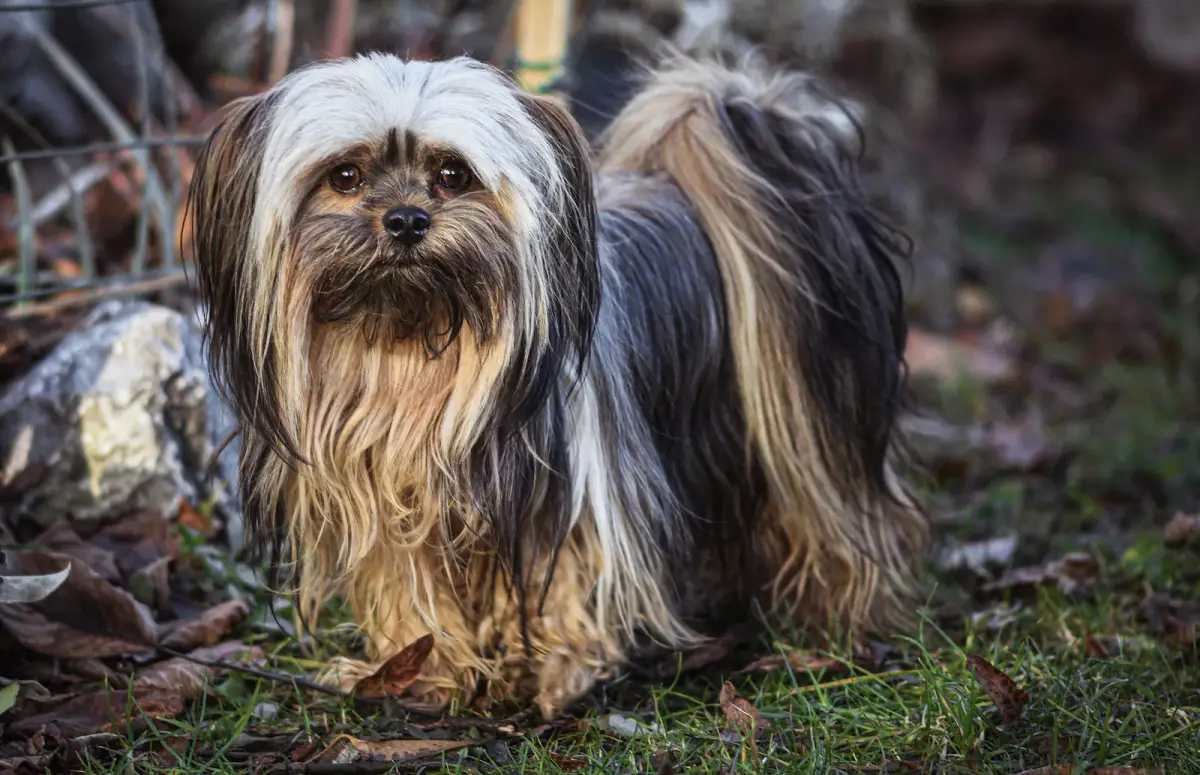
The Asian Toy family is a small group of seven breeds from China, Tibet and Japan: the Pekingese, Shih Tzu, Lhasa Apso, Japanese Chin, Tibetan Spaniel, Tibetan Terrier and the extinct Lo-sze. They are mostly small companion dogs with long coats, bright faces and stories of palaces and monasteries. Several of them are flat-faced, and that fact shapes the health section below.
 Save
 Save
 GuideBanned and restricted dog breeds by countryWhich dog breeds are banned or restricted, country by country: UK, Ireland, France, Germany, Denmark, Norway, Spain, Australia and more.
In this atlas, a family is a group of breeds found together on the dog family tree by comparing genomes. It is a genetic idea, not the same as the kennel club "Toy" group. The Tibetan Terrier is a medium dog, not a toy, and the Pug, a classic Chinese toy, is not here. This page explains who belongs and why.
Quick facts about the Asian Toy family
| Fact | Answer |
|---|---|
| Family type | Genetic clade (Parker et al. 2017) |
| Parent | East Eurasian dogs |
| Breeds in this atlas | 7 (6 living, 1 extinct) |
| Breeds with DNA tested in the study | 6, all with strong support |
| Main homelands | China (6, including Tibet) and Japan (1) |
| Typical size | Small (4 of 7). Also 2 toy and 1 medium |
| Shared look | Long, profuse coats and a compact body |
| Core job | Companion, with temple and palace roles in the old stories |
 GuideDog laws by country: tax, insurance and licencesDog tax, compulsory liability insurance, licences, microchips and leash rules in Germany, Austria, Switzerland, Spain, Ireland, the UK, the US and more.
Family or group: what is the difference?
In this atlas, "family" always means a DNA clade. "Group" is used only for kennel club groups such as the AKC Toy Group or FCI Group 9 (companion and toy dogs).
 GuideHow to get an assistance dogHow to get a service dog or assistance dog in the USA, UK, Germany, France, Spain, Italy and the Netherlands: accredited schools, waits, owner-training and travel.
The two do not match. Six of the seven breeds were sampled by Parker et al. (2017) and fall into one Asian Toy clade with strong support. The seventh, the Lo-sze, is extinct and is placed here by history. The Tibetan Terrier is in the family by DNA, even though it is not a toy, and the Pug sits in the Toy Spitz family despite its Chinese roots.
Where do the Asian Toy breeds sit in the tree?
The family has one parent in the atlas data, East Eurasian dogs, the broad branch for dogs of eastern Asia. Its closest relatives are the Asian Spitz family, which holds dogs such as the Shiba Inu and Akita, and the Arctic dogs. See the dog family tree for the whole picture.
 GuideIs your dog suited to therapy work?How to make your dog a therapy dog: temperament checklist, first training steps, how Pet Partners, TDI and Pets As Therapy assess dogs, and welfare limits.
One of the atlas records reaches outside the family: the Lo-sze is listed as an ancestor of the Pug and of the Griffon Bruxellois, which sit in Toy Spitz. That is a link by history, not DNA, and it is the only way the Pug connects to this family in the atlas data.
Where do the names come from?
Most of the names are places or animals.
 GuideService, therapy and emotional support dogs: what's the difference?Service dog vs emotional support dog vs therapy dog: the real differences, your rights in the USA and Europe, and why online certificates mean nothing.
- Pekingese is named for Peking, the old spelling of Beijing, where the breed was kept in the imperial court.
- Shih Tzu comes from the Chinese shīzi, "lion", for the lion-like dog of imperial art.
- Lhasa Apso is named for Lhasa, the Tibetan capital. Apso may come from a Tibetan word meaning "goat-like", for the coat.
- Japanese Chin may come from the Japanese chiisai inu, "small dog".
- Tibetan Spaniel is called a spaniel because it looks like a lapdog spaniel. It is not related to the spaniels.
- Tibetan Terrier is called a terrier because European travellers thought it looked like one. It is not a terrier.
- Lo-sze is a short form of the Chinese name Lo-Chiang-Sze.
The two misnomers, "spaniel" and "terrier", are the best warning that a name tells you little about a Tibetan dog.
What is the history of the Asian Toy breeds?
 GuideDogs in science and spaceSpace dogs Laika, Belka and Strelka, Pavlov's dogs, Snuppy the clone, the dog genome and scent detection: what dogs did for science, and what it cost them.
Before 1600: temples, courts and legends
Flat-faced and long-coated small dogs were kept in China and Tibet for a long time. The atlas records give the Lo-sze the earliest range, from 400 BCE, with low confidence. The Pekingese and Japanese Chin follow from about 700 CE, the Lhasa Apso from 800 CE, and the Tibetan Spaniel and Tibetan Terrier from about 1000. All of these dates are broad estimates.
Two ideas run through the stories, and both are best treated as tradition. The first is the lion. Stone lions guarded Chinese temple and palace gates, and writers later linked the small dogs to the lion of Buddhist art. The second is the gift: small dogs are said to have travelled between courts and monasteries as presents. The Pekingese article records the legend that the Dalai Lama sent such dogs to the imperial court, and notes that no source gives a date or a document. For the wider story of guardian lions, see dogs in myth.
For the Japanese Chin the stories disagree on dates. Breed clubs give 520, 690 or 732 CE for the first arrival from China or Korea, or say Buddhist monks brought the dogs in the 5th century. The American Kennel Club says the earliest origins are in China, not Japan. A reader should treat all of these dates as legends.
1600 to 1900: Qing court and the Western discovery
The Shih Tzu enters the atlas records from about 1600, under the Qing dynasty (1644 to 1912). The Empress Dowager Cixi (1835 to 1908) is the best-known palace owner of small dogs, and her name is attached to many stories that are hard to verify. See the Pekingese and Shih Tzu articles for which are documented.
The best-documented event is from 1860. During the Second Opium War, British and French troops looted the Summer Palace near Beijing. Captain John Hart Dunne found a small dog there and gave it to Queen Victoria in 1861, and she named it Looty. This is how the Pekingese reached the West, according to the Royal Collection Trust.
1900 to today: clubs, close calls and imports
Between 1928 and 1952 about 14 dogs were taken to England and Scandinavia, and nearly every Shih Tzu alive today descends from them. Accounts say the breed was almost lost in China after 1949, though the wording varies. The Shih Tzu Club of England was founded in 1934, and the UK Kennel Club recognised the breed in 1940. The American Kennel Club added it to the Stud Book in 1969.
In the atlas data the Lhasa Apso and Tibetan Spaniel are dated to 1934 and the Tibetan Terrier to 1937, the end of their formation period.
Who are the members of the Asian Toy family?
Here are all 7 breeds in the atlas data. The 6 breeds with DNA tested in the study come first. The last is placed by history and is hidden until you choose to show all 7. "Appeared" is the period in which the breed took shape, as best the atlas records can say.
 GuideHow to adopt a dog from a shelter or rescueHow to adopt a dog from a shelter or rescue: the process, costs in general terms, choosing a dog, the first weeks and what if it does not work out.
| Breed | Country | Status | Size | Appeared | DNA-tested |
|---|---|---|---|---|---|
| Japanese Chin | Japan | Living | Toy | 700 CE to 1900 | Yes (Parker 2017) |
| Pekingese | China | Living | Toy | 700 CE to 1860 | Yes (Parker 2017) |
| Lhasa Apso | China | Living | Small | 800 CE to 1934 | Yes (Parker 2017) |
| Tibetan Spaniel | China | Living | Small | 1000 to 1934 | Yes (Parker 2017) |
| Tibetan Terrier | China | Living | Medium | 1000 to 1937 | Yes (Parker 2017) |
| Shih Tzu | China | Living | Small | 1600 to 1934 | Yes (Parker 2017) |
| Lo-sze | China | Extinct | Small | 400 BCE to 1600 | By history |
 ArticleDog Breed Family Tree: How All Dog Breeds Are RelatedThe dog breed family tree from Ice Age wolves to 29 breed families.GuideHow to adopt a dog from a shelter or rescueHow to adopt a dog from a shelter or rescue: the process, costs in general terms, choosing a dog, the first weeks and what if it does not work out.
Who descends from whom, and which ties are strongest?
Two kinds of evidence are used. One is written history. The other is DNA: how many megabases (Mb, millions of DNA letters) two breeds share in matching stretches. A larger number means a closer shared ancestry, though it can also reflect a recent split or crossing.
 Family storyAlpineRead the family's story: origins, members, DNA
The strongest ties among Asian Toy breeds, from the Parker study as recorded in the atlas data:
| Pair | Shared DNA (Mb) | What it tells us |
|---|---|---|
| Pekingese and Shih Tzu | 155.4 | The closest pair; a Pekingese was added to the Shih Tzu in 1952 |
| Lhasa Apso and Shih Tzu | 142.1 | A Tibetan dog behind the Shih Tzu, by one theory |
| Pekingese and Tibetan Spaniel | 128.2 | Two palace and monastery dogs |
| Lhasa Apso and Pekingese | 110.6 | Close, though the breeds look different |
| Shih Tzu and Tibetan Spaniel | 80.4 | A shared cluster of small Tibetan and Chinese dogs |
| Lhasa Apso and Tibetan Spaniel | 55.1 | Two dogs of Tibetan monasteries |
| Japanese Chin and Pekingese | 28.7 | The Chin sits at the edge of the cluster |
| Tibetan Terrier and Lhasa Apso | 17.3 | The weakest link in the family |
Source: Parker et al. 2017, Cell Reports, shared haplotypes between 161 breeds (1,346 dogs).
The pattern is clear. The Pekingese, Shih Tzu, Lhasa Apso and Tibetan Spaniel form a tight core, with 55 to 155 Mb shared. The Japanese Chin and the Tibetan Terrier sit at the edge, with only 15 to 29 Mb each. The Chin also shares 17.1 Mb with the Shiba Inu, which is in a different family.
In the written record the Shih Tzu has two parents: a Pekingese cross, at medium confidence, and the Lhasa Apso at low confidence. One theory says it descended from a Pekingese and Lhasa Apso cross. That fits the DNA: the Shih Tzu shares more with each of them than they do with each other.
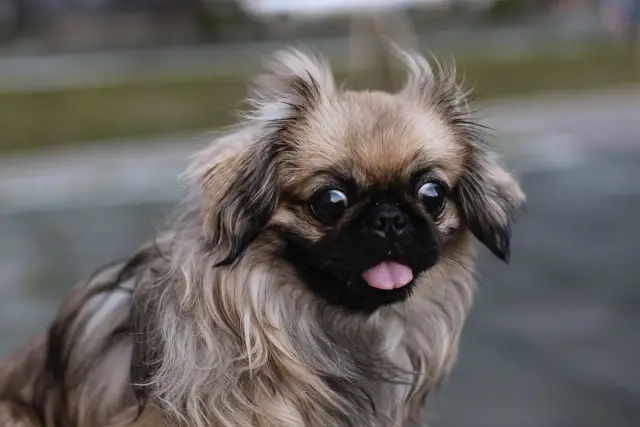

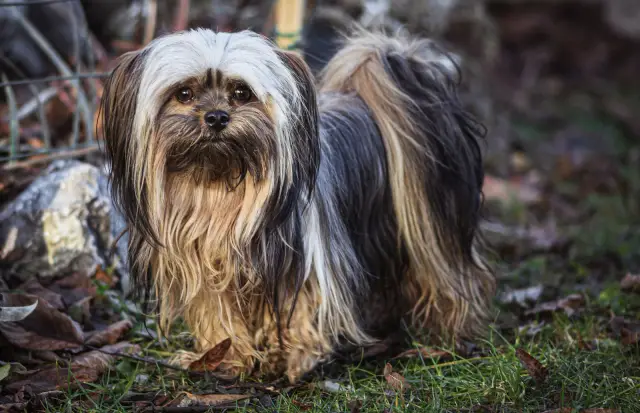
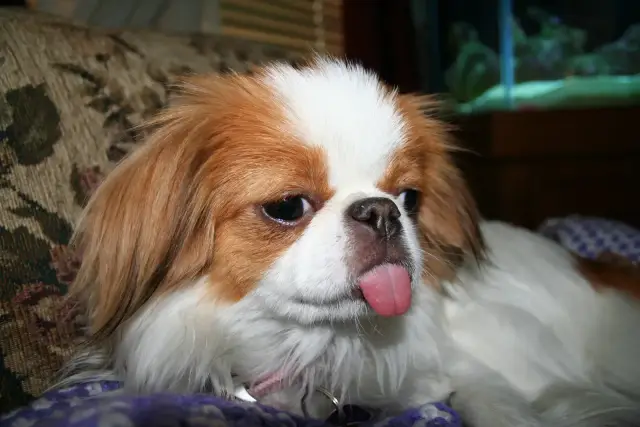
- Pekingese and Shih Tzu
- Lhasa Apso and Shih Tzu
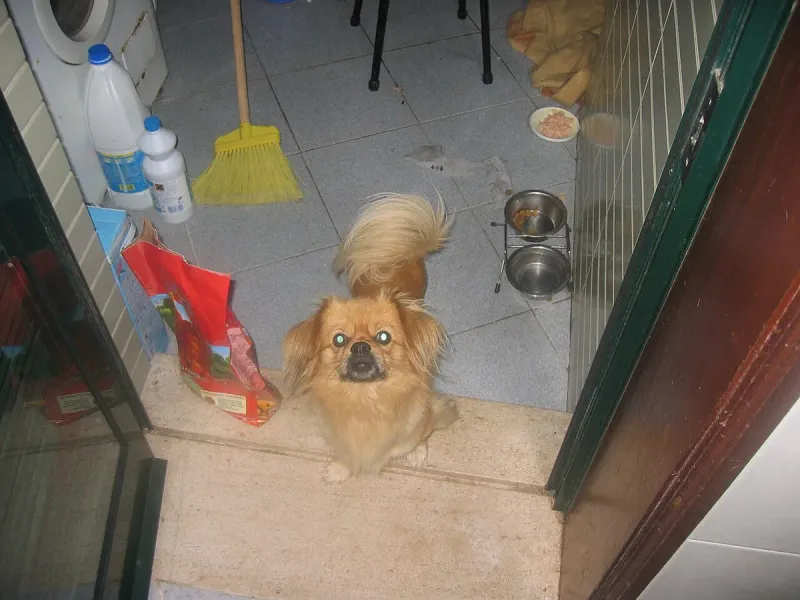 Pekingese and Tibetan Spaniel
- Lhasa Apso and Pekingese
- Shih Tzu and Tibetan Spaniel
- Lhasa Apso and Tibetan Spaniel
- Japanese Chin and Pekingese
 Tibetan Terrier and Lhasa Apso
An ancient or a mixed breed? Both. Pickrell and Pritchard (2012, PLoS Genetics) found that Chinese toy breeds, including the Pekingese and Shih Tzu, come from a mix of a population related to ancient East Asian breeds and a population related to modern breeds such as the Brussels Griffon and Pug. About 28% of their ancestry came from the East Asian lineage in that analysis. So these dogs are old, and they have also been mixed with European toy dogs.

What do the Asian Toy breeds have in common?
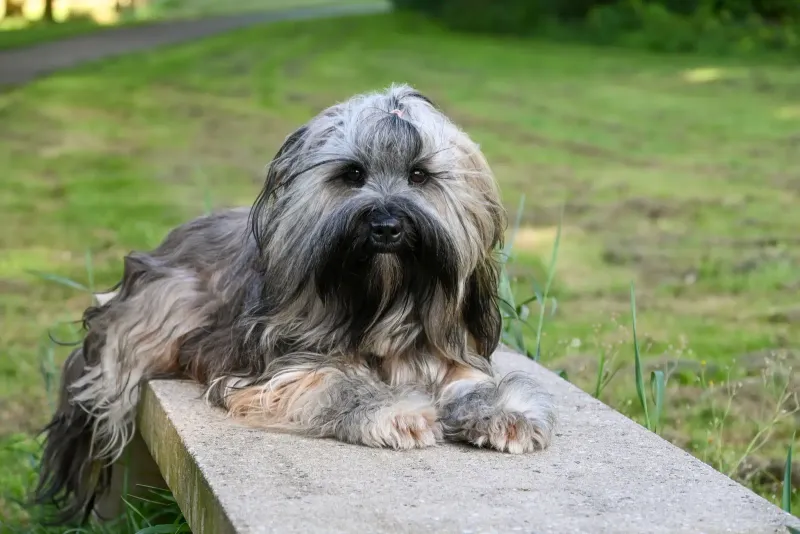
Coat. Most have long, abundant coats that need regular brushing. The Pekingese has a mane-like ruff, the Lhasa Apso and Shih Tzu long flowing hair, and the Tibetan Terrier a shaggy coat. The Tibetan Spaniel has a more moderate coat.
 Family storyAmerican Cur & FeistRead the family's story: origins, members, DNA
Build. Compact and sturdy for their size. Two are toys by size, four are small, and the Tibetan Terrier is medium.
Face. The Pekingese, Shih Tzu and Japanese Chin are clearly flat-faced. The Lhasa Apso and Tibetan Spaniel have shorter muzzles than most dogs, but are not flat. The Tibetan Terrier has a normal muzzle.
Temperament. Companions bred to live with people. In breed writing, the Pekingese is dignified and independent, and the Shih Tzu friendly. The Lhasa Apso is described as more reserved. This is a general tendency, not a promise, and each dog differs.

What health issues are linked to Asian Toy breeds?
Most dogs in this family live healthy lives. Health depends on the breed, not the family, so only well-documented examples are given. The best data are for the flat-faced breeds, and the main issue is the airway.
 Family storyAmerican TerrierRead the family's story: origins, members, DNA
Flat-face breathing (BOAS). Brachycephalic obstructive airway syndrome means the short skull leaves too little room for the airway. Signs include noisy breathing, snoring, tiring on short walks and trouble in heat. A 2026 University of Cambridge study (Tomlinson, Liu, Sargan, Ladlow, PLOS One) assessed 898 dogs of 14 breeds. Only 10.9% of the Pekingese assessed were graded free of the syndrome, and 17.4% of the Japanese Chin. For comparison, the study reported 7% for the Pug, which is not in this family. The Shih Tzu sat in a moderate-risk group, with roughly half to three quarters of dogs examined affected. The dogs in such a study may include dogs seen because of breathing concerns, so the figures describe the dogs assessed, not every dog of the breed.
| Condition | What it is | How common | What helps |
|---|---|---|---|
| BOAS (flat-faced breeds) | Narrow nostrils, long soft palate and narrow windpipe | Only 10.9% of Pekingese and 17.4% of Japanese Chin assessed were free of it (Tomlinson et al. 2026) | Choose a dog with open nostrils and a longer muzzle; keep lean; vet airway check; surgery when advised |
| Eye surface problems | Scratches or dryness on large, prominent eyes | Flat-faced dogs as a group had about 11 times the odds of corneal ulcer (O'Neill et al. 2017); in Shih Tzu, about 1 in 29 (3.45%) had one; eye disorders overall affected about 1 in 8 (11.9%) (O'Neill et al. 2024) | Check eyes daily; see a vet quickly for squinting, redness or discharge |
| Gum and tooth disease (Shih Tzu) | Plaque and gum inflammation in a small mouth | About 1 in 11 (9.5%) (O'Neill et al. 2024) | Tooth brushing, dental checks |
| Anal sac impaction (Shih Tzu) | Full anal glands that cause scooting | About 1 in 14 (7.4%) (O'Neill et al. 2024) | Vet or groomer care, healthy weight |
| Lhasa Apso, Tibetan Spaniel, Tibetan Terrier | No breed-wide study with prevalence found in the sources used | Not stated | Ask the breed club which health tests apply |
Many Shih Tzu live long lives. A 2024 VetCompass study (O'Neill et al., Canine Medicine and Genetics) of 11,082 Shih Tzu in UK vet practices found a median age at death of 12.7 years. The Shih Tzu article gives the full picture.

Which Asian Toy breeds are extinct?
One of the seven is extinct in the atlas records.
 Family storyAmerican ToyRead the family's story: origins, members, DNA
- Lo-sze (China, about 400 BCE to 1600, low confidence): a small, short-coated, short-muzzled dog. It is the oldest breed in the family and is placed here by history, not DNA. The atlas data lists it as an ancestor of the Pug and the Griffon Bruxellois. Wikipedia's Pug article says it was popular at the court in the Song dynasty and was brought to Europe by the Dutch East India Company in the 1500s. Older dates of 1100 BCE or earlier are repeated online but are not well supported.

Are there surprises in the Asian Toy family?
- The Pug is not here. It is Chinese, flat-faced and a toy, but it sits in Toy Spitz in the DNA study. The atlas records link it to the Lo-sze only.
- A "terrier" and a "spaniel" with no kin. The Tibetan Terrier and Tibetan Spaniel are named for look-alike European dogs.
- Old does not mean unmixed. The Pekingese and Shih Tzu carry about 28% East Asian ancestry in one analysis, not 100%.
- The Shih Tzu nearly vanished. Nearly every living Shih Tzu descends from about 14 dogs exported between 1928 and 1952.
- The Chin has an Akita and Shiba link. The Japanese Chin shares DNA with the Shiba Inu (17.1 Mb) and the Akita (13.9 Mb), the dogs of its own country.
 Family storyAncient American dogsRead the family's story: origins, members, DNA
What does research say about the Asian Toy breeds?
The key paper is Parker et al., "Genomic analyses reveal the influence of geographic origin, migration, and hybridization on modern dog breed development," Cell Reports, 2017. It built a family tree of 161 breeds from 1,346 dogs and found 23 clades. The Asian Toy clade held six of the seven breeds with strong support. The Lo-sze is not in the study because it is extinct. For the broader picture of how families link up, see the dog family tree.
 Family storyAncient BasalRead the family's story: origins, members, DNA

Which Asian Toy breed suits which owner?
This is a guide to type, not a promise for any single dog.
 Family storyArctic dogsRead the family's story: origins, members, DNA
- Calm home, no young children. The Pekingese is quiet and dignified but needs heat care and airway attention.
- Family with older children. The Shih Tzu is friendly and sturdy for a toy, and needs a grooming routine.
- Owners who like independent small dogs. The Lhasa Apso is reserved with strangers and watchful.
- Owners who want a medium-size dog. The Tibetan Terrier is the only medium-size breed here, with a normal muzzle.
- Small-dog owners. The Japanese Chin and Tibetan Spaniel are small companions. The Chin is flat-faced and needs heat and airway care.

Fun facts about the Asian Toy breeds
- The Pekingese Looty, given to Queen Victoria in 1861, was found at the Summer Palace in 1860.
- The Shih Tzu Club of England was founded in 1934, and the UK Kennel Club recognised the breed in 1940.
- The Lhasa Apso is named for Lhasa, the Tibetan capital.
- The Japanese Chin may be named from a Japanese phrase that means "small dog".
- "Spaniel" in Tibetan Spaniel and "terrier" in Tibetan Terrier are European labels.
 Family storyContinental HerderRead the family's story: origins, members, DNA

Related families
- East Eurasian dogs: the parent of the Asian Toy family.
- Asian Spitz: Shiba Inu and Akita, which share small amounts of DNA with the Japanese Chin.
- Toy Spitz: home of the Pug and Griffon Bruxellois, descendants of the Lo-sze.
- American Toy: the Chinese Crested, which shares 16.2 Mb with the Pekingese.
 Family storyDomestic dogRead the family's story: origins, members, DNA

Frequently asked questions
What are the Asian Toy dog breeds?
In the atlas data: the Pekingese, Shih Tzu, Lhasa Apso, Japanese Chin, Tibetan Spaniel, Tibetan Terrier and the extinct Lo-sze.
Are the Shih Tzu and Pekingese related?
Yes, closely. They share 155.4 Mb in the Parker study, the highest value in the family. A Pekingese was added to the Shih Tzu line in 1952.
Are the Lhasa Apso and Shih Tzu related?
Yes. They share 142.1 Mb. Early British breeders used overlapping names for the two, and they were split into distinct breeds in the 1930s.
Is the Pug an Asian Toy breed?
Not in this atlas. It sits in Toy Spitz in the DNA study, though it is Chinese in origin.
Are flat-faced dogs unhealthy?
Many have airway problems. The 2026 Cambridge study found only about 1 in 9 Pekingese assessed were free of BOAS. Choosing a longer muzzle and open nostrils helps.
How long do Shih Tzu live?
A UK VetCompass study (O'Neill et al. 2024) found a median of 12.7 years.
Read next
 Family storyEast Eurasian dogsRead the family's story: origins, members, DNA
 Family storyToy SpitzRead the family's story: origins, members, DNA
 GuideDogs of Japan: the native breeds and their storiesJapanese dog breeds explained: the six Nihon Ken, the Chin, Tosa, Japanese Spitz and Terrier, Hachiko, wartime near-extinction, DNA and who they suit.
Sources (9)
- Parker, H. G., et al. (2017). Genomic analyses reveal the influence of geographic origin, migration, and hybridization on modern dog breed development. Cell Reports, 19(4), 697 to 708.
- Pickrell, J. K., and Pritchard, J. K. (2012). Inference of population splits and mixtures from genome-wide allele frequency data. PLoS Genetics.
- Tomlinson, Liu, Sargan and Ladlow (2026). Conformational risk factors for BOAS in 14 breeds. PLOS One (University of Cambridge).
- O'Neill, D. G., et al. (2017). Corneal ulcerative disease in dogs under primary veterinary care in England. Canine Genetics and Epidemiology (VetCompass).
- O'Neill, D. G., et al. (2024). Shih Tzu under primary veterinary care in the UK. Canine Medicine and Genetics (VetCompass).
- Royal Collection Trust, Looty and the 1860 Summer Palace record.
- American Kennel Club, breed history pages for the Pekingese, Shih Tzu and Japanese Chin.
- Wikipedia, Pug, for the Lo-sze summary.
- Breed records in the atlas data (Dogs Atlas, internal data).