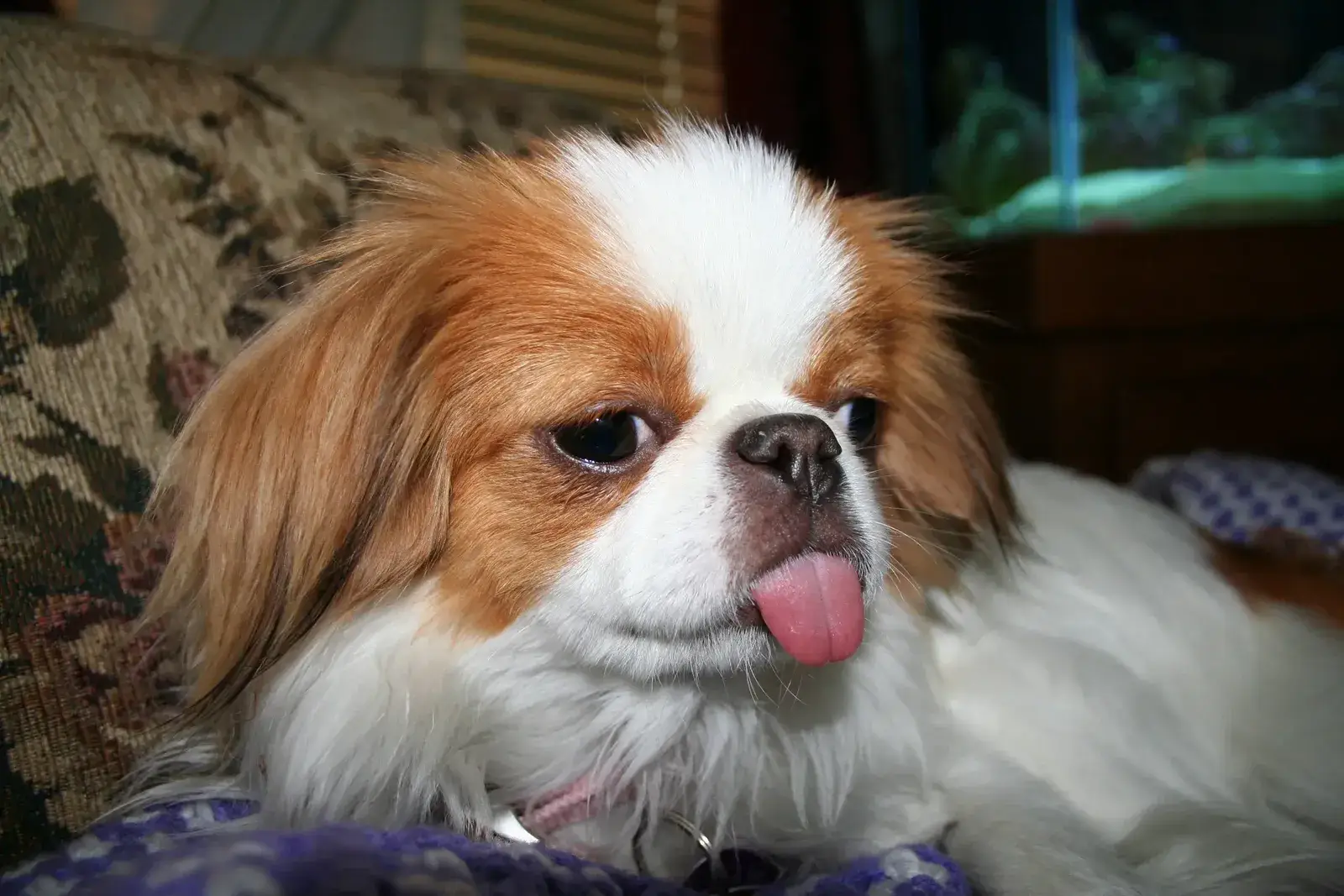
It was a lap dog of the Japanese court and nobility, and it reached Europe and America in the nineteenth century. The Kennel Club standard gives an ideal weight of 1.8 to 3.2 kg, and a UK study found an average lifespan of 12.5 years. The Chin suits quiet homes, flats and owners who will watch its heart, eyes and breathing.
Quick facts
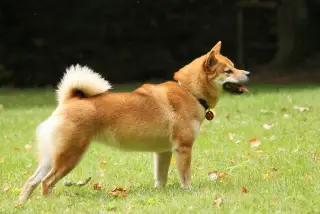
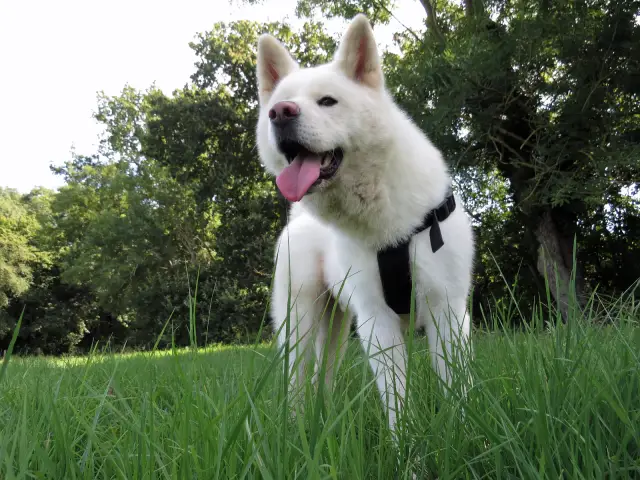 Related breedAkita1600 to 1931 · JapanEarly Modern Era
- Other names
- Chin, Japanese Spaniel (older name)
- Origin
- Japan (island of Honshu in the atlas data)
- Type
- Companion, toy dog
- Height at withers
- About 25 cm for males; females slightly taller (reference works)
- Weight
- Ideal 1.8 to 3.2 kg (UK Kennel Club); the FCI sets no weight
- Coat
- Long, silky, single coat with a frill at the neck
- Colours
- Black and white, red and white; black and white with tan points in the AKC standard
- Lifespan
- 10 to 12 years (atlas data); average 12.5 years in a UK study
- Family (Parker 2017 DNA)
- Asian Toy
- FCI
- Group 9, number 206
- AKC
- Toy Group
- Temperament
- Gentle, cheerful, quiet, cat-like
Drawn to scale in real centimetres. Its back reaches about 25 cm, your shin; its head about 32 cm, your shin.
Where it sits in the tree
Early Middle Ages · 500 to 1199



Name and origin
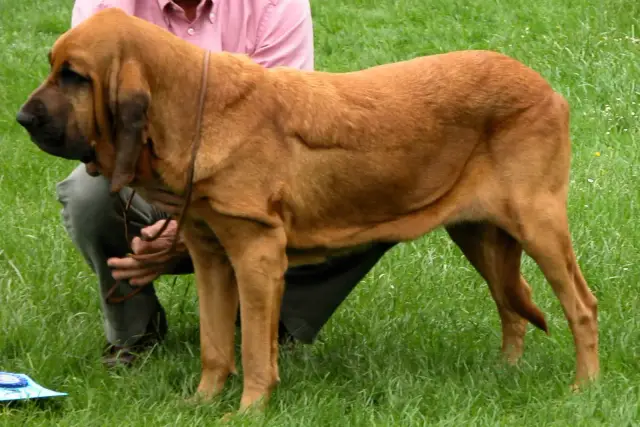 Related breedBloodhound1000 to 1100 · Belgium, FranceEarly Middle Ages
"Chin" is the Japanese name. The atlas data says it may come from "chiisai inu", meaning "small dog". For many years the English-speaking world called the breed the Japanese Spaniel, even though it has no known link to the spaniel group. The AKC has used the name Japanese Chin since 1977.
The atlas data places the breed's development between about 700 CE and 1900, with low confidence. Nobody knows exactly when the first Chin-type dog reached Japan. Most accounts agree it came from the Asian mainland, from China or Korea, but the route and dates are disputed.

History of the Japanese Chin
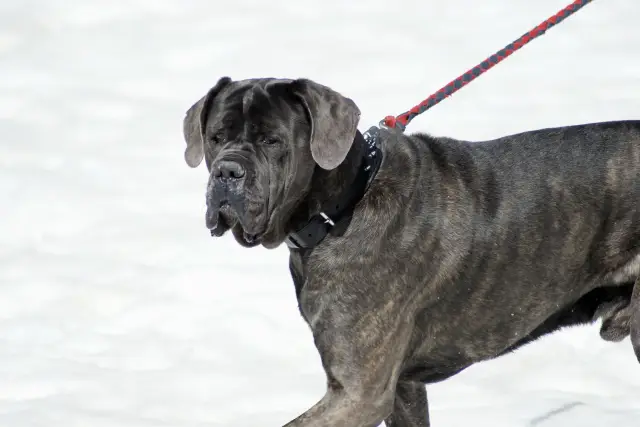 Same eraCane Corso1000 to 1996 · ItalyEarly Middle Ages
Legends of the first dogs
Three stories compete. One says small dogs reached Japan in the mid-sixth or seventh century as gifts to the Empress. Another, from a chronicle called the Shoku Nihongi, says an envoy from the Korean kingdom of Silla brought dogs in 732. A third says the breed arrived around the year 1000. Treat all three as legends: each has been repeated for centuries and none can be tied to a specific dog.
Lap dogs of the court and nobility
What is secure is the role. For a long time the Chin was a pet of the Japanese upper class. Accounts say that from 1868 it was kept by upper-class women as a lap dog, and the toy dog stayed a status symbol more than a working animal. The dog the atlas calls "Chin" is different from the Japanese native hunting breeds in the Dogs of Japan guide, which are all spitz-type working dogs.
Perry and the West
In 1853 Commodore Matthew Calbraith Perry led US warships into Tokyo Bay to open Japan to trade with the West. Accounts say Perry acquired Chins during these years. Some stories add that two Chins named Miako and Shimoda were given to Queen Victoria, but this is repeated in breed histories without a clear record. A sailor's tale says other Chins died on the voyage home. The Western story of the breed starts in this period: the Chin was a gift to foreign guests, then a fashionable pet.
One account says the Chin was brought to England in 1613, but that date has no source and is better treated as a claim. An 1893 painting shows Alexandra of Denmark, later queen consort, with a Chin named Punch, so by the late nineteenth century the breed had a place in British society.
Recognition and a new name
The FCI published its current English standard on 4 April 2016. The AKC carried the breed under the name Japanese Spaniel until it became the Japanese Chin in 1977. The UK Kennel Club lists it in the Toy Group.
Relatives and DNA: the Asian Toy family
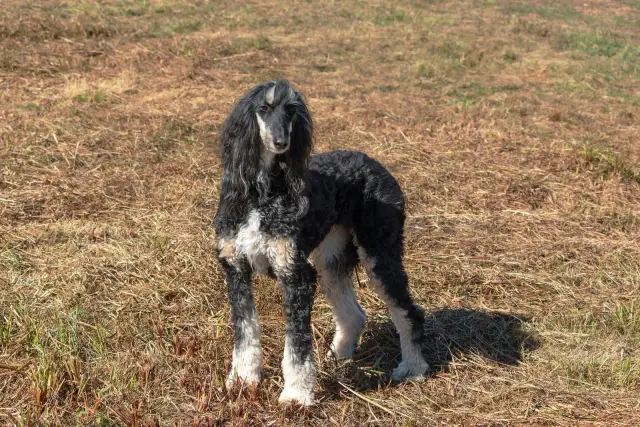
 Same familyGreyhound800 CE to 1850 · United KingdomEarly Middle Ages
In the 2017 Parker study, the Chin sits in the Asian Toy with strong support, alongside the Pekingese, Shih Tzu and Lhasa Apso. Its closest DNA relatives by shared haplotype are listed below.
The Pekingese is the nearest relative, which fits the idea that the Chin's ancestors came from China. The Shiba and the Akita appear on the list even though they are spitz-type working dogs and the Chin is a toy. The atlas data also lists the King Charles Spaniel as a possible sister breed with low confidence, based on the old "Spaniel" name and similar looks.
Sister breeds · 1
- King Charles Spaniel1600 to 1903
- Pekingese28.7 Mb 1.2%
- Lhasa Apso21.2 Mb 0.9%
- Shih Tzu18.2 Mb 0.8%
- Shiba Inu17.1 Mb 0.7%
- Tibetan Spaniel15.2 Mb 0.6%
- Akita13.9 Mb 0.6%
Source: Parker et al. 2017. Percent of the whole genome.
| Breedwith Japanese Chin | with Japanese Chin (Mb)Shared DNA (Mb) |
|---|---|
| Pekingese | 28.7 |
| Lhasa Apso | 21.2 |
| Shih Tzu | 18.2 |
| Shiba Inu | 17.1 |
| Tibetan Spaniel | 15.2 |
| Akita | 13.9 |
Source: Parker et al. 2017, Cell Reports, shared haplotypes between 161 breeds (1,346 dogs).

The breed standard
 Looks relatedKangal Shepherd Dog1000 to 1989 · TurkeyEarly Middle Ages
The two main standards differ on colour and weight.
| Trait | What the standards say |
|---|---|
| General appearance | UK Kennel Club: "Elegant and aristocratic, smart, compact with profuse coat" |
| Character | UK Kennel Club: clever, cheerful, lively, with a wide-eyed, astonished expression; "gay, happy, gentle and good natured" |
| Head | UK Kennel Club: fairly large for the size, skull moderately broad and never domed, muzzle short, wide and well padded |
| Eyes | UK Kennel Club: moderately large, dark, widely spaced; a little white shows in the inner corners |
| Ears | UK Kennel Club: small, V-shaped, set wide and high, well feathered, carried slightly forward |
| Size | UK Kennel Club: "daintier the better"; ideal weight 1.8 to 3.2 kg. FCI: no weight requirement; about 25 cm for males in reference works |
| Coat | UK Kennel Club: profuse, long, silky, free of curl, standing out at the neck frill; reference works: single coat, can take up to two years to reach full length |
| Colour | UK Kennel Club: black and white or red and white only, never tricolour. AKC: black and white, red and white, or black and white with tan points. FCI: white with black or red markings; tricolour is a disqualifying fault |
| Bite | UK Kennel Club: level or slightly undershot preferred; wry mouth or showing tongue highly undesirable |
A small dot or line on the forehead is sometimes called "the touch of Buddha", a nickname repeated in breed lore without a source.
Temperament of the Japanese Chin
 Related breedPembroke Welsh Corgi1100 to 1934 · United KingdomEarly Middle Ages
The AKC describes the Chin as bright and amusing, fastidious, graceful and generally quiet, and often calls it feline. It is moderately active and enjoys walks, but it does well in a small home. Reference works call it stubborn and warn against walking it off lead outdoors. It can show separation anxiety, and crate training helps some dogs.
Cat-like habits
Many owners describe Chins climbing onto furniture, washing their faces with a paw and watching the room from a high perch. The breed's reputation as a gentle, low-noise companion makes it a quiet-household dog. It is not a dog for rough play with young children, since it is small and easy to hurt.
Training
A Chin responds to short, friendly sessions and food rewards. It can be stubborn, so pushing it usually backfires. House training takes patience in many toy breeds.

Health of the Japanese Chin
 Related breedSamoyed500 CE to 1912 · RussiaEarly Middle Ages
The Japanese Chin Club of America lists luxating patellas, cataracts and early-onset heart murmurs as the main concerns. The breed's short muzzle and prominent eyes add the usual flat-face risks.
Lifespan
A 2024 UK study (McMillan et al.) gave the Chin a lifespan of 12.5 years, against 12.7 for purebred dogs overall and 12 for crossbreeds. The atlas data gives 10 to 12 years, so the UK average sits at the top of that range.
Heart: mitral valve disease
Myxomatous mitral valve degeneration can develop in some Chins, and the breed club recommends a cardiac exam by a board-certified cardiologist from age 4. Early signs are often a heart murmur found at a routine check.
GM2 gangliosidosis: a Chin-specific disease
In 2013 researchers at the University of Missouri and colleagues (Sanders et al.) described GM2 gangliosidosis in Japanese Chin dogs, linked to a HEXA missense mutation. The two related affected dogs in the study carried two copies of the mutation, and the disease is fatal. It is a possible model for Tay-Sachs disease in humans.
Flat-face breathing and eyes
Packer and colleagues (2015) studied how flat-faced head shape raises the risk of brachycephalic obstructive airway syndrome (BOAS) in dogs, and a second paper by the same team studied corneal ulcers. The Chin has a shorter muzzle than most breeds and prominent eyes, so watch for noisy breathing, snoring and eye squinting or redness. Heat and humidity are harder on flat-faced dogs.
| Condition | What it is | How common | What to do |
|---|---|---|---|
| Luxating patella | Kneecap slips out of its groove | No published figure for the Chin in the sources used | Breeding dogs examined from age 1 (OFA); vet check for skipping gait |
| Mitral valve disease | Thickening and leaking of the heart valve | No published figure | Cardiac exam from age 4 for breeding dogs; vet check for murmurs |
| GM2 gangliosidosis | Inherited brain storage disease | No published figure | Ask the breeder about health testing of the parents |
| Cataracts | Cloudy lens | No published figure | Eye exams; vet check if eyes look cloudy |
| BOAS and corneal ulcers | Narrow airway and eye injury from a flat face | Risk higher in flat-faced breeds (Packer 2015) | Avoid heat and hard exercise; see a vet for noisy breathing or eye pain |

Living with a Japanese Chin
 Related breedSiberian Husky1000 to 1930 · RussiaEarly Middle Ages
Who it suits
- People in flats or small homes who want a quiet, clean companion.
- Seniors and calm households that can offer company through the day.
- Owners who enjoy daily brushing and short walks.
Who it may not suit
- Homes with toddlers or boisterous dogs.
- Owners who are away all day, since the Chin can be anxious alone.
- Hot climates without air conditioning, because of its short muzzle.
Coat and grooming
The Chin has a long, silky single coat with no undercoat. Brush two or three times a week with a comb to prevent knots, especially behind the ears and under the legs. Bathe when needed and trim around the eyes if hair irritates them. A puppy can take up to two years to grow its full coat.
Daily care
Short walks and indoor play meet its exercise needs. Use a harness, not a collar, for walks, since the neck of a flat-faced dog is sensitive. Keep it on a lead outdoors, as advised for the breed.

Fun facts
- The Chin was once known in the West as the Japanese Spaniel.
- Perry's 1853 expedition is part of the breed's best-known story.
- Alexandra of Denmark was painted with a Chin in 1893.
- The Chin shares more DNA with the Shiba (17.1 Mb) and the Akita (13.9 Mb) than those two share with each other (13.1 Mb).
FAQ
How big is a Japanese Chin?
About 25 cm tall at the withers. The UK Kennel Club gives an ideal weight of 1.8 to 3.2 kg.
How long does a Japanese Chin live?
The atlas data gives 10 to 12 years. A UK study gave an average of 12.5 years.
Is a Japanese Chin good for an apartment?
Yes. It is quiet, small and moderately active.
Does a Japanese Chin shed?
Yes, a little. It has a single long coat that needs regular brushing to stay free of knots.
What colours do Japanese Chins come in?
Black and white or red and white in all standards. Black and white with tan points (tricolour) is allowed by the but not by the UK Kennel Club, and the disqualifies it.
Is the Japanese Chin related to the Pekingese?
Yes. In the 2017 DNA study the Pekingese is its closest relative, at 28.7 .
What are the main health problems?
Luxating kneecaps, cataracts, heart murmurs, GM2 gangliosidosis, flat-face breathing problems and eye injuries.
Read next
 Closest DNAPekingese28.7 Mb shared
 Sister breedKing Charles Spaniel1600 to 1903
 GuideDogs of Japan: the native breeds and their storiesJapanese dog breeds explained: the six Nihon Ken, the Chin, Tosa, Japanese Spitz and Terrier, Hachiko, wartime near-extinction, DNA and who they suit.
Sources (15)
- Wikipedia, "Japanese Chin" (history, size, colours, health summary).
- Fédération Cynologique Internationale, Chin, standard no. 206.
- The Royal Kennel Club (UK), Japanese Chin breed standard.
- American Kennel Club, Japanese Chin breed page and breed standard.
- American Kennel Club, Japanese Chin history: Japan's royal spaniel.
- U.S. Department of State, Office of the Historian, "Opening to Japan, 1853-1854".
- Sanders D.N. et al., "GM2 gangliosidosis associated with a HEXA missense mutation in Japanese Chin dogs: A potential model for Tay Sachs disease", Molecular Genetics and Metabolism, 2013.
- University of Missouri College of Veterinary Medicine, "GM2 gangliosidosis".
- McMillan K.M. et al., "Longevity of companion dog breeds: those at risk from early death", Scientific Reports, 2024.
- Packer R.M.A. et al., "Impact of Facial Conformation on Canine Health: Brachycephalic Obstructive Airway Syndrome", PLoS ONE, 2015.
- Packer R.M.A. et al., "Impact of Facial Conformation on Canine Health: Corneal Ulceration", PLoS ONE, 2015.
- Parker H.G. et al., "Genomic analyses reveal the influence of geographic origin, migration, and hybridization on modern dog breed development", Cell Reports, 2017.
- Japanese Chin Club of America, breed health screening recommendations.
- Fogle B., The New Encyclopedia of the Dog, 2009.
- Atlas data, breed records and Parker 2017 shared-haplotype table (this site).