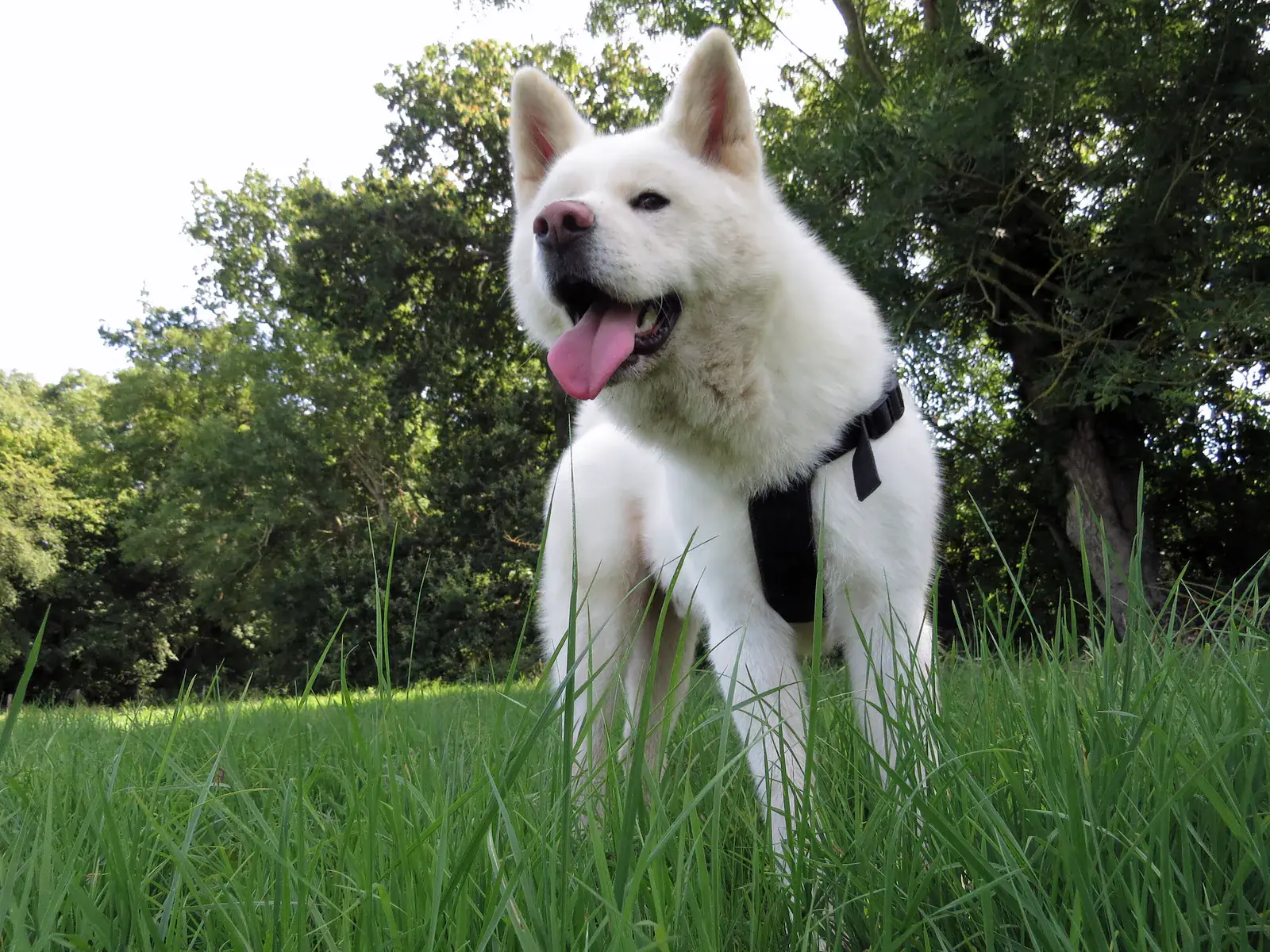
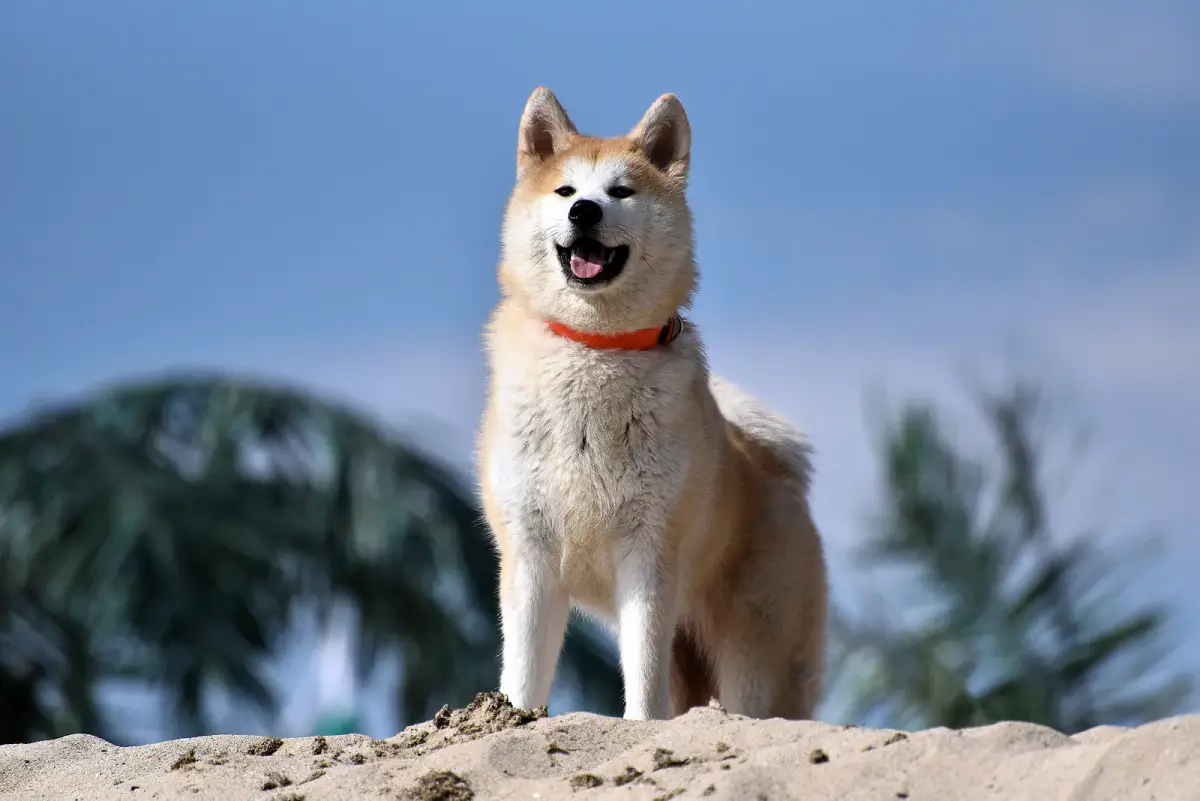
It began as a hunting dog for the matagi, the traditional bear and boar hunters of Akita Prefecture, and became a national symbol through Hachiko, the dog that waited at Shibuya Station. The breed nearly vanished during World War II, was rebuilt in Japan and carried to the United States, and is now officially two breeds in much of the world: the Akita (the Japanese type) and the American Akita. It is a loyal, reserved and strong-willed dog that suits experienced owners who can train and socialise it from puppyhood.
Quick facts
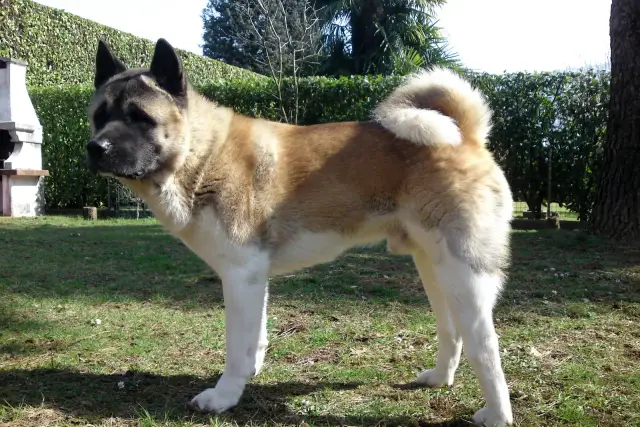 Related breedAmerican Akita1945 to 1956 · United StatesModern Era
- Closest DNA relatives
- Japanese Chin, Shiba Inu
- Country of origin
- Japan (Odate area, Akita Prefecture, northern Honshu)
- Period of development
- Old mountain hunting dogs; breed shaped from about 1600 (atlas data), preservation society 1927, Natural Monument 1931
- Original job
- Hunting bear, boar and deer with the matagi; later guarding and companion
- Type
- Spitz and primitive type (FCI Group 5, standard no. 255; UK Kennel Club recognises the breed). In the US the AKC lists one Akita breed
- Home club
- Akita Inu Hozonkai (AKIHO, Akita Dog Preservation Society), founded 1927
- Height
- FCI (Japanese Akita): dogs 67 cm, bitches 61 cm, with 3 cm tolerance either way
- Weight
- FCI weight not listed. American type is heavier (see the )
- Coat
- Double coat: harsh, straight outer coat and soft dense undercoat
- Colour
- Red, sesame, brindle and pure white with the Japanese standard (urajiro markings required on non-white dogs)
- Life span
- Atlas data: 10 to 13 years
- Exercise
- Moderate to high; daily walks and mental work
- DNA family
- Asian Spitz family (Parker et al. 2017)
- Related Nihon Ken breeds
- Hokkaido, Kai Ken, Kishu, Shikoku, Shiba Inu
- Descendant breed
- American Akita
Drawn to scale in real centimetres. Its back reaches about 66 cm, mid-thigh; its head about 84 cm, your hip.
Where it sits in the tree
Early Modern Era · 1600 to 1799

Name and origin
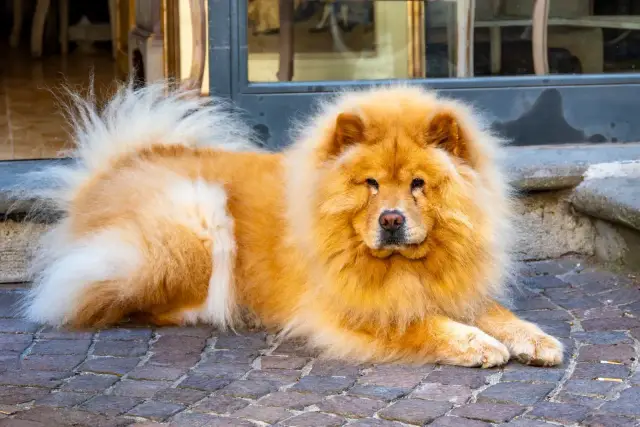 Related breedChow Chow200 BCE to 1895 · ChinaAncient World
The breed is named after Akita Prefecture in northern Honshu. The Japanese word inu means dog, so "Akita Inu" is simply "Akita dog". Before 1931 the dogs of the area were often called "Odate dogs", after the city of Odate, where they were kept and where the breed society was founded. The name was changed to "Akita dog" around the time of the 1931 designation as a natural monument.
The Akita belongs to the old group of Japanese spitz-type dogs that came with early settlers and stayed fairly isolated on the islands. The Parker et al. 2017 study put it in the Asian Spitz family, which also holds the Shiba Inu and Japanese Chin.

History
 Same eraJindo1200 to 1962 · South KoreaLate Middle Ages
Matagi hunters and the Odate dogs
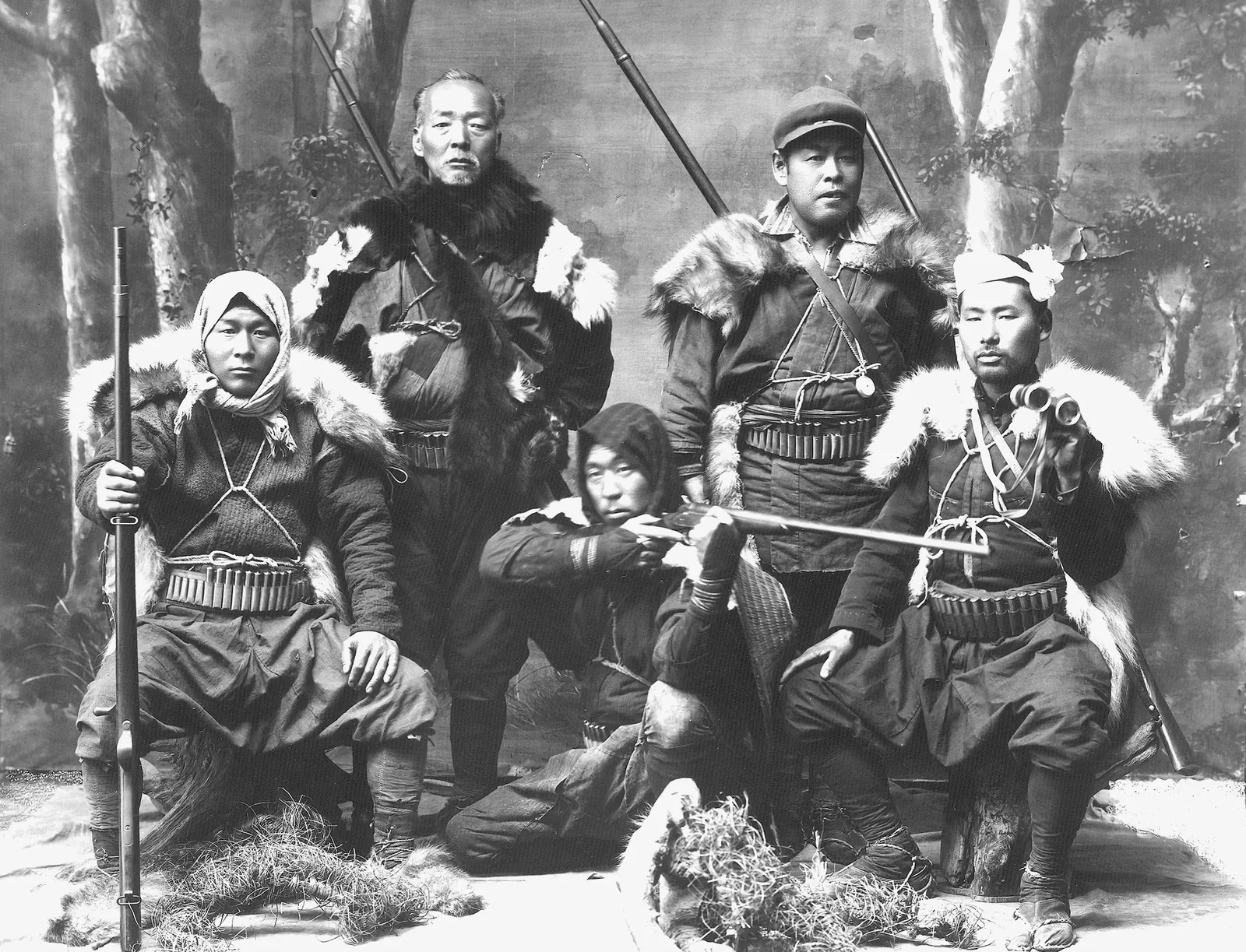
The Akita has the longest history of any Japanese large dog and was developed in the cold mountains of Akita Prefecture. There it worked for the matagi, hunters who tracked bear, boar and deer in snow. The dog's job was to find the animal and hold it at bay until the hunter arrived. Strength, courage and quiet determination were selected for, not speed.
Later the dogs were crossed with other breeds. The atlas data records outcrosses to the Tosa fighting dog in the early 1900s, when dog fighting was a popular sport in Japan and some owners wanted larger, heavier dogs. The crosses made bigger dogs but also changed the type. Japanese enthusiasts reacted by setting up a preservation effort in the 1920s.
 Save
Preservation, 1927 to 1931
The Akita Inu Hozonkai (AKIHO) was founded in Odate in 1927 to restore the Akita to its original Japanese type. Members worked to bring the dogs back toward their matagi ancestors and remove foreign traits. In 1931 the Akita was declared a Japanese Natural Monument, and one source says it was the first animal so designated. The same date is linked to the change of name from "Odate dog" to "Akita dog".
Hachiko, 1923 to 1935
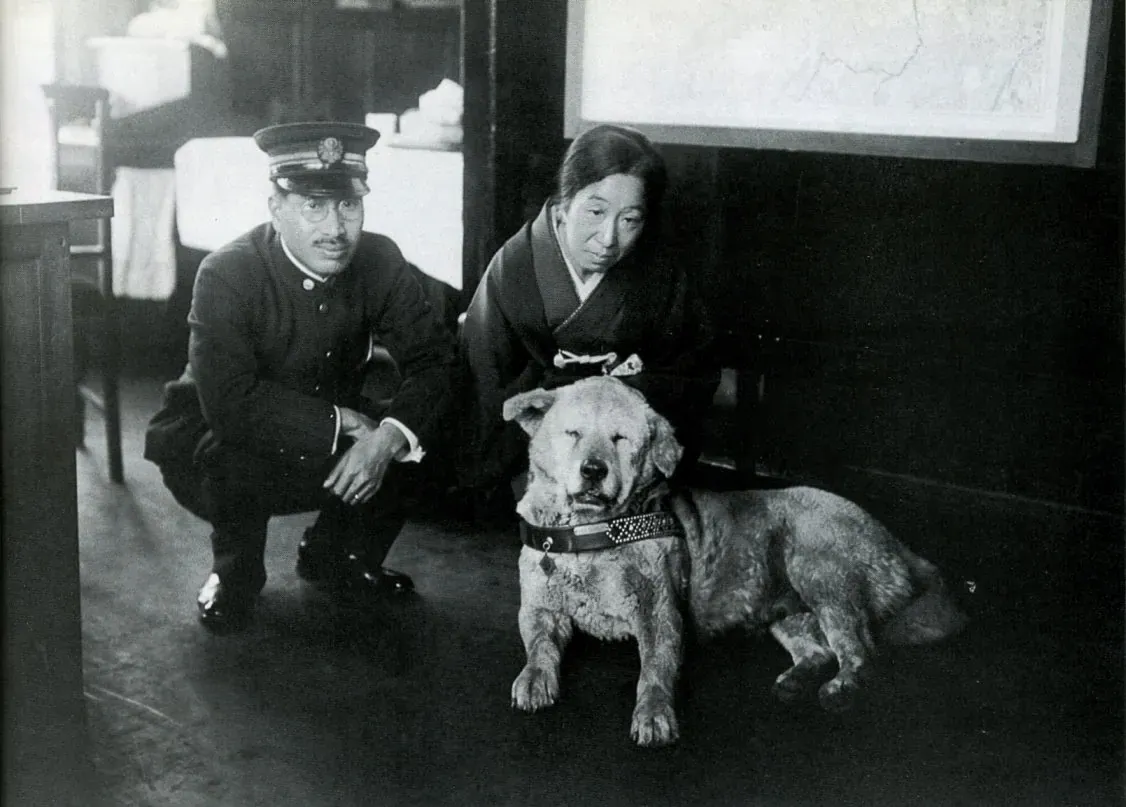
Hachiko is the best-known Akita in the world. The main facts are well documented, with small differences between sources.
- He was born in November 1923 (10 November in Wikipedia) on a farm near Odate and went to Tokyo in 1924 to live with Hidesaburo Ueno, a professor at the University of Tokyo.
- Each day he went with Ueno to Shibuya Station and waited there for his return.
- Ueno died of a stroke while at work on 21 May 1925, and Hachiko kept coming back to the station for about nine more years.
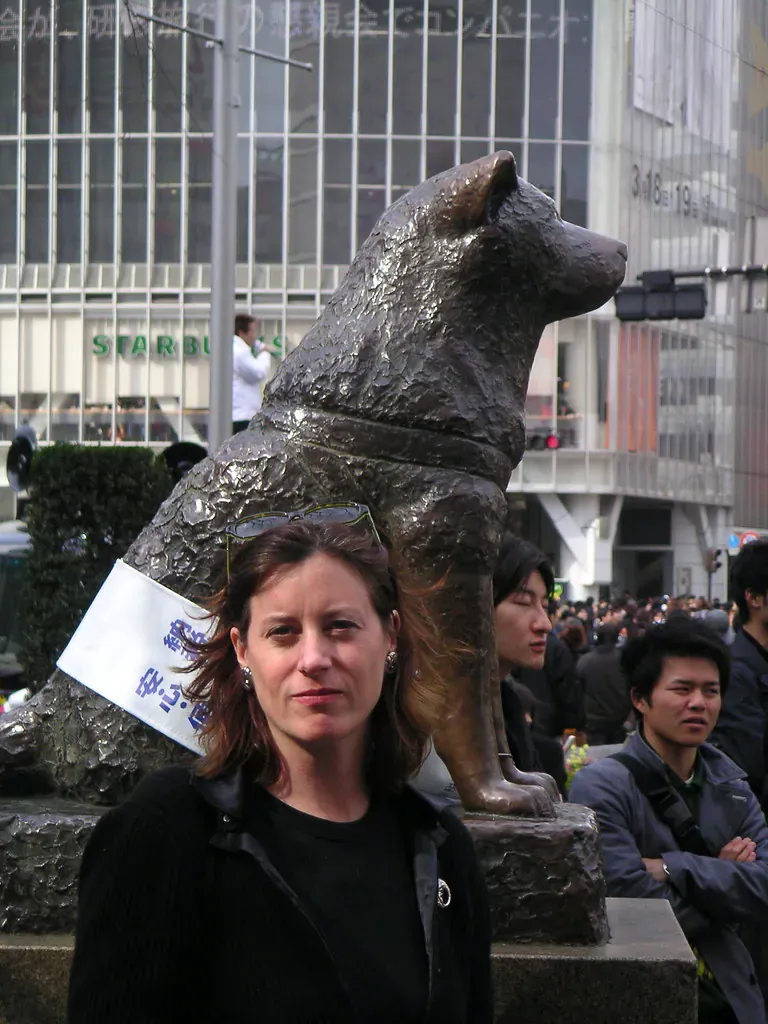
- A 1932 newspaper article made him famous across Japan. A bronze statue was put up at Shibuya Station in 1934, and he is reported to have attended the unveiling. He was found dead near the station on 8 March 1935.
- Wartime metal collection removed the first statue. The current statue at Shibuya dates from 1948. A statue at Odate Station was put up in 1935.
Hachiko's fame did more than any show or club for the breed's popularity, both in Japan and abroad.
 Save
 Save
Helen Keller and the first Akitas in the United States
In 1937 the American writer and activist Helen Keller visited Japan and asked to see Hachiko's breed. She told local hosts she would like to have an Akita, and within about a month she was given a puppy named Kamikaze-go. Accounts differ on how the puppy was chosen; in the recollection of the police officer Ichiro Ogasawara, who gave her the puppy, the adult dogs he had suggested were judged unsuitable, so she was shown a two-month-old pup. Kamikaze-go died young of canine distemper. In 1939 Keller received his older brother, Kenzan-go, as an official gift of the Japanese government (some accounts say it was arranged by her Japanese supporters). One 1939 caption says he sailed for New York in June, while another source gives July 1939.
These two dogs are often called the first Akitas in the United States. Keller helped make the breed known there, but the main flow of Akitas to America came after World War II.
War, near loss and recovery
During World War II the breed came close to being lost. Several points appear in the AKC and other accounts:
- The Japanese government ordered non-combat dogs to be destroyed because of food shortages. German Shepherds used by the military were spared.
- Akita pelts were used by the military to line uniforms and coats.
- Some owners crossed their Akitas with German Shepherds to protect them. Others released dogs into the mountains.
- A few fanciers kept purebred dogs alive in remote places. The AKC names Morie Sawataishi, an engineer who got his first Akita in 1944 and lived in the countryside, and other breed histories credit him with the revival in Japan.
The Dewa and Ichinoseki lines are named as the most influential ones after the war. The numbers saved are not given in the sources used, and the German Shepherd story is widely repeated but not counted. The atlas data lists the German Shepherd as a wartime outcross.
Two breeds: Akita and American Akita
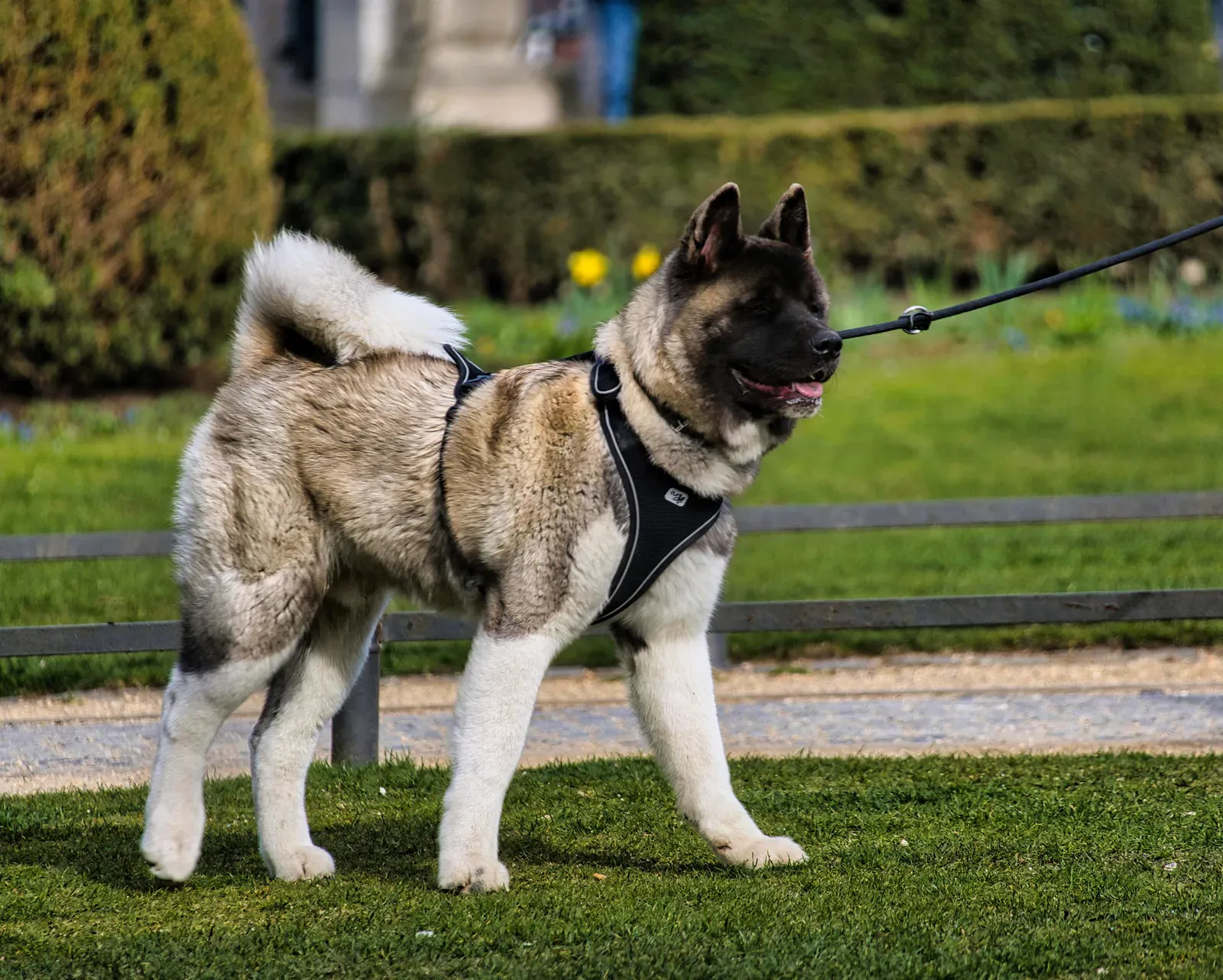
After 1945, American servicemen in Japan fell for the Akita and brought dogs home. Those dogs were often larger and heavier-boned and some carried wartime German Shepherd influence. Some sources say the American type actually looks more like the pre-war Akita, including Hachiko, than the modern Japanese dog does. The two populations then developed apart: the American type became bigger and was bred in a wider range of colours, with a black mask allowed, and Japanese breeders worked on a lighter, fox-like type with a fixed colour list.
The FCI split them in June 1999 (decision at a general meeting in Mexico City). The American type was first called the "Great Japanese Dog" and was renamed American Akita in 2006. The Akita name in the FCI now means the Japanese type. The UK Kennel Club lists the Akita, and in the United States the AKC still lists one Akita breed with the larger American type, though sources disagree on later changes (one reports that the AKC accepted the Japanese Akita Inu into its Foundation Stock Service in 2020, and another claims two separate breeds as of 2020; these were not resolved). See the American Akita page for the American breed.
Relatives and DNA
 Same familySamoyed500 CE to 1912 · RussiaEarly Middle Ages
The Parker et al. 2017 study placed the Akita in the Asian Spitz family. Its largest shared-DNA links in that study were the Japanese Chin (13.9 ) and the Shiba Inu (13.1 Mb). Other relationships are by registry and history.
The Akita is the largest of the six native Japanese breeds. The family is described on the Asian Spitz family page.
Sister breeds · 5
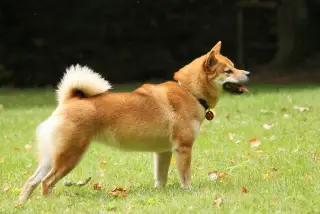
- Shiba Inu300 BCE to 1936
- Shikoku300 BCE to 1937
- Kai Ken1000 to 1934
- Kishu1000 to 1934
- Hokkaido1100 to 1937
Descend from it · 1
- American AkitaUnited States
- Japanese Chin13.9 Mb 0.6%
- Shiba Inu13.1 Mb 0.5%
Source: Parker et al. 2017. Percent of the whole genome.
| Relation | Breeds | Source |
|---|---|---|
| Nihon Ken Hozonkai native breeds (sister breeds) | Hokkaido, Kai Ken, Kishu, Shikoku, Shiba Inu | The six native Japanese breeds in the Nihon Ken registry (atlas data) |
| Outcrosses | Tosa (early 1900s), German Shepherd (wartime) | Wikipedia and atlas data |
| Descendant | American Akita | Atlas data |
| Close DNA relatives | Japanese Chin, Shiba Inu | Parker et al. 2017 |
The breed standard
 Looks relatedShar Pei200 BCE to 1973 · ChinaAncient World
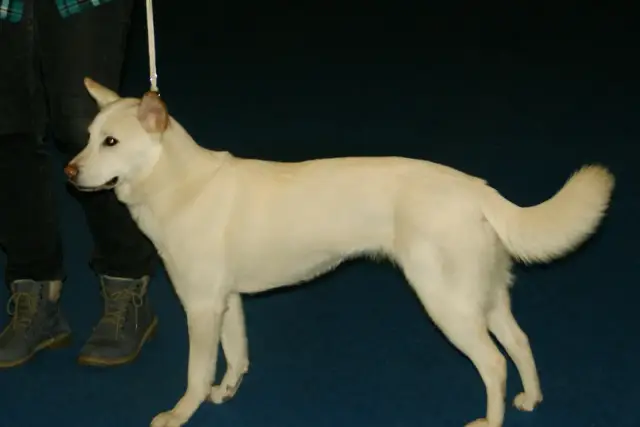
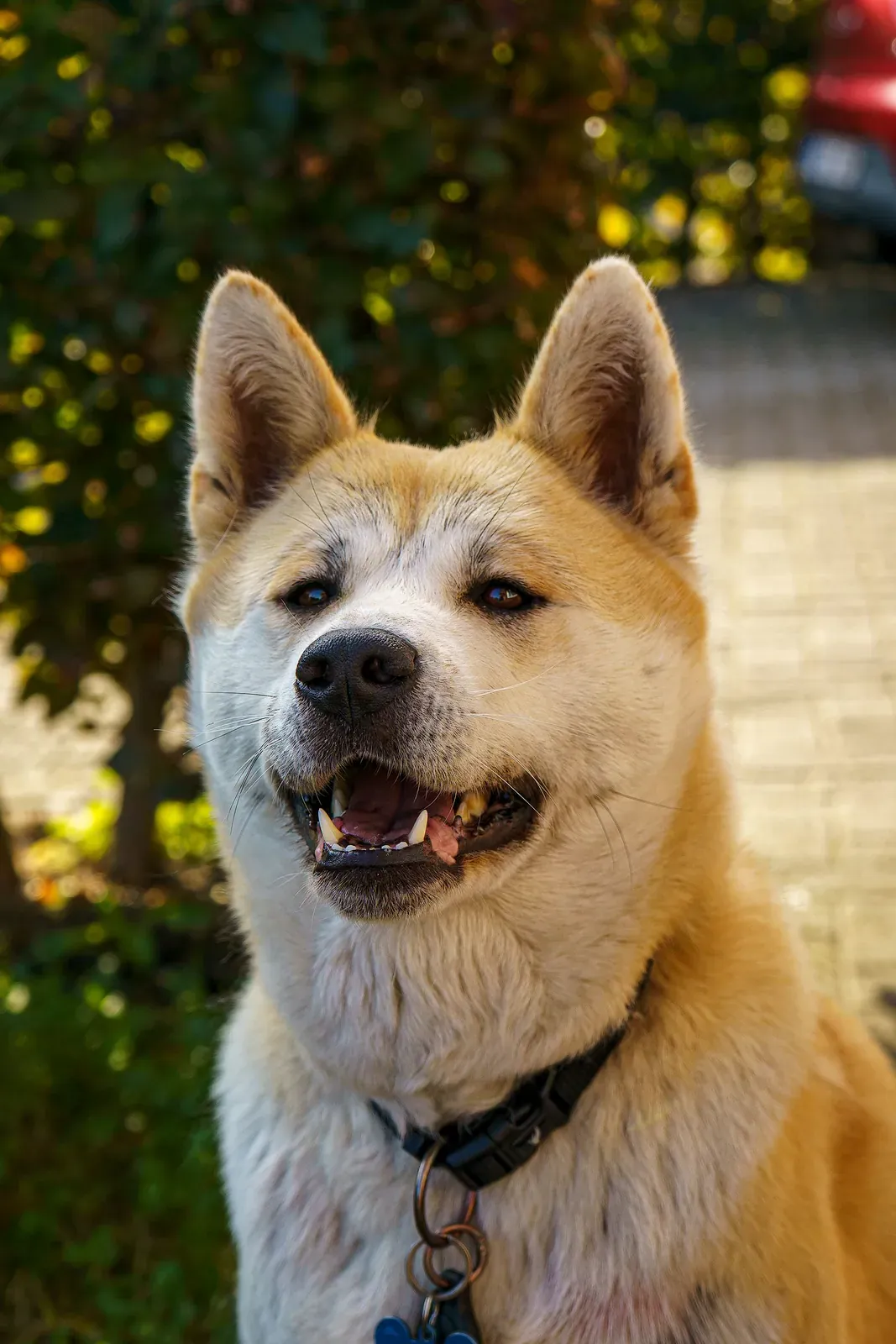
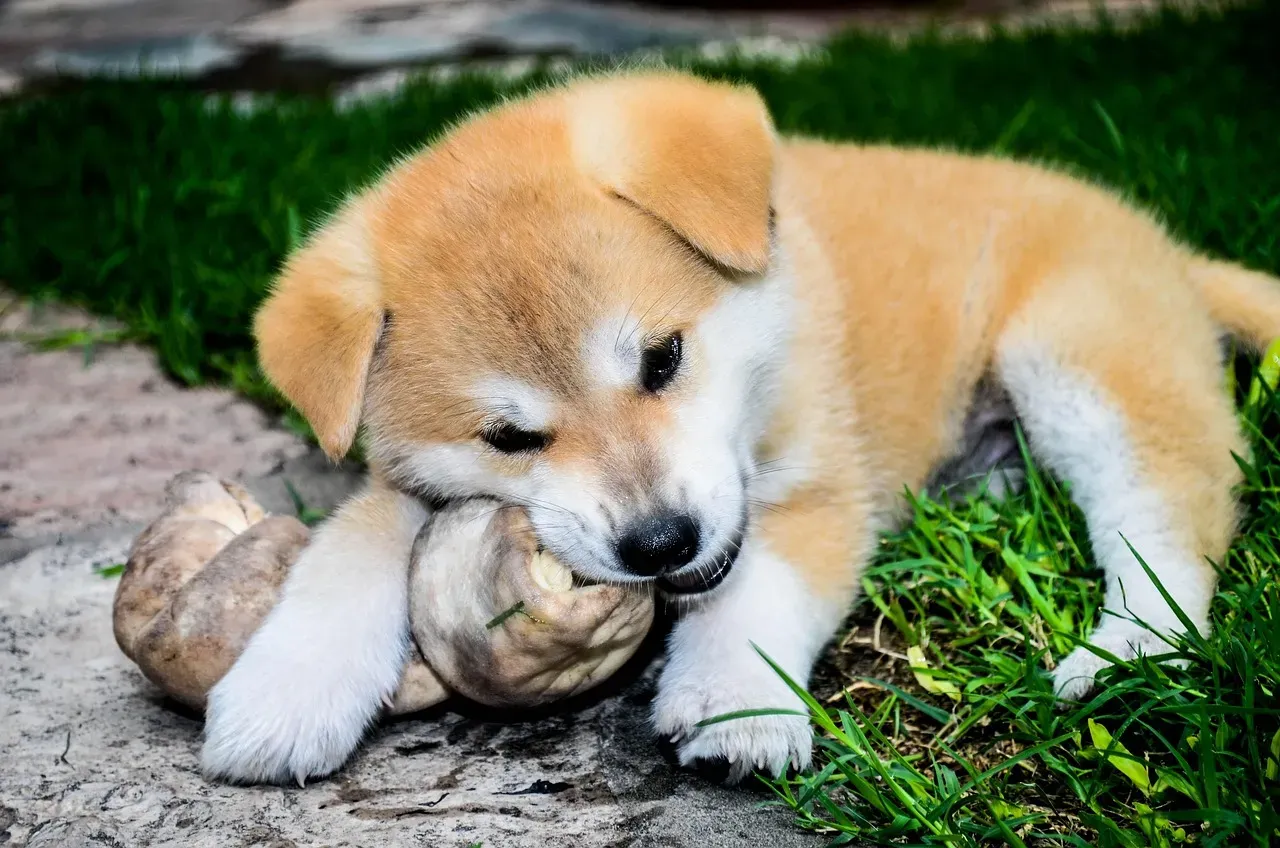
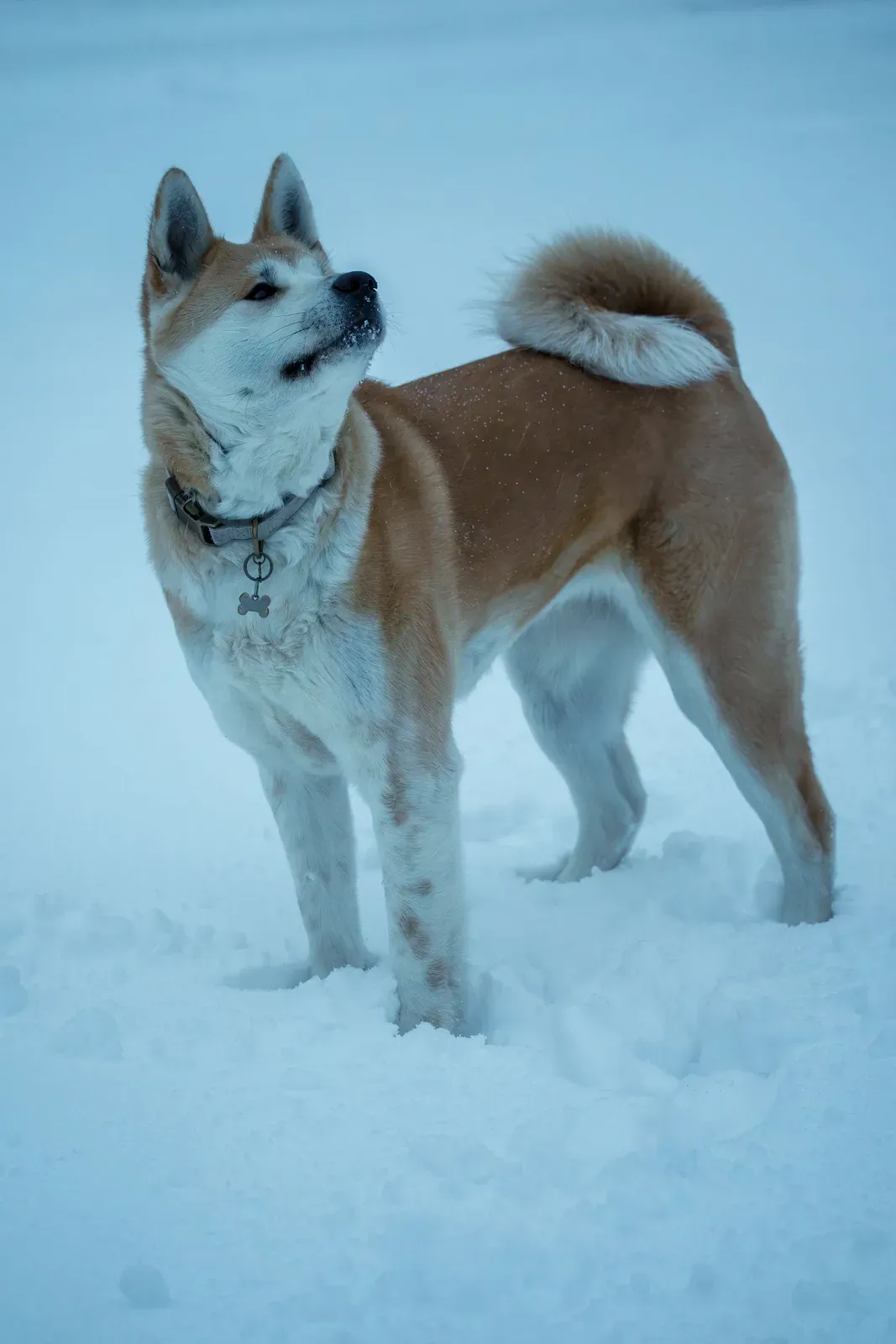
A breed standard is the written ideal a kennel club judges a breed against. The Japanese Akita standard (FCI no. 255) describes a large, strong, dignified spitz with a broad head, small triangular ears carried forward, a deep chest and a thick tail curled over the back.
| Trait | What the standards say |
|---|---|
| Height | FCI (Japanese Akita, as in the Canadian text of the FCI standard): dogs 67 cm, bitches 61 cm, tolerance 3 cm either way. UKC (American type): dogs 66 to 71 cm (26 to 28 in), bitches 61 to 66 cm (24 to 26 in) |
| Weight | FCI weight not listed. Secondary sources give 45 to 59 kg for American-type dogs (100 to 130 lb) and about 32 to 45 kg for bitches |
| Coat | Double coat: harsh, straight outer coat and soft, dense undercoat; longer on the withers and tail |
| Colour | FCI: red, sesame, brindle and pure white; non-white dogs need whitish markings (urajiro) on the sides of the muzzle, cheeks, throat, chest, belly and tail underside. The American type also allows a black mask and pinto patterns |
| Head | Broad skull, short muzzle; small, thick triangular ears carried forward |
| Tail | Large, full, carried curled over the back |
| Build | Strong, well-balanced; body slightly longer in bitches |
Height and weight are for the standards of each club and type, so an AKC or UKC American-type Akita is generally bigger than an FCI Akita. The UK Kennel Club's page was a general listing without size figures, so no UK column is given.
Temperament
 Related breedSiberian Husky1000 to 1930 · RussiaEarly Middle Ages
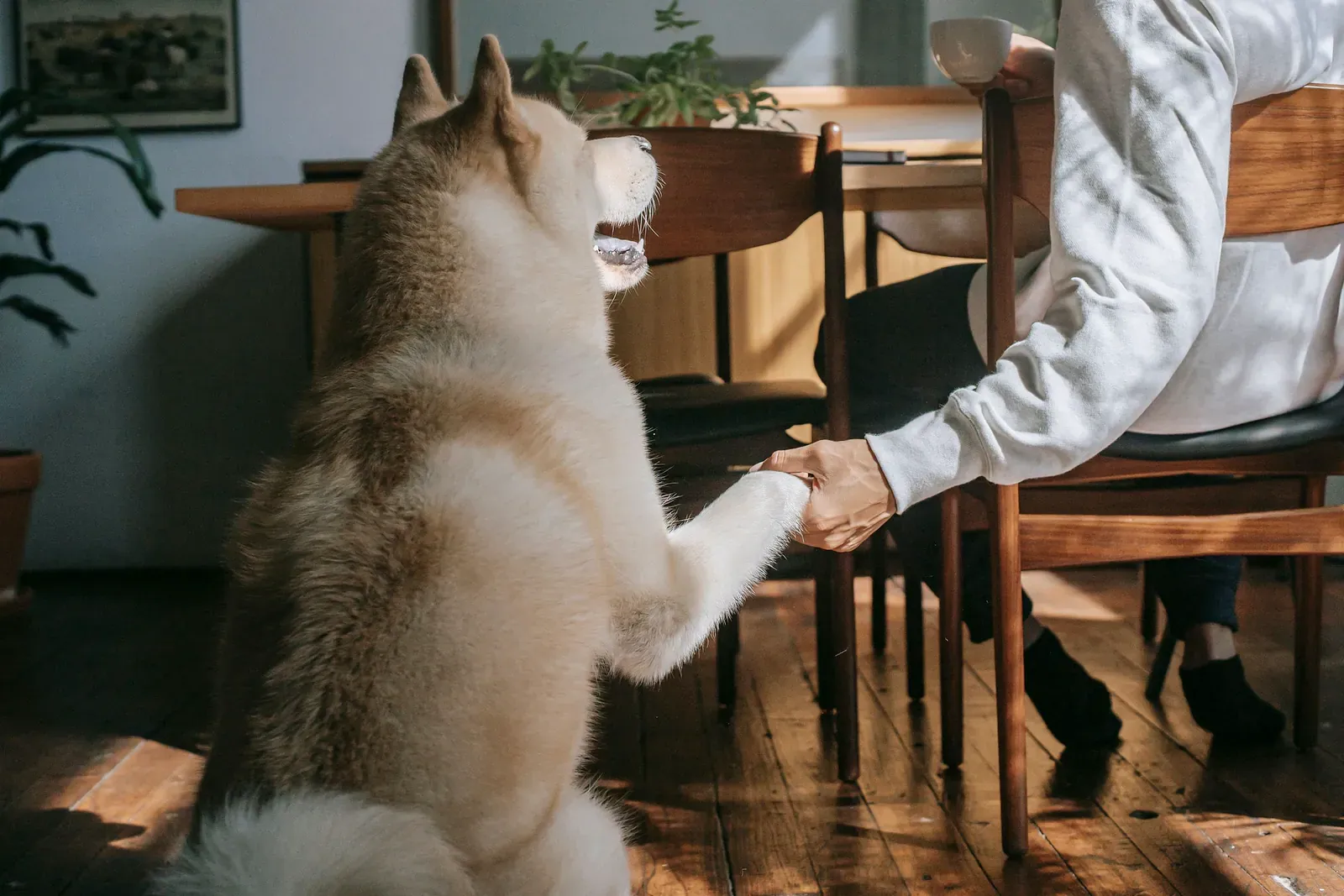
Akitas are dignified, quiet and loyal. They are reserved with strangers, often calm indoors, and strongly bonded to their family. The standards describe a dog that is dignified, courageous and docile but also alert, and many clubs add that it is strong-willed. This breed also appears in dogs in legends and fairy tales. See socializing your dog for how to introduce a dog to people, other dogs and new places.
- With family. Affectionate and devoted, but not clingy or demonstrative like a retriever.
- With strangers. Reserved. It is not a dog for friendly meetings with everyone.
- With other dogs. Many Akitas are intolerant of dogs of the same sex, and a wary approach is common. Early, careful socialisation matters, and careful matching of any second dog.
- With cats and small animals. The hunting background means a strong prey drive for many dogs. Cats the dog was raised with may be fine; unfamiliar small animals may not.
- With children. Can be very good with the family's own children, but is large and strong, and should be supervised with small children and with visiting children.
Temperament varies by dog and by line. An Akita from a good breeder who has been socialised widely and trained from early on is a very different dog from an unsocialised one.

Working instincts and training
 Related breedTibetan Mastiff1000 BCE to 1931 · ChinaAncient World
The Akita was bred to work independently, not to follow instructions. It learns quickly but may refuse repeated drills, and it responds better to calm, consistent, reward-based training than to force.
- Exercise. Daily walks and play. Akitas enjoy cold weather and snow and can overheat in hot weather.
- Lead and recall. Strong on the lead, and often not safe off lead because of prey drive and dog-to-dog intolerance. A secure fence is needed.
- Training. Start early with puppy classes, handling, polite greetings and calm alone time. Plan for lifelong management, not a quick fix.
- Mental work. Scent games, trick training and structured walks keep a bright, independent dog engaged.
Health
 Related breedAmerican Bulldog1700 to 1980 · United StatesEarly Modern Era
Most Akitas live healthy lives. This section lists what breeders screen for and what owners can watch for. The figures come from named studies; where there is no breed-wide figure, the text says so. It is general information; your vet knows your dog.
The atlas data gives a life span of 10 to 13 years. A syndicated article reported a UK median of 11.4 years from a study of about 585,000 dogs, but the original study could not be identified, so that figure is not relied on here.
| Condition | What it is | How common | What helps |
|---|---|---|---|
| Sebaceous adenitis | The immune system attacks the oil glands in the skin, causing thin, dry, brittle hair and scaling | A 2020 review of Japanese Akitas found it the most commonly recorded condition in the dogs studied. No breed-wide percentage found | Vet diagnosis by skin biopsy; the breed is known to be affected; ask the breeder about skin history in the line |
| Uveodermatologic syndrome (VKH-like) | An immune disease that attacks pigment cells, causing eye inflammation and loss of colour in the skin, nose and lips. It resembles Vogt-Koyanagi-Harada syndrome in people | Akitas are the most-affected breed. A 2005 study of American Akitas found the DLA-DQA1*00201 gene variant gave a relative risk of 15.3. A 2020 review cites about 80 percent of case reports as Akitas (citing earlier work). No breed-wide percentage found | Eye signs usually come first; see a vet promptly for red or cloudy eyes; early treatment protects sight |
| Hip dysplasia | The hip joint forms loosely and wears early | An OFA-based table (older data) showed 12.2 percent dysplastic of 16,047 Akitas, about 1 in 8. Newer figures were not found | Hip scoring of breeding dogs (BVA/Kennel Club or OFA); keep puppies lean |
| Gastric dilatation and volvulus (bloat) | The stomach fills with gas and may twist | In a study of UK emergency clinics (0.64 percent of dogs had presumptive GDV), Akitas had about 84 times the odds of crossbreds (95 percent CI 33.6 to 211.9). This compares breeds in an emergency population and is not a lifetime risk | Several smaller meals, no hard exercise around meals, ask a vet about preventive surgery; a swollen, hard belly with retching is an emergency |
| Other immune diseases | The breed is also predisposed to thyroiditis, pemphigus foliaceus, uveitis, polyarthritis and myasthenia gravis (2005 genetics study of American Akitas) | No breed-wide figure | Know the signs; regular vet checks; ask the breeder about family history |
Immune disease in the breed
Researchers have described a group of immune-mediated diseases in Akitas that include sebaceous adenitis and uveodermatologic syndrome. A 2005 study linked the second to a particular immune gene variant (DLA-DQA1*00201), which suggests it is partly inherited. A 2020 survey of Japanese Akitas reported that healthy dogs had higher vitamin D levels than affected ones, and that depigmented skin was linked to low levels. That is an association, not proof of cause. Because eye signs usually come about a month before skin signs, a red or painful eye in an Akita should get quick veterinary attention.

Living with an Akita
 Related breedBernese Mountain Dog1700 to 1907 · SwitzerlandEarly Modern Era
 Save
 Save
| Daily reality | Rating | Why |
|---|---|---|
| Exercise per day | Medium | Daily walks and play; enjoys cold weather |
| Training needs | High | Strong-willed, independent; early training and socialisation needed |
| Grooming | Medium | Weekly brushing, daily during heavy seasonal shed |
| Shedding | High | Double coat that blows heavily twice a year |
| Barking | Low | Often quiet; can be vocal in its own ways |
| Time alone | Fair | Bonded to family; varies by dog, evidence thin |
| Children | Varies | Loyal to its own family; big and strong, so supervision is needed |
| Other dogs | Poor | Many are intolerant of dogs of the same sex; careful management |
| Cats and small pets | Poor | Strong hunting background; varies by early exposure |
| Flat living | Fair | Large, but quiet indoors if exercised; needs access to outdoors |
| Heat tolerance | Poor | Thick double coat; keep to cool hours and shade |
| Cold tolerance | Good | Bred for snowy mountains |
| First-time owner fit | Poor | Strong-willed and reserved; better for experienced owners |
A great fit if
- You have owned large, independent breeds and want a calm, loyal dog with a quiet nature.
- You can train early, socialise widely and manage the dog around other dogs.
- You have a secure fence and live in a cool or mild climate.
- You can brush a heavy coat and handle big shedding seasons.
Think twice if
- You are a first-time dog owner or want a dog that is friendly with every visitor.
- You live in a hot climate or in a flat with no easy outdoor access.
- You have cats or small pets, or want a dog that is relaxed at a dog park.
- You are away for long hours every day.
Before you get one
- Which Akita. Decide between the Akita (Japanese type) and the American Akita, which differ in size, colours and breeders' networks. Ask which standard the breeder follows.
- Health tests. Ask the breeder for hip scores for both parents and for family history of skin disease, eye inflammation and bloat. Ask for original certificates. Breed clubs can tell you what is tested in your country.
- Puppy or adult rescue. Breed rescues exist, and an adult with known behaviour around other dogs is often easier for a first Akita than an unknown puppy.
- First year. Plan for early socialisation, puppy classes and calm handling. Keep puppies lean and avoid hard exercise while bones grow.
Similar breeds to consider
- American Akita. The larger American type with a wider colour range.
- Shiba Inu. A smaller Japanese spitz with a similar independent nature.
- Alaskan Malamute. A large northern working dog, more social with people but also strong-willed.
- Chow Chow. Another aloof, dignified Asian spitz-type dog.

Akita fun facts
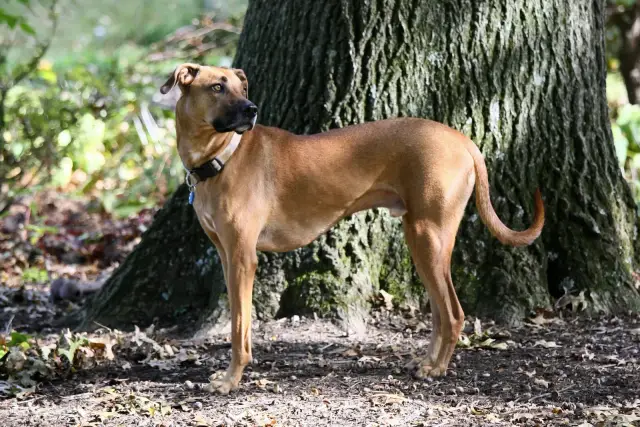 Related breedBlack Mouth Cur1700 to 1900 · United StatesEarly Modern Era
- The Akita was the first animal designated as a Japanese Natural Monument, according to one source, in 1931.
- Helen Keller's Akita puppy Kamikaze-go died of distemper, and she was given his brother Kenzan-go in 1939.
- Hachiko waited at Shibuya Station for about nine years after his owner's death on 21 May 1925.
- The Akita and the American Akita were split by the FCI in 1999, and the American type was renamed in 2006.
Frequently asked questions
Are Akitas good family dogs?
They can be with their own family if trained and socialised from early on. They are reserved with strangers, often intolerant of other dogs, and strong, so they suit experienced owners.
What is the difference between an Akita and an American Akita?
The treats them as two breeds since 1999. The Akita is the Japanese type: smaller, with a limited colour list. The American Akita is larger, with a black mask and more colours. In the US the lists one Akita with the American type.
How big is an Akita?
FCI standard: dogs 67 cm and bitches 61 cm at the withers, 3 cm either way. American-type Akitas are taller and heavier.
How long do Akitas live?
Atlas data gives 10 to 13 years. No reliable breed-wide study was found in the sources used.
What health problems do Akitas have?
Immune diseases (sebaceous adenitis and uveodermatologic syndrome), and bloat are the best documented.
Was Hachiko a real dog?
Yes. Hachiko was born in 1923 near Odate, lived in Tokyo with Professor Ueno, and died in 1935. His statue stands at Shibuya Station.
Read next
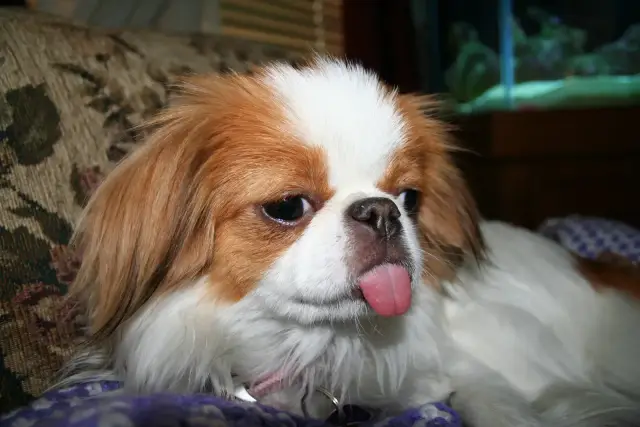 Closest DNAJapanese Chin13.9 Mb shared
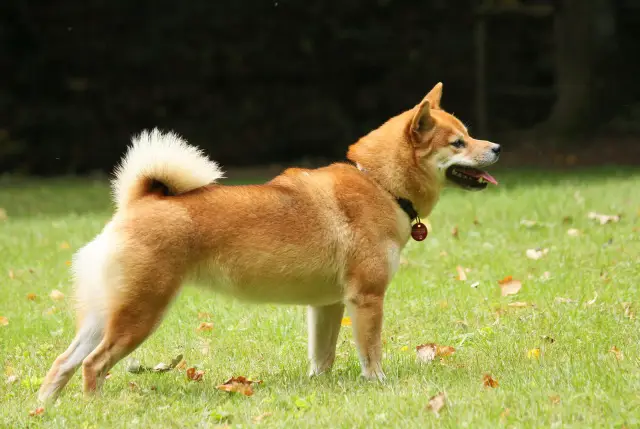 Sister breedShiba Inu300 BCE to 1936
 GuideDogs of Japan: the native breeds and their storiesJapanese dog breeds explained: the six Nihon Ken, the Chin, Tosa, Japanese Spitz and Terrier, Hachiko, wartime near-extinction, DNA and who they suit.
Sources (14)
- Fédération Cynologique Internationale, Akita, standard no. 255 (size figures from the Canadian Kennel Club's Japanese Akita text following the FCI framework).
- Parker H.G. et al., "Genomic analyses reveal the influence of geographic origin, migration, and hybridization on modern dog breed development", Cell Reports, 2017.
- The Kennel Club (UK), Akita breed page.
- United Kennel Club, Akita breed standard.
- American Kennel Club, Akita history and Hachiko pages.
- Akita Prefecture tourism, "Akita dog history" and Hachiko 100 pages (Odate, 1927 society, 1931 designation).
- Akita Inu Hozonkai (AKIHO) history, as summarised in breed histories.
- Wikipedia, "Akita (dog breed)" and "Hachiko" (for dates and the 1999 FCI decision).
- Ogasawara I., recollection of Helen Keller's Akitas, and Densho Digital Repository 1939 photograph caption on Kenzan-go.
- Nihon Ken registry (Nippo), native Japanese breeds list.
- Vogt-Koyanagi-Harada-like syndrome in American Akitas and DLA-DQA1*00201, 2005 genetics study of immune-mediated diseases in the Akita.
- Review of uveodermatologic syndrome in dogs, 2020, and survey of Japanese Akitas with vitamin D measurements, 2020.
- OFA-based hip dysplasia breed table in a veterinary article (data to 2010).
- VetCompass study of gastric dilatation-volvulus in UK emergency-care clinics (RVC repository).