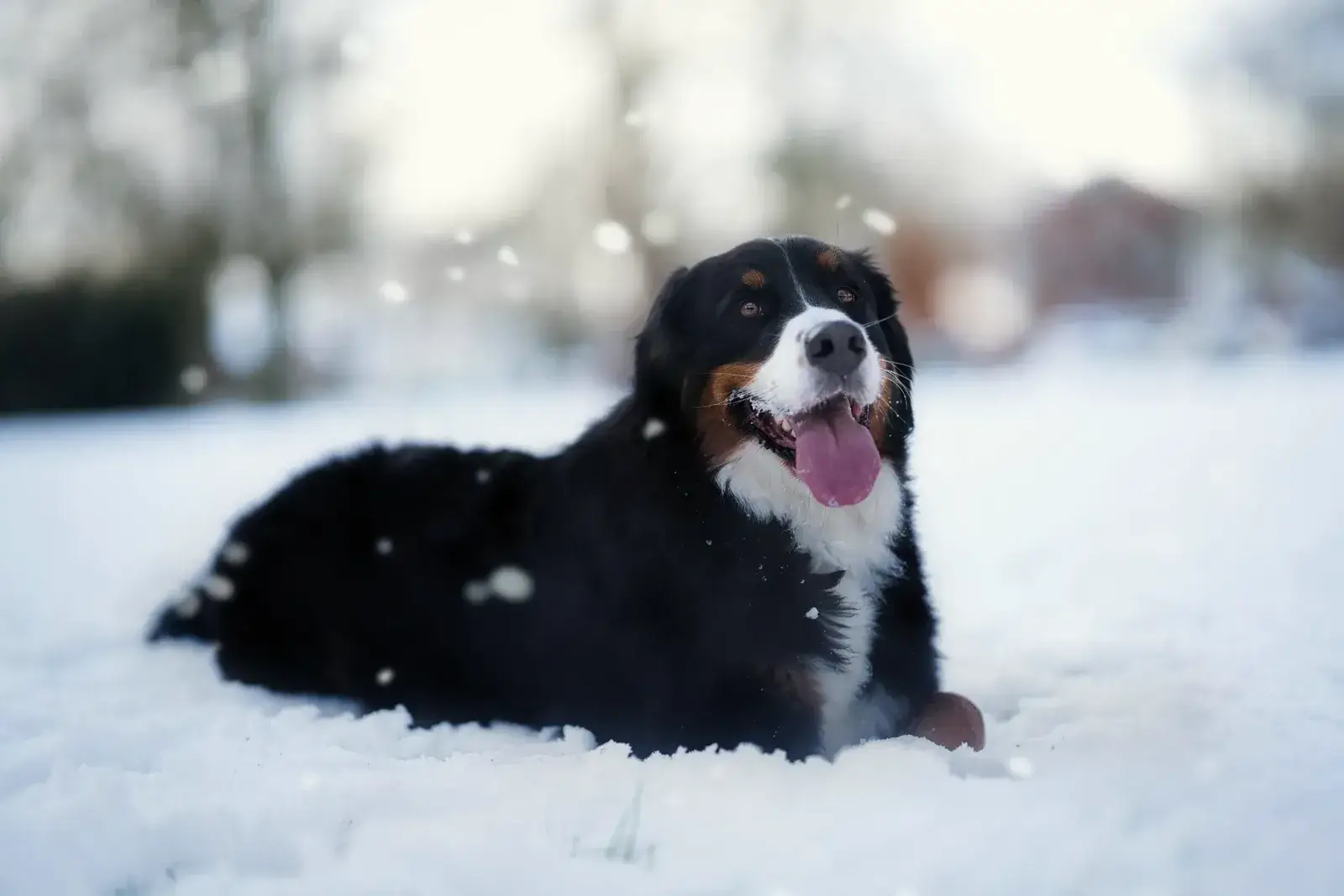
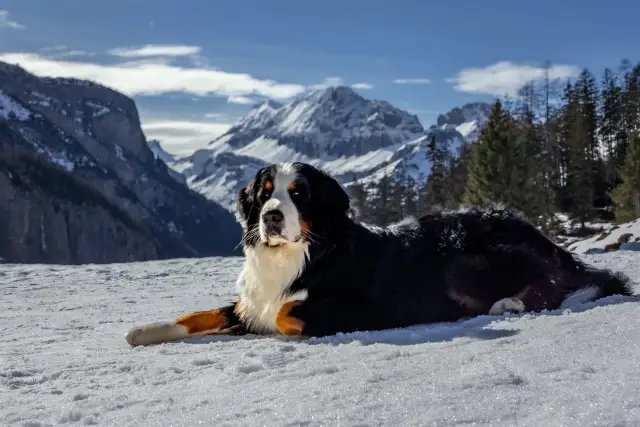
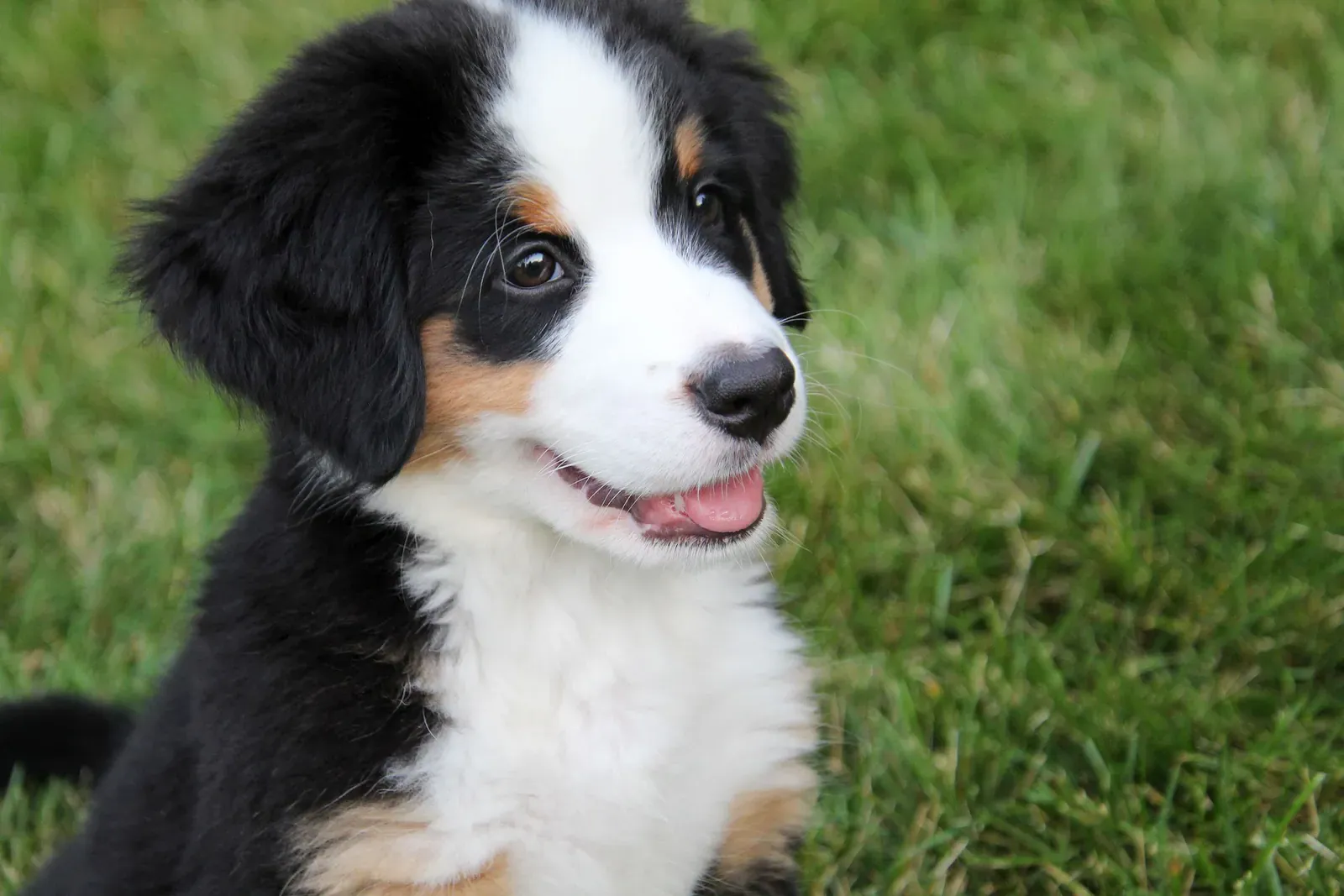
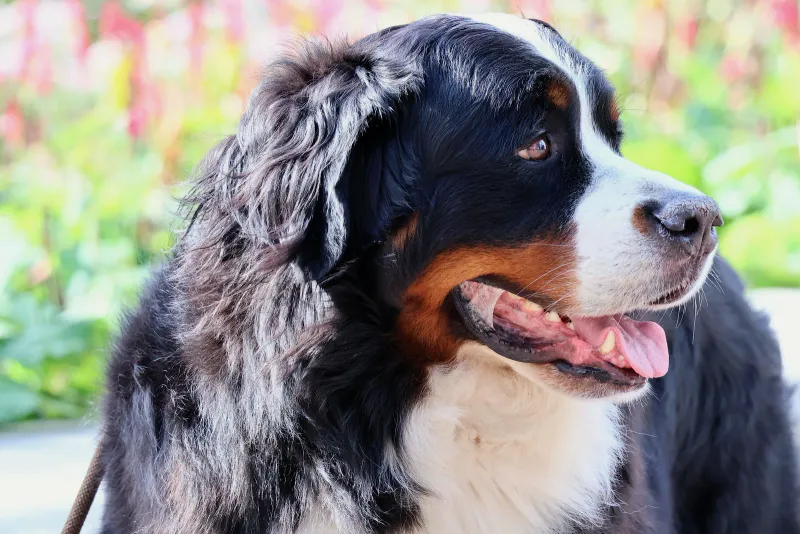
Males stand 64 to 70 cm, and the breed is known for a calm, affectionate nature and a striking black, rust and white coat. It is the only long-haired one of the four Swiss Sennenhund breeds. A Swiss study found a median lifespan of 8.4 years, shorter than many breeds, with cancer the most common cause of death.
Quick facts
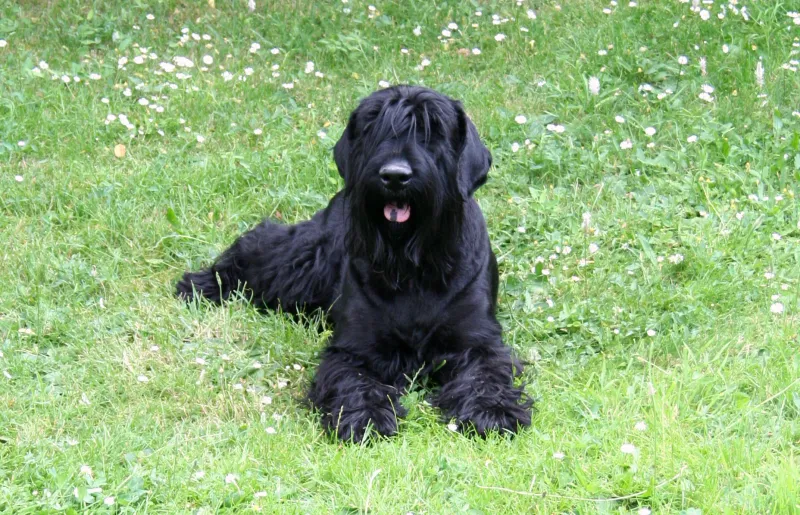 Related breedBlack Russian Terrier1949 to 1984 · RussiaModern Era
- Other names
- Berner Sennenhund, Berner, Bernese, Dürrbächler (old name)
- Origin
- Canton of Bern, Switzerland
- Type
- Farm, draught and guard dog
- Height at withers
- Males 64 to 70 cm, females 58 to 66 cm (FCI)
- Coat
- Long, silky or slightly wavy, tricolour
- Lifespan
- Median 8.4 years in a Swiss study of 389 dogs
- Family (Parker 2017 DNA)
- Alpine
- FCI
- Group 2, number 45
- AKC
- Working Group
- Temperament
- Calm, good-natured, loyal, watchful
Drawn to scale in real centimetres. Its back reaches about 64 cm, mid-thigh; its head about 81 cm, your hip.
Where it sits in the tree
Early Modern Era · 1600 to 1799
Name and origin
 Related breedAkita1600 to 1931 · JapanEarly Modern Era
The breed takes its name from the canton of Bern. In German it is the Berner Sennenhund. "Senn" means an Alpine herdsman or dairyman, and "Hund" is dog, so the name reads as "Bernese herdsman's dog".
Before the name Bernese Mountain Dog existed, farmers in the Bernese lowlands called these dogs Dürrbächler. The name comes from Dürrbach, a small place in the Bernese countryside where the big tricolour dogs were especially common. It stuck for a few decades, until Swiss dog enthusiasts picked a name that matched the other Swiss mountain dogs.
Two accounts compete for the name Berner Sennenhund. The FCI standard says the dogs were renamed after a 1910 show at Burgdorf, following the example of the other Swiss mountain dogs. Swedish and Danish kennel club histories give 1908 as the year the new name was adopted. Both agree that Dürrbächler came first and Bernese came second.
The knowledge base dates the breed to about 1700, with the modern type settled by 1907. Nobody can name a single founding dog. The type grew out of working farm dogs, not a planned breeding scheme.

History
 Same eraAmerican Bulldog1700 to 1980 · United StatesEarly Modern Era
For centuries, farms in the hills and valleys around Bern kept large, strong dogs that did several jobs at once. They guarded the yard, moved cattle from farm to pasture, and pulled small carts loaded with milk, cheese and other farm goods to market. A cart dog could replace a donkey or a second pair of hands, and it cost only its keep. Farmers rarely cared about pedigrees. They kept dogs that worked, stayed calm around livestock and lived on the farm.
By the late 1800s, new roads, railways and farm machinery reduced the need for dog power, and the old farm dogs of Switzerland became rarer. In the early 1900s, a few fanciers started to look for the remaining large tricolour dogs and showed them at events in Bern.
Dogs of this type were first put before judges at Swiss shows around 1902 in Bern, where four "Dürrbächler" were entered in a trial class. Some accounts add shows in 1904 and 1907, but the dates differ between sources and only the 1902 and 1907 entries are repeated in the Swedish and FCI histories.
In November 1907, a group of breeders from the Burgdorf area founded the first breed club, the Schweizerischer Dürrbach-Klub, and defined the characteristic traits of the breed. The Swiss geologist and dog expert Albert Heim helped write the first and is credited with suggesting the name Bernese Mountain Dog, in line with the other Swiss mountain dogs he had worked to save. Heim judged the breed at a show in Basel in 1909, where he gave Best of Breed to a bitch named Netty. In 1908 he had also met the short-coated "Grosser Schweizer" at Langenthal, which became the Greater Swiss Mountain Dog and shows how close the two breeds were in those years.
At a show in Burgdorf in 1910, 107 of these dogs were shown, which turned a rare farm dog into a breed with a following across Switzerland and nearby parts of Germany. Wikipedia gives 1912 as the year of formal recognition, while the club and FCI accounts tie the breakthrough to the 1910 show, so treat 1912 as one source's date.
Albert Heim is one of the key figures behind all the Swiss Sennenhund breeds. The Bernese story fits a pattern seen across Europe: a working dog nearly lost to modern life, then rescued by a small group of people who wrote down what it should look like.
The breed travelled from there. Accounts say a Kansas farmer imported a Bernese to work on his farm in 1926, while a Showsight history instead describes a pair brought to Louisiana by Glen Shadow in 1936, and some sources mention an earlier photograph from Michigan taken around 1905. The American Kennel Club admitted the breed to its in 1937, announced in the American Kennel Gazette of 1 May 1937. The Bernese Mountain Dog Club of America followed in 1968 as the parent club. Bernese were also imported to England in 1936.
Today the Bernese Mountain Dog is a family companion in much of the world. Carting survives as a dog sport, and many clubs run carting tests where a Bernese pulls a small wagon, much as its ancestors did.
Relatives and DNA
 Same familyBlack Mouth Cur1700 to 1900 · United StatesEarly Modern Era
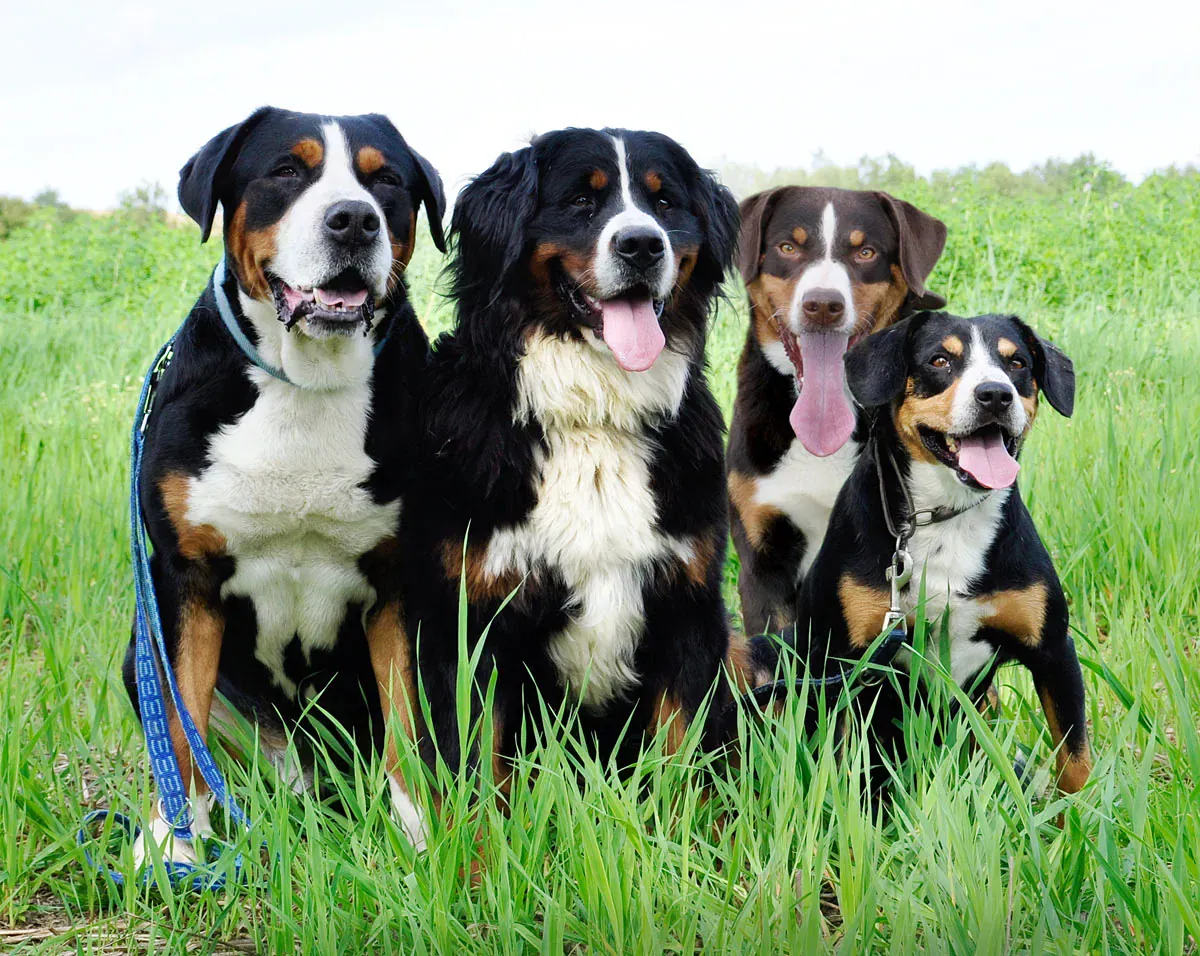
The Bernese is one of four Swiss Sennenhund breeds:
- Bernese Mountain Dog: long coat, the only long-haired one
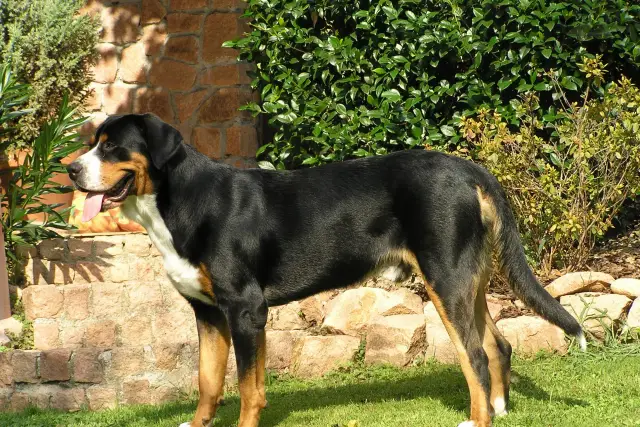
- Greater Swiss Mountain Dog: short coat, larger and heavier
- Appenzeller Sennenhund: medium size, short coat, a cattle driver
- Entlebucher Mountain Dog: the smallest of the four
All four share the black, rust and white tricolour pattern. Each began as a regional farm dog and was named for its home area.
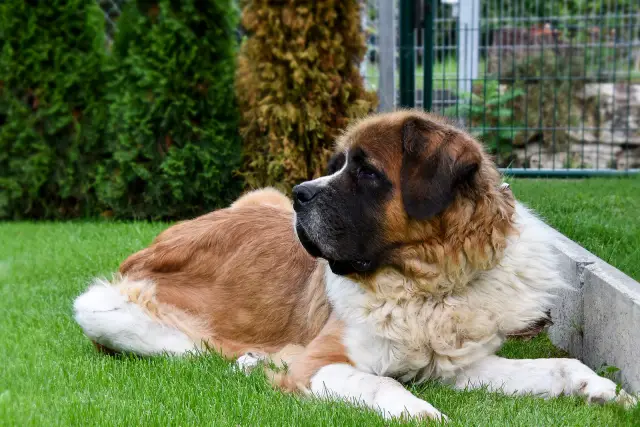
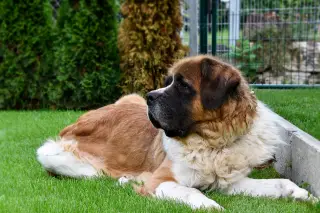
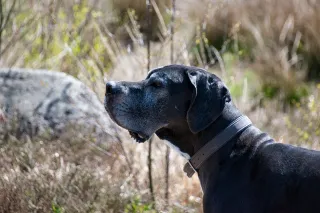
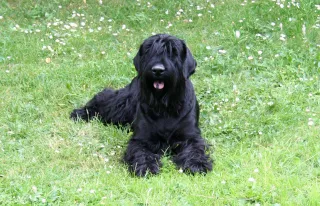
The 2017 DNA study by Heidi Parker and colleagues places the Bernese in the Alpine family of breeds. Its closest genetic match among the breeds sampled is the Greater Swiss Mountain Dog, with about 91.7 Mb of , far more than any other breed. Next come the St. Bernard (34.7 Mb), the Leonberger (16.6 Mb), the Great Dane (11.4 Mb) and the Black Russian Terrier (11.1 Mb). Shared are a measure of how much DNA two breeds hold in common, not a family tree.
The German Hovawart is listed in the knowledge base as a breed with Bernese influence. The knowledge base also records the Greater Swiss Mountain Dog, Appenzeller and Entlebucher as sister breeds, and notes that the Bernese and Greater Swiss were revived together in the early 1900s. The Parker study sampled a limited set of breeds, so a small DNA link to the Great Dane or Black Russian Terrier shows shared ancestry somewhere far back, not a direct cross.
 Save
Sister breeds · 3
- Greater Swiss Mountain Dog1700 to 1909
- Appenzeller Sennenhund1800 to 1898
- Entlebucher Mountain Dog1800 to 1913
Descend from it · 1
- HovawartGermany
- Greater Swiss Mountain Dog91.7 Mb 3.8%
- St. Bernard34.7 Mb 1.4%
- Leonberger16.6 Mb 0.7%
- Great Dane11.4 Mb 0.5%
- Black Russian Terrier11.1 Mb 0.5%
Source: Parker et al. 2017. Percent of the whole genome.
The breed standard
 Looks relatedBluetick Coonhound1700 to 1945 · United StatesEarly Modern Era
A breed standard is the written ideal that a kennel club uses to judge dogs at shows. For the Bernese, the FCI (standard number 45, Switzerland as country of origin), the and the UK Kennel Club agree closely on size. The Canadian Kennel Club gives a slightly different range for dogs, reported as 62.25 to 69.75 cm.
| Trait | What the standards say |
|---|---|
| Height, males | FCI: 64 to 70 cm (ideal 66 to 68 cm); AKC: 25 to 27.5 inches (about 64 to 70 cm); UK KC: 64 to 70 cm (25 to 27.5 inches) |
| Height, females | FCI: 58 to 66 cm (ideal 60 to 63 cm); AKC: 23 to 26 inches (about 58 to 66 cm); UK KC: 58 to 66 cm (23 to 26 inches) |
| Weight | FCI: no fixed range in the figures checked; AKC: no fixed range in the figures checked; UK KC: none given, and states that size figures are a guide, not a guarantee. Commonly quoted adult weights: 35 to 55 kg |
| Coat | FCI: long, shiny, straight or slightly wavy; AKC: thick, moderately long, silky; UK KC: long, soft and silky with a natural sheen |
| Colour | FCI: jet black base, rich rust-brown on cheeks, over the eyes, legs and chest, with white markings; AKC: same tricolour pattern; UK KC: same tricolour pattern |
| Group | FCI: Group 2, section Swiss Mountain and Cattle Dogs; AKC: Working; UK KC: Working |
What you see in the standard:
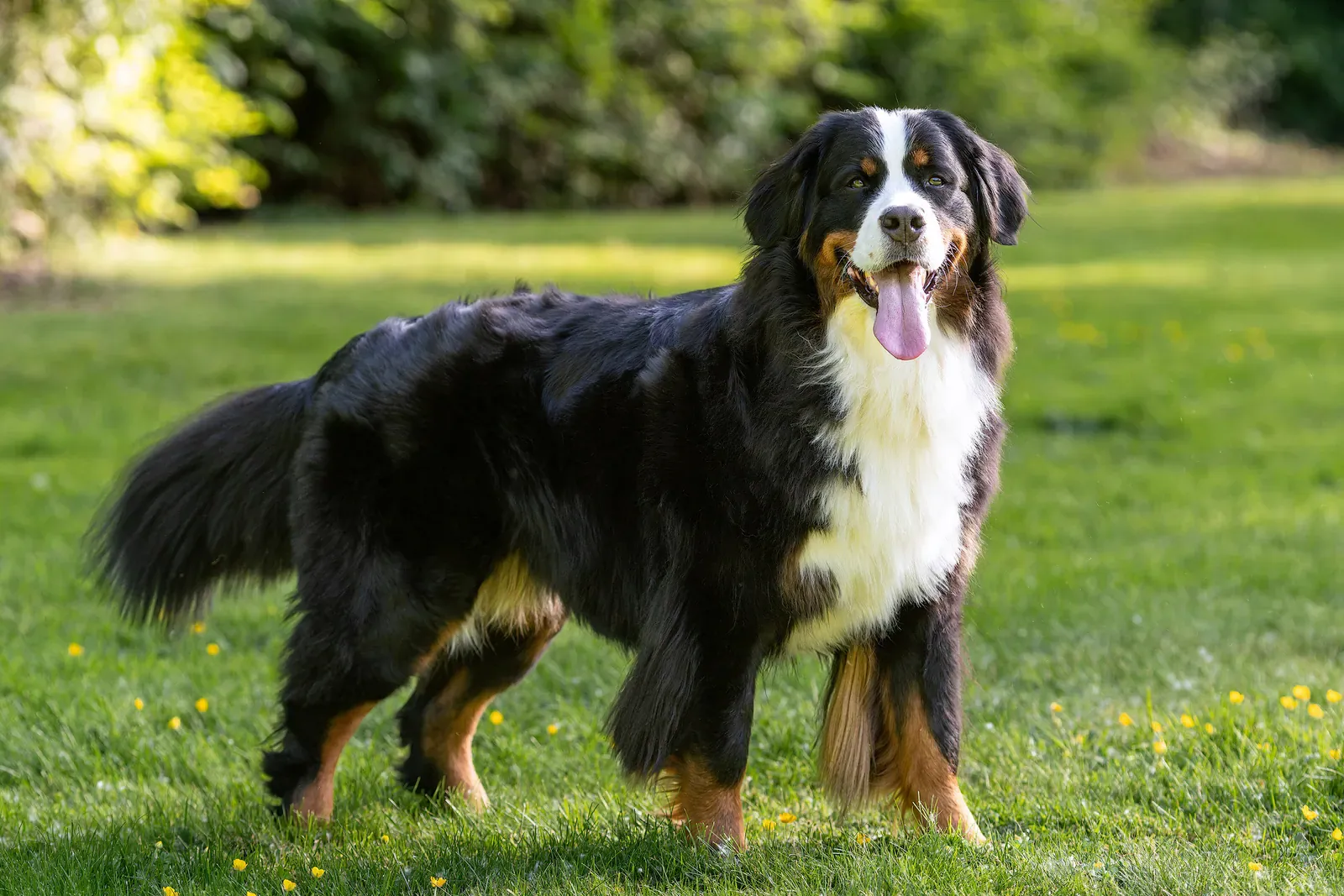
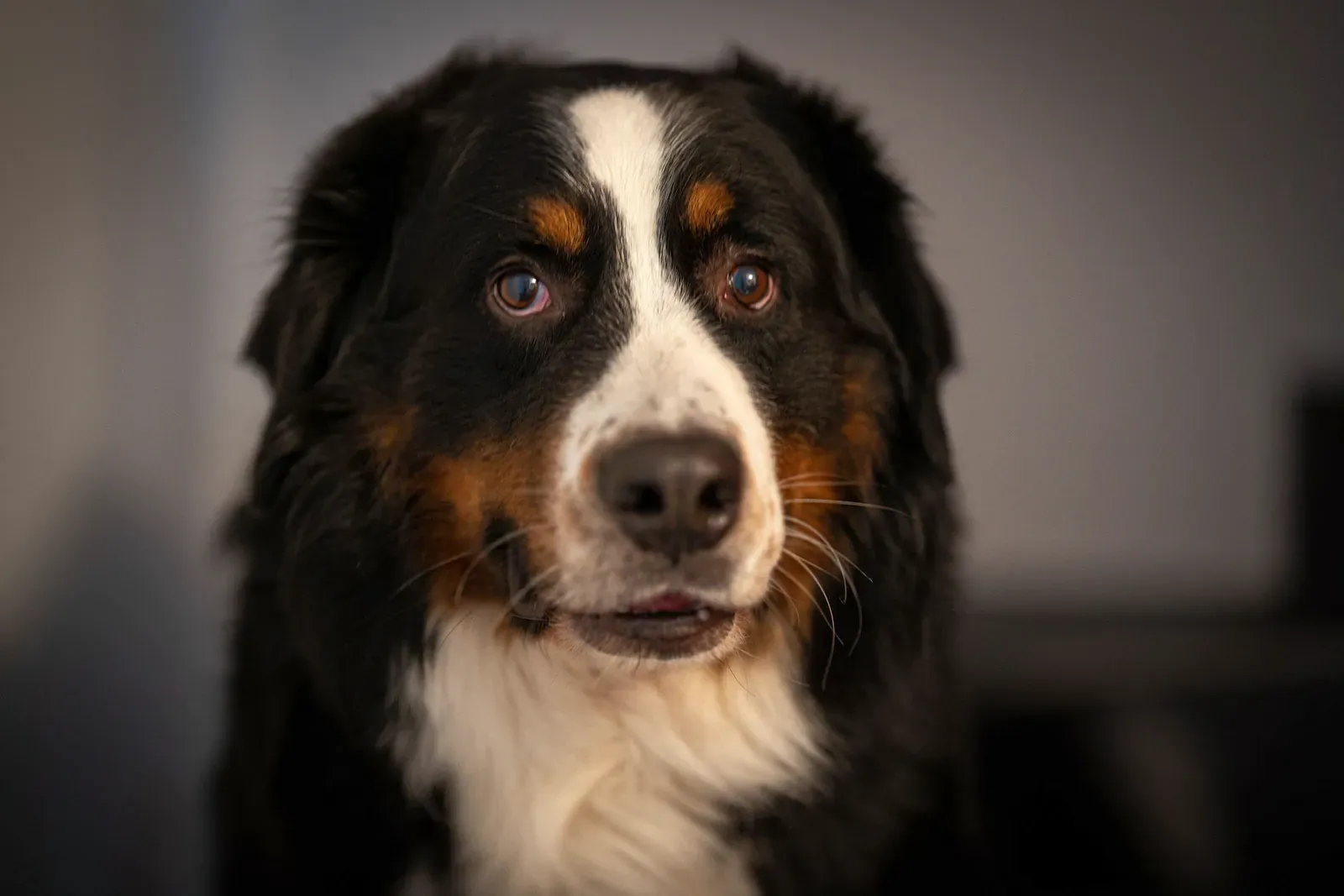
- Colour pattern: black with rust above the eyes, on the cheeks, on the legs and in two spots on the chest, plus white on the muzzle, a blaze on the forehead, a white chest marking and white toes. A white tip on the tail is welcome.
- Build: strong, sturdy and well balanced, slightly longer than tall, with good bone.
- Head and expression: strong head, dark brown eyes with a gentle, watchful look, and medium-sized triangular ears that hang close to the head.
- Movement: an easy, ground-covering trot.
A single standard is not a quality guarantee. Standards describe the ideal, and individual dogs vary in size and build, so a dog slightly above or below the range can still be healthy.
 Save
Temperament
 Related breedBoerboel1650 to 1983 · South AfricaEarly Modern Era
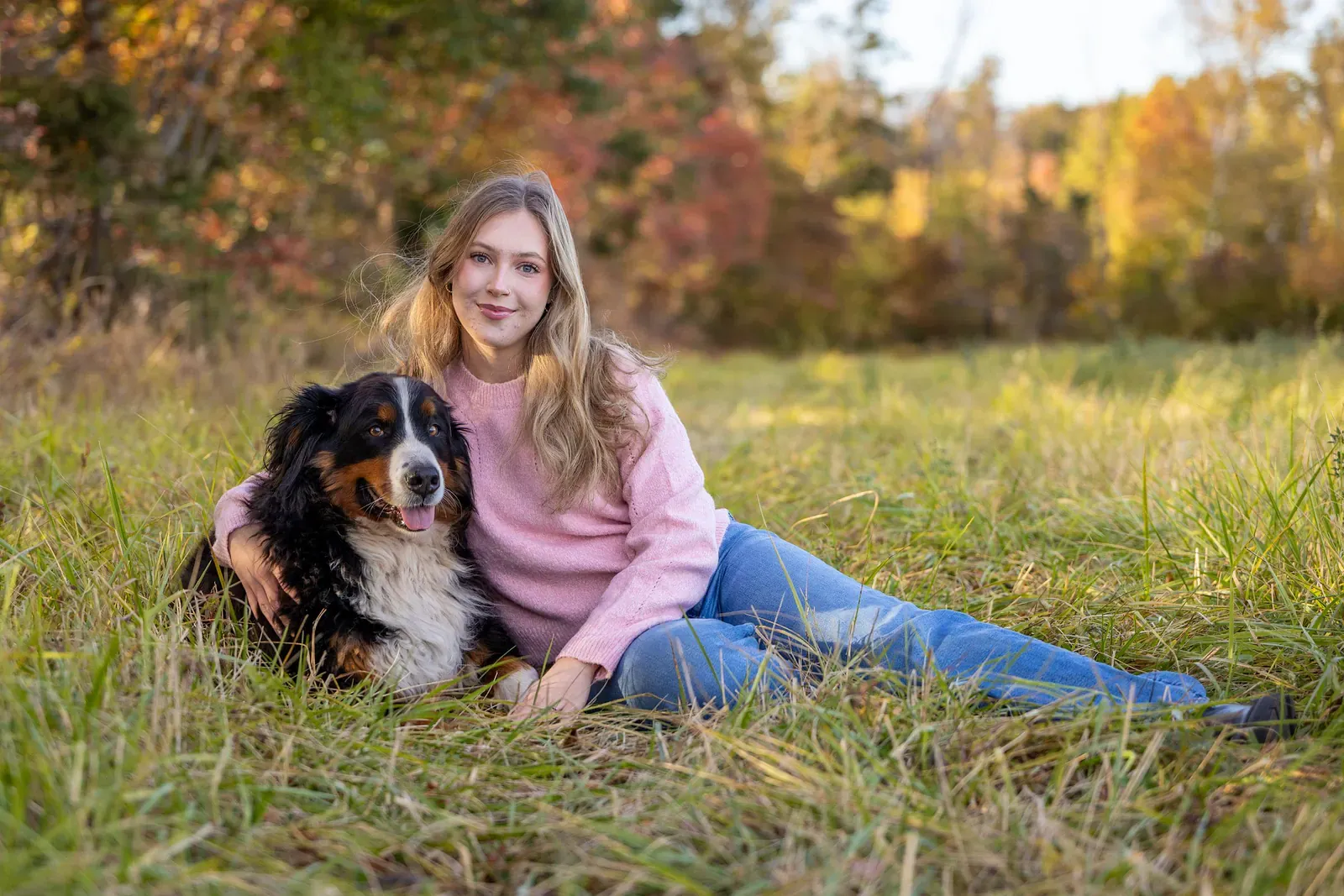
Breed clubs describe the Bernese as good-natured, calm, self-assured and devoted to its people. It was bred to work next to the family on a farm and to stay alert around the yard, and the temperament reflects that. Most Berners are gentle with children, relaxed indoors and happiest when they are with their household.
- With family: affectionate, often leaning on people and following them from room to room.
- With strangers: watchful and reserved at first, rarely aggressive. Early socialisation helps a young dog learn that visitors are normal.
- With other dogs and pets: usually friendly. The herding and guarding background means some will try to move or watch animals.
- Intelligence and training: eager to please, learns quickly with gentle, reward-based methods. Berners can be sensitive and may sulk under harsh handling.
- Maturity: slow. Many stay clumsy and puppy-like until two or three years of age, so expect an adult-sized dog that still acts like a youngster for a long time.
- Energy: moderate. A good walk, some play and time with the family is enough for most adults.
A Bernese left alone for long hours often becomes bored or lonely. This breed was made to be with people.
 Save

Health
 Related breedCatahoula Leopard Dog1700 to 1979 · United StatesEarly Modern Era
Most Bernese Mountain Dogs live good lives with no serious illness for many years. The sections below describe what the breed tends to face, what breeders screen for and what owners can watch for. The aim is to be informed, not worried.
Lifespan
The best-known lifespan study is a Swiss survey by Klopfenstein and colleagues, published in BMC Veterinary Research in 2016. It covered Bernese Mountain Dogs born in Switzerland in 2001 and 2002 and collected data from owners and vets for 389 dogs.
- Median life expectancy: 8.4 years (middle half of dogs: 6.9 to 9.7 years).
- Females: median 8.8 years.
- Males: median 7.7 years.
The same paper reports that earlier studies gave mean and median life expectancies of about 7.1 and 7.0 to 8.0 years for the breed, against roughly 10 and 11 years for dogs of all breeds. A 2018 longevity review in Canine Genetics and Epidemiology also cites a Danish Kennel Club survey with a Bernese median of 7.0 years, the lowest figure it lists for that country. Swiss and Danish numbers differ because the cohorts, countries and years differ.
For comparison, the knowledge base lists a typical range of 7 to 10 years. That is shorter than many breeds of similar size, though large and giant breeds generally live shorter lives than small ones. A figure for the breed was not found.
Cancer
In the same Swiss study, cancer (neoplasia) was the cause of death in 222 of 381 dogs with a known cause, about 58 percent, or roughly 6 in 10 deaths. Joint disease (4.2 percent), spinal problems (3.4 percent), kidney injury (3.1 percent) and gastric or mesenteric twisting (1.8 percent) followed far behind. This number describes causes of death, not how many living Berners will have cancer.
A cancer type linked to the breed is histiocytic sarcoma, a tumour of immune cells that is seen far more often in Bernese Mountain Dogs than in most breeds. Abadie and colleagues (Journal of Heredity, 2009) studied DNA and records from 800 Bernese, of whom 200 had the disease. That is a research sample built around affected dogs, so it is not a population rate; a French genetics project page quotes a lower figure of about 20 percent. A related 2010 follow-up of 100 affected dogs found a mean onset age of 6.5 years, equal risk in males and females, and a median survival after diagnosis of about 49 days. Research on the breed is active, and breed clubs fund studies on genetic risk. No single DNA test predicts it for individual dogs.
Main conditions
| Condition | What it is | How common | What helps |
|---|---|---|---|
| Histiocytic sarcoma and other cancers | Tumours that can affect organs, joints or lymph nodes | Cancer was the cause of death in about 6 in 10 dogs in the Swiss study | Regular vet checks, quick attention to lumps or limping, buying from breeders who track cancer in their lines |
| Hip and elbow dysplasia | Joints that form loosely, leading to arthritis | Seen more often than in many breeds; joint disease caused about 4 in 100 deaths in the Swiss study | Hip and elbow scoring of parents, lean body weight, non-slip floors, controlled exercise while growing |
| Gastric dilatation and volvulus (bloat) | The stomach fills with gas and may twist | Uncommon, about 2 in 100 deaths in the Swiss study | Two or three smaller meals, no hard exercise around meals, emergency vet care if the belly swells |
| Slow nerve change in the spine, mostly in old age | Seen in the breed; amount varies by line | DNA test for the SOD1 gene for breeding dogs | |
| Eye problems (such as entropion) | Eyelids that roll in and irritate the eye | Seen occasionally | Eye checks for parents, early vet advice |
A healthy Berner is also helped by plain things: a slim body, daily walks and regular check-ups once the dog is past six or seven years.

Living with a Bernese Mountain Dog
 Related breedCoton de Tulear1600 to 1970 · MadagascarEarly Modern Era
| Area | Rating | Why |
|---|---|---|
| Exercise per day | Medium | 45 to 90 minutes of walking and play is typical for adults, with care during growth |
| Training needs | Medium | Willing, sensitive, needs gentle consistency and early manners at a large size |
| Grooming | Medium to High | Brush two or three times a week, daily in heavy shedding periods |
| Shedding | High | Year-round hair with heavier coat changes in spring and autumn |
| Barking | Medium | Alerts to visitors, otherwise fairly quiet |
| Time alone | Low | Bred to be near the family; long absences can cause stress |
| Children | Good | Gentle by nature; supervise because of the size |
| Other dogs | Good | Usually friendly with good socialisation |
| Cats and small pets | Fair | Varies; early introduction helps |
| Flat living | Fair | Possible if exercise is met and the lift or stairs are manageable |
| Heat tolerance | Poor | The thick dark coat overheats easily in hot weather |
| Cold tolerance | Good | Built for Alpine climates |
| First-time owner | Fair | Easy-going, but size, shedding and health costs need planning |
A great fit if you:
- Want a calm, affectionate dog that wants to be with the family.
- Live in a cool climate or can keep the dog cool in summer.
- Enjoy regular walks, hiking or carting at a relaxed pace.
- Have room for a 35 to 55 kg dog and a tolerance for dog hair.
Think twice if you:
- Work long hours and the dog would be alone most of the day.
- Want a dog with a long lifespan, or worry about emotional strain from a shorter life together.
- Dislike drool, mud and constant hair on floors and clothes.
- Live in a hot region without air conditioning or shade.
Before you get one:
- Ask the breeder for hip and elbow scores for both parents, and for the DNA result for degenerative myelopathy.
- Ask about the cancer history in the pedigree and the ages at which relatives died. Breeders who keep such records help the breed.
- Breed rescues exist for adult Bernese and can be a good option for a calmer dog whose size and temperament are already known.
- The first year is mostly about socialisation, house manners, short walks and avoiding hard jumping or long runs while the joints are forming.
Similar breeds to consider:
- Greater Swiss Mountain Dog: the closest relative, short-coated and easier to groom.
- St. Bernard: another calm Alpine giant, with more drool and a similar lifespan.
- Leonberger: a big, gentle family dog with a lion-like coat.
- Entlebucher Mountain Dog: smaller, more energetic, short coat.

Fun facts
 Related breedDachshund1600 to 1888 · GermanyEarly Modern Era
- The Bernese is the only long-haired Sennenhund of the four Swiss mountain dogs.
- In 1910, 107 Bernese were shown at Burgdorf, a huge turnout for a breed that had been nearly forgotten a decade earlier.
- Only four "Dürrbächler" were entered at the 1902 Bern show, so the breed grew from four show dogs to 107 in eight years.
- The AKC stud book admitted the breed in 1937, and the parent club in America only formed in 1968.
- Carting is still a sport for Bernese. The dogs pull light wagons in tests that echo their old job of carrying milk and cheese.
FAQ
How long do Bernese Mountain Dogs live?
A Swiss study of 389 dogs found a median lifespan of 8.4 years. Females lived a median 8.8 years and males 7.7 years. Some dogs live to 10 or more.
Are Bernese Mountain Dogs good with kids?
Generally yes. They are gentle and patient, and many are protective of children in the family. Because of their size, up to 55 kg, they can knock over small children by accident, so supervision is wise. Dogs stay puppy-like for two to three years, which adds bounce.
How big does a Bernese Mountain Dog get?
By the standard, males are 64 to 70 cm at the withers and females 58 to 66 cm. Adult weight is commonly given as 35 to 55 kg depending on sex and build.
Do Bernese Mountain Dogs shed a lot?
Yes. They shed year-round, with heavier shedding in spring and autumn. Brushing a few times a week keeps the coat in order and reduces hair around the house.
What health problems do Bernese Mountain Dogs have?
The main concerns are cancer (the cause of about 58 percent of deaths with a known cause in the Swiss study, with histiocytic sarcoma a breed-linked type), joint problems such as hip and , and bloat. Health testing of breeding dogs and regular vet checks help owners and breeders manage these risks.
Who started the Bernese Mountain Dog breed?
No single person did. Breeders around Burgdorf founded the Schweizerischer Dürrbach-Klub in 1907, and Albert Heim helped write the first standard and the Bernese name.
Is a Bernese the same as a Greater Swiss Mountain Dog?
No. Both are Swiss Sennenhund breeds with the same tricolour pattern, but the Bernese is long-coated and the Greater Swiss is short-coated, larger and heavier. They are also each other's closest DNA match at about 91.7 in the Parker 2017 study.
Read next
 Closest DNAGreater Swiss Mountain Dog91.7 Mb shared
 FamilyAlpineThe whole family
 Adopt a dogDog Shelters in AustriaFive big cities checked, more shelters being added
Sources (12)
- Klopfenstein M. et al. (2016). Life expectancy and causes of death in Bernese mountain dogs in Switzerland. BMC Veterinary Research.
- FCI Standard No. 45, Berner Sennenhund (Bernese Mountain Dog).
- American Kennel Club, Bernese Mountain Dog breed standard.
- Parker H. G. et al. (2017). Genomic analyses reveal the influence of geographic origin, migration, and hybridization on modern dog breed development. Cell Reports.
- Swiss Bernese Mountain Dog Club (Schweizerischer Dürrbach-Klub) history and breed accounts of Albert Heim.
- The Kennel Club (UK), Bernese Mountain Dog breed standard.
- Canadian Kennel Club, Bernese Mountain Dog breed standard.
- Abadie J. et al. (2009). Epidemiology, pathology, and genetics of histiocytic sarcoma in the Bernese Mountain Dog breed. Journal of Heredity.
- Bernese Mountain Dog Club of America, club history (AKC admission notice, American Kennel Gazette, 1 May 1937; club founded 1968).
- Swedish Kennel Club (SKK), breed compendium for the Sennenhund breeds (1902 to 1908 history).
- Review of longevity in Kennel Club registered dogs, Canine Genetics and Epidemiology (2018), citing a Danish Kennel Club survey.
- AKC Bernese Mountain Dog history; Showsight Magazine, Bernese Mountain Dog history (US import accounts).