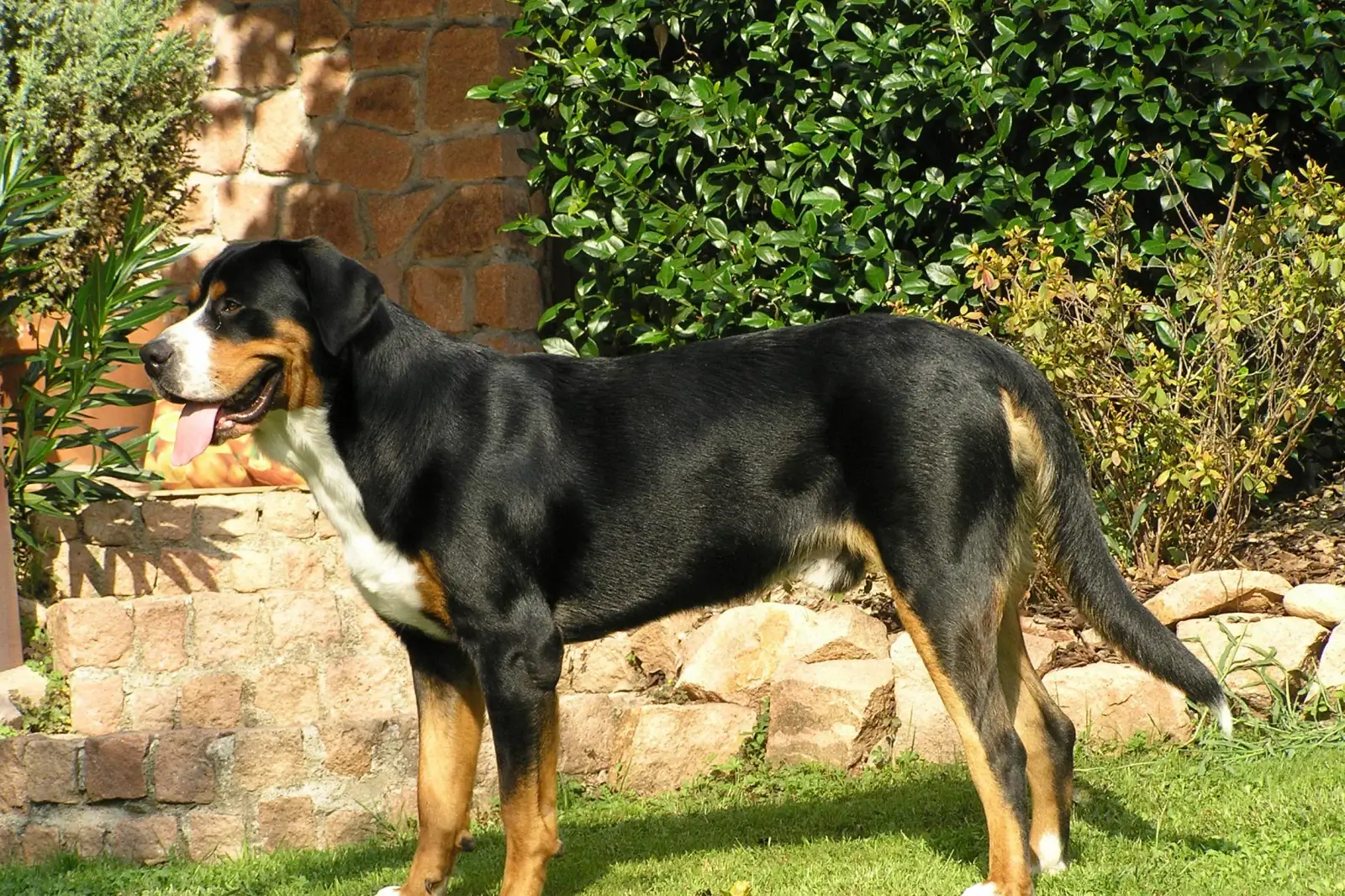
It is the largest of the four Sennenhund breeds: males stand about 65 to 72 cm at the withers. Farmers used it to pull carts, drive cattle and guard the yard. Today it is a loyal, steady family dog for owners with space, time for a slow-growing puppy and a plan for the breed's health risks, which include epilepsy and a twisted spleen.
Quick facts
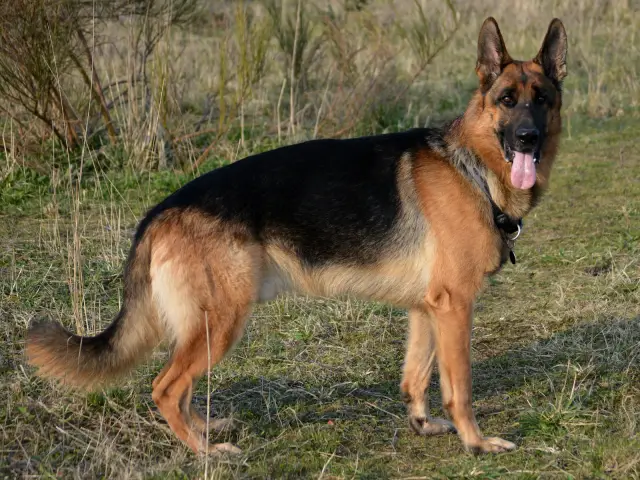 Related breedGerman Shepherd1899 · GermanyVictorian Breed Boom
- Other names
- Swissy, Grosser Schweizer Sennenhund, Great Swiss Mountain Dog
- Origin
- Switzerland
- Type
- Draught, drover and farm guard dog
- Height at withers
- Males about 65 to 72 cm, females about 60 to 68 cm
- Coat
- Short, dense double coat, tricolour
- Lifespan
- 8 to 11 years (atlas data)
- Family (Parker 2017 DNA)
- Alpine
- FCI
- Group 2, number 58
- AKC
- Working Group
- Temperament
- Calm, loyal, people-loving, watchful
Drawn to scale in real centimetres. Its back reaches about 66 cm, mid-thigh; its head about 84 cm, your hip.
Where it sits in the tree
Early Modern Era · 1600 to 1799
Name and origin
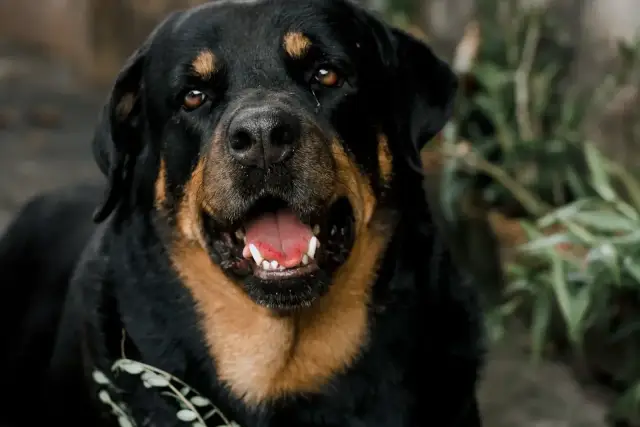
 Related breedBlack Russian Terrier1949 to 1984 · RussiaModern Era
The German name is Grosser Schweizer Sennenhund. "Senn" means an Alpine herdsman or dairyman, so the name reads as "great Swiss herdsman's dog". The English name is a direct translation, and "Swissy" is the everyday nickname. "Greater" in English and "Grosser" in German both mark it as the biggest of the four Swiss Sennenhund breeds, which also include the Bernese Mountain Dog, the Appenzeller Sennenhund and the Entlebucher Mountain Dog.
The atlas data dates the breed to between about 1700 and 1909, with medium confidence. Nobody can name a founding dog before 1908. The type came from local farm dogs, which some accounts say were crossed with mastiff-type dogs brought by foreign settlers. These origin stories are not documented, so treat them as likely but unproven.

History of the Greater Swiss Mountain Dog
 Same eraAkita1600 to 1931 · JapanEarly Modern Era
Farm dogs of the Swiss valleys
For centuries, large farm dogs worked in the valleys and foothills of Switzerland. They guarded farms, drove cattle to pasture and hauled carts of milk and cheese to market. The Swissy was nicknamed "the poor man's horse", because a family without a horse could still move goods with a strong dog. By the late 1800s, roads, railways and machines took over much of this work, and the old farm dogs were assumed to be almost gone.
1908: a short-haired "Bernese" at Langenthal
In 1908 a show at Langenthal marked the 25th anniversary of the Swiss Kennel Club. A breeder named Franz Schertenleib (also spelled Schertenlieb) showed two short-haired dogs as Bernese Mountain Dogs to the geologist Albert Heim, the champion of the Swiss Sennenhund breeds. One account says Schertenleib thought he was entering a larger, short-haired Bernese. Heim recognised the dog as something different and, in the accounts, called it a new breed. Another account says Heim wrote the first standard from a dog named Bello. Details differ between sources, and the accounts agree only that the meeting happened in 1908 and started the breed's revival.
Registration and the first club
The Swiss Kennel Club recognised them as a separate breed in 1909 and registered them in its . The first breed club followed in 1912. The Swiss Kennel Club and the FCI later brought the breed into the international system. The FCI published its current standard on 25 March 2003.
Close to extinction after the Second World War
The breed stayed rare for decades. By 1945 just over 100 puppies had been registered in one year, which suggests a total population of about 350 to 400 dogs. From that small base the breed grew again.
Arrival in North America
The first dogs reached the United States in 1968. The United Kennel Club recognised the breed in 1992, the American Kennel Club gave full recognition in 1995, and the Canadian Kennel Club followed in 2006. The places it in the Working Group.
Relatives and DNA: the Alpine family
 Same familyAmerican Bulldog1700 to 1980 · United StatesEarly Modern Era
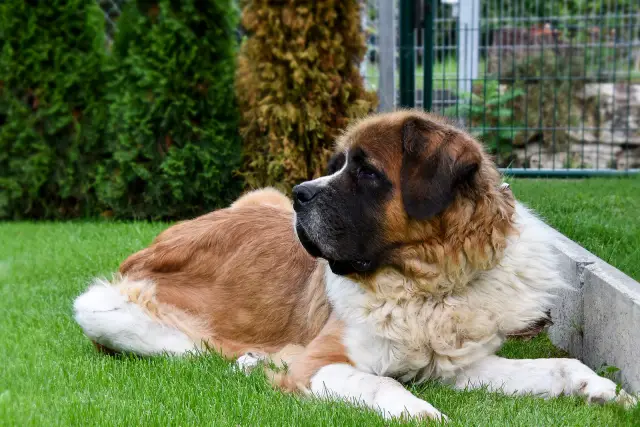
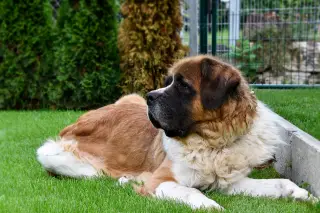
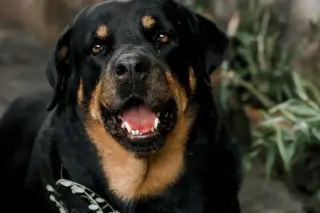
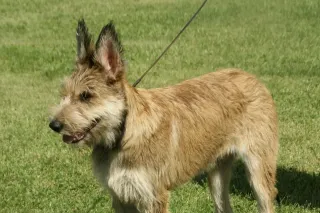
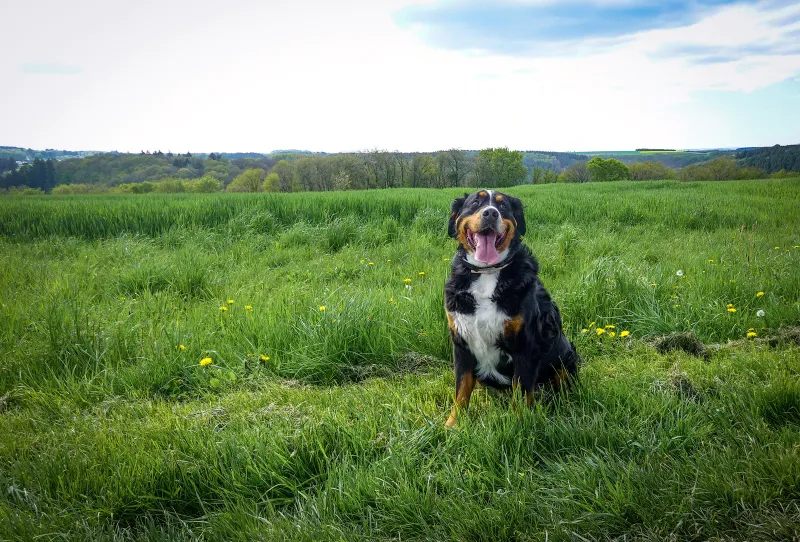
In the 2017 Parker study, the Greater Swiss Mountain Dog falls in the Alpine with strong support. Its closest DNA relative is the Bernese Mountain Dog, with 91.7 Mb of shared haplotype. The next closest is the St. Bernard at 57.5 Mb. The Rottweiler (18.4 Mb), the Leonberger (17 Mb) and the German Shepherd (13.5 Mb) share less. One reference work notes that a genetic clustering method could not easily separate the Swissy from the Bernese, and that the Swissy probably contributed to the St. Bernard and the Rottweiler.
The two other Sennenhund breeds, the Appenzeller and the Entlebucher, are listed as sister breeds in the atlas data.
Swissy or Bernese: how to tell them apart
The Swissy is the bigger, heavier dog with the easier coat. See the Bernese Mountain Dog page for the long-haired sister breed.
Sister breeds · 3
- Bernese Mountain Dog1700 to 1907
- Appenzeller Sennenhund1800 to 1898
- Entlebucher Mountain Dog1800 to 1913
- Bernese Mountain Dog91.7 Mb 3.8%
- St. Bernard57.5 Mb 2.4%
- Rottweiler18.4 Mb 0.8%
- Berger Picard17.2 Mb 0.7%
- Leonberger17.0 Mb 0.7%
- German Shepherd13.5 Mb 0.6%
- Black Russian Terrier11.7 Mb 0.5%
Source: Parker et al. 2017. Percent of the whole genome.
| Breedwith Greater Swiss Mountain Dog | with Greater Swiss Mountain Dog (Mb)Shared DNA (Mb) |
|---|---|
| Bernese Mountain Dog | 91.7 |
| St. Bernard | 57.5 |
| Rottweiler | 18.4 |
| Berger Picard | 17.2 |
| Leonberger | 17.0 |
| German Shepherd | 13.5 |
| Black Russian Terrier | 11.7 |
Source: Parker et al. 2017, Cell Reports, shared haplotypes between 161 breeds (1,346 dogs).
| Trait | Greater Swiss Mountain Dog | Bernese Mountain Dog |
|---|---|---|
| Coat | Short, dense double coat | Long, silky or slightly wavy |
| Size | Larger: males about 65 to 72 cm | Males 64 to 70 cm |
| Shedding | Year-round, heavier once or twice a year | Heavy coat care and shedding |
| Lifespan (atlas data) | 8 to 11 years | No published figure |
The breed standard
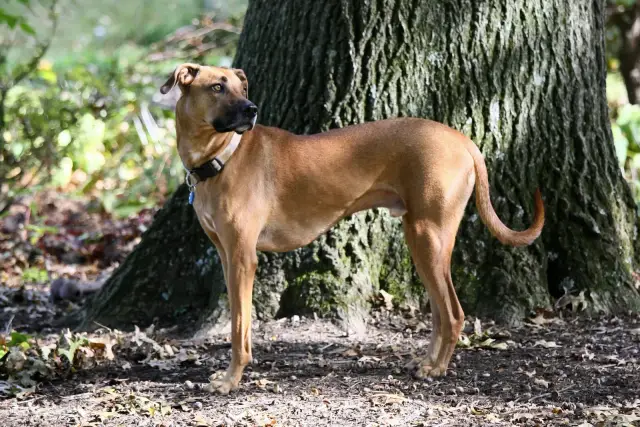 Looks relatedBlack Mouth Cur1700 to 1900 · United StatesEarly Modern Era
The standards agree on a powerful, sturdy dog that is slightly longer than tall, about 10 to 9. The table below follows the FCI standard.
| Trait | What the standards say |
|---|---|
| Height | Males about 65 to 72 cm, females about 60 to 68 cm |
| Body | Slightly longer than tall; chest depth about half the height at the withers, deepest between the elbows |
| Eyes | Almond-shaped, hazel to chestnut; dark brown preferred |
| Coat | Double coat with a thick outer coat of medium length and a dense undercoat, dark grey or black as far as possible |
| Colour | Typically tricolour: black with symmetrical rust and white markings |
| Hindquarters | Broad, strongly muscled, correctly angled for driving power |
| FCI status | Standard published 25 March 2003 |
Temperament of the Swissy
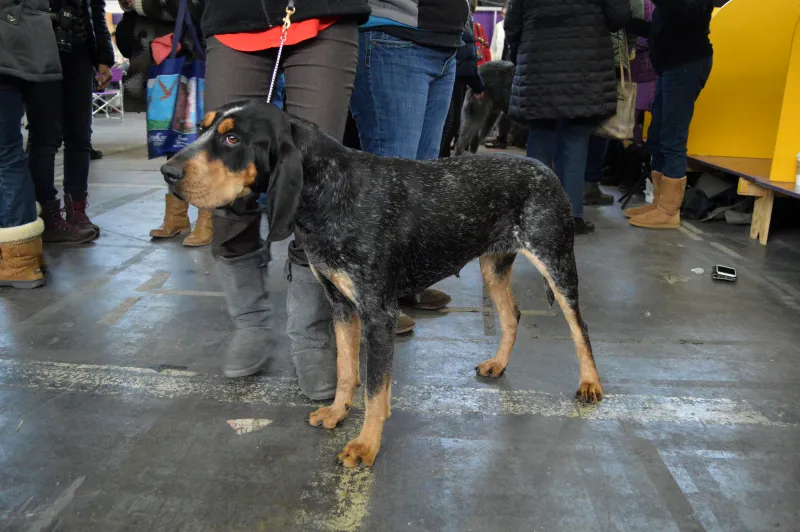 Related breedBluetick Coonhound1700 to 1945 · United StatesEarly Modern Era
The Swissy is sociable, steady and strongly attached to its people. Reference works describe it as enthusiastic, active, calm and dignified. The AKC calls it "dependable and faithful" and a hardworking breed. It tends to stay close to its owners and does not need a huge space, though it needs regular exercise.
Family life and children
A giant dog can knock over a toddler by accident. A Swissy puppy grows fast and is clumsy for months. The breed's reputation with children is warm, but every dog this size needs supervision and training with kids around, and it needs the basics of leash manners early, before it weighs more than many adults.
Work and sport
Draft work is in the breed's history, and carting is still a good outlet. A Swissy that has a task, such as pulling a small cart, hiking with a pack or learning a trick, is usually calmer at home. It is not a dog for a flat with no exercise routine.

Health of the Greater Swiss Mountain Dog
 Related breedBoerboel1650 to 1983 · South AfricaEarly Modern Era
The Swissy is described as fairly healthy for a giant breed, but the problems it has are serious ones. The Greater Swiss Mountain Dog Club of America lists epilepsy, bloat, splenic torsion, joint disease and a few unusual conditions. The club gives no prevalence figures on its health page.
Lifespan
The atlas data gives 8 to 11 years. These figures come from different methods, so they should be read as a range. A large UK study of 155 breeds (McMillan et al. 2024) shows that lifespan varies a lot across breeds and body sizes, and giant breeds live shorter lives on average.
Epilepsy: the best-studied problem
A German study (Ostermann et al. 2022) looked at 114 Swissys with seizures between 2005 and 2021. In 94 of them (83.06%) idiopathic epilepsy, the suspected genetic kind, was confirmed. The breeding association reported that 2.56% of registered Swissys had seizures between 1999 and 2019, which is about 1 in 39. The average age at the first seizure was 28.83 months, so around two and a half years old. Males were affected significantly more often than females. Nearly half the dogs (48.9%) had cluster seizures and 37.2% had status epilepticus, a seizure that does not stop. Seizures often started with vomiting, retching or drooling.
Splenic torsion and bloat
The spleen can twist on its blood supply. It happens in other large breeds too, but the breed club and reference works say it is seen more often in the Swissy. It can occur alone or together with gastric dilatation-volvulus (GDV, bloat), where the stomach swells and twists. Signs include lethargy, a swollen belly and pale gums. Both are emergencies. One theory links the spleen problem to long-term mild stomach dilation that stretches the spleen's ligaments.
| Condition | What it is | How common | What to do |
|---|---|---|---|
| Idiopathic epilepsy | Inherited-type seizure disorder | 2.56% of registered dogs in Germany had seizures, about 1 in 39 (Ostermann 2022) | Vet workup at the first seizure; ask breeders about seizure history in the line |
| Splenic torsion | Spleen twists on its blood supply | No published figure; more common than in other large breeds | Go to a vet at once if the belly swells or the dog is weak and pale |
| Bloat (GDV) | Stomach swells and twists | No published figure | Know the signs; ask your vet about preventive options |
| Hip and | Joint development problems leading to arthritis | No published figure | Joint scoring of both parents; keep puppies lean |
| Shoulder osteochondrosis (OCD) | Cartilage problem in fast-growing dogs | No published figure | Controlled growth; vet check for front-leg lameness |
| Eye conditions | Distichiasis (extra lashes), entropion (inward eyelid), cataracts | No published figure | Eye exams of breeding dogs; surgery for entropion |
| Urinary incontinence | Leaking, mostly in young or spayed females | Called common by the breed club | Vet treatment; medicines can help |
| Bleeding tendency | Rare reports of heavy bleeding after surgery or injury | Rare; cause unknown | Tell the vet before any surgery |
| "Lick fit" | Anxious licking and eating of odd things, possibly linked to stomach upset | No published figure | Vet check for stomach problems |

Living with a Greater Swiss Mountain Dog
 Related breedBorder Terrier1700 to 1920 · United KingdomEarly Modern Era
Who the Swissy suits
- People with a house, a fenced garden and a car big enough for a very large dog.
- Families ready to train a large puppy through a slow, clumsy adolescence.
- Active owners who like walks, hiking and carting more than fast sport.
- Owners who want a calm indoor dog without a long coat to groom.
Who it may not suit
- Small flats with no outdoor routine.
- Owners who cannot lift or handle a dog of this size.
- Anyone who cannot afford large-breed vet bills, including emergency surgery for bloat or a twisted spleen.
- Owners who want a dog with a long life, since giant breeds live shorter lives on average.
Coat and daily care
The short double coat is easier than the Bernese's long coat, but it still sheds all year and heavily once or twice a year. Weekly brushing, more in shedding season, keeps the house manageable.
Exercise and feeding
The Swissy needs daily walks and a job, but not extreme exercise. Because of bloat risk, ask your vet about feeding in small meals and avoiding hard exercise right after eating. Keep a growing puppy lean to protect its joints.

Fun facts
 Related breedCatahoula Leopard Dog1700 to 1979 · United StatesEarly Modern Era
- One account says the breed was found by accident: a breeder entered a short-haired dog among the Bernese in 1908, and Albert Heim saw a new breed.
- Its nickname "the poor man's horse" comes from its cart work.
- It is one of four Swiss Sennenhund breeds, and the Bernese is its closest DNA relative.
- Around 1945 only about 350 to 400 dogs existed.
- The AKC took until 1995 to give full recognition.
FAQ
How big is a Greater Swiss Mountain Dog?
Males stand about 65 to 72 cm and females about 60 to 68 cm at the withers. The standard gives no weight, and a Swissy is a heavy, big-boned dog.
Are Swissys good with kids?
The breed is friendly and attached to people. Because of its size, it needs training and supervision around small children.
How long does a Swissy live?
The atlas data gives 8 to 11 years. Giant breeds tend to live shorter lives.
Does a Greater Swiss Mountain Dog shed?
Yes, all year, with a heavy shed once or twice a year.
What is the difference between a Swissy and a Bernese Mountain Dog?
The Swissy has a short coat and is larger. The Bernese has a long coat. They share more DNA than any other pair in the Swissy's data (91.7 ).
What health problems does a Swissy have?
Epilepsy, splenic torsion, bloat, joint disease, eye problems and urinary incontinence in females are the main ones.
Is a Swissy a Sennenhund?
Yes. It is one of the four Swiss Sennenhund breeds with the Bernese, Appenzeller and Entlebucher.
Read next
 Closest DNABernese Mountain Dog91.7 Mb shared
 FamilyAlpineThe whole family
 Adopt a dogDog Shelters in AustriaFive big cities checked, more shelters being added
Sources (11)
- Wikipedia, "Greater Swiss Mountain Dog" (dates, size, coat, health and recognition summary).
- Wikipedia, "Albert Heim" and "Sennenhund".
- Fédération Cynologique Internationale, Great Swiss Mountain Dog, standard no. 58.
- American Kennel Club, Greater Swiss Mountain Dog breed page.
- Greater Swiss Mountain Dog Club of America, Breed Health Concerns.
- Ostermann S. et al., "Phenotype of Idiopathic Epilepsy in Great Swiss Mountain Dogs in Germany: A Retrospective Study", Frontiers in Veterinary Science, 2022.
- McMillan K.M. et al., "Longevity of companion dog breeds: those at risk from early death", Scientific Reports, 2024.
- Parker H.G. et al., "Genomic analyses reveal the influence of geographic origin, migration, and hybridization on modern dog breed development", Cell Reports, 2017.
- Fogle B., The New Encyclopedia of the Dog, 2009.
- Showsight Magazine, "History of the Greater Swiss Mountain Dog".
- Atlas data, breed records and Parker 2017 shared-haplotype table (this site).