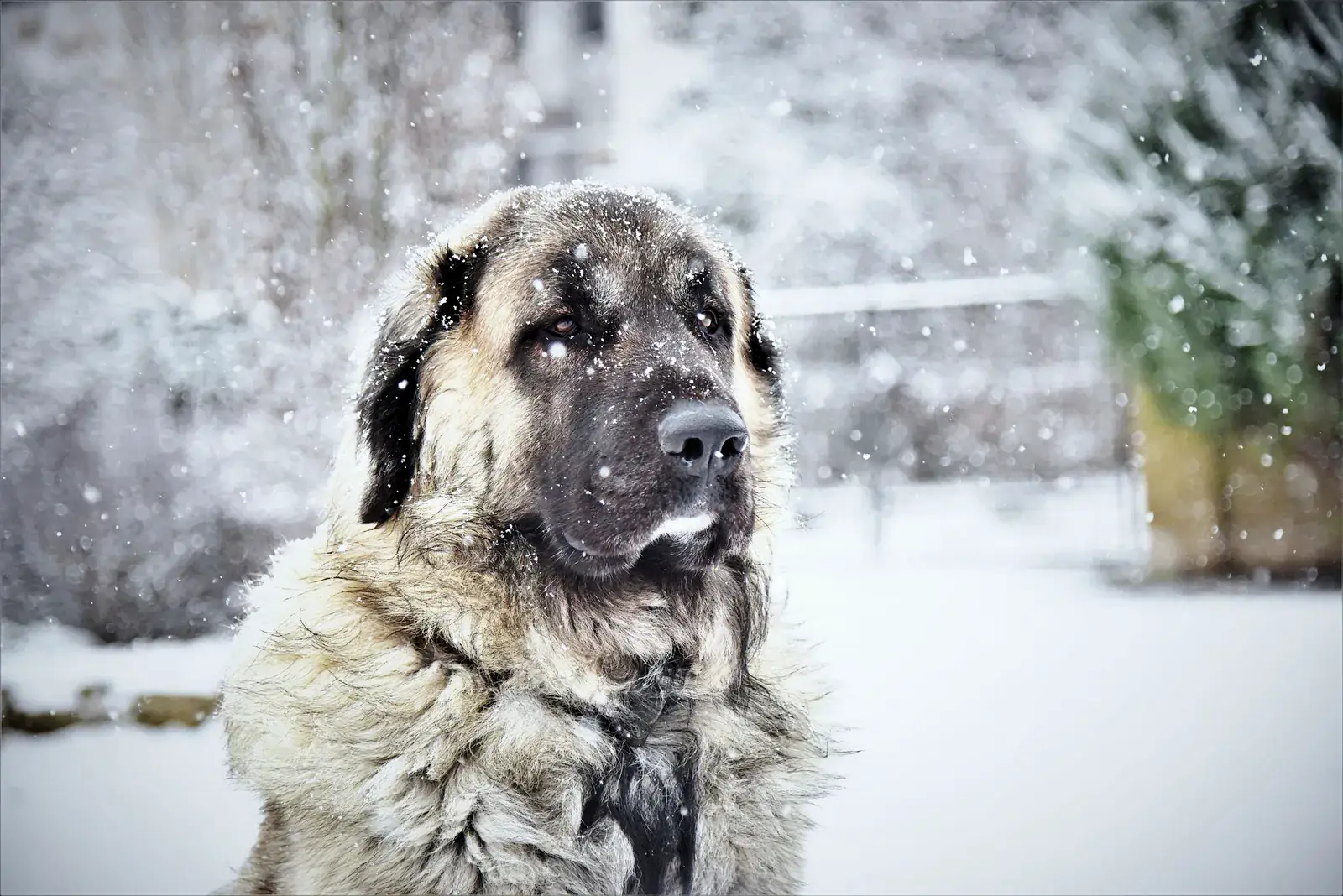
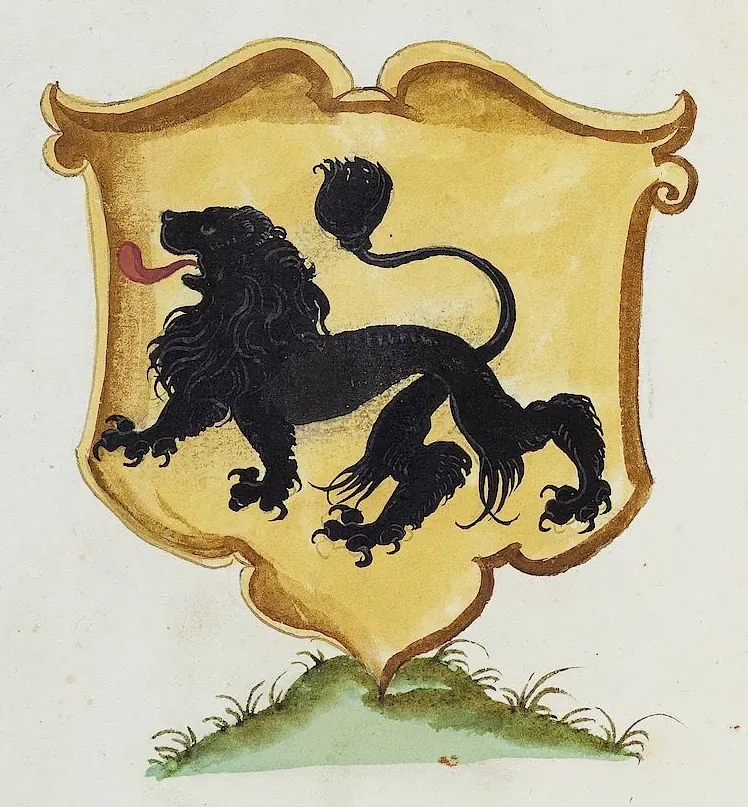
It is named for the town of Leonberg in Baden-Wurttemberg, Germany, where Heinrich Essig is said to have bred a dog to look like the lion on the town's crest. The first dogs registered as Leonbergers were born in 1846. Essig named three breeds in the mix, but historians doubt that story, so this article labels what is claimed and what is documented. The breed nearly vanished after both World Wars, and every living Leonberger descends from a handful of survivors. Its best-known health issue is inherited polyneuropathy, for which two DNA tests exist.
Leonberger quick facts
 Related breedGreater Swiss Mountain Dog1700 to 1909 · SwitzerlandEarly Modern Era
- Country of origin
- Germany (Leonberg, Baden-Wurttemberg)
- Period of development
- 1846 to 1895 (atlas data, high confidence)
- Original job
- Showy estate and companion dog, later draught, guard and farm work, and water work
- Type
- Guard dog (atlas data); FCI Group 2 (Pinscher and Schnauzer, Molossoid and Swiss Mountain and Cattledogs), No. 145; Working Group
- Other names
- Leo
- Recognised by
- FCI, AKC and The Kennel Club (UK)
- Height, FCI
- Males 72 to 80 cm, females 65 to 75 cm at the withers
- Weight
- Not fixed in the FCI standard; typically about 45 to 77 kg
- Life span
- 8 to 9 years (atlas data); survey medians about 7 to 10 years (see Health)
- Family
- Mediterranean (Parker 2017 DNA , strong support)
Drawn to scale in real centimetres. Its back reaches about 73 cm, mid-thigh; its head about 92 cm, your hip.
Where it sits in the tree
Industrial Revolution · 1800 to 1849
Name and origin
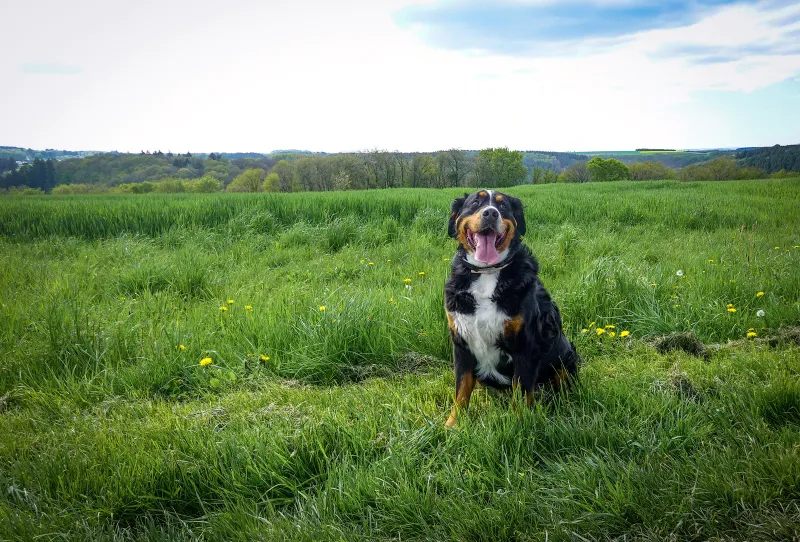 Related breedBernese Mountain Dog1700 to 1907 · SwitzerlandEarly Modern Era
 Save
The breed takes its name from Leonberg, a town near Stuttgart. The town's coat of arms shows a lion, and the tale at the heart of the breed is that Essig wanted a dog that looked like it. Our atlas data records the etymology the same way: after Leonberg, where Essig bred it.
Two points in this story are firmer than the rest. The first dogs registered as Leonbergers were born in 1846, and Essig was the man who named and promoted the type. The origin story, a lion in dog form, is a sales pitch as much as a record, and breeders of the period were good at telling it. Some writers add that dogs of a Leonberger type are mentioned in records as early as 1585. Even if that is true, Essig is credited with naming and registering the breed first.

History
 Same eraBlack Russian Terrier1949 to 1984 · RussiaModern Era
Essig and the lion
 Save
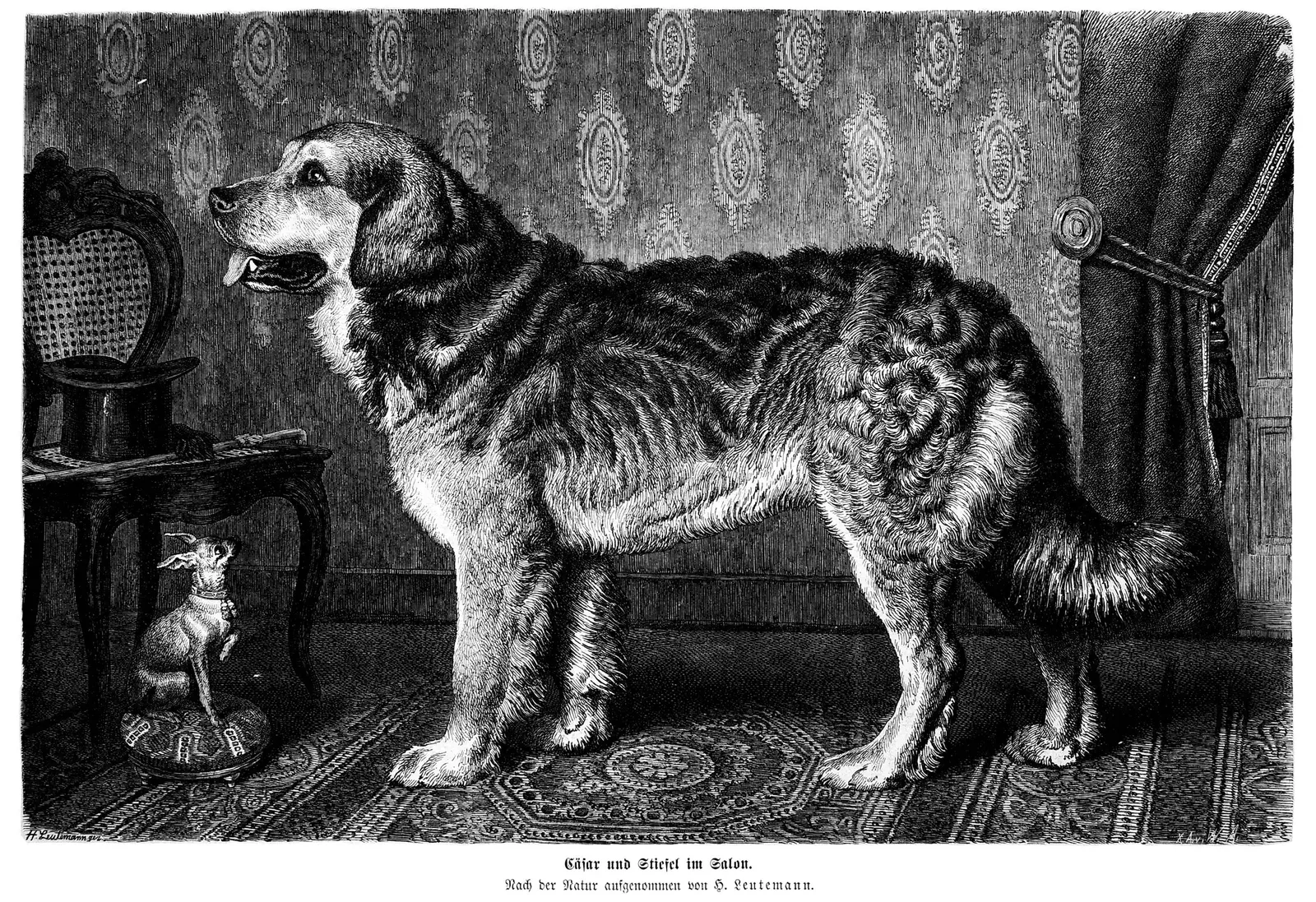
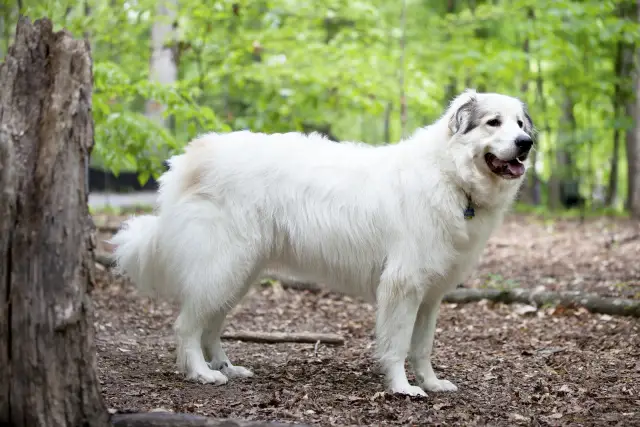
Essig described his own recipe. He said he crossed a female Landseer-type Newfoundland with a male "barry" dog from the Great St Bernard Hospice (a St. Bernard of the early, short-lived type), and that he later added a Great Pyrenees. The Landseer is itself a black-and-white Newfoundland type; our atlas lists it as a Landseer sibling of the Leonberger.
None of this can be checked. Our atlas data records all three links as low confidence and notes that each is Essig's claim and disputed. Today's experts are sceptical that only those three breeds were used and suspect a wider mix of big farm and mountain dogs, which the lion colour hides. Treat the three-breed recipe as a founder's story, not a pedigree.
Royal households and fashion
Breed-press accounts say the Leonberger became a fashionable dog in the second half of the 1800s and lived in the households of Empress Elisabeth of Austria, King Umberto I of Italy, the Prince of Wales (later Edward VII), Giuseppe Garibaldi and Richard Wagner. These come from breed magazines and popular articles, not from primary documents, so they are best taken as reported owners.
Two wars and a narrow escape
Leonbergers were used to pull ammunition carts in both World Wars, and the breed came close to disappearing each time. Accounts of the numbers differ. For the First World War, one source says five dogs were fit to breed, and Mental Floss, in a popular article, says Karl Stadelmann and Otto Josenhans gathered the last 25 dogs and rebuilt the breed to 360 by 1926. For the Second World War, one account says eight dogs survived, another says fewer than 300 were left in Germany in 1945. The gap probably reflects dogs on paper versus dogs fit to breed, but no source says so directly.
What is agreed is the shape of the result: a small group of German breeders rescued what remained, the German breed club formed in 1948, and every modern Leonberger traces to those few dogs. That narrow base matters for health, which we return to below.
 Save
Water work
The Leonberger has a thick, water-shedding double coat and webbed paws, and it is described as a keen swimmer. Some sources say the breed was brought to Canada in the early 1900s for water rescue and is still used in that role, including at the Italian School of Canine Lifeguards. The Italian claim is not documented: sources on that school list Newfoundlands, Labradors and Golden Retrievers. The Newfoundland remains the best-known breed in this job.
Relatives and DNA
 Same familyEnglish Mastiff1300 to 1880 · United KingdomLate Middle Ages
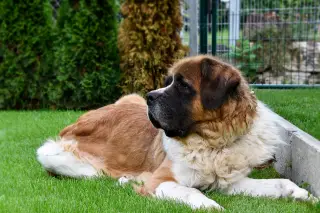
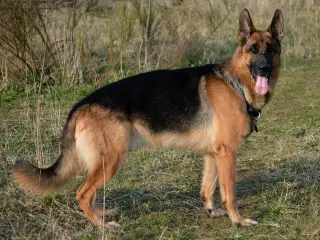
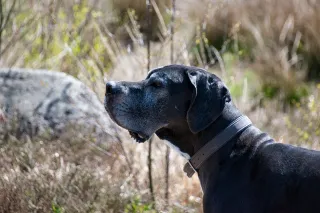
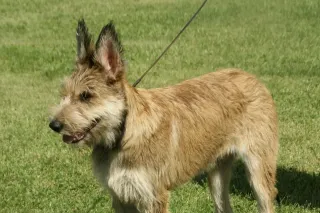
The Leonberger sits in the Mediterranean family, a Parker et al. (2017) DNA clade with strong support for this breed. Its closest genetic match in that study is the St. Bernard, at 44.7 of , well ahead of the Rottweiler (26.9), the German Shepherd (26.4) and the Great Dane (19.8). Parker 2017 did not report figures for the Newfoundland or the Great Pyrenees in our data, so the study neither confirms nor rules out Essig's other two crosses.
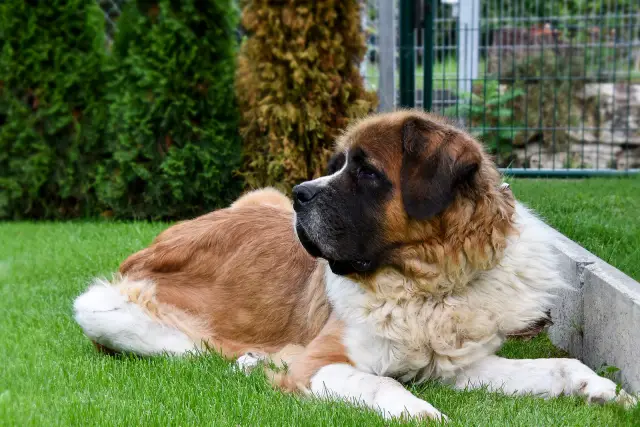
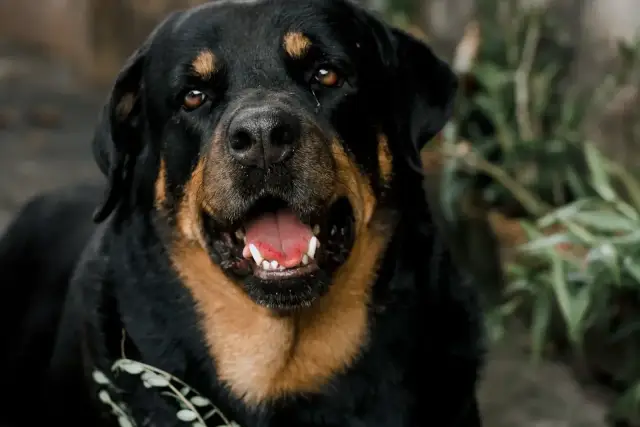
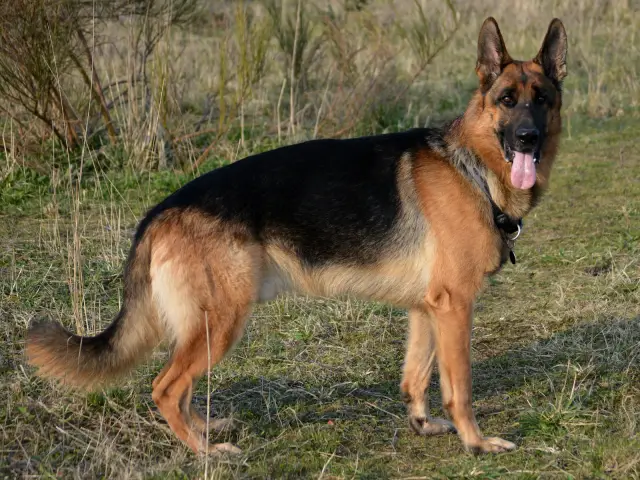
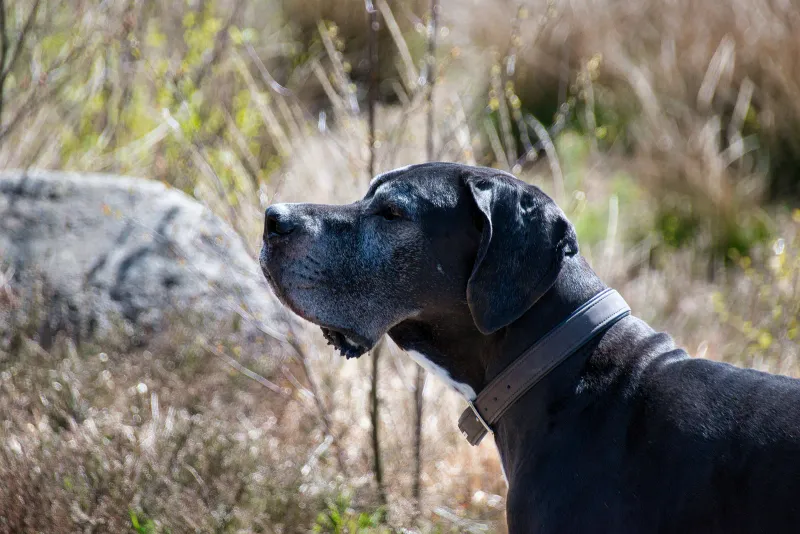
- Leonberger and St. Bernard
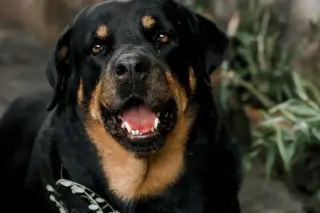
- Leonberger and Rottweiler
- Leonberger and German Shepherd
- Leonberger and Great Dane
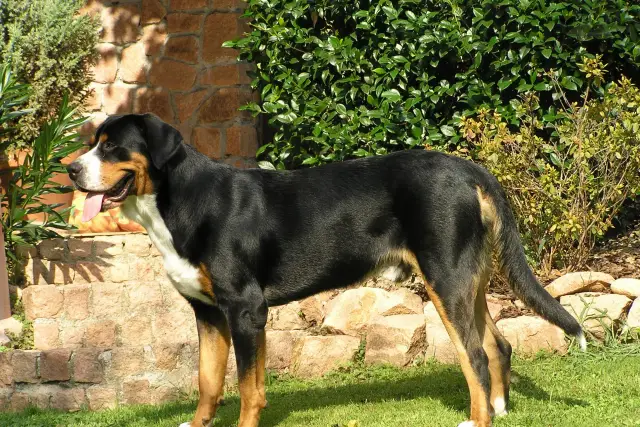
- Leonberger and Greater Swiss Mountain Dog
Our atlas data lists the Hovawart, a German farm and guard dog, as a descendant of the Leonberger. The three breeds named by Essig are shown below as he gave them.
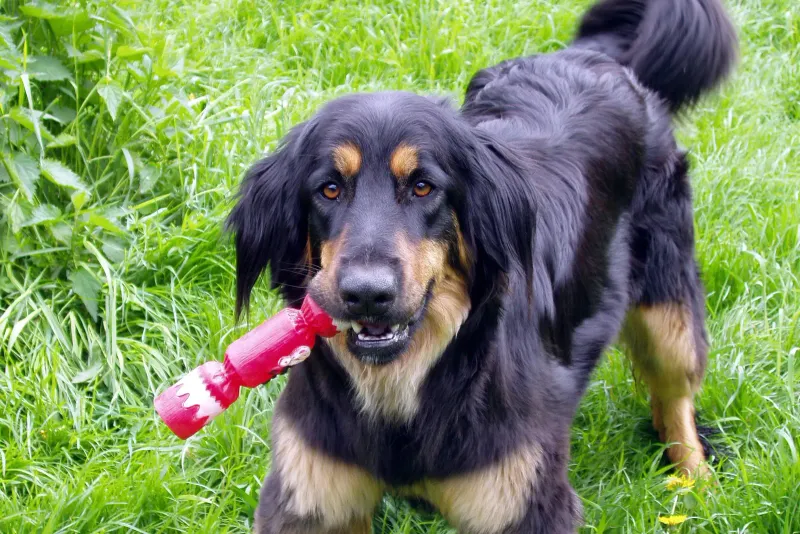 Hovawartdescendant in our atlas dataSt. Bernard"barry" male from the Great St Bernard Hospice, Essig's claim
 Great Pyreneesadded later, per EssigHovawartdescendant in our atlas data
Sister breeds · 2
- Landseer1900 to 1960
- Moscow Water Dog1945 to 1960
Descend from it · 1
- HovawartGermany
- St. Bernard44.7 Mb 1.9%
- Rottweiler26.9 Mb 1.1%
- German Shepherd26.4 Mb 1.1%
- Great Dane19.8 Mb 0.8%
- Berger Picard19.8 Mb 0.8%
- Greater Swiss Mountain Dog17.0 Mb 0.7%
- Bernese Mountain Dog16.6 Mb 0.7%
- Black Russian Terrier15.9 Mb 0.7%
- Chinook14.8 Mb 0.6%
- English Mastiff11.3 Mb 0.5%
Source: Parker et al. 2017. Percent of the whole genome.
The breed standard
 Looks relatedAfghan Hound1000 to 1926 · AfghanistanEarly Middle Ages
 Save
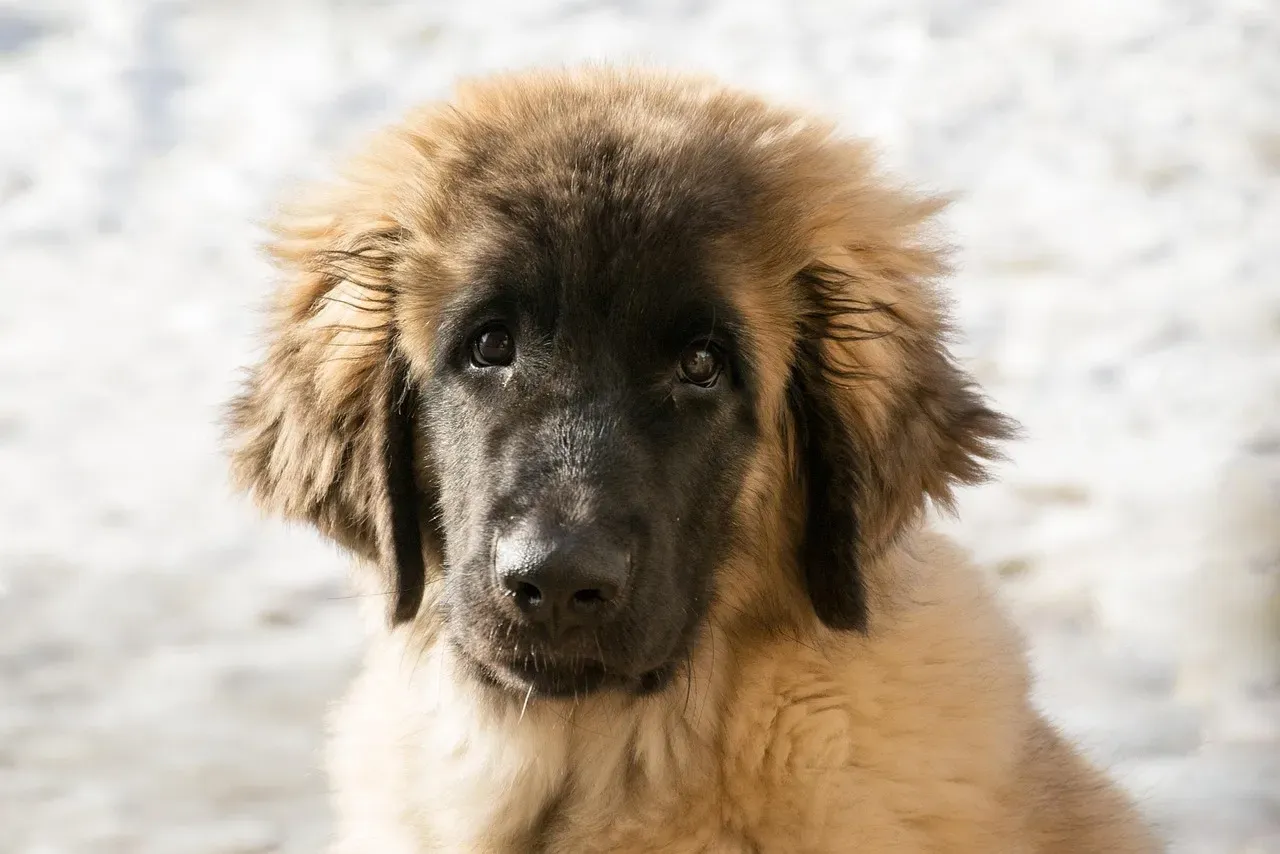
A is the written ideal a kennel club judges dogs against. The FCI standard (No. 145, dated 2002, with changes effective 1 January 2025) fixes height but not weight.
| Trait | What the standards say |
|---|---|
| Recognition | FCI No. 145, Group 2; AKC Working Group; The Kennel Club (UK) recognised |
| Height, FCI | Males 72 to 80 cm (average 76 cm); females 65 to 75 cm (average 70 cm) |
| Weight, FCI | Not set; weight should be in proportion to height. Typical: males about 54 to 77 kg, females about 45 to 61 kg |
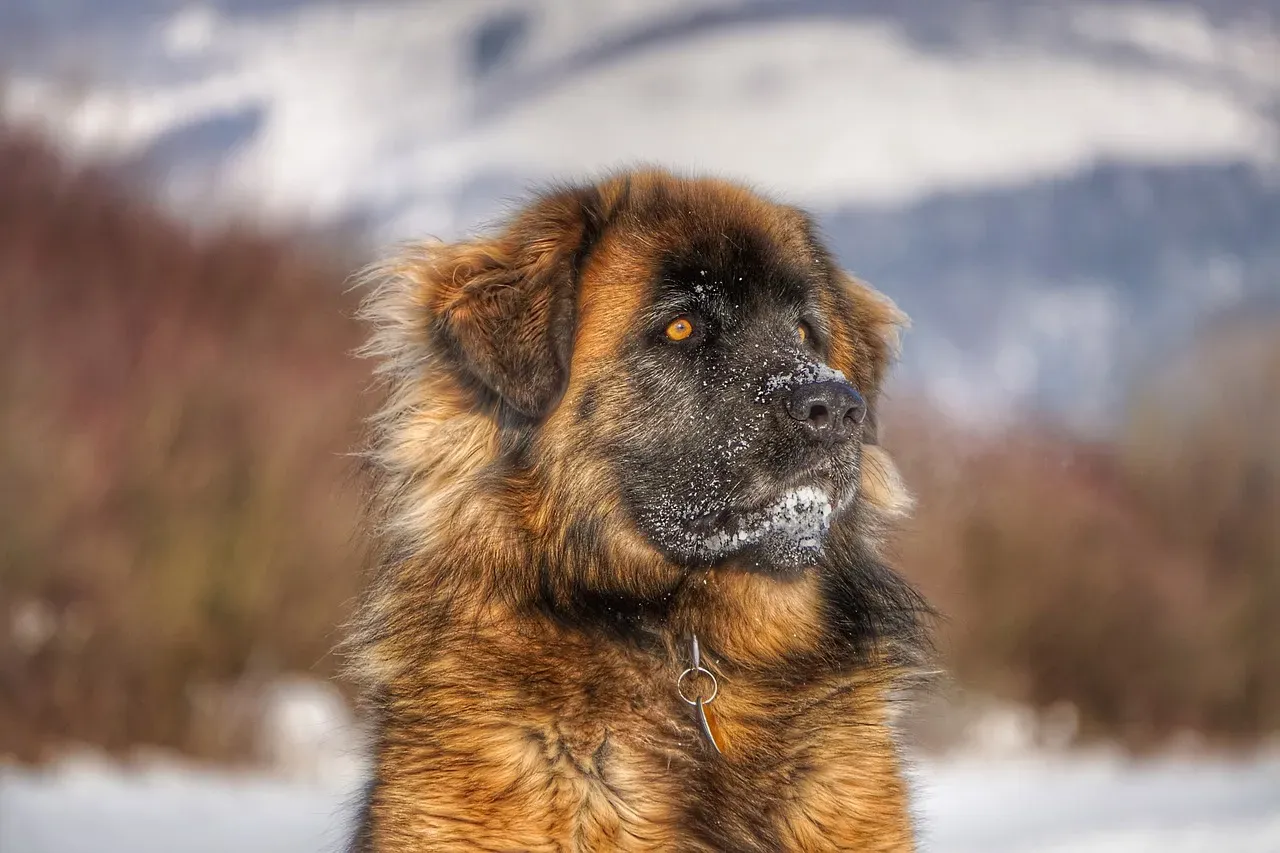
| Colour, FCI | Lion yellow, red, reddish brown and sand (fawn or cream), and all shades between, always with a black mask |
| Black tips | Allowed in the outer coat, but black must not dominate the base colour |
| White | A small white patch on the chest and some white on the toes are tolerated |
| Coat | A thick double coat; webbed paws |
The standard describes a dog that is big and strong but not heavy, and the Leonberger is one of the biggest breeds in the FCI.
Temperament
 Related breedCaucasian Shepherd Dog500 BCE to 1920 · RussiaAncient World
The standard asks for a dog that is self-assured, steady and friendly, calm in the house and not shy or aggressive. No behaviour study of the breed exists, so what follows is the consensus of breed clubs and handbooks, not data.
Leonbergers are described as people dogs: gentle with children, devoted to their own household and slow to anger. They mature slowly, so a Leonberger can behave like a very large puppy for two or three years. Their size is the main safety issue. A friendly dog of 60 kg can still knock over a toddler or an older person, so training and supervision matter more than temperament alone.
Most are not guard dogs by drive; their guarding comes from presence and a deep bark. They need to live with the family, and they do poorly when left alone or kept outdoors.

Health
 Related breedCentral Asian Shepherd Dog2000 BCE to 1990 · Turkmenistan, Uzbekistan, KazakhstanAncient World
Most Leonbergers live active lives, and breeders now use DNA tests and screening to reduce some conditions. The breed has two particular concerns: inherited nerve disease, which now has tests, and a shorter lifespan than most dogs.
Lifespan
Atlas data gives 8 to 9 years. Survey figures vary:
- Adams et al. (2010), a UK survey, gives a median of 7.08 years (as tabulated in a 2017 journal article).
- Summaries of UK and US/Canada surveys report that about 1 in 5 Leonbergers lived to 10 or more and the oldest died at about 13.
- A Dogs Trust table, from 676 dogs, gives a median of 10.0 years (95% confidence interval 9.5 to 10.3).
- A summary of the 2004 UK Kennel Club health survey reports cancer as the most common cause of death (45%), then heart disease (11%).
The higher, newer figure may reflect different samples or better breeding. Until more data arrives, 7 to 10 years is an honest range.
Conditions
| Condition | What it is | How common | What helps |
|---|---|---|---|
| Leonberger polyneuropathy 1 (LPN1) | Nerve disease caused by a 10 base pair deletion in the ARHGEF10 gene; signs, including laryngeal paralysis, usually start before age 3 | About 1 in 9 healthy Leonbergers carries one copy (about 11% of healthy controls, Univ. of Minnesota panel); dogs with two copies are about 8% of diagnosed cases | LPN1 DNA test before breeding; never breed two |
| Leonberger polyneuropathy 2 (LPN2) | Nerve disease linked to a 2 base pair deletion in the GJA9 gene (Becker et al., BMC Genomics, 2017); dominant, average onset about 6 years, incomplete penetrance | The authors estimate LPN1 and LPN2 variants together explain about 1 in 3 diagnosed polyneuropathy cases; other sources give different shares for LPN2 | LPN2 DNA test; talk to the breeder about line history |
| Other polyneuropathy | The remaining cases have causes not yet found; a third form, LPPN3 (CNTNAP1, ), is listed by the Minnesota panel | Not quantified | Health panel testing; watch for weak or wobbly back legs and a changed voice |
| A loose or shallow hip joint that can lead to arthritis | A summary suggests about 1 in 8 (about 13%), though no named study is given | Hip scoring of breeding dogs; lean weight; steady growth in puppies | |
| Bone and blood vessel cancers | Osteosarcoma and haemangiosarcoma | Recognised in the breed; cancer is the leading cause of death in the 2004 survey summary | Regular vet checks; report limps or swellings early |
| Heart disease | Heart problems, seen more in older dogs | Cardiac causes were 11% of deaths in the same summary | Heart checks at the vet; ask about parents' heart screening |
| Cataracts | Clouding of the eye lens | Listed for the breed; no figure found | Eye exam of breeding dogs |
Testing has reduced one problem and not another. LPN1 is recessive, so tested breeding can remove it. LPN2 is dominant with incomplete penetrance, so a dog with the variant may stay healthy for years, and the test is best used together with breeder knowledge of relatives. Because the whole breed rebuilt from few dogs after the wars, a narrow gene pool is a plausible reason for both the nerve disease and the lifespan, but no study tests that link, so treat it as a hypothesis.
 Ticks and fleasTicks and fleas on dogs: how to check, remove and prevent themTicks and fleas on dogs: how to tell them apart, check your dog, remove a tick safely, break the flea life cycle and prevent both.Related breedCentral Asian Shepherd Dog2000 BCE to 1990 · Turkmenistan, Uzbekistan, KazakhstanAncient World
Living with a Leonberger
 Related breedKangal Shepherd Dog1000 to 1989 · TurkeyEarly Middle Ages
| Daily reality | Rating | Why |
|---|---|---|
| Exercise per day | Medium | Steady walks and swims; avoid hard running while growing |
| Training needs | Medium | Eager to please, but size makes manners essential from puppyhood |
| Grooming | High | Long double coat; brush several times a week, and daily when shedding |
| Shedding | High | Heavy twice-yearly moult and constant hair around the house |
| Barking | Medium | Deep voice; not a constant barker |
| Time alone | Poor | People dog; bored, lonely dogs can be destructive at this size |
| Children | Good | Gentle by reputation; supervise because of size |
| Other dogs | Good | Usually sociable; early socialisation helps |
| Cats and small pets | Fair | Varies by dog; no source rates it |
| Flat living | Poor | Needs space for a very large dog; stairs are hard on joints |
| Heat tolerance | Poor | Heavy double coat; keep cool and swim |
| Cold tolerance | Good | Thick double coat |
| First-time owner fit | Fair | Gentle but huge; costs, vet care and hair are the real challenges |
A great fit if
- You have a house, a garden and floor space for a dog of 50 kg or more.
- You want a calm, affectionate dog that lives with the family.
- You enjoy swimming or long, easy walks and can cope with grooming.
- You are ready for a shorter lifespan than most dogs.
Think twice if
- You are away from home most of the day.
- You live in a flat with stairs or a hot climate with no shade or water.
- You dislike dog hair on clothes and furniture.
- You worry about vet costs for a giant breed.
Before you get one
- Health tests to ask a breeder for: LPN1 and LPN2 DNA results for both parents (the Minnesota health panel lists these and more), hip scores, and a heart and eye check.
- Ask about lifespan: how long did the parents, grandparents and siblings live, and what did they die of.
- Puppy or adult rescue: breed rescues exist; an adult gives you a known temperament and size.
- First year: expect fast growth, heavy food bills, puppy classes and joint-friendly exercise limits.
Similar breeds to consider
- Newfoundland. A giant water dog with a calm nature, one of the three breeds named in Essig's account.
- St. Bernard. The Leonberger's closest DNA match, also giant and gentle, with a heavier build.
- Great Pyrenees. White, independent and a livestock guardian, another breed named in Essig's account.

Leonberger fun facts
 Related breedKomondor1200 to 1920 · HungaryLate Middle Ages
- The breed is named after a lion: Essig said he wanted a dog that looked like the lion on Leonberg's crest.
- The first Leonbergers were registered in 1846.
- A popular account says only five Leonbergers were fit to breed after the First World War.
- Breed accounts say the Leonberger lived in several royal households in the 1800s, though these claims are secondhand.
Frequently asked questions
Where does the Leonberger come from?
From Leonberg in Baden-Wurttemberg, Germany, where Heinrich Essig bred and named it from 1846. His recipe of Newfoundland, St. Bernard and Great Pyrenees is disputed.
How big is a Leonberger?
The sets height at 72 to 80 cm for males and 65 to 75 cm for females. Weight is not fixed; typical dogs weigh about 45 to 77 kg.
How long do Leonbergers live?
Survey medians range from about 7 years (Adams 2010) to 10 years (Dogs Trust table). Atlas data says 8 to 9 years.
What is Leonberger polyneuropathy?
An inherited nerve disease. Two DNA tests exist: LPN1 (ARHGEF10) and LPN2 (GJA9). Together the known variants explain about 1 in 3 diagnosed cases, so other causes remain.
Is the Leonberger a good family dog?
Often yes: it is calm and gentle with children by reputation. Its size, hair and need for company are the real demands.
Is a Leonberger a water rescue dog?
It swims well and has webbed paws, and some sources say it is used for water rescue. The claim for the Italian lifeguard school is not documented, and that school lists other breeds.
Read next
Closest DNASt. Bernard44.7 Mb shared FamilyMediterraneanThe whole family
 Adopt a dogDog Shelters in GermanyTen big cities checked, how adoption works, what it costs
Sources (14)
- Fédération Cynologique Internationale, Leonberger breed standard No. 145 (2002, changes effective 1 January 2025: height, colour, mask).
- Wikipedia, "Leonberger" (secondary: Essig's account, 1846, disputed claims, water rescue, weight ranges, hip dysplasia estimate).
- Becker D. et al., "A GJA9 frameshift variant is associated with polyneuropathy in Leonberger dogs", BMC Genomics, 2017 (LPN2; 296 cases and 312 controls).
- University of Minnesota Canine Genetics Laboratory, Leonberger Health Panel (LPN1, LPN2, LPPN3 descriptions and frequencies).
- Laboklin, LPN1 and LPN2 test descriptions (case shares, as reported).
- Adams V.J. et al., "Methods and mortality results of a health survey of purebred dogs in the UK", Journal of Small Animal Practice, 2010 (median age at death, 7.08 years).
- Dogs Trust, "Shortest and longest lived breeds" table (median 10.0 years, 676 dogs).
- The Kennel Club (UK), 2004 Purebred Dog Health Survey (cause-of-death shares, as reported in a secondary summary; original not read).
- Parker H.G. et al., "Genomic analyses reveal the influence of geographic origin, migration and hybridization on modern dog breed development", Cell Reports, 2017 (family and shared-DNA figures).
- Mental Floss, "9 Impressive Facts About the Leonberger" (popular: First World War numbers, Josenhans and Stadelmann, 1926 count, royal owners).
- Showsight Magazine, Leonberger breed articles (breed press: royal households, history).
- Countryfile, "This gentle giant survived extinction after two world wars" (popular: ammunition carts, wartime losses).
- Fogle B., The New Encyclopedia of the Dog, 2009 (atlas data source, page 334).
- Project family page and breed data, Mediterranean family and Leonberger lineage notes.