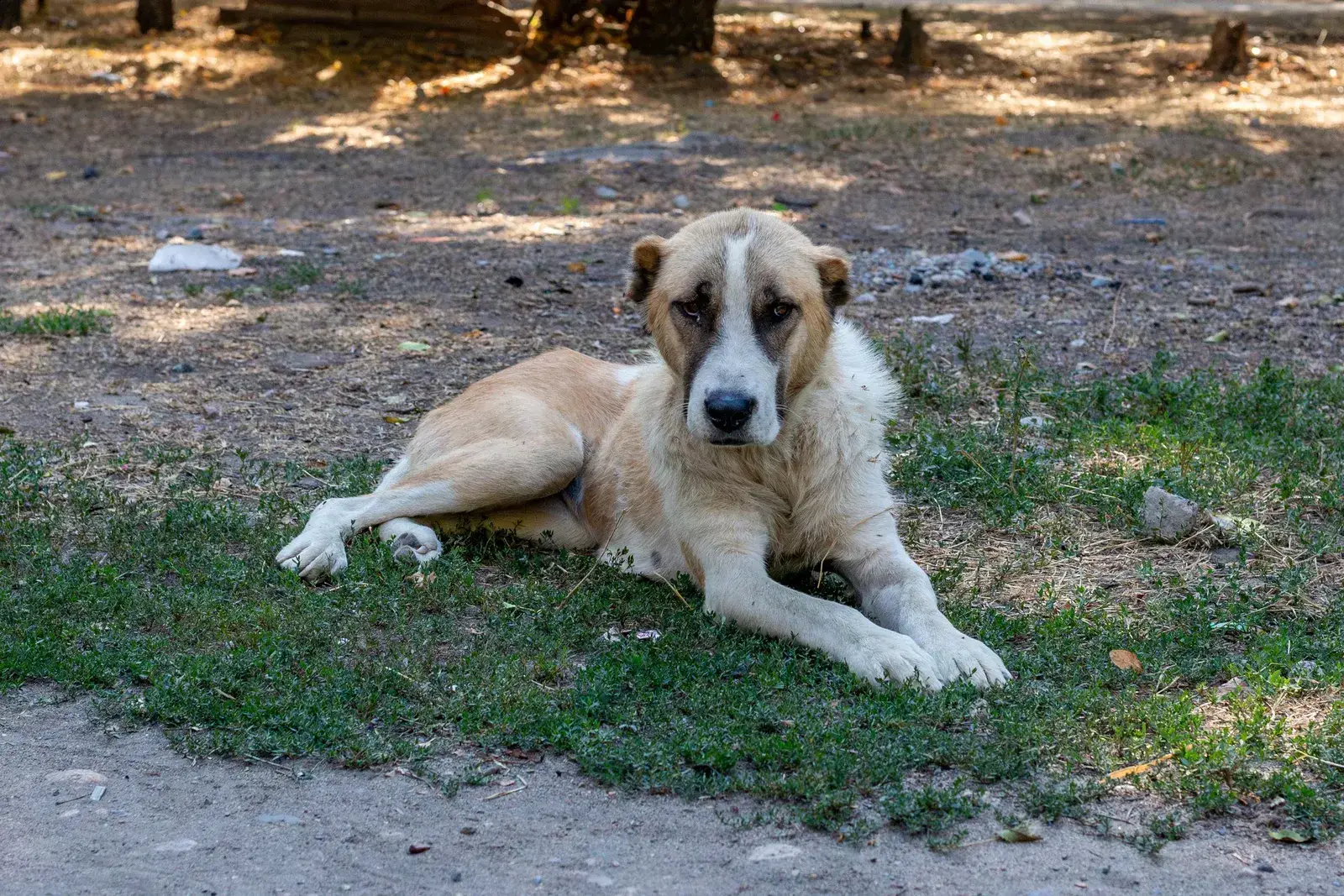
It has guarded the flocks and camps of herders for a very long time, and in Turkmenistan it is a national symbol with its own public holiday and a gold statue in the capital. Elsewhere it is a rare, powerful and independent breed that suits only experienced owners with a lot of space. This guide covers its history, the regional types, the claims about its age, the welfare debate around it, and what living with one is really like.
Central Asian Shepherd Dog quick facts
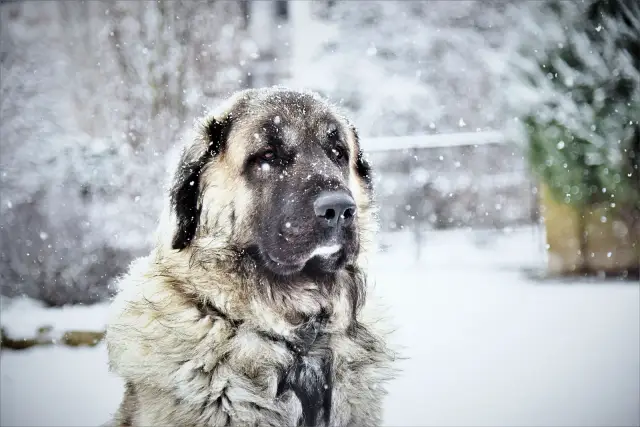 Related breedLeonberger1846 to 1895 · GermanyIndustrial Revolution
- Country of origin
- Central Asia (Turkmenistan, Uzbekistan, Kazakhstan in atlas data); FCI lists USSR, regions of Central Asia, with Russia as patron
- Period of development
- Ancient regional dogs (age disputed); first standards in the Soviet period; Turkmen standard approved 1990
- Original job
- Guarding sheep, goat herds and camps against wolves and thieves
- Type
- Livestock guardian, Molossoid (FCI Group 2; FCI standard no. 335; Foundation Stock Service)
- Height
- Minimum 70 cm males, 65 cm females, no maximum (FCI-based standard, 2017)
- Life span
- Dogs Victoria: 12 to 15 years; PetMD: 10 to 15 years; atlas data: 12 to 15
- DNA family
- Placed in the Mediterranean family by ancestry and type; not
- Other names
- Alabai, Turkmen Alabai, Sredneaziatskaya Ovcharka, Central Asian Ovcharka
Drawn to scale in real centimetres. Its back reaches about 68 cm, mid-thigh; its head about 86 cm, your hip.
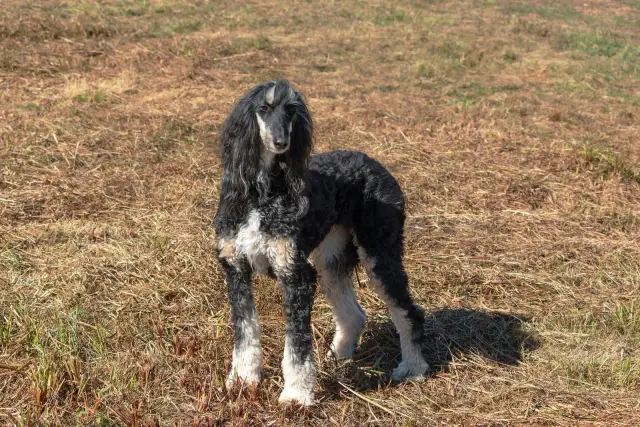
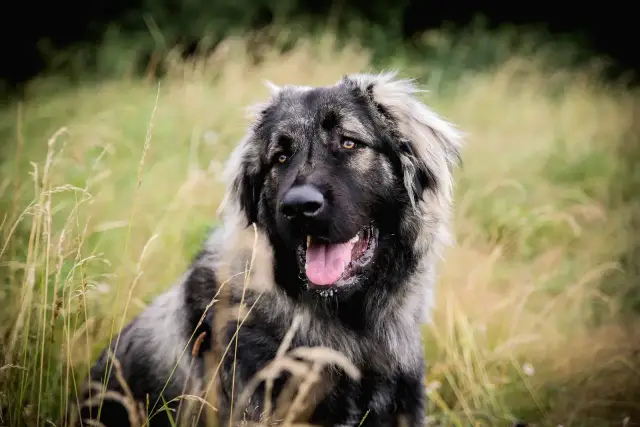
Where it sits in the tree
Ancient World · 3,000 BCE to 499
Name and origin
 Related breedPyrenean Mountain Dog1000 BCE to 1923 · FranceAncient World
"Central Asian" names the region. "Ovcharka" is Russian for sheepdog, and "Sredneaziatskaya Ovcharka" is the Russian breed name. "Alabai" is the local name used mainly in Turkmenistan. Our data gives its meaning as "multicoloured" in Turkic languages, which fits the many coat colours of the breed. The FCI lists the origin as the USSR (regions of Central Asia), with Russia as the patron country, and the official standard was published in 2010.
A note on DNA. The breed was not part of the 2017 Parker study of dog families. We place it in the Mediterranean family because it is a Molossoid flock guardian of the same type as the other breeds there, such as the Kangal Shepherd Dog. That placement is based on ancestry and type and has not been confirmed by DNA testing. Our guide to livestock guardian dogs explains which guardians have actually been tested.

History
 Same eraSaluki3000 BCE to 1922 · IraqAncient World
Guardians of herders
For herding peoples of the steppes and deserts, a large dog that could drive off wolves and watch the camp at night was part of survival. The Central Asian Shepherd Dog is the product of that working life. Dogs of this type lived with flocks of sheep and goats, travelled with nomads, and were chosen for size, courage, endurance and the ability to guard without supervision. Breed sources describe a strong sense of territory and fearlessness toward large predators, a trait the FCI standard names as characteristic.
How old is the breed?
You will see claims that the Alabai is 4,000 years old or more. No reliable source supports that figure, and the pages making the claim cite no study. Two other ideas also appear in the literature:
- A Turkic migration link. A Polish agricultural paper suggests that white shepherd dogs in Europe may descend from the Central Asian Shepherd Dog, carried west by Turkic peoples. The authors frame it as a hypothesis that genetic work would need to test.
- Dog origins in Central Asia. A study led by Adam Boyko at Cornell found the highest genetic diversity of village dogs in Central Asia and suggested domestication near Nepal and Mongolia, though its authors say the evidence is not conclusive. It concerns dogs in general. It does not show that the modern Alabai is ancient.
So the honest summary is that these are old working dogs of a region where dogs have been kept a very long time, but the age of this exact breed is unknown. Our atlas data gives the earliest appearance as about 2000 BCE with low confidence. Read the date as a rough tradition, not a record.
Regional types
The dogs of Central Asia were never one uniform population. A source on the 1990 Turkmen standard says the breed includes numerous types that differ in size and colour, and another notes that efforts are under way to recognise some local types as separate breeds. Sources do not describe those types one by one, so they are not listed. Turkmen dogs are the best known abroad, and the Turkmen Alabai is the type the Turkmen government promotes as national heritage.
There are no official breed clubs in the origin countries comparable to those in Europe and America, according to one source. That makes the pedigree picture less clear than for most FCI breeds.
Soviet standardisation
One source credits the USSR with being the first to merge the different types into a single breed with an official standard, and dates the first standard to the 1920s. In 1990, the State Agroindustrial Committee of Turkmenistan approved a standard for the Turkmen wolfhound (Alabai). The FCI recognises the breed under standard no. 335 as a Russian-patronage breed. The current FCI text was published in 2010 and is hosted by national clubs in revised form (2017).
A common claim is that standardisation took place in the 1930s. No source supports that date. The 1920s date is given as reported, and sources are thin.
Turkmenistan's national symbol
 Related breedAlaskan Malamute1000 BCE to 1935 · United StatesAncient World
In Turkmenistan the Alabai is treated as national heritage. A few verified details:
- The statue. In November 2020 a giant gold-coloured statue of an Alabai was unveiled in the capital, Ashgabat. Reports disagree about its height: one says six metres, another about 15 metres. It features an LED screen showing video of the breed.
- The holiday. Turkmenistan marked its first national Alabai holiday on 25 April 2021, on the same day as the Akhal-Teke horse celebration, with a contest for the best dog. Some reports say the holiday was established in 2020 by decree; the first celebration was in April 2021. Reports describe the holiday as falling on the last Sunday of April.
- The president's interest. The then-president, Gurbanguly Berdymukhamedov, wrote a book and a poem about the dog.
- Export control. A law that took effect on 26 July 2022 requires puppies to be marked in the government pedigree register and owners to have special permission to export a dog.
- A welfare note. Radio Free Europe/Radio Liberty reported that city authorities in Ashgabat stepped up culls of stray dogs and cats ahead of the holiday, and that residents said pets outside had been taken in sweeps. This is a journalistic report on stray-animal policy, not a statement about the Alabai itself.
Relatives and DNA
 Same familyBasenji3000 BCE to 1937 · Democratic Republic of the CongoAncient World
No links to other breeds are recorded in our data for the Central Asian Shepherd Dog. It is a Molossoid livestock guardian, placed in the Mediterranean family by type. The Caucasian Shepherd Dog and the Tibetan Mastiff are the nearest large guardians geographically. Without DNA testing we cannot say whether, or how closely, they are related.
The breed standard
 Looks relatedCarolina Dog1000 BCE to 1990 · United StatesAncient World
A is the written ideal a kennel club judges dogs against. The FCI standard (no. 335) is the main reference, and the UKC publishes its own. The AKC holds the breed in the Foundation Stock Service.
| Trait | What the standards say |
|---|---|
| Height (FCI-based standard, 2017) | Minimum 70 cm males, 65 cm females; no maximum given |
| Height (UKC) | 27.5 inches (about 70 cm) or more for males; 25.5 inches (about 65 cm) or more for females |
| Weight (FCI) | In proportion to height; no fixed number in the text |
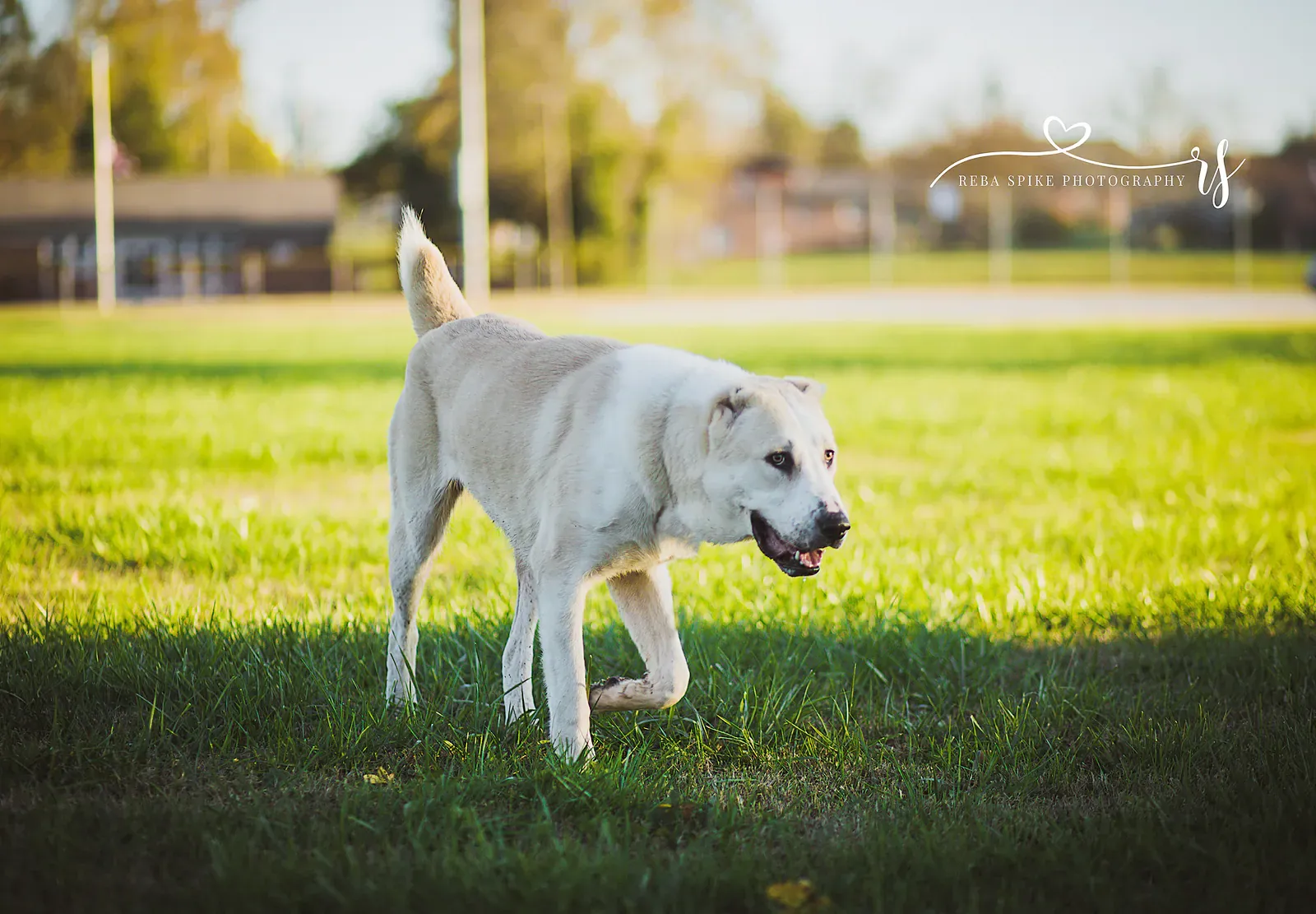
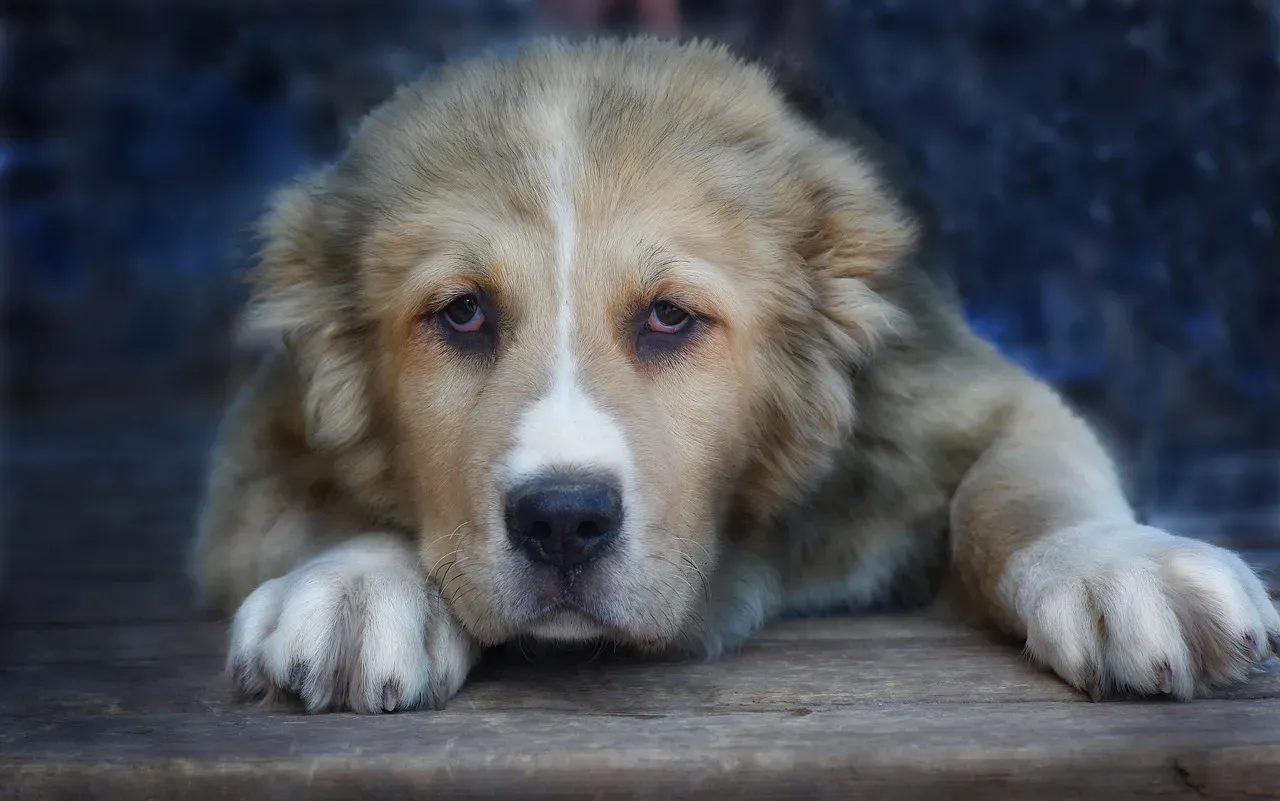
| Temperament (FCI) | Self-assured, balanced, quiet, proud and independent; courageous with a strong territorial instinct; fearless toward large predators |
| Temperament (UKC) | Inclined to be suspicious of strange people or dogs; devoted to family |
| Use | Livestock guardian and protection dog |
Some secondary sources give weights of 50 kg for males and 40 kg for females as minimums. They are not confirmed in the official text, so they are not presented as part of the standard.
Ears and tails. No source says what the standards require, so none is claimed. Both practices are banned or restricted in many countries.
Temperament
 Related breedChow Chow200 BCE to 1895 · ChinaAncient World
The FCI standard describes a self-assured, balanced, quiet, proud and independent dog with high working capacity, endurance and a natural territorial instinct. The UKC standard adds suspicion of strangers, both people and other dogs. Breed sources note that the dog is devoted to its family but expects respect, and that it may act without warning if it senses a threat to its family or its flock.
Practical points:
- Independent. It was bred to guard far from its handler and to make its own decisions. Training is possible, but obedience is not its strong point.
- Needs early socialisation. Sources agree that a well-socialised puppy can be good with children and other pets, and one that is not may be a danger. Socialisation has to be careful and ongoing.
- Not for public spaces. Several sources say it is not suited to dog parks or to first-time owners.
- Calm indoors, alert outdoors. Many owners describe a quiet dog at home that responds quickly to anything unusual at the fence.

Fighting traditions and the welfare debate
 Related breedDingo3000 BCE to 1500 BCE · AustraliaAncient World
Some breed histories link dogs of this type with dog fights in parts of Central Asia, and the fights are sometimes called a local tradition. No reliable source documents the practice, its scale or its current legal status in Turkmenistan, Uzbekistan or Kazakhstan. It is a reported history, not a documented current one.
What is safe to say is this. Dog fighting causes serious injuries and is illegal in many countries. The Alabai breed standard describes a guardian, and buyers outside the region should avoid any seller who breeds for fighting or advertises "fighting lines". Ask any breeder about working lines and about how the puppies were raised.
If you want to learn more, look for reports from animal-welfare groups in the countries concerned.
Health
 Related breedIrish Wolfhound100 BCE to 1885 · IrelandAncient World
Most Central Asian Shepherd Dogs live a long time for a giant breed, with Dogs Victoria giving 12 to 15 years and PetMD 10 to 15. No peer-reviewed prevalence study exists for this breed, so there are no "1 in N" figures.
| Condition | What it is | How common | What helps |
|---|---|---|---|
| A loose or misshapen hip joint that can lead to lameness and arthritis | Named by Dogs Victoria as a possible issue; PetMD recommends screening puppies; no rate found | Hip scoring of both parents; lean weight; controlled exercise while growing | |
| A developmental problem in the elbow joint | Named by Dogs Victoria as a possible issue; no rate found | Elbow scoring of both parents | |
| Bloat (gastric torsion) | The stomach fills with gas and may twist; an emergency | Mentioned by one source only; deep-chested giants are at higher risk in general | Several smaller meals; calm time after eating; see a vet at once if the belly swells |
| Eye problems | Eyelid conditions (entropion, ectropion) | Mentioned by one source without data | Eye exam of parents; vet checks |
Several pages that list specific percentages for the breed looked unreliable and have been left out. Dogs Victoria advises asking breeders what health testing they do. Keep your dog lean, avoid hard exercise while it is growing, and check with your vet about anaesthesia, since one source suggests some sensitivity.

Living with a Central Asian Shepherd Dog
 Related breedItalian Greyhound500 BCE to 1900 · ItalyAncient World
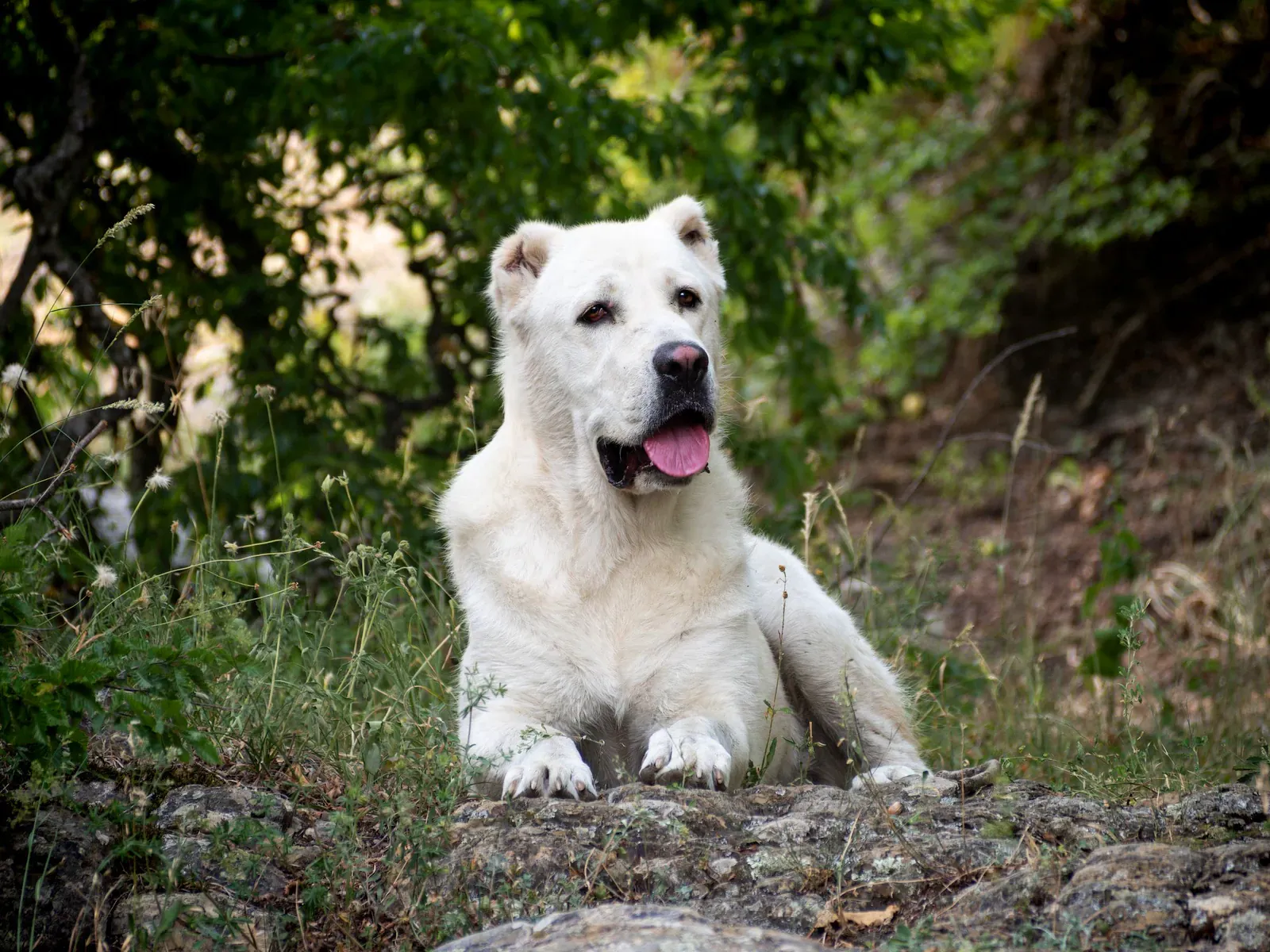 Save
| Daily reality | Rating | Why |
|---|---|---|
| Exercise per day | Medium | Needs daily walks and room to patrol; no study gives a number |
| Training needs | High | Independent guardian; early, calm training and socialisation are essential |
| Grooming | Medium | Brushing for the dense coat; heavy seasonal shedding is likely |
| Shedding | High | Thick double coat |
| Barking | Varies | Guard dogs bark to warn; night barking is common for guardians |
| Time alone | Fair | Bred to work alone, but bored giants can dig and wreck gardens |
| Children | Varies | Devoted to family when well socialised; size and guarding make supervision a must |
| Other dogs | Poor | Suspicious of unfamiliar dogs (UKC) |
| Cats and small pets | Varies | Depends on early exposure; no evidence either way |
| Flat living | Poor | Giant and territorial |
| Heat tolerance | Varies | Bred in hot regions, but a heavy coat on a giant dog needs shade |
| Cold tolerance | Good | Dense coat |
| First-time owner fit | Poor | Sources advise against first-time owners |
A great fit if
- You have a large, secure property well away from neighbours.
- You have owned giant guardian dogs and can stay calm and consistent for years.
- You want a watchful working dog that stays on its own land.
- You are ready to socialise a puppy widely and keep that up all its life.
Think twice if
- You live in a flat, a town or a shared plot.
- You have many visitors, or children who bring friends over.
- You are a first-time owner, or want a dog you can take to dog parks.
- You live where the breed or its type is restricted.
Before you get one
- Health tests. Ask for hip and elbow scores for both parents, and ask whether bloat has occurred in the line.
- Puppy or adult rescue. Adults needing new homes are known quantities. Contact a rescue before buying.
- Where the dog comes from. Ask a breeder about the dog's lines, how the parents are used and how the puppies are raised. Avoid fighting lines.
- First year. Secure fencing before the puppy arrives, puppy classes, lean growth and professional help if aggression appears.
Similar breeds to consider
- Caucasian Shepherd Dog. A neighbouring giant guardian, equally serious, with legal limits in some places.
- Kangal Shepherd Dog. A Mediterranean-family guardian with a documented farm-protection record.
- Tibetan Mastiff. A giant guardian from the Himalayas, with its own needs.

Central Asian Shepherd Dog fun facts
 Related breedMaltese500 BCE to 1888 · MaltaAncient World
- "Alabai" means "multicoloured" in Turkic, according to our data.
- In 2020 Ashgabat unveiled a gold statue of an Alabai with an LED screen.
- Turkmenistan has a national holiday for the dog, first marked in April 2021.
- A 2022 Turkmen law requires puppies to be registered and a permit to export a dog.
Frequently asked questions
Is the Central Asian Shepherd Dog a good family dog?
Only in the right home. It can be devoted to its family, but it is large, suspicious of strangers and strongly territorial. It suits experienced owners with space.
How big is a Central Asian Shepherd Dog?
At least 70 cm for males and 65 cm for females at the shoulder, with no maximum, according to the 2017 -based standard.
How long do Central Asian Shepherd Dogs live?
Dogs Victoria says 12 to 15 years. PetMD says 10 to 15.
Is the Alabai the same as the Central Asian Shepherd Dog?
"Alabai" is the local name, mostly used in Turkmenistan. The FCI standard covers the breed as a whole, and the Turkmen government treats the Turkmen Alabai as national heritage.
Is the breed really 4,000 years old?
The claim has no reliable source. These are old working dogs of an old herding region, but the age of the modern breed is unknown.
Where does the Central Asian Shepherd Dog come from?
Central Asia, including Turkmenistan, Uzbekistan and Kazakhstan. The Soviet Union produced the first official standards.
Read next
 FamilyMediterraneanThe whole family
 Adopt a dogDog Shelters in EuropeFind dog shelters in Europe, learn how shelters differ from country to country and why adopting a dog is a good option.
Sources (15)
- Fédération Cynologique Internationale, Sredneasiatskaya Ovtcharka (Central Asia Shepherd Dog), standard no. 335.
- Kennel Union of Southern Africa, copy of the FCI standard for the Central Asia Shepherd Dog (02/2017).
- United Kennel Club, Central Asian Shepherd breed standard.
- Dogs Victoria, Central Asian Shepherd Dog breed profile.
- Dogs Australia, Central Asian Shepherd Dog breed information page.
- Dogs New Zealand, Central Asian Shepherd Dog breed information.
- PetMD, Central Asian Shepherd Dog breed profile.
- Turkmenistan dedicates new national holiday to native dog breed, news report (2021).
- A statue, an ode and now a national holiday for Turkmenistan dog breed, Malay Mail (2021).
- Turkmenistan restricts export of its local Alabay dog breed, news report (2022).
- Radio Free Europe/Radio Liberty, report on stray animal culls in Ashgabat before the dog holiday.
- Boyko A. et al., study of dog origins and genetic diversity, Cornell University, as reported by PopSci and Mental Floss.
- Polish agricultural paper on white shepherd dogs and the Central Asian Shepherd Dog (agro.icm.edu.pl).
- Parker H.G. et al., "Genomic analyses reveal the influence of geographic origin, migration, and hybridization on modern dog breed development", Cell Reports, 2017 (for the family framework).
- Fogle B., The New Encyclopedia of the Dog, 2009.