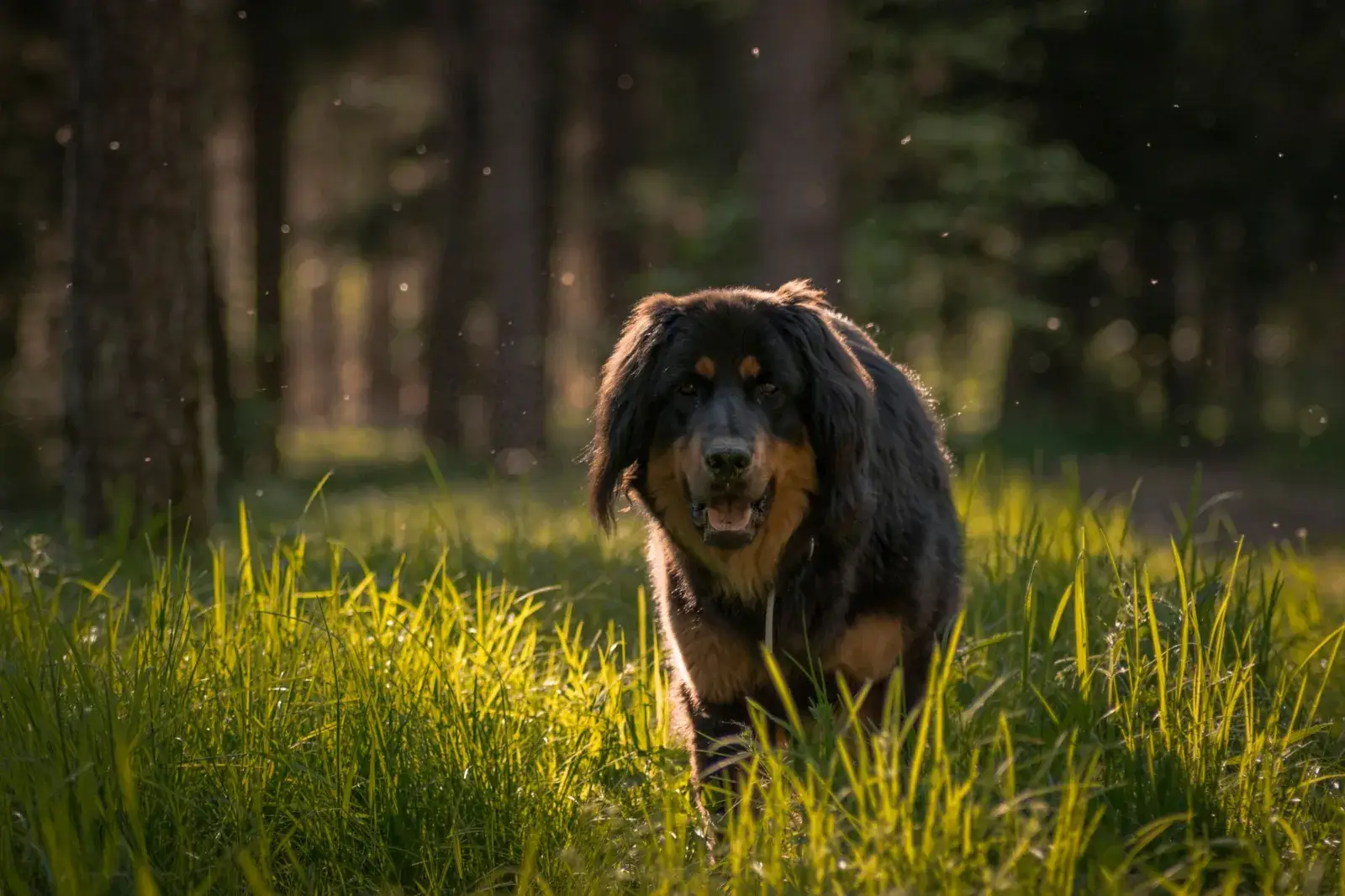
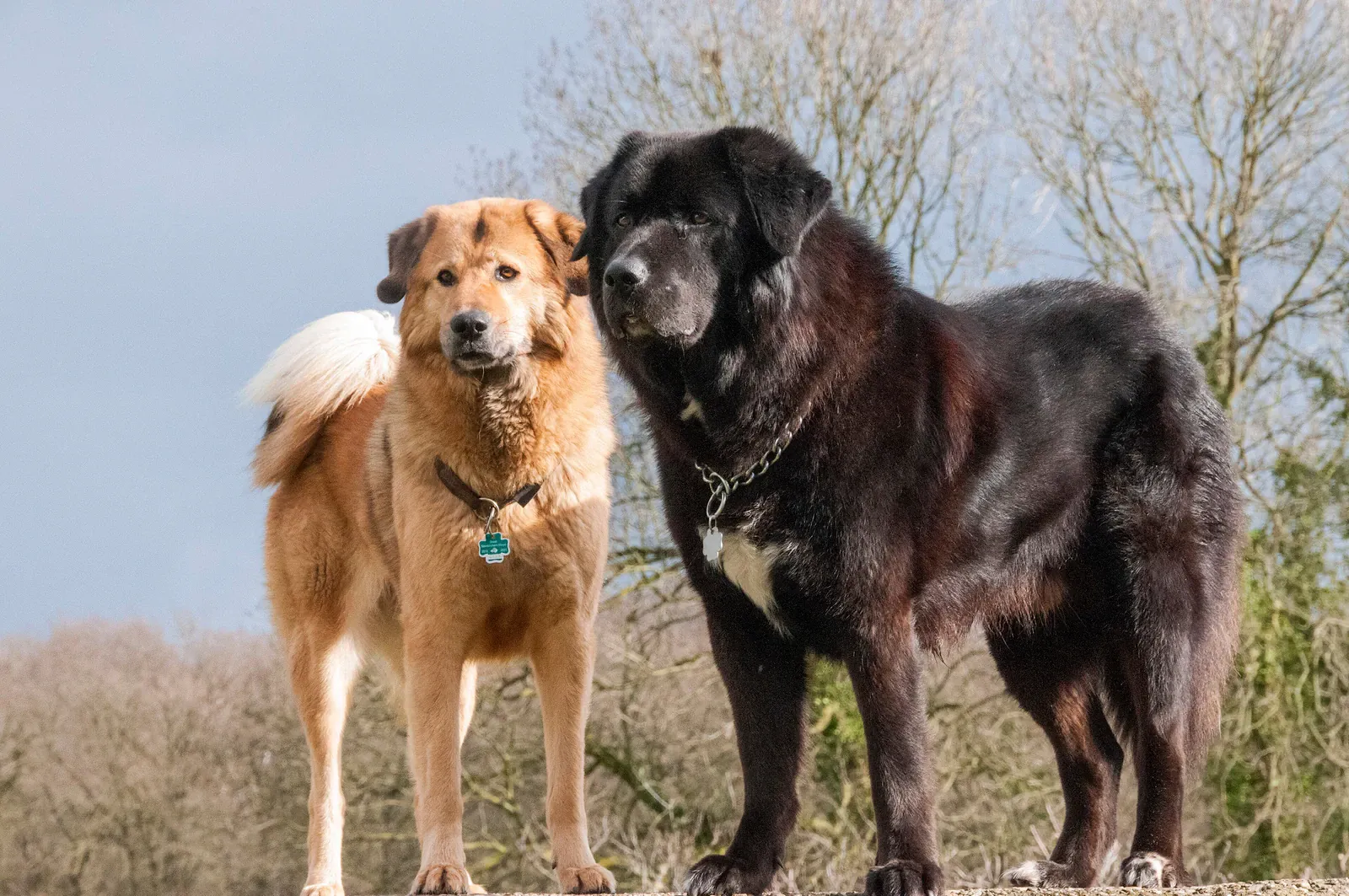
Nomads kept it with their herds and tents, and monasteries kept it at their gates. It has a thick double coat, a heavy head and a reserved, watchful nature. It is also one of the few dog breeds whose genes carry a clear mark of life at high altitude. This guide covers the history (and the legends around it), the DNA story, the , temperament, health and what living with one is really like.
Tibetan Mastiff quick facts
 Related breedChow Chow200 BCE to 1895 · ChinaAncient World
- Country of origin
- Tibet (China); FCI lists "Tibet (China)"
- Period of development
- Ancient; atlas data gives about 1000 BCE with low confidence, and the modern Western breed from 1931
- Original job
- Guarding nomad camps, herds and monasteries
- Type
- Livestock guardian; FCI Group 2 (Pinscher and Schnauzer, Molossoid and Swiss Mountain and Cattledogs), standard no. 230; Working Group; UK Kennel Club Working Group
- FCI official name
- Do-Khyi (Tibetan Mastiff)
- Height
- FCI: at least 66 cm for dogs and 61 cm for bitches
- Coat
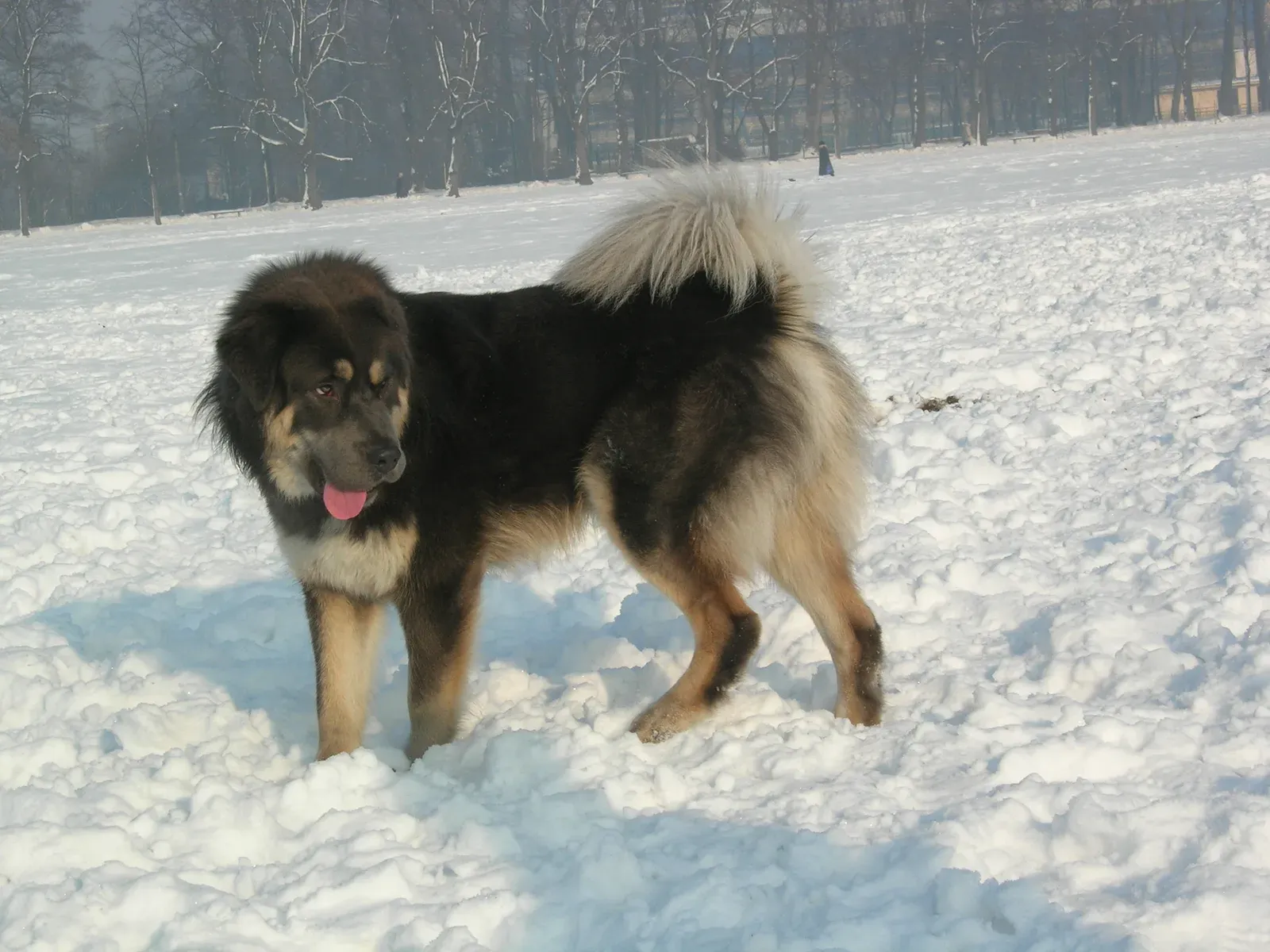
- Dense, fairly long, thick, with a heavy woolly undercoat in cold weather (UK Kennel Club)
- Colour
- Black, black and tan, slate grey, grey and tan, rich gold (UK Kennel Club)
- Life span
- Atlas data: 10 to 14 years. UK Kennel Club: over 10 years
- Exercise
- Up to 1 hour a day (UK Kennel Club)
- DNA family
- Asian Spitz (Parker et al. 2017, strong support)
- Related breeds in our data
- Himalayan Sheepdog (sister, low confidence), Tibetan Kyi Apso, Bakharwal
Drawn to scale in real centimetres. Its back reaches about 64 cm, mid-thigh; its head about 81 cm, your hip.
Where it sits in the tree
Ancient World · 3,000 BCE to 499
Name and origin
 Related breedJindo1200 to 1962 · South KoreaLate Middle Ages
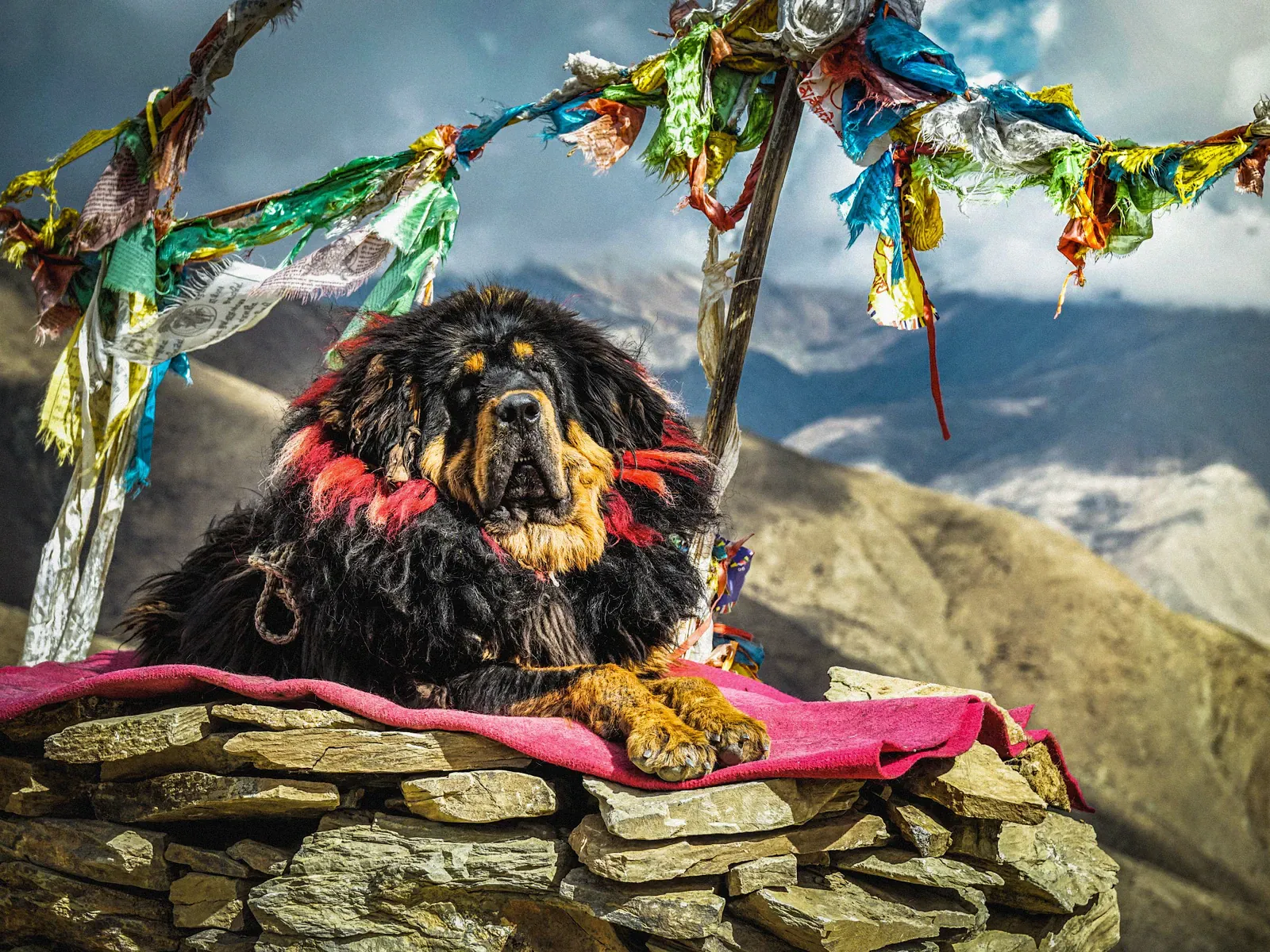
"Do-Khyi" is usually translated as "tied dog" or "door dog". The AKC history page links the name to the dogs being tethered near the entrances of tents and temples, which is what they were for: guarding at the door. The FCI describes the breed as an ancient working dog of nomad herders and a traditional guardian of monasteries.
The word "mastiff" in the English name is a body-type label, not a family tree. Early Western writers saw a huge, heavy-headed guard dog and called it a mastiff. That is why the name is worth treating with care, and why the DNA section below matters.
Where exactly the breed first appeared is not known. Tibetan Mastiffs came from a remote plateau with no stud records, and the story of its past comes from traveller accounts, nomad tradition and genetics. The ancient dates in popular books are claims, not documents.
 Save

History
 Same eraSamoyed500 CE to 1912 · RussiaEarly Middle Ages
Nomads, herds and monasteries
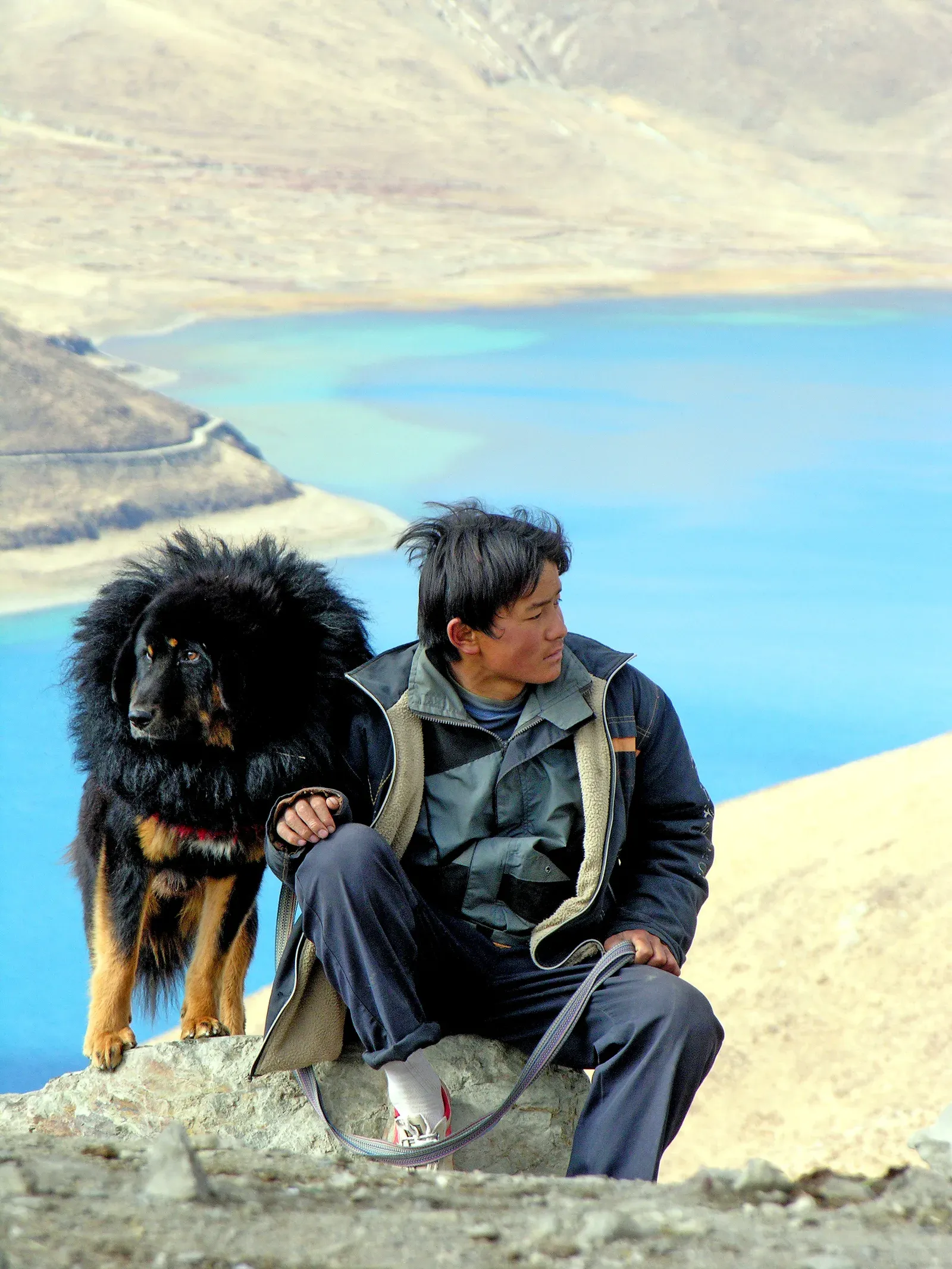
Across the plateau, herders moved with yaks, sheep and goats and needed a dog that would stay with the camp and warn of wolves and other predators. The Tibetan Mastiff did that work. At night the dogs were reported to be the camp's alarm, and in the day they rested. Monasteries kept them to guard buildings and stores, a role the AKC history pages describe.
 Save
What the legends say
Two stories appear in nearly every breed book, and both should be read as legends.
- Marco Polo. The AKC breed pages say Marco Polo wrote in the 13th century about enormous dogs, roughly the size of a donkey. This is a traveller's account, probably exaggerated, and it does not tell us how closely those dogs matched the modern breed.
- A very ancient breed. One AKC piece mentions records of such dogs in China as early as 1100 BCE. The detail behind the claim is thin, so treat the date as tradition. Our own data uses about 1000 BCE and marks the confidence as low.
Some writers also call the Tibetan Mastiff the ancestor of many large guard and mountain breeds. The AKC itself notes that no accurate genetic records exist for this idea. DNA has not shown that the breed sits at the root of the mastiff-type dogs (see the next section).
Arrival in the West
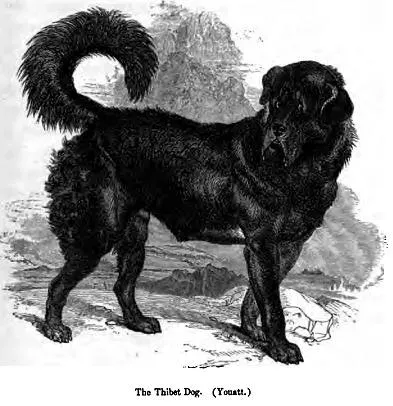
Sources disagree about when the first dogs reached Britain. One account says a dog entered the Kennel Club studbook in 1847. Another says the Prince of Wales brought two dogs to England in 1874 and that they were shown in 1875. A third ties a gift from the Viceroy to the 1840s. The dates cannot all be right, so the safe summary is: the first dogs arrived in the 1800s, and the stories differ on who brought them and when.
The first official UK Kennel Club standard followed in 1931, after Mrs Bailey formed the Tibetan Breeds Association (AKC history). The AKC admitted the breed to its Working Group in 2006. The FCI standard is no. 230.
 Save
The price boom and the crash
From the late 2000s, the Tibetan Mastiff became a status symbol in China. News reports from 2015 to 2017 describe a market in which rich buyers paid very high prices for dogs with a "lion" look. One Beijing dealer told the press that an excellent specimen could sell for 3 million yuan at the peak, which is the kind of figure reported at the top of the craze, not a normal price.
The market fell around 2013. Reports tie it to the economic slowdown and to the national anti-corruption campaign from 2012, because expensive dogs had been popular as gifts and status items. A Qinghai breed association chairman told the media that the yearly trade in Qinghai dropped from more than 200 million yuan to less than 50 million yuan.
The dogs did not disappear with the market. Reporting by China Dialogue (Dialogue Earth) and by the Global Times and China Daily in 2017 describes breeders who lost money releasing dogs, and thousands of unwanted mastiffs wandering around temples and villages. Some attacked people and livestock. One Qinghai shelter was reported to hold more than 600 stray mastiffs. The same reports note that Buddhist opposition to killing animals led some villages to build shelters instead of culling, and that large-dog bans in cities such as Beijing and Shanghai also shrank the market for pets.
This is a story about people, not about the breed. A guard dog bred for open land does badly when it is treated as an investment. The reports available to us end in 2017, so we do not know the present numbers.
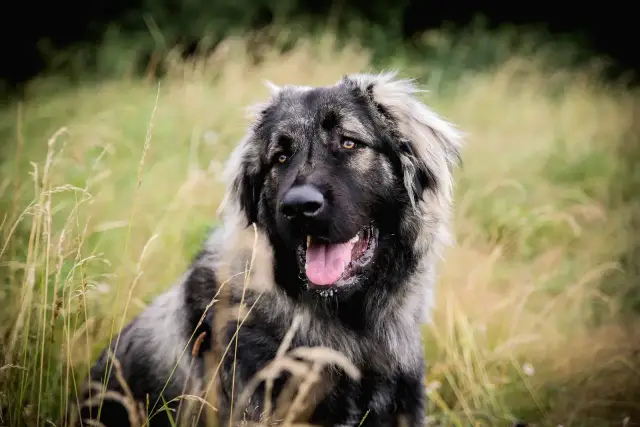
Relatives and DNA
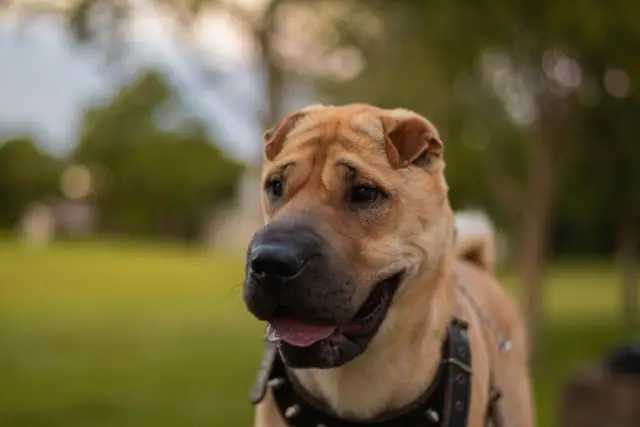 Same familyShar Pei200 BCE to 1973 · ChinaAncient World
High-altitude genes
The best-known DNA result about the Tibetan Mastiff is about altitude. Lowland dogs struggle to make enough oxygen in thin air. Tibetan Mastiffs do well at 4,000 metres and above, and researchers looked for the genes behind this.
- EPAS1. A 2017 study by vonHoldt and colleagues in PeerJ looked at the EPAS1 gene region, which controls the body's response to low oxygen. It found more high-altitude grey wolf ancestry at this region in highland dogs than elsewhere in their , which points to adaptive introgression: a useful gene variant passed from Tibetan wolves into dogs through interbreeding, and then kept because it helped survival.
- EPAS1 and HBB. A 2016 Chinese Academy of Sciences team, publishing in Molecular Biology and Evolution, reported that Tibetan Mastiffs are more closely related to other Chinese dogs than to grey wolves. It found two regions, EPAS1 and HBB (a haemoglobin gene), that show signs of interbreeding with Tibetan wolves and strong positive selection. Press coverage of the study linked the interbreeding to the time when people and dogs first settled the plateau.
- A different proposed source. A separate genome study of Tibetan and Himalayan wolves suggests that the high-altitude EPAS1 variant common in Tibetan dog breeds and wolves may come from an older, deeply diverged wolf-like rather than from direct wolf-to-dog crossing. The studies agree that the variant is shared, but not on the exact route.
The two lines of work do not contradict the idea that wolf genes helped. They disagree on details. The takeaway for owners is simple: this breed's tolerance of altitude has a genetic basis, and it is a reason these dogs are not built for hot, low-altitude summers.
Why the Tibetan Mastiff is in the Asian Spitz family
In our data the Tibetan Mastiff sits in the Asian Spitz family, not with the European Mastiff breeds. This follows Parker et al. 2017, which grouped dogs by and placed the breed in the Asian Spitz clade with strong support.
The reason is that a family in our data means a DNA clade, not a body type. The Tibetan Mastiff looks like a mastiff, with a heavy head and big frame, but looks and ancestry are different things. DNA says it descends from the same wider pool as Asian spitz and village dogs of the region, and the 2016 study above found it closest to other Chinese dogs. A big body evolved in more than one place for the same job: stopping predators.
Related breeds in our data:
- Himalayan Sheepdog. Described as closely related to the slightly larger Tibetan Mastiff (Wikipedia-sourced, low confidence in our data).
- Tibetan Kyi Apso. Listed in our data as a child of the Tibetan Mastiff.
- Bakharwal. Listed in our data as a child of the breed.
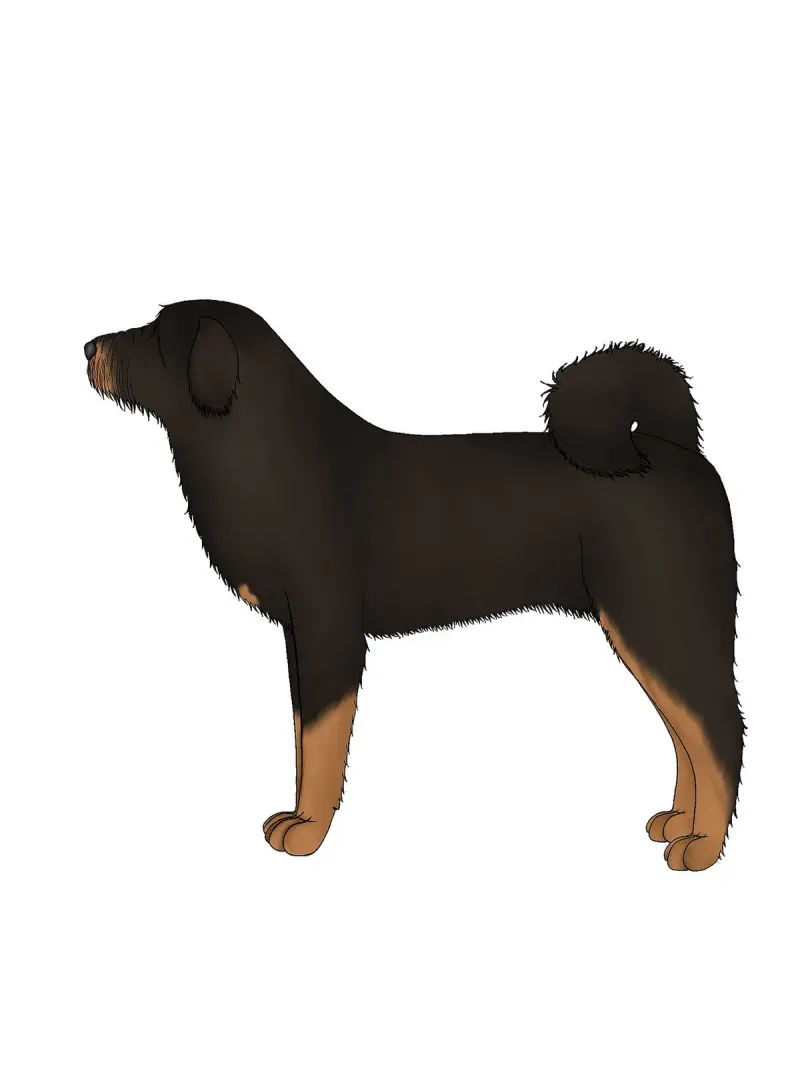 Tibetan Kyi Apso
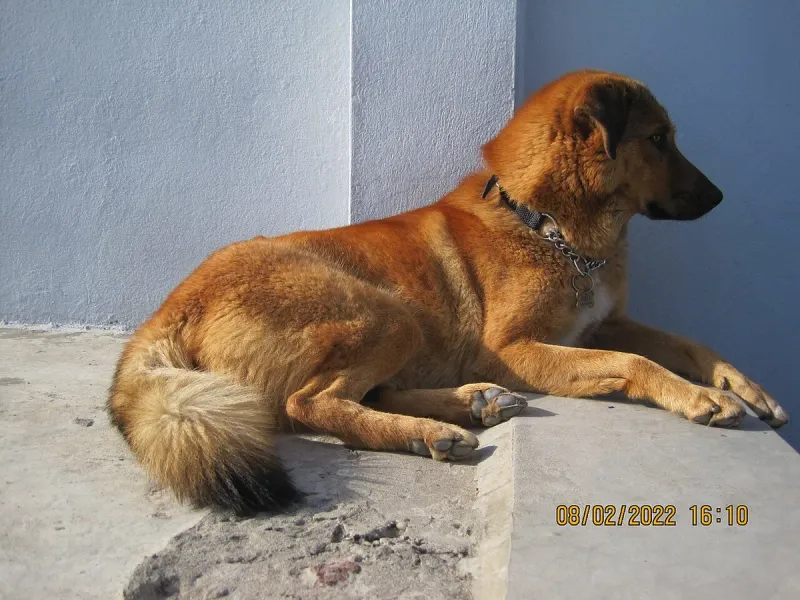 Bakharwal
 Save
 Save
Sister breeds · 1
- Himalayan Sheepdog1000 to 1900
Descend from it · 2
- BakharwalIndia
- Tibetan Kyi ApsoChina
The breed standard
 Looks relatedShiba Inu300 BCE to 1936 · JapanAncient World
A breed standard is the written ideal a kennel club judges dogs against. The FCI, AKC and UK Kennel Club each publish one. Only figures each club publishes are given.
| Trait | What the standards say |
|---|---|
| Height | FCI: at least 66 cm for dogs and 61 cm for bitches (a minimum, so taller dogs are allowed) |
| Coat | UK Kennel Club: dense, fairly long and thick, with a heavy woolly undercoat in cold weather that becomes rather sparse in warmer months; dogs carry noticeably more coat than bitches |
| Colour | UK Kennel Club: rich black with or without tan, slate grey with or without tan, and rich golden; tan markings above the eyes, on the muzzle, chest, lower legs and the underside of the tail |
| Colours not wanted | UK Kennel Club: cream, white, chocolate or liver, particolour, brindle or flecked are treated as undesirable |
| Guard hair | One FCI-based text describes the hair as fine but hard and straight, never silky, curly or wavy |
| Role | FCI: ancient working breed of nomad herders and monastery guardian |
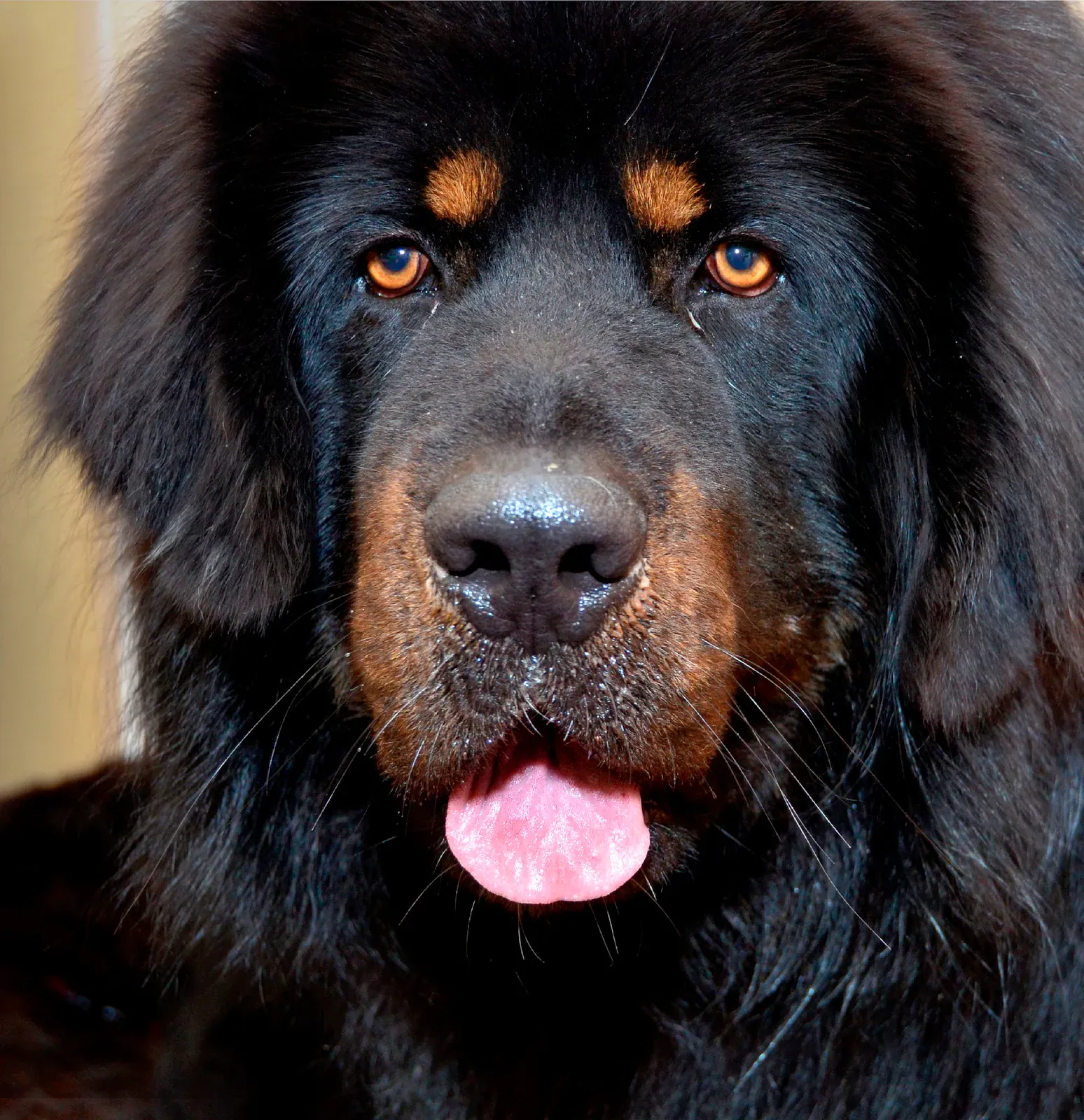
The standards describe a big, strong, balanced dog with a broad head, a deep chest, a thick mane around the neck and a tail carried over the back. Body weights are not fixed in the FCI text. Other registries publish ranges (the AKC and the UKC), and they are large: many adult dogs weigh well over 50 kg.
Mane and coat in practice. Males carry more coat. The coat is built for cold and wind. Dogs in warm climates shed heavily and struggle in heat, which matches the altitude story above.
Temperament
 Related breedSiberian Husky1000 to 1930 · RussiaEarly Middle Ages
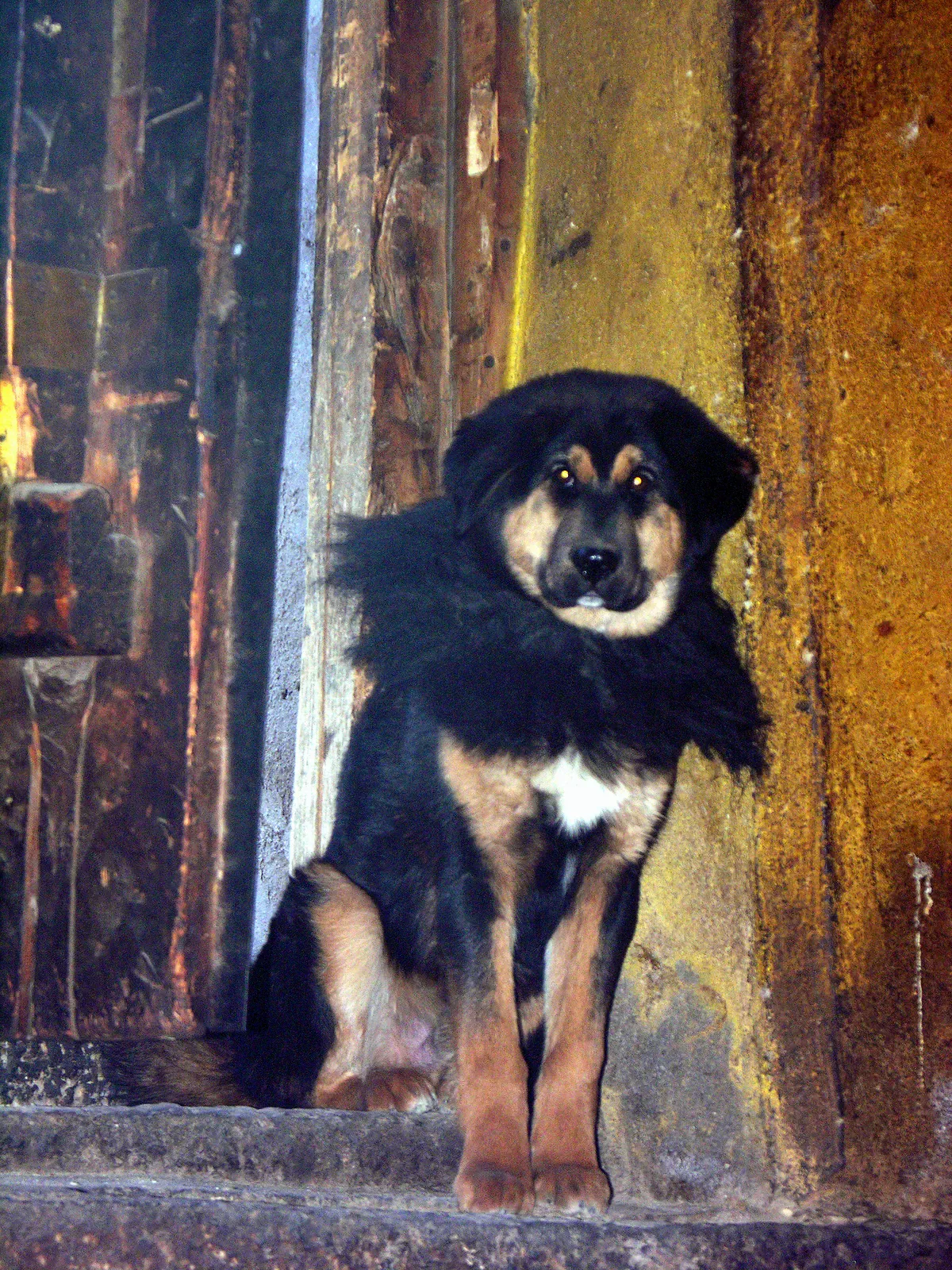
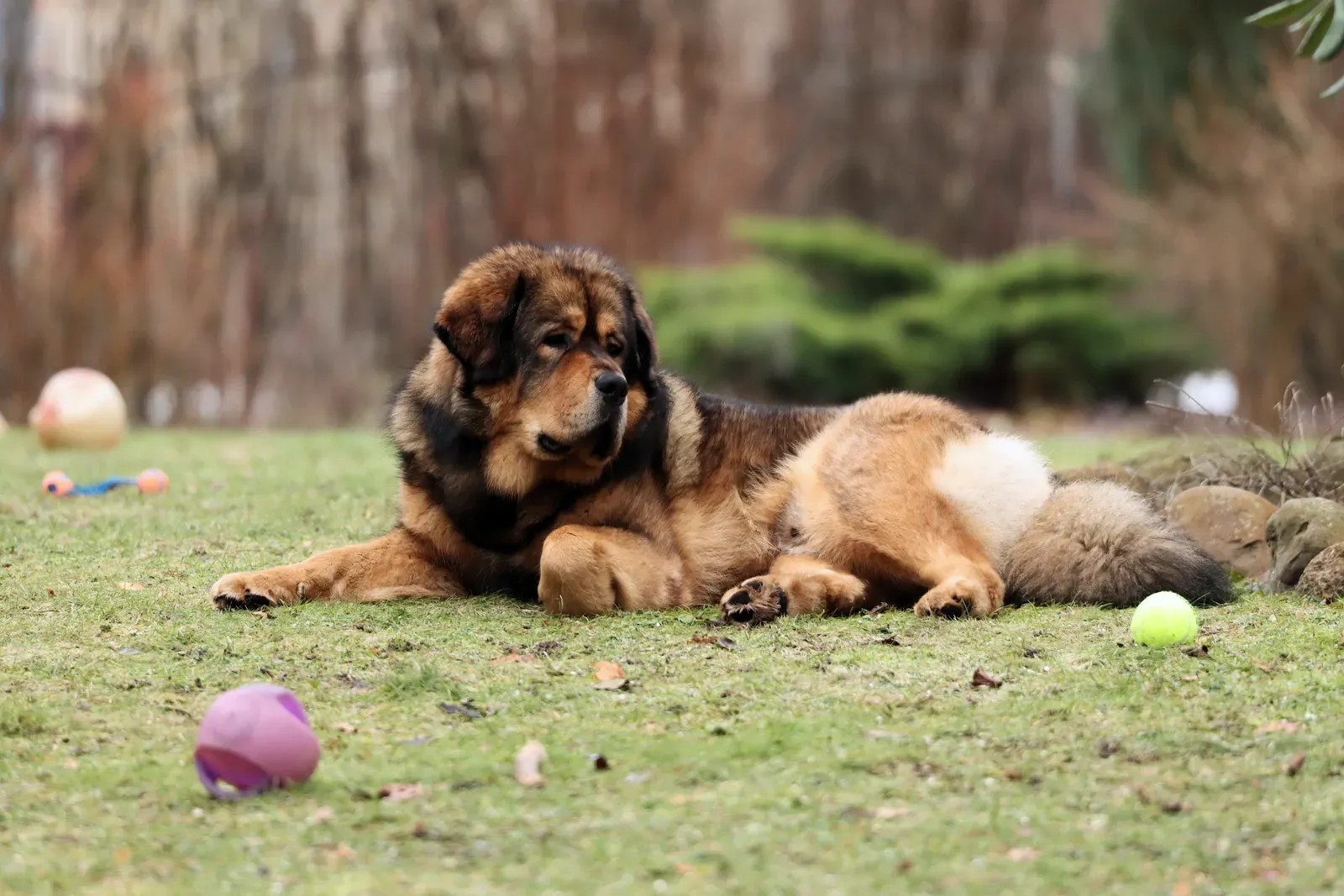
The Tibetan Mastiff is reserved, watchful and independent. It was bred to decide things alone when the herders were asleep or far away. That is a strength in a guardian and a challenge in a house.
- Independent. Vetstreet describes the breed as an independent thinker with its own agenda, and says it is independent enough to stay home alone while owners work, though it does best with another dog for company. PDSA says the breed does not really suit first-time owners but can be great with experienced owners.
- Territorial and watchful. As a guardian, it treats the home as its territory. Introduce visitors calmly, and fence the plot.
- Loyal to its people. Breed pages commonly describe a calm, loving manner with the family and a reserved manner with strangers. Treat this as a general pattern, not a promise for each dog.
- Slow to mature. Large guardian breeds take longer than small breeds to reach adult size and calm. No source gives a Tibetan Mastiff age figure. Plan for a long, awkward adolescence.
Training works best when it is early, calm and consistent. Socialise a puppy widely in the first year, because an unsocialised 60 kg guardian is a safety problem. Harsh methods do not suit a dog that decides for itself.
 Save

Health
 Related breedBasenji3000 BCE to 1937 · Democratic Republic of the CongoAncient World
Most Tibetan Mastiffs live healthy lives, and the main task for an owner is to buy from a breeder who tests the parents and to keep a lean, fit dog. No breed-specific prevalence study exists, so there are no "1 in N" figures for this breed.
| Condition | What it is | How common | What helps |
|---|---|---|---|
| Hip and | Loose or misshapen joints that wear early | Listed by PDSA as a condition the breed can develop; no figure found | Breeding stock x-rayed under the BVA/Kennel Club hip and elbow schemes (PDSA); lean weight |
| Hypothyroidism | Low thyroid hormone, causing weight gain, dull coat and tiredness | Described as common in the breed by several breed overviews; no figure found | Vet blood tests; daily tablets if diagnosed |
| Entropion and ectropion | Eyelids rolling in or out because of deep-set eyes | PetMD names these as the most common eye problems | Eye checks; a vet can correct severe cases |
| Bloat (GDV) | A twisted, gas-filled stomach, an emergency | Listed by PDSA among large-breed risks | Smaller meals, no hard exercise around meals, know the signs |
| Canine inherited demyelinative neuropathy | An inherited nerve condition in young pups | Named in a breed overview; secondary source | Ask the breeder about the line |
Life span is given as over 10 years by the UK Kennel Club, and as 10 to 14 years in our data.
Tibetan Mastiffs also carry the heat limit that goes with a high-altitude coat. In warm weather, give shade, water and quiet. This is common sense and not a sourced figure.

Living with a Tibetan Mastiff
 Related breedCarolina Dog1000 BCE to 1990 · United StatesAncient World
 Save
| Daily reality | Rating | Why |
|---|---|---|
| Exercise per day | Medium | Up to 1 hour a day and a large garden (UK Kennel Club) |
| Training needs | High | Independent guardian; early socialisation is a must |
| Grooming | High | Thick double coat; heavier shedding as the undercoat goes (UK Kennel Club coat description) |
| Shedding | High | Heavy woolly undercoat that thins in warm months |
| Barking | Varies | Alert guardian; depends on dog and setting; talk to neighbours first |
| Time alone | Fair | Independent enough to be alone, but best with a dog companion (Vetstreet) |
| Children | Varies | Big and protective; needs supervision and early socialisation; evidence thin |
| Other dogs | Varies | Territorial; early introductions help; evidence thin |
| Cats and small pets | Varies | Depends on early exposure; evidence thin |
| Flat living | Poor | Giant dog needing a large garden (UK Kennel Club) |
| Heat tolerance | Poor | Heavy coat built for cold highlands |
| Cold tolerance | Good | Thick double coat |
| First-time owner fit | Poor | PDSA: not really suited to first-time owners |
A great fit if
- You have a large, secure garden with high fences.
- You have owned a big, independent breed and enjoy patient, calm training.
- You live in a cool climate and can give shade and cool rooms in summer.
- You want a quiet, watchful house guardian, not a dog that greets everyone.
Think twice if
- You live in a flat, a terrace or a busy street with many passers-by.
- You want a dog that is friendly with every visitor without effort.
- You are a first-time owner, or you cannot give daily brushing time in shedding season.
- You live in a hot climate or have neighbours close by who dislike barking.
Before you get one
- Health tests. Ask the breeder for hip and elbow scores for both parents under the BVA/Kennel Club schemes (PDSA), and ask what other tests they run. Ask for the original certificates.
- Puppy or adult rescue. Rescue groups exist for the breed. After the Chinese market crash, unwanted Tibetan Mastiffs were common in China, so be careful about any dog sold as rare or high-status. An adult from rescue has a known size and manner.
- First year. Plan for puppy classes, calm short walks (hard exercise is not good for growing joints), and a lean body weight. Giant puppies grow fast, so ask a vet about feeding.
Similar breeds to consider
- Kangal Shepherd Dog. A giant guardian with a short coat, much easier in warmer climates.
- Pyrenean Mountain Dog. A white guardian of the Pyrenees, also independent and also best with a secure garden.
- Caucasian Shepherd Dog. Another giant, heavily coated guardian; needs the same experience level.
- Himalayan Sheepdog. A slightly smaller relative from the same part of the world.

Tibetan Mastiff fun facts
 Related breedCentral Asian Shepherd Dog2000 BCE to 1990 · Turkmenistan, Uzbekistan, KazakhstanAncient World
- "Do-Khyi" is usually translated as "tied dog" or "door dog".
- Marco Polo is said to have described donkey-sized guard dogs on his travels in the 13th century, which is a legend and cannot be matched to the modern breed.
- The same wolf-linked gene region (EPAS1) found in Tibetan Mastiffs has been studied because it helps the body cope with low oxygen.
- At the height of China's mastiff craze, a seller told the press that a top dog sold for 3 million yuan; by 2017 many unwanted dogs were in shelters.
Frequently asked questions
How big is a Tibetan Mastiff?
The standard asks for at least 66 cm at the withers for dogs and 61 cm for bitches. Adults are heavy: figures in other registries are well over 50 kg for many males.
Are Tibetan Mastiffs good family dogs?
They can be calm and protective at home, but they are large and territorial guardians. PDSA says the breed does not really suit first-time owners.
How long do Tibetan Mastiffs live?
The UK Kennel Club says over 10 years. Our data gives 10 to 14 years.
Why is the Tibetan Mastiff in the Asian Spitz family and not the Mastiff family?
The family in our data is a DNA . Parker et al. 2017 placed the breed with the Asian Spitz clade. The mastiff look is a body type.
Why are Tibetan Mastiffs good at high altitude?
Studies found a version of the EPAS1 gene in Tibetan Mastiffs that is shared with Tibetan wolves. It is linked to the body's response to low oxygen.
What happened to Tibetan Mastiff prices in China?
The market boomed in the late 2000s and fell around 2013. Reports from 2017 describe thousands of dogs released by breeders who lost money.
Read next
FamilyAsian SpitzThe whole family Adopt a dogDog Shelters in EuropeFind dog shelters in Europe, learn how shelters differ from country to country and why adopting a dog is a good option.
Sources (15)
- Fédération Cynologique Internationale, Do-Khyi (Tibetan Mastiff), standard no. 230.
- The Kennel Club (UK), Tibetan Mastiff breed standard and breed information pages.
- American Kennel Club, Tibetan Mastiff history pages (including "Ancient Guardian of the Monasteries").
- PDSA, Tibetan Mastiff breed information.
- Vetstreet, Tibetan Mastiff breed profile.
- PetMD, Tibetan Mastiff breed profile.
- vonHoldt B.M. et al., "EPAS1 variants in high altitude Tibetan wolves were selectively introgressed into highland dogs", PeerJ, 2017.
- Chinese Academy of Sciences research report on Tibetan Mastiff high-altitude adaptation and wolf interbreeding, Molecular Biology and Evolution, 2016.
- Study of Tibetan and Himalayan wolf genomes and a deeply diverged wolf lineage (National Science Foundation public access record).
- Global Times, "Tibetan mastiffs being abandoned", 15 September 2017.
- China Daily, report on abandoned Tibetan Mastiffs, 15 September 2017.
- Dialogue Earth (China Dialogue) and The Third Pole, "9,584 Tibetan mastiffs abandoned and dangerous", 2017.
- Dogster, Tibetan Mastiff history article.
- Parker H.G. et al., "Genomic analyses reveal the influence of geographic origin, migration, and hybridization on modern dog breed development", Cell Reports, 2017.
- Fogle B., The New Encyclopedia of the Dog, 2009.