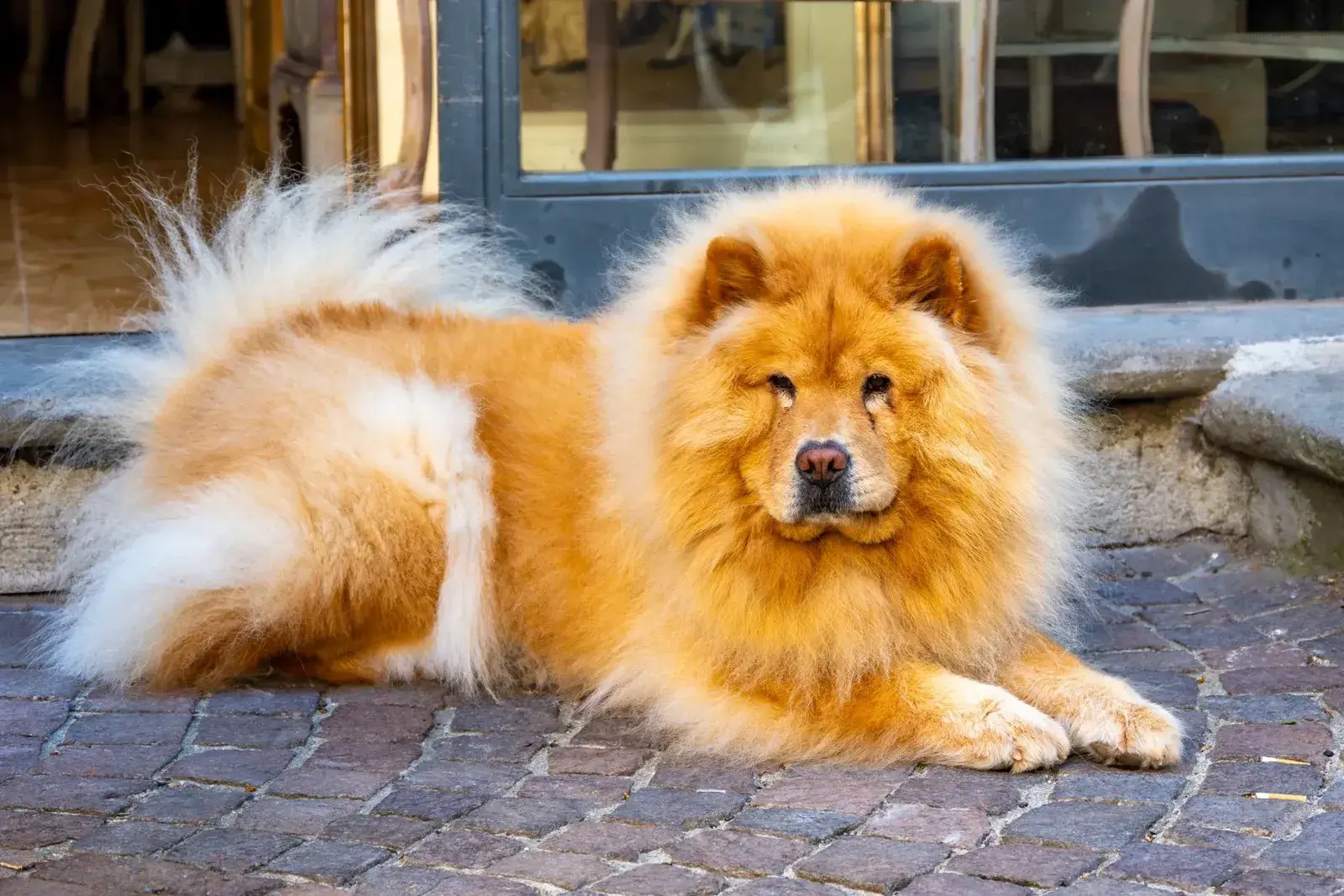
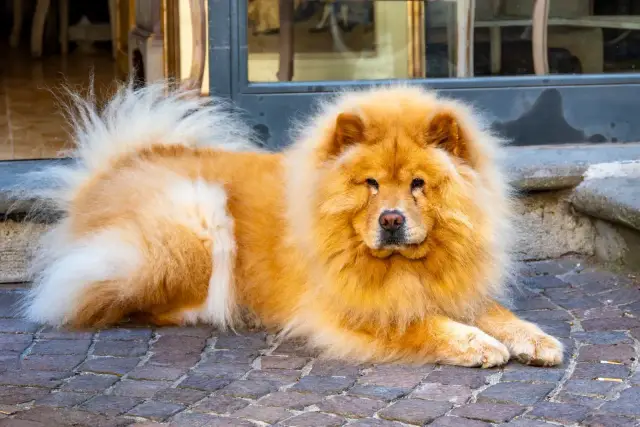
It is one of the oldest dog types in the world: a 2017 genome study placed it among the most basal lineages of East Asian dogs. It is also a dignified, independent, quiet dog that bonds closely with its own people and keeps strangers at a distance. This profile covers where the breed comes from, what is known (and not known) about the tongue, how it was used in China, its health record, and what it is like to live with.
Chow Chow quick facts
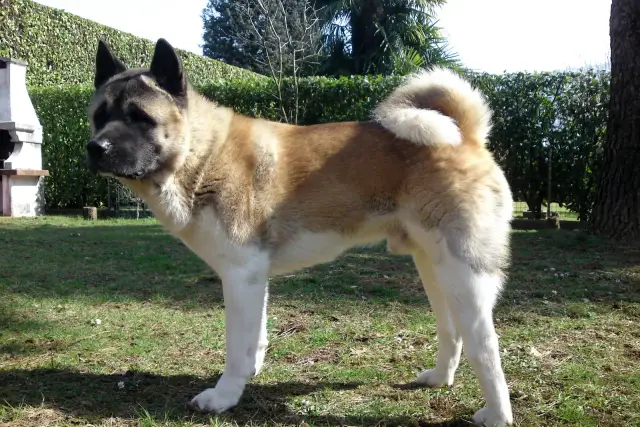 Related breedAmerican Akita1945 to 1956 · United StatesModern Era
- Other names
- Songshi Quan ("puffy-lion dog"), Chow
- Country of origin
- China
- Family (DNA)
- Asian Spitz (Parker 2017)
- Kennel club group
- Group 5 (Spitz and primitive types, no. 205); AKC Non-Sporting; recognised by the UK Kennel Club
- Size
- Medium; FCI withers height about 46 to 56 cm
- Lifespan
- Atlas data gives 9 to 15 years
- Coat
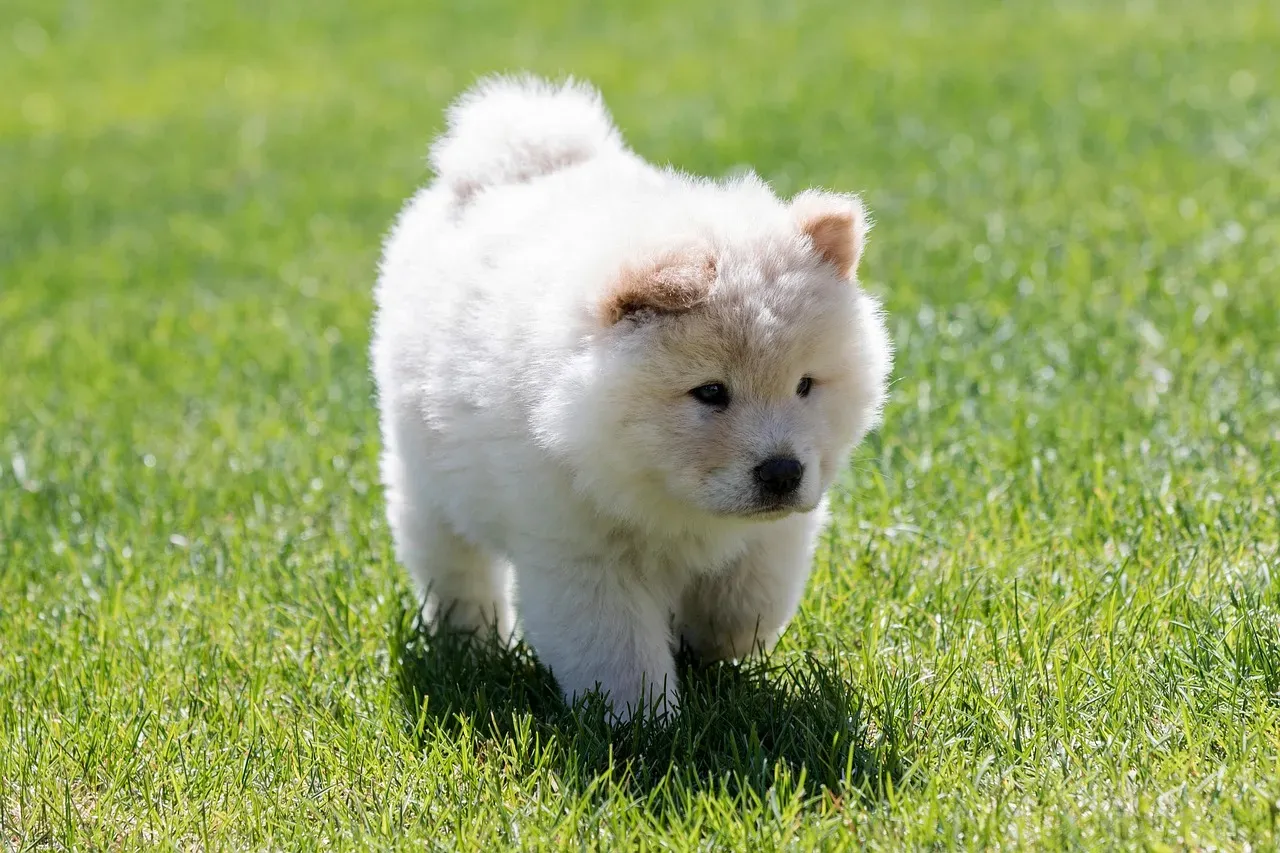
- Dense double coat, rough or smooth
- Signature trait
- Blue-black tongue
- Best known for
- Ancient origin, lion-like ruff, aloof loyalty
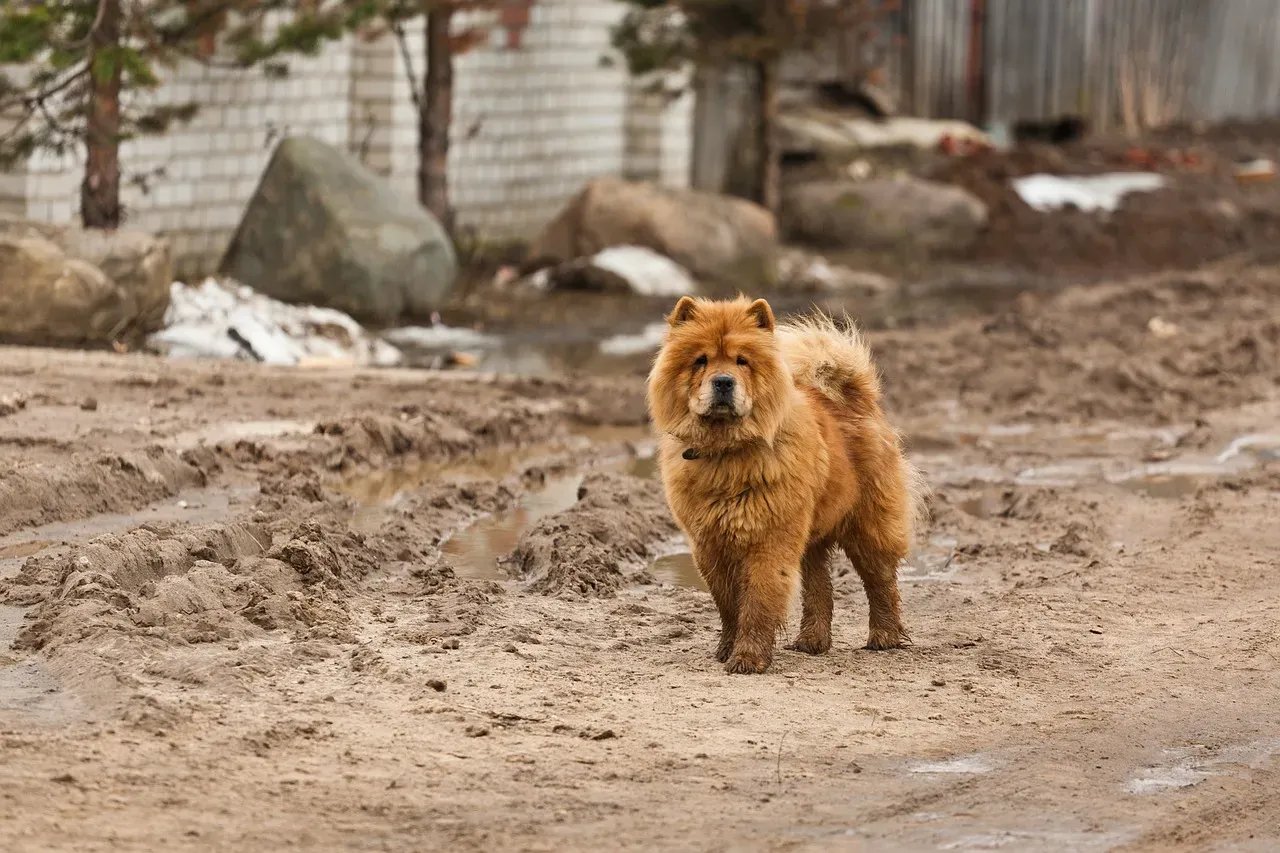
Drawn to scale in real centimetres. Its back reaches about 51 cm, your knee; its head about 65 cm, mid-thigh.
Where it sits in the tree
Ancient World · 3,000 BCE to 499
Name and origin
 Related breedJindo1200 to 1962 · South KoreaLate Middle Ages
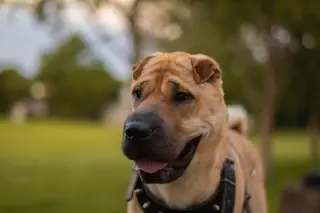
The breed's Chinese name in our data is Songshi Quan, often rendered "puffy-lion dog". The English name is less clear. One explanation is that "chow-chow" was pidgin English used by traders for assorted cargo from China, and that the dogs were carried among the other goods. Another explanation links it to a Cantonese word for "edible". Neither can be proven, and the first is the one our atlas data prefers.
The FCI lists China as the country of origin. Our records give the breed's span as roughly 200 BCE to 1895, with medium confidence: the early date reflects pottery and art, and the later one reflects the Western show-ring standard.

History
 Same eraSamoyed500 CE to 1912 · RussiaEarly Middle Ages
An ancient East Asian type
Breed-history writing often points to pottery and ceramic models of the Han dynasty (206 BCE to 220 CE) that show a square-bodied dog with erect ears, a heavy neck ruff and a tail curled over the back. Canine Chronicle repeats this description. These are secondary accounts, not archaeology papers, and no primary citation for the pottery itself exists.
The genetic evidence is stronger. A 2017 BMC Genomics study, "The origin of chow chows in the light of the East Asian breeds", sequenced nine Chow Chows from China and compared them with 37 other canid genomes. It found the Chow Chow to be one of the most basal lineages, having originated together with other East Asian breeds such as the Shar-Pei and Akita. A demographic analysis in the same study estimated that the Chow Chow separated from the Chinese indigenous dog about 8,300 years ago. That is a model estimate with a wide margin, not a datable event.
Older speculation held that the breed came from Siberia or the Arctic. Canine Chronicle notes that the 1935 AKC Complete Dog Book guessed at northern Siberia. This idea is not supported by the genome work above.
Roles in China
Chow Chows in China were working dogs. Breed histories describe guarding of homes, livestock and temples, hauling, and hunting. These roles fit what is known of Asian spitz types in general.
Dogs of this type were also kept for meat in parts of China, as were other dogs. Some breed histories suggest the Chow's ancestors were among them, and the "edible" name theory points the same way. This evidence is thin and old, and it is not specific to the Chow Chow. Eating dog meat has been a matter of local custom in parts of East Asia and remains a subject of active debate there today. It has no bearing on how the breed is kept in the West, where it is a companion dog.
Arrival in Britain
Dates conflict. One source reports Chows arriving in England as early as 1820, and a veterinary-website claim puts them in the late 1700s, but most accounts place the serious import wave in the 1880s. At first they were shown as curiosities: the Zoological Society of London's gardens exhibited them under the label "the Wild Dog of China", alongside dingoes and coyotes in some accounts. A bitch named Chinese Puzzle is generally accepted as the first Chow entered in a British show, in the "foreign class" at the 1880 Crystal Palace show. The ChowTales timeline credits the Earl of Lonsdale with bringing good specimens from China in 1887.
Queen Victoria
Queen Victoria and the Chow Chow appear together in many popular accounts. The sources are not in step. One says she kept a Chow in her kennels at Windsor, treated more as a foreign curiosity than a pet. Another dates a "Chinese dog" given to her to 1865. A third claims her interest began after seeing Chows at London Zoo, but that appears in only one source and is undocumented. What can be said safely: royal ownership is reported, the details are not settled, and it helped make the breed fashionable in Britain.
Lion-dog legends
Chinese lion-dog imagery, from palace guardian statues to the "foo dog", is often linked to the Chow Chow. This is legend, not documented ancestry. The lion mane of the Chow is a good match for the picture, but the foo dog is a stylised lion, and nothing in the genome work ties it to this breed. Treat any claim that Chows were palace guardians of a particular emperor as a story.
Relatives and DNA
 Same familyShiba Inu300 BCE to 1936 · JapanAncient World
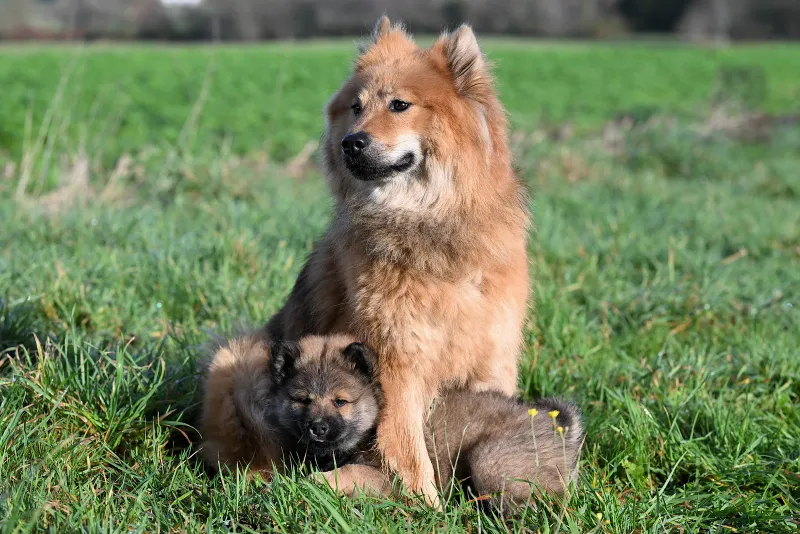
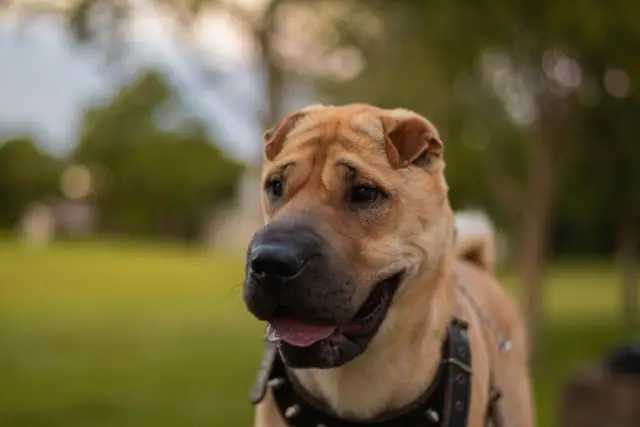
In the Parker 2017 analysis used in our data, the Chow Chow sits in the Asian Spitz family with strong support. Its closest listed shared-DNA partner is the Eurasier, at 178.6 of shared haplotype and listed in our data as a descendant of the Chow. The Shar-Pei shares 14.8 Mb with the Chow in the same study and is its listed sister breed, which matches the BMC Genomics finding that the two sit close together. The Chow's blue-black tongue and the Shar-Pei's are another echo of that link.
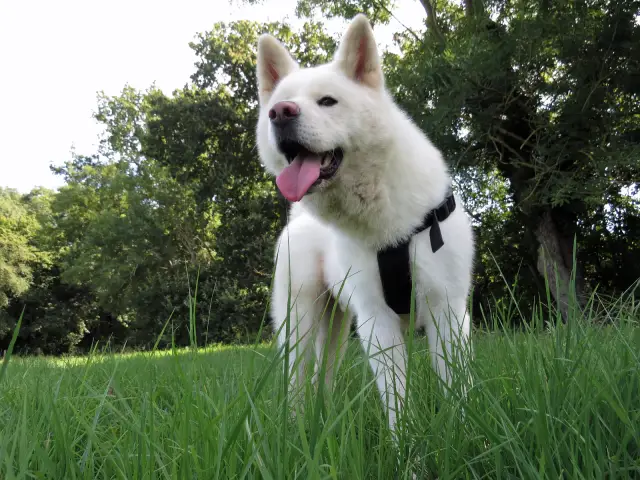
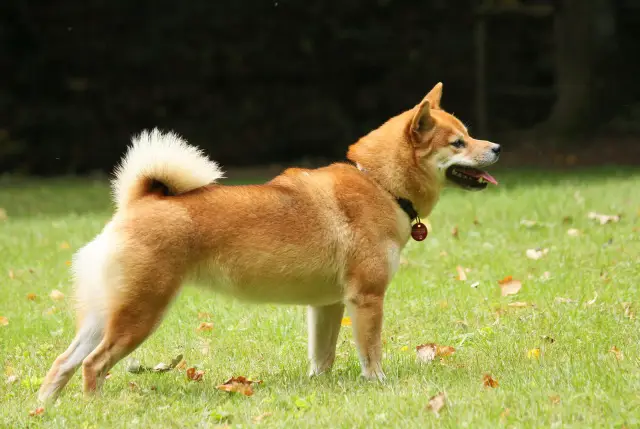
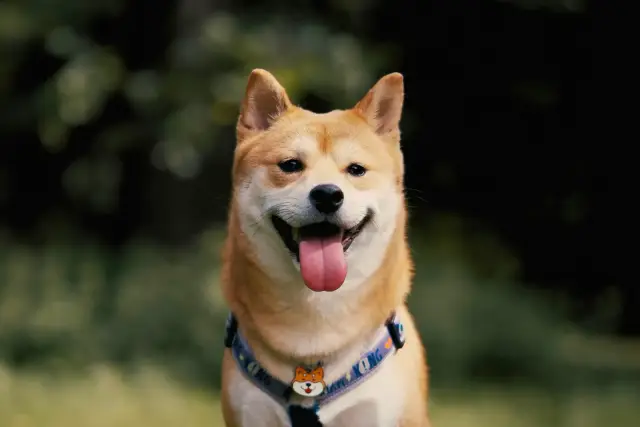
Other Asian breeds in the same family include the Akita and the Shiba Inu. The Chow Chow is not their ancestor: all share an older East Asian root. See the family page for the full group.
 Save
Sister breeds · 1
- Shar Pei200 BCE to 1973
Descend from it · 1
- EurasierGermany
- Eurasier178.6 Mb 7.4%
- Shar Pei14.8 Mb 0.6%
Source: Parker et al. 2017. Percent of the whole genome.
The breed standard
 Looks relatedSiberian Husky1000 to 1930 · RussiaEarly Middle Ages
A is the written ideal a kennel club judges dogs against. The standards describe a compact, powerful spitz with a heavy coat; the points below are the ones checked against sources.
| Trait | What the standards say |
|---|---|
| Height, dogs | FCI: 48 to 56 cm at the withers (as summarised from the FCI standard) |
| Height, bitches | FCI: 46 to 51 cm at the withers (as summarised from the FCI standard) |
| Coat | Dense double coat (see your kennel club's standard for rough and smooth types) |
| Tongue | AKC: solid blue-black on the top surface and edges, the darker the better; red or pink is a fault |
| Group | FCI Group 5, Spitz and primitive types; AKC Non-Sporting |
| Use (FCI) | Guard dog and companion |
No weight figures are given. The Kennel Club and AKC measurements are not confirmed, so those cells are omitted rather than guessed.
 Save
Colours. Colour lists vary, so check your own kennel club's current standard for accepted colours.
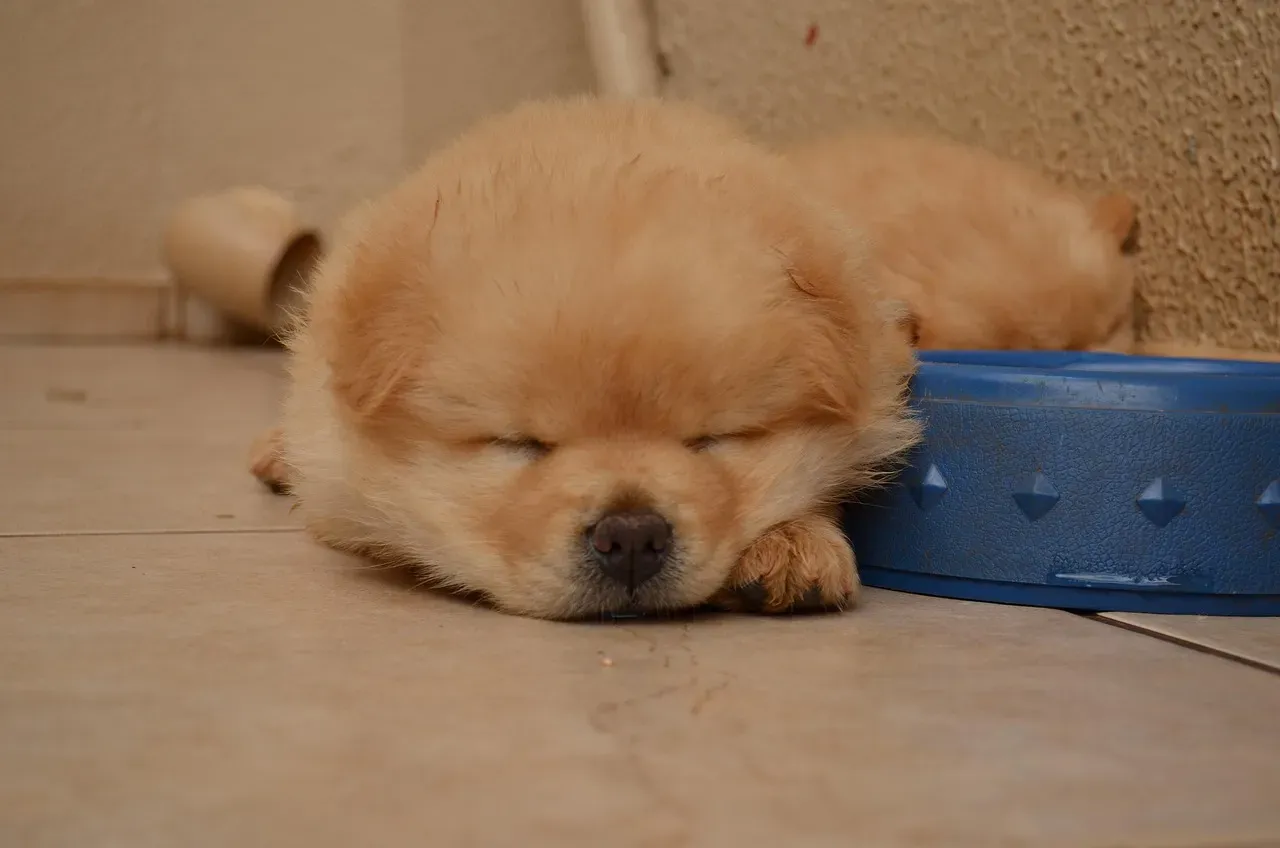
Pink tongues in puppies. Chow Chow puppies are born with pink tongues. The blue-black colour develops as they grow.
The blue-black tongue
 Related breedTibetan Mastiff1000 BCE to 1931 · ChinaAncient World
The tongue is the breed's most famous feature, and the honest answer to "why?" is that the full reason is unknown. The AKC states this directly. What is known:
- The trait was noticed in the 1800s, when Chows were exhibited at London Zoo, and was later written into the standard as a breed marker. Breeders used it to identify purebred offspring.
- It comes from pigment (melanin). Shades vary between individuals, and the pattern can be solid or patchy in other breeds.
- Puppies are born pink and darken over time. A red or pink tongue in an adult is a fault in the standard.
- It is not unique to the Chow. Dark tongue spots appear in many breeds, and the Shar-Pei and Eurasier can also have dark tongues. The Chow's tongue is simply the one that is consistent across the whole breed.
- One pet-health site names two pigment genes, ASIP and PDPK1, as linked to the trait. That is a lead, not a settled finding.
Folk stories say the Chow licked up pieces of fallen sky, or inherited its tongue from a bear. These are legends, labelled as such.
Temperament
 Related breedBasenji3000 BCE to 1937 · Democratic Republic of the CongoAncient World
The Chow Chow's temperament is the main reason it suits some owners and not others. The FCI places it in the guard and companion use group. Temperament is not measured in the standards, and the points below come from general breed experience rather than a named study: expect an independent dog, loyal to its own household and reserved with strangers.
Aloof, not friendly with everyone. A Chow typically picks one or a few people and bonds hard. Meeting visitors, children it does not know and strange dogs can bring out wariness. This is part of the guarding history. It needs very early, steady, positive socialisation, ideally from eight weeks onward, so that reserve does not turn into suspicion.
Quiet and clean. Many owners describe the Chow as a low-bark dog that is easy to house train and tidy indoors. It tends to be cat-like in its independence.
Independent, not obedient. Chows learn commands but do not work to please. Training is by reward and short sessions. Harsh methods tend to make the dog shut down or push back.
Handling and touch. Because of its history as a guard, a Chow often dislikes being grabbed, hugged or approached by strangers. Teach children to leave the dog alone while it eats or rests.
 Save

Health
 Related breedCarolina Dog1000 BCE to 1990 · United StatesAncient World
Most Chow Chows live healthy lives. The conditions below are the ones research and breeders discuss most. The figures are from named studies and are shown as "about 1 in N" only where a study gives a prevalence.
| Condition | What it is | How common | What helps |
|---|---|---|---|
| Entropion | Eyelid rolls inward so lashes rub the eye | Annual prevalence about 9.3% (about 1 in 11) in UK primary care, 2025 | Early vet checks for squinting or watering eyes; surgery corrects it |
| Hip joint forms loosely, leading to wear and arthritis | About 19.2% (about 1 in 5) in a 2017 PLOS ONE breed table | Hip scoring of parents; lean body weight | |
| Elbow dysplasia | Elbow joint forms unevenly | 48.6% (about 1 in 2) in the same table | Elbow scoring of parents; vet checks for forelimb lameness |
| Heat-related illness | Overheating, from mild to heatstroke | Higher risk than average; see below | Avoid exercise in warm weather; shade, water, cool floors |
Entropion
The 2025 VetCompass study led by O'Neill, in PLOS ONE, looked at conformational eyelid disorders in UK dogs in 2019. For the Chow Chow, annual entropion prevalence was 9.28% (95% CI 7.64 to 11.14), which is about 1 in 11. Only the Shar-Pei (15.41%) and Neapolitan Mastiff (6.88% per the study text) figured at similar levels. Across all dogs the figure was 0.33%. The authors note that true figures may be higher, because owners and vets sometimes treat the look as "normal for the breed". Entropion is painful if untreated but can be fixed with a surgery that most vets know well. Ask the breeder whether parents and relatives have had eyelid surgery.
Hip and elbow dysplasia
A PLOS ONE study that tabulated hip and elbow dysplasia prevalence by breed (PMC5325577) listed the Chow Chow among the 15 breeds with the highest hip dysplasia, at about 19.2%, and the highest elbow dysplasia figure in its table at 48.6%. The elbow figure is a large one; it comes from screened dogs, which may not be representative of all Chows. An older OFA database review put hip dysplasia at about 18.9% across 5,266 Chow Chows, falling from 22% to 24% in the early decades to about 13% to 14% in the 1990s and 2000s, then rising to about 16% for 2006 to 2010. These data suggest screening works but is not complete.
In the UK, the BVA and Kennel Club hip scheme listed a mean score of 15.9 for 332 Chow Chows in its 2018 breed table. Lower scores are better, and the breed average is higher than in many other breeds.
What helps. Ask for hip and elbow certificates for both parents, keep a puppy lean, avoid hard jumping as a puppy, and see a vet early for stiffness.
Heat
The Chow Chow's dense double coat makes heat a real concern. The 2020 VetCompass study by Hall, Carter and O'Neill in Scientific Reports analysed records from over 900,000 UK dogs. It found Chow Chows at very much higher risk of heat-related illness than Labrador Retrievers, with an odds ratio of about 17. Chow Chows were also among the breeds most strongly linked to heatstroke triggered by exercise, alongside Bulldogs, French Bulldogs and Staffordshire Bull Terriers. Being above average weight and over two years old also raised risk.
The RVC's own news pieces frame this study mainly around flat-faced dogs. The Chow is not typically flat-faced, and the study does not separate coat from other factors, so the cause for this breed is not proven. Coat and body type are the working explanation, not a finding.
What helps. Walk in the early morning or late evening, never in the middle of a warm day; offer water and shade; keep the home cool; never leave a dog in a parked car. Do not shave the coat without vet advice. A well-brushed coat insulates.
 Save

Living with a Chow Chow
 Related breedCentral Asian Shepherd Dog2000 BCE to 1990 · Turkmenistan, Uzbekistan, KazakhstanAncient World
 Save
| Daily reality | Rating | Why |
|---|---|---|
| Exercise per day | Medium | Moderate walks; avoid the heat of the day |
| Training needs | High | Independent; needs early socialisation and patient, reward-based training |
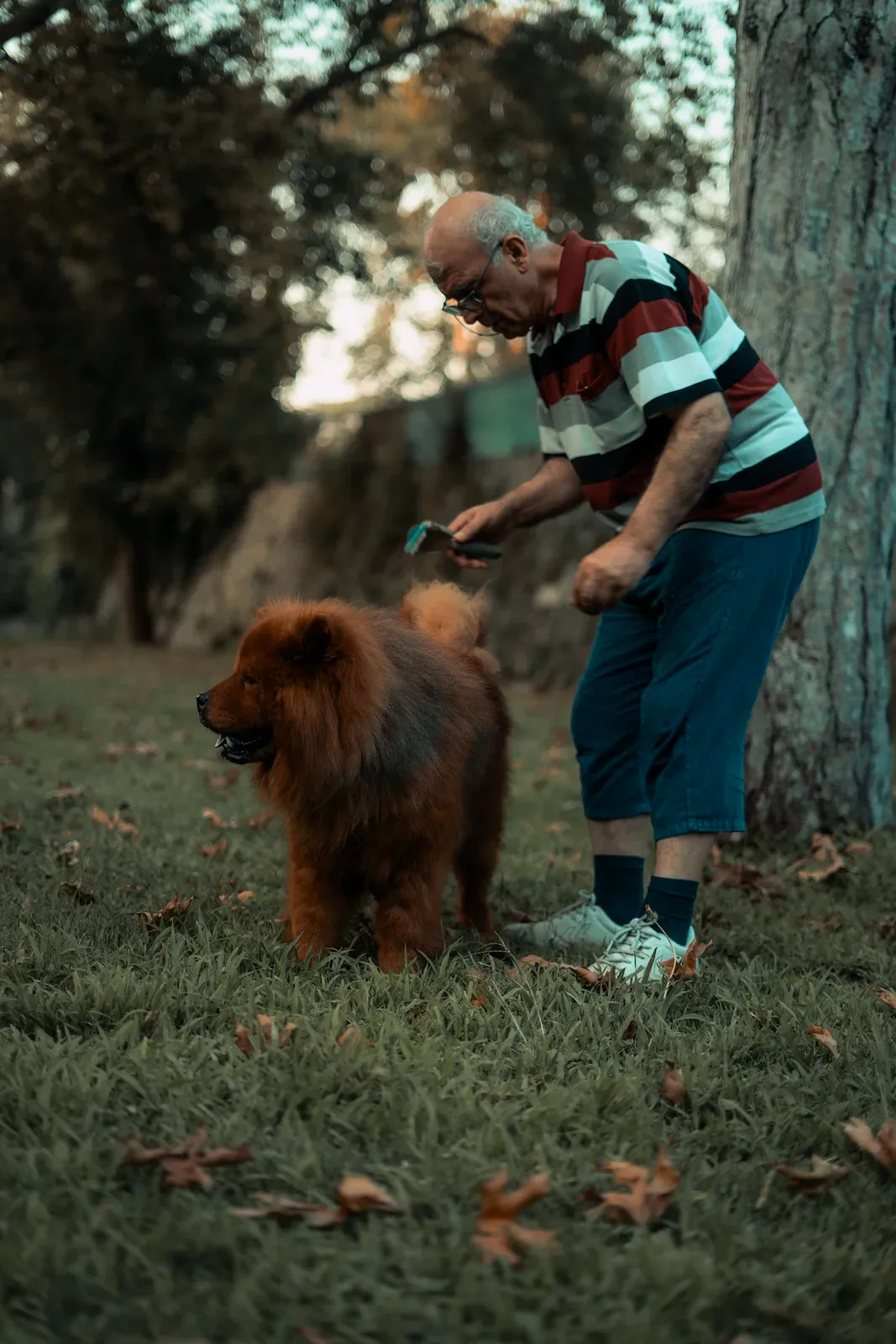
| Grooming | High | Dense double coat needs regular brushing, more in shedding season |
| Shedding | High | Heavy twice-yearly coat blow |
| Barking | Low | Generally described as quiet |
| Time alone | Fair | Usually settles; still needs company and routine |
| Children | Varies | Reserved with unfamiliar children; best with older, calm children and supervision |
| Other dogs | Varies | Can be wary of strange dogs; socialise early |
| Cats and small pets | Varies | Depends on early exposure; evidence is thin |
| Flat living | Fair | Quiet indoors; needs cool space and reliable walks |
| Heat tolerance | Poor | VetCompass 2020 found much higher heat-illness risk |
| Cold tolerance | Good | Dense double coat |
| First-time owner fit | Fair | Rewards calm, consistent owners; aloofness surprises first-timers |
A great fit if
- You want a quiet, dignified dog with a strong bond to its household.
- You can start socialisation in the first weeks and keep it up for years.
- You live somewhere cool, or can adjust walks and indoor temperature in summer.
- You are happy to brush a heavy coat several times a week.
Think twice if
- You want a dog that welcomes every visitor and every dog.
- You live in a hot climate with no cool space.
- You have small children who will pull, hug or surprise the dog.
- You dislike grooming or cleaning up heavy shedding.
Before you get one
- Health tests. Ask for hip and elbow scores for both parents, and ask about eyelid surgery in the line. Ask to see the original certificates.
- Puppy or adult rescue. Breed rescues place adult Chows whose temperament is already known. This can suit a household that wants a clear picture of the dog's character.
- First year. Plan puppy classes early, handling practice (paws, mouth, ears, coat), gentle exercise while joints grow, and a lean body weight.
Similar breeds to consider
- Akita. Another Asian spitz with a strong bond to its family and reserve with strangers; larger and more powerful.
- Shiba Inu. Smaller, independent and cat-like, with a shorter coat.
- Eurasier. A Chow-descended breed bred for a calmer, more family-oriented temperament.
- Shar-Pei. The Chow's closest DNA relative, also with eyelid and skin concerns.
 Thinking of adopting?How to adopt a dog from a shelter or rescueHow to adopt a dog from a shelter or rescue: the process, costs in general terms, choosing a dog, the first weeks and what if it does not work out.Related breedCentral Asian Shepherd Dog2000 BCE to 1990 · Turkmenistan, Uzbekistan, KazakhstanAncient World
Chow Chow fun facts
 Related breedDingo3000 BCE to 1500 BCE · AustraliaAncient World
- A Chow Chow puppy is born with a pink tongue; the blue-black colour comes in as it grows.
- A 2017 genome study put the Chow among the most basal lineages of East Asian dogs.
- Chows were shown at London Zoo in the 1800s under the label "the Wild Dog of China".
- The Eurasier shares 178.6 Mb with the Chow in the Parker 2017 study, more than any other breed in our data.
Frequently asked questions
Why do Chow Chows have blue tongues?
The says the reason is unknown. The colour is melanin pigment, puppies are born pink, and the trait has been kept by breeders as a breed marker. Fallen-sky and bear stories are legends.
Are Chow Chows good family dogs?
They can be with calm, consistent households and early socialisation. They are loyal but reserved, and often prefer one or two people. Supervise contact with young children.
How long do Chow Chows live?
Our atlas data gives 9 to 15 years. No named-study median exists for the breed.
What health problems do Chow Chows have?
Entropion (about 1 in 11 per year in UK primary care), hip and , and a higher risk of heat-related illness than most breeds.
Are Chow Chows aggressive?
Not by nature, but they are reserved and protective. Poor socialisation can lead to wariness or defensive behaviour. Early training and calm handling make a large difference.
Where is the Chow Chow from, and is it really ancient?
It comes from China. A 2017 study placed it among the oldest East Asian lineages, and Han-period pottery is often cited as early evidence, though that evidence is secondary.
Read next
Closest DNAShar Pei14.8 Mb sharedFamilyAsian SpitzThe whole family Adopt a dogDog Shelters in EuropeFind dog shelters in Europe, learn how shelters differ from country to country and why adopting a dog is a good option.
Sources (14)
- Parker, H. G., et al. (2017). Genomic analyses reveal the influence of geographic origin, migration and hybridization on modern dog breed development. Cell Reports. (Clade and shared-DNA figures in atlas data.)
- BMC Genomics (2017). The origin of chow chows in the light of the East Asian breeds.
- BMC Series blog (2017). The ancient origins of the Chow Chow.
- Fogle, B. (2009). The New Encyclopedia of the Dog. Dorling Kindersley.
- FCI Breed Standard no. 205, Chow Chow (group, use and country of origin).
- American Kennel Club. Why do Chow Chows have blue tongues?
- Canine Chronicle. Chow Chow history.
- ChowTales. 1865 to 1930 history timeline: earliest Chows and breeders of England and America.
- O'Neill, D. G., et al. (2025). Conformational eyelid disorders in dogs under primary veterinary care in the UK. PLOS ONE (VetCompass, Royal Veterinary College).
- Hall, E. J., Carter, A. J. and O'Neill, D. G. (2020). Incidence and risk factors for heat-related illness (heatstroke) in UK dogs under primary veterinary care in 2016. Scientific Reports (VetCompass).
- Royal Veterinary College VetCompass news (2020). Excessive exercise responsible for three-quarters of heatstroke cases in dogs.
- Oberbauer A.M., Keller G.G., Famula T.R., "Long-term genetic selection reduced prevalence of hip and elbow dysplasia in 60 dog breeds", PLOS ONE, 2017, Table 1 (PMC5325577).
- VIN. Review of OFA hip dysplasia records by breed.
- British Veterinary Association and Kennel Club (2018). Hip scheme breed statistics.