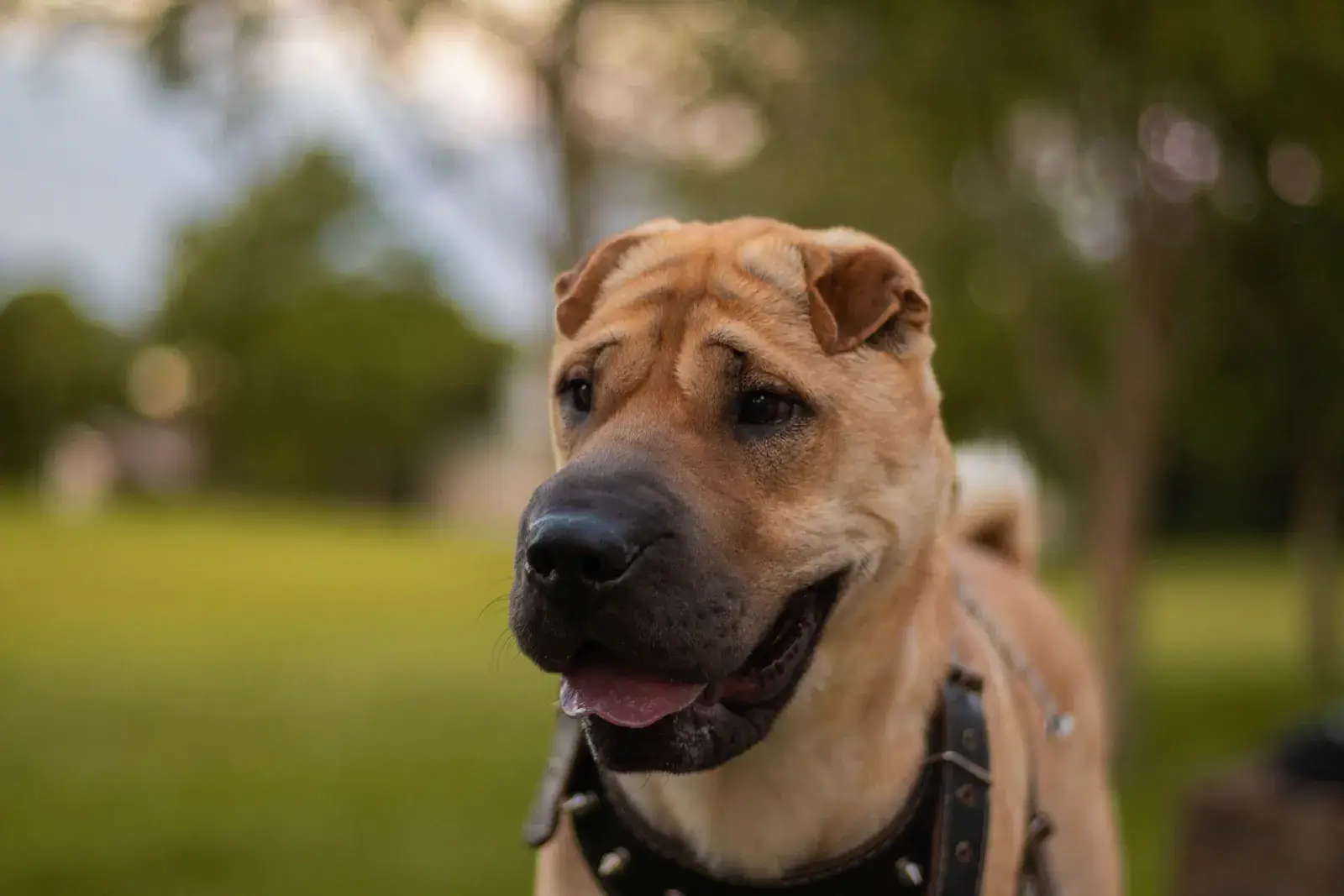
Its name comes from Cantonese words meaning "sand skin", for the short, bristly coat. It was a farm and guard dog in southern China, almost disappeared in the 20th century, and was rebuilt from a small group of dogs exported from Hong Kong in the 1970s. It is calm, independent and loyal to its own family, and reserved with strangers. It suits experienced owners who will socialise it early and accept a breed that needs regular skin, eye and ear care. In the UK, the largest vet-records study found that Shar Pei who died lived a median of 7.28 years.
Shar Pei quick facts
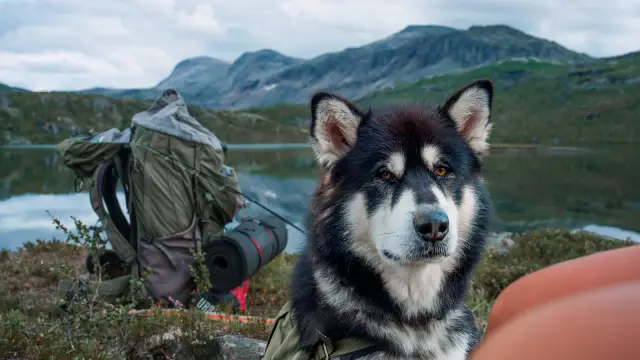 Related breedAlaskan Malamute1000 BCE to 1935 · United StatesAncient World
- Country of origin
- China (southern China, Guangdong province)
- Period of development
- Atlas data: from about 200 BCE (low confidence), modern breed rebuilt from 1973
- Original job
- Farm guard, hunting and herding help
- Type
- Guard dog (FCI Group 2, Pinscher and Schnauzer, Molossoid and Swiss Mountain and Cattledogs; FCI standard no. 309; AKC Non-Sporting Group; UK Kennel Club Utility Group)
- Family
- Asian Spitz (Parker 2017 DNA )
- Height
- 44 to 51 cm (FCI); 18 to 20 in, about 46 to 51 cm (AKC)
- Weight
- Not set in the FCI standard; AKC about 20 to 27 kg
- Coat
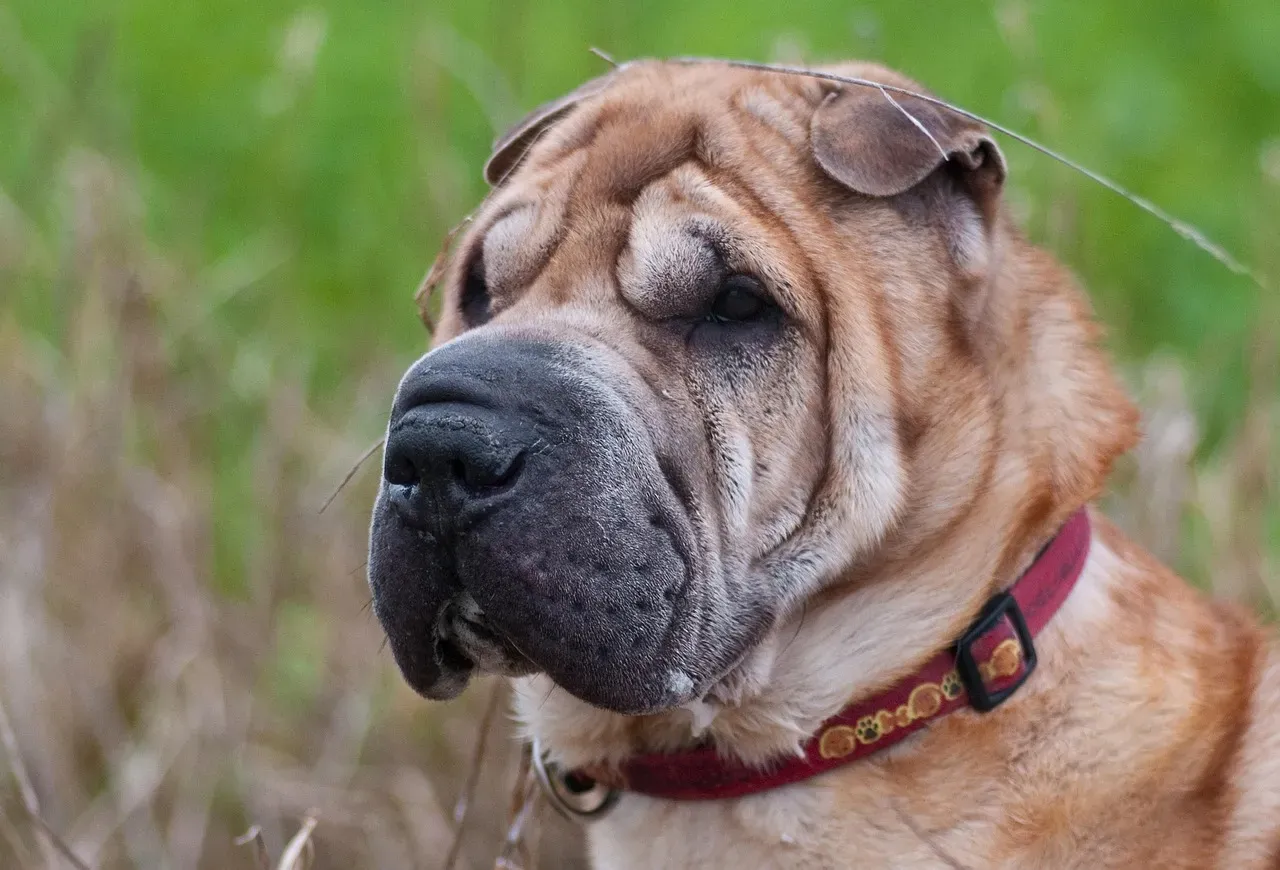
- Short, harsh, bristly: "horse coat" and slightly longer "brush coat"
- Life span
- 8 to 12 years in the atlas data; a UK vet-records study found a median of 7.28 years at death
- Other names
- Chinese Shar-Pei, Sharpei
Drawn to scale in real centimetres. Its back reaches about 48 cm, your knee; its head about 60 cm, just above your knee.
Where it sits in the tree
Ancient World · 3,000 BCE to 499
Name and origin
 Related breedAmerican Akita1945 to 1956 · United StatesModern Era
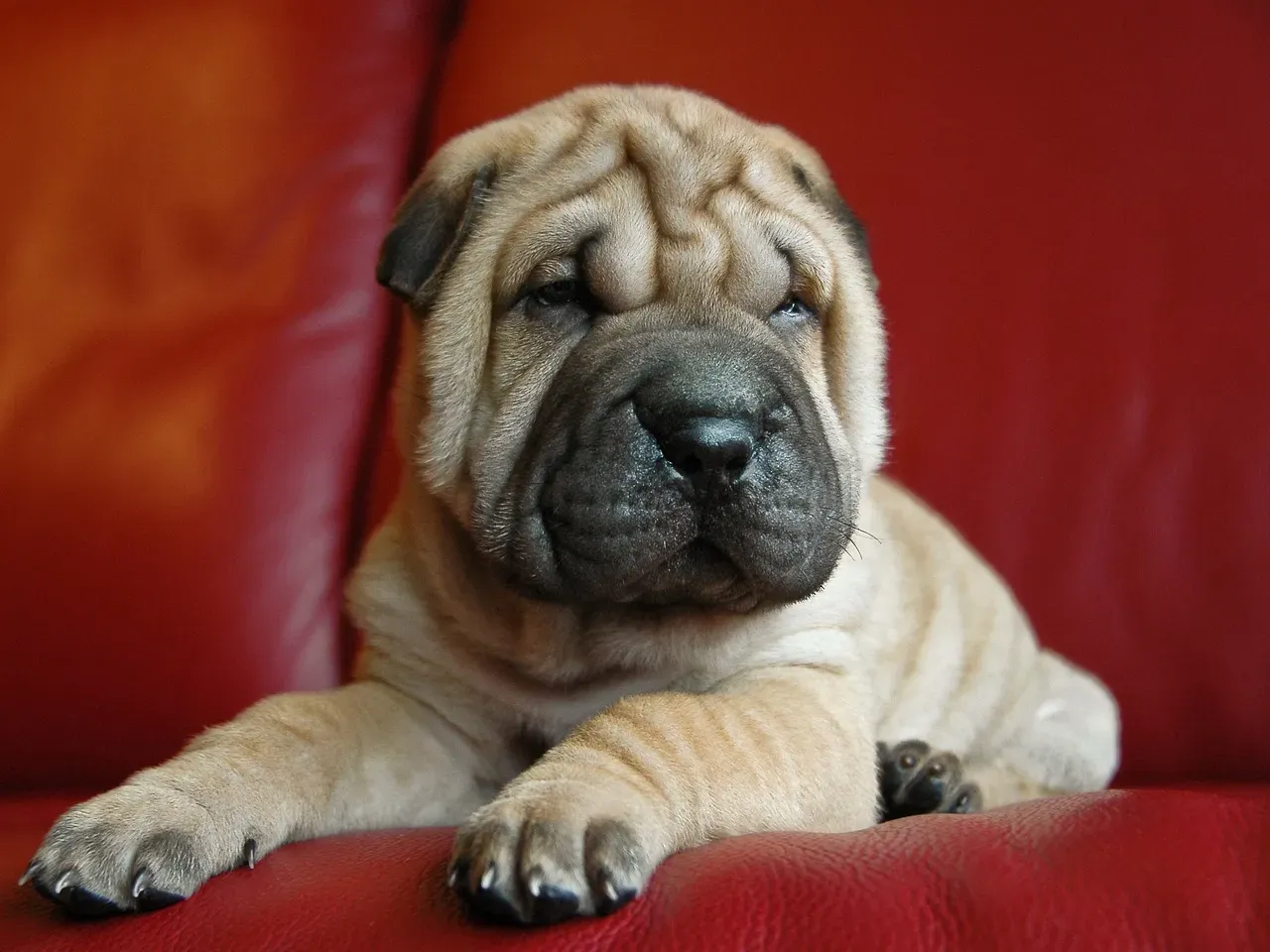
"Shar Pei" is usually given as Cantonese sā-pèih, "sand skin" or "sand paper skin", for the rough, short coat that feels like sandpaper if stroked against the lie. The spelling "Chinese Shar-Pei" is used by the American Kennel Club and the breed clubs. The atlas data also lists "Sharpei" as a spelling variant.
The FCI standard names China as the country of origin. The traditional type comes from the southern province of Guangdong, in the area around the Pearl River delta. The breed's older history is thin. Chinese pottery from the Han dynasty (206 BCE to 220 CE) shows wrinkled, short-legged dogs, and the Shar Pei is often said to descend from those dogs. That link is a popular claim, not something a written record or a DNA study has confirmed. The atlas data marks the 200 BCE start date as low confidence for this reason.
 Save

History
 Same eraJindo1200 to 1962 · South KoreaLate Middle Ages
Farm dogs of southern China
Before the 20th century, the Shar Pei was a working farm dog in the villages of Guangdong. Accounts from breed historians describe it guarding property, helping with hunting and driving livestock. The loose skin and bristly coat are often linked to a fighting role: loose skin makes it harder for an opponent to hold on, and the rough coat could hurt the mouth of an attacker. This explanation circulates widely, but it comes from breeders' tradition and has no named contemporary record behind it. Treat it as a legend.
Near extinction
Breed histories describe the 20th century in mainland China as a time of war and political upheaval in which dog numbers fell sharply. The Shar Pei survived mainly in Hong Kong and Macau and in a few other places outside the mainland. Sources agree the numbers were very small by the early 1970s, but no source gives a firm count.
The 1973 appeal
In 1973 a Hong Kong breeder, Matgo Law, wrote to American dog magazines asking dog fanciers to "Save the Chinese Shar-Pei". American breeders responded, and a small group of dogs was imported to the United States over the following years. Almost all Shar Pei outside China today descend from that small group of exports, so the gene pool is narrow.
Popularity boom
In 1979 a feature story with a Shar Pei on the cover of a major American magazine made the breed famous. By 1986 the number of Shar Pei in the United States had risen to about 13,000, according to breed-history accounts. Fast growth, high puppy prices and breeding for extreme wrinkles followed. Many of the health issues in the breed today are linked to that era.
Clubs and recognition
- The American Kennel Club admitted the breed to its Miscellaneous Class in 1988, and it joined the Non-Sporting Group in 1992 (the AKC archive gives 1992 as the year of full recognition).
- The FCI published standard no. 309 in its current form in 1999.
- The UK Kennel Club lists the Shar Pei in the Utility Group. In recent years it moved the breed from Breed Watch Category 3 to Category 2, citing improvements in breed health. Its Breed Watch listing for the breed names one point of concern: a tight lip, where the lower lip folds over the lower incisors.
The Kennel Club said it would review the change after twelve months. Check its current Breed Watch page if the status matters to you.
Ancestors, descendants and relatives
 Same familySamoyed500 CE to 1912 · RussiaEarly Middle Ages
The atlas data places the Shar Pei in the Asian Spitz clade of the Parker 2017 DNA study. Its closest relative in that study is the Chow Chow, another wrinkled, blue-tongued dog from China. The Shar Pei also shares a notable stretch of DNA with the Boxer. That does not mean the Boxer is its ancestor; it reflects shared in the data.
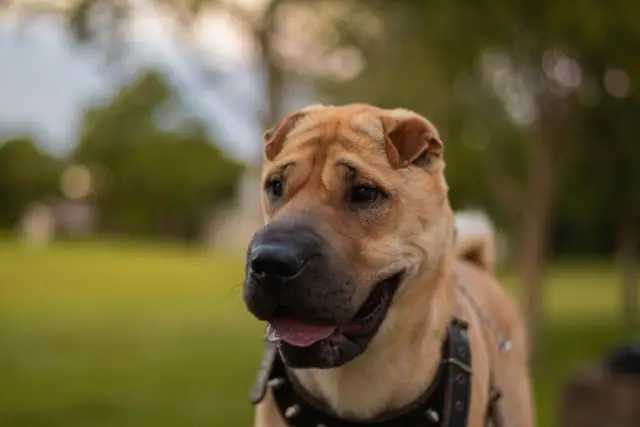
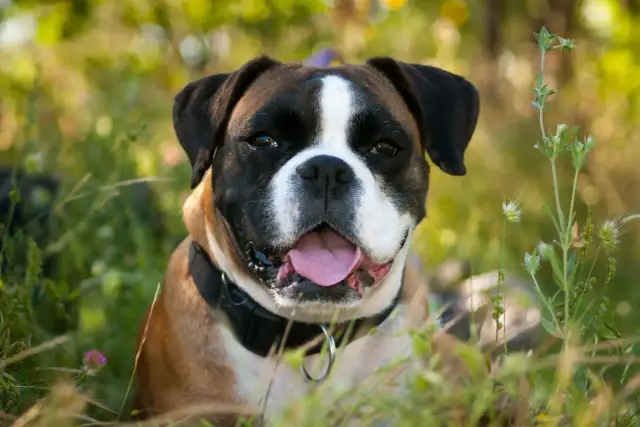
- Shar Pei and Boxer
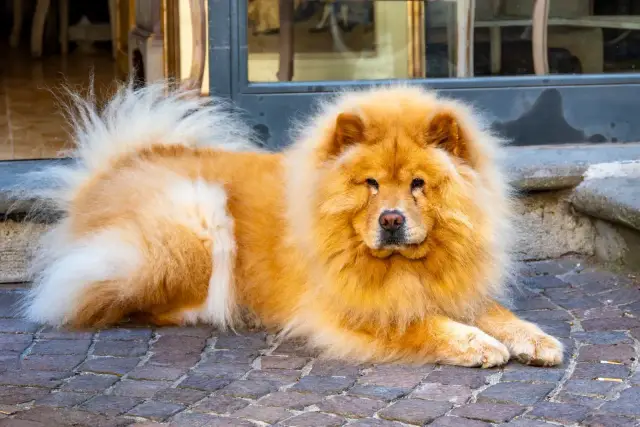
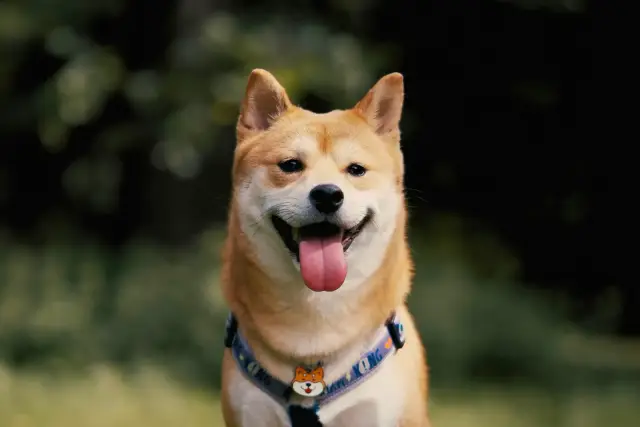
- Shar Pei and Chow Chow
The Chow Chow and the Shar Pei both have a blue-black tongue, and some writers link the trait to Chinese dogs in general. The Chow Chow may have contributed to the Shar Pei at some point; the atlas data records the two as closely related but no source gives a dated cross. Both are older Asian breeds with a stocky build, and the Shar Pei is smaller and shorter-coated.
The atlas data records no parent breeds and no breeds that descend from the Shar Pei.
Sister breeds · 1
- Chow Chow200 BCE to 1895
Source: Parker et al. 2017. Percent of the whole genome.
| Relative | Relationship in the data | (Parker 2017) |
|---|---|---|
| Chow Chow | Sister breed in the Asian Spitz clade | 14.8 Mb |
| Boxer | Shared haplotypes, separate clade | 22.5 Mb |
Source: Parker et al. 2017, Cell Reports, shared haplotypes between 161 breeds (1,346 dogs).
The breed standard
 Looks relatedShiba Inu300 BCE to 1936 · JapanAncient World
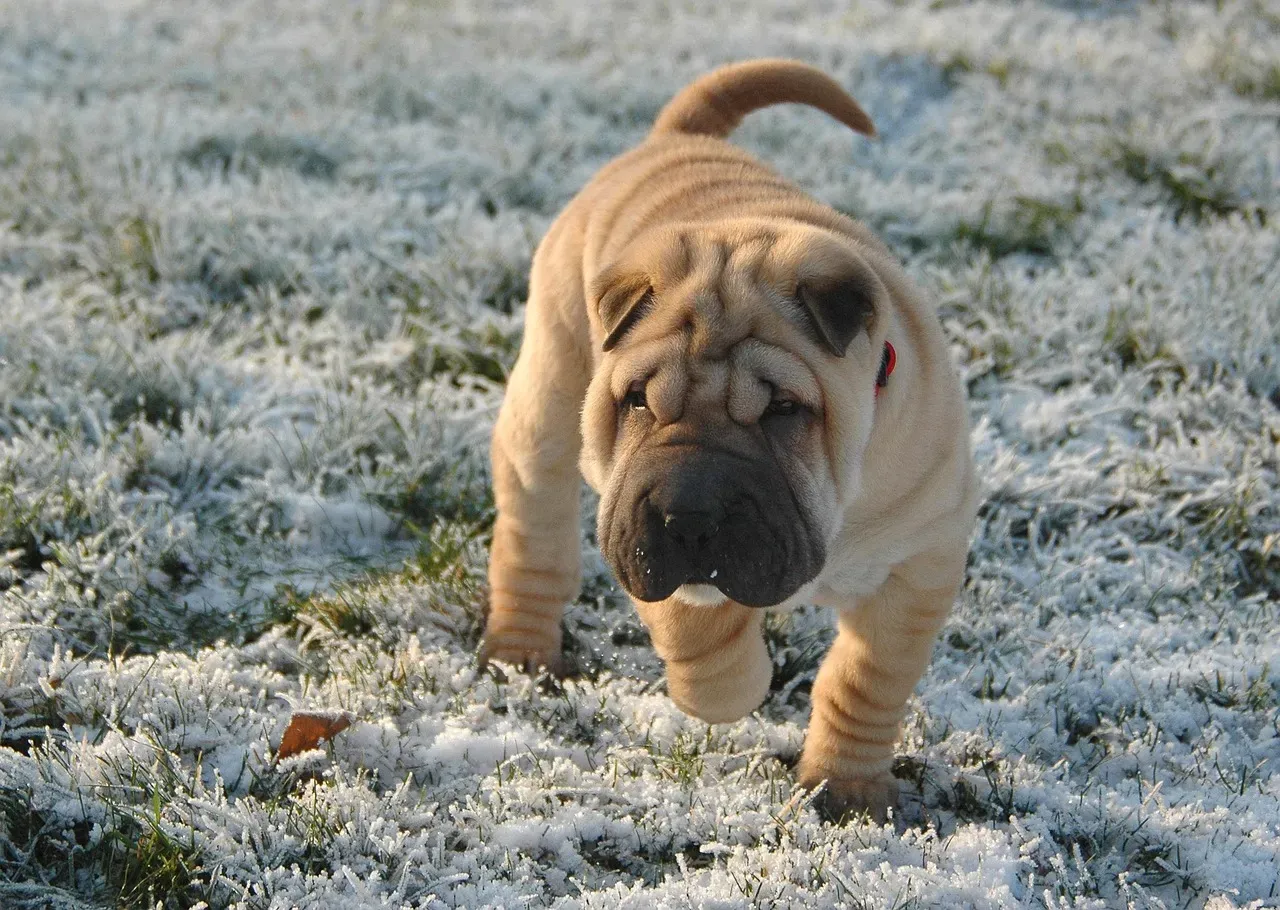
A is the written ideal a kennel club judges dogs against. The FCI and AKC standards for the Shar Pei agree on the broad picture: a compact, square, medium-sized dog with a scowling expression, loose skin on the head and withers, and a bristly coat. The Kennel Club also publishes a standard, and states that its sizes describe the ideal rather than a limit.
| Trait | What the standards say |
|---|---|
| Height | FCI: 44 to 51 cm at the withers. AKC: 18 to 20 in (about 46 to 51 cm) |
| Weight | FCI: not set. AKC: about 45 to 60 lb (20 to 27 kg) |
| Coat | FCI and AKC: short, harsh and bristly, standing off the body; no long "bear" coat in the show ring |
| Coat types | AKC: "horse coat" (very short) and "brush coat" (up to about 2.5 cm) |
| Colour | FCI: solid colours; AKC: solid colours; spots and patches are faults |
| Head | FCI: large head in proportion to the body, broad "hippopotamus" muzzle, wrinkles on forehead and cheeks |
| Tongue, mouth | FCI and AKC: blue-black tongue, roof of mouth and gums (a lavender tongue is accepted by some standards; a solid pink tongue is a serious fault) |
| Ears | FCI and AKC: very small, triangular, set high and wide, lying close to the head |
| Skin | Loose on the head, neck and withers; AKC and FCI ask for wrinkles on the head and shoulders, with fewer on the body of adults |
Coat types. The "horse coat" and "brush coat" are the two lengths in the show ring. The longer "bear coat" is not accepted. Bear coat dogs are pets rather than show dogs.
Colours. The standards ask for solid colours. Names like "blue" or "chocolate" are used in sales listings; the breed clubs treat those only as shade variations of solid colours.
Wrinkles. Standards describe wrinkles on the head, neck and shoulders. Many breeders now prefer a dog with fewer body folds because heavy folds are linked to skin and eye problems (see Health).
Temperament
 Related breedSiberian Husky1000 to 1930 · RussiaEarly Middle Ages
The Shar Pei is calm, independent and watchful. It is often described as "cat-like" for its clean habits and its reserve. With its own family it is devoted and quiet. With strangers it is wary and aloof rather than friendly. Guarding is part of its working history, so early socialisation matters.
- With people. Loyal to a small circle and often attached to one or two household members. It tolerates but rarely seeks out strangers.
- With children. Fine with children it grows up with. Its skin is sensitive and it dislikes rough handling, so supervision is wise with toddlers.
- With other dogs. Can be dog-selective or dominant, especially with the same sex. The UK vet-records study (O'Neill 2023) lists aggression as one of the five most common recorded disorders in the breed, which supports the point that early socialisation is more than a suggestion.
- Training. Intelligent but independent. Short, consistent sessions with rewards work better than repeated drills. It is clean and usually easy to house-train.
- Barking. Not a noisy breed, but it will alert to strangers.

Health
 Related breedTibetan Mastiff1000 BCE to 1931 · ChinaAncient World
Most Shar Pei live reasonable lives with sensible care. The breed has more health issues than the average dog, and a 2023 UK study explicitly asks whether it is "time to iron out the wrinkles". This section sets out what researchers have measured and what responsible breeders do about it.
What the UK vet-records study found
O'Neill and colleagues (Royal Veterinary College VetCompass, Canine Medicine and Genetics, 2023) studied 1,913 Shar Pei out of 455,557 dogs under UK primary veterinary care in 2013.
- Entropion (eyelids rolling inwards) was the most frequent specific disorder.
- Otitis externa (outer ear infection), ear disorders as a group, aggression and pyoderma (skin infection) followed.
- By body system, eye, skin and ear disorders were the leading groups.
- Among Shar Pei that died during the study period, the median age at death was 7.28 years. The VetCompass summary compares this with 11.2 years for dogs overall in the UK.
- Recorded causes of death were led by neoplasia (cancer), kidney disorders and behavioural disorders.
- Females had a higher chance of entropion and conjunctivitis; males had a higher chance of aggression and pododermatitis.
The authors link many of the findings to the breed's extreme : loose skin, skin folds and a small ear canal. The median is for dogs that died during the study, so it does not describe the lifespan of every Shar Pei.
| Condition | What it is | How common | What helps |
|---|---|---|---|
| Entropion | Eyelid rolls in and the lashes rub the eye | Most frequent specific disorder in the UK study (O'Neill 2023); no published figure given in the summary | Eye exam of puppies; surgery by a vet; choose parents with open, clean eyes |
| Ear infections (otitis externa) | Narrow, folded ear canals trap moisture and wax | Among the most common disorders (O'Neill 2023) | Regular ear checks and vet-approved cleaning |
| Skin fold infections and pyoderma | Bacteria or yeast in skin folds | Among the most common disorders (O'Neill 2023) | Keep folds clean and dry; choose a dog with fewer body wrinkles |
| Shar Pei fever (familial fever) | Short bouts of high fever with swollen joints, often hocks | Estimated at about 1 in 4 dogs in the United States in 1992 (Olsson 2011) | Vet care for each episode; ask breeders about the family history |
| Amyloidosis | Protein builds up in organs, mainly kidneys, and can follow repeated fevers | Linked to fever; no published figure | Kidney and urine checks as advised by a vet |
| Tight lip | Lower lip folds over the lower incisors; Kennel Club Breed Watch concern | Breed Watch point of concern | Breeders select for a normal lip; look at parents |
Shar Pei fever and the HAS2 gene
Olsson and colleagues (PLoS Genetics, 2011) found that the Shar Pei carries a duplication upstream of the HAS2 gene. This gene makes hyaluronan, a substance that builds up in the skin folds. A high copy number of the duplication goes with thicker, more wrinkled skin and with the periodic fever syndrome. The fever looks like Familial Mediterranean Fever in people and can lead to reactive AA amyloidosis and kidney or liver failure. The same duplication produces the wrinkles and the risk, so a very wrinkly dog is more likely to carry more copies. This is the main reason why many breeders now prefer a dog with fewer body folds.
The paper estimated that affected dogs made up about 23 percent of the United States population in 1992, which is roughly 1 in 4. That figure is more than 30 years old and it comes from an owner-survey base, so it may not reflect the dogs of today.

Living with a Shar Pei
 Related breedBasenji3000 BCE to 1937 · Democratic Republic of the CongoAncient World
| Daily reality | Rating | Why |
|---|---|---|
| Exercise per day | Medium | A steady walk or two; not a high-drive breed. Vet advice varies with age |
| Training needs | High | Independent and reserved; needs early socialisation and calm, consistent training |
| Grooming time | Medium | Short coat needs little brushing, but folds, ears and eyes need regular checks |
| Shedding | Medium | Short bristly coat sheds seasonally |
| Barking | Low | Quiet, but alerts to strangers |
| Time alone | Fair | Bonded to family; varies with the individual |
| Children | Fair | Good with familiar children; dislikes rough handling |
| Other dogs | Poor to Fair | Can be dog-selective; early socialisation helps |
| Cats and small pets | Varies | Depends on early exposure; evidence is thin |
| Flat living | Good | Calm indoors if exercised |
| Heat tolerance | Poor | Skin folds and a heavy build can make heat harder; limit exercise to cool hours |
| Cold tolerance | Fair | Short coat with no thick undercoat |
| First-time owner fit | Poor | Reserved temperament and higher health needs suit informed owners |
A great fit if
- You want a calm, quiet, clean indoor dog and can offer a steady routine.
- You are willing to check and clean skin folds, ears and eyes each week.
- You will socialise it widely in its first year and keep going in adolescence.
- You can pay for regular vet visits and accept that the breed may have health needs.
Think twice if
- You want a dog that greets every guest with joy.
- You have other dogs, especially of the same sex, and want a pack without friction.
- You live somewhere hot with no cool spot for a dog.
- You want a first dog and have little time for training.
Before you get one
- Health checks. Ask the breeder about the parents' eye exams, the family history of Shar Pei fever and kidney disease, and ear and skin health. Ask to see the parents' and puppies' eyes. Choose a litter with fewer body wrinkles and open eyelids.
- Puppy or adult rescue. Breed rescues exist and often place adults whose temperament is already known. An adult can be a good match if you want to know the dog's nature before you commit.
- First year. Plan for puppy classes, calm socialisation with people and dogs, a lean body weight and early vet checks on the eyes and ears.
Similar breeds to consider
- Chow Chow. Closest relative in the atlas data, with a thick coat that needs more grooming and a similar aloof manner.
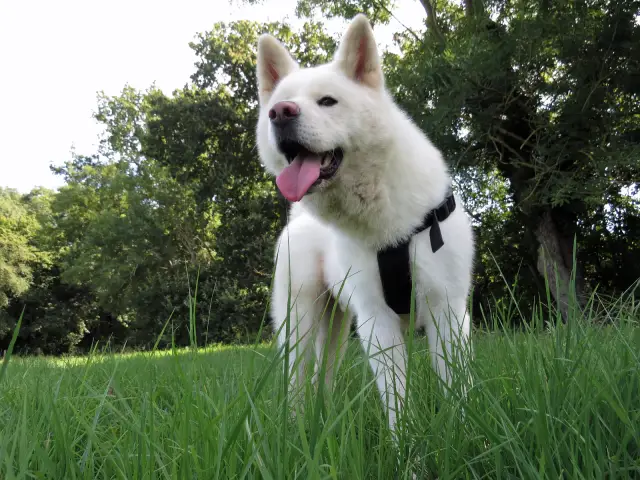
- Akita. Another dignified, reserved Asian guard breed, larger and more demanding in handling.
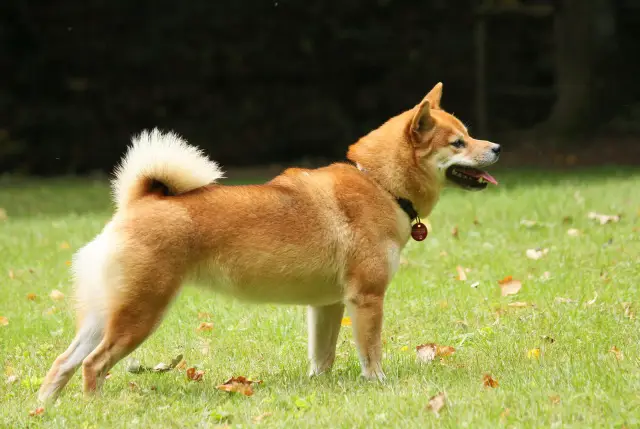
- Shiba Inu. Smaller, clean and independent, with a thicker coat and fewer skin concerns.
- Bulldog. Calm indoors, with its own skin-fold care needs.

Shar Pei fun facts
 Related breedCarolina Dog1000 BCE to 1990 · United StatesAncient World
- The blue-black tongue, mouth and gums are part of the standard. The Chow Chow has the same feature.
- A Shar Pei puppy has far more wrinkles than an adult; many of the folds smooth out as the puppy grows.
- In 1973, one letter from a Hong Kong breeder helped rebuild the breed outside China.
- The Shar Pei and the Chow Chow are the two wrinkled-and-blue-tongued breeds in the atlas data, and the atlas data lists them as closest relatives.
Frequently asked questions
How big does a Shar Pei get?
The standard gives 44 to 51 cm at the withers. The standard gives 18 to 20 inches, or about 46 to 51 cm, and a weight of about 20 to 27 kg. The Kennel Club says its sizes describe the ideal, not a hard limit.
How long does a Shar Pei live?
The atlas data gives a life span of 8 to 12 years. The 2023 UK study found a median age at death of 7.28 years among Shar Pei that died during the study, compared with 11.2 years for UK dogs overall.
Is a Shar Pei a good family dog?
It can be a loyal home dog with a family that knows the breed. It is reserved with strangers, dislikes rough handling and needs early socialisation. Supervise with young children.
Is a Shar Pei aggressive?
It is a guarding breed with a reserved nature. The 2023 UK study lists aggression among the five most recorded disorders in the breed. Early socialisation and calm, consistent training help.
What is Shar Pei fever?
It is a periodic fever, usually lasting 12 to 48 hours, often with swollen joints. It is linked to a duplication near the HAS2 gene. Repeated fevers can lead to amyloidosis, a build-up of protein in organs such as the kidneys. See a vet for any recurring fever.
Why does a Shar Pei have a blue-black tongue?
The standard asks for it, and the Chow Chow has it too. The two breeds are close relatives in the Parker 2017 DNA study.
Read next
Closest DNABoxer22.5 Mb sharedSister breedChow Chow200 BCE to 1895 Adopt a dogDog Shelters in EuropeFind dog shelters in Europe, learn how shelters differ from country to country and why adopting a dog is a good option.
Sources (14)
- American Kennel Club, Chinese Shar-Pei breed standard and breed history; AKC Archives, Chinese Shar-Pei Club of America collection (recognition in the Miscellaneous Class in 1988 and the Non-Sporting Group in 1992).
- Fédération Cynologique Internationale, Shar Pei, standard no. 309 (1999).
- The Kennel Club (UK), Shar Pei breed standard and Breed Watch pages.
- Kennel Club (UK) announcement on the reclassification of the Shar Pei from Breed Watch Category 3 to Category 2.
- O'Neill D.G. et al., "Is it now time to iron out the wrinkles? Health of Shar Pei dogs under primary veterinary care in the UK", Canine Medicine and Genetics, 2023.
- Royal Veterinary College VetCompass, Shar Pei infographic, 2024.
- Olsson M. et al., "A novel unstable duplication upstream of HAS2 predisposes to a breed-defining skin phenotype and a periodic fever syndrome in Chinese Shar-Pei dogs", PLoS Genetics, 2011.
- Parker H.G. et al., "Genomic analyses reveal the influence of geographic origin, migration, and hybridization on modern dog breed development", Cell Reports, 2017.
- United Kennel Club, Chinese Shar-Pei breed standard.
- Canadian Kennel Club, Chinese Shar-Pei breed standard.
- Dogs Australia, Shar Pei breed information.
- Swedish Kennel Club (SKK), Shar Pei judges' compendium, 2018.
- Encyclopaedia Britannica, "Chinese shar-pei" entry.
- Dogs Atlas breed records and Parker 2017 shared-haplotype table (this site).